
Lo-Fi Sundays 057 - ideism
Stepping out of low-fidelity hyperspace and onto this planet in just the past year, ideism spins a refreshing take on lo-fi musical moments. With instrumental confidence and an obvious inclination for jazz, ideism blurs the lines between producer and composer, melting and stirring the his own compositional elements into a stew of late-night sonatas and foggy overtures.
Stepping out of low-fidelity hyperspace and onto this planet in just the past year, ideism spins a refreshing take on lo-fi musical moments. With instrumental confidence and an obvious inclination for jazz, ideism blurs the lines between producer and composer, melting and stirring the his own compositional elements into a stew of late-night sonatas and foggy overtures. On December 14th, he released a 13-track cassette, Everblue, through Inner Ocean Records. The audible, soul-charged quality of the record demonstrates a venerable command of aural attitudes and emotional soundscapes.
Everblue is a pure gem in a sea of cubic zirconia. Eschewing the typical sample-focused arrangements of his contemporaries, Ideism focuses on note relationships and spacial dynamics. “Voyage” is a journey personified, reaching from the top of the frequency spectrum to the very bottom. It beckons the listener to fall into its cradle of saturated textures and tepid synthesis. “Night crawlers” develops along a gleeful crescendo, resting and slingshotting off of its natural cadence. Foley-laden percussion swirls in an omnidirectional dance throughout the mix, creating a dynamic space in which the track grows and breathes. “Astral Relaxation” is exactly what its name suggests; lush arpeggios and delicate chords ebb and flow into the front of the stereo space, rearranging and falling away with each downbeat. The crystalline patching and processing on the melody synthesis has a particular shine that resonates with just the right amount of vibrato in the ears.
While ideism may have only a handful of tracks in the public sphere so far, his musical aptitude is astoundingly fine-tuned. Breaking the sample-centric mold of his contemporaries, he successfully captures the audio-physical experience of lo-fi’s euphoric textures through entirely original composition. Having the backing of Inner Ocean Records on his second release only reinforces the implication that ideism deserves close attention from casual hip-hop fans and dedicated heads alike.
FOLLOW ideism: Soundcloud / Bandcamp / Spotify
Coalesce to Write New Chapter in History of Bay Area Bass
Recently, factors from gentrification and legalization to disuse and disaster have seen the psychedelic electronic music scene decline in the Bay Area that was once its mecca. However, as was the case half a century earlier, creators, vibrators, musicians, oddballs, artists and visionaries will coalesce along the Bay’s misty shores to partake in a new medium of communication and entertainment, this time at Coalesce with Cosmic Synergy
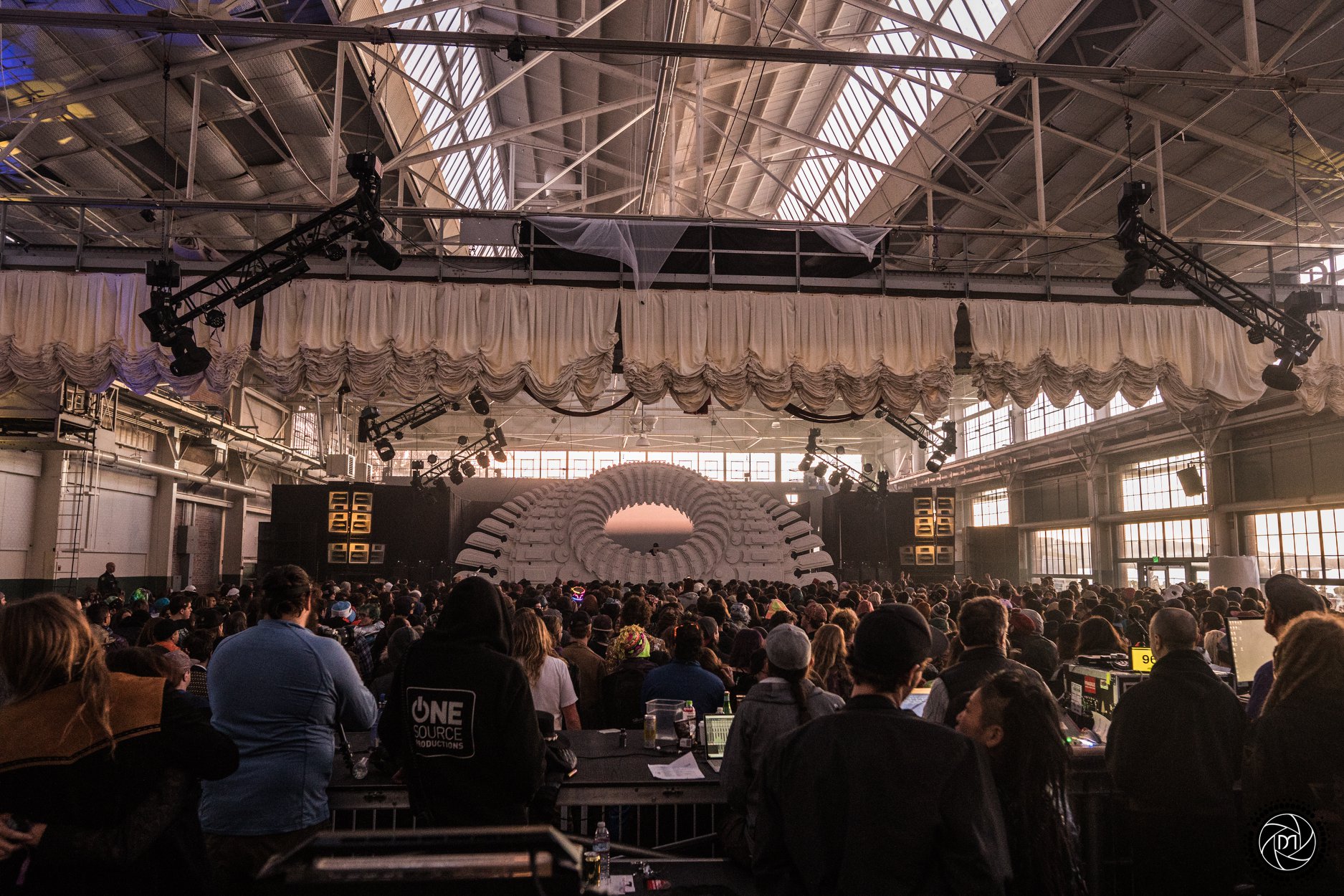
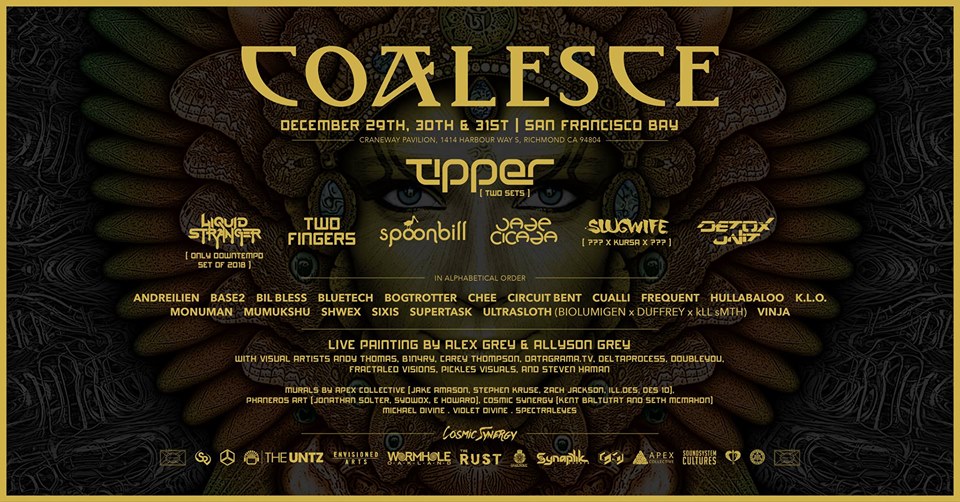
To ring in a new year with the best of intentions, Denver-based promoter Cosmic Synergy is organizing one of the most prolific and far-reaching gatherings of glitch music and psychedelic culture seen in this generation; Coalesce. They’ve commissioned the foremost electronic producers and visionary visual artists of generations past and present to transform the Craneway Pavilion in Richmond, CA, a hulking former factory jutting into the San Francisco Bay, into a vibrational intersection on December 29-31 as the calendar turns once again.
From the Summer of Love in the Haight-Ashbury to the first Burning Man on Baker Beach beneath the Golden Gate Bridge, psychedelia and explorative consciousness are part of the bedrock of the Bay Area. When rave culture first came to the United States, it found the most fertile ground in the Bay. By selecting this site, Coalesce ambitiously joins a storied history of music and mind expansion. It’s said that history repeats itself. Indeed, much of the music booked for Coalesce first rose to prominence in San Francisco clubs, Santa Cruz beaches, or the Black Rock City playa father to the east.
Recently, though, factors from gentrification and legalization to disuse and disaster have led the psychedelic electronic music scene to decline in the region that was once its mecca. Coalesce arrives then into a space that while not dead, is in many ways dormant. At most, the ambitious scope of Coalesce may help rekindle a cultural flame, and at least will provide dramatic context for attendees to help write a new chapter in the history of counterculture.
When charged up youths first came to San Francisco in the mid 1960s pressing for cultural shift, music was an adhesive that bound together their collective dreams and gave expression to their hopes; psychedelic rock, folk, blues, Americana. But also embedded in this familiar flower scene were seeds that would later sprout into an electronic spring.
Founded in 1961, the San Francisco Tape Music Center attracted composers that experimented with primordial synthesizers and began manipulating tapes to musical effect through looping and splicing. Existing synthesizers could create but a few sounds, and couldn’t modulate or alter the sounds at all. With a grant from the Rockefeller Foundation, the Center commissioned one Don Buchla to build a new sort of synthesizer. Buchla created one of the first modular electronic music systems from components that could each generate then modify a “musical event” (a sound). Today, popular eurorack synthesizer modules are influenced by this Buchla format. These modules are synonymous with modular “west coast” synthesis.

Ramon Sender, Mike Callahan, Morton Subotnick, and Pauline Oliveros, the founders of the San Francisco Tape Music Center. (Credit: Art Fisch)
Associates of the Tape Music Center also began experimenting with music itself, people like the landmark minimalist Terry Riley, whose work “In C” created a powerful ripple in thought patterns and music circles in 1968. Riley inverted compositional norms by writing a classical piece for an indefinite number of performers to be performed for an undefined amount of time. As a result, “In C” offered a transcendent musical experience that dissolved boundaries of time and space for its audiences.
In 1966, the Trips Festival at the Longshoreman’s Hall in San Francisco coalesced bands, theater performers, dancers, vagabonds, wharf rats and film producers for an event billed as “the FIRST gathering of its kind anywhere - a new medium of communication & entertainment.” Signaling the start of the short-lived but broadly impactful “hippy era”, the event was described as “the first national convention of an underground movement that had existed on a hush-hush cell-by-cell basis,” according to countercultural chronicler Tom Wolfe. Sets from the Grateful Dead and Big Brother and the Holding Company galvanized the audience, but the avant garde Tape Music Center was also on the bill.
In ‘80s and ‘90s, a new generation of counterculture congregated at San Francisco’s Baker Beach. Anarchists, artists and fringe-types gathered there for “fire” parties from 1986 to 1991 - the first iterations of Burning Man. When the Golden Gate National Recreation Area police forced the burn off the beach, the Wicked crew took its place. Fresh off the 1989 “second summer of love” in London when rave culture exploded, this collective of acid house DJs naturally chose the Bay as the locale to make a cultural musical mark in the states. Their full moon parties on Baker Beach became legendary. According to Wicked member Jeno, in the wake of the AIDS epidemic and its destructive impact on the Bay’s dance/disco scene, these parties, “helped define a dramatic change in SF's dance music culture.”
Along with San Francisco-based psytrance collectives like Blue Room and CCC, Wicked brought the rave to Burning Man, which had since moved to a lake bed in Nevada. Although at first relegated to the “techno camp” flung far from the center of Black Rock City, by 1996 electronic music was blasting from multiple “sound camps” on the playa. CCC, which lived in a warehouse on Howard Street in San Francisco’s SoMa (South of Market) neighborhood, would later found the Howard Street Fair, now the municipally-sanctioned How Weird Street Faire approaching its third decade of existence. (Similarly, Trips Festival promoter Bill Graham went on to purchase San Francisco’s 8,500-capacity Civic Auditorium, embedding counter culture into San Francisco’s municipal infrastructure).
Bay Area resident Andrei Olenev observed these developments, participating in them when age restrictions permitted him to. Andrei’s father was a visual artist in the psychedelic scene. (“Whenever you see a lot of good visionary artists on an event,” Andrei says, “it’s always a good sign.”) His father and older sister frequented Blue Room and CCC psytrance parties in the 1990s where attendees could cycle between rooms of different music like psy trance, jungle and chillout. Andrei would later produce music himself, a well-bred and barely terrestrial mix of dub, glitch, and drum and bass, first as Heyoka and today as Andreilien. On December 29, he’ll help open the ceremonies at Coalesce. “The styles of music changed,” says Andrei, “but that psytrance made a major contribution to the psychedelic electronic scene and festival culture.”

Andre Olenev performing as Heyoka at Symbiosis Gathering in 2009. (Credit: Dave Vann)
At the turn of the millennium, fresh sounds were diffusing throughout northern California and indeed the world. “I used to stay up late and record MTV AMP,” Andrei says, referring to the music video series that showcased tripped out work from Aphex Twin, The Orb, and Future Sound of London. Given the regions receptivity to psychedelic sound, these breakbeat and IDM (“intelligent dance music”) styles, like many more to come, hit in the Bay before they caught on elsewhere.
“In northern California in the early and mid 2000s there was constantly things going on,” Andrei recalls. “There was a very tight knit festival scene in northern California. I didn’t even know that much about southern California’s scene.” Musical trends found were given fresh interpretations in the region’s open and innovate environment. “There was a wave of IDM all over the place,” he notes. “A lot of IDM I heard from other places was a more experimental, more heady listening music. The California version was just a little bit more dance-oriented, more fat and bass heavy.”
On the beaches stretching from Santa Cruz to Half Moon Bay south of San Francisco, this music and culture thrived. During the 1990s the Wicked crew illuminated the sands with billowing bonfires and screeching acid house. During the mid 2000s broken beats began rumbling out over the waves at DIY parties thrown by crews like Rain Dance, led by “Little” John Edmonds. This collective has been booking bass music in the region for over two decades at annual urban events like Freakers Ball (Halloween) and Chinese New Years or at its Rain Dance Campout which began in 2002 in the woods east of Santa Cruz, “one of the few remaining underground campouts from that era that’s still going on,” according to Andrei. (Rain Dance may have been the first crew to book Tipper within the United States).

Rodman “Lux” Williams performing at a Santa Cruz hideout known as Toxic Beach in 2006. “My older friends who are in the scene definitely thought of him as a pretty legendary underground dude,” says Benji Hannus, a partner with Oakland-based promoter Wormhole Music Group. “Never released a whole lot of music, but played all the parties and was super well respected.” (Credit: Kyle Hailey)
Producers like Si Begg and southern California native SOTEG aka Bil Bless began to innovate on breakbeats. “From what I heard,” says Andrei, “some guys would take breakbeat records that were 45 and play them on 33, and that whole sort of sound evolved.” Building on these early innovators, Santa Cruz regulars like DJ Lorin (soon to become Bassnectar) and Rodman “Lux” Williams began to dominate dances with deep, heavy blends of breakbeat and glitch music. “Then Edit and Ooah [later of The Glitch Mob] started coming up from Los Angeles,” Andrei remembers, “and they had that super glitchy sound. Edit was definitely influential in all of that.” Andreilien rapidly gained traction in this scene when he began performing in 2007.
Back in The City, lineups thick with glitch hop began appearing at underground warehouses and above ground clubs. One more mainstream nexus was the club 1015 Folsom, where talent buyer Adam Ohana (An Ten Nae, Dimond Saints) booked huge glitch hop parties and “after burns” where artists like Freq Nasty would headline above Tipper, with DJ Lorin on the undercard. Farther off the beaten path the Cell Space warehouse hosted Rain Dance yoga parties, and from 2004 to 2006 a prolific gathering called Synergenisis where downtempo glitch producers like Bluetech performed and visionary art was spotlighted, including the work of Alex and Allyson Grey. Grittier fare could be found at warehouses like the Cracktory where UK dubstep producers like Distance made some of their first stateside appearances. Each venue contributed to a germinating scene and offered spaces for a new generation to join the party.
Benji Hannus is a partner with Wormhole Music Group, an Oakland-based music label and the crew behind the East Bay’s popular bass music weekly Wormhole Wednesday. Wormhole is working closely with Cosmic Synergy to promote Coalesce and to kick off the weekend with a bonkers pre-party at their home venue, The New Parish in Oakland. Benji, who produces cinematic psychedelic bass music as Secret Recipe, grew up in Berkeley and but for one year of college in Colorado, he’s lived in the Bay his whole life.
Benji traces his fascination with electronic music and event production to the night of his high school graduation in 2009 when he and some pals saw Shpongle at a festival in Santa Rosa. They found some flyers for Symbiosis Gathering, happening later that summer in Yosemite Valley. “If you know anything about Symbiosis,” Benji tells me, “especially that year, it was a pretty pivotal event for the west coast bass music scene, and for the underground electronic festival scene in general.” (The Symbiosis Gathering was held on the same grounds as early Rain Dance Campouts, symbolizing how the festival in some ways sprang from the early Santa Cruz scene). Headliners at Symbiosis ‘09 included Shpongle, Digital Mystikz, Bassnectar, Edit and Ooah, who combined their solo projects to perform a rare “Crying Over Porcelain for No Reason” set, and Amon Tobin, who will perform his own rare side project Two Fingers at Coalesce. The lineup rode the tail end of the glitch hop wave, and the rising tide of dubstep.
Upon returning from a year of school in Colorado, Benji moved to Santa Cruz and started his own event production company Forever Endeavor. “There was a very large renegade scene in the mountains. We’d bring a generator and some speakers out to the woods and have a free, illegal party.” The distinction between legal, permitted parties and illegal warehouse/outdoor parties is critical in California. In recent years, the DIY scene has nosedived. While some of its spirit and music moved above ground, as much if not more moved out of town. “At that time,” says Benji, “there’d be renegades with G Jones, when he still went by Grizzly J or Minnesota headlining way before he blew up. Many artists that have gone on to big things were based there at the time going to school at UC Santa Cruz.”

Tipper performing in 2009. According to Benji Hannus of Wormhole Music Group, Tipper performed unannounced at Rain Dance Campout in 2010. “He just showed up at the gate, said hi to all his friends, and played a Sunday set.” (Credit: Kyle Hailey)
“When I turned 21,” Benji recalls, “and could finally go to all the parties in SF in 2012, I would go to the city like 5 or 6 nights a week.” Every night there were weekly parties like Ritual Thursdays, a dubstep night, or Beat Church, a glitch-oriented evening that helped Heyoka get his start. On the weekends, huge four-room bass music parties raged at 1015 Folsom. It was this year that partners Morgan McCloud and Gleb Tchertkov founded Wormhole and began hosting Wormhole Wednesdays. The weekly bounced between different venues before settling into an Oakland club called Era. Benji, who had production chops and a modest roledex of agents and artists from his time in Santa Cruz, soon joined Wormhole full time.
Meanwhile, currents began to churn that would change the cultural and economic topography of the Bay and impact the underground bass music scene as a result. The Bay Area recovered more rapidly than most regions after the severe economic downturn of 2008. By 2015, eight of California 12 counties with unemployment rates below the national average were in the nine-county Bay Area region, according to the San Francisco Chronicle. Credit went to the rising tech sector, which engendered a thriving white collar economy.
San Francisco is already a small city, with a population under 900,000 a land mass of 46 square miles (New York City is over 300 square miles by comparison). Housing always had a degree of desirability and exclusivity, then the tech boom brought on an unprecedented influx of affluence. By 2015, as the producer of documentary San Francisco 2.0 Alexandra Pelosi put it in The Daily Beast, “not a week goes by without a headline about the growing pains brought on by the tech Gold Rush in San Francisco.” The struggle over “who gets to live in The City” escalated.
Soaring rents dramatically impacted poor and working class neighborhoods in San Francisco and Oakland, as indeed they did across America. In the Bay, though, the neighborhoods were generally filled with a higher percentage of artists and musicians. Warehouses that skirted the line between work spaces, living quarters, and venues - “empty” from a municipal and tax standpoint - were low hanging fruit for developers. “Otherworld was a huge staple for underground parties in the Bay for about 15 years,” notes Benji. This warehouse, where Wormhole hosted one of its larger un-permitted parties, was razed by developers in 2016 and replaced by luxury condominiums.
The East Bay fared better than San Francisco, though, and Wormhole Wednesday tapped into this dynamic when they began to push their weekly party. “We never really thought we’d get anywhere near as many people out as we did for a venue bass music party in Oakland, let alone on a Wednesday,” Benji says. “We pretty quickly discovered just how many people moved out of San Francisco and into the East Bay because it’s [SF] so unaffordable.”
Technology was not the only fluctuating economy that impacted the underground electronic scene. “When I was a teenager going to festivals,” Andrei recalls with a chuckle, “pretty much every person at the festival was involved in the weed business in one way or another. People would come from all over the world to go to Burning Man and then go to the hills in California and trim for a couple months.” Cannabis workers and their non-traditional hours filled electronic dance floors in the Bay and helped sustain weekly bass music parties. As the black market for marijuana has shrunk over the last decade, there’s less money in California cannabis. Some of that money - and some of the bass music, for that matter - has moved to Denver.

The Ghost Ship warehouse space from above on the morning of December 3, 2016, after a fire broke out which would claim 36 lives at an unpermitted party.
The psychedelic electronic wave in the Bay Area had crested, then, and assumed a slight downward trajectory by the mid 2010s. On December 2, 2016, the bottom fell out entirely. That night, California’s then deadliest fire since the San Francisco earthquake of 1906 claimed 36 lives during an unpermitted party at the Ghost Ship, a prominent Oakland warehouse and artist loft. DJs, promoters, artists and fans integral to the region’s broader arts scene lost their lives. It’s hard to overstate the impact this had worldwide and in the Bay. Prominent warehouses in Oakland and indeed across the United States either were shuttered or went on hiatus. Evictions ran across Oakland.
“We had an underground event at my friends’ warehouse scheduled for the week after,” Benji told me. “It was in a much safer space, but we decided to cancel it and eat a bunch of money. That hit our community pretty hard here.”
Notwithstanding the Ghost Ship tragedy, the psychedelic electronic scene in the Bay Area is in some ways a victim of its own success. “The type of music Coalesce is centered around,” Benji observes, “the more psychedelic side of things, and glitch hop specifically, that’s what’s really declined in popularity here. I think much of that involves the fact that a lot of that music came out of the Bay Area in the first place. People get burnt out on stuff and tastes change.” Ultimately, though, its not about the music. Music is just the strongest magnet to attract like-minded individuals and their energy,
Although it’s not like the area is some barren cultural wasteland. Nor is it void of individuals still dedicated to the sound and movement. It’s still the San Francisco Bay, after all, and it's psychedelic nervous system seems due for a shot in the arm. “As for the scene I know out here,” Andrei asserts, “there’s always a lot of old schoolers helping to guide the whole thing, who are still helping to run the festivals, or stage managing, or keeping the underground flame alive, you know?”
These multiple generations are set collide on New Years Eve. As was the case half a century earlier, creators, vibrators, musicians, oddballs, artists and visionaries will coalesce along the Bay’s misty shores to partake in a new medium of communication and entertainment.
FOLLOW Coalesce: Event / Tickets / Pre Party / After Party

all:Lo Collective - all:Lo Compilation Vol. 1
Surfacing out of the vast musical wilderness that is Colorado, all:Lo Collective is a burgeoning label steeped in all things low fidelity and low frequency. Striving to connect hip-hop and bass music with an especially swampy flair, their top priority is to inject Colorado and the music scene at large with refreshing perspectives on the common musical tropes and pathways of these genres.
Surfacing out of the vast musical wilderness that is Colorado, all:Lo Collective is a burgeoning label that aims to be steeped in all things low fidelity and low frequency. Parker Williams (parkbreezy), Phil Gallo (pheel), and Diana Neculcea man the helm of the operation, which informally began in 2017. As of 2018, they have officially launched the label into the public realm, and intend on immediately setting the bar at a righteous height with their ambitious first release, the all:Lo Compilation Vol. 1. Striving to connect hip-hop and bass music with an especially swampy flair, their top priority is injecting Colorado, and the music scene at large, with a refreshing perspective on the common musical tropes and pathways within these respective genres.
Capitalizing on hip-hop’s undeniable influence in broken-beat music, all:Lo Collective focuses on curating and disseminating dusty beats, slapstick rhythms, and juicy sub frequencies. Their first compilation does an excellent job of showcasing just what kind of sound and the quality of production they have in mind, and craftily bridges the gaps between a spate of producers who encompass a wide swath of various genres. Featuring forward-thinking and exploratory musicians such as Nocturnal Status, Dillard, Primate, and of course pheel. and parkbreezy, this collection of soul-drenched tracks creates a deliberately smokey, cumulus texture for the ears. Ranging in tempo, attitude, and aural narrative, this all:Lo compilation displays the due diligence done by it's benefactors, and the result is sheer audible sensuality.
Aphasia opens the compilation with “Orbifrontal Entourage”, a boundless flight through zero gravity. Tasteful blending of monochromatic pads and top-layer percussion drive the composition through the stratosphere, and sampled stabs of stereo synthesis steer the notation and emotional interplay of the track. Sandwiched squarely in the center of this release, parkbreezy and pheel. display the dynamic of their combined brain power with a VIP of “Cluttered Time Machine”. The rhythm rests perfectly in the pocket for the duration of the track, zeroing in on the head-nod attitude that all:Lo endeavors to cultivate. Twists of choice synthesis flicker and dance in between the crunch and punch of kicks and snares laden with supple compression. Of particular note is the hip-hop-fashioned, succulent Primate track, “Relaxtion”. Balancing on a tempo that is a bit sparing within his established discography, Primate brings a jazz-first mentality to the table; deliciously funky basslines respond to the call of slightly detuned rhodes chords that turn over in each phrase, revealing sparse, deliberate notes that resolve every measure.
With all three owner-operators having already spent years as fans and strident members of our amorphous global community, it is endearing and encouraging to know that all:Lo Collective has a genuine mission with genuine passion. With patience, specificity, motivation, and a little bit of elbow grease, all:Lo Collective has made a bullrush out of the gates with all:Lo Compilation Vol. 1. I’d tell you to pay close attention to the future endeavors of this stand-out team, but they are already certain to be invading your ear holes in no time at all.
FOLLOW all:Lo Collective: SoundCloud / Bandcamp / Facebook
Chalky - Second Beach
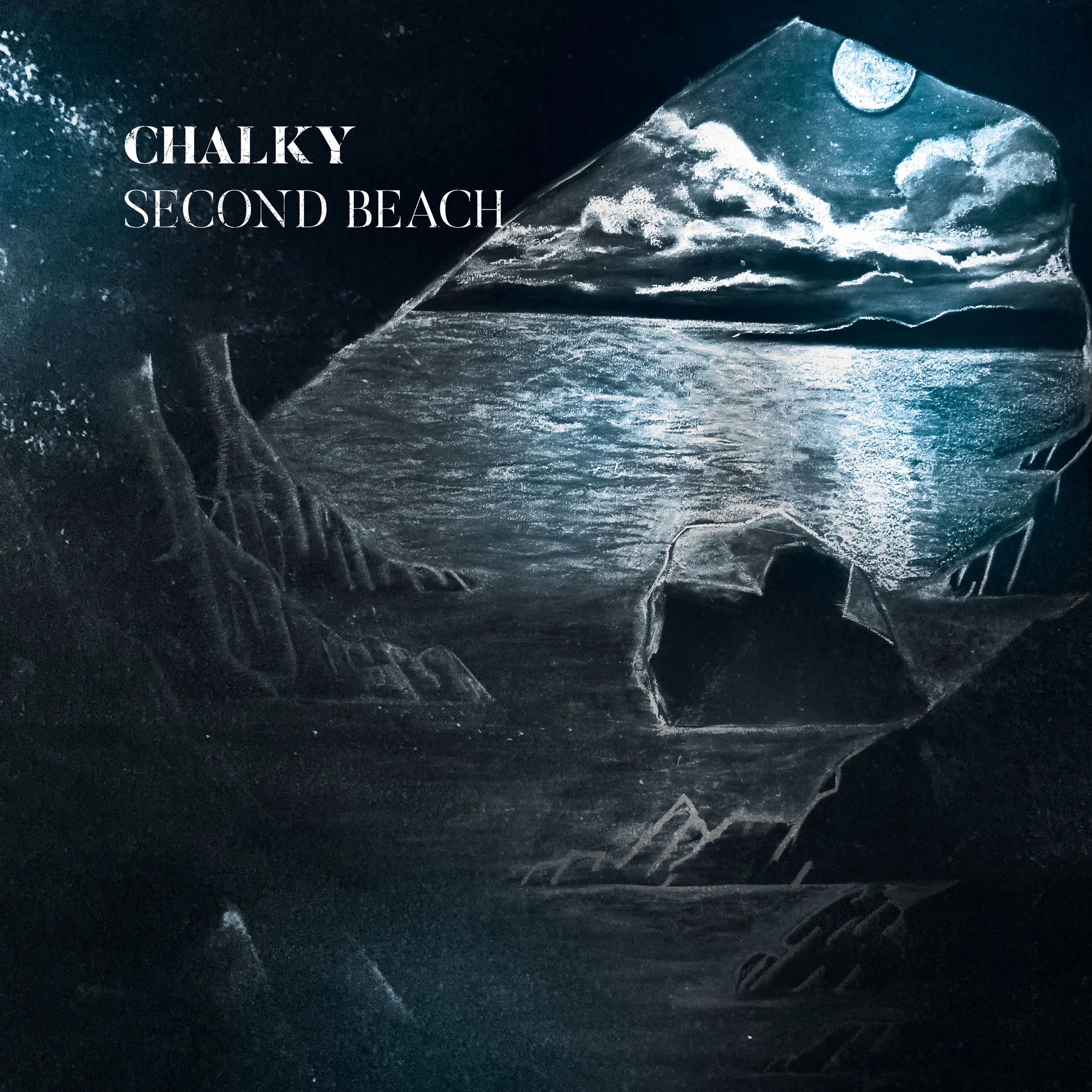
Replete with all the flair, shine, and cinematic attitude of jazz music’s ballroom past, Chalky lays down an incredibly delicious interpretation of nu jazz with grandiose compositional strength in his debut album Second Beach.
Replete with all the flair, shine, and cinematic attitude of jazz music’s ballroom past, Chalky lays down an incredibly delicious interpretation of nu jazz with grandiose compositional strength in his debut album Second Beach. Based out of Bristol, a city currently making tremendous strides in various musical directions, Chalky White is a multi-instrumentalist steeped in a lifetime of aural immersion and experimentation. Earlier this year, he released Bright Spots, a collaborative album with fellow Bristol bandit Sandy Finlayson, otherwise known as Seppa. That collection of tunes was the first full serving of Chalky’s considerable virtuosity, and the production value acted like an industrial adhesive for the bevy of tones featured on each track, thanks to Seppa’s engineering prowess.
Doubling down on lush instrumental dialogue and hardcore jazz motifs, Chalky takes the compositional direction entirely into his own hands in Second Beach. The arrangement of each track mirrors the overall flow of the album; strings, brass, keys, accordion, omnichord, and buttery vocals rest in the pocket of noire-flavored drums and voluptuous low-end. Opening the album with a dash of splendor and a high vibe, “Me and You” easily slides from a flashy, orchestral introduction into a sensual groove befitting a red-light mood. Entire scales are crossed and rehashed through a constant revolution with each texture gracefully overtaking the last. As the song comes to it's resounding back-end, perfunctory synthesis fills the upper frequency spectrum, while earthy sub-weight carries each phrase to it's natural cadence. Combining dextrous arpeggios with call-and-response chord progressions, “Distant Victory” is the natural resting point of the album, aptly squared away in the middle of the tracklist. With ease and tremendous attitude, major and minor phrasing is tossed back and forth like a firebrand tango between your brain's left and right hemispheres.
Capitalizing on what is clearly a fluency in harmony, Chalky fails to waste a good moment for unexpected, playful turnarounds on each refrain, gradually spinning his songs into sublime hip-hop rhythms. Bringing the album to a close amidst a mist of vivacious soundscapes, “Lore” channels an aqueous and asymmetrical aesthetic. Combining jazz licks, pitted percussion, and tone-bending synthesis, the wash of reverb and dialed-in delay create a stereo width that crosses sensory borders, becoming an especially physical experience.
For Chalky White, Second Beach is an ode to a musical heritage and familial upbringing within his hometown of Looe, Cornwall. It is the sound of youthful wanderlust tempered by an intuitive understanding of sonic effluence. Having already demonstrated the ability and willingness to work well with musicians and producers in various directions, it is extremely exciting to watch an artist blossom into their own aural identity in real time. With all the exceptional music coming from Bristol and elsewhere in the UK, do not make the mistake of letting Chalky sail under your radar.
FOLLOW Chalky: SoundCloud / Bandcamp / Facebook

Lo-Fi Sundays 056 - el.
Although we’re not sure where producer el. aka Mighty Recordings may hail from, fingerprints of the northeastern U.S. hip-hop sound are all over his beats. Productions from el. fit well behind verses from your favorite rapper, although they’re just as exciting as instrumentals. He’s been making music for at least six years, but most of the knocks in our curated playlist come from the last two.
Although we’re not sure where producer el. aka Mighty Recordings may hail from, fingerprints of the northeastern U.S. hip-hop sound are all over his beats. Productions from el. fit well behind verses from your favorite rapper, although they’re just as exciting as instrumentals. He’s been making music for at least six years, but most of the knocks in our curated playlist come from the last two.
His music doesn’t mess around with the broad aesthetic of contemporary lo-fi, although the sound itself is indeed low-fidelity. In this way, el. beats can sometimes sound like a stylistic throwback, while still remaining on the cutting edge of contemporary beatmaking. Acapellas appear frequently throughout his catalog, but it doesn’t appear he’s worked with many rappers on original music. Our curated playlist includes some real nice bars from Dave East, and an acapella from Jay-Z and Cam’ron.
These acapella choices combined with the fundamental northeastern style of his beats and some additional context clues (see the sample at the end of “Dynasty”) give us the impression that el. hails from the Big Apple. It appears the vast majority of his music is self-released, although he did drop a few jewels with the Australian “creative agency” St. O’Donnell. In early 2019, look out for a project called Que Mas? from el. releasing on Beatbliotek.
FOLLOW el.: Soundcloud / Instagram / Facebook

Boukas - The Coffee Tape Vol. 1
The talented and abstract beatmaker Boukas returns with The Coffee Tape Vol. 1 dropping as per usual on NINETOFIVE Worldwide Beatmakers. Boukas aka Dennis Boukas of Stockholm, Sweden has been working on these compositions throughout the autumn. This is reflected in the album’s jazzy motif and sparse compositions, which swing in the breeze like gangly trees removed of their leaves.
The talented and abstract beatmaker Boukas returns with his second full-length release, The Coffee Tape Vol. 1 which comes as per usual through NINETOFIVE Worldwide Beatmakers. Boukas aka Dennis Boukas of Stockholm, Sweden has been working on these compositions throughout the autumn. This is reflected in the album’s jazzy motif and sparse compositions, which swing in the breeze like gangly trees removed of their leaves.
The album is dedicated to that bitter, comforting, dark drink that can be a beatmaker’s best friend. The Coffee Tape is less transcendental than Boukas’ full-length debut The Setting, and thus more appropriate for everyday listening. On this last album as well as the EP A Song for Samantha, Boukas demonstrates his ability to fuse dub with beats music - a rare and prolific combination. This overt stylistic combo is absent on The Coffee Tape. While that’s not what some might expect from Boukas, he executes the straight-forward boom-bap beat with effortless grace, making for a head-turning change of pace.
With a placid stereo spread and a soft and simple bouquet of instrumental samples, The Coffee Tape is not just “appropriate” but ideal for everyday listening. Indeed, each track on the album is representative of a different cup of coffee throughout the day from “The First One” to “The Last One” to “Afterwork”. “Basically, there’s always time for a coffee break”, writes Dennis. We couldn’t agree more, but with twelve beats total on this record, we think Boukas may in fact need a water break.
According to Dennis, he always tries to paint pictures with his music. His paining style, then, is minimal and his hand is steady. His color palette is limited in its variety, but the colors he does paint with across The Coffee Tape - beige, brown, yellow, off-white, light orange, deepest green - are rich in hue. His percussion always pops, but set against such a sparse background here, the muffled kicks and crisp, cut-off snares stand out all the more.
Perhaps the most abstract cut on The Coffee Tape is our favorite; “Metropolis”. Tying back to the album’s theme, this song may be representative of perhaps not a single cup of joe, but rather the broad association between coffee and the cosmopolitan. Lightly plucked guitar strings stir together as if in liquid with a synthesizer melody that sounds like it’s played not by fingers but by a feather. The tune exemplifies a meditative stillness that Boukas cultivates on this album. One will be hard-pressed to find a series of twelve instrumentals more relaxing than these jazz-infused cafe beats.
FOLLOW Boukas: Soundcloud / Bandcamp / Facebook / NINETOFIVE

KOAN Sound - Polychrome
Three years after releasing their last EP and almost seven years after their last full length album, the production powerhouse duo KOAN Sound unveil their most ambitious and lucid collection of music to date; Polychrome.
Three years after their last EP and nearly seven years after their first, the production powerhouse duo KOAN Sound unveil their most ambitious and lucid music to date; Polychrome. Stuffed with 11 fully developed compositions, KOAN Sound’s first full-length LP is an aural odyssey that presents itself with taste-making vision. It represents a next step in the production theory behind the neuro sound and style progenated by KOAN Sound themselves. This pioneering tag team has been deep in the alchemical mindscape of sound design and audio engineering, and the result is a revamping of their personal flair and a beyond advanced understanding of stereophonic sound.
Alongside the likes of Culprate, Kursa, Disprove, Skope, and others, KOAN Sound had a strong hand in developing and refining the amorphous, phased-out umbrella genre of “neuro” music. Characterized by time-based warping and glitching, highly compressed percussion, multi-band frequency splitting and processing, and mid-tempo arrangements, neuro has become a ubiquitous and infectious influence among the incoming generation of bass music producers the world over. While the quest to emulate the unique design and form of music native to KOAN Sound and their contemporaries can beget encouragement and excitement, part of what made this musical offshoot so enticing in the first place is how utterly meticulous and left-field it’s Promethean parents are. Polychrome stands tiers above the general landscape of eclectic, broken-beat music, as one should expect it to.
To consider what makes this album so enriching for the ears, start with the mix down. The sheer volume of tones, textures, and saturated frequency space requires a well-choreographed dance and blend of stereo depth, panning, compression, EQing, and one hell of a set of ears (or two) to dial in such utter fidelity. “Cobalt”, the first track on the album, creates balance between the bevy of digital instruments at play. Characteristic of KOAN Sound, the song is busy but this does not muck over the articulate glitches, arcs, and crescendos that populate the upper frequency spectrum. Likewise, the brolic distortion and re-sampled texture of the bass reverberates just enough to have a full body, but is instantaneously cut with each down beat through juiced-up volume ducking and compression algorithms.
If the crystal clear mix-down can be described as the album’s “presentation”, then the “ingredients” are inherently the composition, arrangement, and emotional intent of each track. “Chalk It Out”, a collaborative jazzhole with Bristol-based multi-instrumentalist Chalky White, allows KOAN Sound’s linear, progressive songwriting abilities to shine. In a music culture sometimes saturated with two- or three- minute tracks and build-drop-build-drop structures, a full composition like this one, that has proper room and license to flourish, is a breath of fresh air. Fizzy production and tactile synthesis merge intuitively with organic instrumentation, morphing into a potpourri of harmonies and graceful dialogue. Each measure gradually introduces subtle changes to existing tonal elements while new musical phrases mesh and meld in and out of the mix.

While all 11 tracks within Polychrome are characteristically KOAN Sound in nature, they cross a variety of tempos, rhythms, and attitudes, displaying years of experimentation finally brought together under a single release. “Virtual Light” feels reminiscent of earlier, melody-driven KOAN Sound works which capitalized on the particular notation of high-octane neuro synthesis. Symmetrical stutters and glitched-out turnarounds form the ambiguous boundary lines of a self-contained orb of fundamentally freeform music. Folds of liquid low-end wrap around stabs of rounded alto notes, creating an arrangement with the physical quality of non-newtonian fluid.
At its absolute peak of intensity, the album explodes in a righteous firestorm of primal DnB. Channeling the undeniable power of England’s favorite flavor of aggressive music, “Hydroplane” unleashes bass weight with a vicious roar, concentrating the total firepower of KOAN Sound’s extensive years of production wizardry into a single shot. Extreme amounts of reverb and saturation color the synthetic textures with an oceanic exuberance, causing the track to pulse like a newly formed quasar. Earlier this year, KOAN Sound debuted this track for fans old and new on a monstrous Hennessey Sound System during the evening hours at Psychedelic Sleepover. The raw force with which it ripped through the speaker cones warrants a moment of a silence for what surely became a few ruptured eardrums.
It is by no means without precedent for artists and musical projects to go dormant for some span of time while they begin their next creative endeavors. All throughout the last three years, KOAN Sound performed sparingly at boutique festivals and one-off musical events, choosing instead to focus the majority of their time on polishing their comprehension of production. The enduring patience of their supporters has given way to a brilliant maturation of their musical vision, and it goes without saying that all good things come in time.
Polychrome has done what many similar post-breakout endeavors fail to do; it captures the listener by immersing the senses in a unique interpretation of nostalgia and inexperience. On the heels of such a remarkable endeavor, it is safe to say that we are all holding our breath for the arrival of an equally sought-after tour. As 2019 approaches, a new album coupled with a new year just might be enough to put KOAN Sound more directly in line with our future selves.
FOLLOW KOAN Sound: Soundcloud / Spotify / Bandcamp / Official

Gramatik - Street Bangerz Vol. 5
Ten years to the day since Gramatik dropped Street Bangers Vol. 1 and began turning a new sub-section of music heads on to boom-bap instrumentals, he returns like the long-lost hero Odysseus bearing SB5, or Street Bangers Vol. 5, a capstone for his hallowed series of high fidelity hip-hop compilations.
Ten years to the day since Gramatik dropped Street Bangerz Vol. 1 and began turning a new sub-section of music heads on to boom-bap instrumentals, he returns like the long-lost hero Odysseus bearing SB5, or Street Bangerz Vol. 5, a capstone for his hallowed series of high fidelity hip-hop compilations. With gold-plated production, talented features, tiny allusions and clever composition, Gramatik is able to brilliantly gesture toward his musical past while making music that is completely contemporary. Some doubted that Denis Jašarević would come back with another Street Bangerz. What they forgot is that his infatuation with his home city can’t be contained (why should it be?) and that he’ll never miss an opportunity to pay homage to the Big Apple.
SB5 isn’t as rough around the edges as the original Street Bangerz, but surely no one expected it to be. Certain musical material has been left behind and replaced with Gramatik’s newer flare, like the layered guitar and synthesizer melodies that he began to hone on Street Bangerz Vol. 3 and perfected on The Age of Reason. Taken as a whole, the album does not have the beat tape posture that the older Bangerz did. It doesn’t stray too far from the sound design and musical motifs that Gramatik has grown fond of more recently. Songs like “I Know It” or “East River Soul” featuring Chris McClenney & Adam Stehr, for example, would fit within any Gramatik release from the past three to four years.
At the same time, tunes like “Good Lovin” and “What’s the Use of Jivin’” are pure throwbacks to the earlier Bangerz, with the latter song alluding directly to one of Gramatik’s most famous early cuts, “Hit That Jive”. It’s got all the energy of the original, if not the same pocket. One of Gramatik’s many sonic signatures are those high-pitched vocal samples, cut to pieces and spliced back together in a fashion that seems haphazard, but fits so congruently with the backbeat. This stamp is all over SB5 on songs like “Step Aside”, where the vocals jump and duck in between running string samples and stomping keys. While the musical material has undergone a lifetime’s worth of changes, the same attitude that inspired the original Bangerz is embedded in this new album. To have thought for one second that this would not be the case would be to misunderstand the man behind the sunglasses.

Whether torrented or streamed on Youtube, early Gramatik music including Street Bangerz Vol. 1 arguably connected a new generation and sub-section of music heads to boom-bap and hip-hop instrumentals.
Almost right on cue, Gramatik combines the old and the new elements of his catalog on “Bring it Up”, a front-runner for our favorite tune on SB5. Picture a soul standard, complete with James Brown’s voice, led by an effortlessly smooth synth bass that’s mirrored move for move by an electric guitar sample. Closing his album with true showmanship, Denis offers a live recording of his hall of fame cut “Muy Tranquilo”. In fact, the recording captures the first and perhaps only time he’s ever played this song live. It’s improvised by Adam Stehr to the point of becoming a jam, especially on the keys. For Gramatik’s most dedicated fans, it’s surely touching to hear his most famous song live, if only through a recording.
There’s a telling vocal sample in “What She Said”, an operatic tune featuring the Parisian production duo The Geek & Vrv. It says, “any kid can do that in their basement with a sampler, and it just doesn’t seem quite fair.” In the decade since Street Bangerz Vol. 1, the world of sampled music has evolved light years. The music Denis was making ten years ago is no longer revolutionary now. Any kid in their basement can put together big, sexy beats made up of a dozen samples. Indeed, the airwaves are flooded with such instrumentals. But at the same time - and this is what Gramatik drives home on SB5 without hardly trying - no one can do what Gramatik does. He still has the green thumb, the Midas touch, the biggest big city vibe. He’s been to the mountaintop of electronic artistry, and with SB5 he brings it all back home, offering once again that signature spin on beats and electronic music that no one can touch.
FOLLOW Gramatik: Spotify / Soundcloud / Facebook / Twitter / Lowtemp

Fanu - Whack Lack Vol. 3
Creeping up and out of the atmosphere of Gastropodia Prime is perhaps one last slug for the year of 2018, and like all the rest, he's a real slime ball; Straight out of the gate, Fanu flips the script right on it’s head. Combining low fidelity textures with pounding bass lines and massively compressed percussion, Whack Lack Vol. 3 is perhaps the most ferocious battlewax release from the slugs to date.
Creeping up and out of the atmosphere of Gastropodia Prime is perhaps one last slug for the year of 2018, and like all the rest, he's a real slime ball; Fanu is the musical alias of Janne Hatula, a broken-beat trailblazer based out of Helsinki, Finland. Alongside his alternate alias FatGyver, Hatula has spent more than two decades honing his production skillset and musical affluence, and developing a keen understanding for DnB slappers and breakbeat sizzlers. As a DJ, a producer, a mixing/mastering engineer, and an Ableton-certified trainer, he is juggling every role simultaneously with a grace reserved for long-time veterans of the soul-grinding global music industry. Tapped to create the third volume of the Whack Lack series, Hatula chose to don the Fanu moniker for this lightly salted and slightly dusted release.
Straight out of the gate, Fanu flips the script right on it’s head. Combining low fidelity textures with pounding bass lines and massively compressed percussion, Whack Lack Vol. 3 is perhaps the most ferocious battlewax release from the slugs to date. Opening with a harmonized female vocal line, “coil” quickly breaks down into an unexpected burst of gritty wobbles and limiter-busting drum lines. With no rest from start to finish, this first track on the release is a quick hair-splitter that sets a beefy tone for the compositions that follow. Responding in kind to the intensity of the opening track, “lack of talent” is anything but what it’s name implies. Fanu opts for a shuffled rhythm to bring up the energy, with snares that bunch up and split off at asymmetrical intervals in tandem with pulsing sub movement.
“moogsluggery” slithers its way through speaker cones with a dissonant melody and a consistent percussive march. A choice vocal sample sets the mood aptly, proclaiming “This place gives me the creeps”. Shortly thereafter, that familiar Moog warmth busts out through the low-end, making the track smack with an open-palmed, disciplinarian strike. “w95” is a straightforward gunslinger beat, rocking a distorted sub line and a golden-era drum rhythm. As the track progresses, the stereo space gradually fills with manipulated white noise, sparing pads, and the occasional airy arpeggio. The final piece of this Whack Lack puzzle is “ööh”, playfully named for the sound you’ll probably make once you sink down headfirst into the mix. The smoothest track on the record by far, this solid hop-hop composition is propped up by fleeting horn samples and a few sly measures of rap vocal cuts. A blunderbuss sub bass warps into each bar, expanding on refrains and sliding in concert with smokey bursts of minor chords in the upper registers.
Alongside the likes of Maru and Seppa, Fanu will no doubt arrive intp the good graces of those who follow the Whack Lack series. The well of talent that Slug Wife continues to draw from seems to be without end. Their international cabal of associated producers and musicians gives them a particular upper hand when looking to branch out from their standard fare of razor-edged synthesis and gut-busting breakdowns. With 2019 rapidly incoming, Fanu’s battlewax contribution feels a lot like a holiday present from our UK slimeball friends, and we couldn’t be happier about it. Be sure to stay up to date on the revolving door of Slug Wife premiers, as it is resoundingly clear that the total slug invasion has only just begun.
FOLLOW Fanu: Soundcloud / Bandcamp / Official
Lo-Fi Sundays 055 - AJMW
Hailing from across the across the pond in West London, musician and producer Ashley Warden concocts groove-blending lofi and fireplace beats under the moniker AJMW. Without fanfare and shiny post-production, Warden breathes life into smooth and dynamic arrangements that respond with organic points of tension and release.
Hailing from across the across the pond in West London, musician and producer Ashley Warden concocts groove-blending lofi and fireplace beats under the moniker AJMW. Without fanfare and shiny post-production, Warden breathes life into smooth and dynamic arrangements that respond with organic points of tension and release.
The musical notations and stylistic approaches vary from track to track with AJMW. His classic head-nodders, like “Content”, feature rustic jazz arpeggios and smokey, hypnotic percussion. Other productions take a vivacious uptempo route, such as in “Play It Out”, a collaborative track with NY-SEA and tomppabeats. Regardless of the tempo and creative direction, every composition in the AJMW catalog hosts a delicious palette of variable textured and instrumental flurries.
Warden has had his music featured twice through Chillhop's seasonal compilation release, most recently in the fall of 2018, and the summer 2017 prior. Already two for two with one of the foremost beat-centric labels in the current musical landscape, it can be surmised that AJMW is poised to breakout across other familiar hip-hop platforms in tandem. As with every sleepy Sunday, rest those weary eyes while Ashley Warden soothes your soul with a beatific serenade.
FOLLOW AJMW: Bandcamp / SoundCloud / Spotify

Lo-Fi Sundays 054 - delt
One of the draws of lo-fi hip hop is its consistency. It’s so easy to sink deeply into a groove when the tunes roll over, one after another, kick after snare after kick after snare with atmospheres that shift but never too far from a focal vibe. Bumping out of Spokane, Washington, the producer delt is a paragon of consistency and the result is a smooth sensation for listeners.
One of the draws of lo-fi hip hop is its consistency. It’s so easy to sink deeply into a groove when the tunes roll over, one after another, kick after snare after kick after snare with atmospheres that shift but never too far from a focal vibe. Bumping out of Spokane, Washington, the producer delt is a paragon of consistency, and the result is a smooth sensation for listeners.
delt offers lilting jazz beats and boom-bap fare, mostly. The tunes are simple yet profound collages of piano, drums, bass, and vocal samples, with the occasional woodwind, brass instrument, or acoustic guitar. There is one cut, at the end of a tape called “Throwaways”, that makes excellent use of a harmonica sample. That’s not something we hear too often. They’re particularly talented with the piano sampling, though, snipping just the right melody, pitching it down or adding tape delay, and letting it rock.
The producer has had tracks featured on compilations from the equally consistent imprint radio.wavs. Given delt’s consistency and knack for producing a quintessential lo-fi jazz beats, hopefully their music appears on more labels and compilations in the future. Zone out to some tunes and your mind will wander to delightful places. Focus in on one, and you may find strong emotions well up within yourself.
FOLLOW delt: Soundcloud / Spotify / Bandcamp
MALAKAI - Milieux
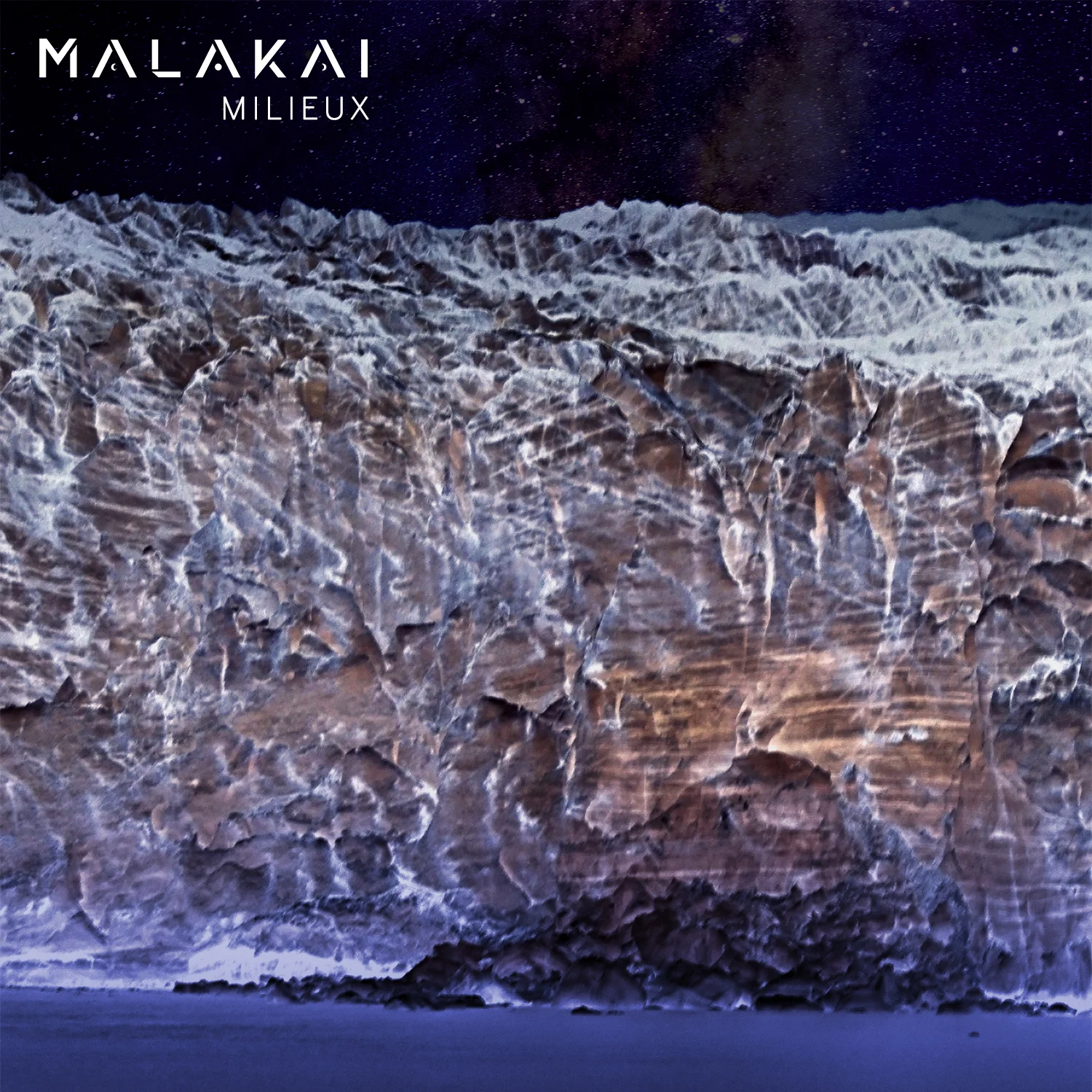
Over a year has passed since the release of MALAKAI’s Saros, an ambitious and exploratory EP that set the standard for future productions from this sonic sage. Since then, he has compulsively honed in on his signature tones and high-fidelity synthesis textures. One result is Milieux, a matured collection of melody-driven compositions that puts MALAKAI squarely on par with the fidelity-driven cornerstone producers of the modern age.
Over a year has passed since the release of MALAKAI’s Saros, an ambitious and exploratory EP that set the standard for future productions from this sonic sage. Since then, he has compulsively honed in on his signature tones and high-fidelity synthesis textures, stirring and broiling his choice ingredients and audio engineering education into a perfect fusion. One result is Milieux, a matured collection of melody-driven compositions that puts MALAKAI squarely on par with the fidelity-driven cornerstone producers of the modern age.
Milieux is remarkable for its richly-colored atmospheres and instrumental dialogue. The balance of clarity in the mix coupled with sufficient textural evolution and tonal layering is paramount to the MALAKAI musical vision, and he enacts said vision with the confidence of an auditory Philippe Petit. His righteous pursuit of pure aural experiences has brought out the best of his abilities to date, and while arrangement has always been a particular strong suit for MALAKAI, his translation and interpretation of musical language has become his most striking characteristic.
The opening track “Appa”, for example, is as aloof and playful as its namesake bison companion; a collaborative piece created with Smigonaut, the composition follows a crescendoed dance of supple warps and counter tones that gradually evolve into a mist of low-frequency oscillations. In a similar display of MALAKAI’s familiar percussive melodies, “Prunes” is a delicious, pitted groove that shuffles between anchoring bass lines and warm plucks that bounce around the upper registers. While his note choice and tonal dialogue are the backbones of his compositional structure, his use of stereo depth is the life that he breathes into his music. “Ubuntu” features an arrangement soaked in reverb and meticulously crafted to make the most of spacial dynamics, resulting in an appropriately airy track that rises and falls with the available frequency space from measure to measure. Bringing an energetic end to the EP is a particularly rusty collaboration with 5AM titled “What’s Matter”, a symphonic, orchestral finale to this four-part auditory adventure. Developing along a minor melody that sings through the speakers like angels at the gates, the track blasts headfirst into an emotive explosion of the largest synthesis featured on the EP, serving as a reminder that all is not always so subtle and spatially humble with MALAKAI’s musical vision.
In conjunction with the exposition of his highest musical watermark to date, MALAKAI is primed to take the stage this coming Saturday at Tipper’s highly anticipated three-night King’s Theatre run. In the short time between now and then, Milieux is available through the venerable Street Ritual on all major music platforms, primed and ready to emulsify in eager eardrums. While you’re not sleeping ‘til Brooklyn, don’t sleep on getting intimate with the musical mechanications of this atmospheric pioneer.
FOLLOW MALAKAI: Soundcloud / Spotify / Facebook / Official
DreamWalker - Exodus
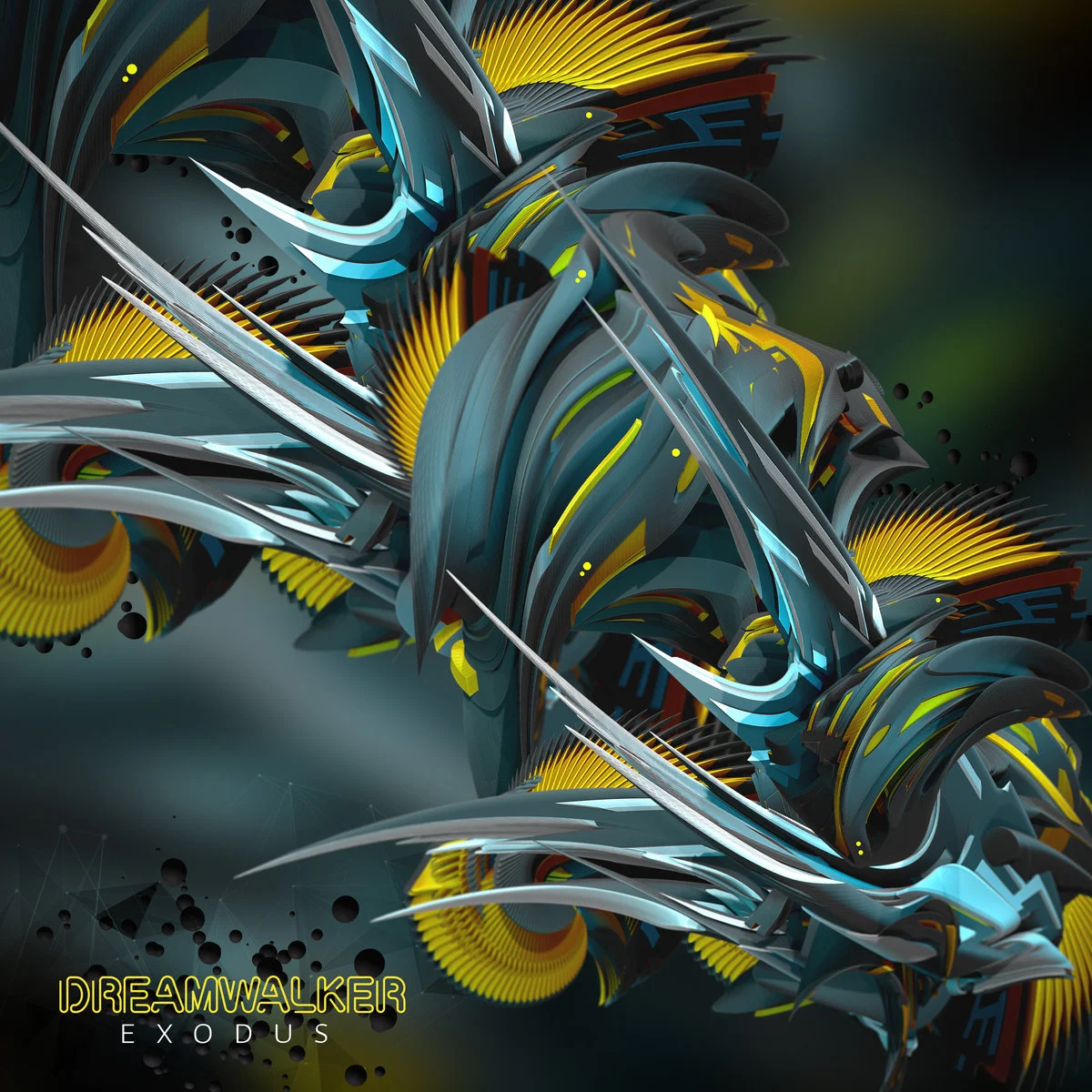
Through its fierce experimentalism, this new three-track DreamWalker release Exodus slides neatly into the colony productions catalogue and DreamWalker's own small discography. Given the caliber of the producers who have released on colony productions, Exodus puts DreamWalker in the realms of giants, and he measures up decently.
The London-based label colony productions (sic) has a relatively low output, offering a scant 34 releases though 18 years of existence. But those few releases are all up to par with even the most challenging current works of bass magic. Boasting recent releases from Triptych, K.L.O (and a solo album by Lone Drum), and now Colorado wunderkind DreamWalker, the imprint remains as much of a relevant force today as it was in the early 2000's when it was created by Dave Tipper and Mike Wallis to release their collaborative project Crunch.
Through its fierce experimentalism, this new three-track DreamWalker release Exodus slides neatly into both the label's catalogue and into DreamWalker's own small discography. Alongside his first EP, the self-released Reality Control, we see his commitment to psychedelic bass as a means of storytelling. More focused on tone, mood, and composition than flexing sound design chops, Exodus is a sure mark of balance and growth for the 24-year-old midtempo magician.
While Exodus is a full track shorter than Reality Control, it makes better use of its time to generate an emotional response from the listener. Beginning with a low and slow dub, the masterful bass drips with atmosphere and drenches the opener “The Gate” with an intense yet withdrawn attitude. The commanding presence of strings tightens the attention as the threatening door creak, reverb snaps, and the wind-up gear sounds create the sensation of a wide open space. There’s a slight climax which builds atmosphere as the EP moves toward its true peak and title track, which steps onto the scene ready to break the beat.
A fancy arpeggio-laden synth in “Exodus” double-times notes with a clean, digital voice both fiercely rhythmic and conversationally melodic; this is the brain of the track, asserting itself in the dark dub setting. A warm fuzz takes over in the second half, introducing distortion before ripping into hardcore saws and heavy midbass roars. After “Exodus” blows the listener away with unpredictable and imaginative harshness, sounds both intense and cerebral mix to form a coherent marriage of mind and body before fading into black.
The final track “Stem Slime” is effectively wraps the release by not overextending the mood created across the EP. It’s a strong glitch-hop track in its own right (the composition of whiz-bang sound is replete with shocking novelty), but the built-up atmosphere lacks true layering and then dissipates almost entirely, which may leave listeners wanting. The bleep bloops and drip drops are pretty wild and raucous, but the spacious sensation and dark dub setting from the first two tracks is absent, overpowered by an outpouring of creative noises.
DreamWalker’s creative edge is sharply felt on Exodus. The release possesses a unifying mood, and the individual expressions of each track are not lost through the EP’s overall transition from dark dub to glitch hop. DreamWalker's commitment to beautiful oscillations is undoubtedly a gift to seekers of cutting edge sound design. Given the caliber of the producers who have released on colony productions, Exodus puts DreamWalker in the realms of giants, and he measures up decently.
FOLLOW DreamWalker: Soundcloud / Bandcamp / Spotify / Facebook

Lo-Fi Sundays 053 - a.bee
Beats from Dutch producer a.bee are recklessly experimental. From dizzying chopped percussion and atmospheres that haunt, to synthesized bass that verges on an acid sound, the producer’s approach is one we don’t stumble across frequently in the wide world of lo-fi beats.
Beats from Dutch producer a.bee are recklessly experimental. From dizzying chopped percussion and atmospheres that haunt, to synthesized bass that verges on an acid sound, the producer’s approach is one we don’t stumble across frequently in the wide world of lo-fi beats. Many of their cuts have a non-linear format. They don’t follow traditional song structures, especially not those which are germane to lo-fi hip hop. Although the producer does have a few familiar 1:30 knocks like the outstanding “qdt oek jee” which kicks off this weekend’s curated playlist, whenever it seems they’re following a recognized pattern it’s usually a trick.
There’s a deep and prominent dark side to a.bee’s music. The atmosphere in “Cbcq Cq Gnx Replc” is straight spook. At the same time, this darkness creates a feeling of exciting mystery. As a result, much of a.bee’s music slouches towards the trip-hop genre. Then again lo-fi hip hop and trip-hop overlap so frequently that they’re often the same thing. This motif of dark mystery is likely why bsd.u’s lofi.hiphop label so favors a.bee’s music. The producer is featured on five of the label’s ten classic compilations, and the aesthetics align perfectly.
For beats, of course, it always comes back to percussion, and a.bee’s is totally dialed-in, especially on tracks like “regen”. The sourced material is organic, textured and varied, and it also sounds like some precise reverb and compression has been applied so that those samples cut through the mix. “germ.nate” is one of our favorite tracks from the producer. It’s based on a sample of deep, rich, synthesized tones playing a mystical melody. We’ve heard the sample twice before in tunes from leavv and mora, but a.bee leans less on the sampled material than the others have, and arguably gets more as a result. The producer hardly has any presence online, but definitely stay chooned to their Soundcloud account for more dark and mystical fire.
FOLLOW a.bee: Soundcloud / Bandcamp / Youtube

Coalesce Invites You To "Buy the Ticket, Take the Ride"
“Buy the ticket, take the ride,” writes Cosmic Synergy, quoting the late psychedelic journeyman and journalist Hunter S. Thompson to describe their event Coalesce, taking place December 29, 30, and 31 on the San Francisco Bay. These words gesture towards a spirit of faith on which DIY shows and communities thrive.
“What are you doing for New Year’s Eve”
“Oh, going to this concert.”
“Sick, who’s playing?”
“No clue.”
Heads and ticket-holders for Coalesce with Cosmic Synergy, taking place December 29, 30, 31 at the Craneway Pavilion on the San Francisco Bay, were suspended in this state of blissful ignorance until last week when the festival’s anticipated lineup finally dropped. Coalesce covertly introduced itself to the electronic music community months ago by hand-distributing sleek and clever marketing material at opportune moments. This led to now-confirmed rumors that Tipper would be ringing in the new year on the Bay. The rest of the talent was a mystery, kept tightly under wraps. There was hardly a peep from the Coalesce camp since.

More than any big name, though, it was the big mystery that generated interest for this event. The mystery of what may be, of course, can always exceed in size and scope that reality of what is. Well, except, perhaps, in the case of Coalesce. This lineup is absolutely bonkers, and it’s fair to say it exceeded all except the most gluttonous expectations.
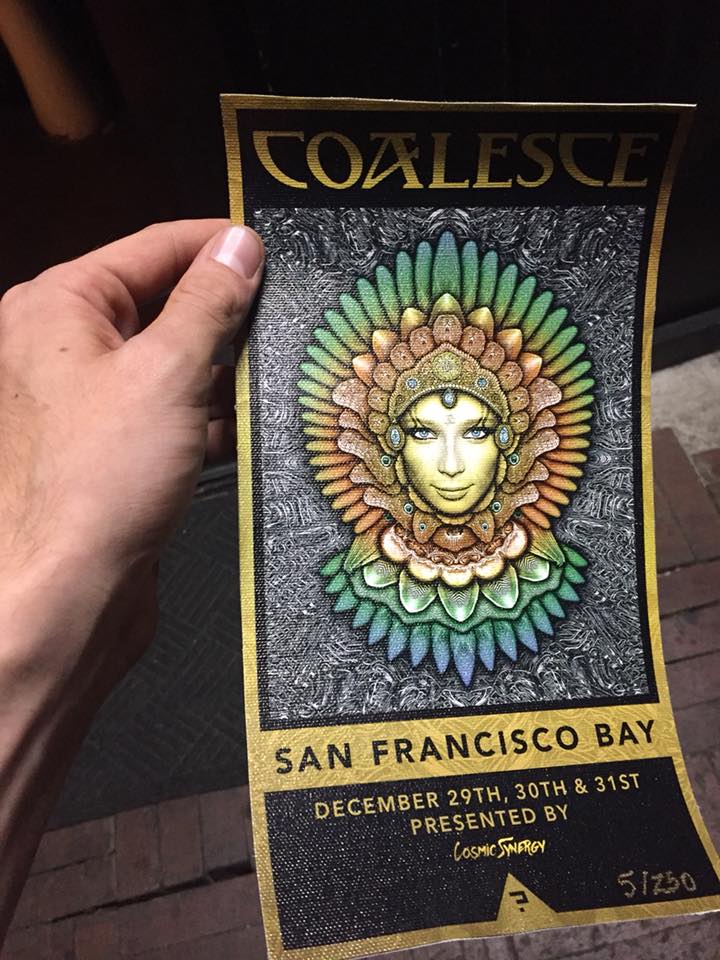
Cosmic Synergy teased the announcement of Coalesce through covert, clever marketing. These high-quality, collectible flyers were first distributed at A Benefit Show for Sibel Yalin at the Black Box in Denver in mid-September.
Those who made travel plans without the assurance of an announced lineup have been duly rewarded. That’s just the sort of audience buy-in that Cosmic Synergy has encouraged with this event. Now that the lineup is circulating throughout digital and interpersonal networks, one would be wise to secure entry while he/she/they still can. “Buy the ticket, take the ride,” Cosmic Synergy writes in the description of their event, quoting the late psychedelic journeyman and journalist Hunter S. Thompson. These words don’t (just) represent a subtle nudge towards the event’s financial solvency. They gesture towards a spirit of faith that, when combined with action, generates the energy on which DIY shows and communities thrive.
The Bay Area has always been a hotbed of rave culture, and the spirits of psychedelia and experimentation - both musical and social - have always defined the Bay’s multifaceted music scenes long before what we know as electronic music took to the airwaves. Some say the Bay really began to rave when acid house washed ashore beneath the Golden Gate Bridge in the early 1990’s. This publication’s readers are likely more familiar with the broken beat electronic music that circulated in the early ‘00s from DJ/Producers like Bassnectar, Mimosa, or Rodman “Lux” Williams,
Today, pillar organizations within psychedelic bass music like Street Ritual and Wormhole Music Group have made the Bay Area their home (both are helping to produce Coalesce). Combined with its rich history, this has cast the region as the de-facto bass music capital in the States, although Denver continues to edge for that pole position. Regardless, on the last three days of 2018, the Bay Area will be ground zero next level broken beat electronica. Indeed, Coalesce has the potential to rank with any historic Bay Area rave and become a seminal moment of sorts for a new generation of electronic fans and musicians.
The event will feature a single stage, helping attendees and artists channel all their energies into one musical vibe. The volume and caliber of rare and special sets on this lineup is unmatched. Two Fingers, a side project of Amon Tobin which offered early innovations on the grittier elements of dancehall, dubstep, and grime, will perform for the first time since 2013. Liquid Stranger will offer his only downtempo set of 2018. Fresh from the VISA office and his play at the Kings Theater in Brooklyn, Australia’s Spoonbill will deliver a West Coast play for adoring fans. There’s also a mysterious Slug Wife takeover with two of its three artists yet to be announced (Seppa?) This hardly touches the deep and intentional undercard which is stacked from top to bottom with the cream of the contemporary bass music crop from Shwex to Frequent to Sixis.
The lineup of visual artists at Coalesce may be even more impressive and rare than the grouping of musicians. Led by the first couple of visionary art, Alex & Allyson Grey, exceedingly talented collectives and individual painters will work on murals throughout the three day event, including Phaneros Art featuring the work of Jonathan Solter, sydwox and E Howard, and the Denver-based Apex Collective highlighted by the work of Stephen Kruse and Jake Amason. Michael & Violet Divine, husband and wife, will also partner on a mural, and Luke Brown aka “Spectraleyes” will also be painting a solo piece. The roster of projection artists features the usual suspects from the Tipper & Friends universe like Datagrama.TV and Fractaled Visions, as well as less familiar names like Andy Thomas, known for his “Visual Sounds of the Amazon” series. Carey Thompson, who has served as the Art Director of global dance mecca Boom Festival for nearly a decade, will be designing a world-class stage.

The Craneway Pavilion was awarded a National Preservation Honor Award when it was renovated in 2009, and is part of the Rosie the Riveter/WWII Home Front National Historical Park.
Cosmic Synergy spared no expense to place this all-star cast of creators in an appropriate setting. As a former Ford assembly plant that processed 60,000 tanks during World War II, the Craneway Pavilion is “as state-of-the-art as it is historic” says Venue Report. Towering floor-to-ceiling windows offer panoramic views of one of the world’s most iconic urban environs - the San Fransisco Bay stretching out towards the Oakland-San Francisco Bridge and The City itself. One can also drink in this view while ambling with their friends and non-biological family around a 20,000 square-foot open air patio in the swirling Bay mist.
Your correspondent is curious about the acoustics in the Pavilion. Bay Area hip-hop festival Feels has been hosted there, so the space is battle-tested to a degree, although that doesn’t speak to it’s capacity for presenting high-fidelity sound. Sure enough, though, Cosmic Synergy is working with world-class acousticians to dial in the Funktion One sound system and create a world-class concert experience. According to the Cosmic Synergy team, they’ve had the room and speaker array acoustically analyzed and modeled to understand the frequency response of the cavernous, glass pavilion. Based on the results, they’ve produced proprietary (read: one-of-a-kind) absorber-diffusers to control the bass and the high-end frequencies. This pre-emptive action on acoustics is usually out-of-sight but rarely out-of-mind for the discerning audiophiles who are sure to show up to Coalesce. Accordingly, Cosmic Synergy is taking the steps necessary to ensure its crowd receives the deluxe sound treatment they’ve come to expect.
Word is that throwing an independently-promoted show in the Bay Area, let alone a bonanza like this, is becoming increasingly challenging. Cosmic Synergy lucked out, then - well, luck likely had little to do with it - by snagging this venue. The real lucky ones, though, are of course the ticket-holders who will coalesce at the edge of the United States and the edge of the known sonic universe to ring in the new year.
![Lo-Fi Sundays 052 - Axian [Interview]](https://images.squarespace-cdn.com/content/v1/59530136f5e2319eabb7d87f/1541952675146-9G21PKJYNJ0H5L0P95PG/tape.jpg)
Lo-Fi Sundays 052 - Axian [Interview]
To mark one year of Lo-Fi Sundays, we’re publishing a conversation with an eminent representative of beat music, Alexander Fjellerad Thomsen, better known as Axian of Aarhus, Denmark. In addition to covering who Axian is and how he makes his spacey, sample-cut music, we ended up discussing beats music generally, the “lo-fi community” at large.
One year ago this publication began covering beats music, or more specifically what’s referred to as “lo-fi hip-hop”, through this column. It wasn’t necessarily in line with the electronic music The Rust typically covers, but we felt an urge to recognize the broad community of producers who create these universally accessible beats. Lo-fi hip-hop is typified by dusty, percussive overtures, warped instrumental samples, and the nostalgic veneer of low-fidelity production. Whether by accident or design, the texture of the music became the genre’s namesake, distinguishing this distinct musical and emotive motif from the wider sea of hip-hop music.
Although it’s exploded in popularity in the past five years or so, lo-fi hip-hop is niche music. It’s written about infrequently, save for general overviews of the style which tend to focus on its Youtube popularity through 24/7 streaming channels. This emphasis can paint lo-fi hip-hop as more of a novelty than a serious approach to musical communication, and that doesn’t jive with the reality on the ground. So 51 beatmakers later, to mark one year of progress for this column, we decided to publish a conversation with one of the genre’s eminent representatives, Alexander Fjellerad Thomsen, better known as Axian of Aarhus, Denmark. In addition to covering who Axian is and just how and why he makes his renowned spacey, sample-cut music, we ended up discussing beats music generally, the “lo-fi community” at large, and how this music is beginning to fit, sometimes not so snuggly, into the wider music industry.
![While he’s “not going to say [he] started it,” Axian was one of the first people to begin associating imagery from anime with lo-fi hip-hop through his Youtube channel.](https://images.squarespace-cdn.com/content/v1/59530136f5e2319eabb7d87f/1541897140509-3DI9PQFJOU06LWJIXAO8/yuyuhakusho.jpg)
While he’s “not going to say [he] started it,” Axian was one of the first people to begin associating imagery from anime with lo-fi hip-hop through his Youtube channel.
Perhaps the most surprising aspect of Axian’s beatmaking career is how recently it began; he’s only been producing music since December 2016. Before this, however, he was making mixes of other people’s beats and publishing them on Youtube and Soundcloud. Some, like his “Dozing Off” mix which has 3.2 million views on Youtube, have become classic artifacts or “standards” of the style. All demonstrate Alexander’s discerning ear for emotionally rich music and his strong sense for curation.
Alexander says he’s always been into experimental hip-hop, but he remembers when he caught the bug for beats music specifically. “My experience coming into all of this was through Blazo. That’s where I really made the bounce from hip-hop into straight instrumental, jazzy hip-hop.” Released in 2011, Polish producer Blazo’s Colors of Jazz LP is a foundational text, as it were, in the canon of beats music. “It brought along so many more incredible things in the world of underground hip-hop.”
For almost all of the nearly two years Axian has been producing, he’s been working on his debut LP Chronos, which was released by Inner Ocean Records in September and features collaborations with other eminent producers like Borealism and Kuranes. Like many contemporary producers, Alexander never seriously studied another instrument before getting into beats. As we spoke, he flipped his webcam to show the keyboard on the desk in front of him, remarking that he’s teaching himself to play keys. On Chronos he played about 45 percent of the melodic material himself and sampled the other 55 percent. Spacey, deep, and a bit dark at times, the record epitomizes what Axian has always honed in on - a sound that is deeply felt as much as it is heard.
As we continued to speak via video chat, our conversation began to explore topics larger than Axian’s own music. “When you look at something like lo-fi and how it started, it’s very free from all of this, how you say, ‘norms’ about music,” Alexander says. “It’s so careless, you can experiment in so many ways. I feel a strong connection to genres of music that allow for so much creative freedom.” If beats music is wide open in a creative sense, it also strays from certain norms of music promotion, distribution and marketing. As a result, lo-fi producers face an uphill battle accessing mainstream markets.
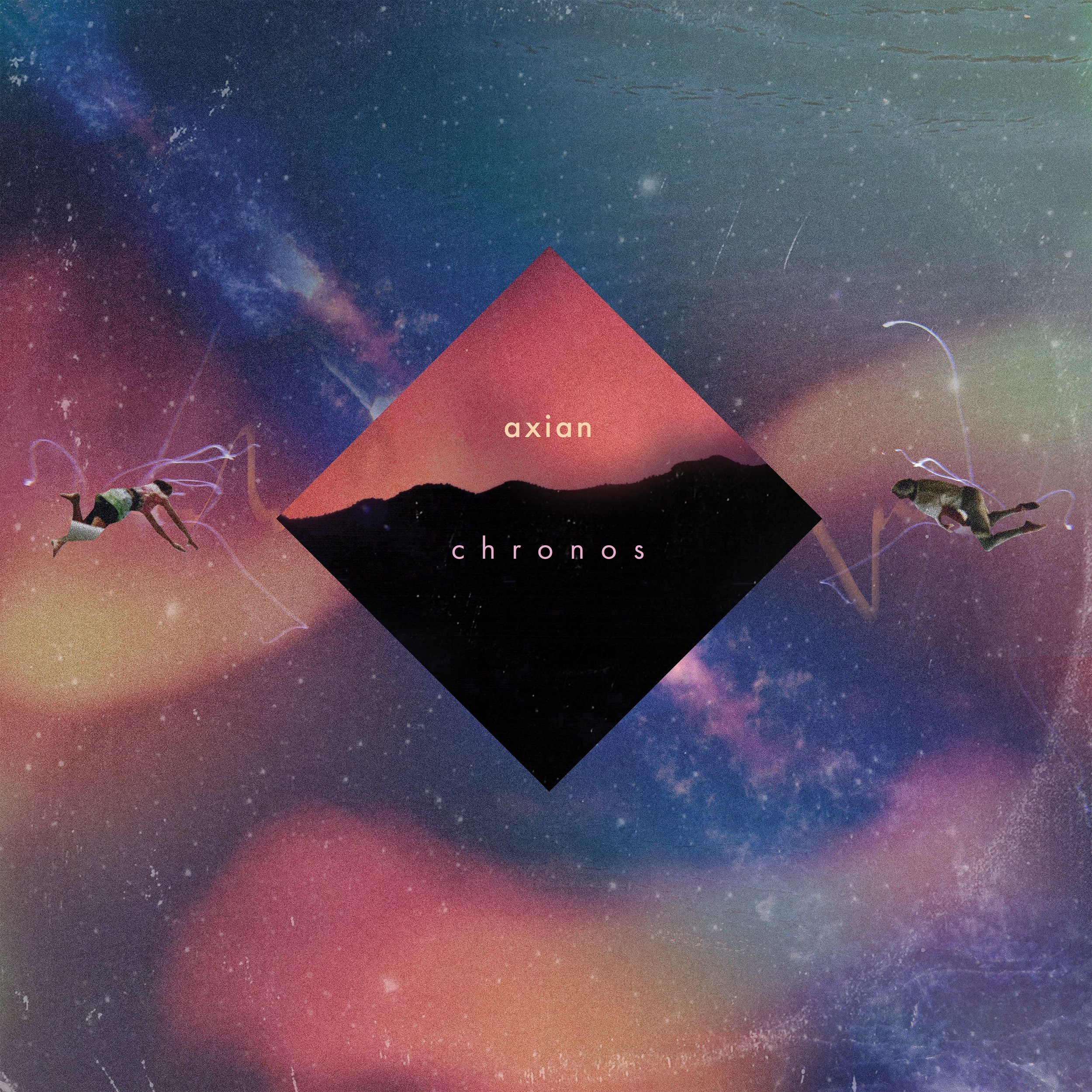
Axian’s first LP Chronos was released by Inner Ocean Records in September 2018 (Artwork: dwyer)
Coinciding with changes over the last decade to the ways in which people consume music, lo-fi hip-hop is mostly distributed and digested within fervent online communities. Copyright laws and royalty contracts create barriers to the legitimate distribution and sale of a genre historically rooted in the sampling and reconfiguring of composed musical material. While streaming platforms like Soundcloud and Mixcloud have somewhat lax regulations on what is contained in uploaded content, more monetized platforms like Spotify and Apple Music have strict rules on the nature and origin of the content they allow on their platforms.
One platform where producers have begun achieving wider recognition for their music is the plethora of playlists curated by Spotify itself. Songs selected for playlists like “Lush Lo-Fi” or “Lo-Fi Beats”, each with over 500k followers, reach huge audiences, and as a result the producer may receive royalties which are not insignificant. As these avenues towards recognition and compensation have grown, however, Axian points out certain unintended consequences, one being the establishment of “norms” where before none existed. “I’m sure quite a few people are tailoring their music to fit these playlists. I feel that these playlists and collections have garnered so much power that they are influencing the producers for the negative. I won’t take that to a super far extent, but I believe at least a small extent, that is a reality.”
The prominence of this playlist model for lo-fi hip-hop can be attributed in part to the work of Athena Koumis, former Music Culture Editor at Spotify. Athena led the curation of many of these large, popular playlists and communicated frequently with some of the style’s prominent tastemakers, ensuring the playlists were kept up to date with fresh, new sounds. If anyone has had their finger on the pulse during lo-fi’s rise in popularity, it’s been Athena.
Axian’s discussion of the playlist model, however, points toward deeper ethical implications. As these playlists are the locale for popularity and recognition in lo-fi hip-hop, are they impacting the fundamental ingredients of the music contained within them? “I know it, because I see it on a daily basis with producers I’m friends with on Facebook and through submissions I receive for my own playlist [“Dozing Off”],” says Axian. “I don’t want to complain too much about Spotify, because I’m doing pretty well there, and it’s doing good for the community as a whole. I feel you just need to also realize the negative aspects.” Despite his observations, Axian does recognize the playlist model as the best game going right now, although it could be better. “As a community, I don’t know what we should do exactly. It’s complicated, and playlisting is a fine solution.”
In the wake of Athena’s work with a plethora of lo-fi labels and producers, lo-fi hip-hop now has a firm and well-deserved foothold on Spotify. In addition, a number of labels and artists were simultaneously following the same pattern. The label Chillhop Music has garnered over 750,000 followers on their most influential Spotify playlist, “Lofi Hip Hop Beats”. A recent change to the submission guidelines for their label releases, however, highlights a fundamental issue in the propagation of lo-fi.
“Personally, I love Chillhop, and I support them to the end because I feel like they’re doing the right thing,” says Axian, whose EP Gaia was released through Chillhop in 2017. “But when they stopped the sample usage, or they stopped accepting music with samples, that was such a big transition in the community. Chillhop was the frontman or whatever. They’ve always been supporting hip-hop of all kinds in the underground community, and it was kind of weird to see that happen, but I get it.” This summer, Chillhop Music announced that they would no longer accept label submissions that included samples. Alexander suggests that Chillhop’s motive was to stay on the right side of publishing and copyright laws. He hits a major nail on the head, as running afoul of such laws can quickly result in the seizure or forfeiture of profits and/or having entire domains and labels shut down overnight.
“They started making money, getting bigger than they may have thought they would. In one way I get it, but in another way, you can mess with a sample so much that it’s unrecognizable. As an artist trying to understand a label [Axian himself runs a label called Celestial Blue with rappers Obijuan and loom], I get where they are coming from, but I think it split up the community a bit. A lot of the older lo-fi heads, said ‘oh man that’s a trash move’. Then there are the new heads who are trying to get into sample-less music. And I consider myself somewhere in the middle, maybe a bit more on the older head side.
Axian is noting a phenomenon that is as old as the music industry itself, wherein artists will curate their musical content to fit the desired motif of the labels that are sponsoring or highlighting the music. This potentially calls into question the fundamental integrity or “authenticity” of those productions. Conversely, these unforeseen barriers and obstacles to publishing lo-fi music have brought about a wave of innovation and creativity amongst new producers. Instead of sampling content from external musical sources, artists are training themselves in conventional instrumentation, recording that instrumentation, and sampling their own arrangements from scratch. In this manner, one can create everything that is holistically lo-fi music and simultaneously be able to own and distribute that music without issue. As stated before, Axian is himself learning the keys.
This was not the first time Axian has spoken on the subject of how and why music is influenced the way that it is. Indeed, “I think about this all the time,” he said. Beyond how the music is influenced, there is the function of that influence itself. In an interview with Public Pressure in 2017, he said “Everything has to be fancy, or about money, drugs, and sex to make it in the mainstream, and I think a lot of people are conforming to the belief that that’s the way things should be.” Alexander believes this is not coincidental. “At some points in my life, I’ve thought that we’re all controlled to a certain extent. It is funny thinking about these things, because not everything is coincidental. It’s not just trashy music. It’s not just popular because it’s popular. There’s someone making the decisions behind the board. There’s a great logic behind it, but it’s just not the right ethic.”
“It’s about who they’re appealing to,” Alexander continues. “I have some friends who are school teachers for the lower grades. They always talk about how all the kids are referencing all this music that is so inappropriate for kids. I think that’s something we may not be so aware of; how it affects the kids. I’m personally very against that.”
For his part, Axian will continue to make music which speaks “the language of feelings”, as he referred to it in Public Pressure. He continues to release deeply emotive singles regularly, many of which, like his latest, “Evocation”, are included in our curated playlist. He’s also working on a side project with another producer. Their first release will have some “soft beats” as well as some “hard slappers”.
“Slappers!” I repeat gleefully.
“Yea, slappers, that’s what we refer to them as in the community. Something has to slap in the hip-hop community.” For an example of one of our favorite slappers from Axian, check out “Rockin” in our curated playlist or “Adamite” from Chronos. Regarding his side project, “it’s beats, but it’s a lot of different stuff. Lately I’ve been moving towards more electronic stuff. Not to make electronic music, but to make hip-hop, or ‘synth hop’.” By earning himself popularity, Axian can create freely and continue to chase that language of feelings without worrying so much about whether or not it will reach people’s ears though this playlist or that label. “I’m basically in a place where I can do whatever I want to, as long as I keep it real. That’s my philosophy.”
So again, this Sunday we encourage you to kick back, relax, perhaps put on your thinking cap, and enjoy a curated playlist of music from a talented beatmaker. Regardless of the methods for promoting, naming, selling, or making lo-fi hip-hop, there’s one quality to this music which almost all can agree upon, and Alexander verbalizes it well. “You can convey so many things without saying a single word, or you might even spark something inside someone that you never intended to, and that's the beauty of it in my opinion.”
FOLLOW Axian: Soundcloud / Spotify / Youtube / Bandcamp / Facebook
Lo-fi Sundays 051 - Xon'a'jazza
Channeling the smooth noire of jazz and ballroom sonatas, Xon’a’jazza is a hidden gem reaching out from the Russian Federation. Combining dusty instrumental motifs with craftily sampled hip-hop verses and a particularly clean mix-down, his productions are set aside from typical lo-fi in their stereo depth and percussive clarity.
Channeling the smooth noire of jazz and ballroom sonatas, Xon’a’jazza is a hidden gem reaching out from the Russian Federation. Combining dusty instrumental motifs with craftily sampled hip-hop verses and a particularly clean mix-down, his productions are set aside from typical lo-fi in their stereo depth and percussive clarity. Sticking to his guns and honing in on a developing motif, Xon’a’jazza is an artisan beat smith with a few twists up his sleeve.
Sampling instrumental content is a balancing act between the notes that are sought after and the notes that are clipped away. Altering and warping any recorded audio is going to yield results that could be wildly different from the original source material, and sometimes this process can distort tones and frequencies beyond the desired effect. Xon’a’jazza has made a choice habit of letting his sampled material breathe as much as possible in its original format, preserving the quality and harmony of his cuts and melodies. No matter the vibe or the tune, he will assuredly find a way to sneak in some sliced vocals from a bevy of veteran hip-hop artists, including Method Man, Quasimoto, Notorious B.I.G., and Jurassic 5. Dive in deep enough, and there’s even a rare example of “lo-fi” jungle music, a musical easter egg waiting to be cracked open and enjoyed for all of its odd and whimsically chosen source material.
With just two years worth of tracks presented on a public platform, Xon’a’jazza has carved out a raft of musical artifacts and audio anomalies in the world of lo-fi productions. Looking at the rapid turnover rate of his recent releases, it can be surmised that even more juicy tunes are just around the corner. Having made such a bombastic impression, this cold-weather Slav is now firmly on this publication’s radar.
Kalaha - Mama Ngoma
Sometimes bands combine seemingly disparate music styles into one cohesive sound. In doing so, they remind listeners that styles which may seem far apart either physically, stylistically, or both, are actually closer to one another than they appear. The Danish group Kalaha allows us to experience this phenomenon through their new EP Mama Ngoma.
Sometimes bands combine seemingly disparate music styles into one cohesive sound. In doing so, they remind listeners that styles which may seem far apart either physically, stylistically, or both, are actually closer to one another than they appear. The Danish group Kalaha allows us to experience this phenomenon through their new EP Mama Ngoma. As the group’s first release in almost two years, Mama Ngoma paints a dreamscape of energetic electronica from a foundation of traditional West African music.
Kalaha was born as a live act at the Strøm Festival in Copenhagen where the band members - Rumpistol (Jens Christiansen), Spejderrobot (Mikael Elkjær), guitarist Niclas Knudsen, and drummer Emil de Waal - came together in haste to offer a “supergroup” performance to enliven the festival. Since then, Kalaha has recorded four studio releases and taken the stage together more than 100 times, where they’re acclaimed for whipping audiences into dance-driven frenzies. “All of the band members have very strong knowledge in at least one of the musical styles/genres mentioned,” Emil writes via email. A prolific percussionist, he’s described as the “backbone” of the band. “Nevertheless, we have very different ways of approaching the music…Somehow we respect each other´s approaches in a way that allows the diverse music styles to flow and blend freely.”
The EP pays homage to West African musical styles, particularly highlife, which earned its name because performances originally took place in exclusive, high-society settings where musicians played traditional Akan (a West African meta-ethnicity) rhythms and melodies through amplified instruments. These motifs are jumping-off points for Kalaha, but not ideas to be emulated “I don't think of Kalaha as a band that aims to recreate tradition,” Mikael writes. “We are more into being inspired by music we know and like. The different genres and traditions are more of a inspirational framework that allows us to make and play music we love.”
The two electronic musicians in the group, Rumpistol and Spejderrobot, are also its producers. In this role they are absolutely dialed-in, no pun intended. They mix electronic and acoustic material masterfully. The drums, rich and organic in timbre, shuffle and strike like a strong dance beat while synthesizers shine in colorful contrast to electric guitar licks. Kalaha has no traditional bassist, and usually Jens and Mikael mix synthesizers with different characteristics to create driving bass rhythms. On Mama Ngoma, however, they invited Danish bassist Flemming Muus and Louis Winding to track basslines.
“Dragon Jenny”, the first single from Mama Ngoma, is also its most plainly beautiful song. At just over six minutes long, “Dragon Jenny” moves through different atmospheres that are first inviting, then disorienting, but ultimately euphoric. Tonal percussion and a deep, twanging bassline by Muus (“We bring the bass part with us live in Spejderrobot´s computer,” says Emil) combine to create an undulating pocket groove. Just past the four-minute mark, one of Knudsen’s most choice guitar licks rings out, and one can’t help but smile upon hearing it.
“Malaika” demonstrates a natural psychedelia, a feeling of mind exploration that’s not schmaltzy or forced. “When we did the very first two rehearsals of ‘Malaika’” Jens writes, “we tried it with a straight up disco beat but also with a 'Higher Ground'-like funk shuffle. None of them really worked, so I suggested the idea of turning the tempo down 30 bpm and making it into a kind of G-funk track for the first part merging into afro-beat on the last part. Niclas came up with the talk-box and the little catchy afro-funk riffs, Louis provided the bass, Emil the drums and in the end it became something entirely different than originally intended, which I think is the magic of working collectively.”
On his “anagram” remix of “Malaika”, the New York City-based producer (and co-founder of The Rust Music) MALAKAI picks up on the psychedelia and delivers a digitized, spaced-out reimagining. The swing and hip-hop influence in MALAKAI’s drum pattern is a nice change of pace among the EP’s galloping afrobeat style. The “Cape Star” remix from fellow Danish producer Bwoy De Bhajan is the sleeper song on Mama Ngoma. If you’re not actively listening to it, the striking minimalist beauty may pass over your head. But get cued in for this cut, and you’ll find yourself immersed in a refreshing psychological swim across the meditative musical spaces that Bwoy de Bhajan creates. “I find it very enjoyable when the personality of the individual remixing is clearly present in the remix,” Mikael writes “I think both remixes share that quality.”
By bridging gaps across geography, time and style, Kalaha continues to make the music of the future in the present. The band’s own future includes a full-length release in 2019 titled Mandala, to which Jens calls Mama Ngoma a “prologue”. If you enjoy the vibe of Mama Ngoma, you already know to stay chooned until then.

Lo-Fi Sundays 050 - Furozh
“…And I sound the way I feel.” Smooth and resonant words that producer and peacemaker Furozh seems to live by. Furozh beats carry with them the sound, swing and essence of the concrete jungle of New York City from which the producer hails. They also carry an inspiring and necessary message of peace, goodwill and uplift in between their breaks and sample-cut melody.
“…And I sound the way I feel.” Smooth and resonant words that producer and peacemaker Furozh seems to live by. Furozh beats carry with them the sound, swing and essence of the concrete jungle of New York City from which the producer hails. They also carry an inspiring and necessary message of peace, goodwill and uplift in between their breaks and sample-cut melodies.
The bulk of his beats are cut from the familiar dusty cloth of sample chopping. He also at times produces in a futuristic digital style, with tunes like “Night” and “Time Zones” featuring Obuxum as examples. Then these two styles collide, for example on a track like “Congo”, and the past becomes the future, and both become right now. Demonstrating his flexibility, Furozh also produces music like “Pharaoh’s Cadence”, another collaboration this time with haNN_11, that nails the vogueing saturated, tapefuzz sound. Collaboration is inherent for Furozh, and a handful of his albums are co-produced with other beatmakers.
The extent of the producer’s catalog is hardly captured on SoundCloud, from which we curate these playlists. He owns a deep, deep discography on Bandcamp dating back four years and bookended by his most recent Revolutionary Love LP. Furozh frequently performs his music in and around New York City. Most of the dates are announced on his Instagram if one was trying to catch a performance.
FOLLOW Furozh: Soundcloud / Spotify / Instagram / Twitter
Primate - Out Of Time
Seemingly standing atop the shoulders of giants, Primate is a creator of the highest accord, and he utilized his precious time with a remarkable patience to craft the aural opus Out Of Time. The word “layering” does not do his process justice, as his music is not stacked like logs or bricks. It is a crisscrossed, interwoven, biosynthetic matrix of sound and intent.
From the moment the calendars rolled over to 2018, the vast score of musicians and producers inhabiting our musical sphere have been firing off one stellar release after another. Seemingly standing atop the shoulders of giants, Primate is a creator of the highest accord, and he utilized his precious time with a remarkable patience to craft the aural opus Out Of Time. While there is no shame in adapting to and riding the creative waves that influence genre development within electronic music, there is an incalculable worth in blazing a trail beyond the present scope of one’s assumed musical boundaries. In practical terms, that means taking exceptionally brilliant compositional risks, and Primate is no stranger to experimental arrangements.
In the world of sound design, Primate is refreshingly biological in comparison to his contemporaries, and eschews adopting typical synthesis in favor of deliciously home-brewed tones and textures. Out Of Time is an extremely matured display of the Primate vision, and it absolutely smashes all expectations. So much of the sonic palette that is elemental to the Primate mode rests around the glide of his synthesis; his choice of notes stretch and fold into one another with a melodramatic legato that carries the emotional weight and output of his tracks. “Natural Brilliance” is an excellent example of this motif, with the lead tone of the track engaging the staccato response of Ill Chill’s lyricism through elongated stretches and subtle twists. Propping up this high-frequency dance is a vibrant blend of foley work rustling between the skip and bounce of his fluid drum work, which has become a staple feature of every Primate production. “Mislead” is the subtle sleeper of EP, wherein it provides in utter smoothness what it lacks in intensity. The rhythm is a hypnotic 4/4 hip-hop L-ride that flows in parallel to the most sultry chords found anywhere on this EP, carefully popping in and out of the mix like sunshine through a forest canopy. Resting underneath all of the fan-fair is a boisterous bass line that can only be served justice through a concert-grade subwoofer, creating a veritable cushion for the softer elements. The title track, “Out Of Time”, rides along a choice downtempo bounce, its bass lines pulsating with that reverberant buzz so favored by Primate. The slow serenade ramps up over the course of the track, culminating in a mad dash of drum and bass rhythms with an impact akin to rolling thunder. Each song on the EP is given not only room to breathe, but room to evolve over time in the listeners ear. The first few play-throughs will yield the immediate magic of Primate productions, but it is the constant return to these tracks that will turn over their sonic layers and secrets beneath the surface.
Genres are a fickle thing, and for musicians who wish to adopt and adapt styles within the ever rapidly-changing landscape of electronic music, genres can be limiting and musically castrating. Primate has the keen and prized ability to look at his compositions from the bird's eye view, outside the bounds of genre. He sees every space between the details, and then compliments that space with yet another responding frequency. The word “layering” does not do his process justice, as his music is not stacked like logs or bricks. It is a crisscrossed, interwoven, biosynthetic matrix of sound and intent. As always, remain vigilantly plugged into the catalog of Primate, and you'll be thoroughly rewarded in kind, every time.
FOLLOW Primate: Bandcamp / Soundcloud / Facebook / Spotify


![Seppa - Interview + Boosted [EXCLUSIVE PREMIERE]](https://images.squarespace-cdn.com/content/v1/59530136f5e2319eabb7d87f/1626113208781-BZ7C6B7E3LCECV7UD4CS/Boosted.jpg)
