
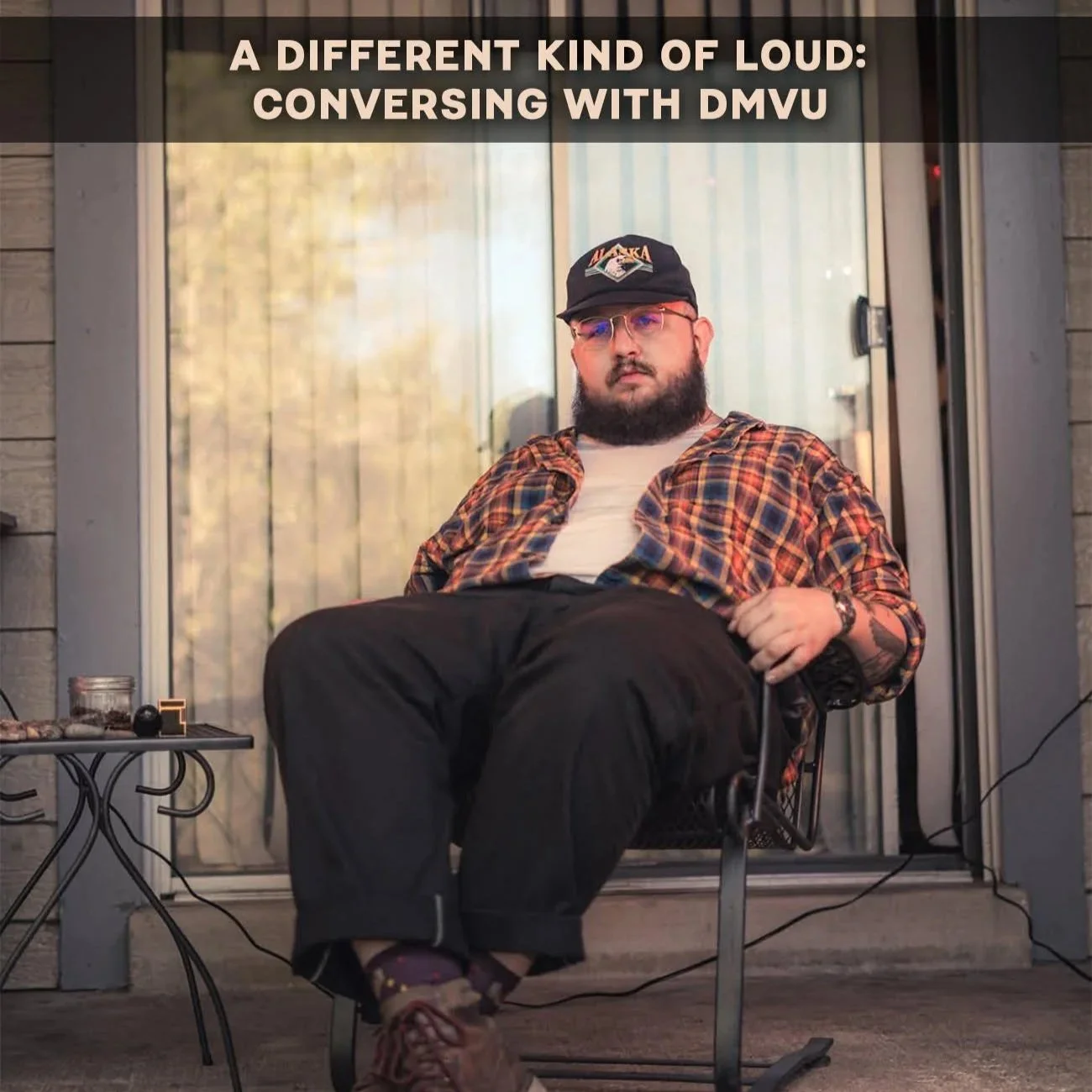
A Different Kind of Loud: Conversing with DMVU
The Colorado music scene has never been defined by a single sound, a single musician, or single venue. The scene is sculpted by artists willing to take risks, evolve alongside their audience, and pour pieces of themselves into every release. For nearly a decade, Matthew Phillpot-Jones, better known as DMVU, has been one of those artists. His unmistakable blend of earth-shaking bass, cinematic textures, and deeply introspective songwriting has helped define Colorado's underground electronic scene while inspiring a generation of producers to push beyond genre boundaries and limitations. As DMVU steps back onto the stage with fresh music and a new perspective, we sat down to talk about creativity, Colorado, healing, and why this next chapter feels like the most authentic one yet.
The Colorado music scene has never been defined by a single sound, a single musician, or single venue. The scene is sculpted by artists willing to take risks, evolve alongside their audience, and pour pieces of themselves into every release. These artists become the soundtrack to our road trips through the mountains, the moments that connect us beneath festival lights, and the reason so many of us fell in love with this community in the first place. Beyond just providing the tunes, they help shape the culture that surrounds it.
For nearly a decade, Matthew Phillpot-Jones, better known as DMVU, has been one of those artists. His unmistakable blend of earth-shaking bass, cinematic textures, and deeply introspective songwriting has helped define Colorado's underground electronic scene while inspiring a generation of producers to push beyond genre boundaries and limitations. Yet behind the music, life was asking Matt to grow in ways the audience could not see.
Over the last few years, Matthew stepped away from touring to focus on his personal health, musical production, visual art, and reconnecting with something beautifully simple: creating for the joy of creating. Without the pressure of expectations or an audience to impress, he found his way back to the heart of why he started making music in the first place. Now, he's returning with a renewed sense of purpose, an overflowing catalog of new material, and a new perspective of his medium and craft.
Contrary to chasing momentum, this is a story about what happens when an artist gives themselves permission to slow down, grow, and rediscover why they fell in love with creating in the first place. As DMVU steps back onto the stage with fresh music and a new perspective, we sat down to talk about creativity, Colorado, healing, and why this next chapter feels like the most authentic one yet.
Alyssa Barnhill: After taking some time for yourself, how are you feeling about this next chapter of DMVU?
Matthew Phillpot-Jones: I'm feeling good about it. I'm feeling more comfortable writing music again. I'm feeling more and more comfortable creating visual art for the first time, that's kind of a new medium for me. I've been doing it enough that I'm starting to kind of get into like the swing of it, you know? I spent quite some time the past couple years kind of experimenting with all sorts of different mediums, sounds, and stuff. They weren't things I really was putting my whole heart into. I mean, obviously, I loved doing that and trying new things, but I've kind of returned to a place of writing music that I am really passionate about and music that really feels like it's just for me. There's no intended audience, there's no greater concept outside of just like, I feel like I'm writing what I need to write. So, it's got me quite excited for this next chapter.
Alyssa: What has you the most excited creatively right now?
Matthew: I've really re-ignited my passion for sampling. Sampling is how I got into making music in the first place. There is nothing more rewarding than digging and digging for hours and hours and hours to find a single, baby tiny little loop, or even an individual like one-shot sound in a song. I have absolutely been re-enthralled in the art of sample hunting. I've been finding the most obscure and like out-there things that I can find. Sampling weird stuff like old commercials from like radio shows, and not just that, but like sampling music that I've been listening to for my entire life, you know? That is something that feels very full circle to me.
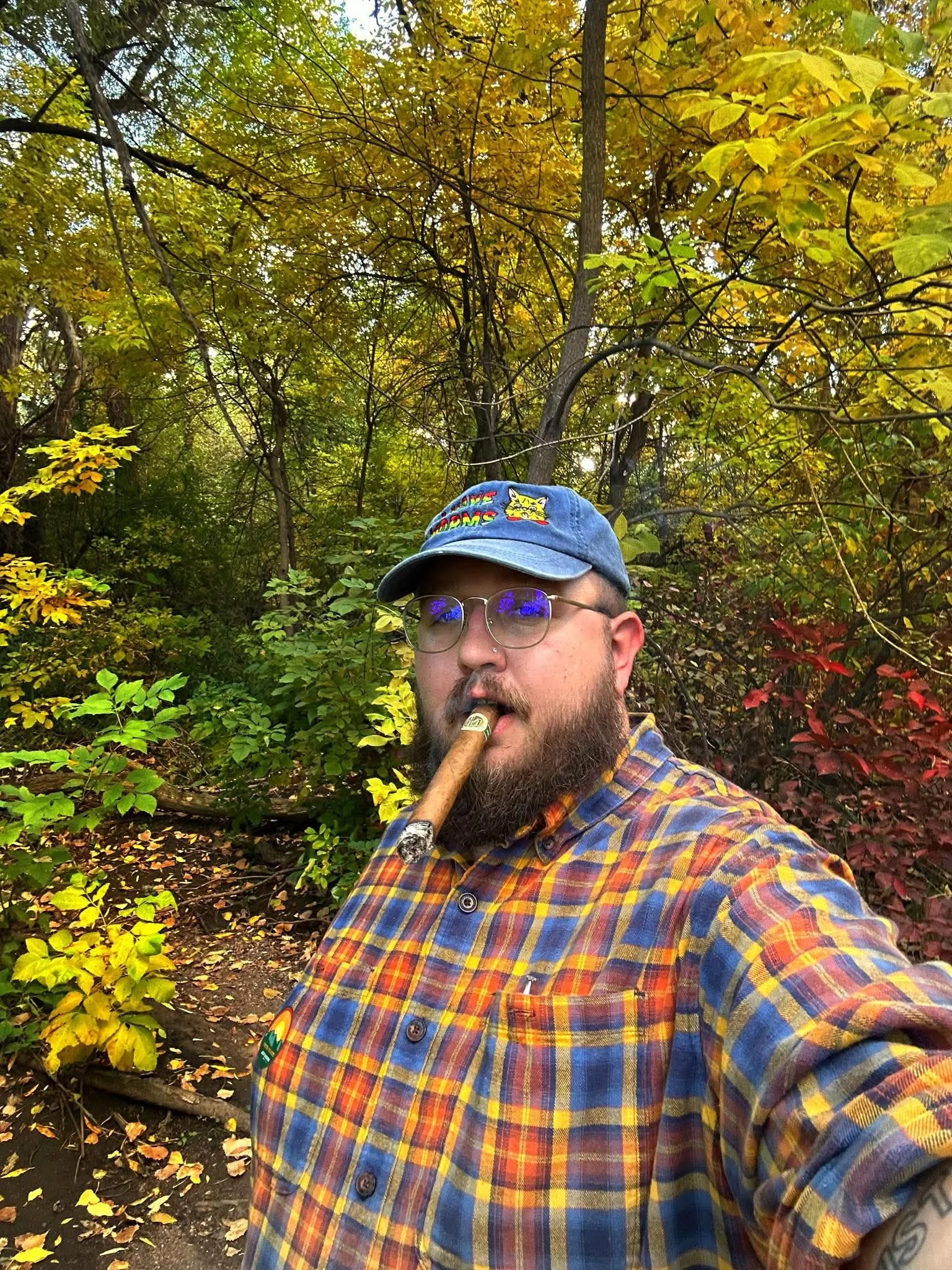
“Everything the light touches is your kingdom.”
It feels very cathartic, because it's like it feels like it's been something that's been in front of me this entire time, and I somehow looked over it. And a part of me was just like, "Hey man, like why don't you just sample the music that you love the most?" And it's like, God damn, didn't know I could do that, but you know, here we are, and that’s got me deeply inspired.
Alyssa: Colorado has such a distinct landscape and culture. Are there any specific places here that still influence the way you think or produce music today?
Matthew: Yeah, so my house backs up to a greenbelt that stretches all the way to the mountains. I live 50 yards from Bear Creek, if that. Everything about the beautiful wilds of Colorado is deeply inspiring to me, but I mean even more so now, I have a little cat who spends five to six hours outside with me. She walks on a leash. She's not going out there loose, that's too sketchy. But, I spend 5 hours a day outside with her at this point, and it has been incredible for my mental health to just be like sitting around outside by the creek all day.
Are there better things I could be doing with my time? Maybe, but this feels like the right thing to do because it gives me a new-found sense of peacefulness. And that loops back to like something that's been right under my nose this entire time. And yeah, dude, like there's nothing better than finding inspiration through the place that I live, and not only that, but the place that is outside of my door. You know, like it's I legitimately might be one of the luckiest people in the world.
Alyssa: Spending time returning to base is so fulfilling. Your kitty sounds so cute. When people come to a DMVU show in the near future, what kind of experience are you hoping they leave with?
Matthew: Um, I've finally hit this point where I'm kind of sick of doing like separate sets, where I will do a "down-tempo set" and then do sets that are like all bangers. I mean, there's nothing wrong with that, but I am finally getting to the point where I am kind of like implementing both.
I feel it's a little more appropriate to get across everything I want to say in one attempt, as opposed to being like, "Hey, I'm going to come through and do a set of bangers, and then hopefully they'll book me again, and I can play a down-tempo set next time." It's just— it it doesn't work that way, sadly enough. So, I think I've really kind of switched my vision to focusing on how can I convey both of these ideas in the time that I'm given, as opposed to separating them?
And you know, it takes a little little work, a little finagling, because not all bangers fit with all chill stuff, but there's definitely pieces there that can kind of fit together, and that has been my main focus for the time being. Also, way more original music. I was playing rough before, like probably 50% original material in my sets, and I've switched to playing damn near almost all originals at this point. I just have a thick back catalog, and on top of that, I'm writing loads of new music. So, it's hard to fit everything in that I would like to. So, yeah, definitely expect a little more of a journey.
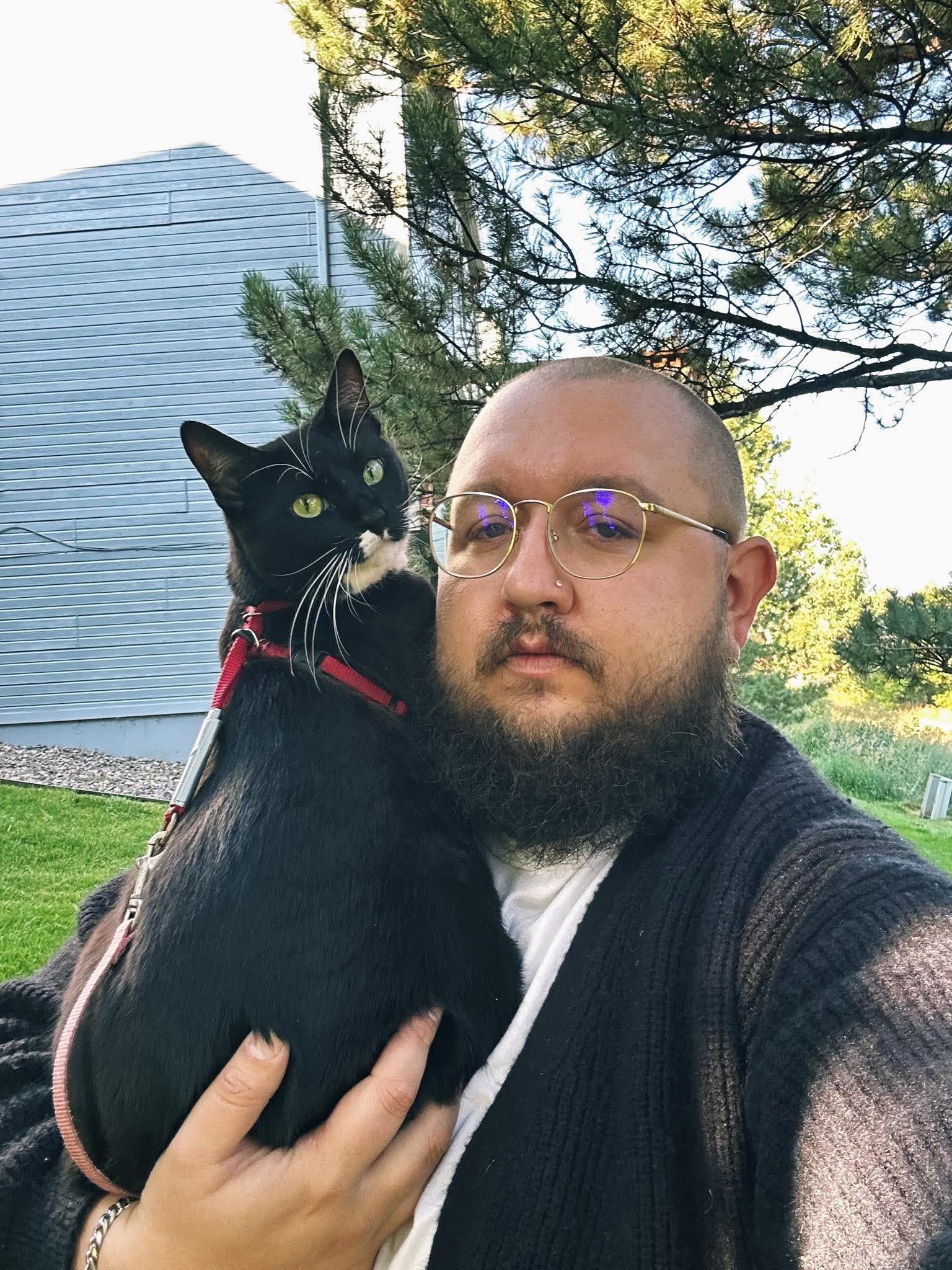
Matthew and an undisclosed predator species.
Alyssa: Your music has evolved from heavy dance floor-focused to deeply cinematic and introspective albums. What inspired that shift, and how has your relationship with music changed throughout that journey?
Matthew: Um, yeah, ironically enough, I was writing chill music before I was ever writing like banger stuff. And it really is just— it's…look what time hath wrought. [laughs] It's one of those things where I was writing bangers because I was spending a lot of time on the dance floor in clubs and out and about. I was writing what was a reflection of my experience. And that is what I'm still doing. Now that I am sober and I'm spending a lot more time outdoors and kind of in silence with myself, I feel like naturally my art is going to reflect that whether I want it to or not. So, it's almost not even a choice.
I still write bangers. Mind you, they're a little more experimental than like what I used to write. But, it's just I think this is something that comes with age. I would find it weird if I never changed the type of music I wrote, because that would mean me as a person never changed. That's kind of a scary thought.
Alyssa: Yes. You’re right. Your older albums often feel more like complete emotional narratives than collections of tracks. When you're writing a full-length project, do you begin with a story or concept in mind, or does that narrative reveal itself during the creative process?”
Matthew: “I definitely never go into an album with a plan. [laughs] Sometimes I lie to myself and pretend I have a plan. But for the most part, when I'm writing an album, I will write a handful of songs, and then I'll be like, "Holy shit, this could be an album.”
And that's just how the writing process goes, you know? You kind of get on a similar vibe when writing. So then, if I write for a week, the tracks I write in that time period are going to be pretty cohesive. And if I feel an album coming on at that point, that's when I'm like, "Okay, time to kind of pull a theme from somewhere, and like try and understand what I feel like the music is conveying, and kind of run with that." I've put out albums where I didn't know I had an album until like 10 songs in. And I was like, "Damn, okay, this is like revealing itself to me."
But yeah, the album I'm currently working on is…I don't want to say my first concept album, but my first uh correctly done concept album. So, I'm very excited for it. I've already written seven tracks, and I've made the album art, and I might even have a name, but I usually don't name things until the project is done. So, we'll just say there's a working title.” But I'm very excited for people to hear it. This one is also music that everyone will be hearing at my upcoming shows. So, do not fear, everyone will get a taste.
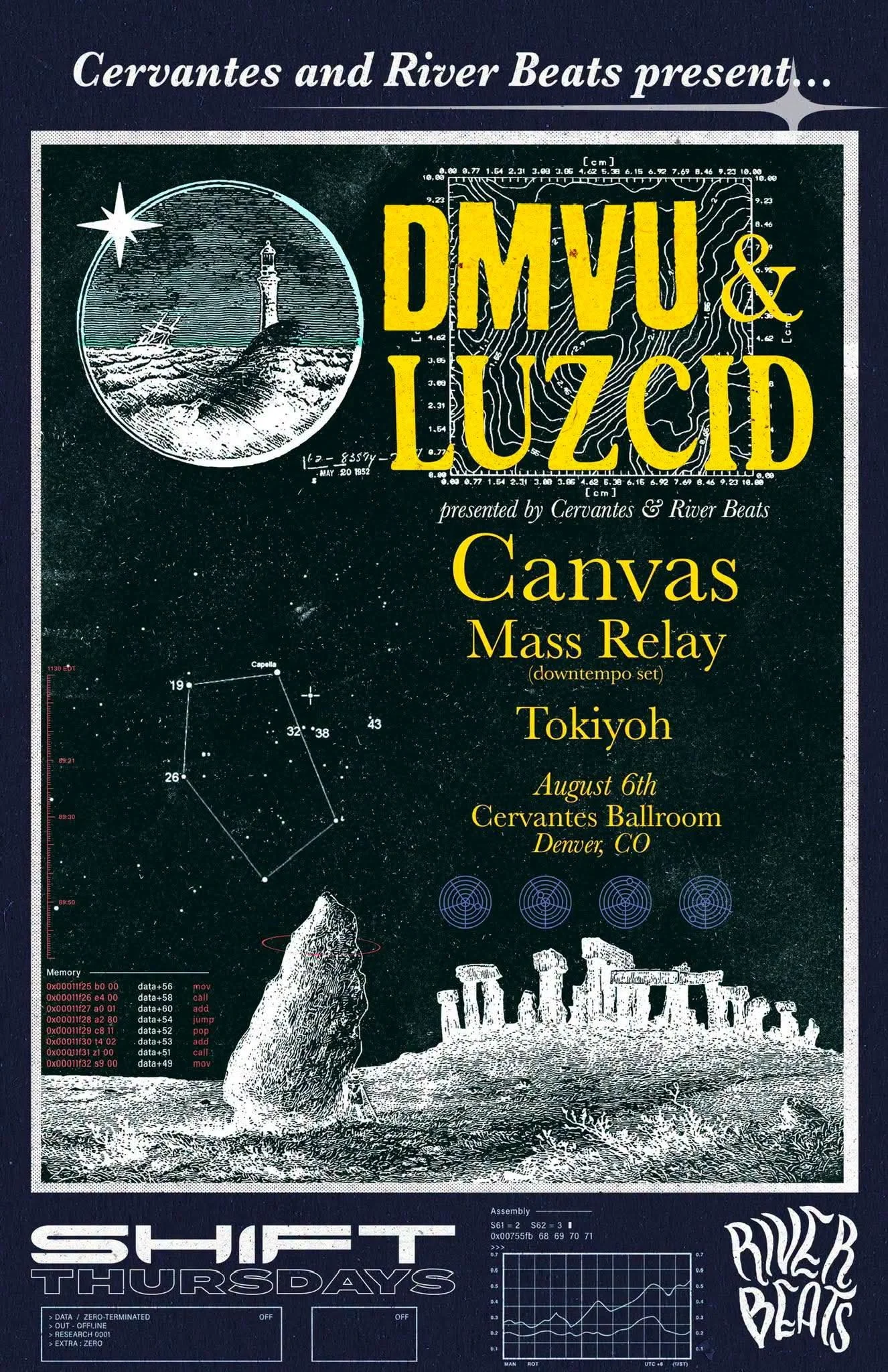
DMVU’s upcoming headlining event at Cervantes Ballroom.
As fans, we often celebrate the next big thing, but it's just as important to continue supporting the artists who helped build the communities we cherish. They deserve the space to grow, to change, and to return with new stories to tell. So when DMVU comes through your city, show up. Listen with an open heart. Dance a little harder. Support the musicians who continue to pour themselves into their art, because those are the artists who shape the future of our scene while honoring the foundation it was built on. The next chapter of DMVU is a reminder that growth is worth celebrating, and that some of the most meaningful music comes from artists who have taken the time to slow down rediscover why they create in the first place.
Discover the next act of DMVU at Cervantes Denver on Aug 6, 2026 with Luzcid.
FOLLOW DMVU: Soundcloud / Bandcamp / Spotify / Instagram
![Unpacking the Helix LP with Lapa [Exclusive Interview]](https://images.squarespace-cdn.com/content/v1/59530136f5e2319eabb7d87f/8f4b6558-8754-420f-a86f-c1d343ead1e9/Lapa+1.jpg)
Unpacking the Helix LP with Lapa [Exclusive Interview]
The Rust has had the pleasure of reviewing and interviewing several acts on the Loci Records roster, but we’ve always had a particular soft spot for Lapa. His cumulative works sit right at the nexus of sound that we hold in such high regard, and Helix is no different. While so much of the electronic music in our wider orbit focuses on sheer kinetic and percussive weight, Ilya Goldberg and Cedar Miller have gladly made their bed alongside the gentler, melody-driven bent. To get better acquainted with the scope of Helix, The Rust took the opportunity to get Ilya on the record for a brief conversation covering this latest LP and his thoughts ahead of its full release:
Ilya Goldberg has been a stoic mainstay in American electronic music for the better part of 15 years, with a storied career as the right hand of Emancipator’s live act and studio production, and through his concentrated solo project, Lapa. At first familiar glance, his individual catalog has matured into a distinct attitude, taking cues from his instrumentally-driven Spirit Vessel and Meeting of The Waters LPs while developing a modern, electrified style. Enlisting the help of contemporary instrumentalist Cedar Miller, a frequent collaborator with Ilya and several of their other musical peers, the duo have minted the phenomenal 11-track Helix LP.
Stacking up against his previous LP’s, Lapa and Miller clearly demonstrate the musical stride that pushes Helix ahead of the pack. In many respects, it is an obvious evolution of the kind of musical output that has come to define the bulk of Loci Records artists. Soft tones and the instrument-forward styling of Lapa’s traditional sound ease the way into the record, bringing emotionally transcendent melodic and textural elements into the forefront of the music. Lush chord swells, gentle arpeggios, and delicate harmonics take center stage, elaborated through ranging tempos touching on trip-hop, downtempo, and breakbeat rhythms. From Rune, to Mirocycle, to Essence, there is compositional substance for a multitude of tastes throughout the entire runtime of the record.
To get better acquainted with the scope of Helix, we took the opportunity to get Ilya on the record for a brief conversation covering this latest LP and his thoughts ahead of its full release:
The Rust: It's been 8 years since the release of your last solo LP, Spirit Vessel. Between two collaborative albums with Emancipator, the DOS project, and certainly other exploits, you've clearly stayed busy in the interim. When did Helix begin to take shape for you?
Lapa: The idea of Helix was conceived 3 years ago. Unlike the other albums that I've worked on, this one came together much faster. All the tracks were written during 4 long studio sessions.
The Rust: There's a textural quality to this record that feels like a pronounced development in your individual style. You're obviously well renowned for your skills with the bow; can you talk to us a bit about your time as a producer? When did you first get your legs under you?
Lapa: I first started learning about production when I was around 6 years old. I was in my Dad's studio watching him mix the tracks on multiple reel to reel tape machines. I feel like that really gave me a sense of what it's all about. Fast forward many years, I got my first laptop with Ableton in 2011 and started experimenting with sounds. It took few years to really learn the flow of the program. However, I feel that the more time I spend producing, the more it becomes an extension of me. Just like a violin has become my voice and a tool to translate my most intricate ideas.
The Rust: Did you always envision Helix as a long-form record? Do you consciously write with an LP in mind, or do you gather compositions along the way?
Lapa: My first two albums came together more as a collection of tracks, with some written along the way, once the album started to take shape. Helix was always envisioned as an LP, which perhaps made the process more streamline and focused.
The Rust: Talk to us about your granular, song by songwriting process. Do you consider yourself an instrumentalist first when you sit down to compose and arrange music?
Lapa: In one way or another, my background as a violinist will always be at the core of my music. At this point, my production process involves many tools, and being instrumentalist is just one of them.
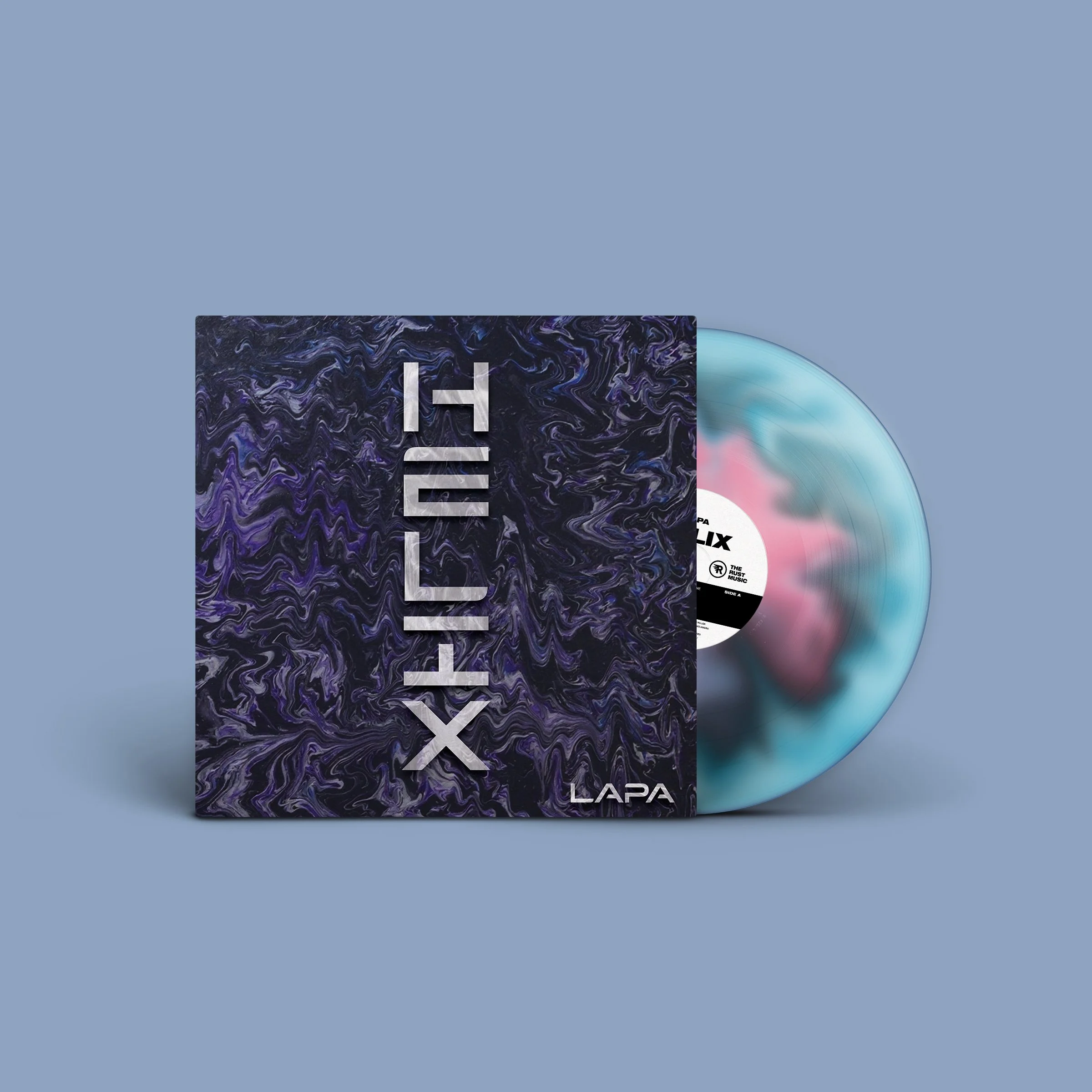


Limited edition color vinyl pressing of Lapa's new LP, Helix in a standard sleeve.
Available in three different styles, limited to 100 each:
Space Candy: Turquoise w/ Pink & Smoke
The Aether: Pink, Purple & Black
Eternal Glow: Semi-opaque Violet & Purple
Includes a digital download of Helix.
Eco-Vinyl - “As Green As Possible”
***Images are only a rough estimation of colors and concept, not photographs. Due to the nature of the vinyl production process, final results may vary widely.
Limit 2 per person, we reserve the right to cancel any orders with more than two copies.
Ships in Fall 2026.
The Rust: Harkening back to the mention of your collaborative releases, you're nominally attached to the Emancipator project, and have put some significant time into your work with Random Rab to boot. Be it through direct collaboration or the slew of remixes you've created for your contemporaries, how has the peer experience informed your musical perspective?
Lapa: I see my collaborators also as my teachers. As we make music together, inevitably we discover subtle nuances of each other styles and unique ways of composing and making sounds. To me that's always been one of the most profound and exciting aspects of music making. I really do love making music with friends! Helix, has only solidified this feeling. The entire album was created with my dear friend Dr. Jason Miller. We've been collaborating on many musical and nonmusical projects since 2010 and the creation process of this set of tracks has been a culmination of our life experience together.
The Rust: You've been fittingly on the road with Thievery Corporation recently to help support their latest tour. Have you taken the chance to explore some of these new tracks on stage? How are you feeling about their juxtaposition against your earlier works?
Lapa: Yes, I have played a few of the new tracks on tour. It was fun to finally bring them out of the studio! I find that these days I rarely play tracks from my previous albums. Not because I don't like them, but because the current set of music is a more accurate reflection of who I am as a musician and a person.
The Rust: You're clearly patient behind the wheel of your own project, and the music speaks to that with incredible clarity. What's the driving force behind that patience in a landscape hyper-speed-release mentality?
Lapa: So far that's just been my natural pace. There is a certain amount of time that has to pass, in order for the tracks to mature and settle into their perfect form. Once in a while there will be a track that comes together in the most organic way, and no matter how much time passes, it almost never changes its shape and essence. Those are the gems. I feel that producing is just a practice towards achieving those golden moments.
The Rust: What's next on the horizon for Lapa? Any parting words on the upcoming release of Helix? Play and write as much music as possible!
Lapa: I hope that when people experience Helix, it unlocks the pathway into the depth of the sonic universe. It's a different world out there! Once you close your eyes and let the sounds take you on a ride powered by the overtones and feelings.
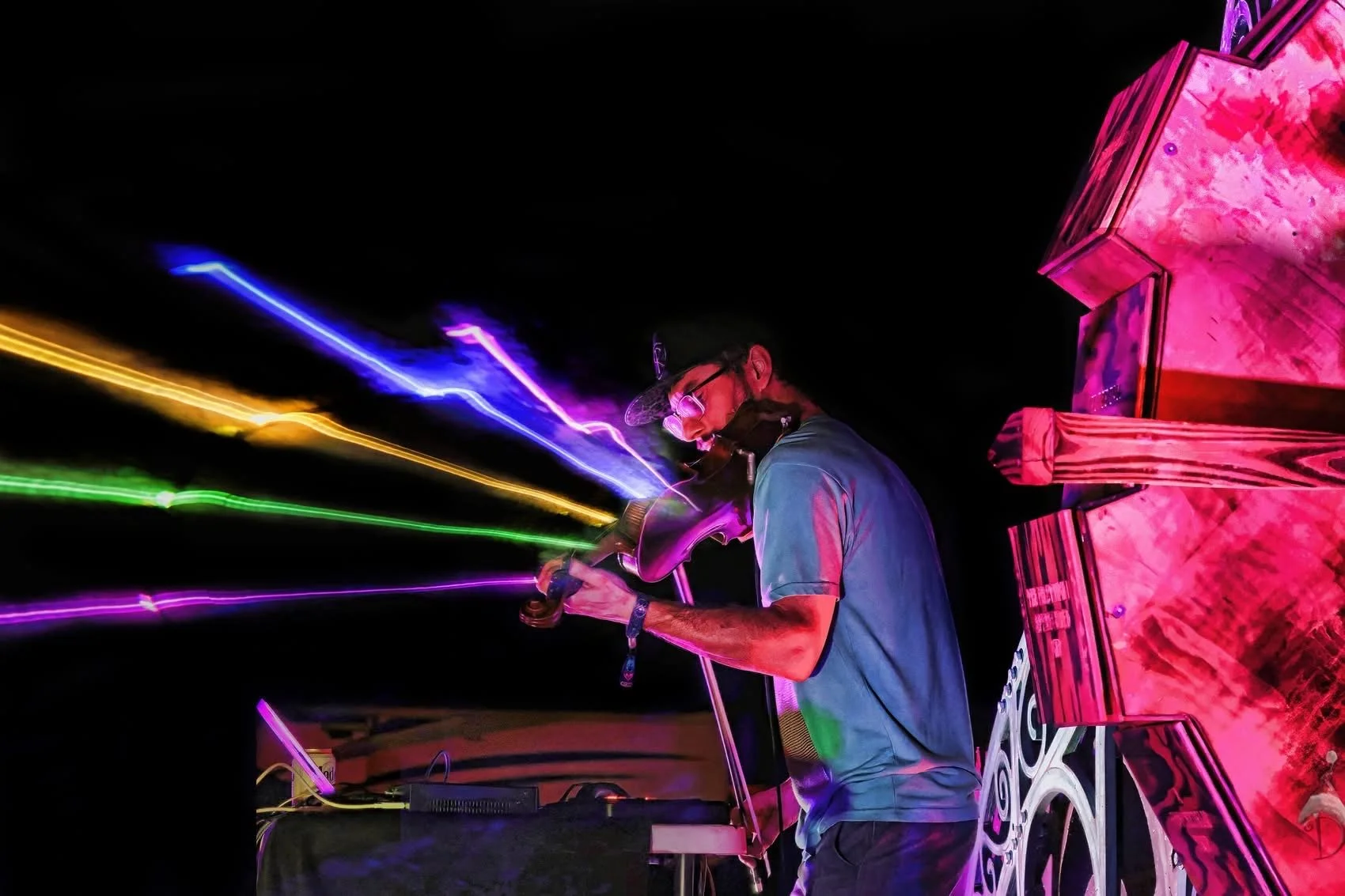
The Rust has had the pleasure of reviewing and interviewing several acts on the Loci Records roster, but we’ve always had a particular soft spot for Lapa. His cumulative works sit right at the nexus of sound that we hold in such high regard, and Helix is no different. While so much of the electronic music in our wider orbit focuses on sheer kinetic and percussive weight, Ilya Goldberg and Cedar Miller have gladly made their bed alongside the gentler, melody-driven bent. Whether you're just tuning in for the first time, or you've been an active fan since the nascent Emancipator days, Helix is all but guaranteed to take a top spot in your personal collection.
Actualizing the Vision with David Schunemann
Denver-based visual artist David Schunemann, known professionally as Actualize, has built a reputation for manually performing immersive visuals in real time using custom effects, projection mapping, and MIDI-controlled animation, bringing cinematic depth and intentional storytelling to the artists fortunate enough to work with him. Denver’s visual underground is in full spotlight tomorrow, on May 28, at Cervantes' Masterpiece Ballroom as Actualize and Glass Crane present their collaborative audiovisual project, Actual Crane, rooted in Denver’s thriving art-forward electronic scene. Ahead of this resounding evening, we had the chance to dive in with Schunemann about his recent experience at Red Rocks and what he’s got in store for this upcoming showcase.
Inside a darkened room, swirling bioluminescent textures, hyper-detailed 3D landscapes, glitched sacred geometry, and towering projection-mapped environments pulse in perfect synchronization with the music, transforming the stage into a living, digital organism powered by Actualize. Denver-based visual artist David Schunemann, known professionally as Actualize, has built a reputation for manually performing immersive visuals in real time using custom effects, projection mapping, and MIDI-controlled animation, bringing cinematic depth and intentional storytelling to artists like CloZee, LSDream, Of The Trees, and Ravenscoon. Alongside him, Glass Crane contributes an unmistakably surreal visual language rooted in psychedelic sculpture, cosmic architecture, and fluid dreamlike motion, creating imagery that feels equally inspired by visionary art galleries and underground rave culture. Together as Actual Crane, the pair blur the line between concert production and interactive art installation, crafting audiovisual experiences that feel less like a show and more like stepping inside a lucid dream.

Actualize lighting up The Caverns in Tennessee.
Denver’s visual underground is in full spotlight tomorrow, on May 28, at Cervantes' Masterpiece Ballroom as Actualize and Glass Crane present their collaborative audiovisual project rooted in Denver’s thriving art-forward electronic scene. Presented as a visual-centric experience built around projection mapping, immersive stage design, and community-driven creativity, the night pairs a secret music lineup with a stacked roster of visual artists including Papabear, LAIA, and Mind Balloon. The show arrives at a moment when Denver audiences are increasingly excited about visuals being just as expressive as the music itself, a shift Actualize has helped shape through years of work alongside his contemporaries. Fresh off major productions at Red Rocks and national festival stages, Actualize brings that same large-scale cinematic energy back home to Cervantes with an all-new projection mapped stage and a night designed to spotlight the evolving relationship between music, visual art, and collective experience.
Ahead of this resounding evening, we had the chance to dive in with Schunemann about his recent experience at Red Rocks and what he’s got in store for this upcoming showcase.
Alyssa: “We watched a lot about that Ravenscoon opening weekend at Red Rocks. How'd that feel?”
Actualize: “Hell yeah. Oh, that was fun. Yeah, yeah, that was really cool.”
Alyssa: “What was special about doing the opening weekend?”
Actualize: “I mean, it was just really special in a lot of ways. I've known Paul for like a long time, Ravenscoon, so it was really cool to get to see him headline Red Rocks. Watching him grow from you know, playing much smaller venues to be able to do that. It's very inspiring and just cool to see. And I got to work with Jason Leech for the first time there, which was really fun. I got to work with Jared Oppenheim from The Gradient Perspective, and we've worked with him [in the past], like I met him almost 10 years ago now at Big Dub and he hired me to do visuals there. And so it was just a cool full circle moment because we don't get the opportunity to work together much. It was cool, but for Jason Leech it was really cool because I did something that I've never done at Red Rocks before, which was having the cameras be the central focus of the entire show. So, Jason Leech does all this live piano key stuff, so he wanted it all to be shown on the screens. He's like, "I want people to see what I'm doing the whole time." Another thing was Ravenscoon gave everybody um full access to all the LED walls, which was really, really cool.
So most of the time, you know, when you're an opener or working with a support act at Red Rocks, you only get you know, like a portion of the LED wall, like a small little piece and then for the headliner there's way more LED wall and it's bigger and epic, much more epic. For this show, they let everyone use all of it. So even during Jason Leech's set, it looked like a headliner set. We had everything but lasers and pyro, you know, (Laughter) so it looked really good. And that was just really fun because there was so much extra LED wall. And doing opening weekend at Red Rocks is always really fun. I feel like I end up there pretty often actually. Last year it was the Icelandic Winter on the Rocks or something, and it was like early March. It was even earlier than this show. I was there with Zingara and we were supporting Gramatik. And then the season before that, I think I did the last show with Of The Trees. So I often end up like on the last or the first show, or both.”
Alyssa: “You just mentioned that you were doing more directed content towards these individual producers, individual artist shows. Have you felt new-found pressures and new-found challenges, being the person that they trust with their vision for the show?
Actualize: “Definitely. It feels very cool to be respected enough to have my opinion matter to people like that, you know. I'm really grateful to work with all these people, and it's really cool that they do trust me with their vision and it's a very collaborative process. We work together closely to make sure that it is their vision. Like for Zingara, we just did this massive content project for her Parallel Spirits tour, which was the co-headline with Level Up, and we really went in on that project. She had a whole ton of ideas of things she wanted to make. And another thing that's new, [this new] software that I use a lot with these kinds of teams and artists, is ShowControl, which essentially gives you the ability to run timecode so that you can build out essentially a full music video that's synced to a track. So when they play that track on the CDJs, it will trigger the video and stay in sync the entire time.”
Alyssa: “That's so interesting. So tell me more about this Actual Crane show. Where did you find inspiration for that?”
Actualize: “So basically it all started with the first visual-centric Cervantes show on the Other Side, which was just kind of just to test the waters and see if an event like this could work. And um— yeah. It worked. It worked really well and it was cool because we didn't have to announce any music at all and we just announced a VJ lineup. I mean the flyer design was pretty cool too.”
Alyssa: “It's so cool that the visual side has become a more concrete and integrated part of shows. People have come to expect a certain level of curation.”

Schunemann at work in Meow Wolf Denver.
Actualize: “I absolutely think that these events that we're throwing could like, you know, if we promote it properly and we really put a lot of time and energy into making these events special and different and unique, I think that we have the opportunity to go far with these types of events. I think like doing something that or even, you know, even being able to do Cervantes' Ballroom is like really, really cool to be able to do something like this, but being able to do it on a larger scale where people who are less familiar with it will hear about it. I think it would just be cool to be able to make that kind of impact. It would be a big win for visual artists everywhere.”
Alyssa: “Do you think the people in Denver are interested or up for this type of thing, specifically around VJs?”
Actualize: “Oh yeah. I honestly think so. More here than other places. Because here it's like people really have a focus not only on the show, but the visuals because like you said, it's at every show, it's expected and there's shows every night of the week of every size. It's like a new renaissance, you know. I feel like because these art forms are relatively new and unexplored, when it comes to visuals, stuff that's specifically made to just pair with music and are cool to look at, so when something is unique and different visually, they notice.”
As Denver continues to charge into this new renaissance of audiovisual integration, the May 28 Actual Crane show at Cervantes' Masterpiece Ballroom will no doubt be one of the most uniquely fun events of the year. shifting the spotlight toward the screen and the stage design. Actualize and Glass Crane are not just providing entertainment, they are validating the visual artist as a cornerstone of the live experience. Whether you are a dedicated fan of the underground or a newcomer to the scene, Actual Crane promises to be a masterclass in design. Don't miss the chance to witness this evolution firsthand in the heart of Denver's thriving electronic scene.
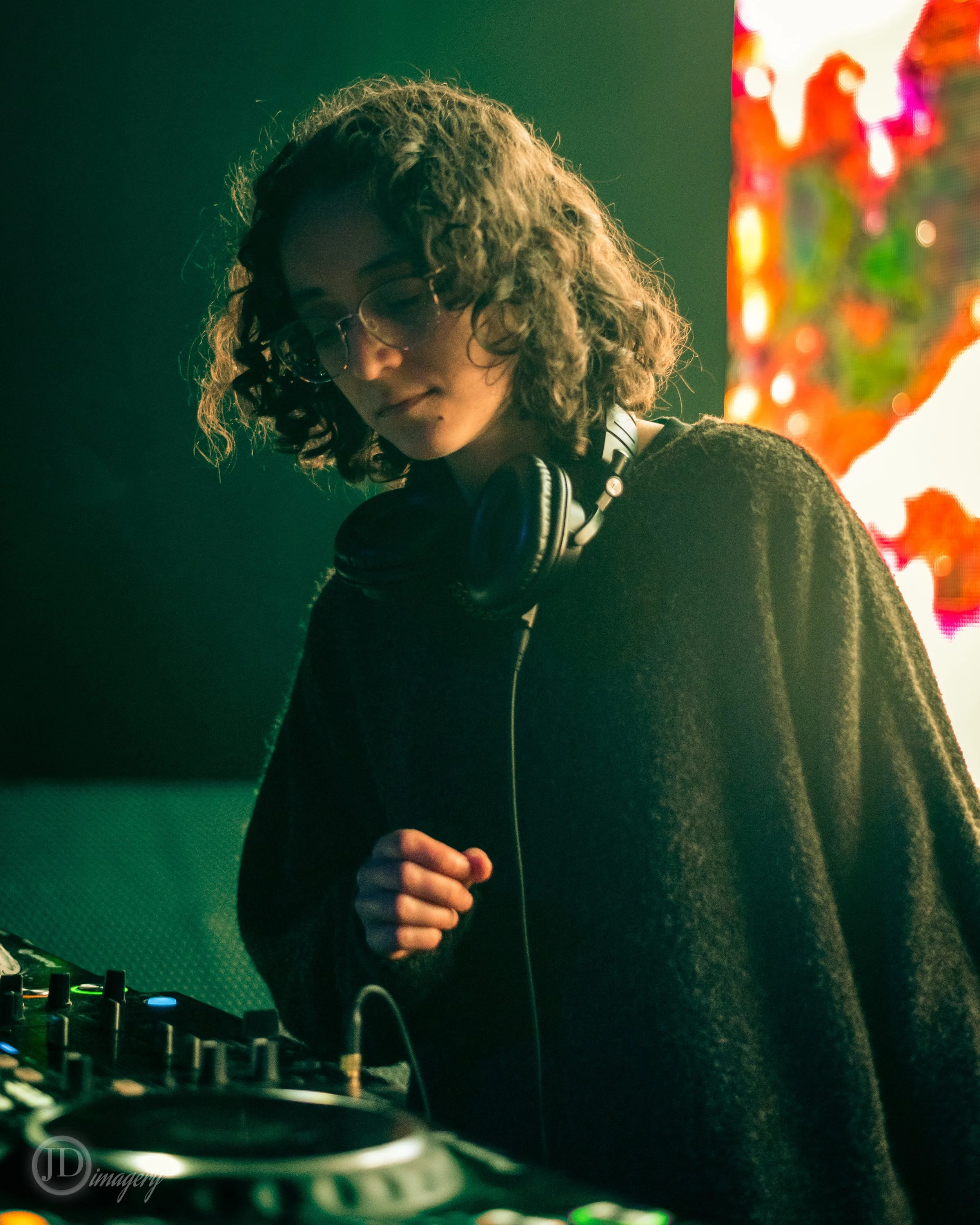
Getting tangled up with Entangled Mind
Entangled Mind is guided by curiosity, collaboration, and a willingness to be free of boundaries. That openness is perhaps what makes their performances so compelling; no two moments are ever the same, and each set is shaped as much by the room as the people in it. Whether it’s carefully curated melodies layered over pulsing basslines, or organic jams reshaped into immersive electronic journeys, Entangled Mind reflects the conversation between instinct, influence, and presence. The Rust had an opportunity to speak with them ahead of their latest performance alongside the Supersillyus Life Band and friends at Brooklyn’s Fine and Raw Chocolate Factory. We sat down to talk about creative evolution, physics, the artistic struggle and how intuition plays a role in shaping a live set.
Entangled Mind connects the space between us through the sound inside us. Built from a fusion of meticulous electronic production and a life long passion for live instrumentation, Marissa Barbato’s musical vision builds the wiring of their catalog and performances like circuitry through a crowd. With the recent release of the Illuminate EP on Gravitas Recordings, the project enters a new chapter, and further explores the depth of dynamic musical interplay. The Rust had an opportunity to speak with Marissa ahead of their latest performance alongside the Supersillyus Life Band and friends at Brooklyn’s Fine and Raw Chocolate Factory. We sat down to talk about creative evolution, physics, the artistic struggle and how intuition plays a role in shaping a live set. What follows is a glimpse into the larger interview and mindset behind the music.
Alyssa: “What kind of musical influences were you exposed to growing up?”
Entangled Mind: “I grew up with a super musical family, my grandfather on my Dad’s side was an incredible jazz clarinetist, and my Dad is a fantastic keyboard player, along with his many siblings and my many cousins are also musicians. On my mom’s side my uncle is also an insane drummer. So all to say, growing up I was fortunate to be surrounded by great music and many jam sessions. My cousin started teaching me guitar when I was 10, and in middle school my Dad gifted me some gear to start recording my songs.”
A: “How did that gift help you grow your sound?”
EM: “I feel like it was huge because I was able to record my own songs and understand what that looks like from very early on, and get into the songwriting aspect of producing. I feel like that's always something I've been drawn to. [Producing] I feel like a lot of other musicians learn cover songs. I actually like to record what I was writing and to keep track of it and add to it and improve on it and listen back. I enjoyed that process so much, like musically that I just started writing my own creations. Like even from when I first started writing guitar, I was way more interested in just like writing my own songs even if they were simple rather than learning cover songs.”
A: “What brought you to this specific style you embody now?”
EM: “The style I embody now is really a fusion of all my influences - wanting to combine the power and craziness of electronic sound design and production quality, with the organic-ness and beauty of live instrumentation. From the beginning of this Entangled Mind project, the expectation I had in terms of style is to just follow whatever is influencing me and wanting to be expressed. Influences and moods are constantly evolving and I have never been able to stick to one genre, but the constant for me is that I am just making what I like at the time. In recent years I have enjoyed thinking of myself as just a vessel that creative energy can run through, letting whatever come out, without questioning it.”
A: “Where did the name Entangled Mind originate from?”
EM: “So that came later. After I was making electronic music and sort of finding my sound, I knew I wanted to have an official name for my project. At that point I started brainstorming just different ideas. Quantum physics has always been like such an inspiration to me, just like the world in general and like the universe. I would take a lot of inspiration from these ideas in physics and the idea of quantum entanglement is that you can have things that are in an entangled state. They can be at a physical distance but they're still directly correlated. They can be at a physical distance but they are still directly correlated. I like to think that everything in the universe is in an entangled state of being. We're all connected in some way or another. I think at certain points in your life you sort of start to feel this idea that everything really is connected and intertwined. So I was drawn to the word ‘Entangled’ for that very reason. Then the ‘Mind’ part, sort of like my music, is my unique perspective. And this is the expression of an entangled experience. So it's sort of kind of like music is a way we can all relate to one another. And we're all entangled. We're all just trying to navigate this crazy world that we're all connected to. But we each have an individual voice and individual expression. We have our lifetime. So, that's kind of how the words came together and it just made sense to me.”
A: “We would love to hear just a little bit about your producing style?”
EM:”So I'll start with the electronic side. When I started getting into electronic music, I was blown away by the infinite possibilities with sound and how you can sculpt from scratch. Any type of sound you want. And I guess I was drawn towards the psychedelic bass music genres because I just loved the sound design. It's so weird. It's so out there so that really drew me in. I think after a little bit of time of really going deep into the sound design on the electric music side of things, I just naturally started bringing back all the instruments that I grew up with. And started introducing new instruments that I was getting inspired by along the way, like hand pans. It felt full circle for me to go back to the roots. My roots are like guitar and drawing on real instruments and I just love the organic feel.
A: “A lot of your sound lives in the space between organic and synthetic, how do you balance those elements when producing?”
EM: “It depends on the track - some tracks I start through jamming on instruments, recording some ideas and then later adding electronic sounds to enhance the production. Other tracks I start through electronic beats and sounds, and then later add organic elements to enhance certain sections to become more full or more human. For example, “Zemya” started as a jam session between Amalgamy and I, me on the handpan and him on the kora. We had about a 40min long jam session recording that I then arranged out and shaped into our track. Whereas, “Illuminate” started with electronic rhythms and soundscapes, and I later added some guitar strums and recorded some hand drums as layers. “Solar Flare” was sort of in between that where I was sort of balancing both equally throughout - started with the main electronic drum beats, 808 and pads and then soon started adding the djembe and guitar melody as the lead elements.”
A: “What has it been like traveling and touring around to different festivals these last few years?”
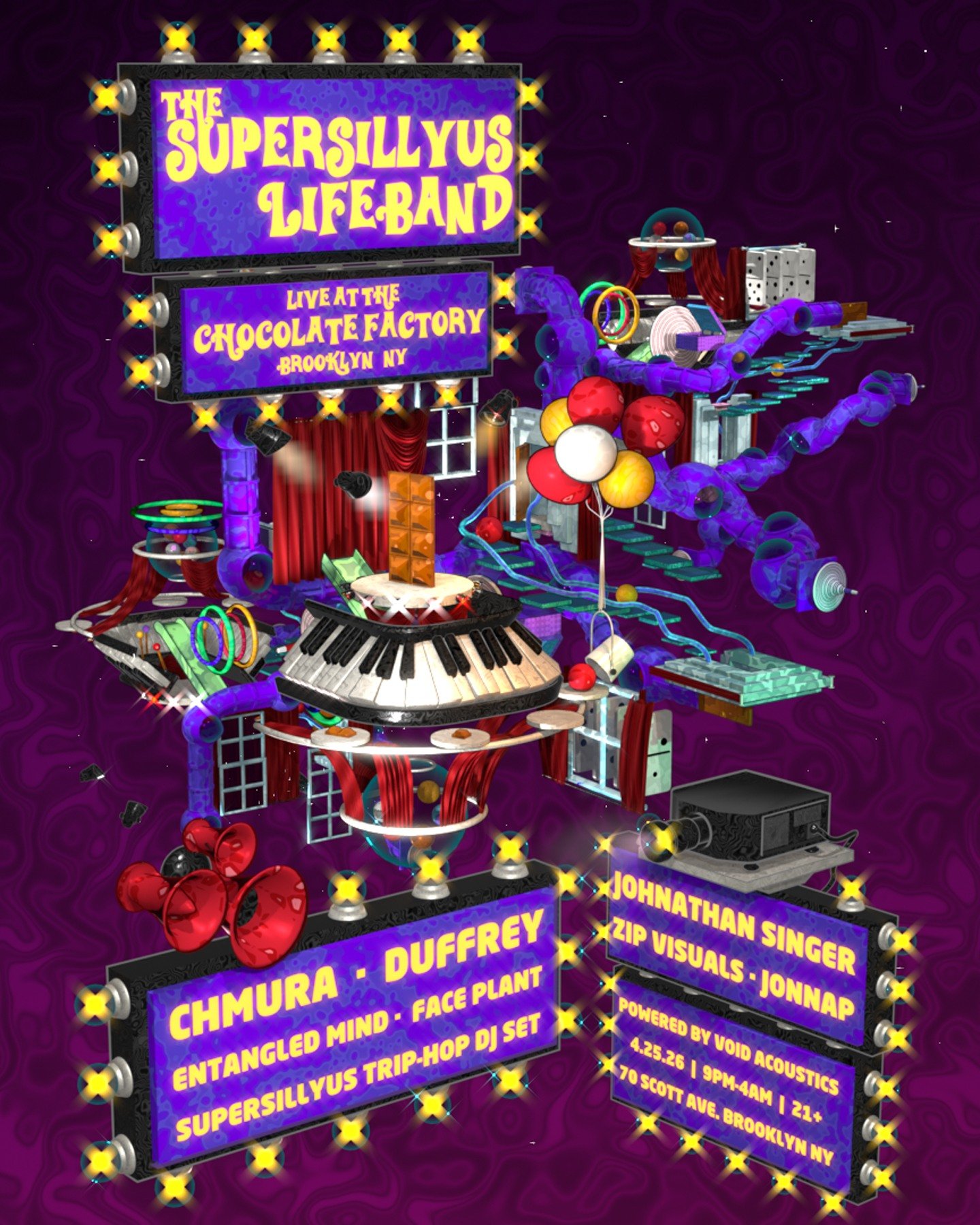
The Supersillyus Live Band feat. Entangled Mind +
EM: “It has been extremely cool and I am constantly feeling so much gratitude that I get to have these opportunities to travel and share my music and connect with people. One highlight has been the Ozora festival in Hungary last summer, really really wild that my music was able to bring me to a whole other continent to experience. Four years ago I left my full time job as a software engineer, which I did for 7 years, and it was so scary but also has been amazing to be able to give my full time and energy to my passions now. And this is a time of my life I will forever cherish and be glad I took the plunge to go all in. However, on the down-side, it is not ideal financially and can be hard to have consistency so I’m looking forward to getting a day job again and finding some more balance.”
A: “What draws you to work with other artists and musicians?”
EM: “It’s inspiring and it’s also just fun. Everyone has their own methods and skills and thought process when creating, so collaborating just multiplies the possibilities of what can happen. It helps me break out of my own patterns and think of things in new ways, so it really keeps things moving and interesting. And creation is so sacred, it’s awesome to share that connection with other artists.”
A: “Did you do the guitar samples for the Illuminate EP?”
EM: "Yes, you’ll hear plenty of my own recordings of me playing guitar, djembe, bass guitar, handpan, darbuka, and jaw harp on the EP. On the last track “Zemya” you’ll hear multi-instrumentalist Amalgamy playing Kanun, Kora, Kaval, and Gadulka. And on “Bonsai” it features the musician The Spy From Cairo playing oud, an ancient fretless stringed instrument. The opening guitar melody in “Brain Bath” is actually from a song I wrote in middle school, so it holds a little nostalgia there.”
A: “What inspired this EP?”
EM: “The songs on this EP feel like a followup to my last full length album Lucid Living - I wanted to explore deeper into that psychedelic, dynamic organic-electronic fusion style that I had gotten into there. But I always write each song independently without thinking of the bigger picture, until I have several tracks that naturally just feel like they belong together.”
A: “Illuminate feels very intentional in its pacing and atmosphere — how did you know when the EP was ‘complete’”?
EM: “I had known for a while I wanted to share some of the psybass tracks I had been working on, in the format of an EP. In the midst of working through those ideas last year, I was also putting together my set for Tipper & Friends, Suwannee. A set that I really put a lot of intention into. I created “Brain Bath" specifically to be the intro to that set. I was imagining really setting the vibe of the start of that journey late afternoon on Bicycle Day in the swamp. Entangled Mind sound bath, atmospheric, worldly sounds. Turned into a drum circle like build ups and up for several minutes, straight into the 140 bass drop of “Grounded”. Later, as I was narrowing in on finishing the EP, I thought why not just include “Brain Bath" as the intro to the EP. Since I literally wrote it to lead into the first main track, and that plan just felt right. Like it makes the EP a full journey.”
A: “When preparing for a show like Cervantes, do you build your set around the room, the system, or your current creative headspace first?”
EM: “I like to think about the setting, time of day, the venue, the people, and the rest of the lineup. Then I think about what songs I definitely want to incorporate. I sort of roughly plan out the overall flow of the set. Like do I want to start off chill and then get heavy in the end? Or reverse that. Or more like a bell curve of energy? Or have more ups and downs? I like to leave room to improvise at the moment. If I make too much of a plan, it can take away from being present in the moment when performing.”
A: “Have your goals as an artist shifted since you first started releasing music, and if so, how does this EP reflect that evolution?”
EM: “When I first started releasing my music, I had 2 main goals. The first being, that I wanted my production quality to be comparable to music that I was inspired by. And secondly, I wanted to be able to collaborate with artists I liked. I feel like I have achieved both of those! These days, I feel like my main goals are really just to keep creating and exploring, getting into the flow state with it as much as possible because that’s such a rewarding feeling. And to finish more of the projects I am working on more efficiently. Because seeing a vision into completion is also so rewarding. I would love to continue to collaborate and play shows with other amazing artists and get to perform more in other countries but I think that will all continue to fall into place so long as I just keep creating authentic music.”
Marissa is guided by curiosity, collaboration, and a willingness to be free of boundaries. That openness is perhaps what makes Entangled Mind’s performances so compelling; no two moments are ever the same, and each set is shaped as much by the room as the people in it. Whether it’s carefully curated melodies layered over pulsing bass lines, or organic jams reshaped into immersive electronic journeys, Entangled Mind reflects the conversation between instinct, influence, and presence.
Beyond their appearance at the Chocolate Factory this weekend, they’ll be headlining Soundbreak on 5/30 in Maine, and two sets at Midpoint on 6/20 in Pennsylvania, as well as returning to Secret Dreams, Ozora Festival in Hungary, and making their debut at Unison Fest in New Mexico.
FOLLOW Entangled Mind: Bandcamp / Soundcloud / Spotify / Official
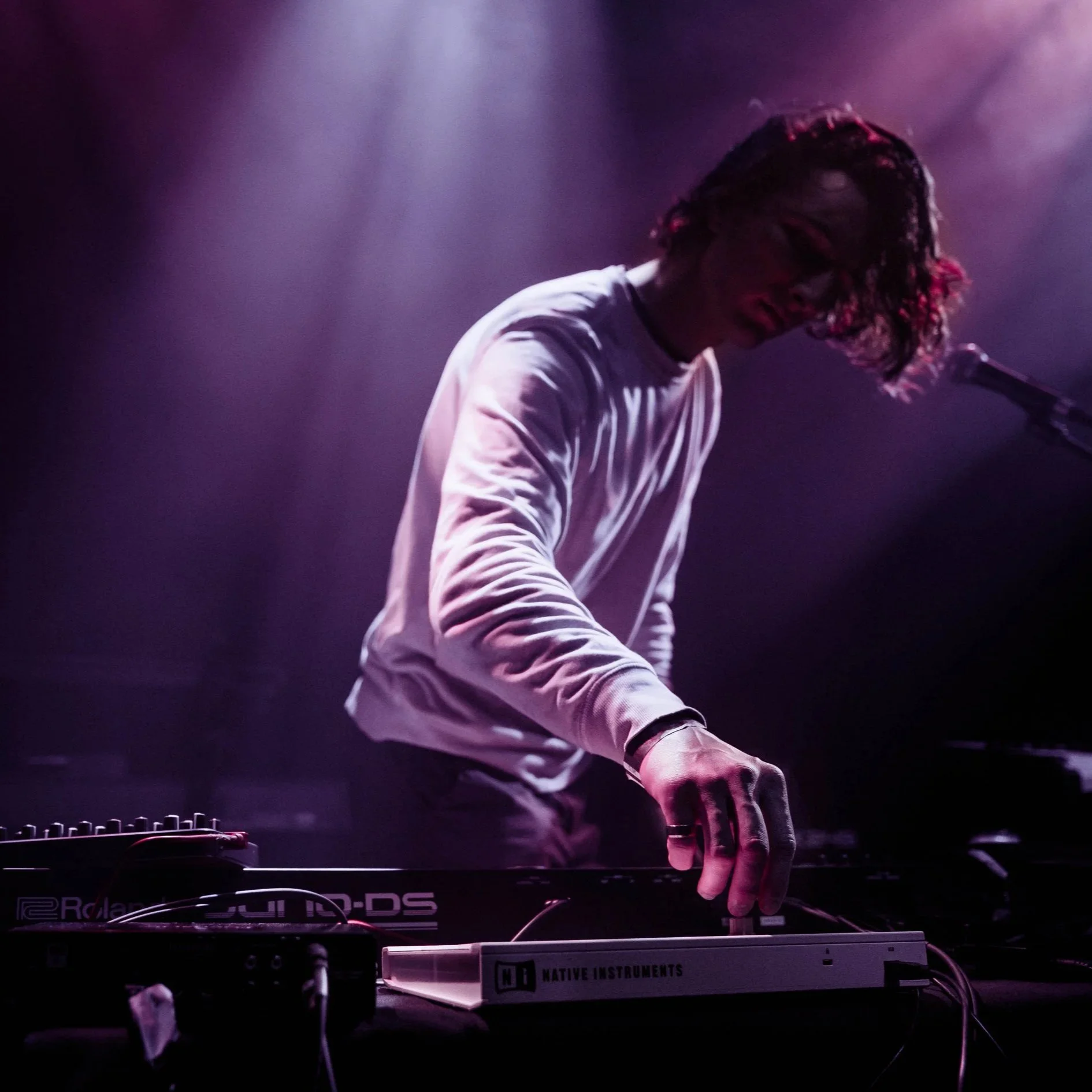
A Conversational Primer with Ian Ewing
Appealing to an extremely broad range of fans and listeners, Ewing’s personal infusion of multi-instrumentalism stands in stark contrast to the ever-growing “in the box” production and recording phenomenon for music producers, and is the standout factor throughout all of his minted originals and collaborations. Next weekend, The Rust is hosting Ewing and a smattering of other potent acts for a Morning Coffee two-night escapade at The Chocolate Factory in Brooklyn, and we’d be remiss if we didn’t take the opportunity to get a few questions and answers on the record:
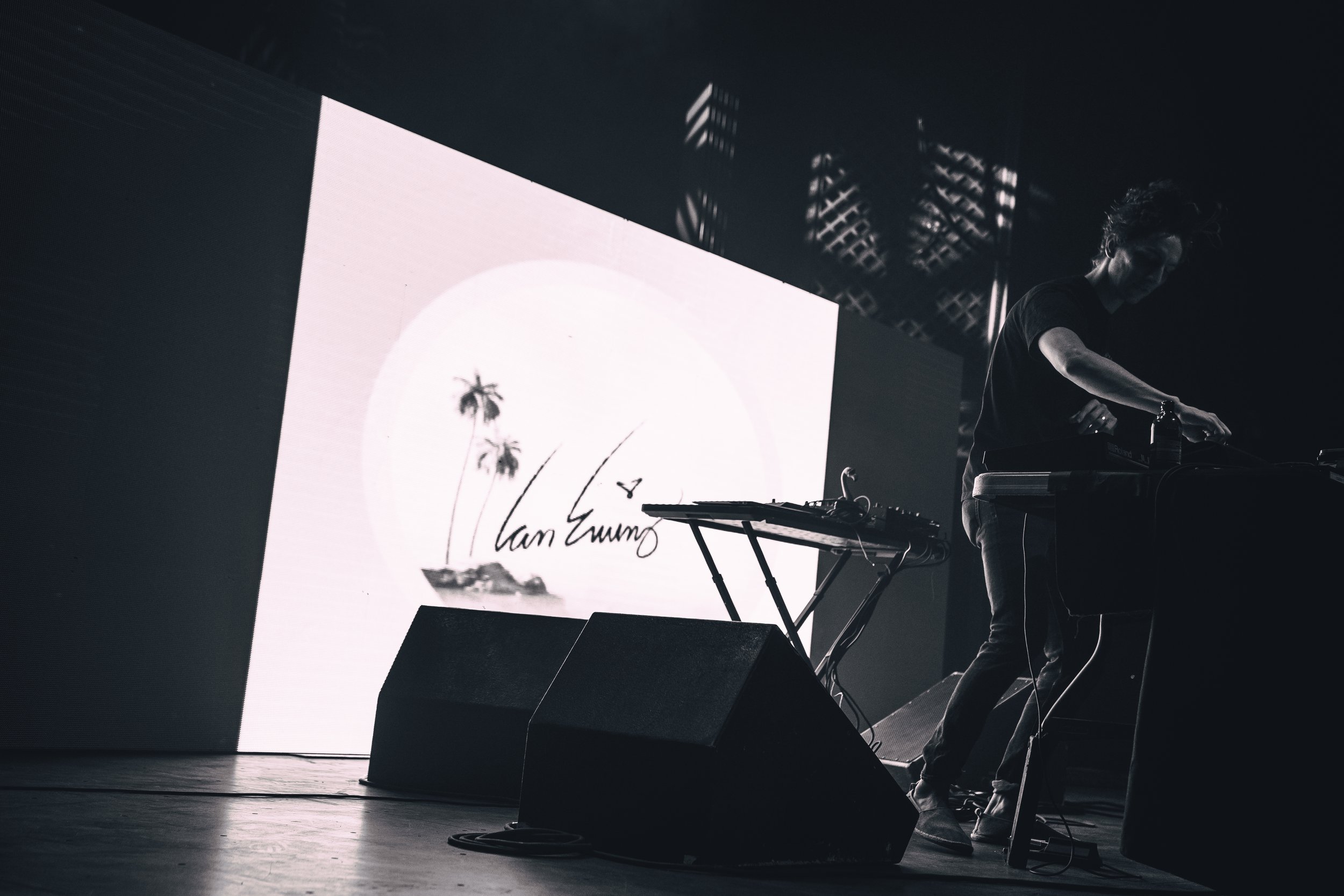
California’s Ian Ewing has spent the bulk of the last decade wisely; with dozens of singles, collaborative tracks, and a fully-stocked LP covering the territories of RnB, lo-fi, trip-hop, and every pocket in between, he’s clearly amassed a rolodex of songs, not to mention instrumental and compositional skills. Appealing to an extremely broad range of fans and listeners, Ewing’s personal infusion of multi-instrumentalism stands in stark contrast to the ever-growing “in the box” production and recording phenomenon for music producers, and is the standout factor throughout all of his minted originals and collaborations.
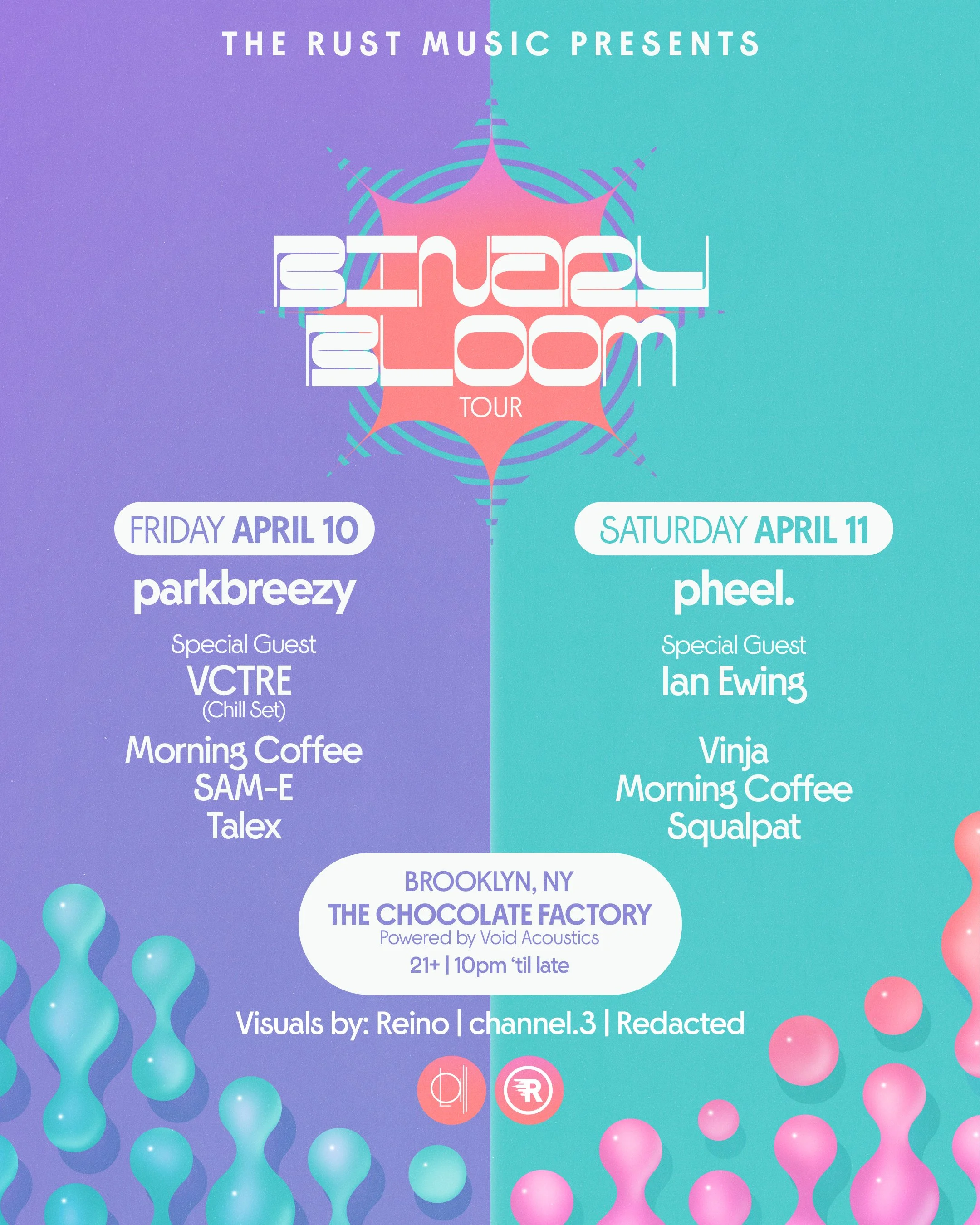
Next weekend, The Rust is hosting Ewing and a smattering of other potent acts for a Morning Coffee two-night escapade at The Chocolate Factory in Brooklyn, and we’d be remiss if we didn’t take the opportunity to get a few questions and answers on the record – read the full interview below.
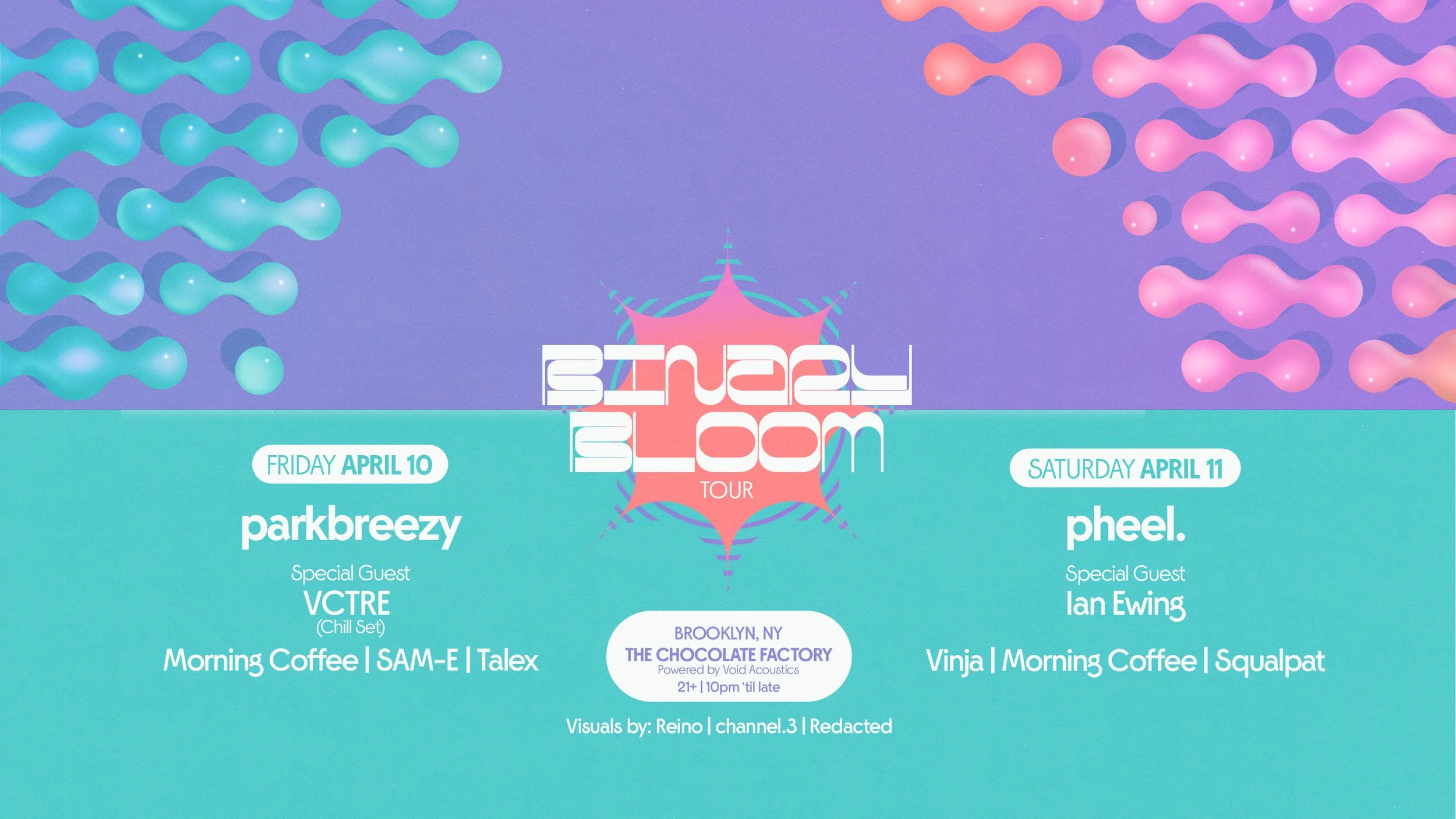
April 10th & 11th in Brooklyn:
parkbreezy & pheel. + Morning Coffee, VCTRE, Ian Ewing, Vinja, SAM-E, Talex & Squalpat
Join us: Tickets • RSVP
The Chocolate Factory
70 Scott Ave, Brooklyn, NY 11237
21+ | 10pm ‘til late
Powered by Void Acoustics
The Rust: We're very excited to have you out here in NYC with us for this particular weekend. What's your read on this city?
Ian Ewing: I’m so honored to be invited for this! Oh man, I love NYC so much. I started coming out here more often around 2018 or so, playing shows put on by the Sundae Sauce collective. I’ve been lucky enough to meet a bunch of other beat makers and artists who live out here, so I always have some friends to hang with whenever I’m swinging through. And outside of that, I just love the scale of the city. I always feel so small when I’m here, but in the best way! You can be as free and weird as you wanna be here, cuz there’s always someone more free and more weird than you lol. And the bagels!
The Rust: Your output since 2017, but particularly in the 2020s, has been extremely consistent. What's your writing process like? What's powering all of this music?
Ian Ewing: I appreciate that! I’m fortunate enough to be able to put a good amount of time into making music, so I figure I should make the most of that! I’ve always really admired prolific artists, so I think I just try to emulate that in whatever small ways I can. I always want to be sharing something that I’m working on, even if it’s not in it’s most perfect form. For me, releasing a lot of music just allows me to move on and make the next thing, and that next thing is hopefully better than the last. In my experience, being overly attached to what I make has made me feel quite stagnant creatively. I try my best to let go of the perfectionist mentality, knowing that it’s not about making something perfect, it’s about making something as best you can that represents you at that point in time.
The Rust: Your Lakehouse LP put a serious array of influences on display. The jazz, hip-hop, and RnB infusions are right at the forefront of your sound. What are some of the records that influenced your development around that time?
Ian Ewing: I can definitely recall listening to and being inspired at that time by Flying Lotus, Kaytranada, and Galimatias. Musically, I’ve certainly always been blown away with these artists, but I think even just conceptually, I was really inspired by how these instrumental producers were making really cohesive albums, and incorporating a lot of vocalists. Beyond that, these artists really transcend genres to me, or rather, they’ve created their own genres. That really made me want to make a project that sounded different than, say, a lofi hip hop project.
The Rust: Your list of collaborations is extremely extensive. How do you end up plugged into all of these pockets of musicianship? What are some of the more notable collaborative releases for you in the last few years?
Ian Ewing: Yea, I feel so lucky for that! It’s really just been the power of the internet. My artist project has largely evolved in the online world, and I’ve been fortunate enough to connect with all types of creators through it. Whether it was Soundcloud in 2017, Discord in 2020, or Instagram in 2026, the internet has connected me to a ton of incredible people, collaborators, and music lovers. I seriously love all of my collabs, but some of my faves are some drumming features I did for both Cautious Clay and Galimatias. I’ve also done some official remixes for Braxton Cook, Masego, and Pale Jay.
The Rust: Your myriad styles have plenty of crossover with the overall direction of all.Lo Collective and their frontrunner producers. How are you feeling about this upcoming performance?
Ian Ewing: Definitely! I’m super stoked, I really dig the sound of all these artists and I think it’s gonna be a really rad night of music.
The Rust: Speaking of performances, you've got a fair share of videos displaying your acumen behind the drum kit. How do you approach solo performances/presentations in the concert space? What are you considering as you prepare for the show next weekend?
Ian Ewing: I’ve experimented with all types of live set ups, but as I’ve never really consistently toured, there’s always considerations that have to be made as to what the set up is. I really like having a drum kit when I can have other instrumentalists involved. But if I’m solo, I like to base it closer to a beat/DJ set, and just get creative with it. I like to include old tunes, new releases, unreleased stuff, live edits I make just for that show, whatever! Throw a couple FX controllers and a drum machine in there, and I got a lil improv beat/DJ hybrid set going.
The Rust: While you've got a significant amount of music already on the airwaves from 2025, what's 2026 looking like? With 7 years having elapsed since your last full studio album, are there any plans for more long form releases?
Ian Ewing: Yes! I have some singles, collabs, and an EP forthcoming this Spring. I definitely plan to make another long form release. These tend to take some time for me, both the writing/producing and lining up collaborators or vocalists. So I’m currently just trying to up my level musically and hopefully I can slowly build something that will eventually be the next long form release.
The Rust: What's your favorite kind of sandwich bread and why?
Ian Ewing: Highly dependent on the type of sandwich! But even still, the answer is sourdough because how can you say anything is better than sourdough??
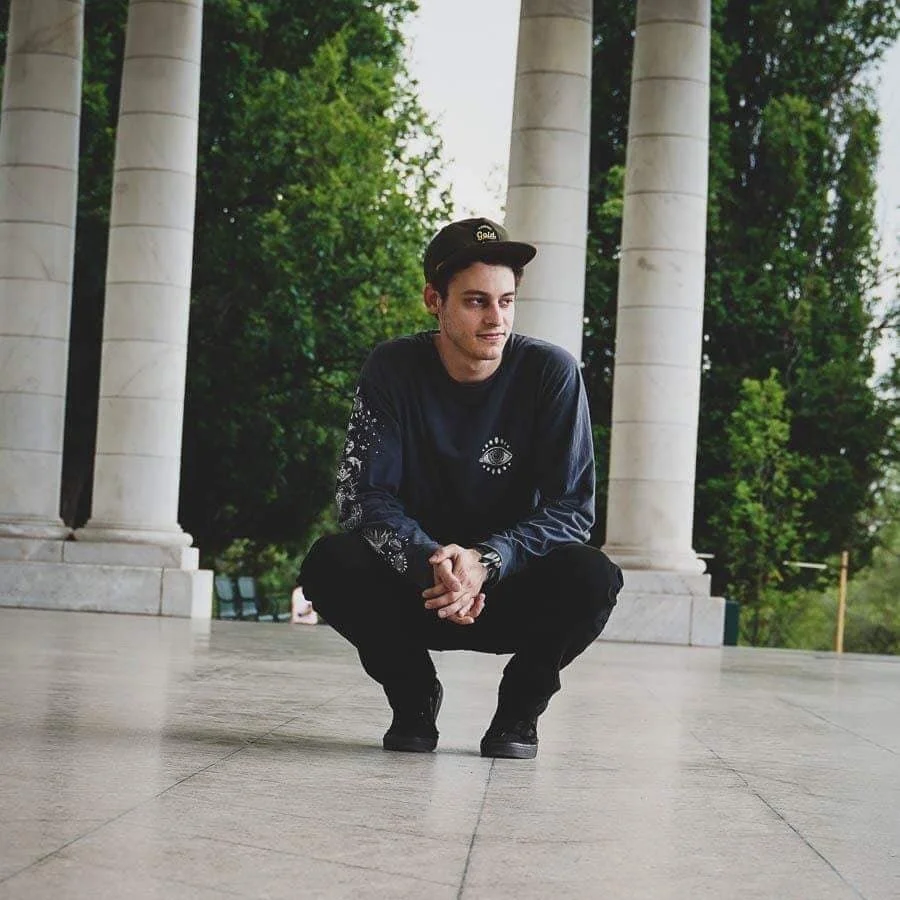
With such a consistent output, we’re never in a dearth of Ewing’s musical offerings. Whether it’s a solo endeavor or a companion project amongst friendly musicians and producers, he never fails to leave the mark of his midas touch. With just over a week to go before the double-header weekend, don’t miss the opportunity to catch Ian Ewing amongst an amenable cast of producers, including pheel., Parkbreezy, 5AM, VCTRE, and more.

Referencing the Master: an Expansive Conversation with Matt Davis
Outside of the Hacienda Audio studio, their master engineer Matt Davis recently unveiled his latest rig deployment for the home-grown Reference Sessions series in Denver, Colorado. Featuring an enormous and meticulously designed sound system, expansive LED walls, and precision front of house engineering, he and his cohorts are aiming to set a new bar standard for high fidelity concerts and events. For one of our most technically expansive interviews to date, we had the opportunity to sit down and reference the master himself after their recent Reference Sessions 002 deployment in Denver for an intimate conversation about the philosophy and engineering behind one of the latest developments in the live audio playing field.
Written by Alyssa Barnhill
It's never a one man show, even if there is just one person in the spotlight. From the front of house to your ribcage, from the bass weight to the record crate, Hacienda Audio provides an all-encompassing workhorse through professional audio engineering and studio design. Outside of the studio, their master engineer Matt Davis recently unveiled his latest rig deployment for the home-grown Reference Sessions series in Denver, Colorado. Featuring an enormous and meticulously designed sound system, expansive LED walls, and precision front of house engineering, he and his cohorts are aiming to set a new bar standard for high fidelity concerts and events.

Matt Davis
Sound system hardware and music production software have evolved parallel to one another, which in turn plays into the dynamic evolution of traditional and modern conceptions of “sound system music”. One of the many contemporary brains at the center of this phenomenon is Davis himself. His own roster of projects reaches far beyond just our musical niche, and that experience in concert with his rigorously academic application of engineering fundamentals is precisely what sets him apart from his peers. Consequently, those same skills are what should also set Reference Sessions apart from the competition. I had the opportunity to sit down and reference the master himself after their recent Reference Sessions 002 deployment in Denver for an intimate conversation about the philosophy and engineering behind one of the latest developments in the live audio playing field.
Alyssa Barnhill: What technology or equipment was used to achieve such an articulate and immersive sound experience at the event tonight, especially balancing the heavy bass weight with clear and crisp highs?
Matt Davis: For this event I really wanted to create an impactful evolution on existing tech that could be perceived and appreciated, not only by the connoisseurs and audiophiles of the room, but even to lay people coming directly from another event, with who knows how much hearing fatigue. For this reason I used a multi-pronged approach to improving sound quality through a few different mechanisms.
The first was by using a full digital signal path the entire way from the CDJs to the amplifiers, which did not contain the insertion losses which are present in your usual signal path in DJ based events. The usual exchange goes from digital in the CDJ back to analog in the DJ mixer output to the FOH path, and then to digital in the FOH console’s A/D converters and back to analog leaving FOH, before being converted back into digital by the amps’ DSPs and then back to analog for amplification. In our configuration the entire chain stays not only digital, but is also synchronously locked to the DJM’s clock for the most direct, coherent signal possible, much like is found in mastering rooms.
We also brought a LOT more headroom/wattage in the sound system than is typical of a 400 capacity room, which carried with it a lot of benefits both in the latitude of tonal expression possible in the sound system, and lower distortion figures, which allow me to run the subs hotter than in normal rigs without the incorporated harmonic distortion which extends into the upper bass/low mids masks detail. By using subs with a ton of headroom I find you can still yield a balanced sounding tone, but with much more bass weight than you’d usually be able to get away with due to the lower distortion, making the sound not only detailed and accurate, but very involving and at times extremely aggressive with subrange pressure.
There is a concept in acoustics known as “cabin effect” which occurs in small air spaces with very large amounts of SPL (sound pressure level) in them. Cabin effect is essentially the state where the entire air volume is fully pressurized and dynamic compression takes place not due to electrical/displacement shortages, but simply by the air molecules being unable to propagate any further. I’ve been familiar with this effect since high school due to my interest in car audio design for bass competitions, and it’s been a long term goal to bring enough displacement, wattage, and xMax to a venue to create that effect on a much larger scale than in a car. There were moments during Murkury’s bass bath and at other points in the weekend where I felt that we were near the threshold of that cabin effect sensation, I’ll never forget feeling my whole body tingle in a way I’ve never experienced for at least 10 minutes after the bass bath, I attribute this to powerful infrasonic extension and the subrange SPL we were able to attain even at FOH towards the back of the room for those three minutes during the bass bath.
It could be argued that we have also improved upon the low end punch of a standard rig by trisecting the kick drum into three separate boxes (Kick First Harmonic Bin, TSW-718 (65-200hz), Kick Fundamental Bin, HSD Sherman (30-65hz), and Rumble/Infra Bin, V-Plated Battle Axes (15-30hz)) which separates and independently generates the different partials of the kick drum in a perfectly phase aligned manner, courtesy of our very talented alignment tech Brady Chionbian. Most rigs are 3-way or 4-way and use one box for the entire subrange or maybe a sub reproducing the fundamental and a kick bin to handle the first harmonic of the kick. In our 6-way configuration each partial of the kick drum is generated by a dedicated box which is inherently better protected from intermodulation distortion than a shared bin reproducing the full kick signal.
Another component of the secret sauce is the way that I perform FOH duties. I find most FOH engineers for DJ events have a tendency to either “respect the master of the music” by not altering it, or simply have a hands off approach to conducting FOH once they’ve established a starting level and tone. I, as a mastering engineer, don’t really care much for maintaining other peoples’ masters as they are when they don’t translate to the sound systems they are being played on, and take a very active role in improving the translation of those masters, mostly via dynamic EQ settings made on a song by song basis for each set of the night.
I vet the acoustic qualities of every room that I rent for an event by hearing, measuring, and messing with a sound system in the space in advance of renting it, and I personally vet every box of every sound system that we bring out for these events. I spend a lot of my time roaming around the country listening to what people say are the best rigs in the country, and I bring hybridizations of the ones I like best out for my events. For this event, we used most of Trash Fence’s inventory of Floodlights/718s and all of their subwoofers, and added four of Unify Mountain Soundz’ Battle Axes to round out the deployment.
We also design and fabricate new sound system technology to get closer to my metric goals of low frequency extension and lower distortion figures. We brought out the world’s first HSD Battle Axe V-Plate array at this last event which moved the low frequency cutoff of each 4-pack of axes from 26hz down to 18hz. I was shooting for 15hz, but I know how to get that low if not lower with my design for the next event’s sound system. I want the infrasonic range to be flat to single digits within the next few parties.
Lastly, we acoustically treat every venue that we use for a Reference Sessions party with materials donated by Hacienda Acoustics. A sound system will only ever be as good as the room you put it in, it doesn’t matter how talented of a deployment engineer and alignment tech you are, if the room sucks the sound will suck. I’ve been patiently waiting for years for the standards of acoustics/sound reinforcement in the US to get better, and somewhere along the line I got tired of waiting, so now we leave a wake of acoustically treated performance spaces to slowly and incrementally improve the standards of live playback in the US after every event, one venue at a time.
Alyssa: How was the sound system materially designed to create such a physical experience?
Davis: I attribute it to two things. Infrasonic extension which provides a more tactile/visceral/physical response when combined with strong subrange, and micro-dynamic control of transients in the program material by myself in FOH. There is a tendency in bass music to mix the snares and hats very loud with very little dynamic control, and this will tend to get very harsh through live sound speakers, even quite good ones due to their horn loaded nature and compression drivers. By controlling the energy/sound stage position of the snare and hats you keep them from jumping as far in front of the rest of the mix and becoming grating/fatiguing to the patrons while also revealing detail in the mix which was previously being obscured by the snare/hats.
Alyssa: What exactly are the “Reference Sessions”?
Davis: I basically wanted to create a series of parties that could be a “thank you” to my mastering/acoustics clients by paying them well to perform with a lot of amenities, a love letter to sound system culture, and a means for myself, my organizations, and my very talented friends to show off at a high level. We pride ourselves on very big productions in intimate and unconventional spaces, with excellent sound quality.
Alyssa: What techniques did you use to work with this specific venue?
Davis: I liked this particular venue because it had a classic dirty warehouse vibe, roughly the right size that I thought we could comfortably fill up with guests and that we could afford to acoustically treat, and the non-parallel ceiling with fiberglass lining. I tend to pick venues with fiberglass either attached to the ceiling or suspended above a drop ceiling. They usually sound considerably better than a flat and/or purely reflective ceiling. The main room had a moderate footprint with a lossy partial wall on one side which I knew would not present as a boundary for low frequencies and would allow the subrange to propagate through the entire footprint of the warehouse, allowing for deeper subrange extension. I also noticed a pretty strong constructive 25hz antinode in the room during analysis that I figured would support/enhance the deep sub/infrasonic range, and it very much did that.
Alyssa: What kind of challenges were in the way of achieving such a professional experience in a warehouse space like this?
Davis: Climate control was a big one, as the warehouse had no HVAC and the weather was pretty inclement at the time in Denver. We relied heavily on propane torches for heat during load in/alignment but we obviously couldn’t use them once doors open to guests. Electronics can be sensitive to temperature swings so navigating the logistics of keeping the place warm enough to keep the gear happy was a bit of a challenge.
Another big challenge was that we simply kept shaking our tech to death with subrange during stress testing of the sound system, and during the actual events. We killed one Armonia router a day for three nights straight, which was problematic seeing as how it provided our system engineer with amp health diagnostics during the event. These diagnostics are critical when you aren’t applying a highpass to your subwoofers as infrasonic energy can become incredibly destructive to subwoofer drivers if not properly tailored on a song by song basis, so I was essentially flying blind and relying on my ears to hear and correct for the drivers bottoming out in their unloading range in order to keep the subwoofers safe. We also killed an unused amp input on one of the Powersofts after stress testing the system, not via abuse but simply as a result of the incredible SPL taking place in “amp world” (which was between the front/rear sub arrays).
Alyssa: What steps were taken to balance the immersive visual elements, such as lasers and LED walls, with the impressive spread of sound?
Davis: I started planning this party hell bent on doing a temporary full visual immersive room using LED walls. We slowly had to pair that down to the realm of sanity and practicability for this event, though I intend to make it happen at a future party once we’ve built up a better internal supply of LED wall/trussing. What we wound up with was roughly 48x9’ of continuous LED which extended from behind the stage, around the speaker stacks, and into the sidewalls of the room. They were zoned into three segments that could be controlled by either Glass Crane or Tenorless, or both if they chose. I liked the idea of having multiple VJs working in congress with each other to create a unified vision, and I think they succeeded admirably, as did our laser specialist, Spilt, who did a great job of synchronizing his color patterns with the visuals through the three nights.
Alyssa: What successes did the team achieve while designing this experience?
Davis: I think creating the world’s first 6-way dance stack is definitely an accomplishment, and debuting a brand new deployment style with front/rear sub arrays which tested very well was a triumph for us as well. Just being able to organize productions on this scale, conducted equitably with our staff/artists, while only designed for 400 attendees or so per night, and getting away with it was our biggest achievement. Without the incredible logistical planning of Elias Walker and Mike Hollier, none of this would have been viable. The “bass cave” concept under the stage between the sub arrays was also a huge hit, and we’ll almost certainly be bringing that back and developing into the concept as well.
Alyssa: How did the design and setup of the sound system enhance the performances on the artists’ end? What qualities in producers do you look for when building your clientele at Hacienda?
Davis: I let all of our artists know that it’s OK to write sub notes far below F1 for playback at these events, and many of them are beginning to cut Reference Sessions dubs with extremely low sub notes that would not be audible on most touring rigs for these events. Dillard played a song with a 22hz sub note in it that was absolutely devastating, and had most of the patrons looking around at each other after they heard it the first time, likely because they’d never heard a sub note that low with anywhere near that kind of authority, it was an incredible moment for me and the sound team. We also have started commissioning Reference Sessions dub specials through different crews in Jamaica, which will mostly be heard at our events and are equipping our artists’ catalogs for the soundclash battles we’ll be bringing into the equation at upcoming parties. Shout out the One Sting Crew for our dub specials for this last event!
I don’t have any strict requirements for clientele at Hacienda per se, but I definitely have preferences in what I choose to platform at my events. I see the lineups for these always composed of eclectic varieties of bass music, whether that’s dubstep, grime, drum & bass, jungle, footwork, breaks, or whatever.
Alyssa: What role did the speaker layout and driver selection (e.g., 40/80 drivers) play in creating the physical presence amd clarity we felt?
Davis: There is a principle in acoustics/transducer theory known as Hoffman’s Iron Law. In layman’s terms, it states that you can only get deeper bass extension via larger drivers or by more electrical signal. There are obvious limitations inherent to the latter of the two options, as drivers have maximum headrooms that you cannot surpass without higher distortion figures, followed by a linearity, and lastly damage to the driver. Therefore we add driver size for extension, and for this reason we have spec’d very large subwoofer drivers (21” on the Axes, 24” for the Shermans), and a large number of them for more air displacement and coupling, for deeper extension. My old audiophile friend Mike Chafey always used to say “there is no surrogate for headroom” and I’ve subscribed to it in the design of my mastering studio and in the way that I spec deployments.
Having more drivers playing the same level drops the drivers’ individual levels, which in turn lowers their overall distortion figures. Good steering patterns make a huge difference, too. I’m one of few deployment guys who toes-in the mains for imaging purposes whereas most will fire the stacks straight back into the room for better coverage. I wanted to define a zone in the room where you would not only get an equivalent amount of L/R speaker in the space, but where the two sides would deliver strong localization and imaging qualities to the listener, which is usually outside of consideration for most live sound deployments. This space was defined directly in front of FOH and it was full of people all night who were probably hearing actual imaging out of a live sound PA for the first time.
A funny thing though, we actually ended up not using the attachments on the floodlights as they worsened the impulse response measurements. As a result, they were present but we didn’t wind up using them during the event. An interesting fact: if you have a speaker in a room that isn’t plugged into a powered amp, it will actually act as a passive resonator that will absorb the other speakers’ energy, so we hooked them up to a spare amp for the night that was powered but not receiving signal. I probably will be looking for lower distortion tops moving forwards as the subrange/bass/mids actually had lower distortion than the upper mids/highs on this particular rig, which bums me out a little because those Floodlights are probably my favorite top I’ve ever heard so far. They were designed in the 90s and our particular set of Floodlights was previously owned by Pink Floyd, before being lovingly restored and customized to improve upon the original specification by my dear friends Bill Weir and Citron Arbel at Trash Fence.
Since then, technology has advanced in ways that allow greater maximum output from tops, but Bill and I strongly feel that the Floodlight 760 represented a high water mark in live sound sonics that has never been replicated. I’ve been eyeing the Danley Jericho J7-95s and will be heading to the Danley factory to try them out soon. I absolutely adore the idea of synergy horns, on paper they should beat any non-coaxial top for impulse response measurements, and with 18 internal drivers per top the headroom is astronomical, and as a consequence the distortion figures at level should be much lower. They are rated to extend from 60hz-20k, but I suspect that using these in conjunction with TSW-718 kick bins crossed over circa 200hz, subwoofers, and infra subs will create a beautiful 6-way system. I just have to hear them and like them first!”
Alyssa: As a fan, I’d like to thank you and your team so much for choosing Denver for this incredibly special experience. The question is, what and where is next?
Davis: Deeper infrasonic extension, lower distortion figures, definitely soundclashes, bigger productions, and probably our own festival as well in the next year.
I’ve been in talks with the manufacturer of the largest infrasonic subwoofer driver in the world for super high end home theaters, which is outlandishly expensive, and requires the construction of the sub enclosure in the room it will be used. Their specs more than qualify them for use in live bass music, with 20,000 watt peak ratings, 35mm xMax, and 172L of air displacement. They would provide flat extension down to 8hz. However, the logistics of deploying an 80” subwoofer are extremely complex as you can’t fit a driver this big into an enclosure that would fit in the back of a truck or be able to fit through doors. They require a minimum enclosure size of 10m³ per driver! We would need to build rigid enclosures for these inside of the venue, which is not impossible, but would definitely add extra days to load in and require more staff to assemble.
I think there’s a lot more room for showmanship and spectacle in sound system culture, the most engagement I ever get on social media posts are pictures/videos of the big rigs I put together for these events. I know it resonates with people in a big way like it does for me, and I want to deliver more of what it seems like people really want out there, which is big fuck off sound systems that greatly exceed the sonic expectations of the listener.
As a patron, home is where the heart is, and Reference Sessions 002 brings a family-sized serving of master class engineering. This series is a tribute to the modern sound system, its impact, and the legends born from it, and these shows are one of a kind, precisely tuned, larger than life experience that can’t be missed. Let the system take you for a drive and let the team take the wheel; Reference Sessions is a breath of fresh air in the dynamic space of the musical counterculture.
“Every sound system has a story, and we are here to bring you that story.” - Matt Davis.
FOLLOW Reference Sessions: Facebook / Instagram / Youtube / SoundCloud
Discussing Influence, Balance, and Community with Murkury
Alec Seifart, the creative force behind Murkery, is poised to bless Denver audiences November 23rd at Meow Wolf’s Convergence Station alongside a cast of hand-picked characters. With years of production steeped in psychedelia and modern bass music fundamentals, he’s dialed in a sound, style, and presence that defines the Murkury brand with clear intention and direction. Speaking with Seifart, The Rust had the chance to dive a little deeper into the experience and the inspirations that drive his project and output, as well as attempts to address and assist community needs through his platform.
Written by Alyssa Barnhill
Alec Seifart, the creative force behind Murkury, is poised to bless Denver audiences November 23rd at Meow Wolf’s Convergence Station alongside a cast of hand-picked characters. With years of production steeped in psychedelia and modern bass music fundamentals, he’s dialed in a sound, style, and presence that defines the Murkury brand with clear intention and direction. Seifart’s recent collaboration with Rafeeki resulted in a track specifically crafted for Denver's eclectic audience. He explains, "Denver has a really dense population of sophisticated listeners... so we tried to come as correct as possible!" This dedication to his craft is evident in his upcoming projects, including a psytrance-inspired EP, and various collaborations set for release in 2025. Balancing his creative pursuits with community involvement, Murkury continues to inspire through his music and unwavering commitment to Asheville's cultural vitality.
In the aftermath of Hurricane Helene, many faced overwhelming loss, but the initial shock and awe of flooding on a biblical scale has given way to an impenetrably strong sense of community and support. It is a testament to the resilient strength and spirit of the Appalachians, both the people and the territory. In my interview with Alec, I got the chance to dive a little deeper into the experience and the inspirations that drive his project and output, as well as attempts to address and assist community needs through his platform.
Alyssa Barnhill: We all feel for your community there. What was your experience with the hurricane in Asheville?
Alec Seifart: Thank you, my personal experience pales in comparison to what a lot of other people went through but it’s kind of hard to even boil down what it was like into a paragraph. A lot of tears and stress but also these little moments of laughter, like, cooking over a fire with a neighbor, making dumb jokes, simply grateful to be alive. We lost power and water and the cell towers were down for a good while but my house was spared. I was able to secure food and water for myself and my neighbor but going out into the world was like entering a warzone. My neighborhood in Barnardsville was devastated. I can’t describe the level of destruction around me, even now, a month later. But any time I go out, now, the conversations all start with questions like, “how’re ya holding up?” and “do you need anything”? It’s extremely heartwarming. My hope is that that level of general reciprocity continues into the future.
Alyssa: How is the music and art scene there now? Post hurricane issues?
Alec: Music scene was hit hard, for sure, but we have some really good venues and promoters here stepping up and providing the community with a place to womp out and hug friends. One of the biggest issues is water. The city of Asheville still doesn’t have potable water a month after the hurricane and I’m hearing estimates it’ll be another month before it’ll be safe again, maybe longer. What’s been really beautiful to see is all the local + national fundraisers in the immediate aftermath. From here in Asheville to Charlotte all the way to Denver, people have been spreading awareness and raising money with bass music and visual art and to me, it’s an example of what our scene is all about.
Alyssa: I saw you mentioned trying to make music and feeling conflicted. Speak on that

Alec: Absolutely, yeah the desire to help out around the community battling my need to continue working on music and prepping for gigs so that I can keep paying bills. Like, I knew internally that it was alright to sit with this feeling and it would pass, but honestly, expressing it out loud still helped a lot. Hearing that positive reinforcement from homies who are going through similar things definitely helps.
Alyssa: What do you think of the future of our kind of music in Asheville?
Alec: It’ll be interesting to see what the producers here create and what comes out of this destruction. I’m really curious about that, because I’ve already started to dig into those feelings and found good results in the studio. As for shows, it’ll be tough because without the tourism industry, a lot of people are without jobs right now. While a couple venues got wiped off the map, the scene here is extremely strong and people definitely want to dance at this point. I think towards the end of the year we’ll see more things happening (hint hint).
Alyssa: New track with Rafeeki is dark and ominous. Temple step? Deep and gritty. You guys made that just for Denver?
Alec: We did! We wanted to cook up something special for the occasion. Denver has a really dense population of sophisticated listeners, aka they always get the best shit and so their threshold for dopeness is very high. So we tried to come as correct as possible! Plus, it’s so much fun to collaborate with Jorge and we have really good chemistry in the studio. We actually have another collab together with Tunic, JuJu Beats, and Sum.Simpl called, ‘Flip’. That one also features verses from Rafeeki and Toh of Sum.Simpl, and will be coming out sometime next year but we’ll be highlighting it at Meow Wolf, as well!
Alyssa: What other concepts for tunes are interesting to you right now? And how Is that influencing your music today?
Alec: Well, I’m working on a psytrance-esque EP right now. Fast, four on the floor 140 bpm music with wubs and gritty basses has got me in a chokehold right now haha. But I’m still working on dubstep and finishing up some real special collabs, flute boi music and some meditations. Got about 15 songs wrapping up or already scheduled for release in 2025.
Alyssa: Anything special your audiophile fans would like to geek out on.
Alec: Well, my mastering engineer Matt Davis is doing these ridiculous sound deployments around the country right now when he’s not running FOH for Detox Unit or whoever. The first one in Orlando was the best sounding show I’ve done in my 14 years of DJing. He’s big on getting the best possible low end response and has challenged me to make a song that’s lower than I ever have made before. So I guess look out for that and apologies in advance because you literally will not be able to hear the sub on regular systems.
Alyssa: The reference session Orlando show in September, then DC with Artifakts, Yoga in Iowa, AND Denver Meow Wolf the 23rd? Do you ever sleep?
Alec: I sleep more than you think haha! I love to sleep. Sleep is life. Also I like playing helldivers or elden ring when I’m not producing or sleeping!

Alyssa: What Is your work life balance like and where are you finding inspiration these days?
Alec: It seems basic but I’ve been writing a lot of to-do lists lately, trying to cross out as many as possible each day. That’s been helping me balance things so much, stay on task and get my priorities straight. Highly recommend it.
Alyssa: I read that you're planning to go “ALL OUT” for this curated event, complete with temple forest deco, and Koja Sound paraflex sub rig? What's that looking like?
Alec: Yes!! We are going to transform Meow Wolf into a forest as much as possible, basically, and integrate with their awesome temple-style stage design. When we came up with the concept, ‘Magic Temple’, we definitely had that room in mind! The Koja Sound lads have been generous enough to bring out their whole rig for this one, including the paraflex subs, so we are really really grateful to them for helping us elevate the experience for everyone coming! We also have Hummingbird Productions out of Fort Collins providing deco, who specialize in forest-y environments. They’re going to make it look amazing there.
Alyssa: Yourself, Rafeeki, Tunic, BANkaJI and Quite Possibly. I'm sure you guys are going to throw down. Any hints at the vibe of the night and what can we expect of this secret guest?
Alec: Oh boy. I mean, each of these lads is a headliner in their own right, as I see it. They each have such a unique and powerful vibe and are such amazing humans. That’s why we stacked the evening with the best talent start to finish we could manage. Starting the night with a Tunic set might be the craziest part of the lineup because he is such a masterful artist and it’s almost insane starting out with him, but it’s gonna be perfect. Into our secret guest, who I’ll give you a hint that he has played Tipper and Friends events before and is bigger than all of us, in a sense, haha. Incredibly grateful to have him on board for a special offering. Then into Rafeeki followed by myself and finishing off the night with a high energy back to back between Denver-based legends Bankaji and Quite Possibly. We have some surprises up our sleeves, too, so everyone (including us) is in for quite the wild ride.
Alyssa: In your words what is the impression or significance of the intersection of nature or spiritualism and bass music? You intertwine them very beautifully and organically. Where do you think people feel this connection comes from?
Alec: It’s strange because the more I dig into those ‘spiritual’ realms, the less meaning I find myself attaching to the actual moments of creation in the studio. It’s only after a session where I can reflect on where the flow state came from. I use quotes for spirituality there because you can find it in any genre, even mumble rap or something people may classify as “low-vibrational art”, I believe. If the song is made with love/passion for creation, then it’s gonna naturally be a container for emotion and soul.
And as for the sound palette of eastern spiritual music, I really enjoy how flutes sound and how mantras make me feel. The vibrations during sound baths, for example, make me feel good, so I do it. Does it induce healing for me? Absolutely, but does it mean I should worship that process or see it as above other types of music? Each genre or whatever you wanna call it has a unique service it can provide the listener & can be healing in their own way! Hardcore techno is healing for me, too, haha, but obviously I’m not sitting down for that.
As the night at Meow Wolf approaches, it’s clear this show will be nothing short of extraordinary. With Murkury leading the charge alongside an all-star lineup of Rafeeki, Tunic, BANkaJI, and Quite Possibly, the event promises a transformative experience filled with deep bass, stunning visuals, and an unforgettable vibe. From the immersive “Magic Temple” concept to the powerhouse Koja Sound paraflex sub rig, every detail has been crafted to elevate the night into something truly magical. For fans of boundary-pushing bass music, this is one show you won’t want to miss. Prepare to dance, connect, and lose yourself in the music.
FOLLOW Murkury: Soundcloud / Bandcamp / Spotify / Official
An Expansive Conversation with Culprate in the wake of "Normal" LP
Resurfacing for air two years after the release of his psychedelic αριθμός τέσσερα LP, the Bristol-based producer John Hislop has come up for air with another minted project. Stretching back to his formative days with the Dubsaw and Inspected labels, Culprate has become a staple producer in the arc of bass music and contemporary audio production. his latest release through Inspected, Normal, puts pure force on display, harkening back to the energy in his formative years. In collaboration with The Rust, Hislop agreed to an insightful interview that has given us a proper lens into his thought process, approach, and interpretation of his own productions and some of the wider context to his career so far.
Resurfacing for air two years after the release of his psychedelic αριθμός τέσσερα LP, the Bristol-based producer John Hislop has come up for air with another minted project. Stretching back to his formative days with the Dubsaw and Inspected labels, Culprate has become a staple producer in the arc of bass music and contemporary audio production. His Deliverance LP shines just as brightly now as it did ten years ago, and both it and αριθμός τέσσερα feature an abundance of lush instrumentalism, novel arrangements, and nooks and crannies that feel like they’re still slowly revealing themselves to this day. In contrast, his latest release through Inspected, Normal, puts pure force on display, harkening back to the energy in the formative years of Culprate compositions.

It’s dark, dense, and frenetic in ways that feel leagues removed from the expectations set by his previous LPs. And yet it doesn’t come as surprising, with the foundational elements of fundamentally heavy bass music having always been a part of Hislop’s skill set. A merging of club-centric rhythms, lumbering half-time, drum and bass, and high-fidelity sound design deliver on the Culprate seal of quality, while exploring dance-floor relationships that exceed the boundaries of his previous contemporary works in many respects. Some might find there to be a lack of the melodious and harmonious elements that made him an indelible part of many burgeoning palettes throughout the 2010s, but that would be a disservice towards the altogether fresh interpretation of Culprate music that we’re now gleefully chewing on.
In collaboration with this publication, Hislop agreed to an insightful interview that has given us a proper lens into his thought process, approach, and interpretation of his own productions and some of the wider context to his career so far.
The Rust: Your time in the limelight stretches back to early releases on Dubsaw Recordings over 15 years ago, well before the establishment of the sound you're concurrently associated with. Looking back from "Normal", what are your thoughts on records like Flatline and Colours? How does your early work hold up in your ears?
John Hislop: Indeed! It's been a wild ride! Those records still hold up for me, especially Colours! Obviously they don't sound as huge as some of the stuff being released nowadays. But the ideas and vibes are still interesting, to me anyways. Sometimes I even think the ideas on those records are better than the ideas I come up with, now!
The Rust: For those of us on the outside of the process, the synergistic unveiling of your label Open Outlets and the "Deliverance" LP 10 years ago feels like a waypoint in your career, with a clear before and after. Can you speak on your influences at the time, and what your initial vision was with the genesis of Open Outlets?
Hislop: Yea, Deliverance was definitely a departure from what I was known for at the time. I actually created it to get less shows, if you can believe it! Being an in demand DJ is fun, but it's not as easy as some may think. At the time of recording all the instruments for that LP, I found out my wife and I were expecting our first child. At that time, I was away in 3-4 different counties per week doing shows. Not really sustainable for a parent. So I guess I subconsciously knew I needed a change of pace. The main reason for the birth of Open Outlets was the fact that I couldn't find a label willing to take on Deliverance.. So I decided to put it out myself. As for my influences at the time. I was really into Amon Tobin, Squarepusher, Pink Floyd, Radiohead and had just discovered footwerk. I still love all of that stuff, but Deliverance was definitely the record which really took all of those things and blended them into a single package.
The Rust: Your last two solo LP's, Deliverance and αριθμός τέσσερα, are primarily known for their lush instrumentalism and pensive atmospheres, where "Normal" clearly has its influences in breakcore, neuro, and other techy forms of broken beat music. Can you speak on the divergence and development of your sound from then to now?
Hislop: Deliverance and αριθμός τέσσερα are really the sort of records I love to make. I find it more difficult, therefore, more fulfilling than "regular" club music.

Deliverance LP Artwork
I guess you could call Normal an experiment, too?? For me, it's just that. It’s definitely got a weird energy to it. Not what you’re likely to hear on a lot of dancefloors. I was trying to think of things I haven't (or rarely) covered, and put them all in a somewhat familiar package which might be accessible to people who might never really listen to that sort of thing. There is a clear divergence. However, I can't really explain it.. Other than to say.. I think artists should try new things and explore new areas. All of my favourites do this. I think I'm always going to try new things with my music. To me, it's important to keep things interesting for myself.
Developmentally, I think I have upped my mixing game. Not that the tracks on Normal are the most aesthetically pleasing tracks I’ve ever done. But I managed to be a lot more purposeful with how this record turned out, than on previous records. Writing-wise, much of Normal was written at about the same time as αριθμός τέσσερα, as a way to decompress from the toil which comes as part of making an overly detailed LP. The Normal tracks were a welcome break, a bit of fun, and very normal in comparison.
The Rust: The progressions and compositions in your catalogue are a clear part of the reputation you've gained under the Culprate umbrella. What's your history as a producer and songwriter? Do you view yourself as a conventional musician?
Hislop: I started making music when I was around 13. Nothing electronic, though. It was all Rock and Metal. None of it was good, haha! I started on the guitar and slowly worked my way through the usual “band” instruments. (Drums, Keys, Bass, etc.. ) I never did learn to sing, though.. My first experience with electronic music was just before I started secondary school (around 1996-97). Older family members had DnB tape packs (peak 90’s) and I quickly got into it!
I didn’t get the opportunity to create anything electronic until I was around 18, I think. I got expelled from school at the age of 14 (almost 15) and managed to get into a music college a year early. My first couple of years in college were spent doing “band stuff”. The first year was a music practice course. In which you learn how to be in a band. After getting access to recording facilities, I realised that’s where I belonged! I swapped over to the tech side and began recording the college bands on hardware and tape. At the age of 18, I discovered reason 2 on some of the college PC’s. After playing with it for a while I realised “This is how they make dance music!!!” It was a lightbulb moment! From there, I never really looked back.
Do I consider myself a “conventional” musician? Na.. I stopped practising instruments when I discovered Reason. So my standard of actual playing is now very low.. It’s all still in my head, but my hands won’t do as they're told, haha! Clearly I can write riffs, melodies, harmonies and tie them all together with rhythm. But I need a keyboard and mouse to achieve anything listenable, these days.
The Rust: Where does the design start with a record like Normal? Did you set out to write this album as a cohesive unit, or did it come together as a result of circumstance?
Hislop: With Normal, it was the latter. I had “LIGO”, “Myka” and “Area51”, from back when I was making αριθμός τέσσερα. “LIGO” got an entire remake in a totally different style, but kept the rhythm of the kick/bass sound and tempo. “Myka” also got an entire remake. It was initially a Dubstep track, which had a 2 bar 4x4 section. I decided to audition the whole thing as 4x4 and it just made so much more sense! After this, I remade all the bass sounds to better suit the new groove.
The other two stayed much the same as they were back then, except the final mix. “Singularity” came from an exercise. I was trying to make a techno rumble kick/bass type thing. Something which I’d never managed to get right, in the past. It progressed pretty naturally and the arrangement was finished relatively quickly. “Lightfold” as an idea, is actually from 2016! It originated from the tracks I made for “Dawn” but was initially shelved. This also got a total remake, from the ground up.
It’s the total opposite to how I thought about Deliverance, Colours, and αριθμός τέσσερα, which were all planned out before I started any of the writing.
The Rust: What's the musical philosophy to "Normal"? What were the sort of vibes and juxtapositions that informed the writing process for these songs?
Hislop: The writing/arrangements all feel pretty alien to me. Hence some of the track names. Like I said, they weren’t specifically made to “be together” but they all seemed to share a vibe, of sorts. I think the overall vibe mostly comes from how I mixed the tracks. I tried to get something close to the feeling I got when listening to old DnB tape packs back in the 90’s but a lot cleaner. I wasn’t going for a particularly “HiFi” sound. I was more going for a “classic” sound, without things sounding dated, if that makes sense?

αριθμός τέσσερα LP Artwork
To me, it almost sounds like, for example, “LIghtfold”, “LIGO” and “Area51” are DnB tunes that are made by someone who’s never heard of DnB. Once I noticed this, I leaned into it and made the other tracks reflect the same sort of thing, uncharacteristic of the genres. While having them all tell a story independent of the other tracks on the record.Almost like how original Dubstep was created by someone, I forget who, trying to make Garage, but doing it totally wrong. The two VIP’s “Ghost Machine” and “Tentacle” were tracks which I had updated to use in live sets. This is something I do with older tracks, to keep them fresh and able to stand up next to other modern tracks.
The Rust: What kind of space do you work within? Is there a place for hardware in your process and studio, or do you approach production from a primarily "in-the-box" angle?
Hislop: Until very recently, I’ve always had a tiny workspace, no room for hardware, at all.. So I’ve developed a very “In-the-box” workflow. I’m also quite stubborn with the plugins I use. I try to keep things native and not jump on the same stuff as everyone else. For example, I still, to this day, have never used NI Massive or Serum… I tend to make all my sounds with either Operator or Analog. Both native to Ableton.
Other than that, I use the Fabfilter stuff and a select few other, what I consider, “tools” to make sounds and mix tracks. I’ll only buy something new if it’ll save me time. Like Shaperbox from Cableguys. I used to spend hours layering things with specific envelopes, only to find that it sounds like s**t and need to do it all over again! I do have a few hardware synths, but they’ve thus far been kept in their boxes and out of my workflow, due to space. Something which is much less of an issue now. So who knows, I might start a new and very expensive hobby in the near future.
The Rust: 15 consecutive years into the Culprate project, what keeps this fresh for you? Are you drawn to conversations and developments around music and music tech, or do you find yourself primarily focused elsewhere in the context of your musicianship?
Hislop: I do try to stay aware of what’s happening around me, in regards to tech and trends. But I also try to make music with an almost “timeless” feel to it. I think that’s been one of my strengths, over the years. With the vast upgrades in tech, you can now get far superior tools to what I had when I first started making music. However, none of this can substitute knowing what you’re doing and more importantly, knowing why you’re doing it.
I do welcome the future, and all the new timesaving tools which will come. But I’m of an old school mindset. I’ve always been really nerdy about the physics of what I’m doing. Why things do what they do and why I’d want those things to happen, or not. I’m not sure much of that will change in the life I have left as a producer. Unless we discover a new form of physics..
The Rust: What are you hoping to achieve in the wake of "Normal"?
Hislop: After the phenomenal and unexpected success of “Deliverance” I’ve learned to temper my expectations when releasing new records. Nowadays, I just try to put out the best thing I can do and not worry too much about what I’m going to achieve after the fact. The achievement is the record, itself.
Like I said before. I made the bulk of these tracks to decompress from LP life! Which was really needed at the time when we were all locked in our homes. I feel like I’ve learned a ton while working them into what they’ve become and I’ll be using that information to make my next full LP something really unique. For me, that’s all I feel like I want to achieve from this process, in general. To get better and more deliberate with each release. Anything else is a bonus!
Submersion Aftermath: Mark Farina
At its core, Submersion Festival has no defined “home sound”; there’s no singular lane or style that fully engulfs the breadth of the festival’s musical vision. Both as a part of its appeal, and as a result of the palettes that craft each successive lineup, a diversity of sound and presentation is the fundamental characteristic that carries the event from year to year. High on our own list of desired acts, and standing atop a three-decade career, was Mark Farina, the prolific DJ & producer who’s remained an invaluable staple across the domestic and international touring circuits. A few days ahead of his appearance at Submersion, we had the opportunity to have a conversation covering a number of points that sat parallel to Mark Farina’s hour in the Saturday sun.
At its core, Submersion Festival has no defined “home sound”; there’s no singular lane or style that fully engulfs the breadth of the festival’s musical vision. Both as a part of its appeal, and as a result of the palettes that craft each successive lineup, a diversity of sound and presentation is the fundamental characteristic that carries the event from year to year. High on our own list of desired acts, and standing atop a three-decade career, was Mark Farina, the prolific DJ & producer who’s remained an invaluable staple across the domestic and international touring circuits. Graciously presenting a set of his widely-lauded Mushroom Jazz experience, fans and attendees took advantage of a late afternoon jaunt in the sun against the backdrop of Farina’s vivacious presence and undeniable groove at the Woods Stage. Even measured against the much more intense and weighty electronic music featured throughout the weekend, his impact and reputation cut through to the center of the collective attention span. A few days ahead of his appearance at Submersion, we had the opportunity to have a conversation covering a number of points that sat parallel to Mark Farina’s hour in the Saturday sun.
[The excerpts from this conversation have been edited for brevity and grammar.]

In conversation with Mark prior to the Submersion weekend, it became clear that getting the full picture of his 30 year presence on and off the stage meant going back to a foundational epoch in Chicago’s House music scene. Coming from the same nest of greats such as Derrick Carter and Ron Hardy, Farina’s history is first and foremost a history steeped in House and steady-beat flavor. The meat of that scene starts with the selective and heralded hardware, from the renowned Technic-1200 turntable to tape-based samplers and a plethora of other analog gear. The barrier to entry was altogether higher than it is now, from the need to physically collect the music in question, to the specificity and expense of the equipment in circulation in the late 80s.
“I remember going to this club, a teen club, back towards the end of the 80s where we’d start to experience and see DJing and mixing from a dancefloor perspective. You start to hear the way a continuous blend can really get dialed in, and that’s sort of where the bug takes hold. [...] Then getting into it, I had some friends who had Technic 1200s, which is really all you would use at the time, and that’s how I’d start to get my head around mixing records, and going ‘oh ok these songs line up nicely with each other,’ and then figuring out things like BPM, beatmatching, tempo changes. You sort of build out a kit of routines and doubles and the knowledge of how to actually use the thing. [...] Around the same time, I started to understand sampling and its role in the music I was listening to, in the Chicago House scene, and from there how production with these physical machines and synthesizers really worked. Back then, the physical nature of the tools and the samplers was absolutely a part of how the music ultimately came out, the shape it would take.”
The liberatory rhythms and motifs of early House anthems made a palpable imprint on Farina’s tastes and career, but shortly thereafter in the mid 90s, his Mushroom Jazz mix series would find its genesis first in the dark chill-out rooms at various clubs in San Francisco. Taking cues, cuts, and the musical DNA of European acid jazz and early trip-hop progenitors, fused with the right percussion and manipulated with just enough finesse, he’d stumble into a style and genre that would proliferate into a now long-running series of near endless, laid-back mixes.
“The Mushroom Jazz thing really started not too long after I really started to play out at clubs and get some notoriety. I had moved to San Francisco, and in these side rooms, these chill-out rooms, I'd take like, European and particularly French acid jazz, and combine those tracks with drum rhythms and other things like acapellas, and really it just took on a life of its own. From there I eventually turned it into a dedicated mix that I would occasionally put out, which I still do through this Ibiza station called Openlab. It’s changed a bit over time, evolved to include more styles and tempos, but for me it’s really in its own lane.”
One of the more curious and adventurous aspects of catching Mushroom Jazz live in action was its placement amidst a fairly high-energy lineup for the Submersion weekend. Though far from the chill-out rooms where the style made its first foray through speaker cones, the Woods Stage provided ample ambiance, soft light, and crystalline sound particularly fit for a lightweight sonic serving in the afternoon. Its low rise and accessible placement puts both dancer and performer right in the action, giving him the space and opportunity to do the crowd and his time slot proper justice.
“I come from the time where DJs were sort of off to the side, often in a room with a literal door, pretty separate from the crowd and the party. It can be a little daunting with the way things have changed, how stages have become so much larger and in front of everyone’s attention. It’s built out for a concert, you know? But the thing is, there’s something really powerful when you’re at the center of it, you know, right up with everyone where you can really read the room, get a feel for where everyone is at.”
While we mused about changing stage dynamics and the evolution of electronic music events, he was keen to touch on the music’s modern paradigms, and the sort of formulas that draw him to the selections he’s most interested in. Juggling the onslaught of contemporary releases with an immense collection of yesterday’s finest tracks, he’s got a veritable arsenal to choose from, and a tremendously vested career to back up those decisions.
“It’s really great to look back and realize that there’s 30 years of music history behind me, and so I sort of dig into that history to discover or sometimes rediscover records that have sort of been lost to time. I still have a collection of CDs, from maybe the 2001 to 2007-ish range, when promos were all on CD and there hadn’t yet been a big push into digital as a format. And of course there’s all my vinyl, I still have pretty much every record I’ve ever collected. Sometimes finding new tracks to play is as simple as finally putting on the B-side to a record and realizing there was something great there all along, maybe even better than the A-side. [...] I find that the speed of the music cycle is pretty fascinating today. Kids and younger guys will put out, you know, it feels like a track every two weeks on a different label. There’s so much of it, it gets disorienting pretty fast. I personally feel like, sometimes it’s like sifting through so much music that feels very ‘throw-away’ just to find the things that have the right ingredients. It can even be daunting finding music from labels or acts I know I like, especially if they have a quick output. For me, you know, it’s gotta have the right groove, a solid rhythm, the bass line needs some kick behind it, it’s like a sort of formula that feels right when I hear it.”
Of course, alongside the Dj fundamentals and ample selections, Mark has also been a producer for nearly as long, cutting his teeth on composition and programming in tandem with his development behind the decks. Coming from a youthful background as a drummer, it's no wonder he eventually found his way into percussion-driven genres and the hard-hitting, transient punch of electronic music.
“I’ve been dabbling and producing for almost as long as I’ve been DJing, and obviously I’ve been playing music for even longer, it’s always been there. I’m really a physical guy, in the sense that I do everything ‘out of the box’. I use drum machines and hardware samplers and keyboards and turntables all chained together. When it comes to including it in my own mixes, you know, it's really something I do first and foremost for myself because I enjoy it. A lot of times, I’ll feel like my friends are making better tracks, or just better music for whatever situation I’m in or thing I’m doing, so only so much of it really comes out or gets a real release. […] I’ve been considering making an all-original Mushroom Jazz mix, which is something I think can happen in the near future.”
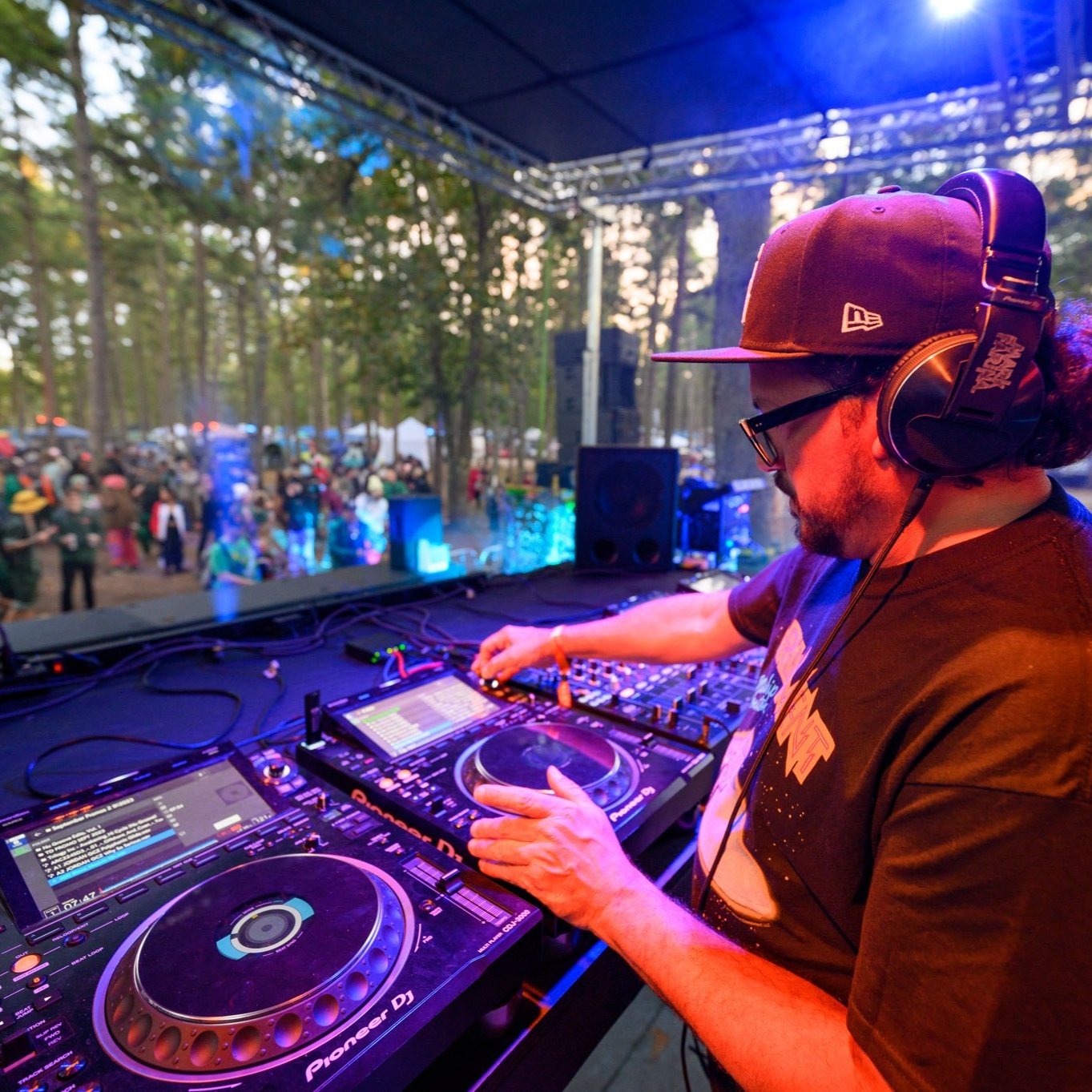
Reflecting back on some of the major points in our conversation, it’s easy to understate the humility with which he describes himself, his career, and his skill set against the backdrop of his performance that Saturday afternoon at Paradise Lakes. The cool, effusive confidence and choice selection after choice selection reveals an artist that deserves to be called a real DJ’s DJ. The fast-changing dynamics of DJing as art, it’s inevitable crossover with our especially American brand of producer culture, and the evolving direction of electronic music as a global music pillar all feed into a gradually intensifying singularity, but so long as there’s space and appeal, the veterans that carved a path upward for all of us are staying firmly in the mix.
“I’m grateful that, you know, 30 years later, I still have this career, and can still play gigs. Like Derrick Carter, DJ Snake, a lot of those guys are some of my oldest friends and still have their careers, and it's good to see so many of the people from the Chicago scene are still in the mix all these years later. [...] I’ll keep on doing this and DJing and making mixes for as long as I have the opportunity, and probably still after that.”
With the inevitable final notes of Submersion’s Mushroom Jazz experience, there’s a clarity to the role that such a niche, yet palatable kind of music plays in the wider festival and touring circuits. Flipping the script from the sunrise sets and extremely late night appearances, downtempo and laid back electronic music surely has a place in both the spotlight and the sunlight, priming appetites with digestible, sultry melodies and transitions for much heavier musical meals in settings like Submersion and beyond. While there’s no telling what’s in store yet for Submersion 2024, we surely haven’t seen the last of Mark Farina in the northeastern US, and with a career and future as bright as his, it’ll be impossible to miss his next foray in our quaint backyard.
FOLLOW Mark Farina: SoundCloud / Bandcamp / Spotify / Facebook
FOLLOW Submersion: Facebook / Instagram / Twitter / Official
A Quaint Conversation on the new Collaborative DOS Project
Individually, Ilya Goldberg and Random Rab have extraordinarily fruitful careers on their own merits, with the former both through his Lapa project and being Doug Appling’s right hand man in Emancipator, and the latter through a dedicated, double-decade approach to the Random Rab sound. It was only a matter of time before these not so disparate camps found themselves unified under the same banner, and this year saw the inception of their collaborative project, DOS. Consequently, and ahead of their appearance at Secret Dreams later this month, the Rust felt it necessary to have a quaint conversation with these artists on the nature of their collaborations, the inception of the project, and the lens through which they view their own musicality.
Individually, Ilya Goldberg and Random Rab have extraordinarily fruitful careers on their own merits, with the former both through his Lapa project and being Doug Appling’s right hand man in Emancipator, and the latter through a dedicated, double-decade approach to the Random Rab sound. Their creative talents have existed in parallel for at least the last 10 years, filling the space with melodic, instrumentally-driven trip-hop and downtempo music on numerous lineups across the touring and festival circuit. With such a self-evident sonic crossover, it was only a matter of time before these not so disparate camps found themselves unified under the same banner, and this year saw the inception of their collaborative project, DOS.
Where others may feel the need to pull from and establish entirely fresh palettes of sound and influence for on-going collaborations, Rab and Goldberg don’t just lean further into their respective creative lanes; they actively elaborate on the air-tight fit of their compositional and instrumental backgrounds. DOS’ self-titled LP, released in February of this year, doesn’t feel so much like a third path taken as much as it feels like a maturation of both individual inputs. The benefit is as clear as the overall mixdown; there’s no lag or lull in their collaborative arrangements, with both musicians letting the multitude of instrumental layers blend as they will, and rest when they need to.
While combinations of popular producers from within the studio are in no shortage of supply, such a naturally congruent mix always has a particular shine to it, and we’d be remiss not to dive further into the makeup of the DOS dynamic. Consequently, and ahead of their appearance at Secret Dreams later this month, the Rust felt it necessary to have a quaint conversation with these artists on the nature of their collaborations, the inception of the project, and the lens through which they view their own musicality.
The Rust: Where does your relationship with one another start? Did you meet as a consequence of your creative projects?
DOS: We met at Burning Man (year?) We were both on our way to play a set. When we first met, we instantly said that we need to make music together. This was before either of us had even heard each other play. I think we both instantly knew there was some sort of connection that needed to be explored. We started by collaborating on our first track which was Vapour Train off the Random Rab album aRose. Since then we wrote over 20 songs before finally deciding to start a new project with its own identity.
The Rust: Why start this new collaborative project? What was the genesis point for DOS?
DOS: We had done a lot of collaborations and sets together. However everything either fell under the Random Rab or LAPA umbrella. While we love these songs, there was always a feeling that we weren’t able to explore a true artistic collaboration. Somewhere along the line we decided that we needed to make an album together that was more 50/50 and allowed us both to forget about our individual identities and be a part of something fresh and completely unexplored.
The Rust: There's a notable overlap in the style of your individual works, particularly regarding a focus on laid back and pensive compositions; what was the initial writing process for the DOS project like for the both of you?
DOS: Our approach has always been “when we both say yes, it’s a yes” This allows us to avoid any kind of conflicts or confusion. Basically if we both agree, it’s a go. This makes the whole process very relaxed and explorational. It’s true that a lot of these songs might feel more laid back, but there’s an intensity to the production
The Rust: The landscape of contemporary electronic music tends to lean towards a much grittier array of motifs. Can you talk a bit about your experiences within that dynamic? What keeps you both drawn to the more grounded palettes of your overall works?
DOS: We are passionate about true self expression which naturally comes out as the music we hear. We made the creative decision to be less concerned with what is happening in the scene at large and more focused on what’s in our hearts.
The Rust: While your self-titled album contains trace elements and infusions of your individual works, it carries itself with a much more distinct world-music appeal, especially in the percussive sense. Was this a conscious choice, or a consequence of happenstance?
DOS: Everything we do is a conscious choice. We have an array of acoustic instruments and percussion which bring irreplaceable textures to our sound. We also collaborate extensively with our friend Custom Phil who injects custom fire to all of our percussive elements. Although we generally perform as a duo, we bring out Custom Phil to a handful of select performances. For instance, we’ll be performing with him at Red Rocks on July 22.
The Rust: How much energy are you looking to put into the DOS project? Was this a convenient outlet at a convenient moment, or are you looking to dive headfirst into this new collaborative environment?
DOS: Rather than seeing this as a convenient opportunity, we see this as a natural evolution of our decade long collaboration. Our goal with DOS is to keep it special and always bring a unique performance and audio experience to our listeners.
The Rust: What can we expect from future DOS releases? Are you sensing a stride with the styles and grooves that dominate the debut album?
DOS: We are currently working on some new singles and have another album in the works. For our live performances we strive to bring a balance of lush melodic content and undeniably danceable grooves.
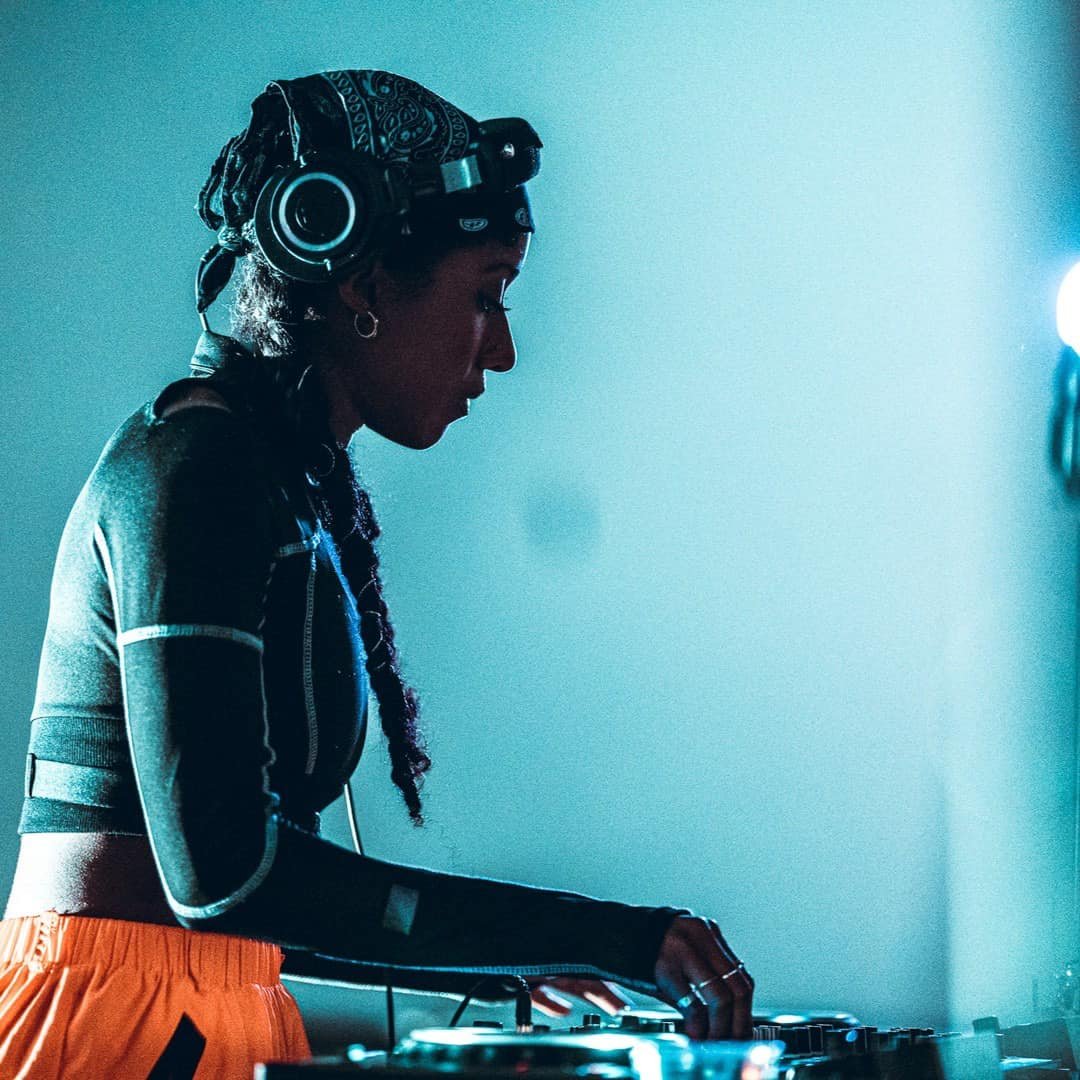
Getting Acquainted with NYC's Edica+
Making a fast-paced break into the spotlight of NYC’s sound system culture and musical underground, the texas-raised and New York-based DJ and show-host Edica+ has already made an ample name for herself. Stretching from Reggae and Cumbia to contemporary bass music and beyond, her effusive influences and pronounced mixing fundamentals have made her a potent force behind the decks, showcasing ecstatic and expansive DJing in pure form. Tomorrow evening, The Rust and our long-time co-conspirator Sermon are slated to host Commodo, Ellis Delta, EasyJack, and Edica+ at The Meadows in Brooklyn, and in anticipation of the rambunctious evening ahead, we felt it necessary to get ahold of Edica+ for a brief primer on her influences, background, her experiences as a show-host, and her time with Dub-Stuy records.
Making a fast-paced break into the spotlight of NYC’s sound system culture and musical underground, the texas-raised and New York-based DJ Edica+ has already made an ample name for herself. Stretching from Reggae and Cumbia to contemporary bass music and beyond, her effusive influences and pronounced mixing fundamentals have made her a potent force behind the decks, showcasing ecstatic and expansive DJing in pure form. In tandem with her burgeoning career as a prime selector, she’s also the host of the Dub & Effection radio show and an onboarded member of the legendary Dub-Stuy record label and sound system crew, rounding her out as a multi-disciplined and locally enmeshed artist.

Tomorrow evening, The Rust and our long-time co-conspirator Sermon are slated to host Commodo, Ellis Delta, EasyJack, and Edica+ at The Meadows in Brooklyn, and in anticipation of the rambunctious evening ahead, we felt it necessary to get ahold of Edica+ for a brief primer on her influences, background, her experiences as a show-host, and her time with Dub-Stuy records.
The Rust: Between EDICA+, Dub-Stuy, Dub and Effection, you have your work cut out for you. How do you divvy up your bandwidth of attention between responsibilities?
Edica+: The nice thing about it is that these projects tend to overlap in one way or the other. For instance, Dub & Effection is now supported by Dub-Stuy, as well as other upcoming EDICA+ projects. It’s great that my ideas are encouraged and welcomed by the label because our visions are so similar.
The Rust: While you've made a veritable mark in Brooklyn, NY, you're originally from Texas; what kind of influence does that bring to table, musically?
Edica+: Being from South Texas, I was exposed to a lot of Latin music growing up, which has overlapping qualities with my natural Caribbean roots. Selena is from my hometown of Corpus Christi as well as a major Cumbia artist, El Dusty, who encouraged me to DJ. So when I first started, I played a lot of Latin parties influenced by Bass, Dub, Reggae, Moombahton, Cumbia, etc.
The Rust: In the context of your sets, where does your preparation start? You've earned a reputation as a selector with a wide berth; how do you narrow it down for each evening?
Edica+: Digging for music and pairing sounds together in my head is just as natural to me as brushing my teeth, so I’m always in prep mode. My musical tastes all share the common thread of Dub traits as the foundation, so my sets are versatile yet still complimentary as I take audiences on a journey through different BPMs and genres.
The Rust: What's home for you, musically? What are the cuts and influences that brought you and your EDICA+ project to where it is now?
Edica+: I’m 100% Guyanese, so I grew up listening to Caribbean and Hindi sounds from my heritage, along with Smooth Jazz my parents loved. Now looking I see why Bass-heavy music resonates with me, as my dad always bumped it from his sound system. I love repping all my roots, which is why I even incorporate East Indian sounds in my sets.
I also have a project in the works called “Grown & Dubby” which is my outlet for the same type of Jazz I was exposed to as a kid. So I’d say my parents are largely responsible for my tastes with everything coming full circle now.
The Rust: You're the founder and host for the "Dub and Effection" radio show. What was the genesis for your part in the program? Are you operating according to a specific vision, or have you narrowed your focus over time?
Edica+: I first created Dub & Effection as an outlet to play the songs I love that all exhibited Dub characteristics. This includes anything with echo/reverb, sound effects, instrumental/remixes, and sub-genres of dubstep/grime/hip hop/electronica to name a few. It’s also my way of educating others on the power that Dub has had on today’s music, an effort to champion the sound engineers and innovators like Lee Scratch Perry & King Tubby who really were magicians on the mixing board. It’s amazing how their experimental techniques set the tone for much of the music we love today.
Due to time constraints this year I’ve primarily been focused on the radio show hosted on Dublab. But in the near future, we’ll be launching some new projects under the brand.
The Rust: Dub-Stuy has a venerable reputation as a veteran record label and sound system crew of the Northeastern circuit; how did you get linked upon with them in the first place?
Edica+: I’ve always frequented Dub-Stuy events under the radar for the sole purpose of just being a fly on the wall and enjoying the sessions. It was because of Dub & Effection where the founder discovered me and really liked my musical taste and the passion I have, for not only preserving the culture, but supporting the future of it as well. From there, I joined the musical crew, and eventually began helping with the business side of things as well.
The Rust: How do you view Dub-Stuy in the context of NYC's musical social culture?
Edica+: I have so much respect for Dub-Stuy, as they were one the first crews promoting proper sound system culture stateside. Over the years, they’ve influenced many other crews in the US and have made a significant mark on the NYC DIY club culture. It’s been awesome being on the team and really inspiring to see how the movement continues to grow and carry on to the next generations.
The Rust: What's on the plate for the rest of the year? Where do you want to take EDICA+ as you continue to navigate your slice of the music industry?
Edica+: This year's focus has primarily been touring. We’ve already hit US & Europe, and next up have Asia then Mexico in the Fall.
I’m also stoked about expanding the Dub & Effection brand across the country and building meaningful connections with like-minded people through special collaborations we have in the works.
Lastly, I’m looking forward to honing in on my own original music and taking my live performances to the next level. For me, it’s really all about what truly matters in art, which is creating for self-expression, sharing it with the world when possible, and having a blast doing it.
Even with such a plate of creative endeavors and responsibilities in front of her, Edica+ has a clear vision for the future of her project and the wider proliferation of sound system music and it’s ephemeral cousins, placing her right in the spotlight of our interests. If you’re as keen on hearing her in booth as we are, make sure you grab a ticket to our show tomorrow evening, and be sure to stay connected to Edica+’s social profile.
FOLLOW Edica+: Soundcloud / Mixcloud / Facebook / Webpage
Exploring New Perspectives on Music and Photography with SMYAH
Across the pond, the pensive and surefooted Bulgarian creative Yavor Zografski has spent the last several years tightening the reigns around both his own musical project SMYAH, and the wider Sound in Picture label under his purview. Narratives covers a variety of styles and genres, with notable influences from IDM, jazz, downtempo, trip-hop, and ambient film audio. Founded in 2018, Sound in Picture features dozens of individual releases, all paired together with accompanying photographic art. Given the expansive scope of both Yavor’s personal musical output, and the approach to his particularly curated label, The Rust felt an immediate necessity to sit down with this affluent artist and discuss the genesis and direction of his dovetailing projects.
Across the pond, the pensive and surefooted Bulgarian creative Yavor Zografski has spent the last several years tightening the reigns around both his own musical project SMYAH, and the wider Sound in Picture label under his purview. A few weeks ago, we had the opportunity to premiere the track “Labyrinths” ahead of the full release of SMYAH’s Narratives LP. Exploring a marriage between stoic rhythms and airy composition, “Labyrinths” was just a taste of the wider Narratives arc, scratching the surface of a much deeper project that fuses compositions and photography into a multi-disciplinary artform.
Narratives covers a variety of styles and genres, with notable influences from IDM, jazz, downtempo, trip-hop, and ambient film audio. It’s a meticulous blend of intricate audio design and pastel colorways of sound that bend, morph, and break apart to create a collaged, emotive LP. Be it “Spirits”, featuring the washed, reverberant vocals of Desy atop a ghostly, slow-rolling instrumental, or the gradual swell of sporadic, fractured artifacts in “Time Dispersion”, there’s a clear musical command that reaches through a number of unique territories and influences. Accompanying each track is a poignant photograph, provided in this case by the photographer 8MIN. Pairing each respective song and visual backdrop brings a clarity to the moving themes in Narratives, but also connects the album back to Yavor’s other focus; the Sound in Picture label.
Founded in 2018, Sound in Picture features dozens of individual releases, all paired together with accompanying photographic art. Under that same umbrella, it hosts purchasable prints, a podcast, and expansive profiles on some of the in-house talent responsible for this duality in vision. It’s a testament to the timeless marriage of visual and aural design, and places the label in a squarely multimedia space, allowing it to function somewhere in between a traditional musical outlet and a zine, making sure to put the focus on both ends of its fused artistic approach.
Given the expansive scope of both Yavor’s personal musical output, and the approach to his particularly curated label, The Rust felt an immediate necessity to sit down with this affluent artist and discuss the genesis and direction of his dovetailing projects.
The Rust: You've got your plate full as both the owner/operator of your label Sound in Picture, as well as through your own creative project. Where did that dual road start? What's your musical background like?
Yavor Zografsky: It all started with music first - more out of curiosity; I got my first MIDI keyboard and FL Studio about 15 years ago. I am self taught from the time before all this knowledge and these tutorials flooded the internet, so I was just practicing and figuring stuff out on my own and as I went. I didn’t study music, I graduated in the Netherlands with [a degree in] Media and Entertainment, but more on the video production side. None of my friends did music back then, so I was on my own in that endeavor during my first 10 years, but this didn’t discourage me at all. It started getting serious about 5 years ago, and Sound in Picture was coincidentally born then too, back in 2018. Back then, I was going through some photo magazines and listening to music and I said to myself, why shouldn’t I make a platform where you could do both at the same time, where the images and sounds are telling the story together, and the musician gets not one, but a whole series of artworks. After thorough research, I discovered that nobody has done that yet so it didn’t take me much to act on it. I’ve always wanted my own label, so this was the perfect opportunity.

Back then, I was working as a video editor and also did some directing and shooting, so the synergy between both worlds has never been foreign to me and it’s all coming together naturally.
The Rust: How would you categorize your musical influences? Your recent "Narratives" LP showcases a number of styles and disciplines.
Yavor: My musical influences come from a variety of fields, mainly the sound system culture, film soundtracks and the UK electronic scene. Artists like Massive Attack and Calibre are definitely some of the names I admire. When I get to create, I don’t really think about genres (unless it’s a commercial project, but that’s different) and I just go with the flow. That’s when it works out the best and that’s why I make music in the first place - to feel total freedom without any boundaries.
I feel that when you make an album, it’s good to have a balance between action, tension and moments to breathe, so that’s why you can hear some ambient tracks next to beats, autonomic and half time music. Some of my favorite music to listen to in my free time is drum and bass and dubstep, and I also have tunes in these styles, but I will put out separate EPs with them as they didn’t really fit here. For this album, it was important to tell a story that transcends genres. I feel what propels the story is the sound design and the overall atmosphere, which is similar despite the stylistic variety. I’d characterize some of the tracks as ‘cinematic beats’.
Of course, we have to give credit to Merian Nikolova, 8MIN, who shot a whole series of photos dedicated to the album and they definitely make the whole project more impactful.
The Rust: Where's home plate for you, stylistically? What are the rhythms that drew you to production and composition in the first place?
Yavor: If we have to start from the very beginning, my first musical discoveries as a child were in hip-hop and r’n’b - both from Bulgaria and from all around the world. I was making some mixtapes recording tracks from the radio. Then, during my first couple of years in secondary school, I was listening to mostly death and thrash metal and that’s when I first started making music. I was just playing some melodies and even then, I was watching a ton of films and got inspired by their soundtracks. I learned the piano part from The Matrix theme and some other songs from bands like Cradle of Filth and Children of Bodom. Shortly after I got into producing, I discovered drum and bass and later on dubstep and grime, and that’s when I felt music which really connected with me, way deeper than the other genres. So I guess if we have to sum it up, those rhythms, mixed in with some world and indigenous motifs (also super important for my music) are the main drawing force. I feel the indigenous and tribal sound really close to me and I feel really drawn to the jungle - I can’t explain why since I’ve grown up in Sofia, which is a totally different type of jungle. Maybe it has to do with a past life.
The Rust: How, if at all, does your personal musicianship inform your decisions as a label head?
Yavor: I will sign anything I like. I have a soft spot for dub and dubstep, so this is a prevalent but not exclusive stylistic choice. We’ve done beats, halftime, ambient and IDM, sometimes even jazzy stuff. The most important thing is the vibe and the quality of the sound. The cinematic sound is also a big “yes”. I usually invite musicians I admire and follow as a fan, as well.
The Rust: What's the genesis point for Sound in Picture? Did you always envision a relationship between aural and visual art?

Narratives LP Release Party, photographed by Gully Wabbit
Yavor: SiP’s core action is releasing music dressed in a series of photos, and the idea came shortly before realising it. Before that, I have always paid attention to soundtracks in films and other types of art but the idea of Sound in Picture wasn’t planned, and it's the product of a sudden, blissful moment of realization. But even back then, I knew that the scope could allow many other types of activities and that potential really motivated me to invest my time into growing it. By other types, I mean events, creating physical items, a podcast, licensing material and other offshoot activities.
The Rust: The chosen visual pieces that accompany each of the label's releases are often very syncretic with the themes and tones in the accompanying music. What's the process for those pairings? Do you source art for music you intend to release, or do the artists source that themselves?
Yavor: It all happens organically; we usually start off with the music and based on its atmosphere, I am reaching out to photographers who I feel can best illustrate it based on their overall visual perspectives. I am very particular about the visual styles and their consistency when I am searching, but the photographers have the full creative freedom to interpret the story their way. We pay equal attention to both sides of the collaboration and it’s important for them to have fun too and express their side. I feel that this way, the photographers manage to put out the best of themselves, and I can compare it similarly to the process of music production.
I believe that if you know what you’re looking for as a curator, it’s really not that hard to match the right people who will produce something organically, and there’s art to this process too.
The Rust: Do you envision Sound in Picture as a strictly digital media label? Do you have any stake or interest in physical media regarding the label?
Yavor: Of course. It’s important for SiP to exist in the physical dimension - the main goal for the platform is not to depend on social media for reaching out to people. Our home base is the website, but we’ve produced some physical items as well - we have a photo book where you can find some of the best photography we’ve published, plus some thought provoking quotes from our artists, and we have a second edition on the way this year.

Apart from that, we adapted some artworks as t-shirt designs, and on the musical side, we put out a tape of the album release we did with Valance Drakes & Ivan Shopov, featuring photography by Zlatina Tochkova.
My aim for the near future is also some vinyl releases and we’ll see how it goes.
Another physical aspect of SiP is the events we do on a monthly basis here in Sofia, Bulgaria, where I live. The nature of the platform allows for a wide scope of events and we do music parties, exhibitions, bazaars, and lectures with artists from different fields who share their experience in an open talk. That’s a great way to form a community and I hope we do an event somewhere abroad soon!
The Rust: What's the future like for Sound in Picture? What do you see over the horizon line as you continue to run the label?
Yavor: Something I am working on is getting into the sync licensing business, which wouldn’t be an easy step but it’s definitely something worth pursuing, especially with such a catalogue that is literally sound for pictures. Apart from that, I will keep the podcast going, we have 2 episodes out and you can hear/watch them here: https://biglink.to/SiPcast
And of course, more quality releases on a regular basis.
The Rust: What's the future look like for your own project? Have you considered your next move after Narratives?
Yavor: I am currently composing music for an American feature film. Being a film composer is my dream job, so I am working hard towards it and that’s where I intend to put my focus more. In terms of releasing SMYAH music, I plan to put out a dubstep and a drum & bass EPs later down the year.
It’s clear that both Yavor’s vision and execution of his artistic gait develop in tandem, and benefit immensely from his salt-of-the-earth approach and perspective to multimedia art. Be it his own SMYAH project, Sound in Picture, or any of the other creatives hosted and put in the spotlight through his platform, every tendril crawls back to the well of influence that he both pulls and dispenses from, creating a vibrant ecosystem of opportunity and curation in musical and visual art. Be sure to stay up to date with Sound in Picture’s latest exploits, and keep your eyes and ears peeled for more developments from the distinct imagination of Yavor Zagrofsky.
FOLLOW SMYAH: SoundCloud / Bandcamp / Spotify / Facebook
FOLLOW Sound in Picture: SoundCloud / Instagram / Youtube / Official

Conversations and Afterthoughts on Sunsetting the Craftal Project
With nearly a decade of considerable effort under his belt, the multifaceted producer Ian Mckenna recently announced the retirement of his storied Craftal moniker. Much to the surprise of his longtime fans and collaborators, McKenna recently publicized the resounding decision to seek out new musical horizons. Consequently, The Rust felt it as necessary as it is enticing to sit down with Mckenna for an exclusive one-on-one discussion about the future of his music and what his Craftal project was really all about.
Authored by Alyssa Barnhill
With nearly a decade of considerable effort under his belt, the multifaceted producer Ian Mckenna recently announced the retirement of his storied Craftal moniker. As a musical entity, he’s an embedded Denver staple, and widely respected across a sea of contemporary acts and producers. Much to the surprise of his longtime fans and collaborators, McKenna recently publicized the resounding decision to seek out new musical horizons, and announced the closing chapter of the Craftal project.
Craftal’s range stretches across a slew of tempos and rhythms under the permeable glitch music umbrella, and has maintained and massaged a particular appeal towards the audiophile scene. With the project at the height of its impact, a clear call to another slice of the musical pie has pushed McKenna to sunset the Craftal experiment indefinitely. To fans, Ian’s last release was suspiciously sweet, aptly named This Was All A Test. One can’t help but speculate if he had been mulling over the decision to change projects for a while. Was it all a test? And if so, for what? The framing raises a few poignant questions.
The grand farewell for Craftal is set for December 15th at The Black Box night club here in Denver. The highly anticipated show will feature other psychedelic favorites such as Base2, Sylph, and Wij. Accompanying a “most righteous” sonic lineup, the event will also feature a full A/V presentation through every performance, provided by the artistic anarcho-collectivist project neuro.studio, in order to amplify the immersive visual experience. In a statement provided to us by its members, neuro.studio stated that “2022 is our first year involving ourselves in this space as a collective since the launch of neuro.studio. We are incredibly proud of what our team has accomplished so far in such a short amount of time, and will be continuing to aim for setting the bar higher with each iteration of our involvement in the music scene. As for Craftal's last show at the Black Box on 12.15, we are simply ecstatic to be involved in celebrating Ian's last set as Craftal & will have a unique VJ pairing for each musical act.”
Consequently, The Rust publication team felt it as necessary as it is enticing to sit down with Ian Mckenna for an exclusive one on one discussion about the future of his music and what his Craftal project really was all about.
Alyssa: What did the Craftal project mean to you?
Ian: To me, I mean, I made up the name and the whole project when I was 20. When I learned how to make digital music and was really getting into everything. I was falling in love with psychedelic bass music culture and the art scene and everything. Now, I am just kind of finding myself falling out of love with it.
Alyssa: Any particular reason?
Ian: I am trying not to be jaded, but I am definitely falling out of love. It also represents my 20’s in a weird way. I am going to be 30 in April. Not looking forward to it.
Alyssa: So are you looking to find something more fitting of this time in your life?
Ian: Yeah, that and honestly I am just feeling like the bass music scene, at least from where I am sitting, is kind of like an overripe peach. I am just not having as much fun going to shows and honestly I don't fully understand the drug choices of everybody. People doing drugs isn't ruining my time, it's just one part of why I am just not as inspired by the scene anymore.
Alyssa: I understand that. The music has always been a huge draw for me.
Ian: I really love the inherently abstract and fundamental nature of dance music. And what I mean is music without words in general, because music transcends language. Abstract expressions can be very beautiful. You don't want to preach to people, you don't want to commit to saying something that is outdated, but you want to reach people.
Alyssa: Completely, where do you find yourself leaning now?
Ian: I find myself more interested and inspired by artists that are trying to say something. Trying to say things. Risking being preachy, and risking saying the wrong thing. And I don't know, I am finding that more interesting. I am still going to keep doing weird sounds, sound design, and electronic music because I love it… I just want to try doing something different in my 30s.
Alyssa: What is the name of the newest project? What are you going for?
Ian: I have been trying to brainstorm for a couple of months now, and nothing is really sticking. A friend of mine told me that marketing is an art. The more you are overthinking it, the farther you are getting away from the relatability of your thing. I will probably end up using my real name, honestly. I don’t know yet, it’s all kinda meh. I don't mind sticking with my real name, that's fine.
Alyssa: So, I asked you about “This is all a test”, the last time we spoke for The Rust. Does that feel like a thread of truth from before? You used it as the title of the latest compilation you just put out.
Ian: I thought that it was kind of a funny coincidence that I named that song that, what, two years ago now?
Alyssa: Yeah something like that.
Ian: Yeah, I thought that was a funny way to tie it all up in a bow.
Alyssa: I thought so too. Would you say making music as Craftal was like an incubation phase for you?
Ian: I sure hope so. Yeah, I hope that everything I make is the incubation for the next thing.
Alyssa: Do you think similar elements of sound design will always be a theme in your music?
Ian: Probably always. I love music made with passion and heart, you know? I am hearing some really interesting stuff being made by, like, kids. You know, people born like 2000 and later, they are just like smashing everything together. It’s interesting. I would like to expand beyond the sonic palette that I have been comfortable with the past few years. But that's going to take some time. The new stuff will have me singing so that will be different.
Alyssa: That’s very exciting, I think a lot of people share that want for a little more passion, and I am excited to hear what it sounds like. When can we expect more from you?
Ian: I am a slow worker, so I don't have any dates. But definitely next year for sure. This was a good year, I played Tipper and Friends.
Alyssa: I know, I missed that one entirely. How was it?
Ian: Oh, that was amazing. That was a bucket list item. The whole team there treats all their artists better than any event that I have ever been to in the last nine years, or played at in the last nine years. Yeah, that was just an amazing time.
Alyssa: That's amazing. I am glad you are not going anywhere. I am sure I will still see you out.
Ian: Yeah, I am not going anywhere. Just looking to do something different.
Where Ian goes from here is anyone’s guess; music reflects the most exploratory and inquisitive part of ourselves. When we feel something different that has a magnetic quality, it’s extraordinarily human to answer the call of that attraction. Ian’s adventurous ideas, conversations in creativity, and motifs within his music remind us that creativity and expression live and grow with us daily. It’s the kind of perspective that transcends scenes and subcultures, even if it often incubates within them. Regardless of what sonic landscape Ian’s journey takes him on, or where it takes him for that matter, we’ll be in lock-step right behind him for the curious resolution to this next transition.
GRAB TICKETS for the final Craftal performance on 12.15 HERE
FOLLOW Craftal: Soundcloud / Bandcamp / Spotify
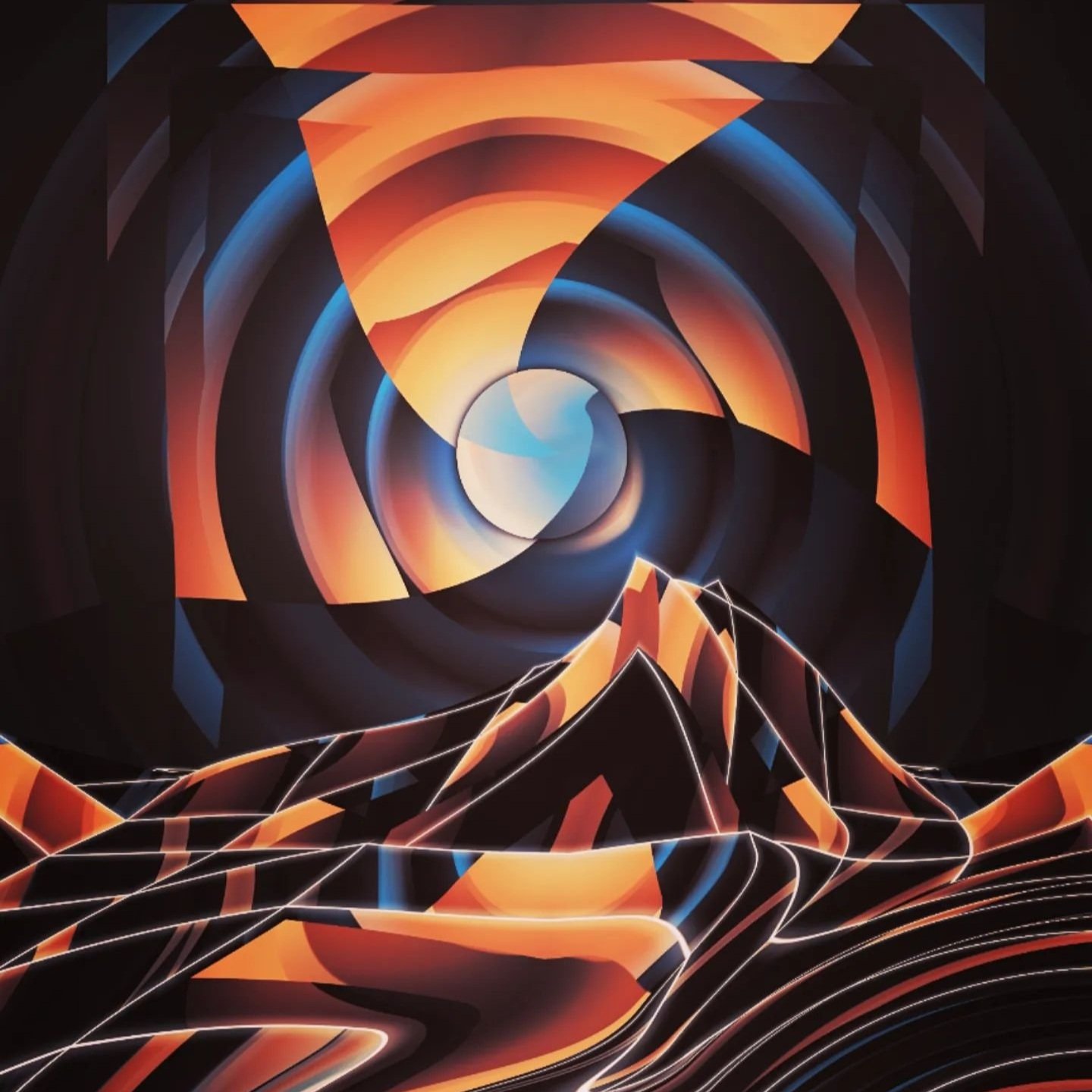
Conversations and Explorations on Generative Visual Art with Actualize
Denver-based visual artist David Schunemann, or more familiarly known as Actualize Visuals has been diligently cultivating his most progressive body of work to date. Carefully collaborating and decorating stages across the country summer after summer, Actualize has become a household name amongst the wider fandom of digital visual artists and designers. Appropriately, The Rust took advantage of an opportunity to sit down and speak about the Actualize vision, perspective, and manifestations.
Denver-based visual artist David Schunemann, or more familiarly known as Actualize Visuals has been diligently cultivating his most progressive body of work to date. Carefully collaborating and decorating stages across the country summer after summer, Actualize has become a household name amongst the wider fandom of digital visual artists and designers.
Directly influenced by painters, 3-D sculptors, animators, and live performance, David aims to create an act that not only accompanies top-tier musical artists, but adds an undeniable depth to every experience. Building off of natural moments of hype, the vibe, and his own take on relevant art in the adjacent scene, he builds an unforgettable dive through vivid dreamscapes, ardent colors, and creative movement. While the pool of visual artists and VJ’s has steadily grown in both size and manifest talent across the last five years, David’s work continues to speak volumes about the sheer tenacity behind his confidence.
Appropriately, The Rust took advantage of an opportunity to sit down at a downtown Denver cafe and speak about the Actualize vision, perspective, and manifestations.
The Rust: Where do you hail from, and where are you now?
David Schunemann: I am a transplant to Denver, a brand new transplant. I am from Boston. I was born in the Boston area and then moved up to New Hampshire when I was like 8, and then lived there till like 3 or 4 years ago and moved back down to boston. Lived there for a while, but now I am here.
The Rust: What brought you to Denver?
David: Mainly music and art.
The Rust: Where did it all begin? How did this project get started?”
David: I guess just going to a lot of events. I started going to shows in 2016, electronic shows, and I just was like automatically addicted. It was the craziest shit I had ever seen. As soon as I went to my first electronic music festival I was like, “I've seen bands play before but it's not like this.” The stage production in general is crazy. My first festival was Mystery Land in 2016. It was at the original Woodstock grounds actually.
The Rust: Wow, in upstate NY? That's a legendary venue.
David: Yeah, it only happened for like 3 years, then someone bought it and fucked it all up. So it’s not a thing anymore, but it was amazing when I went. After that I just started going to as many music festivals and shows as I could go to. Then after about a year of going to non-stop events. I simply needed to know how it all worked, I needed to understand what's happening here. I started like looking shit up online, diving into it, trying to figure out what was actually going on. The video mixing thing I thought was super cool. I kinda tried DJ-ing a little, but once I realized you can do the same thing with video, it was over. Essentially, just mixing video, you can do it even crazier than you can mix audio. You can have infinite layers, run effects through everything, and route shit different places. The effects are not just limited echo and delay, you can do literally everything. Fuck, you can stack as much as you want until you build something insane.
The Rust: Did that start by combining your audio with your video? What's your speciality?
David: Yeah! What I specialize in is like building custom effect stacks (in Resolume). So I will take tons of different effects and stack them on top of each other in a way that makes something really cool and unique. Then you can go into each of those effects and make different parameters audio reactive or whatever you want. So when the bass hits the whole thing or fine tuned parts will wiggle or shake, change color, or flex.
The Rust: I love that subtle movement in visuals, especially on a big stage or screen.
David: Yeah, not the whole thing. Just very fine tuned. The fact that you can do it live and on the spot with any piece of video content, picture, anything. Just completely blew my mind. As soon as I realized you can do that, I was all in. Playing with it like everyday. Friends would come over and put on music. I'd be like “Yo, check this out.” I would end up sitting there while my friends are just chilling.
The Rust: So it was basically all consuming for you?
David: Insanely.
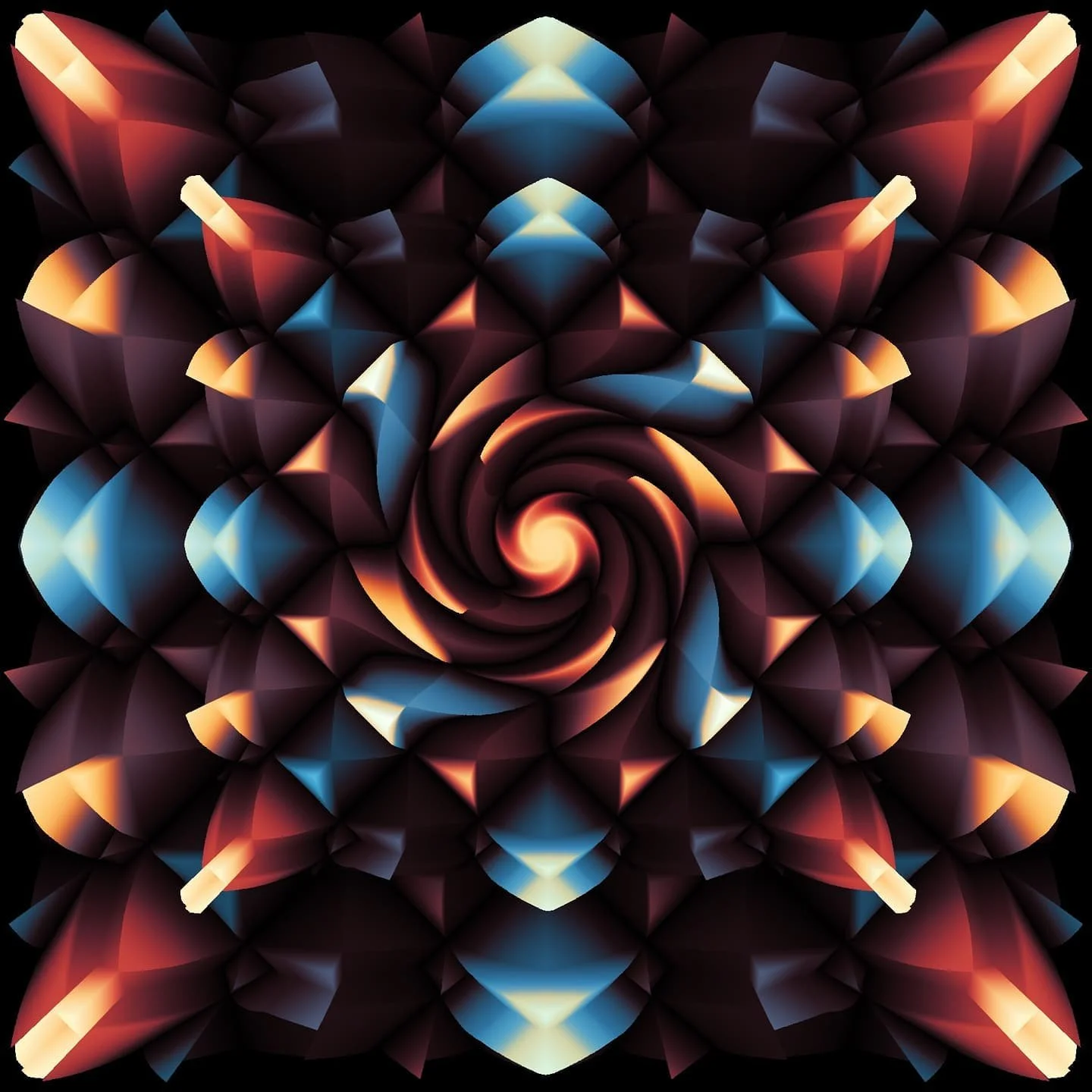
The Rust: Your first festival was in 2016; it's now 2022. When did you start making your own visuals?
David: 2017, pretty much right away. I have been doing it full time for like 4-5 years now.
The Rust: What did you go to school for?
David: I went to school for software engineering actually. I was working software engineering jobs while I was going to all these festivals. So that was kinda funding everything. Then I got laid off in 2018. I got another job and I had been working that job for a couple years and doing visuals on the side. Then I got laid off again at the beginning of the pandemic, and I was like, “Alright, I don't really want to do this anyway. There is probably a reason I keep getting laid off.”
So after that I was like, “fuck it.” Whether I make money doing this or not, I'll figure that part out later.
The Rust: Completely. I love that train of thought. Fuck it, might as well make art. Can I ask how old you are?
David: 30. So I started going to festivals around 25.
The Rust: Where does the name come from?
David: When I first started I thought about it a lot. Like, what I wanted my name to be…. something. Because I wanted it to be something that kind of reflected what I was doing, then also sound cool you know. It literally came to me at a G Jones show. He is one of my biggest inspirations. Visually and also musically because it is so experimental. He is just trying things no one else thinks to try.
The Rust: He’s earned his reputation through and through.
David: Yeah, so I was getting my mind blown and someone came up to me and told me he did all his own visuals for that tour. I was like, “How? How does someone even have the time?”
What's my excuse? So he had all these visuals with eyes. And there it was... Like “Actual” “EYES”.... Actualize. All he did was actualize the eyes. I was cracking up. In the beginning my name was Actual Eyes. I quickly realized I didn't want to make eye-based content. Then someone messed it up on a flier and put Actualize and it stuck. It looks way cooler and had my motivations all wrapped up in it. So it's also a reminder to myself to just do it. Just wake up and do it.
The Rust: “What’s your excuse?”
David: Yes, exactly. If G Jones can make all his own shit, touring, making music, and incredible visuals. “What's your excuse??
The Rust: Is that how you approach art? Just hit the ground running?
David: Yes. pretty much. Just do it, make art.
The Rust: You spoke earlier live sets. Do you do all your visual sets live?
David: Oh yeah, definitely.
The Rust: Like mixing the movements and textures? Interacting with them?
David: Yes, all live. A lot of it is literally being made on the spot. It's not like I prerender a whole lot of content. Like, I have content that I have either made, bought, or been given over the years. But what I do live is run it through all these custom effect stacks so it looks like something totally different. Then I can switch between the different effect stacks, layer them on top of each other. Speed it up, slow it down, change the colors. Put trails on it, make it vibrate, shake or whatever combination. So basically, I just like playing with it. Listening to the music and playing with the toys that I have and trying to match the speed and the vibe, the colors of the stage and everything.
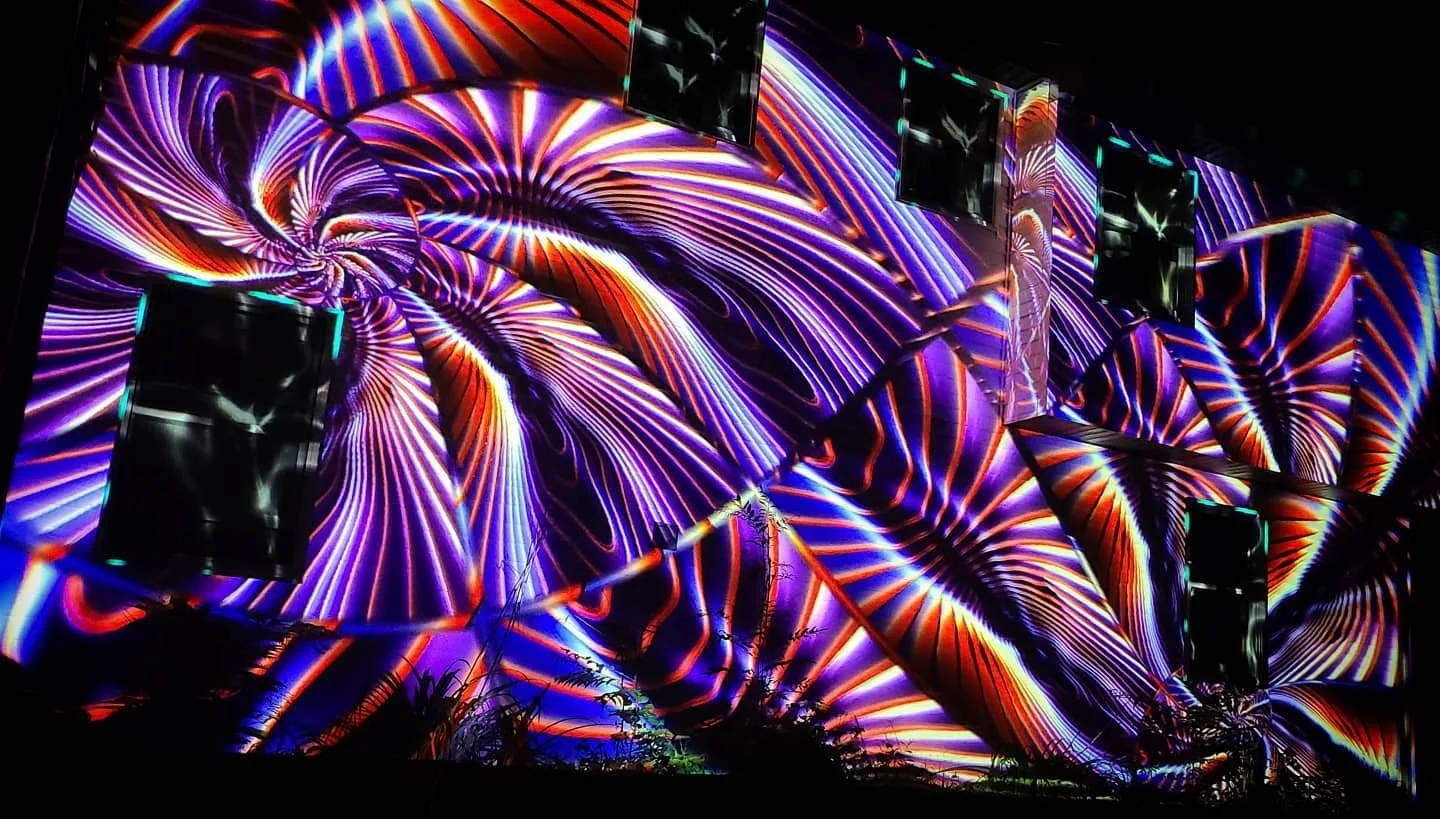
The Rust: It's like you're reacting, even playing with the musician(s).
David: Yes, exactly. It's amazing practice doing it live. It makes me a better VJ everyday.
The Rust: So I normally ask musicians this but how do you describe your art? To a layman, what’s your style?
David: Man, it's tough because there are not really well defined genres within visuals. Psychedelic, for sure. Effects-based, psychedelic, geometric, live experiential art, I guess. I like music and art experiences, so [my art is] where those two meet.
The Rust: What can we expect from you this summer?
David: Gotta keep an eye out to find out, but more than one line up should be dropping here in the next week or so.
Alongside some of the most high-profile visual artists in his field, David hopes to captivate audiences in the same way he was captivated back on the fields of upstate New York. The future is clearly set, and David's mission above all else is the successful progression of art, music, and this particular creative culture. For those of us that get to attend music festivals this summer, Actualize will be one to set your alarms for; a sight for your actual eyes.

Charting New Territory with Nikki Nair and n goes to infinity
In the context of electronic music, crossing the sonic Rubicon to unite formerly disparate genres and styles has become a mark of high composition. Sitting squarely within that paradigm is Nikki Nair, an Atlanta-based multi-instrumentalist, producer, and audio engineer with a burgeoning appetite for weaving new threads between even the most incongruent of BPM’s. In an effort to concentrate his new personal discipline and exploration in production and composition, he’s launched n goes to infinity, a creative label with an expansive focus on music outside the comfortable lines of the traditional wheelhouse.
In the context of electronic music, crossing the sonic Rubicon to unite formerly disparate genres and styles has become a mark of high composition. As our collective community rolls through various conflicting waves of artistic stagnancy and growth, the overall motifs that we’re drawn to in music progress in tandem, and that’s most reflected in the contemporary focus on dissolving the hard lines between the sounds that catch our ears. Sitting squarely within that paradigm is Nikki Nair, an Atlanta-based multi-instrumentalist, producer, and audio engineer with a burgeoning appetite for weaving new threads between even the most incongruent of BPM’s. In an effort to concentrate his new personal discipline and exploration in production and composition, he’s launched n goes to infinity, a creative label with an expansive focus on music outside the comfortable lines of the traditional wheelhouse.
Nikki’s early years within the space of electronic music were dominated by a hardware-centric and DIY approach to electronic production, zeroed in on the lane of steady-beat techno and house music. In time, he’d be exposed to what is often considered the inverse world of broken-beat bass music. Finding clarity amidst the parallel influences of minimalist production elements and progressive, maximalist sound design is already its own hill to climb, but it comes with parallel challenges in the social sphere. No historical music scene is without its natural guardrails; umbrella genre’s dictate the overall feel of the music in question, and the subsequent sub-genres dictate the terms on which that feeling is met in context. Ostensibly, sub-genres tend to propagate tight-knit communities and scenes of like-minded revelers, and the old paradigm involved rarely, if ever, crossing those imaginary boundary lines. Once you found your people, and your sound, the next natural step was to sit tight and hold the flag atop your hill. While there’s no good moment to point to where the dissolution of that old paradigm began to reach a terminal velocity, Nikki’s experience coming into his late adolescence and adulthood within various iterations of musical communities gives him a perspective with a swivel.
Cracking into Nikki’s background and motivations for both his own unique project and n goes to infinity unravels a rich tapestry of influence and a vibrant vantage point on how to best shape the abandonment of hard genre separation. As such, The Rust felt it pertinent to dive into his thoughts, musical processes, and perspectives on where we’ve come from and where we may be going.
The Rust: So how did you find your way into electronic production in the first place?
Nikki Nair: 2012 is around when I started actively participating. The scene I found were people who were really into Jeff Mills, Underground Resistance, and even the more “EBM” sort of goth/industrial stuff. Yea, I think when I started making proper dance music, I was also in this scene of people who were really into hardware, so it was a lot of doing shows with drum machines and synths. So I got really into finding cheap production and hardware gear to make “hardware techno” and similar stuff. That workflow carried over into what I’m doing now, where I still like having real outside-the-computer sound sources, or processing through analog channels, or recorded instruments. Now, I’ve just become a nerd about audio engineering, so it all feeds off of itself.
The Rust: How do you find your own marriage between the American bass music movement and its dance-floor oriented cousins?
Nikki: It feels like the rave and club oriented scene (where you normally hear house, techno, and breaks) is almost completely separate from the bass music scene in the US. I'm sure there are a ton of reasons for this, but I'm also sure that there are many people from each scene that love music from the other and just don't get to play tracks from the other side.
I think on the bass-music side, part of this is because rave-oriented music is usually quite simple/functional and doesn't focus too much on sound design, and so wouldn't sound that engaging in the middle of a complex and intricate bass music set. Similarly, the half-time energy of a lot of bass music makes it tough to play in a situation where you are trying to maintain forward momentum on a dancefloor. I really want to be able to play music from both sides of and find ways to combine these scenes because I think there is some really exciting, uncharted musical territory in between.
The Rust: When did you first begin to envision n goes to infinity as a sort of bridge between those camps? How did it first come to mind?
Nikki: It was kind of a moment of clarity. I'd certainly had the dream of having a label for a while, but did not want to start a label just to start one. I'd been playing bass music in my dance sets for a while, and also making tracks that sat in between. When I realized many of these in-between tracks I made couldn't get signed to either bass music labels or club labels, I realized I had to start the label.
It was pretty recently, really in the last couple of years, that I noticed that the sort of scene I come from, the house/techno/dancefloor oriented stuff, we really missed a lot of the bass music developments. All I knew of it was that we would sometimes play our parties in the side rooms of those parties. We wouldn’t even go in; I remember G Jones was playing at one of those parties, and I thought it was some “dubstep guy” and wasn’t interested. We just did our thing outside instead, and now I love G Jones! I wish I had just taken the chance and stood in there!
I came from wanting to just make Acid Techno with just a Roland TB-303, like literally just a TB-303 and a tape machine and that was it. Now, I want to find a way to bridge the gap as much as possible. There’s amazing music coming from both angles, and I want my label to be a space where I and others can draw from both perspectives. When I release on techno labels, It’s much more difficult to squeeze a half-time drop in the middle of a track and have it go over well with those ears. Or some of the more ridiculous sound design in bass music, that’s not very popular in the more clubby, rave-oriented side of things, where there’s a focus on the simplistic, hardware-driven sounds.
The Rust: What’s your perception on the evolution of genre spread and intersection of the people at the ground floor of these scenes?
Nikki: It seems like there’s a new generation of kids who didn’t grow up seeing such a distinct rift between scenes; they probably found this stuff on the internet and that was that. They don’t really acknowledge the separation, musically. Part of what kept these scenes separate involves ethos and intent. A lot of the parties I went to coming up were “political”, or maybe poticially charged, in that they were dominated by the queer and BIPOC communities. If you went to a dubstep party in the same area, the queer scene didn’t have that same kind of embrace or representation.
But that’s changing fast, and now you have people like Wreckno, who are able to take that representation and foist it onto this huge platform, and merge whatever styles of music fit for the moment while reaching out to bigger and more diverse groups of people.
It seems like everyone wants dance music to be for everyone, and I don’t think bass music is a place just filled with straight white dudes, that is just a perception. That was my perception. Now, I realize how many people from so many different backgrounds are involved in all this new musical exploration, and it makes me realize that there can be bigger safe spaces. Parties can be both big and safe at the same time.
The Rust: If the proliferation of dancefloor rhythms with a stark focus on sound design and engineering is the goal, how do you intend to use n goes to infinity as a platform?
Nikki Nair: Right now, I'm simply releasing music that hopefully fits this bill. In the future, I'd like to find new things to do, but I'm playing everything by ear. It really feels like things are changing in electronic music right now, and my main intention is to find ways to facilitate that change and try to make it change for the better.
I like to think I can’t predict it; I can only hope that something new comes out of it. I can only say what I’m doing concretely, and what I hope that brings. This year I’ll be focusing on my own releases through the label, with the goal of being able to lift up other, niche artists in the following year. I want it to be as fresh as can be, and supportive of everyone who falls outside the usual lines of the music that we’re all into.
The attraction to formally taboo crossovers and combinations both in the mix and in the studio has become increasingly palatable in recent years, and it feels indicative of a sort of positive ouroboros of influence. Artists like Nikki Nair tap directly on the pulse of that movement, energizing it through the marriage of dueling creative perspectives. With the launch of n goes to infinity, he’s taking point at the head of a new congress of beatfreaks and speaker creatures across the parallel hemispheres of electronic music.
FOLLOW Nikki Nair: SoundCloud / Bandcamp / Spotify / Webpage
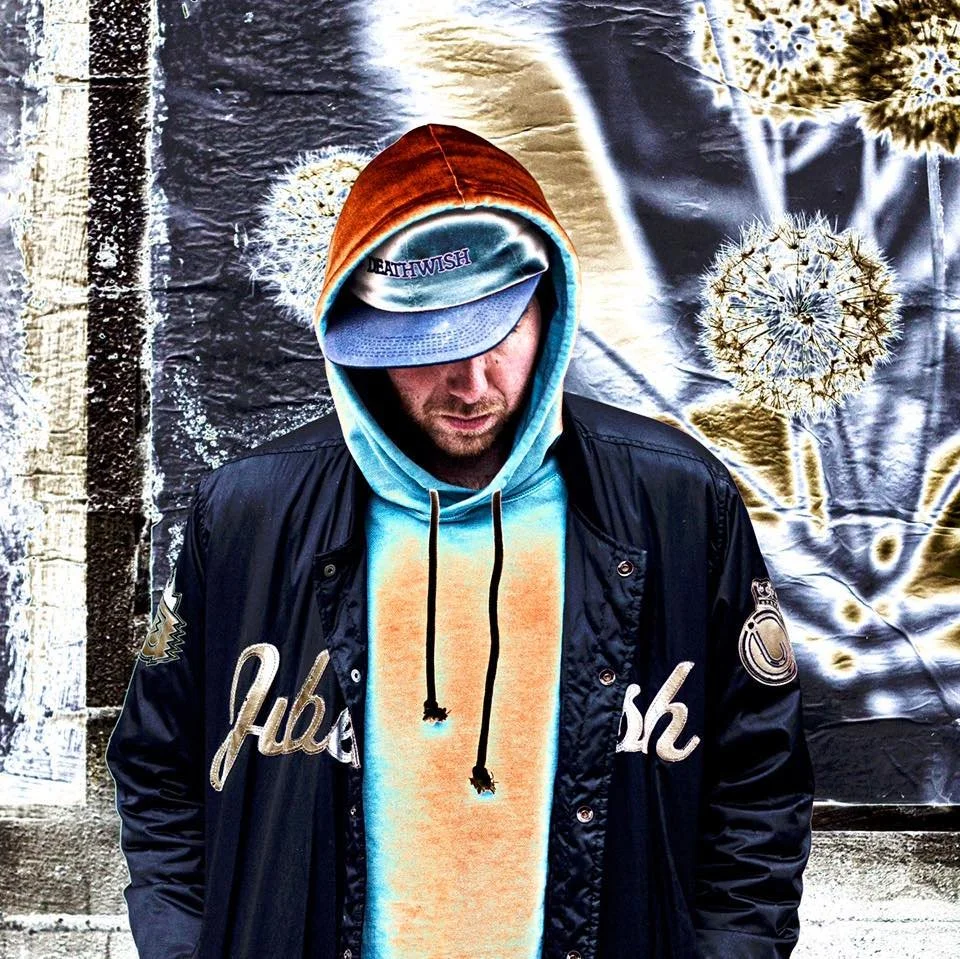
Getting Acquainted With The Thought Process Behind Thought Process
It is no small feat standing apart musically in a city like Denver, where there is a seemingly endless influx of prodigious talent and gumption. Consequently, the growing success of Thought Process is in large part due to the careful lines he straddles; the distance between conventional Hip-hop and broken-beat electronic music has always been relatively short, and yet he finds ingenious and pragmatic ways to explore and exploit newfound commonalities and compositions.
Nestled less than an hour east of the Rocky Mountains, the city of Denver has been playing a crucial role in the evolution and championing of both distinctly American and profoundly global bass music. In the heart of the city proper, The Black Box operates as the flagship events space for both the Sub.mission team and for the wider community of beat-freaks and creators. Performing at The Black Box has become a sort of rite of passage, giving creators the chance and the power to rinse out their best material and blends for an often jubilant crowd of appreciators and revelers. Soon to be joining the growing list of illustrious headliners is local Denverite Joe Rich, whose Thought Process alias has risen to the forefront of his sonic arena at breakneck pace. The sold out event features a hand-picked supporting cast including Easyjack, Base2, Aptic, and fellow all:Lo label head parkbreezy, alongside visual support from OZWLD, Spectrumone & Waveform.exp.
It is no small feat standing apart musically in a city like Denver, where there is a seemingly endless influx of prodigious talent and gumption. Consequently, Rich’s success is in large part due to the careful lines straddled by the Thought Process project; the distance between conventional hip-hop and broken-beat electronic music has always been relatively short, and yet Rich finds ingenious and pragmatic ways to explore and prop up newfound commonalities and juxtaposed compositional standards. The other major ingredient to his success is his sparing approach to his public catalog. His offerings of new studio productions come in the form of a yearly mix series, as well as an EP or two’s worth of material on an annual basis. This approach of holding your studio catalog close to the chest is not uncommon in the scene; it’s a masterful way of forcing the fans to come out to experience the sound the way it’s meant to be heard. For a creator like Rich, however, sound is just one half of the experience.
Accompanying Thought Process at The Black Box is his long-time friend, collaborator, and all-around visual wizard Andre Tamagachi, better known as OZWLD. The pair met when Joe purchased an OZWLD designed Pretty Lights New Years Eve poster in Las Vegas of 2015. Several years later, the two would again cross paths at a Tsuruda event where Joe was handing out tickets for an upcoming show of his. Andre got his hands on a ticket and after watching Joe’s set, the two linked up and cemented their vision over a beer. Fast forward to the present, and the two have created a fully-immersive sonic and visual environment that pushes the Thought Process project closer and closer to a narrative-driven experience.
As this upcoming show is a clear milestone in Rich’s career, The Rust thought felt it proper to sit down and pick the brain of the man himself on this show, his production methods, his expansive influences, and what the future holds for Thought Process.
The Rust: You've played all over the country as Thought Process; how does it feel to be headlining for your first time in Denver at a place that has played such a large role in your development as an artist?
Joe Rich: It's wild, man, honestly. I definitely didn't think it would happen so soon, and this is a show the team and I have been planning for over a year.The Black Box actually reached out to us last May about headlinging and I thought, “I don’t really know about this.” I kind of wanted to put it on the back burner. As it was happening the whole thing felt dreamlike. I’ve been working at the venue in some sort of capacity since it opened and learned a lot under the wing of my current agent Corey Pffaf. He’s been a mentor to me since the very beginning when I joined the Black Box street team. Working with him and Nicole Cacciavillano (owner of The Black Box) over the years and watching their vision come to life has been insane and one of my biggest sources of inspiration in my musical journey. To be able to bring it home, to curate the lineup and do it the way I’m doing it, it still doesn’t feel real. I feel like I’m just floating by and working on this “thing”, you know? I’ve been grinding and focusing on this one event for almost a year, and it’s kind of hard to imagine what the night is actually going to be like. It’s epic and I couldn’t be any more grateful for the opportunity; these people have been supporting me from before day one. It feels like a big full-circle moment and a momentous thing to do with this crew.
The Rust: The lineup for this event feels like it’s going to gel extremely well; how did you decide who to add on the bill?
Joe: Aptic and I had been internet friends for a while, but when I announced my Atlanta show last year he instantly reached out and was like “Yo, come stay and crash and we can hang out and connect in the city,” and I thought this was going to be perfect. He’s got banging music, he’s a super cool dude and when I asked him about playing my show he was super about it. Parker (parkbreezy) is the number-one-fucking homie. I definitely wanted to have one of the All:Lo cats on the bill, and I’m extremely stoked on the direction he’s taking his stuff and I wanted to showcase that.
For Base2 and Easyjack, I was basically just shooting my shot. I didn’t think they would have been so instantly down. They’ve both been such huge inspirations for me for a while. Easyjack and I have played a few shows together but not as much with Base2; but I’ve admired his work for so long. I asked Base2 to do more of a journey set so it could bridge Parker’s immaculate vibes by having him come into more of a downtempo start and then shift into his uptempo stuff, and then take it home with Easyjack who always just brings a dance party. It’s something I’ve sat with for awhile where I really was trying to picture the flow of the entire night, while also making sure I’m surrounded by people that I am inspired by.
The Rust: What kind of impact do your influences have on your musical output? Can you elaborate on how much or how little of an imprint they infuse?
Joe: That is a tough one; it’s kind of changing all the time. The musical output is something I definitely find myself struggling with. I see a lot of people around me constantly cranking out new music, especially in the last two or three years where you see more of the Bandcamp-subscription style coming about. People like Kursa, Lone Drum, Supertask, VCTRE, and Danny Groove all have Bandcamp subscriptions, and they’re all putting new music out that’s top tier so often that it’s almost intimidating. Then you have some of my other major influences like Pretty Lights where they just take their time while they master their craft. I’m trying to hit somewhere in the middle of that. A lot of my fanbase and my homies know that I rely on a lot of unreleased mixes to test ideas and see what people like or don’t like and what sticks out the most. In terms of actual musical output, I’m always working on new stuff, always writing and trying to stay motivated. I’m never really sitting in one pocket, and I don’t know how to put it out all the time. I definitely lean on more of the Detox Unit-style of putting out some mixes where I test out the “Recent Works” and seeing what people jive with, and then finishing those tunes.
The Rust: Your last EP, Collapse in Real Time, showcased a beautiful marriage between high-fidelity sound design and Hip-hop while still maintaining your Thought Process foundations. How has your style and how you approach making music changed since the start of your project?
Joe: I guess I take my influence from a lot of different places, a lot of different pockets of music, but the biggest would probably be hip-hop, as that’s always been home. It’s really sample-based music; that’s kind of what I’ve leaned on the most. I think for my more recent works, it’s less sample-based and more of me writing the melodies and working on the sound design on my own. I’m not separating myself from the sample stuff at all, but I think what people might see from me is much more original elements. I’m trying to learn to get across my ideas. A lot of the stuff I’m working on now is stuff that I’m going to premiere at The Black Box and a mix following shortly after that -wink wink - that’s kind of the next play. There’s going to be a lot of more originally melodic tunes, that aren’t as hardcore on the samples, that I’m writing from scratch.
My approach is different in the sense that everything prior to half of the 2021 mix was written when I was still living with Parkbreezy and pheel. I shared a studio with Parker that was in the back of this kitchen area in the house we lived in for 4 years. Now I’ve moved and have my own personal studio and it’s much more private where I’ve had the chance to really dial in the space. I’m getting more connected to my art in that way, I’m not making beats with people around or in a shared space as much anymore, and that’s really elevated my ability to connect with what I’m making I think.
The Rust: Your Thought Process catalog and your work with Groovsauce fits hand in glove; how do you approach each performance? Are there stark differences, or do they play off of one another?
Joe: There’s massive differences. With Groovsauce every single performance has to be so dialed in because there are so many live and improv elements to it. I do most of the set coordination, I plan the flow of it with Parker and Phil, adding more of the jam elements via the keys, sampling, scratching and things like that. Each Groovsauce set takes hours of work and practice where we all meet up and get to writing in the garage and seeing what we can play off of in Ableton. We also love to have special guests which is something that keeps those sets unique. We had Vide from the Lost Dogz music crew sit it for one of our shows on guitar. That was super different and out of left field for him since he’s used to throwing down mostly banger sets. Not many people know that he plays the guitar that well. At Cheesman Park, we got Brother Nature who freestyles and plays trumpet on top of it.
My Thought Process sets on the other hand, I’ve been doing only all original sets for the last year or so. I’ll try to write a piece or do something visually related to the space I’m in. When OZWLD and I are playing together he and I will go and get shots of the city we’re playing in that morning and he’ll use them for the opening shots and I’ll play music where I might use samples from artists from that city.
The Rust: The contemporary trip-hop focus of your all:Lo label is clear as day; what drew you so solidly into your lane?
Joe: all:Lo originated mostly as Phil and Parker’s brain child. I got the blessing to be a part of it and help them run it directionally throughout living with them. The beginning of the story involves them doing the Morning Coffee mixes which are so unique and something entirely of their own where they created their own style and they wanted to extend into that space of low-frequency, low-fidelity, which is kind of what all:Lo is at the end of the day. The direction I provide is all rooted based on where they started and where they see the project going, so definitely a big kudos to them. I don’t even think they realize how conscious their vision is and how easily it bleeds into the rest of us who are helping. It started with them but now it’s expanding, TF Marz is involved, Scarien is involved, and we all work with each other, but I don’t think they understand how that original all:lo vision is rooted in sounds and styles they’ve been pushing for years.
The Rust: What are some of your favorite events you've attended/performed at and what made them so special to you? Is there any aspect of those shows you want to emulate at your show?
Joe: My number one favorite event I’ve ever performed at was at Resonance Music Festival on The Rust’s stage this past summer. My favorite music event I’ve ever attended as a fan is probably gonna be Pretty Lights at The Gorge and the run into Red Rocks right after back in 2017. I think I enjoyed performing at Resonance so much because The Rust organized the stage and they were the first people to ever release a song of mine. Malakai is one of my best friends in this world who has always believed in me and trusted in me, and has helped support me for so many years. Seeing that whole crew grow to the point where they can organize an entire festival stage for three days straight and to be a part of that with my set where I played with Zone Drums for the first and only time was absolutely monumentally special to me.
Pretty Lights has always been my biggest inspiration and seeing him do what he did to push those events and his new live band in such a different space is what inspires me and reflects the direction I want to take my project in the future. Growing and collaborating with other musicians who inspire you, working with new people who inspire you and looping it all together is something I want to do more of. Playing events with Zone Drums, playing with Groovsauce, playing events hosted by friends, playing festival stages with people I’m close with, that’s what motivates me. A quote that I heard recently from one of my friends was “all ships rise with the rising tide”, and that’s something I'm trying to emulate, it’s all for the whole. The more people you work with, the more music you can make; the more friends you make, the more events you can play. Everyone is homies and everyone brings everyone up.
The Rust: Where do you see the Thought Process project going from here? What do you want to see come true for yourself?
Joe: Honestly, [I want to see] if I can keep doing what we’re doing with this Black Box show on a bigger scale and more often - if I can keep putting together lineups and bringing crews of people together, keep bringing the community that is forming around this music higher and higher. To have bigger and better gatherings with people who are just down for the cause and about it. That’s all I can really hope for. It’s wanting to create a comfortable and safe space for people to talk and listen and open up to each other. If I can keep doing that, that’s really all I could ask for.
The Rust: Is there anything else about you or the Thought Process project the people should know about?
Joe: Other than just a massive thank you, that’s pretty much it. I can’t even believe I’m in this position right now. It’s homies like you, having these kind of conversations, believing in it and putting me on and to everyone out there listening, supporting my music and coming out to my shows at cities I’ve never been to and meeting so many new people, I just can’t express my gratitude and my appreciation enough, just thanks. Let’s fucking keep rocking this shit.
With a future clearly defined by sheer determination and communal success, Joe Rich is well on the way to cementing his own enduring legacy within our shared musical community. For those lucky enough to be attending the festivities at the Black Box this weekend, there’s no doubt it will be a sonically and visually elucidating experience, and for those sticking it out at home instead, keep your ears peeled for an upcoming serving of Thought Process’ latest laboratory experiments, and your eyes peeled on this stalwart artist’s expansive horizons.
FOLLOW Thought Process: SoundCloud / Bandcamp / Spotify / Facebook
not yes and Their Aversion to Formality and Formula
Amongst the incoming generation of artists having finally found their bite, not yes exemplifies the modern paradigm of electronic production; there are no hard boundaries, no clearly defined destinations, and unbridled compositional freedom. There’s a refreshing whim to their choice of direction, and the result is a fast-growing, dynamic catalog that takes us through virtually every space in low-end territory.
Amongst the incoming generation of artists having finally found their bite, not yes exemplifies the modern paradigm of electronic production; there are no hard boundaries, no clearly defined destinations, and unbridled compositional freedom. There’s a refreshing whim to their choice of direction, seemingly letting the music take the wheel before the tracks are fully fleshed out. The result is a fast-growing, dynamic catalog that takes us through virtually every space in low-end territory.
With over 8 years of collaborative production and songwriting exploits between them, there’s a certain level of incubation to this Dutch duo. Their immersion within Amsterdam’s musical landscape adds a savory camaraderie to their determined project, solidifying their status as both a maverick offering and a team player in their immediate scene.
“Bass music specifically isn’t as big as it is in a city like Bristol or Denver for example. It however still is one of the capitals of electronic music production and you can feel that. There’s constantly stuff happening in all genres, and if you throw a mean bass party you’ll sell all your tickets easily. We do want to stir this up further, proudly wearing the Amsterdam label and seeing how much more people we can connect with in the scene here.”
Their advantage is both the marriage of their ideas and their willingness to push their own creative limits through performance programming technology. With Ableton as their central hub, they dive straight into the generative and manipulative power of midi controllers and Ableton’s famed Session View. With a surprising lack of in-depth formal musical education, the pair explore the contemporary sandbox of digital production with open minds and intuitive direction, with a clear and concise payoff ala their discography.
“We’re die hard Ableton nerds. Always on a mission to make our workflow faster. Basically every click we have to make to get our idea in the DAW is one we try to avoid. The less we’re looking at our screen, the more we can focus on the idea. We’re actually moving away from a lot of plug-ins, mostly sticking to the stock Ableton stuff. We feel this is easier to use and actually gets most of the things we want done. It also makes collaboration easier. But of course there’s some essentials like Pro Q, Pro L, and Omnisphere.”
With the unveiling of their nod heads EP buffing up their already expansive back catalog, the American public is now steadily receiving a IV drip of the not yes formula, exposing them to inarguably choice blends of breakbeat, neuro-hop, halftime, and various takes on thematic system music. It’s a rambunctious and virile journey across the many shades of bass music, and a clear-cut demonstration of the continuing global appeal of high fidelity low-end rhythms.
With a visible wind in their sails, not yes is on a mad dash through whatever fledgling genre takes their interest, paying no heed to compositional guardrails or stoic conventions. It’s already producing a demonstrable payoff, and, so long as the duo remains committed to their aversion to formality and formula, that’s likely to continue into the indefinite future.
FOLLOW not yes: SoundCloud / Bandcamp / Spotify / Facebook
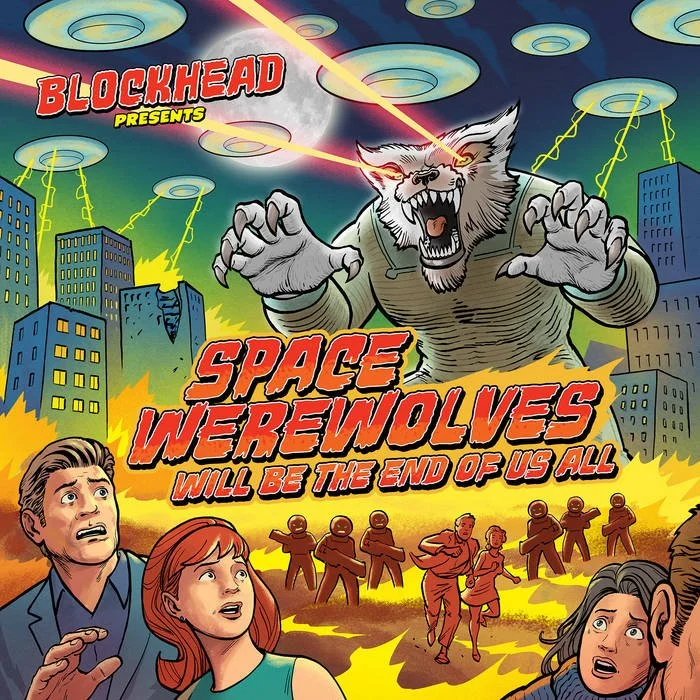
A Brief Conversation With NYC's Blockhead
Across the span of the last three decades, Trip-Hop has gone from being the niche, extant musical trials of underground and bedroom producers to dominating a demonstrable slice of the global listening bandwidth. Blockhead is, by most measures, one of the most accessed, successful, and consistent names in the genre, placing him squarely in the center of Trip-hop's past, present, and future.
Across the span of the last three decades, Trip-Hop has gone from being the niche, extant musical trials of underground and bedroom producers to dominating a demonstrable slice of the global listening bandwidth. In its myriad forms, flavors, and spinoffs, it is a genre that inhabits the space of stages large and small, popular radio stations and burgeoning YouTube channels, Spotify-sponsored playlists and nebulous, often anonymous mixtapes on SoundCloud, and every crevice in-between. The list of artists that carry the Trip-Hop mantle ever forward grows on a near daily basis, but a few particular characters have been solidified as mainstay, immovable elements of that landscape; Blockhead is, by most measures, one of the most accessed, successful, and consistent names in the genre, placing him squarely in the center of Trip-hop's past, present, and future.
With over a dozen albums and a veritable starting point of 2001, Tony Simon's Blockhead project is both the personal effects of one man's musical journey and a chronicling of Trip-hop's timeless impact. It would be a disservice to say that his discography is indicative of the genre's evolution, as his sonic palette and compositional direction are distinctly unique; it's not enough to just bang out a traditional sample collage and call it a day, as that would simply be a pale imitation of the real goal. It's not enough to fold a few choice melodies together over top of a looped, broken beat.
Space Werewolves Will Be The End Of Us All, the latest Blockhead LP, showcases just how particular his compositional gait can be. Where other collections of beats music often feel like just that - a collection, each arrangement on the album in question begets prudent songwriting and production chops that create the narrative arc that Blockhead albums are so known for. It's an intentional web of highs and lows, of melancholy and jubilee, and an abundance rhythmic swagger. As soon as the record begins to spin, you're trapped in a meandering sunshower of themes, bridging the gaps between hip-hop, jazz, blues, and soul music.
In order to get a better fundamental understanding of the Blockhead creative ethos and the process behind Space Werewolves, the Rust took advantage of a generous opportunity to pose some poignant questions to Tony Simon, getting us a few steps closer to the root of his musicality.
The Rust: What was your first moment of inspiration for Space Werewolves Will Be The End Of Us? Was it a desire to craft another LP, or a smaller, snowballed moment?
Tony Simon: With new albums I kinda reach a point where I'm like "Whelp, it feels like i should probably make a new album" which is a real undertaking that i have to really prepare my mind for it. In this case, I had been locked down during the quarantine and honestly, very bored, so I figured, fuck it, let's ge to work. and, for me, once the ball starts rolling, I'm hyper productive and mildly obsessive so I tend to get shit done in a timely manner.
The Rust: Your long form releases have typically included a variety of flavors and staples; do you consciously set out to cover that much territory, or do you suddenly find yourself there?
Tony: It's definitely not something I do consciously. I've always been drawn to trying to find off kilter sounds and things other people might not immediately see the value in, sample wise. But the variety is really just a testament to me sampling from a huge spectrum of music and blending those genres together with very little regard for their original settings.
The Rust: What kind of mindset do you pull from when you begin to envision your musical process? Is it something you deliberately tap into, or an unconscious reaction?
Tony: I'm all instinct. i've never sat down to make a beat thinking "I wanna make this type of beat right now". I'm guided by the samples. It just so happens , I'm drawn to melodic and often melancholy sounds. I'm not a big over thinker and generally just reacting when I make music. Kinda of impulsively just pushing through ideas that pop in my head and either executing them or abandoning them very quickly.
The Rust: Let's talk sampling: with so many years under your belt, how do you keep your productions fresh? How do you keep your sample palette fresh?
Tony: I always worry about sounding samey cause my formula is very specific. and it's been that way for a while now. But i'm also, as far as i know, the only guy who makes songs like i do using mostly samples so i feel less guilty about sometimes feeling formulaic. As far as the samples go, I'm just always looking for something that jumps out and I think my ear has evolved with time. Certain things i woulda sampled years ago, i'd pass over cause i feel like I've been there and done that. Sometimes i go through old folders of samples i never used and find great stuff i just overlooked the first time. The ear is always shifting with the years.
The Rust: How do you strike a balance between the polish of production with the rawness of instrumentation? How do you zero in on "the pocket" as you compose each track?
Tony: It goes back to instinct and trusting your ear. I can't even explain it but i know what i want it to sound like and i know what i don't want it to sound like. It's nuanced. I'm also not always in the pocket. Sometimes i struggle making anything work and others the sounds just seamlessly pile on top of each other without even trying. I've found that if i keep pushing forward, something usually happens.
The Rust: What was the creation process for this LP like? How did you fare during your time in locked-down NYC?
Tony: It was just me putting my head down, taking a deep breath and going in. My process for making albums the last few has been the same. I don't start from scratch. I make a ton of beats , pick out about 25-30 of those then see what beats can work with others. I'll match 2 or 3 at a time and meld them all together into a song. The concepts for songs kinda come after the initial framing of the song. And i just fine tune it from there.as for the lock down, I could lie and say it was awful but,truth be told, I was built for that shit. I'mma social guy but I'm also very comfortable being alone and a homebody so it wasn't that different that being home from tour.
The Rust: What's next on your list of projects? Any downtime, or is it right back to the studio?
Tony: I have a secret project with a special rapper that will be dropping in november I have finished collabo album with my dude Eliot Lipp under the name "Lipphead" that will be out next year. As well as a three song EP of stuff that didn't make this album that I'mma drop before the end of the year. But really, touring is starting again so that's gonna be taking up the glut of my time for the upcoming months.
FOLLOW Blockhead: SoundCloud / Bandcamp / Spotify / Facebook
![Seppa - Interview + Boosted [EXCLUSIVE PREMIERE]](https://images.squarespace-cdn.com/content/v1/59530136f5e2319eabb7d87f/1626113208781-BZ7C6B7E3LCECV7UD4CS/Boosted.jpg)
Seppa - Interview + Boosted [EXCLUSIVE PREMIERE]
Amongst the growing list of boundary-breaking and charismatic producers, Sandy Finlayson’s Seppa project has remained a tenured and potent force at the very helm of the international bass music movement. Returning to the active listening rotation amidst an explosive revival of live music across much of the world, The Rust is proud to host the premiere of “Boosted”, the first single of the upcoming dual release package Boosted/Forked. As a companion piece to the “Boosted” premiere, we felt compelled to have a succinct dialogue with Seppa about his experience across the pandemic, his developments as an artist and a label head, and his own self perception in the face of his hard-earned success.
Amongst the growing list of boundary-breaking and charismatic producers, Sandy Finlayson’s Seppa project has remained a tenured and potent force at the very helm of the international bass music movement. His audacious studio productions and iron-clad impact on stage are the unassailable result of years of dedicated experimentation, and the last year huddled up at home may have been his most fortuitous yet. Returning to the active listening rotation amidst an explosive revival of live music across much of the world, The Rust is proud to host the premiere of “Boosted”, the first single of the upcoming dual release package Boosted/Forked.
“Boosted” takes a departure from the oft-trodden territories of half-time and neuro-hop, and instead wields a mutated garage rhythm interspersed with generously distorted downbeats. It’s the kind of high intensity, low-riding roller that goes straight for the neck, eschewing downtime or respite in favor of sheer force. Reflecting the duality of the full release, “Boosted” is the slow-churning companion to the upcoming track “Forked”, with both reflecting the new bevy of upcoming material that Seppa is slated to release throughout the rest of 2021. It’s all within his carefully established wheelhouse while simultaneously displaying the developments and affects of his own personal year in the locked-down UK.
As a companion piece to the “Boosted” premiere, we felt compelled to have a succinct dialogue with Seppa about his experience across the pandemic, his developments as an artist and a label head, and his own self perception in the face of his hard-earned success.
The Rust: As of now, the world is spinning closer to its usual beat; Where’s your head at right this moment?
Sandy Finlayson: It’s in a pretty good place honestly! I guess you could say I’ve become very acclimated to limbo in the last 18 months. It’s definitely nice to have things like gigs on the horizon, but we’re still not back to business as usual here in the UK. It might happen soon, but it’s draining to get too invested at this point. If good things happen, then great, if not, then more studio time! It’s certainly been good to have some time to get into some healthy habits and do some uncomfortable but necessary staring into the void. It’s easy to build an identity solely around what you do, which is ultimately kind of unhealthy. Having that taken away has been a lesson in reframing who I am and what makes me me. I suppose everyone needs a reality check sometimes, whether they want it or not!
The Rust: Are you chomping at the bit for a return to the limelight, or are you content laying low as the rest of 2021 progresses?
Sandy: I wouldn't say I've ever really been into the limelight. I've always felt like I want my music to be successful and well known, but I don't really want to be a famous individual. That's pretty at odds with the accepted way things work these days but fuck it, I'm the only one that has to live with all my choices. Having said that, I do absolutely love playing music to people and sharing that really magical experience en masse. Touring and meeting so many great people, bringing everyone together through sound, is one of life's great pleasures and I'm definitely keen to get back to it! I'm not gonna rush it though, there's some stuff in the pipeline but I can't talk about it yet!
The Rust: Speaking of the limelight, you’re surely at the top of many lists as tour routes and events begin to propagate the map again; are there any cities or events in particular that you’re eager to return to?
Sandy: Oh man it's really hard to pick honestly, as I've played to great crowds all over! In terms of places that always go off - Denver, New York, Chicago, Detroit, Atlanta all spring to mind, but that’s by no means an exhaustive list. The Black Box is always a favorite venue to play, that's been the weirdest one to be away from for so long! Plenty of great festivals too, with Infrasound and The Untz being two of my favorites so far. If the sound is good and the vibe is good, it's gonna be a good time. I’m sure there’s so many awesome places I haven’t experienced yet!
The Rust: We’re well into a year after the initial global lockdowns; can you talk about the impact that has had on you and your artistry, and on your label?
Sandy: It's been a weird one for sure! As a collective we mostly just took a bit of a pause in some respects last year, with fewer releases on the label, though people were still working away on music behind the scenes. Personally, I put out Split the day after the lockdown hit here, and then just disintegrated a bit. I think it was partly burnout from the previous couple of years, and partly the fact that the ideal delivery method for my music had been banned for an unknown amount of time. Either way there was a heavy air of "fuck it" going on for a while there. In hindsight though, it was a really needed bit of space and time to reassess what I was doing and the music I've made off the back of it has felt really fresh to me. These next couple of tracks (Boosted and Forked) are really just the first bits of material I've got lined up for release in the near future.
The Rust: Your inception as Seppa involved a production knowledge base that had already been honed in through your years under the Duskky moniker; do you feel like your creative process has matured alongside the Seppa brand in the years since then?
Sandy: Oh yeah, massively. In a lot of respects, where I started with Seppa is where I really started to take things to a whole new level. Creatively, my horizons have expanded; technically, it's night and day. But I think that's not specifically because of changing my name, it's just a thing that happens naturally over time if you're really committed to mastering a craft. You get out what you put in. In some respects it was nice to have a "fresh" start as I feel like the quality of the Seppa stuff has been high from the beginning, which I can't say so much for the Duskky stuff. I started releasing as Duskky within a couple of years of starting to produce, so there was a lot of learning the fundamentals going on and it was never gonna be polished from day one. I've definitely gravitated towards increasingly dancefloor-focused material, at least with my solo stuff, which is really just down to the fact that destroying the dance is a pretty unmatched feeling. The air gets totally charged with happy energy, I love it.
The Rust: What sort of stumbling blocks do you still find yourself experiencing during your creative process? Have they changed as you’ve grown as an artist?
Sandy: There's always barriers to overcome, I don't think that ever changes. To start with they might be more on the technical side - how to get a track to sound competitive, how to make full use of a sound system, that kind of thing. As time goes by it becomes a bit more conceptual - how to keep introducing new ideas, how to break out of patterns you have established in the way you work. Really being creative professionally is a running battle with your own psyche. “How can I get the most out of my brain on a given day, how can I navigate the somewhat dubious feedback it gives me at times?” I guess, for me, the main thing is to try and keep finding excitement in what I do. That might mean switching directions and doing something really different for a while, or absorbing ideas from music outside of my normal spectrum. I see a lot of producers get jaded because they box themselves in to doing the same thing over and over again. Perhaps it's the sound they got most well known for, or they're stuck deploying the same methods over and over again and (unsurprisingly) getting the same results. If you're not enjoying what you make, why do it at all. Better to just switch up and go down some weird rabbit hole, even if nobody else gets it. People can feel the passion you have through the music.
The Rust: We last spoke on the record 3 years ago, in May of 2018, when Slug Wife had really begun to sink it’s maw into the American landscape. What’s your perception of your label’s experience in the time since then?
Sandy: Wow it's crazy how quickly that time went by. It's been a pretty wild ride! I personally wasn't able to get out to the USA until about March 2019, so at the time we spoke I really had no idea what was coming up. It's been really positive for us as a crew, the American crowd is our home crowd in a lot of ways with so many serious fans. It's blown my mind how far people will travel to come see us play, and how ready they are to get stuck on the dancefloor, whatever we throw their way. In a lot of respects it hasn't changed the label's approach all too much, as we're still focusing on a fairly select group of artists and releasing things we really enjoy. There's a temptation to get caught up in the music industry machine and just push out whatever the flavor of the month is, but we never envisioned the label like that and (for better or worse) are always gonna trust our own taste when it comes to what gets released!
The Rust: Has there been a significant change in the way you process incoming label submissions, given the explosive interest your label has experienced?
Sandy: Yeah I suppose we've had more people sending music our way. I definitely get people hitting me up directly with demos. I'm always happy to listen and appreciate it massively when people share their work (I know it can be a really nerve-racking experience). We have very, very specific requirements of what we want to release though, so I would say the overwhelming majority of stuff doesn't really fit for us. We'd rather put out a smaller number of high quality releases which are 100% our jam, than just pack out the release schedule. There's a numbers game that gets played by a lot of labels - social media platforms expect you to post constantly, therefore there must be new things to post about constantly, so the calendar gets filled with whatever and there's a new release every 2 weeks. That probably is a good way to get high follower counts and good interaction etc. but essentially it's more about being a brand/influencer/whatever than it is about music. We'd rather just focus on music and not get caught up in the popularity contest.
The Rust: Can you talk about the perception of your label at home in the UK? What’s the landscape like for our mutual flavor of broken-beat bass music these days?
Sandy: I guess it's a little hard to say as there's been very few events for the last 18 months. There's much less of a scene here for our music than in the USA, but the people that are into it are great. It's just a way more underground thing I guess! But then most electronic music is really, there's less money going around, but perhaps a bit more creative freedom and a seriously hedonistic attitude towards partying which creates some very excitable dancefloors. There's a lot of genuinely great vibes flying around in the rave scene - it's been funny to see videos of pretty run-of-the-mill free parties getting shared by American producers saying "woah these people are really going for it!" - that's mostly what parties are like here. People wanna cut loose, they don't care if they look like someone just dragged them out of a canal, they don’t care about being judged for how they dance or whatever. The music often reflects that by being really high intensity, faster and generally as rowdy as possible. There has been, even before the pandemic, a bit of a death of the multi-genre parties that I grew up on, but fortunately there's people like Ash/Scheme Boy from Varispeed trying to turn that around with his Varispeed Socials event that's putting all our favorite flavors under one roof.
The Rust: Having found yourself in headlining positions across the US for a few solid years now, you’ve had a heavy hand in influencing the current generation of grassroots producers; what’s your perception of your influence? Is it something that you pay any mind towards?
Sandy: Yeah it's always worth being aware of that. I'd like to be someone that inspires and encourages people, rather than gatekeeps. I do a lot of mastering, mixing and teaching, so I've been lucky enough to get connected to a lot of up and coming producers through that, and I've gotta say there's a lot of great people out there making awesome music with a solid attitude. Hopefully I can inspire people to just make the music they want to make, and not feel like they have to sign their lives away to be successful. Mainly it's just nice to talk to people who are as excited about music as I am!
The Rust: What are your plans for the Seppa project as we round out the rest of the year?
Sandy: So Boosted and Forked are coming out on Friday, July 16th (just in time for my birthday on the 17th) and represent the first solo stuff I've released in a while! These two are the result of some really fun experimentation, and probably represent the more...mellow end of what I've got to follow. There will be more music coming out steadily through the rest of the year. It’s all gonna be self released through my own Bandcamp. Social media reach is unreliable at best, so if you wanna make sure you always hear about my new releases head to seppa.bandcamp.com and hit follow for email updates. Touring is on the way too, but you'll have to keep your eyes peeled for info on that! If you’re interested in booking me hit up nicole@subdotmission.com and she’ll sort out the details.
With all eyes set on the road ahead, it’s only a matter of time before Seppa’s name starts to populate the top line of concerts and festivals across the US and beyond. This year of imposed downtime has given many creatives a previously unimaginable amount of time to fortify their crafts, and the premier Slug has boded his time wisely. As the rest of 2021 makes landfall, a new collection of Seppa tracks will meet the light of day, and we’ll all continue our ongoing dive into the fierce musical machinations of Sandy Finlayson.
FOLLOW Seppa: SoundCloud / Bandcamp / Spotify / Facebook

Riffing on Influences, Songwriting, and Fresh Duff with Duffrey
Duffrey has become an unassailable pole-bearer for North America’s grassroots electronic music movement. At home, it feels like he’s in every state, every weekend, and for those of us fortunate enough to live in and around Denver, he always seems to be right around the corner. In celebration of our unveiling of his Return to Source EP, The Rust was given the opportunity to poke around his skull and clear the some of the fog around his passions, his creative process, the background history of the Duffrey project, and some of the lore to the infamous UltaSloth producer trio.
Woody Klann, better known by his moniker Duffrey, has become an unassailable pole-bearer for North America’s grassroots electronic music movement. At home, it feels like he’s in every state, every weekend. In recent years, he’s become a known entity across international festivals and massives. For those of us fortunate enough to live in and around Denver, he always seems to be right around the corner.
With a continent-spanning interest in his music undergoing a meteoric rise seemingly overnight, he’s answered in kind by beating feet across the US touring circuit, splaying out a catalog full of novel, whimsical blends that avoids taking itself too seriously. That’s part and parcel of Duffrey’s appeal; his presentation is devoid of frills and oversaturated narratives, and instead relies on true groove theory and a friendly dash of musical sarcasm to power his discography.
In celebration of our unveiling of his Return to Source EP, The Rust was given the opportunity to poke around Woody’s skull and clear the some of the fog around his passions, his creative process, the background history of the Duffrey project, and some of the lore to the infamous UltaSloth producer trio.
Alyssa Barnhill: Where do you come from?
Woody Klann: I was born in Long Beach, CA. When I was about 3 months old I moved to Fairfield, CT and lived there till I was about 14. Went to high school in Olympia, WA, and then moved to the [San Francisco] Bay for a sound-arts college called Ex’pression. It's in Emeryville, in between Berkeley and Oakland. A bunch of [contemporary artists] went there, people like Wolfgang Gartner and a ton of others.
Alyssa: Did you go to Ex’pression right out of high school?
Woody: Right out of high school, yeah. I graduated when I was 20, and then I lived in the Bay from then until 2017. I moved to Oakland after college and did a lot of shit with the Wormhole crew. Then I moved to Australia for a year.
Alyssa: How old were you when you did that?
Woody: 2017, it's 2021 soooo 25?”
Alyssa: Do you mind if I ask you how old you are now?
Woody: 29, I just turned 29.
Alyssa: Did you play music as a kid?
Woody: Yeah, I started playing drums when I was 9. Then I was in like all the bands through high school. Jazz band, concert band, marching band, and pit orchestra.
Alyssa: All on drums?
Woody: All playing the drums. Then I was the drum section leader, and lead drummer for like that whole time. I was the drum section leader for marching band for the last two years of high school. Wrote all the cadences.
Alyssa: Did your school compete?
Woody: We had one of the better bands in the state of Washington in terms of our school band. We did competitions for Jazz bands but we didn't do any for marching band stuff. It was a pretty low-key kind of thing. My school was a football school and we didn't have any budget for band really. It was all going to football.
Alyssa: Did you enjoy the experience?
Woody: Oh yeah! There were days I would do like 4-5 hours of music a day. Wake up and practice, go to jazz band, then go to band. Go to pit orchestra after school and go to marching band after that. Like five hours of drums a day.
Alyssa: So music all day? Did that experience influence the kind of music you like to make now?
Woody: Oh Fuck yeah. Oh fuck yeah, bud.
Alyssa: Is Expression the only musical schooling you have?
Woody: Um, it wasn't really a music school per-say. It was a digital arts college and it was more technical stuff so it was things like recording, post production, some sound classes. There was a music production class but it … actually Vinja was one of my professors, for like a couple labs. Other than that it wasn’t a music school. I did music the whole time I was there and I started Dj-ing and producing while I was there.
Alyssa: How long were you there?
Woody: It was an accelerated program so we essentially didn't have any breaks. So I got a bachelor's degree in two and a half years. Basically you just don't have summer breaks. The winter breaks are like a week and you just continuously go to 8 week courses. I essentially did four years of school in two and a half.
Alyssa: That's a pretty heavy commitment.
Woody: Yeah it was tight. It was actually much better than doing normal school because you don't forget anything.
Alyssa: So what's the story behind the name?
Woody: It’s from a ski-snowboard collab video by Simon Chamberlain and Tanner Hall, and they have this special feature on it where they are outside Mt. Hood and they come down to the bottom. They meet this dude in the parking lot. He’s in his RV and like almost senile.

Duffrey performing at the Swamp Sessions concert series in New Orleans, courtesy of Synchronasty and Cosmic Synergy.
He goes, “ I'm the Duff pirate, I don’t need that fresh fluffy duff, that’s for the youngsters. The only thing I do with the fresh fluffy duff is I skuff it up on the youngsters hoods. I don’t even buy a lift ticket, I just hike up the other side and scrape down the crud. I'm just shoveling that fresh fluffy duff.”
The fresh fluffy duff is fresh, nice powder. My buddy Jeff showed me the video and I was like. “Man I got to go by the Duff Pirate.”
He said, “You can't just steal this guy's name.”
He said either Duffrey or Duffrent. And I thought Duffrent was kinda tacky but let's go with Duffrey. That was when I was like 16.”
Alyssa: So, do you ski? Snowboard?
Woody: I snowboard, I skate a little bit still, not so much anymore. Because I'm afraid of hurting myself. I'm not as limber. Get heavier, you fall harder, it hurts more.
Alyssa: Does having a history with extreme sports equate to the way you approach music?
Woody: I would say so yeah. Take CharlestheFirst for instance. He was a professional skier before he made beats. I have always been attracted to solo sports, fringe sports like skateboarding or snowboarding or bowling. Stuff where you are kind of competing against yourself, developing a style over time. So yeah, those sports heavily influenced my aptitude for music because when you’re trying to master a trick, you have to do the same thing fucking over and over again. It hurts and it sucks, then eventually you do it. then you eventually make it stylish. So like listening to the same shitty tune over and over again and knowing that it sucks, but not knowing how to make it better. It's about pushing through and eventually developing your own style based on your mistakes. Which is just like skating or snowboarding, definitely a pretty big crossover.
Alyssa: What else do you do outside of music?
Woody: I bowl a lot, rock climb a lot with Bogtrotter, disc golf. I like to hang out with my friends. I have got some really good friends. Snowboarding, skateboarding, but bowling and disc golf for sure. Top of the list.
Alyssa: Did you see a lot of music growing up? Was it something you knew you wanted from an early age?
Woody: Oh yeah! There is actually a home video of me when I was like 9 years old. My parents asked me, “What are you going to do when you grow up?”
I was like “I want to be on stage, I want to be famous.” So I always kind of knew, but my dad took me to my first show. It was Derek Trucks Band, when I was 11. He would take me to all sorts of shows. He took me to Linkin Park and Snoop Dogg. All types of shit. My dad is such a badass.
Alyssa: Was he a source of inspiration for you?
Woody: Oh yeah. My whole family is super musical. My mom is a singer, all my sisters play piano. One of my sisters plays the double bass. One of my sisters plays the guitar and fiddle. They are all really good singers. My dad is actually the only one who doesn’t play instruments..
Alyssa: But he likes it?
Woody: He loves it, yeah. He took me to see all the music but there was always music around. LIke always. No matter what. Every second of every day.
Alyssa: Does your family, minus your dad, make music professionally?
Woody: No, just me. My grandfather was a really sick jazz musician too. He didn't do it professionally. He was a superior court justice.
Alyssa: What have you been listening to lately?
Woody: I have been listening to very little bass music, especially over the pandemic. It just kind of felt like it was putting salt in the wound. I also feel like a lot of stuff is getting so overly produced, heavy, and dark. Like RAAAWAA technical sounds.
So I have been listening to things like Mariah Carey, Moonchild, a lot of R&B stuff like that. I have been finding a bunch of old Brazilian jazz like Stan Getz. Also been listening to a lot of Halogenix. I really like drum and bass. I don't really listen to bass music. Listening to some Kyle Watson, Dirty Bird stuff. If I'm trying to party I listen to drum and bass or house. If I'm at home, I listen to old funk records.”
Alyssa: What is your process when creating?
Woody: So, having really strong roots in drums…. I would say most people start with the drums, so they have something other than a metronome to keep them going. I pretty much never do that. I'll either start by just doing sound design, making bass patches, LFO’s, something that changes the cadence. Sometimes a rhythm pops out of a bass patch at you. If I start with drums I end up with some fully produced drum pattern, write something over it, and then I have to go back and change the drums a lot. Sometimes I just end up backing myself into a corner. Now I have drums but nothing else.
I'll either start with chords or chord progressions. I do that a lot. I'll just sit down and flip the switch in my studio, everything comes on. And my synthesizer, the Dave Smith one, flashes on. It's a poly-analog one so you can play chords on it right away. I usually keep it on a preset that sounds pleasant. Sometimes I'll just start playing the piano, a chord progression will pop out at me. After that it's all sizzle and sparkle.
Alyssa: We are all curious about UltraSloth. How did that project come about?

Duffrey and bioLuMigen performing under their UltraSloth moniker.
Woody: Chris [bioLuMigen] and I met, I think in 2015, maybe 2014, I can’t remember, on the way to Stilldream fest. My friend Hannah said to me “I have a friend that needs a ride, if you're going.” I was like yeah sure. Within 15 minutes of meeting him we were talking about how nothing is divine but everything is divine. I was like, “Man, I like this guy”. He ended up crashing on my couch for like months at a time. Not like months at a time but for like a month at a time, like a lot of times in a row. We would just sit around and write tunes. All the time. They didn't sound anything like they sound now. Dubbed out. Real slow, like 100 BPM, glitchy-funky kinda tracks.
We were at this festival called Springfair, in Washington. We were doing this like weird word association. This was a point in my life where I was saying, “Oh that's my new side project” to pretty much anything that was funny. I think he was the one who said “UltraSloth”
I was like, “That’s our new side project.” We both locked eyes and said, “THAT’S our new side project.” we just cheesed out on that for a long time.
Alyssa: So would you say 2015 was the beginning?
Woody: Yeah, yeah. We played some UltraSloth shows for the New Year season in New Zealand. The first show we played was in New Zealand. The second show we played was in Australia.”
Alyssa: Because you were living there?
Woody: No, just our first tour. We had friends that trusted us for some reason. When we came back, Kris [kLL sMTH] sat in with us for a couple shows. Scratching with us. We were at his house, some after party. I was like, “Kris, is this a real thing? Are you fully committed? Are you full sloth?”
He was like, “Fuck yeah dude.” So essentially, I caught him and convinced him to join the band. It's ancient history from there.
Alyssa: I know you have a sloth tattoo.
Woody: I do have an UltraSloth tattoo. They didn’t fucking get it. They were supposed to but they both bailed on the appointment.
Alyssa: What's your favorite part about that project?
Woody: Well, we create something that is greater than the sum of its parts. None of us alone could make UltraSloth. We all have the technical prowess, we all have the ability. No one is better than anyone else between the three of us. We are better at different shit but those tunes have a certain quality that no one could achieve by themselves.
Alyssa: You like to play unique shows at unique venues. Is that something fans can look forward to?
Woody: We have got some sick shit coming for you. If all goes well, we’ll be testing it out at a festival that I won't mention yet, this summer. But next summer get ready for some fun shit.
Alyssa: Unique?
Woody: Yeah, nobody has done this before.
Alyssa: Fun Fact for the fans.
Woody: All three of my legal names have to do with trees. You don't get to know them. Hear that, Of the Trees? I am of the trees.
With his upcoming appearances through Bass Invasion’s takeover at Cervantes Masterpiece Ballroom and The Rust x Aspire Higher’s Submersion event set to drive crowds into a nostalgic and frenetic dancefloor frenzy, and with the NYC Sub.Mission show with kLL sMTH this next weekend, it certainly feels like the action is resurging at a rapid pace. Regardless of where and when you catch him next, there’s zero doubt about Duffrey’s inclination to deliver on his name-brand sultry sets, and every indication he’s prepped with enough fresh, fluffy duff to coat the remainder of this year’s appearances.
FOLLOW Duffrey: SoundCloud / Bandcamp / Spotify / Webpage / Facebook
FOLLOW UltraSloth: SoundCloud / Bandcamp / Spotify / Facebook


Amongst the incoming generation of artists having finally found their bite, not yes exemplifies the modern paradigm of electronic production; there are no hard boundaries, no clearly defined destinations, and unbridled compositional freedom. There’s a refreshing whim to their choice of direction, and the result is a fast-growing, dynamic catalog that takes us through virtually every space in low-end territory.