

The Cyclical Allure of Submersion
The humble position to take would be that Submersion Festival is akin to its many contemporaries; a gathering of like-minds, hosted by like-minds, with the intention of furthering musical and artistic experiences in a space that makes us all feel at home with the event and its surroundings. The more modest position is that Submersion has achieved a standing in our wider community that is reflected in the circuitous return of fans, friends, and acts year on year. If you’re still on the fence, now’s the time to get serious. Tickets are running out, the doors open in three days’ time, and we’re hoping to see each and every one of you out in crowd for three days of sun, shoreline, and serendipity.
The humble position to take would be that Submersion Festival is akin to its many contemporaries; a gathering of like-minds, hosted by like-minds, with the intention of furthering musical and artistic experiences in a space that makes us all feel at home with the event and its surroundings. The more modest position is that Submersion has achieved a standing in our wider community that is reflected in the circuitous return of fans, friends, and acts year on year. It’s no surprise that Paradise Lakes, when in the hands of capable operators, has seen more than its fair share of successful home-brewed festivals and concerts.
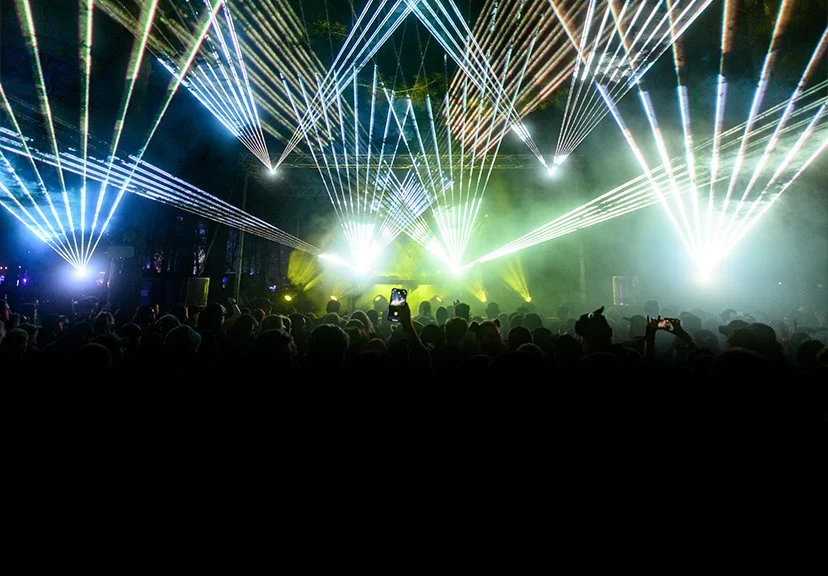
We’re far from the first to touch ground on that shoreline, but through consistent dedication to the service of inclusive fan-first programming, concert infrastructure, and a community-oriented perspective, the secret has long been out that the Pine Barrens are back in vogue. The returning fans alone shine a bright light on Submersion’s reach, particularly in an economic paradigm where excess funds are few and far between, and the relative costs of hosting these events have skyrocketed with tickets following suit. Return revelers are the financial cosign from the scene at large, making it clear that the juice is very much worth the squeeze, but they’re only half of the picture; Be it Justin Martin, the All.lo Records alumni, Kursa, Mickman, Daily Bread, Taiki Nulight or beyond, Submersion has consistently featured a rotating cast of returning acts year on year. Far from just a product of early offers or financial posturing, it’s the result of cultivating that very same community that we keep bringing up. These artists aren’t just some elevated caste in the social hierarchy, they’re the very same personalities that make Submersion so appealing in the first place. The throughlines in all of the promotional companies and entities involved in the production of this festival are the relationships fostered, and our social ideals held up to the light.
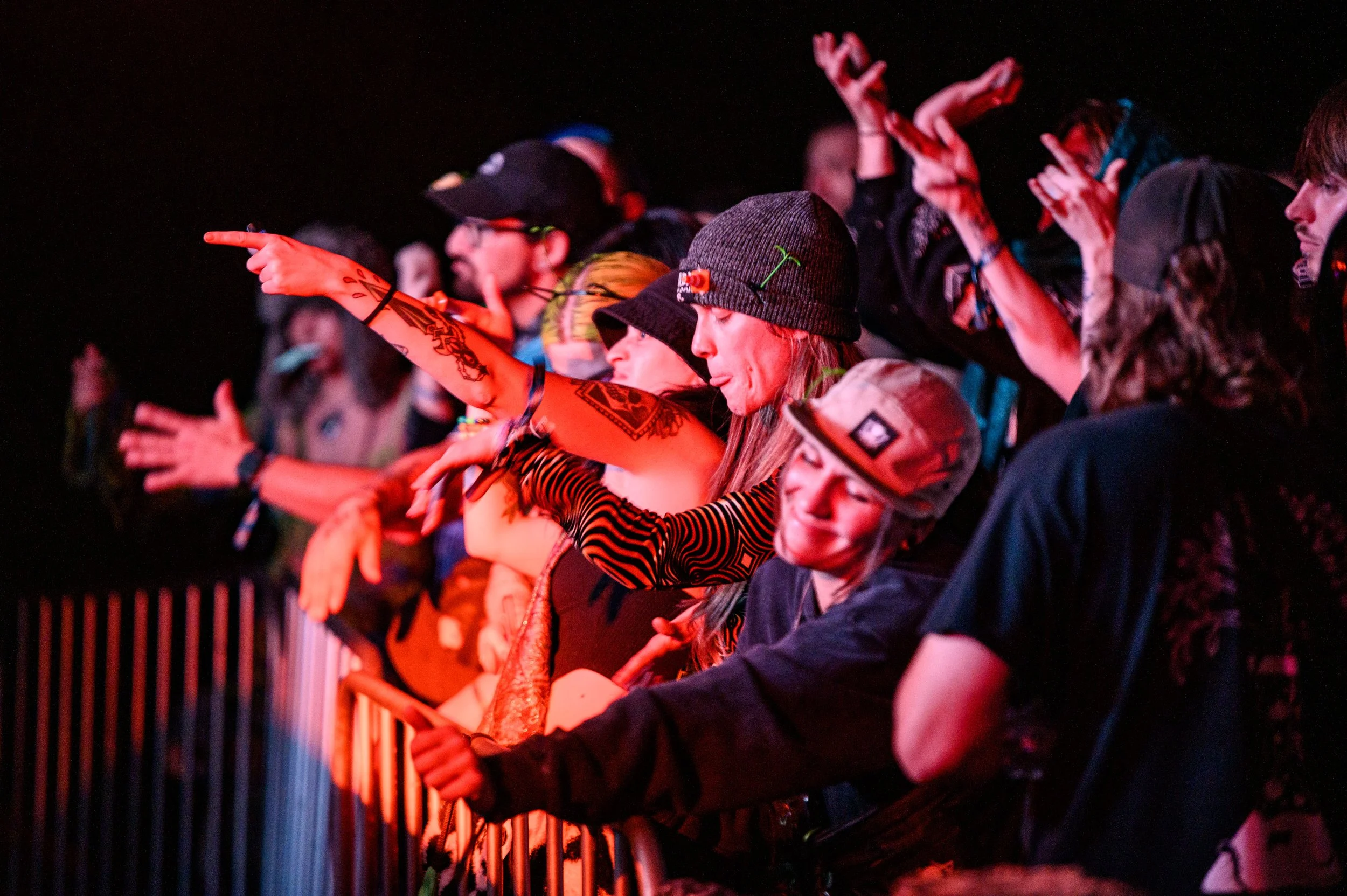
For 2025, the community is set to show up in force once again, bringing the same festive and familial energy that has made each installment since 2021 a beloved centerpiece for the lower Northeastern states. From the production crews to the vendors, from the workshop installations to the braintrust behind the precision audio/visual extravaganzas onstage, we’ve had the privilege as friends and cohorts to watch the as the cement hardens, binding this little pocket of experimental art together in a way that we could have only dreamed of at the start of this journey. With landfall set for this weekend, the winds certainly seem at our backs, and we can’t wait to show you the experience that Submersion has in store for its friends and family this time around.
If you’re still on the fence, now’s the time to get serious. Tickets are running out, the doors open in three days’ time, and we’re hoping to see each and every one of you out in crowd for three days of sun, shoreline, and serendipity.

Beyond the Music at Bass Coast
Every seasoned festival-goer in North America should try to attend Bass Coast at least once. But be warned - once you go, you’ll want to return every summer. That can be challenging for those who live far from Merritt, British Columbia, but the trip is worth every mile. Tucked into a hot, dusty valley in the BC interior, Merritt is Canada’s country music capital, or used to be, depending on who you ask. The likes of Johnny Cash, Merle Haggard, and Tanya Tucker have handprints on the town’s Walk of Stars, and Merritt Mountain Festival used to bring more than 100,000 people to the area. In this context, Bass Coast is a natural fit for the area.
Written by Mark McNulty
Every seasoned festival-goer in North America should try to attend Bass Coast at least once. But be warned - once you go, you’ll want to return every summer. That can be challenging for those who live far from Merritt, British Columbia, but the trip is worth every mile. Tucked into a hot, dusty valley in the BC interior, Merritt is Canada’s country music capital, or used to be, depending on who you ask. The likes of Johnny Cash, Merle Haggard, and Tanya Tucker have handprints on the town’s Walk of Stars, and Merritt Mountain Festival used to bring more than 100,000 people to the area. In this context, Bass Coast is a natural fit for the area.

Artist: Leikeli47
Photographer: 403 ABC
“We value freedom of expression in this community,” says Merritt Mayor Mike Goetz who was working inside Merritt’s mobile visitor center at Bass Coast. Residents love “the Bass Coasters,” he says, and the festival requires only a small police and fire presence compared to other events. “My daughter will be here tomorrow, she embraces this lifestyle. So I have this in my family, but we also embrace it as a community because these are the most friendly people you’ll ever come across.”
In its sixteenth year, Bass Coast was headlined by Leikeli47 and Of The Trees. West coast locals and international underground talent provided the best in bass, house, and broken beat electronic music across five stages, which were set up alongside dozens of interactive art installations. The-run of-show was world-class, but it’s what takes place beyond the music and art that truly sets Bass Coast apart.
Donna Dada, a Vancouver-based DJ and quietly influential woman in North American jungle, described the vibe at Bass Coast as “a culture of care.” Attendees care for themselves, one another, and the land, which is traditional, ancestral and unceded territory of the Nlaka’pamux and Syilx people. (“Unceded” means the land was not part of a treaty.) Sometimes, people treat festivals as an opportunity to stop caring, to abandon responsibility and just go wild. Yet during these weekenders where people are touching the veil, weather is unpredictable, transportation is scarce, and resources are limited, it’s a good time to exercise more caution, while still letting loose. It’s a delicate balance that Bass Coast strikes elegantly.

The Slay Bay stage.
Photographer: Banana Cam
The event is founded and primarily produced by women. Andrea Graham (aka The Librarian) co-curates the music, Liz Thompson curates the art, and Ana Hilliar runs point on production. Many of the staff, artists, and attendees I spoke with suggested Bass Coast’s culture of care comes from its femme-forward management structure. Another woman who contributes to this culture is Stacey Forrester, Harm Reduction Manager at Bass Coast and a Sexual Violence Prevention Educator who has worked for the festival since it moved to Merritt 11 years ago. Stacey and her 80+ volunteers in peach pink shirts help keep the festival safe and fun.
Harm Reduction, the largest team at Bass Coast, manages an emergency phone line and spends shifts in “lifeguard” chairs behind each dance floor. They run a sanctuary space where attendees can cool out, and administer a drug checking station with a television that broadcasts details about the substances circulating on the grounds. Coastal British Columbia was considered the epicenter of the continent’s toxic drug crisis, Stacey tells me. “The trends we saw in toxicity happened first here and slowly spread across the rest of Canada and North America,” she says. “It forced regulatory bodies to take harm reduction seriously.” After a teenager died of an overdose at a festival in Kelowna, BC in 2016, Interior Health, a regional health authority, required festivals to provide drug checking. The Harm Reduction team’s presence and the year-round messaging from their Safe Coast Instagram account encourages attendees to take some responsibility for one another. It’s not just someone else’s job. As a result, everyone becomes part of the festival’s infrastructure, weaving threads of mutual accountability that hold the festival together like a web.
Stacey also points out part of harm reduction is keeping people occupied. “There are things to do here at Bass Coast besides getting really messy,” she says. Every art installation is interactive. The Coldwater River is delightful. Arts, crafts, yoga, and workshops are available all weekend. For example, filmmaker Dan Pierce delivered a captivating presentation on the relationship between flooding, clear-cut logging, and forestry practices in BC. (Merritt suffered a catastrophic flood in 2021.)

Artists: Magugu & Mat The Alien
Photographer: Banana Cam
Among all these extracurriculars, though, music still holds court. JPS, a key electronic music curator in Australia, played a fan favorite late night set at The Cabin. He considers Bass Coast one of the best festivals in the world. “They’re not many festivals in the world where you can have Ivy Lab playing the main stage on a Saturday night. The difference here is the culture built around the music,” he says. “It’s in the name.” To hear the music, follow Subtle Radio for full set recordings coming soon.

The Bass Coast main stage.
Photographer: 403 ABC
People throw the word “family” around often in the festival community. Everyone wants to feel part of something greater than themselves. Some people embrace the festival community because their own family may not accept or understand them. Yet this word “family” can be limited. Sometimes people only extend that familial love to their homies, to good-looking people, to heteronormative people, etc. Sometimes people hold back that familial love because other people out there will take advantage of it. At Bass Coast, everyone was extending that familial love to everyone else.
To be sure, I heard criticism from some corners. Three attendees suggested Bass Coast can be “cliquey,” even pretentious, because its audience is primarily from Vancouver. Shambhala, a larger regional festival which Bass Coast is often compared to, can feel more “open,” two attendees told me. Still, hailing from cliquey New York City and having attended both festivals, I felt Bass Coast to be plenty open. Bass Coast feels like a family, and by the end of the weekend I felt like part of the family. The festival is large enough to overwhelm you with awe, yet intimate enough that you can find your place. After all, in this community, finding one’s place is what we’re all seeking in the first place.
Bass Coast 2025 pre-sale tickets are available now.
FOLLOW Bass Coast: Official / Instagram / Facebook / Soundcloud

10 Can't-Miss Artists of Color at Bass Coast
Why is it important to consider equity and diversity in dance music? From house and techno to jungle and dubstep, electronic dance music often came from marginalized diaspora communities which, at least in North America, were often Black and Latino. Yet as dance music has become a mainstream, multi-billion dollar business, it is impacted by racism and exclusion like any other business in a society where these challenges remain all too present. In 2019, Bass Coast started collecting detailed demographic data about its bookings and using it to “critically look at strengths and gaps in our programming choices.” In 2024, the Phase 1 lineup featured more than three dozen women and gender non-conforming people, and nearly 30 artists of color, including several indigenous and Métis DJs and producers from Canada. So with this in mind, in addition to Leikeli47, here are 10 can’t-miss artists of color at Bass Coast.
Written by Mark McNulty
Bass Coast in British Columbia, Canada, the reigning DJ Mag “Best Boutique Festival in North America,” has a theme each year. In 2024, the theme is “Reflection,” which encourages attendees “to reimagine their relationship with expression, consumption and the environment.” Recognizing this, we recently spotlighted the festival’s sustainability practices. The theme also offers an opportunity to reflect on racial equity and spotlight artists of color at the music festival.
Why is it important to consider equity and diversity in dance music? From house and techno to jungle and dubstep, electronic dance music often came from marginalized diaspora communities which, at least in North America, were often Black and Latino. Yet as dance music has become a mainstream, multi-billion dollar business, it is impacted by racism and exclusion like any other business in a society where these challenges remain all too present.
As a result, dance music’s humble origins have been lost in the mix, and it has become harder for artists of color to break into spaces. As Detroit techno originator Kevin Saunderson told Billboard in 2020: “it feels like Black artists are being eliminated from dance music.” Or as Chicago house legend Derrick Carter wrote in 2014, “something that started as gay black/Latino club music is now sold, shuffled and packaged as having very little to do with either.”
For one example, consider UNESCO recently recognizing the cultural heritage of Berlin techno without mentioning Detroit. This phenomenon began long before electronic music, and it’s well-documented in books like Blues People (1963) by Amiri Baraka and Assembling a Black Counter Culture (2022) by DeForrest Brown Jr. For another example, Led Zeppelin infamously plagiarized Black blues players without giving them credit.
So what are the solutions, and how is Bass Coast doing its part?
One thorny barrier to diversity in dance music is “colorblindness,” or the belief that you should treat all persons equally without regard to their race. This sounds reasonable on the surface, but what happens if you apply it to a community where racial inequalities actually do exist?
Consider R&S Records. This storied label released Aphex Twin's Selected Ambient Works 85-92 but its founder Renaat Vandepapeliere has been accused of racial prejudice multiple times. When artist Eddington Again published email exchanges in which he asked Vandepapeliere why R&S signs so few people of color or women, the label boss responded, "we are not a political party," and "I sign music I can find - I don't sign color mate."
It sounds reasonable to sign “music you can find” without regard to race. Yet if your roster is all white in a scene born from communities of color, it begs the question, “where are you looking?” Like other businesses, decision-making spaces in dance music (and bass music) are often white. It’s not wrong to book talent from your own milieux or comfort zone, but that likely won’t yield diversity unless your peer group is diverse, and at least for most Americans that’s not the case. In other words, if you “don’t see color,” you may not end up seeing any on your lineup.
This is why one part of the solution is abandoning the colorblind approach and intentionally considering diversity. For example, in 2019, Bass Coast started collecting detailed demographic data about its bookings and using it to “critically look at strengths and gaps in our programming choices.” The event is now far more diverse than other North American bass festivals.
Bass Coast 2024 is co-headlined by Of the Trees and Leikeli47, a rapper raised in the Brownsville and Bedford-Stuyvesant neighborhoods of Brooklyn whose music has bass, dance, and house elements (Leikeli47 cites N.E.R.D. as one of her greatest influences). The Phase 1 lineup featured more than three dozen women and gender non-conforming people, and nearly 30 artists of color, including several indigenous and Métis DJs and producers from Canada. So with this in mind, in addition to Leikeli47, here are 10 can’t-miss artists of color at Bass Coast.
Ashley Morgan
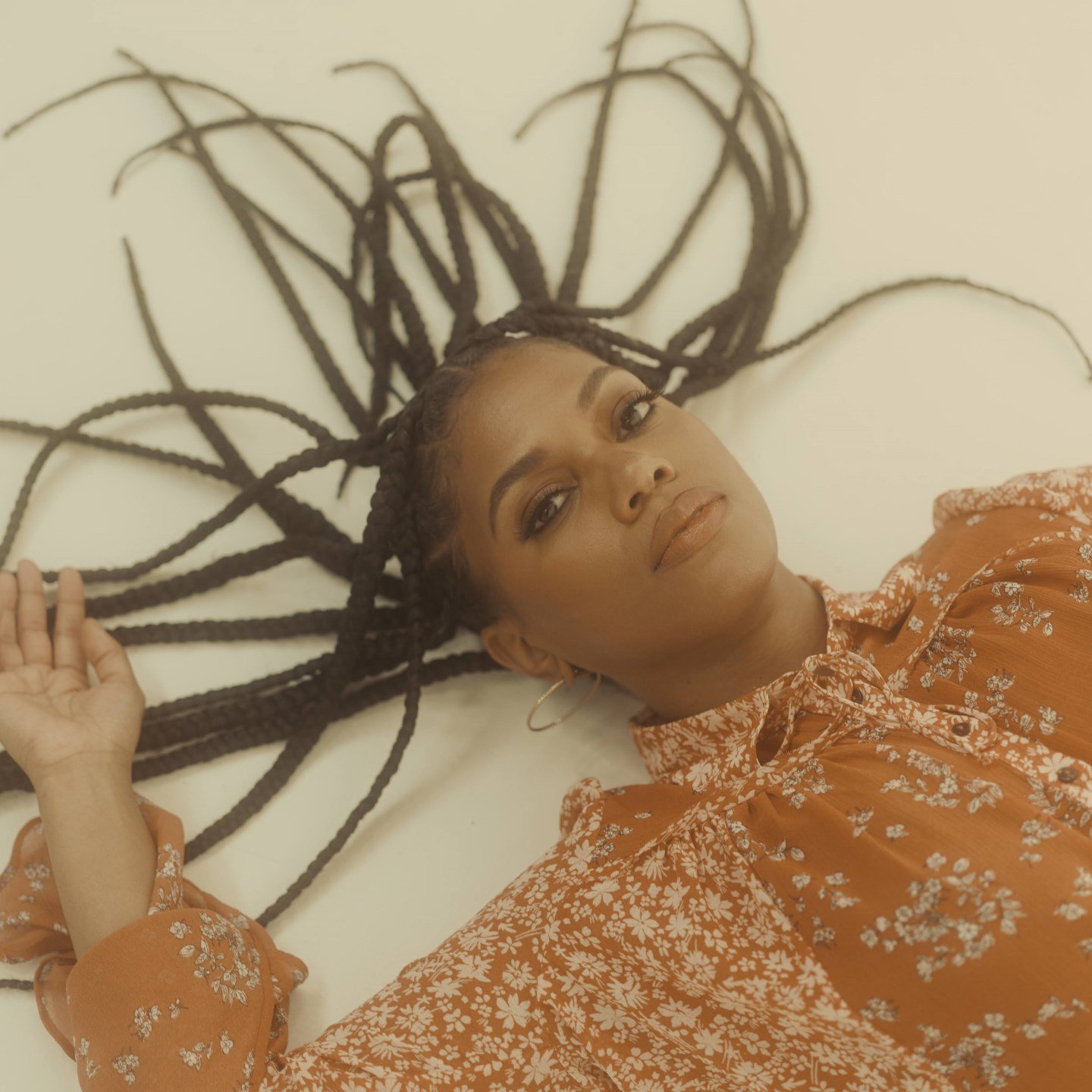
Born in Detroit and based in Atlanta, Ash Lauryn has spent her career as a DJ, radio host, writer, and curator lifting up Black dance music through her platform Underground and Black and other channels. Get ready for an assuredly soulful set at Bass Coast, and read some of her writing about Detroit techno: “That’s right guys, this music was born from the struggles and the good times of black people. Although it has taken on many different forms, the fundamentals will always remain the same.”
This Mexican American DJ and curator has become a pillar in Los Angeles and a household name in club communities across the states. Through her Warp Mode event series, Club Aerobics label, and NTS radio show radio, Bianca Oblivion strives to create physical and digital spaces for femme/non-binary, queer, and people of color. She blends high quality club and global bass fare with reggaeton and baile funk, and was one Mixmag’s 2023 breakthrough DJs of the year and part of Beatport Next's Class of 2024.
Conducta has been a key figure behind the renaissance of garage as both a DJ and the boss at Kiwi Rekords. His influential label closed its doors earlier this year, but Conducta continues on. You can bet a DJ who runs a label has plenty of tunes other DJs don’t have. That’s definitely the case with Conducta. Listen to the Kiwi Sound and hear Conducta describe his experience with mental health as a Black DJ on the Black Minds Matter interview series via RA Exchange.
Stephen Carr aka Digital has been producing and DJing out of the UK since 1994. As a member of the Metalheadz old guard, he’ll be delivering that timeless, galactic jungle drum & bass sound at Bass Coast. Digital knows and represents the roots. He grew up listening to reggae, ska, funk, and soul, and heard first-hand how these influences shaped jungle and later drum & bass. His 25 Years of Metalheadz set from Outlook Festival is a great Digital sampler.
Donna Dada
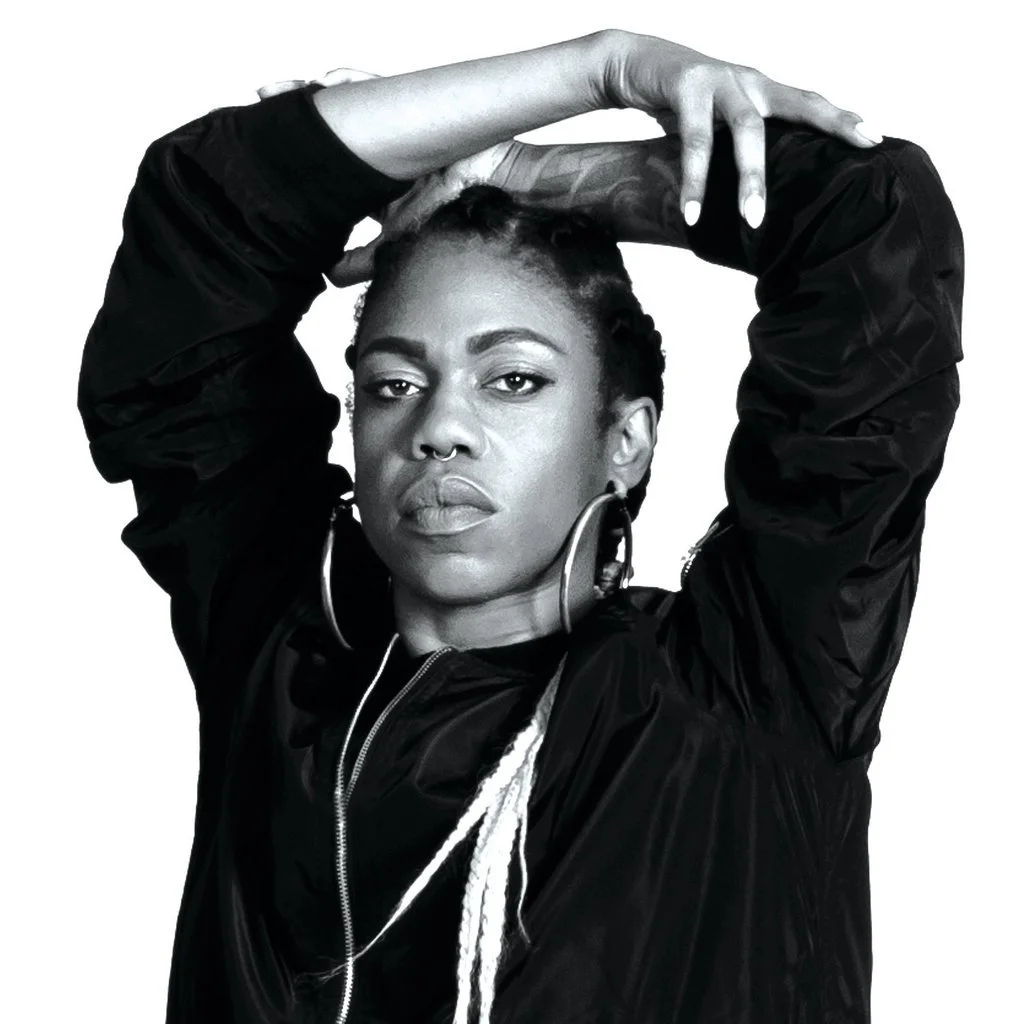
“Don Dada” is Jamaican slang for a top-ranking boss, and Donna Dada is definitely earning her moniker. This rising Canadian producer and DJ of Nigerian and Trini heritage exists “where jollof and doubles meet.” She has recently supported Sherelle in London, Anna Morgan in Vancouver, and K + Lab at Meow Wolf Denver, blending techno, afrobass, garage, jungle and more. Check out her Bass Coast 2022 set and get ready for Round 2 in Merritt.
Delano Smith is one of the first Detroit house DJs and credibly claims to be ”the real Detroit head's secret favorite.” He sinks into deep grooves that invite the audience’s attention with subtlety and nuance instead of demanding it with aggression. His imprint Mixmode has been dropping house jewels for more than 20 years. Simply put, Delano Smith is a master, and you don’t miss the masters!
Handsome Tiger’s music is the most unique of anyone on this list. The Anishinaabe Métis and North African producer/DJ resides in Vancouver and has become a beloved figure in western Canada’s bass community. On his latest release, First People, “Indigenous voices and PowWow Drums meet decolonized bass music, beats, global, hiphop, sound system culture & dub.” He was recognized as one of CBC (Canadian Broadcasting Company) Music’s six Indigenous artists you need to know in 2021 and CBC’s Reclaimed artists to watch in 2020.
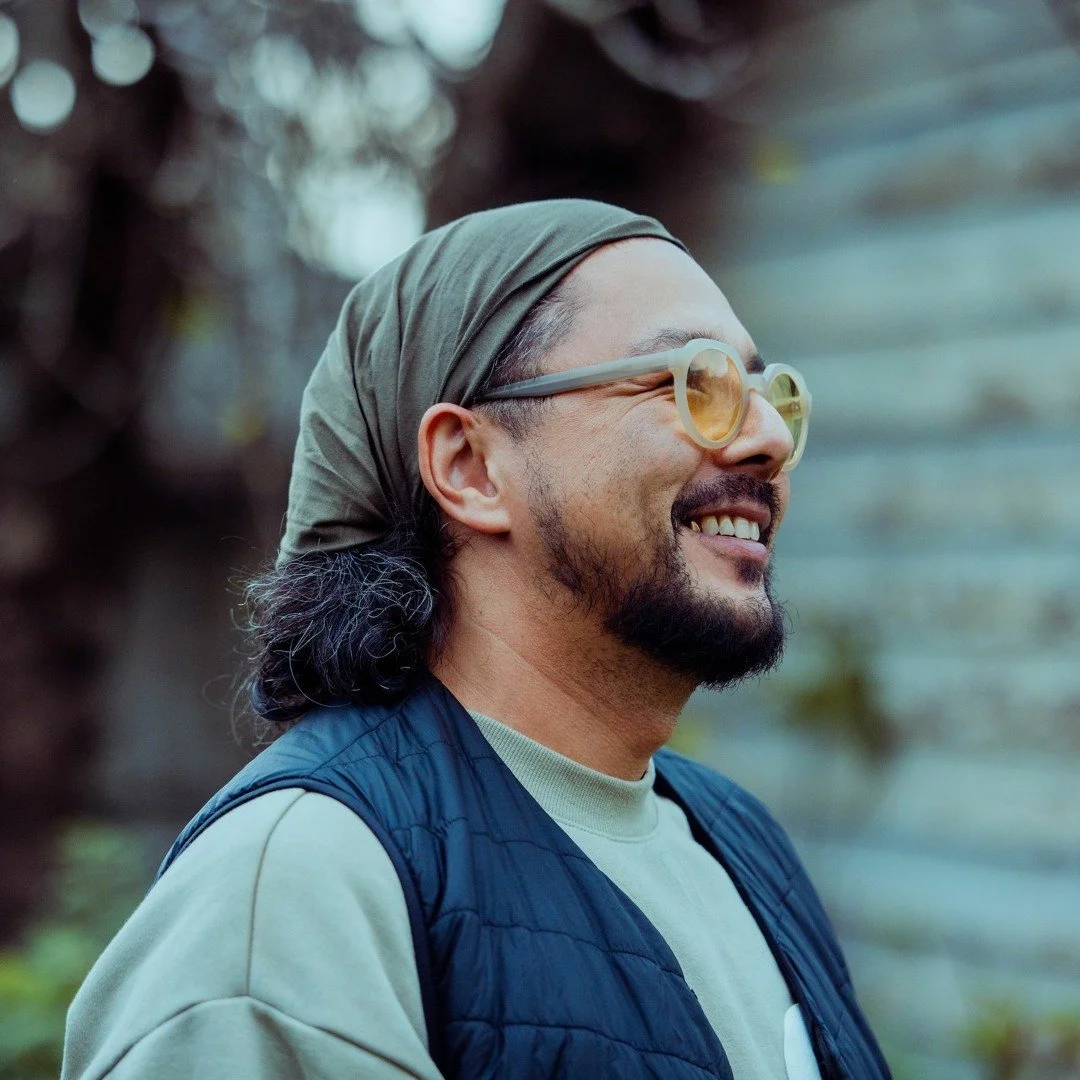
JPS
Jerry Poon aka JPS is a world-class operator. Originally from Singapore, he’s become a centrifugal force in Melbourne’s music scene. His company, The Operatives, has been bringing global talent to Australia for 20 years, from Mala and Chase & Status to Joe Kay and Jyoty. He plays a full spectrum of sub frequencies, from future bass and jungle to reggae and hip-hop, but he keeps the audience guessing, so who knows what he’ll play at Bass Coast. His set from Earth Frequency Festival 2022 is strictly vibes.
For a sensual reprieve from faster, more aggressive sounds at Bass Coast, see Minzi Roberta. A multi-hyphenate residing in Toronto by way of Hiroshima, Japan, Roberta’s SoundCloud is full of contemporary R&B, neo soul, jazz, and amapiano packaged in mixes like coconut oil, mint tea & lavender. Roberta has performed for Boiler Room, Rinse FM and Soulection and manages her own collective, Kuruza, which has a terrific radio show.
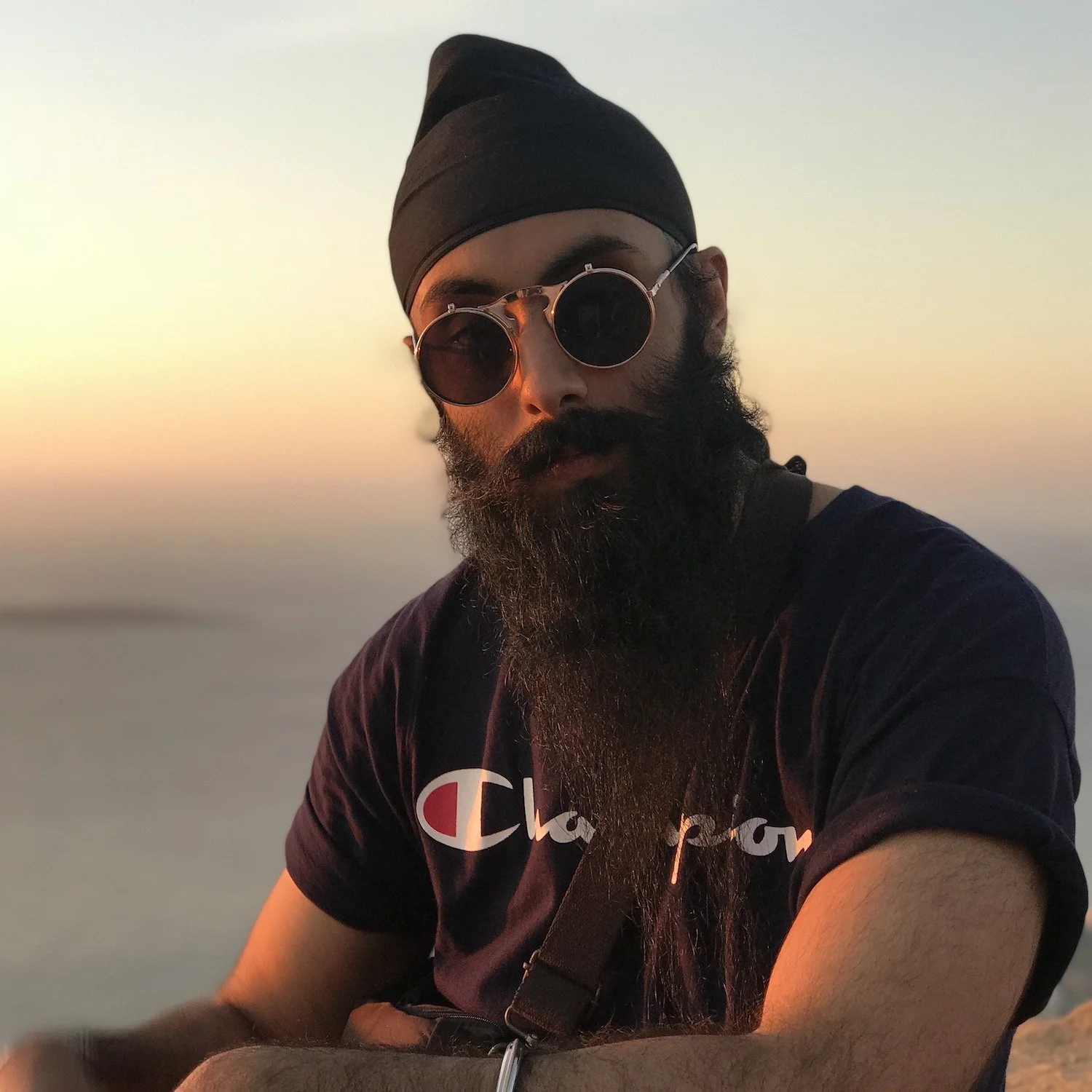
Yung Singh
After earning DJ Mag’s “Breakthrough Artist of the Year” award in 2021, the UK-based open-format DJ Yung Singh has continued to level up. He mixes all kinds of club music including garage, jungle, UK funky and grime with Punjabi folk sounds, and has earned the deep affection of ravers and Punjabi diaspora communities everywhere. Watch his Melbourne Boiler Room set, which has earned more than four million views, or do what I do and just replay this clip 10 times in a row.

How to Practice Sustainability at Bass Coast (And Beyond)
It takes hard work to host an enormous music festival in the middle of the woods without leaving any waste behind, but Bass Coast in Merritt, British Columbia (BC), Canada strives to make it easier, for both attendees and crew. Boasting a modest 6,500-person capacity and operated independently in the southern BC interior, it’s been twice awarded 'Best Boutique Festival in North America' by DJ Mag and 'Best Midsize Festival in Canada' by the Canada Music Awards. Curated by Andrea Graham aka The Librarian and Max Ulis, the lineup is of course stupendous. But Bass Coast hasn’t earned these accolades for music alone. Excellence at the event extends beyond the music to things like harm reduction, cultural respect, and sustainability.
Written by Mark McNulty
It takes hard work to host an enormous music festival in the middle of the woods without leaving any waste behind, but Bass Coast in Merritt, British Columbia (BC), Canada strives to make it easier, for both attendees and crew.
Bass Coast is a 6,500-person independent music festival in the southern BC interior, twice awarded 'Best Boutique Festival in North America' by DJ Mag and 'Best Midsize Festival in Canada' by the Canada Music Awards. Curated by Andrea Graham aka The Librarian and Max Ulis, the lineup is of course stupendous. But Bass Coast hasn’t earned these accolades for music alone. Excellence at the event extends beyond the music to things like harm reduction, cultural respect, and sustainability.

Photographer: Lung Liu
Sustainability is the ability to maintain a process continuously over time. For a festival to be successful in the long run, it must be sustainable (or have gobs of money). At events, this means being intentional about waste and not damaging the ecosystem. This is the 16th edition of Bass Coast. They have longevity in part because they don’t pollute the land.
Plus, no one wants to leave a set all elevated only to see piles of trash everywhere. You may realize your fun is coming at the expense of something larger, and begin to question the vibes. So here are some pointers to help you understand the ethos at Bass Coast, and put sustainability into practice.
“Visitors on the Land”
Bass Coast acknowledges that it’s located on the traditional, ancestral and unceded territory of the Nłeʔkepmxc or Nlaka’pamux (pronounced Ng-khla-kap-muhx) and Syilx people. The word “Nłeʔkepmxc” means “people of the creek,” according to the Lower Nicola Indian Band, one of five bands that live in and around the town known as Merritt. These indigenous or first peoples have lived for thousands of years along the Thompson and Nicola Rivers without significantly damaging the ecosystem. Surely party goers can keep it together for one weekend, in BC or anywhere else.
One of the best ways to manage waste is to create as little as possible. That starts by keeping camp waste organized. We’ve all hung out at that one haggard campsite before, and it can throw off the vibe. Plus, it’s easier to clean your site if you don’t let it get dirty!
Learn how to identify and sort your waste, including compost, returnables, specialty recycling, and landfill. Use black bags for trash and clear bags for recycling. If you run out, grab bags at the Eco Hub next to the Main Stage. Bass Coast tries to divert as much waste from landfills as possible, and your actions can make that easier or more challenging. Last year, the festival reduced landfill waste by 12% compared to 2022, according to their 2023 Sustainability Highlights. Each campground has bin stations and a Recycling Depot (marked with ♻ symbols on the map). Know where they are. When you depart, MOOP your site!
The Eco Hub is open 8:00am to 8:00pm. Drop off your specialist recycling (butts, batteries, propane tanks), wash reusable containers or cutlery, ask questions, and connect with super chill crew members.


One thing you’ll find at Bass Coast that you can’t always find elsewhere are pocket ashtrays. In 2019 at Shambhala, we introduced you to Jack Elliman of Brain Garden who invented them. They extinguish your cigarette butt and lock in the smell. You can purchase one at the Bass Coast General Store, and outreach staff will be distributing some. Empty them at the "Butt Ballot" at the Eco-Hub! If you want to join Jack’s butt patrol team at Bass Coast or get involved with Brain Garden in general, reach out here.
Bass Coast food vendors and bars are equipped to allow the use of reusable containers. So bring your own spork, bowl, and resealable mug for those Thai noodles or that granola cola. On a cold BC night after days of yelling in front of speaker stacks, nothing hits like a hot tea. But you can’t really boogie holding one of those spill-prone single use cups, so bring your own! Get one with a hook so you can hang it on a shoulder bag or belt.
Everyone’s got their own water bottle these days if only to stay hydrated, which is essential. Even Coachella cut out single-use bottles in 2023. Try extending that practice to food. At Bass Coast, I’ll have my own utensils and dishes for the first time. Bring a flash light instead of glow sticks, borrow instead of buying new (see the Buyarchy of Needs), and avoid packaging in the first place by buying bulk items and bringing them in your own containers.
Bass Coast sits on the Coldwater River. “It is a precious resource, and our rivers are constantly threatened by temperature and human intervention,” says Ruth Tolerton from the Lower Nicola Indian Band. “Please do your utmost to act with respect and responsibility toward our water."
It’s one of the most important systems in the larger Nicola watershed for wildlife like Fraser River chinook salmon, Interior Fraser coho, Thompson steelhead, and bull trout. Spawning Chinook and Steelhead were at record lows in 2018 in the watershed and both populations have been recommended for listing as endangered, according to Bass Coast.

Keep contaminants out of the river. I’ve heard some people who attend bass music festivals never use soap anyway, but if you do, don’t use it in the river! Reserve that for the showers at Camp B. Dispose of your dish water (“gray water”) at least 100 feet (about 35-40 adult paces) away from water sources. Here are tips for that process.
The pollution generated by a music festival includes the emissions everyone expends to get there, so consider how you can arrive with the least impact possible. If have to fly from the states, consider a carpool from Vancouver or Kelowna before a rental. The Bass Coast Ride Share Facebook group is always abuzz with activity (maybe bump my post while you’re there).
While BC is pretty rural, there are public transit options available. Bass Coast recommends Ebus. I’m arriving via BC Transit from Kamloops (but heads up, BC Transit doesn’t run every route every day, so check in advance). The best part of public transportation in BC? You can stare at the stunning scenery instead of the road. If you are driving, here are the directions to Bass Coast.
Festivals offer a unique opportunity to make changes. People are already feeling inspired and breaking away from the day-to-day. Build on that unique energy and embrace the Bass Coast sustainability ethos. We promise you’ll have a better time there (and everywhere) if you do.
Carry these sustainability practices to other festivals. For one thing, you’ll instantly become cooler if you tell people you picked them up at Bass Coast. For more tips, check out the Bass Coast First-Timer’s Guide and stay chooned for more of our pre-coverage.
FOLLOW Bass Coast: Official / Instagram / Facebook / Soundcloud

Submersion Aftermath: Flourishing during Sophomore Year at Paradise Lakes
On October 5th, electronic music fans flocked back to the Pine Barrens for the third annual Submersion event. For the second year, the three-day festival was hosted at the picturesque Paradise Lakes Campground, nestled among moss-covered pines providing ample shade from the waning summer’s sun. The second and highly-anticipated installment of the Submersion camp-out once again housed two distinctly and carefully curated stages showcasing global and domestic veterans of the festival circuit, U.S. debuts, and up and coming stars of the underground. In the wake of its 2023 installment, Submersion proved that when the right teams come together, lightning can in fact strike twice, allowing creativity and inspiration to flourish while providing an exemplary experience for all of those who attend.
On October 5th, electronic music fans flocked back to the Pine Barrens for the third annual Submersion event. For the second year, the three-day festival was hosted at the picturesque Paradise Lakes Campground, nestled among moss-covered pines providing ample shade from the waning summer’s sun. The second and highly-anticipated installment of the Submersion camp-out once again housed two distinctly and carefully curated stages showcasing global and domestic veterans of the festival circuit, U.S. debuts, and up and coming stars of the underground, including DJ Shadow, Justin Martin, Mr. Carmack, Mark Farina, Pola & Bryson, Spoonbill, Luke Vibert (and his Wagon Christ alias), Monty, Mike Wallis, Krafty Kuts, Mickman, BOU, Resonant Language, and over 60 other artists. In the wake of its 2023 installment, Submersion proved that when the right teams come together, lightning can in fact strike twice, allowing creativity and inspiration to flourish while providing an exemplary experience for all of those who attend and perform.
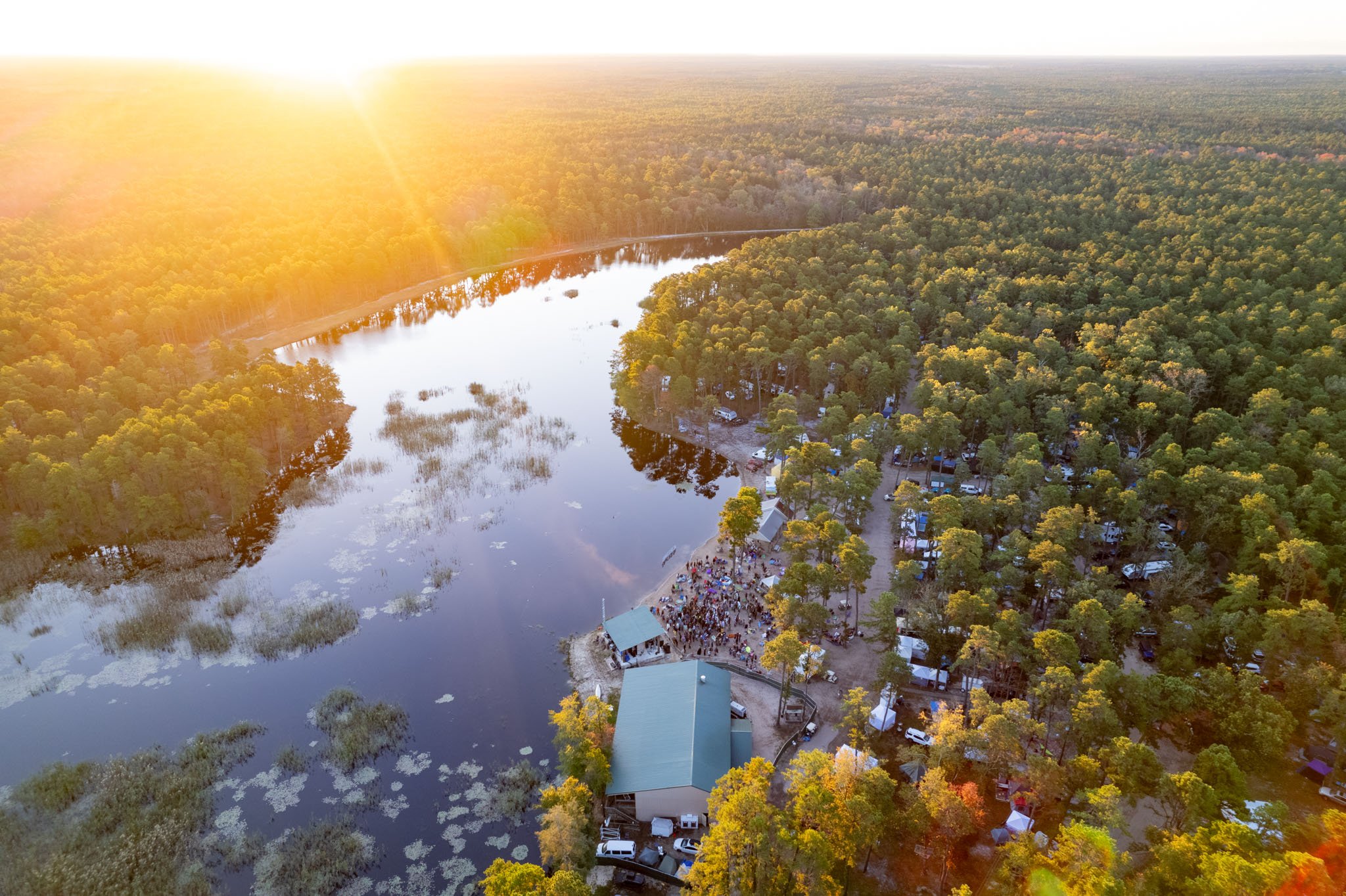
The sun shone brightly as clouds littered the skies on a warm and breezy Thursday afternoon, as early arrivals, staff, and artists eagerly awaited to settle into their new homes for the weekend. A sense of communal anticipation for what was about to ensue over the coming days was clearly evident, along with a freshly minted confidence on the back of the first success on those same grounds the year prior. What makes an event like Submersion so impactful is the tangible sense of community that exists on the premises; it’s a place where you’ll likely have a mutual connection with virtually everyone around you, and a large part of that is thanks to the proximity and frequent collaboration of the event’s promoters, The Rust Music and Aspire Higher, with the assistance of their longtime partner in crime, Sermon (an organization that is absolutely, 10000% not a cult), creating a constant cross-pollination of likeminded social scenes between New York City and Philadelphia. The longer the event runs, the more it begins to feel like a family reunion to those who return.
The fanfare starts with the Beach Stage, the veritable home base, which hosted an impressive and bone-rattling Funktion-One rig, courtesy of One-Source Productions, and a crisp LED wall manned by Fungui Productions that allowed VJs to display dazzling visual journeys throughout the weekend. Directly across from that stage begins the Shakedown, featuring options for all dietary lifestyles and hosting Bam Bam’s beloved 24-hour cafe, essential to those who choose to party long enough to see the sunrise each day. Running parallel to the Shakedown lived the visual arts hub, brought to life by Andrew Croz, alongside the resting waters of Paradise Lake, where dedicated works of art came to life as visions manifested throughout the weekend, drawing in a constant stream of onlookers making their way from one end of the festival to the other. Virtually every angle was covered, from an abundance of legal weed, to clothing and accessories, on-site glass blowers created pieces all day long, Hear Ringz’s functional jewelry with built in ear-protection, DanceSafe’s onsite hub, and a new addition to the festival, a fully deck-out video game arcade which allowed attendees to flex their prowess with classics like Mario Kart and Super Smash Bros. Clocking in at just under a three minute casual stroll from the Beach Stage, you’ll begin to hear and see the Woods Stage in all its splendor, bolstering an incredibly clear and thumping Intent Audio rig manned by none other than Sean Hennessey and partner Abby Skelton, whose combined 10 years of experience in the music industry gives tenure to the high-fidelity and solid dynamics of their new in-house designs. Once again rocking the weekend sans LED panels, the focus at the Woods Stage is largely on the music. However, the newly anointed, loudly-lauded professional disco ball sporadically lit up the dance floor and the surrounding pines, sending frequent surges of life into an already rambunctious forest frenzy.

As the sun underwent its first gradual descent of the weekend on Thursday evening, music kicked off at the Woods Stage with D.C.’s own Crawdad Sniper. The rest of the night featured sets from established acts like Poldoore, Smigonaut, and Snakes & Stars, while upstarts like Parkbreezy, 3420, Ooga, and McWavy helped set the stage for the weekend with their chilled-out, groove-laden music. Early entry attendees were also treated to the debuts of new projects and collabs in the forms of Face Plant’s scintillating new project, SkyLab, Charles Nimbus providing a breaks and UGK set, the inaugural Thought Process b2b Duffrey set, a journey from Keota, and a rare festival slot from Beeswax (Wax Future, Jesse Miller of Lotus and Zone Drums).
As Friday came into focus, and the first official day of the festival began, those who had arrived for the pre-party awoke to a cooler and cloudy day, allowing ample time for those late-night owls to rest in comfort while others had time to explore various workshops and attend a relaxed yoga session, helmed by Colleen Kropp, and later by Tanner Adlard the following morning. Beginning at 1pm at the Woods Stage, Dave Scichman manned a Drum & Breakfast set to kick off a prolific run of DnB in the shaded oasis, featuring world-renowned talents from the likes of Hugh Hardie, Degs, the US debut of Pola & Bryson, Justin Martin, and a widely-lauded debut set from BOU. While the DnB curation was well underway at the Woods Stage, Brother Bear brought his seminal Boom Bap Brunch to a live audience at the Beach Stage at 2:30pm as attendees rolled in with brunch cocktails and beach games. Teeing up a curated run of hip-hop inspired, low-end driven music, Squalpat and Tygris provided a custom live performance of instrumental cuts and pocketed bass lines, leading into a legendary Krafty Kuts Golden Era of Hip-hop set, and capped off by the all:lo Collective flagship trio Groovsauce, (Thought Process, Parkbreezy & pheel.) ushering in the evening as the sun set behind scattered clouds.
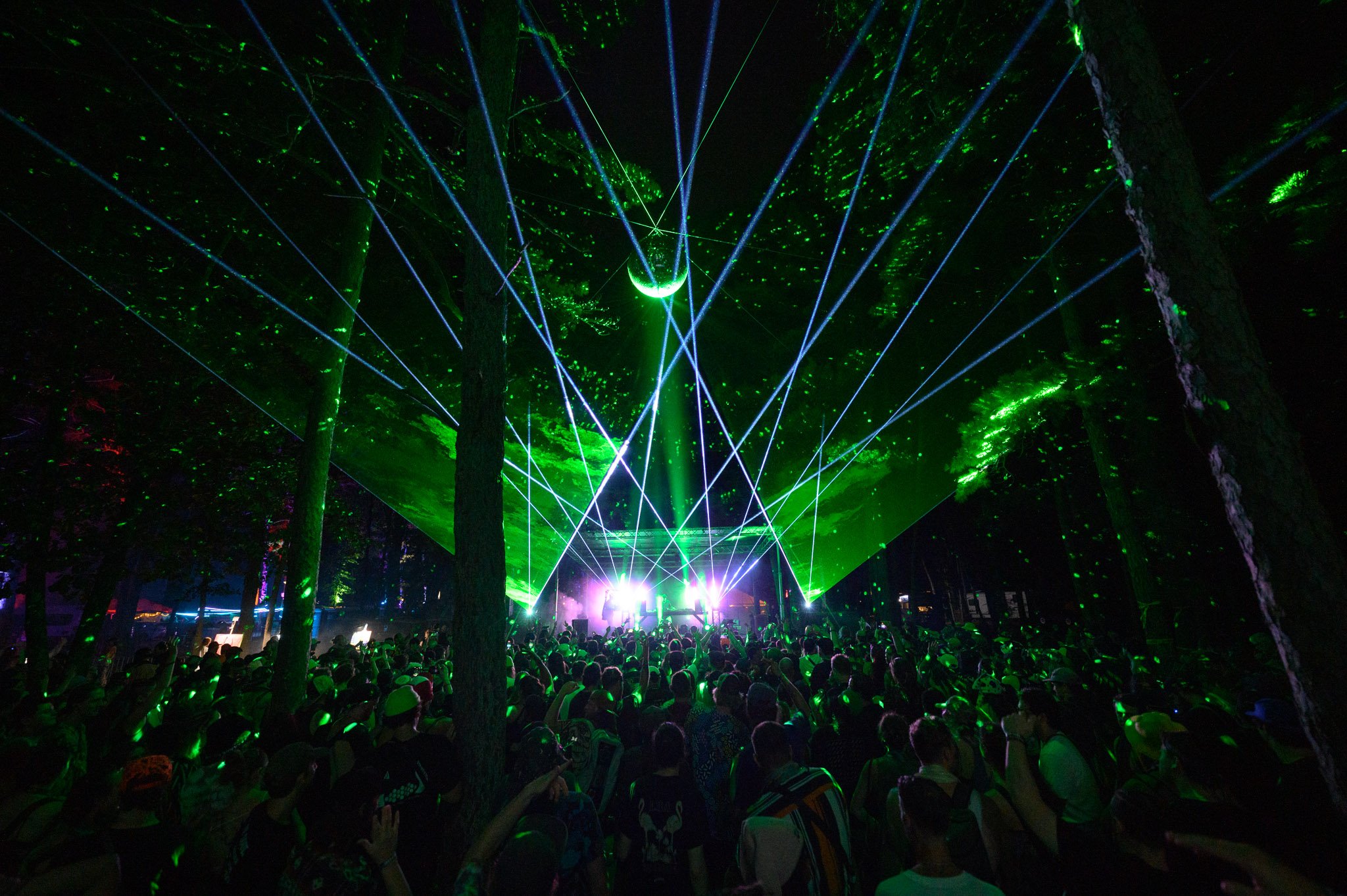
As night settled in, veterans stepped up to the decks, featuring trip hop/glitch hop pioneer Mike Wallis setting the pace, performing a nostalgic set of pivotal tracks from across the many years of the Colony Productions catalog. In quick succession was the second annual appearance of Luke Viberts’s Wagon Christ project, and DJ Shadow, who played unopposed and treated attendees to a masterclass in DJ fundamentals and tools of the trade. Over at the Woods Stage, Justin Martin brought his venerable cuts out to play in a lively house set, followed by UK Underground legends Dusky with even more electricity, before Philadelphia's own Rob Paine closed down the stage for the evening with a sensational and deeply groovy journey, putting the final touches on the frenzied pine forest party until next afternoon. Keeping the party rocking well into the morning light, the beach stage was continuously brandishing budding domestic talent, crushing low-end, and unmistakable rhythms from Mickman, Resonant Language, Copycatt, Inspect3r, Charles Nimbus, Lusine’s uptempo set, and finally coming to a zenith at Mr Bill’s IDM Sunrise as a thick fog began to roll over the shoreline, the sun early in its path across the sky.
Mcnulty and Wessanders, a Rust affiliate and a label-side act, opened up the final day of festivities, and set the vibe at the Woods stage with dreamy house sets as the festival once again come to life attendees began occupy the dancef loor and find their day’s footing with Postal., the latest project between impasta and Relativity Lounge paying homage to their Chicago roots. The atmosphere was electric by the time Mark Farina performed one of his iconic Mushroom Jazz sets just prior to the sunset, as beams of sunlight delicately shone through the foliage from the treeline. The rest of the day at the Woods stage would only escalate in tempo and energy from there, as regional fan-favorite Nic Baker (Inspect3r and Vide) hit the stage prior to an extended set from France’s finest, Monty, who put the crowd through the paces as he effortlessly guided listeners from dubstep to sensational DnB. Hamdi elevated spirits even higher during his b2b with Sir Hiss, putting a quintessentially American crowd through deep garage fundamentals. Closing out the Woods Stage in style for its final three sets of the weekend, special performances from Commodo & Kahn & Neek, Khiva & Distinct Motive, and XL & Freq, who all pushed the Intent Audio rig to its absolute limit with one final bellow into the darkness of the pine barrens.

Running in parallel back over at the Beach stage, the day began with regional favorites JamL, Mindset, and Entangled Mind before one of the more anticipated sets of the weekend, Cloud Conductor - Daily Bread’s alter ego, typically performing deeper soulful cuts from his expansive discography. Kicking off hours of infectious dance floor energy, Chmura & Location kept the party going before Integrate (Black Carl! And VCTRE) rocked a set of familiar classics and anthems had the Beach Stage positively bouncing. A big standout moment during the final evening, kLL sMTH & Friends took on a larger-than-life visage, as the stage gradually flooded with a Last Supper’s worth of friends, collaborators, and fellow artists in attendance for the weekend. Headliner Mr. Carmack made good on his long-time tenure, delivering a set full of fan-favorites and new routines that rang out into the night before entering the final stretch of the weekend programming. Featuring psychedelic rhythms and intricate compositions from the debut of Tripp St b2b Maxfield, the first set of Spoonbill, Supersillyus, Random Rab, Somatoast, and Malakai, the last waning minutes of Submersion Festival 2023 were graced with Spoonbill reprising the stage for his second and final set. Performing his seminal Tinkerbox in its entirety, alongside a grab-bag of other accessory tracks, the joyous and tired cheers of the subdued crowd brought about the end of another wonderful weekend at Paradise Lakes Campground.
With the weekend in our rearview, we feel confident that Submersion once again achieved its goal of delivering a phenomenal experience to all who make the coastal journey, while highliting and placing a necessary emphasis on the importance of our communal and social relationships. The roots run deep and continue to strengthen as the festival and those who put it together continue to grow in tandem, with an evergreen future clearly on the horizon. While work has already begun in earnest on 2024’s installment of Submersion Festival, be sure to keep an eye on their homepage for sporadic and thematic events throughout the year under the Submersion banner, including their upcoming NYE event at the Armory in Philadelphia.
FOLLOW Submersion: Facebook / Instagram / Twitter / Official

Shambhala 2022: Looking Back on Community at the Salmo River Ranch
Driving off a modest Canadian highway and onto the Salmo River Ranch, 2 years after the pandemic-induced break, was the first time anyone in the “farm-ily” had laid eyes on the newest iteration of the globally-beloved grounds. In the professional fashion that their reputation is built around, the organizers took every opportunity possible to give patrons the chance to experience the best parts of what Shambhala Music Festival is, and to show what they are inspired to do moving forward. Shamabala 2022 was the people falling in love with the music and the culture all over again.
Authored by Alyssa Barnhill
Driving off a modest Canadian highway and onto the Salmo River Ranch, 2 years after the pandemic-induced break, was the first time anyone in the “farm-ily” had laid eyes on the newest version of the globally-beloved grounds. The festival organizers outwardly expressed their devotion to fans through their exhaustive work; additions included impressive woodworking decorations and large-scale additions to The Village stage, cosmetic upgrades to the event grounds and paths that showcased the craftsmanship and devotion of the stage crews and volunteers. The teams that worked on the buildout wanted to honor a festival they have incubated since its infancy, and challenge the limits of their decades-long labor of love. In the professional fashion that their reputation is built around, they took every opportunity possible to give patrons the chance to experience the best parts of what Shambhala Music Festival is, and to show what they are inspired to do moving forward. Shamabala 2022 was the people falling in love with the music and the culture all over again.
When arriving at the Shambhala grounds, you’re met with massive, looming trees, the cascading West Kootenay Mountains, and strong, mint-green rivers. A tangible energy can be felt in the breeze as you inch closer and closer to the entrance. The greeting from volunteers was simply, “Welcome. You have made it.” Whether traveling from the US, other parts of Canada, or from across the pond, no one escapes the nomadic trek out to this remote enclave in British Columbia . Remotely placed, about 2 hours from the city of Nelson and equidistant to the closest airport, performers, volunteers, staff, and attendees must ultimately burn rubber, or kick dust for those feeling especially adventurous, to get anywhere near the event. For each and every traveler, that journey ends in the undeniable charm that Shambhala has cultivated since its inception. It has nothing to do with hype, nor fanfare towards the culturally relevant. The only focus is you, at your most comfortable, immersed in sound and community.

The Village by day. Photo courtesy of Digital Anthill Photography.
With every difficulty the wooded lands and remote location must present, on property that simultaneously functions as an active family farm, the individuality and scope of each stage is breathtaking. The craftsmanship of the decorations, the murals, and the complexity of it all is notably intentional, adorning the remote woodland with familiar and fantastic trinkets like carved speaker boxes and hand-painted signs. Each stage pays a unique homage to the movers and shakers of the electronic music scene, bringing internationally renowned acts in house, system music, and psychedelic bass music directly to revelers with discerning precision. Shambhala’s organizers make a firm point of showcasing diverse acts on multiple stages, affording patrons the choice of lush, quality experiences at each stage, while often centering attention during prime-time hours to names that may be unfamiliar to wider audiences.
When given a chance to walk through The Village during its quietest moments, one can’t help but get the impression that it is a kind of church devoted to sound. The new additions to the area include towers that soar at over 100ft, with intricate wood-carved embellishments and bright, multihued LED housings. The surrounding dance-floor was larger than life, intertwined with staircases and cat walks, allowing listeners to venture to whatever vantage point they so desired. The center of emphasis during the weekend’s opening ceremony, professional acrobats and fire spinners captivated early revelers with a stirring performance, regaling a mystifying origin story of the first moments dance met music. Visually powerful and emotionally moving, these interpretations set the tone for a transformative weekend steeped in the natural bond between sound, body, and movement.

The Grove by night. Photo courtesy of Shambhala Music Festival Official Facebook page.
If The Village is a church to sound, then The Grove is the garden; Naturally decorated with native old-growth trees, and surrounded by masterful murals, it is a calming space to center the headspace and nap among the hammocks. With the only Funktion-One rig, The Grove’s environment provides an ambiance that encourages and suffuses the dynamic range of the system across the scope of the installation. Light and heavy, deep and expressive, The Grove masterfully blends set and setting to provide a listening and unwinding experience that is both climactic and serene. Sitting casually in my hammock along the treeline, I could not have asked for more of an honest example of music catered to its environment.
Inspired by asian architecture, The Pagoda is a three-story layered tower that houses a stage on the large front egress, as if a party exploded on the front lawn of an ancient fortress. The Pagoda was created to be an after-dark delight. Stationed right outside the main entrance and easily accessible, it is one of the first stages fans meet when entering the venue, introducing new faces and old to the first of many artistic veneers superimposed over the property. Walking past in the daylight, the stoic building seemingly illuminates with neon white against the treeline. Once the sun sets, 3D-rendered figures cascade and transform across the grooves and trusses featured on the forward face of the stage, shifting and evolving with the long arc of the night. Cutting edge visual art, projection mapping, and laser performance have become a staple of The Pagoda’s image, making it Shambhala’s primary one-stop shop intersection of top tier musicians and visual masterminds.
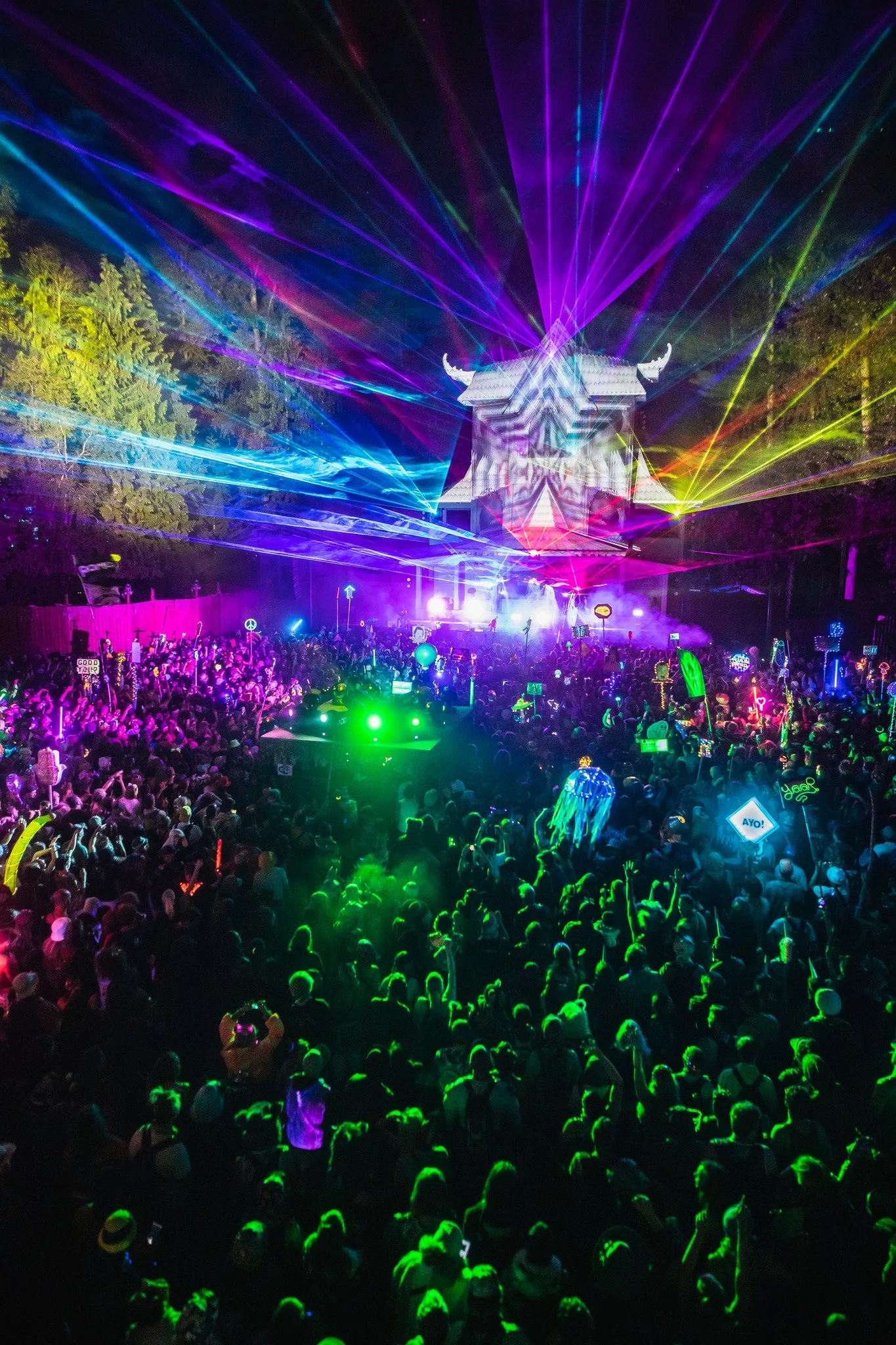
The Pagoda by night. Photo courtesy of Shambhala Music Festival Official Facebook page.
In talking to the staff members, we learned that there has never been a time across the last 25 years that Shambhala or the family farm has accepted corporate sponsorship; handmade with love and compassion, that ardent and head-strong grassroots ethic bleeds through to the audience. The brainchild of the stage curators and the vision of the volunteers, the festival was built from the ground up by the people who love it most. These people, some of whom have attended for 15 plus-years, echo every positive sentiment about the event and the property in tandem. On the other side of the coin, the audience at Shambhala comes with an eager readiness to be moved by the music, by the experience, and the collective catharsis found in this nook of the West Kootenay Mountains. It's in those moments that our relationships feel most resonant, with the focus not on the tickets we buy, nor the wristbands we collect, but the times in which we fall in love with being people all over again.

Submersion Festival 2022: Discerning Sound for Discerning Soundheads
On October 6th, nestled in the verdant, bristly Pine Barrens, years of careful positioning came to fruition at the reimagined Submersion Festival. Hosted at the idyllic Paradise Lakes Campground, this year’s rendition came as an expansion from the single-day event that took place last year in Philadelphia, and allowed friends, family, fans, artists, and staff the chance to revel and relax in the crisp autumn air amidst a myriad of top flight artists and creatives.

The Submersion logo against the backdrop of Paradise Lake during sunrise.
On October 6th, nestled in the verdant, bristly Pine Barrens, years of careful positioning came to fruition at the reimagined Submersion Festival. Hosted at the idyllic Paradise Lakes Campground, this year’s rendition came as an expansion from the single-day event that took place last year in Philadelphia. In addition to being three days long, the revelers at Paradise Lakes were also treated to two deliberately curated stages that showcased global and domestic producers and DJ’s across a panoply of disciplines, such as KOAN Sound, Emancipator, Luke Vibert (along with his Wagon Christ alias), Mike Wallis, Nu:Tone, Ultrasloth, and over 70 other acts. The weekend that ensued was a celebration of the dueling forces of sound system culture and electronic music that have dovetailed across the span of the last 20 years.
Entering the grounds after turning off Route 206, attendees were treated to stunning views of autumnal pines draped in crisp auburn and bright green foliage. A single road runs from the entrance of the grounds to the camping section nestled in the rear, with the property’s waterfront extending throughout the length of the fairgrounds. On that warm, breezy afternoon, the fanfare of early arrivals, staff, and artists settling in the for the weekend was as evident as the apparent marathon at hand; with two insular stages running well until the morning sunrise on the focal nights of the weekend, and a seemingly endless rolodex of expectation-defying acts, there was a distinct flavor to the approaching fall air.
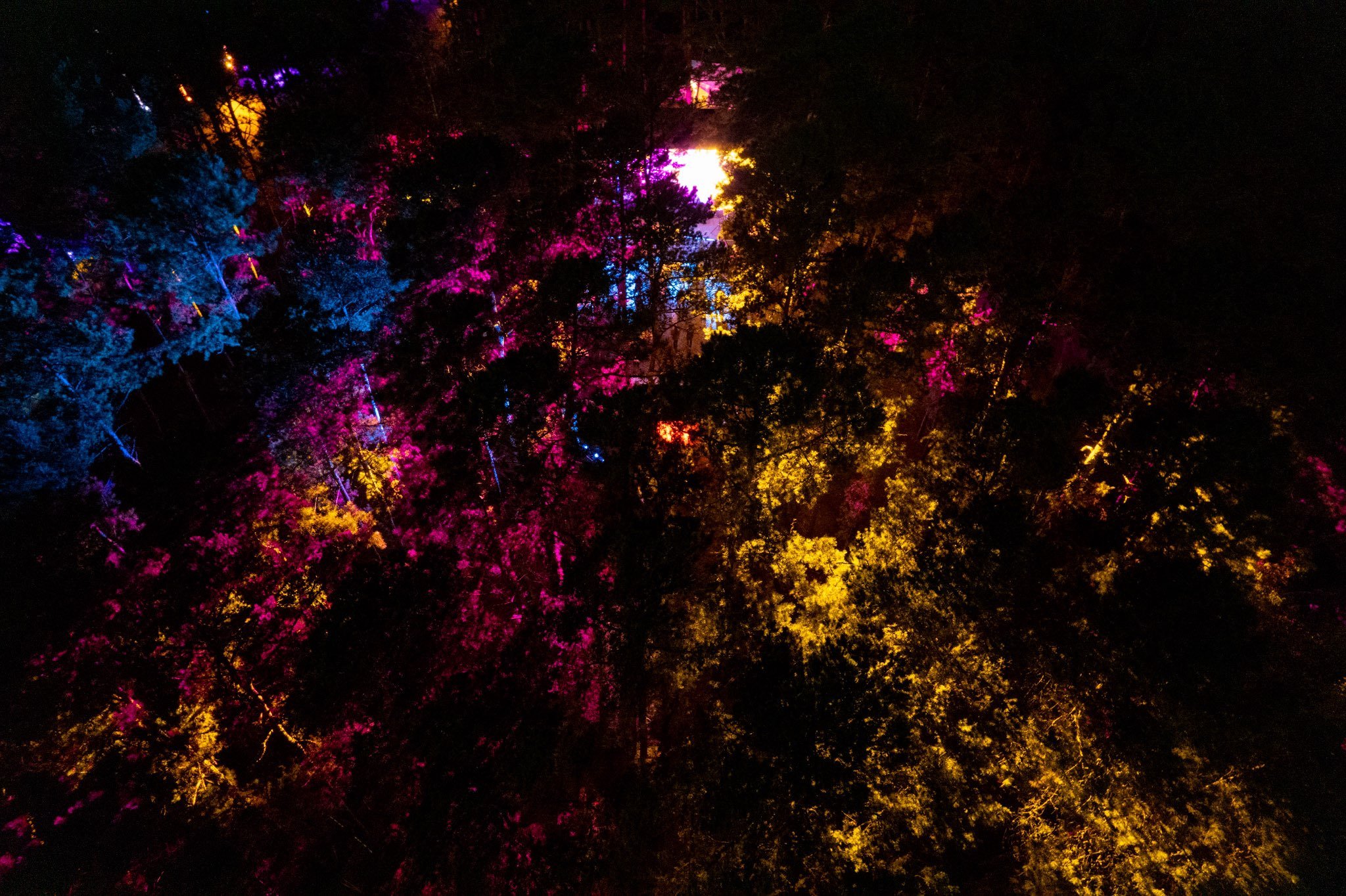
The view from above at the height of the weekend.
To the left of the main road upon first arrival was the Beach stage, which bolstered an impressive Danley Sound Labs BC218 rig, provided by the team at The Sound LIVE. Directly across from the Beach Stage was the vendor row, offering a range of cuisines catering to all dietary lifestyles, as well as a 24/7 cafe which provided hot caffeinated beverages essential to those late-night adventurers raging against their own circadian rhythms. Parallel to the Shakedown, the vibrant visual arts hub organized and overseen by Andrew Croz drew a consistent stream of onlookers and potential collectors, and felt right at home against the pristine backdrop of the lake’s meditative surface. Moving further down the main road, a quick 3 minute stroll would put you face-to-face with both the DanceSafe on-site hub and the One-Source Productions’ time-tested Funktion-one EVO7 rig at the Woods Stage. Just another quaint walk ahead, and you’d reach the natural boundaries of the festival, capped off with the chill-out zone often frequented and operated by TheLilyPad crew and attendees looking to shake off the adrenaline for a passing moment. The intimate size and layout of the event created a natural orbit between two adjacent, independent stages and the wider campgrounds, defeating any chance of sound bleed through careful zoning and placing all campers in close proximity to the action.
Picturesque sunsets made appearances everyday as the light settled over the horizon, scattering the remaining sunshine throughout the now iridescent treeline. The road connecting the Beach and the Woods stages came to life in the night as colored lights and hidden lasers illuminated the canopy above. The general atmosphere of the grounds was like that of a playground; smiles and laughter were in fervent abundance, and with the festival’s modest patronage, you were seemingly one degree of separation from any single stranger around you. There’s a tangible, familial sort of glue at the center of earnest fandoms, and for The Rust Music and Aspire Higher, friends and fans are often one and the same. It’s that cultivated relationship between the organizers, their production teams, and their respective supporters that made the largest impact across the weekend.

The view from across Paradise Lake, showcasing the Beach Stage.
The community at large is the quintessential ingredient that makes these curated and personal experiences possible. The degree of comfort achievable when seasoned know-how, determined muscle, abundant moxie, and a heaping dash of luck collide is the goal of every professional and artistic endeavor as a business, but the cascading sea of bright eyes and brighter attitudes allows the paradigm to transcend business altogether. This year’s principle organizers, Jesse Boyer and Ryan Karolyi, put the duality of their friend-based following and industry experience on clear display. Like threading a needle, every aspect of site operations churned away with velvet smoothness, working in the background of an event designed to run front to back with minimal downtime for roughly 72 hours. That specificity and consistency directly translates back into the comfort at the center of any choice festival experience, smoothing over any potential snags in the road before you have the chance to trip.
Winding through a weekend of programming stuffed to the gills with heavy hitters and venerated songwriters can often feel arduous, deciding where you’re sacrificing time and for what gain. Submersion’s traversable design and meticulous stage curation was envisioned to help alleviate those decisions, placing like-minded groups of appreciators front and center with their preferred flavors of electronic production for extended blocks of time. The negligible distance and proper directional channeling made swapping the vibe seamless and inviting, providing a constant balance that kept the event swinging with pendular determination. The headlining acts of the weekend put on stellar displays of musical forte; Koan Sound rocked the house at the height of Saturday night, only to subsequently ring out the final notes of the weekend during a emulsified sunrise performance. The dnb legends Chase & Status and Nu:Tone brought deep dives through decades-spanning catalogs and rare cuts, contrasting with the effervescence of acts like Emancipator and Entangled Mind putting the focus on the interplay of melody and harmony. From the low-riding rhythms of Bogtrotter and DRRTYWULVZ via their BogDogg project, to the lunar serenades of MALAKAI and Lusine, to the Thought Process Gabagool Remix extravaganza, or any of the other salacious underground talent across the lineup, every palate eventually met its most succinct match, allowing Submersion to deliver on the promise of discerning sound for discerning soundheads, in an environment ripe for enjoyment and poised for audacious revelry.

An action shot from within the pit at the Woods Stage.
Writing about our own events is something we often eschew; our focus is traditionally on highlighting and chronicling the living history of this audio-social phenomenon we find ourselves mutually steeped in, and that often entails keeping our gaze outward in order to spotlight the lion’s share of our peers. Breaking away from tradition, we felt it necessary to chronicle this incredible weekend both in service of Submersion’s ongoing rise and evolution as an events series, but also as a thank you to the wonderful grip of fans, friends, artists, staff, volunteers, and world-wide wellwishers, without whom this would not have been possible. The magic of Submersion Festival is in the relationships that serve as its foundation, and those relationships include all of you, too.
With just a few waning months left in 2022, planning has already spun up to full speed in designing the next iteration of Submersion Festival for 2023, and between now and then, there’s a slew of content under preparation for public consumption. If you’re looking to relive the bliss this stellar weekend, your fix is well on its way, and if you’re just tuning in and wondering what all the fuss is about, stay tuned for the various audio and visual recaps poised for steady release.
FOLLOW Submersion Festival: Instagram / Facebook / Twitter / Official
FOLLOW Aspire Higher: SoundCloud / Instagram / Facebook

Shambhala Returns to the Fold in 2022
Shambhala is to some a tradition, to others a bucket-list destination, and to a select few – a pilgrimage home. This magical event is a refuge for the different and the strange, where one is accepted no matter their differences or how weirdly they dance, and we’re incredibly excited to return to this premiere massive for 2022’s guaranteed weekend of iridescent festivities.
Shambhala, in concise language, is a transformative music and art festival in the dense woods of Canada’s steep Rocky Mountains. 30 minutes outside Nelson, British Columbia on the banks of the Salamo River; this considerably massive event is held on a fully functioning, picturesque, 500 acre family farm. Over the past 23 years, for 6 days every summer, Shambhala has evolved into the largest town for 400 miles, with an estimated 15,000 people in attendance. Some festivals are a community; this is closer to a municipality.

The Bundschuh Family Land
In the height of the 90s rave scene, a young Jimmy Bundschuh approached his parents with an idea: throw a music festival on their family’s land – not just any run of the mill show, but a large curated festival that would attract some of the best musicians and artists to their little sanctuary in BC. Beginning in 1998, Jimmy and his family set off to capture the communal vibe that attracted them to music so much in the first place. This goal has now stretched over two decades, and has regular patrons from every corner of the world. The festival is run by the children of the land, Jimmy, Corrine, and Anna Bundschuh. Shambhala has never had any type of corporate sponsorship, and is rightfully proud to be completely self-sustained by the family farm and ticket sales. The team of visionaries go above and beyond to incorporate the local township into their dream. Donating regularly to local infrastructure, food banks, and local soup kitchens, their ethics and follow-through are a shining demonstration of community-centric mutual aid. There is even a performance hall at Selkirk College, in Nelson, BC that proudly wears the Shambhala name, espousing the indelible ties that the Bundschuh family has curated with their surrounding neighbors across the stretch of their grand experiment.
Shambhala has been a consistent epicenter for those looking for more than just a good time. Touting five independently curated stages with associated and thematic decorations, these impressive dance floor environments would be non-existent without the artist, volunteer, and musician contributions.The unique, one of a kind stages and sound systems have long been the core destinations inside the festival, for both music producers and music lovers. As a standing rule, the musicians are offered an open invitation to drop the pressures and expectations of modern industry and asked to play their best sets; performances that speak to their artistic dream and vision. All but one stage features full arrays of high quality PK Sound cabinets, with the Grove Stage featuring a full-service Funktion One system. This year, the AMP stage is packing a particular punch, featuring acts such as Amon Tobin, Truth, and many more to set your watch to.
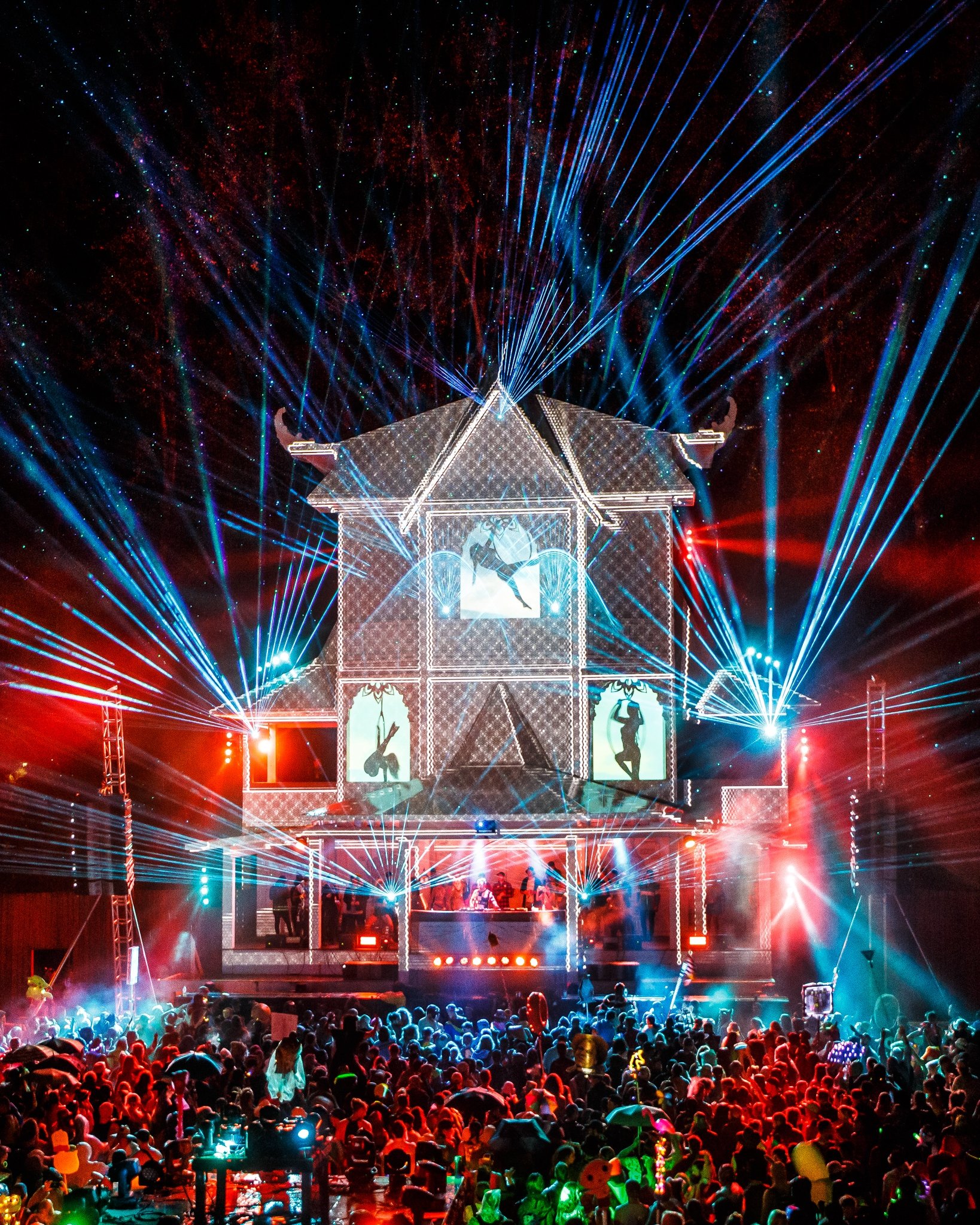
Credit: ConcertSocks
Additionally, the Shambhala team have been unapologetically spearheading the use of cutting-edge harm reduction techniques, such as free substance testing, for many years. Ankors, the free drug testing facility, boasts a massive list of substance testing and accountability practices. Information on safer sex, partying, and harm reduction is avaliable at the onsite at the Option tent as part of Canada's largest non-profit provider of sexual health services. These safe, non judgemental spaces are a calm oasis from the bright lights and excitement, and provide helpful information to anyone who asks. The original “Safe Space” was first designed as a space for women only, but has now opened up to all genders and non-binary travelers looking for a moment or two of reprieve. The facilities carry free condoms, staffed stations for helpful information, and offer emergency contraceptives for those in need. After all, the overarching mantra to Shambhala is “We care about people.”
After basking in the sun and all the glory that is Shmabala, artists, patrons, and musicians are asked to contribute year after year and to bring their best selves back again and again. Shambhala is to some a tradition, to others a bucket-list destination, and to a select few – a pilgrimage home. This magical event is a refuge for the different and the strange, where one is accepted no matter their differences or how weirdly they dance, and we’re incredibly excited to return to the fold for 2022’s guaranteed weekend of iridescent festivities.
FOLLOW Shambhala Music Festival: Official / Facebook / Instagram

A Glimpse Into June Jam's New Home at Playa Ponderosa
Earlier this month, The Rust team was privileged enough to glimpse behind the curtain into Arizona’s evolving grassroots culture. Flagstaff's own Junetember Jam was, simply put, magical. Previously referred to as Juniper Jam, and classically as June Jam, the festival celebrated its 3rd year with one of its most dynamic and provocative lineups of musicians and educators to date.
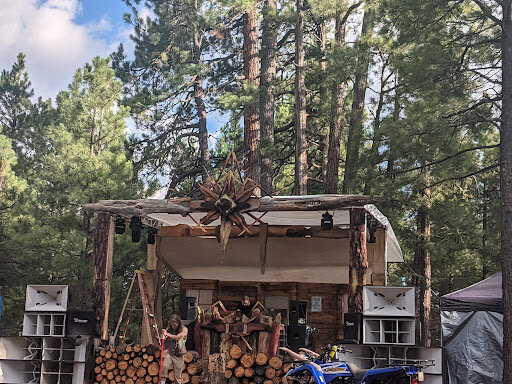
Earlier this month, The Rust team was privileged enough to glimpse behind the curtain into Arizona’s evolving grassroots culture. Flagstaff's own Junetember Jam was, simply put, magical. Previously referred to as Juniper Jam, and classically as June Jam, the festival celebrated its 3rd year with one of its most dynamic and provocative lineups of musicians and educators to date. Featuring classes on organic living, self-betterment workshops, and a variety of self-healing and kink-friendly groups, June Jam has become a local favorite and a must-visit festival for the committed patron/attendee.
Perusing Playa Ponderosa has an intimate feel and showcases the natural and magical landscape of Northeast Arizona. Tucked deep into the woods just outside Flagstaff, Junetember Jam offers spectacular 360 views atop Playa Ponderosa and is accompanied by high fidelity sound on Danley, Funktion-One sound, and KV sound systems. June Jam does an amazing job not only showcasing one of a kind musical acts, but highlights the evolving culture around speaker systems as well. Sets from artists like Navigatorz, skysia, Vinja, Arcturus and more had this year's crowd entranced by sound design flexed on some of the world’s finest dynamic sound systems to date. With four stages spread out across a quarter mile footprint, the push and pull of different styles was brilliantly balanced, allowing attendees to have those magical moments of exploring a late night festival between stages and having the convenience of being close to camp and amenities.

With a population size of about 1000, June Jam is able to offer RV friendly campsites as well as regular tent camping that is both comfortable and responsible. This year’s staff had safety as the most paramount task at hand. Event organizers implemented a simple color-coded wristband system to help attendees indicate their comfort level for giving hugs and touch; Green indicating “go for it, I'm all in for hugs”, yellow indicating “no hugs from strangers”, and red indicating that patrons would prefer to keep personal space. Our team also met with the Good Eggs, a harm reduction service offered to festivals as a way of passing along helpful information about festival culture and experiences, as well as extending a helping hand to those perhaps going through a less than desirable experience.
With their team of highly committed dreamers, creators, and staff; June Jam was able to cultivate an experience for attendees that was both responsible and worry free. The atmosphere surrounding their four stages was created to be inviting and explorative with a fire circle, chill out spaces, and elevated art hanging amongst the trees, all just a stone's throw from where music was playing. The oasis area was just within a tree line and was complete with “tiki”themed stage design and a hanging mirrored bull elevated 12 feet above the crowd. Seeing team members walking and grooving with patrons filled our teams hearts, while the delightful smells and taste of a makeshift tostada bar on Sunday morning filled our bellies. The wide range of classes and excited teachers made our team feel welcomed into some more niche realms of festival counterculture, showing off the synergy between recreation and learning in alternative spaces.

With a focus on safety and cultivating a culture that is an homage to the best aspects of festival experiences, June Jam offers an experience that is uniquely pleasant and well-regulated. Our team at every corner made a friend out of a stranger, fell into deep and human conversations, and made renewed connections to ourselves. Being touched by magic comes to us when we least expect it, and our team lived in the magic of Playa Ponderosa, found family out of friends, and will be eager to make the trip back home to June Jam next year.

Getting Acquainted With The Magic of June Jam
We had the opportunity to poke around behind the curtain of June Jam’s celebrated operation, and get a clearer picture ahead of this weekend’s coming festivities.

Playa Ponderosa by day.
This coming weekend, June Jam is set to mark its third year of fanfare-laden operation. Beginning in 2018 with a very small, boutique-style event in Prescott called Juniper Jam, the vision and determination has turned the small party into a multi-day festival and cultural free-for-all. “It was a pretty small event, somewhere in the neighborhood of about 300 paying attendees and then a lot of awesome artists. More of an artist summit than a festival.” said Christian Cortes, June Jam’s music and event coordinator.
Fast forward one year, and the owners and team members of June Jam purchased a beautiful plot of 75+ acres that has since been named Playa Ponderosa. The land is surrounded by the Coconino National Forest, a picturesque rounded red stone and high country desert with sub-alpine forests populated by Ponderosa trees and lush meadows. Complete with three stages, freshly chipped dance floors and their own exhibition spaces, The Promenade and The Nook, for those wide-eyed insomniacs seeking a full night of music and color.
“ [June Jam] is produced by mainly burners and Phoenix natives that would otherwise be at Burning Man this particular weekend,” said Christian. “The vision for the property itself has always been to host a large, open-format music and arts event. A lot of our team has been to Burning Man or helped produce aspects of theme camps at Burning Man, so we have traditionally had to work around the reality that some of our team is involved. Given the circumstances, we felt that it was a really good opportunity for us to fill that void for the regional burner community, but also for the people who might have not gone to the burn, are interested in it, or they have glimpsed that culture and might have some curiosity. Maybe their only exposure to music and art in that kind of format is the larger music festivals. We really are trying to capture everything that is not just music.”

Playa Ponderosa by evening.
June Jam features an exhaustive list of involved, expansive, and creative workshops and classes. Starting at 9 in the morning until late afternoon, classes are spread out throughout the grounds. The team aims to provide adequate space for patrons to participate in the many activities and classes at their leisure without feelings of overcrowding. “They did an amazing job curating this list of workshops that kind of hits on all aspects of fringe culture. You've got your movement and flow workshops, your yoga classes, a lot of stuff you would normally see, like more of a traditional music festival, transformative festival setting. Then there is stuff that is more inspired by the kind of programming at a theme camp at Burning Man - like shibari rope bondage and kink classes - hings that are more a part of fringe culture as opposed to something you would see normally.” Musical acts such as Moontricks, Random Rab, 5AM , Sortof Vague, Nox-Vahn, and Vinja are a small portion featured on the eclectic line up.
While dancing in the Ponderosa-lined meadow with audiophiles and creatives alike, attendees can rest assured that some of the best safeguards one could ask for in the post-covid world are present. Their team is asking people to get tested 72 hours prior to the event and providing colored wristbands to nonverbally signal consent without overcomplicating things or alienating people. Covid has taken us all for a ride but those that would like to gather in a safe way have options.

Playa Ponderosa by night.
“We do trust people to be responsible for themselves. We have one gate. It's the kind of festival where you get through the main gate, that's it. No additional security barriers. Personal accountability is a big part of how we run this event but we have had a lot of luck and respect from taking that model and really expanding it over the course of the last two years.” said Christian.
Tickets are still available to be a part of the stunning magic that is June Jam with varying packages. Limited RV camping remains but with sprawling protections us festival goers have always hoped for in place, get ready for an immersive recreational weekend of contrasting and colorful festivities. The team hopes to see a diverse crowd of creative minds, and we’re thoroughly inclined to be a part of it.

Jade Cicada and Tenorless Release Full Featherbed Set (Video + Interview)
Jade Cicada and Tenorless have decided to release their full hour set in perpetuity, and have gone on the record discussing a bit of the process behind developing their curated Featherbed installation.
With Covid-19 making its way across the planet, the global societal response and shutdown has been unprecedented and massive by any comparison. In the United States, the last two months have seen a mottled patchwork of stay-at-home regulations and social distancing enforcement across the nation, and the landscape of concert production is in a particular state of freefall. Amidst tour, event, and festival cancellations and postponements from all sides of the music industry stretching into the indefinite future, musicians, DJ’s, VJ’s, and other content creators have been forced into an altered paradigm. With so much of the population mandated to stay at home, and with no avenues for full-scale live concerts to go on in the foreseeable future, the only consistently viable way to access fans, friends, and social music experiences has been through the internet. Thankfully, gamers, bloggers, knowledge enthusiasts, and general content streamers have been utilizing platforms like Twitch, Discord, VRChat and YouTube to reach their audience for the better part of the last 15 years, working out the kinks on internet tech that we now rely on to stay in musical motion. The switch from the stage to the stream was only momentarily jarring for the electronic music community at large, with some movers and shakers having already been developing/operating their own stream series’ and services for a number of years (we’re looking at you, LostInSound).
However, as the inevitable saturation of the medium takes hold for appreciators and creators of electronic music alike, the question of fiscal security and the material value of unreleased music becomes the center of the conversation. Donations have been somewhat of a financial bedrock for artists who engage through streaming, but it’s long term efficacy as a purely donation-based system is unquestionably doubtful. Some have been experimenting with pay-per-view systems, and others have been rolling out larger inclusive digital packages of recorded concerts and memorabilia. Regardless of the methodology, the underlying want to strike a survivable balance between instant, unfettered global reach and financial sustainment is no less than pervasive.
As the wider community has rallied around this new format of music appreciation, immersion, and consumption, The Rust Music began the Featherbed Sessions in order to provide a direct platform for content creators to engage with fans old and new. Nearly two weeks ago, we teamed up with Jade Cicada and Tenorless to craft a meticulous, explorative musical and visual experience. Enlisting the additional firepower of Detox Unit and Theron Prey, Resonant Language and DRO1D, Smigonaut and The Void, Base2 and Steven Haman, and Schmoop and Cullen Hassel, each pairing crafted a curated DJ set in line with a specific theme. From Jade’s cinematic expedition, to Smigonaut’s jazzified jaunt, to Base2’s classic downbeat throwback set, the entire six hour experience made for an emulsified journey into the inspirations and deep selections of a team of top calibre music and visual producers.
Their combined creative energies were aimed at raising funds for Direct Relief, a non-profit organization putting fresh Personal Protective Equipment into action across hospitals and emergency rooms in the United States. In the aftermath of the evening, Featherbed Sessions VI raised nearly $8,000 in donations, reaching the screens of over 21,000 people across the globe. While those numbers are cause to celebrate in their own right, the pot gets even sweeter; Jade Cicada and Tenorless have decided to release their full hour set in perpetuity, and have gone on the record discussing a bit of the process behind developing their curated Featherbed installation.
You can find the set broken down track by track in this Spotify Playlist
Jade Cicada
The Rust: What was the process for deciding the musical direction of the evening? Did you know who you'd want off the bat?
Jade Cicada: I consider everyone on this lineup to be some of my best friends. I talk to pretty much all of them every day, so they were obviously the first people who came to mind. I also have a really small private discord group with producer homies, and I asked all of them to see who was down. I really trust their abilities and their tastes, and we all discussed directions for each other’s sets together.
The Rust: Why choose to go with DJ sets?
Jade Cicada: With so many people in isolation, I basically wanted to curate a really diverse evening with tons of new artists for listeners to latch onto. I hoped that this would expand the crowd’s horizons beyond just bass music. That’s why we included full tracklists and Spotify playlists, in the hopes that people would go out and support these artists with a stream, a follow, a purchase, etc. Which sort of segues into the state of the music industry right now. The music industry has been constantly shafting artists over time. Gigs became the musician’s main source of income, and the best way to present new material to people. Streams tend to further de-value original content because it’s free for everyone who doesn’t feel like donating. I feel that if everyone is constantly doing streams, relying on donations, and playing loads of unreleased original material, it runs the risk of further devaluing the art that they put so much time and effort into.
The Rust: Can you speak about some of the inspirations behind your ambient performance?
Jade Cicada: My first true musical love was classical music, and that’s always really stuck with me. So as soon as I started to discover these cinematic ambient type producers, I was in awe. Combining awesome sound design, fantastic sound staging and imagery, felt piano, strings, and beautiful chord progressions and melodies really hits me emotionally more than any other genre of music I’ve ever heard. I try to incorporate a lot of these elements into my own music, and you might notice I tend to begin and end a lot of my original sets in this manner. I never get the chance to do a purely harmony and melody driven set, mainly because I simply don’t have an hour to fill with original cinematic ambient tunes yet. All the music that I played has touched me deeply and inspired me in one way or another, and I hoped it would do the same for the listeners in this time of uncertainty.
The Rust: Can you talk about the charity you selected to receive the donated funds from the event?
Jade Cicada: Pretty much all you hear about during this whole situation is how incredibly unprepared our government was for this kind of event. We wanted to find a way to support the medical community who desperately needs the PPE to continue to save lives. We also took a vote in The Swarm to see what charity fans would be most willing to support, and the fans decided PPE for medical professionals. That was my first choice as well.
The Rust: What is the benefit of curating experiences for live streams versus curating experiences for concerts?
Jade Cicada: Well, typically when I’m curating a concert there’s a lot more people involved, and a lot of the work gets passed onto other people. I basically discuss with my manager who I’d like to have out for the event, and he’ll make all the moves contacting those artists’ agents. With this live stream, it was pretty much me and Joe (Tenorless) overseeing everyone, and trying to manage artists is kind of a nightmare (big ups to all the managers out there dealing with us lol). Making sure 12 different people are all on schedule and have everything finished on time is super stressful. I much prefer curating live concerts because all I need to do is look out for myself and focus on my own set, and let my manager handle the rest. There are some nice things about live streams though. I really enjoyed being able to sit down and watch everyone’s sets. I’m never able to do that at curated concerts for one reason or another. It was also really touching to see people’s reactions in chat. It’s one thing to see people jumping around in the crowd having a good time from a distance, it’s another to see people’s thoughts in real time. It was really quite beautiful to experience everyone’s stream of consciousness as the night progressed, and see how happy and thankful everyone was. It was also hilarious to see people complaining during music that made them uncomfortable, and the confusion when my set had hardly any beats.
Tenorless
The Rust: How often do you get to handle the musical material before the performance itself?
Tenorless: Not often. There’s been a few performances where i get to sit down with the musician beforehand and plan things out, but the majority of the time i'm just as clueless as the audience as to what song comes next.
The Rust: What kinds of choices do you make when creating a visual experience in the studio versus on the stage?
Tenorless: On stage I have to strategize and make split second decisions on what content to drop when during a performance. With this set I had about a week, so I was able to make those same decisions over a much longer timeframe and put more intention into the final product. I think there’s a sort of magic to live performance in general that can’t be replaced, but by making this at home I had time to edit footage like a movie and match the cinematic soundtrack Skyler put together.
The Rust: How do you source your non-original material?
Tenorless: I’ve recently started incorporating art from the public domain in my work, so much high quality, freely remixable content can be found by exploring online art archives. For example, in this set I used plant illustrations from an old japanese science journal, reference tables from a 1700’s encyclopedia called cyclopædia, and stock footage of natural landscapes to blend with digital textures. Other than this, the set was 100% original content.
The Rust: Can you talk about the charity you selected to receive the donated funds from the event?
Tenorless: PPE for medical staff is a need that is constantly increasing as this crisis continues, and our country's hospitals are getting hit especially hard. So many medical staff across the nation are on the frontline every day fighting the pandemic, and without proper protective equipment they are forced to put themselves at even greater risk. Direct Relief’s response to COVID-19 has been incredibly impressive, by tackling medical supply chain issues through GIS maps and demographic research they ensure the protective gear they provide gets sent to areas that are expected to need it most. The more well-thought out a non-profit’s strategy is, the more efficiently they use their donations to reach their goals, so this played a big factor in choosing Direct Relief.
The Rust: What is the benefit of curating experiences for live streams versus curating experiences for concerts?
Tenorless: When making visuals for concerts the format is fairly set in stone, the musician plays an hour of music on stage, i provide an hour of visuals behind them. If we are playing a venue we follow the same tried and true system of experiencing live performance that has been around since the early days of theater. Though this system works rather well, it naturally begins to metamorphose once the factor of physical space is removed. There isn’t currently a standard format for live streaming music, which can lead to many unique outcomes: last month I went to an incredible concert in minecraft, this weekend i'm watching friends play a dome show in VRChat. I think what excites me most about the internet at the moment are the artists who are taking this opportunity of social distancing to push the boundaries of how audiovisual art is traditionally consumed.
As the progression of the world’s state of lockdown remains in flux, there’s no clear consensus on when we will be able to gather in our traditional massives, burns, clubs, and parties. The question of survival for musicians, visual producers, and their innumerable supporting crews is fresh on our minds and in our conversations, but the resilience of the community at large has proved to be undeniably potent. As the acclimation to a future even more deeply rooted in digital mediums and instant access takes hold, the live music experience is undergoing a 21st-century revolution, and acts like Jade Cicada and Tenorless are taking the opportunity to redefine their approach to delivering their creative visions to the hearts, minds, eyes, and ears of their respective fans and friends. While we’re all still gathering our bearings in this period of uncertainty, our ability to navigate this new paradigm will hopefully strengthen day by day, bringing on new and exciting experiences in the wake of new and turbulent challenges.
FOLLOW Jade Cicada: Bandcamp / Spotify / Facebook
FOLLOW Tenorless: Facebook / Instagram

JadeStation: The Last Great Electronic Gig at Playstation Theater
The cream of the crop in contemporary US glitch-hop - Jade Cicada, Detox Unit, Mickman and 5AM - will soon share the stage together on October 26th at the PlayStation Theater in Times Square. All these producers have great history in New York, so it will be a crescendo of sorts: a great leap forward for Jade Cicada and his cohorts and a fitting way to close the books on an endearing venue.
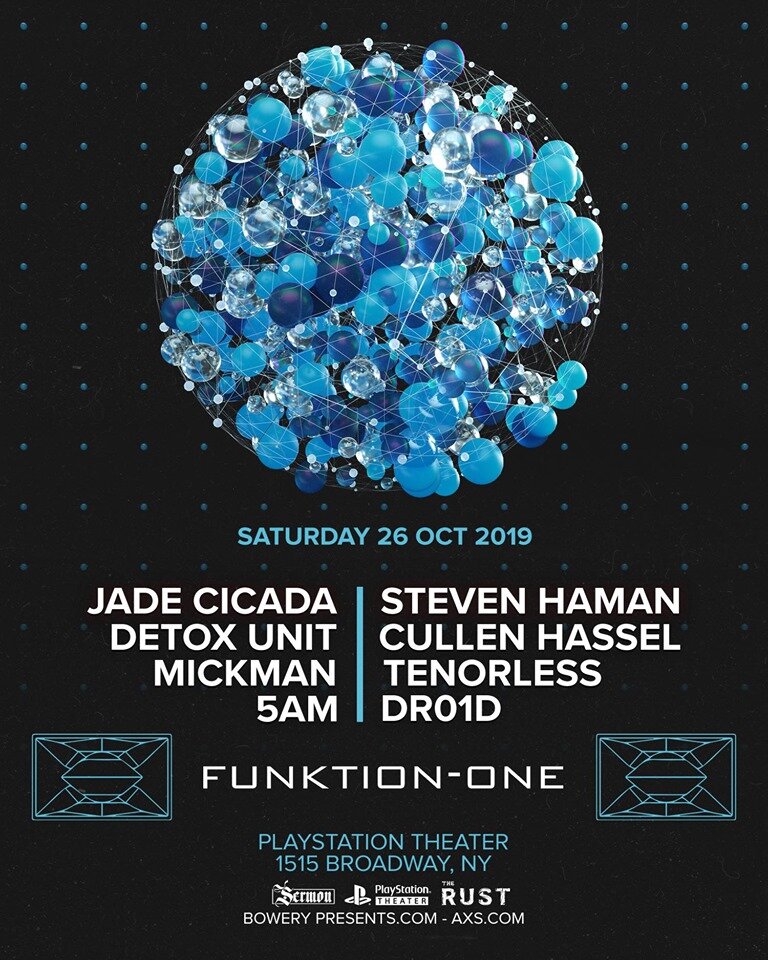
The cream of the crop in contemporary US glitch-hop - Jade Cicada, Detox Unit, Mickman and 5AM - will soon share the stage together on October 26th at the PlayStation Theater in Times Square. Joining them are four supremely talented VJs, some of whom have become intimately associated with this music: Steven Haman, Cullen Hassel, Tenorless and Dr01d. A full-force Funktion One sound system will tie it all together. This will be the last great electronic show at Playstation Theater before it closes its doors at the end of 2019.
There’s a delightful feeling in the air over this event, a sense of alignment. It feels right. A new generation of stand-out producers will ascend to the main stage to curate a new kind of vibe. It’s a fitting end for a venue that always held it down for New York’s electronic community and served as a germination station for many psychedelic electronic passions.
During the formative years of my own journey with electronic music when my feelings toward the culture were moving from enthusiastic to obsessive, most of the biggest and best shows I went to were at Playstation, which was then called the Best Buy Theater. From the annual Gramatik runs to STS9’s Fall tour appearances to Tipper’s return to New York in January 2015, I and those who came up around me spent many memorable nights in that blue, subterranean space.

During the formative years of my own journey with electronic music, most of the biggest and best shows I went to were at Playstation, which was then called the Best Buy Theater.
What some consider to be the theater’s “slightly awkward design” I always found as novel. To enter the theater, you ride down a double-flight of escalators. It gave me the sensation of truly entering another place, somewhere set apart that was dimly lit, loud, and exciting. I knew my friends would be running around and that the opportunity to make new connections was ever-present. Times Square might be the place every true New Yorker avoids like the plague, but at least it’s accessible by public transit unlike some other big *cough* Avant Gardner *cough* venues.
Each producer has great history in New York City, as we’ve highlighted before here and here. Almost a year ago, they each performed in the city on the same night, with 5AM, Detox Unit and Jade Cicada supporting Tipper and Kings Theater and Mickman slinging at our afterparty with Sermon. Before that, they were headlining small clubs in Brooklyn. And so October 26th will be a crescendo of sorts: a great leap forward for Jade Cicada and his cohorts and a fitting way to close the books on an endearing venue.

Solasta Festival Makes New Home at Deerfields, North Carolina in 2019
Placing community above all else, Solasta Festival is one of a growing number of events, gatherings, burns, and massives that exist to cultivate interconnectedness with one another, and with our own sense of health and wellbeing. For 2019, Solasta moved to the auspicious grounds of Deerfields, North Carolina, where it underwent the next phase of its ongoing metamorphosis.

The upper lake during sunrise (Credit: SuprisinglySimple)
Solasta Festival never really begins the day it’s advertised to begin. It’s the day prior during early arrival; the last moments of sound-checking speakers, fastening stage decorations, preparing water stations and late-night light sources, and prepping the camping grounds for the impending revelry. It’s the calm before the storm, when the air is still and the hum of organizers cruising about like worker ants becomes a part of the landscape.
In 2017 and 2018, this vibrant image of organization and preparation took place at Spirit Crossing, Tennessee, nestled high in the peaks of the Appalachians. Home to a pristine stretch of the Clinch River, and the site for like-minded burns and music events in years prior, it was a place that resonated with potent undercurrents. For 2019, Solasta moved east to the equally auspicious grounds of Deerfields, North Carolina.
Sequestered in the eastern reaches of Nantahala National Forest, Deerfields is a rustic retreat carved into “The Green Place”, a slice of property purchased by Monroe M. Redden in 1927. Over the course of the next eight decades, the property was gradually transformed into a sprawling network of forest alcoves surrounding two freshwater lakes. By midday, the sun illuminated every vector of the forest floor. By nightfall, the air cooled to a pleasant chill, drawing a dewy blanket across the length of the property. Despite being barely an hour’s drive out of Asheville, there isn’t a lick of cell service or wifi available on the property save for the bit of bandwidth utilized by the production team.
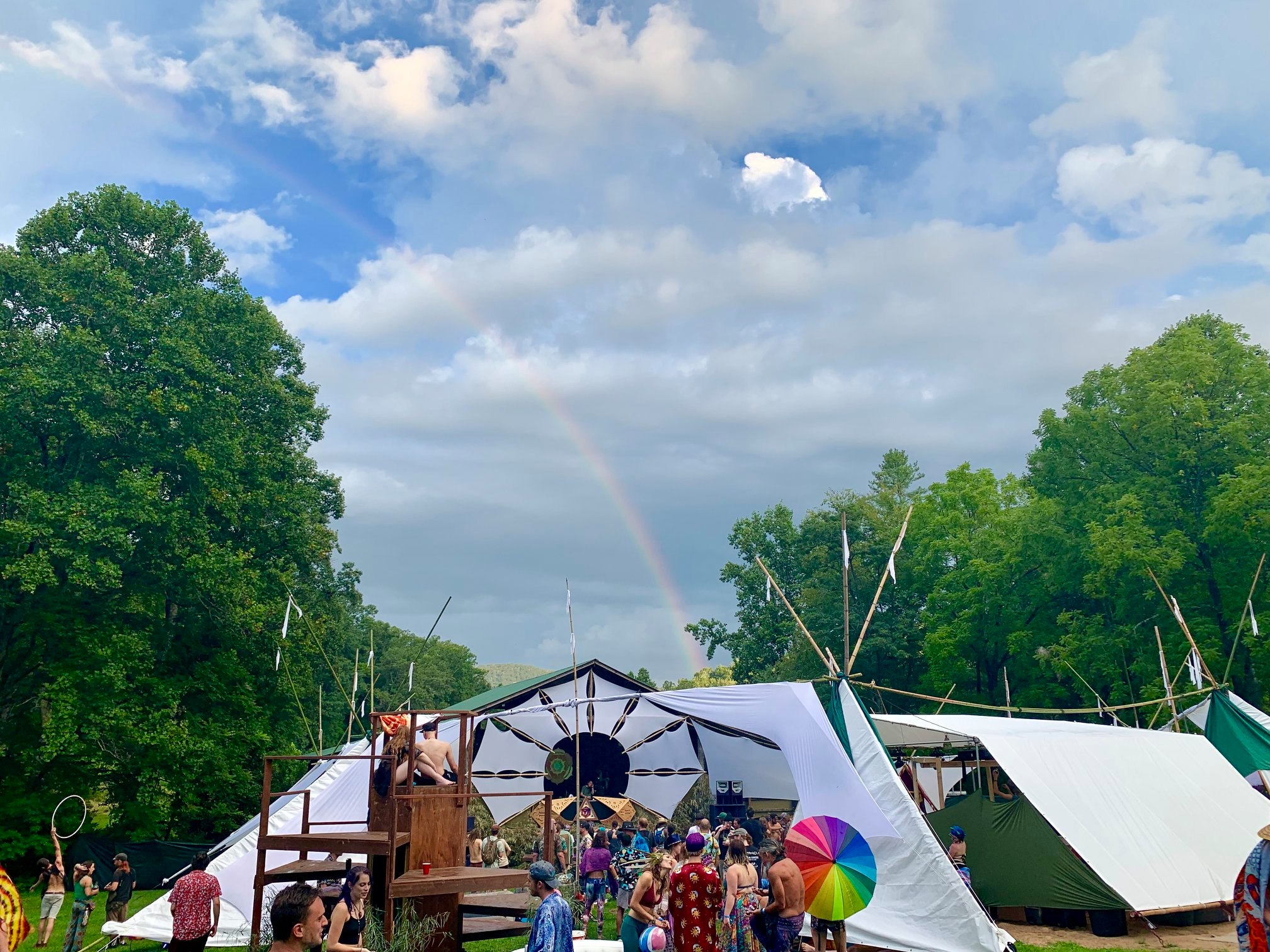
The stage by day (Credit: SurprisinglySimple)
Once again event producers Envisioned Arts and Harmonia displayed the confidence and swift problem-management skills befitting veteran production teams. As we elaborated on last year during an interview with Solasta’s organizers, their operational efficiency has been sharpened by years of experience outside of Solasta. Placing physical and mental well-being above all else, this team never missed its mark, with fans and friends keeping each other in check throughout the duration of the weekend festivities.
Making community the focal point of the festival, Solasta is one of a growing number of events, gatherings, burns, and massives that exist to cultivate interconnectedness with one another and with our own sense of health and wellbeing. The Asheville-based harm reduction and education company Harmonia, that doubles as event production entity, focused as always on providing safe spaces throughout the festival grounds. They’ve been the face of Solasta’s community operations from day one and are beginning to make an impact across the US festival circuit.
So far, Solasta has benefitted from its slim profile. The festival is intimate and there are few lines between artist, assistant, volunteer, and attendee. This interwoven social fabric is the strength of Solasta, wherein producers, engineers, audiophiles, and casual fans mingle in total cohesion, forging creative connections and friendships in a melting pot of talent and intrigue. One way Solasta achieves this dynamic by concentrating the music to a central location. As in years prior, there was again just a single main stage from midday until the following sunrise.
Hasan Zaidi, the co-founder of Envisioned Arts, paints a picture of Solasta’s strategy for success. “From the very first day of the first Solasta, the single stage dynamic has given all of our musicians and visual performers the most attentive platform we can achieve.” Solasta’s lineup has traditionally been a handpicked collection of incoming and veteran producers and DJs. Having a single focal point and an expertly-tuned sound system helps to level the playing field among the performers. Everyone gets their fair shot to make a potent impression on a captive audience.

The installation at the foot of the main stage (Credit: SurprisinglySimple)
Soundsystem Cultures, LLC (SSC) ran sound for the third year in a row, bringing along as always a potent set of Funktion One speakers featuring F218 and Infrabass 218 subwoofers and Resolution 2 tops. Sebastian Torsion, a member of Onesource Audio and a frequent attaché of Tipper’s audio crew, teamed up with SSC for the weekend. The audio team combined textbook knowledge with hands-on experience to curate an aural experience that was physically powerful yet totally comfortable. On Saturday afternoon, Sebastian joined Bill Weir, an expert audio engineer and co-owner of the international IDM label Outside Recordings, and taught attendees about the physics and technicalities of live audio production during an engineering workshop.
“Crafting an audio experience that produces immersion and comfortability at the same time is entirely a balancing act” Weir said. He explained the science behind proper concert audio, cutting zero corners as he dove into the fine details and objectivity behind specific engineering decisions. The crowd was sizable, with about 100 people in attendance despite the rising mid-morning heat. “Pushing decibels is the opposite of the operative goal. The goal is to achieve a totally balanced spread across the dance floor. We don’t want your ears to hurt, we want your ears to be immersed.”
That immersion is one of the key platforms that all successful music events rest on. Solasta has always preferred to achieve that immersion not just through a custom fit audio experience, but through a combination of sound and decoration. The eminent beauty of Deerfields was more than enough to propel attendees into a relaxed state of body and mind, but the stage design was also key to maintaining a constant feeling of immersion.
The stage was an open-air gazebo standing between both bodies of water on the property, with an alluring view of the lower lake. Dozens of white, silky sheets created a portal through which the crowd viewed the performers. The wonderful garden installation that has been a stage front staple at every Solasta had grown since the previous year. Parallel rows of trees stood in a fixed line behind the performers, seeming to meld into the foliage above and around the gazebo. The dance floor was ringed by draped textiles and bamboo, containing the party to an approachable, open space, and creating a conduit for communal experience.
Every staff member and volunteer said “Drink plenty of water” as many times as they blinked over the course of the weekend. It was an impactful reminder to us all why we were so excited to be here in the first place. That understanding of care and mindfulness between the organizers and the ticket holders creates an environment of trust, making it easier to develop social bonds within the festival.
The Southeastern experiential theatre and art troop GNOSTiK brought talents to Solasta once again. These women create transformative spaces for expression at events across the US, and they exceeded expectations with their Lounge installation at Deerfields. This year, the GNOSTiK Lounge rested in a smaller gazebo atop the upper lake, looking out across the expanse of the festival. The Lounge was a space of constant flux; dancers and acrobats gliding across a visual-mapped stage, surprise DJ sets, couches and benches warm from the entranced viewers wandering in and out of the space. It was full of intrigue and a respite from the dance-centric environment of the main stage, allowing revelers a chance to simultaneously rest and engage with performance art in new ways.

Performers in the GNOSTiK Lounge. (Credit: GNOSTiK)
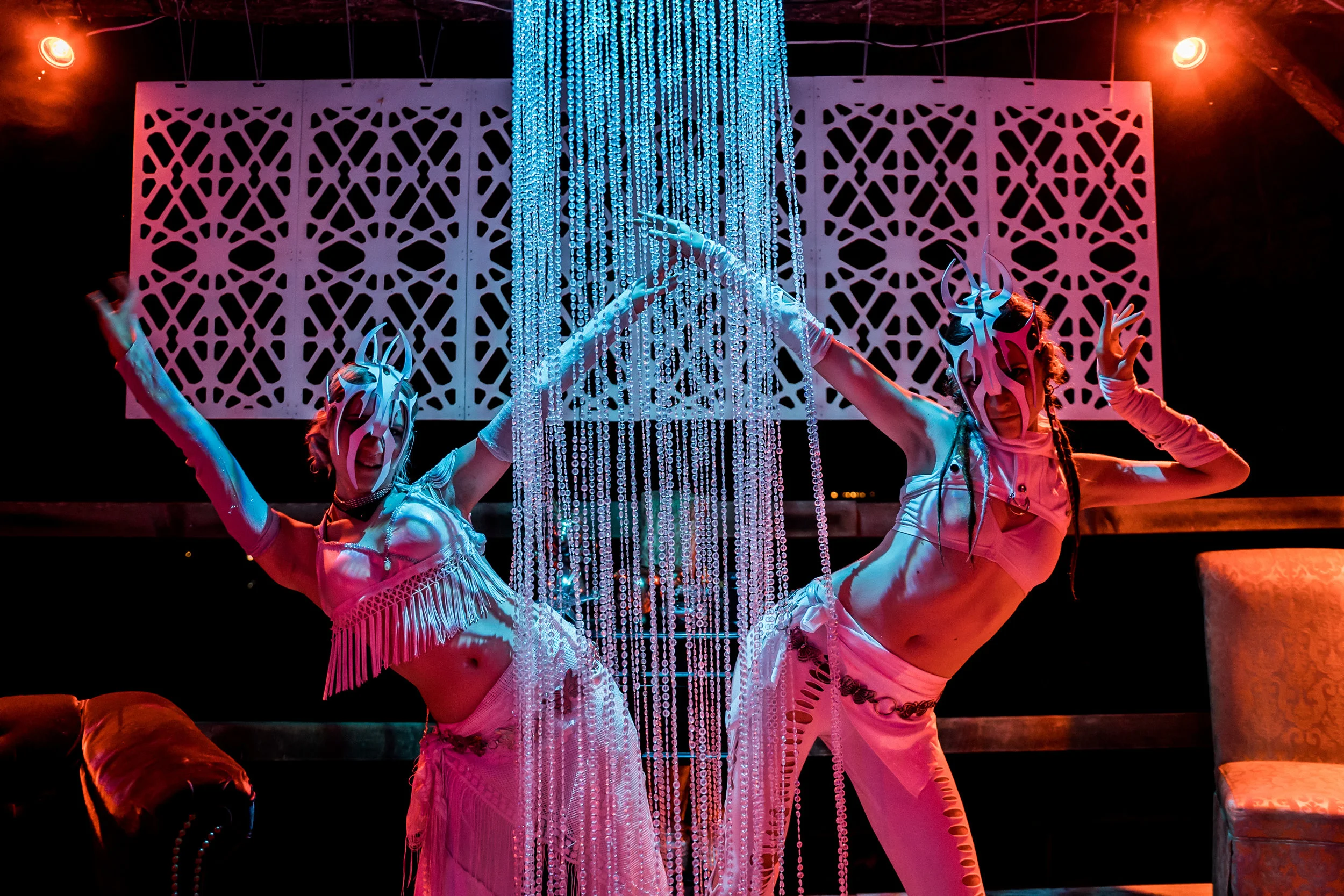
GNOSTiK performers at the Lounge. (Credit: GNOSTiK)
The music at Solasta once again leveled the crowd from start to finish. The lineup was a blend of top tier acts, rising stars, new and collaborative projects, and Solasta fan-favorites from across the electronic music spectrum, including Detox Unit, K.L.O, Ultrasloth, spacegeishA, MALAKAI, and Integrate. The order and pairing of the performers was especially well done. The prime time slots for Friday evening took the crowd on a journey through all things guttural and psybient within bass music. Base 2 brought the gears of the night into full motion, presenting a cultivated blend of original tracks that synced up with each other like a string of skeleton keys. Goopsteppa began the onslaught of surgical, fractalized synthesis that would persist through Charlesthefirst and Attya, charging the dance floor with permeable psychedelic energy.
Saturday afternoon began the festivities down on the shores of the lower lake, with a sultry blend of music to elevate the mood of the sun-soaked revelers. Rezinate co-owner Saltus initiated a serious dance-floor boogie, rinsing out salacious heaters for a specially curated funk set. Easyjack’s beloved side project, Frisk, channeled the echoes of the Chicago’s underground nightlife, with pulsing house and techno giving the festival a rare dose of steady-beat action. During the height of the afternoon sizzle, Nashville-based DJ Doyle reprised his role as the master of all ceremonies, sending the crowd into a glorified nostalgia frenzy with mid-2000’s club rap classics.
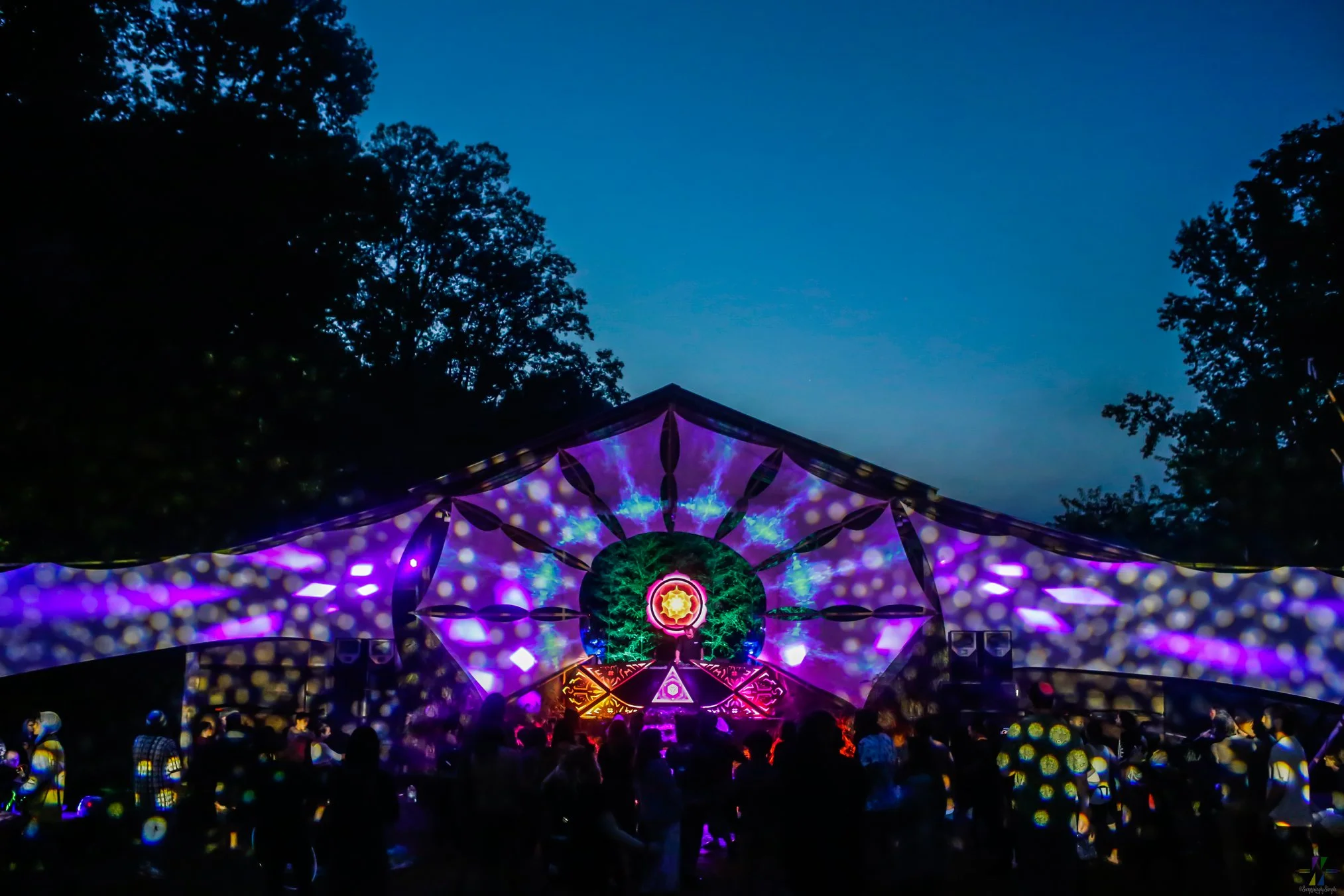
MALAKAI’s sunrise set (Credit: SurprisinglySimple)
Saturday evening saw the energy of Solasta launch straight out of the atmosphere, with a very tangible sense of excitement poking through the onset of a chilled dusk. Coalescing the energy output for Saturday’s prime run of acts, Integrate took the stage for their debut performance. A tag-team between the southeastern heavy hitters VCTRE and Black Carl, Integrate slung a bevy of original tunes and beefy selectors to mark their foray into the public eye. spacegeishA smashed her 11pm slot with a meticulously crafted exodus into the darkest reaches of sound, reverberating every inch of the dance floor. Detox Unit took the crown for crowd engagement, with every soul on the property engaged in an isometric group dance against a broken-beat flurry. K.L.O sliced and diced any remaining intact heads with their famously ferocious vinyl cuts and precision synthesis. Navigatorz claimed the spotlight as the second debut act of the weekend; Vinja and Sortof Vague brought their production and performance mindsets together for this new project, diving into the abyssal depths of synthesis. Bringing the last night to a spectacular close, MALAKAI spared no effort in executing a beautifully tailored sunrise performance. Original tracks and selections from his own archives morphed into an ultraviolet serenade of the senses, bringing the last bits of energy within the crowd to a resounding cadence of body and mind.
Sunday morning was a tired and joyous gathering for one last hurrah. The fabled pancake breakfast returned in it’s brightest form yet. Probe 1, Easyjack, and Detox Unit graced the stage for one last three-way break-beat performance, with organizers literally flipping pancakes into the mouths of their friends from behind the decks. It was an audacious and hysterical ending to a weekend filled with pure intentions and outcomes.
We left the grounds with that same sense of renewal and drive we felt last summer that made returning to Solasta Festival such a natural move. Powerful, communal undercurrents left this gathering through the thoughts and actions of everyone who came together for it, once again manifesting Solasta’s goal for inclusion and awareness. Given Solasta’s size and relative humility, it will undoubtedly continue to grow in the years ahead. We’re eagerly awaiting it’s return in the summer of 2020.

Psy-Fi Festival Brings Best of International Bass to Netherlands
On one stage this Summer you can catch some of the best in American bass music from Jade Cicada, CharlestheFirst and Bogtrotter, international OGs like Hedflux, Rumpistol and Ott, and a living legend like Solar Fields; the Chill Out stage at Psy-Fi Festival: Seeds of Science, returning in its seventh year to Leeuwarden, Netherlands this weekend, August 28 to September 1.

Psy-Fi Festival main stage seen from above (Credit: Mushroom Magazine)
On one stage this Summer you can catch some of the best in American bass music from Jade Cicada, CharlestheFirst and Bogtrotter, international OGs like Hedflux, Rumpistol and Ott, and a living legend like Solar Fields; the Chill Out stage at Psy-Fi Festival: Seeds of Science, returning in its seventh year to Leeuwarden, Netherlands this weekend, August 28 to September 1.
As one of the larger transformational psytrance festivals in Europe, Psy-Fi has drawn people from 114 different countries. They come for good reason. According to the festival’s website, Psy-Fi invites “most of the best known live acts and dj's” to perform. That’s absolutely true of the Chill Out stage. They’re hosting the worldwide vanguard in psychedelic bass from Bluetech and Hedflux to Kalya Scintilla, Kaya Project, Bumble and ATYYA. Most of the performances from artists based in the United States, including MALAKAI and Schmoop, are European debuts.
Fully developed, highly produced chill out stages are less common stateside than they are internationally. They’re really a product of the trance scene, but there’s few psytrance festivals in the states. How does it work from a booking perspective or from an experiential perspective? The UK producer Steve Young aka Hedflux, one of the more well-traveled Chill Out stage performers at Psy-Fi, breaks it down this way:

In the trance world, chill essentially means “anything but trance.” Sometimes it's referred to as the "alternative" stage since it's not necessarily always chilled out. As a DJ you generally have free license to play whatever you want, whether it’s more sit-down chill music, or more deep dance vibes. There's no pressure to get the party rocking, but you can still get it rocking if you want to. Obviously the idea is to keep it psychedelic…but take artistic advantage of the great musical freedom you have to explore different rhythms, tempos and energy levels, and bring in musical influences from elsewhere. At the trance stage, there is a universal sense of expectation among the crowd that the next drop will be a trance beat, and if you mess with that, they'll get annoyed (understandably so). At the chill stage however there is no expectation, people are more fluid and you can take them from an ambient cuddle puddle to a frenzied ecstatic dance and back again without anyone shouting "where's the drop?".
Hedflux is a great representative of the groundbreaking global glitch at Psy-Fi. His Eclectic Psychedelica mixes arguably curate and mix through the best midtempo psychedelic music in the world. His appreciation for Itay comes through as well. “He is an amazing agent, producer and DJ and a curator of the finest psychedelic chill-out line-ups,” Steve says. “For me now, the chill stage IS the main stage.”
Itay of Feel Life Music, with his selective taste and a global roledex of bass musicians, is the mind behind the Chill Out stage. He’ll also perform there through his Kukan Dub Lagan project. While the lineup may astound someone seeing it for the first time, those who know Itay say it’s par for the course for this sommelier of psychedelic music. “I was certainly surprised, but at the same time, I’m not surprised Itay would pull something like this off,” writes Søren Thygesen, the Danish producer Bwoy De Bhajan. “I remember seeing the lineup for the first time. One act after the other made me raise my fists in joy.” This will be Søren’s fourth year at Psy-Fi. “They dare to take some chances with the lineup and not recycle the same group of acts year after year. It’s very refreshing, and i'm starting to see more festivals in Europe taking risks. You don't forget those moments where an unfamiliar act takes you by storm.”

The Chill Out stage at Psy-Fi Festival (Credit: Dutch Review)
“The amount of North American acts making their way over here is great, this rarely happens, if ever,” says Søren. Psychedelic electronic music started and first rose to prominence outside of the states. The states has its own robust electronic community, Chicago house and Detroit techno, plus the countercultural mecca Burning Man. But in the popular imagination, UK clubs, Goa beaches, Australian doofs or blowouts like Boom Festival in Portugal or Shambhala Music Festival in Canada have always eclipsed the stateside scene. Psy-Fi’s bookings recognize though that theres a growing group a forward-thinking producers from the States that’s worth integrating onto the international circuit. “I hope we keep that trend up for years to come, and build a foundation for them to come back and make their way around the European scene.” He’s excited about Schmoop in particular, producer Will Russek from the Dallas-Fort Worth area in Texas. “I met the young dude in Florida back in April, where he told me he's playing his first set abroad at Psy-Fi. The sheer excitement from his side was just amazing.”
We asked Will how he’s planning to approach his first international set. “The plan is top secret,” he wrote, but he’s playing a little bit of everything (check out his destructive single “Charge”). One thing you won’t see at Psy-Fi is a set from Wonky Llama, his collaboration with Jade Cicada. “Saving that for the future,” he wrote.

(Credit: Mushroom Magazine)
We’ll be on the lookout for feedback from this thoughtful event. It’s enabling cross pollination between producers from every corner of the world, and that’s encouraging. Speaking of pollination, what of the name “seeds of science”? From the festival’s website: “The quote from Ralph Waldo Emerson ‘men love to wonder and that's the seed of science’ shows that our imagination and our curiosity are at the base of all that men has ever created. We encourage you to find out how science can help you and others to create a better and more sustainable world.” For the full Chill Out stage lineup and more details on the festival, visit their website.

"It Was Really About the People & the Land" - A Weekend At Shambhala
As the climate, laws, music, people, and the popularity of the entire electronic music enterprise has changed, Shambhala Music Festival has preserved and grown. How? It’s run by an enduring crew that comes back year after year. It’s become part of Western Canadian culture. And It’s centered around ideas that don’t lose value with time or trends; respect for the Earth and oneself; independence from corporate influence; reverence for higher powers; passion for good music.
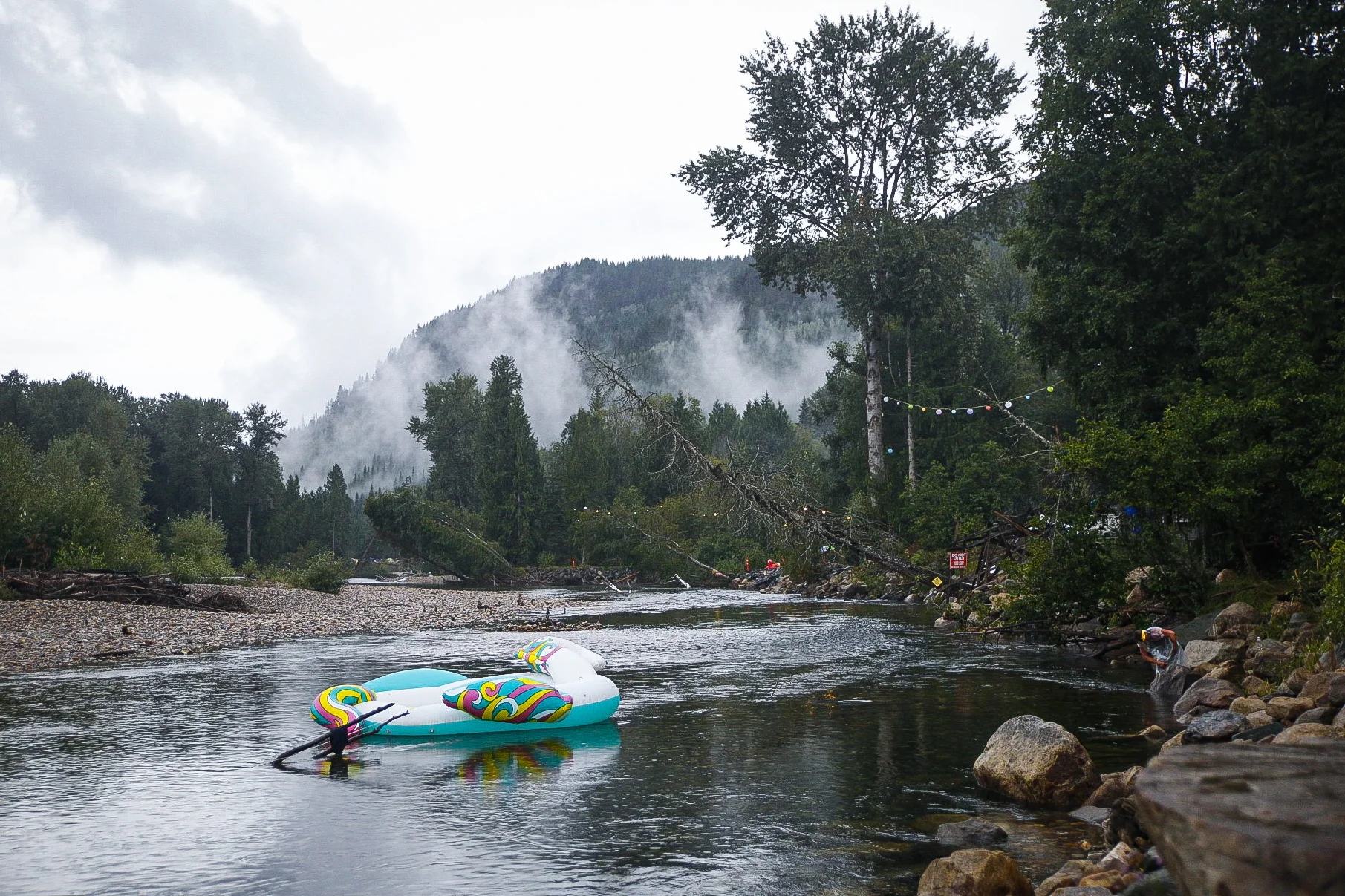
(Credit: ConcertSocks)
Flipping through my notes from Shambhala Music Festival, a few sloppy, scribbled lines stand out:
We’ve got what it takes
To make this world a better place
And make our children safe
It’s all up to me
It’s all up to you
That’s a vocal sample from soundcheck before A Tribe Called Red’s Sunday night performance at the Ampitheater, one of six stage environments at Shambhala, which ran from Thursday, August 8 through morning on Monday, August 12 at the Salmo River Ranch in British Columbia, Canada for the 22nd year in a row.
This Ottawa-based act blends all sorts of electronic music - house, hip-hop, dubstep, drum and bass, hardstyle, Jersey club - with First Nation drumming and chanting to initiate an “electric pow wow”. Participating was liberating yet chilling (“My people will sell our bracelets by the roadside. Your people will play golf, and eat hot hors d'oeuvres.”)
Their heavy performance said “dance like you mean it, but don’t forget what’s happening behind the music.” It was like a microcosm of Shambhala as a whole. The event hosts many of the best electronic acts in the world, but the music can also be seen as a means to an end. Music is just the centrifugal force around which a community, decades in the making, gathers to celebrate its renegade culture.
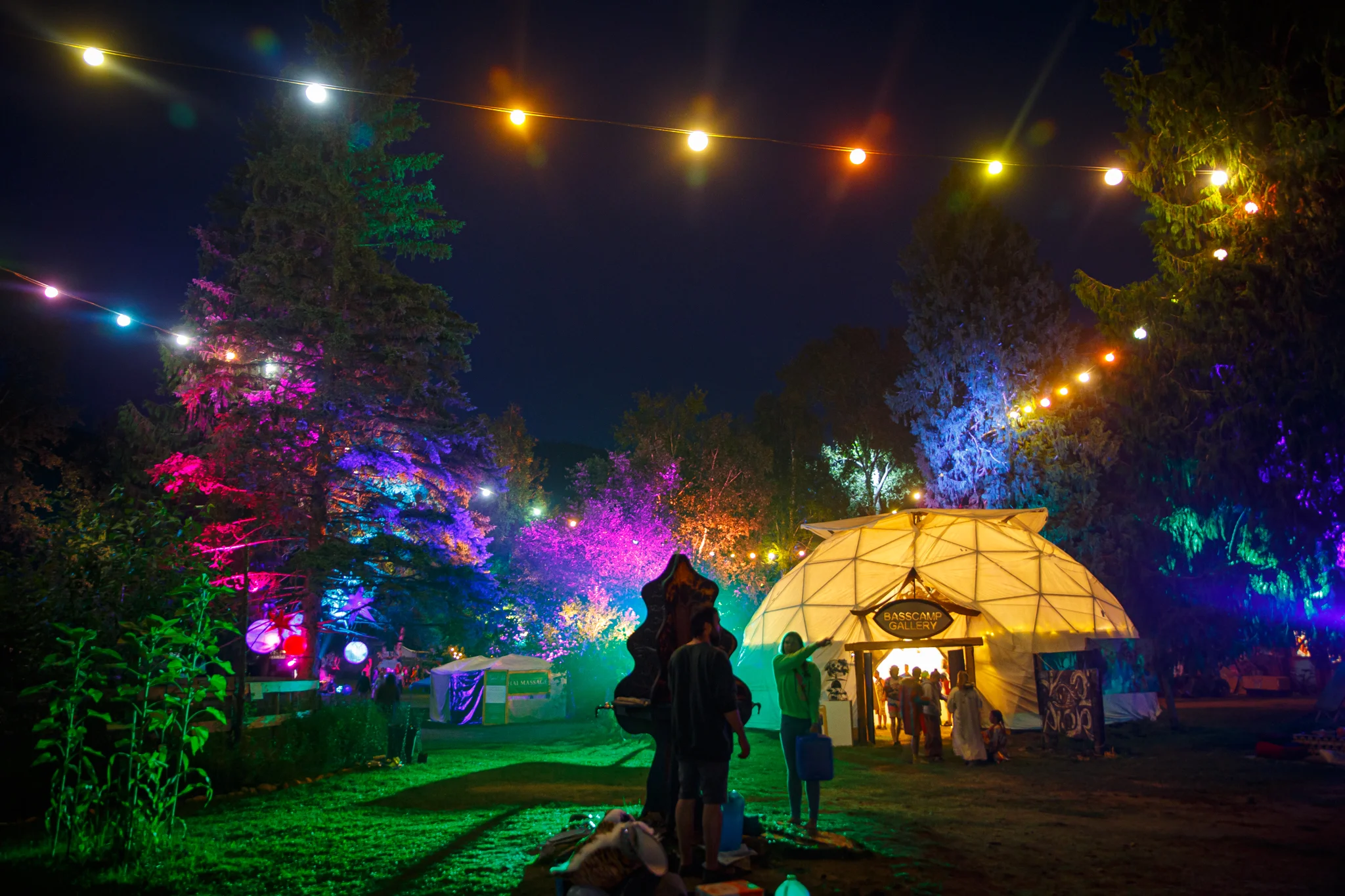
(Credit: ConcertSocks)
A British Columbia local named Osprey and perhaps others conceived the idea for Shambhala in the late 1990s. Osprey came from the psychedelic trance scene of Goa, India during its heydays, where interactions between western counter culture and Hinduism embedded eastern spirituality into the rave scene. He would tragically pass away in a car accident, but his vision for a music festival in the Kootenay Mountains would live on through the several hundred local fans, promoters, and musicians who started it.
During the Vietnam War, draft dodgers from the United States hid out in the Western Kootenays. At the turn of the 20th century, the Dukhobors, an anti-state Russian Christian sect, settled there after being exiled for their unorthodox beliefs. There’s always been a durable marijuana culture. It’s fertile ground for a party like Shambhala, which built upon the existing counter culture in this isolated region.
“The surrounding area is sort of a fortress. It’s not near any major highways, there’s mountains in every direction, deep valleys, big mountains all around. It’s not on an interstate or even a big provincial highway.” That’s Tall Brian, who for over a decade has managed Shambhala’s artist lounge and accommodations, an “outdoor hotel” as he calls it. “The event is kind of a pilgrimage in that way. You have to go there.”
Naasko is a DJ whose performed at every Shambhala since 1999 besides a few when he worked and performed at Boom Festival in Portugal. “There’s a pursuit of freedom that exists here at Shambhala,” he said. That first year he came from Vancouver, worked a food stand, talked his way into a set, and would move to the nearby city of Nelson not long afterwards. “A giant inflatable buddha like 40 feet tall out on the highway brought people into this little mystical enclave here in the woods,” he recalled.
I spoke to both of them on a rainy Sunday in a big, twisting tree house lounge before Naasko’s 6:00pm set. “It started really humbly,” said Brian. “Just local people putting stuff together. I mean the early stages were just really rudimentary tarps and small systems. I have a photo of the Living Room when it was two speakers and a tarp.”
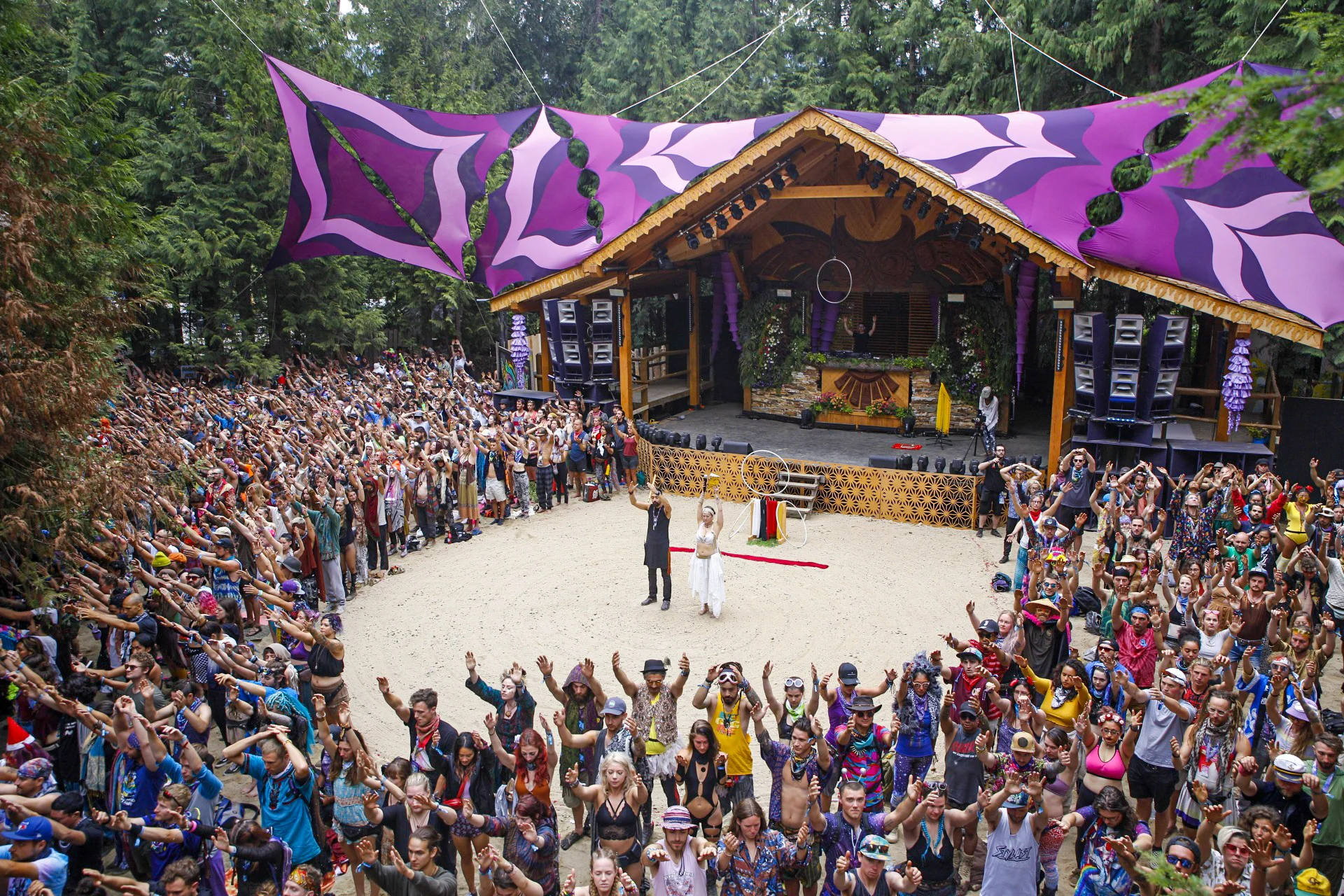
The Grove (Credit: ConcertSocks)
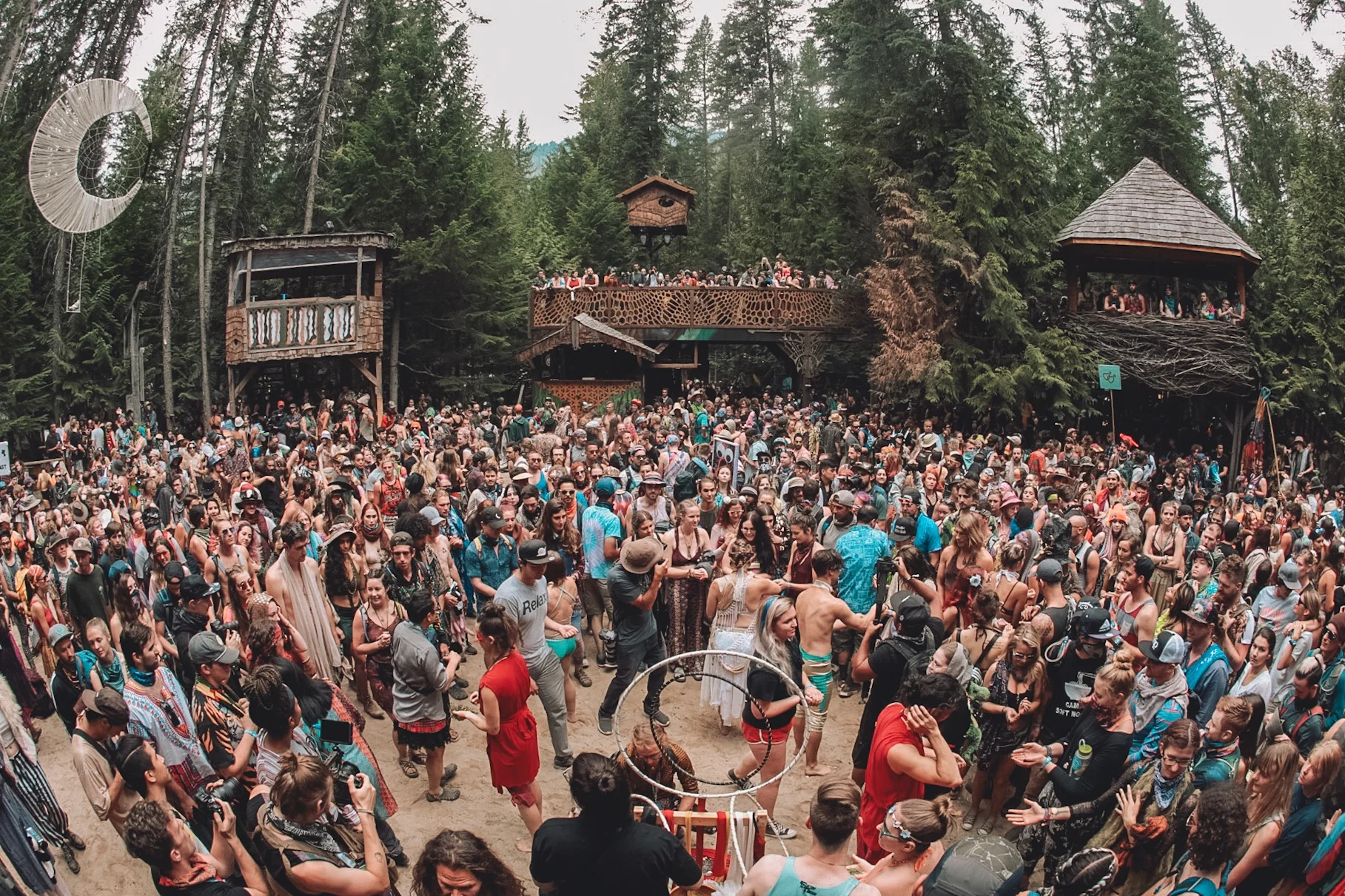
The Grove (Credit: ConcertSocks)
As the climate, laws, music, people, and the popularity of the entire electronic music enterprise has changed, Shambhala has changed, too. But it’s managed to preserve that special something. “I think the essence is still there. That’s what sustains its popularity. The festival embodies a lot of the freedom essence that’s not found in other places. That’s the appeal to the working masses in Calgary and Edmonton and Saskatchewan. When they think about coming here, it means so much to them.”
How? It’s put on by an enduring crew that comes back year after year, it’s become part of Western Canadian culture, and it’s centered around ideas that don’t lose value with time or trends; respect for the Earth and oneself; reverence for higher powers; independence from corporate influence; passion for good music.
People take care of the 500-acre ranch. Beside the river in the early morning sun, Jack Elliman sweeps his arm out across the pristine riverbank. “There used to be trash all along here. Now when people come to Shambhala they are educated by Shambassadors, the GRC and festi veterans pretty quickly. They learn how important it is to respect the land, the river, and each other, and that mind frame is contagious.”
Jack volunteers with the Shambhala Green River Collective which has been cleaning the Salmo River since 2011. He also runs the event’s cigarette butt disposal and recycling operation and invented the Pocket Ashtray (yes those pocket ashtrays), a Shambhala staple. There’s butt buckets all over the grounds, the Grove has a smoke-free dance floor, and nature’s abundance is itself a persuasive reminder not to litter. “Then they take what they learn here and bring it back to wherever they're from,” says Jack. “That's the true transformational festival."
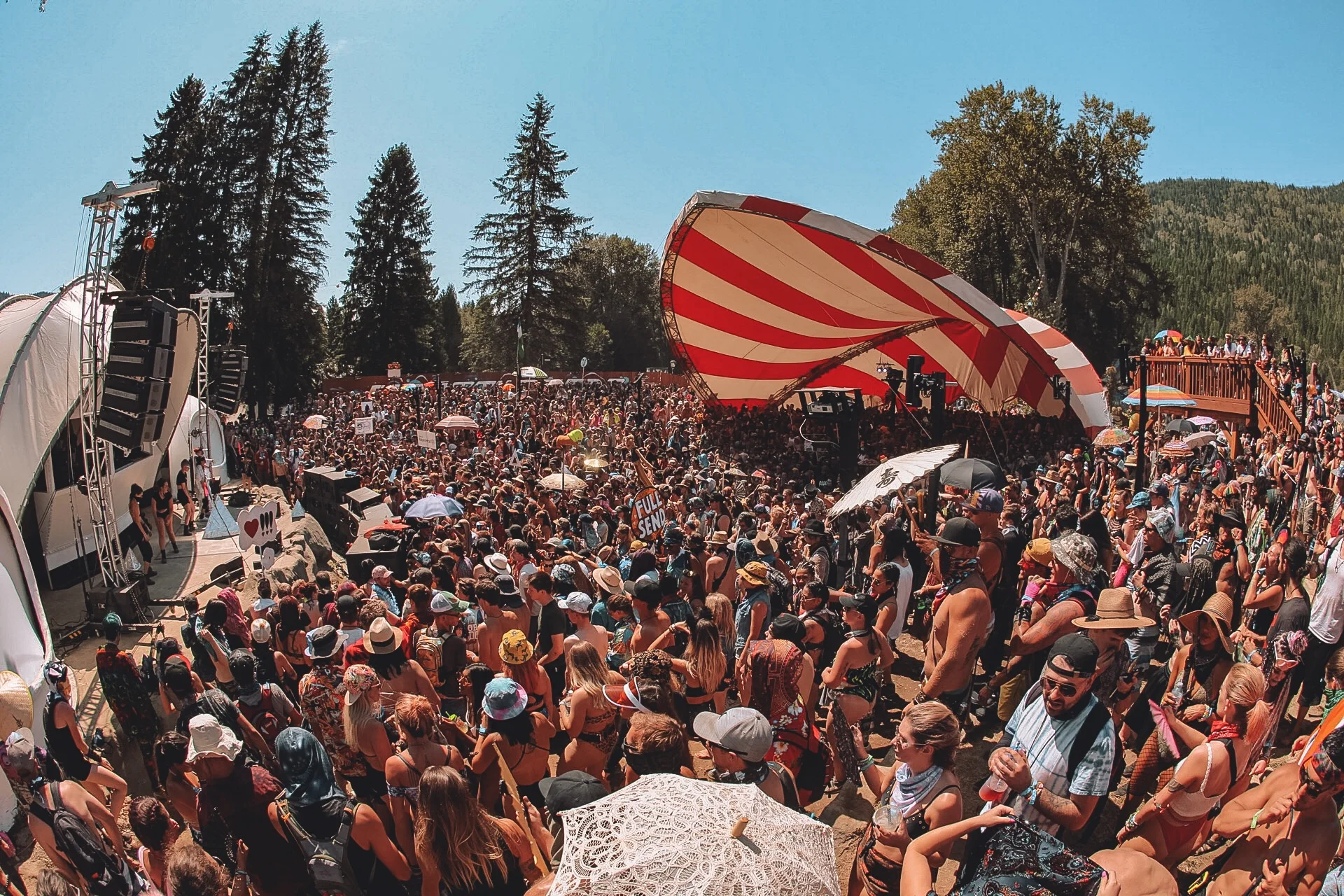
The Amphitheater (Credit: Banana Cam)
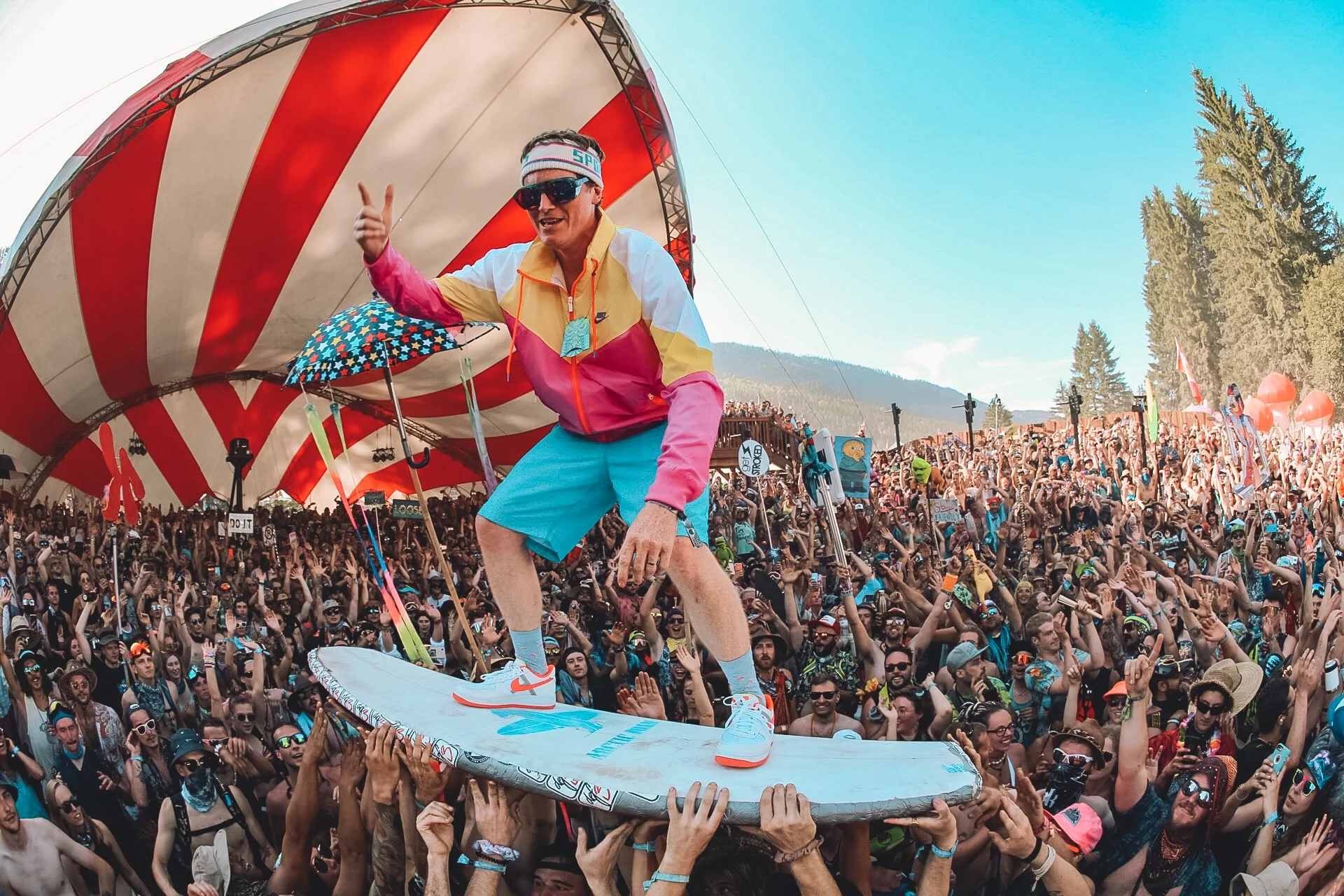
The Amphitheater (Credit: Banana Cam)
There’s Camp Clean Beats, a camping area sober festival goers who are sober or in recovery. Shambhala is perhaps most famous for its harm reduction work, from free drug testing to sanctuary spaces for women. Select weekend workshops encouraged attendees to respect themselves and party responsibly like “Cannabis: Gateway or Exit?” and “Psychedelics and Intimate Relationships.” A woman approached me during the Saturday night thunderstorm and handed me a sticker with the Shambhala SOS telephone number on it. “If you’re in trouble or you see someone who needs help, just call.”
Festivals, especially transformational festivals, are often seen as departures from the “default world” and Shambhala is no different. But it has also become part of the regular culture around those parts. The province of British Columbia actively sponsors the event. A woman named Celia from Vernon, BC, where producers JPOD and ATYYA grew up, first came to Shambhala 15 years ago and has volunteered several times since. During ATYYA at the Grove on Saturday, her son emerged from the crowd to her delight with his totem, girlfriend, and wide electric eyes.
I camped on a rented property in Nelson after the event. Lo and behold, the owner DJed at Shambhala twice and went to high school with lead organizer and Salmo River Ranch owner Jimmy Bundschuh. “Everyone around here knows the Bundschuh’s,” she said. In Calgary, I stayed with a friend who I know through channels completely unrelated to Shambhala. “But you know that pond in the woods behind the Labyrinth [now the Grove],” he asked me. “I built that one year when I was curating ambient music on the side stage back there [now the Cedar Lounge].”
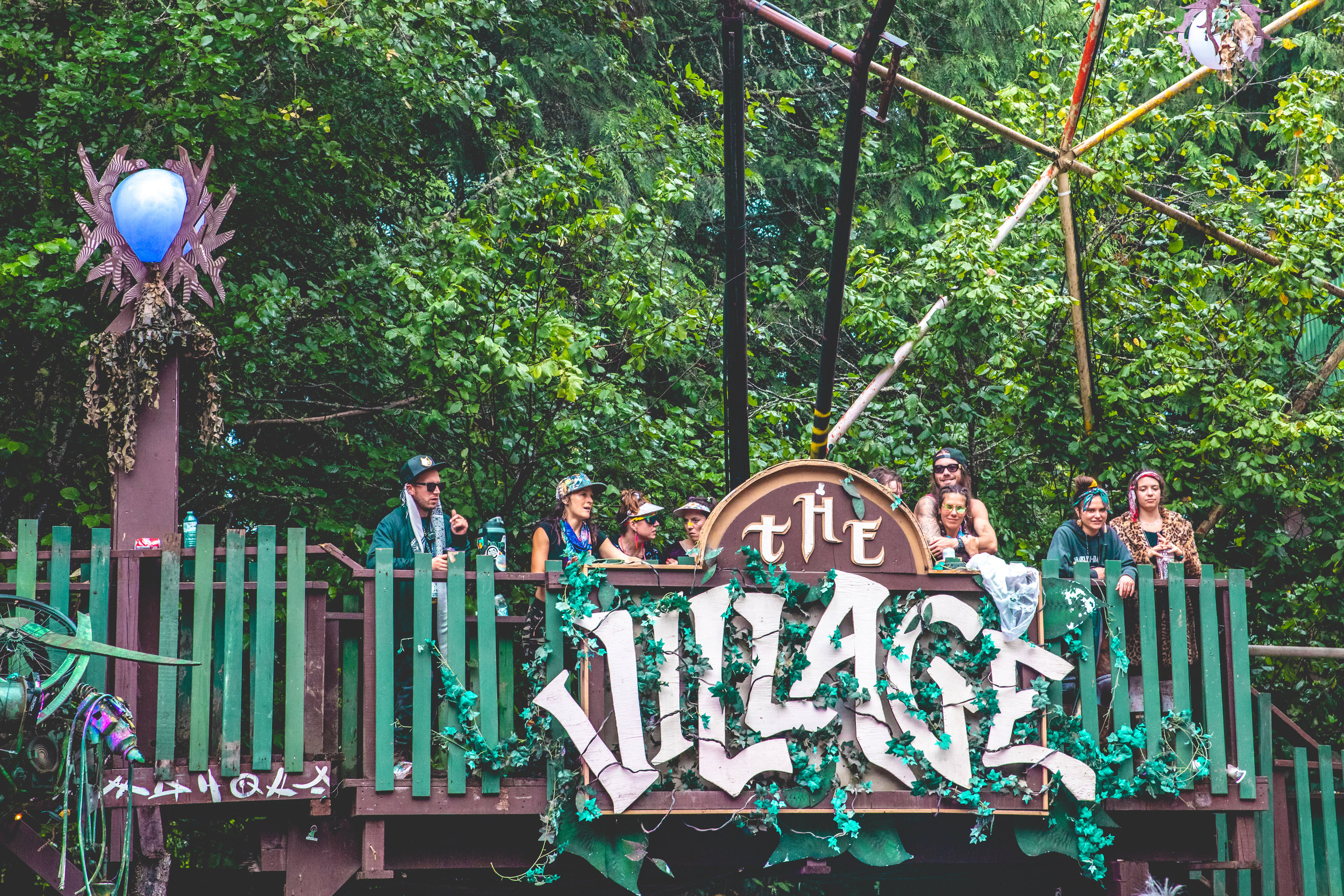
The Village (Credit: ATS Photography)
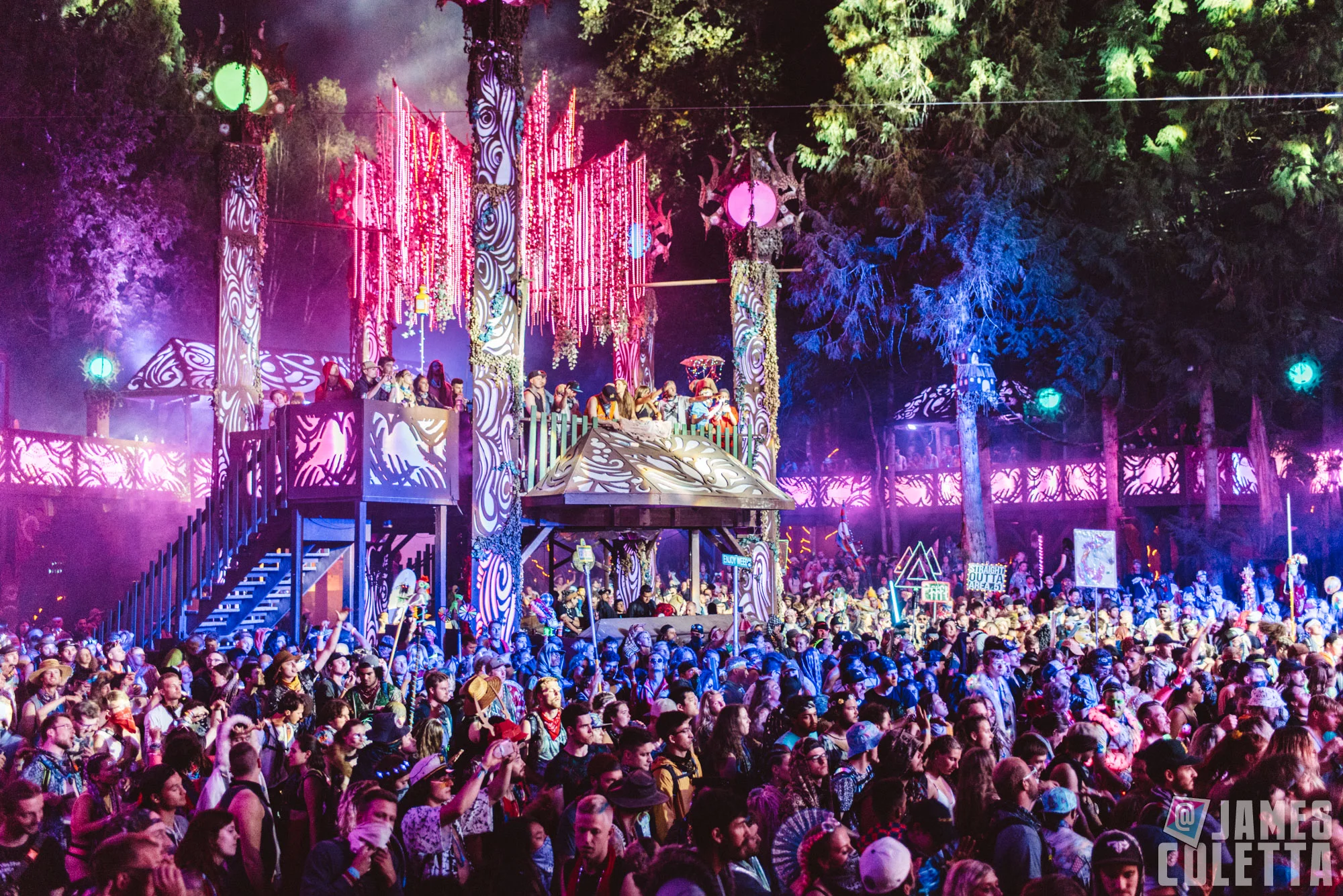
The Village (Credit: James Coletta)
The Shambhala crew, including volunteers, numbered about 2,500 people this year. That’s about 15-20% of everyone on site, an unusually high number. From long-serving stage managers down to first-year Australian volunteers, there’s an elaborate credential system for the crew. I saw a dog that was more credentialed than I was. A man with a blue beard who must be at least 75 years old sits guarding a gigantic pyramid in the Fractal Forest. A man with one eye and sharp teeth guards the entrance to the stage. So much of the crew clearly returns year after year, and most are Canadian. The infrastructure at Shambhala - world class stage, lighting, and sound infrastructure, tree houses, terraces, villages, pathways, gardens, fences, nooks and crannies - was built by generations of teams. I met at least six dudes throughout the weekend who “cut and strip wood”.
“It was really about the people and the land,” Naasko recalled as he unpacked twenty years of memories.
“Same,” I thought to myself. But I’d be remiss if I finished this piece without hitting on musical highlights from that interdimensional weekend.
After a flight cancellation and a pedal-heavy haul from Calgary through plains and peaks, I pulled in at sunset and walked into the Fractal Forest for the first time during the Westwood Recordings takeover. New Zealand producer K+Lab was landing the mothership, playing keytar on stage in that old-growth 360-degree sound garden. Coming from Kelowna, BC just west of Shambhala, Stickybuds followed and practically looked like a gigantic tree the way he dominated the energy of that space. After starting with wicked drum and bass he ran through his signature electro funk selectors including “Crooked Politicians” off his first album, which he dedicated to all the crooked politicians around the world.
The magnitude of Shambhala hit hard Sunday night. During one time slot Rusko was playing at the Village, Troyboi the Amphitheater, Bonobo the Grove, Zeds Dead the Pagoda, and Silk City (Diplo and Mark Ronson) at the Fractal Forest. The entire grounds were saturated with mud and the energy was beyond feverish.
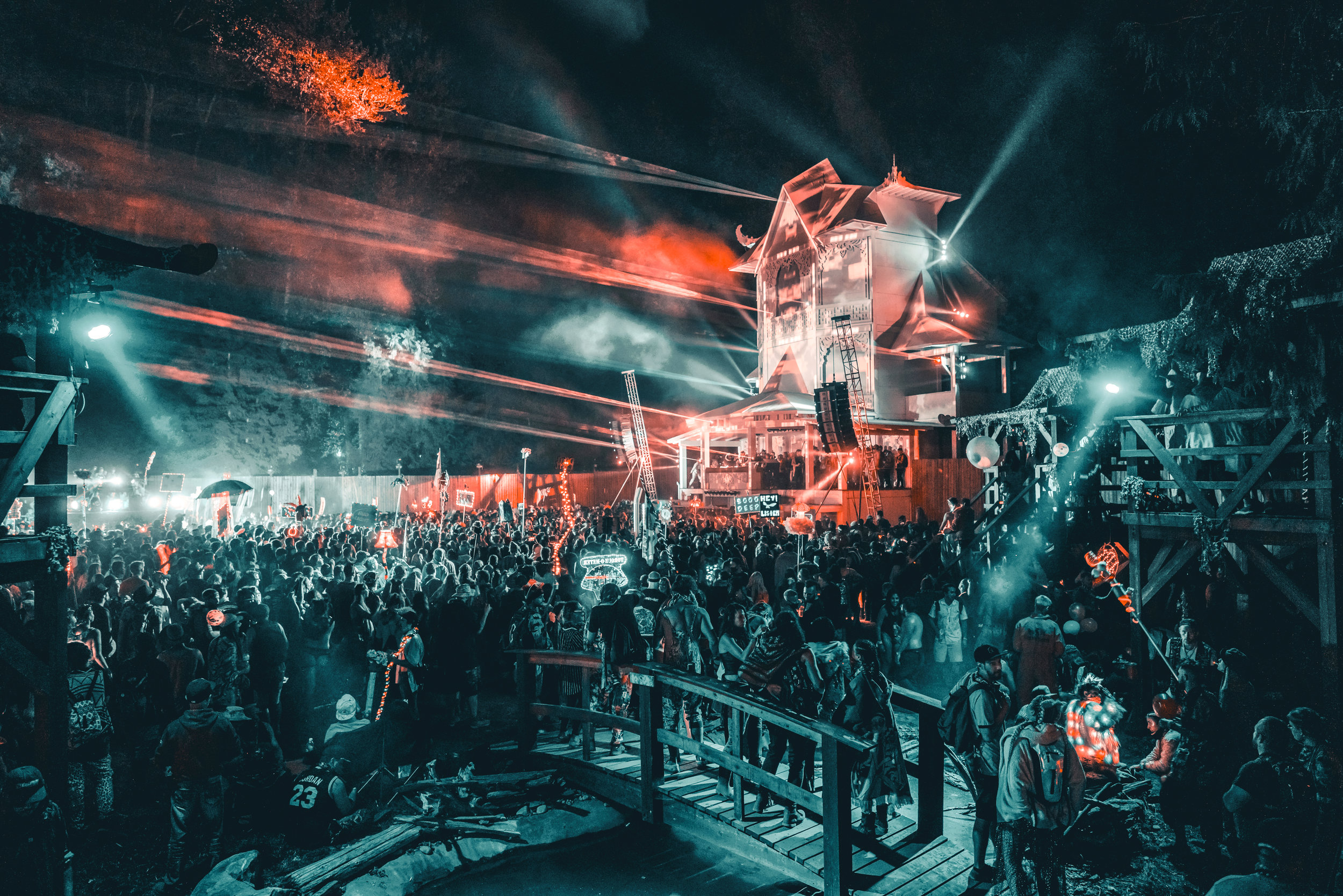
(Credit: DIVISUALS)
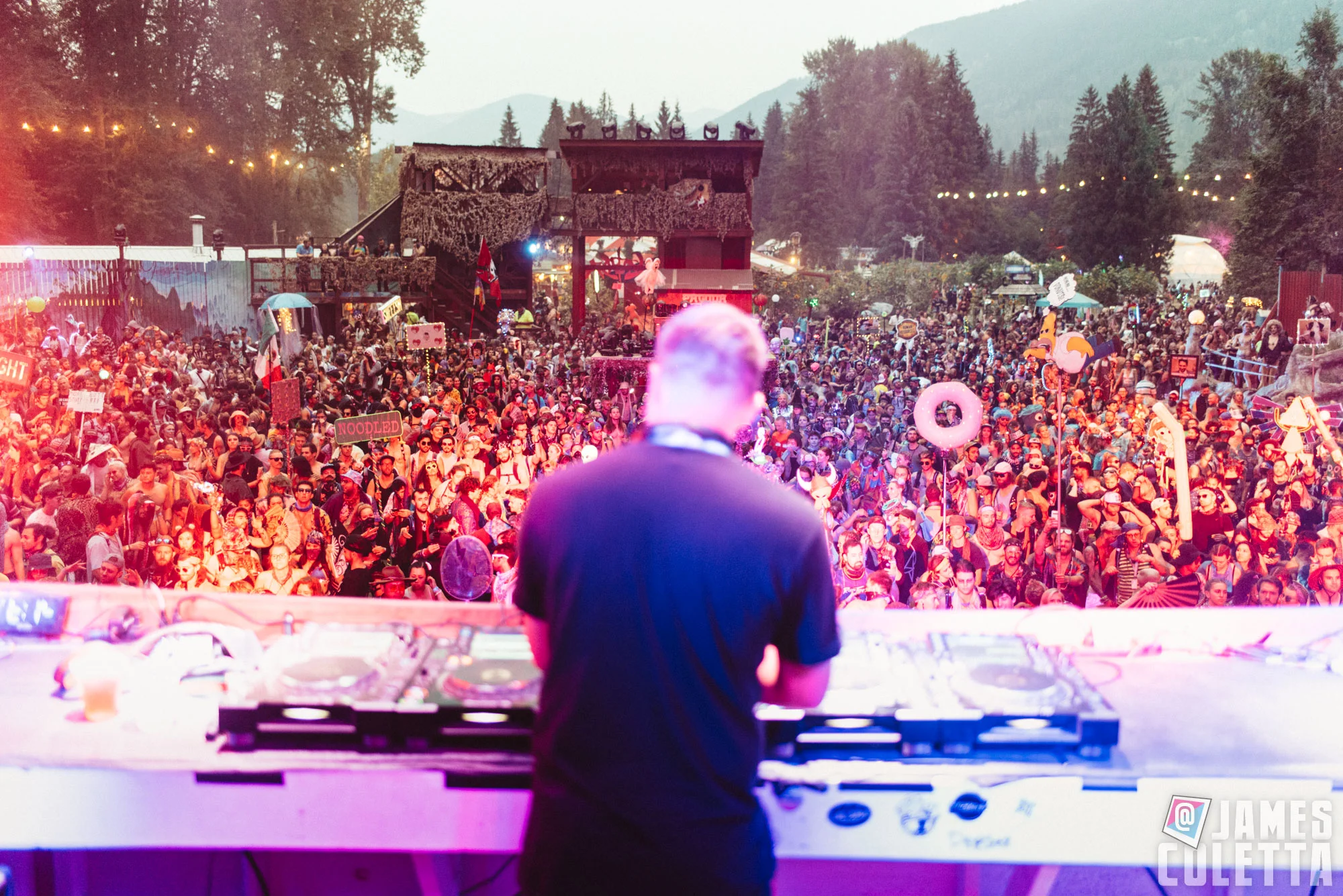
The Pagoda (Credit: James Coletta)
Late that night I found a deep heads’ delight. kLL sMTH absolutely wrecked the Ampitheater and spun me down to the Grove for Stray (one half of Ivy Lab). He was laying it in there, drilling dark drum and bass but pausing now and then to express gratitude to the audience’s for their openness. “You’re a pretty open lot. This is some of my favorite music, and it’s been years since I’ve played it.” Tor from Vancouver followed him with a perfect, grounding sunrise set for a bright, colorful capacity crowd. By that time, only the strongest psychedelic sound warriors were still kicking. But at Shambhala, that’s like everybody.
One more story from Brian is worth sharing.
When I arrived at reception today I saw this super average looking young kid, Alberta license plates. He was by himself but was clearly so stoked. I was bringing in my work crew for like the thirteenth time and was like, “yea whatever this is gonna take a long time to get these credentials.” But the guy was just so excited to see us. I think there’s something that happens as people enter. Barriers break down and there’s this whole spirit that’s there; a friendliness, a genuineness that’s contagious. It takes on different forms and qualities. For us, it was a very different experience. But for, say, a young Albertan it can feel very transformative. And this kid was like, “what’s up Shamb fam?!” And he wanted to hug us all - total strangers.

The Living Room (Credit: Banana Cam)
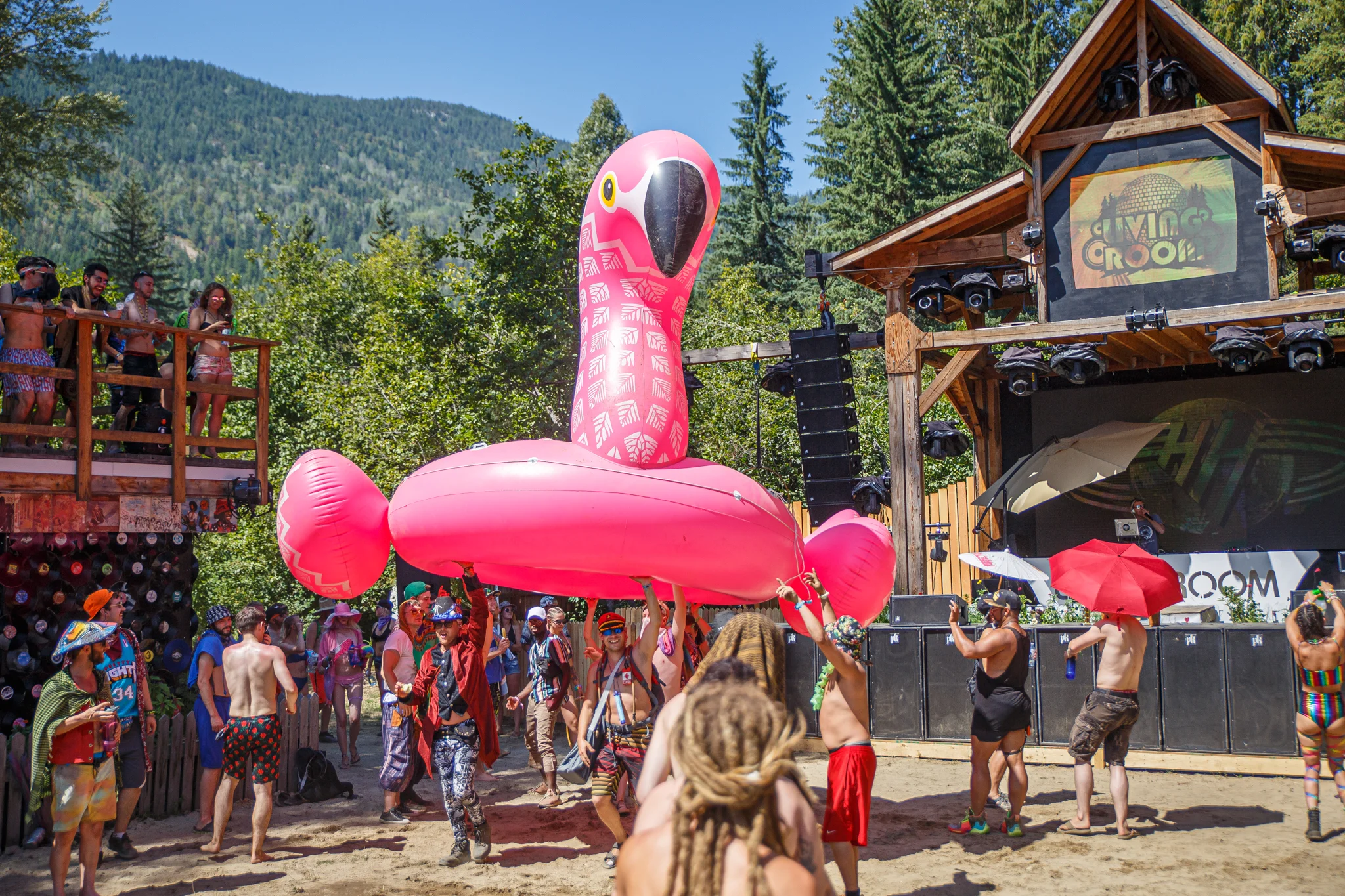
The Living Room (Credit: ConcertSocks)
Shambhala is probably the best that the electronic music culture has to offer right now, and that’s pretty damn impressive. DJ Mag recognized this by awarding Shambhala as the best festival in North America in 2019. If you’re part of this culture, and you have the means, experience it at least once. “I’m curious to see what will happen,” said Brian. “22 years going strong. I really feel that Shambhala could sell out in perpetuity. If they kept the numbers and kept the quality. It would be interesting to see where it’s at in 25 or 30 years.”
“If we’re still alive then,” Naasko chuckled.
FOLLOW Shambhala Music Festival: Official / Facebook / Instagram

Elements Lakewood 2019 Stands Out Among Small Festivals
By presenting diverse lineups in an immersive summer camp setting since 2017, Elements Lakewood Music and Arts Festival has been edging towards becoming the premiere electronic music festival in the northeastern United States. This year on Memorial Day Weekend, they solidified that spot by taking their stage production, logistics, and guest offerings to the next level.

(Credit: AJR Photo)
By presenting diverse lineups in an immersive summer camp setting since 2017, Elements Lakewood Music and Arts Festival has been edging towards becoming the premiere electronic music festival in the northeastern United States. This year on Memorial Day Weekend, they solidified that spot by taking their stage production, logistics, and guest offerings to the next level.
Lakewood was nominated in DJ Mag as one of the best boutique festivals in all of North America in 2018. We’re not sure what criteria make a festival boutique - the size of the audience or its socioeconomic status, the festival’s infrastructure, its budget, or its independence - but these accolades may have surprised those who attended Lakewood’s first two years. It’s been fantastic, sure, but best on the continent? Well, BangOn! NYC went above and beyond this year, taking care of patrons, focusing on the details, creating a ton of that old magic, and truly earning this continental distinction.
Lakewood stands out among small festivals for its ability to blend different musical subcultures. This is reflected in their bookings, which center on house and techno but range into dubstep, ambient and jam. The fest also plays to fans who prefer different levels of experience, by emphasizing glamping and tiered cabin packages in addition to regular old tent-pitching. Catering to these audiences all at once and balancing their different desires and patterns of behavior is no small task, but BangOn! pulls it off year after year. One fan reflected beside the lake about how Lakewood was deepening his understanding of the wider electronic music culture, enabling him to experience parts of that culture he was unfamiliar with and helping him to “connect some dots”, in his words.

(Credit: Jess Bernstein Photography)
Lakewood pulls an international contingent that’s attracted to the all-star house and techno lineup. Lakewood lineups are truly all-you-can-eat buffets for four-on-the-floor fans. The bass crowd continues to show out for niche bookings and late night takeovers by area crews. Most importantly, Lakewood draws on New York City’s massive electronic music scene. BangOn! truly brings the best of New York nightlife, in all its weirdness and wonder, out to rural Pennsylvania. When you see Lakewood’s resident “Funtender” and House of Yes mainstay Rawb Lane presiding over a crowd on top of a huge welded art installation in a Webster Hall t-shirt banging out the rhythm on the tower with a gigantic metal spoon, you know it’s some New York shit. Many of the same individuals and collectives that hold down Brooklyn parties contribute to Lakewood, and it shows.
These diverse audiences were spread across Lakewood’s diverse stages. More mainstream house fans could see acts like Disclosure and Dirtybird artists on the Fire Stage, sponsored this year by Dancing Astronaut. The production and pyrotechnics here, always on point, were even better this year thanks to fire-breathing dragon art car and a fresh Hennessey Sound Design system held down by Tiaga Sound and Lighting Group, a crew based in Washington State. Bass music was concentrated on the Earth Stage and in the Theater Stage lodge, both of which were equipped with LEDs controlled by Rhizome, which has provided world class visual production at Lakewood since the festival began. Regional crews Sermon, Good Looks Collective, The Rust Music and The Gradient Perspective threw down at the Theatre Stage each night.
Local house DJs spun during the day lakeside at the Water Stage. The Brooklyn nightclub House of Yes curated the stage this year and brought their inclusive freak party to the beach every afternoon. Techno and the more rarified side of house music is found on the Air Stage, Lakewood’s premiere stage and the focal point of the energy at the festival. The best sound on the grounds could be found in the vector of the Air Stage’s Funktion One rig, controlled masterfully by One Source Productions. Sponsored by Mixmag and tucked deep into the woods, the Air Stage is the most remote stage at the festival and the most immersive. It includes platforms built into the trees, decorated huts surrounding the dance floor, viewing platforms and VIP-esque chill spots that anyone can access, and the greatest decoration of all - lush Northeastern forestry.

(Credit: Jess Bernstein Photography)
Memories are made in many ways at this festival, from interactive art installations and gorgeous murals to tiny enclaves of relaxation, curated activities, and dedicated spaces for wellness and harm reduction. Heck, you could raise the jolly roger with your homies and cruise the lake on a pirate ship. Your correspondent found his zen in the middle of the placid lake. Here I discovered the elusive East Village cabins, which are on the opposite side of the lake away from the action, arrayed in rows atop an open lawn which rolls down to the shoreline. Kids were playing soccer in the field, one cabin had Brazilian and Spanish flags flowing in the breeze, and Tycho’s “A Walk” was wafting across the waters from the cabins. “This is what it’s all about,” I thought.
The real and unexpected solace I found here was powerful. Music festivals can be a unique paradox. Weekend warriors take time off work and leave behind tiring routines to attend them. Functionally, they’re a vacation, but in practice, they can be anything but relaxing. But alone on a paddle board soaking up the hot sun and swimming in the cold water, I found energy that helped me float for the rest of the weekend and beyond. Space to truly get away and unwind is one of Lakewood’s key assets.
Musically, too, it was hard to predict where the best vibes would come from. I found them at dawn on Saturday at the Air Stage where David Hohme spun an unscheduled 6:00-8:00am sunrise set following five mesmerizing hours with Seth Troxler then Damian Lazarus. Hohme captured the energy in the air and pumped it back out with deep, ethereal house. There’s certain melodies, certain series of notes, that unlock certain emotions in the human being. We’re programmed to enjoy these archetypal sounds. They create a sense of unity and oneness when they wash over us, and it’s often these melodies that people spend a lifetime on dancefloors chasing. Hohme hit these notes just right, creating a spiritual experience for the small group of dedicated attendees seeing the night through to its beautiful end.

(Credit: Julian Cassady)
The Belgian livetronica act Stavroz was the weekend’s biggest surprise. A band on the Air Stage? Unheard of! But sure enough, with guitars and synthesizers they put down dark and funky four-on-the-floor grooves garnished with trumpet solos, offering a twist on dance music that few attendees were expecting. Their energy was feverish, especially when they turned Daniel Norgren’s "Howling Around My Happy Home" into a full-blown house track with soulful guitar and pure, honest vocals. Another livetronica act offered fans an unorthodox presentation of groove at the Earth Stage; the 5AM Trio. With producer and multi-instrumentalist Tygris on bass guitar and turntables and ZONE Drums holding down the pocket, the Philadelphia-based group led by producer 5AM combined the psychedelic sound of glitch hop with the improvisational style of jazz and jam.
Attendance at Lakewood jumped this year, and the production team made key moves to enable this. They moved the Earth Stage into the forest from atop the hill near the entrance, which created more space up top for GA camping. Cabins are a key piece of the ecosystem at Lakewood, providing solid shelter and encouraging attendees to crew up. BangOn! moved artists off-site this year to a nearby lodge, which freed up more cabins for attendees. The parking and shuttle system was the festival’s achilles heel in 2017 and 2018, but this year it was a breeze.

(Credit: Julian Cassady)
Perhaps the key to Lakewood’s success is that it treats people right and encourages them to do the same to themselves and others. A safe, mellow atmosphere presides on the grounds, even during the most intense musical moments. The event promotes irreverence, new interactions and group activities. In addition to carving out more space in the northeastern festival market, Lakewood earned another distinction - the No. 1 Summer Camp for freaks, music heads and fun lovers.
Here’s one more detail worth sharing. Ella Mint’s Phonebooth Tiny Home was an art installation in the woods near the Air Stage featuring a phone booth decorated 1950s style with a white picket fence and garden plot to boot. Inside, there was a phone book hanging on the wall. Opening the phone book, I found it was actually a photo album full of smiling faces from the first two years of Elements Lakewood. Here’s to many more.
FOLLOW Elements Music & Arts Festival: Elements Lakewood / Elements NYC / Facebook / Instagram

KLO, Mickman Offer Glitch-Hop Getdown at Middle East Downstairs
The atmosphere cultivated by Rezinate, Hennessey, The Middle East and all the fans on nights like these helps nurture a wholesome community based around freedom of expression and an appreciation for authentic performances. This Boston-based partnership consistently provides expert-level audio experiences, and with powerhouse glitch-hop act K.L.O headlining the historic venue’s basement, this night would be no different.

(Credit: James Coletta)
Around mid-day, Friday, April 26th, Rezinate began its familiar controlled chaos at the Boston mainstay venue The Middle East Night Club. Stacks of Battleaxes, Switchbacks, Cannons, and more were loaded into the building by the masterminds from Hennessey Sound Design, the Massachusetts-based company that works essentially as Rezinate’s exclusive partners at the Middle East. Through their long history with the venue, these teams have been able to perfectly adjust their sound set-up to the dimensions of the room. As a result, they consistently provide an expert-level audio experience, and this evening would be no different. This particular night, the collaborative powerhouse glitch-hop act K.L.O headlined in the historic venue’s basement.
The night kicked off with a familiar face, Tygris, a trained audio engineer, producer and instrumentalist. Fresh off a 5AM Trio performance the night prior in Philadelphia, Tygris took the early arriving crowd on a journey rooted in hip-hop, with a seamless flow that allowed the crowd to effortlessly follow the story he depicted through sound. He produces dramatic soundscapes coupled with voice manipulations that echo in the back of our minds and keep us bobbing our heads, especially when Rasp-5 hops on stage and dishes us some fresh lyrics for the brain.
Next, the Street Ritual label boss took the stage and held the room in a constant wobble. Fresh off a Rezinate guest mix that received a ton of fanfare just a few days prior, spacegeishA was noticeably excited to be rocking it. Her personal tune collection is 50 fathoms deep, boasting names from every corner of far space, and samples galore from many dimensions of the underground electronic scene. She leaves no stone unturned in the worlds of halftime, 140, and psy-bass, and she delivered a crushing set once again.
By 10:15, the room began to swell with people. The sound team had seamlessly transitioned into Vinja’s set, and the room really began to feel more alive. This set touched on just about every concept of free-form production techniques one can think of, keeping the crowd bouncing from beginning to end with flawless scratches, cuts and mixes. Vinja’s primary style draws glitch hop, old-school rap and break-beats, but he can flow in and out of opposing genres while maintaining an overarching sound. This evening it was a deep house track that earned the most enthusiastic response from the crowd, believe it or not.
Direct support came from the one and only Mickman. There was a long turning of the sta turn which that left the room perplexed but not uncomfortable, he came out guns blazing with a set bursting - as always - with new music. Dripping in complex, original trip-hop and heavy psychedelic beats, Mickman brought a vibe that kept the crowd gasping for air between drops and breakdowns.
Hailing all the way from the UK, fresh off of a headlining set at Tipper and Friends, K.L.O. got things moving quickly for their highly anticipated Boston debut. Osmetic and Lone Drum lit up the stage with a style that can be described as none other than “acid scratch”. These two have a flawless technique when in tandem and really represent what high caliber live mixing looks like. Osmetic aka Mike Wallis (one half of Crunch) is an OG in the game and he rinsed out a surplus of selectors. Ben Parker (Lone Drum) was on the turntable duties that evening, splaying and fraying cuts and samples across stereo space.These two know what they are doing, taking the crowd through cerebral warfare with their complex soundscapes, layering endless samples and loops upon one another. It’s no wonder everyone around the country is flocking to see what The Slugwife crew has to offer.


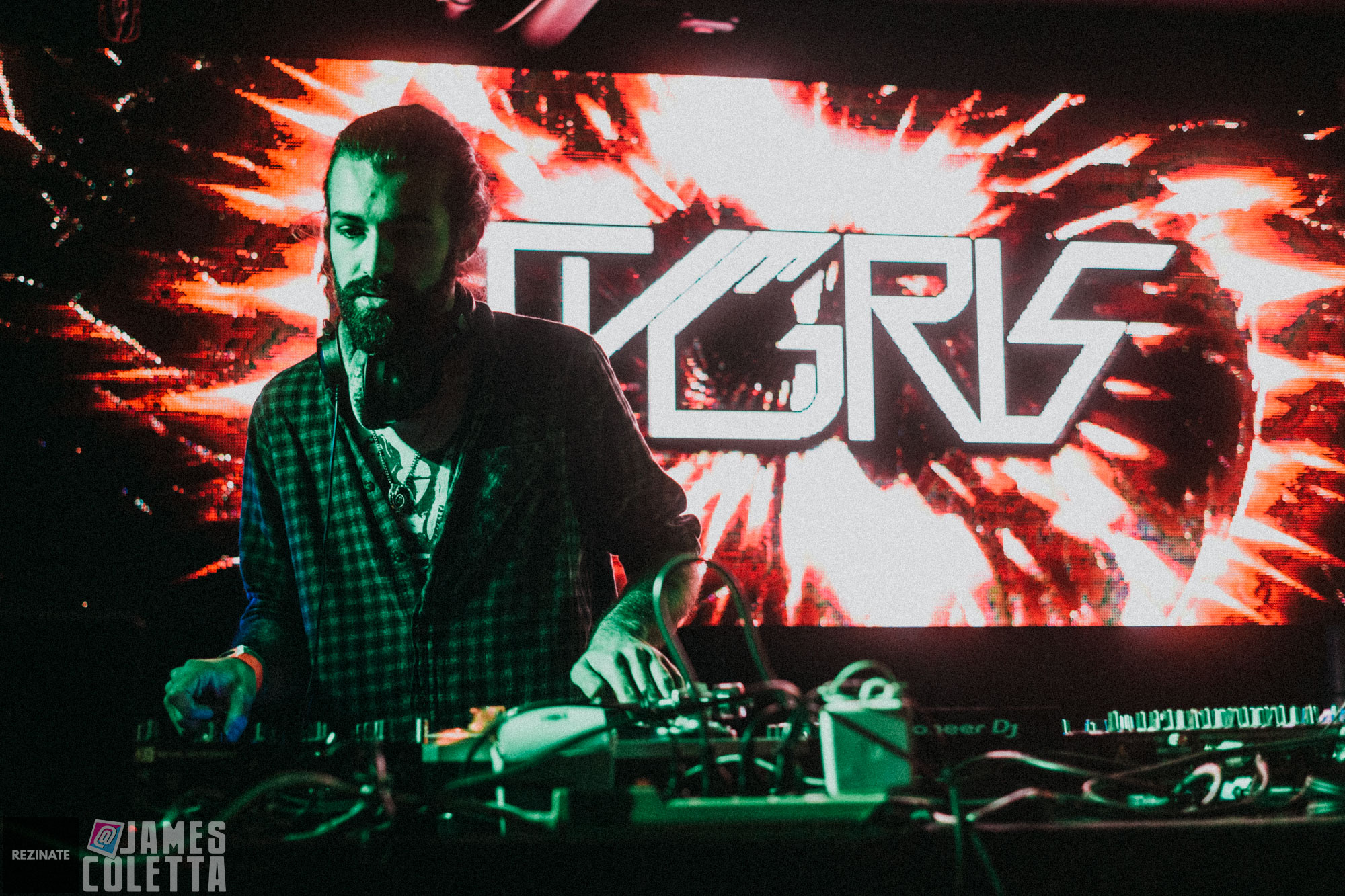


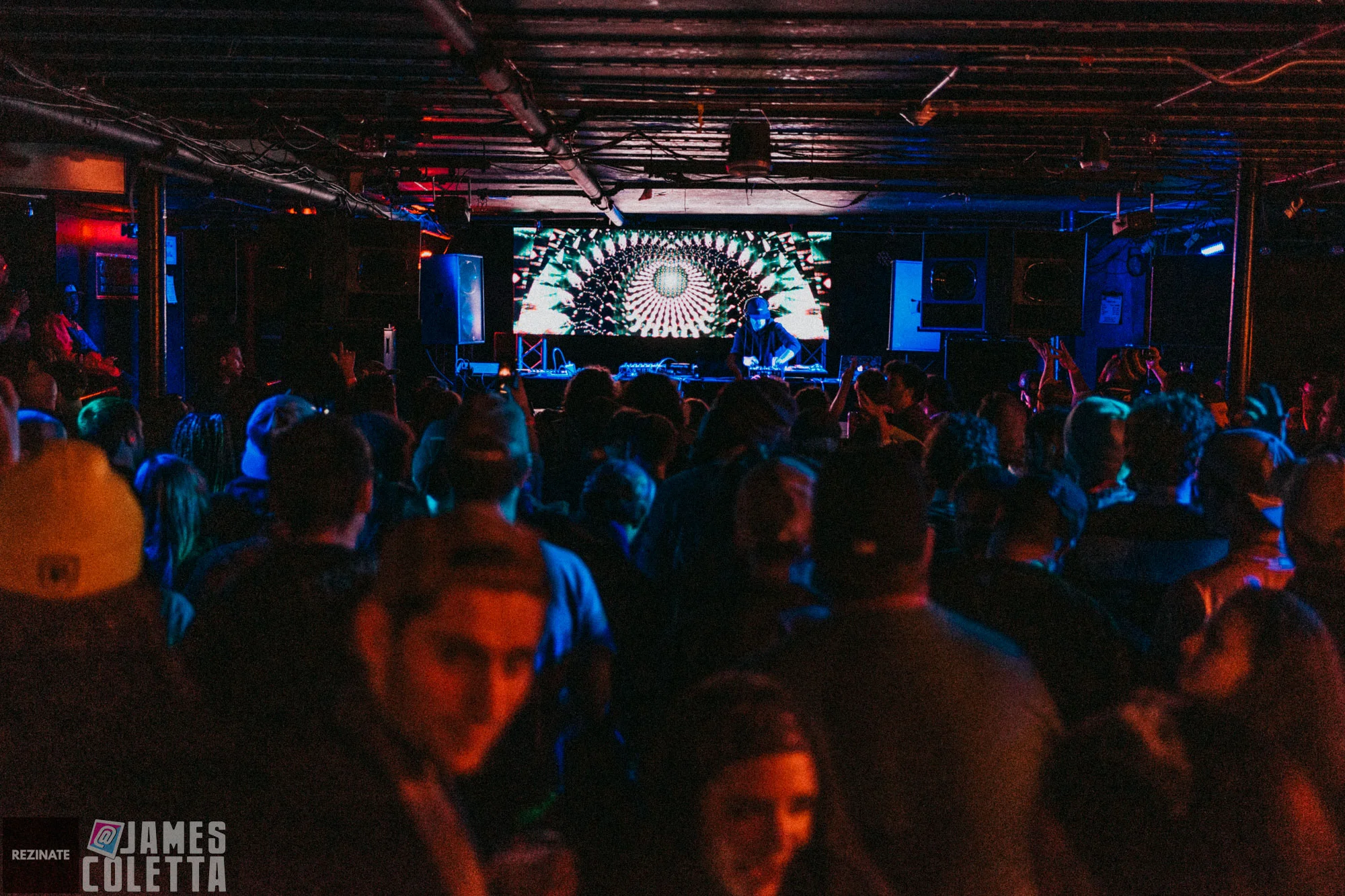


Rezinate was able to display the spectacular visuals of New England native David Schunemann aka Actualize on a crisp, brand new LED. Actualize is a becoming a force in his own right, steadily gaining traction as a respected VJ. You can catch him at Equinox Festival this summer among other shindigs. His smooth transitions and deep reservoir of art to select from created a great audio visual synchronization at the Middle East.
It’s nothing new for this New England team to showcase world-class talent while simultaneously big-upping local artists with supporting roles. They strive to curate a rather avant-garde experience whose fundamental focus is “cultivating deep, reverberating sound for a discerning audience,” and they hit their mark once again this evening. The atmosphere cultivated by Rezinate, Hennessey, the Middle East and all the fans on nights like these helps nurture a wholesome community based around freedom of expression and an appreciation for authentic performances.
FOLLOW Rezinate: Facebook / Soundcloud / Instragram / Twitter / Rezinate HQ
FOLLOW the photographers: James Coletta

Bent Audio Hosts Inaugural Party With Richard Devine, IDM Luminaries
If electronic music is a proverbial rabbit hole, the deeper you go, the stranger it gets. The newly minted Bent Audio production company specializes in these depths by nurturing an “infatuation with IDM, sound design, experimental electronic music, and breakcore.” On April 11th, New York City dove down that rabbit hole. Aphex Twin made his first appearance in the Big Apple in over a decade, then Bent Audio hosted their debut event after hours with Richard Devine at Polygon BK.
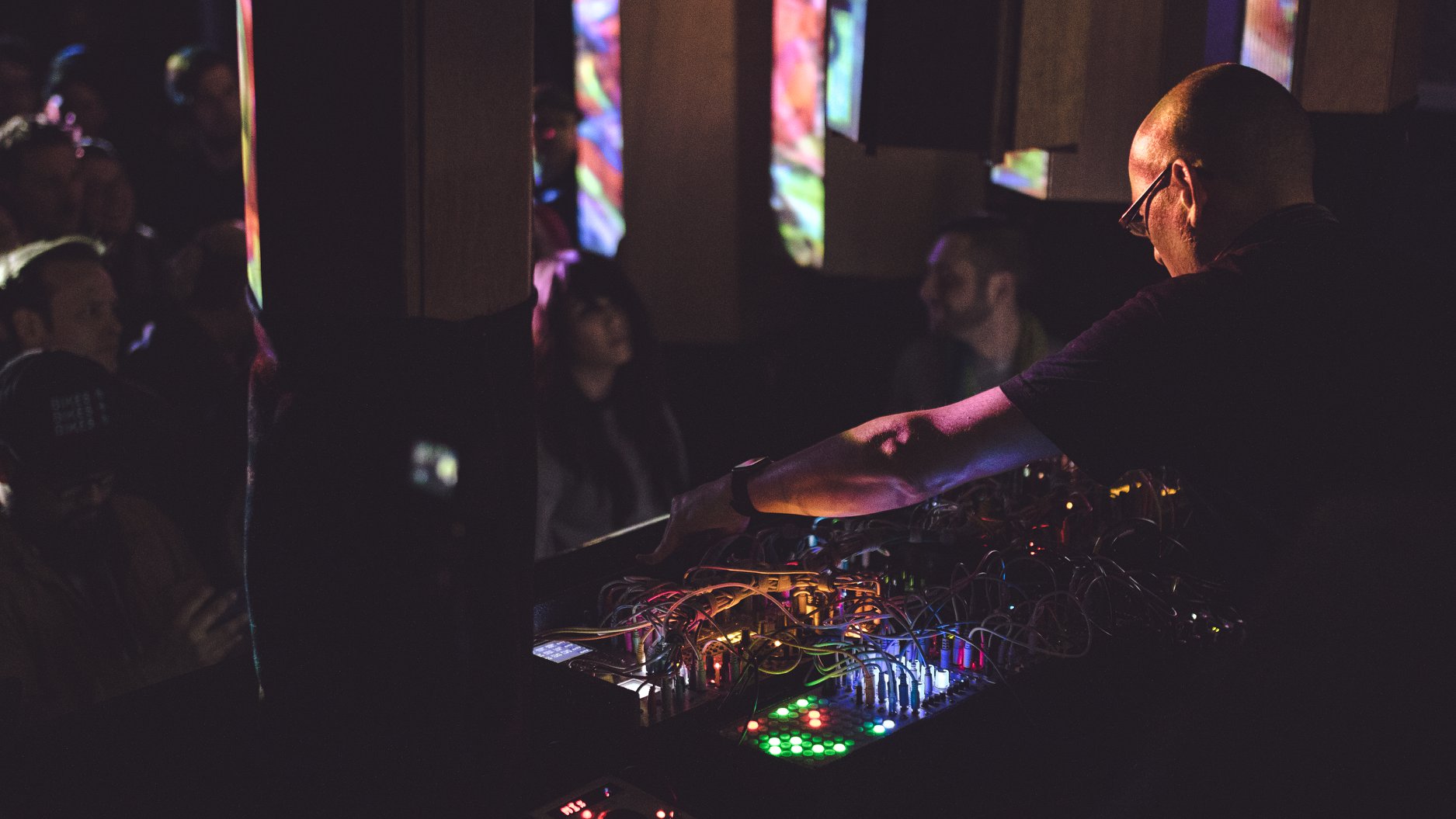
(Credit: FractalTribe)
If electronic music is a proverbial rabbit hole, the deeper you go, the stranger it gets. At its apex, that strangeness manifests itself as obscure rhythmic associations, broken slags and slices of resampled audio, and a feeling of immersion in the center of a bonafide audio glitch. The newly minted Bent Audio production company specializes in these depths by nurturing an “infatuation with IDM, sound design, experimental electronic music, and breakcore.” On April 11th, New York City dove down that rabbit hole. Fans were treated to a particularly euclidian evening; Aphex Twin made his first appearance in the Big Apple in over a decade, then Bent Audio hosted their debut event after hours at the equally euclidian Polygon BK. Their lineup exceeded topological dimensions, featuring IDM luminaries Woulg, Rob Clouth, Richard Devine, Ruby My Dear, and Hitori Tori, plus supporting sets from Naudible and Rob Fractaltribe.
The individuals behind Bent Audio’s coast-to-coast operation are Rob Fractaltribe and Micah Young, who have had their hands in multiple operations over the years that weave through the fabric of the global electronic music scene. Rob is the co-founder and head event coordinator of FractalTribe, the event curation/production company and frequency freak collective that’s been serving their brand of underground audio on the east coast for over 11 years. He’s also an affluent DJ and selector of eccentric IDM and psychedelic cuts. Micah is the founder of camp Hyperbole, known for its high-powered musical residency at Burning Man and beyond. He’s also the mind behind Naudible, a production project through which he dives into a range of styles, tempos, atmospheres, and sonic temperaments. The cumulative reach and capability of these two was on display during Bent Audio’s debut event.
The venue for the affair, Polygon BK, couldn’t have been more appropriate; an auspicious venue for an auspicious project. Officially opening its doors in Summer 2018, Polygon’s mission cuts straight to the core of all musical communities: “Polygon BK theorizes on the joining of people from all walks of life together under one roof (and two rooftops) to enjoy in the polygon of life – art, music, food, culture.” Boasting two Funktion One stacks and directional monitors acutely tuned to the naturally acoustic space, the venue achieves nearly 360° of sound on the dance floor. The spot contains a series of cascading rooms, with two rooftop bars, the dedicated music space, a third full wraparound bar, the “Polygon Room”, and backyard equipped with direct-line audio.
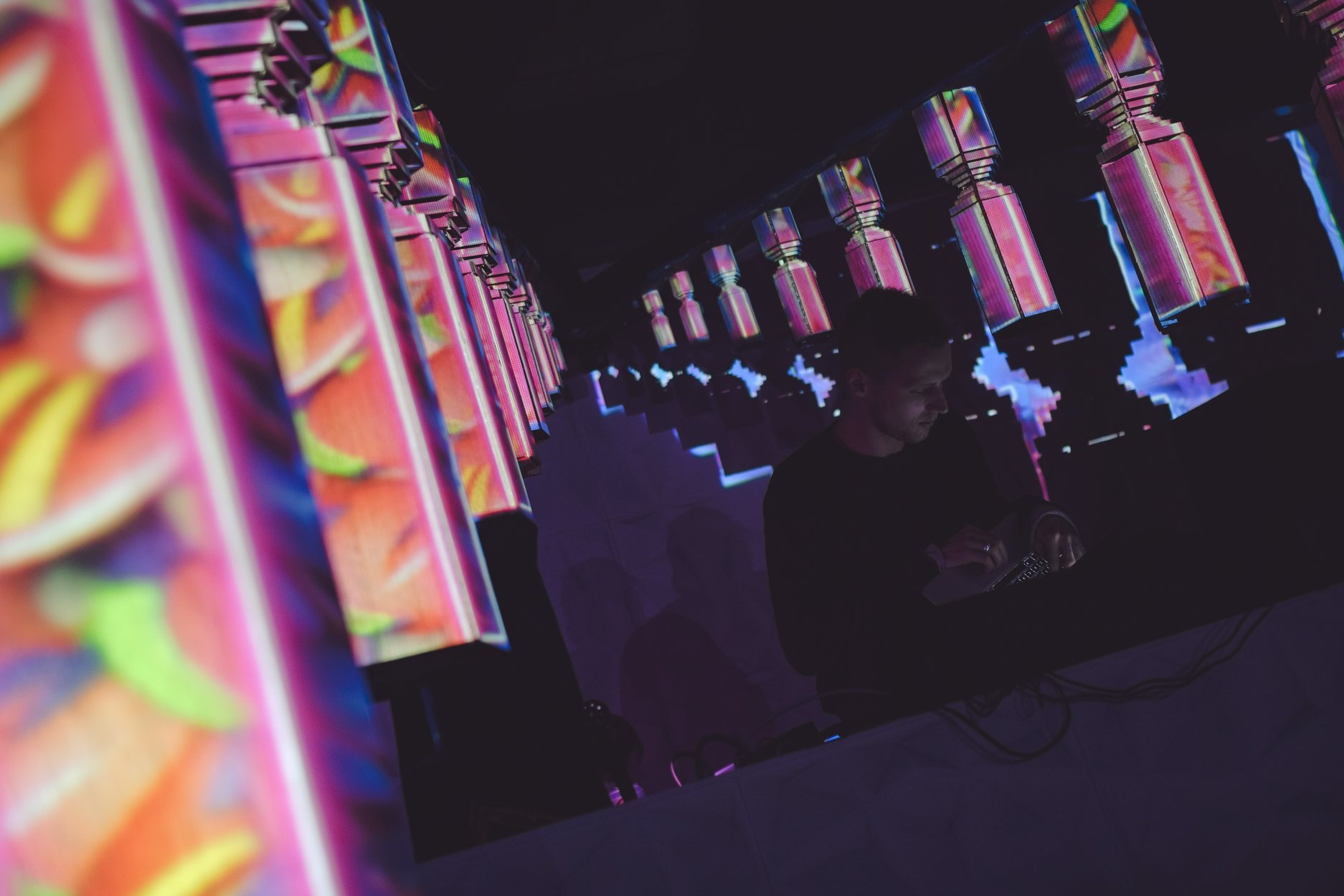
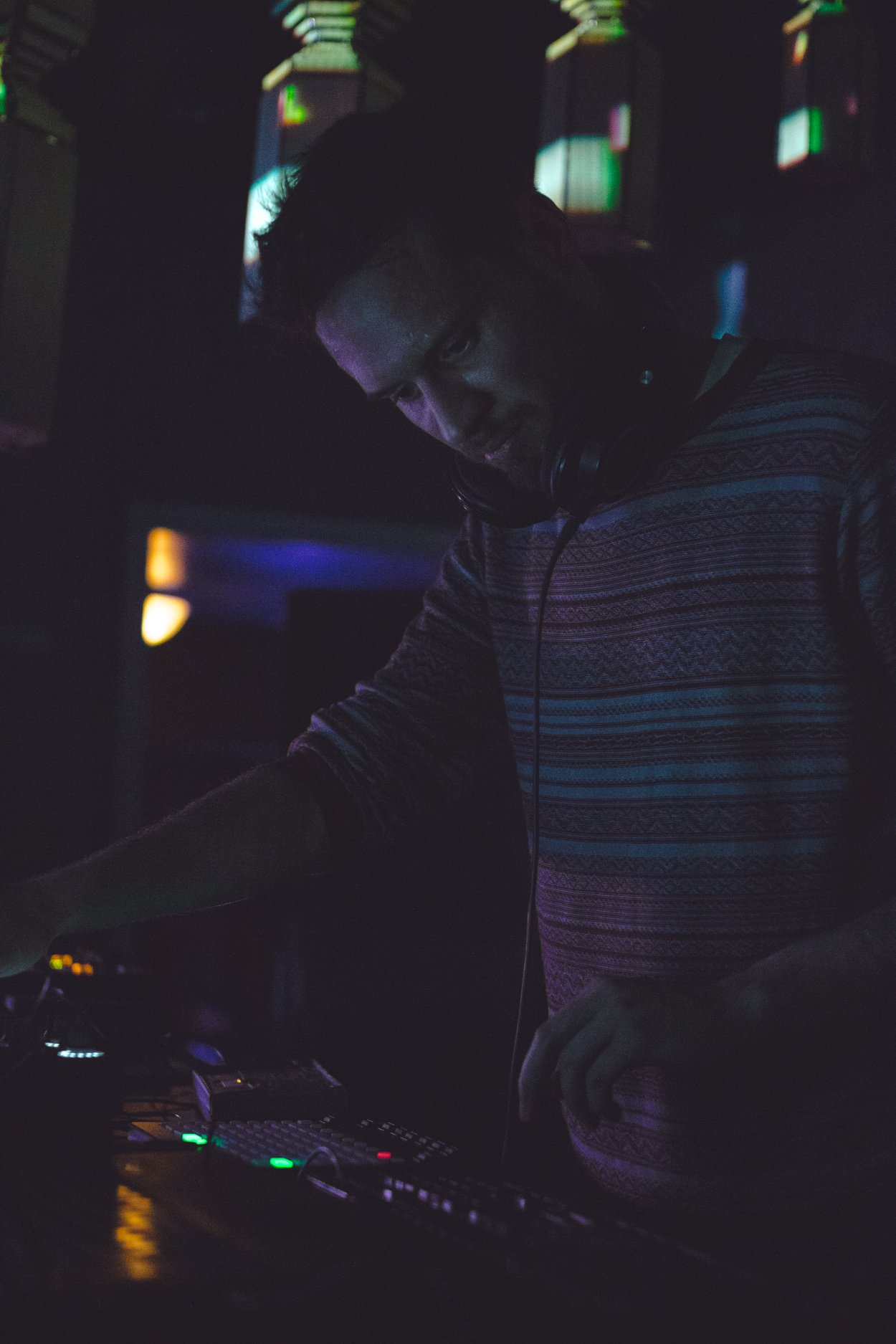
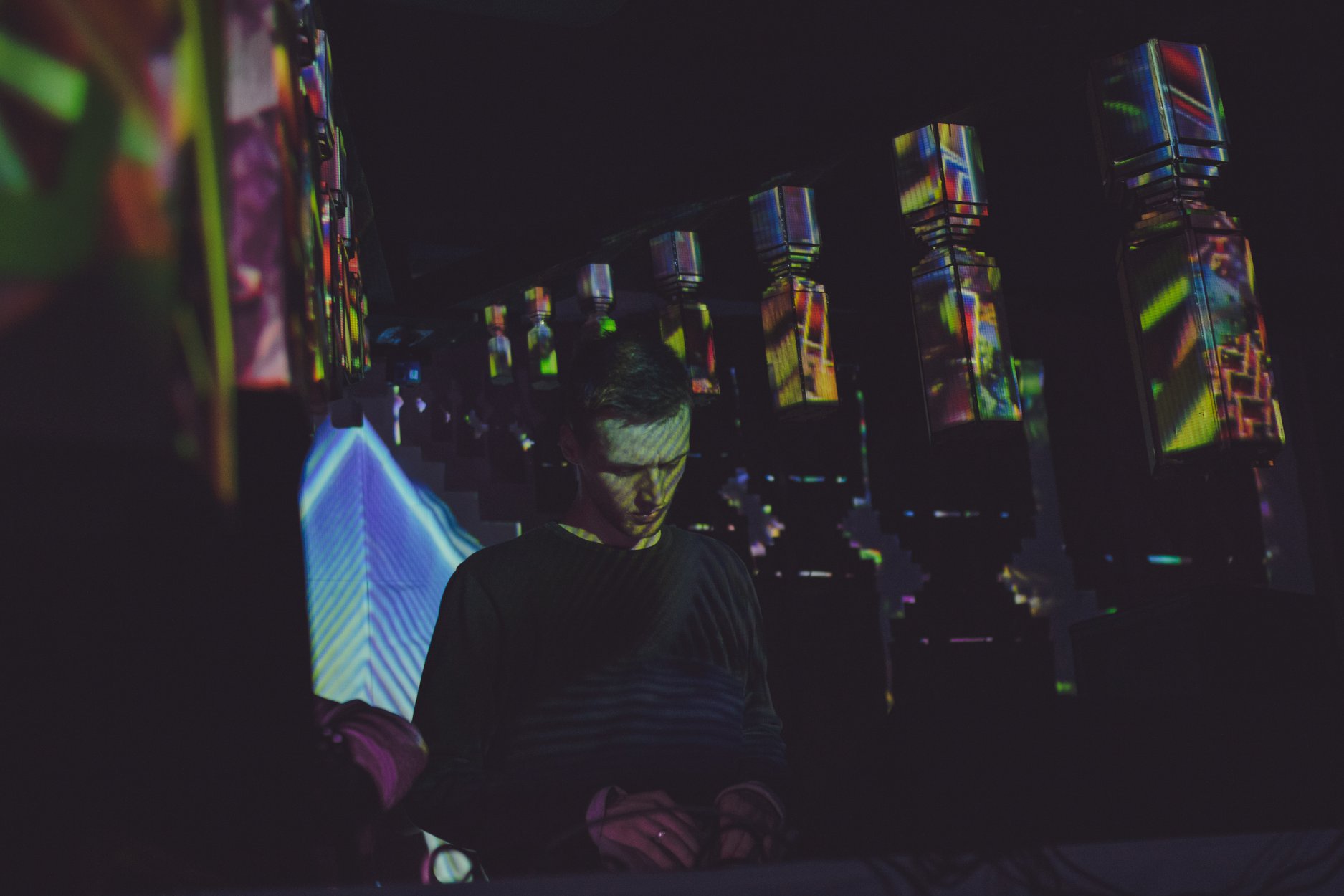
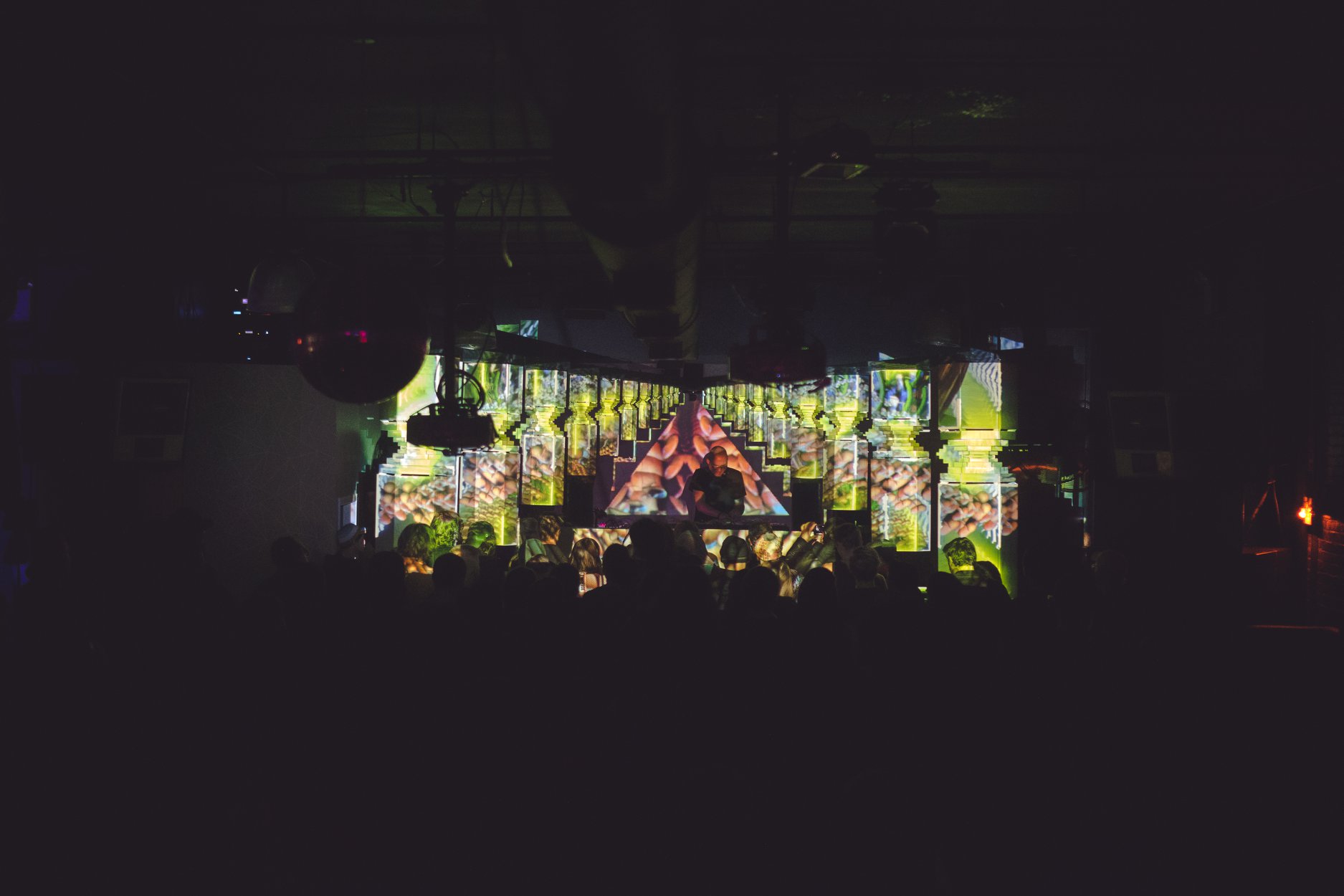
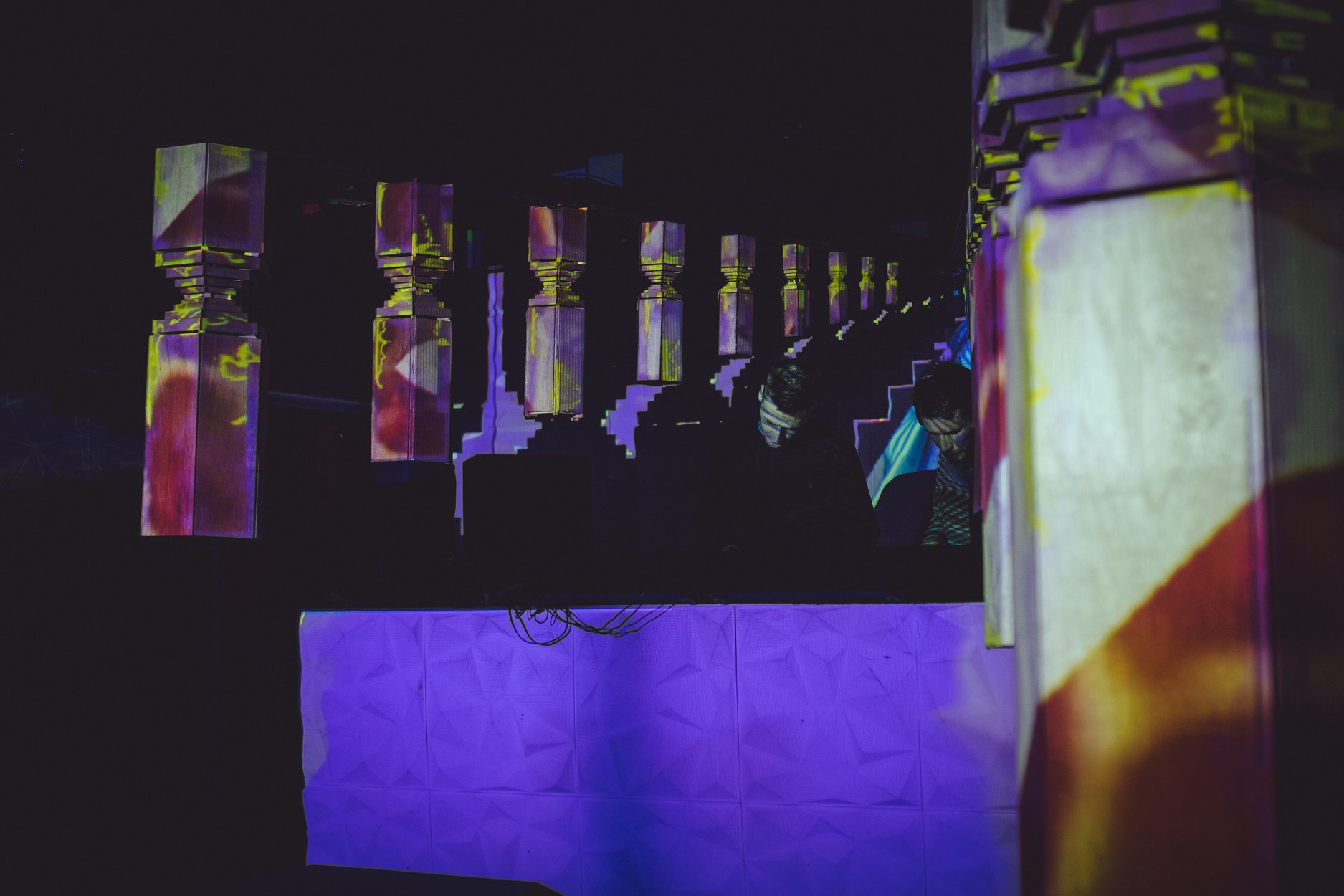
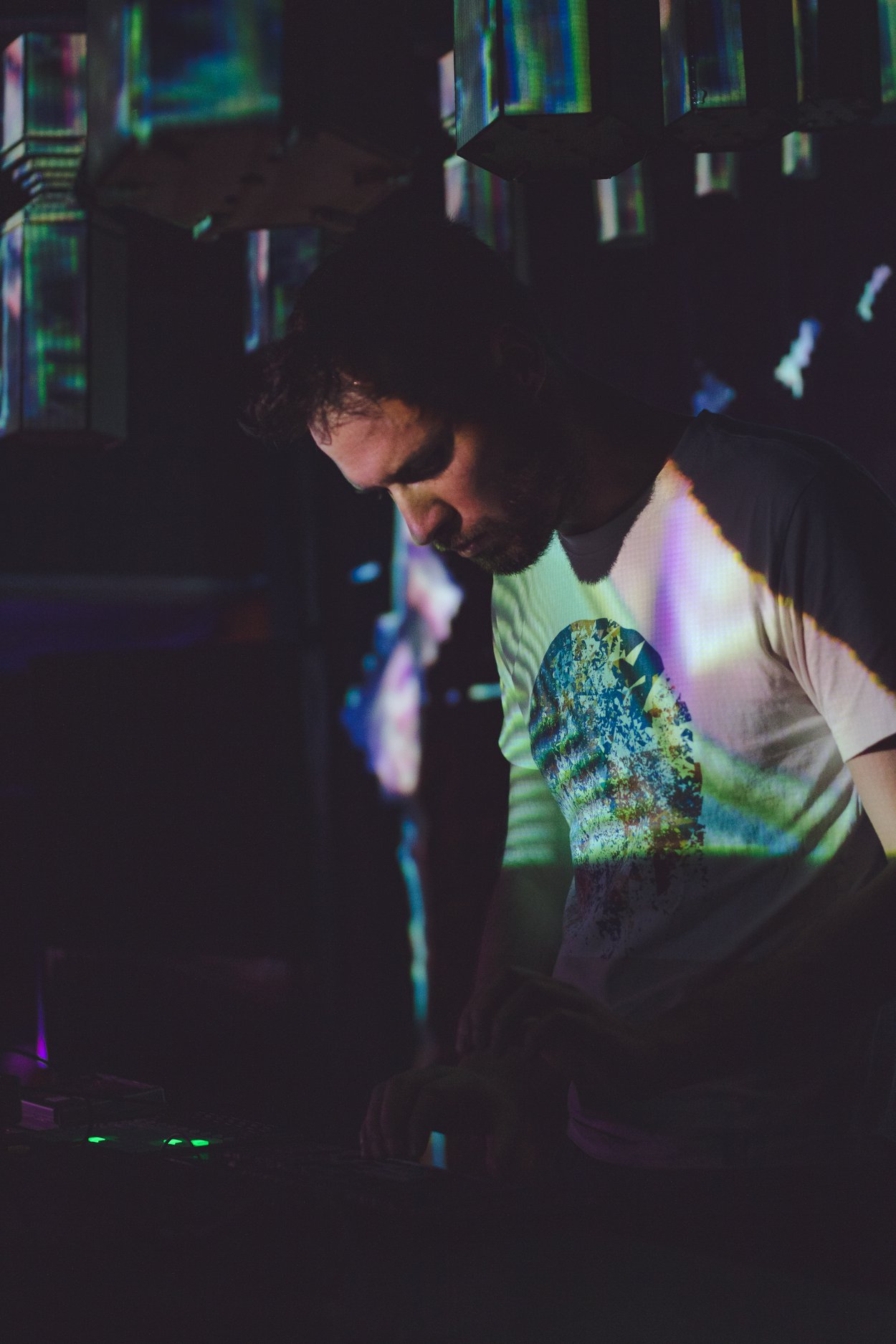
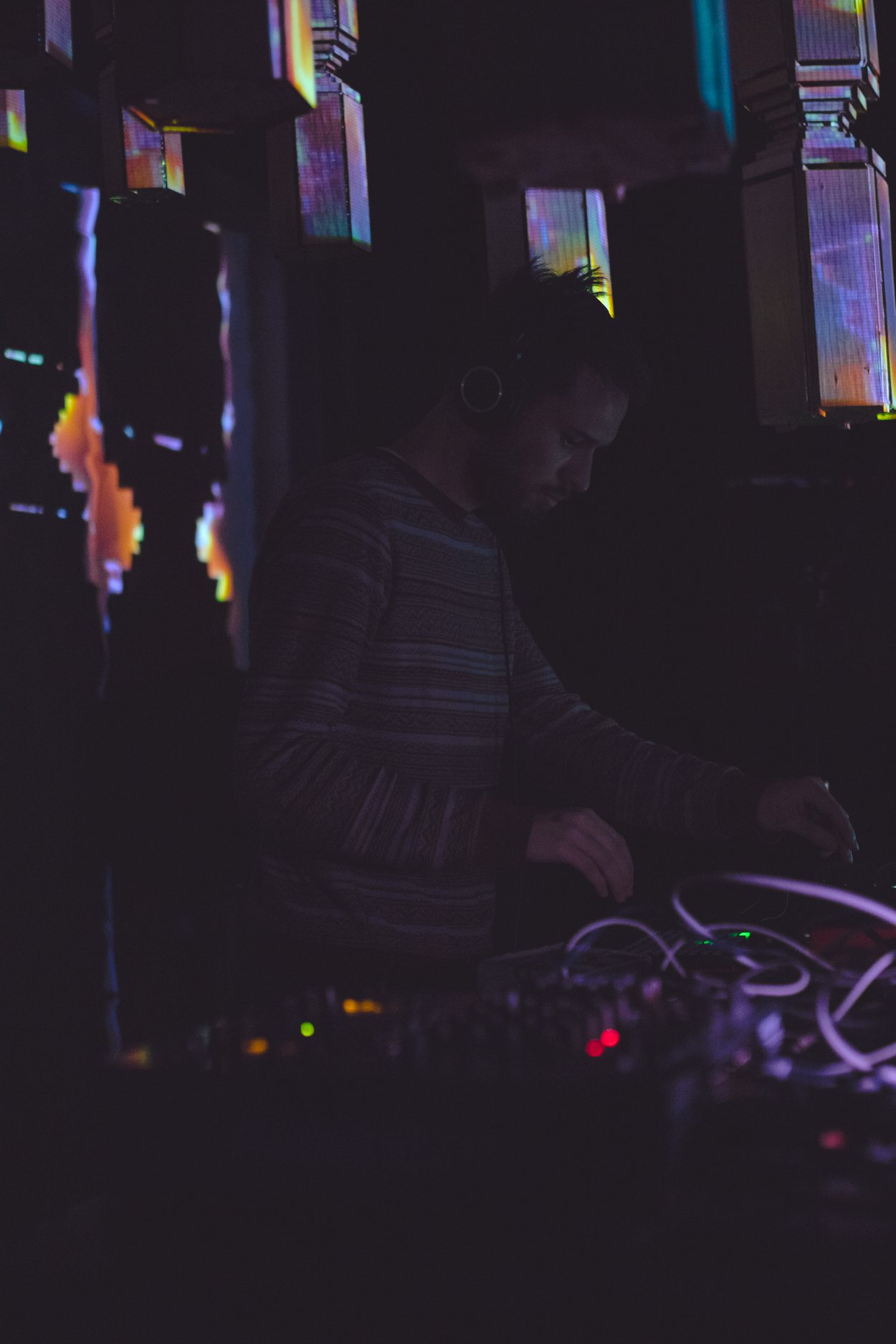
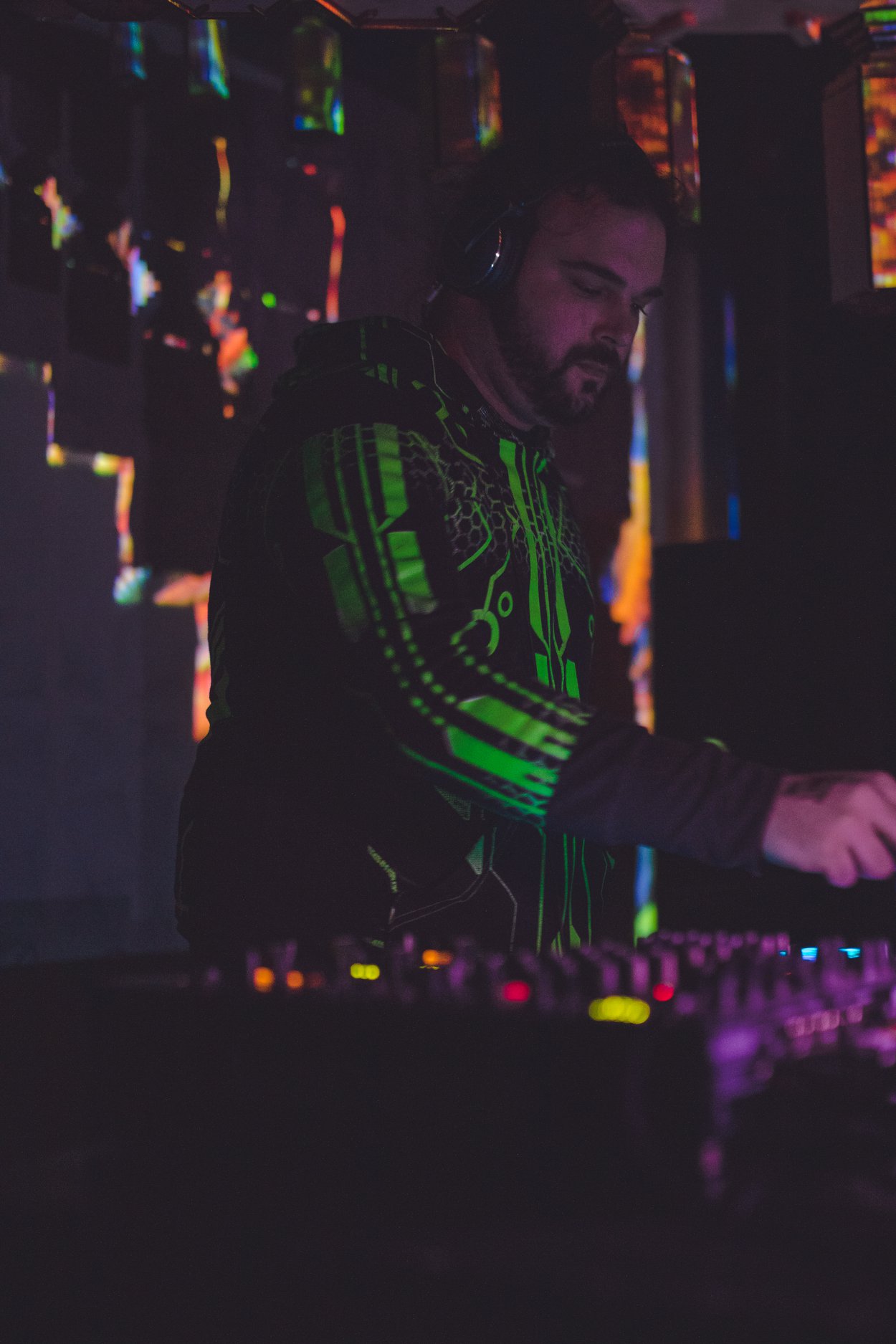
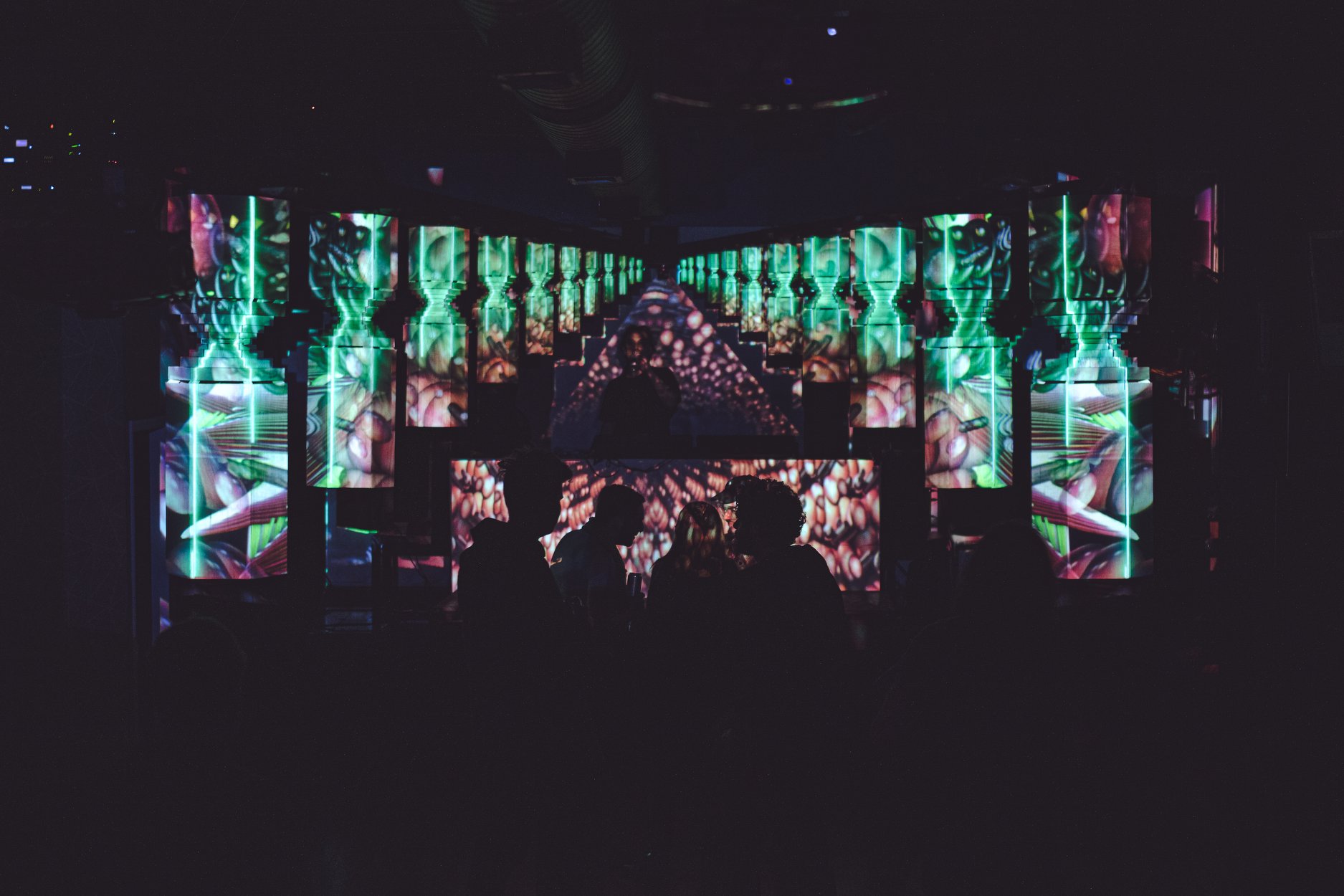
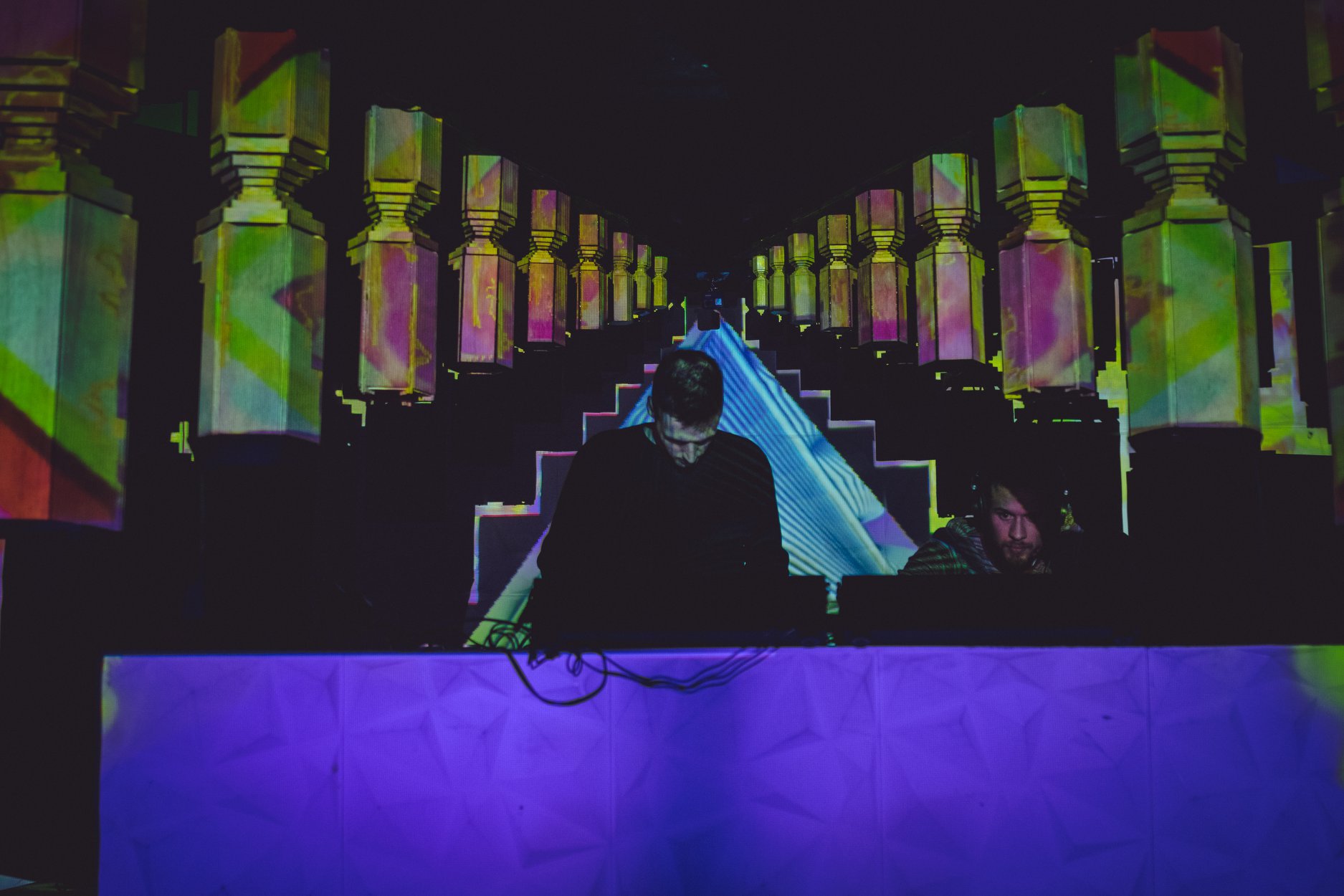
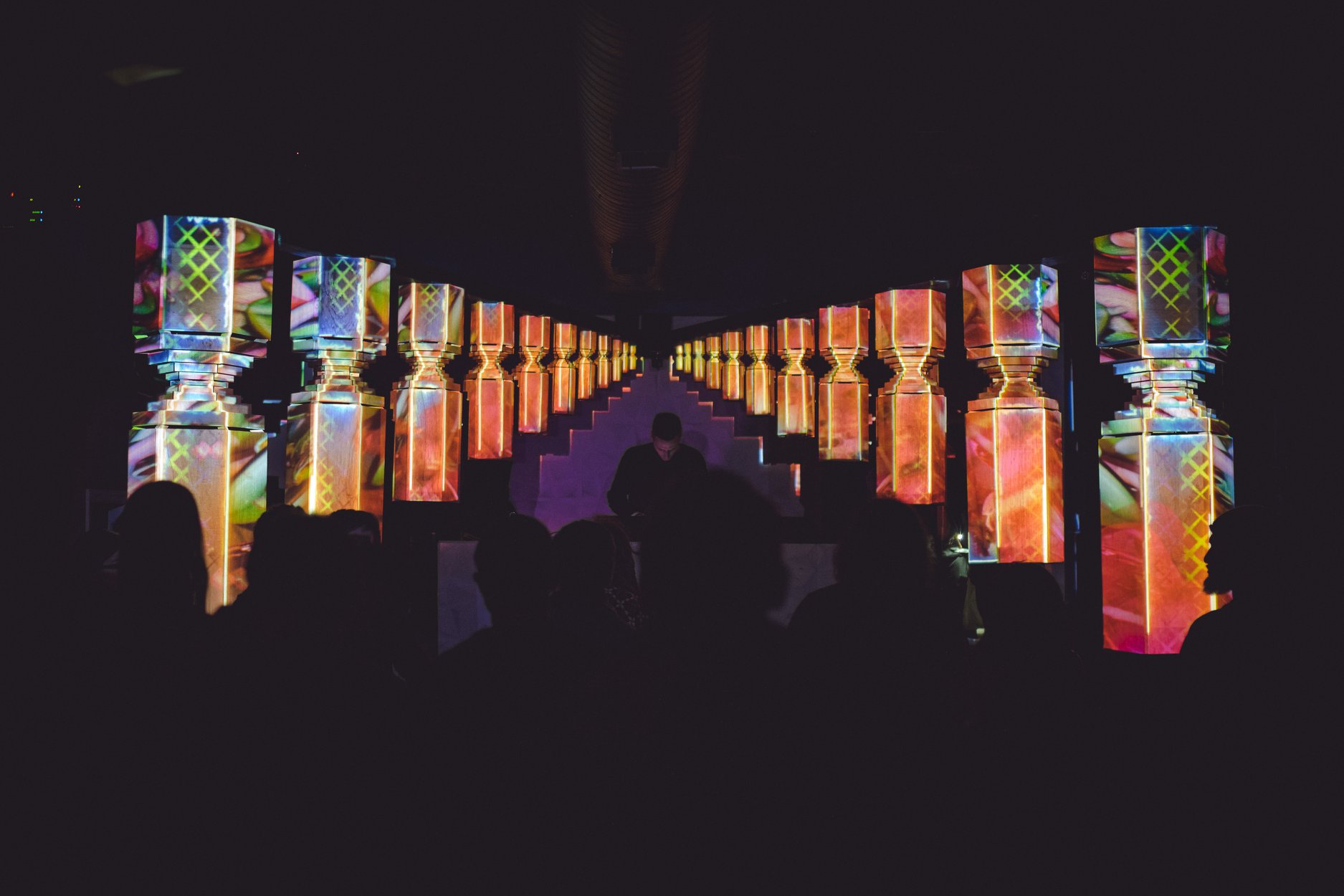
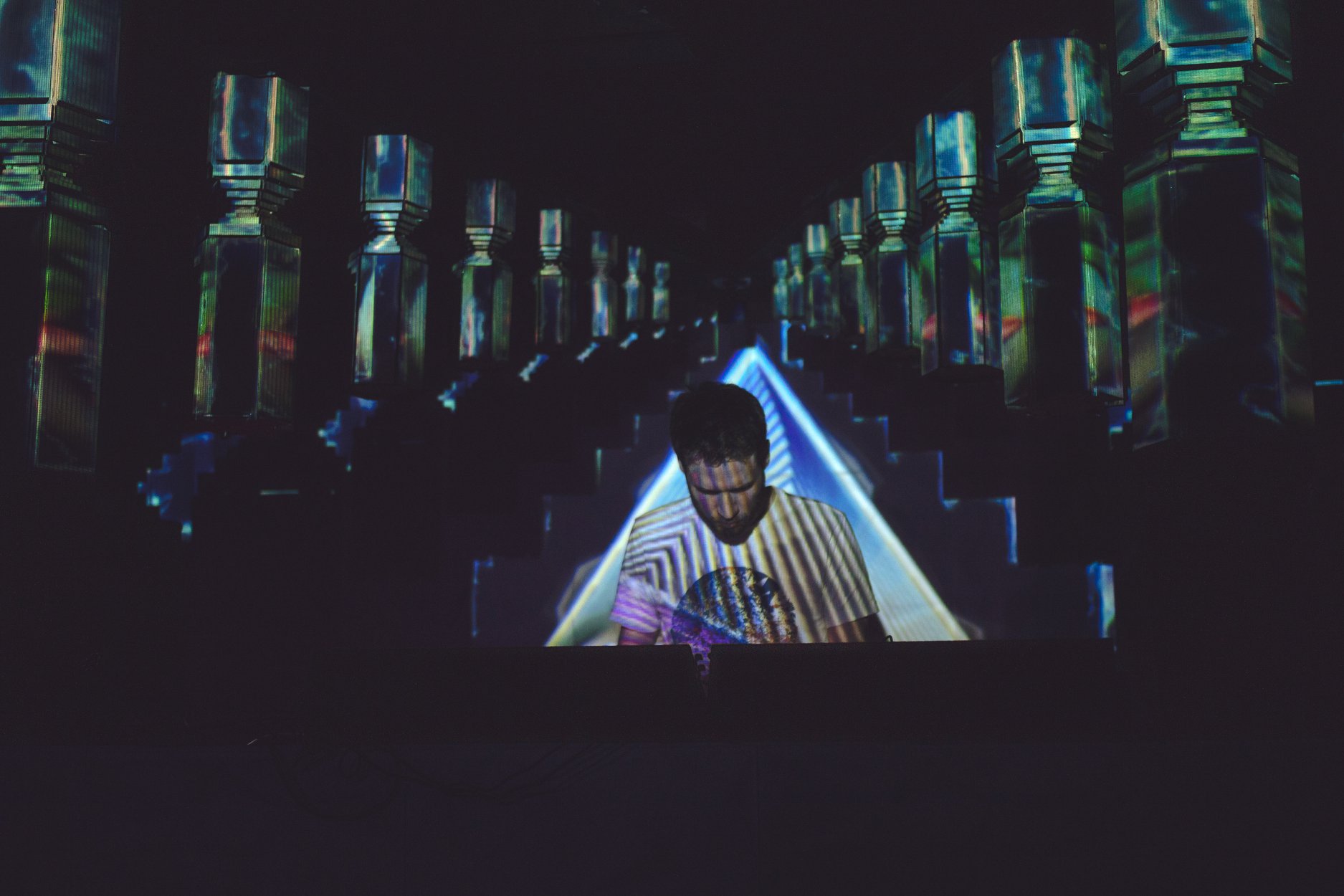
Rob Fractaltribe delivered a deliciously well-curated set of melodious arrangements, leading the energy of the room directly into Naudible’s performance. Given the complexity of his discography, Micah delivered everything from slime-coated broken beats to “four-on-the-floor” head trips to outright audio deviations and manipulations. Shedding the mold of dance-floor-friendly rhythms entirely, Woulg captured up the crowd in a radically asymmetrical experience. With a musical output like solar flares, his catalog is an amorphous gel of audio design that slips and slices through the frequency spectrum. Following up the sonic madness with yet more sonic madness, Rob Clouth unleashed a distinctly tonal bevy of music, with criss-crossed textures and wrap-around glitches turning the air in the room into a sound bath.
The next producer to ascend the stage is one of the most venerated audio engineers and designers of this age. Richard Devine has a seemingly unparalleled devotion to and understanding of modular synthesis and texture resampling. He’s at the forefront of the immersive audio movement, utilizing state-of-the-art ambisonic microphones and his engineering know-how to create true three-dimensional music. His performance for the evening was just as captivating in person as his eclectic studio output, with a setup of several modular devices chained into war chest of an instrument. Rocking the crowd through space and time, Devine set the stage perfectly for Ruby My Dear to unleash a wild torrent of breakcore through the sound system. Dissolving the space between IDM, jazz, and classical compositions, Ruby My Dear simultaneously crossed the boundaries of intensity, melody, intention, and randomization. To close the evening, Hitori Tori sent the crowd into a stupor with jet-powered percussion, quickening the energy of the room to light-speed intervals like photons shooting through the Large Hadron Collider.

In the ever-growing sea of musical developments, every genre has the capacity to branch out into the best possible niche of itself, like a matryoshka of aural classifications. IDM continues to follow this pattern, with its rate of development depending solely on the daring of audiophiles. Bent Audio is playing the role of the wholesale distributor, placing their focus squarely on this niche genre and its pioneering members. If their first impression is an indication of what we can expect from the company, then the best and strangest is surely yet to come. Their next event is just over the horizon on May 10. Sakura takes place at the Wisdome Immersive Art Park in Los Angeles, featuring live Microdose VR visuals with the music of Mr. Bill, David Phipps (of STS9), Bwoy De Bhajan, Easyjack, Biolumigen and more.
FOLLOW Bent Audio: Facebook / Sakura Tickets

Rezinate & The Reliquarium Deliver Immersive Nightlife Experience
Electronic music promoters worldwide try to cultivate a feeling of immersion. Whether it’s a claustrophobic dark room or a decorated festival field, promoters want their patrons to be able to lose themselves and forget their temporal concerns if only for a set or two. That’s why one often sees productions within existing spaces or venues that try to engage all five senses. Here lies the advantage of hosting an event with The Reliquarium at their event space and headquarters in Lincoln, Rhode Island.

Decor at The Reliquarium’s warehouse and event space in Lincoln, RI (Credit: James Coletta)
Electronic music promoters worldwide try to cultivate a feeling of immersion. Whether it’s a claustrophobic dark room or an expansive festival field, promoters want their patrons to be able to lose themselves in the music and vibrations and forget their temporal concerns if only for a set or two. That’s why one often sees productions within existing spaces or venues that try to engage all five senses. Here lies the advantage of hosting an event with The Reliquarium at their event space and headquarters in Lincoln, Rhode Island.
A collective of artists and designers, Reliquarium is regional go-to for stage and event design, having fabricated stages for Elements Lakewood, Fractal Fest, Minus Zero, Wild Woods, and Unifier Festival. They’ve also worked on stages further afield at Burning Man, the 2017 Global Eclipse Gathering, and Envision Festival. As the locale from which all this world-class creation emanates, their event space and warehouse in Lincoln already is the immersive environment that promoters so often try to create ad hoc. Enter The Reliquarium and you’re surrounded by 360 luxurious degrees of transcendent art, design, thought, and music.
On December 1, Boston-based event production crew Rezinate partnered with The Reliquarium to host an evening of curated dubstep and drum and bass in Lincoln. The two organizations have collaborated before, with Rezinate bringing Reliquarium stage designs into the Middle East Downstairs for one show during each of their past two Fall seasons. Besides these direct collaborations, the organizations have known each other peripherally, as both are anchor points for the electronic music community in New England and the Northeast. Rezinate always carefully calculates how they bill and pair talent. This evening, though, their curation clout was approaching a new high, as each of the five DJs were also promoters and curators themselves.
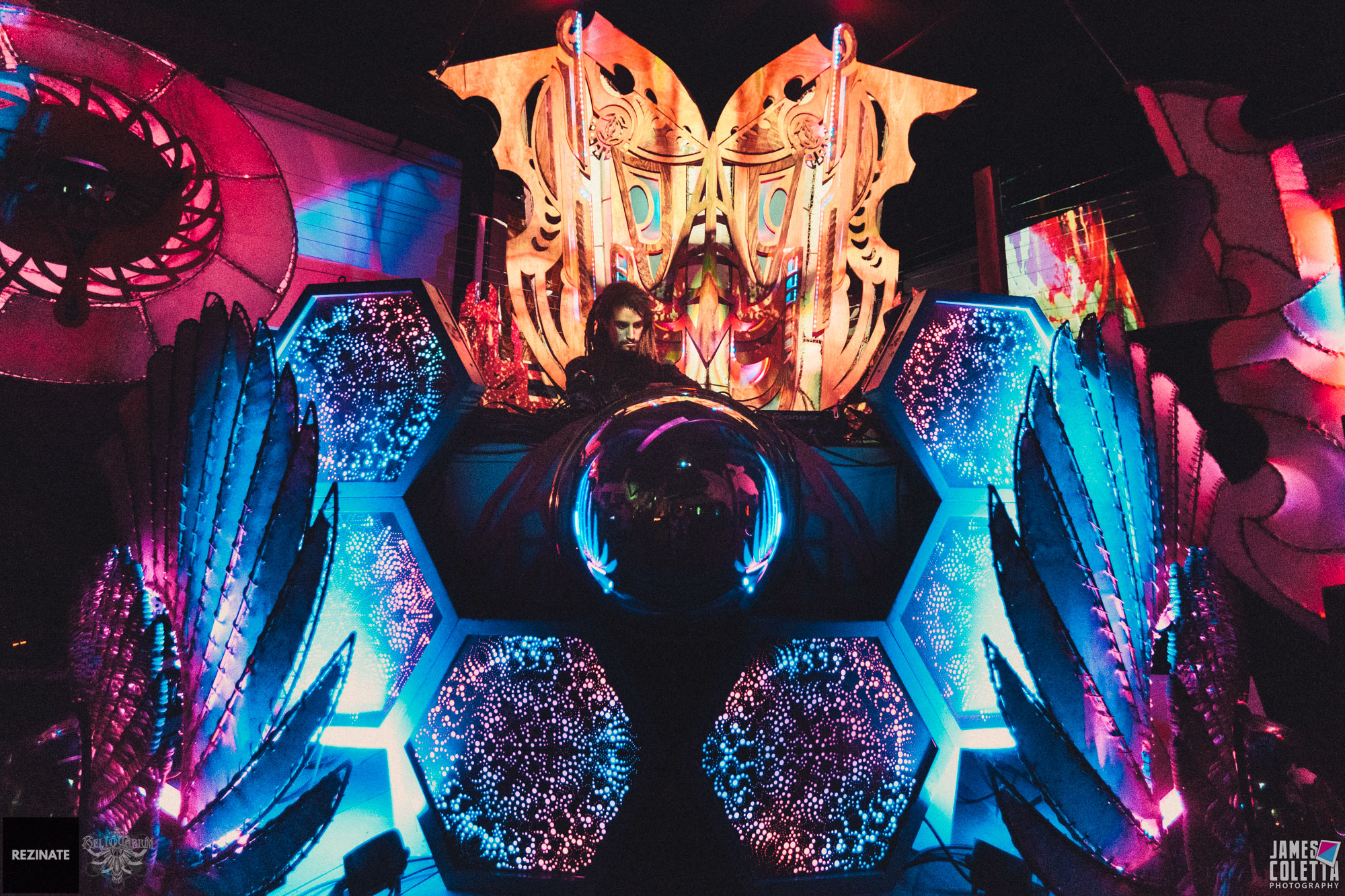
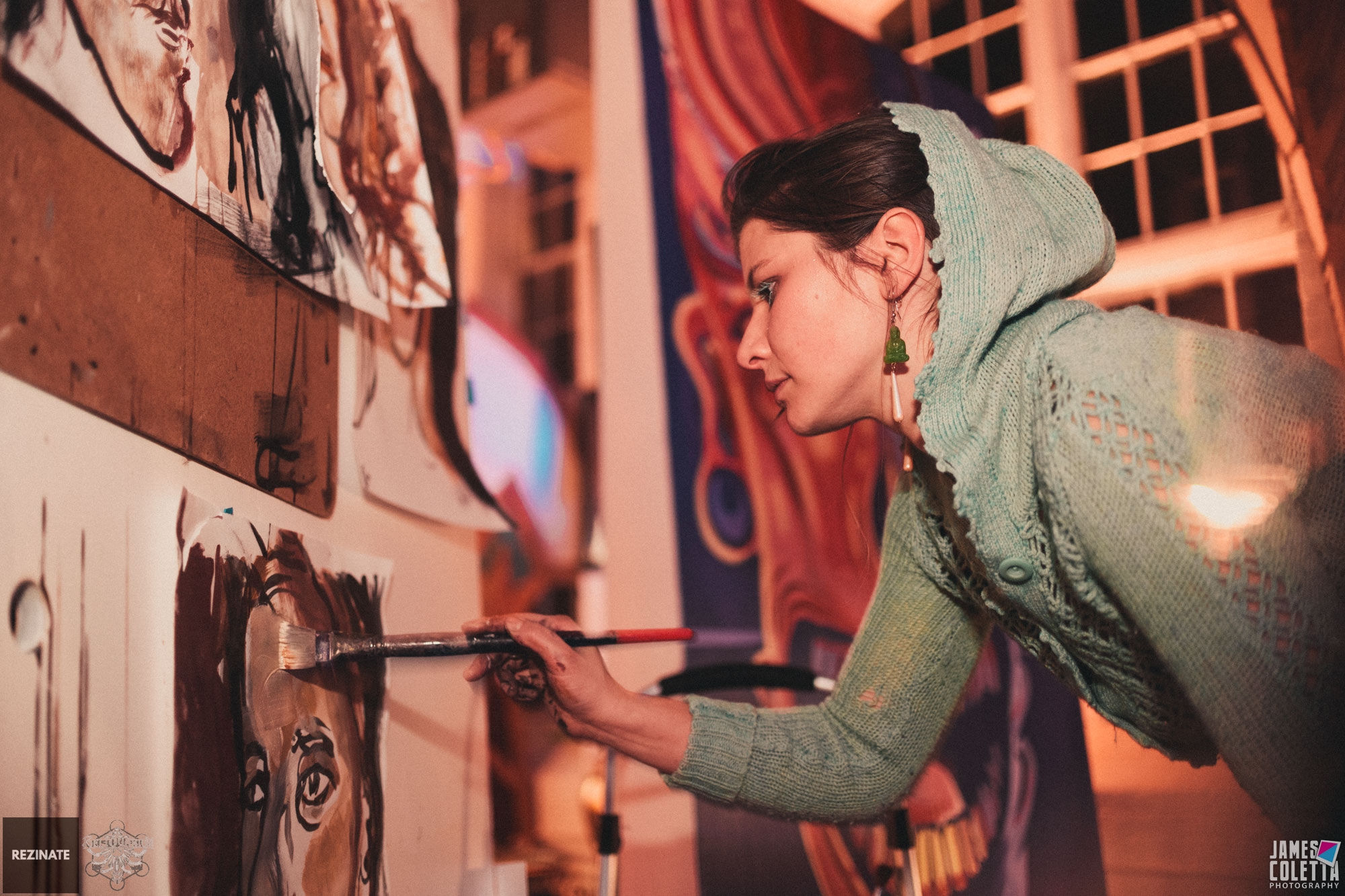

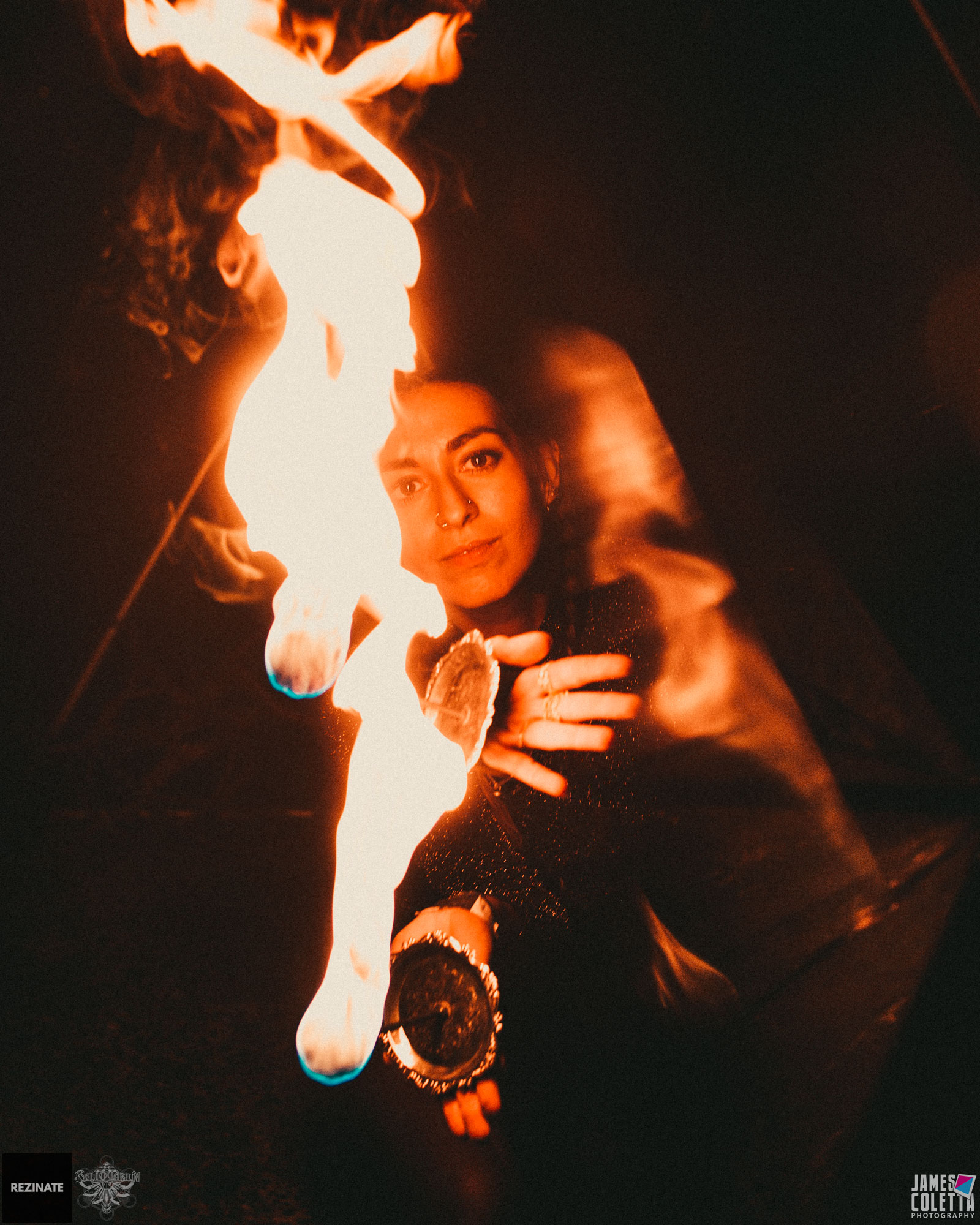
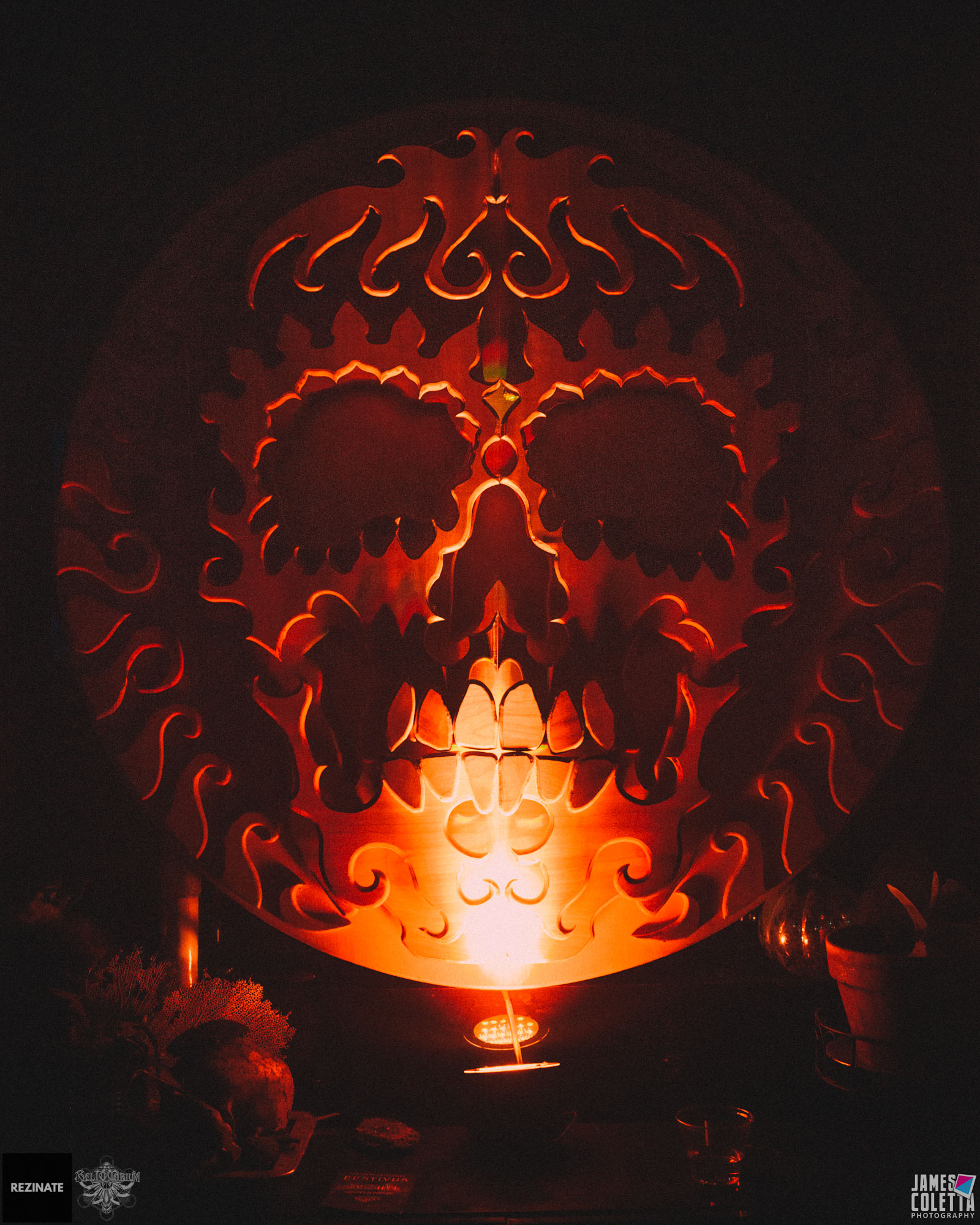
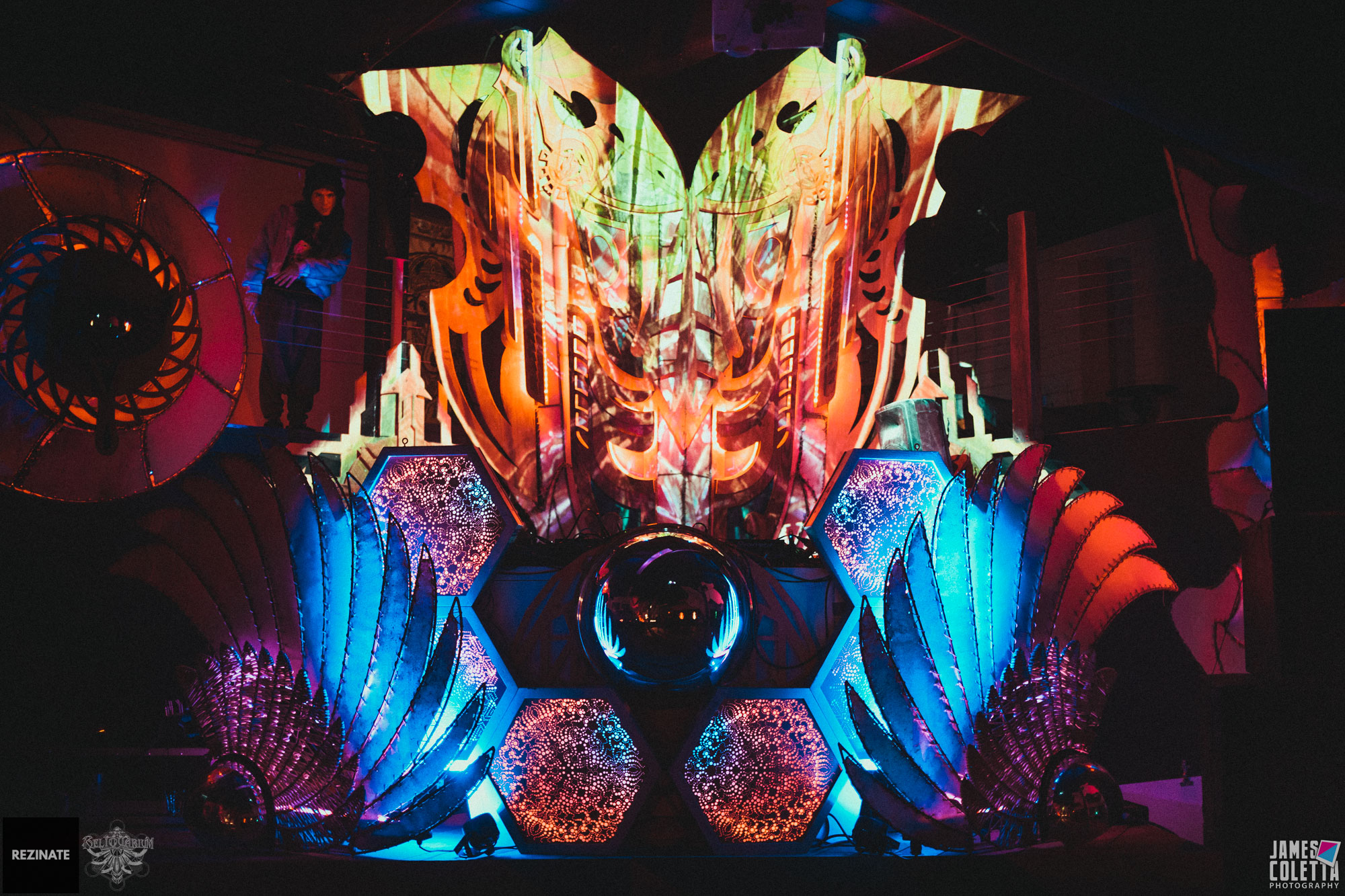
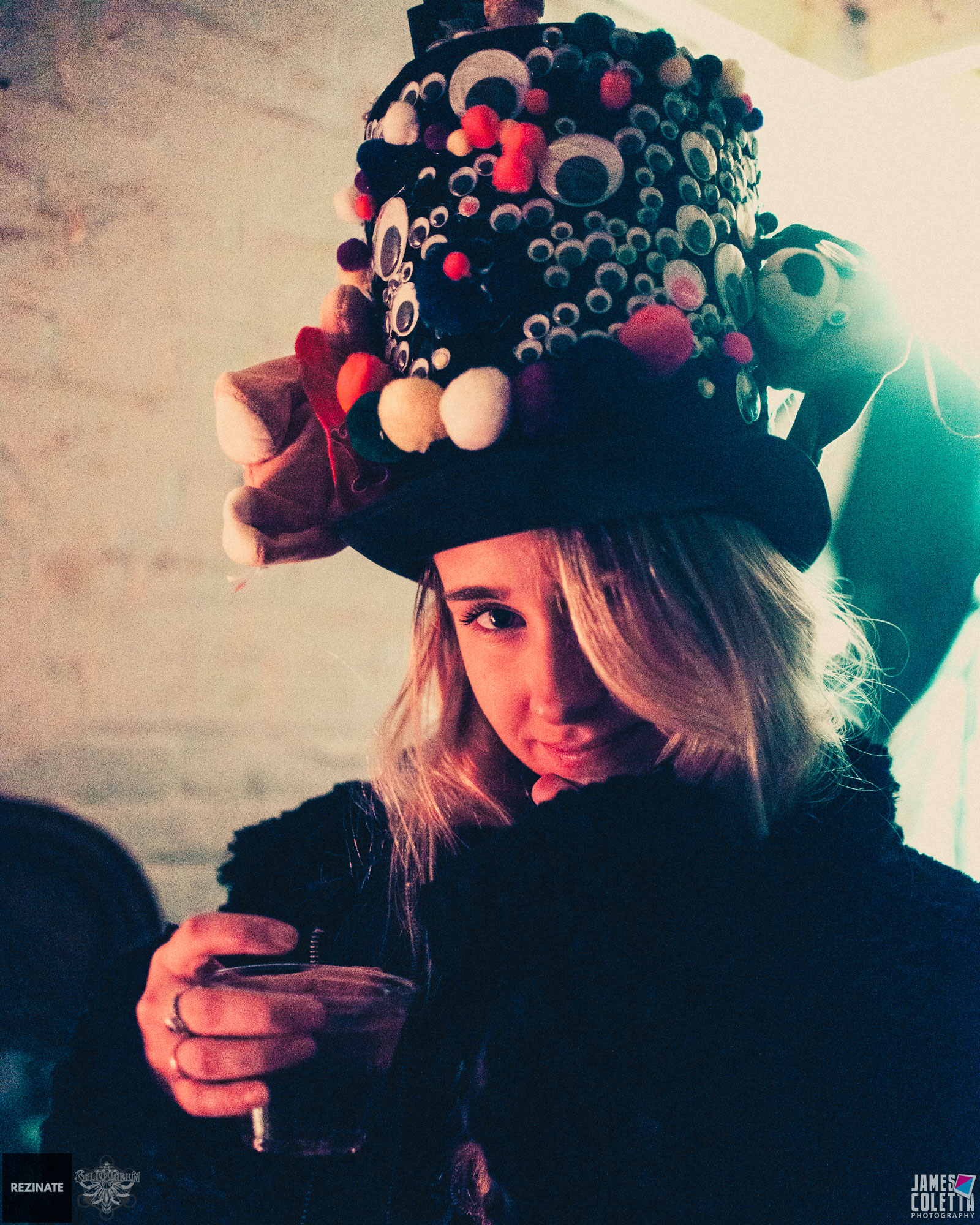
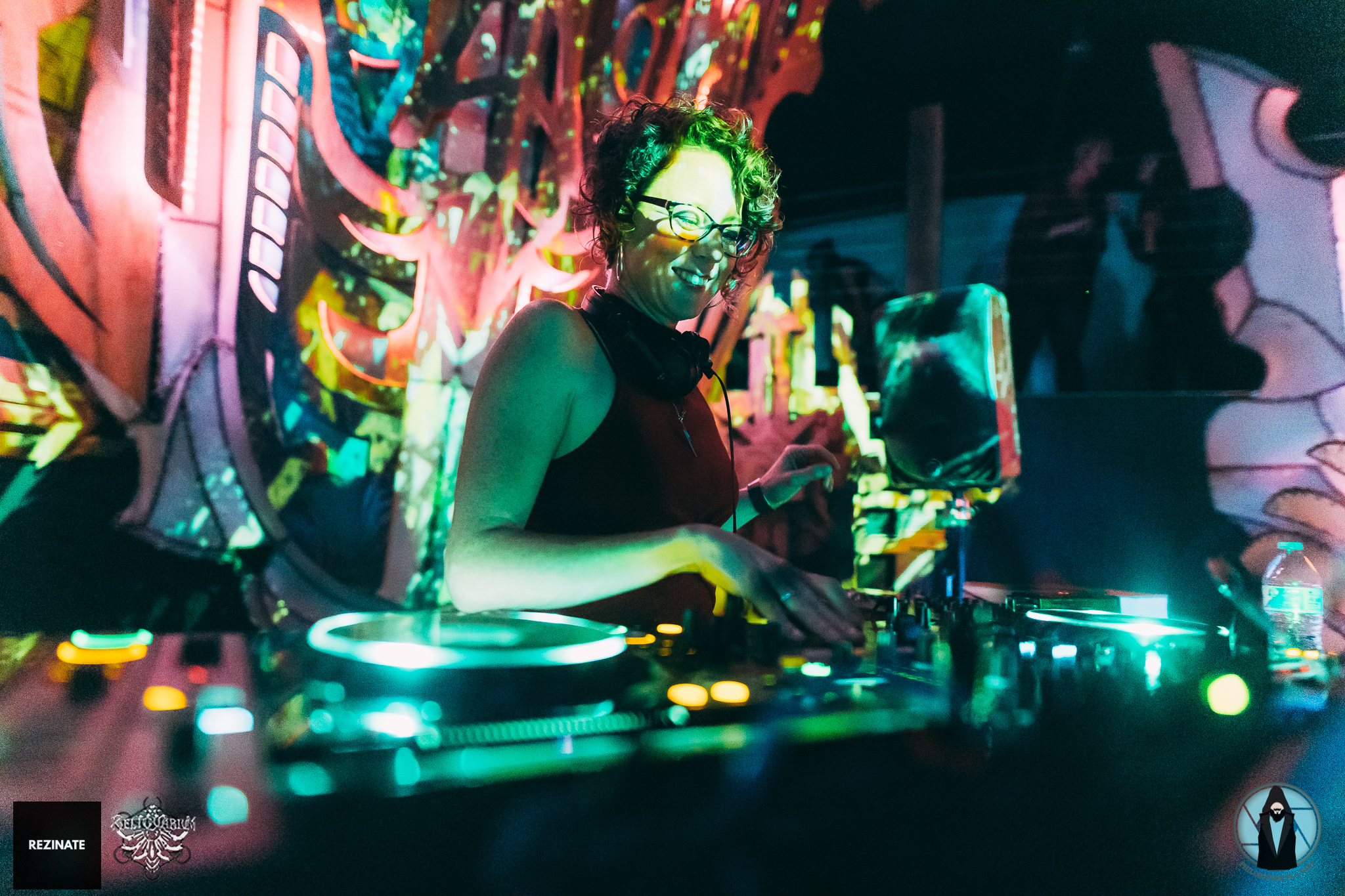
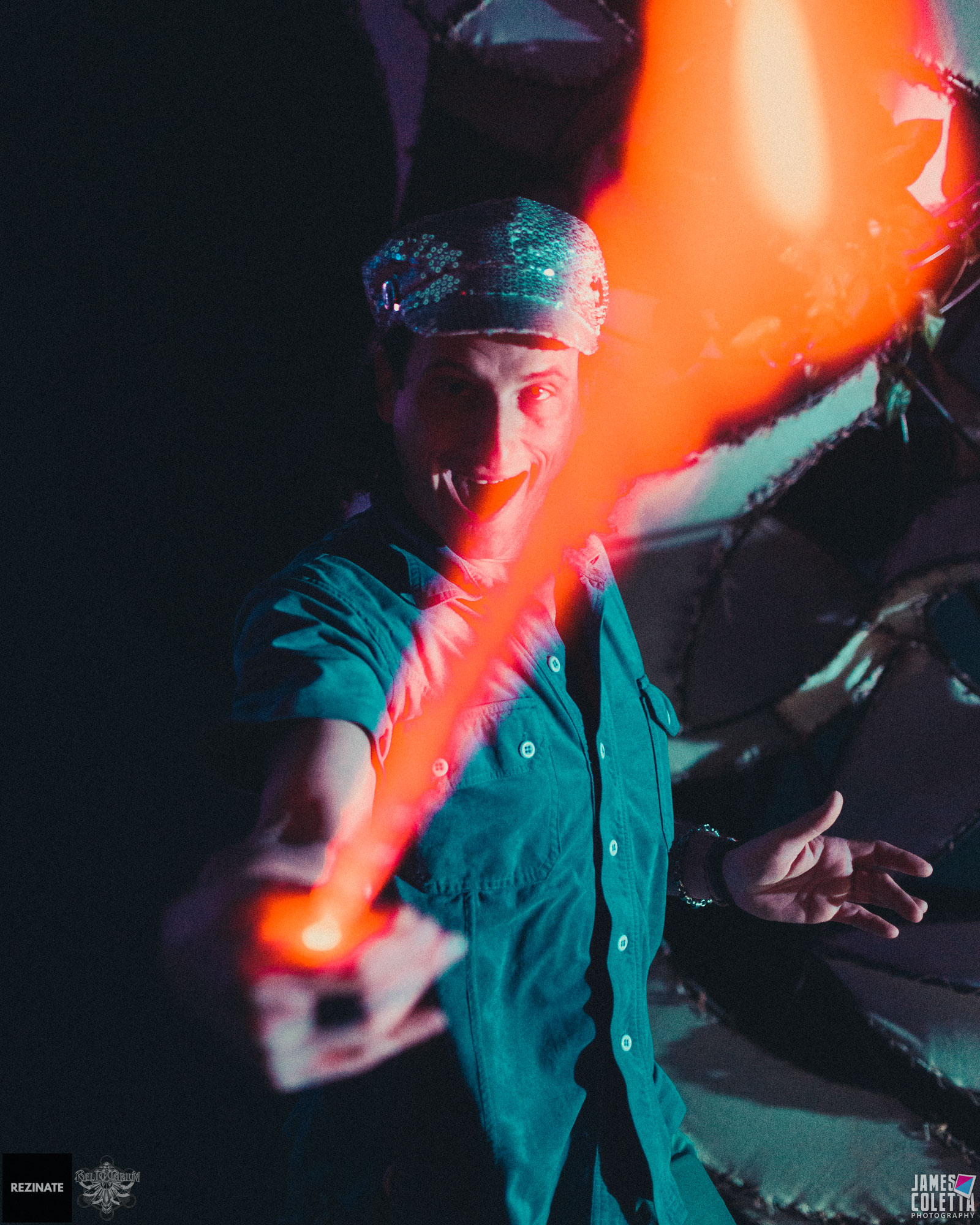
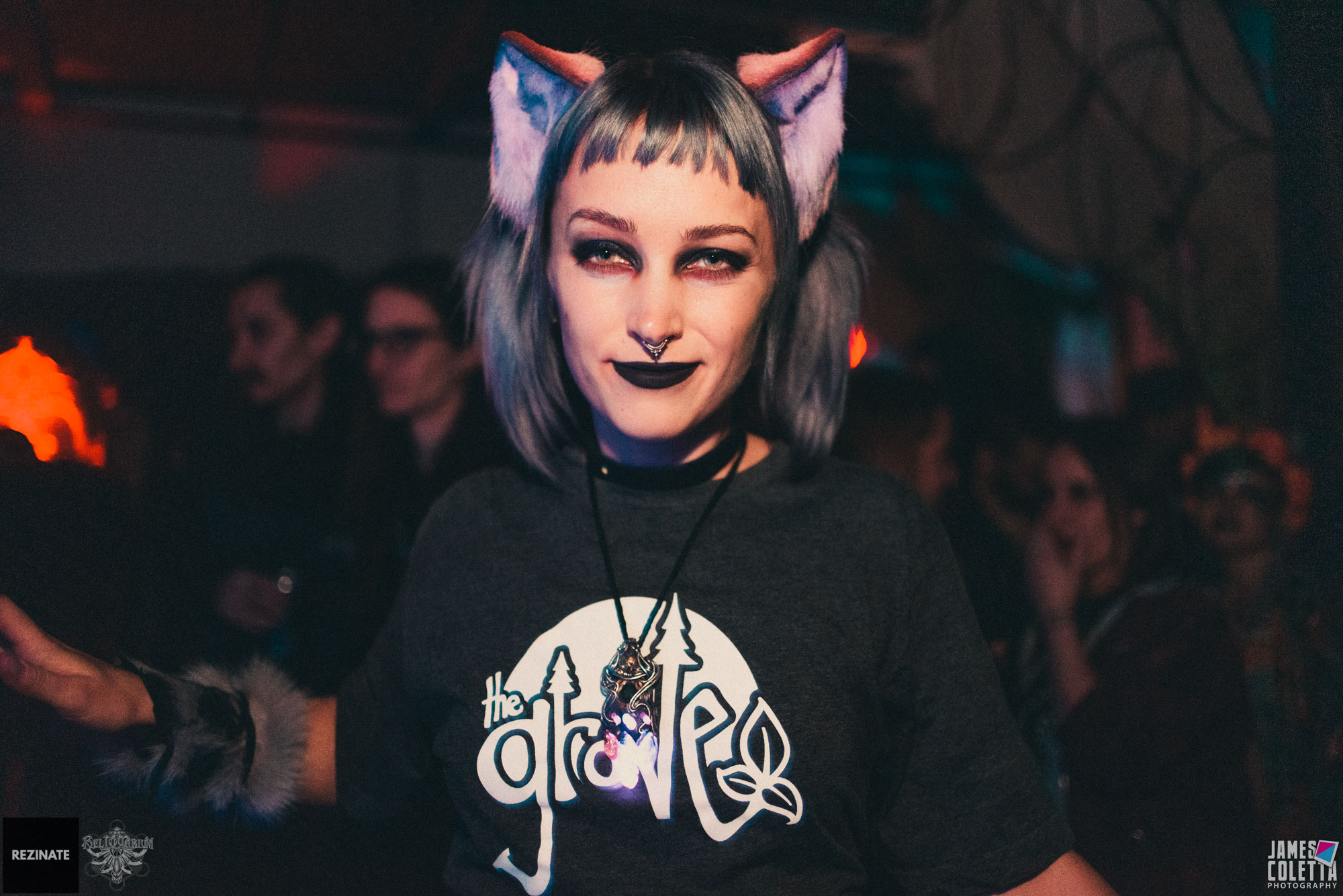
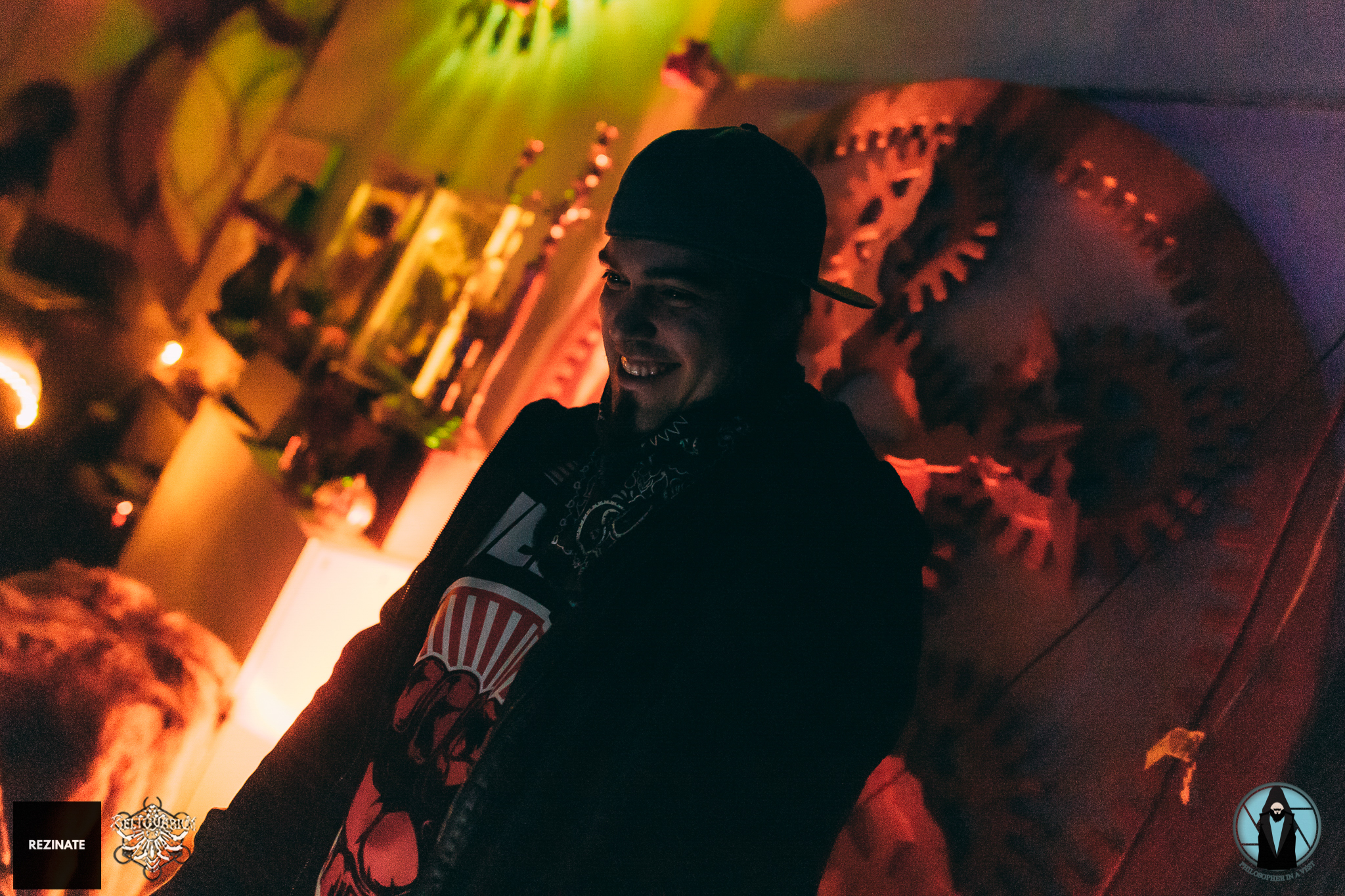


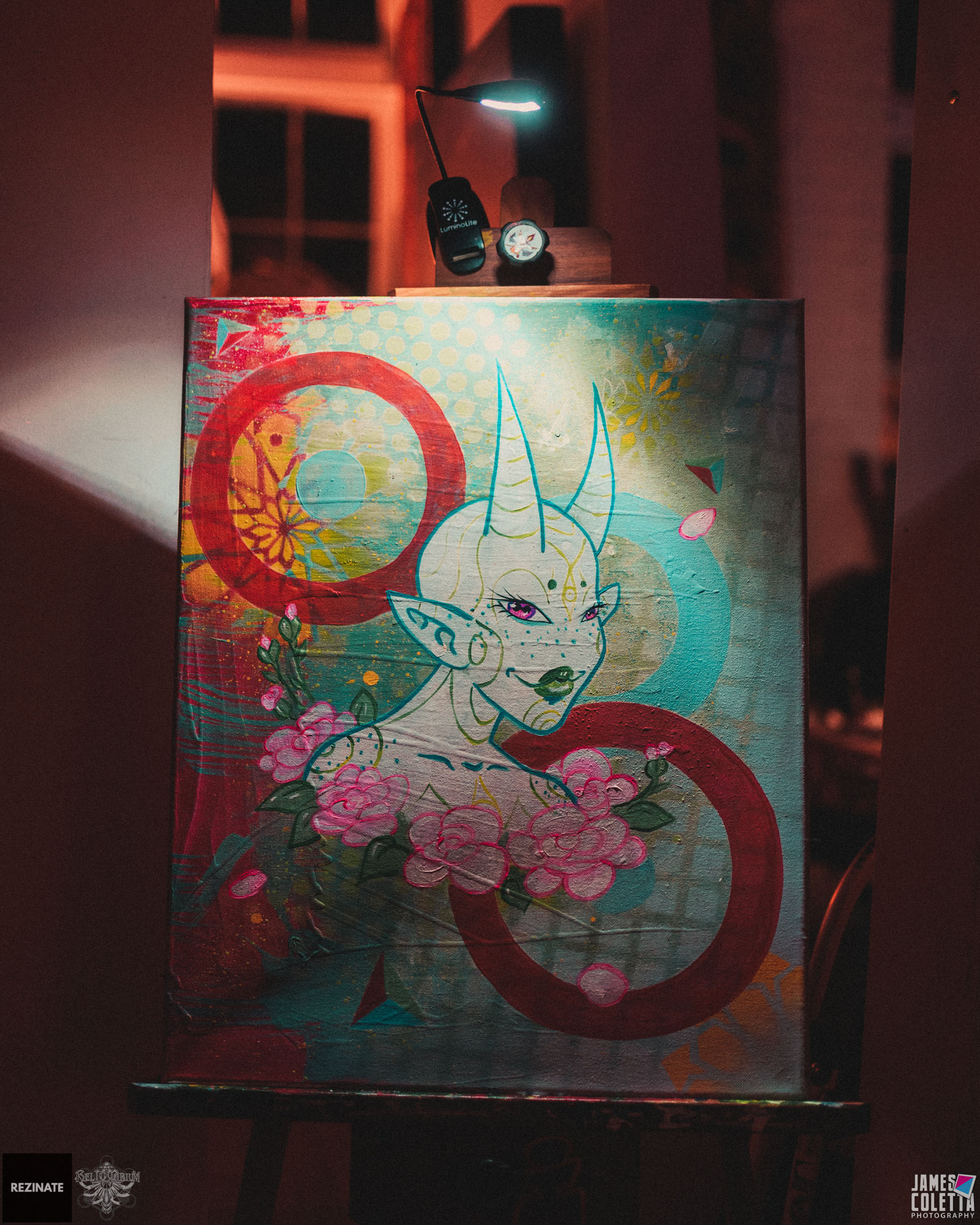

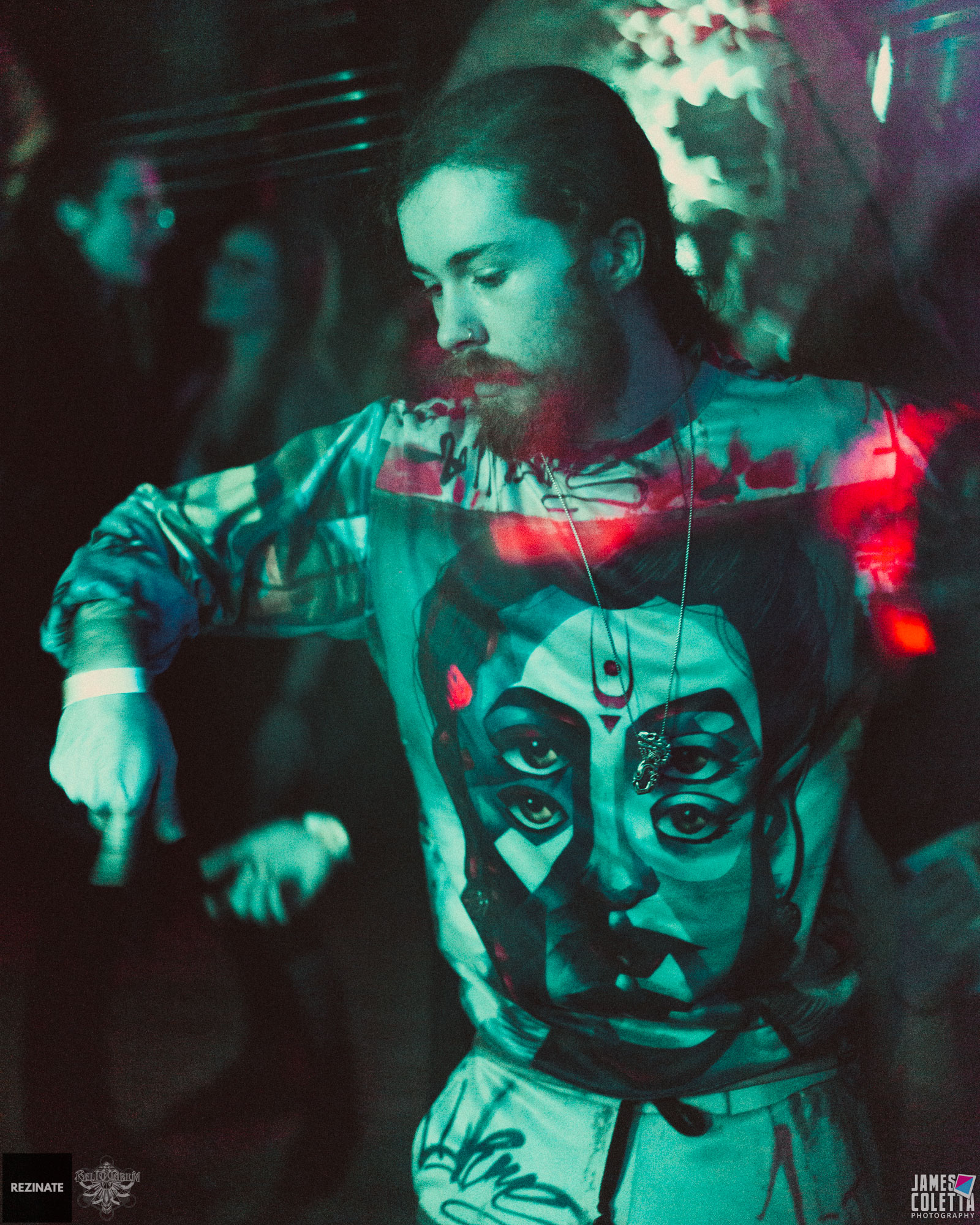
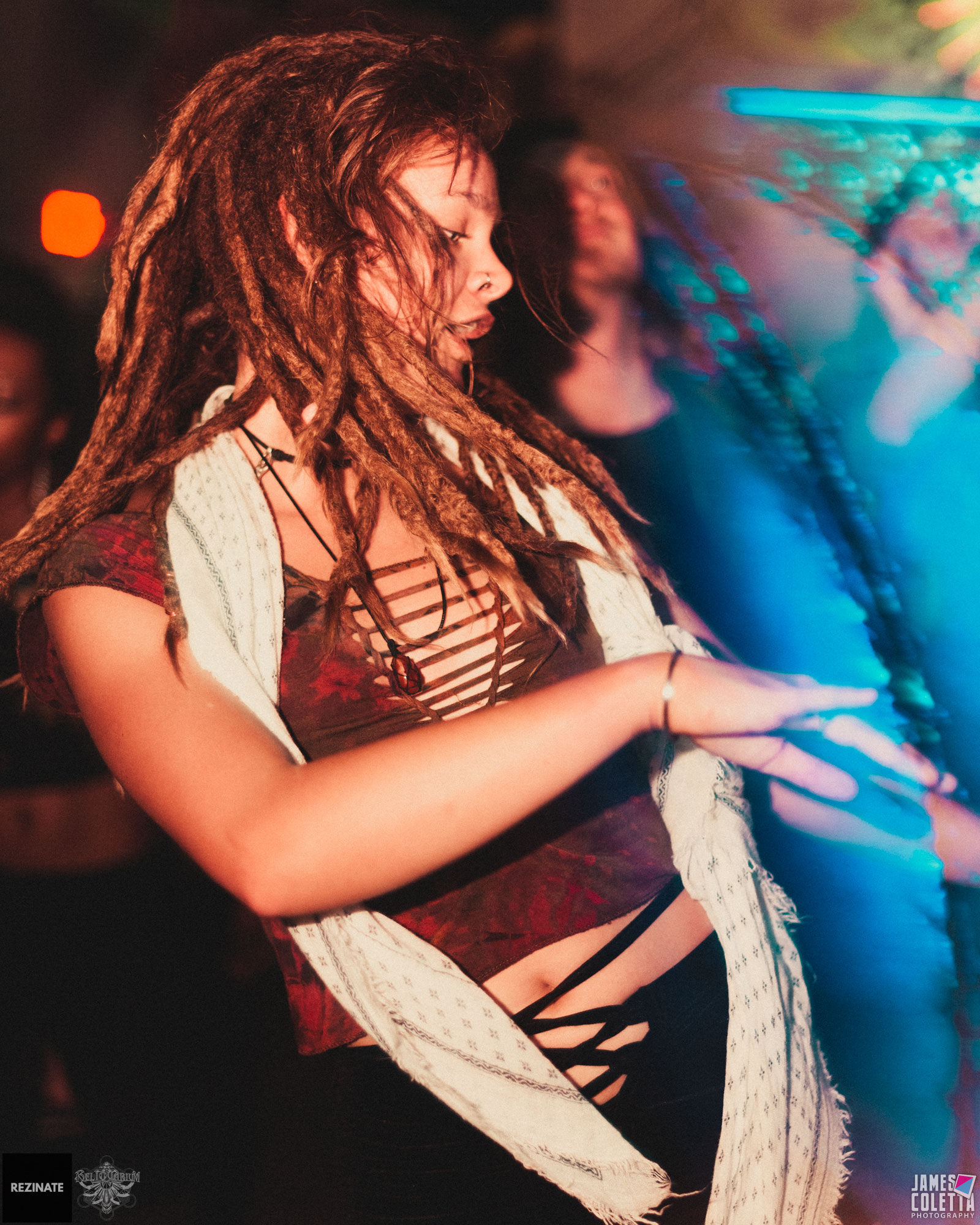
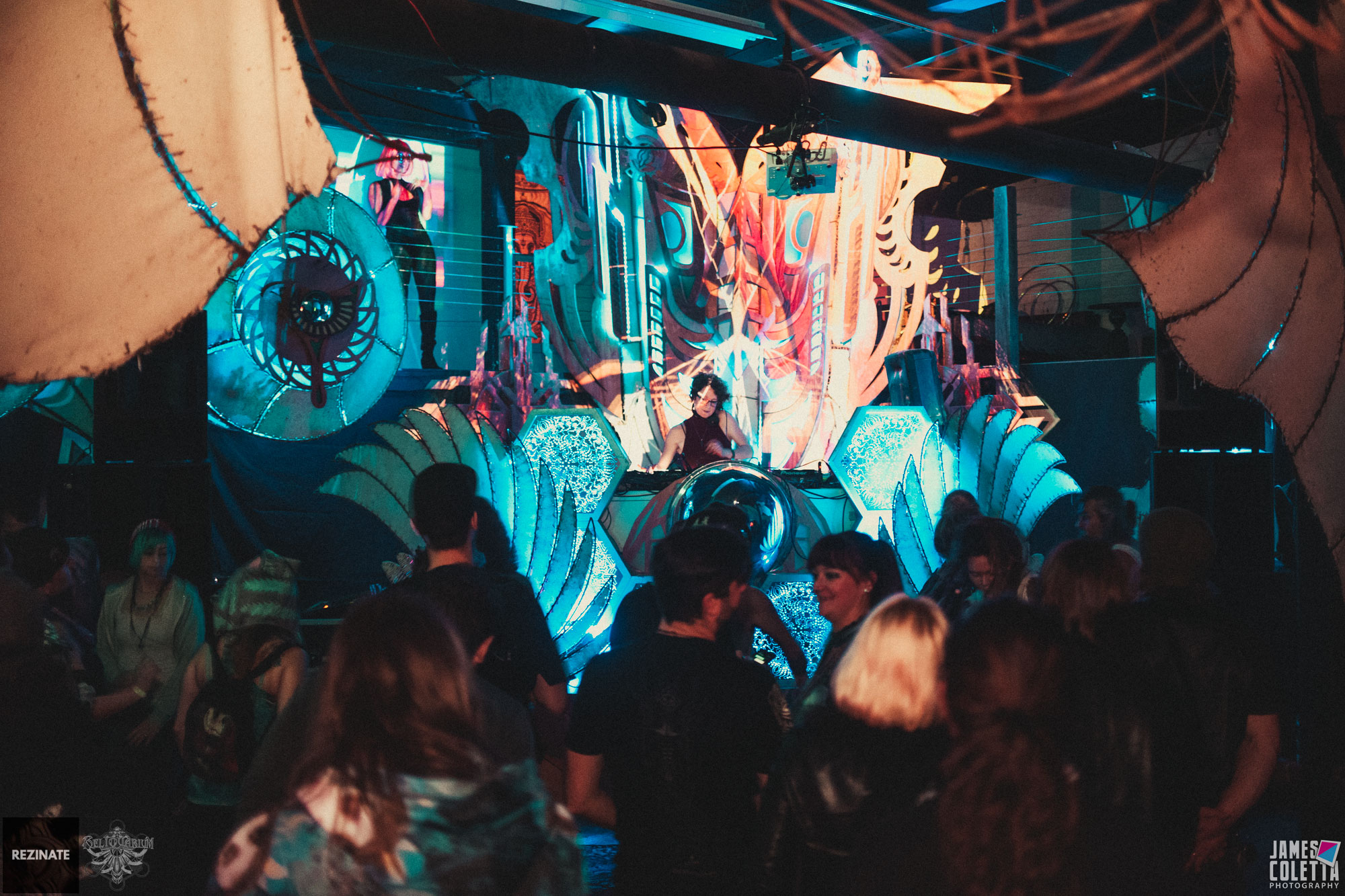
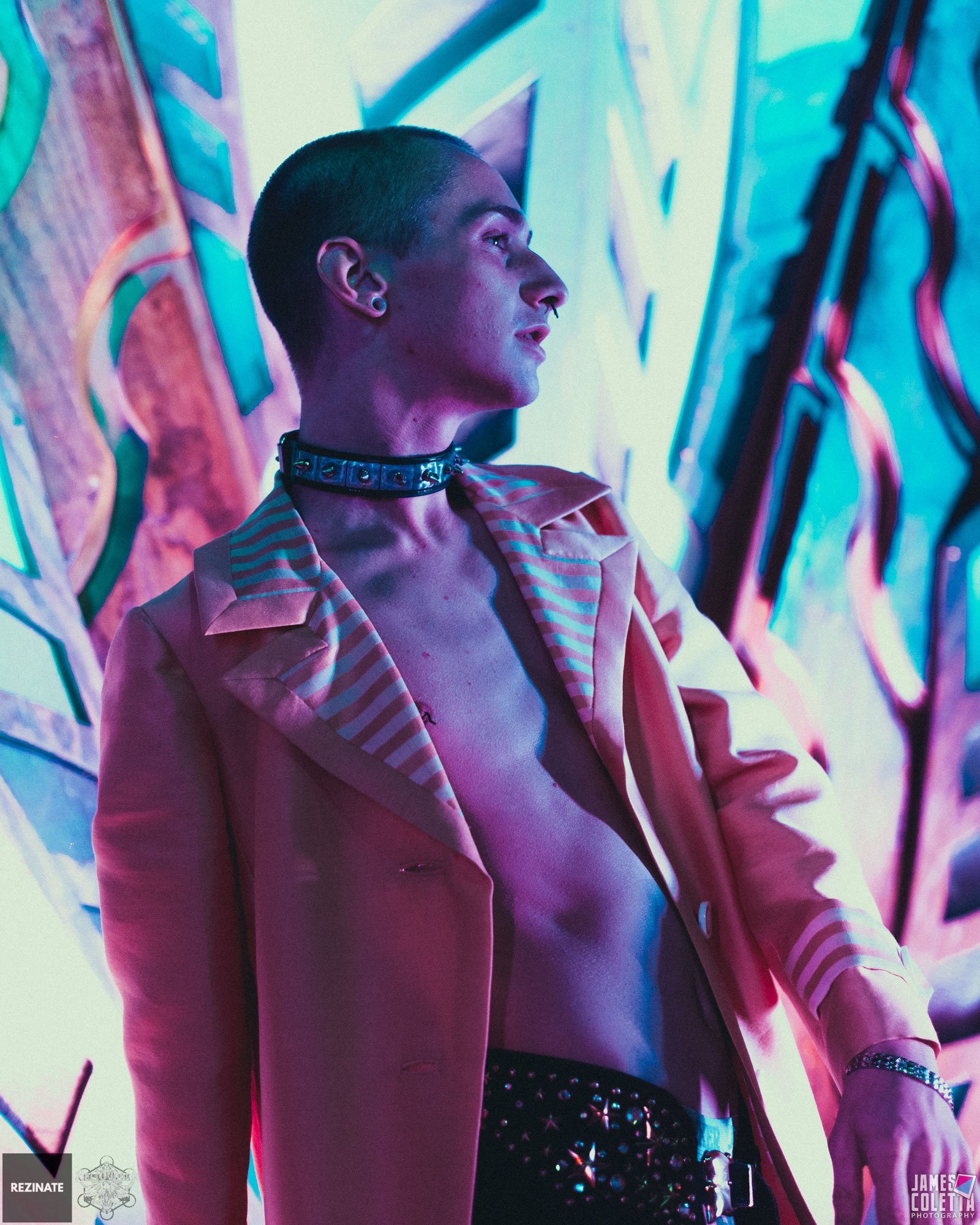

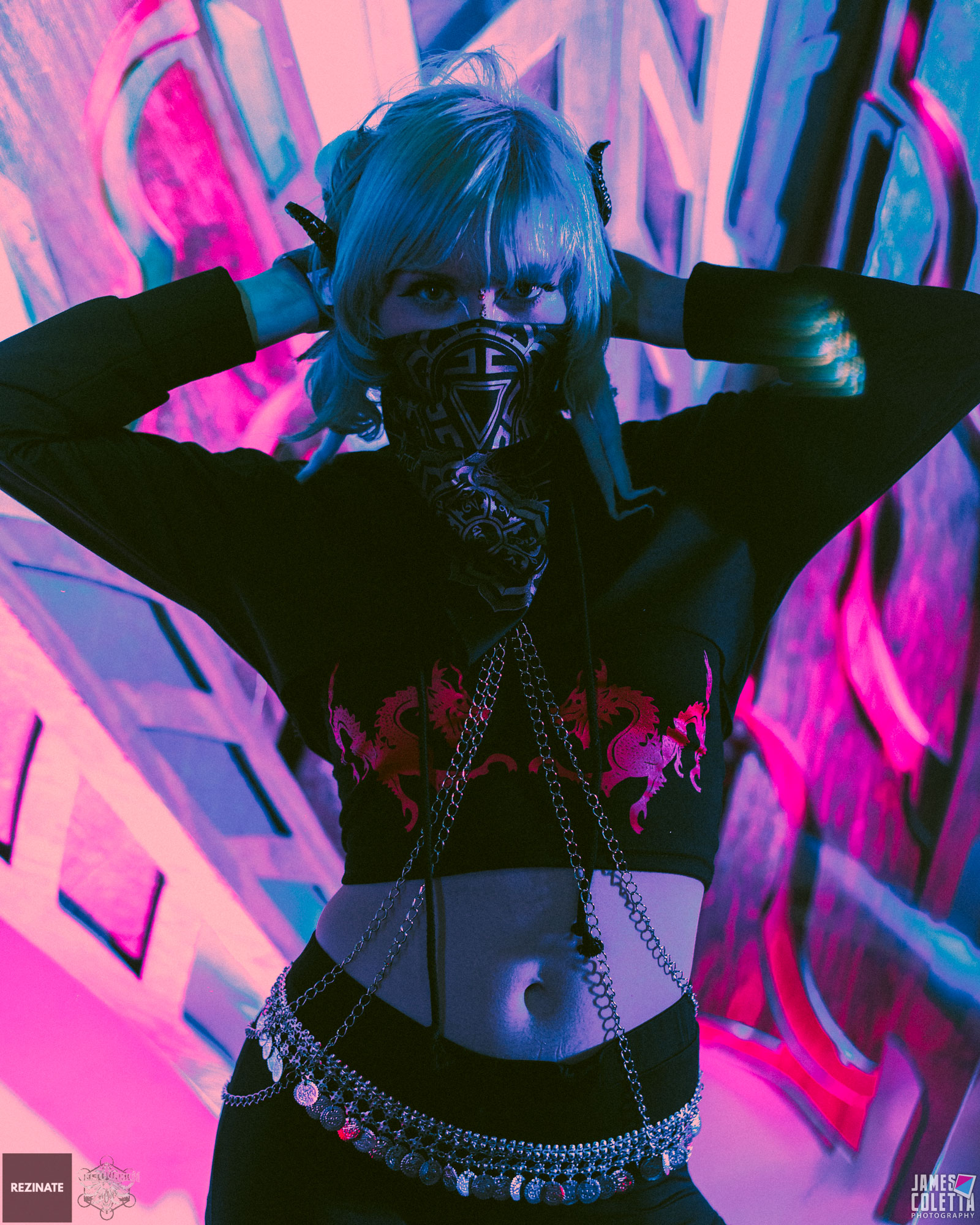

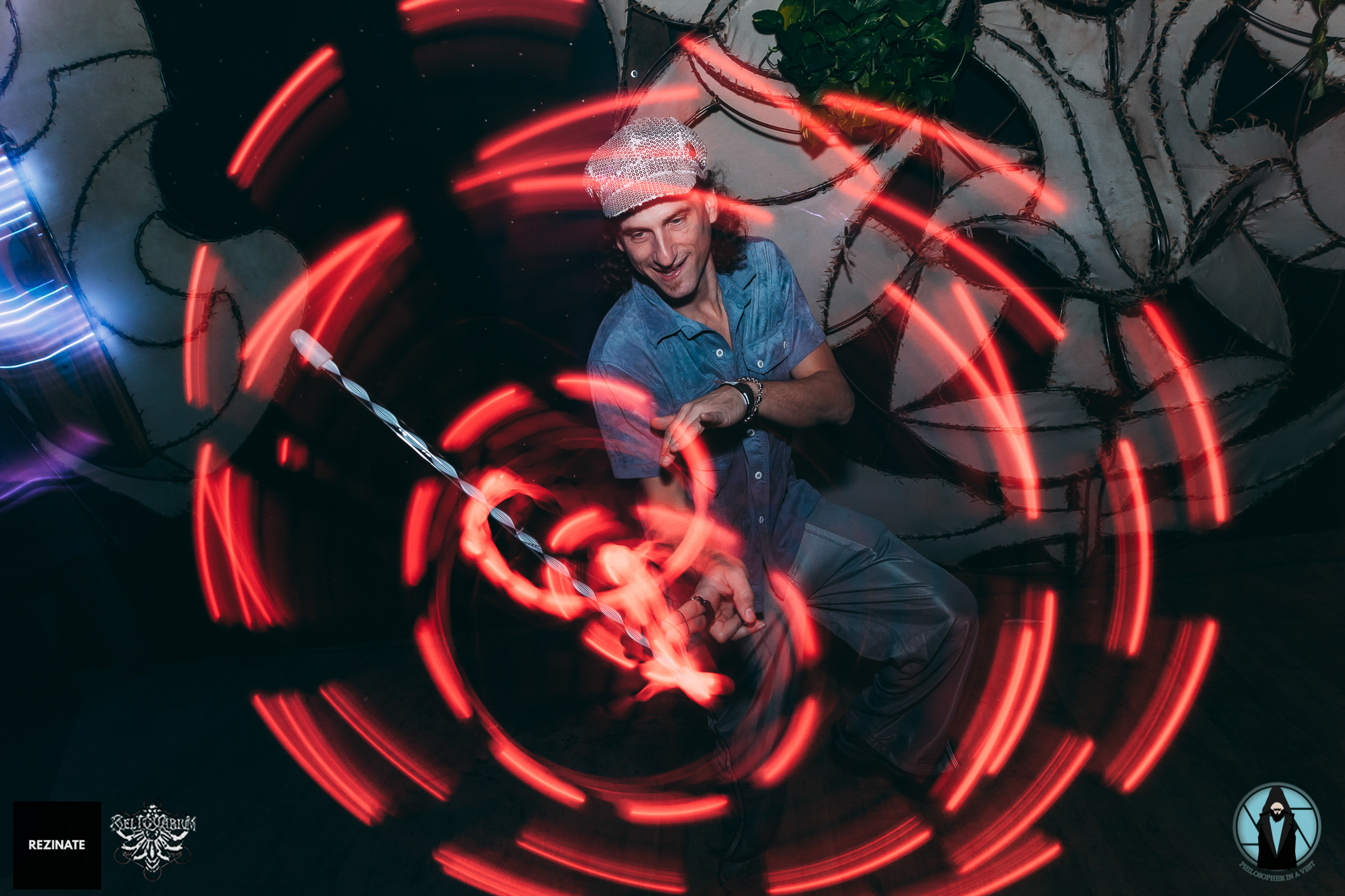

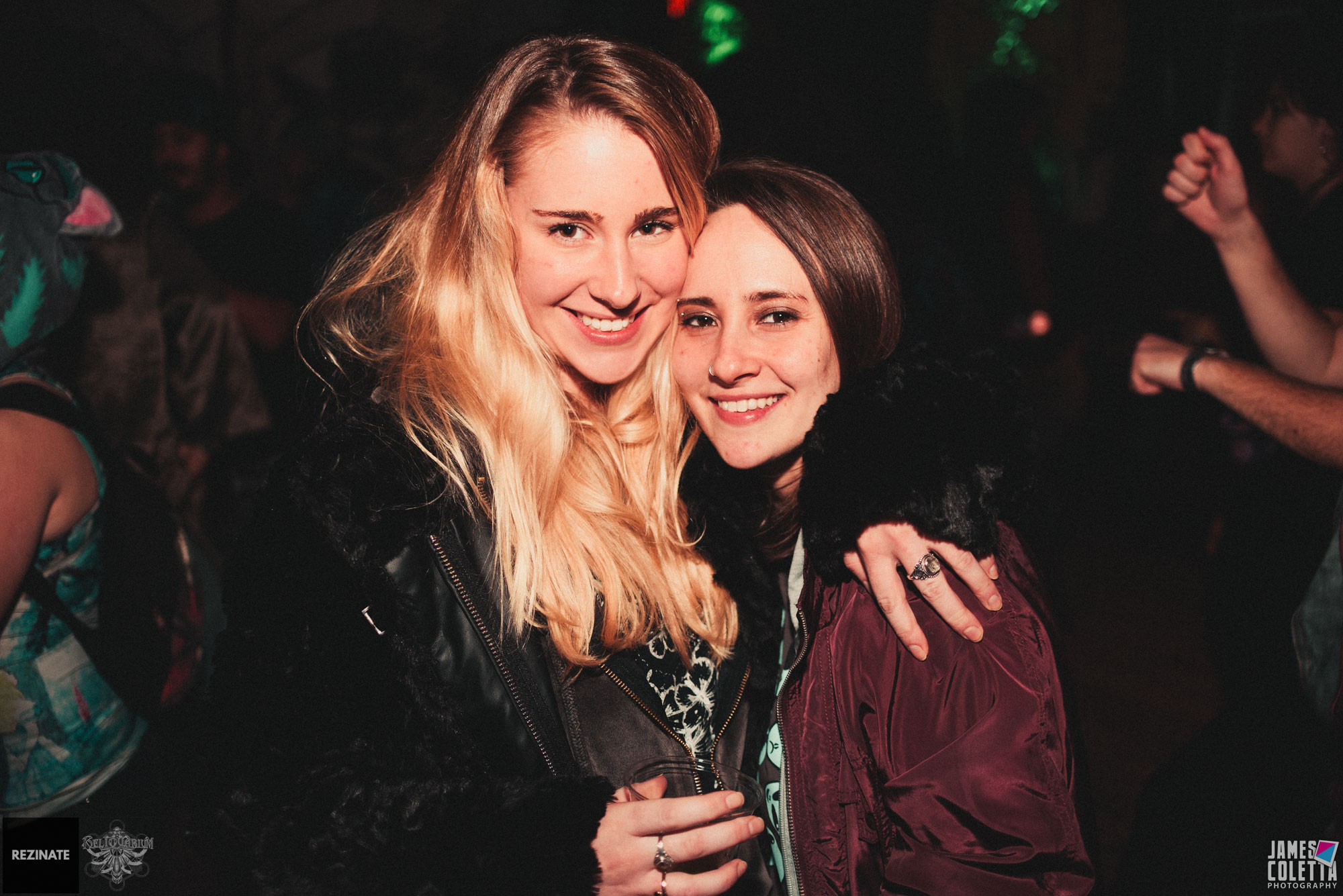
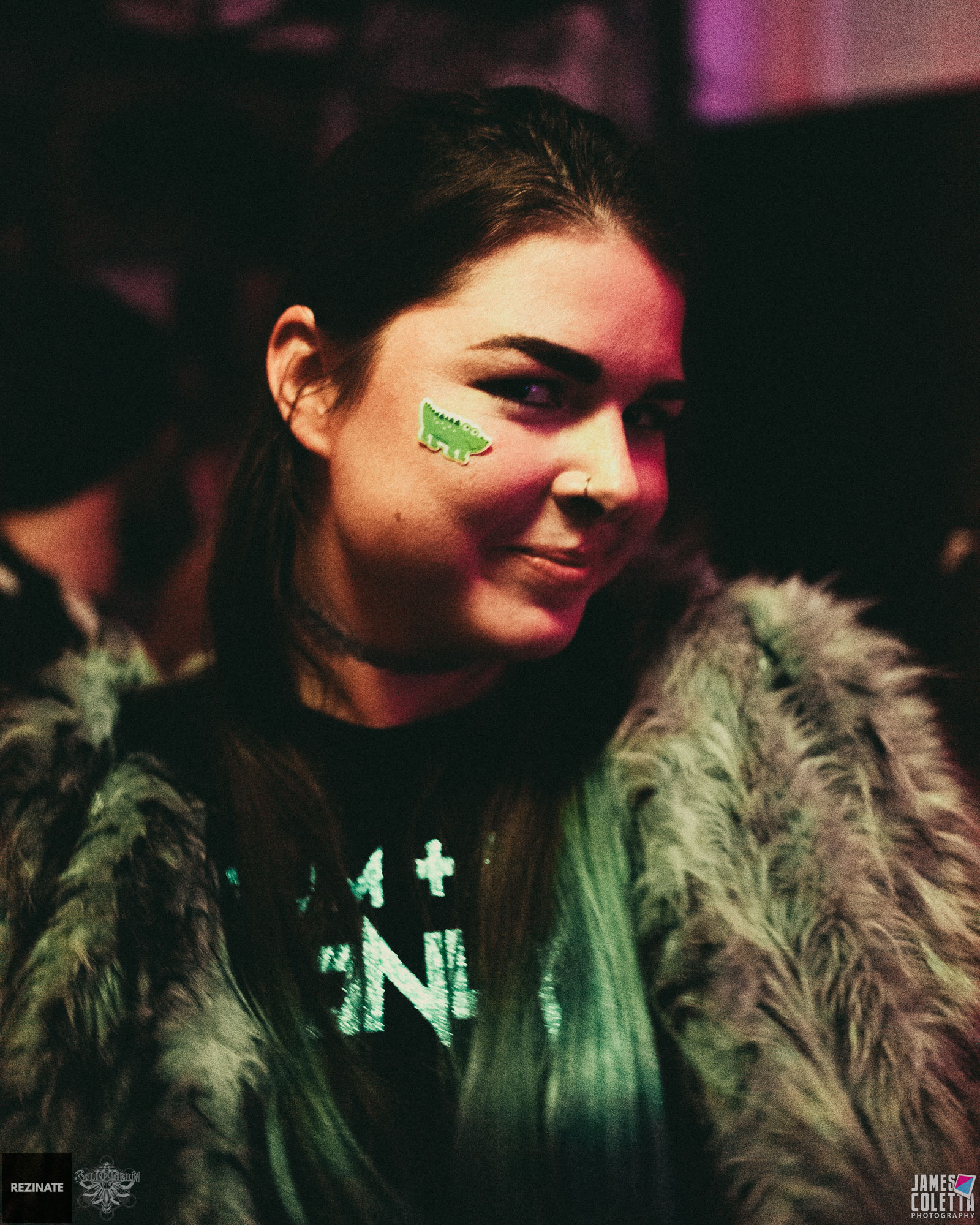
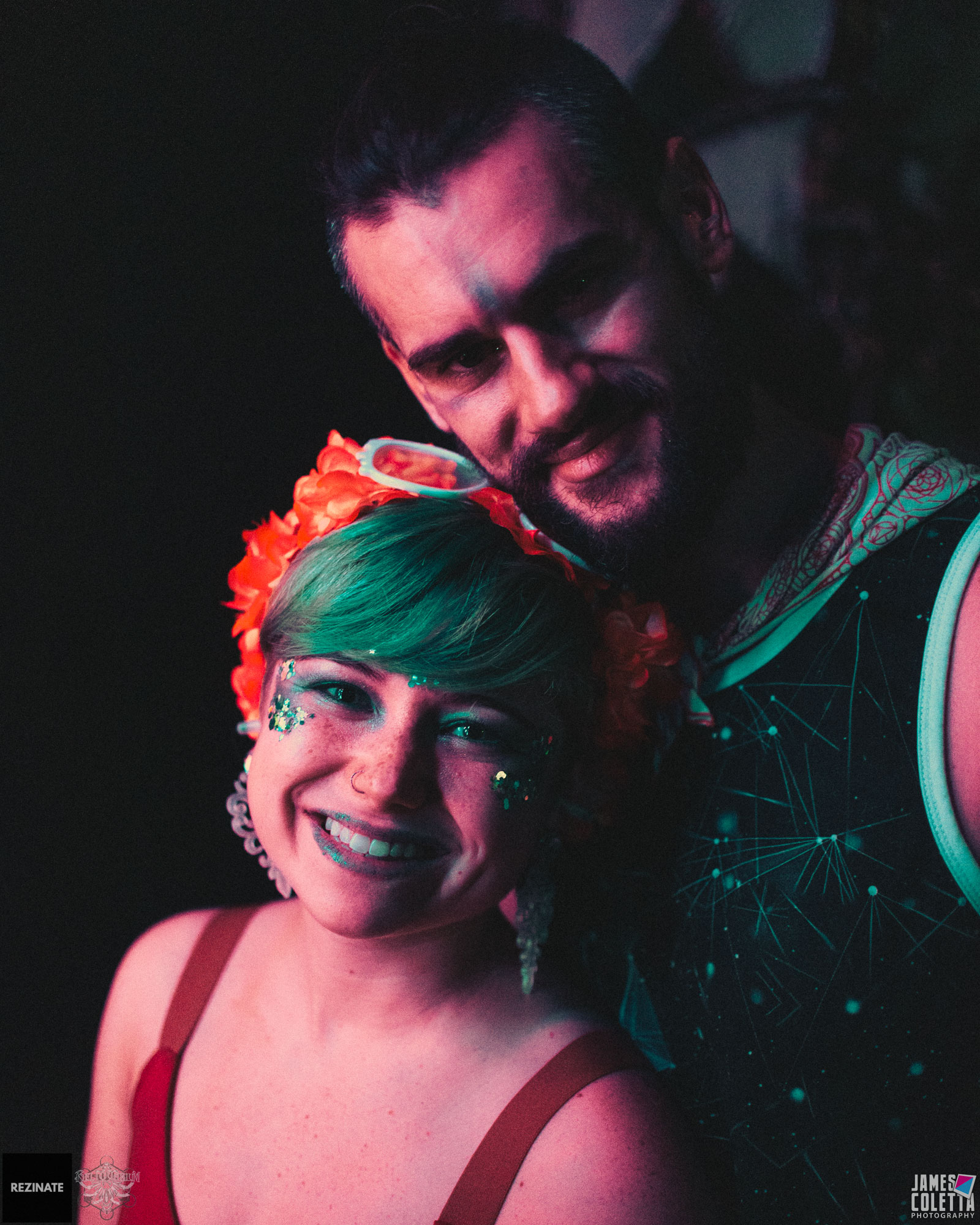
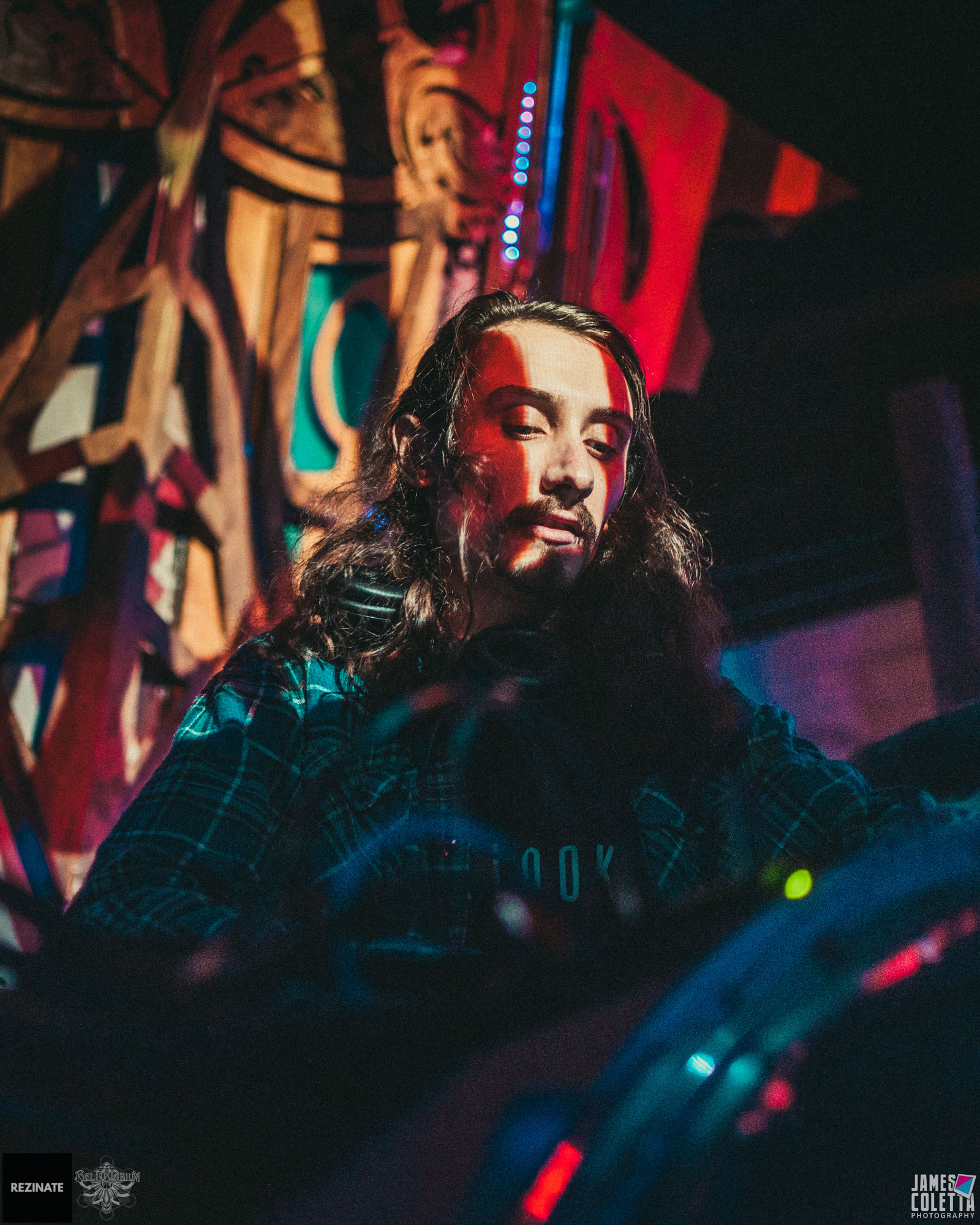

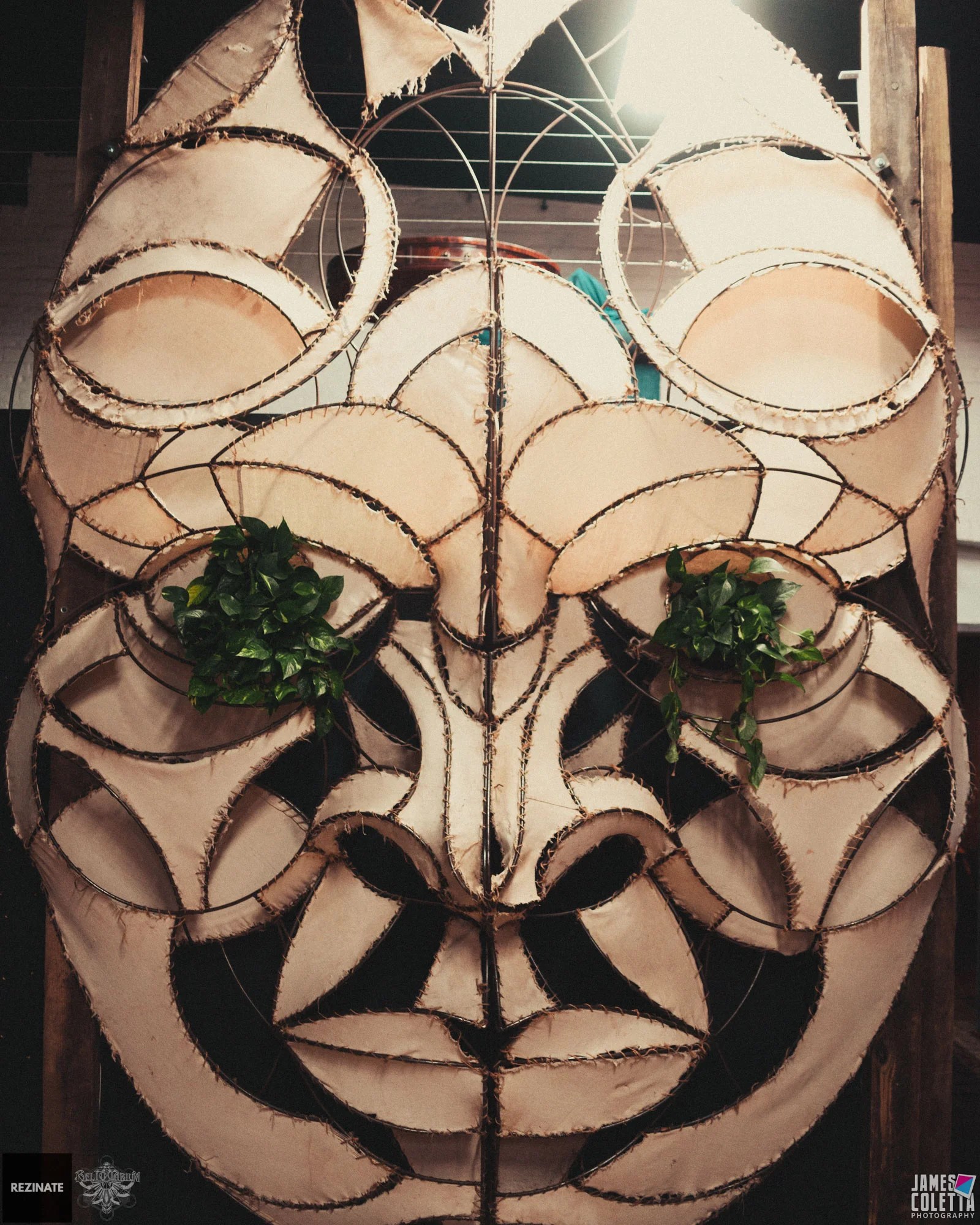
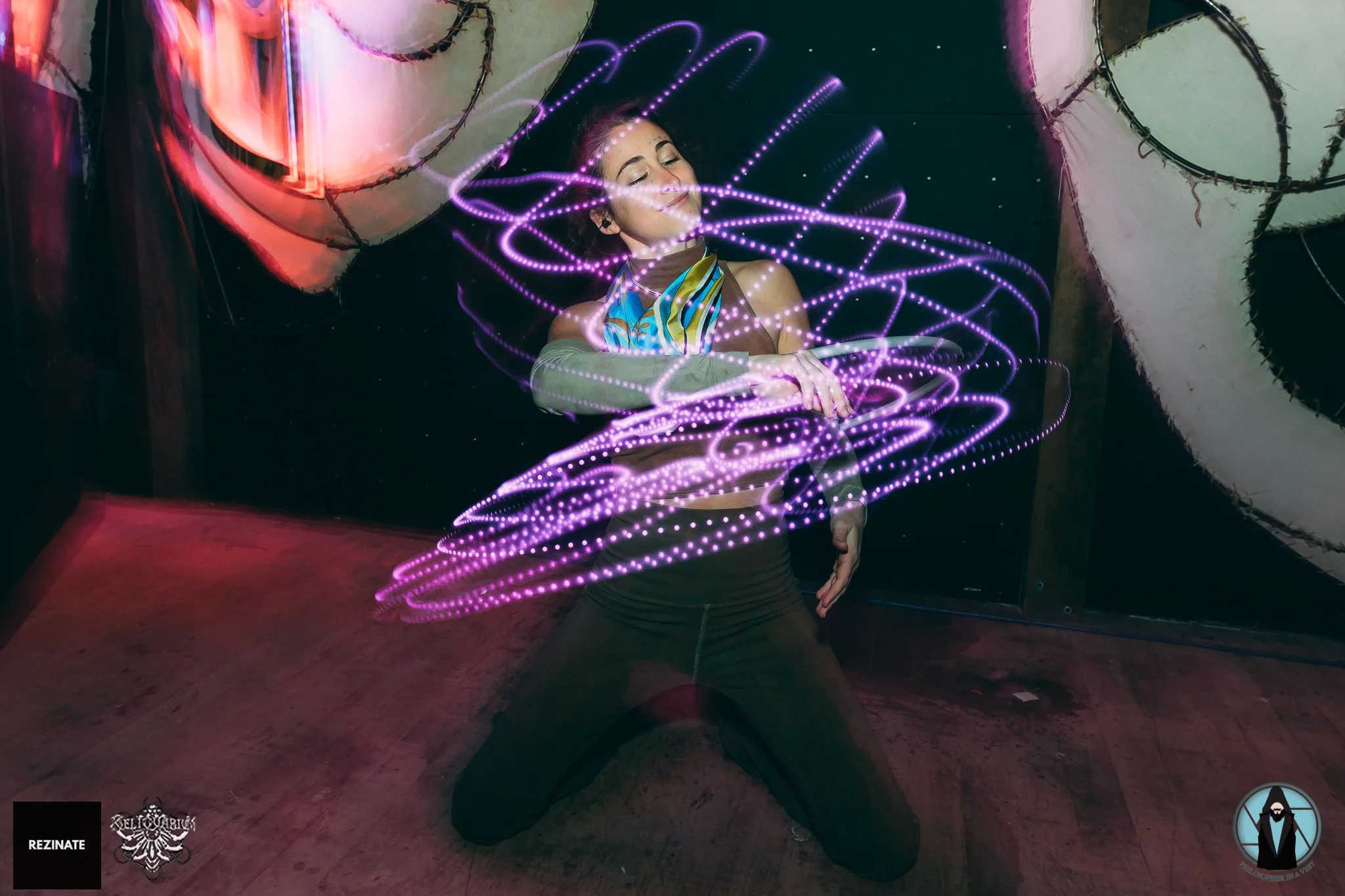




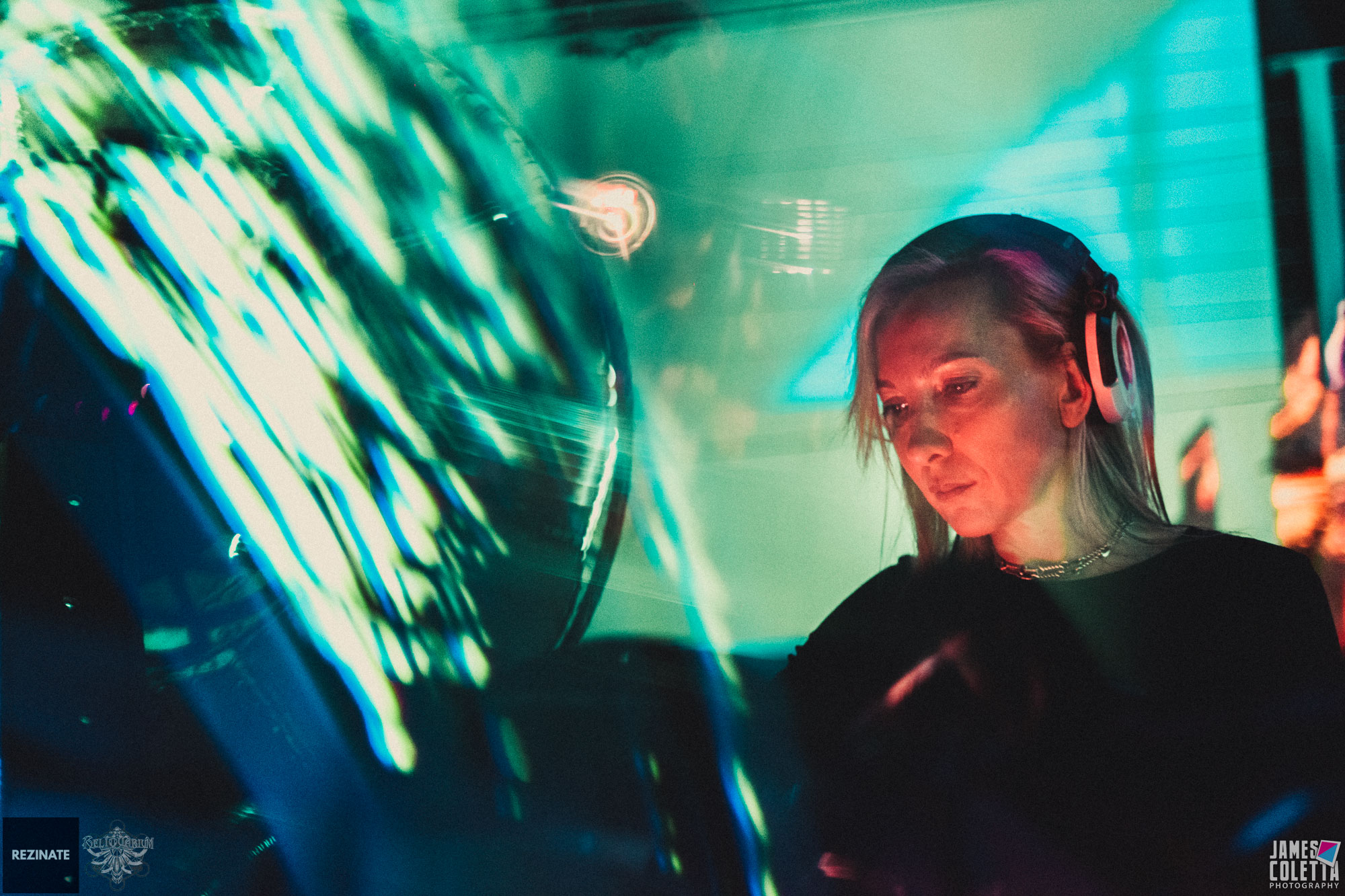
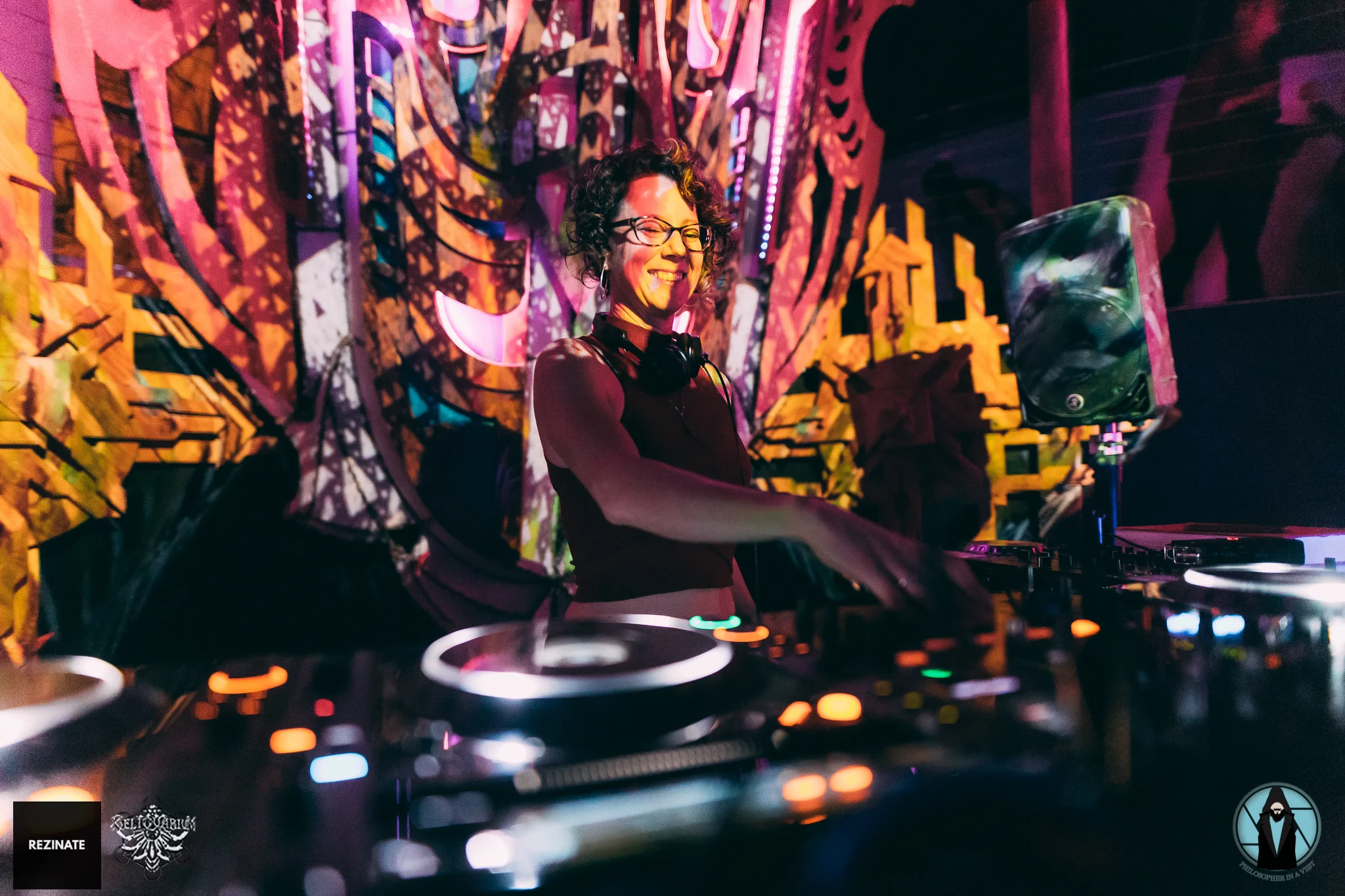
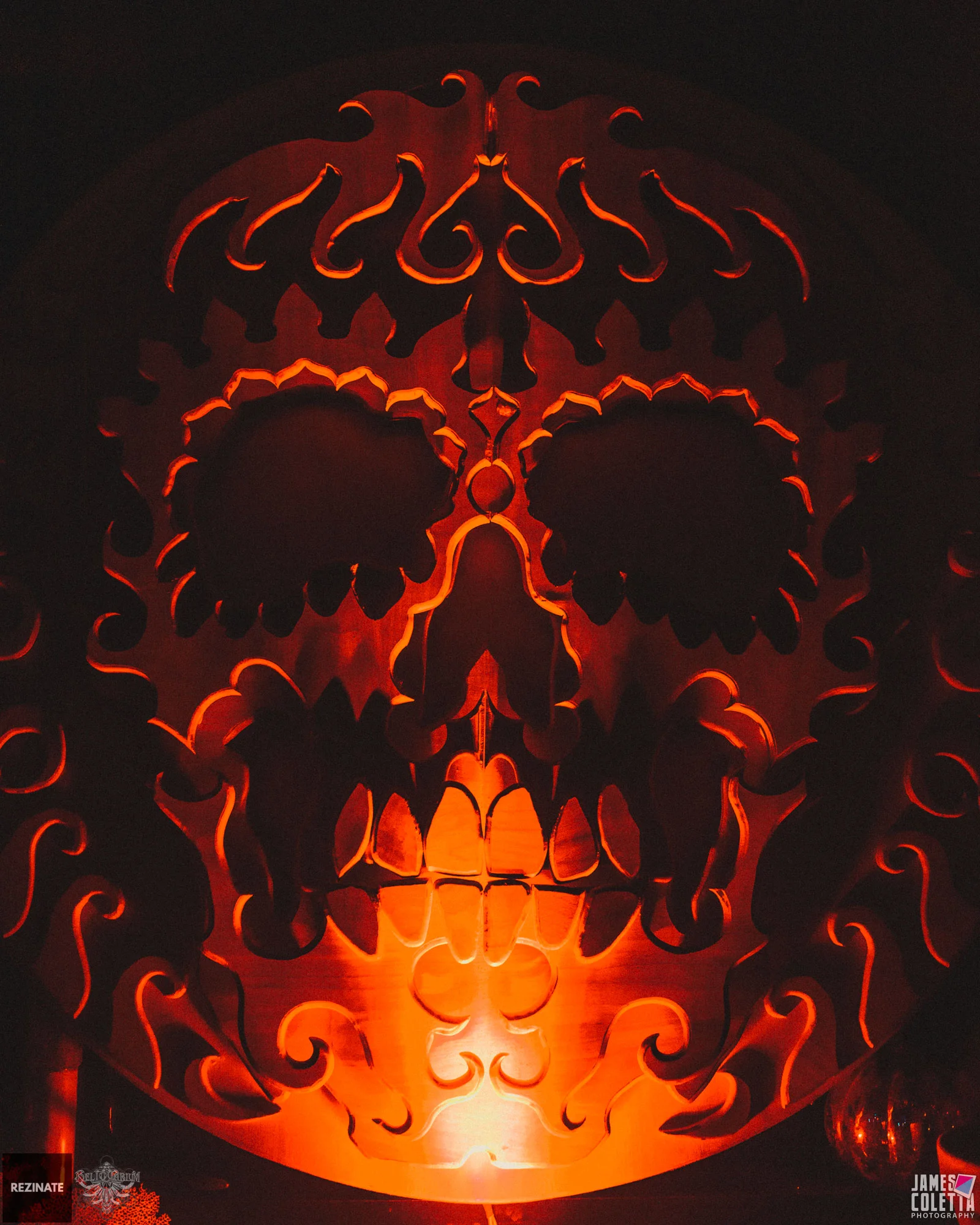

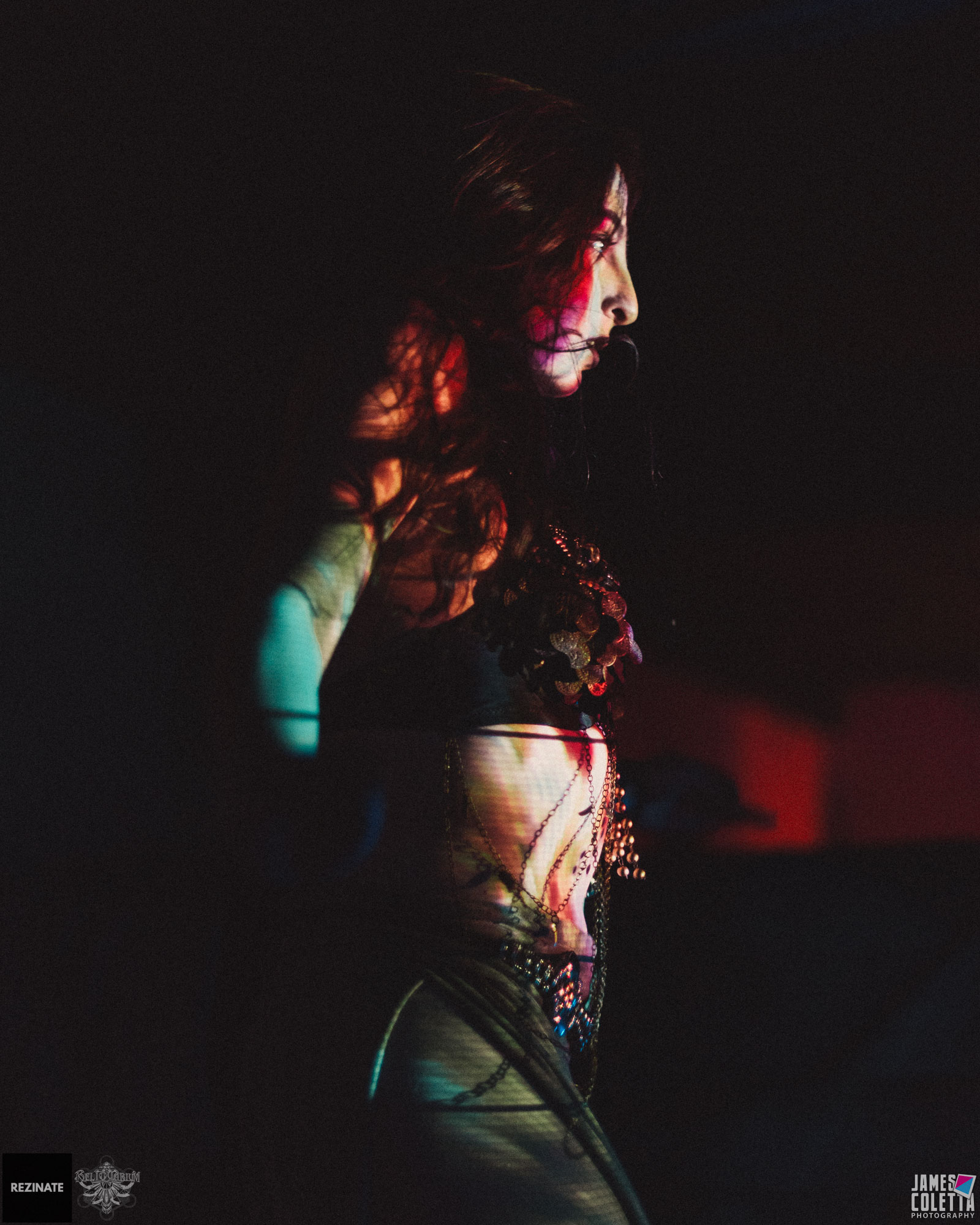


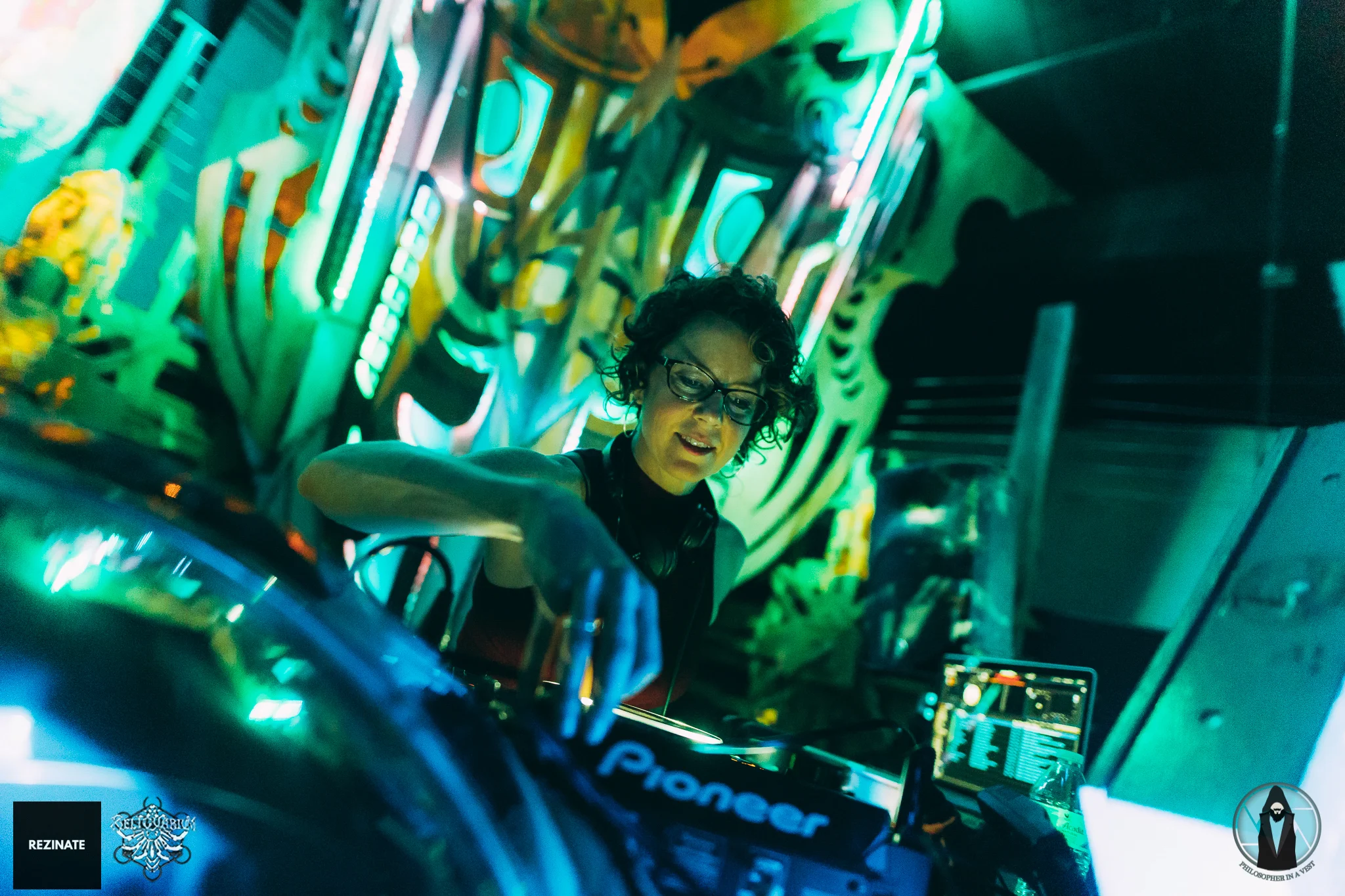
Fractaltribe member and C:\tadel founder Terraphorm warmed up the decks with a set full of mystical 140 bpm music that was both organic and industrial. He was followed by Lenore, a drum and bass legend who for 19 years has been hosting a weekly party called Elements in Boston, supposedly the longest-running drum and bass show in the world. Rezinate’s own co-founder Saltus then offered his deep, experimental fare which varied between dubstep, drum and bass, and some unique, arhythmic bass music that appeared to suspend the crowd in mid-air at certain moments.
Driving through the unassuming town of Lincoln twenty minutes outside of Providence, one’s arrival at The Reliquarium is signaled by purple and pink lights peeking out of the great glass windows of a red brick factory shining out towards the road across a pond. Upon entering the venue this night, one would have been greeted warmly by Ivy Ross, co-founder and matriarch of The Reliquarium, before moving into one of the space’s two main rooms. The entire building is elegantly adorned with hulking sculptures and designs - pieces plucked from the group’s famous event stages - and some pieces that are likely fabricated just for the event space.

The Reliquairium’s warehouse and event space in Lincoln, RI features their famous stage designs functioning in the space where it’s created (Credit: James Coletta)
One room houses a vaulting, illuminated main stage that rivals in beauty if not in size any design that the team has taken on the road. Terraces flank the stage offering space for dancers and LED performers to spin and twirl and creating a nightclub dynamic. Beneath the terraces stood Hennessey Sound Design stacks. Their designer Sean Hennessey could be seen moving through every square foot of the room throughout the night, gauging the strength and fidelity of the sound. In one corner, a gigantic, fabricated face lords over the dance floor. In the opposite corner sits a grand piano next to a dark wooden bookshelf where tarot decks and texts on art and pharmacology share space with “Home Remedies for Dogs and Cats”, the Alcoholics Anonymous Big Book, and “Natural Healing Wisdom and Know How”. More hand-crafted and illuminated installations on the walls and ceiling change colors throughout the night, helping to create a space that is as dynamic and alive as the 200 or so people dancing within it.
The second room, formerly an artist’s apartment, houses a second gorgeous stage, although it was not utilized on this evening. Instead of a dance floor, then, there was an expansive living room environment with sinking leather armchairs and antique coffee tables, plus an elixir bar and third party vendors and painters aligned along the walls. Sound from the main stage is pumped into this second room at an audible but not overwhelming volume. The result of all this? One can enjoy the evening’s musical fare from the comfort of a couch, dazzled by live painting or an illuminated Reliquarium stage design, while catching up with friends and enjoying a homemade elixir (the “Love Potion” came highly recommended, with a shot of espresso and a dash of lavender syrup).
Headlining the night was The Librarian, co-founder of the Pacific Northwestern festival Bass Coast. She, too, offered a hodge-podge of styles mixed with effortless grace and an impressive attention to detail. Our favorite set of the evening, though, came from Naasko, a sonic journeyman and one-time curator for the Canadian label Interchill Records. He played approximately 50 minutes of slicing, intergalactic drum and bass full of masterful sound design. For the last ten minutes, he scaled down to dubstep and dropped the weightiest and most spacious bass of the evening to cap off the show.
Keep your eyes out for events hosted at The Reliquarium in 2019, for more well-curated nights from Rezinate, and for potential future “Reziquarium” collaborations. With a keen sense of self-awareness and an abiding respect for one’s hosts, Northeastern heads who enjoys psychedelic electronic music and its corresponding counter culture should make a pilgrimage to The Reliquarium’s headquarters at least once.
FOLLOW The Reliquarium: Official / Facebook / Instragram / Twitter
FOLLOW Rezinate: Facebook / Soundcloud / Instragram / Twitter / Rezinate HQ
FOLLOW the photographers: James Coletta / Philosopher in a Vest

Coalesce to Write New Chapter in History of Bay Area Bass
Recently, factors from gentrification and legalization to disuse and disaster have seen the psychedelic electronic music scene decline in the Bay Area that was once its mecca. However, as was the case half a century earlier, creators, vibrators, musicians, oddballs, artists and visionaries will coalesce along the Bay’s misty shores to partake in a new medium of communication and entertainment, this time at Coalesce with Cosmic Synergy
To ring in a new year with the best of intentions, Denver-based promoter Cosmic Synergy is organizing one of the most prolific and far-reaching gatherings of glitch music and psychedelic culture seen in this generation; Coalesce. They’ve commissioned the foremost electronic producers and visionary visual artists of generations past and present to transform the Craneway Pavilion in Richmond, CA, a hulking former factory jutting into the San Francisco Bay, into a vibrational intersection on December 29-31 as the calendar turns once again.
From the Summer of Love in the Haight-Ashbury to the first Burning Man on Baker Beach beneath the Golden Gate Bridge, psychedelia and explorative consciousness are part of the bedrock of the Bay Area. When rave culture first came to the United States, it found the most fertile ground in the Bay. By selecting this site, Coalesce ambitiously joins a storied history of music and mind expansion. It’s said that history repeats itself. Indeed, much of the music booked for Coalesce first rose to prominence in San Francisco clubs, Santa Cruz beaches, or the Black Rock City playa father to the east.
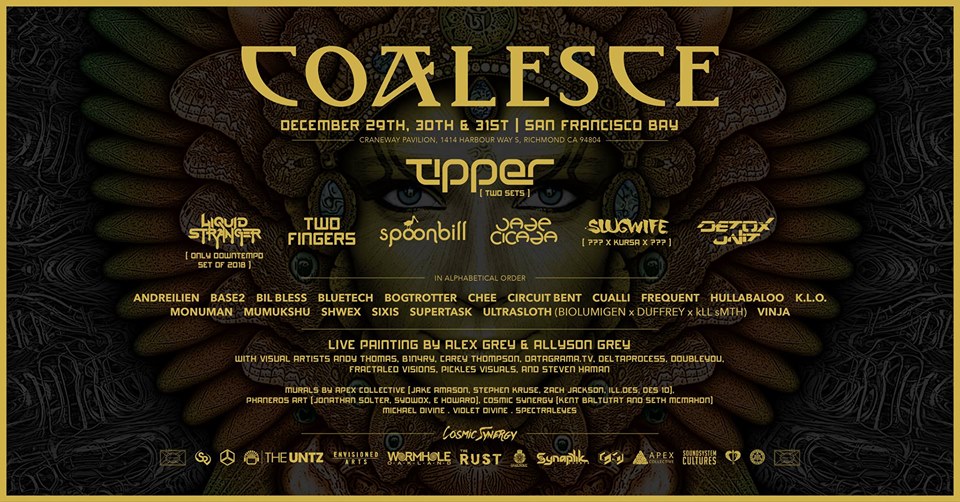
Recently, though, factors from gentrification and legalization to disuse and disaster have led the psychedelic electronic music scene to decline in the region that was once its mecca. Coalesce arrives then into a space that while not dead, is in many ways dormant. At most, the ambitious scope of Coalesce may help rekindle a cultural flame, and at least will provide dramatic context for attendees to help write a new chapter in the history of counterculture.
When charged up youths first came to San Francisco in the mid 1960s pressing for cultural shift, music was an adhesive that bound together their collective dreams and gave expression to their hopes; psychedelic rock, folk, blues, Americana. But also embedded in this familiar flower scene were seeds that would later sprout into an electronic spring.
Founded in 1961, the San Francisco Tape Music Center attracted composers that experimented with primordial synthesizers and began manipulating tapes to musical effect through looping and splicing. Existing synthesizers could create but a few sounds, and couldn’t modulate or alter the sounds at all. With a grant from the Rockefeller Foundation, the Center commissioned one Don Buchla to build a new sort of synthesizer. Buchla created one of the first modular electronic music systems from components that could each generate then modify a “musical event” (a sound). Today, popular eurorack synthesizer modules are influenced by this Buchla format. These modules are synonymous with modular “west coast” synthesis.

Ramon Sender, Mike Callahan, Morton Subotnick, and Pauline Oliveros, the founders of the San Francisco Tape Music Center. (Credit: Art Fisch)
Associates of the Tape Music Center also began experimenting with music itself, people like the landmark minimalist Terry Riley, whose work “In C” created a powerful ripple in thought patterns and music circles in 1968. Riley inverted compositional norms by writing a classical piece for an indefinite number of performers to be performed for an undefined amount of time. As a result, “In C” offered a transcendent musical experience that dissolved boundaries of time and space for its audiences.
In 1966, the Trips Festival at the Longshoreman’s Hall in San Francisco coalesced bands, theater performers, dancers, vagabonds, wharf rats and film producers for an event billed as “the FIRST gathering of its kind anywhere - a new medium of communication & entertainment.” Signaling the start of the short-lived but broadly impactful “hippy era”, the event was described as “the first national convention of an underground movement that had existed on a hush-hush cell-by-cell basis,” according to countercultural chronicler Tom Wolfe. Sets from the Grateful Dead and Big Brother and the Holding Company galvanized the audience, but the avant garde Tape Music Center was also on the bill.
In ‘80s and ‘90s, a new generation of counterculture congregated at San Francisco’s Baker Beach. Anarchists, artists and fringe-types gathered there for “fire” parties from 1986 to 1991 - the first iterations of Burning Man. When the Golden Gate National Recreation Area police forced the burn off the beach, the Wicked crew took its place. Fresh off the 1989 “second summer of love” in London when rave culture exploded, this collective of acid house DJs naturally chose the Bay as the locale to make a cultural musical mark in the states. Their full moon parties on Baker Beach became legendary. According to Wicked member Jeno, in the wake of the AIDS epidemic and its destructive impact on the Bay’s dance/disco scene, these parties, “helped define a dramatic change in SF's dance music culture.”
Along with San Francisco-based psytrance collectives like Blue Room and CCC, Wicked brought the rave to Burning Man, which had since moved to a lake bed in Nevada. Although at first relegated to the “techno camp” flung far from the center of Black Rock City, by 1996 electronic music was blasting from multiple “sound camps” on the playa. CCC, which lived in a warehouse on Howard Street in San Francisco’s SoMa (South of Market) neighborhood, would later found the Howard Street Fair, now the municipally-sanctioned How Weird Street Faire approaching its third decade of existence. (Similarly, Trips Festival promoter Bill Graham went on to purchase San Francisco’s 8,500-capacity Civic Auditorium, embedding counter culture into San Francisco’s municipal infrastructure).
Bay Area resident Andrei Olenev observed these developments, participating in them when age restrictions permitted him to. Andrei’s father was a visual artist in the psychedelic scene. (“Whenever you see a lot of good visionary artists on an event,” Andrei says, “it’s always a good sign.”) His father and older sister frequented Blue Room and CCC psytrance parties in the 1990s where attendees could cycle between rooms of different music like psy trance, jungle and chillout. Andrei would later produce music himself, a well-bred and barely terrestrial mix of dub, glitch, and drum and bass, first as Heyoka and today as Andreilien. On December 29, he’ll help open the ceremonies at Coalesce. “The styles of music changed,” says Andrei, “but that psytrance made a major contribution to the psychedelic electronic scene and festival culture.”

Andre Olenev performing as Heyoka at Symbiosis Gathering in 2009. (Credit: Dave Vann)
At the turn of the millennium, fresh sounds were diffusing throughout northern California and indeed the world. “I used to stay up late and record MTV AMP,” Andrei says, referring to the music video series that showcased tripped out work from Aphex Twin, The Orb, and Future Sound of London. Given the regions receptivity to psychedelic sound, these breakbeat and IDM (“intelligent dance music”) styles, like many more to come, hit in the Bay before they caught on elsewhere.
“In northern California in the early and mid 2000s there was constantly things going on,” Andrei recalls. “There was a very tight knit festival scene in northern California. I didn’t even know that much about southern California’s scene.” Musical trends found were given fresh interpretations in the region’s open and innovate environment. “There was a wave of IDM all over the place,” he notes. “A lot of IDM I heard from other places was a more experimental, more heady listening music. The California version was just a little bit more dance-oriented, more fat and bass heavy.”
On the beaches stretching from Santa Cruz to Half Moon Bay south of San Francisco, this music and culture thrived. During the 1990s the Wicked crew illuminated the sands with billowing bonfires and screeching acid house. During the mid 2000s broken beats began rumbling out over the waves at DIY parties thrown by crews like Rain Dance, led by “Little” John Edmonds. This collective has been booking bass music in the region for over two decades at annual urban events like Freakers Ball (Halloween) and Chinese New Years or at its Rain Dance Campout which began in 2002 in the woods east of Santa Cruz, “one of the few remaining underground campouts from that era that’s still going on,” according to Andrei. (Rain Dance may have been the first crew to book Tipper within the United States).

Rodman “Lux” Williams performing at a Santa Cruz hideout known as Toxic Beach in 2006. “My older friends who are in the scene definitely thought of him as a pretty legendary underground dude,” says Benji Hannus, a partner with Oakland-based promoter Wormhole Music Group. “Never released a whole lot of music, but played all the parties and was super well respected.” (Credit: Kyle Hailey)
Producers like Si Begg and southern California native SOTEG aka Bil Bless began to innovate on breakbeats. “From what I heard,” says Andrei, “some guys would take breakbeat records that were 45 and play them on 33, and that whole sort of sound evolved.” Building on these early innovators, Santa Cruz regulars like DJ Lorin (soon to become Bassnectar) and Rodman “Lux” Williams began to dominate dances with deep, heavy blends of breakbeat and glitch music. “Then Edit and Ooah [later of The Glitch Mob] started coming up from Los Angeles,” Andrei remembers, “and they had that super glitchy sound. Edit was definitely influential in all of that.” Andreilien rapidly gained traction in this scene when he began performing in 2007.
Back in The City, lineups thick with glitch hop began appearing at underground warehouses and above ground clubs. One more mainstream nexus was the club 1015 Folsom, where talent buyer Adam Ohana (An Ten Nae, Dimond Saints) booked huge glitch hop parties and “after burns” where artists like Freq Nasty would headline above Tipper, with DJ Lorin on the undercard. Farther off the beaten path the Cell Space warehouse hosted Rain Dance yoga parties, and from 2004 to 2006 a prolific gathering called Synergenisis where downtempo glitch producers like Bluetech performed and visionary art was spotlighted, including the work of Alex and Allyson Grey. Grittier fare could be found at warehouses like the Cracktory where UK dubstep producers like Distance made some of their first stateside appearances. Each venue contributed to a germinating scene and offered spaces for a new generation to join the party.
Benji Hannus is a partner with Wormhole Music Group, an Oakland-based music label and the crew behind the East Bay’s popular bass music weekly Wormhole Wednesday. Wormhole is working closely with Cosmic Synergy to promote Coalesce and to kick off the weekend with a bonkers pre-party at their home venue, The New Parish in Oakland. Benji, who produces cinematic psychedelic bass music as Secret Recipe, grew up in Berkeley and but for one year of college in Colorado, he’s lived in the Bay his whole life.
Benji traces his fascination with electronic music and event production to the night of his high school graduation in 2009 when he and some pals saw Shpongle at a festival in Santa Rosa. They found some flyers for Symbiosis Gathering, happening later that summer in Yosemite Valley. “If you know anything about Symbiosis,” Benji tells me, “especially that year, it was a pretty pivotal event for the west coast bass music scene, and for the underground electronic festival scene in general.” (The Symbiosis Gathering was held on the same grounds as early Rain Dance Campouts, symbolizing how the festival in some ways sprang from the early Santa Cruz scene). Headliners at Symbiosis ‘09 included Shpongle, Digital Mystikz, Bassnectar, Edit and Ooah, who combined their solo projects to perform a rare “Crying Over Porcelain for No Reason” set, and Amon Tobin, who will perform his own rare side project Two Fingers at Coalesce. The lineup rode the tail end of the glitch hop wave, and the rising tide of dubstep.
Upon returning from a year of school in Colorado, Benji moved to Santa Cruz and started his own event production company Forever Endeavor. “There was a very large renegade scene in the mountains. We’d bring a generator and some speakers out to the woods and have a free, illegal party.” The distinction between legal, permitted parties and illegal warehouse/outdoor parties is critical in California. In recent years, the DIY scene has nosedived. While some of its spirit and music moved above ground, as much if not more moved out of town. “At that time,” says Benji, “there’d be renegades with G Jones, when he still went by Grizzly J or Minnesota headlining way before he blew up. Many artists that have gone on to big things were based there at the time going to school at UC Santa Cruz.”

Tipper performing in 2009. According to Benji Hannus of Wormhole Music Group, Tipper performed unannounced at Rain Dance Campout in 2010. “He just showed up at the gate, said hi to all his friends, and played a Sunday set.” (Credit: Kyle Hailey)
“When I turned 21,” Benji recalls, “and could finally go to all the parties in SF in 2012, I would go to the city like 5 or 6 nights a week.” Every night there were weekly parties like Ritual Thursdays, a dubstep night, or Beat Church, a glitch-oriented evening that helped Heyoka get his start. On the weekends, huge four-room bass music parties raged at 1015 Folsom. It was this year that partners Morgan McCloud and Gleb Tchertkov founded Wormhole and began hosting Wormhole Wednesdays. The weekly bounced between different venues before settling into an Oakland club called Era. Benji, who had production chops and a modest roledex of agents and artists from his time in Santa Cruz, soon joined Wormhole full time.
Meanwhile, currents began to churn that would change the cultural and economic topography of the Bay and impact the underground bass music scene as a result. The Bay Area recovered more rapidly than most regions after the severe economic downturn of 2008. By 2015, eight of California 12 counties with unemployment rates below the national average were in the nine-county Bay Area region, according to the San Francisco Chronicle. Credit went to the rising tech sector, which engendered a thriving white collar economy.
San Francisco is already a small city, with a population under 900,000 a land mass of 46 square miles (New York City is over 300 square miles by comparison). Housing always had a degree of desirability and exclusivity, then the tech boom brought on an unprecedented influx of affluence. By 2015, as the producer of documentary San Francisco 2.0 Alexandra Pelosi put it in The Daily Beast, “not a week goes by without a headline about the growing pains brought on by the tech Gold Rush in San Francisco.” The struggle over “who gets to live in The City” escalated.
Soaring rents dramatically impacted poor and working class neighborhoods in San Francisco and Oakland, as indeed they did across America. In the Bay, though, the neighborhoods were generally filled with a higher percentage of artists and musicians. Warehouses that skirted the line between work spaces, living quarters, and venues - “empty” from a municipal and tax standpoint - were low hanging fruit for developers. “Otherworld was a huge staple for underground parties in the Bay for about 15 years,” notes Benji. This warehouse, where Wormhole hosted one of its larger un-permitted parties, was razed by developers in 2016 and replaced by luxury condominiums.
The East Bay fared better than San Francisco, though, and Wormhole Wednesday tapped into this dynamic when they began to push their weekly party. “We never really thought we’d get anywhere near as many people out as we did for a venue bass music party in Oakland, let alone on a Wednesday,” Benji says. “We pretty quickly discovered just how many people moved out of San Francisco and into the East Bay because it’s [SF] so unaffordable.”
Technology was not the only fluctuating economy that impacted the underground electronic scene. “When I was a teenager going to festivals,” Andrei recalls with a chuckle, “pretty much every person at the festival was involved in the weed business in one way or another. People would come from all over the world to go to Burning Man and then go to the hills in California and trim for a couple months.” Cannabis workers and their non-traditional hours filled electronic dance floors in the Bay and helped sustain weekly bass music parties. As the black market for marijuana has shrunk over the last decade, there’s less money in California cannabis. Some of that money - and some of the bass music, for that matter - has moved to Denver.

The Ghost Ship warehouse space from above on the morning of December 3, 2016, after a fire broke out which would claim 36 lives at an unpermitted party.
The psychedelic electronic wave in the Bay Area had crested, then, and assumed a slight downward trajectory by the mid 2010s. On December 2, 2016, the bottom fell out entirely. That night, California’s then deadliest fire since the San Francisco earthquake of 1906 claimed 36 lives during an unpermitted party at the Ghost Ship, a prominent Oakland warehouse and artist loft. DJs, promoters, artists and fans integral to the region’s broader arts scene lost their lives. It’s hard to overstate the impact this had worldwide and in the Bay. Prominent warehouses in Oakland and indeed across the United States either were shuttered or went on hiatus. Evictions ran across Oakland.
“We had an underground event at my friends’ warehouse scheduled for the week after,” Benji told me. “It was in a much safer space, but we decided to cancel it and eat a bunch of money. That hit our community pretty hard here.”
Notwithstanding the Ghost Ship tragedy, the psychedelic electronic scene in the Bay Area is in some ways a victim of its own success. “The type of music Coalesce is centered around,” Benji observes, “the more psychedelic side of things, and glitch hop specifically, that’s what’s really declined in popularity here. I think much of that involves the fact that a lot of that music came out of the Bay Area in the first place. People get burnt out on stuff and tastes change.” Ultimately, though, its not about the music. Music is just the strongest magnet to attract like-minded individuals and their energy,
Although it’s not like the area is some barren cultural wasteland. Nor is it void of individuals still dedicated to the sound and movement. It’s still the San Francisco Bay, after all, and it's psychedelic nervous system seems due for a shot in the arm. “As for the scene I know out here,” Andrei asserts, “there’s always a lot of old schoolers helping to guide the whole thing, who are still helping to run the festivals, or stage managing, or keeping the underground flame alive, you know?”
These multiple generations are set collide on New Years Eve. As was the case half a century earlier, creators, vibrators, musicians, oddballs, artists and visionaries will coalesce along the Bay’s misty shores to partake in a new medium of communication and entertainment.
FOLLOW Coalesce: Event / Tickets / Pre Party / After Party

![Seppa - Interview + Boosted [EXCLUSIVE PREMIERE]](https://images.squarespace-cdn.com/content/v1/59530136f5e2319eabb7d87f/1626113208781-BZ7C6B7E3LCECV7UD4CS/Boosted.jpg)

Amongst the incoming generation of artists having finally found their bite, not yes exemplifies the modern paradigm of electronic production; there are no hard boundaries, no clearly defined destinations, and unbridled compositional freedom. There’s a refreshing whim to their choice of direction, and the result is a fast-growing, dynamic catalog that takes us through virtually every space in low-end territory.