
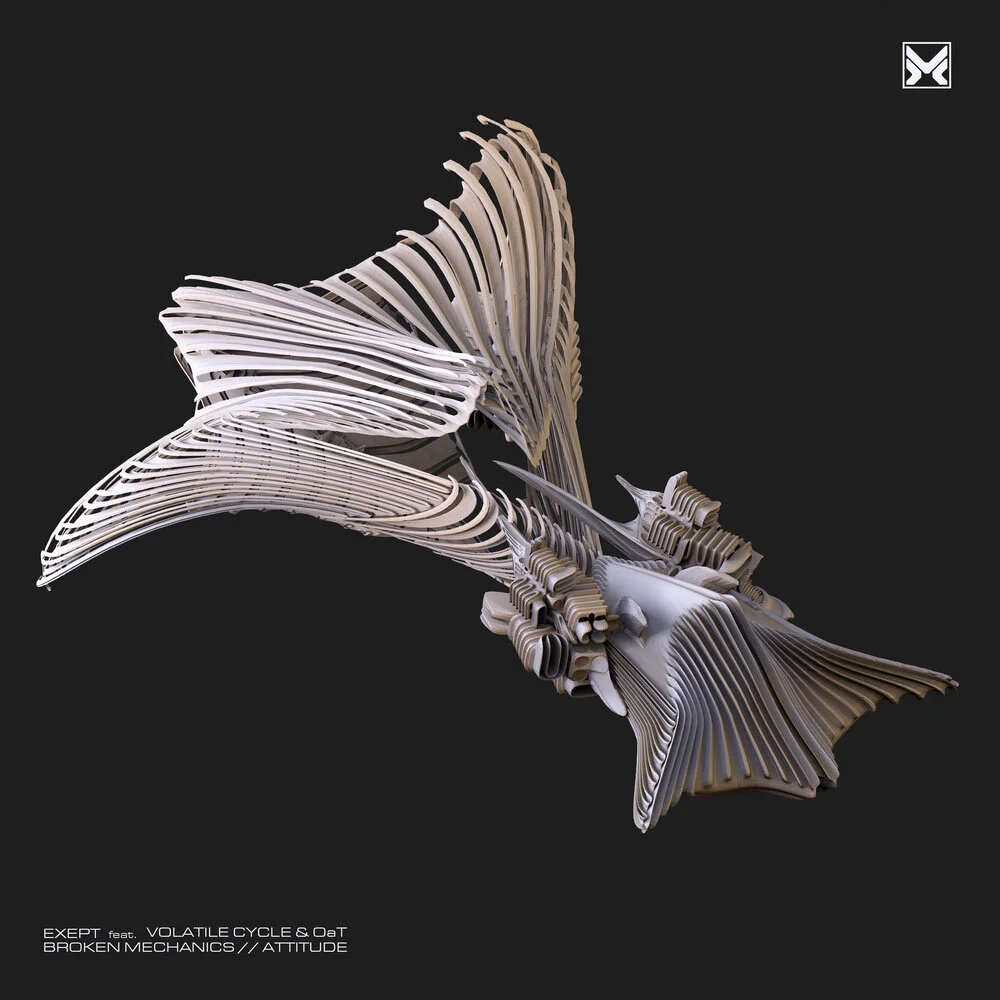
Exept, OaT, & Volatile Cycle Team Up with MethLab Recordings
MethLab Recordings has built their music label brand on the premise of focusing on experimental electronic music. The release of “Broken Mechanics” & “Attitude” is a prime example of their progressive artist roster and ear for originality.
MethLab Recordings has built their music label brand on the premise of focusing on experimental electronic music. Never restricting space to just a specific genre, MethLab Recordings strives to break the mold, and in doing so has had the opportunity to share some powerfully unique sounds with the public. The release of “Broken Mechanics” & “Attitude” is a prime example of their progressive artist roster and ear for originality.
Drum and bass is back on the forefront of the bass scene, and with its reemergence there has been a plethora of experimental sound design to go along with it. Exept, a production duo from Rome, and residents to the MethLab label, paired up with some fresh faces for two collaborative tracks.
“Broken Mechanics” features OaT, who is new to MethLab, while in “Attitude” we hear what happens when four minds become one with an appearance from the UK duo, Volatile Cycle. Both tracks join forces with the heavy dnb influence of Exept, while incorporating techno and rhythmic halftime, making these songs stand out during casual listening. The combination of these international artist’s techniques raises the bar another notch with dance friendly, intricate, drum and bass music while introducing elements from other adored genres.
FOLLOW Methlab Recordings / Exept / OaT / Volatile Cycle
![Waterchild Bears New Production Chops On "Smokin" [Premiere]](https://images.squarespace-cdn.com/content/v1/59530136f5e2319eabb7d87f/1574697567656-PQOANHU0HJ6MUV0OYV7E/Perennials+Artwork+_+1+small+quality.jpg)
Waterchild Bears New Production Chops On "Smokin" [Premiere]
Switching gears after the release of the collaborative EP Illuminations, the Nashville-based producer Waterchild bears his sharpened edges and refined sonic palette on Perennials. Prior to the EP’s release tomorrow, the track “Smokin” is premiering alongside a dedicated music video, courtesy of Earl Kelly of MetaNoia, utilizing visual assets from UON Visuals.
Switching gears after the release of the collaborative EP Illuminations, the Nashville-based producer Waterchild bears his sharpened edges and refined sonic palette on Perennials. Prior to the EP’s release tomorrow, the track “Smokin” is premiering alongside a dedicated music video, courtesy of Earl Kelly of METAnoia Art, utilizing visual assets from UON Visuals.
“Smokin” has the groove and stereo fullness that’s come to characterize previous Waterchild releases, but his sound design and mixing chops have undergone a total facelift. The track eschews the liquid, harmonic layering present in much of Waterchild’s earlier music, instead sporting a streetwise attitude mingled with viscous textures and brazen breaks. “Smokin” is a straightforward jump into Waterchild’s evolving musical perspective, setting the perfect stage for Perennials as a whole.
Waterchild’s sonic journey has come to encompass a diverse set of genre niches, with Perennials adding yet another tooth to his master key. In seeking to grow as an artist, he’s venturing head-on into new territories with both inside and outside of the studio. In his own words, “Tracks like ‘Smokin’ and ‘Boondocks’ represent a more uptempo version of Waterchild that up until now has mainly been reserved for live performances. I’m blending the chilled out sound I’m known for with something a bit more modern." That strive for modernity pays off nicely, and “Smokin” puts that newfound infusion on display, paving the way for an actionable variety future Waterchild releases.
FOLLOW Waterchild: Soundcloud / Bandcamp / Spotify / Facebook
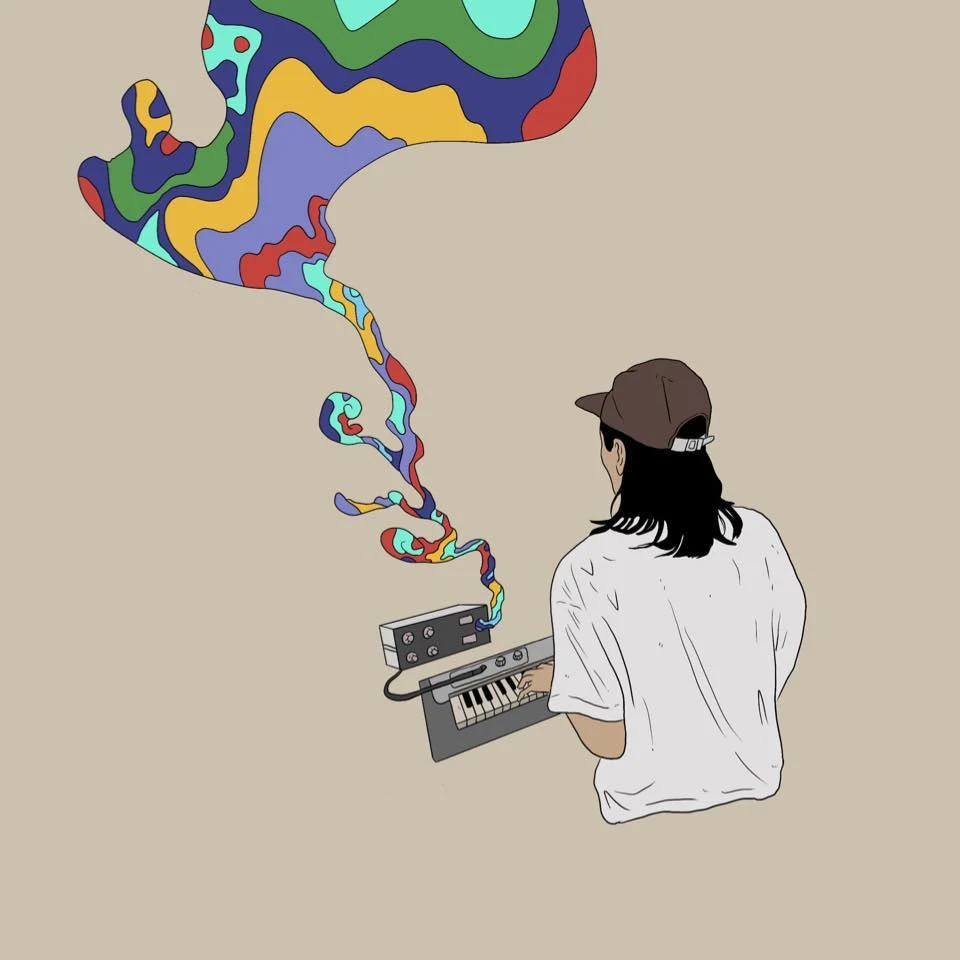
Hip-Hop Pianist Kazumi Kaneda Outdoes Himself with "Morpheme Tone" LP
When someone drops music that’s far and away his or her best work to date, it makes it much easier to write about. That’s why we thank Kazumi Kaneda for taking his jazz hip-hop to the next level on Morpheme Tone. It’s the fourth full-length release from the Tokyo-based pianist and producer and his third on Inner Ocean Records.
When someone drops music that’s far and away his or her best work to date, it makes it much easier to write about. That’s why we thank Kazumi Kaneda for taking his jazz hip-hop to the next level on Morpheme Tone. It’s the fourth full-length release from the Tokyo-based pianist and producer and his third on Inner Ocean Records. Kazumi is one of a handful of artists from the beatmaker milieux who are pushing all the right buttons at the intersection of jazz and hip-hop. He outdoes himself on this brilliant new LP.
Kazumi’s come-up has been almost entirely sponsored by our friends from Calgary, Inner Ocean. They’ve tapped him for tracks on the compilations Homegrown, BLESS Vol. 2, and Futures 6 and released Beats Note and Hard Light in 2016 and 2017, respectively. On the first, the producer finds his groove by laying smooth jazz chords over hip-hop drums. On the second, he experiments and gets to know himself more, but loses a bit of slap value in the process. On Morpheme Tone, he perfectly marries experimentation with slapping groove. He’s writing and playing from a new space where his emotion and feeling seems to flow directly into the notes without obstruction.
Morpheme Tone is hot from the jump, beginning with the most amped and immersive song on the album, “Magnetite”. This one immediately turned up in the A Road Trip to Tokyo Spotify playlist and our Eastern Beats selections. It’s a soaking jazz number with a thwapping drum pocket and running hi-hats. Across 11 more tracks, Kazumi plays in several different styles while maintaining one irresistible swing. There’s disjointed lo-fi on “Red Ant”, thumping boom-bap on “3dimentionz” featuring FLOAT JAM vocalizing in Japanese, and jazz in odd time signatures on “Side Recess” and “Little Wide”. The stand-up bass solo on this last one really takes you down.
There’s too much heat to single out a favorite tune. The question is rather what are you in the mood for? “Sandstone” pulls the heartstrings with greatest force. Measured in swing-per-second “Zugzwang” has the most groove. A smart mix-down enables the piano and bass to reinforce one other and give weight to the whole movement of the song. It’s kooky and wavy, free and psychedelic. A trumpet enters the mix like a swaggering, joke-cracking detective to investigate what’s going on. As the album winds to a close, “Optimistic Life” hits the highest emotional note.
Optimistic life: That’s what I like to hear. That’s what we all need to be on. I’m on it. Kazumi’s on it. With this tune (or all on your own without it) you can be on it, too. Morpheme Tone makes you feel good, and it’s got real relistening value. If there’s someone in your life for whom beats are just background music, make sure they get hold of this album and hear all the emotion and feeling that Kazumi Kaneda can generate by speaking through his keys and drums.
FOLLOW Kazumi Kaneda: Offical / Bandcamp / Soundcloud / Instagram / Facebook
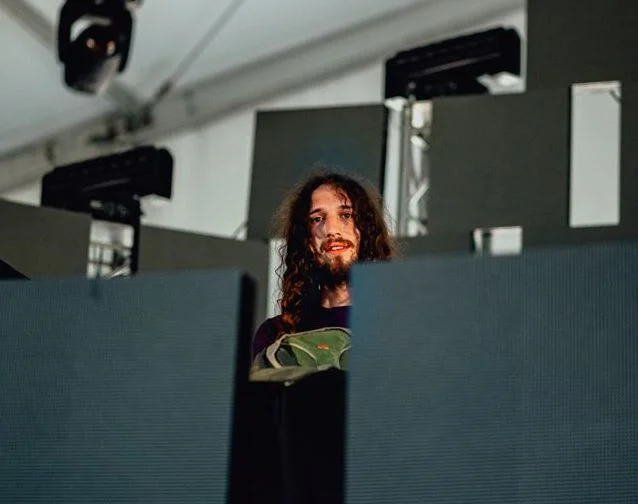
Mickman on a Mission: A Conversation with Cameron Ingraham
Beneath the blurry public image of the elusive electronic producer Mickman is a deeply intelligent, fiercely independent and fiendishly energetic man - Cameron McMahon Ingraham. We sat down with Cam before one of his biggest gigs to date at the PlayStation Theater in New York City in October to peel back the layers on his career and craft.
In late October, the elusive electronic musician Mickman played one of his biggest gigs to date opening for Jade Cicada at the PlayStation Theater in Times Square in New York City for a sold-out crowd of 2,200 people. Since he began performing in mid-2016, Mickman has gone from bedroom producer and one of bass music’s best kept secrets to a real rising star because of a crazed, obsessive, and fiercely independent approach to music found in few, if any, other people.
For a long time, Mickman was an enigma. Four or five years ago fans marveled at his heavy-hitting SoundCloud discography, but he had never performed live. His prolific productions were sort of a secret among the bass music literati. Even as he’s become more popular, he still barely promotes his music. But beneath this blurry public image is a deeply intelligent, fiercely independent and fiendishly energetic man - Cameron McMahon Ingraham. At the PlayStation Theater, I sat down with Cam - a friend since his first New York show in 2017 - to peel back the layers of his career and craft.

Mickman performing at Summer Camp Music Festival in Illinois in 2017 (Credit: Emerald Tide Photography)
We’re sitting in a green room after soundcheck and before doors open for the night. There are beers in a mini-fridge. “I want to see if I can have one of these,” Cam says. He goes to ask the man in charge if he, one of the main draws that evening, can have some beers. He comes back and settles onto the couch with a Modelo, characteristically dressed down in a black Mickman hoodie, jeans, and skateboard sneakers. Curly brown hair hangs down well past his shoulders.
Along with other recent milestones including a slot at Infrasound Music Festival and a headlining performance at the Black Box in Denver, this PlayStation performance is the product of years of single-minded hard work. Since one “defining moment” around New Years Eve in 2012 when Cam knew he needed to make music, he’s climbed towards success without a booking agent, manager or any formal musical background.
“Looking back to that time,” he reflects, “basically not having a job, fresh out of high school, I’ve never been more inspired and I’m still riding that wave of inspiration. I’ve normalized it now. But when the fire gets sparked again, like right now anticipating this performance…I’ve literally had butterflies all day and my energy levels have just been off the charts.”
Anyone who’s spent 30 minutes around Cam is familiar with his frenetic energy. It’s one of his most memorable character traits and also a defining factor behind his success. The depth of his obsession with production is matched by the depth of his energy reserves. He points a thumb across the green room at Eric Mallon who’s on another couch quietly sipping a Topo Chico mineral water and looking at his phone. Eric is a close friend, consigliere, and frequent sound engineer for Cam. “This morning, I woke him up with a water bottle and a trash can just slamming them together. ‘Let’s go! Let’s go!’”
For some, Jade Cicada and Mickman go together like peanut butter and jelly, though many attendees that night were either unfamiliar with Mickman, or they knew him but were just now catching their first performance. No one left disappointed. The energy in the air at PlayStation was already feverish by the time Cam took the stage, but he sent it into orbit, provoking gasps and hollers from the crowd with quick-footed breakbeats, unexpected drum and bass, and gigantic glitch hop bangers.
Cameron grew up in Rockport, Maine, a town of 3,300 people. He describes it as an “an everyone-knew-everyone situation,” and perhaps it was the type of rural, far north place that breeds independent thinking. Andy Widdecomb aka DeeZ grew up one town over. “We were listening to Prodigy together, and he and a couple other friends of mine got sucked into this stuff,” Andy says. “We would hang after school and talk music. He ended up moving away to Illinois before I graduated. After a year or so, I found out that he’d also been making music - secretly, kind of low key. His sister told me, ‘he never leaves his room, he’s trying to be a dubstep producer.’”
That was almost eight years ago. “As the new year hit going into 2012, I was pedal to the metal balls to the wall,” Cam says. “Every day, all the free time I had was going directly into making music. After the third or fourth year, I started becoming more comfortable with my sound and my knowledge about music.”
I first came into contact with Mickman’s music through a vocal sample from Terence McKenna about an “ocean of pure, vibrant consciousness” in a mix by Brian “Levitation” Jones. Unaware of the song or sample source, I asked Brian about it. “That's actually part of one of my favorite tracks of all time, “Dissolution” by Mickman,” he wrote me. “This guy is a production tank and every song on his SoundCloud is just fire. He actually doesn't even perform, just an awesome dude who sits in his room cranking out tunes.” That was the Summer of 2015. Just under one year later, Cameron would perform for the first time at a show he and Eric threw in Peoria, IL. It would be the first of many shows that Cam put together himself.
“I think there’s a curve for people once they really start saying, ‘okay I think I’m onto something.’ You’re becoming a little more comfortable rather than being shy and bashful showing someone your music. That’s when I gave up the notion of, ‘well, I don’t have a musical background.’ That means nothing.”
Cam’s approach to sound design is stripped-down. “Less is more,” he says. Andy, who is still the only producer to officially collaborate with Mickman, touches on this. “Many times we’ll go over a tune and I’ll ask him how he made something sound so cool. It will be the simplest thing like a square wave with some reverb just tweaked in an interesting way. Nothing crazy or complex that takes a lot of time. I think he’s one of those people who is pushing things forward with composition, although he also has great sound design. Composition is one of his strong points.”
His sound design is absolutely ferocious, but as Andy alludes to, it’s Cam’s songwriting that sets him apart. His melodies are straightforward yet infectious. His note relationships are simple but undeniably powerful. His songwriting prowess perhaps shines brightest on Mending the Riven. A primarily downtempo album with just a few dance floor bangers, it finds Cameron experimenting heavily with time signatures and musical ideas.

Mickman after his performance at Summer Camp Music Festival in 2017 (Credit: Emerald Tide Photography)
“Riven” means torn or split apart violently. I asked Cam what’s been split and how are we mending it. “I feel like it can be interpreted in many ways. If I were to define that myself, I don’t want to take away from anyone else’s interpretation. But in terms of all the definitions of the words mashed together, I definitely think it was one of the more intellectually stimulating things that I did.”
Mickman music has always been full of messages, from the ocean of consciousness in “Dissolution” to songs sampling Richard Nixon, Ronald Reagan and George W. Bush. “In my older music, I was so definitive about the message that I was trying to get across. I still am, but I’ve definitely toned down the deliberate, direct messaging.” One can hear the drop off in vocal samples over time across the Mickman catalog.
“If you’re trying to convey a message in music, I feel like you can almost get farther with just the intention and idea you have when you’re making it than with the samples and words you’re putting into it. There’s a big power in the subconscious nature of music. I’m trying to leave it more up for interpretation now rather than being like, ‘you’re being lied to and your mind’s being controlled!!’ That’s a little too on the nose,” Cam says with a chuckle, “but I was super big on it back in the day.”
He was willing to share thoughts about “Branch Point” from the album Ether Excerpt when I pressed him. “I think there’s definitely going to be a branch point, a tipping point, a threshold that we cross when there will be a pretty definitive outcome in one way or another. It’s going to either be a nice, fluffy utopian ride in the park or quite literally the exact opposite. The average person that you pull off the side of the street, I don’t know if they’re ready for it. I think they’re more ready for the latter than they are willing to put in the work to make a better outcome.” Macro perspectives like these on the purpose and path of humanity appear constantly in Mickman’s music.
Hearing Cameron speak about his career from start to finish, it crystallized in my mind at PlayStation just how crazed and obsessive his approach is. Through sleepless nights, countless hours in front of the computer, long car rides, dozens of load-ins and tear-downs, he made his own lane and did so without compromising his ideals. Once I thought back, I remembered past glimpses of his obsession and his undeniable desire for independence.
He performed at a Rust show in the basement at Brooklyn Bazaar in 2017 when he and DeeZ were touring. Eric was on sound and the three of them were carting Cam’s purple Funktion One rig from city to city. Once the show ended at 3:00 am, there was Cameron spry and ready to carry these gigantic subwoofers back up the slim stair set. Earlier this year he played the early arrival party at Solasta Festival in North Carolina, then flew back to Illinois and threw a show in Peoria the next day, essentially without sleeping. “That was a pretty exhausting mental run.”

Mickman performing at Solasta Festival in North Carolina 2019 (Credit: JV Photography)
What motivates this madness? “The whole chute and ladder game, in terms of, ‘you gotta start off small and play in bars, then open for these people, you’ll get a little bit better and a little bit better and then maybe you’ll get on a show that has some pro audio,’ I just put all of that off the table. I was much more interested in curating my own experience rather than being involved in someone else’s…Trying to materialize and manifest my own vision.”
“You’re mighty ambitious, I said to Cam. “I never truly realized how ambitious, because in person you’re a pretty laid back dude.”
“Move in silence, baby,” he responded.
“Like lasagna,” I added.
“Exactly,” he laughed. We toasted.
Now, Cam’s career is accelerating. He’s playing out more and more frequently, he’s moving upwards on lineups, and he’s become comfortable enough to get a booking agent - Hasan over at Envisioned Arts. It will be fun to watch how Cam’s creativity evolves as the context around that creativity changes. What’s not likely to change? His obsessive, single-minded focus. On top of priceless musical talent painstakingly developed without musical training, it’s his energy and intensity that make Mickman special. “There have been a bunch of different things that I’ve been passionate about in my life that have ebbed and flowed. Then the whole making music thing came into play, and I’ve just never been more sure about something ever.”
FOLLOW Mickman: Soundcloud / Bandcamp / Facebook / Instagram / Twitter
pheel. & parkbreezy Premiere “Morning Coffee 3” Through all:Lo Collective
When Phil Gallo and Parker Williams aren’t busy manning the helm at all:Lo Collective, they’re often combining the musical output of their respective projects, pheel. & parkbreezy. They’ve paired up once again to present a full course adventure for beatfreaks of all shapes and sizes; Morning Coffee 3.
When Phil Gallo and Parker Williams aren’t busy manning the helm at all:Lo Collective, they’re often combining the musical output of their respective projects, pheel. & parkbreezy. They both have got a serious gift for broken beats, low-end richness, and palatable groove, so it comes as no surprise that their individual projects slide into one another like interlocking puzzle pieces. Over the last few years, they’ve released a fair amount of tracks and mixes together, constantly mingling the two mindsets in a vibratory dance of crisp downbeats and lush fills. Keeping the creative momentum constantly in motion, they’ve paired up once again to present a full course adventure for beatfreaks of all shapes and sizes; Morning Coffee 3 [MC3].
Like the previous two Morning Coffee mixes, MC3 is a 50/50 mix of unreleased pheel. and parkbreezy collaborations, original productions, and crafty flips. Like any good breakfast staple, it’s piping hot and smothered in butter. Given that none of the tracks in MC3 have seen the light of day until now, it’s christmas come early for stateside head-nodders. The music is undeniably sultry in every way, showcasing not just the flavor of the individual tunes, but the creative blend of the tunes themselves. The duo’s music falls into a hemisphere of producers who don’t often pursue the sibling art of conventional mixing, and that’s precisely what allows them to outshine many of their contemporaries. Beat-tapes are often strong in their track selections while lacking in the actual mix, whereas MC3 rolls through speaker cones like it just underwent a fresh oil change. The precision cuts, turnarounds, breaks, and refrains in the music all lend itself to the larger, homogeneous combination that makes Morning Coffee 3 such a smashing release.
Keeping up with the all:Lo gentlemen is about as healthy as drinking eight fluid ounces of clean water in the morning. They’re both nutritious and refreshing in their own way, but time and again we find ourselves most enamored with the output of pheel. and parkbreezy when they’re in close collaboration. Kickstart your morning with the absolutely crispy, mouthwateringly spicy, bean-based Morning Coffee 3, and we promise you’ll be flushed and primed in no time at all.
FOLLOW parkbreezy: Soundcloud / Bandcamp / Facebook
FOLLOW pheel.: Soundcloud / Bandcamp / Facebook
Track List:
Why Can't We Smile (pheel. flip) - pheel.
A Ballad For Joe(flip) - pheel.
Chest Pains (pheel. flip) - parkbreezy x pheel.
Hash Pattie - pheel.
107 Degrees - parkbreezy x pheel.
Pharcyde of The Moon (flip) - parkbreezy
The World Is Yours (flip) - parkbreezy
3 Strikes w pheel. - parkbreezy
Clean House - pheel.
Subtle - parkbreezy x pheel.
Zonin Out - parkbreezy
Purple Orange Beach - parkbreezy
Fraberto - parkbreezy x pheel.
Boom Biddy Bye Bye (flip) - pheel.
The Last Song - pheel.
Bodega Lucy - pheel. x 5AM
Digging - Thought Process x parkbreezy
To Be Continued - parkbreezy
Is It Real - parkbreezy
The Real - parkbreezy
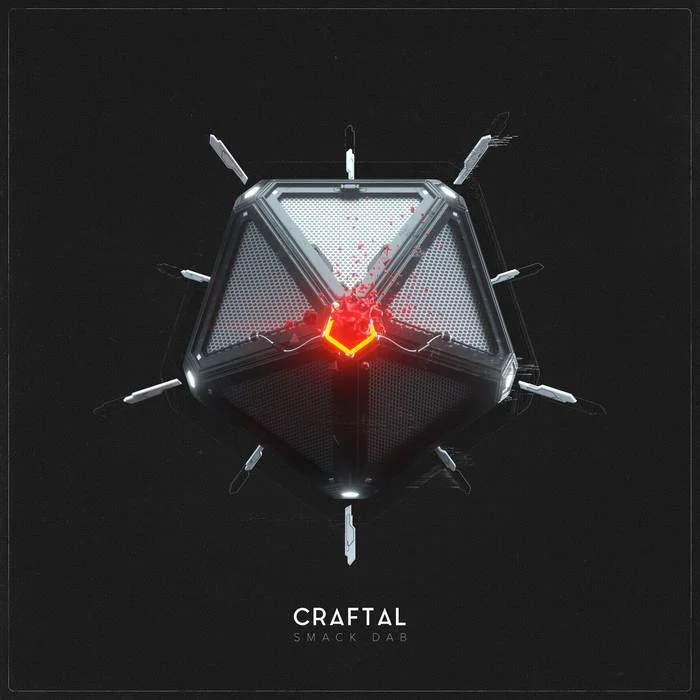
Craftal Marries Flavor and Simplicity on “Smack Dab” EP
For Craftal’s music, the details are the big picture, and that dynamic is the bedrock of Smack Dab. He flexes flavor and simplicity through powerful songwriting and jovial modes, showcasing a fresh take on his unique blend of glitch music.
Today’s bass music landscape has a bit of an infatuation with all things dark, serious, and sometimes foreboding. It’s the kind of emotional tension that can breathe life into such a digital, precision-based genre. Shirking off the sometimes formal stiffness of his contemporaries, the Colorado-based producer Craftal eschews dark and mysterious in favor of pure flavor on the Smack Dab EP.
Part of the allure of Craftal’s music is the almost flippant nature of his productions. Slapstick, left-field rhythms, textures, and samples have been a mainstay in his tunes for years, but the contents of Smack Dab mingle his music’s unique attitude with powerful songwriting and jovial modes. “Smack Dab” hits home with a funked-out meandering bass line, channeling straight groove and bereft of any flashy trappings. It’s refreshingly austere, showcasing a stark contrast between Craftal and many of his peers. Contemporaneous producers often get caught in the details between the details, and the end result can be a washy mess of textures and compression. For Craftal’s music, the details are the big picture, such as with “Apprehecension”. Instead of hiding the glitches and warped shards of audio behind a slew of layers, they’re on full display. The powerful undercurrent of the track carries straight through every texture and stab of synthesis, and that dynamic is the bedrock of Smack Dab.
Craftal has developed a collection of pocketed tunes across the course of his career. He’s had releases hosted at Aquatic Collective and here at The Rust Music, showcasing glitchy, high fidelity production melded with fluid songwriting and arrangements. His cautious approach to the music he unveils has paid off yet again with an honest, virile array of compositions. If you’re in the market for fresh arrangements and tactile sound design, you’re sure to find what you’re looking for inside Smack Dab.
FOLLOW Craftal: Soundcloud / Bandcamp / Spotify / Facebook
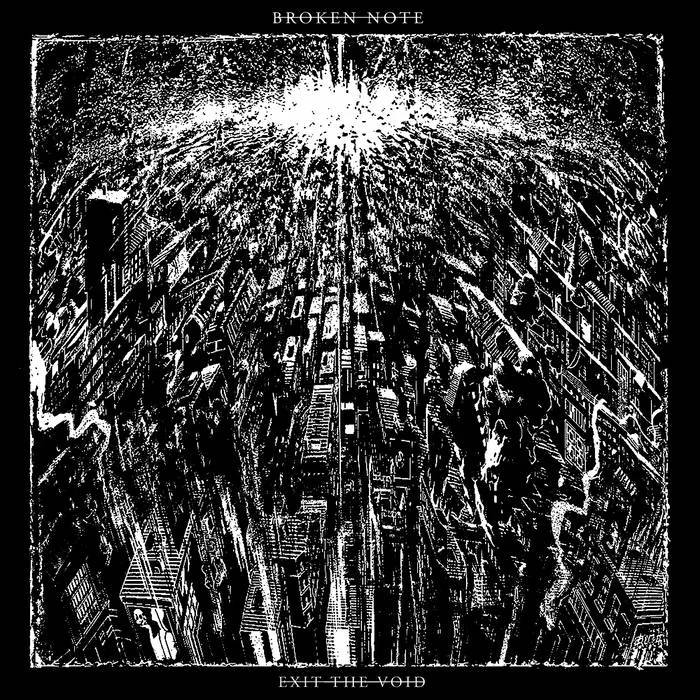
Broken Note Unleashes Massive 15-track LP “Exit The Void”
Broken Note’s music is exactly as his name suggests; staccato, abrupt, and unabashedly glitchy. After spending the last year deep at work in the labs, he’s crafted what is undoubtedly his most ambitious release to date: Exit The Void.
The speaker creatures running the show at Slug Wife have a way of one-upping themselves on a fairly constant basis. Sound design is the name of their game, and their roster carries some of the progenitor producers and engineers involved with contemporary bass music. Alongside Seppa and Kursa, Broken Note is one of the original Slugs to carry the mantle, placing him directly in the center of low-end design’s Gastropoda enterprise. After spending the last year deep at work in his laboratory, he’s crafted what is undoubtedly his most ambitious release to date: Exit The Void.
Exit The Void is a 15-track album brimming with distorted textures and hair-splitting rhythmic switch-ups. Broken Note’s music is exactly as his name suggests; staccato, abrupt, and unabashedly glitchy. Over the course of a tenured career that spans more than a decade, he’s been at the forefront of modern bass design since his inception, driving the burgeoning sounds of neuro and half-time drum’n’bass since their infancy. What has always set him characteristically apart from his contemporaries is the extremely punk veneer and aesthetic to his music. Exit The Void expands the horizons of that attitude. His mixes are certifiably clean by all measures, but the music itself is a blanket of distortion and intentional phasing. Clipped, dented, and fractured bits of audio are his weapons of choice, and he wields them with remarkable dexterity. Whether it’s speaker-shredding low-end in “Pressure Chamber”, or the intentionally malfunctioning breaks in “Iron Sky” or “Parabolic Hex”, his music channels through the ears like a data stream fighting its way to sentience. It’s an ultimately successful fight, giving Exit The Void the illusion of biological growth.
Broken Note is often the quieter of his slug compatriots, but never for lack of ambition. His head-down work habits have paid off time and again in the form of mentally-scintillating music and performances, especially throughout the stateside Slug Wife takeover earlier this year. Pushing the boundaries of sound and pressure wherever and however he can, Broken Note has never failed to deliver on his evolving ferocity. This time around, he’s managed to completely break those boundaries altogether, bending the frequency spectrum into a fantastically spectral adventure. For all those seeking the dark, undulant bits within bass music, your next fix is waiting inside the folds of Exit The Void.
FOLLOW Broken Note: Soundcloud / Bandcamp / Spotify / Facebook
FOLLOW Slug Wife: Soundcloud / Bandcamp / Official / Facebook
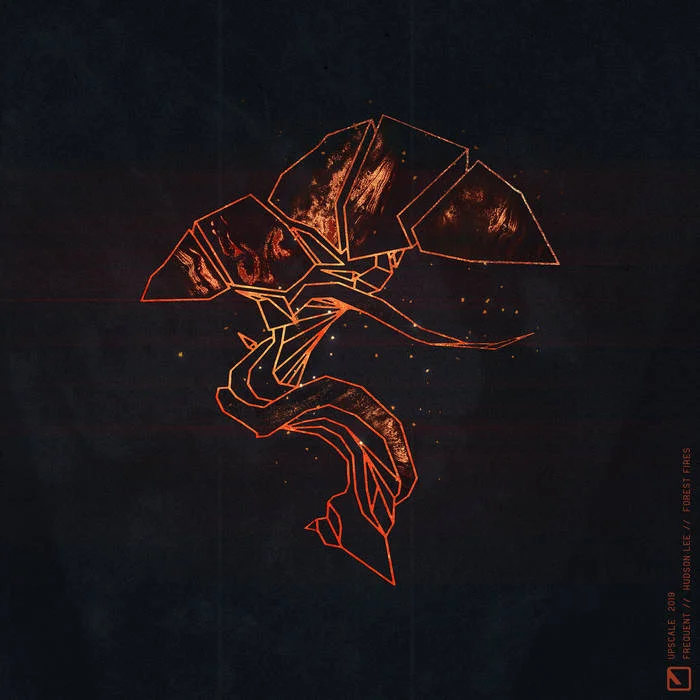
Frequent & Hudson Lee Traverse Stereo Space on “Forest Fires”
Frequent and Hudson Lee have built their individual brands and collaborative platform into a powerhouse of intense, fidelitous music. “Forest Fires” is a potent next step in their ongoing journey, forging a unique combination of cinematic composition and top-tier production and engineering.
Production heavyweights Frequent and Hudson Lee have a potent history of collaboration; they’ve co-owned and operated Upscale Recordings since 2016, and they’ve combined their musical output in the last few years to produce “Windows” and a remix to Telepopmusik’s “Breath”. Individually, Frequent and Hudson Lee present two different breeds of potent electronic music. Frequent tends to focus on razor-sharp sound design and low-end ferocity, while Hudson Lee places his focus on the instrumental and harmonic interplay within his music. When it comes to straight forward production and engineering, however, they’re both at the tip of space-age fidelity. In another fantastic display of that fidelity, they’re emerging from the studio with the fresh, cinematic collaboration “Forest Fires”.
Differences aside, one of the unifying factors about Frequent and Hudson Lee is their uncompromising control of rhythm. They’ve both been known to touch on grooves ranging across the rhythmic spectrum, and therein lies the most attractive aspect of “Forest Fires”. Eschewing a dance floor-ready approach, the track is a slow, powerful dive into an emotive composition. It’s fully laden with audio artifacts and glitchy, asymmetrical cuts, intentionally rupturing the fabric of the composition. The arrangement ebbs in and out of a high tide of texture and tension, placing the focus on the innards of every measure. It’s the distinct opposite of transient, with downbeats few and far between until the tail end of the track. The movement that is usually achieved by percussion is instead achieved through the evolution of tone and timbre. Ripping synthesis mingles with atmospheric pads and subtle chord phrasing to create a fully stereophonic experience.
Frequent and Hudson Lee have built their individual brands and collaborative platform into a powerhouse of intense, texturally crisp music. Occasionally, they combine their musical and production know-how to craft some particularly alluring musical experiences. “Forest Fires” is a formidable next step in their ongoing voyage through sound, forging a unique combination of living, breathing composition and top-tier production and engineering.
FOLLOW Frequent: Soundcloud / Bandcamp / Spotify
FOLLOW Hudson Lee: Soundcloud / Bandcamp / Spotify
Detox Unit Talks Breakbeats & Breakfast Ahead of JadeStation
2019 has been the biggest year yet for Detox Unit, and he’s now set to smash New York City with Jade Cicada at the Playstation Theater. Ahead of this performance, we caught up with Detox aka Joe Roberts to sift through his thoughts and musings about breaks, production, life on the road, and breakfast necessities.
On October 26th, Jade Cicada, Detox Unit, Mickman, and 5AM are set to present the deepest dive into bass music yet in 2019 in New York City. As we gear up for this Saturday’s spectacle, we took a moment to catch up with an old acquaintance on his recent exploits and experiments.
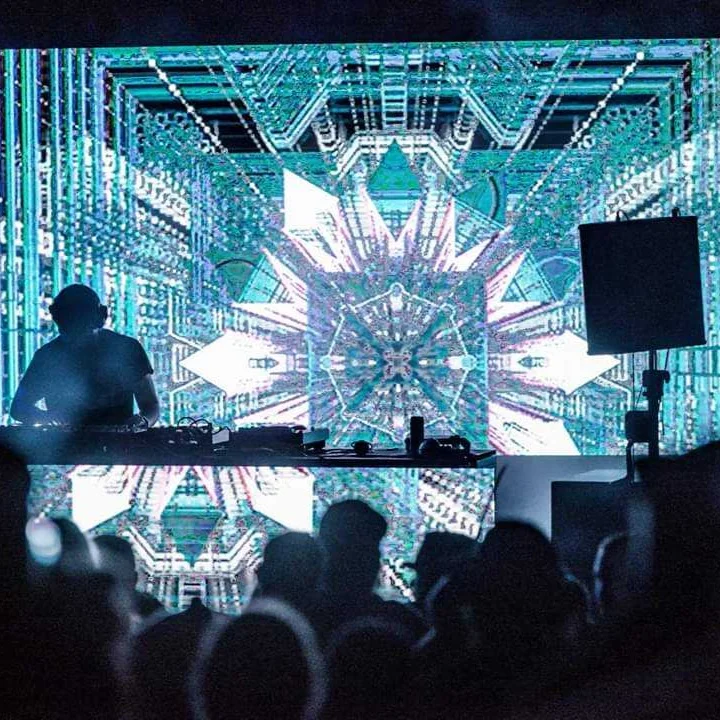
Joseph Roberts, aka Detox Unit, has been surging through the ranks of contemporary producers, and 2019 has been his biggest year to date. This summer saw him in headlining slots across the festival circuit in the U.S, including Solasta Festival, Yonderville Music and Arts Festival, and Quasar Festival. Lately he’s been in cahoots with Cullen Hassel, an Arkansas-based visual producer, and together they’ve taken the Detox Unit experience into vibrant and immersive new territory. They’ll be teaming up together once again this weekend, showcasing a bevy of new content, routines, and brain-splattering combinations.
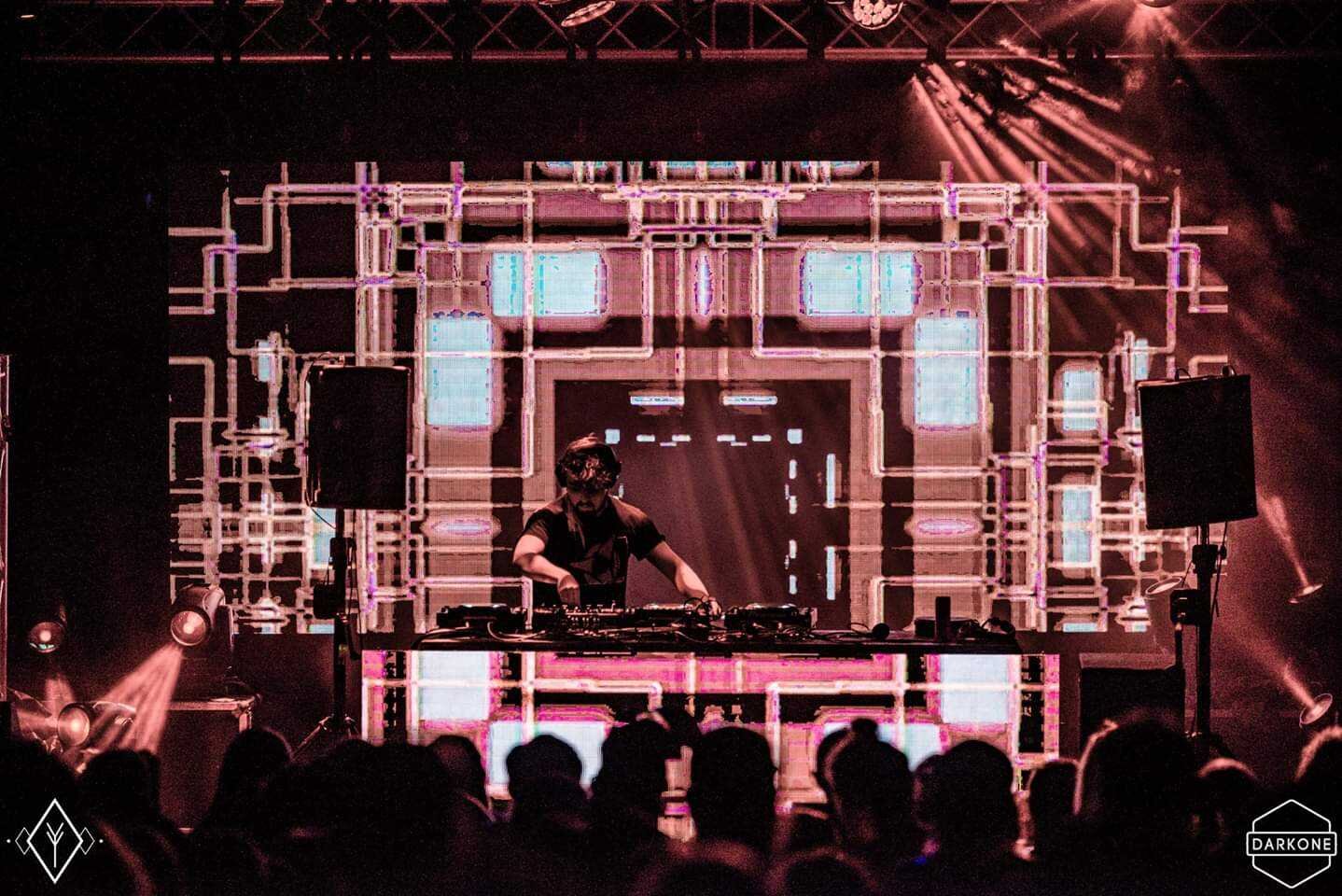
Detox Unit at Yonderville Music and Art Festival (credit: Dark One Photography)
For a producer with such a dedicated, on-the-ground following, Roberts has released surprisingly little music. His series of “Recent Works” mixes is the largest view into his studio catalog, with his actual EPs being even sparser. This tightlipped, frugal approach keeps Roberts a step ahead of the game; You have to catch him live to catch the music. It’s partially why he’s so prized on the touring circuit, rinsing a revolving treasure trove of VIP’s, bootlegs, and spicy, unreleased cuts. Because of the intrigue around his project, we felt the need to poke and prod his brain a bit more. We last corresponded with Joe in 2017 after a Brooklyn performance supporting Jade Cicada. As JadeStation approaches, it felt like the proper time to finally catch up with him again, this time about breaks, production, life on the road, and breakfast necessities.
The Rust: What inspired you to begin producing and playing out break beats lately?
Joseph: It's always been something I've done on the side. Breaks, more specifically of the 123-138 BPM variety, have always resonated with me. When it's good it's equal parts hip-hop and drum n bass both at their wrong tempos. It’s the intricacy and wild sound design of bass music combined with the infectious groove of house. When I lived in Austin, Texas, it was quite common to catch me playing breaks all night at an after party. The recent push I've been making with the breakbeat sound has been something I've been wanting to do for a long time, and with the momentum I've got going it just felt right. There was a certain type of sound that was being pushed from 1999-2005 and I think our dance floors are missing it dearly. My aim with all this is to bring that style back with modern production for the discerning listener. I absolutely love all the heavy sound-design-laden, hip-hop type music we're all pushing right now, but that has always felt like head-nod, arm throwing music, whereas breaks have been a full body dancing experience for me. With all that said, I by no means intend to change styles, and you can expect plenty more heavy hip- hop infused bangers.
The Rust: What are the ingredients for your ideal drum break? Are there any sounds or instruments you’re especially fond of?
Joseph: Excellent question! A good drum break is essential to a groovy tune, and I spend a lot of time trying to source mine or make my own. Lately I've been trying to find old sample CD's from the early 2000s, before online sample packs were a thing. What I like to look for in a drum break first and foremost is vibe. It's hard to describe, but certain breaks just have this dusty airiness to them, and the drums hits will just flow one into another. It needs to have a certain level of crustiness mixed with attitude. Drum breaks that have little snippets of vocals in them are especially delightful, such as the classic "Think Break". Good groove and swing on the back beat snares is another thing I look for, they really help keep the beat flowing between the main snares and kicks. Lately I've been trying to create my own drum breaks to use in my tunes using simulation drum kits in Kontakt. “Obscure” is an example of a tune where I've done this. I still have a long way to go in this area - the vibey bit I was talking about earlier is especially hard to recreate, but I enjoy the challenge.
The Rust: Can you talk to us about the process behind the breakbeat tune "Vibrate" on your last EP?
Joseph: That tune was actually a rather last minute addition to the EP. I had the release pretty much ready to go by the end of April, and sort of on an impulse decided I should include another track to make it more of a showcase of the different styles I can make. I probably put more individual focus on this tune than any other ones in the EP and wound up rewriting it a few times during May. It originally started out sounding far more like a psychedelic Detroit electro tune and went through a few iterations until it sounded more like a slow Nu Skool Breakbeat tune. A few elements in the track, including the "Melinda" vocal sample - which is just a recording of me pitched down - come from an old breakbeat tune that I wrote in 2016 called "Dimensional Sound" but never saw release. I did my best to make the track both a nod to the past and an indication of the future.
The Rust: By our count, this Playstation Theater gig will be your fourth in New York City. How are you feeling about this one compared to the others?
Joseph: This will be the biggest and best one to date, hands down. All the bells and whistles are being brought out for this one. Everyone on the bill is bringing their A-game, from the VJ's to the producers, the sound guys and production staff, right down to every wonderful person on the dance floor. It's going to be one for the books without a doubt. My other shows in NYC have all been great, but I feel this is the first one where we're really combing over the details down to the smallest bit to make sure it is a quality experience for all.
The Rust. You're from Scarsdale just north of New York City. Any words of advice, cautionary tales, food recommendations or other tips for fans traveling from afar?
Joseph: Scarsdale born and raised, I think I have some old friends from high school that will be making it out to the show. Playing shows in New York has always been an interesting feeling for me, as I didn't touch music production until I moved away, so it always feels like touching on an old chapter of my life - a chapter that had much better bagels. I highly recommend anyone coming in who hasn't been to NYC to go to one of those corner shop bodega delis and get a breakfast sandwich. Your life will be changed. Riding the subway is also something that should not be skipped, it is an experience in and of itself.
The Rust: What kind of preparation do you do for your sets? Do you strive for a ratio between original productions and DJ selections?
Joseph: Lately I have not been doing much prep at all in the traditional sense for my gigs. I essentially spend up until the day of flying out working on new tunes to play out at the show. I typically don't start working on my set until I'm on the plane and usually finish it up at the hotel the night before and morning of the show. It may be a bit last minute by some peoples standards, but I like it and it allows me to bring more new music to my sets than I would've otherwise.
I keep my DJ setup very straight forward so set prep is just a matter of figuring out what tunes to play and when, and I figure out all the transitions while I am up there. I try to keep my sets mostly original, and for the past year I have been averaging about 26 tunes a set, and usually 22-23 of those will be original. The remaining ones will be homies tunes or some random producer I am hyped on, sometimes a cheeky drum n bass tune here and there. For this upcoming NYC show I will be doing an all original set.
The Rust: You've had a busy summer. What have been some highlights? On the flip side, has your schedule worn at you all?
Joseph: You can say that again. Between all the summer festivals, Burning Man, moving to a new house, and all these fall/winter gigs, it's been quite a ride. I would say Solasta was the absolute highlight of my summer, with Burning Man coming in at a close second. The homie levels at Solasta were just off the charts, and it was just an absolute pleasure being involved. This summer was also my first time at Burning Man, and I could go on for hours about that, but honestly you should just go and experience it for yourself. I've never been this busy in my life and it's amazing, but on the flip side stress and exhaustion have been reaching an all time high. It's really just a matter of learning how to prioritize healthy habits and time management in an ever-decreasing bubble of free time. I am still learning how to balance my life so it’s been a bit of a struggle keeping up with everything, but it’s all a part of the journey. A lot of creative inspiration comes from the struggle and it's one of the things that keeps me going.
Purchase tickets to Jadestation here
FOLLOW Detox Unit: Soundcloud / Bandcamp / Spotify / Facebook

Lo-Fi Sundays 088 - Kazumi Kaneda
Once you’ve heard a handful of licks from the Tokyo-based pianist and producer Kazumi Kaneda, you won’t be able to forget his warm, one-of-a-kind sound and feel. When those minor chords start to jingle around like a set of keys, you know Kazumi is on the track. He’s a visionary jazz pianist who knows how to work with hip-hop material, too, and blend both worlds effortlessly. Listen through to the end because we saved the best knock for last this weekend.
Once you’ve heard a handful of licks from the Tokyo-based pianist and producer Kazumi Kaneda, you won’t be able to forget his warm, one-of-a-kind sound and feel. If you're listening to one of Inner Ocean Records’ BLESS compilations or Mecca:83’s seminal Life Sketches album and you hear those minor chords start to jingle around like a set of keys, you know Kazumi is on the track.
Simply put, he’s a visionary jazz pianist who knows how to work with hip-hop material, too, and blend both worlds effortlessly. His phrasing on the piano is so descriptive. With the keys he’s like a poet with a pen, giving life to ideas and feelings with sound. He has a masterful sense for groove, with his phrases curling around the robust hip-hop drum patterns.
Kazumi has been releasing his work for more than seven years, and we caught wind of him in the last two after Hard Light, his second full-length with Inner Ocean Records. Our friends from Calgary have been his greatest sponsor in the western hemisphere, also releasing Beats Note in 2016. Listen through to the end because we saved the best knock for last this weekend. Then stay tuned because Inner Ocean will release Kazumi’s the next full-length on November 22nd.
FOLLOW Kazumi Kaneda: Offical / Bandcamp / Soundcloud / Instagram / Facebook
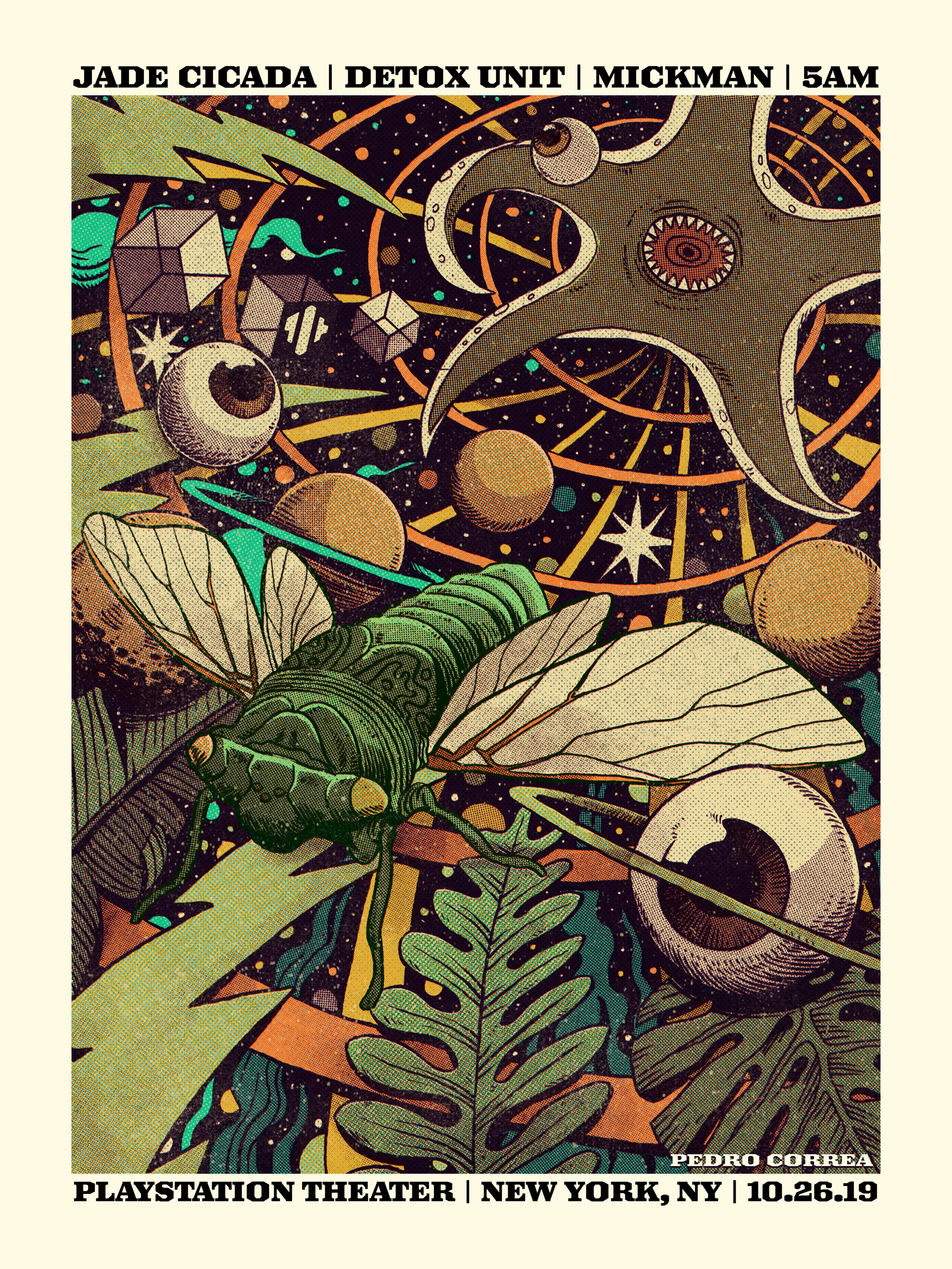
JadeStation: The Last Great Electronic Gig at Playstation Theater
The cream of the crop in contemporary US glitch-hop - Jade Cicada, Detox Unit, Mickman and 5AM - will soon share the stage together on October 26th at the PlayStation Theater in Times Square. All these producers have great history in New York, so it will be a crescendo of sorts: a great leap forward for Jade Cicada and his cohorts and a fitting way to close the books on an endearing venue.
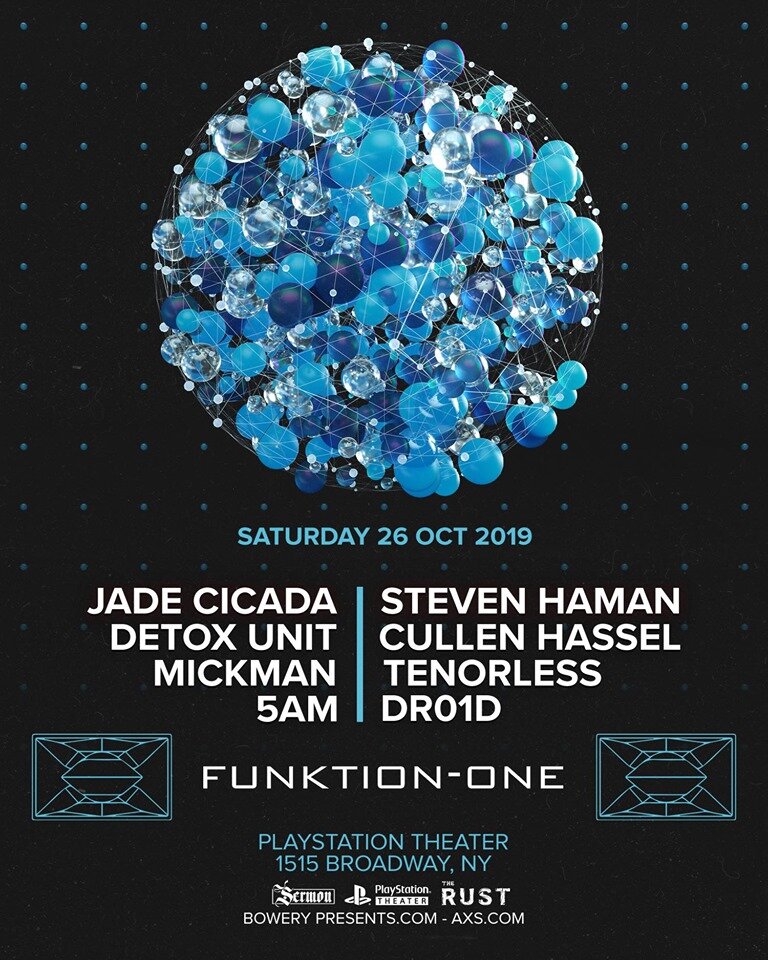
The cream of the crop in contemporary US glitch-hop - Jade Cicada, Detox Unit, Mickman and 5AM - will soon share the stage together on October 26th at the PlayStation Theater in Times Square. Joining them are four supremely talented VJs, some of whom have become intimately associated with this music: Steven Haman, Cullen Hassel, Tenorless and Dr01d. A full-force Funktion One sound system will tie it all together. This will be the last great electronic show at Playstation Theater before it closes its doors at the end of 2019.
There’s a delightful feeling in the air over this event, a sense of alignment. It feels right. A new generation of stand-out producers will ascend to the main stage to curate a new kind of vibe. It’s a fitting end for a venue that always held it down for New York’s electronic community and served as a germination station for many psychedelic electronic passions.
During the formative years of my own journey with electronic music when my feelings toward the culture were moving from enthusiastic to obsessive, most of the biggest and best shows I went to were at Playstation, which was then called the Best Buy Theater. From the annual Gramatik runs to STS9’s Fall tour appearances to Tipper’s return to New York in January 2015, I and those who came up around me spent many memorable nights in that blue, subterranean space.

During the formative years of my own journey with electronic music, most of the biggest and best shows I went to were at Playstation, which was then called the Best Buy Theater.
What some consider to be the theater’s “slightly awkward design” I always found as novel. To enter the theater, you ride down a double-flight of escalators. It gave me the sensation of truly entering another place, somewhere set apart that was dimly lit, loud, and exciting. I knew my friends would be running around and that the opportunity to make new connections was ever-present. Times Square might be the place every true New Yorker avoids like the plague, but at least it’s accessible by public transit unlike some other big *cough* Avant Gardner *cough* venues.
Each producer has great history in New York City, as we’ve highlighted before here and here. Almost a year ago, they each performed in the city on the same night, with 5AM, Detox Unit and Jade Cicada supporting Tipper and Kings Theater and Mickman slinging at our afterparty with Sermon. Before that, they were headlining small clubs in Brooklyn. And so October 26th will be a crescendo of sorts: a great leap forward for Jade Cicada and his cohorts and a fitting way to close the books on an endearing venue.
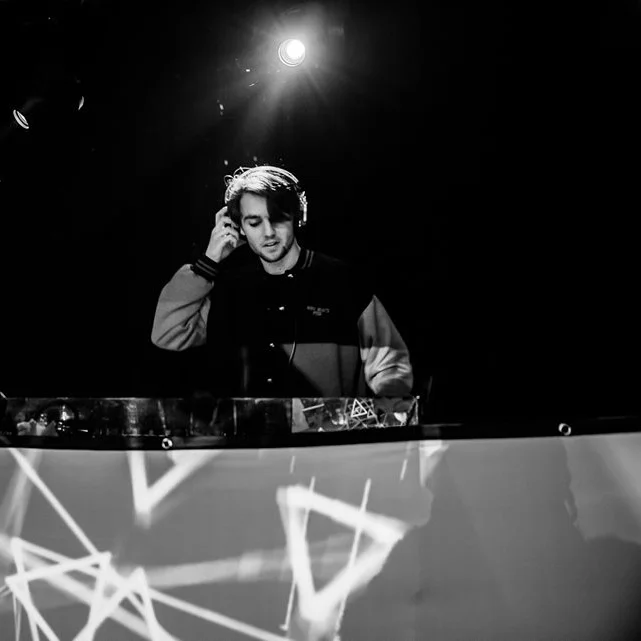
Get to Know 22-Year-Old Production Powerhouse COPYCATT
COPYCATT has been influencing broken-beat electronic music for years with his cutting-edge sound design. He goes on the record with The Rust about production, visa troubles, and his attitude towards his art.
Neuro music has evolved to encompass a plethora of sounds and styles, growing from an offshoot of drum’n’bass into an entire production philosophy over the course of the last decade. The neuron-firing sound design and high-fidelity, speaker-shredding textures of the genre have become commonplace in the catalogs of today’s incoming broken-beat electronic producers. That’s partially thanks to a handful of individuals who not only pushed the boundaries of production and engineering, but went a step further and gave other musicians relatively free, in-depth access to their production tricks and thought processes. .

COPYCATT performing at BBQ Bass
COPYCATT is one of these standard-bearers of neuro music. He’s a staple of the sound, and anyone who explores neuro with honest curiosity will come across his music. Hailing from Queensland, Australia, Andre Butterworth has been producing and contributing his production knowledge to the world for the last five years and running, all the more impressive when you learn he’s just 22 years old. He constantly makes himself available to curious fans, hobbyists, and contemporary producers through a series of production-based video streams and tutorials. Many of his songs, like 2017’s “Tom’s Battery” with Frequent, have traveled around the world on sound systems. As a result, his influence is tremendous, but this comes as a surprise to Andre.
Releasing just below 40 tracks, COPYCATT has maintained a catalog of monstrous cuts. Every song features a potent mix and master, and that sonic clarity has become a big part of his reputation today. Crafting wild, isometric sounds is one thing, but using them well is an entirely different matter. COPYCATT’s music isn’t just an amalgam of vicious noise and transient downbeats. It has a groove and soul of it’s own, channeling powerful melodies through raucous, warped bass lines.
Although he’s open about his production processes online, COPYCATT is still somewhat enigmatic, in part because he’s never performed in the States, the current hotbed of neuro music. Now, for the first time, he goes on the record with The Rust and illuminates other aspects of his project beyond production: his broad, diverse influences from Madlib to Skrillex, his visa troubles, and his raw feelings about his own art and processes. As a companion to his exclusive interview, COPYCATT has delivered an exclusive mix of IDs, which we will release next week through the Rusted Rhythms mix seres. Stay chooned.
The Rust: Since you’re based out of Australia, you’re in the same boat as quite a few other major players in alternative electronic music. Can you talk about the music culture where you’re from? What’s actually in the water over there?
Andre: It's an odd scene over here. I think Australia has this kind of younger brother complex where we all think every other country has more talent than we do, and so we don't take our own content very seriously. A lot of the musicians I know here also don't take Australia very seriously as a place to have a career in music, and in a corresponding way a lot of the major music sources and radio stations here don't take Australian artists seriously until they find their way into an overseas market like the US, hence a lot of the successful people tend to plant their success elsewhere. There's a lot of incredible talent here though, and most of it is pretty much undiscovered. I've met some of the most talented producers here with less than 100 SoundCloud followers, and they usually live in some rural area and just churn out great music for the fun of it.
The Rust: In the United States especially, you have a high reputation amongst incoming and established producers alike, with many crediting you on their shorthand list of sound design inspirations. How do you perceive that reputation?
Andre: I do find it pretty bizarre to hear that. I think because there's not much of a scene here in Australia for the kind of music I make, I find it hard to imagine what people tell me about the way it's received in places like the United States. My friends who live in the States message me when they hear my tracks being played out at festivals and send me videos and it always freaks me out. I have a bit of a bittersweet joy about it, because usually I'll send my demos to guys like Chee and Frequent to play out at their shows, but if I don't have many shows lined up at the time, the show that they play will probably be the first time anybody hears that demo. But I really love the thought that there's a culture for the stuff I like to create, so I can't complain.
The Rust: How did you find yourself so enamored with thick bass music in the first place?
Andre: I used to be into thrashy hardcore stuff back in my pre-teens, and I remember my friend (also kind of my music dealer at the time) showed me “Firepower” by Wolfgang Gartner. I think I got pretty hooked on electro from that point, and then of course Skrillex happened and I decided “yoys” were the future of music. KOAN Sound was the next big shift for me a few years later, and about the same time I started getting into hip-hop artists like Madlib, Pete Rock, and J Dilla. So here I am now at mid-tempo, crunchy bass music.
The Rust: Rhythmically, you seem to have a strong foothold in traditional, golden-age hip-hop. Have you always made music in that fashion?
Andre: I used to make what people now call "Bro-step", but at some point a few years back I think I heard some Nujabes in a cafe or something, so I went home and looked up "jazz gangster beats" (I wasn't raised in a place where hip-hop was popular as you may have guessed). I found “Trashy” in that Vintage Vol. 2 beat tape by J Dilla, and got hooked on his sound immediately. Then I found Madlib's Album Shades Of Blue (now “Distant Land” is my favourite song of all time). I thought it'd be easy to make until I actually tried it and made the most boring beat ever. Then I decided to actually drop a J Dilla track into FL Studio and after looking at it properly I realized there’s a fair bit to actually achieving the right kind of swing. I guess I’ve spent the last few years trying to emulate that sound in the music I make. Also, I honestly have to credit Tony Hawk's Pro Skater 2 (and the cereal box the game came in) for repeatedly subjecting me to “Guerilla Radio” by Rage Against The Machine. It's not golden-age hip hop, but that heavy mid-tempo riff is printed in the way I write my riffs for sure.
The Rust: One contemporary school of thought on production is to separate sound design and composition. Can you walk us through some of your typical production and songwriting processes? What defines your product as “finished”?

COPYCATT mid-set at Twisted Frequency 2019
Andre: It definitely feels like there's a distinction between sound design and song writing in my process. Sometimes sound design feels like playing video games - I have sessions where I just find cool sounds and play with processing or try to emulate something I've heard before. Composition at the moment feels like it happens when I take a sum of things that I like and combine it with sounds that I've made in those experimental sessions. "Finished" is a totally ambiguous concept for me. I'm starting to adopt the idea that an idea is never finished, and there's never a time when you can't continue expanding on an idea and finding new ways to explore it. In terms of releasing a song I'd say it's like putting a sort of checkpoint on something and saying "Yeah I like where this is at right now, this sort of makes sense." My best projects are big scattered messes of stuff that I might only use a small portion of to create a cohesive track. All in all, my creative process is to make a huge mess and then find the gold in it.
The Rust: You just released a huge trove of great music on your SoundCloud account, quietly and with no fanfare. Were you just sitting on a few in the cannon and decided to fire them out?
Andre: I think creativity is a lot like human metabolism. You ingest inspiration, then you digest it to find the experience that you love (the 'emotional nutrients'), and eventually you shit out whatever you created in the process of discovering that experience. My problem is I’ve had creative constipation for like three years - lots of inspiration going in, lots of ideas being extracted and processed, but nothing coming out the other end, probably because I wanted to control what my shit looked like, which I now know is not healthy or possible. I'm not a doctor but I'm pretty sure that if you don’t shit for a while your metabolism slows down and stuff goes bad in your gut, so no matter what that shit looks like you’ve gotta get it out. That’s what I’m doing right now. Taking a big creative shit so I can continue functioning. No marketing, no fanfare, no album cover. Just a big shit. And that’s also the inspiration for the ID’s mix.
The Rust: Recently, you had to withdraw from a number of U.S. tour dates due to issues with the work visa process, and you’re certainly not alone in that regard. Would you mind speaking about your experience trying to secure a visa?
Andre: Being an inexperienced 22-year-old with no experience in being qualified to work in another country, I can definitely say the process of getting approval to perform in the US comes as a pretty big hurdle. This is my first time applying, and I'm honestly lucky I have people like the guys at Sub.mission agency and other experienced musicians who do know what they're doing and who are willing to help me get through it. If you want the nitty gritty details, to get a three-year permit as a solo musician, it's between $1,000 and $3,000 AUD (depending on whether you'd like to wait literally three months for it) and there's a ridiculous criteria you have to meet to get the US embassy to even bat an eyelid at your application. So consequently we've pushed back a fair few tour dates to make sure we do it properly and tick every box. Long story short it's a right royal pain in the ass but it's worth it, and I'm excited to see the other side of it.
The Rust: At 22 years old, you’ve succeeded in gaining international recognition for your art. What’s next?
Andre: At this stage all I really want is to make really good music. I think an album is definitely past due for me right now, which I've avoided probably because of my own fears and insecurities, but there's a lot of sounds I'm exploring that I've yet to actually incorporate into my music so I'm making room for that kind of growth before I drop a huge official chunk of COPYCATT stuff out there. I'm also sitting on about three years worth of random beats that I really enjoy listening to so I thought this mix would be a good way to relieve some of that pressure in the meantime. Other than that my only other goal is to surpass watching videos of other people playing my tunes and actually be the one playing my own music out at festivals. That would be kinda nice.
-
FOLLOW COPYCATT: Soundcloud / Spotify / Bandcamp / Facebook

Lo-Fi Sundays 087 - Hip Chimp
Fusing lo-fi textures and a plethora of downbeat genres, Hip Chimp channels lucid compositions and smooth, cerebral beats. As a multifaceted instrumentalist and producer, he has dug his hands through a wide variety of musical styles, and the Hip Chimp catalog reflects an appreciation for numerous attitudes and atmospheres.
Fusing lo-fi textures and a plethora of downbeat genres, Hip Chimp channels lucid compositions and smooth, cerebral beats. Hailing from Blackpool in the United Kingdom, Hip Chimp is the hip-hop centric project of John Yates. As a multifaceted instrumentalist and producer, Yates has dug his hands through a wide variety of musical styles, and his Hip Chimp catalog reflects an appreciation for numerous attitudes and atmospheres.
From the jump, the unmistakable jazz influence is abundant throughout much of the Hip Chimp discography. He’s got a strong focus on cadence throughout his musical phrasing, and it comes as no surprise given his extensive instrumentalist background. In leu of the usual sample-heavy direction of most lo-fi productions, the songwriting and instrumentation across most of his music is uniquely recorded for each track. Perhaps as a result of this, he takes lo-fi concepts and sonic staples into a lush variety of territories, from r&b to deep house, hip-hop to trap, and jazz to blues. Flip over any rock under Yates’ purview, and you’re bound to find fresh beats and conscious cuts.
The sheer quantity of styles and directions across Hip Chimp’s releases is matched by the quality of his productions. His instrumental prowess allows him to touch many nooks of the total sonic palette, and in turn allows him to curate a unique listening experience throughout the whole of his catalog. For fans of virtually any taste under the sun, Hip Chimp is sure to have something remarkably well-suited to your needs and wants.
FOLLOW Hit Chimp: Soundcloud / Spotify / Bandcamp / Facebook
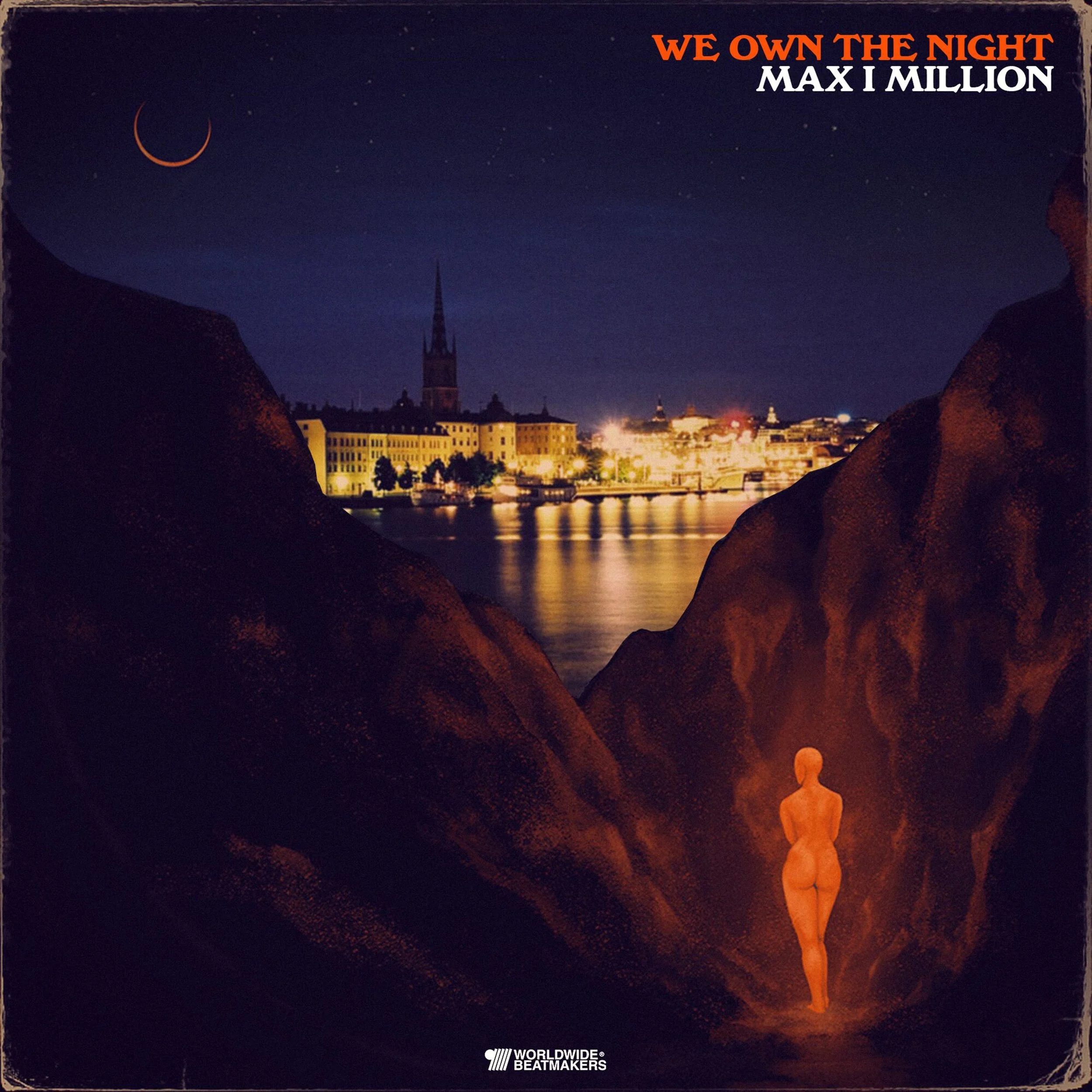
NINETOFIVE Worldwide Beatmakers Releases Max I Million's "We Own the Night" LP
The veteran Swedish producer Max I Million returns with a diverse collection of hip-hop gems called We Own the Night, his second LP on the NINETOFIVE Worldwide Beatmakers imprint. Every song on this album is great, straight up, although we’ve come to expect nothing less from Max I Million, one of the best representatives of Sweden’s potent beatmaking culture.
The veteran Swedish producer Max I Million returns with a diverse collection of hip-hop gems called We Own the Night, his second LP on the NINETOFIVE Worldwide Beatmakers imprint. Every song on this album is great, straight up, although we’ve come to expect nothing less from Max I Million, one of the best representatives of Sweden’s potent beatmaking culture.
In a 2017 interview published by NINETOFIVE, Max said that Swedish hip-hop has divided into many different styles and approaches. We Own the Night is pretty reflective of that. “We have everything from Trap and club music to jazzy cratedigger Boom Bap.” This album and Max’s style overall mostly falls under that third camp, but there are also some old school club adaptations of hip-hop on this release, like the title track and “Next Level Shit”. Features from devastatingly smooth MCs Twizzmatic, Blu, TriState, and Planet Asia add climactic moments to this primarily instrumental album, like the single “Coupe Deville” on which TriState and Planet Asia lace a soulful beat with righteous, weighty word association.
Max’s music is marked by stirring chord progressions on keys and synths blended with crafty samples that float over steady, slapping drums. Our favorite song on the album is the jazziest, “Son of the Sun 2”. After moving through so much boom-bap, the skipping drum pattern and dancing bassline here can catch one by surprise and put you in a state. Then the album takes a turn for the smooth and ends with three contemplative instrumentals, each one having open space, prominent basslines and ethereal synthesizers. Max I Million really works into the pocket here with “Midnight Snack”, adding foley texture and a fluttering synthesizer lead to a walking bassline.
“It's insane how much talent there is in such a small country,” Max said of the hip-hop scene in Sweden. NINETOFIVE works with several Swedish beatmakers including Gonza, Boukas, Moose Dawa and Cam the Downrocka. They’ve issued several Max I Million releases over the last three years including collaborations, singles, LPs, an EP and a mix that specifically highlights Swedish talent. “In Sweden there is a friendly competition thing going on, which has elevated beatmakers to just get better and better.”
It’s hard to stop bumping We Own the Night, which has so much depth and dimension. If you can manage to pull yourself away from it, check out other parts of Max I Million’s catalog and the other Swedish producers on NINETOFIVE Worldwide Beatmakers.
FOLLOW Max I Million: Soundcloud / Spotify / Instagram / Twitter

Lo-Fi Sundays 086 - beatmaschine
There’s a thriving beats culture in Germany. We’ve covered several German producers in this column and for more, check out Millenium Jazz Music’s On The Radar Vol 2 - Made in Germany. But we haven’t found a German producer who captures the “golden era” boom-bap sound of hip-hop so well until stumbling across beatmaschine, who represents labels called Krupplyn and Papier & Bliestift from Dortmund.
There’s a thriving beats culture in Germany. We’ve covered several German producers including Lunchbag, Leavv and Senoy. The best record of the country’s prowess on the 1’s and 2’s comes from Millenium Jazz Music’s On The Radar Vol 2 - Made in Germany. But we haven’t found a German producer who captures the “golden era” boom-bap sound of hip-hop so well until stumbling across beatmaschine, who represents labels called Krupplyn and Papier & Bliestift from Dortmund.
The producer aligns his straightforward samples with some kicking drums and lets it all ride. The end result is beautiful - smooth, lush compositions that still maintain a sharp edge. The interplay between the resonant piano samples and the demanding bop drums creates a deep, rich musical space. His beats are perfect for freestyling, or kicking back and praying that your buddy doesn’t start freestyling. There’s a pretty robust emotional palette in the music even without vocals, although the producer does use some extensive vocal sampling on tracks like “Proof” and "“My Love”.
For a straightforward beat head, especially one who doesn’t care for some of the more processed and voguing lo-fi sounds, it doesn’t get any better than this. Well, that is, until the producer himself gets better. Perhaps beatsmachine will continue to refine his drums and bring more of their subtle details to the surface. It seems he has the instrumental sampling thing nailed for now. Ultimately, this producer has the formula down pat - now the sky is the limit for how he uses it.
FOLLOW beatmaschine: Spotify / Bandcamp / Instagram / Facebook / Youtube
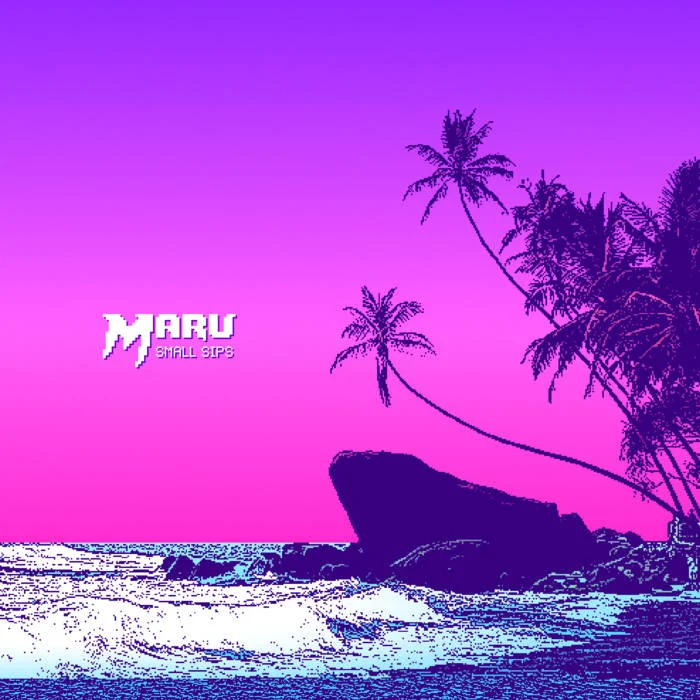
Maru Blends Rhythm & Melody on Small Sips LP
In June of 2018, Reso unveiled his dusty alter ego, Maru, switch-hitting between his usual low-end driven music and a foray into faded beats and lo-fi chord progressions. One year on, he’s released a sophomore Maru LP of dewey bumps and aqueous frequencies, affectionately entitled Small Sips.
In June of 2018, Reso unveiled his dusty alter ego, Maru, switch-hitting between his usual low-end driven music and a foray into faded beats and lo-fi chord progressions. Combining forces with Slug Wife, the first official Maru release was Whack Lack Vol. 2. It was a gratuitous dive into the head-nod headspace, and a change of pace for long-time fans of Reso’s catalog. This time, he’s self-released a sophomore Maru LP of dewey bumps and aqueous frequencies, affectionately entitled Small Sips.
With a total of nine full compositions and a single interlude, Small Sips features a wide array of flavors, blends, and topical variations of lo-fi hip-hop. It’s compositionally rich from start to finish, showcasing extensive arrangements and a spot-on cadence on each and every song. The engineering across the album is particularly alluring, and given Reso’s enduring tenure as a veteran producer, not at all surprising. It provides a degree of fidelity that is often an afterthought for a genre that is focused on all things raw and unpolished in music.
“Lay Off the Sauce” opens the album with a sensual cruise through mottled chords and reverberant breaks. There’s a distinctly dreamy quality to the chord phrasing throughout the song, with each note relationship bending between harmonic and dissonant. Detuned synthesizers populate the melody, endlessly drifting to and from that harmony and dissonance. Like a casual smoker’s cough, the song is puzzling and familiar all at once.
Channeling hazy jazz and a libidinous attitude, “Maple Sizzurp” is a stereophonic bump in every way. Washy chords fill the horizontal stereo space, soaking the listener in phased-out minor and harmonic phrases. The percussion echoes across that same space like a drum kit in the subway; hollow, spacious, and with just the right amount of fade. The distinct view of urban skylines and haphazard crosswalks takes a hold of the mind as the song goes from end to end, showcasing the storytelling and emotional depth that is Small Sips’ strongest asset.
“Donbury Island” winds down Small Sips to a satisfying finish, lowering the tempo and lowering the energy output in tandem. The track is a gentle composition, with pulsing synthesis slowly easing in and out of the mix. There’s a droning, ambient quality to the sound design filling the melody. It’s all carefully wrapped in a blanket of analog dust, with white noise filling in every pore and edge left open in the arrangement of the tune. There’s no real point of tension, it’s just a quaint float through Maru’s aural universe.
Given Reso’s extensive history with filthy bass music, there is a heightened appreciation for the Maru project. It’s not a dumping ground for small bumps and half-baked productions that don’t fit a motif; It’s a full immersion into a different songwriting philosophy. Small Sips is a detail-oriented exploration of soothing tones and broken-beat serenades, all carefully mingled and balanced to a striking clarity. We’re unsure when the next Maru machinations will find their way into the public realm, but there’s more than enough material to keep us satiated in the meantime.
FOLLOW Maru: Soundcloud / Bandcamp / Facebook
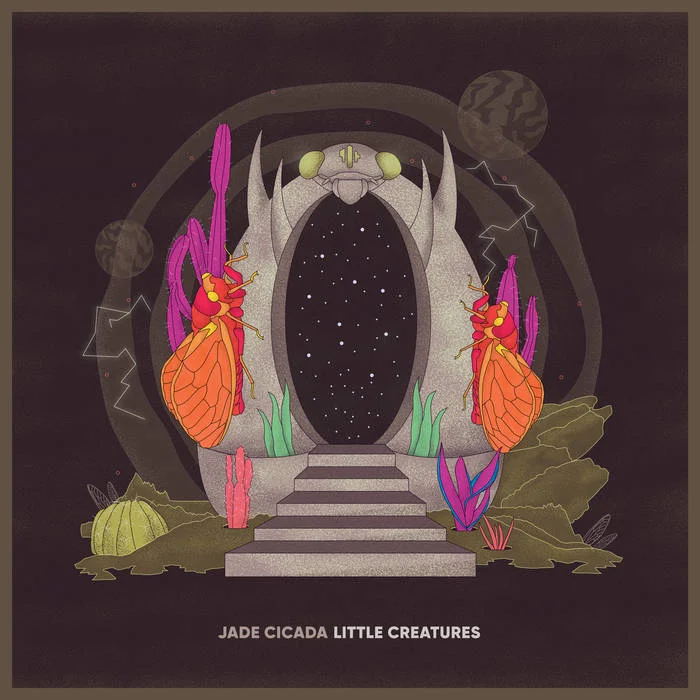
Jade Cicada Channels Melody & Harmony on Little Creatures EP
Reaching back to the harmony-centric compositions that first put one of bass music’s most venerable arthropods on the map, Jade Cicada channels vivacious moods and melodies in Little Creatures. Taking a step back from his intense, low-end saturated music, Little Creatures is a vibrant and refreshing expansion on the compositional richness of Jade’s catalog.
Reaching back to the harmony-centric compositions that first put one of bass music’s most venerable arthropods on the map, Jade Cicada channels vivacious moods and melodies in Little Creatures. The release comes on the back of an extensive spate of summertime shows throughout the U.S. and abroad, and ahead of his widely anticipated headlining NYC performance in just over a month. Throughout the last three years, Jade Cicada has proven his skillset in music production and engineering many times over, cultivating a carefully curated blend of high fidelity music, and commanding frenzied crowds through total sonic domination. Taking a step back from his intense, low-end saturated music, Little Creatures is a vibrant and refreshing expansion on the compositional richness of Jade’s catalog.
Right from the jump, there’s the casual, approachable quality to Little Creatures that made us fall in love with Jade’s debut work, Eolian Oms. The sound design staples and undeniable audio quality are in line with his other releases, but the overall atmosphere of this EP is in stark contrast with his prior collection, Fish Juice. Eschewing ripping bass lines and high-octane synthesis, Little Creatures is a stereophonic blend of careful chord progressions and meticulous arrangement.
“Little Creatures”, the title track, opens the door to this entrancing listening experience, inviting eager ears to relax amongst the gradual swell of chords and audio artifacts. It’s a potent take on the lo-fi, bit-crushed textures that Jade is so fond of, but with a high quality twist. The rhythm stays pocketed throughout the duration of the track, teetering towards a casual head nod, save for the fibrous synthesis leading the composition.
Ramping up the intensity, “Ghost Blood” is a moody journey into stereo space. A plethora of glitches and atmospheric reverb surround pulsing leads, with gradual saturation bursting through the available frequency space. It’s as much a percussive journey as it is a melodious one, with all manners of clicks, pops, and transient smacks enriching the foundation of the song. Every sound and movement drives the arrangement through its emotional paces, culminating in a saucy, glitched-out meltdown.
“Olivia’s Theme”, a collaborative piece with Schmoop, is a spacious take on melancholy scales and delicate tones. The saturated lead synths carefully plucks along for the duration of the song, drifting along as washy textures and percussive glitches fold in and out of phase. The stereo mixing here is precise, with every tone getting more than enough room to breath whilst still pushing significant decibels.
Wrapping up the EP, “Komorebi” is the peak of intensity for the entire release. Translated from Japanese as “Sunbeams”, komorebi is the interplay of light rays shining through forest canopies. The song is a weighty, hypnotic wave of frequencies and harmony. Chunky stabs of FM synthesis carry the melody, riding in parallel with massive kicks and snares. Arpeggios and shredded textures fill the spaces between the main chord progression, just as sunlight fills the vacant space between treetops and foliage, giving the track a remarkably full palette of sounds and tones.
At this point in his career Jade Cicada has amassed a righteous collection of original music. He’s gone directly for quality with every release, choosing to present only the best of his productions into the public realm. It’s paid off quite nicely, given that any track in the Cicada catalog is certain to give audiophiles a run for their money. Little Creatures is an especially fidelity-driven record, showcasing some of the best iterations of Jade’s musicality. Next month on October 26th, Jade Cicada will undoubtedly rinse through some of Little Creature’s brightest moments alongside Detox Unit, Mickman, and 5AM at the famed Playstation Theater. In the short time between now and then, we’re going to be eagerly digesting this new EP in anticipation of this bodacious evening.
FOLLOW Jade Cicada: Soundcloud / Spotify / Bandcamp / Facebook
Lo-Fi Sundays 085 - S-ilo
Bringing a warm, soulful spin on traditional lo-fi and hip-hop flavors, S-ilo is a production powerhouse from Malmö, Sweden. His music has an unmistakable connection to R&B, utilizing smooth harmonies and groovy bass lines in abundance.
Bringing a warm, soulful spin on traditional lo-fi and hip-hop flavors, S-ilo is a production powerhouse from Malmö, Sweden. His music has an unmistakable connection to R&B, utilizing smooth harmonies and groovy bass lines in abundance. He’s got a massive assortment of tunes to sift through, and manages to maintain a unique quality to each production. The moods range from sensual to mischievous, but always with the recognizable touch of S-ilo.
Hand-crafted breaks and turnarounds are a front and center for every S-ilo track, and are often mixed to a markedly high fidelity. The bright, transient punch of his downbeats contrast wonderfully with the dreamy, airy choice of samples often present in each arrangement. His music feels like it has direction and motive; the moods and chords elaborate, evolve, and emulsify themselves amidst the background noise of crowded city crosswalks and the conversations of passerby’s hurrying along. His habit for germinating his compositions with sparse, effective bass lines gives his catalog a lofty stereo presence, often in contrast with much of contemporary lo-fi music. It adds to the refreshing taste his catalog leaves on the palette, with each listening session feeling like a full audio meal.
S-ilo rightfully comes off as an extremely diversified musician and producer. He’s released over 140 tracks in just the last two years. Eschewing the “quality over quantity” adage, his music channels power through simplicity. It’s not always about how many sounds fit into the mix It’s how they’re fleshed out that makes the difference.
FOLLOW S-ilo: Soundcloud / Spotify / Bandcamp
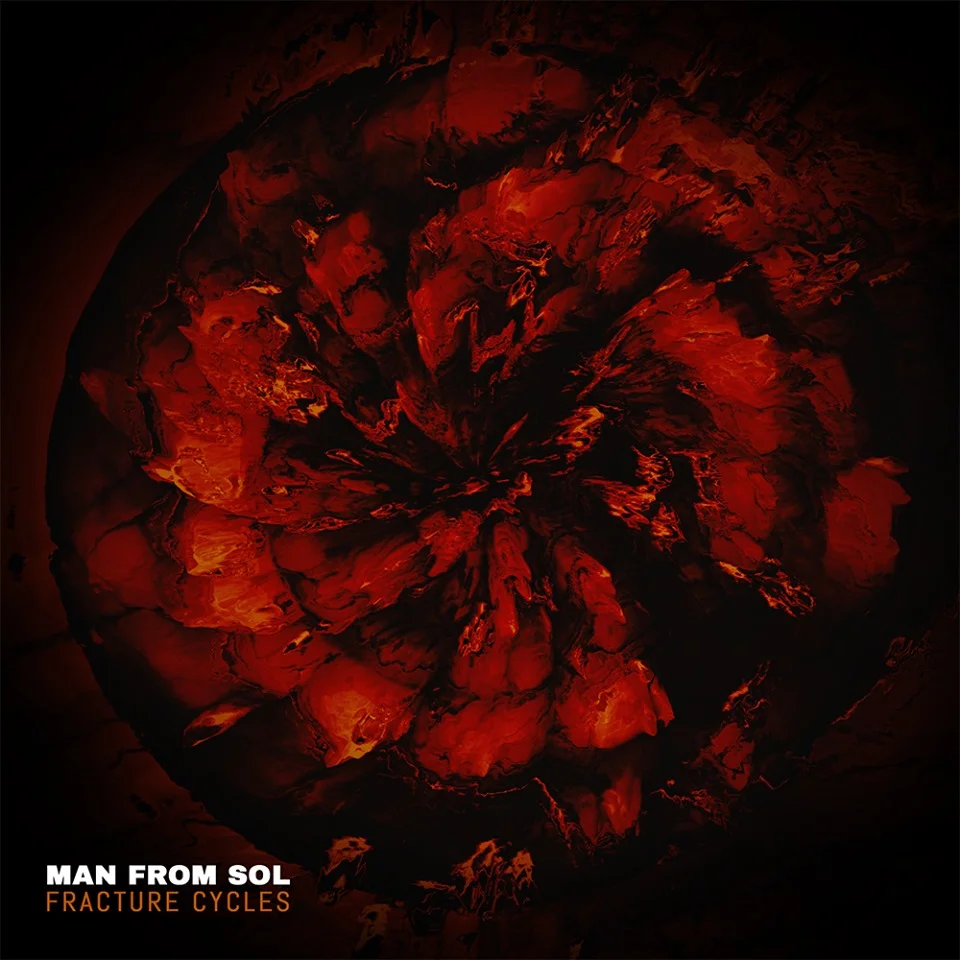
Man From Sol Unloads Glitch Potpourri in Fracture Cycles
Taking glitched-out electronic music into new stereo territory, the San Diego-based producer Man From Sol provides a total sensory experience on Fracture Cycles. It’s a bold take on happy accidents and salvageable artifacts from the production process, and that boldness pays off with a unique display of modern bass music rhythms and modes.
Taking glitched-out electronic music into new stereo territory, the San Diego-based producer Man From Sol provides a total sensory experience on Fracture Cycles. The release is awash with innumerable textures and phase modulation, giving its compositions an erratic crawl like molten lava. It’s a bold take on happy accidents and salvageable artifacts from the production process, and that boldness pays off with a unique display of modern bass music rhythms and modes.
Fracture Cycles has it’s home on Abstrakt Reflections, an Argentina-based label and platform that eschews trend in favor of pure flavor. Stretching back to 2010, their catalog is an IDM treasure chest. In their own words, they are “a creative space for abstract rhythms.” Their artist roster features 55 innovative producers and engineers from across the globe, all with the same intention to skew rhythm and tone in any direction imaginable. Given the complexity and fidelity of Fracture Cycles, the record couldn’t possibly be in better hands.
Internally, Fracture Cycles is a fresh series of soundscapes for discerning sound heads to explore. Every phrase and refrain is filled with various aural nooks and crannies. Each listen through the record reveals new layers and new audio manipulations, demonstrating Man From Sol’s abilities not just on a production level, but on an engineering level as well. Tracks like “Fracture Vectors” and “Vacuum Processor” take conventional rhythms in combination with erratic synthesis, keeping one foot on the dance floor and the other in a glitchy headspace. Conversely, “Outside Context” ungulates along a warped time signature, with turn arounds and rests melting together amidst cascading percussion and morphed bass bits. There’s a structure to the track that’s cleverly hidden, driving the overall composition while laying low in the internal arrangement. By now, it should be apparent that every song on Fracture Cycles takes the listener on a wildly different journey through outrageously powerful sound design.
Adding to the scope and depth of the release, each of the five tracks is accompanied by a remix provided by a cast of exceptional glitch producers. Blockdata, oddlogic, CLAUDE, c0ma, and Lokom warp Man From Sol’s original machinations into an entirely new expanse of textural music, perfectly complimenting the EP’s main contents. Man From Sol is a relatively quiet player in the public eye, with the project’s last release dating back to 2017. Despite having just two major releases in that time, his skillset and sonic profile betray a deep understanding of audio production and engineering. We’re excited to continue watching the progression of Man From Sol, as he’s sure to continue advancing through the ranks of glitch music.
FOLLOW Man From Sol: Soundcloud / Bandcamp / Facebook
Follow Abstrakt Reflections: Soundcloud / Bandcamp / Official

Lo-Fi Sundays 084 - Prgmat
One of the more talented producers working in the somewhat strict, traditional lo-fi style is Prgmat from Riga, Latvia. His music is often one giant wash of ambient pads, steered by muffled drums, and punctuated by discreet, well-cut samples. It’s some of the music one would put in a time capsule in order to show someone 500 years from now what lo-fi hip-hop in 2019 sounds like.
One of the more talented producers working in the somewhat strict, traditional lo-fi style is Prgmat from Riga, Latvia. His music is often one giant wash of ambient pads, steered by muffled drums, and punctuated by discreet, well-cut samples. It’s some of the music one would put in a time capsule in order to show someone 500 years from now what lo-fi hip-hop in 2019 sounds like.
This is especially true of his new project, Sentiment LP: The Postscriptum. This 21-track project on Kick a Dope Verse! is a great representation of the producer’s work. Buoyant tunes like “You Are Appreciated” and “hvn blvd” create lovely, open headspaces. When media or labels focus on instrumental hip-hop as “music to study / chill to”, it’s sort of unfair because it characterizes the art as background music - something that shouldn’t be enjoyed to for its own sake but only as the accompaniment to something else. Of course, it’s so much more than that But Prgmat’s music works great in the background or the foreground. There’s more than enough substance to hold your attention for a dedicated listening session, but it’s all smooth and consistent enough to work great as the soundtrack to some other activity.
He’s been featured on compilations from labels around the world including Insert Tapes, Dust Collectors, and Kick a Dope Verse! who he seems to work most frequently with. "Propose to my Drum Machine”, the producer’s contribution to Inner Ocean Records’ Futures Vol. 4 is one of our favorite pieces of work from him. It has an inspirational undertone, and if someone could loop it for an hour straight like those homework edits on Youtube, we’d listen all day.
FOLLOW Prgmat: Spotify / Soundcloud / Bandcamp / Twitter

![Seppa - Interview + Boosted [EXCLUSIVE PREMIERE]](https://images.squarespace-cdn.com/content/v1/59530136f5e2319eabb7d87f/1626113208781-BZ7C6B7E3LCECV7UD4CS/Boosted.jpg)
