

VALE Singles: WESSANDERS
VALE is a digital label with a judicious ear for sharp, dark sound. Often, that sound is presented through a progressive arrangement or a unique take on rhythm. The label's latest single, "Mouth Breather" from New England experimental bass producer WESSANDERS, hits on these themes like a bullseye.
VALE is a digital label with a judicious ear for sharp, dark sound. Often, that sound is presented through a progressive arrangement or a unique take on rhythm. The label's latest single, "Mouth Breather" from New England experimental bass producer WESSANDERS, hits on these themes like a bullseye.
Straightforward minor chords weave spiderwebs and cast shadows above spidery synthesis. The song goes through three consecutive "build-drop" sequences, with a full soundscape ducking out to reveal a pocket packed with a swelling bassline and perky percussion that shifts in time and tempo. WESSANDERS aka Kai Felsman likes to leave some space in the mix for each piece of audio to breathe. That's definitely the case with "Mouth Breather". There's enough musical elements here to make it complex, but not so many as to overwhelm. The foley sounds snap into syncopation with the infected synthesis. The bassline and drum beat interlock and project an angular groove.
The atmosphere on this cut is low-slung and spooky throughout, in the style of VALE. It's only slightly darker than the vibes WESSANDERS usually curates, and it's certainly got the same aggression that marks the rest of his catalog. To date, Kai has not released an extended or long play besides a mini-mix from around Christmas time. He clearly knows how to flex a digital audio workstation, though. The complex arrangement of the tune also signals that his familiarity with music writing may run deep. Hopefully more work from this young producer is waiting in the wings somewhere.
FOLLOW Wessanders: Soundcloud / Facebook / Bandcamp

Solasta Festival Levels Up in Second Year
The event was conceived with the intention to do something different. With just a single stage, a niche lineup full of rare international and coveted local acts, a dedicated lounge and performance theater, and a pervasive emphasis on health and self-care, Solasta didn’t stray from this conception.
When the sun rose over the lush, green fields of Spirit Crossing in Northeastern Tennessee on the first day of Solasta Festival, you couldn’t see it, shrouded as it was by Appalachian mountain mist and cool cloud cover. Volunteers and staff who worked through the night were putting finishing touches on modest infrastructures and installations in the quiet dawn. Campers who arrived the night before took prized real estate along one of the grounds’ lone tree lines, or on the bank of the Clinch River that flows lazily through the grounds. As morning turned to noon the sun began to peek on the festival. For the rest of the weekend - from logistics to music to the familial atmosphere - the presence of the sun was the only inconsistency at Solasta Festival.
Just over 1,000 people settled on the grounds that weekend. In its second year, the gathering quadrupled in size and exceeded the expectations of everyone besides perhaps its young and wily staff. The event was conceived with the intention to do something different. With just a single stage, a niche lineup full of rare international and coveted local acts, a dedicated lounge and performance theater, and a pervasive emphasis on health and self-care, Solasta didn’t stray from this conception.
Strolling and patrolling on Friday afternoon was Officer Larry of the Hancock County Sheriffs Department, the bulk of Solasta’s security force. A law enforcement presence at a music festival without the characteristic firearm or body armor was a rare sight, my colleague noted. He didn’t need that equipment with this kind of crowd, he suggested. His toothy grin stood out from his sun-weathered red skin as he asked, “how do you like Hancock County?”
“It’s different,” I responded. And indeed it was. Spirit Crossing sits on the outskirts of the county seat, Sneedville, home to approximately 1,200 people. The hills - steep, rolling, and frequent - break apart and condense cloud formations and create that unpredictable weather. Although the forecast called for constant rain, the festival saw just one brief, powerful storm and a series of scattered showers.

The GNOSTiK Lounge at Solasta Festival (Credit: Shots By Carl & GNOSTiK)
In the spirit of differentiation, Solasta partnered with GNOSTiK to establish the GNOSTiK Lounge and Performance Art Theatre at the center of the broad, flat festival grounds. This welcoming space hosted 22 performers doing about 15 acts on Friday and Saturday, from fire manipulation to less conventional fare like contemporary dance, poetry, kink, and burlesque. Our favorite act had to be Fire Circus for their combined acro yoga and fire-spinning act, “It’s a platform for performance artists to express fully realized visions in a cultivated environment,” according to GNOSTiK co-owners and co-creators Ali Khemi and Silv Era, who traveled west to Solasta from their base in Savannah, Georgia.
The Lounge captivated by creating an atmosphere apart from the rest of the festival, while simultaneously being an integral part of it. “Gnostik is not reliant on already existing spaces provided by the music culture,” Ali and Sliv explained, “but rather creates the vessel that invites performers, musicians and artists to create within the vision.” Other attractions and concerns faded fast as one became enraptured in the theatrical and sexual nightclub mystique of the Lounge. The decor was sophisticated but with a sharp edge, and heady teas and elixirs were served out of a Lounge bar.
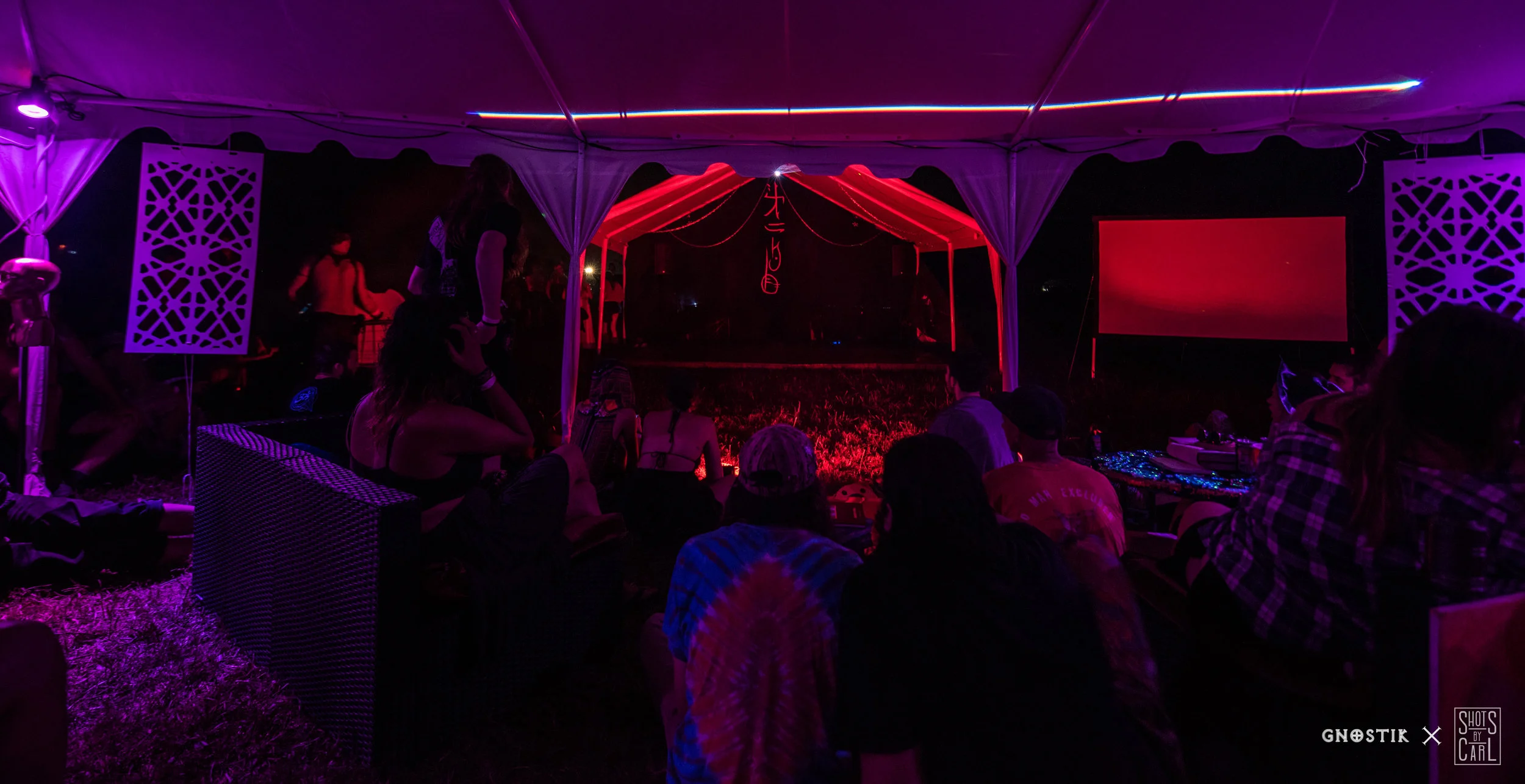
The GNOSTiK Lounge & Performance Theatre (Credit: Shots By Carl & GNOSTiK)

Molly Reed (Credit: Shots By Carl & GNOSTiK)

One-half of the act Fire Circus (Credit: Shots By Carl & GNOSTiK)

GNOSTiK co-creators Ali Khemi & Silv Era (Credit: Shots By Carl & GNOSTiK)
GNOSTiK “merges the lines between performers, musicians, and spectators,” according to Ali and Silv. DJs spun music from behind the theater’s curtain (this lent itself to secret sets from Detox Unit, Grouch in Dub during the theatre's off hours), performers hung out and served at the elixir bar, and cross-legged spectators in the grass inched as close to the fire manipulators as safety would permit. It was all too easy to get couch-locked in the Lounge, sinking into a plush cushioned seat with an arousing beverage as performer after dazzling performer floated and stomped across the stage. Your correspondent was nearly couch locked thusly were it not for the call of journalistic responsibility. Instead, I found myself ambling briskly between the Lounge and the stage to absorb the best of both worlds.
This walk between Lounge and stage involved frequent stop-ins with the Mermaid Oasis Hydration Station, a twist on the traditionally faceless festival water-fill up. Here ladies costumed as mermaids ran cold, fresh, plain or flavored with watermelon or cucumber or more. Pickles, the leader, humbly demonstrated her filtration system; the water is drawn on grounds from a well, sterilized for bacteria, and filtered for sediment. In the sporadic but consistently hot Tennessee sun, Solastafarians kept hydrated throughout the weekend.

Solasta's single stage was designed by Sacred Element Event Design (Credit: Lisa Diamond)
Down towards the river was the main stage - a fully encapsulated dance environment created by Sacred Element Event Design. Sacred Element’s founder Maurice Legendre is actively shifting away from manic, masculine, and overwhelming norms in stage and lighting design, and his creation at Solasta reflected this. “It offers but it does not demand,” he told me. Indeed the lighting was first and foremost atmospheric. Lights backing the stage and ringing the dance floor were subtle in their movement and usually featured no more than two colors at once.
The low stage was decorated with elements from the natural environment, with wood and rock creating a tranquil pond at the foot of the platform surrounded by mammoth hunks of quartz. Approaching the stage on Friday afternoon, Cameron Ingraham aka Mickman briefly dipped his hand into the pond, looking for a second like someone dipping into a vessel of holy water before entering a house of worship. The stage was flanked by two purple Funktion One speaker towers tuned to perfection by the Soundsystem Cultures, LLC crew which came north to Solasta from Chattanooga, TN. I’d later see Cameron on top of one towers pulling a tarp over the stack during a scattered shower, one of many small instances where the lines between performers, staff and attendees at Solasta were greyed.
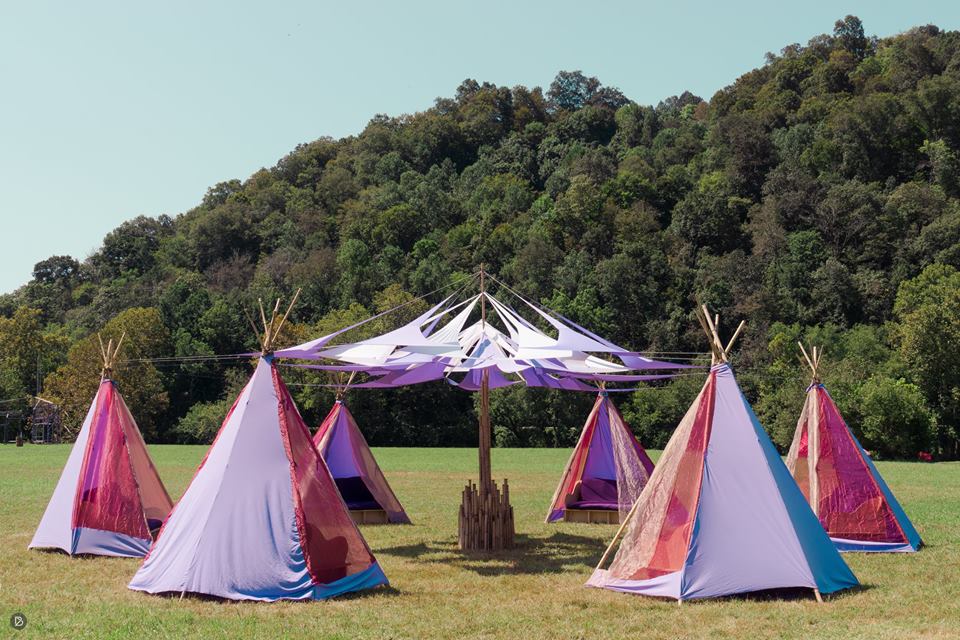
A ring of bamboo trussing and six or seven teepee-like structures encircled the dance floor. One could literally recline luxuriously with the crew in these structures filled with blankets and pillows without leaving the stage. Two terraced jungle gym like towers added greater dimensionality to the dance floor (“more of a West Coast thing” according to one of the sound techs). These spatial designs helped cultivate the kind of communal atmosphere at a stage that is prized by every festival, but truly achieved by few.
Solasta’s talent bookings offered rare artists in a rare setting, like Solar Fields from Sweden, Grouch from New Zealand, or Goopsteppa and AtYyA from British Columbia, Canada. It was the undercard, though, that provided some of the most endearing one-of-a-kind sets. There was a Saturday afternoon set from Doyle, making his first festival appearance ever after spinning for nearly a decade, most recently out of Nashville, TN. A swaggering Southeast crew swarmed the floor with unmatched enthusiasm as Doyle dropped a clean DJ set full of classic and contemporary heaters. spacegeishA brought a big time DJ set as well. She impressed folks who were unfamiliar with her seamless mixing style and unmatched track selection (informed by her position as director of the vanguard digital label Street Ritual). This packed primetime set (10:30pm) combined with the informative talk she delivered on "Living the Label Life" solidified spacegeishA aka Becca as a major presence at Solasta Festival.

Ali Khemi performing a synchronized geisha fan dance during spacegeishA's set (Credit: Shots By Carl & GNOSTiK)
As international dubstep deep head Leon Switch started spinning on Saturday night, a pair of bright red and green lasers suddenly began beaming out from the landowner’s house. The house sat on the property's high ground about 400 yards up a hill opposite the stage. The lights soared across the sky high above Spirit Crossing, tying a bow on the entire experience and creating one of those rapturous moments where you can perceive all elements in an environment as one beautiful, synchronous whole. My colleague, who was strolling up grounds nearer the house, said he saw a man in his sixties with long, thinning blonde hair perched on the porch above a control board. There, swinging the lasers back and forth with ecstasy in his eyes, was Wes, the landowner, apparently having more fun than anyone else at Spirit Crossing.
Additional stand out sets came from EasyJack, Mickman, Vinja, of course Jade Cicada, and Push/Pull aka Liam Collins, one of Solasta Festival’s three main organizers. As the sun began to set on Friday, Mickman, uncharacteristically enthusiastic on stage, led his performance with provocative downtempo before launching into 40 minutes of his spellbinding sine-wave bass and hard drum breaks. Push/Pull followed with earthy midtempo, channeling some of the energies he’d picked up while staging the grounds in the past week. After shaking up the vibes with some tasteful Techno as Frisk, Jack Whelan thrilled the crowd with raw yet intricate psychedelic breaks as EasyJack on Saturday evening. Every musician on site truly brought their best juice. At a certain point it became a matter of pure stamina for the crowd.
Even amidst this stellar lineup, the Clinch River was Solasta’s star attraction. Running slowly east to west along the border of Spirit Crossing it provided all sorts of relief and recreation. It was perfect for cooling down and connecting with new people or old friends outside the bustle of constant bass music. Although Solasta was billed as a one-stage event, a last-minute river party saw the festival add a modest “river stage” designed with humor by Illuminera. This little spot had a renegade vibe, as DJs and producers not part of the original billing including Deerskin and Soul Candy sent vibrations out across river for the utterly happy people cooling off in it.
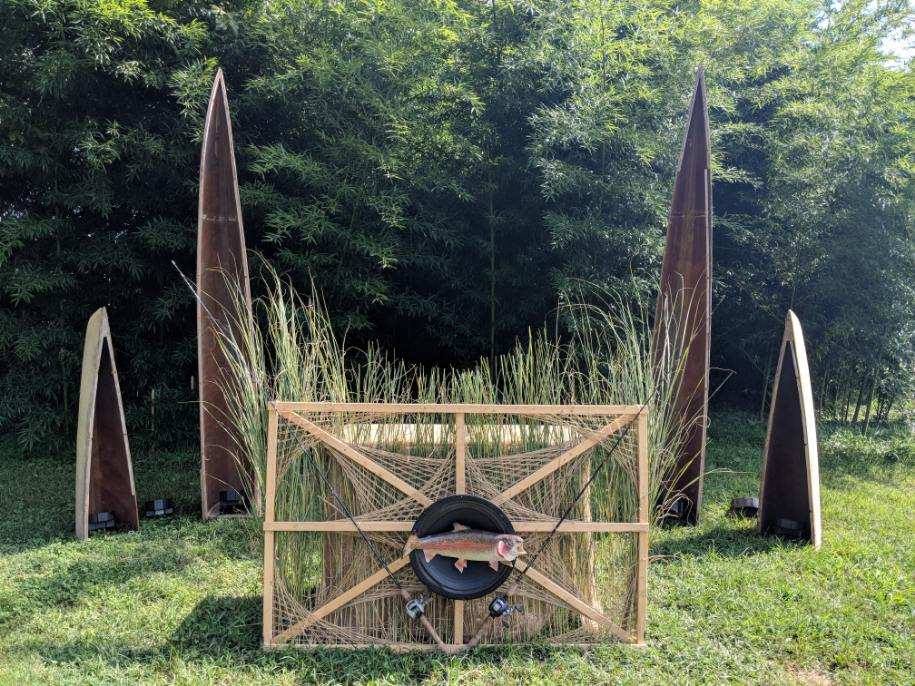
Not advertised before the event, the "river stage" designed by Illuminera had a renegade feel
Solasta Festival of course couldn’t conjure magic without the diligence and attention to detail of the producing entities Envisioned Arts and Harmonia. Each company brought their own production team which, joining with Collins, formed a dream team of young and excited event producers. On Sunday, Solasta Festival’s officially unofficial decompression day, as brunch was being served down at the stage I found myself in an administrative trailer sipping a strong mimosa stirred up by Dom Lu, the site lead at Solasta and a veteran of Envisioned Arts. We spoke about his early years in event production (“Anytime someone asks you to do something, just do it”) and the often unnoticed efforts that contribute to a safe, functioning festival.
“For me, I’m all about the attendees,” Dom said. “If you throw me in Artist Hospitality or something…that’s not my style. To me, everyone who’s on the dance floor, everyone who’s in the back with their friends who paid to be here, those are the artists to me. That’s who I care about.” As I felt my own forehead slowly begin to cook from a weekend in the sun, I noted that Dom had a permanent peel down along his nose. The skin under his eyes appeared raw with a pinkish hue; battle scars from many successful events, and likely a few failures. “Doing all the work, I don’t mind doing it. I’ve had those experiences where I’ve been to festivals and had the time of my life. I want to be able to recreate those experiences for other people.” Judging by the fixed smiles and strong auras of good will across the grounds all weekend, Dom and the rest of the event producers undoubtedly hit their mark at Solasta.
Much of what made Solasta special are those elements native to smaller festival environments. Replicating these elements on a larger scale while preserving the magic they deliver is challenging. Solasta’s growth was impressive in its second year. “A lot of festivals are still camp outs at their second or third or fourth year”, Dom noted with a bit of wonder in his voice. As this festival’s reputation grows, its organizers may have to balance a welcome increase in popularity and size with their ability to curate the intimacy that may earn the event its reputation in the first place.
The great takeaway from this kind of epic Appalachian sojourn gets back to one of those old lessons or cliches of transformational music festivals; take the knowledge and experiences gained on the grounds back out into the world with you. Whatever you learned about or reflected upon at this event; music production, friendship, stage design, romance, event production, sustainability, hummus-oriented brand partnerships - bring those reflections forward with you. Woven into the rest of the world, the atmosphere and attitude of the festival becomes less of an anomaly or some brief escape from life, but a greater part of culture and life itself.
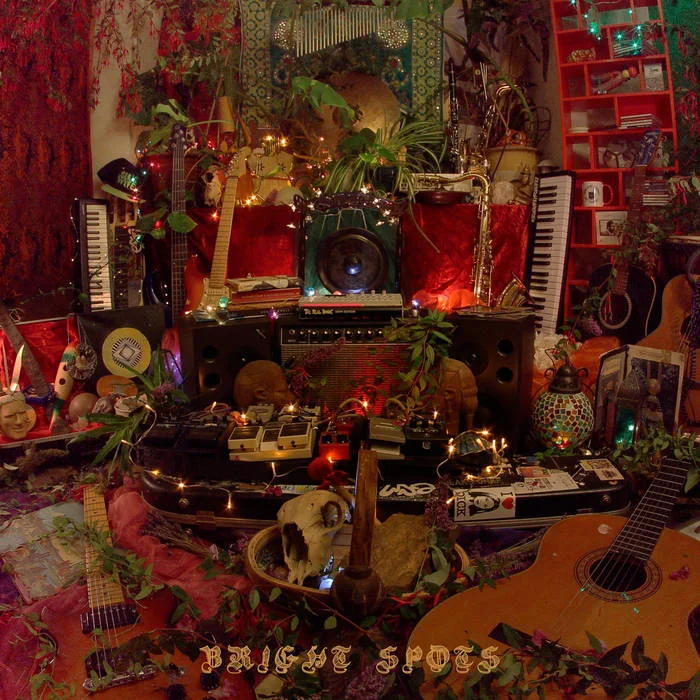
Seppa & Chalky - Bright Spots
The lead gastropod Seppa has collaborated with a previously-unsung instrumentalist to whip up a bonafide jazz production, Bright Spots, that will leave any set of ears in a fit of ecstacy. The collaborative partner in question here goes by the moniker of Chalky, and is a local musician of repute over in Slug territory, the United Kingdom.
It’s no secret that this publication has a bit of a crush on Slug Wife, but it might have just exploded into full-blown infatuation as the label takes a 180-degree turn away from their business as usual like massive bass lines and shredded synthesis. The lead gastropod Seppa has collaborated with a previously-unsung instrumentalist to whip up a bonafide jazz production, Bright Spots, that will leave any set of ears in a fit of ecstacy. The collaborative partner in question here goes by the moniker of Chalky, and is a local musician of repute over in Slug territory, the United Kingdom. Bunched together with Seppa, who apparently has more than a knack for shredding a saxophone in his free time, they’ve produced a record that’s worth its weight in musical gold.
When fans think of Slug Wife, they probably don't envision a jazz composition. That is the half the beauty of this record; it smashes the assumed M.O. of the entire label releasing it. Yet even in tossing away the presumed conventions of a Seppa production, it retains a certain veneer that is all the same typical of his releases. The percussion is incredibly bright and biting, crunching through the mix with the same major compression that’s usually fit for more visceral interpretations of music. Melodiously, it’s nothing short of rich in its texture and arrangement. The instrumental dialogue is presented with a fluid mastery as each tone dances in tandem with the harmonies and rhythmic pulses around it. Chalky lays down most of the instrumentation, and melds vivacious guitar chops with Seppa’s high-octane saxophone lines throughout the record. The entire 13-track album avoids musical ramblings and run-on phrasing, instead honing in on the finer details of each auditory climax and point of tension.
The composition of each song is fine-tuned to the slightest detail, as in “The Fiddler”, with complimentary string lines bouncing along the semitones in between harmonized slices of brass. “Slowdow” takes on minor scales and modal shifts, rocking between the ominous and the noire and climaxing into a pure mood potion that swims in the head long after the song has ended. Tapping into the power of staccato movement, “Time To Kill Again” keeps it short and sweet with bouncing pockets of rhythm sliding into smooth musings and tactile chord phrasing. Overall, the entire album is best characterized by its opening track, “Boss Rat Jam Man”, which exudes the exact attitude its name projects. Exceptionally delicious instrumental interactions bring to the mind granular images of red-carpet ballrooms and the posh aesthetic of modern jazz’s flashier epochs. While it appears to have been designed to be enjoyed top to bottom in one shot, the record plays out as a tonally brimming and well-meshed experience regardless of starting position or track order.
The first glimpse of Slug Wife’s bold step at shedding its usual veneer began with their Wack Lack series, which showcases “battlewax” more befitting of scratch DJs and vocalists. Bright Spots is an ambitious dive into territory that is yet another step away from the public sonic associations made with such titans of unconventional bass music. For all of Seppa’s production prowess and musical affluence, the real spotlight here is on Chalky, who by the admission of his production partner should be unveiling even more aural butter in the months following this first major release. As always, those Anglican slugs are never found resting on their laurels, instead constantly pushing the envelope of their total musical explorations and output. Bright Spots is a stellar edition to an already explosive release catalog, and is surely indicative of further left-field developments in the world of Slug Wife.
FOLLOW Seppa: Bandcamp / Soundcloud / Facebook
FOLLOW Chalky: Soundcloud / Bandcamp / Facebook

Lo-Fi Sundays 042 - Sup Nasa
There is no denying that Space is a vibe, and Sup Nasa taps into that vibe to bring about some incredibly serene and well-intentioned music. Slinging beats from way out on the Italian peninsula, Sup Nasa is a member of the industrious NINETOFIVE record label, and sits right at home with a curated team of rhythm junkies and lo-fi bandits.
There is no denying that Space is a vibe, and Sup Nasa taps into that vibe to bring about some incredibly serene and well-intentioned music. Slinging beats from way out on the Italian peninsula, Sup Nasa is a member of the industrious NINETOFIVE record label, and sits right at home with a curated team of rhythm junkies and lo-fi bandits.
Speaking of rhythm, this lobrau cosmonaught has a knack for spinning the wheels of a good drum line into all sorts of musical roundabouts. The fibrous blend of sampled percussion loops in conjunction with quintessential finger drumming creating a balance between the organic and the synthetic. His extraction of samples is on par with the extraction of rare earth elements; constantly digging through the source song, chipping away at the surrounding frequencies, and bringing back to the surface prime cuts that are begging to be flipped inside out. With tempos ranging from sloth to rabbit, Sup Nasa doesn't like to sit in any one rhythmic pocket for too long, and his discography reflects this.
Hip-hop and space exploration often have more to do with one another than people first realize, and Sup Nasa is the official spokesperson for the lo-fi mission to Mars. Pounding away at intergalactic beats seems to be somewhat of a specialty for this Mediterranean muse. With a label like NINETOFIVE backing his productions, it can be safely assumed that we haven't heard nearly the last of his musical output.
FOLLOW Sup Nasa: SoundCloud / Spotify / Facebook
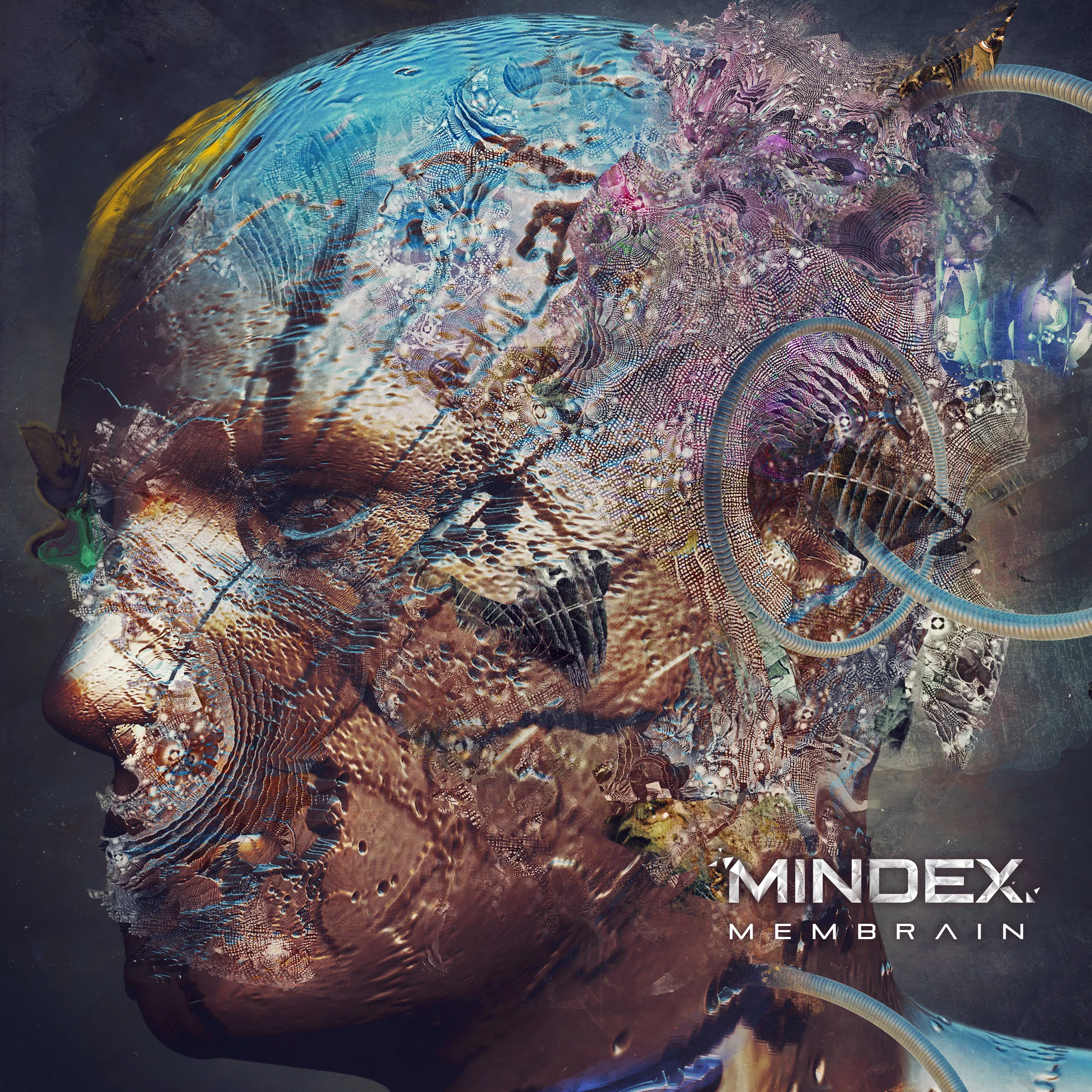
Mindex - Membrain EP
The Membrain EP boasts an ominous atmosphere drenched in meticulous audio experimentation. In addition to top-notch mix-down and mastering across the EP, the musical inflections and harmonies are indicative of a producer who’s as much focused on the intention of the music as he is on tearing through unsuspecting sound systems.
Mindex has always had a flair for gradual evolution in sound design, but his newest collection of work firmly reminds us just how deep his rabbit hole goes. The Membrain EP boasts an ominous atmosphere drenched in meticulous audio experimentation. In addition to top-notch mix-down and mastering across the EP, the musical inflections and harmonies are indicative of a producer who’s as much focused on the intention of the music as he is on tearing through unsuspecting sound systems. The casual effervescence that was carried throughout his earlier catalog gives way for a sound that is far denser in its impact, and surprisingly visceral. The EP is being released through Time Resonance Music, owned and operated by Mindex himself. As with his previous release, the Eclipse EP, Threyda has partnered up with Mindex to release a physical, high-quality print of the mind-bending album artwork composed by frequent Mindex collaborator Archan Nair.
"Membrain" starts off the EP with a brain-busting interpretation of 140/70bpm system music. The interlocking synthesis melodies twist and wrap around one another as the wider sonic elements envelope all remaining stereo space. The mid-range bass tones are fresh relief from some of the more popular motifs at the moment, with Mindex instead capitalizing on harmonics and strong filter sweeps throughout the bass line. The drum line is the most straightforward aspect of the arrangement, but leaves no momentum behind.
"Erosion" elaborates further within the 70bpm spectrum, going for a slapstick rhythm that gradually turns over to include all manner of high-register percussive shuffles. The drums are easily the main force of the track, exuding the "glitch factor" that spices up electronic productions beyond their relative musical shelf lives. The low-end synthesis squeezes into the mix from whatever interstellar toothpaste tube it was born in, gurgling through the pockets of space left between massive juggles of snares and hi-hats. The subtle melodious elements flutter in and out of focus, creating a musical duality of frequencies simultaneously razor-sharp and round-edged.
"Cluster Overload" picks up the pace to around 80bpm, and is the sole mid-tempo song on the EP. Once again, the percussion takes the first spotlight, with smacks, crashes, and crumples darting back and forth throughout the composition. The melody synthesis is sparing and direct, carrying the arrangement through a musical journey that is entirely esoteric. On the other hand, the bass synthesis is gratuitous and constantly morphing into all manner of folds and slices. The elasticity of these mid-range tones has them blasting back and forth like a boomerang amongst the accompanying musical elements, and is the clear glue that reinforces the whole composition.
"Underconscious" closes the EP, slowing things back down a bit and sending the head-space into full hypnosis. The matrixed lead elements take on a droning phenotype, stretching and slaying along the rolled beat underneath. The bass designs are less erratic arrangement than in the previous tracks, with a more staid sonic presentation. The drum lines spurt upward and outward at the end of each phrase, coming to life in moments of musical turnaround and then receding back to the spacial floor of the mix.
Once again, Mindex leaves no sonic stone unturned in his elaborate experimentations and musical musings. For a character as reserved as Slava (Mindex), his music embodies a certain digital bravado that many others can't quite reach. When digesting the Membrain EP, be sure to take the whole thing in one shot, as the tracks have a (not so) curious way of blending right into one another for a seamless aural experience. For the fall, Mindex is currently slated to sling his talents at A Higher Halloween in Philadelphia, PA, for an annual halloween throwdown. If you're in the area, or you're feeling adventurous enough to seek it out from afar, make sure to find yourself directly in the prime vector of the sound system when he rises to the decks.
FOLLOW Mindex: Bandcamp / Facebook / Soundcloud
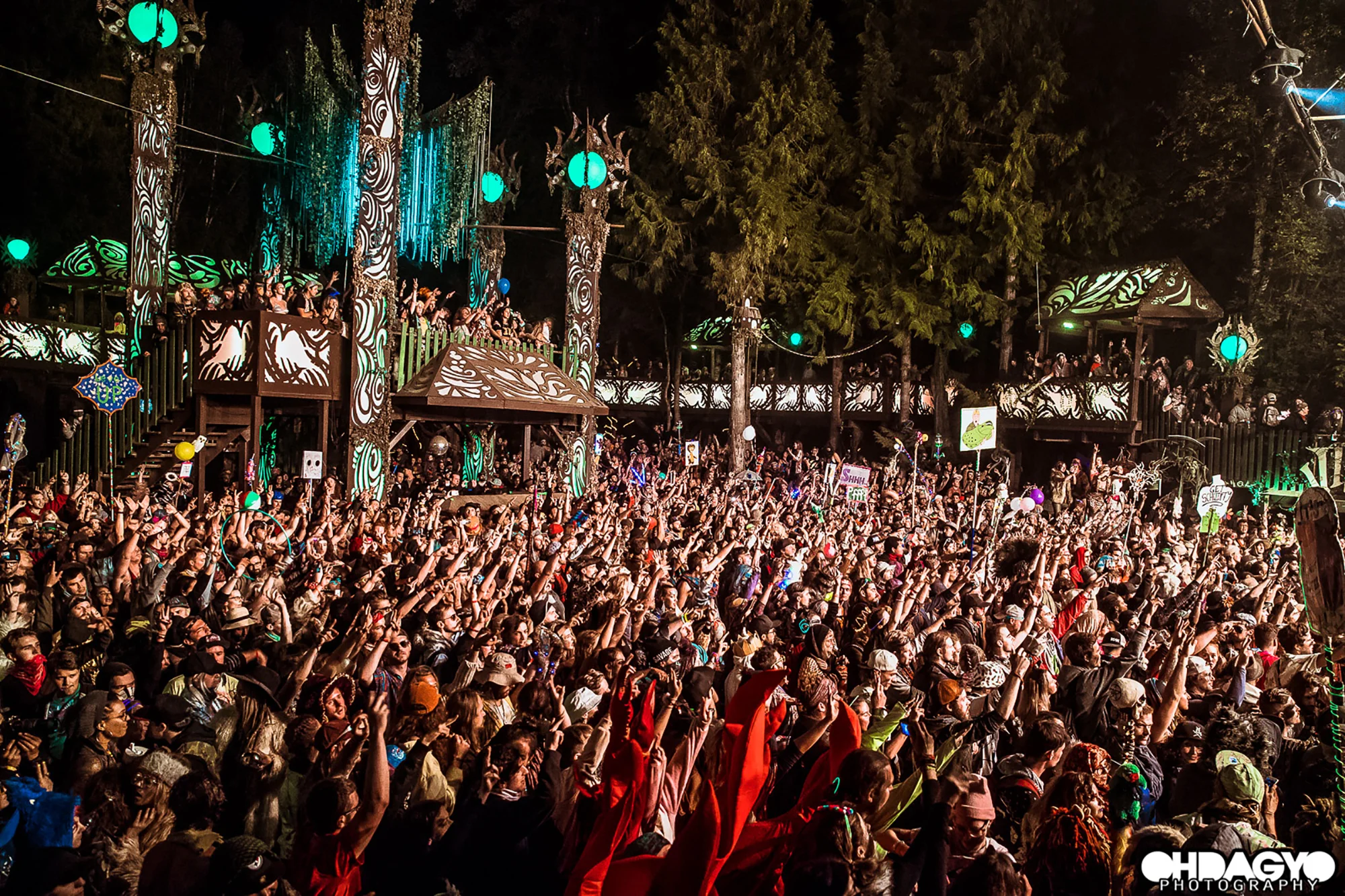
Shambhala Music Festival Enters Third Decade in Style
With 21 years at the same location, seven stages of music, event direction handled by the landowner's family, no corporate sponsorship, and now the purchase of a mass spectrometer, Shambhala Music Festival at Salmo River Ranch, British Columbia, Canada is perhaps the most successful music festival in North America.

The Grove stage (Credit: Oh-Dag-Yo)
With 21 years at the same location, seven stages of music, event direction handled by the landowner's family, no corporate sponsorship, and now the purchase of a mass spectrometer, Shambhala Music Festival at Salmo River Ranch, British Columbia, Canada is perhaps the most successful music festival in North America. Its powerful grasp over the breadth of dance music culture has enabled it to create a diverse following with a high potential for cross-pollination of sonic ideals and outlet discovery. To say I was shocked and awed by what I saw upon my first attendance to this festival would be a sad understatement of the kindness, generosity, and care that I experienced. Shambhala Music Festival and its attendees are quite attentive to the general experience of the festival, and quite in touch with one another.
Shambhala's two-decade rise has been marked by slow and careful growth, and each new increase in size is met with vital infrastructural improvements. The increase to some 20,000 attendees in recent years caused the two outlets to the Salmo river (the Living Room stage and Muscle Beach) to become overcrowded. Increasingly, people began walking across the footbridge at the Living Room into the neighbor's property to make use of the opposite bank. As a result, that bridge has been removed, and a new path eased out along the riverside with many outlets for squadly activities. The dance floors are now watered by the stage workers. The Village is especially noteworthy for incorporating a large waterfall installation. When last year's nearby wildfire caused an emergency exodus that demonstrated the need for additional egress in stressful situations, the landowners installed a new bridge made of steel to split the herd near the exit. Major moves like this demonstrate the dedication the Salmo River Ranch owners have for the safety and wellbeing of their attendees.
Shambhala has also been a vital germinating force for the growth of original sounds. The festival hosts yearly performances from now-confirmed Big Deal acts like Stickybuds and Stylust (formerly Stylust Beats), and has helped raise underground success stories like Goopsteppa and CharlestheFirst (whose Big Deal-ness appears imminent). Then there’s the blooming of burgeoning dubstep label Chord Marauders, for whom Shambhala was the biggest show they've ever played. For Jafu, Shambhala three years prior was his first time ever playing a show that wasn't “something small, for friends, to get myself comfortable playing music for people.” As a rare-to-Shambhala label showcase act, the collective received more attention than ever before, even spotlighting their first signed artist FLO.


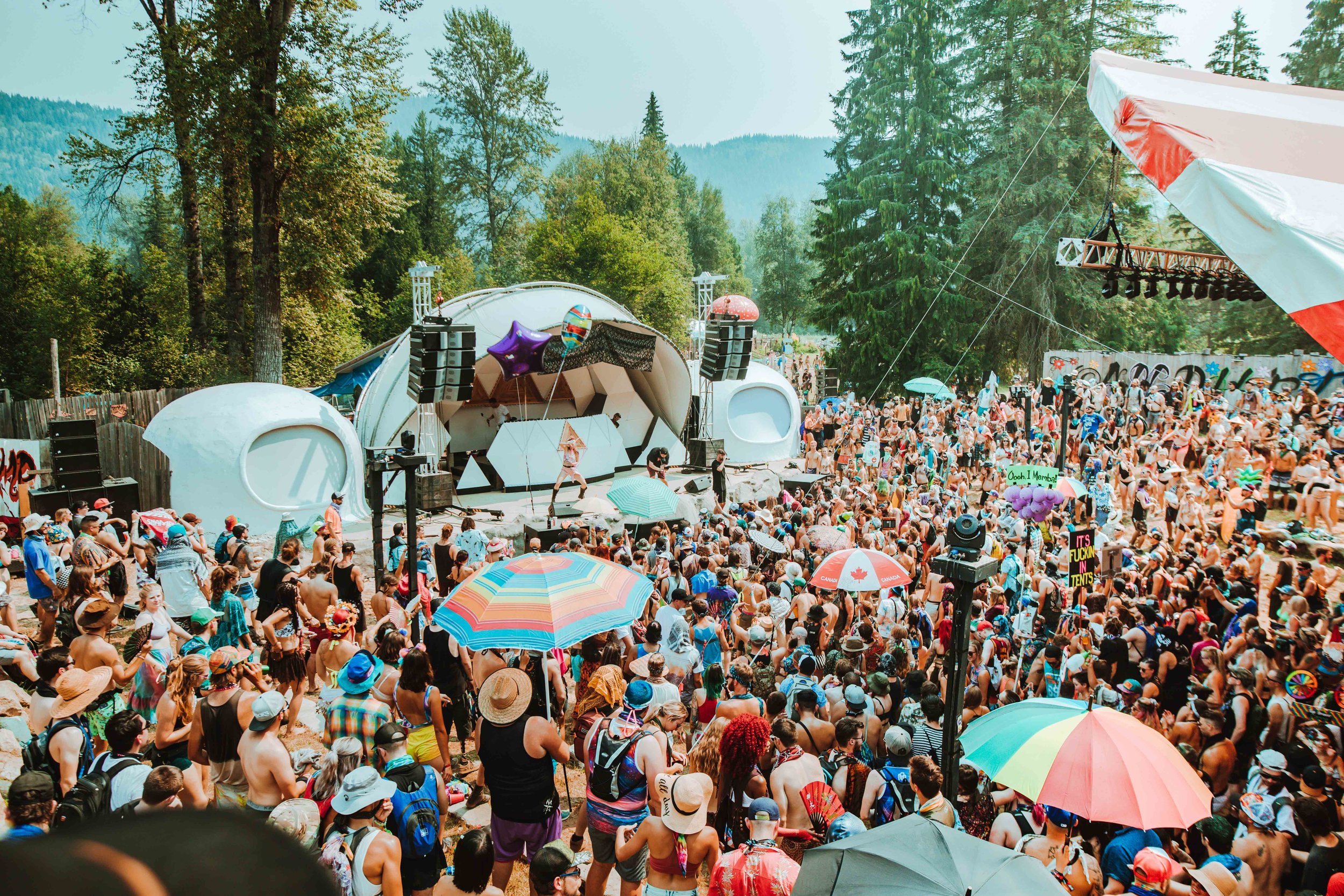

Between the funky basslines at the Fractal Forest, the hard-hitting powercore of the Village, and the soothing atmosphere of the Grove, there could exist a serviceable underground dance music festival. Between the live acts of the Living Room, the intimacy of the Amphitheater, and the “Main Stage” appeal of the Pagoda, there could exist another strong, more mainstream music festival. That the organizers chose to combine all of these thematic feelings and managed to keep attendance low enough to support a comfortable amount of breathing room at each stage is nothing short of miraculous. The result of this miracle is felt in the joy of constantly finding new music and new areas of the culture to discover, and experiencing the curiosity from others towards the rituals and artifacts of one’s own section of dance culture. The myriad of people passing by and sharing themselves with one another is the hallmark of any successful festival. Shambhala takes it further by creating comprehensible territory for the growth of distinct, microcosmic “scenes” in greater numbers than I've ever seen, both in terms of attendance and in number of stages. The stage-to-attendee ratio is easily twice as high as most festivals, and the resulting experience is immersive and enrapturing.

The Village stage (Credit: Oh-Dag-Yo)
The talent curation at each individual stage is extremely attentive to detail. When Joker couldn't make it to his set at the AMP stage, the stage staff rustled up a set from the intentionally rare Shadow People, aka TRUTH and Youngsta. TRUTH was performing that weekend without Youngsta, who wasn’t booked for Shambhala at all but was at the Ranch anyway since the two were on tour together (and Youngsta was playing a Shambhala pre-party). They were playing only a handful of Shadow People festival dates in North America, so the organizers found not only a replacement, but a spur-of-the-moment set that their attendees likely couldn't have caught otherwise. Similarly unique, while most of the dubstep of the Grove was beautiful, somber, and deliciously spare, there was also a rare grime set from D-Double-E and a set from Joe Nice; two grizzled veterans who'd become kings in their own right, playing alongside the next generation. Such was the power of Shambhala that the entire motion flowed smoothly from one act to the next, never causing any disruption in the crowd.
Perhaps the most impactful aspect of Shambhala was how distinctly I could observe my past, present, and future as a listener of electronic music. I caught the entirety of Koan Sound, remembering how next-level their sound design and beat structure appeared before I ever learned to describe such things in words. Performing prior to the boys from Bristol was Adventure Club, who I had last seen in those same baby raver days. There was Dirtwire, who I'd seen grow over the last three years from a small two-person project to a three-person band with matching outfits and a developed sonic aesthetic. Then there was Kursa, who pushed the boundaries of what I considered danceable. Each laid out how I, as a listener, have developed my tastes, how I'd been spending my time and energy since I went to my first show, and what I wanted to see more of in the future. Shambhala’s unique spread is truly appropriate for anyone at any point in their journey through bass music.
The infrastructure of Shambhala grows and improves every year. Even if you feel that only one stage speaks to your booking tastes, there will undoubtedly be acts you enjoy on other stages. I found myself having the time of my life at the Fractal Forest most mornings despite not once catching an act that I recognized or that was recommended to me (damn me for missing Skratch Bastid), simply because the stage design was so incredible. Shambhala exists to provide its attendees with the smoothest experience possible, from the drug testing to the Shambhassadors - Info Hub volunteers who roam the festival spreading information, sharing their experiences, and generally raising the vibe (as far as I know the only festival job that encourages smoking cannabis with the attendees). Without a doubt, there is something for everyone at Shambhala, and a thriving culture that wants to show you every facet of its being besides. Well, no psytrance, although that's a whole other article altogether!
FOLLOW Shambhala Music Festival: Official / Facebook / Instagram

Lo-Fi Sundays 041 - Soulchoppa
In practice, beats music is all about the chops. In practice, it's all about the soul. Enter Soulchoppa out of the southeastern United States. The young producer out of Georgia has just barely begun to rear his head on Soundcloud, but his beats already possess a touch of greatness.
In practice, beats music is all about the chops. In theory, it's all about the soul. Enter Soulchoppa out of the southeastern United States. The young producer out of Georgia has just barely begun to rear his head on Soundcloud, but his beats already possess a touch of greatness.
We were put on to Soulchoppa through the BLESS Vol. 2 compilation from Inner Ocean Records. The last tune on the massive release is Soulchoppa's "Sunset" and my, does it close the release with style. With this cut, the producer exemplifies a best practice of beats music; doing a lot with a little. The melodic line is just a simple series of notes played on one instrument, but it sits in the space between the drums just right. The listener can get up inside of each note on a meditative trip.
The producer has one EP, one LP, one collaborative tape, and a couple singles on his Soundcloud. His extended single "Astral Projection" is especially captivating, again inviting the listener into a meditative, almost trance-like headspace. The collaborative tape with the New York City-based producer stxn_n has a few of those moments on it as well. This strong release comes courtesy of Dust Collectors, a growing beats collective not to be slept on. He's also already cleared a new milestone for beatmakers in the Southeast by playing at Controllerise, an established, exciting beat session in Atlanta curated by STLNDRMS and MICxSIC.
Soulchoppa doesn't have the rarest samples or the dirtiest drums or the most popular co-sign. But he does appear to have that special something stirred into his beats that can stone a listener any time of day.
FOLLOW Soulchoppa: Soundcloud / Bandcamp / Twitter

Lo-Fi Sundays 040 - Rio Major
“Are you one of those so-called badasses?” As soon as that line rings in the ear, it’s entirely understood just what kind of producer we’re dealing with. Rio Major, the broken-beat project of Jonathan Eklund, is a crash course in beatsmithing and sample stitching. Eklund is by no means a stranger to musical prowess, nor is he freshly hitting the pavement.
“Are you one of those so-called badasses?” As soon as that line rings in the ear, it’s entirely understood just what kind of producer we’re dealing with. Rio Major, the broken-beat project of Jonathan Eklund, is a crash course in beatsmithing and sample stitching. Eklund is by no means a stranger to musical prowess, nor is he freshly hitting the pavement. Through his all-encompassing platform Mindful Vibrations Audio, Johnathan pours the wealth of his production and composition knowledge through multiple musical projects. Being a multi-faceted musician is a strength without equal for discerning producers, and Rio Major displays a compositional understanding that begs to be heard and explored.
The overall production and arrangement style of Rio Major puts an original spin on a classic interpretation of instrumental hip-hop. The potbellied fullness of each track is a testament to his ability to fill up the frequency spectrum while simultaneously honing in on the dusted and muddled tones so familiar to lo-fi music. Not but a few weeks ago, Johnathan released Systematic, a ten track album that serves as an ideal representation of the Rio Major catalog. Built upon precision cuts of instrumentation and smoothly processed vocal lines, the record knocks your head back and forth like a wooden drinking bird. Each track gradually expands on the jovial mood present throughout the record, starting strong and ending stronger.
In world where so many of our lo-fi brothers and sisters are confined to the title of “bedroom producer”, it is incredibly refreshing to find Johnathan Eklund constantly pushing his musical explorations through the open medium of Mindful Vibrations Audio. Running through his various projects, it becomes clear that Rio Major is just 1 piece to a larger musical puzzle. If you find yourself in a blissful mood after approaching Johnathan’s ongoing lo-fi saga, diving straight into the rest of his discography is sure to keep you indefinitely elevated.
Follow Rio Major: Soundcloud / Bandcamp / Mindful Vibrations Audio
Lo-Fi Sundays 039 - tech flips
Coming out of Minneapolis, Minnesota, beats producer tech flips has just got it like that. Digging through his dense catalog that spans the past two years, one soon realizes that the producer makes nothing but zoned out hip hop instrumentals that cut close to the grain. He's flipping samples, splicing together cracking drum arrangements and makin' em bounce.
Coming out of Minneapolis, Minnesota, beats producer tech flips has just got it like that. Digging through his dense catalog that spans the past two years, one soon realizes that the producer makes nothing but zoned out hip hop instrumentals that cut close to the grain.
The producer, whose name is Sonny Diggs, also helps to manage Mindbent Records, established in 2012, with Kagami of France and Ivory Crook of Denmark. One of Mindbent's most recent releases is the scratching and thumping Momentum album from tech flips himself. Both with Mindbent and as an individual producer, tech flips appears to stay focused on the elemental aspects of beat making. His presentation and marketing is not ostentatious, and he's certainly not following any trends. He's flipping samples, splicing together cracking drum arrangements and makin' em bounce.
The producer's name hints at what he's about. Frequently his tunes are rudimentary flips of classic hip hop, jazz and soul music. That's not to say they're easy to create or easy to forget, just that they're more like flips and less like compositions. This is, after all, close to the original method for making hip hop. Tech flips has put out two EPs recently, Precise Cuts and Stratusfeels, both of which are impressive and a bit more experimental than his singles. If you bump Precise Cuts in this week's curated playlist, notice the sample lampooning a woman who believes that sampling artists "like Van Halen" is "wrong" and "plagiarism". Get bent, says this producer.
FOLLOW tech flips: Soundcloud / Instagram / Twitter
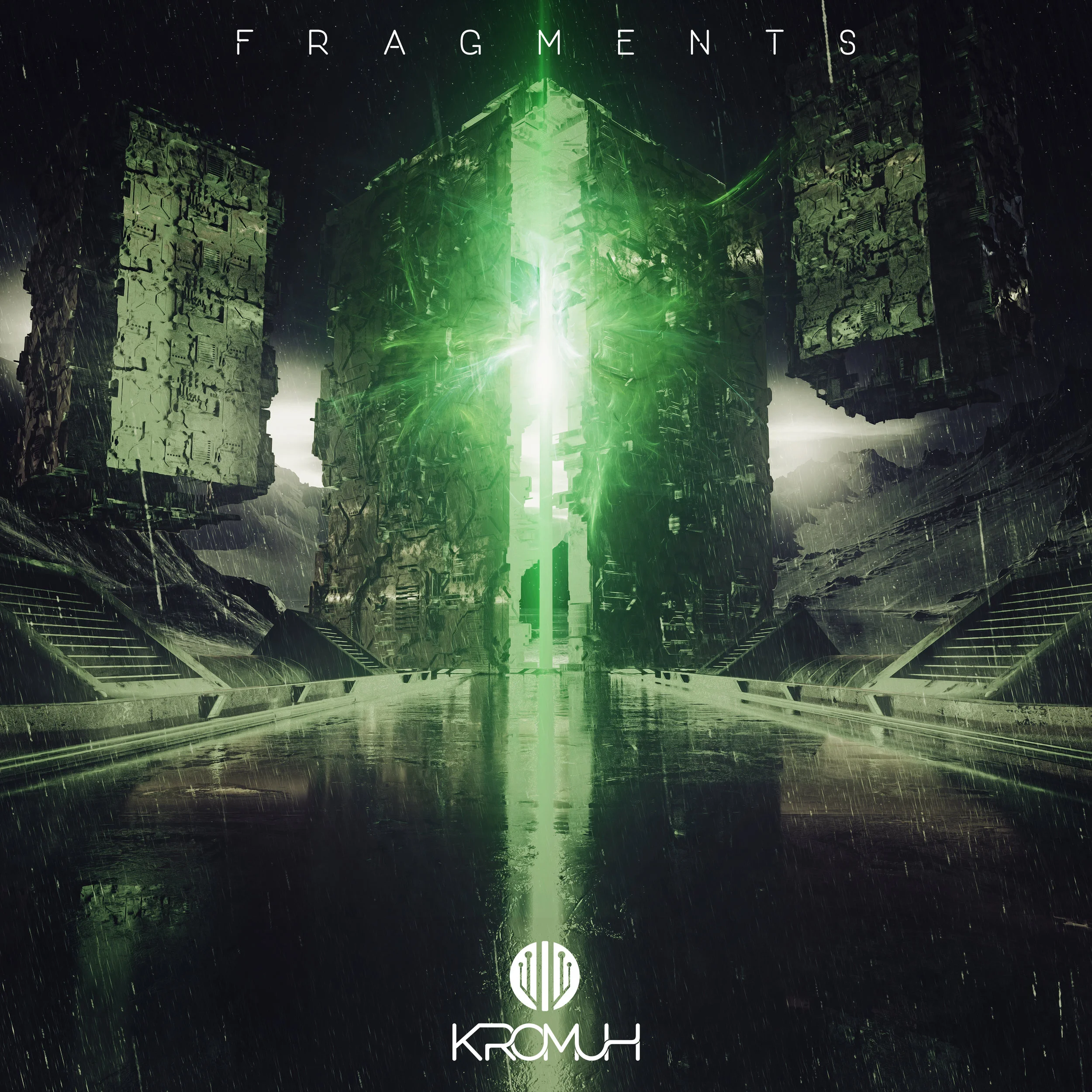
Kromuh - Fragments EP
One of the hallmarks of well-done neuro hop is a squeaky clean stereo spread. The sounds could not be dirtier, but the mix-downs are spacious and sewn up. Kromuh, a versatile young producer from the Midwest, offers just this kind of well-balanced but hard-hitting composition on his new four-track EP Fragments.
One of the hallmarks of well-done neuro hop is a squeaky clean stereo spread. The sounds could not be dirtier, but the mix-downs are spacious and sewn up. Kromuh, a versatile young producer from the Midwest, offers just this kind of well-balanced but hard-hitting composition on his new four-track EP Fragments.
Kromuh is the musical identity of Tyler Endicott who hails from Indianapolis, Indiana, although he currently resides in Chicago, Illinois. He plays frequently in both cities and often appears on lineups curated by Notion Presents, a crew that continually offers some of the coldest live bass music in the windy city. Although he's been producing electronic music for over four years, Kromuh used to lean more towards future funk, and psy dub stylings before that, relying on the cultivation of atmospheres. Recently though he's been sharpening his sound design skills and pushing out impressive neuro bass. Fragments is focused on creating moments; wild, cathartic flashes when the lightning strikes the same moment that the thunder claps.
The trappings of vogueing halftime music can be heard on Fragments. Kromuh is not pioneering any arrangements here, but he is slam dunking a sound that is very popular right now. The sound design is precise and not played out. With so much amazing neuro sound filling the airwaves, it's not easy to walk that line. Although it leaves a little to be desired at times in terms of overall impact, the percussion is varied in tempo and detailed. Tiny hi-hats click throughout "Bent" that would be barely audible on earbuds, but which round out the mix in ways that a passive listening may not reveal. The mix is spacious, allowing the sub-frequencies to rise and meet high-end, sine-compressed nastiness in the middle, splitting the listener's cranium.
"Lost" is a particularly large cut. Kromuh mixes a little purple synthesizer - always nice to hear, almost like a throwback - with some syrupy neuro bass. The vocal sample is particularly well chosen and manipulated, and there's a healthy amount of space for each sonic element to breath. Sometimes when producers go for the jugular they end up clogging the mix with too much sound, but again "Lost" eludes this trap. Overall, it's just a really hype track that virtually any crowd would mess with. We wouldn't be surprised to hear some other performers drop this in their sets as summer turns into autumn.
Who's to say Kromuh will stay in the neuro bass and halftime wheelhouse given the winding path of his musical exploration to date. Although with Fragments, his most impressive work to date, he's carved out a small spot for himself in that wheelhouse should he chose to remain there.
FOLLOW Kromuh: Soundcloud / Bandcamp / Facebook / Instagram
Sound of Solasta - EasyJack
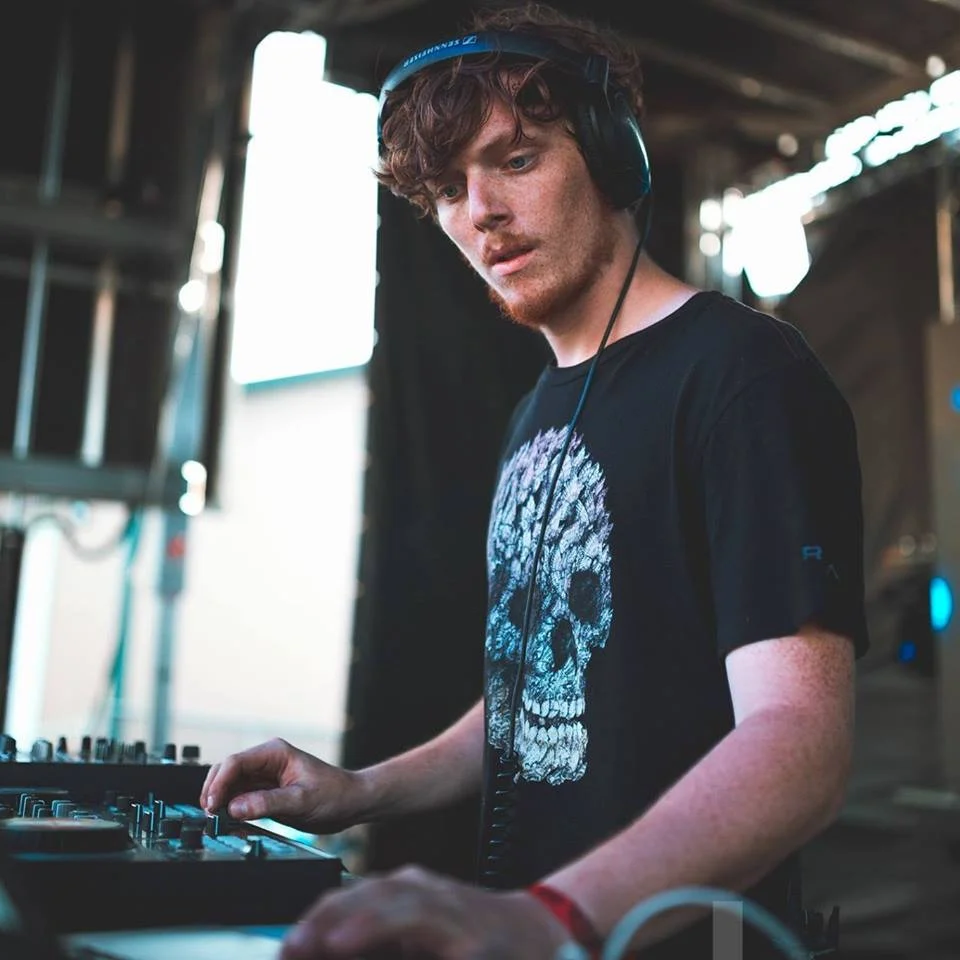
For the last installment in our Sound of Solasta series, we linked up with a vital individual within the infrastructure of Solasta Festival, the producer/DJ and sound system connoisseur Jack Whelan. Known on the stage as EasyJack, Whelan the co-owner and lead engineer for Soundsystem Cultures LLC, an audio production and Funktion One sound system rental company based out of Chattanooga, Tennessee.

For the last installment in our Sound of Solasta series we linked up with another individual who is both on the lineup at Solasta Festival, and vital within the festival's infrastructure; the producer/DJ and sound system connoisseur Jack Whelan. Known on the stage as EasyJack, Whelan is the co-owner and lead engineer for Soundsystem Cultures LLC, an audio production and Funktion One sound system rental company based out of Chattanooga, Tennessee.
The EasyJack project stretches across a number of genres and tempos, but low-frequency is the common denominator. Many folks were first introduced to EasyJack and his diverse presentation when he performed during the Chicago Tipper run in August 2015. His released catalog numbers just below two-dozen tracks, including contributions to Oxidized Vols. 1 & 2, but the quality and intention of each does not go unnoticed. Jack and the Soundsystem Cultures crew have had a stellar rise since launching the company in 2015. They supply gigs with high-fidelity, properly-tuned Funktion One speaker systems. Northeastern heads would have heard them in action recently at the Camp Bisco Renegade Stage. They continue to push upward the benchmark for hi-fi sound system experiences, and they'll deliver that experience all weekend long at Solasta Festival on August 17-18.
The Rust: Tell us about Sound System Cultures. What is the ethos of your operation?

Soundsystem Cultures LLC was originally started by my business partner Philip Irwin. We met through Infrasound Music Festival and various mutual friends. Initially, I was assisting him in acquiring some of the needed equipment for his original set up and during that process we decided that joining together as parters was a much more effective solution so we could build a bigger system. Living in separate parts of the country had a natural advantage because we both had a good number of established connections for bookings in our respective regions. Things kind of fell into place naturally from there. We’ve never come up with any kind official ethos or motto, but our general goal is to provide the highest quality audio experience possible for our customers, no matter what it takes. We’ll go to any lengths possible to ensure that everything has been set up in the most optimal way for the system to operate in the given conditions of the show. If that means re-stacking the rig multiple times to achieve the perfect configuration for the environment, we’ll do it. If we have to dig a 100ft trench in the mud to hide cables so the dance floor is obstruction-free, we’ll do it, and so on… We cut no corners and take everything possible into consideration to truly take our clients' events to the next level.
The Rust: What drew you towards a career in curating sound? What drew you to hi-fi systems in general?
I was a producer/DJ and musician before I was doing sound professionally. Growing up being involved with underground events and playing in various bands, I always had an interest in the production and audio side of things. Eventually around 2012 I met Antoine Kattar who had been working for the Funktion One US distributor in Chicago for a number of years. He was looking for someone to fill an apprentice type position to help him with permanent sound system installs around the region. Antoine has served as the front of house engineer for Tipper and many other prominent acts. He was also a member of the team responsible for a number of well-known installs around the city including Chop Shop, The Mid, and Smartbar which has been referred to as one of the best dance floor systems in world. Through working with him I learned how to tune and maintain these systems. After the first time I experienced a proper Funktion One rig I was certain I only wanted to be working with extremely high fidelity systems and I’ve been hooked ever since.
The Rust: The EasyJack project seems to encompass a number of styles and tempos. Can you talk about your musical output, and the influences that shaped your production prowess?
My early influences came from video games like the SSX series and number of others that feature quality underground music. Later on, I discovered the world of glitch hop through the likes of Tipper, Kilowatts, Opiuo, Vent, (early) Griz, and many others. But the main influence on my own personal sound has always come from my love of Chicago house music. I love incorporating subtle elements of classic house into my glitch hop and dub sounds and I think thats been the main driving factor of developing my sound over the years. Another key influence for me is the idea of making “music for sound systems”… basically producing music that can really show off the capabilities of the high fidelity systems that we work with.

The Rust: Solasta has partnered with some top-tier organizations. What role does Soundsystem Cultures play in the Solasta infrastructure?
We basically handle all things sound for Solasta. We’ve been tasked with coming up with a rig that will compliment the sonic environment to the best of our ability while also working together with the stage design team to ensure everything will be a perfect fit. This year we will have a slightly bigger set up than year one and we hope to keep it evolving as the event grows. Last year the stage incorporated both a waterfall, fire elements, bamboo, and tons of other materials scavenged from the woods around the grounds. Making sure the footprint of our system can fit in within all of the beautiful deco, while still being optimal for sound quality, is crucial to delivering the best possible audio/visual experience for the crowd.
The Rust: What do you have in mind for the future of EasyJack?
Right now my main focus is my upcoming release with Addictech Records. It features some tracks I’ve put years of work into and will technically be my debut EP on an established label. Im also currently in the process of building my new studio which will serve as my creative space hopefully for years to come. On top of that I’ve also been developing a new side project called Frisk that will focus on a psychedelic mesh of techno and house. Most of that music will be four-on-the-floor and feature some pretty ravey vibes. My goal is to continue touring and keep growing both projects as much as possible.
--
Solasta Festival strives to nail every aspect of the attendee experience, and sound is arguably the most important aspect of all. Fortunately for anyone heading to Sneedville, Tennessee for this special gathering, Soundsystem Cultures will be running the boards all weekend. When Whelan takes the stage for a rare EasyJack set, and an even rarer Frisk set, he'll be flexing his handiwork in more ways than one.
FOLLOW EasyJack: Soundcloud / Facebook
WISDOM - SKYVUE
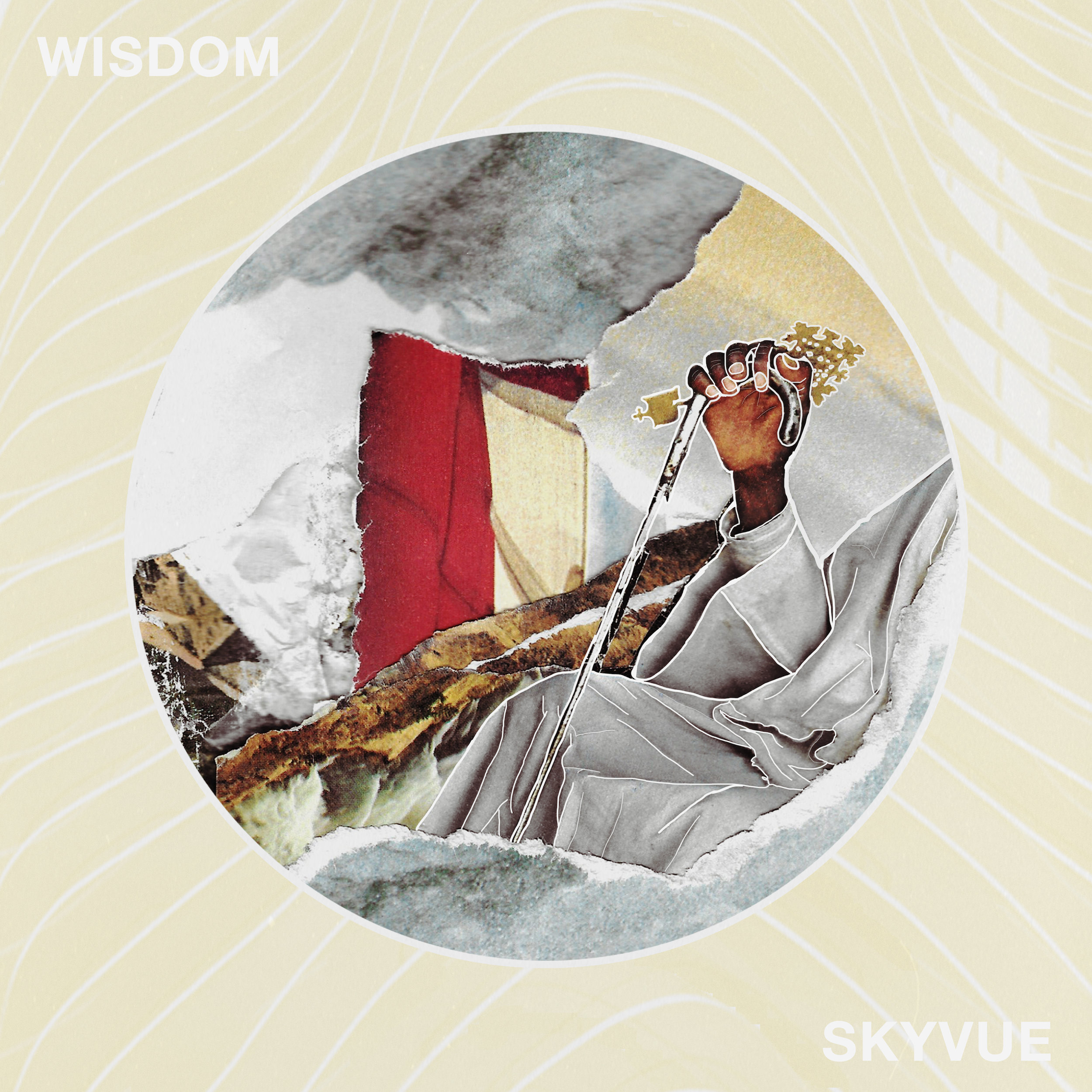
Coming in at exactly 30 minutes long, SKYVUE from Texas-based beats producer WISDOM is a meditative journey. WISDOM uses thumping rhythms and spaced out, distant melodies to activate strong psychological currents within his listeners.
Coming in at exactly 30 minutes long, SKYVUE from Texas-based beats producer WISDOM is a meditative journey. WISDOM uses thumping rhythms and spaced out, distant melodies to activate strong psychological currents within his listeners.
Speaking in superlatives can be dangerous, but WISDOM aka Alec may have some of the cleanest and most impactful percussion in the beats game right now. All the percussive elements are sampled from different sources but coated in the same lacquer so that each beat becomes a cohesive collage. One could spend the entire 30 minutes of the album, and some surely will, trying to pick apart that collage.
His kicks are round and muffled but forceful. They fall all over the mix seemingly at random, so while the head is steady rocking to a consistent cracking, rim-shot snare, the kick is moving around inside four bars unpredictably. The hi-hat samples are diversified both in their source and their velocity (i.e. loudness) to add that "human touch" to the drum beat. All his percussion is compressed masterfully so that it leaps out of the mix, nearly startling the listener on a couple occasions.
Some stand-out tracks from this release include "EARTHTONED", "LTD", "GIVE AND TAKE" and "SIESTA". With "EARTHTONED", Wisdom explores a unique tempo, while the rest of the album sticks to boom-bap. The bass line is composed of low-frequencies so seemingly bottomless that they're reminiscent of electronic music. Balancing this brilliantly is a melancholic piano sample that leverages not just the notes played but also their deep resonance.
The next cut "GIVE AND TAKE" brings the tempo back with quiet ferocity. Sampled woodwinds blow while a guitar lick ducks in and out of the mix. WISDOM relies on guitar samples for chromatic effect. They're rarely prominent, essentially they're in the pocket, but they add great color to the stereo image. "LTD" rocks at this same pace, and may be our favorite cut on SKYVUE. The sway of the percussion is simply irresistible, with the kick possessing a tangible bouncing-back effect. Here the melodic backing is at its most sparse, too, with a guitar lick taking the lead over a lush backdrop of pads.
WISDOM has been a favorite of The Rust Music for some time, and he was featured in our Lo-Fi Sundays column in early 2018 right after the release of his first album DINGE. We'd hoped the prodigal production and dreamlike essence cultivated on that release was no fluke. Indeed it was not. With this second release, WISDOM continues to flex superb production skills, combined with intelligent songwriting and that intangible creator's touch that can create a whole greater than the sum of its parts.
One would be wise to keep their ears on this producer. Alec is young and still at university. His skills are only going to increase, but will they be matched by a parallel increase in passion? There's just one intelligible vocal sample on the whole album, and it closes the final track. "I just can't fucking learn, I'm too stupid, remember?" Whatever pathology is at play behind this music, the product is pure gold.
FOLLOW WISDOM: Soundcloud / Spotify / Bandcamp

Lo-Fi Sundays 038 - AywɛɛTիαSɛɛɗ
"We hereby declare ourselves to be another order of being...an astro nation of the united world of Outer Space." These words from the mystical jazz and thought pioneer Sun Ra are sampled in "Much Music More Peace", a beat suite from producer AywɛɛTիαSɛɛɗ (pronounced I-we the seed) aka Aywee. Music from Aywee could help form the soundtrack for this astro nation. The producer gathers pieces from the past of jazz, soul and hip-hop and collages them to create futuristic head-bopping beats.
"We hereby declare ourselves to be another order of being...an astro nation of the united world of Outer Space." These words from the mystical jazz and thought pioneer Sun Ra are sampled in "Much Music More Peace", a beat suite from producer AywɛɛTիαSɛɛɗ (pronounced I-we the seed) aka Aywee. Music from Aywee could help form the soundtrack for this astro nation. The producer gathers pieces from the past of jazz, soul and hip-hop and collages them to create futuristic head-bopping beats.
Aywee flexes all sorts of styles across a catalog of work that spans five years. His beats are distinguished by their tasteful integration of synthesizers and electronic motifs. Whether the music leans heavily on these motifs, like his mesmerizing Daydreams EP, or touches on them sparingly, like his Mirrors EP from Brunch Collect, they add a novel technologized texture to his tunes that is uncommon for most beatmakers.
He is fidelitous to his past, both musical and intellectual. His music references jazz legends like Charles Mingus, and Albert Ayler, and samples speech from leaders like the late Black Panthers icon Fred Hampton and the philosopher Cornel West. These elements, when couched in carefully selected notes, tones and timbres, create an esoteric mystique around the beatmaker's music. Sink deeply into it and you may be transported to other psychological realms.
Aywee has a mighty workflow, having just released his twelfth beat tape, "Flyin' High". We've only included a pair here in this weekend's playlist, but they all to showcase a slightly different style each time. He's collaborated with talents like Ødyssee and EMERLD and contributed music to top-shelf labels like THA ReCoRdZ, Hip Dozer, and Kwaleeti. Ultimately Aywee is a creative soul whose music has the power to both entertain and enlighten listeners.
FOLLOW AywɛɛTիαSɛɛɗ: Soundcloud / Bandcamp / Spotify / Facebook
Jade Cicada - Fish Juice
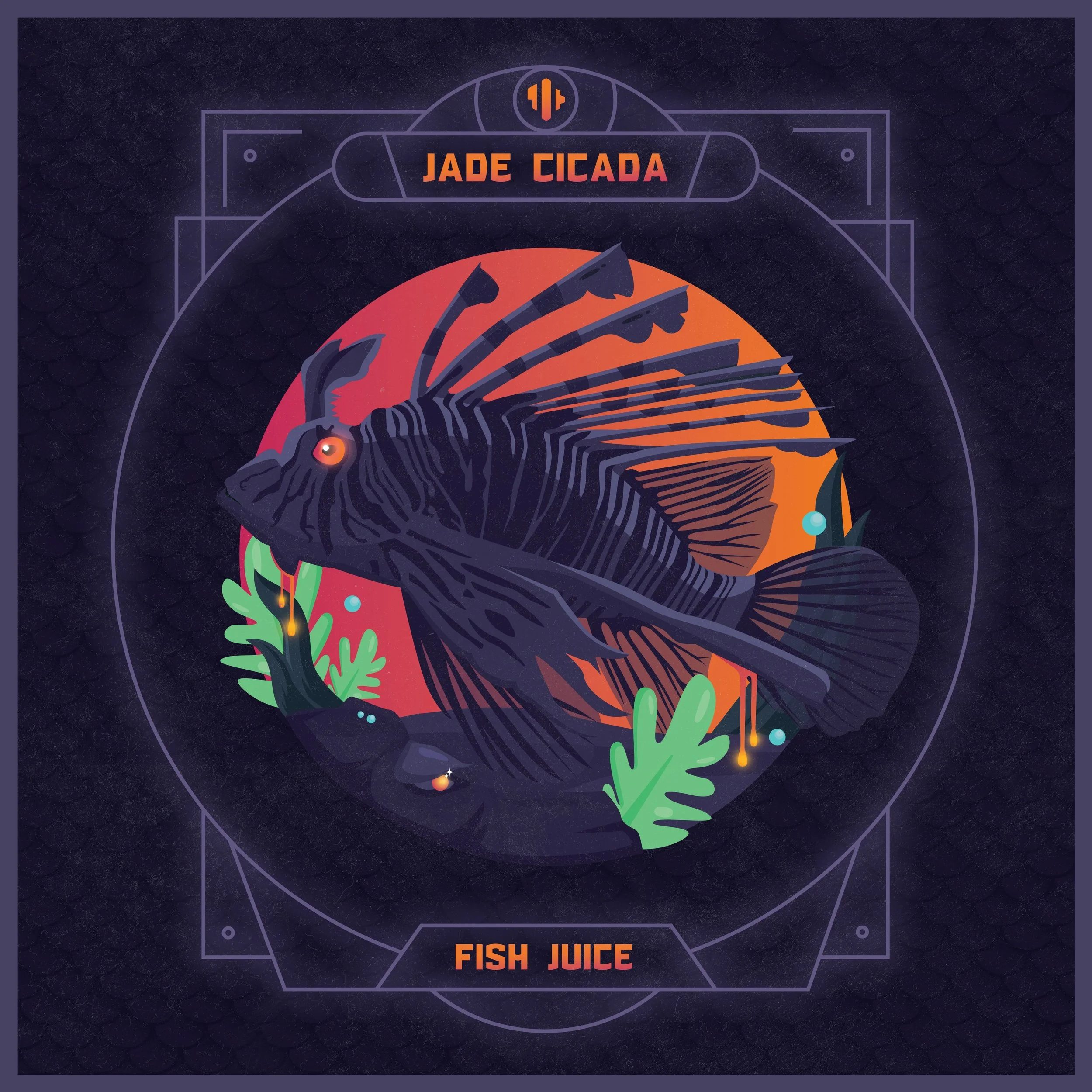
More than a year after his last major release, our favorite cicadomorpha has unleashed his most crisp studio production to date; Jade Cicada’s Fish Juice is a one-inch-punch of high-powered, jazztastic neuro music. In the time since Eolian Oms first graced the ears of eager fans, Cicada aka Skyler Golden has been hot on the block touring aggressively and quietly leveling up his sound design and engineering capabilities. The progress in his work is clearer than sunlight.
More than a year after his last major release, our favorite cicadomorpha has unleashed his most crisp studio production to date; Jade Cicada’s Fish Juice is a one-inch-punch of high-powered, jazztastic neuro music. In the time since Eolian Oms first graced the ears of eager fans, Cicada aka Skyler Golden has been hot on the block touring aggressively and quietly leveling up his sound design and engineering capabilities. The progress in his work is clearer than sunlight.
Fish Juice isolates itself as the most particularly brolic collection of tunes in the Jade Cicada discography, as it sees the artist refining a number of textures and sonic motifs that he has become fond of. The highly processed veneer of his tonal design has become his most striking characteristic, especially considering the thorough extent to which harmonics play a role in the arrangement of this entire EP. The processing chains on the bass lines have the Midas’ Touch we’ve grown so familiar to, but with a refined and precise approach to filter sweeps, cuts, and rhythmic response.
The release gets off to a rolling start with assorted jazz chords in “Fish Juice" and a shuffled drumline quickly picks up pace. The massively ducked kicks and snares are a staple of Jade Cicada's mixdown process, and they absolutely smack the head back and forth into a head-nod that you didn't know you signed on for. Once the low end drops into the mix, the laser-precision synthesis bursts through the speaker cones like a nylon rope whipping against steel plates. The gated reverb all over the track brings out some serious stereo imaging on what, on the surface, seems like a fairly straightforward tune.
“Dusty Lungs” features Chris Karns, a world-renowned turntablist who has his hands literally all over the eclectic world of electronic music. Rocking with a constant hip-hop rhythm, Karn’s vinyl scratching is morphed by Skyler into a wild bevy of harmonics and pure aural manipulation. The choice bursts of synthesis throughout the composition flesh out the spongier textures, wrapping around the last turnarounds in each measure and bringing you right with them. Besides the Wonky Llama project, a side project of Skyler’s with Houston-based producer Schmoop, Jade Cicada rarely collaborates with other artists.
“More Cowbell” is exactly as rowdy as it sounds. Featuring the fattest bass line on this side of the milky way, this whole track is an excellent way to play basketball with one's own head. What begins as a vivacious little bob of a beat rapidly unfolds into the same nylon rope whipcord that smacks notes and harmonies all over the composition. Tread carefully, though. If you hit the second stretch of the tune, you'll get blasted by resampled low-end nastiness and risk a permanent case of stank face.
Closing out the EP, “Wire Skulls” is a melodious adventure through the arrangement and compositional capabilities of Jade Cicada. Putting aside for a moment off-kilter synthesis and aggressive breakdowns, this track recalls the earlier atmospheres of Jade Cicada’s catalog. Tonal blends that go down smoother than fresh water, complimentary bubbles popping throughout the mix, and precise bass work that folds together in a constant crescendo somewhere between a lullaby and hypnosis.
Without so much as a hiccup, Jade Cicada continues his upward production trend, with Fish Juice pushing his unique flavor of nuero music towards a logical evolution. As always, he sets himself a cut above the rest with advanced arrangements and sizzling audio engineering tricks. Jade Cicada is featured on a number of lineups to close out the summer, including Elements NYC on August 11, Solasta Festival on August 17-18, and Astral Lights in September. If chunky, juicy, sine-crushing beats are your thing, then waste no effort in getting yourself front and center at his next performance.
FOLLOW Jade Cicada: Web / Soundcloud / Facebook / Bandcamp
Gaddy - Mixtape Mentality Promo Mix
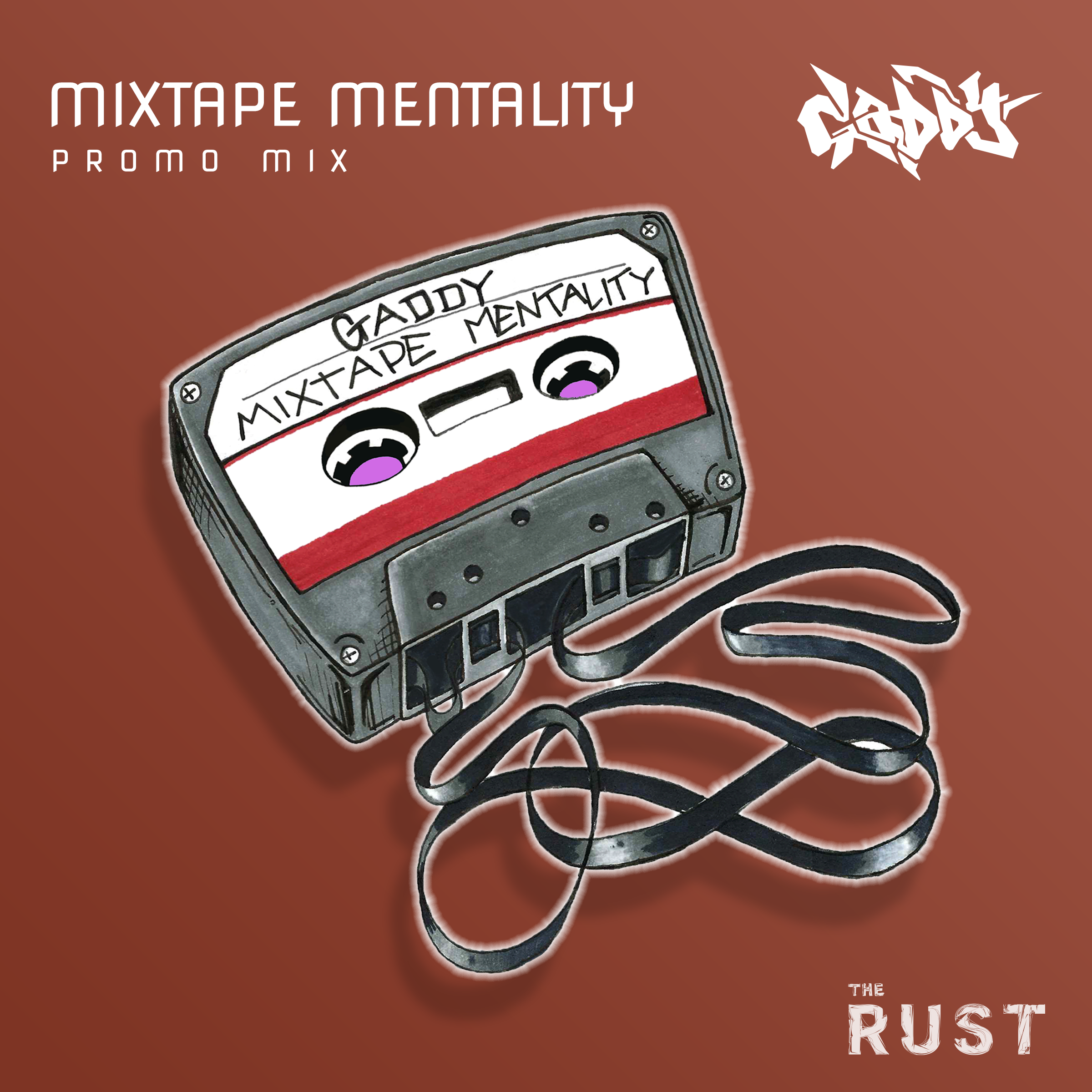
You’re high-stepping through candlelit caverns in the Himalayas, aligned as hell, scoping out monks who may or may not be trying to get over on you. In the back corner of the cave Gaddy is spinning fat breaks, old vinyl and Houston Texas hip-hop. Heavy bass and dangling synth chords start rocking the cave, with fresh samples ringing out. You’re getting into the groove with Gaddy, whose next release Mixtape Mentality, drops Tuesday, August 7th right here on The Rust Music.
Hip-hop is foundational for so much music and art in the United States, especially contemporary electronic music. The United Kingdom’s contributions by way of Jamaica, or the tempos coming from houses in Chicago, any of the multitude of influences, all have their impact. The layering, rupture, and flow that define hip-hop music are thick clay, foundational motifs, for contemporary bass and glitch hop music.
According to George Nelson in Hip Hop America, hip-hop isn’t a style of music at all. “Hip-hop is used to refer to culture, language, and behavior….while rap is the musical form that emerged from this culture.” Especially here in New York City where hip-hop is as thick in the air as the smell of garbage, it’s as much a state of mind as a style of music. At least that’s how it began. “Hip-hop emerged as a source of alternative identity formation and social status for youth in a community whose older local support institutions had been all but demolished along with large sections of its [South Bronx] built environment,” author Tricia Rose wrote back in 1994. As much as the music, there’s the mentality.
There’s a universal, elemental feeling. Kick and snare thump the same speed as your footfall. The bass is swinging and its got you swinging, too. You’re stomping down broadway ten feet tall because you’ve got the fattest beat in your headphones (or boombox). You’ve got the juice.
Picture that feeling, but instead of broadway you’re high-stepping through candlelit caverns in the Himalayas, aligned as hell, scoping out monks who may or may not be trying to get over on you. In the back corner of the cave Gaddy is spinning fat breaks, old vinyl and Houston Texas hip-hop. Heavy bass and dangling synth chords start rocking the cave, with fresh samples ringing out. You’re getting into the groove with Gaddy, whose next release Mixtape Mentality, drops Tuesday, August 7th right here on The Rust Music. Today, we’ve got a promo mix that highlights some of his favorites off the release as well as some older Gaddy cuts with some choice Hip-Hop peppered in.
Coming out of east side Austin, Texas, Gaddy drops the funky and furious styles from hip hop’s past into the computerized bass music of the future. Sometimes referred to as the Food Truck Fugitive, Gaddy runs among the talented underground electronic circuit that calls Austin home, including the Create Culture crew. He can rock a crowd with a mixture of performance styles. With a couple crates of vinyl he performs frequently in Austin, dropping the needle on some soul, hip hop, oldies, g-funk, electronic. When Gaddy fires up the software, he’ll play all original bass music.
As a youth growing up in Houston Gaddy learned the guitar well, idolized Buckethead, and put out an album at 18 years old on which he played every instrument. He was also raised into hip-hop, basically “force-fed chopped and screwed music” as he puts it, either from fake thugs in high school art class or from cars bumping on the streets of Houston. After stumbling onto electronic music he, like many, was floored by its forceful presentation. “This is power right here,” he said during a Road to Damascus moment in front of the speaker stacks. “To be able to just rip through a sound system, that led me to put down all that stuff,” Gaddy told me. “I don’t even own a guitar anymore.”
Gaddy’s approach to bass music reflects this crate-digging ethos and cut heavy performance style. Thick programmed drums pound out fundamental drum breaks while low-slung, funked-down basslines tip-toe and slide along. He cuts and assembles samples to make melodies and collages of color. He’ll wade deep into warped worlds of sound synthesis but the beat always leads you back to hip-hop. Indeed, both styles collide constantly in his compositions like some urban electric shamanism.
“Hip-hop’s the first electronic music, to me, really. It’s just a kick and snare and some dope-ass bass.” It’s hard to argue against hip hop’s influence on contemporary electronic music, especially after listening to music from Gaddy and his contemporaries. “I feel like hip-hop is the soul, and the roots, and the blues of electronic music,” he says. “Call me crazy, and I know techno and house are in their own field. I’m talking about our little sliver of bass music.” Gaddy may be crazy, but not for this statement.
Somewhere between an album and an EP, Mixtape Mentality boasts seven tracks, one of which was premiered last week courtesy of Aquatic Collective, and another of which drops tomorrow via euphoric.Net. One can also get into the mixtape mentality by bumping this tremendous mix Gaddy put together for The Rust Music that includes material made around the same time as Mixtape Mentality plus a few choice vinyl selections. It highlights Gaddy’s raw, stylish approach; rugged but full of the juice. Mixtape Mentality will offer the same sound and vibe, only refined. It’s pure juice concentrate if you will, so stay chooned.
Pre-order Mixtape Mentality here to receive the full album mix ahead of release.
FOLLOW Gaddy: Soundcloud / Facebook / Instagram
Tracklist
Tela - Survival (Gaddy Instrumental Bootleg)
Gaddy - Jumbalaya Juggernaut
Gaddy - Elastic
Gaddy - Sway (Edit)
Gaddy - Twisted
Gaddy - Delirious
Gaddy - Style From The Boondocks
Gaddy - The Nod
Mad CJ Mac - True Game / Ras Kass - Order out Of Chaos (Interlude Mashup)
South Circle - Attitudes (Instrumental)
Gaddy - Approbation
Gaddy - Golden
Gaddy - H.E.R.

Lo-Fi Sundays 037 - OTESLA
Hailing all the way from Denmark, and continuing the trend of excellent European lo-fi, OTESLA comes correct with sly cuts and fully furnished beats. Their music especially excels in keeping a focal point, with each track typically revolving around some hypnotic rhythm or signature tone.
Hailing all the way from Denmark, and continuing the trend of excellent European lo-fi, OTESLA comes correct with sly cuts and fully furnished beats. Their music especially excels in keeping a focal point, with each track typically revolving around some hypnotic rhythm or signature tone. With releases stretching back to a little over three years, OTESLA has released over 40 tracks and beat tapes showcasing their direct brand of head-nod hip-hop.
With no apparent fear of combining specifically synthetic tones in their compositions, OTESLA takes creative risks that serve to flourish particular passages and measures. The percussion and drum work throughout their discography is bright and emphatic, with the combination of organic samples and finger drummed turnarounds presenting a fresh interpretation on each sampled break. Melodious elements vary widely, with woodwind, acoustic, and digital tones being chosen on a whim to carry the main dialogue of the tracks. Overall, their style and flavor is a combination of melancholy scales, organic instrumental dialogue, and just the right cuts.
Having been featured on Chillhop Music’s 2018 Spring Essentials, we’re far from the only group with eyes on this unique beat smith. Given the outstanding quality of their discography, OTESLA is sure to be deep in the labs working on their next release, and all signs indicate that it will most definitely slap.
FOLLOW OTELSA: Soundcloud / Bandcamp / Spotify
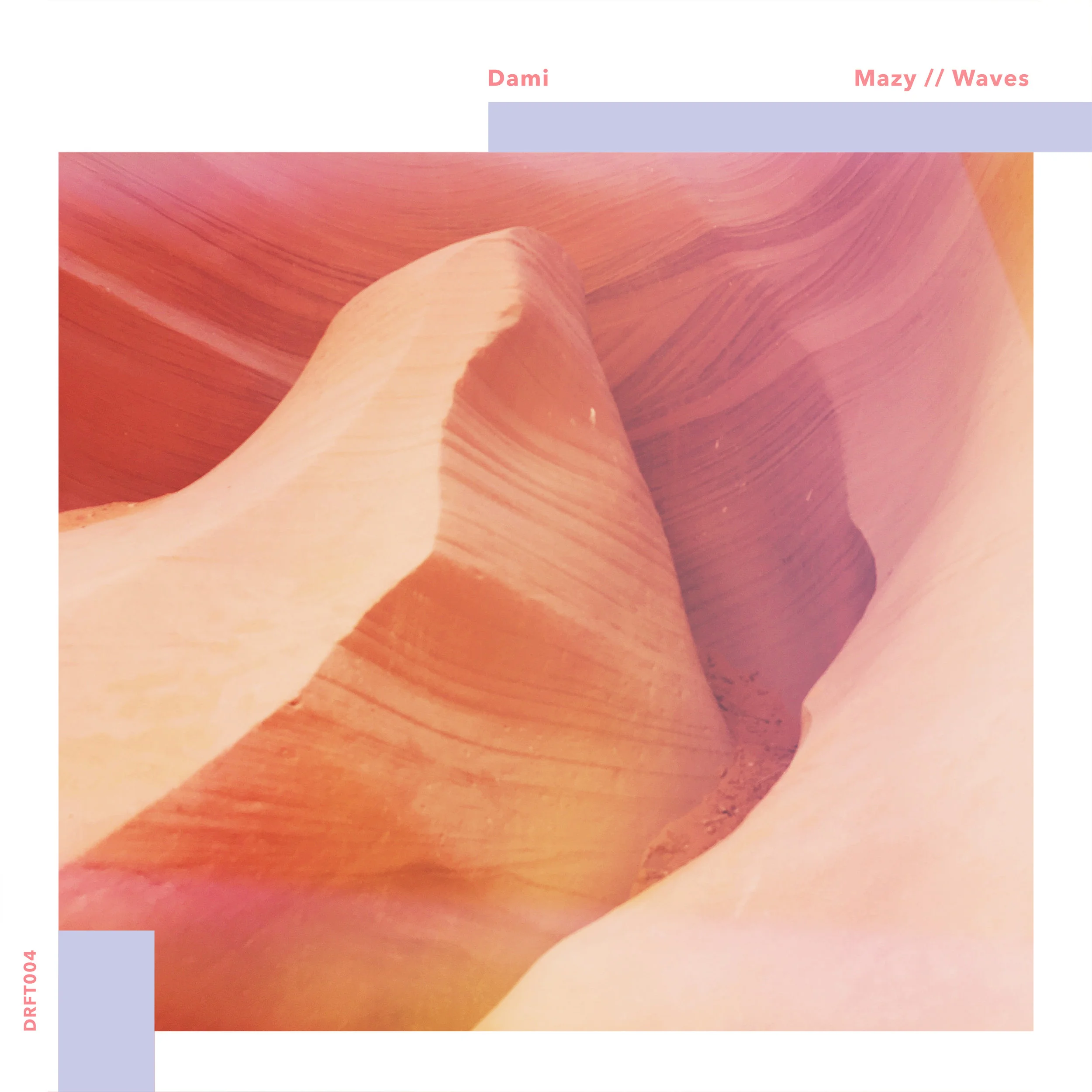
Dami - Mazy//Waves
There are intersections between lo-fi beats and ambient music. In some instances the emotions these different genres target and the moods they cultivate are very similar. The same pads and synthesizers draped over dusty beats sound sublime when isolated into an ambient soundscape. Dami, a new ambient project between lo-fi beatmakers Bretsil and Dweeb, is a product of these intersections.
There are intersections between lo-fi beats and ambient music. In some instances, the emotions these different genres target and the moods they cultivate are very similar. The same pads and synthesizers draped over dusty beats sound sublime when isolated into an ambient soundscape. Dami, a new ambient project between lo-fi beatmakers Bretsil and Dweeb, is a product of these intersections.
Their first release, titled Mazy//Waves after it’s two tracks, is not the only new ambient project to emerge from the beats community. The release comes courtesy of Drift, a new ambient label created as an offshoot of Inner Ocean Records. Inner Ocean began in 2012 as an ambient imprint before turning to hip-hop, jazz and soul beats. It’s founder Cory Giordano used to curate ambient music at Shambhala Music Festival in his “hippy electronic music days”. Drift, then, finds this label coming full circle.
Dami is not the ambient music many electronic heads may be familiar with, dense with sound design or squiggling synthesis. Although the stereo spread is indeed full, and particularly rich during the closing of “Waves”, the composition is more sparse and leaves more to the imagination. Dami is aligned with ambient music as conceived by artists like Brian Eno, whom Bretsil cites as a tremendous influence. Although short in length, Mazy//Waves is mighty pleasant. A paradoxically warm and harmless tension is established on the first track, “Mazy”. This feeling rolls into the second tune, “Waves, although it’s coated in some static synthesis likely courtesy of the lo-fi stalwart sleepdealer who is featured here. The tension releases and the sound spreads like water across a table as the second track concludes.
Mazy//Waves is a small sampling of what’s to come from this project, which includes a full-length release. Dweeb and Bretsil, aka Bret from Boston initiated the project because they wanted to explore soundscapes beyond their beats and introduce other fans and artists to a style of music that’s not always accessible. “The goal here is to collaborate with great lo-fi artists and make more people aware of the genre,” says Bret, who also helps to manage a lo-fi label called Dust Collectors. “Although I think lo-fi is moving in a more ambient direction, too,” he says. Indeed, ambient tropes are becoming more prominent across the lo-fi hip-hop spectrum, and that’s a far cry from where the genre began. By featuring ambient tunes deep within their compilations, Inner Ocean has been particularly instrumental in this subtle movement.
According to Bret, he and Dweeb the beet farmer aren’t the only ones interested in this ambient endeavor. The upcoming Dami album will feature contributions from some very notable beat makers. For its part, Drift, too, will have much more to offer in the near future. One would be wise, then, to stay chooned.
FOLLOW DAMI: Spotify

A Conversation with the Organizers of Solasta Festival
On August 17 & 18, the homegrown gathering Solasta Festival returns to Spirit Crossing in Sneedville, Tennessee for the second year. The lineup is dreamy and the extracurricular activities include audio development workshops and a unique Sunday Brunch. The Rust Music has been corresponding with the festival’s three key organizers about their intentions and areas of focus for Solasta, as well as the festival's short history.

On August 17 & 18, the homegrown gathering Solasta Festival returns to Spirit Crossing in Sneedville, Tennessee for the second year. The lineup is dreamy and the extracurricular activities include audio development workshops and a unique Sunday Brunch. The talent bookings are ambitious, from the New Zealand psytrance legend Grouch to the Swedish ambient composer Solar Fields, who hasn’t performed in the States for nearly a decade. Top-billing is given to rising musicians like Jade Cicada and Detox Unit whose new sounds and young energy are invigorating the community’s collective nervous system.
Solasta is far from the only exceptional grassroots festival to pop up and spotlight alternative electronic music recently. However, strong intentions toward individual and communal growth, a risk-taking and rarified musical lineup, and an obsessive focus on safety and organization distinguish this event from most others. The Rust Music has been corresponding with the festival’s three key organizers about their intentions and areas of focus for Solasta, as well as the festival's short history.
Another steamy summer was approaching in the Southeastern United States in 2017 and lovers of alternative electronic music and culture were naturally excited. For the electronic community and culture at large, summer is when the magic - and the music festivals - happen. That summer, however, the intentional gathering and Southeastern anchor festival Kinnection Campout was taking the year off. The regional music scene was looking at a “very bleak summer” according to Liam Collins, a music producer known as Push/Pull local to Asheville, North Carolina.
Solasta appeared in this void. The event lasted two days and two nights in September in Sneedville, a town of less than 2,000 people tucked into the foothills of the Smokey Mountains in the northeastern corner of the state. The small but refined lineup featured rare international talent. Workshops offered included a sampling seminar with RJD2. The Clinch River ran slowly through the grounds, the sun rose with music, and campers left without a trace. The festival passed into the autumn quietly, although a foundation was set for the future.

Spirit Crossing, the grounds for Solasta Festival, as seen from the air
Electronic music thrives in a handful of cities scattered among the hills and hollers of the Southeast. Asheville stands out among them for its vibrance. On his first U.S. tour, the highly sought after UK producer Kursa is playing major cities like Denver, Atlanta, Boston, New York, and…Asheville. The city is also the home to Harmonia, one of the producing entities behind Solasta. Founded by Asheville resident and perennial festival worker Maegen Coral, Harmonia is one of a handful of companies worldwide dedicated to providing harm reduction and creating sanctuary spaces at music festivals.
Maegen and Liam linked through the greater Asheville electronic circuit over the years, particularly through Kinnection where Liam was a performer and Maegen a part of the festival crew. The gathering was formerly hosted just north of the city on the Deerfields Retreat, one of the only places in the Southeast apparently where one could play bass music through the night.
Also working Kinnection in years past was Hasan Zaidi, another perennial festival worker holding down the box office and going on about “high-density awesomeness”. Hasan had recently started the production company Envisioned Arts in the Bay Area. Today, Envisioned Arts is a leading provider of live niche electronic music, and the other key producing entity behind Solasta. Hasan and Maegen worked festivals together from California to Costa Rica and back to the Carolinas where another transformational event called Gratifly Music & Arts Festival roared with abundance for two years before fading away due to financial insolvency.
In this landscape where the cultural soil is fertile but the fruit of financial stability struggles to flower, Hasan, Maegen and Liam linked up to throw the first Solasta Festival. “The three of us definitely connect on the core principles of how people should be treated and how the experience should be facilitated,” Maegen told me while working her Harmonia sanctuary space at Elements Lakewood in Pennsylvania over Memorial Day weekend.

“It’s crucial for the organization behind an event to have a higher intention than money or just having a party,” Liam writes via email. “You can feel when there is real love and thought behind it versus when there is a disconnect between the organizers and the patrons…For me, Solasta is about keeping the musical lifeblood flowing in the Southeast, and stems from a very sincere desire to grow the scene and musical community.”
Maegen has seen much while working the festival circuit across the continent, and it’s not all good. Despite its fantastical atmosphere, the electronic music community isn't free from destructive behavior. “In this culture, what I’ve noticed, the cool thing is to not give a shit and to not care. Like ‘let’s eat all the drugs, let’s throw shit on the ground, who cares.’ It’s kind of self-serving. That’s the culture, so people are learning that as they come into it.” This is why Maegen started Harmonia, to empower through education, lead by example, and subtly push the cultural needle in the opposite direction. These same intentions undergird Solasta Festival. “What we’re trying to do is create the other culture, where it’s cool to take care of yourself and it’s cool to check in on people. It’s like a culture of compassion.”
As the head of a production company, a booking agent, and the initiator of the Bassnectar AmBASSadoor program, Hasan is uniquely positioned to comment on the micro-communities that are both a cause and effect of the rising popularity of alternative electronic music. For it’s part, Envisioned Arts has been helping to set the pace musically in the States for years now by booking rare talent, particularly in the psydub universe, before others began to.
“Our events are different because we’re all similar in these weird ways, and we’ve come together because of the music,” Hasan says. “But when we’re actually together we realize we share these certain qualities and characteristics.” Birds of a feather flock together. Music nerds have a great time hanging out with each other, especially if their favorite tunes are pumping through a top-of-the-line system under the bright light of the moon. “There’s a rampant sense of humor that tends to run through everyone, kind of a skeptical view of what is fed to us from a commercial perspective, and a desire for something more authentic and different.”

Goopsteppa performing at Solasta 2017 (Credit: Reston Campbell Photography)
Solasta is intended to be that something. It’s hosted by the community, for the community. The organizers believe this DIY approach is imperative. “We have all been to those larger corporate festivals,” writes Liam. “They throw up a big stage in a hot field and sell you bottled water and shove beer ads in your face.” Indeed, no one who’s ever bought an Aquafina for five or six dollars will soon forget the sting of that experience. “You’re herded through long security checkpoints and it just feels like the purpose of the event is to make as much money as possible while caring little about the experience. Unless we all create and support the kind of events that we want to see, they just won’t happen anymore.”
Creating an authentic, homegrown underground event within the framework of the festival market is like threading a needle. A group seeks to put forward their purest ideals, but it must bend with the force of a conscious-less machine market that doesn’t give a damn about ideals. “In a broader sense,” Hasan muses, “all grassroots movements that do something right will one day expand into something more. Being able to consciously monitor that growth and actually stand by the core ideals from outset, instead of just paying them lip service, is the actual battle.”
Community and grassroots are not just buzzwords for this crew. The organizers build a sense of community into everything they do, particularly by blurring the lines between performer, staff, and audience. “Our team for Solasta is very literally embedded in every aspect of the scene,” writes Liam. “We are booking the shows, managing touring acts, checking you in at the door, rocking the clipboard in the back, making sure that you are supported during tough experiences, on the four-wheeler keeping you safe, dancing right next to you in the crowd, and up on stage.”
There’s no VIP area at this festival. “We often joke that Solasta is a producer’s festival,” says Hasan. “Last year especially that's really what it was....All the artists we book are going to be on the dance floor ripping it up. Woah! Nice, we just sold five tickets,” he says over the phone, interrupting his own train of thought. Hasan loves to talk, but he doesn’t bullshit. There’s one stage and no overlapping sets at Solasta. It’s fortunate for attendees because every set on the lineup is worth catching. There’s no “check the box” bookings here. We’re sure the producers dig this, too. They miss sought after sets sometimes, too, you know. Solasta also lowers the stage towards the ground, bringing the performer closer to eye-level with the audience.

Born from the nerdy natures of each of the three organizers, one of Solasta’s most unique offerings is the full slate of audio development workshops. There will be sessions on vinyl scratching, integrating hardware synthesizers, piecing apart the frequency spectrum and more. Last year the focus was placed exclusively on the deep technicalities of production. This year’s workshops will be a bit more accessible, including seminars from “industry movers and shakers” about other aspects of the underground music community. Solasta intends to give people the knowledge to do it themselves, and do it properly. “A lot of the workshops we do allow the participants to become the people who will be on stage,” Hasan says.
Although Solasta is a second-year festival, expect a safe and highly organized experience. These folks know what they’re doing (at least when it comes to hosting events). “We are technically a startup but we do not have the organizational clusterf*#@ that most startup festivals inevitably have,” writes Liam. Sometimes one trades the six-dollar Aquafina in for a traumatizing porto-potty lineup or a botched musical schedule. Not here. “Our entire staff in every department is filled by one tight-knit community that has been doing this together professionally since before 2012.”
Spirit Crossing is nestled into the western foothills of the Smokey Mountains where the ground is soft, the fog settles early and often, and the sun splits through the hills at dawn. Running through Spirit Crossing is the Clinch River, one of the cleanest rivers in the Southeastern US and home to rare and diverse marine life. One can camp next to the river and wake to its bubbling rhythms each morning. Wes, the landowner, began hosting burns on the grounds years ago, but they were more like river clean-ups with music. “We try to impart on people, don’t just keep the land clean because we’re telling you to,” Hasan says. “Keep it clean because you genuinely want to.” Solasta intends to maintain the pristine conditions at Spirit Crossing by strictly adhering to a ‘leave no trace’ policy.
To sustain the festival and it’s growth, the organizers are partnering with other like-minded companies. “Solasta is a group effort,” says Hasan. “No event happens with just one community." Solasta has linked with Midnight Voyage, who for years ran the electronic circuit in Knoxville, Tennessee. They’ve brought on outfits from New Orleans, Chicago, Boston and New York City (The Rust Music is partnered with and actively promoting Solasta Festival) to spread word through the underground. “What I’ve found is that a lot of people are so competitive,” Hasan continues. “We can do cool shit without being competitive. We can collaborate and do something far bigger than any of us. I’ve always believed that.”

The Clinch River in the morning mist (Credit: Reston Campbell Photography)
Perhaps the most important area of focus for Solasta is safety, which according to Maegen reaches “almost to the point of paranoia.” Harmonia will establish its public sanctuary space on site (attendees of the Tipper & Friends 4321 event may recognize this serene, domed environment). They’ll also have isolation tents for those with augmented experiences who require individualized attention from a caring volunteer. “You have the best time at festivals when everyone’s smiling and looking out for each other,” says Maegen. “That inspires people and helps them connect in a potent way. So to make a statement and make it a critical part of the infrastructure changes the game completely.”
“All of us keep coming back to these festival experiences for a reason,” says Liam, who has himself been coming back to festivals for about a decade and a half. “Small, thoughtful gatherings are some of the most potent places for release, communion and connection that I know of. Amazing things happen when people of like mind gather to celebrate. Solasta is the newest attempt at growing one of these from within our community.”
Solasta tickets are available for a startlingly low price and special magic is already swirling around this event. If you’re traveling from far afield, Solasta has shuttles running from the Atlanta airport. If you’re driving, be wary of the switchbacks once you get into the mountains. Although the organizers have poured their own resources and intentions into the project, it’s the attendees themselves that make it all thrive. “We might be creating a central gathering point,” says Hasan, “but the idea is to empower each individual to their fullest, and allow them to spread the feeling they get at the event to others.” Noble intentions aside, “just get ready for some good old tomfoolery,” the organizers suggest.
FOLLOW Solasta Festival: Official / Tickets / Facebook
FOLLOW Envisioned Arts: Facebook / ATL
FOLLOW Harmonia: Official / Patreon / Facebook / Instagram
FOLLOW Push/Pull: Soundcloud / Facebook / Instagram / Visionary Magnets
![LuSiD - Highjacked VIP [Premiere]](https://images.squarespace-cdn.com/content/v1/59530136f5e2319eabb7d87f/1533699038689-KISW8KDIMGV8JD0BGTPW/lusid.jpg)
LuSiD - Highjacked VIP [Premiere]
It's 2:00 am...the elevator door slides open. Three hooded figures slide the cart of brick work out onto the roof lobby of the residence. The Boss said to stay low - the cameras angle high. This was the last job of the night we had to finish to earn our rank. I paged the boss that we arrived as we wait for his signal.
It's 2:00 am...the elevator door slides open. Three hooded figures slide the cart of brick work out onto the roof lobby of the residence. The Boss said to stay low - the cameras angle high. This was the last job of the night we had to finish to earn our rank. I paged the boss that we arrived as we wait for his signal.
Three knocks on the other side of the roof access door. There it was. My heart began throbbing. Only one line of CoDean separates us from another successful heist. Hands trembling, I type in the code boss just paged me... success. We slide the cart onto the rooftop to be picked up by the chopper waiting for us. Only seconds remain for us to close out our most successful night yet.
I run over to the chopper and attach the grapple hook to the cart and signal the chopper to take off. But wait - the air is thick. Something's not right. As we watch the chopper fly I look down to my pager and read the message...
"Abort mission - we've been Highjacked!" But alas, it was too late.

Sound of Solasta - spacegeishA
For the next installment of the Sound of Solasta series, we're tapping into another industry powerhouse who will bring a multiplicity of talents to Solasta Festival on August 17-18. Rebecca Drylie-Perkins, better known by her performance moniker spacegeishA, is a top-tier DJ and the co-owner and director of Street Ritual.

For the next installment of the Sound of Solasta series, we're tapping into another industry powerhouse who will bring a multiplicity of talents to Solasta Festival on August 17-18. Rebecca Drylie-Perkins, better known by Becca or her performance moniker spacegeishA, is a top-tier DJ and the co-owner and director of Street Ritual. Born in 2006 from burn culture and a pervasive west-coast influence, and officially launched in 2008, Street Ritual is a digital label that puts maximum focus on spreading glitchhop, IDM, psychedelic bass music, and their various offshoots.
Leading the pack in many regards, spacegeishA has cultivated clout from over a decade of DJ sets. She also tenaciously advocates for the more than 70 artists that Street Ritual has come to represent. When each time comes for her to get behind the decks, the bounty of the relationships she's forged presents itself in the plethora of unique tunes, both released and unreleased, that she chooses from her collection. Those relationships, however, provide more than just access to good tracks. She is positioned among similar industry players who focus on the communal nature of this widespread counter culture. With this in mind, her booking at Solasta is no coincidence, with “community” being no buzzword for the Solasta team, but the ethos of the entire event. Understanding the dynamism of Becca's career requires more insight than can be gathered from just surface-level digging, so we’re grateful she afforded us the opportunity to ask a few questions.
The Rust: You're the label director for Street Ritual. How did that journey begin? What challenges do you currently face in the position?

I am one of two co-owners of Street Ritual and have been the Director of the record label for seven years and booking agency for two years. As one might imagine I am also the accountant, marketing team, social media manager, merchandiser, staff liaison, artist scouting, and recruitment supervisor.
There are a myriad of challenges that record labels face; mostly that of the evolving trends of digital music sales, social media, and streaming platforms. Spotify didn’t exist when I began, and now it’s an integral part of our business. Initially Facebook was beneficial; not so much anymore. To combat this, I research and strategize to stay in line with current market and online trends. In regards to the booking agency; every artist wants more shows. Booking artists/tours successfully requires confidence, patience, and a vast understanding of the nation’s “scene.” I contend that HYPE is the driving success of a large percentage of artists and it begs the question; where did the hype originate and how has it sustained itself?
The Rust: How do you build relationships with the producers and other music professionals that you later work with?
I’m really happy you asked this, because I believe that ‘networks’ are the key to being successful in this industry. I come from a small town in NJ, so connecting with the top tier industry professionals on the west coast back in 2011 was a challenge. Initially I invested significant time reaching out to forge these connections with minimal results. I attended the Symbiosis 2010 Festival with only knowing my small group of friends. In just six years my network includes hundreds of patrons, musicians, artists, producers, directors, and fans in a dozen countries. My work in event production for festivals such as Lucidity, Enchanted Forest, Symbiosis, and even BOOM festival in Portugal afforded me the opportunity to expand my connections and build these lasting relationships. This endeavor entailed unpaid 16 hour shifts, angry artists, hot tents, flying to gigs all over, and a lot of miles on my car. The cool thing for me was, a lot of these sacrifices resulted in awesome releases, DJ gigs, or bookings for the artists I manage.
Relationships expand and grow to the next level when you attend an event and elevate your relationship from digital to physical. I recommend that you make sure you are not another email or unanswered facebook message. Get out there, be confident in what you are doing, and go talk to someone important. If you have to work for free to get your foot in the door it is *probably* worth it. Aside from reaching out to a stranger, solid relationships can be built online through sharing music, ideas, feedback, and more. The amount of access we have to our community through the internet has allowed me to make connections all over the country and world! If you really like someone's tunes, tell them; they'll be happy to hear.
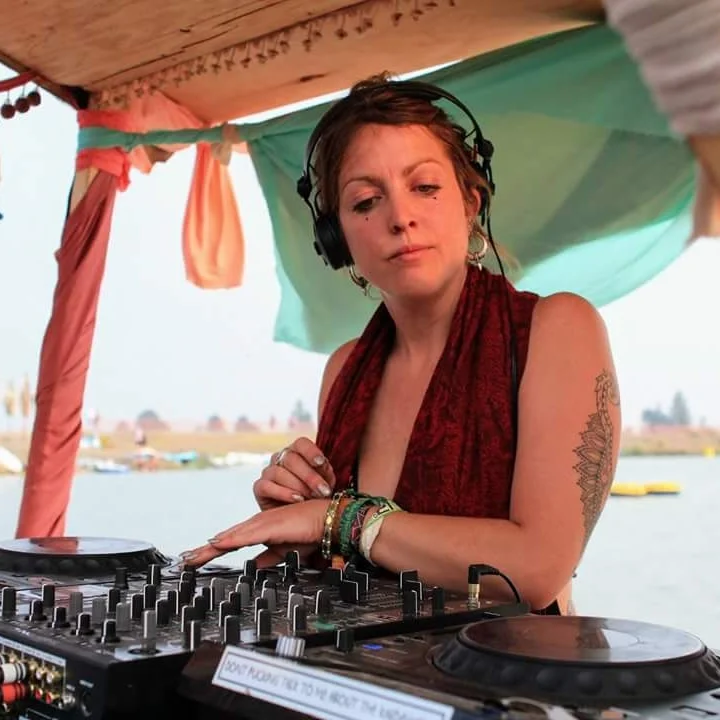
The Rust: Your DJ sets showcase music from a vast cross-section of producers. Where do you look to find fresh inspiration for your sets?
I find inspiration from a variety of creative sources. I love to watch successful DJ’s and producers performing, and the growth of our fan base filling the dance floors. Another source of inspiration comes from following my favorite labels. I listen to tracks that may not be included in my own DJ set but are a perfect fit for our label, or vice versa. This requires patience, however I live for that feeling of surprising the fans on the dance floor with something they don’t expect or know yet. There is a lot of rinsing of well known tunes in this scene, and while I like to have one or two in each of my sets that are "hott rn", I mostly aim to go for the songs that no one on the dance floor knows yet.
The general vibe of the song is a crucial part of my inspiration for building sets. I wait for that scrunch-face reaction when I hear it. I look for the funky, sexy, deep, dark, hard, weird, minimal, scary, crunchy, and hard-hitting. I don’t genre-discriminate. I intentionally organize my catalog by my bpm and key instead of by genre (which a lot of people do) because I don’t want to DJ out of genre folders. I use Soundcloud, Beatport, Bandcamp, and DJ mixes to discover new artists; and can’t say it’s an easy task. There is extensive digging, organizing, and filing necessary to be a DJ. Your time on the decks is earned by time spent on the computer. I invest on average $100 a month on buying tracks, even with the benefit of all the unreleased goodies I have access to. I feel strongly that we need to contribute to digital music sales and the charting and online performances of artists and labels we support.
Lastly, I get a big rush of the go-get-em feels after I play sets and talk with people who were there. I still get a little shy when people tell me they’ve been following me for a while or they’ve listened to my mix over 50 times, but those moments humble me, stay with me, and ultimately reinforce that I'm on the right path. Without the community or communication; there is no success to be had!
The Rust: How did you begin DJing, and how has your attitude as a DJ evolved over time?
I have been a” selector” of music since I was young. My 8th grade gym teacher recognized this talent and chose me to provide the list of tunes for the school dance. My mom talks about my constant commandeering of the radio in the car when I was young to blast Busta Rhymes and Jay-Z. Fast forward to Philly with my college lacrosse team; I created a hip-hop mix every year for our pre- game warm-up. This helped intimidate teams (as if our field in West Philly didn’t already do that). When we threw big parties I’d be DJing from my IPod. Upon graduation I moved to Portland, Oregon and spent my free time DJing by myself and for after house parties (compliments of our fat living room sound system and serato station-- thanks DP). I got tired of hearing all the boys play tunes out that I would also play, so I decided to get more serious about it. Then, I went to Burning Man and found myself spinning on a few different sets at my camp since I had curating and was managing five full nights of the most badass bass music to be found on playa that year. I played my first real set after that at Wormhole Wednesday in Oakland when it was still at Era Bar, opening for the legend Digital Rust.

I don’t think my attitude ABOUT DJing has changed, however I continue to see an increasing value and importance in it as an art form. A lot of success in our industry comes from producers, but I feel DJ’s supporting their tunes (by buying them, playing them out, etc.) is a piece of that puzzle. DJ’s can pivot if a dance floor falls flat; producers don’t always have that option. DJ’s can spread the word on tunes, artists, labels, or genres and producers should be taking advantage of that as it is a symbiotic relationship. DJ’s are the vibe curators, where producers create a certain vibe. We are all in this together; and I’ll be the first to speak up for the importance of DJ’s in this rising underground movement.
The Rust: Solasta is set to offer a plethora of production, audio engineering, and industry-focused workshops. What are your thoughts on festival seminars like these?
It is important for our community to educate and explore various aspects of our industry through group discussion. When we examine the positive and negatives we face as musicians, promoters, and participators in this scene, we grow collectively. Bottom line is, we are all in this together so let's get together and talk about it more. Sets from a bunch of firey producers and DJ's are workshops on their own for me. However, being able to leave with more knowledge about bookings, production, management, or our culture in general is just a bonus. I had the pleasure of speaking on a ‘Women in Music’ panel at Lightning in a Bottle last year, and it served as a potent reminder for me about the challenges women face in this industry. I still reference that panel discussion frequently and would love an opportunity to continue that discussion again some day. The more education covering a wide variety of topics at festivals, the better. In regards to the above question about forging relationships, these can serve as a great opportunity to do that. I am scheduled to be speaking on a panel at Solasta; stay tuned to hear more about that as it develops. See you on the dancefloor!
--
As the weeks fly by and Solasta Festival grows ever closer, the excitement from all involved is palpable. With such an outstanding assortment of intelligent and meticulous organizers, producers, and DJs tapped for this year, it’s important to afford these individuals the proper spotlight for their actions and operations. If you plan to make the journey to Spirit Crossing in Sneedville, Tennessee for the weekend of August 17-18, be sure to find yourself front and center during the spacegeishA set.
FOLLOW spacegeishA: Soundcloud / Facebook / Street Ritual

![Seppa - Interview + Boosted [EXCLUSIVE PREMIERE]](https://images.squarespace-cdn.com/content/v1/59530136f5e2319eabb7d87f/1626113208781-BZ7C6B7E3LCECV7UD4CS/Boosted.jpg)
