

A Different Kind of Loud: Conversing with DMVU
The Colorado music scene has never been defined by a single sound, a single musician, or single venue. The scene is sculpted by artists willing to take risks, evolve alongside their audience, and pour pieces of themselves into every release. For nearly a decade, Matthew Phillpot-Jones, better known as DMVU, has been one of those artists. His unmistakable blend of earth-shaking bass, cinematic textures, and deeply introspective songwriting has helped define Colorado's underground electronic scene while inspiring a generation of producers to push beyond genre boundaries and limitations. As DMVU steps back onto the stage with fresh music and a new perspective, we sat down to talk about creativity, Colorado, healing, and why this next chapter feels like the most authentic one yet.
The Colorado music scene has never been defined by a single sound, a single musician, or single venue. The scene is sculpted by artists willing to take risks, evolve alongside their audience, and pour pieces of themselves into every release. These artists become the soundtrack to our road trips through the mountains, the moments that connect us beneath festival lights, and the reason so many of us fell in love with this community in the first place. Beyond just providing the tunes, they help shape the culture that surrounds it.
For nearly a decade, Matthew Phillpot-Jones, better known as DMVU, has been one of those artists. His unmistakable blend of earth-shaking bass, cinematic textures, and deeply introspective songwriting has helped define Colorado's underground electronic scene while inspiring a generation of producers to push beyond genre boundaries and limitations. Yet behind the music, life was asking Matt to grow in ways the audience could not see.
Over the last few years, Matthew stepped away from touring to focus on his personal health, musical production, visual art, and reconnecting with something beautifully simple: creating for the joy of creating. Without the pressure of expectations or an audience to impress, he found his way back to the heart of why he started making music in the first place. Now, he's returning with a renewed sense of purpose, an overflowing catalog of new material, and a new perspective of his medium and craft.
Contrary to chasing momentum, this is a story about what happens when an artist gives themselves permission to slow down, grow, and rediscover why they fell in love with creating in the first place. As DMVU steps back onto the stage with fresh music and a new perspective, we sat down to talk about creativity, Colorado, healing, and why this next chapter feels like the most authentic one yet.
Alyssa Barnhill: After taking some time for yourself, how are you feeling about this next chapter of DMVU?
Matthew Phillpot-Jones: I'm feeling good about it. I'm feeling more comfortable writing music again. I'm feeling more and more comfortable creating visual art for the first time, that's kind of a new medium for me. I've been doing it enough that I'm starting to kind of get into like the swing of it, you know? I spent quite some time the past couple years kind of experimenting with all sorts of different mediums, sounds, and stuff. They weren't things I really was putting my whole heart into. I mean, obviously, I loved doing that and trying new things, but I've kind of returned to a place of writing music that I am really passionate about and music that really feels like it's just for me. There's no intended audience, there's no greater concept outside of just like, I feel like I'm writing what I need to write. So, it's got me quite excited for this next chapter.
Alyssa: What has you the most excited creatively right now?
Matthew: I've really re-ignited my passion for sampling. Sampling is how I got into making music in the first place. There is nothing more rewarding than digging and digging for hours and hours and hours to find a single, baby tiny little loop, or even an individual like one-shot sound in a song. I have absolutely been re-enthralled in the art of sample hunting. I've been finding the most obscure and like out-there things that I can find. Sampling weird stuff like old commercials from like radio shows, and not just that, but like sampling music that I've been listening to for my entire life, you know? That is something that feels very full circle to me.
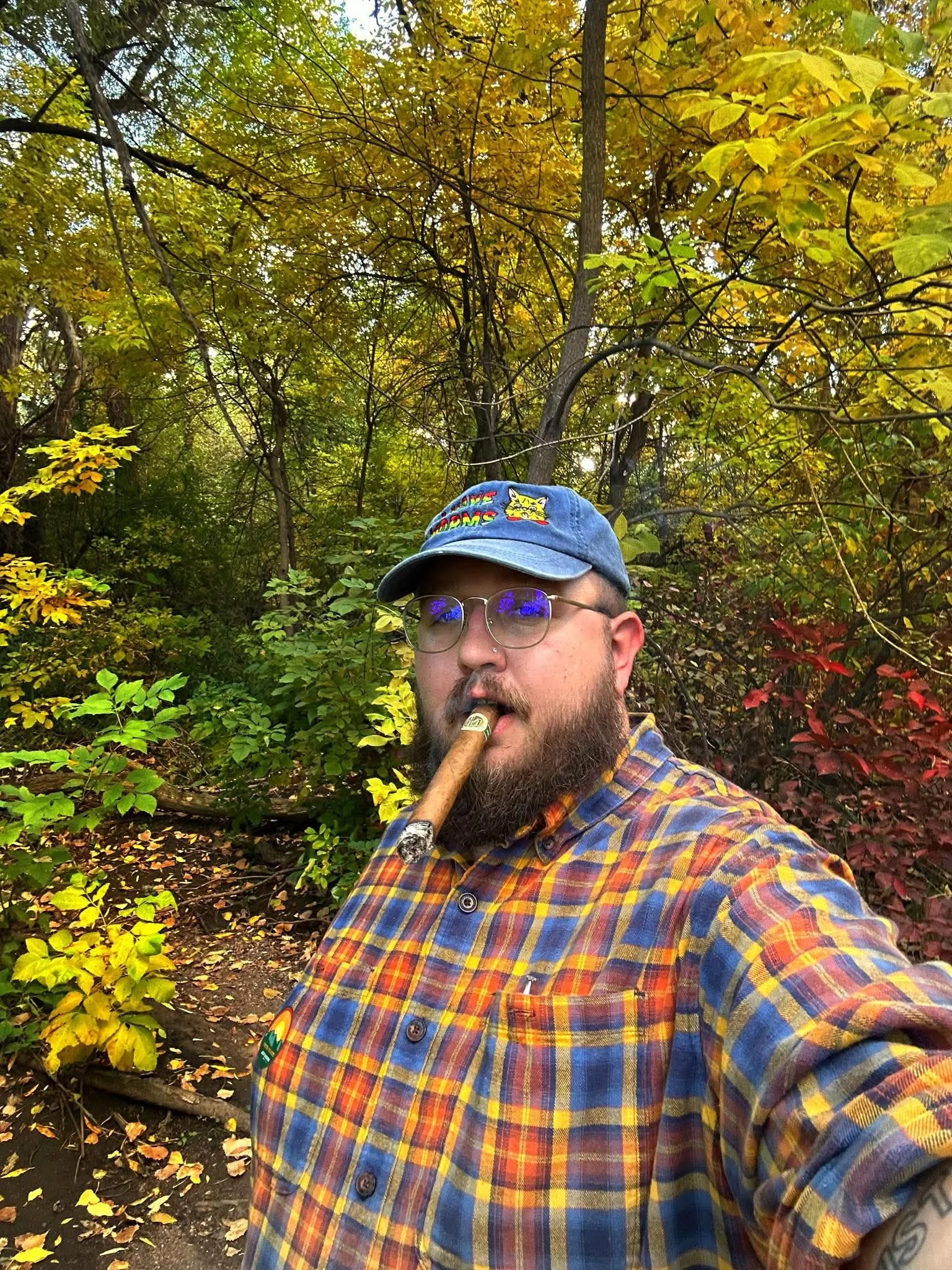
“Everything the light touches is your kingdom.”
It feels very cathartic, because it's like it feels like it's been something that's been in front of me this entire time, and I somehow looked over it. And a part of me was just like, "Hey man, like why don't you just sample the music that you love the most?" And it's like, God damn, didn't know I could do that, but you know, here we are, and that’s got me deeply inspired.
Alyssa: Colorado has such a distinct landscape and culture. Are there any specific places here that still influence the way you think or produce music today?
Matthew: Yeah, so my house backs up to a greenbelt that stretches all the way to the mountains. I live 50 yards from Bear Creek, if that. Everything about the beautiful wilds of Colorado is deeply inspiring to me, but I mean even more so now, I have a little cat who spends five to six hours outside with me. She walks on a leash. She's not going out there loose, that's too sketchy. But, I spend 5 hours a day outside with her at this point, and it has been incredible for my mental health to just be like sitting around outside by the creek all day.
Are there better things I could be doing with my time? Maybe, but this feels like the right thing to do because it gives me a new-found sense of peacefulness. And that loops back to like something that's been right under my nose this entire time. And yeah, dude, like there's nothing better than finding inspiration through the place that I live, and not only that, but the place that is outside of my door. You know, like it's I legitimately might be one of the luckiest people in the world.
Alyssa: Spending time returning to base is so fulfilling. Your kitty sounds so cute. When people come to a DMVU show in the near future, what kind of experience are you hoping they leave with?
Matthew: Um, I've finally hit this point where I'm kind of sick of doing like separate sets, where I will do a "down-tempo set" and then do sets that are like all bangers. I mean, there's nothing wrong with that, but I am finally getting to the point where I am kind of like implementing both.
I feel it's a little more appropriate to get across everything I want to say in one attempt, as opposed to being like, "Hey, I'm going to come through and do a set of bangers, and then hopefully they'll book me again, and I can play a down-tempo set next time." It's just— it it doesn't work that way, sadly enough. So, I think I've really kind of switched my vision to focusing on how can I convey both of these ideas in the time that I'm given, as opposed to separating them?
And you know, it takes a little little work, a little finagling, because not all bangers fit with all chill stuff, but there's definitely pieces there that can kind of fit together, and that has been my main focus for the time being. Also, way more original music. I was playing rough before, like probably 50% original material in my sets, and I've switched to playing damn near almost all originals at this point. I just have a thick back catalog, and on top of that, I'm writing loads of new music. So, it's hard to fit everything in that I would like to. So, yeah, definitely expect a little more of a journey.
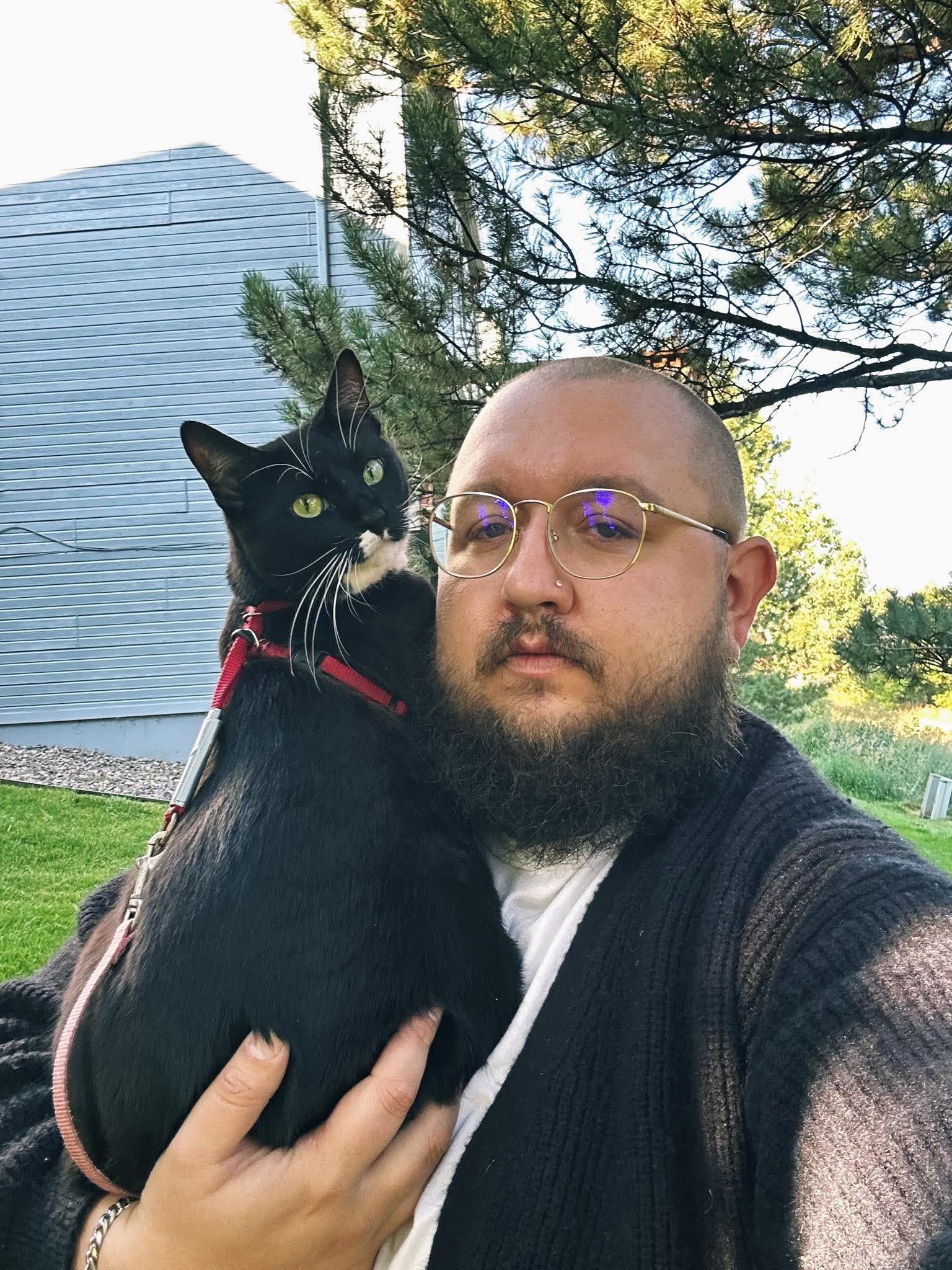
Matthew and an undisclosed predator species.
Alyssa: Your music has evolved from heavy dance floor-focused to deeply cinematic and introspective albums. What inspired that shift, and how has your relationship with music changed throughout that journey?
Matthew: Um, yeah, ironically enough, I was writing chill music before I was ever writing like banger stuff. And it really is just— it's…look what time hath wrought. [laughs] It's one of those things where I was writing bangers because I was spending a lot of time on the dance floor in clubs and out and about. I was writing what was a reflection of my experience. And that is what I'm still doing. Now that I am sober and I'm spending a lot more time outdoors and kind of in silence with myself, I feel like naturally my art is going to reflect that whether I want it to or not. So, it's almost not even a choice.
I still write bangers. Mind you, they're a little more experimental than like what I used to write. But, it's just I think this is something that comes with age. I would find it weird if I never changed the type of music I wrote, because that would mean me as a person never changed. That's kind of a scary thought.
Alyssa: Yes. You’re right. Your older albums often feel more like complete emotional narratives than collections of tracks. When you're writing a full-length project, do you begin with a story or concept in mind, or does that narrative reveal itself during the creative process?”
Matthew: “I definitely never go into an album with a plan. [laughs] Sometimes I lie to myself and pretend I have a plan. But for the most part, when I'm writing an album, I will write a handful of songs, and then I'll be like, "Holy shit, this could be an album.”
And that's just how the writing process goes, you know? You kind of get on a similar vibe when writing. So then, if I write for a week, the tracks I write in that time period are going to be pretty cohesive. And if I feel an album coming on at that point, that's when I'm like, "Okay, time to kind of pull a theme from somewhere, and like try and understand what I feel like the music is conveying, and kind of run with that." I've put out albums where I didn't know I had an album until like 10 songs in. And I was like, "Damn, okay, this is like revealing itself to me."
But yeah, the album I'm currently working on is…I don't want to say my first concept album, but my first uh correctly done concept album. So, I'm very excited for it. I've already written seven tracks, and I've made the album art, and I might even have a name, but I usually don't name things until the project is done. So, we'll just say there's a working title.” But I'm very excited for people to hear it. This one is also music that everyone will be hearing at my upcoming shows. So, do not fear, everyone will get a taste.
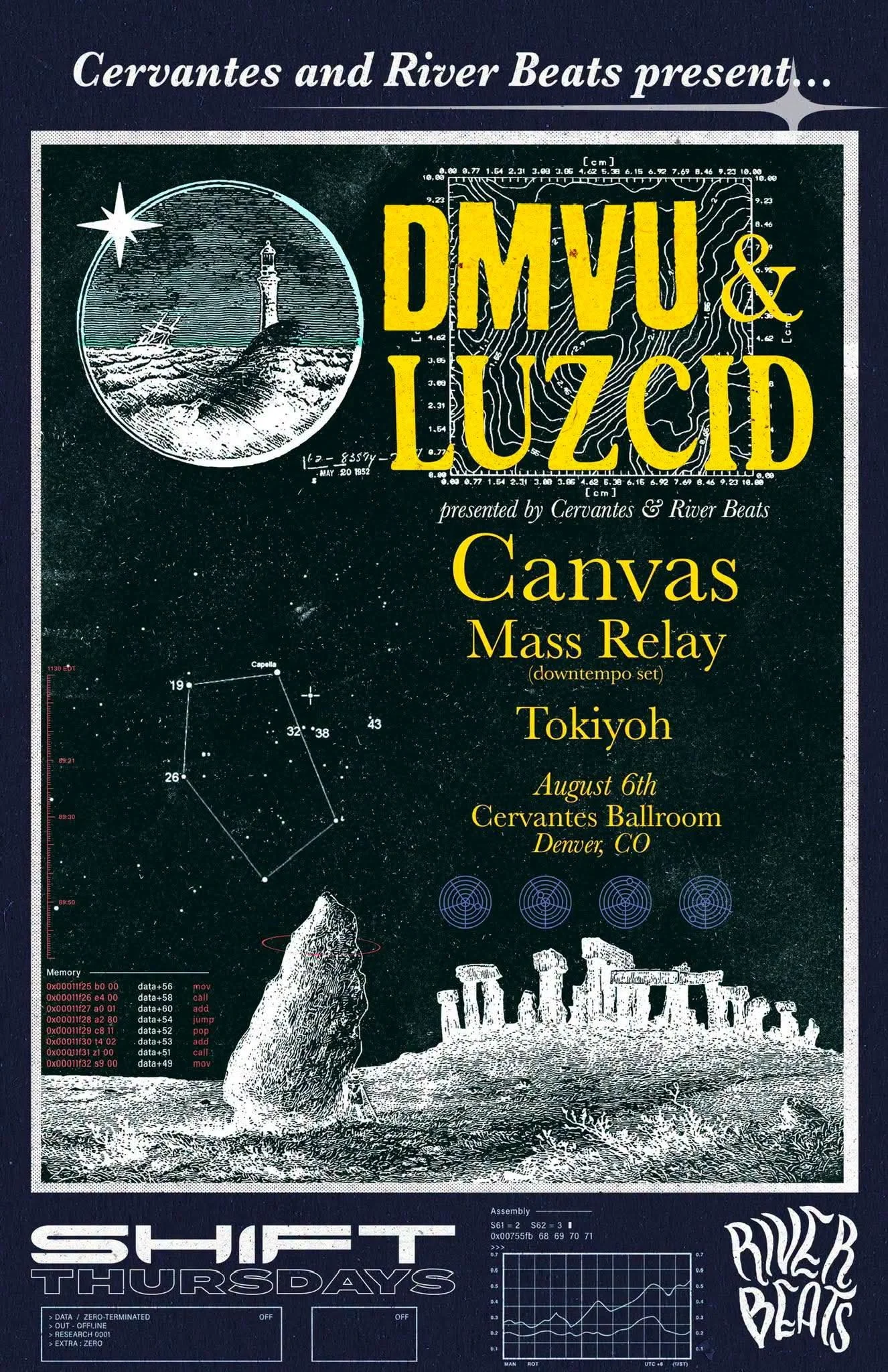
DMVU’s upcoming headlining event at Cervantes Ballroom.
As fans, we often celebrate the next big thing, but it's just as important to continue supporting the artists who helped build the communities we cherish. They deserve the space to grow, to change, and to return with new stories to tell. So when DMVU comes through your city, show up. Listen with an open heart. Dance a little harder. Support the musicians who continue to pour themselves into their art, because those are the artists who shape the future of our scene while honoring the foundation it was built on. The next chapter of DMVU is a reminder that growth is worth celebrating, and that some of the most meaningful music comes from artists who have taken the time to slow down rediscover why they create in the first place.
Discover the next act of DMVU at Cervantes Denver on Aug 6, 2026 with Luzcid.
FOLLOW DMVU: Soundcloud / Bandcamp / Spotify / Instagram

Unpacking the Helix LP with Lapa [Exclusive Interview]
The Rust has had the pleasure of reviewing and interviewing several acts on the Loci Records roster, but we’ve always had a particular soft spot for Lapa. His cumulative works sit right at the nexus of sound that we hold in such high regard, and Helix is no different. While so much of the electronic music in our wider orbit focuses on sheer kinetic and percussive weight, Ilya Goldberg and Cedar Miller have gladly made their bed alongside the gentler, melody-driven bent. To get better acquainted with the scope of Helix, The Rust took the opportunity to get Ilya on the record for a brief conversation covering this latest LP and his thoughts ahead of its full release:
Ilya Goldberg has been a stoic mainstay in American electronic music for the better part of 15 years, with a storied career as the right hand of Emancipator’s live act and studio production, and through his concentrated solo project, Lapa. At first familiar glance, his individual catalog has matured into a distinct attitude, taking cues from his instrumentally-driven Spirit Vessel and Meeting of The Waters LPs while developing a modern, electrified style. Enlisting the help of contemporary instrumentalist Cedar Miller, a frequent collaborator with Ilya and several of their other musical peers, the duo have minted the phenomenal 11-track Helix LP.
Stacking up against his previous LP’s, Lapa and Miller clearly demonstrate the musical stride that pushes Helix ahead of the pack. In many respects, it is an obvious evolution of the kind of musical output that has come to define the bulk of Loci Records artists. Soft tones and the instrument-forward styling of Lapa’s traditional sound ease the way into the record, bringing emotionally transcendent melodic and textural elements into the forefront of the music. Lush chord swells, gentle arpeggios, and delicate harmonics take center stage, elaborated through ranging tempos touching on trip-hop, downtempo, and breakbeat rhythms. From Rune, to Mirocycle, to Essence, there is compositional substance for a multitude of tastes throughout the entire runtime of the record.
To get better acquainted with the scope of Helix, we took the opportunity to get Ilya on the record for a brief conversation covering this latest LP and his thoughts ahead of its full release:
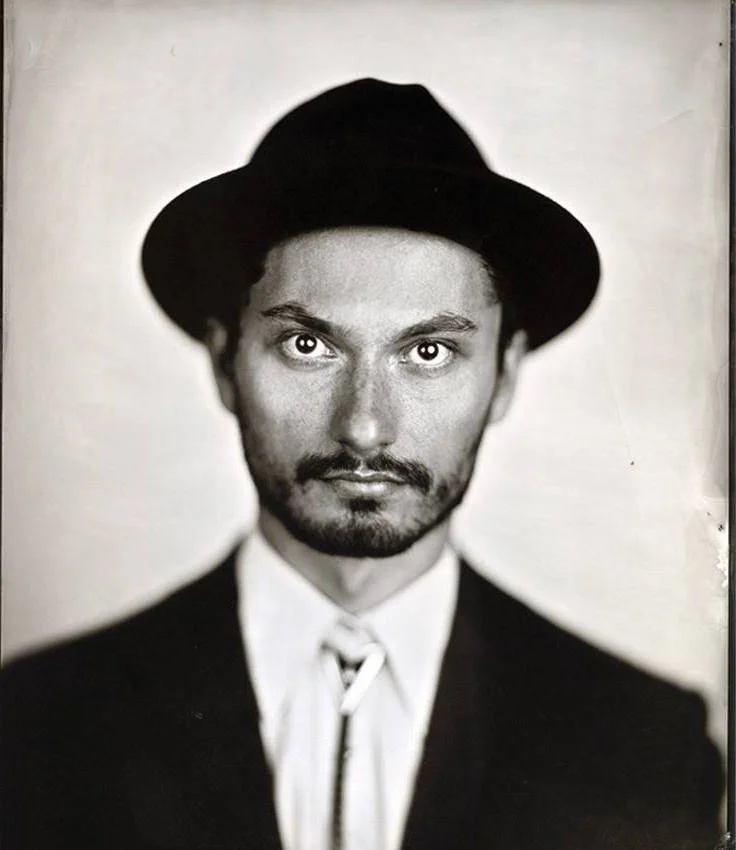
The Rust: It's been 8 years since the release of your last solo LP, Spirit Vessel. Between two collaborative albums with Emancipator, the DOS project, and certainly other exploits, you've clearly stayed busy in the interim. When did Helix begin to take shape for you?
Lapa: The idea of Helix was conceived 3 years ago. Unlike the other albums that I've worked on, this one came together much faster. All the tracks were written during 4 long studio sessions.
The Rust: There's a textural quality to this record that feels like a pronounced development in your individual style. You're obviously well renowned for your skills with the bow; can you talk to us a bit about your time as a producer? When did you first get your legs under you?
Lapa: I first started learning about production when I was around 6 years old. I was in my Dad's studio watching him mix the tracks on multiple reel to reel tape machines. I feel like that really gave me a sense of what it's all about. Fast forward many years, I got my first laptop with Ableton in 2011 and started experimenting with sounds. It took few years to really learn the flow of the program. However, I feel that the more time I spend producing, the more it becomes an extension of me. Just like a violin has become my voice and a tool to translate my most intricate ideas.
The Rust: Did you always envision Helix as a long-form record? Do you consciously write with an LP in mind, or do you gather compositions along the way?
Lapa: My first two albums came together more as a collection of tracks, with some written along the way, once the album started to take shape. Helix was always envisioned as an LP, which perhaps made the process more streamline and focused.
The Rust: Talk to us about your granular, song by songwriting process. Do you consider yourself an instrumentalist first when you sit down to compose and arrange music?
Lapa: In one way or another, my background as a violinist will always be at the core of my music. At this point, my production process involves many tools, and being instrumentalist is just one of them.
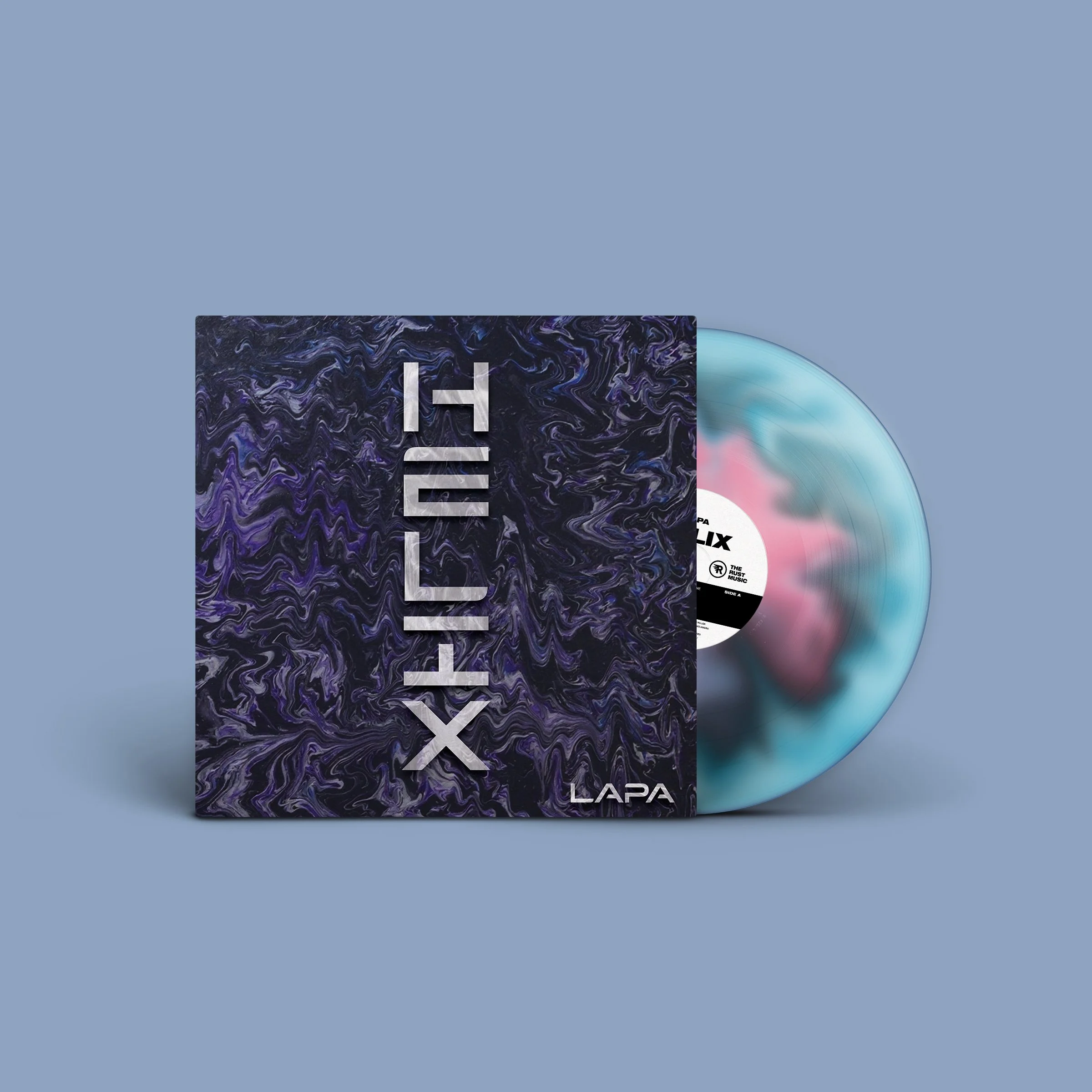
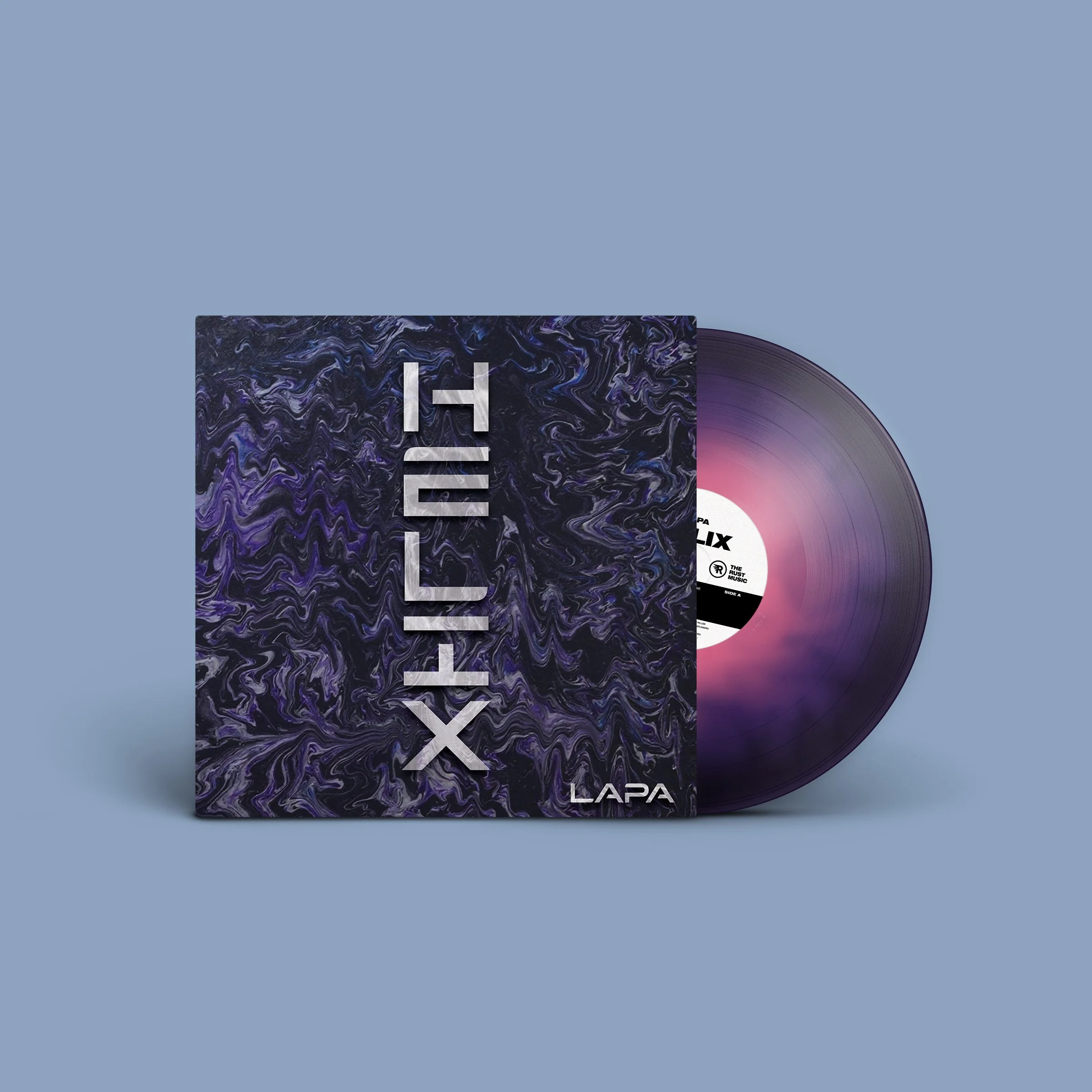
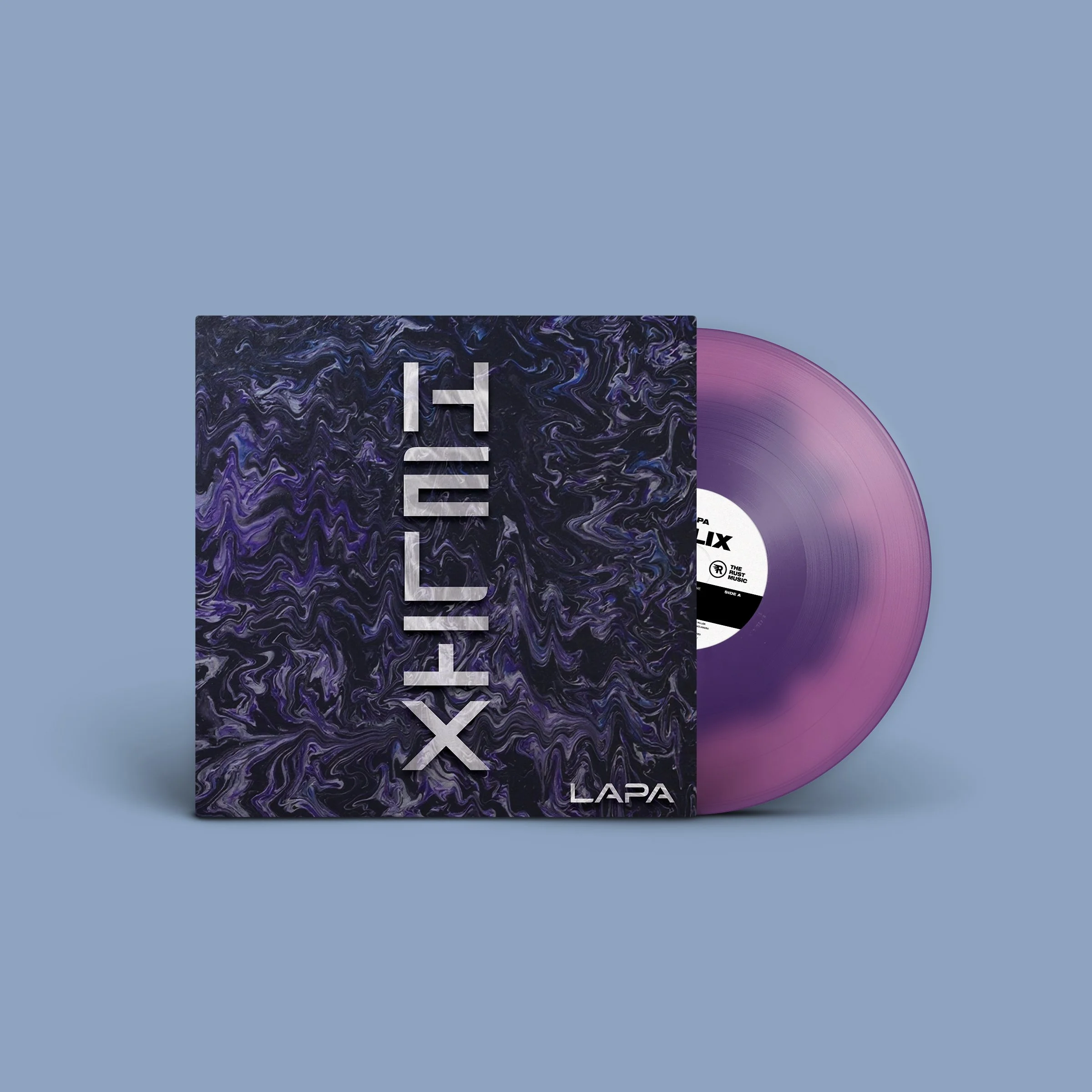
Limited edition color vinyl pressing of Lapa's new LP, Helix in a standard sleeve.
Available in three different styles, limited to 100 each:
Space Candy: Turquoise w/ Pink & Smoke
The Aether: Pink, Purple & Black
Eternal Glow: Semi-opaque Violet & Purple
Includes a digital download of Helix.
Eco-Vinyl - “As Green As Possible”
***Images are only a rough estimation of colors and concept, not photographs. Due to the nature of the vinyl production process, final results may vary widely.
Limit 2 per person, we reserve the right to cancel any orders with more than two copies.
Ships in Fall 2026.
The Rust: Harkening back to the mention of your collaborative releases, you're nominally attached to the Emancipator project, and have put some significant time into your work with Random Rab to boot. Be it through direct collaboration or the slew of remixes you've created for your contemporaries, how has the peer experience informed your musical perspective?
Lapa: I see my collaborators also as my teachers. As we make music together, inevitably we discover subtle nuances of each other styles and unique ways of composing and making sounds. To me that's always been one of the most profound and exciting aspects of music making. I really do love making music with friends! Helix, has only solidified this feeling. The entire album was created with my dear friend Dr. Jason Miller. We've been collaborating on many musical and nonmusical projects since 2010 and the creation process of this set of tracks has been a culmination of our life experience together.
The Rust: You've been fittingly on the road with Thievery Corporation recently to help support their latest tour. Have you taken the chance to explore some of these new tracks on stage? How are you feeling about their juxtaposition against your earlier works?
Lapa: Yes, I have played a few of the new tracks on tour. It was fun to finally bring them out of the studio! I find that these days I rarely play tracks from my previous albums. Not because I don't like them, but because the current set of music is a more accurate reflection of who I am as a musician and a person.
The Rust: You're clearly patient behind the wheel of your own project, and the music speaks to that with incredible clarity. What's the driving force behind that patience in a landscape hyper-speed-release mentality?
Lapa: So far that's just been my natural pace. There is a certain amount of time that has to pass, in order for the tracks to mature and settle into their perfect form. Once in a while there will be a track that comes together in the most organic way, and no matter how much time passes, it almost never changes its shape and essence. Those are the gems. I feel that producing is just a practice towards achieving those golden moments.
The Rust: What's next on the horizon for Lapa? Any parting words on the upcoming release of Helix? Play and write as much music as possible!
Lapa: I hope that when people experience Helix, it unlocks the pathway into the depth of the sonic universe. It's a different world out there! Once you close your eyes and let the sounds take you on a ride powered by the overtones and feelings.
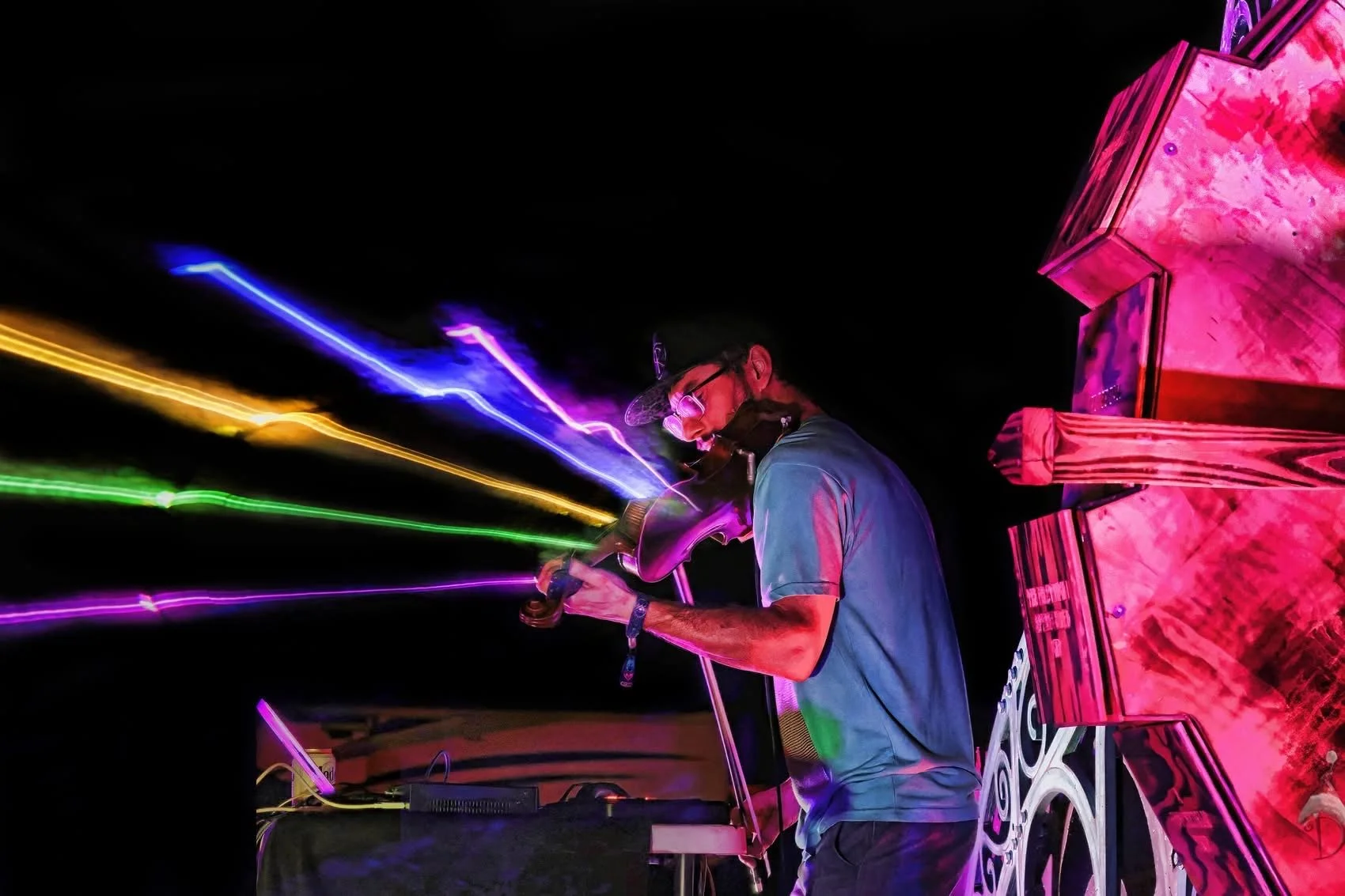
The Rust has had the pleasure of reviewing and interviewing several acts on the Loci Records roster, but we’ve always had a particular soft spot for Lapa. His cumulative works sit right at the nexus of sound that we hold in such high regard, and Helix is no different. While so much of the electronic music in our wider orbit focuses on sheer kinetic and percussive weight, Ilya Goldberg and Cedar Miller have gladly made their bed alongside the gentler, melody-driven bent. Whether you're just tuning in for the first time, or you've been an active fan since the nascent Emancipator days, Helix is all but guaranteed to take a top spot in your personal collection.

Actualizing the Vision with David Schunemann
Denver-based visual artist David Schunemann, known professionally as Actualize, has built a reputation for manually performing immersive visuals in real time using custom effects, projection mapping, and MIDI-controlled animation, bringing cinematic depth and intentional storytelling to the artists fortunate enough to work with him. Denver’s visual underground is in full spotlight tomorrow, on May 28, at Cervantes' Masterpiece Ballroom as Actualize and Glass Crane present their collaborative audiovisual project, Actual Crane, rooted in Denver’s thriving art-forward electronic scene. Ahead of this resounding evening, we had the chance to dive in with Schunemann about his recent experience at Red Rocks and what he’s got in store for this upcoming showcase.
Inside a darkened room, swirling bioluminescent textures, hyper-detailed 3D landscapes, glitched sacred geometry, and towering projection-mapped environments pulse in perfect synchronization with the music, transforming the stage into a living, digital organism powered by Actualize. Denver-based visual artist David Schunemann, known professionally as Actualize, has built a reputation for manually performing immersive visuals in real time using custom effects, projection mapping, and MIDI-controlled animation, bringing cinematic depth and intentional storytelling to artists like CloZee, LSDream, Of The Trees, and Ravenscoon. Alongside him, Glass Crane contributes an unmistakably surreal visual language rooted in psychedelic sculpture, cosmic architecture, and fluid dreamlike motion, creating imagery that feels equally inspired by visionary art galleries and underground rave culture. Together as Actual Crane, the pair blur the line between concert production and interactive art installation, crafting audiovisual experiences that feel less like a show and more like stepping inside a lucid dream.

Actualize lighting up The Caverns in Tennessee.
Denver’s visual underground is in full spotlight tomorrow, on May 28, at Cervantes' Masterpiece Ballroom as Actualize and Glass Crane present their collaborative audiovisual project rooted in Denver’s thriving art-forward electronic scene. Presented as a visual-centric experience built around projection mapping, immersive stage design, and community-driven creativity, the night pairs a secret music lineup with a stacked roster of visual artists including Papabear, LAIA, and Mind Balloon. The show arrives at a moment when Denver audiences are increasingly excited about visuals being just as expressive as the music itself, a shift Actualize has helped shape through years of work alongside his contemporaries. Fresh off major productions at Red Rocks and national festival stages, Actualize brings that same large-scale cinematic energy back home to Cervantes with an all-new projection mapped stage and a night designed to spotlight the evolving relationship between music, visual art, and collective experience.
Ahead of this resounding evening, we had the chance to dive in with Schunemann about his recent experience at Red Rocks and what he’s got in store for this upcoming showcase.
Alyssa: “We watched a lot about that Ravenscoon opening weekend at Red Rocks. How'd that feel?”
Actualize: “Hell yeah. Oh, that was fun. Yeah, yeah, that was really cool.”
Alyssa: “What was special about doing the opening weekend?”
Actualize: “I mean, it was just really special in a lot of ways. I've known Paul for like a long time, Ravenscoon, so it was really cool to get to see him headline Red Rocks. Watching him grow from you know, playing much smaller venues to be able to do that. It's very inspiring and just cool to see. And I got to work with Jason Leech for the first time there, which was really fun. I got to work with Jared Oppenheim from The Gradient Perspective, and we've worked with him [in the past], like I met him almost 10 years ago now at Big Dub and he hired me to do visuals there. And so it was just a cool full circle moment because we don't get the opportunity to work together much. It was cool, but for Jason Leech it was really cool because I did something that I've never done at Red Rocks before, which was having the cameras be the central focus of the entire show. So, Jason Leech does all this live piano key stuff, so he wanted it all to be shown on the screens. He's like, "I want people to see what I'm doing the whole time." Another thing was Ravenscoon gave everybody um full access to all the LED walls, which was really, really cool.
So most of the time, you know, when you're an opener or working with a support act at Red Rocks, you only get you know, like a portion of the LED wall, like a small little piece and then for the headliner there's way more LED wall and it's bigger and epic, much more epic. For this show, they let everyone use all of it. So even during Jason Leech's set, it looked like a headliner set. We had everything but lasers and pyro, you know, (Laughter) so it looked really good. And that was just really fun because there was so much extra LED wall. And doing opening weekend at Red Rocks is always really fun. I feel like I end up there pretty often actually. Last year it was the Icelandic Winter on the Rocks or something, and it was like early March. It was even earlier than this show. I was there with Zingara and we were supporting Gramatik. And then the season before that, I think I did the last show with Of The Trees. So I often end up like on the last or the first show, or both.”
Alyssa: “You just mentioned that you were doing more directed content towards these individual producers, individual artist shows. Have you felt new-found pressures and new-found challenges, being the person that they trust with their vision for the show?
Actualize: “Definitely. It feels very cool to be respected enough to have my opinion matter to people like that, you know. I'm really grateful to work with all these people, and it's really cool that they do trust me with their vision and it's a very collaborative process. We work together closely to make sure that it is their vision. Like for Zingara, we just did this massive content project for her Parallel Spirits tour, which was the co-headline with Level Up, and we really went in on that project. She had a whole ton of ideas of things she wanted to make. And another thing that's new, [this new] software that I use a lot with these kinds of teams and artists, is ShowControl, which essentially gives you the ability to run timecode so that you can build out essentially a full music video that's synced to a track. So when they play that track on the CDJs, it will trigger the video and stay in sync the entire time.”
Alyssa: “That's so interesting. So tell me more about this Actual Crane show. Where did you find inspiration for that?”
Actualize: “So basically it all started with the first visual-centric Cervantes show on the Other Side, which was just kind of just to test the waters and see if an event like this could work. And um— yeah. It worked. It worked really well and it was cool because we didn't have to announce any music at all and we just announced a VJ lineup. I mean the flyer design was pretty cool too.”
Alyssa: “It's so cool that the visual side has become a more concrete and integrated part of shows. People have come to expect a certain level of curation.”

Schunemann at work in Meow Wolf Denver.
Actualize: “I absolutely think that these events that we're throwing could like, you know, if we promote it properly and we really put a lot of time and energy into making these events special and different and unique, I think that we have the opportunity to go far with these types of events. I think like doing something that or even, you know, even being able to do Cervantes' Ballroom is like really, really cool to be able to do something like this, but being able to do it on a larger scale where people who are less familiar with it will hear about it. I think it would just be cool to be able to make that kind of impact. It would be a big win for visual artists everywhere.”
Alyssa: “Do you think the people in Denver are interested or up for this type of thing, specifically around VJs?”
Actualize: “Oh yeah. I honestly think so. More here than other places. Because here it's like people really have a focus not only on the show, but the visuals because like you said, it's at every show, it's expected and there's shows every night of the week of every size. It's like a new renaissance, you know. I feel like because these art forms are relatively new and unexplored, when it comes to visuals, stuff that's specifically made to just pair with music and are cool to look at, so when something is unique and different visually, they notice.”
As Denver continues to charge into this new renaissance of audiovisual integration, the May 28 Actual Crane show at Cervantes' Masterpiece Ballroom will no doubt be one of the most uniquely fun events of the year. shifting the spotlight toward the screen and the stage design. Actualize and Glass Crane are not just providing entertainment, they are validating the visual artist as a cornerstone of the live experience. Whether you are a dedicated fan of the underground or a newcomer to the scene, Actual Crane promises to be a masterclass in design. Don't miss the chance to witness this evolution firsthand in the heart of Denver's thriving electronic scene.

Leaning into the Signal with Fika’s Latent Signal Descent
Michigan-born, Denver-based producer Fika arrives with a debut LP that cements his climb from sound-system agitator to a serious downtempo auteur. Having built momentum through relentless live work, high-profile festival slots (Infrasound 2025) and recent direct-support runs, Fika’s profile is rising fast. Latent Signal Descent is his clearest statement yet: a deliberately paced, immersive record that leans into downtempo without abandoning the guttural, experimental bass instincts familiar from his live sets.
Michigan-born, Denver-based producer Fika arrives with a debut LP that cements his climb from sound-system agitator to a serious downtempo auteur. Having built momentum through relentless live work, high-profile festival slots (Infrasound 2025) and recent direct-support runs, including an April 18, 2026 bill with Yoko at The Black Box (Denver) and a February 28th, 2026 support for Audio Goblin in Asheville where he premiered an all-original journey set; Fika’s profile is rising fast. Latent Signal Descent is his clearest statement yet: a deliberately paced, immersive record that leans into downtempo without abandoning the guttural, experimental bass instincts familiar from his live sets.
Written, recorded and mixed by Fika and mastered by Matt Davis at Hacienda Audio, the album is a cohesive listening journey. Where earlier singles and VIPs showcased flashes of range, this LP spends its runtime deepening and consolidating that growth. Two VIP reworks from 2023 — “Malcontento” and “Fractal Paradise” — are reborn here: “Malcontento” is doubled in length and enriched with denser, darker low-end heft; “Fractal Paradise” is tightened, restructured and given a new ending that elevates it into a more cohesive, evolved statement.
Sonically, Latent Signal Descent thrives on contrast. Snarling, guttural synths and carefully layered basses sit alongside airy pads and introspective melodies, creating tracks that feel both aggressive and tender. Most pieces run past the four-minute mark, which allows Fika to construct convincing, self-contained worlds rather than one-off soundbites. “Mente” exemplifies this balance of low-end weight and visceral design wrapped in spacious, emotive atmospherics. The production is more refined throughout, revealing an artist honing craft as much as vision.
Arrangement is a clear strength: each track stands gorgeously on its own, but sequencing and transitions make the album feel like a single organism. Tracks such as “Tribulations” deploy hypnotic percussion and a menacing low-end with natural ebb and flow, while “Tunnel Vision” showcases Fika’s talent for composition—elements proliferate and resolve with an organic logic that never feels overcrowded. The brief interlude “Yeah…” functions as an ominous pivot, heightening anticipation for the LP’s emotional center.
“Ambivalent Remembrance” is the record’s apex; a truly introspective, sentimental piece that reaches toward the kind of melancholic grandeur associated with top-tier downtempo producers. It’s a high-water mark: intimate, cinematic, and emotionally weighty. “Twilight” and “Melancholia” steer the album toward a reflective close, while “Repose” serves as a choice denouement that feels like an exhale and leaves the listener suspended.
There’s a faintly psychedelic arc woven through the record; Latent Signal Descent, abbreviated LSD, isn’t a coincidence. The album mimics a journey: entrance, peak, dissolution, and gentle return. Influences from Tipper, Mickman and Resonant Language are audible, but Fika’s voice is distinct: the record is less about imitation and more about synthesis, a sort of bass music DNA retooled for introspective, downtempo narratives.
For a debut LP this is impressive: focused, emotionally resonant, and technically sound. Fika is fast becoming a rising star in the glitch-hop-adjacent scene, and Latent Signal Descent suggests he’s only just begun to explore the full scope of what he can do.
FOLLOW Fika: Soundcloud / Bandcamp / Spotify / Official

Getting tangled up with Entangled Mind
Entangled Mind is guided by curiosity, collaboration, and a willingness to be free of boundaries. That openness is perhaps what makes their performances so compelling; no two moments are ever the same, and each set is shaped as much by the room as the people in it. Whether it’s carefully curated melodies layered over pulsing basslines, or organic jams reshaped into immersive electronic journeys, Entangled Mind reflects the conversation between instinct, influence, and presence. The Rust had an opportunity to speak with them ahead of their latest performance alongside the Supersillyus Life Band and friends at Brooklyn’s Fine and Raw Chocolate Factory. We sat down to talk about creative evolution, physics, the artistic struggle and how intuition plays a role in shaping a live set.
Entangled Mind connects the space between us through the sound inside us. Built from a fusion of meticulous electronic production and a life long passion for live instrumentation, Marissa Barbato’s musical vision builds the wiring of their catalog and performances like circuitry through a crowd. With the recent release of the Illuminate EP on Gravitas Recordings, the project enters a new chapter, and further explores the depth of dynamic musical interplay. The Rust had an opportunity to speak with Marissa ahead of their latest performance alongside the Supersillyus Life Band and friends at Brooklyn’s Fine and Raw Chocolate Factory. We sat down to talk about creative evolution, physics, the artistic struggle and how intuition plays a role in shaping a live set. What follows is a glimpse into the larger interview and mindset behind the music.
Alyssa: “What kind of musical influences were you exposed to growing up?”
Entangled Mind: “I grew up with a super musical family, my grandfather on my Dad’s side was an incredible jazz clarinetist, and my Dad is a fantastic keyboard player, along with his many siblings and my many cousins are also musicians. On my mom’s side my uncle is also an insane drummer. So all to say, growing up I was fortunate to be surrounded by great music and many jam sessions. My cousin started teaching me guitar when I was 10, and in middle school my Dad gifted me some gear to start recording my songs.”
A: “How did that gift help you grow your sound?”
EM: “I feel like it was huge because I was able to record my own songs and understand what that looks like from very early on, and get into the songwriting aspect of producing. I feel like that's always something I've been drawn to. [Producing] I feel like a lot of other musicians learn cover songs. I actually like to record what I was writing and to keep track of it and add to it and improve on it and listen back. I enjoyed that process so much, like musically that I just started writing my own creations. Like even from when I first started writing guitar, I was way more interested in just like writing my own songs even if they were simple rather than learning cover songs.”
A: “What brought you to this specific style you embody now?”
EM: “The style I embody now is really a fusion of all my influences - wanting to combine the power and craziness of electronic sound design and production quality, with the organic-ness and beauty of live instrumentation. From the beginning of this Entangled Mind project, the expectation I had in terms of style is to just follow whatever is influencing me and wanting to be expressed. Influences and moods are constantly evolving and I have never been able to stick to one genre, but the constant for me is that I am just making what I like at the time. In recent years I have enjoyed thinking of myself as just a vessel that creative energy can run through, letting whatever come out, without questioning it.”
A: “Where did the name Entangled Mind originate from?”
EM: “So that came later. After I was making electronic music and sort of finding my sound, I knew I wanted to have an official name for my project. At that point I started brainstorming just different ideas. Quantum physics has always been like such an inspiration to me, just like the world in general and like the universe. I would take a lot of inspiration from these ideas in physics and the idea of quantum entanglement is that you can have things that are in an entangled state. They can be at a physical distance but they're still directly correlated. They can be at a physical distance but they are still directly correlated. I like to think that everything in the universe is in an entangled state of being. We're all connected in some way or another. I think at certain points in your life you sort of start to feel this idea that everything really is connected and intertwined. So I was drawn to the word ‘Entangled’ for that very reason. Then the ‘Mind’ part, sort of like my music, is my unique perspective. And this is the expression of an entangled experience. So it's sort of kind of like music is a way we can all relate to one another. And we're all entangled. We're all just trying to navigate this crazy world that we're all connected to. But we each have an individual voice and individual expression. We have our lifetime. So, that's kind of how the words came together and it just made sense to me.”
A: “We would love to hear just a little bit about your producing style?”
EM:”So I'll start with the electronic side. When I started getting into electronic music, I was blown away by the infinite possibilities with sound and how you can sculpt from scratch. Any type of sound you want. And I guess I was drawn towards the psychedelic bass music genres because I just loved the sound design. It's so weird. It's so out there so that really drew me in. I think after a little bit of time of really going deep into the sound design on the electric music side of things, I just naturally started bringing back all the instruments that I grew up with. And started introducing new instruments that I was getting inspired by along the way, like hand pans. It felt full circle for me to go back to the roots. My roots are like guitar and drawing on real instruments and I just love the organic feel.
A: “A lot of your sound lives in the space between organic and synthetic, how do you balance those elements when producing?”
EM: “It depends on the track - some tracks I start through jamming on instruments, recording some ideas and then later adding electronic sounds to enhance the production. Other tracks I start through electronic beats and sounds, and then later add organic elements to enhance certain sections to become more full or more human. For example, “Zemya” started as a jam session between Amalgamy and I, me on the handpan and him on the kora. We had about a 40min long jam session recording that I then arranged out and shaped into our track. Whereas, “Illuminate” started with electronic rhythms and soundscapes, and I later added some guitar strums and recorded some hand drums as layers. “Solar Flare” was sort of in between that where I was sort of balancing both equally throughout - started with the main electronic drum beats, 808 and pads and then soon started adding the djembe and guitar melody as the lead elements.”
A: “What has it been like traveling and touring around to different festivals these last few years?”
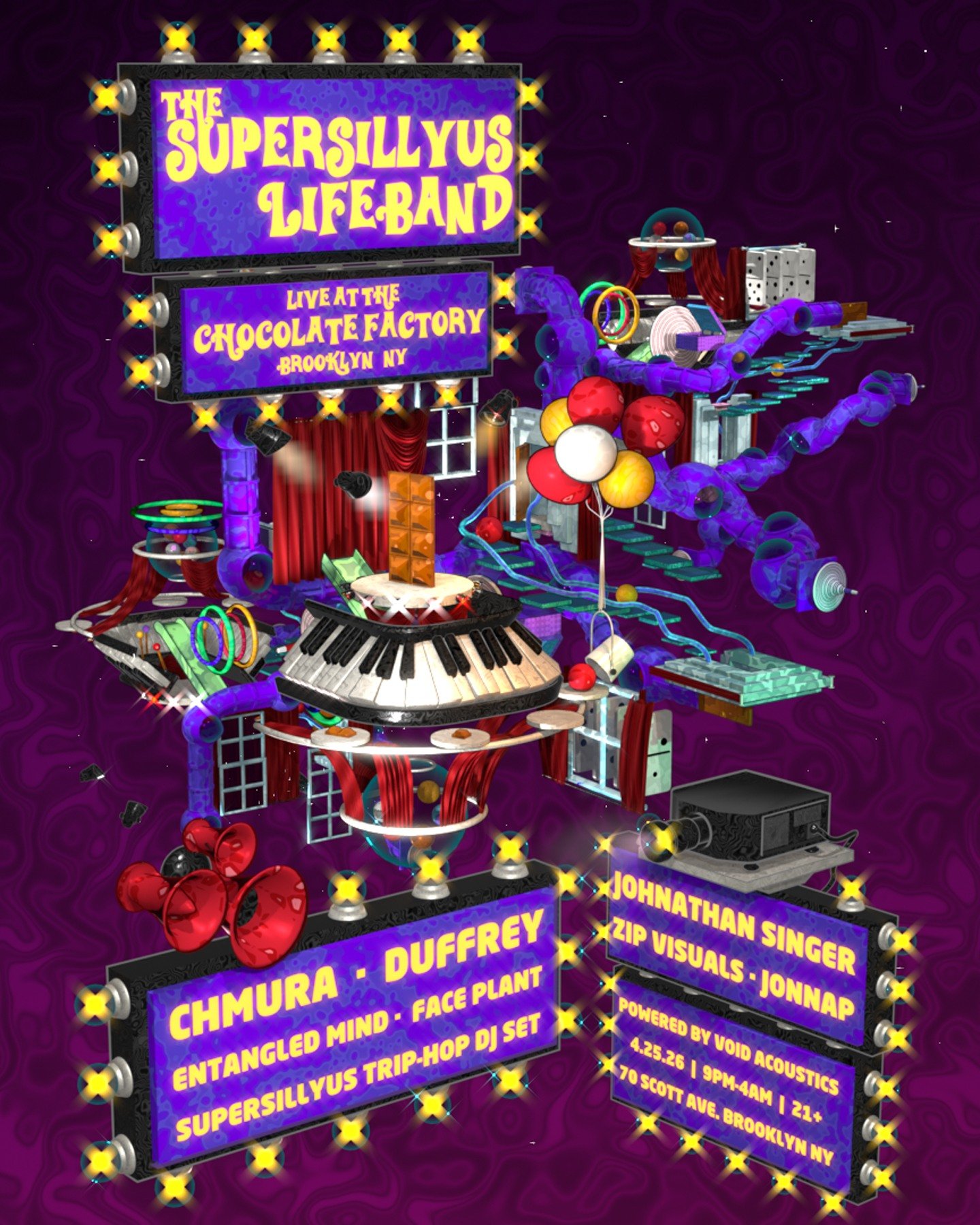
The Supersillyus Live Band feat. Entangled Mind +
EM: “It has been extremely cool and I am constantly feeling so much gratitude that I get to have these opportunities to travel and share my music and connect with people. One highlight has been the Ozora festival in Hungary last summer, really really wild that my music was able to bring me to a whole other continent to experience. Four years ago I left my full time job as a software engineer, which I did for 7 years, and it was so scary but also has been amazing to be able to give my full time and energy to my passions now. And this is a time of my life I will forever cherish and be glad I took the plunge to go all in. However, on the down-side, it is not ideal financially and can be hard to have consistency so I’m looking forward to getting a day job again and finding some more balance.”
A: “What draws you to work with other artists and musicians?”
EM: “It’s inspiring and it’s also just fun. Everyone has their own methods and skills and thought process when creating, so collaborating just multiplies the possibilities of what can happen. It helps me break out of my own patterns and think of things in new ways, so it really keeps things moving and interesting. And creation is so sacred, it’s awesome to share that connection with other artists.”
A: “Did you do the guitar samples for the Illuminate EP?”
EM: "Yes, you’ll hear plenty of my own recordings of me playing guitar, djembe, bass guitar, handpan, darbuka, and jaw harp on the EP. On the last track “Zemya” you’ll hear multi-instrumentalist Amalgamy playing Kanun, Kora, Kaval, and Gadulka. And on “Bonsai” it features the musician The Spy From Cairo playing oud, an ancient fretless stringed instrument. The opening guitar melody in “Brain Bath” is actually from a song I wrote in middle school, so it holds a little nostalgia there.”
A: “What inspired this EP?”
EM: “The songs on this EP feel like a followup to my last full length album Lucid Living - I wanted to explore deeper into that psychedelic, dynamic organic-electronic fusion style that I had gotten into there. But I always write each song independently without thinking of the bigger picture, until I have several tracks that naturally just feel like they belong together.”
A: “Illuminate feels very intentional in its pacing and atmosphere — how did you know when the EP was ‘complete’”?
EM: “I had known for a while I wanted to share some of the psybass tracks I had been working on, in the format of an EP. In the midst of working through those ideas last year, I was also putting together my set for Tipper & Friends, Suwannee. A set that I really put a lot of intention into. I created “Brain Bath" specifically to be the intro to that set. I was imagining really setting the vibe of the start of that journey late afternoon on Bicycle Day in the swamp. Entangled Mind sound bath, atmospheric, worldly sounds. Turned into a drum circle like build ups and up for several minutes, straight into the 140 bass drop of “Grounded”. Later, as I was narrowing in on finishing the EP, I thought why not just include “Brain Bath" as the intro to the EP. Since I literally wrote it to lead into the first main track, and that plan just felt right. Like it makes the EP a full journey.”
A: “When preparing for a show like Cervantes, do you build your set around the room, the system, or your current creative headspace first?”
EM: “I like to think about the setting, time of day, the venue, the people, and the rest of the lineup. Then I think about what songs I definitely want to incorporate. I sort of roughly plan out the overall flow of the set. Like do I want to start off chill and then get heavy in the end? Or reverse that. Or more like a bell curve of energy? Or have more ups and downs? I like to leave room to improvise at the moment. If I make too much of a plan, it can take away from being present in the moment when performing.”
A: “Have your goals as an artist shifted since you first started releasing music, and if so, how does this EP reflect that evolution?”
EM: “When I first started releasing my music, I had 2 main goals. The first being, that I wanted my production quality to be comparable to music that I was inspired by. And secondly, I wanted to be able to collaborate with artists I liked. I feel like I have achieved both of those! These days, I feel like my main goals are really just to keep creating and exploring, getting into the flow state with it as much as possible because that’s such a rewarding feeling. And to finish more of the projects I am working on more efficiently. Because seeing a vision into completion is also so rewarding. I would love to continue to collaborate and play shows with other amazing artists and get to perform more in other countries but I think that will all continue to fall into place so long as I just keep creating authentic music.”
Marissa is guided by curiosity, collaboration, and a willingness to be free of boundaries. That openness is perhaps what makes Entangled Mind’s performances so compelling; no two moments are ever the same, and each set is shaped as much by the room as the people in it. Whether it’s carefully curated melodies layered over pulsing bass lines, or organic jams reshaped into immersive electronic journeys, Entangled Mind reflects the conversation between instinct, influence, and presence.
Beyond their appearance at the Chocolate Factory this weekend, they’ll be headlining Soundbreak on 5/30 in Maine, and two sets at Midpoint on 6/20 in Pennsylvania, as well as returning to Secret Dreams, Ozora Festival in Hungary, and making their debut at Unison Fest in New Mexico.
FOLLOW Entangled Mind: Bandcamp / Soundcloud / Spotify / Official

A Conversational Primer with Ian Ewing
Appealing to an extremely broad range of fans and listeners, Ewing’s personal infusion of multi-instrumentalism stands in stark contrast to the ever-growing “in the box” production and recording phenomenon for music producers, and is the standout factor throughout all of his minted originals and collaborations. Next weekend, The Rust is hosting Ewing and a smattering of other potent acts for a Morning Coffee two-night escapade at The Chocolate Factory in Brooklyn, and we’d be remiss if we didn’t take the opportunity to get a few questions and answers on the record:
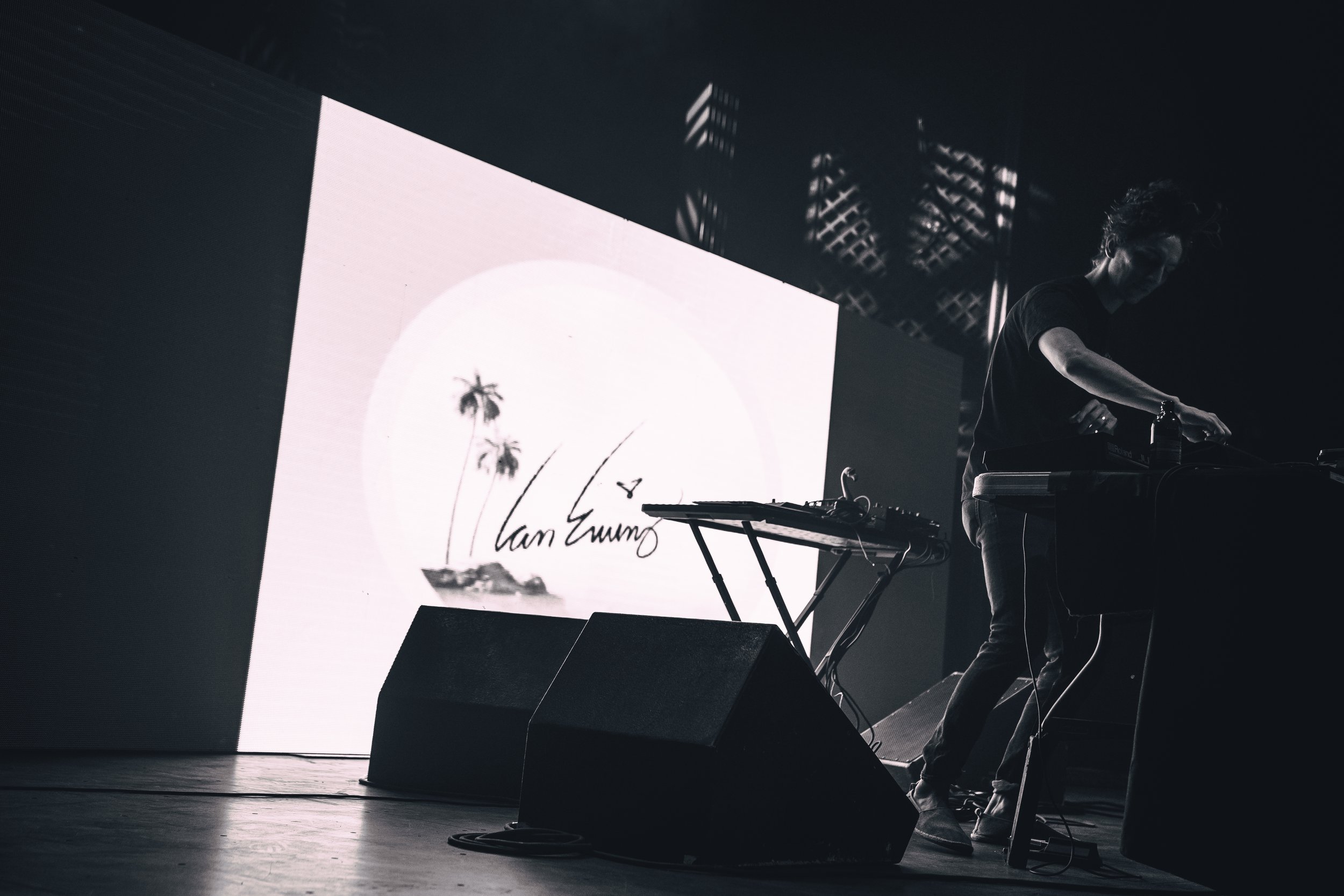
California’s Ian Ewing has spent the bulk of the last decade wisely; with dozens of singles, collaborative tracks, and a fully-stocked LP covering the territories of RnB, lo-fi, trip-hop, and every pocket in between, he’s clearly amassed a rolodex of songs, not to mention instrumental and compositional skills. Appealing to an extremely broad range of fans and listeners, Ewing’s personal infusion of multi-instrumentalism stands in stark contrast to the ever-growing “in the box” production and recording phenomenon for music producers, and is the standout factor throughout all of his minted originals and collaborations.
Next weekend, The Rust is hosting Ewing and a smattering of other potent acts for a Morning Coffee two-night escapade at The Chocolate Factory in Brooklyn, and we’d be remiss if we didn’t take the opportunity to get a few questions and answers on the record – read the full interview below.
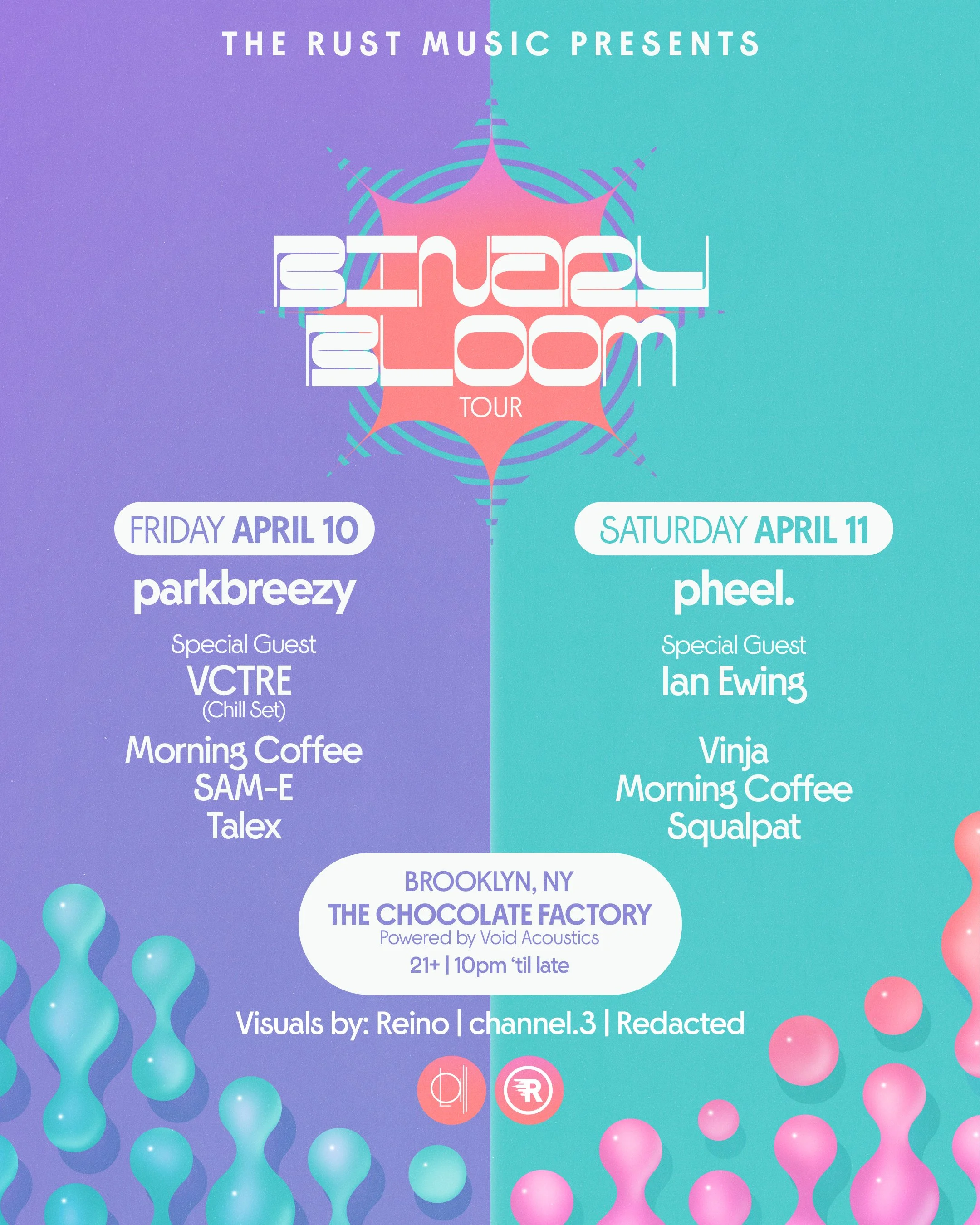
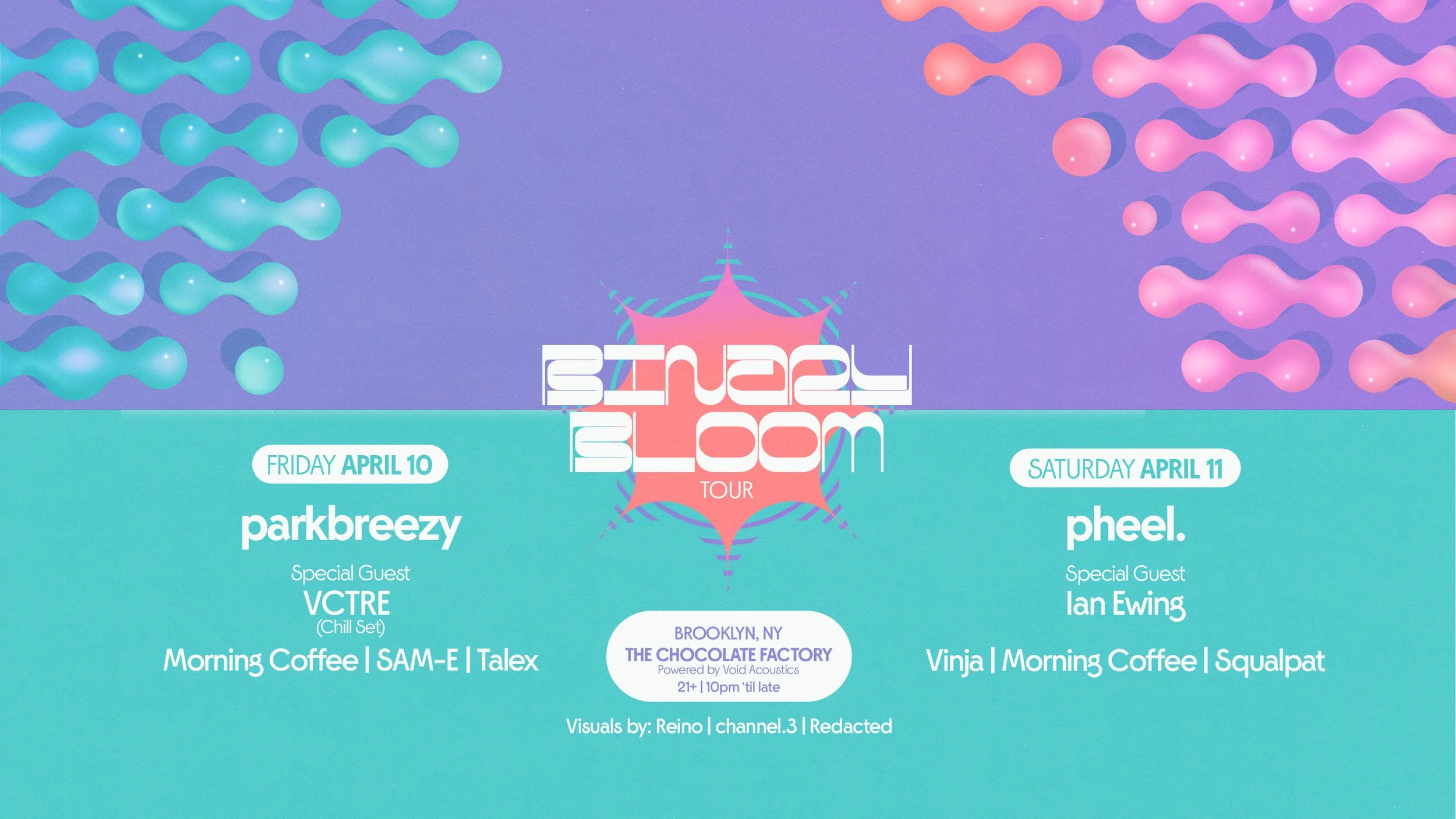
April 10th & 11th in Brooklyn:
parkbreezy & pheel. + Morning Coffee, VCTRE, Ian Ewing, Vinja, SAM-E, Talex & Squalpat
Join us: Tickets • RSVP
The Chocolate Factory
70 Scott Ave, Brooklyn, NY 11237
21+ | 10pm ‘til late
Powered by Void Acoustics
The Rust: We're very excited to have you out here in NYC with us for this particular weekend. What's your read on this city?
Ian Ewing: I’m so honored to be invited for this! Oh man, I love NYC so much. I started coming out here more often around 2018 or so, playing shows put on by the Sundae Sauce collective. I’ve been lucky enough to meet a bunch of other beat makers and artists who live out here, so I always have some friends to hang with whenever I’m swinging through. And outside of that, I just love the scale of the city. I always feel so small when I’m here, but in the best way! You can be as free and weird as you wanna be here, cuz there’s always someone more free and more weird than you lol. And the bagels!
The Rust: Your output since 2017, but particularly in the 2020s, has been extremely consistent. What's your writing process like? What's powering all of this music?
Ian Ewing: I appreciate that! I’m fortunate enough to be able to put a good amount of time into making music, so I figure I should make the most of that! I’ve always really admired prolific artists, so I think I just try to emulate that in whatever small ways I can. I always want to be sharing something that I’m working on, even if it’s not in it’s most perfect form. For me, releasing a lot of music just allows me to move on and make the next thing, and that next thing is hopefully better than the last. In my experience, being overly attached to what I make has made me feel quite stagnant creatively. I try my best to let go of the perfectionist mentality, knowing that it’s not about making something perfect, it’s about making something as best you can that represents you at that point in time.
The Rust: Your Lakehouse LP put a serious array of influences on display. The jazz, hip-hop, and RnB infusions are right at the forefront of your sound. What are some of the records that influenced your development around that time?
Ian Ewing: I can definitely recall listening to and being inspired at that time by Flying Lotus, Kaytranada, and Galimatias. Musically, I’ve certainly always been blown away with these artists, but I think even just conceptually, I was really inspired by how these instrumental producers were making really cohesive albums, and incorporating a lot of vocalists. Beyond that, these artists really transcend genres to me, or rather, they’ve created their own genres. That really made me want to make a project that sounded different than, say, a lofi hip hop project.
The Rust: Your list of collaborations is extremely extensive. How do you end up plugged into all of these pockets of musicianship? What are some of the more notable collaborative releases for you in the last few years?
Ian Ewing: Yea, I feel so lucky for that! It’s really just been the power of the internet. My artist project has largely evolved in the online world, and I’ve been fortunate enough to connect with all types of creators through it. Whether it was Soundcloud in 2017, Discord in 2020, or Instagram in 2026, the internet has connected me to a ton of incredible people, collaborators, and music lovers. I seriously love all of my collabs, but some of my faves are some drumming features I did for both Cautious Clay and Galimatias. I’ve also done some official remixes for Braxton Cook, Masego, and Pale Jay.
The Rust: Your myriad styles have plenty of crossover with the overall direction of all.Lo Collective and their frontrunner producers. How are you feeling about this upcoming performance?
Ian Ewing: Definitely! I’m super stoked, I really dig the sound of all these artists and I think it’s gonna be a really rad night of music.
The Rust: Speaking of performances, you've got a fair share of videos displaying your acumen behind the drum kit. How do you approach solo performances/presentations in the concert space? What are you considering as you prepare for the show next weekend?
Ian Ewing: I’ve experimented with all types of live set ups, but as I’ve never really consistently toured, there’s always considerations that have to be made as to what the set up is. I really like having a drum kit when I can have other instrumentalists involved. But if I’m solo, I like to base it closer to a beat/DJ set, and just get creative with it. I like to include old tunes, new releases, unreleased stuff, live edits I make just for that show, whatever! Throw a couple FX controllers and a drum machine in there, and I got a lil improv beat/DJ hybrid set going.
The Rust: While you've got a significant amount of music already on the airwaves from 2025, what's 2026 looking like? With 7 years having elapsed since your last full studio album, are there any plans for more long form releases?
Ian Ewing: Yes! I have some singles, collabs, and an EP forthcoming this Spring. I definitely plan to make another long form release. These tend to take some time for me, both the writing/producing and lining up collaborators or vocalists. So I’m currently just trying to up my level musically and hopefully I can slowly build something that will eventually be the next long form release.
The Rust: What's your favorite kind of sandwich bread and why?
Ian Ewing: Highly dependent on the type of sandwich! But even still, the answer is sourdough because how can you say anything is better than sourdough??
With such a consistent output, we’re never in a dearth of Ewing’s musical offerings. Whether it’s a solo endeavor or a companion project amongst friendly musicians and producers, he never fails to leave the mark of his midas touch. With just over a week to go before the double-header weekend, don’t miss the opportunity to catch Ian Ewing amongst an amenable cast of producers, including pheel., Parkbreezy, 5AM, VCTRE, and more.

A 2025 Catalog Retrospective
As we come to close in the year of 2025, we find ourselves thinking back on the catalog releases we were able to platform, and the artists that imagined, composed, and produced those bodies of work. Over 8 years of operation, we have been blessed at every turn to find ourselves working with creatives, whether they’re on the bleeding edge of their craft or in the enviable center of their confidence, who consistently approach their craft with the kind of dedication that ingratiated us with our most formative influences in the first place. Naturally, this whole project is in simple service of getting this music into the ears of fans far and wide, new and familiar, and spreading a little bit more of this musical panoply one tune at a time. The Rust Music thanks you for your continued trust in the vision of a world envisioned through sound, and we look forward to sharing the next wave of eclectic artistry in 2026.
As we come to close in the year of 2025, we find ourselves thinking back on the catalog releases we were able to platform, and the artists that imagined, composed, and produced those bodies of work. Over 8 years of operation, we have been blessed at every turn to find ourselves working with creatives, whether they’re on the bleeding edge of their craft or in the enviable center of their confidence, who consistently approach their craft with the kind of dedication that ingratiated us with our most formative influences in the first place. Naturally, this whole project is in simple service of getting this music into the ears of fans far and wide, new and familiar, and spreading a little bit more of this musical panoply one tune at a time. The Rust Music thanks you for your continued trust in the vision of a world envisioned through sound, and we look forward to sharing the next wave of eclectic artistry in 2026.
Please enjoy a quaint scroll through the releases that have propped up our catalog for 2025, and don’t hesitate to check out the included links and explore the trove of music each of these artists has to offer:
Faelow - Lumivora
Styles: Ambient, Downtempo, Chillout
RIYL: Tipper, Somatoast, Mr. Bill, Foxtail
We’ve been keeping a close eye on Faelow since the premiere of his debut EP, Floating Underground, and in the 5+ years since then, he’s shown remarkable artistic growth and vision. Having stayed the course of downtempo, scintillating electronic music throughout that time, there’s a certain polish that’s evident in both sound design and composition across his maturing catalog.
In the wake of his widely lauded ambient set at The Rendezvous in 2024, Faelow had the ingredients for this album already in the works. Pushing these arrangements over the compositional finish line, he’s turned out 8 tracks with meandering and tempered gaits. Favoring detailed soundscapes over high-energy rollers, this release is populated with aqueous instrumentation and reverberant, subsurface percussion. Dialed in for both the stage and the home, Lumivora is a stand-out release that sets a bar standard for 2025’s potential additions in the landscape of melodically-rich electronic productions.
Purchase / Stream · Release Page
More from Faelow on: Instagram, Facebook, Bandcamp, Soundcloud, Spotify, Apple Music
GUNK - Now That’s What I Call GUNK
Styles: Glitch Hop, Breaks
RIYL: Tipper, KLO, Spoonbill, Mr. Bill
Last year saw the unveiling of a new duo project GUNK for Josh Kipersztok and David Westbom. Josh is near and dear to us here at The Rust Music under his Smigonaut moniker, and David’s reputation precedes him as the mind behind Asteroids and Earthquakes, Together, they combine their creative talents to explore a frenetic new direction, and the fruits of their efforts are bared full in their project debut, Now That’s What I Call GUNK.
Brolic, energetic, and brackish where it counts, Now That’s What I Call GUNK is injection-molded for the dancefloor. Meaty bass lines meet dense, percussive breakdowns for a vibe that punches above its weight class. Searing synthesis takes the spotlight for the EP, with every track tearing through the mudpie of patches on the ingredient list. It’s an engaging and fresh take on upbeat Neuro Hop, bringing sound design back into vogue through bodacious groove and production finesse. Available wherever good tunes are found, Now That’s What I Call GUNK is sure to stay in rotation throughout 2025 and beyond.
Purchase / Stream · Release Page
More from Gunk on: Instagram, Facebook, Bandcamp, Soundcloud, Spotify, Apple Music
Ancillary Tones & Isaac Tumor - Metacognition
Styles: Chillout, Lo-fi, Experimental Beats
RIYL: Bibio, Teebs, Dabrye, Prefuse 73, Daedelus
Straight from the jump, the word that comes to mind is “lush”; the tempos vary from slow-churning to brisk in their stride, but the palette of tones throughout every track underpins the warmth and dynamics to their sound design and layering choices. Generous bits of foley dance throughout the album’s backdrop, taking playful shape against pocketed percussion and one-off licks. Where tracks like “Dust on the Scales”, “Plateau”, and the opening “Microcrystalline” take the steady downtempo path, twisting brooding and vibrant synthesis atop brackish beats, “Ambivalent State”, and the album’s closer “Arbelito” push a jolt of energy into the mood, bringing the overall vibe and bpm to a brisk dance floor swing. Between all of that rests the homegrown trip-hop fusion that marks the discographies of both individual contributors. Found wherever good tunes call home, Metacognition has the instant appeal of longevity, with so many nooks, crannies, and sonic crevices to explore, and we couldn’t be more satisfied with its presence in our catalog.
Purchase / Stream · Release Page
More from Isaac Tumor on: Soundcloud, Instagram, Facebook, X (Twitter), YouTube, Beatsupply Interview
More from Ancillary Tones (aka Bell’s Worth) on: Soundcloud
Rumpistol - Nebula
Styles: Downtempo, Atmospheric Jazz, Space Rock, Contemporary Classical
RIYL: Nils Frahm, Lusine, Bwoy De Bhajan, Telefon Tel Aviv
Nebula is inspired along two mingled fronts, being both a testament and a love letter to the waning awe that the Space Race (and its implications) imbued amongst the many peoples of the world, while also being designed with an implicit focus on the results on stage. Nebula’s arrangements work in tandem with these ideas, combining jazz, classical motifs, space rock, and modern electronic music, utilizing an array of both vintage and contemporary tones, synthesis, and compositional approaches to channel the all-encompassing wonder of the cosmos. Its pacing is entirely unlike the more dance-oriented offerings in the Rumpistol discography, replacing frenetic energy with the draw of tempered, introspective listening. Explicitly recorded and designed alongside a cast of instrumentalists and visual designers, the record is the next logical step in Rumpistol’s recent grounding in his consistent live ensemble, breaking out of the traditional molds that tend to keep producers narrowed to a single lane. Naturally, for The Rust’s upcoming 95th release, we can think of no more perfect a match than the Nebula LP.
Purchase / Stream · Vinyl · Release Page
3420 - Tenacious (Remixes)
Styles: Trip Hop, Glitch Hop, Dub, Bass
RIYL: Pretty Lights, Thought Process, 5AM Trio
Succeeding the release of their Tenacious EP from 2023, the Denver-based 3420 trio have been sourcing some outside assistance in reimagining the EP’s form and flavor. Tapping into friends new and old, they’ve had this collection of tunes thoroughly remixed into a fresh package that breathes new dynamics into an already lush blend. Channeling the skill sets of rsrch cmcls, Backleft, Hydroglyph, TheBusiness, and Wolf’d, the original overtones of jazz, dub, drum & bass, rock, and glitch hop prevail through the reinterpretations provided by this collection of friendly acts and artists.
Purchase / Stream · Release Page
Listen on: Bandcamp, Soundcloud, Spotify, Apple Music, YouTube
Rumpistol - Tralfamadore/Cosmic Waltz (Remixes)
Styles: Ambient, IDM, Contemporary Classical, Experimental
RIYL: Carbon Based Lifeforms, Jon Hopkins, Telefon Tel Aviv
Breathing fresh air back into Rumpistol’s release from earlier in the year with two fresh remixes from the Nebula album, AYO and ISAN .
Blending deep textures and emotional depth, the Danish artist AYO takes us on an 8-minute ambient journey, The track takes its name from Kurt Vonnegut’s fictional planet, Tralfamadore, and is released on Vonnegut’s birthday, Nov 11th — a fitting cosmic tribute.
To accompany it, the Nebula vinyl bonus track Cosmic Waltz has been given a minimal and elegant reinterpretation by the British IDM pioneers ISAN, who will celebrate their 30th anniversary in 2026. The rework is dedicated to NASA’s Voyager I space probe which began its legendary journey on September 5th, 1977, exploring first Jupiter and Saturn before becoming the first manmade spacecraft to enter interstellar space in 2012. A symbol of hope and perseverance against all odds, Voyager I continues to give us a window into the cosmos beyond the influences of our Sun, and carries a time capsule of life and culture on our pale blue dot.
Purchase / Stream · Nebula Vinyl · Release Page
AYO on: Instagram, Facebook, Soundcloud
ISAN on: Instagram, Facebook, YouTube, Website
Nebula on: Vinyl, Bandcamp, Soundcloud, Spotify, Apple Music
Cirqular - Stimulate
Styles: Psybass, Psydub, Downtempo,
RIYL: Quanta, Ott, Globular
With the Stimulate EP, Cirqular ventures further into the jazz-inflected edges of his palette, exploring trip-hop through the lens of his signature psydub style. The three-track release features a standout collaboration with saxophonist Tino Valentin, weaving organic textures into deep, immersive grooves. Equally at home in headphones or on a full-scale sound system, we’re proud to present Stimulate as The Rust Music’s 96th release.
Purchase / Stream · Release Page
Follow on: Instagram, Facebook, Youtube, Bandcamp, Spotify, Soundcloud

A Brief Conversation with pheel. ahead of his Cervantes Headlining Show
From all.Lo’s nascient roots through today, pheel. has been an indelible and instantly recognizable cast member, both on the stage and behind the scenes. Watching from our vantage point over the years we’ve worked together, it’s been extremely gratifying to watch the groundswell of support that has held steadfast for Phil Gallo’s creative exploits. This weekend, he’ll be rocking his first headlining performance at the venerable Cervantes Masterpiece Ballroom on December 13th, and he’s primed the show with his latest 1-2 punch, the you cant dub echo ur way outta this one. double-sided release. In anticipation of both, The Rust had the opportunity to check out the EP ahead of schedule, as well as sit down for a quick chat with Phil, as well as commentary from his longtime friend and collaborative partner Griffin Berkins, known for his live analog video synthesis under the Spectrum one moniker.
From all.Lo’s nascient roots through today, pheel. has been an indelible and instantly recognizable cast member, both on the stage and behind the scenes. Watching from our vantage point over the years we’ve worked together, it’s been extremely gratifying to watch the groundswell of support that has held steadfast for Phil Gallo’s creative exploits. This weekend, he’ll be rocking his first headlining performance at the venerable Cervantes Masterpiece Ballroom on December 13th, and he’s primed the show with his latest 1-2 punch, the you cant dub echo ur way outta this one. double-sided release. In anticipation of both, The Rust had the opportunity to check out the EP ahead of schedule, as well as sit down for a quick chat with Phil, as well as commentary from his longtime friend and collaborative partner Griffin Berkins, known for his live analog video synthesis under the Spectrum one moniker.
Both tracks showcase the New York–raised producer’s mastery at blending stripped-down, hard-hitting drum patterns — evocative of the boom-bap era — with lush, high-fidelity sound design. The result is a potent brew, alive with swagger and rich in style. On “u can’t dub echo ur way outta this one.”, pheel. brings his signature scratching to center stage for the first time on one of his studio tracks. Several well-placed ad-libs cut in just before waves of pulsating low end, giving listeners a vivid taste of what it’s like to see him perform live. The EP’s second track, “Baltimore Chop,” is a collaboration with another longtime friend and fellow all:Lo co-founder, Thought Process. Together, they weave their distinct sonic languages into a tune that feels expansive, purposeful, and built to shake any sound system.
Speaking of sound systems, while we’re extraordinarily excited to see the action up close, we couldn’t pass up the chance to glean some extra info while we had the chance with a brief catch up between us and some of our favorite associates:
The Rust: You’ve played a ton of great venues this year. What’s it been like getting big reactions in new cities, and how has that shaped the set you’re bringing to Denver?
Phil: We’ve really been blessed to be able to bring our sounds to so many markets all over the states the last few years. Each set feels like a little experiment to see what tunes and what styles make each city react the most. Denver is always a place where I try to show out for the most. It’s everyone's biggest market, and where I get the most creative freedom to curate a show with acts I really love. and think everyone should check out if they haven't already.
The Rust: Denver always shows up for you. How has the "hometown" support felt, and how does it influence the set you plan to play here?
Phil: Denver does always show up. I do feel a crazy amount of support in this town. I always try to have a handful of brand new ideas for these sets. There’s some stuff I haven't played my last couple sets to save for this one. I always like some type of journey set so I can play all the different styles so everyone can get something they enjoy out of my discography
The Rust: For anyone catching a Pheel set for the first time, what should they look forward to—whether that’s opening acts, visual artists, the venue vibe, or any special collabs?
Phil: The thing I’m most excited about for this show is what Griff and I have planned for the stage design. I think this is going to be our best one yet. Griff's modular visuals really go hand in hand with my music. I’m excited to see what he pulls out for this one. Every artist on this bill and the way we have the run of the show, I think will be a nice roller coaster of sounds and emotions throughout the show. Lots of different tastes combined into one.
The Rust: What’s been the most exciting part of putting together this Denver event?
Phil: To me, I think it’s the support acts we can put on. This line-up went through so many different ideas. I’m so stoked we got it this way. These are all acts I think are doing something really cool. I can’t wait to hear everyone’s sets and to see what all the Vj’s do to light this one up
The Rust: What can fans expect from you in 2026?
Phil: We have a couple mini tour ideas in the works. Also my 2nd album is about 70% done. Once this show is wrapped up, I can shift focus into getting that out there
The Rust: What kind of visuals are you [Spectrum One] going to showcase?
Spectrum One: I will be sharing a fully integrated Analog Modular video synthesis system, bridging the worlds of analog and digital expanding waveforms of color through frequency and vibration, capturing the energy in the room and breathing it back to the audience as a sort of cosmic feedback.
The Rust: What are the primary influences for your style? Where do you find inspiration?
Spectrum One: Observing the shades of the sky shift when the sun is setting and the moon is rising , expanding every horizon into the next, where colors blend and clouds morph together. I draw a big influence from nature and the cycles and patterns she expresses. Infusing these landscapes with modular synthesis, opening and connecting to different vibrations as shapes juxtapose each other, peeling back the layers. Spectrum one is not this or that , rather an isness , like the transparent fabric between. In observation of the wave. I am also inspired by the collaborative nature of circuits and how they communicate across systems-emulating patterns existing in nature
The Rust: Where’s your head been while working with Phil on the upcoming show?
Spectrum One: After 8 years of working with Phil, we have found a natural flow where his trust and encouragement has allowed me to fully embrace my process to tap in and unfold these organic expressions and deliver a truly translatable experience. We both know what needs to be done, and share a complimentary approach to accomplishing these goals and seeing the progress in real time. Also with patience. From album work to live visual performance and stage design to music production, my collaborations with Phil have been some of the most fun and fulfilling and I am even more excited to share what we have in the works!
With just a few days left before the Saturday blowout, and a supporting aural and visual cast that includes Hoodie Weather, Kaipora, Intellects, Slowform, Firecat, and Kenetiphos, make sure you grab tickets to the show before you miss out on the revelry, and we’ll see you on the other side at Cervantes Masterpiece Ballroom!
FOLLOW pheel.: Soundcloud / Bandcamp / Spotify

The Cyclical Allure of Submersion
The humble position to take would be that Submersion Festival is akin to its many contemporaries; a gathering of like-minds, hosted by like-minds, with the intention of furthering musical and artistic experiences in a space that makes us all feel at home with the event and its surroundings. The more modest position is that Submersion has achieved a standing in our wider community that is reflected in the circuitous return of fans, friends, and acts year on year. If you’re still on the fence, now’s the time to get serious. Tickets are running out, the doors open in three days’ time, and we’re hoping to see each and every one of you out in crowd for three days of sun, shoreline, and serendipity.
The humble position to take would be that Submersion Festival is akin to its many contemporaries; a gathering of like-minds, hosted by like-minds, with the intention of furthering musical and artistic experiences in a space that makes us all feel at home with the event and its surroundings. The more modest position is that Submersion has achieved a standing in our wider community that is reflected in the circuitous return of fans, friends, and acts year on year. It’s no surprise that Paradise Lakes, when in the hands of capable operators, has seen more than its fair share of successful home-brewed festivals and concerts.
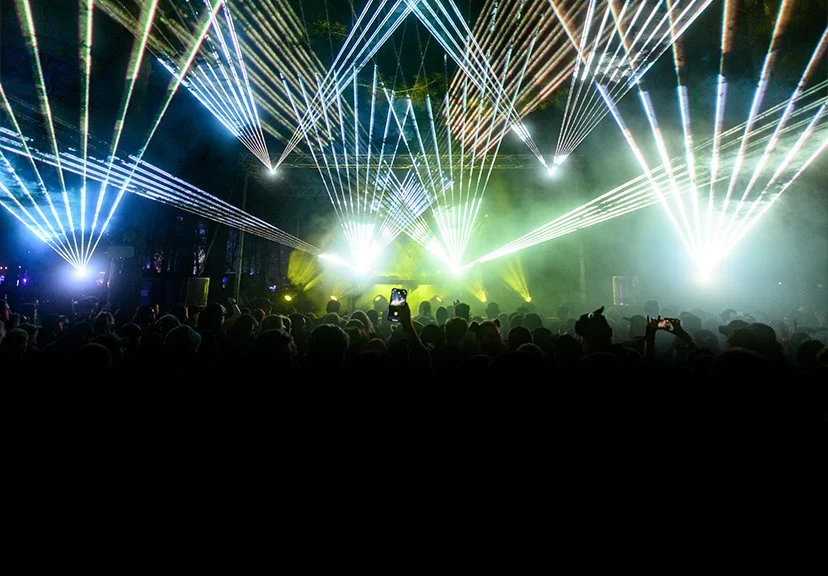
We’re far from the first to touch ground on that shoreline, but through consistent dedication to the service of inclusive fan-first programming, concert infrastructure, and a community-oriented perspective, the secret has long been out that the Pine Barrens are back in vogue. The returning fans alone shine a bright light on Submersion’s reach, particularly in an economic paradigm where excess funds are few and far between, and the relative costs of hosting these events have skyrocketed with tickets following suit. Return revelers are the financial cosign from the scene at large, making it clear that the juice is very much worth the squeeze, but they’re only half of the picture; Be it Justin Martin, the All.lo Records alumni, Kursa, Mickman, Daily Bread, Taiki Nulight or beyond, Submersion has consistently featured a rotating cast of returning acts year on year. Far from just a product of early offers or financial posturing, it’s the result of cultivating that very same community that we keep bringing up. These artists aren’t just some elevated caste in the social hierarchy, they’re the very same personalities that make Submersion so appealing in the first place. The throughlines in all of the promotional companies and entities involved in the production of this festival are the relationships fostered, and our social ideals held up to the light.
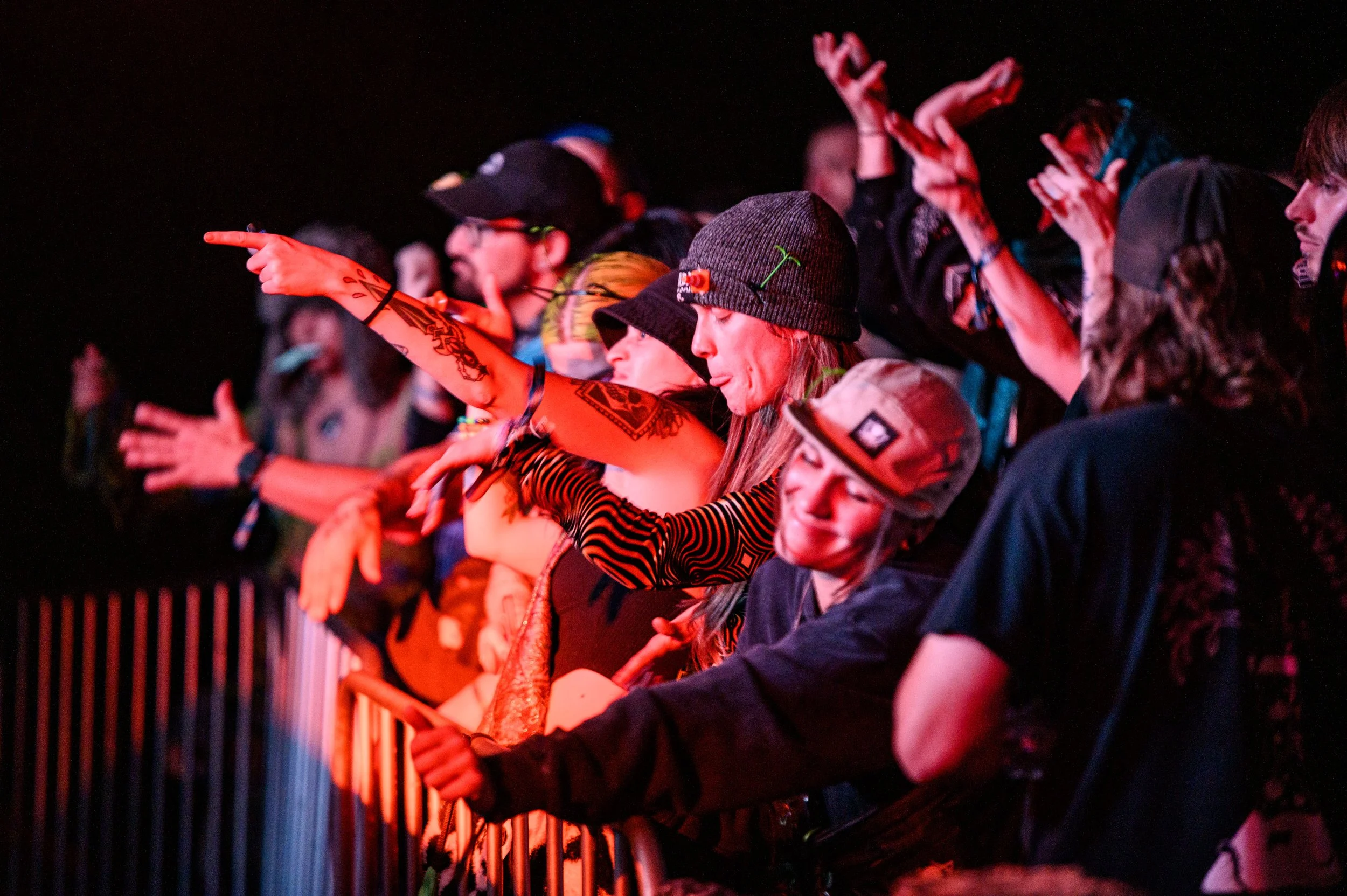
For 2025, the community is set to show up in force once again, bringing the same festive and familial energy that has made each installment since 2021 a beloved centerpiece for the lower Northeastern states. From the production crews to the vendors, from the workshop installations to the braintrust behind the precision audio/visual extravaganzas onstage, we’ve had the privilege as friends and cohorts to watch the as the cement hardens, binding this little pocket of experimental art together in a way that we could have only dreamed of at the start of this journey. With landfall set for this weekend, the winds certainly seem at our backs, and we can’t wait to show you the experience that Submersion has in store for its friends and family this time around.
If you’re still on the fence, now’s the time to get serious. Tickets are running out, the doors open in three days’ time, and we’re hoping to see each and every one of you out in crowd for three days of sun, shoreline, and serendipity.

A Quaint Catch-up With Smigonaut Ahead of Epitome LP Release
Longtime Rust collaborator and audio heavyweight Josh Kipersztok is no stranger to a diversity in composition. His latest collection of work, the Epitome LP, takes a departure from the crystalline profile that his mixing hygiene holds in the limelight. Taking cues from breakbeat, house, and midtempo bass music, the record is the most expansive collection of Smigonaut music to date. We spent a little time catching up with our longtime friend and cohort to get a taste of what powers Epitome, and where Smigonaut finds himself with relation to his musical output nowadays.
Longtime Rust collaborator and audio heavyweight Josh Kipersztok is no stranger to a diversity in composition. His established works under Smigonaut have their tendency to veer towards high-brow sound design and high fidelity engineering, but that’s never stopped him from exploring whatever musical nooks and crannies he finds an interest in. His latest collection of work, the Epitome LP, takes a departure from the crystalline profile that his mixing hygiene holds in the limelight. Taking cues from breakbeat, house, and midtempo bass music, the record is the most expansive collection of Smigonaut music to date.
With such an exploratory and arguably atypical release on its way by the end of the month, we wanted to catch up with our longtime friend and cohort to get a taste of what powers this Epitome, and where Smigonaut finds himself with relation to his musical output nowadays.
The Rust: You've had your nose to the grindstone for a few years now, churning out a wider and wider array of compositions. Talk about your current influences, what has you on the move, musically?
Josh: To be honest I've been taking a lot of inspiration from my early rock influences, bands like Nirvana, Smashing Pumpkins, Incubus, as well as some new bands I'm only just getting hip to now. I've become obsessed with Deftones over the past year or two and can't stop listening to the new album they just put out. I've developed a love for shoegaze-adjacent rock music similar to some of the ones I mentioned, bands like My Bloody Valentine, Hum, and things like that. I love the soundscapes in atmospheric rock music and definitely tried to incorporate that a bit into this album. As far as influences from the electronic world, I was thinking a lot about Tycho, Boards of Canada, and Bonobo while making this record, also some of the more cerebral Machinedrum stuff like Vapor City. The newest Tycho album is also fantastic and has been on repeat over the past year or two, as well as the latest ones from Justice, Washed Out, I've also been copping inspiration from poppier acts like Charli XCX or Tame Impala. The songwriting and production on their last couple records is so unique. It's been a lot of non-bass music. I'm still continually inspired by the many talented artists in the scene who I'm grateful to call my friends and peers, but I also think that there is a lot of stale music in the scene as well that sorta bores me and it's kind of led me to reach out of my immediate subgenre and incorporate a lot of other influences from different styles, both within electronic music and otherwise.
The Rust: Epitome easily blends your classic tempo choices with some more contemporary spins on the Smigonaut sound. Did you always intend for the project to be so expansive?
Josh: Sort of. Before starting the record, I knew at least one thing, that I wanted to make a 'downtempo' record inspired by my favs like Tipper's Broken Soul Jamboree or Boards of Canada's The Campfire Headphase. With that initial goal in mind it kinda just organically manifested from there. It was honestly a blast making this record, it felt very freeing to approach this tune from a perspective of 'what am I trying to say with this' vs 'how hard is this tune gonna bang onstage'?
The Rust: You've got plenty of collaborations stuffed in here; how do you balance your creative profile with their input?
Josh: I think it is a case-by-case basis. With each collab I had a general idea of what I was looking for in terms of contributions. For example, on Distant Shores I knew that I wanted to incorporate some live drumming, and who better to ask than ZONE Drums. Working with Phil/pheel. was somewhat of a last minute decision, Hive-Minded was just screaming for some scratches over it and before Phil cut his tracks on the single I was attempting to make some scratch-like sounds in Phase Plant but eventually it was just like, 'what is better than the real thing?' So I hit him up and he graciously lended his prowess to that one in the final hour. For the GUNK and DREWIDD collabs, these were more of a co-production approach to the collaboration. I am so grateful that I get to represent both of my side projects on this album with GUNK and DREWIDD (together we go by DeeZNauts) and for each of those we worked closely together on the vibe and ambiance of each tune, as well as the sonic palette and sound design. In terms of balancing things with their input, I am an open book and have welcomed any and all ideas from them for the tunes we worked on together. I think it's important to let ideas from others in, being an electronic musician can be weird sometimes because you're often the only one making decisions and its so important to bounce ideas off your fellow creatives and leave room for collaboration. I try to do that as best I can when working on a tune with others, even if its for 'my' release, technically.
The Rust: With full release of Epitome right around the corner, where is your head now? What are you feeling about this record now that it's out of the cradle?
Josh: I am on cloud 9 honestly. The response has been fantastic even with just the singles that have been released, so I'm very excited for the whole thing to finally be out there. I've said before and I'll say again, I truly love this album. It is the first album I feel like I've made for myself, if that makes sense. I can only hope others will resonate with it. It has been a surprisingly emotional process too. This year has been a tough one for me, and I think there was a lot of catharsis that went into making this one. I made it with the goal of creating a body of work that can hopefully help people improve their day if they're having a bad one, or enhance an already good day. This isn't a sound-system record, but it was definitely mixed to sound nice on the big rigs at festivals as well, so I'm hoping it can kind of fill both roles as something that peeps can listen to at home in their headphones or in their car or while exercising, as well as something you can play in front of a big crowd on a fat system at a festival.
With the release of Epitome right around the corner, we’re incredibly excited to share this particularly direct and raw interpretation of the Smigonaut sound. Keep your eyes peeled on all major platforms on September 30th for the full length release.
FOLLOW Smigonaut: Bandcamp / Spotify / Soundcloud / Instagram

On the Narrative and Clarity behind Rumpistol's Nebula LP-
We’ve certainly had our in-house favorites from over the years, and Jens Christiansen has been along for nearly the entire ride. Under his Rumpistol moniker, he’s produced a professional collection of music that has gradually filled out the narrative arc in his musical imagination. From pensive to frenetic, the territory his music lies in has always been deeply informed by a certain retro-future aesthetic, and his recently released Nebula LP brings that aesthetic into direct focus. With such passion demonstrably evident in the work, The Rust felt it necessary to have a brief conversation with Christiansen on the nature of the album, its inception, and what he has planned for its full unveiling as a dedicated performance.
We’ve certainly had our in-house favorites from over the years, having always been keen on keeping up with the wonderful artists from across the globe that have crosspollinated our company catalog for nearly 8 years, and Jens Christiansen has been along for nearly the entire ride. Under his Rumpistol moniker, he’s produced a professional collection of music that has gradually filled out the narrative arc in his musical imagination. From pensive to frenetic, the territory his music lies in has always been deeply informed by a certain retro-future aesthetic, and his recently released Nebula LP brings that aesthetic into direct focus.
With orchestral instrumental accompaniments from a cast of musicians, to a brewing interdisciplinary live performance and experience that’s soon to leave the lab, Christiansen has a clear vision of how his work needs to be channeled to its intended audience. Nebula, serving as the principle force in this extraplanetary narrative, comes off like a love letter to the stars, replete with tension, instrumental interplay, and cinematic overtures that take this collection of tracks far beyond traditional genre stereotypes. With such passion demonstrably evident in the work, The Rust felt it necessary to have a brief conversation with Christiansen on the nature of the album, its inception, and what he has planned for its full unveiling as a dedicated performance.
The Rust: Let’s talk about the direct influences on the Nebula LP.
Jens Christiansen: Many of the things happening in the US and the rest of the world influenced me, particularly the polarization of our societies. It made me wonder how a simple thing like stargazing has the potential to bring us together as a species, because we're reminded that we're all just part of this small planet, floating in space. Unfortunately whenever we hear about space in the news, it's usually stuff like Elon Musk's ego maniacal dreams of colonizing Mars, and his contribution to the ever growing belt of junk orbiting Earth, such as with his Starlink satellites, coupled with the fact that going into space has become a hunt for resources, because we've used up all natural resources on Earth. Combine that with the idea of space as a tourist destination for the super rich, and you have something that just seems grotesque.
A lot of books inspired me too: Carl Sagan's “Contact”, Kurt Vonnegut's “Slaughterhouse 5”, Arthur C Clarke's “2001: A Space Odyssey”, Michael Ende's “Momo” & Viggo Bjerring's “At Its Heart”, and of course sci-movies in general. Then the story of “Earthrise”, the photo of Earth that the Apollo Mission brought back from the first lunar expedition in '69. How a picture of Earth ended up becoming the most important piece of information after such a long and expensive journey is quite interesting..
The Rust: Your inclusion of orchestral elements both in production and on the stage for the performance of this body of work feels hand-in-glove. What's your perception of that?

Jens Christiansen: Thank you! I really enjoy working with Maria Jagd (violinist and arranger) and Sven Dam Meinild (woodwinds and brass) and they were both encouraged to come up their own ideas this time. It was more like a team effort than with the piano trilogy.
The Rust: How did you conceive of the LP? Did you set out to record this album as it exists right now, or did circumstance or experimentation drive you here?
Jens Christiansen: It was actually very deliberate. I wanted to do an album dedicated to the universe, so I started thinking about ways to do it justice. How to capture something of that scale!
The Rust: Talk about the recording process for Nebula. Did you craft these compositions prior to working with the musicians included on the record, or did you write together?
Jens Christiansen: I did all the rough compositions, melodies and arrangements before handing it over to the musicians. So my MIDI files got replaced with their instrumental takes so to speak. With some tracks like “Pale Blue Dot”, I asked Maria to write a large scale string arrangement that matched the song and there was also quite a lot of improvisation going on.
The Rust: Your music sits in a distinctly instrumental space alongside many of the contemporary producers adjacent to your project. Do you consider your own recent productions to be "electronic music"?
Jens Christiansen: I try not to think too much about genres, because I find them limiting. I guess Nebula is a mix of all my influences: space rock, classical music, a bit of jazz and vintage synth music like Vangelis and Tangerine Dream.
The Rust: Let's talk live sets: You mentioned to us that your intention for the performances on your side of the Atlantic is a synergistic approach between all the disciplines involved in a full-spectrum performance. What were some of the initial challenges in getting the ensemble off of the ground?

Photo by Jakob Andersan
Jens Christiansen: In September we're premiering the audio-visual version of Nebula which combines sound, light, set design and laser mapping by the light collective Vertigo. The idea is to create a site-specific audiovisual and performative experience designed to dissolve social hierarchies and inspire reflection. A bit like stargazing, just inside a theatre. This show is of course a huge production and so far it has just not been possible to bring it outside of Denmark, but it is definitely on our bucket list!
The Rust: How do you approach integrating the ensemble into your existing catalog?
Jens Christiansen: In the ensemble shows we have included older songs like “Gargamel & Cholic”, because it really made sense combined with the overall space theme. “Come into the laboratory”!
The Rust: What's your performance for each show?
Jens Christiansen: With the ensemble it's pretty much the same set list each night, but we have these moments of improvisation between the tracks, which makes each performance unique and fun. When I do solo shows I don't have a fixed set list, but rather go with the flow of the audience.
The Rust: How has your approach to the ensemble evolved? What kind of influence has it had on your concurrent productions?
Jens Christiansen: With Nebula I gave each musician more musical freedom than I've ever done before, instead of giving finished scores and very strict strict guidelines. I think this strategy works much better to be honest, because you get a more personal and dedicated performance this way.
The Rust: What does the future of Rumpistol look like to you? Where's the horizon for the project?
Jens Christiansen: I'm returning to stage production this fall with a score for Out of Balanz' “Turbulence” – a contemporary circus project exploring climate migration. I'm really looking forward to that. Then, we of course have the A/V shows coming up in September, as well as some festivals. Lastly, I'm also working on my 2nd Stargazer Mixtape!
Given his track record as a composer, musician, and producer, it comes as no surprise that Nebula is such a introspective and stirring album. There’s a clear evolution from the nascent days of his early works to 50+ concerts alongside a cast of equally impressive instrumentalists, LDs, and production staff, and the results finally have a proper place to call home within this record. Find the Nebula LP anywhere good music is consumed, and be sure to snag a copy on vinyl for a proper physical listening experience.
FOLLOW Rumpistol: Official / Soundcloud / Spotify / YouTube

Getting Frenetic With Conduit's Debut Duality EP
With over 14 years of music production hanging off of his toolbelt, Sam Rivkin has taken the patient path to musical maturation, gradually stirring his ingredients at the right pace and temperature to guarantee hearty results through his Conduit project. Rivkin is certainly no stranger to sound, having been a multi-instrumentalist for much of his life, and has been concurrently performing through his collaborative duo project Betafuse for over a decade. Up until now, Conduit releases have been kept close to vest. The payoff for this patience is release of his debut Duality EP through the veteran Colony Productions label, an apt home for such a granular set of tracks.
With over 14 years of music production hanging off of his toolbelt, Sam Rivkin has taken the patient path to musical maturation, gradually stirring his ingredients at the right pace and temperature to guarantee hearty results through his Conduit project. Rivkin is certainly no stranger to sound, having been a multi-instrumentalist for much of his life, and has been concurrently performing through his collaborative duo project Betafuse for over a decade. Up until now, Conduit releases have been somewhat scattered, making appearances on compilations and through remix tracks for contemporary artists. The payoff for this patience is release of his debut Duality EP through the veteran Colony Productions label, an apt home for such a granular set of tracks.
If there was a single word to best describe Duality, it’s “staccato”; the syncopation of percussion and bass synthesis is the driving motif of the EP, taking center stage across every track. Tracks like “Confined by the Demiurge”, and “As Above, So Below” are driving in their compositions, they build pressure in short bursts akin to a turbocharger. The constant frenetic energy serves as a clear bedrock for the whole collection of tracks, and it all dovetails to its conclusion with “Dynamis”, showing off the marriage of intensity, melody, and sound design in the way contemporary bass music best showcases. From start to finish, with a high polished sheen, Duality easily earns its place amongst many of its likely influences in the Colony Productions catalog.
While this might mark the first official Conduit release, its far from the first time the name has been on our radar. While keeping the recorded productions close to the vest, Rivkin has been performing under the Conduit moniker all along the way, showcasing his material in its prime context. Testing first and unveiling later has clearly paid off, and we’re confident that Duality is far from the last studio productions we’ll hear from Rivkin’s array of projects.
You can purchase or stream Duality on Bandcamp, Soundcloud & more
FOLLOW Conduit: Soundcloud / Instagram / Facebook

Referencing the Master: an Expansive Conversation with Matt Davis
Outside of the Hacienda Audio studio, their master engineer Matt Davis recently unveiled his latest rig deployment for the home-grown Reference Sessions series in Denver, Colorado. Featuring an enormous and meticulously designed sound system, expansive LED walls, and precision front of house engineering, he and his cohorts are aiming to set a new bar standard for high fidelity concerts and events. For one of our most technically expansive interviews to date, we had the opportunity to sit down and reference the master himself after their recent Reference Sessions 002 deployment in Denver for an intimate conversation about the philosophy and engineering behind one of the latest developments in the live audio playing field.
Written by Alyssa Barnhill
It's never a one man show, even if there is just one person in the spotlight. From the front of house to your ribcage, from the bass weight to the record crate, Hacienda Audio provides an all-encompassing workhorse through professional audio engineering and studio design. Outside of the studio, their master engineer Matt Davis recently unveiled his latest rig deployment for the home-grown Reference Sessions series in Denver, Colorado. Featuring an enormous and meticulously designed sound system, expansive LED walls, and precision front of house engineering, he and his cohorts are aiming to set a new bar standard for high fidelity concerts and events.

Matt Davis
Sound system hardware and music production software have evolved parallel to one another, which in turn plays into the dynamic evolution of traditional and modern conceptions of “sound system music”. One of the many contemporary brains at the center of this phenomenon is Davis himself. His own roster of projects reaches far beyond just our musical niche, and that experience in concert with his rigorously academic application of engineering fundamentals is precisely what sets him apart from his peers. Consequently, those same skills are what should also set Reference Sessions apart from the competition. I had the opportunity to sit down and reference the master himself after their recent Reference Sessions 002 deployment in Denver for an intimate conversation about the philosophy and engineering behind one of the latest developments in the live audio playing field.
Alyssa Barnhill: What technology or equipment was used to achieve such an articulate and immersive sound experience at the event tonight, especially balancing the heavy bass weight with clear and crisp highs?
Matt Davis: For this event I really wanted to create an impactful evolution on existing tech that could be perceived and appreciated, not only by the connoisseurs and audiophiles of the room, but even to lay people coming directly from another event, with who knows how much hearing fatigue. For this reason I used a multi-pronged approach to improving sound quality through a few different mechanisms.
The first was by using a full digital signal path the entire way from the CDJs to the amplifiers, which did not contain the insertion losses which are present in your usual signal path in DJ based events. The usual exchange goes from digital in the CDJ back to analog in the DJ mixer output to the FOH path, and then to digital in the FOH console’s A/D converters and back to analog leaving FOH, before being converted back into digital by the amps’ DSPs and then back to analog for amplification. In our configuration the entire chain stays not only digital, but is also synchronously locked to the DJM’s clock for the most direct, coherent signal possible, much like is found in mastering rooms.
We also brought a LOT more headroom/wattage in the sound system than is typical of a 400 capacity room, which carried with it a lot of benefits both in the latitude of tonal expression possible in the sound system, and lower distortion figures, which allow me to run the subs hotter than in normal rigs without the incorporated harmonic distortion which extends into the upper bass/low mids masks detail. By using subs with a ton of headroom I find you can still yield a balanced sounding tone, but with much more bass weight than you’d usually be able to get away with due to the lower distortion, making the sound not only detailed and accurate, but very involving and at times extremely aggressive with subrange pressure.
There is a concept in acoustics known as “cabin effect” which occurs in small air spaces with very large amounts of SPL (sound pressure level) in them. Cabin effect is essentially the state where the entire air volume is fully pressurized and dynamic compression takes place not due to electrical/displacement shortages, but simply by the air molecules being unable to propagate any further. I’ve been familiar with this effect since high school due to my interest in car audio design for bass competitions, and it’s been a long term goal to bring enough displacement, wattage, and xMax to a venue to create that effect on a much larger scale than in a car. There were moments during Murkury’s bass bath and at other points in the weekend where I felt that we were near the threshold of that cabin effect sensation, I’ll never forget feeling my whole body tingle in a way I’ve never experienced for at least 10 minutes after the bass bath, I attribute this to powerful infrasonic extension and the subrange SPL we were able to attain even at FOH towards the back of the room for those three minutes during the bass bath.
It could be argued that we have also improved upon the low end punch of a standard rig by trisecting the kick drum into three separate boxes (Kick First Harmonic Bin, TSW-718 (65-200hz), Kick Fundamental Bin, HSD Sherman (30-65hz), and Rumble/Infra Bin, V-Plated Battle Axes (15-30hz)) which separates and independently generates the different partials of the kick drum in a perfectly phase aligned manner, courtesy of our very talented alignment tech Brady Chionbian. Most rigs are 3-way or 4-way and use one box for the entire subrange or maybe a sub reproducing the fundamental and a kick bin to handle the first harmonic of the kick. In our 6-way configuration each partial of the kick drum is generated by a dedicated box which is inherently better protected from intermodulation distortion than a shared bin reproducing the full kick signal.
Another component of the secret sauce is the way that I perform FOH duties. I find most FOH engineers for DJ events have a tendency to either “respect the master of the music” by not altering it, or simply have a hands off approach to conducting FOH once they’ve established a starting level and tone. I, as a mastering engineer, don’t really care much for maintaining other peoples’ masters as they are when they don’t translate to the sound systems they are being played on, and take a very active role in improving the translation of those masters, mostly via dynamic EQ settings made on a song by song basis for each set of the night.
I vet the acoustic qualities of every room that I rent for an event by hearing, measuring, and messing with a sound system in the space in advance of renting it, and I personally vet every box of every sound system that we bring out for these events. I spend a lot of my time roaming around the country listening to what people say are the best rigs in the country, and I bring hybridizations of the ones I like best out for my events. For this event, we used most of Trash Fence’s inventory of Floodlights/718s and all of their subwoofers, and added four of Unify Mountain Soundz’ Battle Axes to round out the deployment.
We also design and fabricate new sound system technology to get closer to my metric goals of low frequency extension and lower distortion figures. We brought out the world’s first HSD Battle Axe V-Plate array at this last event which moved the low frequency cutoff of each 4-pack of axes from 26hz down to 18hz. I was shooting for 15hz, but I know how to get that low if not lower with my design for the next event’s sound system. I want the infrasonic range to be flat to single digits within the next few parties.
Lastly, we acoustically treat every venue that we use for a Reference Sessions party with materials donated by Hacienda Acoustics. A sound system will only ever be as good as the room you put it in, it doesn’t matter how talented of a deployment engineer and alignment tech you are, if the room sucks the sound will suck. I’ve been patiently waiting for years for the standards of acoustics/sound reinforcement in the US to get better, and somewhere along the line I got tired of waiting, so now we leave a wake of acoustically treated performance spaces to slowly and incrementally improve the standards of live playback in the US after every event, one venue at a time.
Alyssa: How was the sound system materially designed to create such a physical experience?
Davis: I attribute it to two things. Infrasonic extension which provides a more tactile/visceral/physical response when combined with strong subrange, and micro-dynamic control of transients in the program material by myself in FOH. There is a tendency in bass music to mix the snares and hats very loud with very little dynamic control, and this will tend to get very harsh through live sound speakers, even quite good ones due to their horn loaded nature and compression drivers. By controlling the energy/sound stage position of the snare and hats you keep them from jumping as far in front of the rest of the mix and becoming grating/fatiguing to the patrons while also revealing detail in the mix which was previously being obscured by the snare/hats.
Alyssa: What exactly are the “Reference Sessions”?
Davis: I basically wanted to create a series of parties that could be a “thank you” to my mastering/acoustics clients by paying them well to perform with a lot of amenities, a love letter to sound system culture, and a means for myself, my organizations, and my very talented friends to show off at a high level. We pride ourselves on very big productions in intimate and unconventional spaces, with excellent sound quality.
Alyssa: What techniques did you use to work with this specific venue?
Davis: I liked this particular venue because it had a classic dirty warehouse vibe, roughly the right size that I thought we could comfortably fill up with guests and that we could afford to acoustically treat, and the non-parallel ceiling with fiberglass lining. I tend to pick venues with fiberglass either attached to the ceiling or suspended above a drop ceiling. They usually sound considerably better than a flat and/or purely reflective ceiling. The main room had a moderate footprint with a lossy partial wall on one side which I knew would not present as a boundary for low frequencies and would allow the subrange to propagate through the entire footprint of the warehouse, allowing for deeper subrange extension. I also noticed a pretty strong constructive 25hz antinode in the room during analysis that I figured would support/enhance the deep sub/infrasonic range, and it very much did that.
Alyssa: What kind of challenges were in the way of achieving such a professional experience in a warehouse space like this?
Davis: Climate control was a big one, as the warehouse had no HVAC and the weather was pretty inclement at the time in Denver. We relied heavily on propane torches for heat during load in/alignment but we obviously couldn’t use them once doors open to guests. Electronics can be sensitive to temperature swings so navigating the logistics of keeping the place warm enough to keep the gear happy was a bit of a challenge.
Another big challenge was that we simply kept shaking our tech to death with subrange during stress testing of the sound system, and during the actual events. We killed one Armonia router a day for three nights straight, which was problematic seeing as how it provided our system engineer with amp health diagnostics during the event. These diagnostics are critical when you aren’t applying a highpass to your subwoofers as infrasonic energy can become incredibly destructive to subwoofer drivers if not properly tailored on a song by song basis, so I was essentially flying blind and relying on my ears to hear and correct for the drivers bottoming out in their unloading range in order to keep the subwoofers safe. We also killed an unused amp input on one of the Powersofts after stress testing the system, not via abuse but simply as a result of the incredible SPL taking place in “amp world” (which was between the front/rear sub arrays).
Alyssa: What steps were taken to balance the immersive visual elements, such as lasers and LED walls, with the impressive spread of sound?
Davis: I started planning this party hell bent on doing a temporary full visual immersive room using LED walls. We slowly had to pair that down to the realm of sanity and practicability for this event, though I intend to make it happen at a future party once we’ve built up a better internal supply of LED wall/trussing. What we wound up with was roughly 48x9’ of continuous LED which extended from behind the stage, around the speaker stacks, and into the sidewalls of the room. They were zoned into three segments that could be controlled by either Glass Crane or Tenorless, or both if they chose. I liked the idea of having multiple VJs working in congress with each other to create a unified vision, and I think they succeeded admirably, as did our laser specialist, Spilt, who did a great job of synchronizing his color patterns with the visuals through the three nights.
Alyssa: What successes did the team achieve while designing this experience?
Davis: I think creating the world’s first 6-way dance stack is definitely an accomplishment, and debuting a brand new deployment style with front/rear sub arrays which tested very well was a triumph for us as well. Just being able to organize productions on this scale, conducted equitably with our staff/artists, while only designed for 400 attendees or so per night, and getting away with it was our biggest achievement. Without the incredible logistical planning of Elias Walker and Mike Hollier, none of this would have been viable. The “bass cave” concept under the stage between the sub arrays was also a huge hit, and we’ll almost certainly be bringing that back and developing into the concept as well.
Alyssa: How did the design and setup of the sound system enhance the performances on the artists’ end? What qualities in producers do you look for when building your clientele at Hacienda?
Davis: I let all of our artists know that it’s OK to write sub notes far below F1 for playback at these events, and many of them are beginning to cut Reference Sessions dubs with extremely low sub notes that would not be audible on most touring rigs for these events. Dillard played a song with a 22hz sub note in it that was absolutely devastating, and had most of the patrons looking around at each other after they heard it the first time, likely because they’d never heard a sub note that low with anywhere near that kind of authority, it was an incredible moment for me and the sound team. We also have started commissioning Reference Sessions dub specials through different crews in Jamaica, which will mostly be heard at our events and are equipping our artists’ catalogs for the soundclash battles we’ll be bringing into the equation at upcoming parties. Shout out the One Sting Crew for our dub specials for this last event!
I don’t have any strict requirements for clientele at Hacienda per se, but I definitely have preferences in what I choose to platform at my events. I see the lineups for these always composed of eclectic varieties of bass music, whether that’s dubstep, grime, drum & bass, jungle, footwork, breaks, or whatever.
Alyssa: What role did the speaker layout and driver selection (e.g., 40/80 drivers) play in creating the physical presence amd clarity we felt?
Davis: There is a principle in acoustics/transducer theory known as Hoffman’s Iron Law. In layman’s terms, it states that you can only get deeper bass extension via larger drivers or by more electrical signal. There are obvious limitations inherent to the latter of the two options, as drivers have maximum headrooms that you cannot surpass without higher distortion figures, followed by a linearity, and lastly damage to the driver. Therefore we add driver size for extension, and for this reason we have spec’d very large subwoofer drivers (21” on the Axes, 24” for the Shermans), and a large number of them for more air displacement and coupling, for deeper extension. My old audiophile friend Mike Chafey always used to say “there is no surrogate for headroom” and I’ve subscribed to it in the design of my mastering studio and in the way that I spec deployments.
Having more drivers playing the same level drops the drivers’ individual levels, which in turn lowers their overall distortion figures. Good steering patterns make a huge difference, too. I’m one of few deployment guys who toes-in the mains for imaging purposes whereas most will fire the stacks straight back into the room for better coverage. I wanted to define a zone in the room where you would not only get an equivalent amount of L/R speaker in the space, but where the two sides would deliver strong localization and imaging qualities to the listener, which is usually outside of consideration for most live sound deployments. This space was defined directly in front of FOH and it was full of people all night who were probably hearing actual imaging out of a live sound PA for the first time.
A funny thing though, we actually ended up not using the attachments on the floodlights as they worsened the impulse response measurements. As a result, they were present but we didn’t wind up using them during the event. An interesting fact: if you have a speaker in a room that isn’t plugged into a powered amp, it will actually act as a passive resonator that will absorb the other speakers’ energy, so we hooked them up to a spare amp for the night that was powered but not receiving signal. I probably will be looking for lower distortion tops moving forwards as the subrange/bass/mids actually had lower distortion than the upper mids/highs on this particular rig, which bums me out a little because those Floodlights are probably my favorite top I’ve ever heard so far. They were designed in the 90s and our particular set of Floodlights was previously owned by Pink Floyd, before being lovingly restored and customized to improve upon the original specification by my dear friends Bill Weir and Citron Arbel at Trash Fence.
Since then, technology has advanced in ways that allow greater maximum output from tops, but Bill and I strongly feel that the Floodlight 760 represented a high water mark in live sound sonics that has never been replicated. I’ve been eyeing the Danley Jericho J7-95s and will be heading to the Danley factory to try them out soon. I absolutely adore the idea of synergy horns, on paper they should beat any non-coaxial top for impulse response measurements, and with 18 internal drivers per top the headroom is astronomical, and as a consequence the distortion figures at level should be much lower. They are rated to extend from 60hz-20k, but I suspect that using these in conjunction with TSW-718 kick bins crossed over circa 200hz, subwoofers, and infra subs will create a beautiful 6-way system. I just have to hear them and like them first!”
Alyssa: As a fan, I’d like to thank you and your team so much for choosing Denver for this incredibly special experience. The question is, what and where is next?
Davis: Deeper infrasonic extension, lower distortion figures, definitely soundclashes, bigger productions, and probably our own festival as well in the next year.
I’ve been in talks with the manufacturer of the largest infrasonic subwoofer driver in the world for super high end home theaters, which is outlandishly expensive, and requires the construction of the sub enclosure in the room it will be used. Their specs more than qualify them for use in live bass music, with 20,000 watt peak ratings, 35mm xMax, and 172L of air displacement. They would provide flat extension down to 8hz. However, the logistics of deploying an 80” subwoofer are extremely complex as you can’t fit a driver this big into an enclosure that would fit in the back of a truck or be able to fit through doors. They require a minimum enclosure size of 10m³ per driver! We would need to build rigid enclosures for these inside of the venue, which is not impossible, but would definitely add extra days to load in and require more staff to assemble.
I think there’s a lot more room for showmanship and spectacle in sound system culture, the most engagement I ever get on social media posts are pictures/videos of the big rigs I put together for these events. I know it resonates with people in a big way like it does for me, and I want to deliver more of what it seems like people really want out there, which is big fuck off sound systems that greatly exceed the sonic expectations of the listener.
As a patron, home is where the heart is, and Reference Sessions 002 brings a family-sized serving of master class engineering. This series is a tribute to the modern sound system, its impact, and the legends born from it, and these shows are one of a kind, precisely tuned, larger than life experience that can’t be missed. Let the system take you for a drive and let the team take the wheel; Reference Sessions is a breath of fresh air in the dynamic space of the musical counterculture.
“Every sound system has a story, and we are here to bring you that story.” - Matt Davis.
FOLLOW Reference Sessions: Facebook / Instagram / Youtube / SoundCloud

Discussing Influence, Balance, and Community with Murkury
Alec Seifart, the creative force behind Murkery, is poised to bless Denver audiences November 23rd at Meow Wolf’s Convergence Station alongside a cast of hand-picked characters. With years of production steeped in psychedelia and modern bass music fundamentals, he’s dialed in a sound, style, and presence that defines the Murkury brand with clear intention and direction. Speaking with Seifart, The Rust had the chance to dive a little deeper into the experience and the inspirations that drive his project and output, as well as attempts to address and assist community needs through his platform.
Written by Alyssa Barnhill
Alec Seifart, the creative force behind Murkury, is poised to bless Denver audiences November 23rd at Meow Wolf’s Convergence Station alongside a cast of hand-picked characters. With years of production steeped in psychedelia and modern bass music fundamentals, he’s dialed in a sound, style, and presence that defines the Murkury brand with clear intention and direction. Seifart’s recent collaboration with Rafeeki resulted in a track specifically crafted for Denver's eclectic audience. He explains, "Denver has a really dense population of sophisticated listeners... so we tried to come as correct as possible!" This dedication to his craft is evident in his upcoming projects, including a psytrance-inspired EP, and various collaborations set for release in 2025. Balancing his creative pursuits with community involvement, Murkury continues to inspire through his music and unwavering commitment to Asheville's cultural vitality.
In the aftermath of Hurricane Helene, many faced overwhelming loss, but the initial shock and awe of flooding on a biblical scale has given way to an impenetrably strong sense of community and support. It is a testament to the resilient strength and spirit of the Appalachians, both the people and the territory. In my interview with Alec, I got the chance to dive a little deeper into the experience and the inspirations that drive his project and output, as well as attempts to address and assist community needs through his platform.
Alyssa Barnhill: We all feel for your community there. What was your experience with the hurricane in Asheville?
Alec Seifart: Thank you, my personal experience pales in comparison to what a lot of other people went through but it’s kind of hard to even boil down what it was like into a paragraph. A lot of tears and stress but also these little moments of laughter, like, cooking over a fire with a neighbor, making dumb jokes, simply grateful to be alive. We lost power and water and the cell towers were down for a good while but my house was spared. I was able to secure food and water for myself and my neighbor but going out into the world was like entering a warzone. My neighborhood in Barnardsville was devastated. I can’t describe the level of destruction around me, even now, a month later. But any time I go out, now, the conversations all start with questions like, “how’re ya holding up?” and “do you need anything”? It’s extremely heartwarming. My hope is that that level of general reciprocity continues into the future.
Alyssa: How is the music and art scene there now? Post hurricane issues?
Alec: Music scene was hit hard, for sure, but we have some really good venues and promoters here stepping up and providing the community with a place to womp out and hug friends. One of the biggest issues is water. The city of Asheville still doesn’t have potable water a month after the hurricane and I’m hearing estimates it’ll be another month before it’ll be safe again, maybe longer. What’s been really beautiful to see is all the local + national fundraisers in the immediate aftermath. From here in Asheville to Charlotte all the way to Denver, people have been spreading awareness and raising money with bass music and visual art and to me, it’s an example of what our scene is all about.
Alyssa: I saw you mentioned trying to make music and feeling conflicted. Speak on that

Alec: Absolutely, yeah the desire to help out around the community battling my need to continue working on music and prepping for gigs so that I can keep paying bills. Like, I knew internally that it was alright to sit with this feeling and it would pass, but honestly, expressing it out loud still helped a lot. Hearing that positive reinforcement from homies who are going through similar things definitely helps.
Alyssa: What do you think of the future of our kind of music in Asheville?
Alec: It’ll be interesting to see what the producers here create and what comes out of this destruction. I’m really curious about that, because I’ve already started to dig into those feelings and found good results in the studio. As for shows, it’ll be tough because without the tourism industry, a lot of people are without jobs right now. While a couple venues got wiped off the map, the scene here is extremely strong and people definitely want to dance at this point. I think towards the end of the year we’ll see more things happening (hint hint).
Alyssa: New track with Rafeeki is dark and ominous. Temple step? Deep and gritty. You guys made that just for Denver?
Alec: We did! We wanted to cook up something special for the occasion. Denver has a really dense population of sophisticated listeners, aka they always get the best shit and so their threshold for dopeness is very high. So we tried to come as correct as possible! Plus, it’s so much fun to collaborate with Jorge and we have really good chemistry in the studio. We actually have another collab together with Tunic, JuJu Beats, and Sum.Simpl called, ‘Flip’. That one also features verses from Rafeeki and Toh of Sum.Simpl, and will be coming out sometime next year but we’ll be highlighting it at Meow Wolf, as well!
Alyssa: What other concepts for tunes are interesting to you right now? And how Is that influencing your music today?
Alec: Well, I’m working on a psytrance-esque EP right now. Fast, four on the floor 140 bpm music with wubs and gritty basses has got me in a chokehold right now haha. But I’m still working on dubstep and finishing up some real special collabs, flute boi music and some meditations. Got about 15 songs wrapping up or already scheduled for release in 2025.
Alyssa: Anything special your audiophile fans would like to geek out on.
Alec: Well, my mastering engineer Matt Davis is doing these ridiculous sound deployments around the country right now when he’s not running FOH for Detox Unit or whoever. The first one in Orlando was the best sounding show I’ve done in my 14 years of DJing. He’s big on getting the best possible low end response and has challenged me to make a song that’s lower than I ever have made before. So I guess look out for that and apologies in advance because you literally will not be able to hear the sub on regular systems.
Alyssa: The reference session Orlando show in September, then DC with Artifakts, Yoga in Iowa, AND Denver Meow Wolf the 23rd? Do you ever sleep?
Alec: I sleep more than you think haha! I love to sleep. Sleep is life. Also I like playing helldivers or elden ring when I’m not producing or sleeping!

Alyssa: What Is your work life balance like and where are you finding inspiration these days?
Alec: It seems basic but I’ve been writing a lot of to-do lists lately, trying to cross out as many as possible each day. That’s been helping me balance things so much, stay on task and get my priorities straight. Highly recommend it.
Alyssa: I read that you're planning to go “ALL OUT” for this curated event, complete with temple forest deco, and Koja Sound paraflex sub rig? What's that looking like?
Alec: Yes!! We are going to transform Meow Wolf into a forest as much as possible, basically, and integrate with their awesome temple-style stage design. When we came up with the concept, ‘Magic Temple’, we definitely had that room in mind! The Koja Sound lads have been generous enough to bring out their whole rig for this one, including the paraflex subs, so we are really really grateful to them for helping us elevate the experience for everyone coming! We also have Hummingbird Productions out of Fort Collins providing deco, who specialize in forest-y environments. They’re going to make it look amazing there.
Alyssa: Yourself, Rafeeki, Tunic, BANkaJI and Quite Possibly. I'm sure you guys are going to throw down. Any hints at the vibe of the night and what can we expect of this secret guest?
Alec: Oh boy. I mean, each of these lads is a headliner in their own right, as I see it. They each have such a unique and powerful vibe and are such amazing humans. That’s why we stacked the evening with the best talent start to finish we could manage. Starting the night with a Tunic set might be the craziest part of the lineup because he is such a masterful artist and it’s almost insane starting out with him, but it’s gonna be perfect. Into our secret guest, who I’ll give you a hint that he has played Tipper and Friends events before and is bigger than all of us, in a sense, haha. Incredibly grateful to have him on board for a special offering. Then into Rafeeki followed by myself and finishing off the night with a high energy back to back between Denver-based legends Bankaji and Quite Possibly. We have some surprises up our sleeves, too, so everyone (including us) is in for quite the wild ride.
Alyssa: In your words what is the impression or significance of the intersection of nature or spiritualism and bass music? You intertwine them very beautifully and organically. Where do you think people feel this connection comes from?
Alec: It’s strange because the more I dig into those ‘spiritual’ realms, the less meaning I find myself attaching to the actual moments of creation in the studio. It’s only after a session where I can reflect on where the flow state came from. I use quotes for spirituality there because you can find it in any genre, even mumble rap or something people may classify as “low-vibrational art”, I believe. If the song is made with love/passion for creation, then it’s gonna naturally be a container for emotion and soul.
And as for the sound palette of eastern spiritual music, I really enjoy how flutes sound and how mantras make me feel. The vibrations during sound baths, for example, make me feel good, so I do it. Does it induce healing for me? Absolutely, but does it mean I should worship that process or see it as above other types of music? Each genre or whatever you wanna call it has a unique service it can provide the listener & can be healing in their own way! Hardcore techno is healing for me, too, haha, but obviously I’m not sitting down for that.
As the night at Meow Wolf approaches, it’s clear this show will be nothing short of extraordinary. With Murkury leading the charge alongside an all-star lineup of Rafeeki, Tunic, BANkaJI, and Quite Possibly, the event promises a transformative experience filled with deep bass, stunning visuals, and an unforgettable vibe. From the immersive “Magic Temple” concept to the powerhouse Koja Sound paraflex sub rig, every detail has been crafted to elevate the night into something truly magical. For fans of boundary-pushing bass music, this is one show you won’t want to miss. Prepare to dance, connect, and lose yourself in the music.
FOLLOW Murkury: Soundcloud / Bandcamp / Spotify / Official

An Expansive Conversation with Culprate in the wake of "Normal" LP
Resurfacing for air two years after the release of his psychedelic αριθμός τέσσερα LP, the Bristol-based producer John Hislop has come up for air with another minted project. Stretching back to his formative days with the Dubsaw and Inspected labels, Culprate has become a staple producer in the arc of bass music and contemporary audio production. his latest release through Inspected, Normal, puts pure force on display, harkening back to the energy in his formative years. In collaboration with The Rust, Hislop agreed to an insightful interview that has given us a proper lens into his thought process, approach, and interpretation of his own productions and some of the wider context to his career so far.
Resurfacing for air two years after the release of his psychedelic αριθμός τέσσερα LP, the Bristol-based producer John Hislop has come up for air with another minted project. Stretching back to his formative days with the Dubsaw and Inspected labels, Culprate has become a staple producer in the arc of bass music and contemporary audio production. His Deliverance LP shines just as brightly now as it did ten years ago, and both it and αριθμός τέσσερα feature an abundance of lush instrumentalism, novel arrangements, and nooks and crannies that feel like they’re still slowly revealing themselves to this day. In contrast, his latest release through Inspected, Normal, puts pure force on display, harkening back to the energy in the formative years of Culprate compositions.

It’s dark, dense, and frenetic in ways that feel leagues removed from the expectations set by his previous LPs. And yet it doesn’t come as surprising, with the foundational elements of fundamentally heavy bass music having always been a part of Hislop’s skill set. A merging of club-centric rhythms, lumbering half-time, drum and bass, and high-fidelity sound design deliver on the Culprate seal of quality, while exploring dance-floor relationships that exceed the boundaries of his previous contemporary works in many respects. Some might find there to be a lack of the melodious and harmonious elements that made him an indelible part of many burgeoning palettes throughout the 2010s, but that would be a disservice towards the altogether fresh interpretation of Culprate music that we’re now gleefully chewing on.
In collaboration with this publication, Hislop agreed to an insightful interview that has given us a proper lens into his thought process, approach, and interpretation of his own productions and some of the wider context to his career so far.
The Rust: Your time in the limelight stretches back to early releases on Dubsaw Recordings over 15 years ago, well before the establishment of the sound you're concurrently associated with. Looking back from "Normal", what are your thoughts on records like Flatline and Colours? How does your early work hold up in your ears?
John Hislop: Indeed! It's been a wild ride! Those records still hold up for me, especially Colours! Obviously they don't sound as huge as some of the stuff being released nowadays. But the ideas and vibes are still interesting, to me anyways. Sometimes I even think the ideas on those records are better than the ideas I come up with, now!
The Rust: For those of us on the outside of the process, the synergistic unveiling of your label Open Outlets and the "Deliverance" LP 10 years ago feels like a waypoint in your career, with a clear before and after. Can you speak on your influences at the time, and what your initial vision was with the genesis of Open Outlets?
Hislop: Yea, Deliverance was definitely a departure from what I was known for at the time. I actually created it to get less shows, if you can believe it! Being an in demand DJ is fun, but it's not as easy as some may think. At the time of recording all the instruments for that LP, I found out my wife and I were expecting our first child. At that time, I was away in 3-4 different counties per week doing shows. Not really sustainable for a parent. So I guess I subconsciously knew I needed a change of pace. The main reason for the birth of Open Outlets was the fact that I couldn't find a label willing to take on Deliverance.. So I decided to put it out myself. As for my influences at the time. I was really into Amon Tobin, Squarepusher, Pink Floyd, Radiohead and had just discovered footwerk. I still love all of that stuff, but Deliverance was definitely the record which really took all of those things and blended them into a single package.
The Rust: Your last two solo LP's, Deliverance and αριθμός τέσσερα, are primarily known for their lush instrumentalism and pensive atmospheres, where "Normal" clearly has its influences in breakcore, neuro, and other techy forms of broken beat music. Can you speak on the divergence and development of your sound from then to now?
Hislop: Deliverance and αριθμός τέσσερα are really the sort of records I love to make. I find it more difficult, therefore, more fulfilling than "regular" club music.

Deliverance LP Artwork
I guess you could call Normal an experiment, too?? For me, it's just that. It’s definitely got a weird energy to it. Not what you’re likely to hear on a lot of dancefloors. I was trying to think of things I haven't (or rarely) covered, and put them all in a somewhat familiar package which might be accessible to people who might never really listen to that sort of thing. There is a clear divergence. However, I can't really explain it.. Other than to say.. I think artists should try new things and explore new areas. All of my favourites do this. I think I'm always going to try new things with my music. To me, it's important to keep things interesting for myself.
Developmentally, I think I have upped my mixing game. Not that the tracks on Normal are the most aesthetically pleasing tracks I’ve ever done. But I managed to be a lot more purposeful with how this record turned out, than on previous records. Writing-wise, much of Normal was written at about the same time as αριθμός τέσσερα, as a way to decompress from the toil which comes as part of making an overly detailed LP. The Normal tracks were a welcome break, a bit of fun, and very normal in comparison.
The Rust: The progressions and compositions in your catalogue are a clear part of the reputation you've gained under the Culprate umbrella. What's your history as a producer and songwriter? Do you view yourself as a conventional musician?
Hislop: I started making music when I was around 13. Nothing electronic, though. It was all Rock and Metal. None of it was good, haha! I started on the guitar and slowly worked my way through the usual “band” instruments. (Drums, Keys, Bass, etc.. ) I never did learn to sing, though.. My first experience with electronic music was just before I started secondary school (around 1996-97). Older family members had DnB tape packs (peak 90’s) and I quickly got into it!
I didn’t get the opportunity to create anything electronic until I was around 18, I think. I got expelled from school at the age of 14 (almost 15) and managed to get into a music college a year early. My first couple of years in college were spent doing “band stuff”. The first year was a music practice course. In which you learn how to be in a band. After getting access to recording facilities, I realised that’s where I belonged! I swapped over to the tech side and began recording the college bands on hardware and tape. At the age of 18, I discovered reason 2 on some of the college PC’s. After playing with it for a while I realised “This is how they make dance music!!!” It was a lightbulb moment! From there, I never really looked back.
Do I consider myself a “conventional” musician? Na.. I stopped practising instruments when I discovered Reason. So my standard of actual playing is now very low.. It’s all still in my head, but my hands won’t do as they're told, haha! Clearly I can write riffs, melodies, harmonies and tie them all together with rhythm. But I need a keyboard and mouse to achieve anything listenable, these days.
The Rust: Where does the design start with a record like Normal? Did you set out to write this album as a cohesive unit, or did it come together as a result of circumstance?
Hislop: With Normal, it was the latter. I had “LIGO”, “Myka” and “Area51”, from back when I was making αριθμός τέσσερα. “LIGO” got an entire remake in a totally different style, but kept the rhythm of the kick/bass sound and tempo. “Myka” also got an entire remake. It was initially a Dubstep track, which had a 2 bar 4x4 section. I decided to audition the whole thing as 4x4 and it just made so much more sense! After this, I remade all the bass sounds to better suit the new groove.
The other two stayed much the same as they were back then, except the final mix. “Singularity” came from an exercise. I was trying to make a techno rumble kick/bass type thing. Something which I’d never managed to get right, in the past. It progressed pretty naturally and the arrangement was finished relatively quickly. “Lightfold” as an idea, is actually from 2016! It originated from the tracks I made for “Dawn” but was initially shelved. This also got a total remake, from the ground up.
It’s the total opposite to how I thought about Deliverance, Colours, and αριθμός τέσσερα, which were all planned out before I started any of the writing.
The Rust: What's the musical philosophy to "Normal"? What were the sort of vibes and juxtapositions that informed the writing process for these songs?
Hislop: The writing/arrangements all feel pretty alien to me. Hence some of the track names. Like I said, they weren’t specifically made to “be together” but they all seemed to share a vibe, of sorts. I think the overall vibe mostly comes from how I mixed the tracks. I tried to get something close to the feeling I got when listening to old DnB tape packs back in the 90’s but a lot cleaner. I wasn’t going for a particularly “HiFi” sound. I was more going for a “classic” sound, without things sounding dated, if that makes sense?

αριθμός τέσσερα LP Artwork
To me, it almost sounds like, for example, “LIghtfold”, “LIGO” and “Area51” are DnB tunes that are made by someone who’s never heard of DnB. Once I noticed this, I leaned into it and made the other tracks reflect the same sort of thing, uncharacteristic of the genres. While having them all tell a story independent of the other tracks on the record.Almost like how original Dubstep was created by someone, I forget who, trying to make Garage, but doing it totally wrong. The two VIP’s “Ghost Machine” and “Tentacle” were tracks which I had updated to use in live sets. This is something I do with older tracks, to keep them fresh and able to stand up next to other modern tracks.
The Rust: What kind of space do you work within? Is there a place for hardware in your process and studio, or do you approach production from a primarily "in-the-box" angle?
Hislop: Until very recently, I’ve always had a tiny workspace, no room for hardware, at all.. So I’ve developed a very “In-the-box” workflow. I’m also quite stubborn with the plugins I use. I try to keep things native and not jump on the same stuff as everyone else. For example, I still, to this day, have never used NI Massive or Serum… I tend to make all my sounds with either Operator or Analog. Both native to Ableton.
Other than that, I use the Fabfilter stuff and a select few other, what I consider, “tools” to make sounds and mix tracks. I’ll only buy something new if it’ll save me time. Like Shaperbox from Cableguys. I used to spend hours layering things with specific envelopes, only to find that it sounds like s**t and need to do it all over again! I do have a few hardware synths, but they’ve thus far been kept in their boxes and out of my workflow, due to space. Something which is much less of an issue now. So who knows, I might start a new and very expensive hobby in the near future.
The Rust: 15 consecutive years into the Culprate project, what keeps this fresh for you? Are you drawn to conversations and developments around music and music tech, or do you find yourself primarily focused elsewhere in the context of your musicianship?
Hislop: I do try to stay aware of what’s happening around me, in regards to tech and trends. But I also try to make music with an almost “timeless” feel to it. I think that’s been one of my strengths, over the years. With the vast upgrades in tech, you can now get far superior tools to what I had when I first started making music. However, none of this can substitute knowing what you’re doing and more importantly, knowing why you’re doing it.
I do welcome the future, and all the new timesaving tools which will come. But I’m of an old school mindset. I’ve always been really nerdy about the physics of what I’m doing. Why things do what they do and why I’d want those things to happen, or not. I’m not sure much of that will change in the life I have left as a producer. Unless we discover a new form of physics..
The Rust: What are you hoping to achieve in the wake of "Normal"?
Hislop: After the phenomenal and unexpected success of “Deliverance” I’ve learned to temper my expectations when releasing new records. Nowadays, I just try to put out the best thing I can do and not worry too much about what I’m going to achieve after the fact. The achievement is the record, itself.
Like I said before. I made the bulk of these tracks to decompress from LP life! Which was really needed at the time when we were all locked in our homes. I feel like I’ve learned a ton while working them into what they’ve become and I’ll be using that information to make my next full LP something really unique. For me, that’s all I feel like I want to achieve from this process, in general. To get better and more deliberate with each release. Anything else is a bonus!

Beyond the Music at Bass Coast
Every seasoned festival-goer in North America should try to attend Bass Coast at least once. But be warned - once you go, you’ll want to return every summer. That can be challenging for those who live far from Merritt, British Columbia, but the trip is worth every mile. Tucked into a hot, dusty valley in the BC interior, Merritt is Canada’s country music capital, or used to be, depending on who you ask. The likes of Johnny Cash, Merle Haggard, and Tanya Tucker have handprints on the town’s Walk of Stars, and Merritt Mountain Festival used to bring more than 100,000 people to the area. In this context, Bass Coast is a natural fit for the area.
Written by Mark McNulty
Every seasoned festival-goer in North America should try to attend Bass Coast at least once. But be warned - once you go, you’ll want to return every summer. That can be challenging for those who live far from Merritt, British Columbia, but the trip is worth every mile. Tucked into a hot, dusty valley in the BC interior, Merritt is Canada’s country music capital, or used to be, depending on who you ask. The likes of Johnny Cash, Merle Haggard, and Tanya Tucker have handprints on the town’s Walk of Stars, and Merritt Mountain Festival used to bring more than 100,000 people to the area. In this context, Bass Coast is a natural fit for the area.

Artist: Leikeli47
Photographer: 403 ABC
“We value freedom of expression in this community,” says Merritt Mayor Mike Goetz who was working inside Merritt’s mobile visitor center at Bass Coast. Residents love “the Bass Coasters,” he says, and the festival requires only a small police and fire presence compared to other events. “My daughter will be here tomorrow, she embraces this lifestyle. So I have this in my family, but we also embrace it as a community because these are the most friendly people you’ll ever come across.”
In its sixteenth year, Bass Coast was headlined by Leikeli47 and Of The Trees. West coast locals and international underground talent provided the best in bass, house, and broken beat electronic music across five stages, which were set up alongside dozens of interactive art installations. The-run of-show was world-class, but it’s what takes place beyond the music and art that truly sets Bass Coast apart.
Donna Dada, a Vancouver-based DJ and quietly influential woman in North American jungle, described the vibe at Bass Coast as “a culture of care.” Attendees care for themselves, one another, and the land, which is traditional, ancestral and unceded territory of the Nlaka’pamux and Syilx people. (“Unceded” means the land was not part of a treaty.) Sometimes, people treat festivals as an opportunity to stop caring, to abandon responsibility and just go wild. Yet during these weekenders where people are touching the veil, weather is unpredictable, transportation is scarce, and resources are limited, it’s a good time to exercise more caution, while still letting loose. It’s a delicate balance that Bass Coast strikes elegantly.

The Slay Bay stage.
Photographer: Banana Cam
The event is founded and primarily produced by women. Andrea Graham (aka The Librarian) co-curates the music, Liz Thompson curates the art, and Ana Hilliar runs point on production. Many of the staff, artists, and attendees I spoke with suggested Bass Coast’s culture of care comes from its femme-forward management structure. Another woman who contributes to this culture is Stacey Forrester, Harm Reduction Manager at Bass Coast and a Sexual Violence Prevention Educator who has worked for the festival since it moved to Merritt 11 years ago. Stacey and her 80+ volunteers in peach pink shirts help keep the festival safe and fun.
Harm Reduction, the largest team at Bass Coast, manages an emergency phone line and spends shifts in “lifeguard” chairs behind each dance floor. They run a sanctuary space where attendees can cool out, and administer a drug checking station with a television that broadcasts details about the substances circulating on the grounds. Coastal British Columbia was considered the epicenter of the continent’s toxic drug crisis, Stacey tells me. “The trends we saw in toxicity happened first here and slowly spread across the rest of Canada and North America,” she says. “It forced regulatory bodies to take harm reduction seriously.” After a teenager died of an overdose at a festival in Kelowna, BC in 2016, Interior Health, a regional health authority, required festivals to provide drug checking. The Harm Reduction team’s presence and the year-round messaging from their Safe Coast Instagram account encourages attendees to take some responsibility for one another. It’s not just someone else’s job. As a result, everyone becomes part of the festival’s infrastructure, weaving threads of mutual accountability that hold the festival together like a web.
Stacey also points out part of harm reduction is keeping people occupied. “There are things to do here at Bass Coast besides getting really messy,” she says. Every art installation is interactive. The Coldwater River is delightful. Arts, crafts, yoga, and workshops are available all weekend. For example, filmmaker Dan Pierce delivered a captivating presentation on the relationship between flooding, clear-cut logging, and forestry practices in BC. (Merritt suffered a catastrophic flood in 2021.)

Artists: Magugu & Mat The Alien
Photographer: Banana Cam
Among all these extracurriculars, though, music still holds court. JPS, a key electronic music curator in Australia, played a fan favorite late night set at The Cabin. He considers Bass Coast one of the best festivals in the world. “They’re not many festivals in the world where you can have Ivy Lab playing the main stage on a Saturday night. The difference here is the culture built around the music,” he says. “It’s in the name.” To hear the music, follow Subtle Radio for full set recordings coming soon.

The Bass Coast main stage.
Photographer: 403 ABC
People throw the word “family” around often in the festival community. Everyone wants to feel part of something greater than themselves. Some people embrace the festival community because their own family may not accept or understand them. Yet this word “family” can be limited. Sometimes people only extend that familial love to their homies, to good-looking people, to heteronormative people, etc. Sometimes people hold back that familial love because other people out there will take advantage of it. At Bass Coast, everyone was extending that familial love to everyone else.
To be sure, I heard criticism from some corners. Three attendees suggested Bass Coast can be “cliquey,” even pretentious, because its audience is primarily from Vancouver. Shambhala, a larger regional festival which Bass Coast is often compared to, can feel more “open,” two attendees told me. Still, hailing from cliquey New York City and having attended both festivals, I felt Bass Coast to be plenty open. Bass Coast feels like a family, and by the end of the weekend I felt like part of the family. The festival is large enough to overwhelm you with awe, yet intimate enough that you can find your place. After all, in this community, finding one’s place is what we’re all seeking in the first place.
Bass Coast 2025 pre-sale tickets are available now.
FOLLOW Bass Coast: Official / Instagram / Facebook / Soundcloud

10 Can't-Miss Artists of Color at Bass Coast
Why is it important to consider equity and diversity in dance music? From house and techno to jungle and dubstep, electronic dance music often came from marginalized diaspora communities which, at least in North America, were often Black and Latino. Yet as dance music has become a mainstream, multi-billion dollar business, it is impacted by racism and exclusion like any other business in a society where these challenges remain all too present. In 2019, Bass Coast started collecting detailed demographic data about its bookings and using it to “critically look at strengths and gaps in our programming choices.” In 2024, the Phase 1 lineup featured more than three dozen women and gender non-conforming people, and nearly 30 artists of color, including several indigenous and Métis DJs and producers from Canada. So with this in mind, in addition to Leikeli47, here are 10 can’t-miss artists of color at Bass Coast.
Written by Mark McNulty
Bass Coast in British Columbia, Canada, the reigning DJ Mag “Best Boutique Festival in North America,” has a theme each year. In 2024, the theme is “Reflection,” which encourages attendees “to reimagine their relationship with expression, consumption and the environment.” Recognizing this, we recently spotlighted the festival’s sustainability practices. The theme also offers an opportunity to reflect on racial equity and spotlight artists of color at the music festival.
Why is it important to consider equity and diversity in dance music? From house and techno to jungle and dubstep, electronic dance music often came from marginalized diaspora communities which, at least in North America, were often Black and Latino. Yet as dance music has become a mainstream, multi-billion dollar business, it is impacted by racism and exclusion like any other business in a society where these challenges remain all too present.
As a result, dance music’s humble origins have been lost in the mix, and it has become harder for artists of color to break into spaces. As Detroit techno originator Kevin Saunderson told Billboard in 2020: “it feels like Black artists are being eliminated from dance music.” Or as Chicago house legend Derrick Carter wrote in 2014, “something that started as gay black/Latino club music is now sold, shuffled and packaged as having very little to do with either.”
For one example, consider UNESCO recently recognizing the cultural heritage of Berlin techno without mentioning Detroit. This phenomenon began long before electronic music, and it’s well-documented in books like Blues People (1963) by Amiri Baraka and Assembling a Black Counter Culture (2022) by DeForrest Brown Jr. For another example, Led Zeppelin infamously plagiarized Black blues players without giving them credit.
So what are the solutions, and how is Bass Coast doing its part?
One thorny barrier to diversity in dance music is “colorblindness,” or the belief that you should treat all persons equally without regard to their race. This sounds reasonable on the surface, but what happens if you apply it to a community where racial inequalities actually do exist?
Consider R&S Records. This storied label released Aphex Twin's Selected Ambient Works 85-92 but its founder Renaat Vandepapeliere has been accused of racial prejudice multiple times. When artist Eddington Again published email exchanges in which he asked Vandepapeliere why R&S signs so few people of color or women, the label boss responded, "we are not a political party," and "I sign music I can find - I don't sign color mate."
It sounds reasonable to sign “music you can find” without regard to race. Yet if your roster is all white in a scene born from communities of color, it begs the question, “where are you looking?” Like other businesses, decision-making spaces in dance music (and bass music) are often white. It’s not wrong to book talent from your own milieux or comfort zone, but that likely won’t yield diversity unless your peer group is diverse, and at least for most Americans that’s not the case. In other words, if you “don’t see color,” you may not end up seeing any on your lineup.
This is why one part of the solution is abandoning the colorblind approach and intentionally considering diversity. For example, in 2019, Bass Coast started collecting detailed demographic data about its bookings and using it to “critically look at strengths and gaps in our programming choices.” The event is now far more diverse than other North American bass festivals.
Bass Coast 2024 is co-headlined by Of the Trees and Leikeli47, a rapper raised in the Brownsville and Bedford-Stuyvesant neighborhoods of Brooklyn whose music has bass, dance, and house elements (Leikeli47 cites N.E.R.D. as one of her greatest influences). The Phase 1 lineup featured more than three dozen women and gender non-conforming people, and nearly 30 artists of color, including several indigenous and Métis DJs and producers from Canada. So with this in mind, in addition to Leikeli47, here are 10 can’t-miss artists of color at Bass Coast.
Ashley Morgan
Born in Detroit and based in Atlanta, Ash Lauryn has spent her career as a DJ, radio host, writer, and curator lifting up Black dance music through her platform Underground and Black and other channels. Get ready for an assuredly soulful set at Bass Coast, and read some of her writing about Detroit techno: “That’s right guys, this music was born from the struggles and the good times of black people. Although it has taken on many different forms, the fundamentals will always remain the same.”
This Mexican American DJ and curator has become a pillar in Los Angeles and a household name in club communities across the states. Through her Warp Mode event series, Club Aerobics label, and NTS radio show radio, Bianca Oblivion strives to create physical and digital spaces for femme/non-binary, queer, and people of color. She blends high quality club and global bass fare with reggaeton and baile funk, and was one Mixmag’s 2023 breakthrough DJs of the year and part of Beatport Next's Class of 2024.
Conducta has been a key figure behind the renaissance of garage as both a DJ and the boss at Kiwi Rekords. His influential label closed its doors earlier this year, but Conducta continues on. You can bet a DJ who runs a label has plenty of tunes other DJs don’t have. That’s definitely the case with Conducta. Listen to the Kiwi Sound and hear Conducta describe his experience with mental health as a Black DJ on the Black Minds Matter interview series via RA Exchange.
Stephen Carr aka Digital has been producing and DJing out of the UK since 1994. As a member of the Metalheadz old guard, he’ll be delivering that timeless, galactic jungle drum & bass sound at Bass Coast. Digital knows and represents the roots. He grew up listening to reggae, ska, funk, and soul, and heard first-hand how these influences shaped jungle and later drum & bass. His 25 Years of Metalheadz set from Outlook Festival is a great Digital sampler.
Donna Dada
“Don Dada” is Jamaican slang for a top-ranking boss, and Donna Dada is definitely earning her moniker. This rising Canadian producer and DJ of Nigerian and Trini heritage exists “where jollof and doubles meet.” She has recently supported Sherelle in London, Anna Morgan in Vancouver, and K + Lab at Meow Wolf Denver, blending techno, afrobass, garage, jungle and more. Check out her Bass Coast 2022 set and get ready for Round 2 in Merritt.
Delano Smith is one of the first Detroit house DJs and credibly claims to be ”the real Detroit head's secret favorite.” He sinks into deep grooves that invite the audience’s attention with subtlety and nuance instead of demanding it with aggression. His imprint Mixmode has been dropping house jewels for more than 20 years. Simply put, Delano Smith is a master, and you don’t miss the masters!
Handsome Tiger’s music is the most unique of anyone on this list. The Anishinaabe Métis and North African producer/DJ resides in Vancouver and has become a beloved figure in western Canada’s bass community. On his latest release, First People, “Indigenous voices and PowWow Drums meet decolonized bass music, beats, global, hiphop, sound system culture & dub.” He was recognized as one of CBC (Canadian Broadcasting Company) Music’s six Indigenous artists you need to know in 2021 and CBC’s Reclaimed artists to watch in 2020.
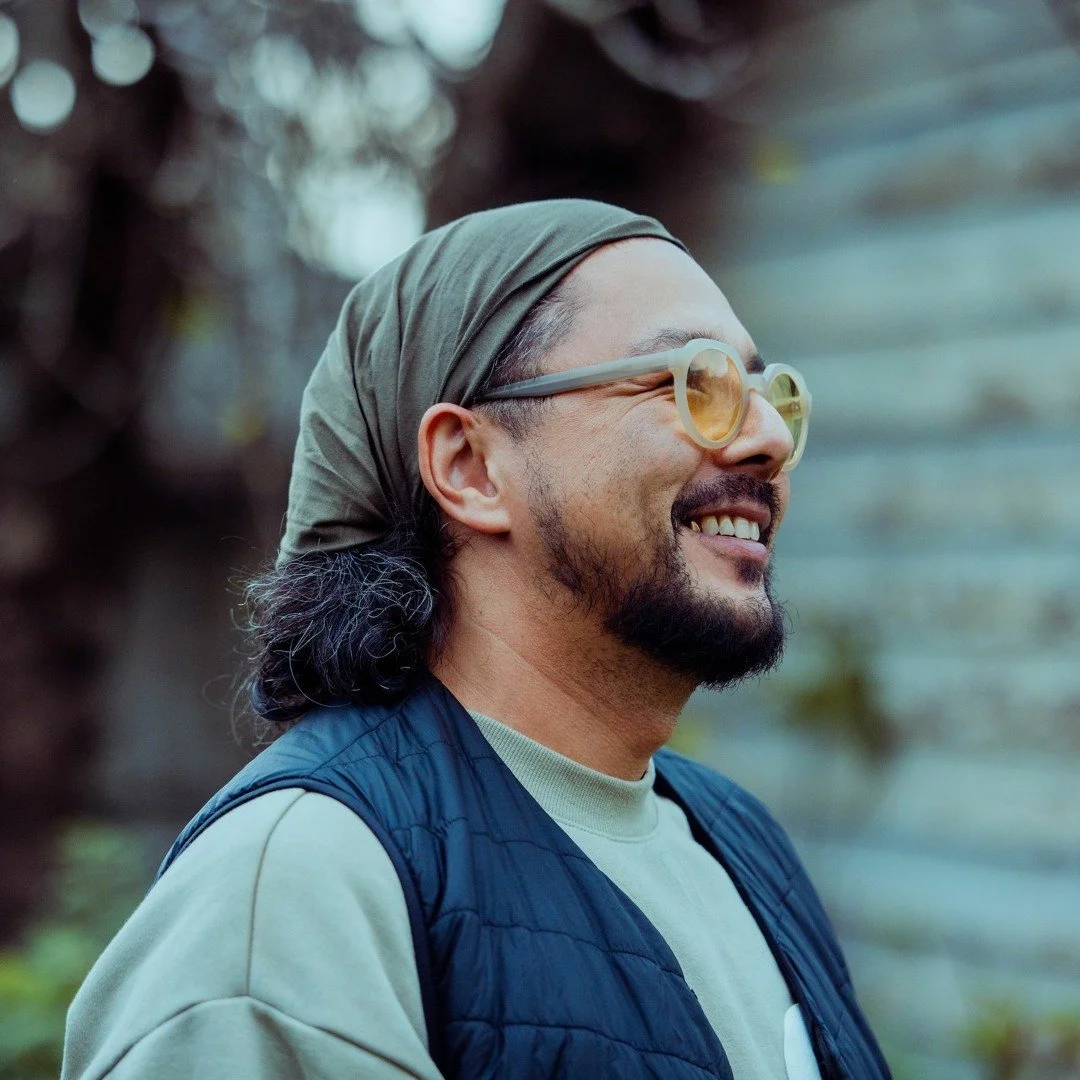
JPS
Jerry Poon aka JPS is a world-class operator. Originally from Singapore, he’s become a centrifugal force in Melbourne’s music scene. His company, The Operatives, has been bringing global talent to Australia for 20 years, from Mala and Chase & Status to Joe Kay and Jyoty. He plays a full spectrum of sub frequencies, from future bass and jungle to reggae and hip-hop, but he keeps the audience guessing, so who knows what he’ll play at Bass Coast. His set from Earth Frequency Festival 2022 is strictly vibes.
For a sensual reprieve from faster, more aggressive sounds at Bass Coast, see Minzi Roberta. A multi-hyphenate residing in Toronto by way of Hiroshima, Japan, Roberta’s SoundCloud is full of contemporary R&B, neo soul, jazz, and amapiano packaged in mixes like coconut oil, mint tea & lavender. Roberta has performed for Boiler Room, Rinse FM and Soulection and manages her own collective, Kuruza, which has a terrific radio show.
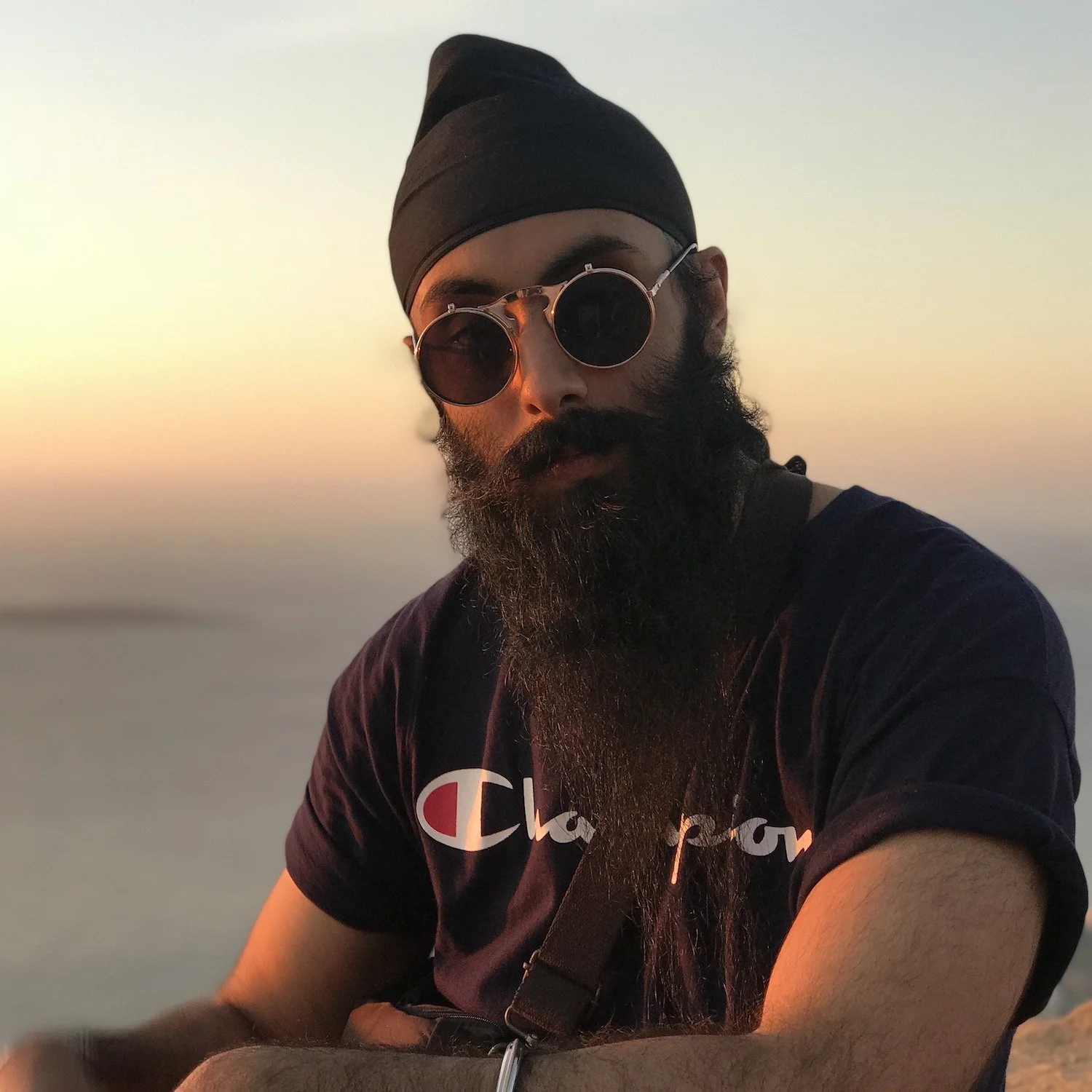
Yung Singh
After earning DJ Mag’s “Breakthrough Artist of the Year” award in 2021, the UK-based open-format DJ Yung Singh has continued to level up. He mixes all kinds of club music including garage, jungle, UK funky and grime with Punjabi folk sounds, and has earned the deep affection of ravers and Punjabi diaspora communities everywhere. Watch his Melbourne Boiler Room set, which has earned more than four million views, or do what I do and just replay this clip 10 times in a row.

How to Practice Sustainability at Bass Coast (And Beyond)
It takes hard work to host an enormous music festival in the middle of the woods without leaving any waste behind, but Bass Coast in Merritt, British Columbia (BC), Canada strives to make it easier, for both attendees and crew. Boasting a modest 6,500-person capacity and operated independently in the southern BC interior, it’s been twice awarded 'Best Boutique Festival in North America' by DJ Mag and 'Best Midsize Festival in Canada' by the Canada Music Awards. Curated by Andrea Graham aka The Librarian and Max Ulis, the lineup is of course stupendous. But Bass Coast hasn’t earned these accolades for music alone. Excellence at the event extends beyond the music to things like harm reduction, cultural respect, and sustainability.
Written by Mark McNulty
It takes hard work to host an enormous music festival in the middle of the woods without leaving any waste behind, but Bass Coast in Merritt, British Columbia (BC), Canada strives to make it easier, for both attendees and crew.
Bass Coast is a 6,500-person independent music festival in the southern BC interior, twice awarded 'Best Boutique Festival in North America' by DJ Mag and 'Best Midsize Festival in Canada' by the Canada Music Awards. Curated by Andrea Graham aka The Librarian and Max Ulis, the lineup is of course stupendous. But Bass Coast hasn’t earned these accolades for music alone. Excellence at the event extends beyond the music to things like harm reduction, cultural respect, and sustainability.

Photographer: Lung Liu
Sustainability is the ability to maintain a process continuously over time. For a festival to be successful in the long run, it must be sustainable (or have gobs of money). At events, this means being intentional about waste and not damaging the ecosystem. This is the 16th edition of Bass Coast. They have longevity in part because they don’t pollute the land.
Plus, no one wants to leave a set all elevated only to see piles of trash everywhere. You may realize your fun is coming at the expense of something larger, and begin to question the vibes. So here are some pointers to help you understand the ethos at Bass Coast, and put sustainability into practice.
“Visitors on the Land”
Bass Coast acknowledges that it’s located on the traditional, ancestral and unceded territory of the Nłeʔkepmxc or Nlaka’pamux (pronounced Ng-khla-kap-muhx) and Syilx people. The word “Nłeʔkepmxc” means “people of the creek,” according to the Lower Nicola Indian Band, one of five bands that live in and around the town known as Merritt. These indigenous or first peoples have lived for thousands of years along the Thompson and Nicola Rivers without significantly damaging the ecosystem. Surely party goers can keep it together for one weekend, in BC or anywhere else.
One of the best ways to manage waste is to create as little as possible. That starts by keeping camp waste organized. We’ve all hung out at that one haggard campsite before, and it can throw off the vibe. Plus, it’s easier to clean your site if you don’t let it get dirty!
Learn how to identify and sort your waste, including compost, returnables, specialty recycling, and landfill. Use black bags for trash and clear bags for recycling. If you run out, grab bags at the Eco Hub next to the Main Stage. Bass Coast tries to divert as much waste from landfills as possible, and your actions can make that easier or more challenging. Last year, the festival reduced landfill waste by 12% compared to 2022, according to their 2023 Sustainability Highlights. Each campground has bin stations and a Recycling Depot (marked with ♻ symbols on the map). Know where they are. When you depart, MOOP your site!
The Eco Hub is open 8:00am to 8:00pm. Drop off your specialist recycling (butts, batteries, propane tanks), wash reusable containers or cutlery, ask questions, and connect with super chill crew members.


One thing you’ll find at Bass Coast that you can’t always find elsewhere are pocket ashtrays. In 2019 at Shambhala, we introduced you to Jack Elliman of Brain Garden who invented them. They extinguish your cigarette butt and lock in the smell. You can purchase one at the Bass Coast General Store, and outreach staff will be distributing some. Empty them at the "Butt Ballot" at the Eco-Hub! If you want to join Jack’s butt patrol team at Bass Coast or get involved with Brain Garden in general, reach out here.
Bass Coast food vendors and bars are equipped to allow the use of reusable containers. So bring your own spork, bowl, and resealable mug for those Thai noodles or that granola cola. On a cold BC night after days of yelling in front of speaker stacks, nothing hits like a hot tea. But you can’t really boogie holding one of those spill-prone single use cups, so bring your own! Get one with a hook so you can hang it on a shoulder bag or belt.
Everyone’s got their own water bottle these days if only to stay hydrated, which is essential. Even Coachella cut out single-use bottles in 2023. Try extending that practice to food. At Bass Coast, I’ll have my own utensils and dishes for the first time. Bring a flash light instead of glow sticks, borrow instead of buying new (see the Buyarchy of Needs), and avoid packaging in the first place by buying bulk items and bringing them in your own containers.
Bass Coast sits on the Coldwater River. “It is a precious resource, and our rivers are constantly threatened by temperature and human intervention,” says Ruth Tolerton from the Lower Nicola Indian Band. “Please do your utmost to act with respect and responsibility toward our water."
It’s one of the most important systems in the larger Nicola watershed for wildlife like Fraser River chinook salmon, Interior Fraser coho, Thompson steelhead, and bull trout. Spawning Chinook and Steelhead were at record lows in 2018 in the watershed and both populations have been recommended for listing as endangered, according to Bass Coast.

Keep contaminants out of the river. I’ve heard some people who attend bass music festivals never use soap anyway, but if you do, don’t use it in the river! Reserve that for the showers at Camp B. Dispose of your dish water (“gray water”) at least 100 feet (about 35-40 adult paces) away from water sources. Here are tips for that process.
The pollution generated by a music festival includes the emissions everyone expends to get there, so consider how you can arrive with the least impact possible. If have to fly from the states, consider a carpool from Vancouver or Kelowna before a rental. The Bass Coast Ride Share Facebook group is always abuzz with activity (maybe bump my post while you’re there).
While BC is pretty rural, there are public transit options available. Bass Coast recommends Ebus. I’m arriving via BC Transit from Kamloops (but heads up, BC Transit doesn’t run every route every day, so check in advance). The best part of public transportation in BC? You can stare at the stunning scenery instead of the road. If you are driving, here are the directions to Bass Coast.
Festivals offer a unique opportunity to make changes. People are already feeling inspired and breaking away from the day-to-day. Build on that unique energy and embrace the Bass Coast sustainability ethos. We promise you’ll have a better time there (and everywhere) if you do.
Carry these sustainability practices to other festivals. For one thing, you’ll instantly become cooler if you tell people you picked them up at Bass Coast. For more tips, check out the Bass Coast First-Timer’s Guide and stay chooned for more of our pre-coverage.
FOLLOW Bass Coast: Official / Instagram / Facebook / Soundcloud

Entangled Mind Puts Collaboration Front and Center with Latest LP
Marissa Barbato, the creative force behind Entangled Mind, has carved out a place for themselves through their consistent blends of instrumentalism and exceptionally high production standards. Three years after the release of their debut LP, Eternal Motion, they’ve poured their energy into a sophomore album that expands on the thematic psychedelia at the center of the Entangled Mind sound, and reaches new heights against their personal catalog.The Lucid Living LP bridges the gap between emotive and somatic compositions, employing sound as a conduit for fostering connection and introspection.
Written by Alyssa Barnhill
Marissa Barbato, the creative force behind Entangled Mind, has carved out a place for themselves through their consistent blends of instrumentalism and exceptionally high production standards. Three years after the release of their debut LP, Eternal Motion, they’ve poured their energy into a sophomore album that expands on the thematic psychedelia at the center of the Entangled Mind sound, and reaches new heights against their personal catalog.The Lucid Living LP bridges the gap between emotive and somatic compositions, employing sound as a conduit for fostering connection and introspection.
The album opens with “Ossicle”, featuring the work of flutist Mattie Rosi; a delicate yet powerful composition that effortlessly blends listful flutes and chimes with a pulsating bassline, the result is a auditory painting complete with rich color and hue, evoking dreamlike sensations with every vivid note. “Tree of Life”, suffused with the harmonized tones of violins thanks to Matthew Rennick, introduces semitonal melodies overtop textured bass lines and precision rhythms. The composition is seamless, with each successive phrase paving its respective chunk of the narrative road. Raw and flamboyant. “Ghost Pipe”, a collaboration with Denver based producer Xenolinguist, delves into darker territories with its percussion-heavy arrangement and aggressive psytrance elements. The track's back-and-forth rhythms bounce the perspective between each pocket of tension and pressure. Capped off with “A Sunny Spot”, the relaxing final chords of the album ring out with in tandem with the gentle tones of the baserite flute and table, expertly handled by Eric Fraser and R!llo, respectively, and cladding the collaborative DNA of the record with an amber sendoff.
Throughout Lucid Living, Entangled Mind offers their vision of a transcendental musical journey. With its intricate compositions and evocative soundscapes, this album is sure to leave a lasting impression on anyone who chooses to embark on its voyage, and invites listeners to spend time in a state of diligent listening and introspection. Each new project from Barbato’s creative well adds to her repertoire of songs and effusive musical moments, and Lucid Living just the latest taste, with sure more to come.
FOLLOW Entangled Mind: Soundcloud / Bandcamp / Spotify / Instagram

Seppa Gets Straight to the Point with See It Through LP
Another year comes, and another stellar release makes it’s way out into the wild from the heart of Bristol in the UK; Sandy Finlayson’s Seppa moniker needs little and less introduction these days, with his extensive catalog of EP’s and LP’s doing the majority of the talking. With four years having come and gone since his last solo album release, and his current spate of US shows kicking off this evening, he’s primed to flesh out a grip of new tracks across each stop from his latest See It Through LP across the eponymous 11-stop tour.
Another year comes, and another stellar release makes it’s way out into the wild from the heart of Bristol in the UK; Sandy Finlayson’s Seppa moniker needs little and less introduction these days, with his extensive catalog of EP’s and LP’s doing the majority of the talking. With four years having come and gone since his last solo album release, and his current spate of US shows kicking off this evening, he’s primed to flesh out a grip of new tracks across each stop from his latest See It Through LP across the eponymous 11-stop tour.
Flitting back and forth between his trademark punishing bass lines and more effusive blends of melody and harmonics, See It Through is perhaps the most well-rounded of Seppa’s longform releases. The opening track, “Pyana” flirts with dainty keys and fluttered arpeggios against the backdrop of a stereo-compressed drum break, giving a small taste of most pronounced productions on the record. From “SDIG” through “Cru”, it goes pound for pound with any of Seppa’s heaviest releases to date, ripping through ungulent low end and imposing drum programming. Harkonning back to the core sounds of the Seppa project, these tracks are primed for the dance-floor and feel at home amongst his more classic palate. The ending run of the album, save for the break-out aggression of “Film”, is markedly different from much of his established catalog; from “Lacuna” to “Sole”, each track takes on fresh rhythms and striking melodies, giving listeners a chance to get acquainted with the further edges of Seppa’s arrangement and songwriting philosophy.
Whether it’s the early days of Whack Lack, Vol. 1, the sumptuous collaborative Chalky x Seppa records, or the latest machinations on See It Through, there’s an undeniable Midas’ Touch to every Seppa release. On and off the decks, his tracks have become staple anthems amongst the wider bass music underground scene and beyond, granting him thoroughly earned recognition has a top-flight producer and musician. With two months of tour teeing off later tonight, we sure to hear to the lion’s share of this record as it was intended, roaring and tearing through whatever speakers it can sink it’s teeth into, and we’re just as excited as you are.
Coming up in NYC!
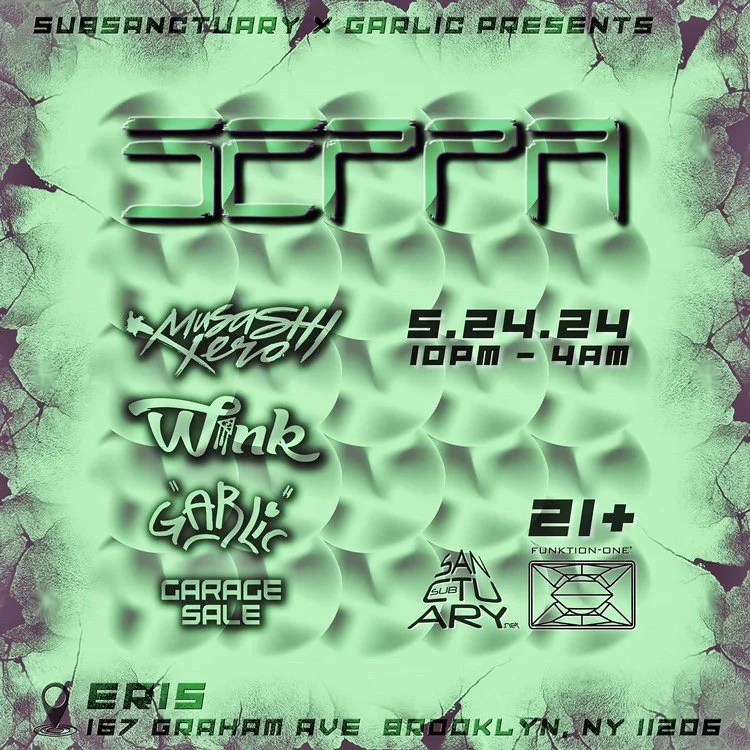
don’t miss Seppa at Eris Evolution (5.24) in Brooklyn on May 24th with the SubSanctuary crew!
Back in the states with a bag full of psycho-naughty system-centric bangers, the Bristol-born technician of growling basslines and genre-defiant soundscapes Seppa will grace the 4-point Funktion-One dance lair of Eris Brooklyn on Friday May 24th. Bring a friendly freak or three to this special one-off collaboration between Pittsburgh, PA-based SubSanctuary and the enigmatic artivism powerhouse, Garlic.
Mutashi Xero (Asheville, NC)
Wink (Pittsburgh, PA)
Garlic (Brooklyn, NY)
Garage Sale (Pittsburgh, PA)
FOLLOW Seppa: Soundcloud / Bandcamp / Spotify / Instagram

![Seppa - Interview + Boosted [EXCLUSIVE PREMIERE]](https://images.squarespace-cdn.com/content/v1/59530136f5e2319eabb7d87f/1626113208781-BZ7C6B7E3LCECV7UD4CS/Boosted.jpg)

Amongst the incoming generation of artists having finally found their bite, not yes exemplifies the modern paradigm of electronic production; there are no hard boundaries, no clearly defined destinations, and unbridled compositional freedom. There’s a refreshing whim to their choice of direction, and the result is a fast-growing, dynamic catalog that takes us through virtually every space in low-end territory.