

Unraveling The History Behind Intersect
The Canadian producer-duo Intersect has spent the last 15 years separately and combined developing a wide-reaching reputation as curators of pure groove. In order to flesh out a larger understanding of the Intersect project, The Rust took advantage of a rare opportunity to speak with one half of the operation, Rahj Levinson, and explore the meaning of the dancefloor, Intersect’s time at the world renowned Shambhala festival, and growing up submerged in musical counterculture.
“Good” music, though subjective, often involves the same set of innate responses; One can identify the subtle vibrations, the artful displacement of atmosphere, and free flowing decoration of time that good music is designed to take advantage of. The Canadian producer-duo Intersect has been putting in the consistent and sometimes arduous labor to create their sonic hallmark through music that adheres first and foremost to the groove of it’s audience.
Prior to 2014, Rahj Levinson and Scott Milne had been playing together in various groups for over 15 years, but formed Intersect when they began to focus on the middle ground between dance-fusion music and contemporary bass music. Beginning with their infamous group Wassabi Collective, their combined expertise spans decades of musical and technological development. Using a host of blends that include system music, future bass, trip-hop stylings, and psybient textures, Intersect is more than a musical group; they are a vital piece of the Canadian musical anthology.
In order to flesh out a larger understanding of the Intersect project, The Rust took advantage of a rare opportunity to speak with Rahj Levinson, and explore the meaning of music, Intersect’s time at the world renowned Shambhala festival, and their experience with across their own musical lives.
Alyssa Barnhill: Where are you both from?
Rahj Levinson: [I’m from] Nelson, BC. Scott is from Ontario. The little city of Hamilton, I believe.
Barnhill: Where\How did you two meet?
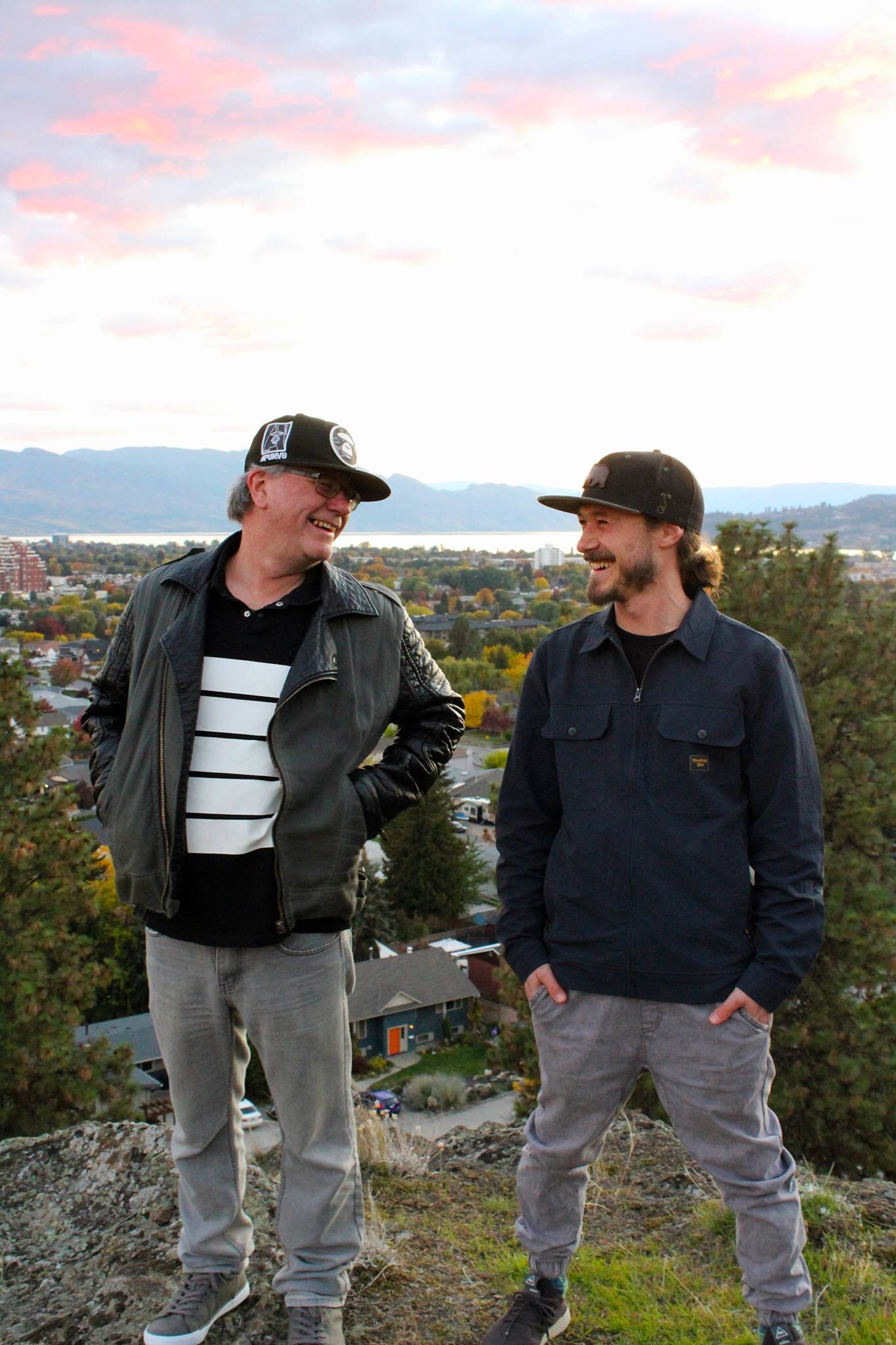
Levinson: Well, Scott was one of the founding members of the Wassabi Collective. They were in town for a show and I attended. We met in the band hotel room upstairs during a setbreak, I believe. I later went on to join them.
Barnhill: When did you start playing together? When did you start as Intersect?
Levinson: In 2000 we met, then I joined his band in 2005. We have been playing together as Intersect since 2012.
Barnhill: Where does the name Intersect come from?
Levinson: The name just kind of happened. The main idea behind the name was the intersection between playing live music and electronic music. The intersection of those styles of music and performing is what inspired the whole thing.
Barnhill: Where do you live now?
Levinson: We both live in Nelson, BC, just a few blocks away from each other.”
Barnhill: Does living so close help with inspiration?
Levinson: Living close to each other definitely helps with music and inspiration! Being able to meet up at the studio on a whim and just always hanging out talking about music has made it easy to keep inspired and always creating.
Barnhill: Did growing up there effect\change\inspire your music style?
Levinson: I think so, especially around Nelson, it has a very laid back kind of vibe. Genres like pop are not very popular here, it has always been a bit more underground. Alternatively minded hippie mountain town. For the area, Nelson has a very vibrant arts and music scene which is very special and supportive. Also, the outdoor culture here is a big part of our inspiration and goes hand in hand with outdoor festivals like Shambala and dancing.
Barnhill: Do either of you have a technical music background?
Levinson: I was actually homeschooled. My parents were hippies. So I started on guitar and moved to keys because there were always too many guitar players. I started playing guitar when I was very young, I think like 7. I picked up Piano around 2004 and then about five years later I started delving into music production. Started DJing on turntables with vinyl.
Barnhill: Were you classically trained? Is that why you make the music that you do?
Levinson: I started playing in bands first. Classical background I’d say. We like playing soulful, playful, and melodic music. Maybe jam out something in the moment but we have to create music around the dance floor.
Barnhill: What brought you both towards electronic music?
Levinson: To be honest, going to raves back in the day. That feeling of the vibrations dancing to a DJ is universal. I wanted to provide that same energy. That type of atmosphere just isn’t the same as with a live band. We like to focus more on the dance floor, create music for the dancers. Sometimes using an improvised perspective rather than technical. Whatever feels good.
Barnhill: You’re known to have a strong relationship on-stage during your performances; would you care to speak on that?
Levinson: We have been musical partners for so long, there is simply no filter. It's like a family in that way. We just kinda make music together; you could say that it’s our calling.
Barnhill: Where is your favorite place to play?
Levinson: Hands down, Shambala. It's just 45 min from Nelson.
If you’ve been living under a rock for the past 20 years, you may not have heard of the now infamous Canadian grassroots festival. Those that have made the journey describe it as a Mecca of eclectic electronic music; a festival for those seeking refuge from mainstream moments in concert and event production. Intersect’s members not only grew up right down the road from the shades of The Grove; Rahj and Scott have been flourishing there for the past decade. Sharing the limelight with names like The Librarian, Eprom, and Diamond Saints, Intersect has played an integral role in the yearly captivation of a global audience.
Barnhill: Tell me about Shambhala; what began your journey there?
Levinson: I first went to Shambhala in 1999. A lot of my friends were going to this party in the middle of the woods. It was a bush party back then but it has evolved from that into something so beautiful. I have gone religiously since and I have known some of the DJs for like 20-30 years now. It's kind of an extension of parties they used to have before it became a festival.”
Barnhill: What aspect of it do you enjoy most?
Levinson: Recreating that exact experience. Selfishly, I like sharing my music. Playing for them and seeing people happy and dancing is what it is all about for me.
Barnhill: Your latest release features three tracks with different guest artists: “All Ganja” with Mat the Alien, “Melo-sect” with Melo-nade, and the “dub n tripp” remix by L-nix. How did all of that happen during the pandemic?
Levinson: The collab kind of just fell into place. They are all friends of ours, coming to hang out at the studio. It just kinda grew into All Ganja. We were like, “We should do this”, then it all fell into place.
Barnhill: Everyone hates this next question: What genre do you consider your music?
Levinson: Genre is a hard one. Bass oriented music? I think most people try not to pigeon hole themselves with genres but I don't really think about it in that way. Left field bass, maybe?
Barnhill: What genres\music\musicians do you find inspiration from
Levinson: Early on, I would say…. The Dead and Phish were my inspiration to start doing music in the first place. Then I found myself going to raves and festivals and found a lot of inspiration there. People like Bonobo, Amon Tobin, some early dubstep producers, Vibe Squad, Sizzla, and a bunch of reggae and dancehall sound system stuff.
Barnhill: Are there other shows and festivals that stand out to you?
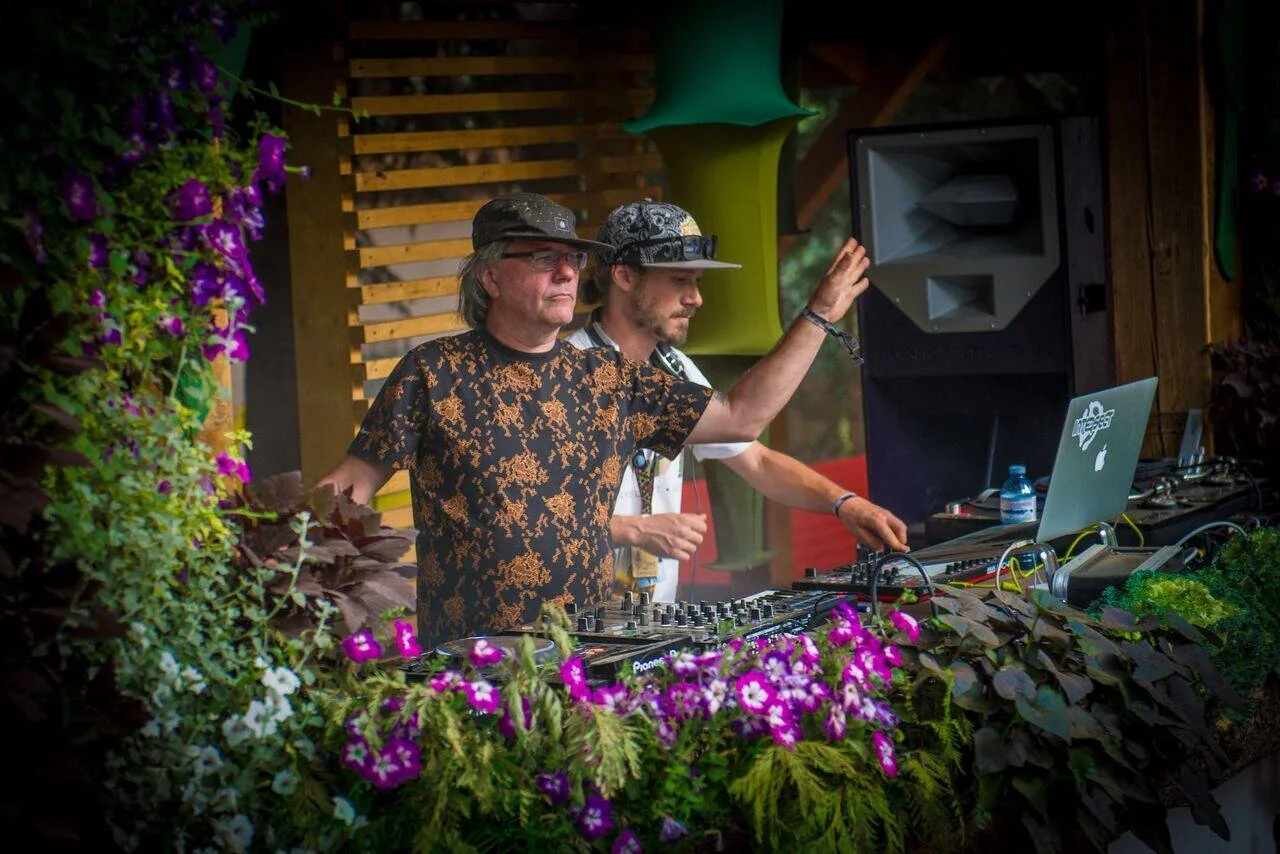
Levinson: Shambhala [is the] top of my list. It has such a vibrant music scene. But normally there are more fests than you can even play. The summer here revolves around Shambs. Depends on the dates but we try for as many as we can. Club Bloom, Shambhala’s dedicated nightclub, is our home turf too.
Barnhill: What influences the design of your sets? Is there a motif you're trying to achieve during your performances?
Levinson: Yeah, I think so. We always try and craft our sets to take people on a journey and tell a sort of musical story. It's all about the flow. We are definitely drawn towards psychedelic elements in our sets and music.
Barnhill: What are your goals and aspirations for the future of the Intersect project?
Levinson: Right now, we are working on fishing up the newest EP, as well as looking forward to going and playing shows again.
From their first EP, Push If You Like in 2014, to the throwback stylings of Vibe Setter in 2018, this dynamic duo is infinitely impassioned with clarity and musical consciousness. Years of sonic service to their homegrown communities has left with the indelible ability to weave a crowd through a powerful auditory experience. With the release of the All Ganja, and subsequently Better Days EP’s, the yIntersect catalog is stronger than ever, and their influence has officially moved beyond the 49th parallel.
FOLLOW Intersect: Soundcloud / Bandcamp / Spotify / Facebook
Iszlai: Interview + Featherbed A/V Re-Stream
The eclectic producer and multi-instrumentalist Iszlai has been carving out a space for himself amongst the nebulous field of sample-collage music. In tandem with today’s re-screening of Iszlai’s Featherbed Sessions performance for the Rusted Rhythms A/V series, we took the time to peel back some of the opaque layers to his profile, and got into some of the details surrounding his craftsmanship.
The Hungarian-based producer and multi-instrumentalist Iszlai has been carving out a space for himself amongst the nebulous field of sample-collage music. His unassailable grasp for arrangement and musical narratives is what tethers his music to sound of pure intrigue, and each iteration of his work has a tendency to overflow with a bounty of note relationships and variable rhythms. It’s a deadly combination, and one that consistently delivers in it’s unique, stutter-stepped fashion.
While geography separates Iszlai from the U.S. circuit by a little over 5000 miles, the advent of 2020’s performance streaming frenzy brought about the perfect opportunity to connect with fans new and old beyond just his studio releases. The Rust’s Featherbed Vol. XIII stream featured a full-spectrum Iszlai performance paired with Euphoric Aspects manning the visual production. It’s one thing to listen to Islzai’s catalog on record, exploring each track with as much or as little attention as one sees fit; it is another thing entirely to submerse the senses in a meticulously crafted Iszlai mix, bringing his discography to life through novel blends and precision cuts. It transforms the amalgam of songs into something far more cinematic, echoing the atmosphere of the psychedelic scores from generations past. This performance is being included in today’s edition of the Rusted Rhythms A/V Series at 8pm EDT, and will be cataloged in posterity alongside the rest of the Rusted Rhythms mixes.
In tandem with today’s re-screening of Iszlai’s Featherbed performance, we took the time to peel back some of the opaque layers to his profile, and got into some of the details surrounding his craftsmanship.
The Rust: Your music is definitely on the complex end of the spectrum; how did you come into the craft of production?
Iszlai: I used to do quite a lot of audio editing for short films back in college, and I played guitar in some bands around that time. I hated electronic music back then, but somehow I got intrigued by records having unconventional, weird guitar sounds. So I tried to record myself playing through all these crazy effect chains. It was a fun hobby, I started adding drums and other instruments, I edited my takes, then I just slid down a rabbithole and never turned back.
The Rust: Do you have a history of music education? How did you find yourself drawn to sound in the first place?
Iszlai: During my teenage years I was fascinated by playing live music. I went home and studied by myself, learned from others, it was an organic process. Everyone seemed to be better than me, that kind of pushed me to learn more, even though I was interested in applying to film school. Fortunately I could work with sound there, this opened up a whole new world for me, which eventually led me back to music.
The Rust: Given your novelty, what were some of the influences that molded your sound? Has collage-style arrangement always been a staple for you?
Iszlai: I think older, non-electronic pieces influenced me more, like Miles Davis. Miles Davis taught me to listen. That being said, the first time I heard and actually listened to electronic collage-like pieces of music, I was blown away. It fascinated me, I realized that there was this amazing ambiguity about it: being intentionally wrong and making perfect sense in a way. Rough editing messes up our perception of continuity, it challenges the “reliability” of the music itself. It is a very intriguing concept to me even today, I see it as a method for alienating the listener.

The Rust: Given the organic texture palette that you focus on, where do you perceive yourself to fit in the wider spectrum of music? Do you even bother to label it?
Iszlai: Wow, I can’t really tell, but I used to think about this. Eventually I just gave up and whatever people call my music, I’m perfectly fine with it. It is difficult for me to label it, because of my versatility. I do electronic music, but my “day job” sometimes requires the exact opposite of that aesthetic. I did small classical pieces, drove myself nuts practicing for opera, I did fully acoustic soundtracks, theatre, noise music, all those influences trickle down into my albums once I get off work.
The Rust: Your Featherbed set was really striking, and you pulled off some serious blends within your catalog. How did you go about putting that together?
Iszlai: Thank you, much appreciated! I used to play these semi-live sets arranged in Ableton, like when you just pull loops from stems, assign them to clips, start messing around. That was basically it. I only thought about how it should begin and which new tracks to include, then I just let go. I practiced a bit and came up with the idea to use that “wake up, work, sleep” interlude, went back and recorded the whole thing.
The Rust: What's the songwriting process like for you? Is there a methodology?
Iszlai: I deliberately try and change my approach, that is always very refreshing to me. I have a natural process of tapping into what I find exciting in that present moment. This can be a piece of hardware, chords, a snare drum, basically anything. I just get into it and zone out. The harder part of the process starts when I get closer to finishing the music.
The Rust: We're a year and some change into the Covid-19 pandemic; would you care to talk about what this experience has been like for you?
Iszlai: I was afraid for a while, there were definitely some rough patches. This eerie silence seeping into our daily lives, life slowly waning away... Staying busy helped, but I started noticing sleep disorder and this tranquil quality of the uneasiness I was experiencing. I remember leaving my apartment, walking down an empty street, feeling very isolated, listening to New Hymn to Freedom by Szun Waves. It was like a slow fever creeping up on me.
The Rust: What are your current plans for the Iszlai project? What are you shooting for across the horizon?
Iszlai: No plans yet, I’m currently working on scores and doing sound design for various projects. This is an exciting time for me as I learn a lot about myself while collaborating with other artists.
Be sure to take a healthy dive through Iszlai’s available catalog to get a full perspective on his cutting edge style of sample-collage production. For those who are interested in checking out further Rust-curated mixes, take a gander at our Rusted Rhythms page for a direct line on hours of aural goodies.
FOLLOW Islzai: Soundcloud / Bandcamp / Spotify / Facebook
Kalaha: Interview + “Laga Luga” Video Premiere
We're incredibly excited to host the US premiere of Kalaha's “Laga Luga” music video, and in tandem with this debut, we took the opportunity to pick apart some of the production choices and guest appearances that tied together their Mystafa LP, as well as discuss Kalaha's broader experience as a group.
It's no secret that Denmark’s Kahala is at the forefront of production-centric bands and an avant-garde twist on Jazz, blues, and pan-African contemporary music, having earned their stripes through both the lucrative individual careers of it's core members, and through their expansive, world-fusion discography. Fronted by guitarist Niclas Knudson, drummer/percussionist Emil de Waal, and the venerable producers Spejderrobot and Rumpistol, Kalaha's reach is as global as their influences, making them a contemporary psychedelic mainstay on and off the stage.
Their most senior release, the Mystafa LP, combines psybient palettes, organic timbres, and an array of guest instrumentalists and vocalists into a scintillating, culturally effusive album. It showcases the height of their respective skill sets as a band, and concurrently channels a seriously hypnotic array of rhythms and grooves that are nearly impossible to ignore. In celebration of Mystafa's release, Kalaha subsequently commissioned a music video production of the track “Laga Luga”, featuring a dance-centric edit courtesy of Bos Laflar.
In tandem with the U.S. debut of the music video, the Rust took the opportunity to pick apart some of the production choices and guest appearances that tied together the Mystafa LP, as well as discuss Kalaha's broader experience as a group.
The Rust: The Kalaha style has a distinct global feel; how did the band come into that motif? Was it a natural pull, or a flashbulb moment?
Emil: The global feel of Kalaha was definitely a natural pull coming easily to the band as a result of the influences of the very different musical backgrounds of the four founding members. Finding inspiration in West Africa, India, Turkey, New Orleans, indie rock, pop, electronica, jazz, techno, funk, blues, 80´s new wave, [and] house, the four musicians fluently and respectfully move between each other´s musical inspirations. It seems that the creative inspiration keeps coming, and who knows what will be next?!
The Rust: Can you dive into the beginning of Kalaha? What drew you together in the first place?
Emil: Niclas Knudsen went to school together and have played together on and off since 1990 in different jazz and pop music projects. Spejderrobot and I have worked as an experimental drums/electronica duo since 2008 and released four albums together. Still, it was actually Copenhagen electronic music festival “Strøm” and the Danish jazz federation “Jazzdanmark” that brought us four together for the first time in 2013 for a week of teaching workshops and playing an improvised concert on Strøm Festival. The concert was recorded in a basic stereo recording that was actually released as our first album Hahaha.
The Rust: Does the approach to writing and producing Kalaha music differ significantly from your individual projects? Is there a cross-over of ideas, or is it a unique entity entirely?
Niclas: Kalaha consists of 4 very different artists and because of that, the music is a very strong and unique mix of personalities and differs from all of our individual projects.
The Rust: Mystafa spans a wide range of tempos, modes, and ideas; did you have a specific vision in mind when the album's production began?
Niclas: The productions are always very open at start, then we follow up on all ideas and then slowly the vision starts to appear. This release shows what a big artistic range the band has.
The Rust: What can you tell us about some of the album's collaborators?
Jens (Rumpistol): There are 20 musicians and vocalists on this album, so this is going to be a long answer!
First and foremost there is Hilal Kaya, who has been our "fifth member" for a couple of years now. Hilal has a Turkish background but lives in Denmark which makes it pretty easy to meet. Saz-player and songwriter Orhan Özgur Turan first told me about Hilal when Orhan and I were writing "Çok Küstüm" together. Soon after I did a recording session with her and she turned out to be a great singer and easy to work with, so it was only natural to continue that collaboration. For the new album we've done 4 tracks with her ("Özgürüm Ben", "Vivo", "Lagaluga" and "Eymen"), two of which she wrote the lyrics for, and we've also had her perform live with us a dozen of times. We were supposed to perform live with her at Boom Festival 2020 which sadly got cancelled due to COVID.

There's also a track on the album with Moussa Diallo called "Jigi Fa". Moussa is originally from Mali, but has lived in Denmark for more than 40 years now. In Denmark he's considered a bass legend and has played as a session musician on more than 100 titles as well as recording albums of his own. He has a sweet voice too so when we were looking for a vocalist for the desert blues track "Jigi Fa" he felt like an obvious choice. The last two vocalists are both "native Danish"; Uffe Lorenzen who sings on "Dans Det Op" is considered the Gandalf of Danish psychedelic rock and has released music for 35 years with projects like On Trial, Dragontears, Spids Nøgenhat, Baby Woodrose and more. Hjalte Ross is a gifted young singer/songwriter from the town of Aalborg who has often been compared to Nick Drake. Last year, Hjalte released his fantastic album "Waves of Haste" (feat. Nick Drakes old engineer John Wood!) and he's featured on "Hurt You Once Again" with the lovely Maria Køhnke on backing vocals.
Worth mentioning is also the kora player Dawda Jobarteh and the oud player Bilal Irshed who both plays on "Jigi Fa". And duduk player Serkan Yildirim who created the epic intro and outro sounds on "Özgürüm Ben". Last but not least my old high school buddy and now award winning animation director Peter Lopes is singing on "Vivo" and my daughter and one of her friends are singing back-up on "Vivo" & "Truffle Soil". This is also the first album where everyone in the band is actually singing on the album!
The Rust: Can you tell us about some of the instruments and production processes that went into the album's creation?
Jens: The press release states that it "is an album that seeks to bring people together across cultures, genres and nationalities." I'd like to add “COVID-19 restrictions” to that sentence because it was created at a time where it wasn't even possible for us to be present in the studio at the same time. So files where send back and forth between the four of us and the collaborators. The mixes also changed hands several times between me and Mikael (Spejderrobot). It was a pretty strange experience but actually also quite fun to try. As Emil once said: "In a way, we've taken all the journeys we should have taken on our canceled tours through the music instead." It turned out to be some really cheap trips to Brazil, Mali, Turkey, Aalborg and outer space!
Production-wise, we were really keen on including more live percussion so apart from playing the drums Emil had to get busy with his shakers, agogo bells, darbukas, etc. Our guitarist Niclas played a lot of bass guitar on the album, which really makes sense when you're messing around with genres like funk and psych rock. Apart from the before mentioned non-western instruments like oud, kora, duduk and saz/baglama, there's also a fair bit of synth work on the album: Mikael has been getting heavily into modular synths the last couple of years so there's a fair amount of that on the album, and I'm also using my modular on the album (the outro of "Mystafa") as well as my trusted old Wurlitzer and my old analogues: Juno-60, CS-10, AcidLab's Bassline (303 clone) plus a bunch of soft synths (mainly from the Arturia bundle). We mixed everything in the box but did use some outboard effects like the good ol' Space Echo. The hardest thing was to make all the different pieces fit together because it's bound to get messy at some point when you're trying to blend so many genres and musicians on one album. However, I must admit I really love the bands eclectic approach because it keeps the creative process open instead of ending in a situation where everyone's shooting down each other's ideas because they don't fit into a certain [framework].
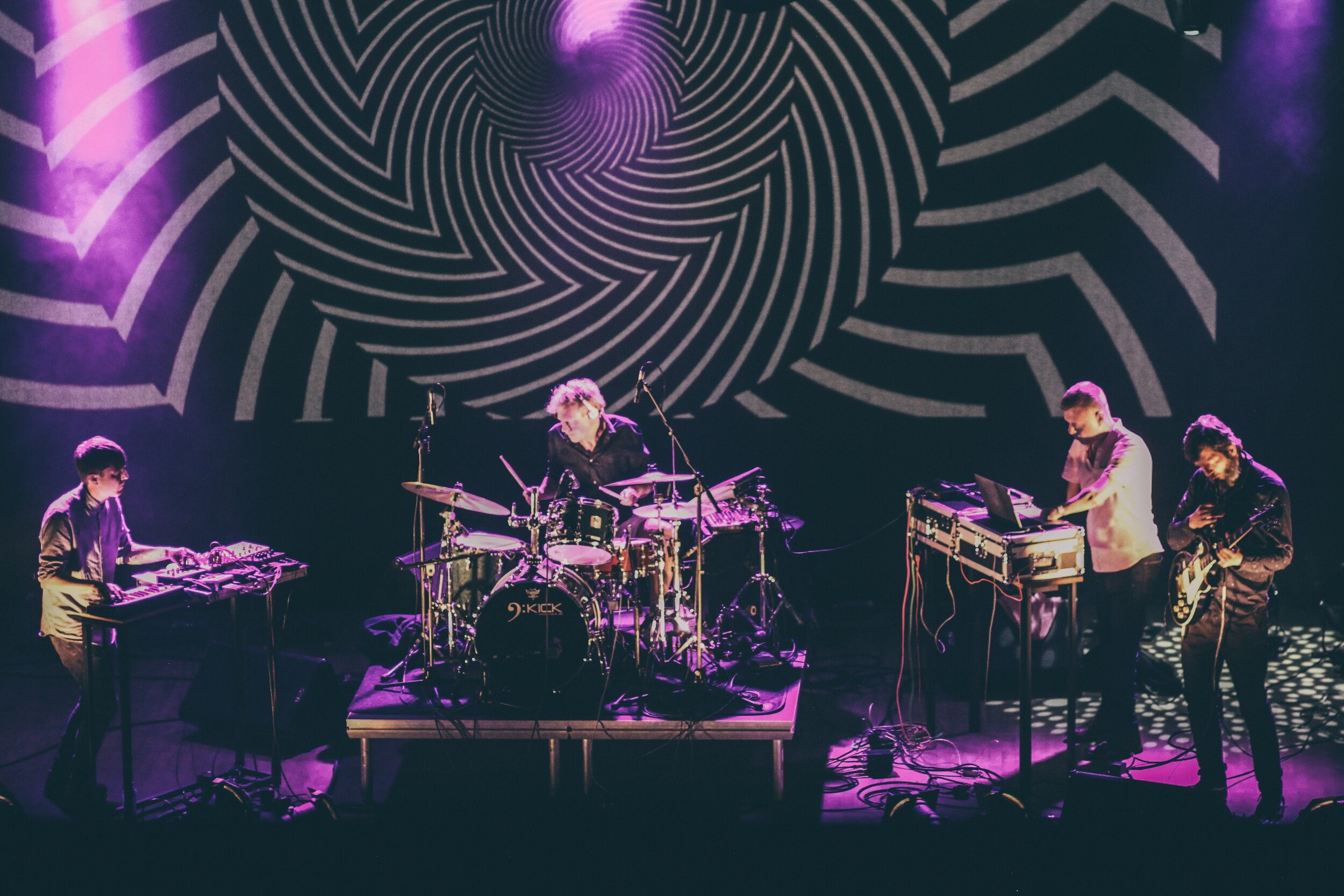
The Rust: Can you talk a bit about your live setup? How do you achieve the ideal Kalaha performance in concert?
Mikael: Overall I would say that preparation is key: being on top of the material and having the mental capacity to perform while being relaxed and confident. Secondly there needs to be some kind of fire or restless energy, since we depend on improvisation and going unexpected places as we perform. On the technical side, we are pretty dependent on everything being in sync with the computer on stage. A lot of Jens’ gear syncs to the computer, also Emil receives a click track in order to lock in.
The Rust: With nearly a year having come and gone since the beginning of the COVID-19 pandemic, what has your experience been at home? What has your experience been as a band?
Mikael: Obviously the pandemic has been a mixed bag for most of us. On an individual and practical basis we have all tried to make ends meet. Homeschooling, isolation mixed with concerns for the future and the wellbeing of our close ones on one hand – on the other: a lot of quality time with our children and closest family, having the time to take a walk in the nature and a sense of time being slowed down. As a band we decided to take a look on the material we already had – and we soon realized that maybe this was the time for us to make a bunch of new songs (and that we would actually have a pretty decent album if we just wrote a few more songs). Not playing concerts suddenly gave us the opportunity to focus on creating new material for the band.
The Rust: When we first interviewed Jens three years ago, we learned a bit about the typical experience of musicians in Denmark. What has been the collective experience of Danish musicians throughout the last year?
Mikael: I think many musicians have had the feeling that culture and cultural content in general has been of great importance during the lockdowns. As a collective we have been watching series, listening to albums, reading books in order to stay sane. Hopefully this is something that we will collectively remember and appreciate once we have put the pandemic behind us.
The Rust: Have you begun to plan for an eventual return to stages and conventional concerts? What's your view of that horizon like at this point in
Mikael: We have already had a lot of shows either cancelled or moved to a later point in time. Our release concert in Danish National Radio’s concert house, was originally scheduled for the beginning of February, but has been rescheduled to May the 2nd. This could very well turn out to be too soon. We will see. Otherwise we have a bunch of concerts during the summer that we still hope to be able to play.
With vaccine rollouts and mixed-success lockdown campaigns making their impact across much of the world, there's strong signs that the return of live music is underway across North America and much of the European Union. Naturally, this will translate in the eventual return of Kalaha to stages across the European circuit, reinvigorating this Danish supergroup of stalwart musicians and producers. Until that day comes, there's still quite a mountain to climb to reach the veritable end of the Covid-19 pandemic, and that means plenty of time to stay cozied up with some choice studio music. If “Laga Luga” and the diverse stylings of Mystafa set your vibe accordingly, make sure to take the time to explore the entirety of Kalaha's variable catalog of world-class fusion music.
FOLLOW Kalaha: SoundCloud / Bandcamp / Spotify / Facebook
![Devin Kroes - Bloom (ft. ST4RFOX) [EXCLUSIVE PREMIERE]](https://images.squarespace-cdn.com/content/v1/59530136f5e2319eabb7d87f/1619026372286-GWMAEOPI6AJ9YFQGJQTE/processed_Devin+Kroes+_+Breathe+HIRES.png)
Devin Kroes - Bloom (ft. ST4RFOX) [EXCLUSIVE PREMIERE]
Based out of Portland, Oregan, the producer and multi-instrumentalist Devin Kroes has spent the last six years and counting tapping into a variety of psybient styles across a choice collection of tracks. Ahead of his Breathe EP release through the Danktronics platform, the Rust was given the opportunity to premiere the effusive track “Bloom”, featuring the soul-drenched sax lines of ST4RFOX.
Based out of Portland, Oregan, the producer and multi-instrumentalist Devin Kroes has spent the last six years and counting tapping into a variety of psybient styles across a choice collection of tracks. Ahead of his Breathe EP release through the Danktronics platform, the Rust was given the opportunity to premiere the effusive track “Bloom”, featuring the soul-drenched sax lines of ST4RFOX.
Wielding a pristine level of clarity and tonal balance, Kroes dances between lush vocal samples and vibrant layers of synthesis. Each passing phrase paints the next hue across the landscape of the song, building on additive arrangements and fleshing out the literal breath of the track. At high point of the musical narrative, ST4RFOX breaks into a spirited saxophone run that ties off “Bloom” with a proper resolution, leaving the track to fade out between ripples of waning chords. For fans of full-spectrum sound design and organic compositions, make sure you grab the full copy of Devin Kroes' Breathe EP when it drops on April 23 on all available platforms.
FOLLOW Devin Kroes: Soundcloud / Bandcamp / Facebook
Quaint Conversations With Craftal
In order to get better acquainted with one of our favorite aural braniacs, the Rust took advantage of an opportunity to talk candidly and at length about some of Craftal's artistic influences, production choices, and his potential relation to a certain 20th century psychonaut.
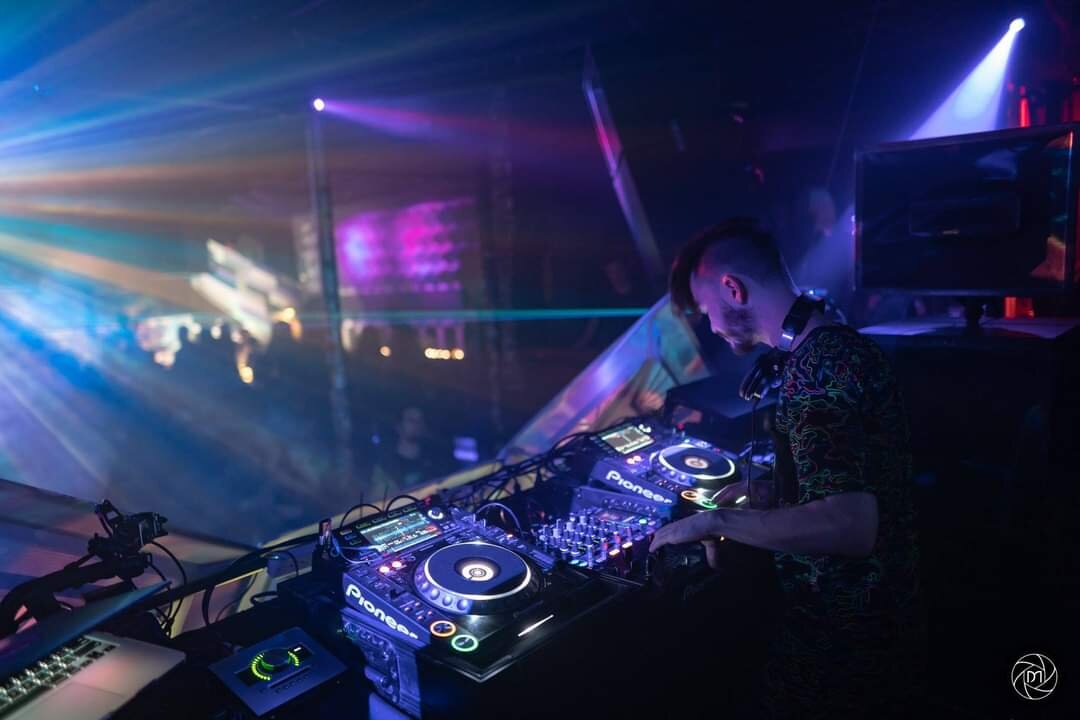
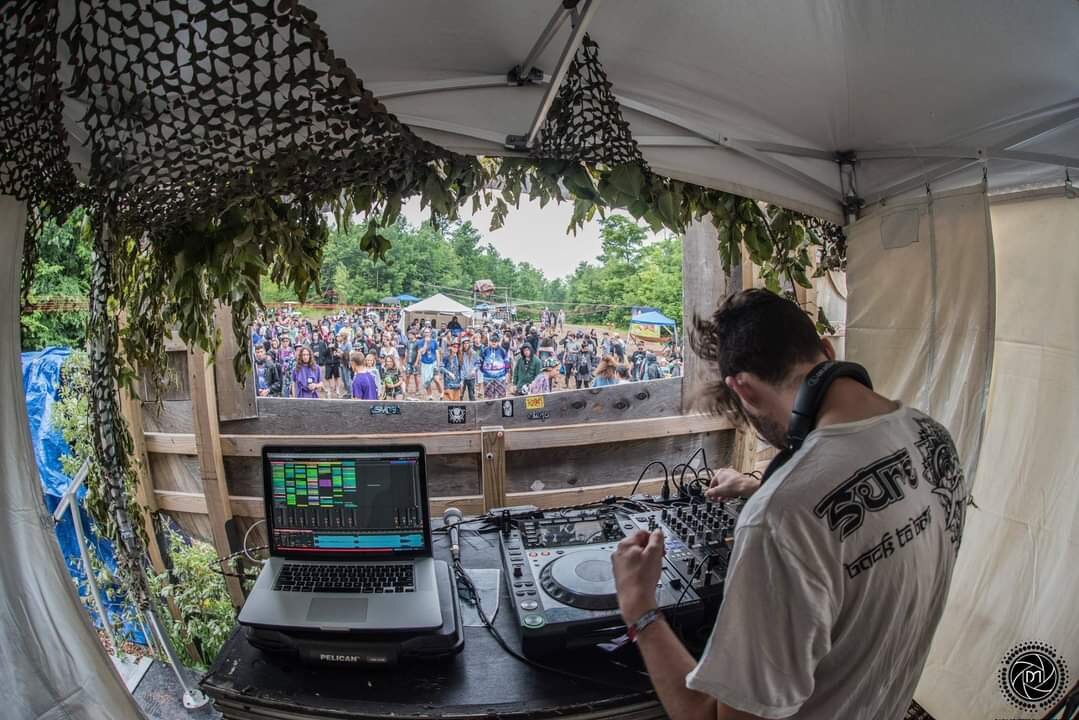
Ian McKenna, better known by his producer moniker of Craftal, has been creating breathtaking and thought provoking music across the last seven years and running. Craftal employs a diverse range of influences to sculpt his own impactful and refreshing sound, and has carved out his own space amidst the backdrop of psychedelic art. His releases on labels like Danktronics, Headroom, Wormhole, and Lost in Sound have opened doors for Ian like a revolving kaleidoscope. His drive propelled him onto the Sub.mission team at the Black Box in Denver, where he is currently a sound design instructor, and his knack for novel compositions keeps his discography in constant rotation.
Credit: Dark Matter Photography
Ian’s album Lullabytes, released by The Rust Music in 2020, features a heavy focus on glitch-hop and downtempo stylings, and is indicative of the maturation his catalog has undergone over the last few years. Yet, even stretching back to his earliest releases, tracks like “Nanobot Cave” and “Valley of Darkness” feature his traditional hallmarks of asynchronous arrangements and jubilant textures. Through patience and concentrated efforts, the current collection of Craftal tunes makes up for it's relative sparseness with meticulous attention to detail and overall quality, resulting in a powerful array of finely tuned tracks.
In order to get better acquainted with one of our favorite aural brainiacs, The Rust took advantage of an opportunity to talk candidly and at length about some of his artistic influences, production choices, and his potential relation to a certain 20th century psychonaut.
Alyssa Barnhill: Where did you get your name? Where does that come from?
Craftal: It's a portmanteau of the words fractal and craft, plus it's just a clever, quick, little switch of the C and the F.
Barnhill: Is that related to how you approach your music?
Craftal: Mostly it just came from when I was 20, that's when I really started doing musical stuff. I was just super into fractals, psychedelic culture, art, music and stuff like that, and my dad is actually a mathematician, who does fractal art.
Barnhill: Oh really? Anything we may have heard of?
Craftal: Yeah, actually he was one of the illustrators on Benoit Mandelbrot’s “The Fractal Geometry of Nature”, so fractal art has always been a part of my life, cuz I grew up with him and all that. And then the psychedelic art community, with all this digital shit that's been growing over the past 20 years, just coincided with everything that my dad helped Mandelbrot do, all the dance music and psychedelic culture stuff that I started getting into.
Barnhill: Where did you grow up?
Craftal: In Boulder.
Barnhill: Were you actively “in to” music growing up?
Craftal: I didn't really….like GET music. Like… I didn't really like... I hated all the popular music that I heard until like 6th or 7th grade, and then my sisters bought me a few CDs that I really loved. The only music I actively listened to before that was music from Nintendo games, which I only recently realized was and is a huge influence for me, and millions of other musicians who grew up with Gameboys and N64s and Playstations.
Barnhill: What were the albums?
Craftal: Demon Days by Gorillaz, The Process of Belief by Bad Religion, and technically the self titled Franz Ferdinand album, but I didn't really take to it like the other two.
Barnhill: What are you listening to lately?
Craftal: These days, mostly friends, which is pretty cool. Keota, Jade Cicada, Tipper, Woulg, Billain, Mr. Bill, 5AM. If it's well made, it's well made. Lately I have been going back to middle school and high school stuff and listening to Bad Religion. My sister got me this book for Christmas: Do What You Want: The Story of Bad Religion.
Barnhill: I have heard really good things about that book.
Craftal: Yeah, they are the only punk band that I like. That I have ever liked. Because they’re like philosophical punk. Even in this book they detail how they never wanted to be topical, they never wanted to be like against any specific administration, it's always just been about people thinking for themselves.
Barnhill: What’s your favorite synth or plug-in right now?
Craftal: These days I really like Vital, which just came out a couple months ago. Pretty fucking great. Mostly before that it was just stock ableton stuff, like off operator. Super versatile.
Barnhill: What do you like about it?
Craftal: There's a lot of stuff I love about Vital. I love that any LFO can be turned into an FM oscillator. I love that there's a stereo option for individual modulators. I love how easy it is to understand what's going on visually. I love how powerful the remap matrix is, although I haven't gotten deep into that yet. And I love how it shows how ridiculously overpriced some soft synths are by allowing you to use the whole synth for free. And it just sounds damn good.
Barnhill: Do you enjoy traditional song writing?
Craftal: I usually start with a melody but sometimes an interesting rhythm can turn into a melody. I like music where a catchy melody isn't the focus, but I think having good melodies is what makes most music memorable or timeless.
Barnhill: Would you describe that as freeform?
Craftal: Uh... I don’t know! At some point, yes, because everything is freeform until you commit to it.
Barnhill: What's your writing process? Walk me through it.
Craftal: Usually it starts with a melody. I grew up playing piano and singing. If it doesn't have a good melody, I'm just like, psht. You could have the best texture, sound, whatever in the world, but it's probably not going to be remembered for very long if it doesn't have some melody to go with it. And i'm still working on that because mostly my songs just kind of revolve around a catchy melody and lots of sound design, but i'm still working on the emotions, the journey of it. For me, yeah, it mostly starts with a melody but it can start wherever. Whatever turns the gears.
Barnhill: How much time do you give to a track or song? An album\EP?
Craftal: Too much time for both. Some of my best songs, I made in like two to three days... But that doesn't happen too often.
Barnhill: Is that a moment you walk into?
Craftal: That's the flow state that all artists try to get into. I don't know how to engineer it, yet. Or just get into it sometimes. Most of the shit I make takes like at least a month or something. I have quite tangible ADHD, so I have two modes: Hyperfocus on one single thing for 10-72 hours straight and go big mode, or shallowly get caught up in twenty different things that have nothing to do with making music for days, weeks, and months. I usually fall into the latter mode, which is a lifelong struggle for me. It’s tough for me to create art when there’s so much amazing art that’s just as good, if not better than your own, that is such a joy to observe, consume, and digest. I feel like an asshole if I don’t, because I’d like it if people did the same with my art. Or at least, that’s how I justify playing video games for dozens of hours.
Credit: Dark Matter Photography
Barnhill: Not every song has a purpose or underlying statement, but songs like “Testing”…, it feels like there may be a “musician-audience” conversation going on? Was there a direct message?
Craftal: I'm trying to think about that more lately actually. That was my first experiment with Vital, that synth I mentioned. So, it was a test with Vital, but it's also a test with playing with words and meaning. And trying to have something more interesting and concrete than just like, “Hey, look at these cool sounds''. And even though it's still “Hey, look at these cool sounds.”, “This is all a test” can be as deep as you want it to be.
Barnhill: Very true. So is there a reason when you are making music?
Craftal: The other day I was just humming a melody in the shower and then later that day, I turned it into a beat. Some say that music is always around us, just hanging in the ether. Whether in “the air” or in the emergent networks of your brain, it’s just waiting for you to tune in and open the faucet. Technically true or not, it certainly feels as though that's often the case. As for why, I’d say because music is a model for how to live properly, and I'm trying to align my life through music.
Barnhill: I heard something through the grapevine, that you have been a part of the new Meow Wolf exhibits here in Denver?
C: Yes, I am a collaborating artist. But I am also tentatively starting a new project focused on lyrics and more traditional songwriting.
Barnhill: Fun fact about you for the fans ?
Craftal: I can crack almost every joint in my body and Terence McKenna is not dad! He's my uncle.
Barnhill: No way? Really?
Craftal: No.
Cracking into the Craftal state of mind, it's no wonder that his music permeates with a natural creative pulse. The fusion of ideas, modes, and motifs across his catalog are the standout elements that give such a powerful draw to his art, and reflect the inner machinations of the personality behind the music of the Craftal project. Where he goes from here is anyone's guess, but we're all eyes and ears on the course of his career.
FOLLOW Craftal: Soundcloud / Bandcamp / Spotify / Facebook
![Omnist - Time [EXCLUSIVE PREMIERE]](https://images.squarespace-cdn.com/content/v1/59530136f5e2319eabb7d87f/1618591638531-MAJ5I886OFDUYXRA3ZZD/processed_EP+2021+A.png)
Omnist - Time [EXCLUSIVE PREMIERE]
The Swampwoofer roster artist Omnist is gearing up to launch his debut Systems EP, showcasing a honed-in production style that boasts a heavy dose of fanged, granular synthesis. Ahead of the EP's release, the Rust Music is excited to premiere the riveting closing track “Time”.
The Swampwoofer roster artist Omnist is gearing up to launch his debut Systems EP, showcasing a honed-in production style that boasts a heavy dose of fanged, granular synthesis. Ahead of the EP's release, the Rust Music is excited to premiere the riveting closing track “Time”.
Rocking a steady tempo and a hip-hop gait, “Time” is tuned strictly for shredding speaker cones. Mottled, brackish textures and faint melodic elements set the stage for multiple dives into full-throttle breakdowns of both the half-time and DnB variety. Brutal bass lines switch gears between heavily processed patches, crushing the frequency spectrum with eager bass weight. It's the first glimpse into a four track exploration of bass music's rugged underground profile, and the rest is just around the corner. Make sure to grab a copy of the full Systems EP when it drops on 4/23 on all available platforms.
FOLLOW Omnist: SoundCloud / Spotify / Facebook
Outtallectuals Celebrates 10 Year Milestone with Liminal Lore Compilation
Across the span of the last 10 years, Outtallectuals has consistently given a platform to the deluge of ecclectic electronic producers and composers from the around the world. In celebration of this decade in service to the progeny of far-out sound, they've tapped into their roster of talent and preferred associates to craft the Liminal Lore Compilation LP.
Across the span of the last 10 years, Outtallectuals has consistently given a platform to the deluge of ecclectic electronic producers and composers from the around the world. Through both their discography and representation, as well as their own publication, their label has become a one-stop shop for avant-garde music, with a specialty for hybridized genres and sonic profiles. In celebration of this decade in service to the progeny of far-out sound, they've tapped into their roster of talent and preferred associates to craft the Liminal Lore Compilation LP.
In true Outtallectuals fasion, Liminal Lore is primarily defined by it's effusive world music influence. Taking advantage of timbres ranging from tribal percussion and dulcimers, to violins, slide guitars, and ample foley, each track lends itself to the wider immersion that the compilation seeks to achieve. Merging a slew of tempos touching on the boundaries of system music and broken-beat varieties, Liminal Lore’s 14 songs play from end to end with the rolling intensity of an incoming tide, echewing the easy trap of becoming rhythmically stagnant. Tracks like Halfred and Lo. Renzo’s “Inaani” feature funk-laden phrases boasting tricked-out instrumental cuts and a generous palette of effective glitches and audio artifacts. Dipping into more emulsified flavors, the Byzantine Time Machine, Maynix, and Yuhri collaboration “Fever Dream” typifies the sultrier side of the compilation, opting for a cruising speed tempo and a collaged composition in tight synchronicity with a bevy of synthesized low-end slices. Each singular point across the timestamp of Liminal Lore is at once both entirely indicative of the Outtallectuals brand and entirely unique in execution, landing itself the title of the most critical release to date in the Outtallectuals catalog.
Ten years of non-stop service to niche electronic music communities is no easy task, but all along the way, the Outtallectuals team has made the endeavour feel like a natural extension of their waking lives. Year after year, they've delivered coveted frequencies to a discerning global audience, and Liminal Lore is but the next step in the ongoing progression of the Outtallectuals mission. If what you hear catches your ears, be sure to dive into the entirety of the Outtallectuals catalog and get submersed in a decade of expert musical experimentation.
FOLLOW Outtallectuals: SoundCloud / Bandcamp / Facebook / Webpage
![Mindtality - Macrocosm [EXCLUSIVE PREMIERE]](https://images.squarespace-cdn.com/content/v1/59530136f5e2319eabb7d87f/1617382717112-SIZOS4C7SG5YS79KRJCO/87949725_209994250106860_9043833320026144768_n+%283%29.png)
Mindtality - Macrocosm [EXCLUSIVE PREMIERE]
Mindtality has been busy amping up his production war chest, further defining his own unique sonic profile. Following up his Developmental Expedition LP, the Refrakted LP features a slew of new and improved sound design, songwriting fundamentals, and several refurbished productions from the unreleased Mindtality back catalog. In anticipation of the LP's full release, the Rust Music is excited to premiere "Macrocosm", showcasing a velvet-laden palette of textures across a lurid composition.
Mindtality has been busy amping up his production war chest, further defining his own unique sonic profile. Following up his Developmental Expedition LP, the Refrakted LP features a slew of new and improved sound design, songwriting fundamentals, and several refurbished productions from the unreleased Mindtality back catalog. In anticipation of the LP's full release, the Rust Music is excited to premiere "Macrocosm", showcasing a velvet-laden palette of textures across a lurid composition.
We'll leave the parting words to Mindtality himself: "Macrocosm is my attempt to incorporate some of my older recordings of guitar playing from high school, and revamp them into a new Mindtality twist. This track was a complete vibe to write and basically did the work itself. Enjoy this nostalgic trip down memory lane."
Be sure to keep your eyes peeled for the full release of Mindtality's Refrakted LP across all affiliated platforms on 4/13.
FOLLOW Mindtality: SoundCloud / Bandcamp / Spotify / Facebook
Alejo Teams Up with Colony Productions to unveil "Tough Cuts Vol. 2"
The ever ambiguous Alejo has partnered up with the venerable Colony Productions to release the sequel to last year's widely acclaimed Tough Cuts Vol. 1. Expounding on his head-nod narrative, Tough Cuts Vol. 2 hints at a madman on a mission for mischief, riding around in a cheap “hoopdie” while the pungent odor of petrol bleeds out of the exhaust.
The ever ambiguous Alejo has partnered up with the venerable Colony Productions to release the sequel to last year's widely acclaimed Tough Cuts Vol. 1. Expounding on his head-nod narrative, Tough Cuts Vol. 2 hints at a madman on a mission for mischief, riding around in a cheap “hooptie” while the pungent odor of petrol bleeds out of the exhaust.
Tough Cuts Vol. 2 takes the listener on a joy ride through coarse growls and back alley rhythms. Moving through each cut, Alejo touches on sharp low end stabs, eery harmonies, and atypical phrasing, fleshing out a deep dive through the brazen styles of broken-beat music. The entire EP swings with an urban gait, saturated strictly by no-nonsense frequencies. Through the sparse melodies, you can almost smell the old cigarette butts and dried Gatorade in the back seat of the Squad’s beater car, with the pervasive feeling of tomfoolery in the air. There’s no substitute for the sheer bite of hip-hop’s bass drenched derivatives, and Alejo continues to consistently hone in on each stylistic mutation from release to release.
If you’re in the market for the sharpest fidelity bass music in a golden-era variety, be sure to grab Tough Cuts Vol. 2 and other top tier selections from Colony Productions’ time tested catalog.
FOLLOW Alejo: SoundCloud / Bandcamp / Spotify / Facebook / Tough Cuts Vol. 2 Merch Presale
FOLLOW Colony Productions: SoundCloud / Facebook
Chalky and Jevon Ives Mingle Their Artistry in “Why Do We Run”
Chalky has stirred a particularly bright reaction from fans at home and abroad, mingling his virtuoso instrumental prowess with crystal clear production and lusid songwriting. Across the aural isle, Jevon Ives has been gradually amassing a catalog of contemporary rap and r&b-inspired tracks, with effective lyricism and vocal control to boot. These two tenacious musicians brought their stylistic directions under one roof to produce “Where Do We Run”.
Be it Jazz, Hip-hop, or the new wave of Soul, the UK has consistently delivered innovation and novelty in their homegrown musical offerings across the last decade. Chalky has stirred a particularly bright reaction from fans at home and abroad, mingling his virtuoso instrumental prowess with crystal clear production and lusid songwriting. Across the aural isle, Jevon Ives has been gradually amassing a catalog of contemporary rap and r&b-inspired tracks, with effective lyricism and vocal control to boot. These two tenacious musicians brought their stylistic directions under one roof to produce “Where Do We Run”, showcasing the sonic range and cooperative interplay that both are equally capable of.
Showcasing the modern dynamics of singer-songwriter compositions, “Where Do We Run” is a laid back, sensual ride through jazz modalities and sharp wordplay. Leaving behind the oft-beaten tropes of self aggrandizing hip-hop music, Jevon lays down a choice dialogue, choicer rhymes, and an especially velvet-laden chorus. It's all propped up by the track's smokey veneer, lending a moody atmosphere to the lyrical journey through the chase for material realness in our lives.
In tandem with the release, Jevon and Chalky premiered a spot-on music video to help permeate the vibe. Going further into the rabbit hole of the release, they've also opened up the track's stems for a remix competition. You'll find a link to more information about the competition below.
FOLLOW Chalky: Soundcloud / Bandcamp / Spotify / Facebook
FOLLOW Jevon Ives: SoundCloud / Bandcamp / Spotify / Facebook
Getting Acquainted with the Satellite Era Media Label
In light of the release of their Distant Arrays Vol. 3 compilation, the Rust had the chance to talk with Satellite Era, the freshly minted label and media platform based out of Chicago, learning about the core of their ethos, goals, and background experience in the wider world of electronic music.
Chicago; the Midwest's music and art hub, and the home of House, Jazz, Soul, Hip Hop, and Rock n’ Roll. A Hearthstone to so many, Chicago is the perfect melting pot for the media outlet Satellite Era. The majority of the Satellite Era’s team had been deep in the crowds of the early bass\electronic music surge that surfaced in the US starting in the early 2010’s. Their team and owners Nic Juister, Amir Mashayekhi, and Milan Milovanovic, honed in their mettle shoulder to shoulder with sweaty, elated 20-somethings in warehouses and house parties in the suburbs of Chicago.
Branching off from traditional club music, footwork/house parties, and early rave culture, the friends kept questioning and challenging the experience, what music was making waves in their surroundings, and their own involvement with it all. “We found ourselves coming back to club and older core genres such as ambient/electronica,” co-founder Amir Mashayekhi shared. “Long story short: we basically wanted to find sounds and styles that would help bridge the gap between the bass music community and the club scene.”
Satellite Era’s goal is to revolutionize the quality and coverage being offered by “bass music” media. Their pursuits of mind bending art and emphasis on digital visual content is pushing their platform further and helping expose eclectic artists to the stage and spotlight. In line with their ethos, the Satellite Era website features a music and art blog, playlists, free visual loops for download, releases, and albums that come complete with visual content, highlighting the numerous artistic outlets that Satellite Era propagates.
Their experienced team hunts through the wavelengths and interwebs for new and stimulating content. They seek to encourage and invite communication between enthusiastic fans and creators, combine music and digital art together, promoting both simultaneously, and most of all wanting to contribute to the modern age of electronic music. “We have kind of always felt like there wasn't really any major label making things happen here. Aside from the historical relevance, there aren't any tastemakers or major promoters bringing in some of the names you would see in LA or NY.” Amir said. “Chicago means so much to us and we want to embody all it has given us — an organic celebration of music in an urban setting. No flashiness or bullshit, just tightly packed rooms and warehouses.”
The Distant Arrays series EP’s are immersive art experiences that feature various artists and styles in audio/visual combinations. Aimed to create a cinematic journey into the counterculture of modern electronic styles, Volume 3 marks the beginning stages of the next emergent steps in the Satellite Era roadmap. When asked about the theme for this release, Amir expressed that this particular volume “does not have an entirely set theme, but was created to serve as an outlet for the team to share music separate from cohesive projects […] We strive to release tightly-woven, thematic EPs & albums, while letting our Distant Array series be more of an open format. I will say: we try to compile each of the Distant Array EPs to have a similar sound, which is why these artists were grouped together in the best possible fashion!”
“We selected what we thought sounded ethereal - influenced by dusty electronica from the late 90s / early 00s golden age. That is also why the color scheme for this one is a warm green,” Amir would go on to say. Each EP on this series is paired with generative, audio-reactive visuals. Co-founder Nic Juister, who concurrently works for Strangeloop Studios, produced the visual content for Volume 3.
When entering the four track collection, you are greeted by Montreal-based producer Gonima’s gorgeous introductory track “Luminescence”. Echoing chimes and distant piano-synth keys strike as the melody grows across the vibrant tempo. Decorated with glitching drums and snares that seem to bounce around like lightning in a bottle, “Luminescence” is inspired by early electronica with a lush melodies and modern drum patterns. Second is the Phoenix-based producer Brendan Rincon’s tune, “Variations”. Complete with break-beats, airy harmonies, and progressive melodies, this track reminds the listener to be attentitive to subtle moments of clarity. The chords of the harmony waver and strain, almost as if they are blowing in the wind. Slightly dissonant at times and interrupted by breaks and glitchy artifacts, those pristine moments come and go in a blink of a musical eye.
Then from the other side of the pond, Lazarus Moment comes out swinging with his heavy hitter garage track, “If I could”. Dark and futuristic, Lazarus works the room with well-structured breakdowns and echoing vocals. If the listener only closes their eyes, visions of smokey lazers and bouncing bodies effortlessly swaying fills the darkness behind the lids. The Swedish musician was set on showcasing his well established craft in this dance centric and fearless sound, and pulled it off flawlessly. Lastly but far from least, is the UK-based producer Test Bench with his jungle inspired track, “A Good Place”. The chord progression from beginning to end is impressive and gratifying to listen to. He dances from one harmonious drone to another, creating color and magnificent balance in the verses of sound.
Satellite Era hopes to usher in the new year with some inspiring and genuinely distinct artists, continue to be an outlet for musicians and creators, and uplift those around them. The last words here are best left to Amir — “Though 2020 marked the birth of Satellite Era, the rest of the year presented challenges from all angles. Our mission for 2021 is to regather ourselves, focus on the growth of our community and as individuals, deliver the best art we possibly can, and create an inclusive environment for people to discover something new. With Spring and its rebirth of the world around us, along with our 1-year anniversary coming up next month, this EP truly is the start of something entirely different.”
FOLLOW Satellite Era: SoundCloud / Bandcamp / Spotify / Webpage

Joy Guerrilla Expands Their Catalog With “The Park Is Closed”
Braying out yesterday’s future jazz from the heart of Los Angeles, Joy Guerrilla mingles analog production with instrumental affluence, fermenting their experiments across several multifaceted albums. Their latest release, The Park Is Closed, features eight collaborating musicians across numerous disciplines, showcasing a full spectrum array of progressive jazz and tropicalia-inspired tracks that slide effortlessly into the Joy Guerrilla catalog.
Braying out yesterday’s future jazz from the heart of Los Angeles, Joy Guerrilla mingles analog production with instrumental affluence, fermenting their experiments across several multifaceted albums. Magda Daniec and Adam Grab form the brain trust of Joy Guerrilla’s compositions, collaborating with a growing rap sheet of contemporary musicians to flesh out and stake claim to their sonic territory. Their latest release, The Park Is Closed, features eight collaborating musicians across numerous disciplines, showcasing a full spectrum array of progressive jazz and tropicalia-inspired tracks that slide effortlessly into the Joy Guerrilla catalog.
Though the album finds healthy support from its inclusion of various session musicians, it is Daniec and Grab’s personal skillset that lays down the true groundwork for The Park Is Closed. With Daniec manning the melodies across ten keyboards and synthesizers, and Grab serving up pocketed grooves through string basses, lead guitars, and a variety of percussion, this dynamic duo sets the stage for an instrumental dialogue that plays like a sunset vignette over LA’s sprawling highways. Be it a slow walk through subtle bpm’s and cradled harmonies, or spurts of drum-and-bass rhythms in between tightly choreographed and syncopated notation, the compositional span of the Joy Guerrilla experience displays a fundamental control over all things in the hemisphere of groove.
The Park Is Closed spares no effort in maintaining a pure experience through rhythm, and it pays off entirely by the time the needle leaves the last track. With three albums in their pocket across the last five years, Joy Guerrilla is steadily cementing their position within the musical landscape of the United States.
FOLLOW Joy Guerrilla: SoundCloud / Bandcamp / Spotify / Facebook
Canopy Sets New Personal Standard With “Refraction” LP
Over the course of the last six years, Canopy has been both a stalwart profile in the Upscale Recordings roster and a unique production powerhouse that stands out against the backdrop electronic music. Two years after the release of his Dark Places EP, he's returned to the forefront with the exceptional Refraction LP, displaying his most matured and polished release to date.
Over the course of the last six years, Canopy has been both a stalwart profile in the Upscale Recordings roster and a unique production powerhouse that stands out against the backdrop electronic music. With rhythms ranging from garage, to neuro-hop, to dubstep, to everything in between, his compositional spread covers an envious amount of territory. Backing up his multitude of songwriting staples and directions explored, the sound design and engineering quality behind his music complete the full package, bereft of any forgotten elements in the production process. Two years after the release of his Dark Places EP, he's returned to the forefront with the exceptional Refraction LP, displaying his most matured and polished release to date.
Cracking open a Canopy release is akin to a flight of craft alcohol; you have a general idea of what's inside the glass, but you're in the dark on the flavors, the textures, and bodies of the contents until you actually take a sip. Popping the seal on Refraction produces an album defined primarily by choice note relationships and salient atmospheres, with particular focus on pourous and pocketed songwriting. “Caustic”, “Opalescence”, and “Strobe” feature the stereophonic basslines that define the Canopy style, rocking juiced-up synthesis across heavy downbeats and chest-pounding riffs. In the wake of those tracks, the rest of the album takes on a range of other styles no less indicative of Canopy's signature touch, but developing along softer compositional lines with ephemeral overtones. “Flare”, “Redshift”, and “Incandescent” all feature syncopated rhythms at heightened bpms, channeling dancefloor sentiments in tandem with lush melodies and mottled foley effects. They breathe a different life into Refraction’s bloodline, ensuring that the album reflects the total capacity of the Canopy vision in sound.
Given their tenure and release catalog, it should come as little surprise that yet another Upscale Recordings offering is packed to the gills with precision craftsmanship. Given that the producer in question is Canopy, it's even less suprising that the album is so compositionally diverse, imbueing crystal-clear engineering with a powerfully emotional undercurrent. With his historical release pace to date in mind, it's unclear when the next Canopy project will see the light of day, so if you find yourself enamored with what Refraction has to offer, be sure to take a dive into the rest of the Canopy catalog, featured in full through Upscale Recordings.
FOLLOW Canopy: SoundCloud / Bandcamp / Spotify / Facebook
Entangled Mind Upends Expectations on Debut LP
With their roots and influences stretching from Charleston, South Carolina, to their present home of Boston, Massachusetts, Entangled Mind is a confluence of sounds and styles. After teasing their exploits through a variety of singles, remixes, and EPs over the last year, they've pulled back the curtain on her debut album, Eternal Motion.
With their roots and influences stretching from Charleston, South Carolina, to their present home of Boston, Massachusetts, Marissa Barbato has gradually fleshed out their musical affluence through her Entangled Mind project. Given the rich underground scenes from both of her urban homes, the blend of ideas and novel production choices in their music comes as no coincidence. Taking advantage of numerous waypoints within the tempo spectrum of electronic music, Entangled Mind productions encompass a variety of moods and styles, taking advantage of contemporaneous rhythms and niche sound design. After teasing their exploits through a variety of singles, remixes, and EPs over the last year, they've pulled back the curtain on their debut album, Eternal Motion.
The general direction of Eternal Motion comprises a number of variations on quintessential downtempo music, taking advantage of meandering measures and elongated phrases to flesh out spatial melodies and wide panned effects. In tune with the mental imagery of the album's title, each track features multifaceted sounds that seem to twist around one another like a signature vortex. “Forward Unfolding”, “Falling”, and “Warped Nostalgia” put that active texture relationship on full display, filling out the available space in the frequency spectrum to it's capacity, but without muddying the individual tones of each sound and instrument. Furthering the album's contextual spread, tracks like “Once in a Blue Moon” and “Shadow Shifting” offer a heavier, bass-centric application of the Entangled Mind style. Expansive neuro synthesis and aquatic timbres take center stage, melding into a scintillating soundscapes and powerful compositions that are sure to push sound systems to their limits, if given the chance.
The specificity in design that's apparent across Eternal Motion is hard to overstate; every passing phrase evolves through deliberate production choices that display not just a strong grasp of contemporary production and engineering, but a vested musical experience overall. What the next series of Entangled Mind productions will sound like is anyone's guess, but it's obvious that the quality of their output isn't up for debate, and there's little doubt that their subsequent releases will expand on the skillsets that give Eternal Motion such a striking profile.
FOLLOW Entangled Mind: Bandcamp / SoundCloud / Spotify / Facebook

Parrotice Releases “There Is No Evil” Through 1155 Records
The Atlanta-based producer Parrotice is brandishing his newest production chops with his latest album, There is no Evil , released through 1155 Records.
The Atlanta-based producer Parrotice is brandishing his newest production chops with his latest album, There Is No Evil , released through 1155 Records. A member of the venerable Sub.mission label, his album showcases a range of concepts in the realm of full spectrum system music. There Is No Evil is an elegant, melodic mixture of conscious hip-hop rhythms and psychedelic textures, fusing dreamy and often mysterious sounds into a liberating, industrial, and extraterrestrial blend.
Parrotice’s history as a producer is a lengthy one, and his collaborative efforts are at the forefront of his career. He stands one of Atlanta’s finest electronic producers on the circuit, and now finds himself working alongside artists like RUKU, MURKURY, and Prophet, creating a wealth of material that showcases not only Parrotice’s own musical affluence, but the skills of his peers, as well.
There Is No Evil is a musical walk through the horrors of the present, mixed with the joys and hopes of the distant future, all rolled into one seven track album. "Tine" opens the album with the cooing of birds, buzzing of cicadas, and haunting, reverberant vocals from RUKU, fusing expansive lyricism and nuanced songwriting into a vibrant call-and-response dynamic. Tracks like "Revolution" and "Majik" pack a heavier punch, pushing out punishing amounts of sheer bass weight. From top to bottom, the album flexes deep, resonant bass lines, rapid-fire wobbles, and tricked-out compositional cuts. It's a potent first chapter for Parrotice's exploits in 2021, and leaves us eagerly awaiting what he may have planned for the remainder of the year.
FOLLOW Parrotice: Soundcloud / Bandcamp / Spotify / Facebook
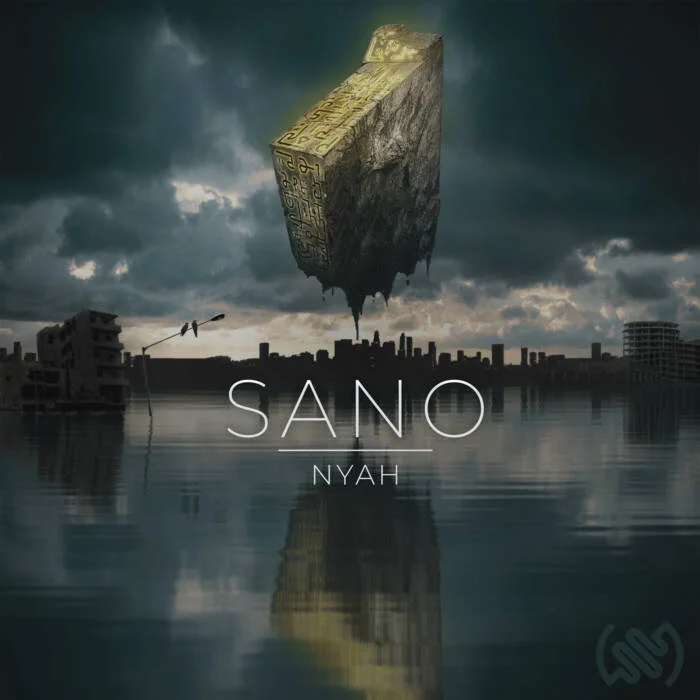
Sinewave Collective Furthers Their Narrative Arc with Nyah's "Sano"
Sinewave Collective has been gradually filling out their catalog with a host of top-notch, high fidelity tracks and collections, while simultaneously bridging the gap between sound and narrative. Each of their successive releases is accompanied by a literally puzzle piece that fills out the emotional context of the songs in question. Their most recent international addition is the pressure-laden single “Sano”, brought to life by the German producer Nyah.
Sinewave Collective has been gradually filling out their catalog with a host of top-notch, high fidelity tracks and collections, while simultaneously bridging the gap between sound and narrative. Each of their successive releases is accompanied by a literary puzzle piece that fills out the emotional context of the songs in question. It’s a formula that has seen some use and success in the hands of other artists, but Sinewave’s adherence to powerful prose and metaphor make for a striking combination with the music in tow. Their most recent international addition is the pressure-laden single “Sano”, brought to life by the German producer Nyah.
Like all tracks featured through Sinewave Collective, “Sano” is refreshingly sharp in both its choice of texture and in the mix itself. There’s a distinct clarity here that showcases the strong engineering proficiency that Sinewave is known for, and Nyah’s clever use of swelling side-chains and stirred rhythms force the brightest point of each sound into the center of the stereo space. It’s a meticulous maelstrom of percussive elements and fierce, band-passed bass lines fighting for acoustic dominance, with clear lines delineating each elements’ specific movements. It’s part neuro, part autonomic drum’n’bass, and entirely on-brand for Sinewave Collective. With the addition of Nyah’s “Sano” to their carefully maintained release catalog, they’re gaining consistent ground in their quest for the hyper precise curation of sound.
While you’re busy soaking up everything “Sano” has to give you, the best practice is to supplement your experience with the narrative blurb centered around the track’s intent and artistic backdrop;
"I found solace as I gasped for one final breath, gazing upon the obelisk suspended above me. The warm glow from it’s arcane transcriptions danced over the water's surface as I plunged into darkness, cascading in tandem with the sinking city. I felt...weightless. As I welcomed the inevitable, the cryptic symbols faded into a distant mirage and I yielded any last attempt to understand their meaning. My body now enveloped by it’s benevolent energy. ’Sano’. Its meaning now so clear to me, I realise, as I find myself at ease once again"
FOLLOW Nyah: Soundcloud / Bandcamp / Spotify
FOLLOW Sinewave Collective: Soundcloud / Bandcamp / Spotify / Webpage
DeeZNauts Comes Correct with Dual-sided "Hindsight" Release
DeeZ and Smigonaut have created their own respective careers from scratch, putting in the time and indelible effort required by touring creatives for years on end. When not working on their individual projects, they’re almost certainly communicating and collaborating on one another’s, and their most recent laboratory machinations come in the form of the double-sided release, Hindsight.
There’s something that stews in the air of New England — some sort of odd chemical mutation in the oxygen molecules — and while there’s no telling whether or not it will create some kind of Bostonian Magneto, there’s ample evidence to suggest that it has an incredible effect on the output of New England’s electronic producers. DeeZ and Smigonaut have created their own respective careers from scratch, putting in the time and indelible effort required by touring creatives for years on end. When not working on their individual projects, they’re almost certainly communicating and collaborating on one another’s, and given that they’re both drinking from the same water supply, their combined efforts are a standout display of fidelity and attitude in contemporary bass music. Their most recent laboratory machinations come in the form of the double-sided release, Hindsight.
There’s few things that cut through speaker cones like razor-edged, precision synthesis, and it’s the natural main ingredient in both songs on the record. The namesake track is a half-time tank-buster, replete with phased bass lines, transient impact, and vicious drum breaks competing for the center of the stereo space. Slowing it’s roll for just the briefest few phrases, the sparse melody grounds the track musically, but avoids constraining the beat’s emboldened personality. Complimenting the break-neck pace to “Hindsight”, “Grungus” is a subdued neuro gun-slinger, brandishing taloned mid-range cuts and shredded modulation. It’s the kind of track that underpins all of the most satisfying elements of grungy, broken-beat bass music, and the clear standout tune of the pair.
The DeeZNauts formula for success involves slicing off small morsels of massive production power, leaving us just satisfied enough, but always yearning for the next earful. It’s made all the more tantalizing by the striking fluidity of the combo, given their distinct individual catalogs and stylistic preferences. Whether by the sheer force of brainpower or by oxygenated chemical manipulation, we may never know, but we can be sure of one thing; the next handful of DeeZNauts will assuredly outweigh the last.
FOLLOW DeeZNauts: Soundcloud / Bandcamp / Spotify / Facebook
Poldoore Offers Musical Respite Through New Single "Shade"
Roughly six years after his bust-out as a household name, the talents of Poldoore have been dialed in further with each successive release, and he’s recently paired with the venerable Stereofox publication to unveil his latest single, “Shade”.
Back in 2014, an upstart, soul-inspired Thomas Schillebeeckx released the debut Poldoore album, The Day Off, achieving far-reaching acclaim in just a matter of days. The Day Off introduced fans of jazz, hip-hop, and lo-fi music to a fresh blend of trusted ingredients and novel accents, placing Poldoore squarely in the center of an emerging wave of smooth electronica. In the years since then, the Poldoore back catalog gained equal acclaim, with new fans discovering a trove of original material that showcased a man steeped in daily musicality for the better part of the last decade. Roughly six years after his bust-out as a household name, his talents have been dialed in further with each successive release, and he’s recently paired with the venerable Stereofox publication to unveil his latest single, “Shade”.
Channeling the timeless tonality of Rhodes keys through a viscous mixture of swelling synths and whimsical phrasing, “Shade” is a sonic respite from the heat of the day; there are no sharp edges or sudden spurts of energy. It’s a carefully wrapped package of aquiline melodies and consistent rhythmic satisfaction. Given Schillebeeckx’s penchant for curating a vibe, it comes as no surprise that “Shade” attenuates the attitude in the air to a serene equilibrium, and that equalization of elements is what gives the track such a notable buoyancy. With his last full length album having been released in 2019, this single makes us giddy at the possibility of a larger comprehensive Poldoore release in the near future, and you’d best believe that it will assuredly live up to the consistent caliber of his output.
FOLLOW Poldoore: Soundcloud / Bandcamp / Spotify / Webpage

Phantasmic Visions Meets Elegant Harmony: An Interview With Adam Ovoid
Deriving his name from the rare Ovoideocystidiata mushroom, Adam Ovoid has captivated the underground bass music scene with his unapologetically squishy and surreal sound design. To get better acquainted with a long-time favorite of the Rust Team and the wider community, Adam graciously made himself available for a long-form interview, diving into the lifelong pursuit of his craft and his affiliate passions.
Deriving his name from the rare Ovoideocystidiata mushroom, Adam Ovoid has captivated the underground bass music scene with his unapologetically squishy and surreal sound design. The Ovoid name was not adopted by Adam until around 2016 when he decided to jump head first into the underground bass music scene. After releasing his first album, Life, Ovoid has been a unique presence releasing singles, EPs, and albums on multiple labels and collectives.
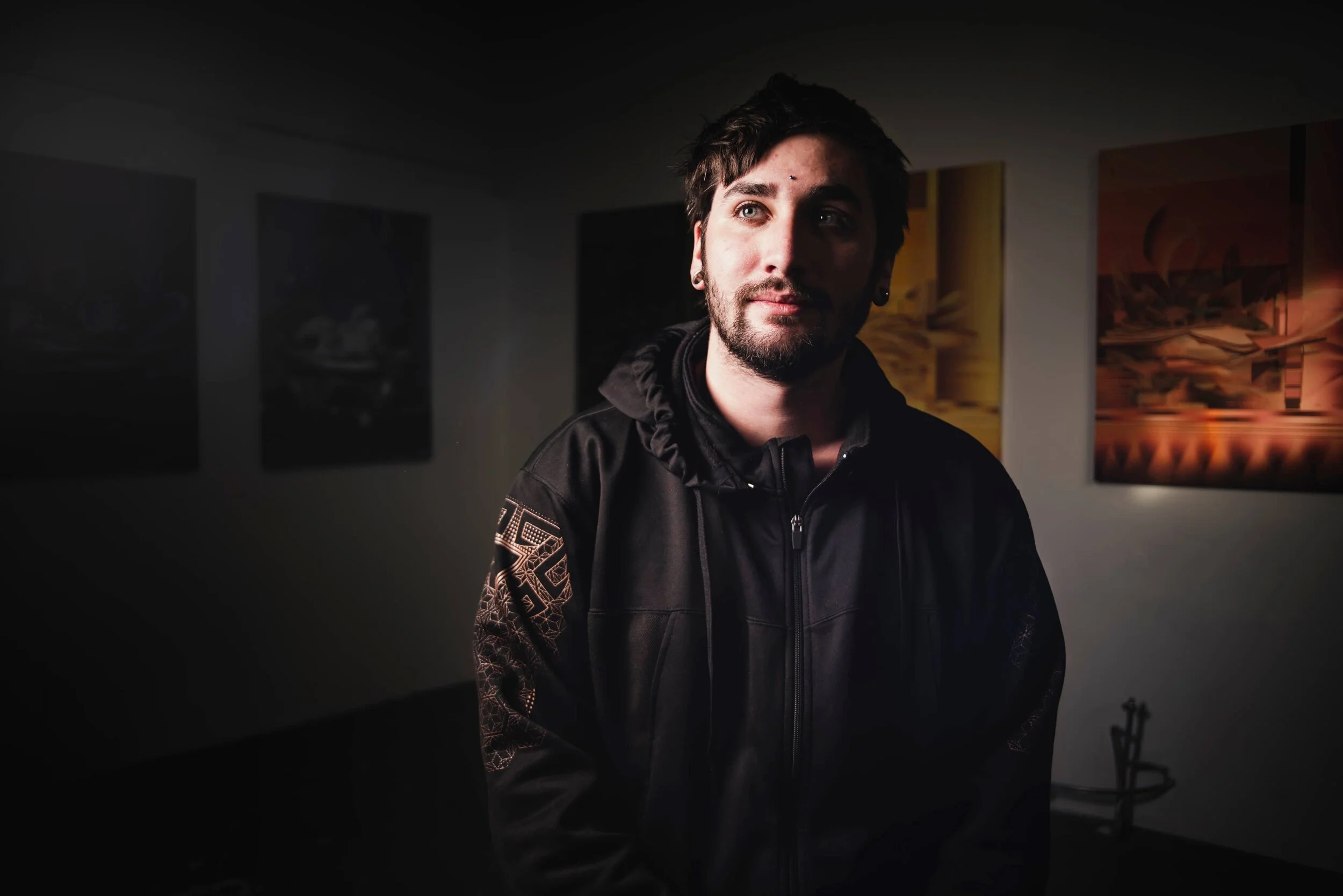
Originating from Tacoma, Washington, Ovoid has always found himself inspired by a beautiful, dewey landscape filled with tall trees, delicate mosses and steep mountains. While exploring the dense forests of the Northwest, he had been simultaneously exploring his own musical evolution. Traveling through melody and harmony, Adam hopes to expand his euphonic brain-child to other more quixotic horizons.
A self taught mad man behind the wheel of a synth, Adam has shown commanding prowess in sound production. Ovoid’s knowledge base bleeds through into his other-worldly, and at times phantasmal, sound design. His music is an adventure through genre, merging the worlds of harmony and melody with huge 808 anthem releases such as “Bangus Dang''on the Denver based Headroom Collective, and a downtempo psychedelic inspired album titled “Enigma” through The Rust. Beyond just his own individual catalog, Adam has collaborations with sound design aficionados like Hullabaloo and Shanti, transforming musical experimentation into community appreciation, driving that experimentation towards new heights.
{Add photo}
In his music, Ovoid transcends traditional musical limits by using texture and tone with his squishy and glitch-inspired sound. In such tracks as “Blocks In A Chain”, he focuses on reverberant mid-range bass lines, accentuating the twinkling highs of the melodies. In other tracks, he harnesses organic guitar tones to decorate the delicate phrases that inspire movement. “Mingo Mango (VIP)” is a song reminiscent of classic Americana and psychedelia in its purest form; long, echoing electric guitar screams, accompanied by squishy and repercussive arpeggios. It’s the liberating vibrations that move through the body in tandem with the cymbal crashes and synthetic textures, exemplifying the Ovoid ethos.
To get better acquainted with a long-time favorite of the Rust Team and the wider community, Adam graciously made himself available for a long-form interview, diving into the lifelong pursuit of his craft and his affiliate passions.
Alyssa Barnhill: Who is Ovoid? Where are you from?
Ovoid: I go by Adam Ovoid and I'm from Tacoma, Washington, and kind of the Tacoma/Seattle area, in my adult life. I have lived here my whole life pretty much but I'm planning on moving to Denver soon.
Barnhill: How did you like growing up in Washington state?
Ovoid: It was great honestly. It's still definitely one of my favorite places in the country, just because of the nature here, the mountains, and the forest. I definitely grew up loving the forests and mountains here and never really realized how special they were until I got older and traveled other places and realized that there’s not many others out there, like this. So I definitely have a really special place in my heart {for tacoma} but also I really want to get out and go live in other places for a bit. Kinda just explore other parts of the country and the world.
Barnhill: Have you ever played under any other names? Or has it always been Ovoid?
Ovoid: As far as this genre of music it's always been Ovoid but I was in bands in my high school and also had some hip hop and electronic projects too.
Barnhill: What instrument did you play?
Ovoid: I play guitar. Grew up playing guitar from when I was like 12 so that's definitely a pretty integral part to my production. I use a lot of guitar in my songs.
Barnhill: Do you sample a lot of your own guitar work?
Ovoid: Yeah! Yeah, pretty much all the guitar on my songs is me playing. Expect like, maybe one or two tracks where one of my friends played a riff or two.
Barnhill: What kind of guitar do you have?
Ovoid: Right now I have a Fender Stratocaster. I got it recently so it isn't on any of my released music but I am really excited about it because it's the nicest guitar I have personally ever had. I really love how it sounds. So it's definitely already made it into some tracks but not anything that I've put out. And I have an acoustic guitar and that's on Enigma. That's all that guitar.
Barnhill: What’s your first memory of an impactful musical experience?
Ovoid: Hard to say like the first but probably hearing my dad play drums. It was like the loudest music I had heard at the time cuz I'm sure he was doing it from the time I was born but I remember being a little kid and hearing my dad play Led Zeppelin on the drum, crank out stuff like that. He would play a lot of funk too like Parliament Funkadelic and Rick James. I remember being stoked on that music and I still love all that music. Then kinda growing up and getting into live music was probably listening to Pink Floyd's Dark Side of the Moon. Which has pretty much always been my favorite album.
Barnhill: What was your first festival/show?
Ovoid: The first show I ever saw was actually The Rolling Stones. Kinda funny because they were already so old at that point but I think I was like 12. My parents kinda just brought me there but I was still excited to see the Stones. The first concerts I really remember going to, that I really wanted to go to, was metal bands like Megadeth and Slayer. I liked that stuff a lot. Then getting into psychedelic music I think the first electronic/psychedelic festival I went to was Gem and Jam, in like 2014 maybe. After that I got super into the bass music scene and kinda wooked out for a few years.
Barnhill: Yeah totally. I think we all have our wook years, at least at some point. You have to go through that. Where is your favorite place to play so far?
Ovoid: Definitely, most consistently I love playing at the Black Box. It’s always great. But it really just depends. Sometimes I'll go to a random show and I really don't know what to expect at all. If it's like somewhere I've never been before or even like a state I've never been before, completely foreign to me, but then it will be like such a great crowd. But it really just depends on if everyone is just feeling it, even small crowds in a random venue, with maybe not even the best sound can be pretty awesome.
Barnhill: Do you still get like pre show jitters?
Ovoid: Sometimes, but it kinda just depends on the show. A lot of time, if I’m just feeling good about what I am going to play and feel that I've been in the studio enough, then usually I feel pretty good about it. But then sometimes if I'm not too confident in something that I’ve been producing lately then I get a little more nervous for sure.
Barnhill: How long have you been performing sets?
Ovoid: I probably started playing shows like 6 years ago? Or maybe 7 years ago.
Barnhill: So about 2013 or so?
Ovoid: Yeah. I'm pretty sure that was my first show. Then like, more shows though in the last like four years. After that I played Tipper & Friends. After that show it has been a lot more.
Barnhill: What year was your set at that Tipper & Friends event again?
Ovoid: I'm pretty sure that was 2015. Or no, I think, 2016? I always forget, I even though there is a poster on my wall!
Barnhill: How was that? I love tipper and friends events.
Ovoid: That was amazing. The Tipper and friends crews, they just do it so proper. It's just always such a good production all around.
Barnhill: What's your background playing shows? Did you start in smaller little venues locally? Did it all kind of just all jump off at once for you?
Ovoid: I definitely started in a lot of super small venues in Washington and Seattle. Underground shows, sometimes they were not even like really venues. Like tiny apartments and stuff. After the Tipper & Friends show I started to get bigger bookings, but still a lot of smaller stages and small clubs. Which I kind of prefer. I like having a more intimate audience usually because it feels more personal.
Barnhill: Everyone wants to play bigger venues, but you prefer that more intimate stage. I mean the Black Box is definitely that way, it is very intimate.
Ovoid: Yeah the black box is perfect. Enough people can fit in there but it's still very intimate.
Barnhill: This may be a little left field but I have to ask, am I pronouncing this properly? Bang-us DANG?
O: Yeah! Haha
Barnhill: Where did that come from?
Ovoid: It's just gibberish really. I can't remember what sparked it but something one of my friends said.
Barnhill: What do you have planned for the future?
Ovoid: I definitely am trying to get a full length album together and just really put a lot of effort into making sure it's super detailed and really how I want it to be. That's just a main goal, I want to be playing more shows and stuff like that. Mainly I am just finishing up a solid album, I have a good chunk of stuff with such potential. Like with my last, longer EP I did on The Rust, some of those songs, I worked on them for like three years before I released them. My process is just pretty slow on the downtempo stuff, I like to take a lot of time with it usually.
Barnhill: There is no harm in that. I saw that you are doing mastering services and wanted to ask about that. What does that look like for you, what do you offer people? What track are you most proud of mastering?
Ovoid: Mastering has been great for me, it's honestly what's been keeping me afloat. And I have been mastering everyday, at least a little bit. Hopefully I will grow it to become a full service business. Generally, I really like it because I get to kind of hear what a lot of “up and coming” producers, or maybe more hobby producers are being influenced by and what they are trying to make. It’s cool to hear a lot of my friends' influences on people who send me music, like sometimes I’ll hear stuff that sounds a lot like my friends' music. It's cool to see the influence trickle down through the generations of producers. And then also being surprised by people sending me stuff that's pretty new sounding, a new sound, or really pushing the envelope. In addition, being able to master a lot of my friends' music is really great. I think the thing I'm most proud of is Craftal’s latest album on The Rust. That is my favorite thing I've done. I really love that album a lot and he's a good friend of mine.
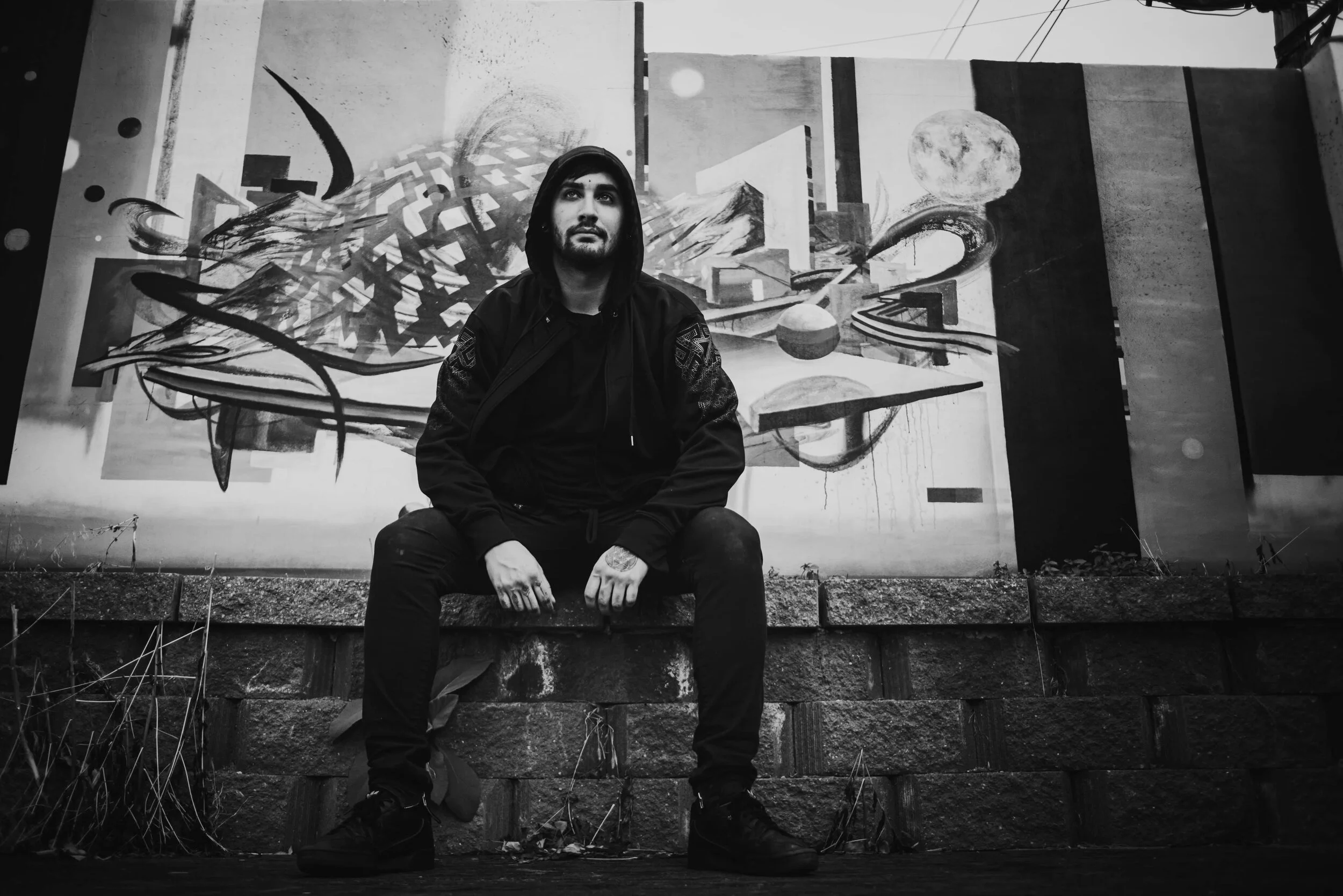
Barnhill: What do you do outside of music? What do you do when you're not mastering or making your own music?
Ovoid: I am pretty social. I hang out with a lot of my friends that Ive known for most of my life in Tacoma. I hike a lot, I read. Oh, I'm trying to get into like full on summiting mountains but I need to take some glacier travel courses to be certified to get the permits but growing up here in Tacoma, with the mountains kinda looming over the city, has really inspired me to want to climb them. Hiking is definitely my favorite pastime. Mostly music though, honestly, I'm kinda a workaholic.
Barnhill: Who are you listening to now? Anyone you are looking forward to in music?
Ovoid: Right now, my biggest influence is probably Nine Inch Nails. I didn’t really listen to them growing up. I had heard their songs a little bit, but then in the last year and a half or so, I have been totally sucked into their music. I think it’s their production style that got me but I’ve been pretty obsessed with Nine Inch Nails lately. Also, I like things like Snarky Puppy, jazz fusion. I love all that. That's what I switch back and forth with, weird jazz fusion stuff to Nine Inch Nails. I like a lot of the stuff that I was playing on the Ovoid Radio Sessions, during quarantine. Just a lot of kinda chill stuff, a lot of trip hop, other sorts of relaxing music.
Barnhill: Did you go to school for music?
Ovoid: So for production, I'm mostly self taught but we have an awesome community of producers in psy-bass music that all share knowledge with each other constantly so that helps a ton. But I did go to an arts high school where I took songwriting and audio recording classes for 3 years and I definitely learned a ton there. I also took guitar lessons for many years before that so learning music has been a lifelong journey for me at this point.
Barnhill: How would you describe your music?
Ovoid: How I would describe my music is one of my absolute least favorite questions to get because I hate trying to quantify it into genres. I use “psy-bass” as an overarching term but really it's all over the place and I try to not limit myself to certain tempos or genres.
Heavy, pulsating, and serendipitous, Adam Ovoid is bridging the gaps that define the genres of psychedelic, bass-heavy music. If music is the forest, its inhabitants are musicians and creatives, and Ovoid is the mycelium network reaching out to each corner. Nutritious for the soul, pleasing to the ears, and engaging for the body, everyone should take a nibble off the mushy delight that is Adam Ovoid.
FOLLOW Ovoid: Soundcloud / Bandcamp / Spotify / Facebook
Poztman Cracks The Seal on Debut LP + Remix LP
Constantly breaking out of contemporary forms and functions in composition, the Poztman project has an immediate draw that’s hard to thumb down, and harder to replicate. After years of sharpening personal artistic imagery into a fine science, he’s finally cracked the seal his debut LP: Void Vermin.
Constantly breaking out of contemporary forms and functions in composition, the career of the Belgian glitch producer Pierre Collie has been awash with groundbreaking sound design and motifs since his inception. Be it through saturated low-end, intuitive use of audio artifacts, or the personal slapstick nature of his music, Collie’s Poztman project has an immediate draw that’s hard to thumb down, and harder to replicate. Glitch music, in a raw format, is as exactly what the name suggests; anything from quaint to extreme asymmetry within a composition and sound palette. After years of sharpening personal artistic imagery into a fine science, the current zenith of Collie’s project is his debut LP Void Vermin.
The challenge in successfully portraying glitch music is almost always how asymmetry is introduced and wielded within a songwriting context, and Collie possesses an undeniable control and execution over this extraordinarily amorphous genre. Void Vermin, in action, it is a droning cornucopia that can sometimes feel bright, manic, and awash with color, and at other points feel deliberately brooding, embodying monochromatic arrays of grey texture. The tone choice greatly reflects the attitude of each track, such that “Cemetery Wind” and “World Egg Burst” are distinctly centered on timbre and note relationships, and “Burial Blossom” and “Subliminal Suicide” strictly focus on droning, repetitious percussion and synthesis. If at one moment, the album puts harmony and cadence on the center stage, the very next moment will assuredly descend into a torrent of resampled craftsmanship and intentionally combative sound design. It’s the ideal Poztman experience, fleshed out in astounding detail, and presented with extreme fidelity.
Adding further dimensions to the experience, the nineteen original tracks on Void Vermin are accompanied by thirteen remixes from an assortment of fellow glitch producers, including Man From Sol, Purfakt, and arkistrate. In that way, it is not just a dive into the recent Poztman developments; it is a showcase of cutting-edge glitch music from the genre’s contemporary standard bearers, and Collie’s seal of approval underscores the entire collection of tunes. While we sort through Void Vermin’s variety of flavors, we’re certain that the Poztman project’s next iterative adventures are already thoroughly under production, and we’re certain that his fellow audio pioneers are in lockstep right behind him.
FOLLOW Poztman: Bandcamp / Soundcloud / Spotify / Facebook


![Seppa - Interview + Boosted [EXCLUSIVE PREMIERE]](https://images.squarespace-cdn.com/content/v1/59530136f5e2319eabb7d87f/1626113208781-BZ7C6B7E3LCECV7UD4CS/Boosted.jpg)