
![Seppa - Interview + Boosted [EXCLUSIVE PREMIERE]](https://images.squarespace-cdn.com/content/v1/59530136f5e2319eabb7d87f/1626113208781-BZ7C6B7E3LCECV7UD4CS/Boosted.jpg)
Seppa - Interview + Boosted [EXCLUSIVE PREMIERE]
Amongst the growing list of boundary-breaking and charismatic producers, Sandy Finlayson’s Seppa project has remained a tenured and potent force at the very helm of the international bass music movement. Returning to the active listening rotation amidst an explosive revival of live music across much of the world, The Rust is proud to host the premiere of “Boosted”, the first single of the upcoming dual release package Boosted/Forked. As a companion piece to the “Boosted” premiere, we felt compelled to have a succinct dialogue with Seppa about his experience across the pandemic, his developments as an artist and a label head, and his own self perception in the face of his hard-earned success.
Amongst the growing list of boundary-breaking and charismatic producers, Sandy Finlayson’s Seppa project has remained a tenured and potent force at the very helm of the international bass music movement. His audacious studio productions and iron-clad impact on stage are the unassailable result of years of dedicated experimentation, and the last year huddled up at home may have been his most fortuitous yet. Returning to the active listening rotation amidst an explosive revival of live music across much of the world, The Rust is proud to host the premiere of “Boosted”, the first single of the upcoming dual release package Boosted/Forked.
“Boosted” takes a departure from the oft-trodden territories of half-time and neuro-hop, and instead wields a mutated garage rhythm interspersed with generously distorted downbeats. It’s the kind of high intensity, low-riding roller that goes straight for the neck, eschewing downtime or respite in favor of sheer force. Reflecting the duality of the full release, “Boosted” is the slow-churning companion to the upcoming track “Forked”, with both reflecting the new bevy of upcoming material that Seppa is slated to release throughout the rest of 2021. It’s all within his carefully established wheelhouse while simultaneously displaying the developments and affects of his own personal year in the locked-down UK.
As a companion piece to the “Boosted” premiere, we felt compelled to have a succinct dialogue with Seppa about his experience across the pandemic, his developments as an artist and a label head, and his own self perception in the face of his hard-earned success.
The Rust: As of now, the world is spinning closer to its usual beat; Where’s your head at right this moment?
Sandy Finlayson: It’s in a pretty good place honestly! I guess you could say I’ve become very acclimated to limbo in the last 18 months. It’s definitely nice to have things like gigs on the horizon, but we’re still not back to business as usual here in the UK. It might happen soon, but it’s draining to get too invested at this point. If good things happen, then great, if not, then more studio time! It’s certainly been good to have some time to get into some healthy habits and do some uncomfortable but necessary staring into the void. It’s easy to build an identity solely around what you do, which is ultimately kind of unhealthy. Having that taken away has been a lesson in reframing who I am and what makes me me. I suppose everyone needs a reality check sometimes, whether they want it or not!
The Rust: Are you chomping at the bit for a return to the limelight, or are you content laying low as the rest of 2021 progresses?
Sandy: I wouldn't say I've ever really been into the limelight. I've always felt like I want my music to be successful and well known, but I don't really want to be a famous individual. That's pretty at odds with the accepted way things work these days but fuck it, I'm the only one that has to live with all my choices. Having said that, I do absolutely love playing music to people and sharing that really magical experience en masse. Touring and meeting so many great people, bringing everyone together through sound, is one of life's great pleasures and I'm definitely keen to get back to it! I'm not gonna rush it though, there's some stuff in the pipeline but I can't talk about it yet!
The Rust: Speaking of the limelight, you’re surely at the top of many lists as tour routes and events begin to propagate the map again; are there any cities or events in particular that you’re eager to return to?
Sandy: Oh man it's really hard to pick honestly, as I've played to great crowds all over! In terms of places that always go off - Denver, New York, Chicago, Detroit, Atlanta all spring to mind, but that’s by no means an exhaustive list. The Black Box is always a favorite venue to play, that's been the weirdest one to be away from for so long! Plenty of great festivals too, with Infrasound and The Untz being two of my favorites so far. If the sound is good and the vibe is good, it's gonna be a good time. I’m sure there’s so many awesome places I haven’t experienced yet!
The Rust: We’re well into a year after the initial global lockdowns; can you talk about the impact that has had on you and your artistry, and on your label?
Sandy: It's been a weird one for sure! As a collective we mostly just took a bit of a pause in some respects last year, with fewer releases on the label, though people were still working away on music behind the scenes. Personally, I put out Split the day after the lockdown hit here, and then just disintegrated a bit. I think it was partly burnout from the previous couple of years, and partly the fact that the ideal delivery method for my music had been banned for an unknown amount of time. Either way there was a heavy air of "fuck it" going on for a while there. In hindsight though, it was a really needed bit of space and time to reassess what I was doing and the music I've made off the back of it has felt really fresh to me. These next couple of tracks (Boosted and Forked) are really just the first bits of material I've got lined up for release in the near future.
The Rust: Your inception as Seppa involved a production knowledge base that had already been honed in through your years under the Duskky moniker; do you feel like your creative process has matured alongside the Seppa brand in the years since then?
Sandy: Oh yeah, massively. In a lot of respects, where I started with Seppa is where I really started to take things to a whole new level. Creatively, my horizons have expanded; technically, it's night and day. But I think that's not specifically because of changing my name, it's just a thing that happens naturally over time if you're really committed to mastering a craft. You get out what you put in. In some respects it was nice to have a "fresh" start as I feel like the quality of the Seppa stuff has been high from the beginning, which I can't say so much for the Duskky stuff. I started releasing as Duskky within a couple of years of starting to produce, so there was a lot of learning the fundamentals going on and it was never gonna be polished from day one. I've definitely gravitated towards increasingly dancefloor-focused material, at least with my solo stuff, which is really just down to the fact that destroying the dance is a pretty unmatched feeling. The air gets totally charged with happy energy, I love it.
The Rust: What sort of stumbling blocks do you still find yourself experiencing during your creative process? Have they changed as you’ve grown as an artist?
Sandy: There's always barriers to overcome, I don't think that ever changes. To start with they might be more on the technical side - how to get a track to sound competitive, how to make full use of a sound system, that kind of thing. As time goes by it becomes a bit more conceptual - how to keep introducing new ideas, how to break out of patterns you have established in the way you work. Really being creative professionally is a running battle with your own psyche. “How can I get the most out of my brain on a given day, how can I navigate the somewhat dubious feedback it gives me at times?” I guess, for me, the main thing is to try and keep finding excitement in what I do. That might mean switching directions and doing something really different for a while, or absorbing ideas from music outside of my normal spectrum. I see a lot of producers get jaded because they box themselves in to doing the same thing over and over again. Perhaps it's the sound they got most well known for, or they're stuck deploying the same methods over and over again and (unsurprisingly) getting the same results. If you're not enjoying what you make, why do it at all. Better to just switch up and go down some weird rabbit hole, even if nobody else gets it. People can feel the passion you have through the music.
The Rust: We last spoke on the record 3 years ago, in May of 2018, when Slug Wife had really begun to sink it’s maw into the American landscape. What’s your perception of your label’s experience in the time since then?
Sandy: Wow it's crazy how quickly that time went by. It's been a pretty wild ride! I personally wasn't able to get out to the USA until about March 2019, so at the time we spoke I really had no idea what was coming up. It's been really positive for us as a crew, the American crowd is our home crowd in a lot of ways with so many serious fans. It's blown my mind how far people will travel to come see us play, and how ready they are to get stuck on the dancefloor, whatever we throw their way. In a lot of respects it hasn't changed the label's approach all too much, as we're still focusing on a fairly select group of artists and releasing things we really enjoy. There's a temptation to get caught up in the music industry machine and just push out whatever the flavor of the month is, but we never envisioned the label like that and (for better or worse) are always gonna trust our own taste when it comes to what gets released!
The Rust: Has there been a significant change in the way you process incoming label submissions, given the explosive interest your label has experienced?
Sandy: Yeah I suppose we've had more people sending music our way. I definitely get people hitting me up directly with demos. I'm always happy to listen and appreciate it massively when people share their work (I know it can be a really nerve-racking experience). We have very, very specific requirements of what we want to release though, so I would say the overwhelming majority of stuff doesn't really fit for us. We'd rather put out a smaller number of high quality releases which are 100% our jam, than just pack out the release schedule. There's a numbers game that gets played by a lot of labels - social media platforms expect you to post constantly, therefore there must be new things to post about constantly, so the calendar gets filled with whatever and there's a new release every 2 weeks. That probably is a good way to get high follower counts and good interaction etc. but essentially it's more about being a brand/influencer/whatever than it is about music. We'd rather just focus on music and not get caught up in the popularity contest.
The Rust: Can you talk about the perception of your label at home in the UK? What’s the landscape like for our mutual flavor of broken-beat bass music these days?
Sandy: I guess it's a little hard to say as there's been very few events for the last 18 months. There's much less of a scene here for our music than in the USA, but the people that are into it are great. It's just a way more underground thing I guess! But then most electronic music is really, there's less money going around, but perhaps a bit more creative freedom and a seriously hedonistic attitude towards partying which creates some very excitable dancefloors. There's a lot of genuinely great vibes flying around in the rave scene - it's been funny to see videos of pretty run-of-the-mill free parties getting shared by American producers saying "woah these people are really going for it!" - that's mostly what parties are like here. People wanna cut loose, they don't care if they look like someone just dragged them out of a canal, they don’t care about being judged for how they dance or whatever. The music often reflects that by being really high intensity, faster and generally as rowdy as possible. There has been, even before the pandemic, a bit of a death of the multi-genre parties that I grew up on, but fortunately there's people like Ash/Scheme Boy from Varispeed trying to turn that around with his Varispeed Socials event that's putting all our favorite flavors under one roof.
The Rust: Having found yourself in headlining positions across the US for a few solid years now, you’ve had a heavy hand in influencing the current generation of grassroots producers; what’s your perception of your influence? Is it something that you pay any mind towards?
Sandy: Yeah it's always worth being aware of that. I'd like to be someone that inspires and encourages people, rather than gatekeeps. I do a lot of mastering, mixing and teaching, so I've been lucky enough to get connected to a lot of up and coming producers through that, and I've gotta say there's a lot of great people out there making awesome music with a solid attitude. Hopefully I can inspire people to just make the music they want to make, and not feel like they have to sign their lives away to be successful. Mainly it's just nice to talk to people who are as excited about music as I am!
The Rust: What are your plans for the Seppa project as we round out the rest of the year?
Sandy: So Boosted and Forked are coming out on Friday, July 16th (just in time for my birthday on the 17th) and represent the first solo stuff I've released in a while! These two are the result of some really fun experimentation, and probably represent the more...mellow end of what I've got to follow. There will be more music coming out steadily through the rest of the year. It’s all gonna be self released through my own Bandcamp. Social media reach is unreliable at best, so if you wanna make sure you always hear about my new releases head to seppa.bandcamp.com and hit follow for email updates. Touring is on the way too, but you'll have to keep your eyes peeled for info on that! If you’re interested in booking me hit up nicole@subdotmission.com and she’ll sort out the details.
With all eyes set on the road ahead, it’s only a matter of time before Seppa’s name starts to populate the top line of concerts and festivals across the US and beyond. This year of imposed downtime has given many creatives a previously unimaginable amount of time to fortify their crafts, and the premier Slug has boded his time wisely. As the rest of 2021 makes landfall, a new collection of Seppa tracks will meet the light of day, and we’ll all continue our ongoing dive into the fierce musical machinations of Sandy Finlayson.
FOLLOW Seppa: SoundCloud / Bandcamp / Spotify / Facebook
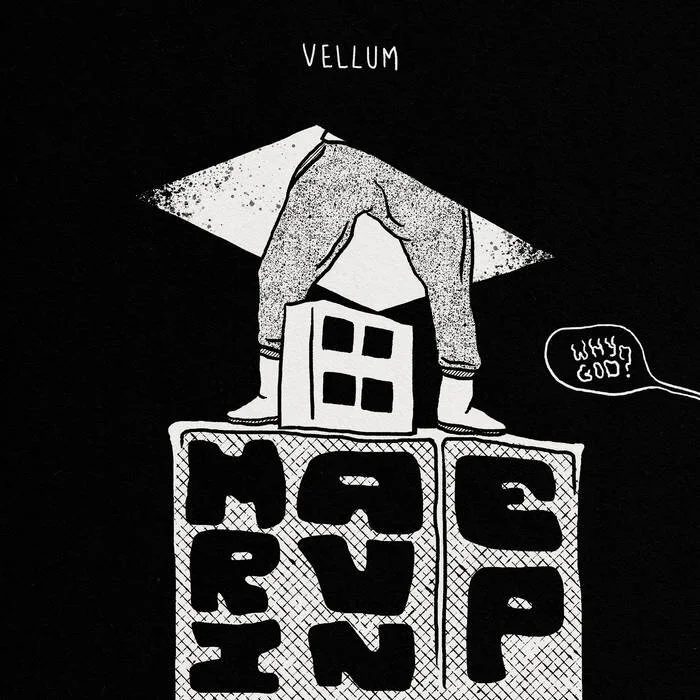
Slug Wife Gains Another Stellar Label Release With New Vellum EP
The clock ticks off another hour, and Slug Wife ticks off another superb featured release; Vellum’s Marvin EP typifies the furious sonic profile of half-time bass music, and couldn’t possibly be in better hands amongst Slug Wife’s pristine roster of artists. His signature pressure-laden bass lines are amongst the forerunner textures that popularized contemporary, hyper-aggressive neuro music throughout the US, and the Marvin EP is just as brolic.
The clock ticks off another hour, and Slug Wife ticks off another superb featured release; Vellum’s Marvin EP typifies the furious sonic profile of half-time bass music, and couldn’t possibly be in better hands amongst Slug Wife’s pristine roster of artists. Over the last several years, Vellum productions have snuck their way into speakers across the North American touring circuit, making him a mainstay name in his slice of our musical hemisphere. His signature pressure-laden bass lines are amongst the forerunner textures that popularized contemporary, hyper-aggressive neuro music throughout the US, and the Marvin EP is just as brolic.
For Vellum, tempo is as malleable as texture, and his releases over his career have ranged from pure sonic experimentation, to high fidelity bass house, to brutal broken-beat music and beyond. The Marvin EP sits in the broken-beat pocket, pushing bass weight at terminal velocities for maximum impact. Tracks like “Style Wars” and “Marvin” feature his classic stuttered arrangement and snaggletoothed textures at the end of each bar, giving the underlying beats a swayed, jivey rhythm. “Zones” takes the Vellum style in lyrical direction, with the English MC Gravity laying down tightly-coordinated bars atop a neuro-hop sound platter, contrasting nicely with “Resurrector”, a gun-slinging deep dive into subterranean low-end. From top to bottom, the EP is a stellar take on razor-edged sound design and high energy electronic music, showcasing Vellum’s undeniable production flavor.
As the list of assumed pairings between the Slugs and their favorite artists grew slimmer and slimmer, it was only a matter of time before they snagged a proper Vellum release. With features across labels like Inspected, Gold Digger, and Maraki Records, Vellum’s tenure goes without question, and the value of his productions follow suite. As always, The Rust will be keeping our ears peeled on his future experiments, knowing full well that they’ll be just as righteous as always.
FOLLOW Vellum: Bandcamp / Soundcloud / Spotify / Facebook
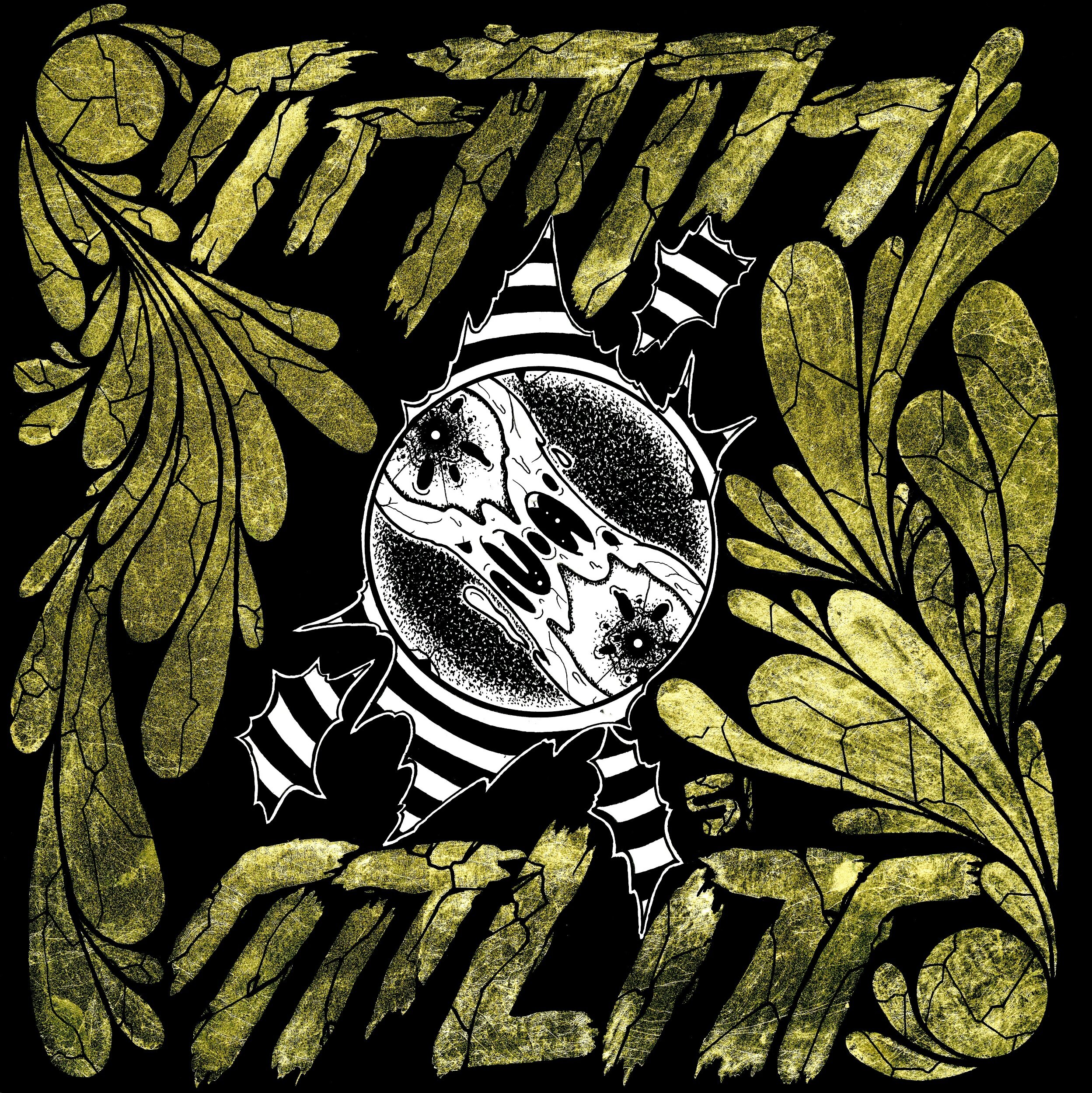
Seppa Traverses Stereo Space in Split
Each Seppa release has diversified his personal palette, and the unveiling of Split reinforces the project as an audio experiment with few parallels and fewer boundaries.
When Slug Wife enters the conversation, it's usually in reference to their razor-edged sound design and audible fierceness; the experimental label is home to a number of top flight producers and engineers working synergistically to craft bass music designed for pure bludgeoning. Amidst the seemingly endless output of monstrous tracks and high octane EPs, there's remarkable compositional work being done under the surface. Seppa, one of the labels co-founders, and the Executive-in-Chief of Gastropodia Prime, has a particular strength for branching off of the archetypical tropes involved with brutish bass music. His latest release, Split, tops off the rest of his catalog with the most shapeshifting, amorphous album out of Slug Wife yet.
Seppa is far from a stranger to malleable composition or narrative releases. From Homunculus to Stress, his stapled solo material builds on constantly evolving phrasing, arrangement, note relationships, and distorted textures. Pairing well with his original music, Bright Spots, a collaborative LP with Chalky, puts his instrumental and music theory skills on full display, accentuating the allure of an already highly sought-after producer. Split feels like a matured combination of his original musings and collaborative longform compositions, showcasing an evolution in songwriting that can be harder to find once an artist settles into their role and fame.
From the jump, Split brings emotional turbulence to the forefront, with "Elk" setting the tone for a subtle masquerade of low end frequencies and tonal suggestions. There's a tension that feels all at once dark, eary, and especially curious. Immediately jettisoning into "OLVO", shuffled hi-hats and reverberant pulses of melody echo across the song's stereo space, with warped, undulating bass lines shredding in and out of the mix. It's the kind of one-two punch that pierces listeners with excitement from the very start of the journey, guiding the attention into each new track.
Bringing the album to a vicious full circle, the title track "Split" is a boisterous monster of complexity and pure rhythm. Mottled breaks flex in and out of focus, bouncing off of raucous bass stabs. The arrangement is hairbrained madness meeting total sonic domination, pushing resampled synthesis to it's absolute musical maximum. The force of the track is a combination of it's exhilarating delivery and synaptic impact, and it's the pairing of these precise attributes that makes both the song and the album an undeniable step up in Seppa's ongoing musical journey.
Contemporary bass music production has evolved to encompass a massive swath of music real estate, and the number of interpretations and genre diasporas seems to multiply weekly. The constant, guiding focus of this musical evolution tends to be composition, and Seppa is firmly planted in the upper echelons of forward thinking songwriting and eclectic production. Each release has diversified his personal palette, and the unveiling of Split reinforces the Seppa project as an audio experiment with few parallels and fewer boundaries.
FOLLOW Seppa: SoundCloud / Bandcamp / Spotify / Facebook
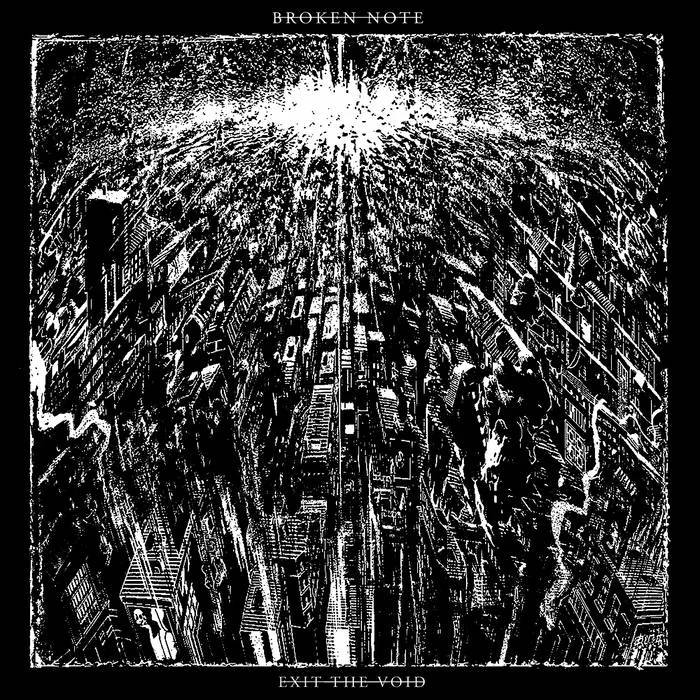
Broken Note Unleashes Massive 15-track LP “Exit The Void”
Broken Note’s music is exactly as his name suggests; staccato, abrupt, and unabashedly glitchy. After spending the last year deep at work in the labs, he’s crafted what is undoubtedly his most ambitious release to date: Exit The Void.
The speaker creatures running the show at Slug Wife have a way of one-upping themselves on a fairly constant basis. Sound design is the name of their game, and their roster carries some of the progenitor producers and engineers involved with contemporary bass music. Alongside Seppa and Kursa, Broken Note is one of the original Slugs to carry the mantle, placing him directly in the center of low-end design’s Gastropoda enterprise. After spending the last year deep at work in his laboratory, he’s crafted what is undoubtedly his most ambitious release to date: Exit The Void.
Exit The Void is a 15-track album brimming with distorted textures and hair-splitting rhythmic switch-ups. Broken Note’s music is exactly as his name suggests; staccato, abrupt, and unabashedly glitchy. Over the course of a tenured career that spans more than a decade, he’s been at the forefront of modern bass design since his inception, driving the burgeoning sounds of neuro and half-time drum’n’bass since their infancy. What has always set him characteristically apart from his contemporaries is the extremely punk veneer and aesthetic to his music. Exit The Void expands the horizons of that attitude. His mixes are certifiably clean by all measures, but the music itself is a blanket of distortion and intentional phasing. Clipped, dented, and fractured bits of audio are his weapons of choice, and he wields them with remarkable dexterity. Whether it’s speaker-shredding low-end in “Pressure Chamber”, or the intentionally malfunctioning breaks in “Iron Sky” or “Parabolic Hex”, his music channels through the ears like a data stream fighting its way to sentience. It’s an ultimately successful fight, giving Exit The Void the illusion of biological growth.
Broken Note is often the quieter of his slug compatriots, but never for lack of ambition. His head-down work habits have paid off time and again in the form of mentally-scintillating music and performances, especially throughout the stateside Slug Wife takeover earlier this year. Pushing the boundaries of sound and pressure wherever and however he can, Broken Note has never failed to deliver on his evolving ferocity. This time around, he’s managed to completely break those boundaries altogether, bending the frequency spectrum into a fantastically spectral adventure. For all those seeking the dark, undulant bits within bass music, your next fix is waiting inside the folds of Exit The Void.
FOLLOW Broken Note: Soundcloud / Bandcamp / Spotify / Facebook
FOLLOW Slug Wife: Soundcloud / Bandcamp / Official / Facebook
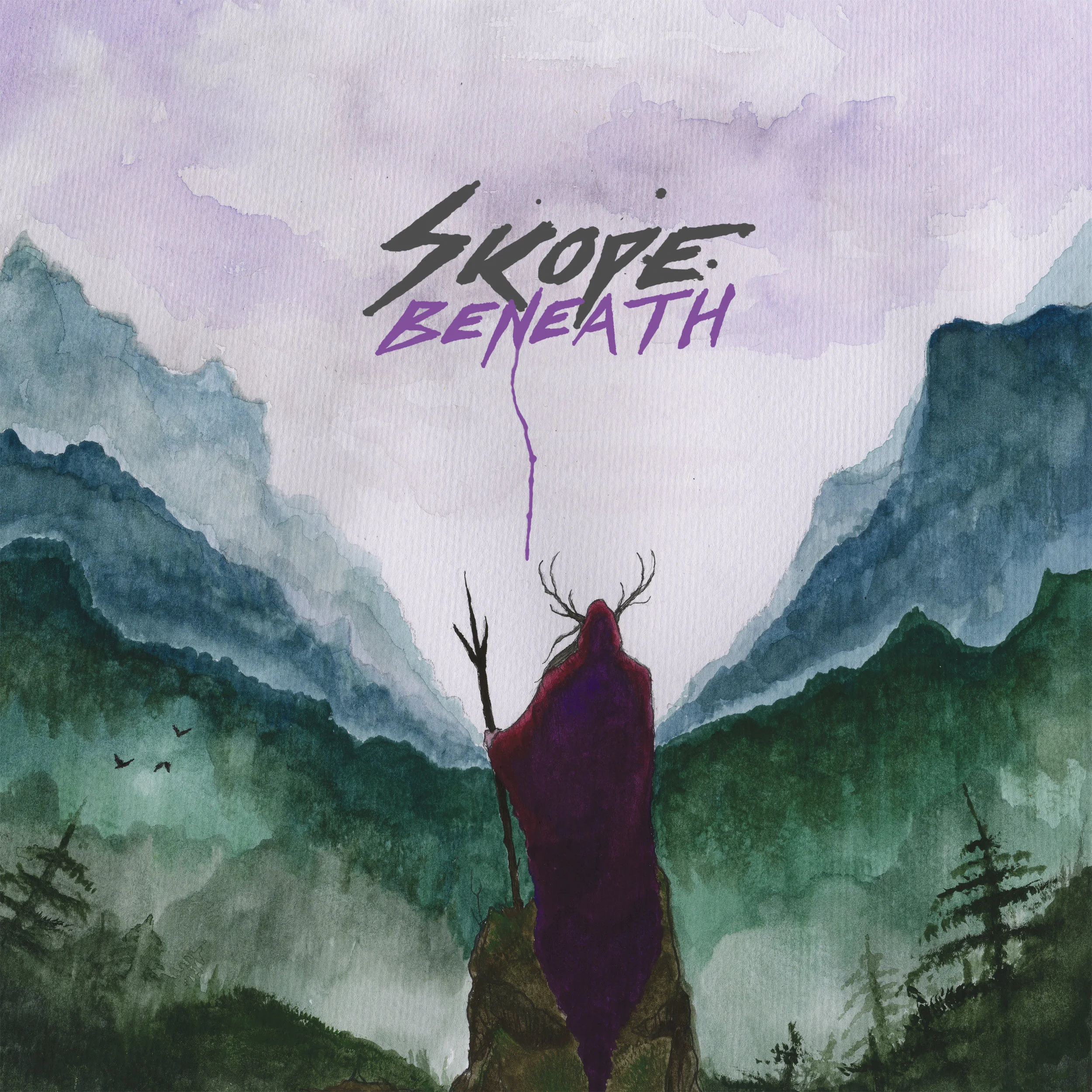
Skope - Beneath EP
Skope, is a tenured heavyweight in the underground music scene across both ends of the Atlantic.After a relatively quiet three years from Skope, the neuro progeny has teamed up with Slug Wife, a label filled with long-time contemporaries who played their own role in the rise of neuro’s sonic palette.
Bass-focused electronic music in the Western hemisphere has always taken cues from sonic developments in the United Kingdom. The career of Skope, one of England’s finest producers and engineers, is a great example. The tenured heavyweight in the underground music scene was part of a small wave of producers who envisioned modern neuro textures over the first few years of the 2010s. After three relatively quiet years, the neuro progenitor has teamed up with Slug Wife to push out the Beneath EP, an emulsified lesson in audio brutalism.
Skope’s style during his first few years in the public realm was self-styled as neuro-hop, playing off of hip-hop rhythmic motifs and saturated sound design. Much like Koan Sound or Opiuo, his Razorbeam EP and Rollerskates & Hoverboards EP combined a dancefloor-friendly approach with technical precision, utilizing wide stereo imaging and consistent percussive grooves. On the Strange Science EP, Skope redefined his output around the proliferation of the half-time interpretation of drum and bass. Since that release, his production and arrangement philosophy have evolved dramatically, resulting in new, monstrous sound design and composition on the Beneath EP. From the synthesis to the percussion processing to the double-faced audio glitches, this release is another accolade atop Skope’s legacy. Every track slings mean-mugged bass lines that do exactly what he is so known for; absolutely shredding speaker cones.
It seems like Slug Wife is on everyone’s tongue at all times, and their discerning followers won’t be disappointed once the Beneath EP makes its rounds. Given the length of time since Skope’s last release, this meeting of the minds could slingshot his catalog back into the forefront for old fans and new. Considering the bone-crushing size of these tunes, our fingers are definitely crossed for some live and direct action with the man himself. In the meantime, we’ll have the Beneath EP on gratuitous repeat.
FOLLOW Skope Beatport / Soundcloud / Facebook
FOLLOW Slug Wife: Bandcamp / Soundcloud / Facebook

Reso - Sandrock EP
With each successive release, Reso reminds discerning listeners why he has earned such a vaunted tenure in the wider world of bass music. Sandrock is filled with pulverizing low-end, naughty rhythmic jaunts, and flexible dance-floor compositions. This release marks the second full year of label Slug Wife’s existence, and there couldn’t be a better set of tracks to commemorate the occasion.
Amidst the aural chaos and calamity of Slug Wife’s ongoing invasion of the United States, the label continues to put out top-tier sound system slappers. Their most recent offering is Sandrock, an EP from long-time label collaborator and frequency freak Reso. It’s filled with pulverizing low-end, naughty rhythmic jaunts, and flexible dance-floor compositions. This release actually marks the second full year of Slug Wife’s existence, and there couldn’t be a better set of tracks to commemorate the occasion.
Sandrock is replete with all of the guttural synthesis and slanted hip-hop rhythms that Reso fans have come to expect in the past few years since the producer’s relative departure from drum and bass. Gut-busting bass lines and meter-slamming downbeats dominate the record, while augmented melodies and brain-tickling glitch artifacts paint a foreboding background. “Flexible Neck” opens the record with drizzling arpeggios and sharp-clawed stabs. All throughout the track, an impending sense of a hammer pounding a proverbial nailhead is created through clever pitch modulation and percussive elasticity. Amplifying the pure rhythmic power of the EP, “Gastroplaz” takes things in a particularly slimy direction. Bandpass filters blast across the frequency spectrum, juicing up those especially nasty bits of low-end in between bouts of wild FM modulation.
Kicking the tempo up just a notch, “Chuckin Up” scoops the mid-range and flashes between monstrous sub movements and high-end pulses. The staccato percussion and juggled arrangement flip the track inside out, upside down, right-side up, and every direction in between in a break-neck dash for the speaker cones. Closing out the record, “Loshun” opens up with lush minor chords over a cascading drum line. Ramping up the energy for an appropriate climax, the evolution of textures resolves into a cornucopia of bass weight and jazz modalities, setting the record straight on Reso’s musical vision.

With each successive release, Reso reminds discerning listeners why he’s earned such a vaunted place in the wider world of bass music. Influencing younger producers on both sides of the Atlantic, he’s a highly sought-after agent of the low-end not satisfied to rest on his laurels. There’s many opportunities to catch Reso this summer, including a headlining performance at the Mercury Lounge hosted by The Rust Music on June 22, as well as plays at Camp Bisco and Disc Jam.
FOLLOW Reso: Bandcamp / Soundcloud / Spotify / Facebook
![Mike Wallis [Interview]](https://images.squarespace-cdn.com/content/v1/59530136f5e2319eabb7d87f/1552853415243-55HCD8Q6PVVQNIGFVFVI/Mike+Wallis+Press+Photo+3.jpg)
Mike Wallis [Interview]
Although his name may sound unfamiliar, Mike Wallis has spent the better part of two decades subtly shaping the landscape of broken beat electronic music by releasing forward-thinking sounds under various aliases, collaborating with producers like Tipper and Kursa, and founding the London-based label Colony Productions. We had the opportunity to correspond with Wallis about his new Osmetic EP Lab Notes and the arch of his life-long musical journey.
Although his name may sound unfamiliar, Mike Wallis has spent the better part of two decades subtly shaping the landscape of broken beat electronic music by releasing forward-thinking sounds under various aliases, collaborating with producers like Tipper and Kursa, and founding the London-based label Colony Productions. On March 15, Mike released a cerebral four-track downtempo EP Lab Notes through Colony, the first under his latest alias Osmetic. Some may know Osmetic as the “O” in the producer collective and live scratch project K.L.O with Kursa and Lone Drum, which recently performed across the states from the Bay Area to New York City. The Rust Music had the opportunity to correspond with Wallis about the production process behind Lab Notes, his recent travels with K.L.O, and the arch of his life-long musical journey.
Mike began DJing at 15 years old and producing at 18. He’s released under “10 or 11” different aliases, and most are collaborations with other producers. After releasing as PSI SPY and then Abstrakt Knights, a collaboration with Sam Ashwell, he founded Colony Productions in 2001. Primarily, Colony was created as a platform to release early work from Crunch, a collaboration with Mike’s childhood friend Dave Tipper. Although the minimal, textured and ambient Crunch sound was foundational for Colony, the label has come to embrace a broad spectrum of exploratory electronic music, issuing releases from VENT, Kursa, Opiuo, and Bogtrotter during the formative years of their respective careers. These days, Mike is helping to shape the modern wave of sound design and low-end music through K.L.O. He continues to show an insatiable appetite for collaborative projects and a willingness to help other producers rise through the ranks.
Lab Notes is a downtempo dive into lush, vivacious rhythms and spaced-out stereophonics. Although Osmetic is an offshoot of the high-octane K.L.O, these songs are tonally smooth, and distinct from the razor-edged abrasion and guttural sound design of that project. There’s a neural aesthetic across the release, with sounds firing like synapses gracefully in synchronization, the kind of mechanical efficiency that only biology can thus far produce. Utilizing sparse waveforms and precise textures, every song is an ode to minimalism, bringing the listener into a hypnotic space through repetitive phrasing and droning melodies. Resting squarely on broken-beat rhythms, Lab Notes offers a head-nod mentality fused with modern foley and sound design paradigms.
This interview features a companion “Colonization” mix, Rusted Rhythms Vol. 30, featuring one-hour of selections from the Colony Productions catalog mixed by Mike. This all comes ahead of Elements Lakewood Camping Festival on Memorial Day Weekend in Lakewood, Pennsylvania, where Mike Wallis will headline The Rust Music’s late night stage takeover. In some instances, the interview has been edited for length.
The Rust: The Osmetic project seems to be under tight wraps, with very little music available for public digestion. Why the frugality?

Wallis performing with K.L.O at the Black Box in Denver, CO in July 2018 (Credit: Dark Matter Photography)
Mike: Osmetic was born of wanting to find an “O” for K.L.O because we liked the sound of it and the guys already had the “K” and the “L”. It came from seeing a Cosmetics sign that had the “C” and the “S” not lit up. I’m not a big fan of most of my names to be fair but I also like to keep coming up with new ones. My favourite is probably Faek which I used on the Bad Taste release with Kursa. As far as why I don’t like putting out much solo stuff, I’m not really sure. I have a track coming out on a Street Ritual compilation in a few months under the Osmetic moniker. I work on things and dump them on my hard drive when I get bored of working on them. Sometimes I go back and sometimes I don’t. Occasionally I find a tune I’ve completely forgotten about. The four on Lab Notes are my favourites from the last year.
The Rust: From Osmetic and Crunch to K.L.O and more, your back catalog is diverse. Can you dive into some of the creative differences between these separate projects?
Mike: What makes my output over the years as diverse as it is comes from a combination of being inspired by different artists; those that I get to work with and those that I come across when seeing what’s out there. I’m picky about what I like, I know pretty quickly if I’m into something. I’m just as picky about who I work with. There’s nothing like being in a physical space with someone and being in the same headspace. I hadn’t worked with three people before K.L.O and it’s great. Multiple filters make for a better end result, I think. Creatively, it’s about the mood as well, finding a vibe, getting into things. When we did the Crunch tracks back in the day it was about just spending a day together each week, doing something different and having some fun with it - no end aim. One person does something and that sparks the next thing. I generally prefer working with people to working on my own for music I want to release, but I really enjoy the semi meditative state you fall into when working alone, too.
What’s it like running a label while also working with other imprints and artists as a producer yourself? Does your work as a musician inform your work as a label director, and vice versa?

Mike Wallis founded Colony Productions in 2001 as a platform to release the first work from Crunch, a collaborative project with Dave Tipper. Today, Colony embraces a wide spectrum of exploratory electronic music.
Mike: I like to think of the label [Colony] as bit of a stepping-stone. I want to push the sounds I like, and I feel like we’ve always been slightly ahead of the curve. The label was originally started to release the Crunch work we did after that first Crunch 1 album on Musik Aus Strom. Then Seven Ark aka Justin De Nobrega sent me a demo, I loved it and I wanted to put it out. I actually rang him in the middle of the night by mistake as I was so excited I forgot to check what the time was in South Africa. Sam Ashwell, who I run the label with, got involved around 2005. Sam and I had already been writing together under the Abstrakt Knights moniker, and he was interested in jumping on board. When I had my daughter a few years later, something had to give and he basically kept the label going those first few years she was around. That’s when the Vent releases he was working on with Dan [Havers] (who’s also half of DC Breaks) started coming through. I have an idea of what a label should be but everyone does it differently. Some are better than others. I’m proud of what we’ve done so far and I really appreciate that all the acts and visual artists we’ve featured want to work with us.
Lab Notes is especially lush from start to finish, from its solid, honed-in textures to its extensive foley work. Can you describe your songwriting and production process? What digital/analog tools and instruments did you favor when designing the EP?
Mike: I use the Native Instruments Komplete 10 suite (I’ve just upgraded to 12 but that was after those tracks) and Ableton 9 (which I will upgrade to 10 soon) with a bit of sampling from my Virus b, my TB303, my TB03 and my record collection as well as a bunch of samples I have on drives from over the years and I monitor through my Adam S3A’s. My controller is the NI Kontrol S61 and for playing out I use an APC40 MK2. I like to just mess about and make sounds then piece them together. It’s the ultimate puzzle, really. As far as the Osmetic tracks, the first was born out of finding the Michael Norris plug-ins and it just came together from that. I usually start with a string and build from there. Once I have a basic melody to work with I just add elements until I have something more coherent. I think the track finds you rather than you writing the track half the time. “Low Fly” is literally a string, a bass, a break and a loop, but it’s got a nice feel, I think. “Simples” I just started with the sample and it went from there. “Oh Klahoma” I was tinkering with the melody line on another track and that one came out of it. I don’t really have a format for writing tracks. I just run with what I hear in my head once I hear a sound, it’s more reactionary than a planned route. I don't set out to make a certain type of track.
Hip-hop rhythms/motifs are especially prevalent in the states, while the UK traditionally spotlights drum and bass. What drove you towards half-time based musical projects?
Mike: The first record I bought myself was a De La Soul 7” when I was 12 years old. Until then I’d only had a Beatles tape and a funk compilation set of double LP’s my parents had given me. So I just thought it was all melody, groove and breaks. Which it kind of is. I went to college at 16 and there was a shop called Troublesome Records in my hometown which sold hardcore and techno (before d&b was invented yet). I got into that heavily and spent most of my free time in that shop just hanging about and getting into the scene in general. I studied sound engineering, bought a sampler, and started trying to write some tracks. I was also into the Warp Records catalogue by then, too, after coming across Aphex Twin’s digeridoo on R&S [Records] and this Mike Dred clear vinyl on Rephlex at Troublesome. That introduced me to the world of weird stuff and then I got really in to trip hop and breaks as well. I do love drum and bass though to this day. I’m a firm believer that there are good tracks in every genre as well as bad ones too. For me, it’s either electronic music or acoustic/band music rather than worrying about styles within those. They’re all just made up names really anyway. For me it’s 100% more about whether it’s good or not rather than what people are calling it. I’ve always judged tracks on how they make me feel rather than the tempo or genre.
How does Osmetic compare with Crunch or Mike Wallis in the live sphere? Which project do you prefer to perform with?
Mike: I basically play as K.L.O on the whole at the moment. Ben [Ben Parker aka Lone Drum] and I have been playing together under various names since I asked him to cut over my set at Glade Festival in 2012. I knew straight away I’d like to have him cutting on all my sets if I could. He has a great flow, and the scratching is key for the more uptempo sets, I think. It adds a real live element and makes it feel different every time. I do listen to music with vocals but for me the instrumental vibe is king. As ‘Mike Wallis’ I either play a downtempo set or a Colony set depending on the time and place [Rusted Rhythms Vol. 30 is one such “Colony” mix, featuring only music released through Colony Productions]. I’d say I prefer playing with Ben as K.L.O because it’s fun up there and it’s never the same twice. I don’t want that to take away from my solo sets, because I do really enjoy those too. I also really like the sound we're pushing with the K.L.O sets. The Crunch set at the first Suwanee Full Moon Gathering was a one-off. I doubt we’ll do that again but I’m glad we did it.
The K.L.O project has been booked throughout the US now. What cultural/social differences stand out to you between the nightlife/music scenes in the UK and US?
Mike: The scene is bigger in the states for that style definitely. I knew we were on to something when Rob C got me over for the Tipper pre-party for Red Rocks [in 2015] as that was the first time I dropped any of the K.L.O tracks we'd been working on and they went off. The festival scene is good in the states for sure. I don’t like all the talking in sets, though, if I’m honest. That kind of throws me, I just don’t get it. I think we have a darker vibe here in the UK born out of electro and drum and bass nights. There’s less emphasis on the visuals and rarely any live painting, but we do have it at the odd festival. Noisily is a good one if we’re talking festivals, as is Boomtown in the UK. We have more emcee’s in the UK but I don’t really get that either.
How do stateside festivals compare to their United Kingdom counterparts?
Mike: I think I covered this already but you guys do it very well. Especially the sizes I’ve played at. I haven’t played any massive ones so no idea on that front but they look less good I’d say but that’s a guess. I’d like to check out Burning Man one day. The UK has a few decent ones. I think my favourite festival, although I think it’s more than that, is Sonar though in Barcelona. That is done really well although I haven’t been since I drove a straight 20 hrs to get there after French air traffic control went on strike and my flight was cancelled a few years back, there was no way I was missing Kraftwerk though! Really looking forward to checking out Elements Lakewood for the first time.
--
With little fanfare and great modesty, Mike Wallis has operated under the radar throughout his illustrious but quiet career. Playing the role of the curator above all else, his guiding hand continues to shape the current landscape of electronic music, both through his label and his performance and production projects. Wallis is scheduled to perform numerous sets as K.L.O, and “Mike Wallis” over the next several months, including at Elements Lakewood Camping Festival (tickets), where he’s sure to continue pushing genre-defining sounds.
FOLLOW Osmetic: SoundCloud / Facebook
FOLLOW Colony Productions: SoundCloud / Bandcamp / Beatport / Facebook
Lone Drum - Pedal Boss
Ascending from the mutant landscape of Gastropodia Prime, Lone Drum is stepping out of the shadows and into the spotlight with his first solo release, Pedal Boss. The 5 track EP is a brain-busting haymaker of a record, ripe with dirty interpolation and space-aged hip-hop rhythms, and sets the record straight on the musical prowess of Slug Wife's resident turntablist.
Ascending from the mutant landscape of Gastropodia Prime, Lone Drum steps out of the lab and into the spotlight with his first solo release, Pedal Boss. The 5-track EP is a brain-busting hay maker of a record, ripe with dirty interpolation and space-aged hip-hop rhythms. As the scratch savant of the neuro-hop trio K.L.O, Lone Drum has been steadily injected into the bloodstream of the global bass music ear canal, and he absolutely smashes the bar with his first personal explosion out of the Slug Wife home base.
Pedal Boss is an ode to nastiness; blistered and distorted frequencies are let loose like a race horse straight out of the stable, only to be reigned back in through sharp-edged EQ bands and swelling modulation. The entire EP remains firmly planted in hip-hop’s rhythmic territory, but contains everything other than a classic head-nodder. The sonic bravado bursting out of each track sends the adrenaline pumping, with every song begging to be rinsed through a bone-busting sound system. The brackish textures of the low-end synthesis splinter and break around the beat, with beefy kick drums firing off raucous, heat-seeking bass lines and every snare snapping each line back into place. From start to finish, this is an aural onslaught more than well deserving of the Slug Wife platform and seal of approval.
While this may be the first official Lone Drum solo release, there was never a slither of doubt as to the quality this EP would offer. Being a fellow UK gastropod, it was only a matter of time before his individual works would begin to breathe out in the open. For those as swept up in the pulse of this EP as we are, our good friends Sermon and Envisioned Arts Atlanta are teaming up on March 30th to host the only US Slug Wife takeover to date to feature K.L.O. thus far. Fans of Lone Drum will be in for more than a handful of treats should they make the trek.
FOLLOW Lone Drum: Facebook / Soundcloud / Bandcamp

Fanu - Whack Lack Vol. 3
Creeping up and out of the atmosphere of Gastropodia Prime is perhaps one last slug for the year of 2018, and like all the rest, he's a real slime ball; Straight out of the gate, Fanu flips the script right on it’s head. Combining low fidelity textures with pounding bass lines and massively compressed percussion, Whack Lack Vol. 3 is perhaps the most ferocious battlewax release from the slugs to date.
Creeping up and out of the atmosphere of Gastropodia Prime is perhaps one last slug for the year of 2018, and like all the rest, he's a real slime ball; Fanu is the musical alias of Janne Hatula, a broken-beat trailblazer based out of Helsinki, Finland. Alongside his alternate alias FatGyver, Hatula has spent more than two decades honing his production skillset and musical affluence, and developing a keen understanding for DnB slappers and breakbeat sizzlers. As a DJ, a producer, a mixing/mastering engineer, and an Ableton-certified trainer, he is juggling every role simultaneously with a grace reserved for long-time veterans of the soul-grinding global music industry. Tapped to create the third volume of the Whack Lack series, Hatula chose to don the Fanu moniker for this lightly salted and slightly dusted release.
Straight out of the gate, Fanu flips the script right on it’s head. Combining low fidelity textures with pounding bass lines and massively compressed percussion, Whack Lack Vol. 3 is perhaps the most ferocious battlewax release from the slugs to date. Opening with a harmonized female vocal line, “coil” quickly breaks down into an unexpected burst of gritty wobbles and limiter-busting drum lines. With no rest from start to finish, this first track on the release is a quick hair-splitter that sets a beefy tone for the compositions that follow. Responding in kind to the intensity of the opening track, “lack of talent” is anything but what it’s name implies. Fanu opts for a shuffled rhythm to bring up the energy, with snares that bunch up and split off at asymmetrical intervals in tandem with pulsing sub movement.
“moogsluggery” slithers its way through speaker cones with a dissonant melody and a consistent percussive march. A choice vocal sample sets the mood aptly, proclaiming “This place gives me the creeps”. Shortly thereafter, that familiar Moog warmth busts out through the low-end, making the track smack with an open-palmed, disciplinarian strike. “w95” is a straightforward gunslinger beat, rocking a distorted sub line and a golden-era drum rhythm. As the track progresses, the stereo space gradually fills with manipulated white noise, sparing pads, and the occasional airy arpeggio. The final piece of this Whack Lack puzzle is “ööh”, playfully named for the sound you’ll probably make once you sink down headfirst into the mix. The smoothest track on the record by far, this solid hop-hop composition is propped up by fleeting horn samples and a few sly measures of rap vocal cuts. A blunderbuss sub bass warps into each bar, expanding on refrains and sliding in concert with smokey bursts of minor chords in the upper registers.
Alongside the likes of Maru and Seppa, Fanu will no doubt arrive intp the good graces of those who follow the Whack Lack series. The well of talent that Slug Wife continues to draw from seems to be without end. Their international cabal of associated producers and musicians gives them a particular upper hand when looking to branch out from their standard fare of razor-edged synthesis and gut-busting breakdowns. With 2019 rapidly incoming, Fanu’s battlewax contribution feels a lot like a holiday present from our UK slimeball friends, and we couldn’t be happier about it. Be sure to stay up to date on the revolving door of Slug Wife premiers, as it is resoundingly clear that the total slug invasion has only just begun.
FOLLOW Fanu: Soundcloud / Bandcamp / Official
Maru - Whack Lack Vol. 2
Whack Lack Vol. 1 was curated by Slug Wife label head Seppa, and revealed a musically playful side of the producer not often explored. For Whack Lack Vol. 2, the gastropods tapped once more into the creative font of the dnb titan Reso who branded himself as Maru for the sake of differentiating the projects.
Like well-tuned clockwork Slug Wife continues to shoot out releases faster than we can tire of listening to them. This time around they're presenting a markedly different platter than their mainstay meals. The Whack Lack series could hardly be more opposed to the usual vicious and braggadocios neuro-hop shenanigans. Strip away the high-fidelity mastering, high-octane bass lines, and frankenstein sound design and what you are left with is pure, unadulterated beats and melodies. As they describe it, Whack Lack is "focusing on the right hook with the right beat and nothing more." Whack Lack Vol. 1 was curated by Slug Wife label head Seppa, and revealed a musically playful side of the producer not often explored. For Whack Lack Vol. 2, the gastropods tapped once more into the creative font of the dnb titan Reso who branded himself as Maru for the sake of differentiating the projects.
Maru cracks right into the spirit of lo-fi hip hop with the ease of someone who's been slicing samples and cutting beats for a lifetime. The collection of tracks features all manner of soundscapes, moods, and atmospheres that are as droning as they are hypnotic. All the potential fanfare is left behind in favor of a pleasured palette of smooth synth hymns and dashes of liquid tonal modulation.
"Easy Now" is the first true track on the album. It absolutely lives up to its namesake with a particular flair for the melancholy. The melody rides softly on a bedrock of more than a few choice drum hits. A small serving of horns break the steady trance of the track midway only to fade off, overpowered once more by that familiar, muffled lead line. "Single Malt" raises the medium to a modest head high, like the first hit of a well-crafted joint sending one straight to their happy place. There's a sense of weightlessness generated by the fluttering key samples. Note conversations fold over one another like melodies rolled into a torus, and therein lies the source of such a stratospheric aural space.
"After Eight" sputters and shuffles like a delinquent kicking up dust on their way to a late-night rendezvous. Moody chords keep the gaze low and locked on the road ahead, while casual instrument samples preclude any sense of monotony. Keep your ears wide open and you might even catch a few tasty fills that rock the rhythm harder than a New York City pothole rocks a taxi. Closing out the album is "Twilight", and there couldn't be a more appropriate fit. The first touch of those creamy tones bring forth the familiar experience of waving goodbye to a dear friend. It's the kind of atmosphere that leaves the tongue tasting more sweet than bitter, but with just enough longing that you might have to start the whole record over again.
Pushing unfamiliar content through channels established for particular soundscapes can be a questionable bet, but the gamble paid off in full for Slug Wife and Maru. The curation of these "battlewax" collections are a fresh interpretation of a deeply rooted musical underground, and fans of the typical Slug Wife offering are sure to find a delicious reprieve from the norm inside Whack Lack Vol. 2. Considering how tasteful this assortment of lithe beats is, one hopes Maru will stick around a bit and continue to cook up crisp servings of lo-fi goodness.
FOLLOW Maru: Soundcloud / Facebook

Reso - Kyrios EP
Coming right back to the batting cage after a release just two weeks ago, Slug Wife is sending off another heavy hitter worth its weight in bass. The tenured low-end alchemist Reso has provided six tracks for his Kyrios EP, each with their own evolutionary soundscapes and aural experimentations.
Coming right back to the batting cage after a release just two weeks ago, Slug Wife is sending off another heavy hitter worth its weight in bass. The tenured low-end alchemist Reso has provided six tracks for his Kyrios EP, each with their own evolutionary soundscapes and aural experimentations. Reso has spent the better part of the past six years making a name for himself as a purveyor of all things novel within the ever-changing boundaries of bass music. Consequently, his high-polished neuro palette is right at home with Slug Wife.
Kyrios is particularly noteworthy because the perceived depth of sound expands as you continue to listen over time. The overall scheme of the EP track to track is intentionally similar, with it’s boisterous bravado and synthesizers that slap like a knock out in the octagon. Sink your teeth deeper than the surface level, however, and what awaits below is the dynamic layering of percussion, audio artifacts, idiosyncratic melodies, and research leftovers. There is a motif of thematic cacophony across the EP that has become a staple in neuro stylizations which want to be more than just imposing, aggressive tracks.
The first track “Artifice” hits square in the chest like a sledgehammer. It builds up quietly, and with no fanfare. Half a minute in, the slight tickle of the sub signals the impending frequency violations, and before you know it you’re getting tossed back and forth by a maelstrom of full-bodied cuts. The track eschews dynamic growth in the composition to make way for small but constant shifts to the design of each tone and texture.
“Loaf Eye” creates a rest in the intensity of the EP’s flow. The track slows things down just a pinch to line up right with the perfect head-nod pocket. Rehashed granular textures float in and out of the mix, following steady sub rhythms and a driving percussive march. The tonal expansion follows an exponential curve, with the shredded phenotypes and low-end sound design taking on harsher edges as the song follows its composition.
“Sleazy” is without question the most impressive of the pack. Rocking a steady tempo with enough air to breathe, the song juggles zig-zagging melodies and criss-crossed stabs of high powered bass frequencies. The rhythm falls over itself and turns back around on a dime, flipping kicks over snaps over snares with an upright bounce. The track develops gradually and presents a constant cascade of resampled synthesis, slowly phasing into simulacrums of the underlying waveforms.
The assured quality that Slug Wife delivers with each successive release is something akin to the sun rising each morning. Couple that quality guarantee with a titan like Reso, and the results level the competition almost every time. As always, those mutated gastropods have their finger on the pulse of cutting edge electronic music and sound design pioneering. The calibre required to receive their stamp of approval is no less than top flight, and Reso smashed all the marks six times over with the Kyrios EP. Keep your senses sharp and focused on these slimy slugs from across the pond, because the next neck-breaker is probably right around the corner.
PURCHASE THE KYRIOS EP HERE
FOLLOW Reso: Soundcloud / Facebook / Twitter
![Seppa [Interview]](https://images.squarespace-cdn.com/content/v1/59530136f5e2319eabb7d87f/1529894274791-AOF81XHYI06CAQCPZUCK/seppalogo.png)
Seppa [Interview]
Within every ripple and wave of emerging musical currents, there are inevitably a few stalwart figures gripping the torch of creativity; a few true bandits of aural experimentation and execution. Sending such permeable waves from across the pond, Sandy Finlayson, under the moniker Seppa, is perched squarely at the forefront of arhythmic modern sound design and aggressive, visceral arrangement. The Rust took the opportunity to pick at the mind of this tenured low-end crusader. Peeling back the layers revealed a producer and musician who is meticulous with his choices, while maintaining an impressive level of creative malleability.
Within every ripple and wave of emerging musical currents, there are inevitably a few stalwart figures gripping the torch of creativity; a few true bandits of aural experimentation and execution. Sending such permeable waves from across the pond, Sandy Finlayson, under the moniker Seppa, is perched squarely at the forefront of arhythmic modern sound design and aggressive, visceral arrangement.

In a decade’s long journey through the undiscovered sounds of our time, Seppa had once gone under the moniker “Duskky”, though the aspirations of his musical development remained much the same as they do now. In the pursuit of gaining a more appreciative understanding of the man behind the sound, The Rust took the opportunity to pick at the mind of this tenured low-end crusader. Peeling back the layers revealed a producer and musician who is meticulous with his choices, while maintaining an impressive level of creative malleability. Upon listening to nearly anything within the existing Seppa catalog, the very first conclusion that can be drawn is that the man has a penchant for eclectic audio research and development.
The Rust: Your sound design and production process has become more or less the benchmark for the most current iteration of high-octane, aggressive bass music in the western hemisphere. Could you possibly delve into your synthesis and overall design process for us?
Seppa: Broadly speaking, it comes from experimentation. One of the biggest eureka moments was realizing that sound design and music writing are very separate things and should be treated as such. The sound design process is an idea generator, and is completely unconstrained by the limits of genre. It’s basically a freeform game of “what’s the coolest/weirdest noise you can make?”. It’s from all that messing around that the core sounds to write tracks appear. Having said that, there is some planning that goes into the sound design phase. Ideally almost every sound that goes into a track has been processed or synthesised beforehand, so that means every element has to be covered - basses, textures, drums, incidental sounds. If you’re doing it right, more time goes in to making the sounds than building the actual track.
The designing, processing, and construction of Seppa’s music relies heavily on experimentation, but also takes cues and influences from more conventional styles of electronic music. He is one of the progenitors of a contemporary sound that fuses half-time DnB with hip-hop rhythmic motifs and neuro textures, but this intelligent combination wasn’t just born in a vacuum.
The Rust: With regards to the current soundscapes you and your contemporaries are after, can you describe some of the stylistic influences that drew you towards such an experimental and generative approach in your synthesis and direction?
Seppa: I guess in part I’m a byproduct of the UK underground, which is a kaleidoscope of dark and intense electronic music, certainly the bits i’m interested in anyway. That informs some of the sound choices, the emphasis on the drums and bass over everything else. When it comes to the experimental approach to the sounds used, i think that’s just a matter of keeping things interesting. I’ve been creating bass music of some sort for at least 10 years so the standard sounds don’t really interest me anymore. I’m always looking for sounds that catch me by surprise and give me that goosebumps feeling. Every sound gets too familiar after a while so I’ve got to keep looking for something fresh to get back there.
Along the course of one’s musical career, there are sometimes other issues to deal with beyond just the scope of musical design and composition. While it certainly isn’t an everyday occurance, there are more than a few situations where artists took up similar names. In such situations, someone eventually has to relent, sometimes for the better.
The Rust: A few years ago, you underwent a rebranding from "Duskky" to "Seppa". Can you speak on the difficulties and benefits of altering your moniker? Were there stylistic or emotional reasons behind the change, or did you feel it was simply time for a new title?
Seppa: So I was releasing music under the ‘Duskky’ moniker since maybe 2009/2010 (maybe even a bit earlier I can’t quite remember now). It worked well as a moniker until maybe 2014/2015 when a Deep House duo named ‘Dusky’ appeared and pretty much took over that whole burgeoning commercial house scene. Despite the obvious difference in the music, it started to cause some confusion, and frankly i didn’t really want to even be fleetingly connected to that snoozefest. It threw up the idea of switching to a different alias. It was an interesting challenge since it meant pretty much starting again in terms of the fan base. Initially the thought was to keep the connection a secret, which worked really well in terms of getting people interested, but eventually it made sense to draw the link since I felt like the music was very much a continuation of what I was doing with ‘Duskky’. Ultimately it was a great idea, since it allowed me to start fresh in terms of presenting my music (the ‘Duskky’ stuff went all the way back to when i literally had no idea what I was doing). I could present it all in a more professional and polished way. It did also allow me to change direction slightly and absorb some new influences without feeling like i needed to call back to older material.

"What are genres? Can we eat them?"
Pushing the creative limits on established musical tropes is by no means a new trend. Often times, the breaking of such barriers is the result of collaborative efforts amongst musicians who just can’t stay satisfied with the current state of affairs. Alongside Seppa, Kursa stands as another heavyweight champion in the world of underground music. Combining their musical visions and veritable knowledge of audio engineering, there is an undoubtable dynamism between the two that never fails to deliver on the promise of being fresh, cutting-edge, and swelling with sub frequencies.
The Rust: In conjunction with Kursa, the two of you put out releases non-stop, and you appear to share a mutual approach to your composition and design process. Could you speak on your relationship between the two of you?
Seppa: We’ve been making music together for quite a few years now, and pretty much always had a really similar goal with it. We wanted to make something new, and we wanted to do it as quickly as possible. Spending months on a track just doesn’t make sense considering how much your ideas can progress in that period of time. Ideas can and will go out of date, at least in your own head, so best to get them into something concrete asap. That’s basically informed the compositional process a lot. We do work in an almost identical way when it comes to the mechanics of building a track. In terms of what sounds we choose and how we put them together, there’s differences, and that’s why it’s always been good to collaborate on music together and to release music alongside each other.
As creative collaborators, their work extends well beyond just producing and releasing tracks together. The year 2017 saw the emergence of their label Slug Wife, a platform from which they dispense the highest quality goods in the half-time and neuro markets. One year on, the label has become a household name for aural adrenaline junkies who can’t seem to sink their teeth into enough crunchy bass chunks and absolutely smashing compression.
The Rust: In the past year, Slug Wife has managed to ride a tremendous wave of its own making. Can you speak on the genesis of the label? How does the current landscape in our slice of the world affect the operation of Slug Wife?
Seppa: The label really came about because we wanted to push a sound that nobody else was doing. The Half-Time thing kicked off a few years back, but pretty much as a sub-genre of Drum and Bass. We’d already been making music that could be called that for years, and never really saw it that way. We saw what we were doing as a Hip-Hop thing, and more closely related to Dubstep and half-step music. Coupled with that, due to being attached to DnB, the whole presentation of Half-Time has been the really austere and serious greyscale vibe which seems really self defeating since parties are supposed to be fun, right? It’s pretty much thanks to the USA that the label has picked up as quickly as it has. People seem to take it for what it is, and have jumped on the vibe immediately, to get us to the point where the majority of our fan base is in the United States and they really keep us going!
Seppa and Kursa released a collaborative EP on April 24th entitled Eos Platform. The three tracks smack home like one sledgehammer after another, taking no mercy along a route riddled with fills, breaks, turnarounds, high-produced polish, and endless amounts of low-end modulation and saturation. Idealistically, the tracks are distinctly the children of their creators, and follow the sonic motif the Seppa and Kursa catalogs. For those unfamiliar with such adventurous sonic choices, Eos Platform will bring one you up to speed, and long-time fans will find a great fix to keep them satiated until the next release.
Understanding the human behind the face and name of a musical endeavour is a one-way bridge to getting caught up in their unique maelstrom; the violent collision of ideas, sounds, and imaginative compositions is a deeply personal aspect in the life of an audiophile. Thankfully, Sandy is generous enough to have provided both this interview, and an entire careers’ worth of neck-breakers that allow us to make the dive into his maelstrom at our own behest. Given the lightning paced turnaround time for his work ethic, it can be surmised that even more Seppa music is just waiting in the chamber to be fired off all along the rest of 2018. For those who need a bit more kick from the speakers when enjoying Seppa’s catalog, keep your eyes peeled for a long-awaited Slug Wife tour looking to smash the sound barrier this summer in the US.
FOLLOW Seppa: Soundcloud | Bandcamp | Facebook
FOLLOW Slug Wife: Soundcloud | Bandcamp | Website | Facebook

Seppa - Thick Pits EP
Our slimy gastropod friends over at Slug Wife have been busy stirring up anticipation for new music and a US tour from across the pond, and Seppa is spearheading their dive into 2018 with the neck-breaking EP Thick Pits.
So far February has seen a plethora of producers, both artisan and hobbyist, release a treasure trove of EP's and LP's in an effort to start off 2018 with their best work yet. Naturally, our slimy gastropod friends over at Slug Wife have been busy stirring up anticipation for new music and a US tour from across the pond, and Seppa is spearheading their dive into 2018 with the neck-breaking EP Thick Pits.
Gaining considerable rapport with the western hemisphere's electronic music community in the last few years, Seppa, who formerly produced under the moniker Duskky, is a card-carrying member of a new generation of broken beat producers who are simultaneously redefining soundscapes and raising the bar for fidelity in bass music. Together alongside production powerhouse Kursa, the duo operates the Slug Wife label, a creative smorgasbord of unique and eclectic producers that specialize in all things low-frequency. 2017 saw the birth, inception, and rapid propagation of the label, and the community response has been massive through and through, with fans of both the duo and the label at large eagerly awaiting the day when Slug Wife squirms and wiggles its way into US bookings.
Thick Pits is a headfirst plunge into a visceral torrent of low-end blitzkrieg and deranged instrument sample play. Each track is a closed system of unique synthesis textures, extreme compression, sub-oscillator movement, and left field musical stylings.
"Thick Pits" opens the EP with a playful, trickling melody that is quickly crushed under the weight of high-octane bass lines. High-hat shuffles and popping kick drums carry the beat in and out of instrumental interplay that is eventually and deliberately overpowered by saw-toothed synthesizers that explode from speaker cones like a punch from Bruce Lee.
"Mostly" begins with a jazzy brass line that morphs at the 26-second mark into a descending scale, harmonized with just the right counter tones to keep the track as bright as it is spooky. As it progresses, plucky sub bass is introduced to start holding down the low end, and is in constant musical dialog with the same maddening melody being spoken by a revolving door of far-out tonalities.
"Represent" is perhaps the most melody-driven track on the EP. The lead line floats around a full octave while occasionally dropping down in scale, bringing the listener straight down the aural rabbit hole. Vocal cuts come in and out focus, highlighting the wispy bass tones underneath the mix that carry the weight of the track.
"Sh-t Slinger" follows the motif of the first track, beginning with a fluttery melody warping in and out of the mix through filter sweeps and a dash of reverb. Once the 20-second mark is hit, any semblance of this vivacious opening is overpowered by full force baritone synthesis, with each note marching to the back and forth beat of the kick and snare, demonstrating a rhythmic juggle that keeps this track stuck in the front of the mind long after it has finished.
With the release of this EP, and the announcement of an upcoming Slug Wife US takeover, it can be surmised that Seppa will be making landfall on our shores just in time to rinse these tunes through and through. Stay tuned for more goodies fast incoming from the UK's resident mollusks at the top of the food chain.
FOLLOW Seppa : Soundcloud / Facebook / Bandcamp
FOLLOW Slug Wife: Soundcloud / Facebook / Bandcamp / Twitter


Amongst the incoming generation of artists having finally found their bite, not yes exemplifies the modern paradigm of electronic production; there are no hard boundaries, no clearly defined destinations, and unbridled compositional freedom. There’s a refreshing whim to their choice of direction, and the result is a fast-growing, dynamic catalog that takes us through virtually every space in low-end territory.