

Hip-Hop Pianist Kazumi Kaneda Outdoes Himself with "Morpheme Tone" LP
When someone drops music that’s far and away his or her best work to date, it makes it much easier to write about. That’s why we thank Kazumi Kaneda for taking his jazz hip-hop to the next level on Morpheme Tone. It’s the fourth full-length release from the Tokyo-based pianist and producer and his third on Inner Ocean Records.
When someone drops music that’s far and away his or her best work to date, it makes it much easier to write about. That’s why we thank Kazumi Kaneda for taking his jazz hip-hop to the next level on Morpheme Tone. It’s the fourth full-length release from the Tokyo-based pianist and producer and his third on Inner Ocean Records. Kazumi is one of a handful of artists from the beatmaker milieux who are pushing all the right buttons at the intersection of jazz and hip-hop. He outdoes himself on this brilliant new LP.
Kazumi’s come-up has been almost entirely sponsored by our friends from Calgary, Inner Ocean. They’ve tapped him for tracks on the compilations Homegrown, BLESS Vol. 2, and Futures 6 and released Beats Note and Hard Light in 2016 and 2017, respectively. On the first, the producer finds his groove by laying smooth jazz chords over hip-hop drums. On the second, he experiments and gets to know himself more, but loses a bit of slap value in the process. On Morpheme Tone, he perfectly marries experimentation with slapping groove. He’s writing and playing from a new space where his emotion and feeling seems to flow directly into the notes without obstruction.
Morpheme Tone is hot from the jump, beginning with the most amped and immersive song on the album, “Magnetite”. This one immediately turned up in the A Road Trip to Tokyo Spotify playlist and our Eastern Beats selections. It’s a soaking jazz number with a thwapping drum pocket and running hi-hats. Across 11 more tracks, Kazumi plays in several different styles while maintaining one irresistible swing. There’s disjointed lo-fi on “Red Ant”, thumping boom-bap on “3dimentionz” featuring FLOAT JAM vocalizing in Japanese, and jazz in odd time signatures on “Side Recess” and “Little Wide”. The stand-up bass solo on this last one really takes you down.
There’s too much heat to single out a favorite tune. The question is rather what are you in the mood for? “Sandstone” pulls the heartstrings with greatest force. Measured in swing-per-second “Zugzwang” has the most groove. A smart mix-down enables the piano and bass to reinforce one other and give weight to the whole movement of the song. It’s kooky and wavy, free and psychedelic. A trumpet enters the mix like a swaggering, joke-cracking detective to investigate what’s going on. As the album winds to a close, “Optimistic Life” hits the highest emotional note.
Optimistic life: That’s what I like to hear. That’s what we all need to be on. I’m on it. Kazumi’s on it. With this tune (or all on your own without it) you can be on it, too. Morpheme Tone makes you feel good, and it’s got real relistening value. If there’s someone in your life for whom beats are just background music, make sure they get hold of this album and hear all the emotion and feeling that Kazumi Kaneda can generate by speaking through his keys and drums.
FOLLOW Kazumi Kaneda: Offical / Bandcamp / Soundcloud / Instagram / Facebook
pheel. & parkbreezy Premiere “Morning Coffee 3” Through all:Lo Collective
When Phil Gallo and Parker Williams aren’t busy manning the helm at all:Lo Collective, they’re often combining the musical output of their respective projects, pheel. & parkbreezy. They’ve paired up once again to present a full course adventure for beatfreaks of all shapes and sizes; Morning Coffee 3.
When Phil Gallo and Parker Williams aren’t busy manning the helm at all:Lo Collective, they’re often combining the musical output of their respective projects, pheel. & parkbreezy. They both have got a serious gift for broken beats, low-end richness, and palatable groove, so it comes as no surprise that their individual projects slide into one another like interlocking puzzle pieces. Over the last few years, they’ve released a fair amount of tracks and mixes together, constantly mingling the two mindsets in a vibratory dance of crisp downbeats and lush fills. Keeping the creative momentum constantly in motion, they’ve paired up once again to present a full course adventure for beatfreaks of all shapes and sizes; Morning Coffee 3 [MC3].
Like the previous two Morning Coffee mixes, MC3 is a 50/50 mix of unreleased pheel. and parkbreezy collaborations, original productions, and crafty flips. Like any good breakfast staple, it’s piping hot and smothered in butter. Given that none of the tracks in MC3 have seen the light of day until now, it’s christmas come early for stateside head-nodders. The music is undeniably sultry in every way, showcasing not just the flavor of the individual tunes, but the creative blend of the tunes themselves. The duo’s music falls into a hemisphere of producers who don’t often pursue the sibling art of conventional mixing, and that’s precisely what allows them to outshine many of their contemporaries. Beat-tapes are often strong in their track selections while lacking in the actual mix, whereas MC3 rolls through speaker cones like it just underwent a fresh oil change. The precision cuts, turnarounds, breaks, and refrains in the music all lend itself to the larger, homogeneous combination that makes Morning Coffee 3 such a smashing release.
Keeping up with the all:Lo gentlemen is about as healthy as drinking eight fluid ounces of clean water in the morning. They’re both nutritious and refreshing in their own way, but time and again we find ourselves most enamored with the output of pheel. and parkbreezy when they’re in close collaboration. Kickstart your morning with the absolutely crispy, mouthwateringly spicy, bean-based Morning Coffee 3, and we promise you’ll be flushed and primed in no time at all.
FOLLOW parkbreezy: Soundcloud / Bandcamp / Facebook
FOLLOW pheel.: Soundcloud / Bandcamp / Facebook
Track List:
Why Can't We Smile (pheel. flip) - pheel.
A Ballad For Joe(flip) - pheel.
Chest Pains (pheel. flip) - parkbreezy x pheel.
Hash Pattie - pheel.
107 Degrees - parkbreezy x pheel.
Pharcyde of The Moon (flip) - parkbreezy
The World Is Yours (flip) - parkbreezy
3 Strikes w pheel. - parkbreezy
Clean House - pheel.
Subtle - parkbreezy x pheel.
Zonin Out - parkbreezy
Purple Orange Beach - parkbreezy
Fraberto - parkbreezy x pheel.
Boom Biddy Bye Bye (flip) - pheel.
The Last Song - pheel.
Bodega Lucy - pheel. x 5AM
Digging - Thought Process x parkbreezy
To Be Continued - parkbreezy
Is It Real - parkbreezy
The Real - parkbreezy
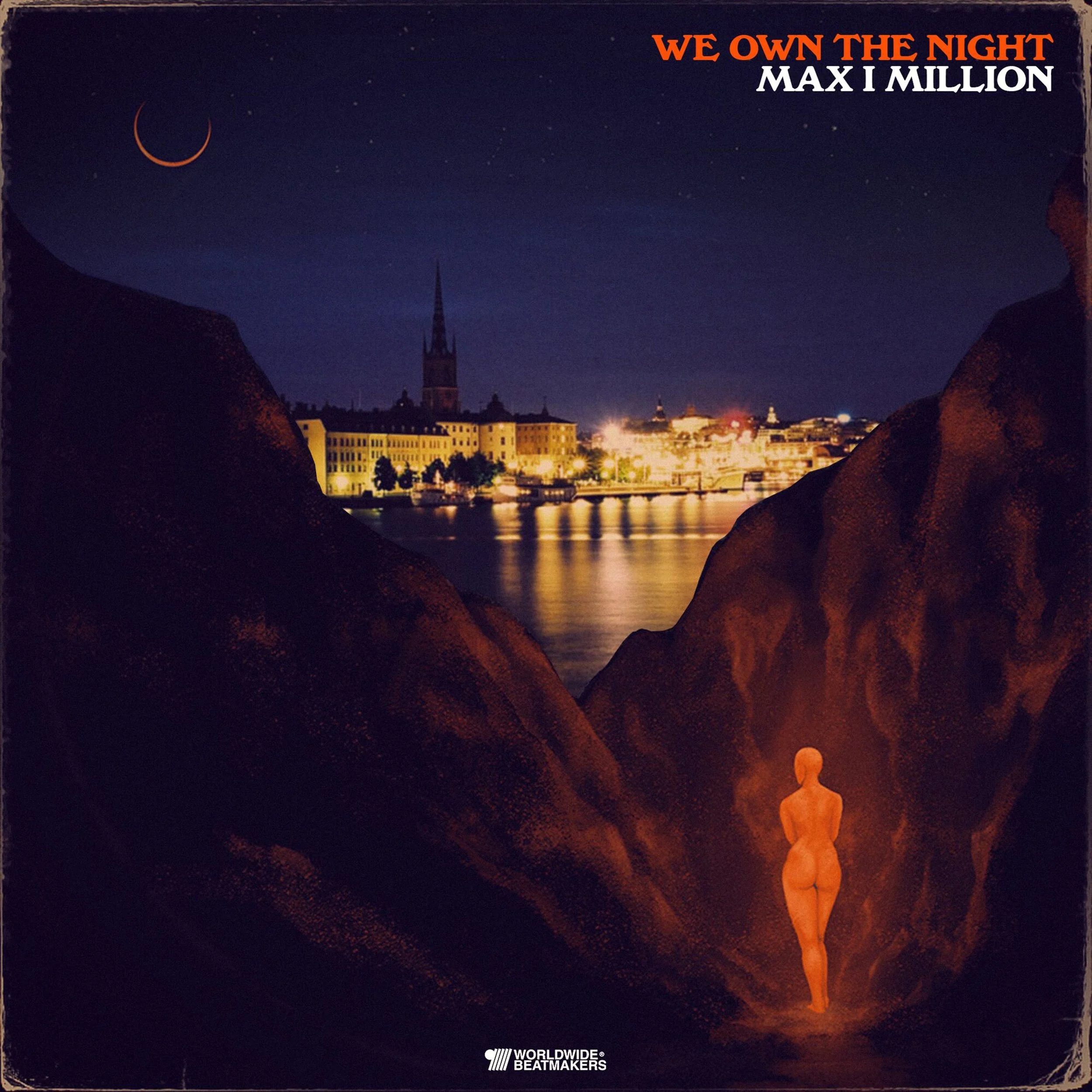
NINETOFIVE Worldwide Beatmakers Releases Max I Million's "We Own the Night" LP
The veteran Swedish producer Max I Million returns with a diverse collection of hip-hop gems called We Own the Night, his second LP on the NINETOFIVE Worldwide Beatmakers imprint. Every song on this album is great, straight up, although we’ve come to expect nothing less from Max I Million, one of the best representatives of Sweden’s potent beatmaking culture.
The veteran Swedish producer Max I Million returns with a diverse collection of hip-hop gems called We Own the Night, his second LP on the NINETOFIVE Worldwide Beatmakers imprint. Every song on this album is great, straight up, although we’ve come to expect nothing less from Max I Million, one of the best representatives of Sweden’s potent beatmaking culture.
In a 2017 interview published by NINETOFIVE, Max said that Swedish hip-hop has divided into many different styles and approaches. We Own the Night is pretty reflective of that. “We have everything from Trap and club music to jazzy cratedigger Boom Bap.” This album and Max’s style overall mostly falls under that third camp, but there are also some old school club adaptations of hip-hop on this release, like the title track and “Next Level Shit”. Features from devastatingly smooth MCs Twizzmatic, Blu, TriState, and Planet Asia add climactic moments to this primarily instrumental album, like the single “Coupe Deville” on which TriState and Planet Asia lace a soulful beat with righteous, weighty word association.
Max’s music is marked by stirring chord progressions on keys and synths blended with crafty samples that float over steady, slapping drums. Our favorite song on the album is the jazziest, “Son of the Sun 2”. After moving through so much boom-bap, the skipping drum pattern and dancing bassline here can catch one by surprise and put you in a state. Then the album takes a turn for the smooth and ends with three contemplative instrumentals, each one having open space, prominent basslines and ethereal synthesizers. Max I Million really works into the pocket here with “Midnight Snack”, adding foley texture and a fluttering synthesizer lead to a walking bassline.
“It's insane how much talent there is in such a small country,” Max said of the hip-hop scene in Sweden. NINETOFIVE works with several Swedish beatmakers including Gonza, Boukas, Moose Dawa and Cam the Downrocka. They’ve issued several Max I Million releases over the last three years including collaborations, singles, LPs, an EP and a mix that specifically highlights Swedish talent. “In Sweden there is a friendly competition thing going on, which has elevated beatmakers to just get better and better.”
It’s hard to stop bumping We Own the Night, which has so much depth and dimension. If you can manage to pull yourself away from it, check out other parts of Max I Million’s catalog and the other Swedish producers on NINETOFIVE Worldwide Beatmakers.
FOLLOW Max I Million: Soundcloud / Spotify / Instagram / Twitter

Maru Blends Rhythm & Melody on Small Sips LP
In June of 2018, Reso unveiled his dusty alter ego, Maru, switch-hitting between his usual low-end driven music and a foray into faded beats and lo-fi chord progressions. One year on, he’s released a sophomore Maru LP of dewey bumps and aqueous frequencies, affectionately entitled Small Sips.
In June of 2018, Reso unveiled his dusty alter ego, Maru, switch-hitting between his usual low-end driven music and a foray into faded beats and lo-fi chord progressions. Combining forces with Slug Wife, the first official Maru release was Whack Lack Vol. 2. It was a gratuitous dive into the head-nod headspace, and a change of pace for long-time fans of Reso’s catalog. This time, he’s self-released a sophomore Maru LP of dewey bumps and aqueous frequencies, affectionately entitled Small Sips.
With a total of nine full compositions and a single interlude, Small Sips features a wide array of flavors, blends, and topical variations of lo-fi hip-hop. It’s compositionally rich from start to finish, showcasing extensive arrangements and a spot-on cadence on each and every song. The engineering across the album is particularly alluring, and given Reso’s enduring tenure as a veteran producer, not at all surprising. It provides a degree of fidelity that is often an afterthought for a genre that is focused on all things raw and unpolished in music.
“Lay Off the Sauce” opens the album with a sensual cruise through mottled chords and reverberant breaks. There’s a distinctly dreamy quality to the chord phrasing throughout the song, with each note relationship bending between harmonic and dissonant. Detuned synthesizers populate the melody, endlessly drifting to and from that harmony and dissonance. Like a casual smoker’s cough, the song is puzzling and familiar all at once.
Channeling hazy jazz and a libidinous attitude, “Maple Sizzurp” is a stereophonic bump in every way. Washy chords fill the horizontal stereo space, soaking the listener in phased-out minor and harmonic phrases. The percussion echoes across that same space like a drum kit in the subway; hollow, spacious, and with just the right amount of fade. The distinct view of urban skylines and haphazard crosswalks takes a hold of the mind as the song goes from end to end, showcasing the storytelling and emotional depth that is Small Sips’ strongest asset.
“Donbury Island” winds down Small Sips to a satisfying finish, lowering the tempo and lowering the energy output in tandem. The track is a gentle composition, with pulsing synthesis slowly easing in and out of the mix. There’s a droning, ambient quality to the sound design filling the melody. It’s all carefully wrapped in a blanket of analog dust, with white noise filling in every pore and edge left open in the arrangement of the tune. There’s no real point of tension, it’s just a quaint float through Maru’s aural universe.
Given Reso’s extensive history with filthy bass music, there is a heightened appreciation for the Maru project. It’s not a dumping ground for small bumps and half-baked productions that don’t fit a motif; It’s a full immersion into a different songwriting philosophy. Small Sips is a detail-oriented exploration of soothing tones and broken-beat serenades, all carefully mingled and balanced to a striking clarity. We’re unsure when the next Maru machinations will find their way into the public realm, but there’s more than enough material to keep us satiated in the meantime.
FOLLOW Maru: Soundcloud / Bandcamp / Facebook
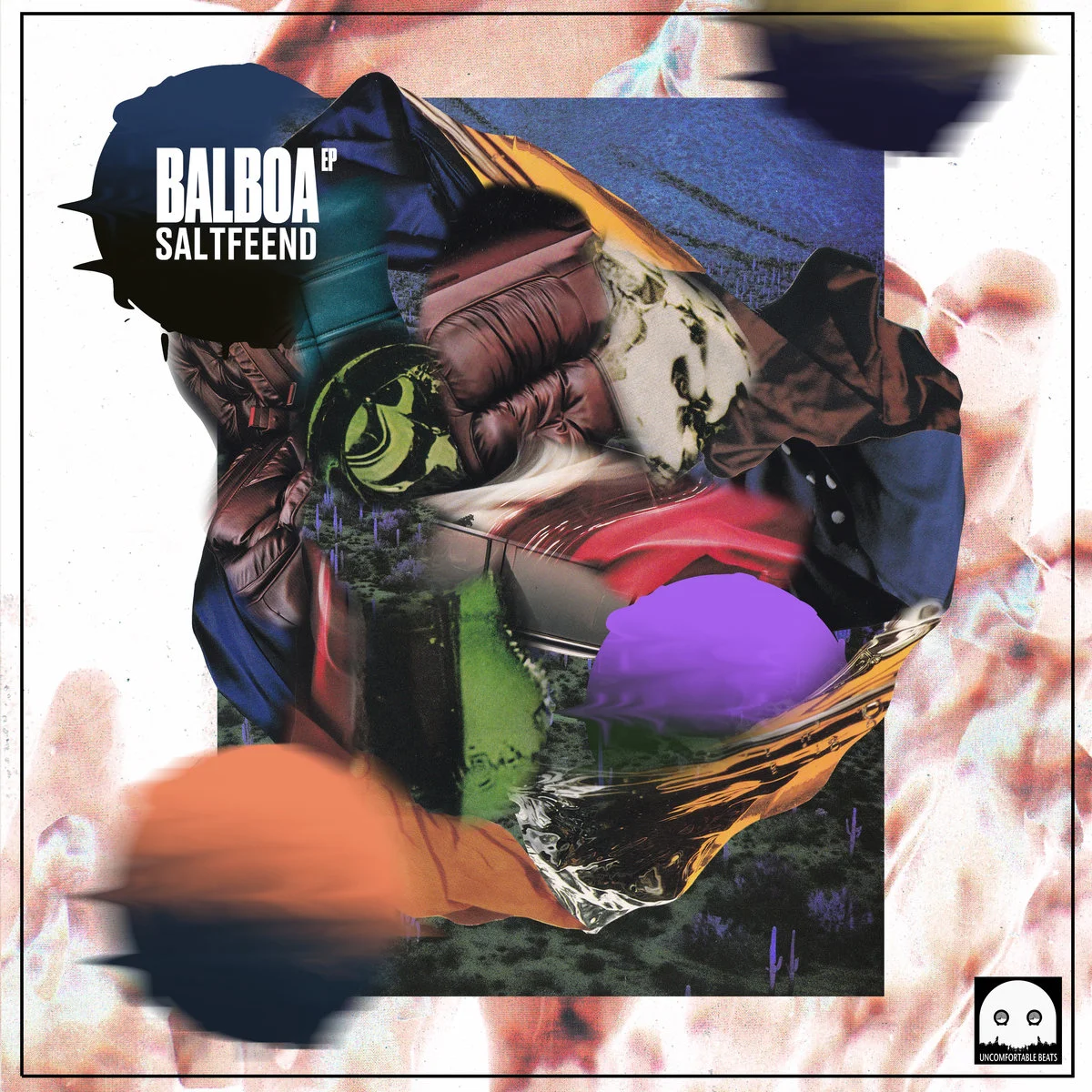
Saltfeend - Balboa EP
Bringing prime cuts and street-inspired style to the table, Portland based Saltfeend is a multifaceted producer with a knack for all things head-nod. Expanding upon his quickly growing catalog, his newest release is a collection of dusty boom-bap sonatas; the Balboa EP brings a detail-oriented approach to Lo-Fi soundscapes, delivering a refreshing interpretation of mind-swelling hip-hop.
Bringing prime cuts and street-inspired style to the table, Portland based Saltfeend is a multifaceted producer with a knack for all things head-nod. Having been DJing from 1997 on, he has gained a well-deserved notoriety as an ambitious selector with a presentation skillset to match. Come 2016, he began to turn his hand towards original productions, and has released a multitude of tracks from across the genre spectrum. Running through stylizations of bass music, downtempo, lounge, and hip-hop, Saltfeend is a jack of all trades when combining his newfound production prowess with his long history of DJ fundamentalism. Expanding upon his quickly growing catalog, his newest release is a collection of dusty boom-bap sonatas; the Balboa EP brings a detail-oriented approach to Lo-Fi soundscapes, delivering a refreshing interpretation of mind-swelling hip-hop.
From top to bottom, the Balboa EP maintains a strong compositional dynamic, with each track breathing almost biologically through an attentive arrangement. Sultry chords and generous amounts of vibrato give a certain elasticity the stereo width of every song, giving the EP the impression of ducking and weaving around each downbeat. Indulgent arpeggios are a heavy staple across the five tracks, filling out the upper frequency spectrum alongside crisp snare transients. Gentle helpings synthesis has its place within the EP as well, serving as rhythmic turnarounds and the signal of approaching refrains. Altogether, Saltfeend has delivered a package of off-kilter beats and sensual melodies that are optimally suited for adjusting a vibe and maintaining a vibrant headspace.
In a sea of similar artists, Saltfeend separates himself from the pack through fidelity and composition. The fine tuning to his arrangements and internal mixing is the hallmark of his productions, and his ear for melodious interplay shines above the rest. Finding an apt home amongst like-minded producers and musicians, the Balboa EP is being released through Uncomfortable Beats, an Australian label with a laser-sharp vision for experimental hip-hop and bass music. With a world-wide reach and world-influenced musical aptitude, we can’t wait to hear what Saltfeend cooks up next.
FOLLOW Saltfeend: Bandcamp / Soundcloud / Spotify / Facebook / Webpage
![Sweeps - Not Just One Thing [Single]](https://images.squarespace-cdn.com/content/v1/59530136f5e2319eabb7d87f/1557716251808-V44P2SORDUCCZNIV8YOJ/Sweeps+Not+Just+One+Thing+Hip+Hop.jpg)
Sweeps - Not Just One Thing [Single]
“See hip-hop is not just one thing. As long as it feel good and it hits you in the heart, and you can feel what the person’s saying in that type of way, then that’s hip-hop.” So says Nasir Jones aka Nas, as sampled by Sweeps in the Boston-based producer’s latest single “not just one thing”. Sweeps hits on a special sound in his latest tune, a cerebral take on hip-hop.
“See hip-hop is not just one thing. As long as it feel good and it hits you in the heart, and you can feel what the person’s saying in that type of way, then that’s hip-hop.” So says Nasir Jones aka Nas, as sampled by Sweeps in the Boston-based producer’s latest single “not just one thing”. Sweeps hits on a special sound in his latest tune, a cerebral take on hip-hop. The space created within the mix is deep, leaving the listener room to work his or her imagination. Each piece of artwork associated with his music fits a singular space-age aesthetic, including the video associated with “not just one thing”. Sweeps makes all this himself.
Sweeps has a small following on SoundCloud. A few tracks, including a remix of Kendrick Lamar’s “DNA”, have a ton of streams. He also has a few tracks reminiscent of old Gramatik street bangers. Across his catalog, and especially lately, the production is noticeably neat and clean, while still maintaining an emotional edge. The mix downs are well maintained and his sonic material, from kicks to snares to synthesizer blips, are defined for the ear. This is much appreciated in the context of lo-fi hip hop, where - not to anyone’s discredit - clean mix downs aren’t always assured.
The special vocal sample alludes to a dynamic at play for a generation of new hip-hop producers. Hip-hop’s broken beat has become a means to communicate so many ideas, emotions, and aesthetics not associated with original or traditional hip-hop. While this may frustrate some, it offers a language and a means of expression to so many others. That’s the beauty of the style, as Nas recognizes. It’s less about standards or qualifications and more about the ability communicate feeling. “The rest is bullshit,“ says Nas.
FOLLOW Sweeps: SoundCloud / Spotify / Bandcamp / Instagram
![ManyColors - Gladys [Single]](https://images.squarespace-cdn.com/content/v1/59530136f5e2319eabb7d87f/1555890382278-T76X0SGL5QPT67JDMWNO/ManyColors+-+Gladys+Single+Color+Red+Music.jpg)
ManyColors - Gladys [Single]
Travel to Denver, Colorado to the small basement studio run by upstart label Color Red and you’ll find guitarist Brant Williams and his four-piece ensemble ManyColors recording sparse, low-slung hip-hop grooves direct-to-tape. Their first single “Bangs” used jazz modalities to riff over stuttering beats, and with their second song “Gladys” the group does the same but with more chemistry and confidence.
Lo-fi hip-hop is an ascendent style right now, generating hundreds of millions of streams on Spotify and coalescing around itself an global online community. Although like all hip-hop this style is composed with sampled drums and audio, instrumentalists from Paris to Japan to New York City are beginning to approach the music from their own angle and compose tracks free of sampling. Rarely, though, does one find a full band employing this approach. But travel to Denver, Colorado to the small basement studio of upstart label Color Red and you’ll find guitarist Brant Williams and his four-piece ensemble ManyColors recording sparse, low-slung hip-hop grooves direct-to-tape. Their first single “Bangs” used jazz modalities to riff over stuttering beats, and with their second song “Gladys” the group does the same but with more chemistry and confidence.
Color Red has been bringing all sorts of instrumentalists into their studio, where the board has only eight tracks and everything is recorded straight to tape. “The limitations of it are kind of neat,” says Brant - who originally hails from Des Moines, Iowa - tells me over the phone. Brant comes from a jazz background and plays frequently with jam and funk groups including Workshy and Judo Chop. “I’ve always played that sort of way, in the funk jam style. Being a guitar player, that can lend itself to extended solos and that sort of stuff. It’s fun to play that way, but eventually I ran into J Dilla’s music. I just loved the crossroads between jazz and hip-hop, and just the idea of chillin’ out. That was super attractive coming from this background of extended solos and extended forms.”
Brant is not a hiphop head by any stretch, although he does not dig for instrumentals after catching the scent of groove from Dilla. ManyColors is a great example of how intersectional lo-fi hip hop has become. That drag, that quintessential bodyrock shuffle, truly transcends genre and culture. Guided by Color Red - a real musician’s label run by Eddie Roberts of The New Mastersounds - Brant linked up with his bandmates. He gives them bare-bones charts and they - Braxton Khan, Eric Luba and Kirwan Brown - let it fly in the studio in true jazz fashion. Working in tandem with the keyboard player Eric Luba the group crafts rich, comforting harmonies on “Gladys” that float on top of Khan’s popping percussion. “The tempos are all up,” In the funk and jam band, says Brant, but now he’s, “vibing in the lower tempos, and that’s super refreshing.”
Brant’s not the only musician to approach instrumental hip-hop through the back door of jazz, and he certainly won’t be the last. Indeed, he says once he began playing in this new style he realized many people around him were doing the same, he just “wasn’t hip to it”. But with the group’s emphasis on harmony, the slightest touch of Americana in their melodies, and the relative absence of hip-hop in Brant’s musical background, ManyColors has a take on lo-fi hardly replicated anywhere else. Look out for more music from this group in 2019, and if you’re in Denver tonight check out their J Dilla tribute set at Cervantes’ Other Side as part of Live for Live Music’s ‘The Funk Sessions”.
FOLLOW ManyColors: Official
FOLLOW Color Red: Soundcloud / Spotify / Bandcamp / Instagram

Es-K - ReCollection
Burlington-based beatmaker Es-K releases music at a blinding clip without compromising quality. So it’s no surprise that following his spellbinding Continuance LP from February he’s back with another full-length album ReCollection, this time on Cold Busted.
Burlington-based beatmaker Es-K releases music at a blinding clip without compromising quality. So it’s no surprise that following his spellbinding Continuance LP from February he’s back with another full-length album ReCollection, this time on Cold Busted. 24 beats, each named after a specific element on the Periodic Table, await listeners who crack this one open. The Es-K stamp of excellence is all over this album, but it’s less ambitious from a songwriting standpoint than recent work like Continuance or Koan. Instead of lofty and epic, these beats are more introspective and trance-inducing.
There’s a bit of mysticism in all of Es-K’s music, even those hard-hitters that sound like they’re coming straight out of a subway station, off a city stoop, or up from the hot asphalt of urban America itself. ReCollection includes a few of those bangers, but mostly it’s full of pocket grooves that lead the listener deep into a hypnotic state. Here, there’s time and space to think. The imagination is able to fill its lungs and exhale fully. Novel thoughts or perhaps bits of wisdom bubble up out of the ether - “essential knowledge”, which is what Es-K stands for.
One of our favorite cuts is “Crbn”, (“Carbon”) which features Es-K’s signature style of bass line. He has a technique whereby he coats the bass synthesizer with this electronic twang then lets it wobble, like a true space cowboy. It’s a small audio effect with a big payoff. Whenever this sound appears, one can be sure Es-K is hitting the right notes with it and playing a sidewalk-stomping melody. Then there’s “Cblt” (“Cobalt”). I’m not even sure what Cobalt looks like, but the word conjures images of hard grey. The track, too, with a stoic string sample covered in reverb and compression, evokes this same hard grey. Znc (“Zinc”) may take the cake on ReCollection, though, on the sheer strength of its main sample. Then again, this is the type of record one can sink into at first, then walk away from only to come back and find new gems.
Cold Busted is one of the foremost beat labels worldwide, and they and E-K are no strangers to one another. Indeed, Es-K has realized over a dozen times with the label, including 12 (yes 12) installments of his Spontaneous Grooves series. ReCollection is its lack of fidelity. It sounds more sample-based than programmed, another factor that distinguishes it from Es-K’s recent work, which is very crisp and hi-fi. Yet in the context of his prior work with Cold Busted, this new LP is right at home. If these comparisons are of no value to the reader, then we sincerely apologize and strongly recommend peeping Es-K’s back catalog so this jargon can obtain some meaning. Es-K will be performing in Madrid on April 17, and in Boston on May 4.
FOLLOW Es-K: Soundcloud / Bandcamp / Spotify / Facebook / Twitter

Kiefer - Bridges
Following the release of prolific LPs in each of the past two years, the Los Angeles-based pianist and jazz hip-hop producer Kiefer is back with his third drop, a smooth yet experimental six-track EP titled Bridges on the stalwart Stones Throw Records. Kiefer has more than earned his stripes in Los Angeles’ happening beat scene.
Following the release of prolific LPs in each of the past two years, the Los Angeles-based pianist and jazz hip-hop producer Kiefer is back with his third drop, a smooth yet experimental six-track EP titled Bridges on the stalwart Stones Throw Records. Kiefer has more than earned his stripes in Los Angeles’ happening beat scene; he’s a constant in Mndsgn’s live trio and has production credits with Anderson .Paak and Kaytranada. In just a few days he’ll be hitting the road to perform Bridges and more with a robust jazz ensemble.
Among contemporary musicians who boldly blend jazz and hip-hop, Kiefer distinguishes himself with his virtuosity on the piano. He was taught to play at a very young age by his father, and would later study under renowned jazz guitarist Kenny Burrell at UCLA’s Jazz Studies program. He works with melodic jazz chords and offers insane riffs, moving up, down and across scales and styles to create colorful and diverse tonal palettes. Bridges finds Kiefer using new instruments including analog synthesizers alongside his signature piano, and taking a more thoughtful and intricate approach to songwriting.
On his debut Kickinit Alone and then 2018’s Happysad, Kiefer kept close at hand beat tape motifs like repeating phrases and piano loops (although he played the loops were played by Kiefer himself and not sampled himself). With Bridges, an entendre alluding to the musical bridge, he expands the scope of his composition and arrangement and takes greater risks. Listen closely as analog synthesizers delicately garnish “Orange Crayon”, or take the lead in “Cute”. True to its name, “Sunny” is a musical representation of a fantastical stroll in the sunshine. Kiefer lets his fingers loose on this one and serves up dizzying piano phrasing, though in key moments it’s the notes not played that may evoke the greatest response.
Next week Kiefer is hitting East Coast cities including New York and Philadelphia then heading abroad for his first headlining European tour. He’ll be backed by jazz musicians including Jonah Levine (trombone, keys), Sam Gendel (alto saxophone), Andy McCauley (bass), and Will Logan (drums). For a small taste of his live show, check out this live recording of tunes from Happysad.
Kiefer hit on such an attractive and indeed addictive jazz-hop sound with his first two releases that it would have been all too easy to stay in that lane and continue crushing. It’s all the more admirable, then, that he sought out new musical ground on Bridges. Despite the slight switch up in style, the warm, welcoming vibe of his music is unchanged. He hopes it can provoke smiles and positive emotion from his audience. “It’s comforting to see someone who is truly dedicated to making beautiful stuff,” he says, “I want people to see someone genuinely pour their heart into something.”
FOLLOW Kiefer: Bandcamp / Spotify / Soundcloud / Instagram / Stones Throw
![ManyColors - Bangs [Single]](https://images.squarespace-cdn.com/content/v1/59530136f5e2319eabb7d87f/1551160323935-X03GBNGM721KZ4ZV2UPS/artworks-000487823349-1gbcbs-original.jpg)
ManyColors - Bangs [Single]
Manycolors is a new four-piece band that opens up new musical space by using a hip-hop format to explore chords and motifs usually reserved for jazz on their debut single “Bangs”. Soft and sure, “Bangs” combines the twinkle of contemporary lo-fi aesthetics with the electric groove of older, more acoustic styles. This is a new sort of notch in the catalog of Color Red, a Denver-based label run by Eddie Roberts, the guitarist from The New Mastersounds.
ManyColors is a new four-piece band that opens up new musical space by using a hip-hop format to explore chords and motifs usually reserved for jazz on their debut single “Bangs”. Soft and sure, “Bangs” offers comfort to the listener but presents a series of unanswered questions. Sonically it combines the twinkle of contemporary lo-fi aesthetics with the electric groove of older, more established styles. This is a new sort of notch in the catalog of Color Red, a Denver-based label run by Eddie Roberts, the guitarist from British jazz fusion quartet The New Mastersounds.
Braxton Kahn dials in drums that stride with a subtle and seemingly off-time step. According to Color Red, guitarist Brant Williams “aims to capture all the musicians as if they were sampled while cultivating a fresh harmonic approach.” It’s impressive that a four-piece band of trained jazz musicians can be recorded to sound like a lo-fi hip-hop beat. It’s more intriguing that they would want to. Eric Luba tickles a Fender Rhodes electric organ, gently laying down those warm melodies that are so frequently sampled in lo-fi beats. Kirwan Brown works the bass guitar well, especially during the song’s swinging second movement.
The direct-to-tape approach of the producers Mike Tallman and Josh Fairman is another gesture towards hip-hop and creates a layer of dusty reverb across the stereo spread. Despite this dust, the audio quality is top-tier, and this is refreshing. (Not to discredit anyone, but much lo-fi music mistakes poor audio quality for an aesthetic). Apparently Color Red has “several” more songs from ManyColors scheduled for 2019. If you dig the audio quality, intelligent harmonics and of course the smooth vibe, then stay chooned.
FOLLOW Color Red: Soundcloud / Spotify / Bandcamp / Instagram
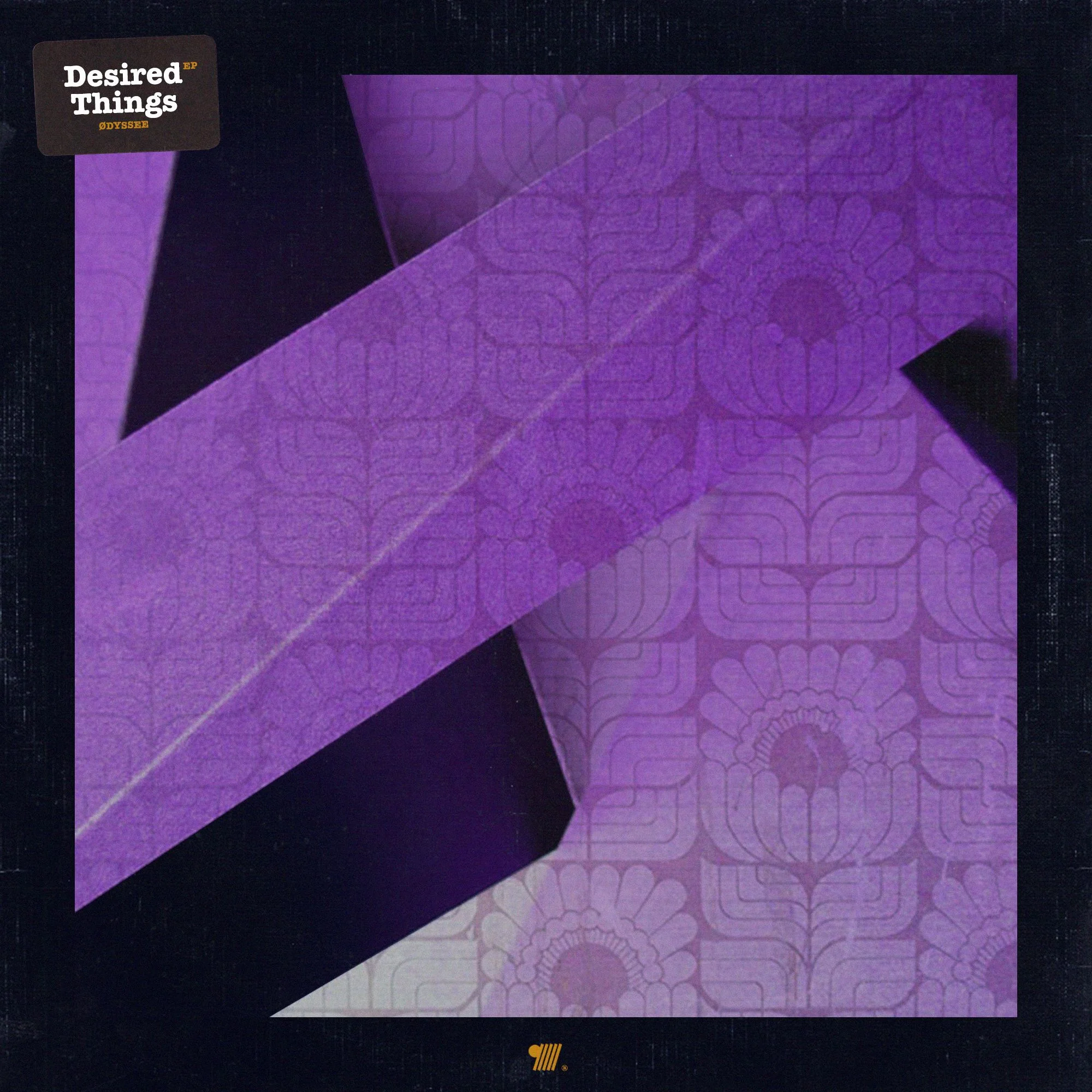
ØDYSSEE - Desired Things
There’s an old axiom that says, “It’s not what you do, it’s how you do it.” The music of ØDYSSEE exemplifies this axiom. On his new six-track release, Desired Things, he borrows bits from different styles then arranges them like a florist creating a beautiful bouquet. This unconventional take on hip-hop, presented by NINETOFIVE Worldwide Beatmakers, is entirely composed and arranged by ØDYSSEE himself; there’s no sampled material here.
There’s an old axiom that goes, “It’s not what you do, it’s how you do it.” This sentiment was voiced in an old jazz tune originally performed by Ella Fitzgerald, “T’aint What You Do”. The music of ØDYSSEE, a jazzist and vibe provider of a different character, exemplifies this axiom. The Parisian producer dances along the ever-narrowing line between jazz and hip-hop while also incorporating bits of blues, boss-o-nova and electronica. Each style feels age-old, but ØDYSSEE reinvents them through a process of musical collage. On his new six-track release Desired Things he borrows bits from different styles and arranges them like a florist does a beautiful bouquet. This unconventional take on hip-hop, presented by NINETOFIVE Worldwide Beatmakers, is entirely composed and arranged by ØDYSSEE himself; there’s no sampled material here.
Lately the producer has been alternating between original compositions and sample-based music. ØDYSSEE plays the piano, synthesizer, guitar, bass and perhaps more. As some of his peers in the beatmaking world have discussed, there is a degree of tension in the industry between composition and sample-based music. Copyright infringement concerns collide with creativity and spark discussion on the history of hip-hop itself. This doesn’t appear to weigh heavily on ØDYSSEE, whose sole goal is to create deeply expressive music regardless of the technicalities behind it.
The keyboard and guitar take turns leading the musical discussion, speaking to the listener and creating dialogue with each other. They’re projected against a background of deep, velvet basslines and shimmering, aqueous synth pads. With his exceptional songwriting ability, ØDYSSEE’s melodies poke the listener in all the right spots, provoking potent emotions and ideas. One can’t help but fall into a productive daydream during the short but rich “Aquatic Groove”. ØDYSSEE’s music would not be complete without top-tier drums. Indeed, a calling card of his production style is percussion that is punctual and snappy yet swings gregariously. ØDYSSEE was influenced by the blues when he learned to play guitar. This influence is apparent across his entire catalog but makes its most dramatic appearance yet on Desired Things. On the the final cut, “Strange Dream”, the tempo dies down and the drums shuffle lazily, opening up space for raw six string dialogue to spill forward.
In tone and texture this music feels organic, yet it’s spliced together mechanically. Hip-hop offers the foundation and skeletal structure, yet the phrasing and amount of improvisation gesture towards jazz. More than most of his projects, Desired Things finds ØDYSSEE carving out new creative space. He’s not departing from the beatmaking milieux in which he began. Rather, he’s broadening the scope of what hip-hop, jazz, and blues can be in this millennium by applying his unique creativity and force of will to these well-established styles. He always has a project or three in his back pocket, too, so stay chooned.
FOLLOW ØDYSSEE: Spotify / Soundcloud / Bandcamp / Facebook / Instagram
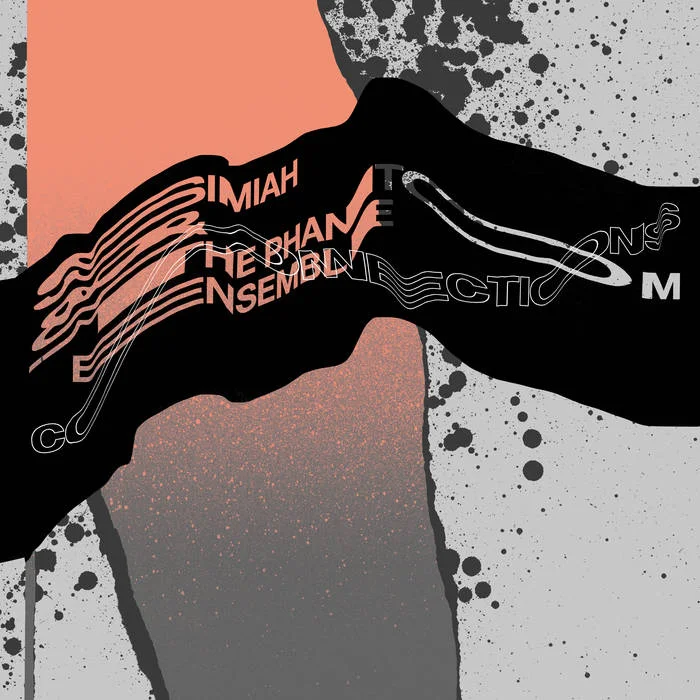
Simiah & The Phantom Ensemble - Connections
Simiah & The Phantom Ensemble is an open-ended jazz ensemble that folds together live sampling, keys, saxophone, and a bevy of guest instrumentalists in the live sphere. On February 15th, they unveiled their debut LP, Connections, establishing their particular fluidity in studio format. The blend of sampled percussion and zoned-in conventional tones creates a smoke-screened aesthetic behind the eyes, gently touching on the senses.
England is currently in the midst of a full-blown jazz renaissance, and the talent pouring out of this cultural eruption has a knack for bridging the gap between different strains of broken-beat music. Simiah & The Phantom Ensemble is an open-ended jazz ensemble that folds together live sampling, keys, saxophone, and a bevy of guest instrumentalists in the live sphere. On February 15th, they unveiled their debut LP Connections, establishing their particular fluidity in the studio format. The blend of sampled percussion and zoned-in conventional tones creates a smoke-screened aesthetic behind the eyes, gently touching on the senses.
Simiah is the boom-bap trooper with a vigilant duty to break the beat any way he can. Utilizing a classic MPC to channel drum lines and percussive jaunts, his control of the stereo space throughout the album is entangling, just as alive as the purebred instrumentation that rests atop it. The finger-drummed mechanics of velocity and tension are ever present, ebbing the soul of the tracks back and forth from organic to mechanic. Manning the keys with ever the careful touch, Dan Somers fleshes out vibes in every direction imaginable, blending like butter into the arrangement and mixdown of every song. Without so much as a stutter, his dexterity and precision note-to-note forms the veritable glue of the record.
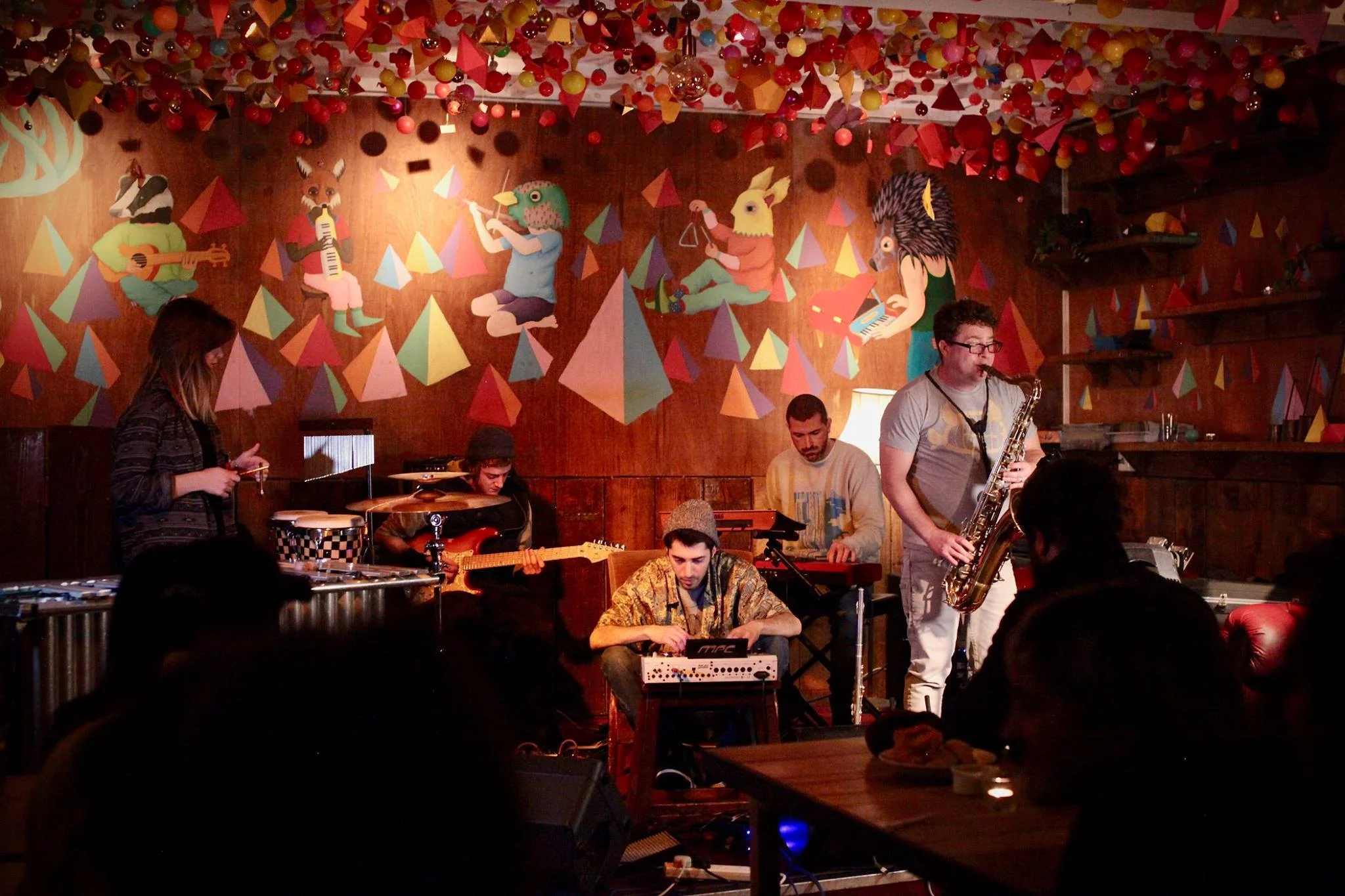
Craig Crofton does justice on a moment-by-moment basis, rocking the saxophone with a sensuality that bleeds through the open space in the mix. A touch here, and riff there, all washed with a careful balance of spatial effects that soak into the tone of the brass. Altogether, this trio absolutely smashes all expectations and standards with their vibrant compositions and time-tested musicianship.
Prior to the release of Connections, the Phantom Ensembles embraced the addition of two new instrumentalists; Harriet Riley, a vibraphonist and percussionist, and the Bristol-based guitarist Chalky White, a Rust fan favorite. Upgrading the Ensemble to a five-piece was a bold endeavor, surely changing the fundamental chemistry of the band. By all accounts, especially the response to their recent live performances, these additions have been like perfect ingredients spicing this already sultry dish.
FOLLOW Simiah & The Phantom Ensemble: Bandcamp / SoundCloud / Facebook

all:Lo Collective - all:Lo Compilation Vol. 1
Surfacing out of the vast musical wilderness that is Colorado, all:Lo Collective is a burgeoning label steeped in all things low fidelity and low frequency. Striving to connect hip-hop and bass music with an especially swampy flair, their top priority is to inject Colorado and the music scene at large with refreshing perspectives on the common musical tropes and pathways of these genres.
Surfacing out of the vast musical wilderness that is Colorado, all:Lo Collective is a burgeoning label that aims to be steeped in all things low fidelity and low frequency. Parker Williams (parkbreezy), Phil Gallo (pheel), and Diana Neculcea man the helm of the operation, which informally began in 2017. As of 2018, they have officially launched the label into the public realm, and intend on immediately setting the bar at a righteous height with their ambitious first release, the all:Lo Compilation Vol. 1. Striving to connect hip-hop and bass music with an especially swampy flair, their top priority is injecting Colorado, and the music scene at large, with a refreshing perspective on the common musical tropes and pathways within these respective genres.
Capitalizing on hip-hop’s undeniable influence in broken-beat music, all:Lo Collective focuses on curating and disseminating dusty beats, slapstick rhythms, and juicy sub frequencies. Their first compilation does an excellent job of showcasing just what kind of sound and the quality of production they have in mind, and craftily bridges the gaps between a spate of producers who encompass a wide swath of various genres. Featuring forward-thinking and exploratory musicians such as Nocturnal Status, Dillard, Primate, and of course pheel. and parkbreezy, this collection of soul-drenched tracks creates a deliberately smokey, cumulus texture for the ears. Ranging in tempo, attitude, and aural narrative, this all:Lo compilation displays the due diligence done by it's benefactors, and the result is sheer audible sensuality.
Aphasia opens the compilation with “Orbifrontal Entourage”, a boundless flight through zero gravity. Tasteful blending of monochromatic pads and top-layer percussion drive the composition through the stratosphere, and sampled stabs of stereo synthesis steer the notation and emotional interplay of the track. Sandwiched squarely in the center of this release, parkbreezy and pheel. display the dynamic of their combined brain power with a VIP of “Cluttered Time Machine”. The rhythm rests perfectly in the pocket for the duration of the track, zeroing in on the head-nod attitude that all:Lo endeavors to cultivate. Twists of choice synthesis flicker and dance in between the crunch and punch of kicks and snares laden with supple compression. Of particular note is the hip-hop-fashioned, succulent Primate track, “Relaxtion”. Balancing on a tempo that is a bit sparing within his established discography, Primate brings a jazz-first mentality to the table; deliciously funky basslines respond to the call of slightly detuned rhodes chords that turn over in each phrase, revealing sparse, deliberate notes that resolve every measure.
With all three owner-operators having already spent years as fans and strident members of our amorphous global community, it is endearing and encouraging to know that all:Lo Collective has a genuine mission with genuine passion. With patience, specificity, motivation, and a little bit of elbow grease, all:Lo Collective has made a bullrush out of the gates with all:Lo Compilation Vol. 1. I’d tell you to pay close attention to the future endeavors of this stand-out team, but they are already certain to be invading your ear holes in no time at all.
FOLLOW all:Lo Collective: SoundCloud / Bandcamp / Facebook

Boukas - The Coffee Tape Vol. 1
The talented and abstract beatmaker Boukas returns with The Coffee Tape Vol. 1 dropping as per usual on NINETOFIVE Worldwide Beatmakers. Boukas aka Dennis Boukas of Stockholm, Sweden has been working on these compositions throughout the autumn. This is reflected in the album’s jazzy motif and sparse compositions, which swing in the breeze like gangly trees removed of their leaves.
The talented and abstract beatmaker Boukas returns with his second full-length release, The Coffee Tape Vol. 1 which comes as per usual through NINETOFIVE Worldwide Beatmakers. Boukas aka Dennis Boukas of Stockholm, Sweden has been working on these compositions throughout the autumn. This is reflected in the album’s jazzy motif and sparse compositions, which swing in the breeze like gangly trees removed of their leaves.
The album is dedicated to that bitter, comforting, dark drink that can be a beatmaker’s best friend. The Coffee Tape is less transcendental than Boukas’ full-length debut The Setting, and thus more appropriate for everyday listening. On this last album as well as the EP A Song for Samantha, Boukas demonstrates his ability to fuse dub with beats music - a rare and prolific combination. This overt stylistic combo is absent on The Coffee Tape. While that’s not what some might expect from Boukas, he executes the straight-forward boom-bap beat with effortless grace, making for a head-turning change of pace.
With a placid stereo spread and a soft and simple bouquet of instrumental samples, The Coffee Tape is not just “appropriate” but ideal for everyday listening. Indeed, each track on the album is representative of a different cup of coffee throughout the day from “The First One” to “The Last One” to “Afterwork”. “Basically, there’s always time for a coffee break”, writes Dennis. We couldn’t agree more, but with twelve beats total on this record, we think Boukas may in fact need a water break.
According to Dennis, he always tries to paint pictures with his music. His paining style, then, is minimal and his hand is steady. His color palette is limited in its variety, but the colors he does paint with across The Coffee Tape - beige, brown, yellow, off-white, light orange, deepest green - are rich in hue. His percussion always pops, but set against such a sparse background here, the muffled kicks and crisp, cut-off snares stand out all the more.
Perhaps the most abstract cut on The Coffee Tape is our favorite; “Metropolis”. Tying back to the album’s theme, this song may be representative of perhaps not a single cup of joe, but rather the broad association between coffee and the cosmopolitan. Lightly plucked guitar strings stir together as if in liquid with a synthesizer melody that sounds like it’s played not by fingers but by a feather. The tune exemplifies a meditative stillness that Boukas cultivates on this album. One will be hard-pressed to find a series of twelve instrumentals more relaxing than these jazz-infused cafe beats.
FOLLOW Boukas: Soundcloud / Bandcamp / Facebook / NINETOFIVE

Gramatik - Street Bangerz Vol. 5
Ten years to the day since Gramatik dropped Street Bangers Vol. 1 and began turning a new sub-section of music heads on to boom-bap instrumentals, he returns like the long-lost hero Odysseus bearing SB5, or Street Bangers Vol. 5, a capstone for his hallowed series of high fidelity hip-hop compilations.
Ten years to the day since Gramatik dropped Street Bangerz Vol. 1 and began turning a new sub-section of music heads on to boom-bap instrumentals, he returns like the long-lost hero Odysseus bearing SB5, or Street Bangerz Vol. 5, a capstone for his hallowed series of high fidelity hip-hop compilations. With gold-plated production, talented features, tiny allusions and clever composition, Gramatik is able to brilliantly gesture toward his musical past while making music that is completely contemporary. Some doubted that Denis Jašarević would come back with another Street Bangerz. What they forgot is that his infatuation with his home city can’t be contained (why should it be?) and that he’ll never miss an opportunity to pay homage to the Big Apple.
SB5 isn’t as rough around the edges as the original Street Bangerz, but surely no one expected it to be. Certain musical material has been left behind and replaced with Gramatik’s newer flare, like the layered guitar and synthesizer melodies that he began to hone on Street Bangerz Vol. 3 and perfected on The Age of Reason. Taken as a whole, the album does not have the beat tape posture that the older Bangerz did. It doesn’t stray too far from the sound design and musical motifs that Gramatik has grown fond of more recently. Songs like “I Know It” or “East River Soul” featuring Chris McClenney & Adam Stehr, for example, would fit within any Gramatik release from the past three to four years.
At the same time, tunes like “Good Lovin” and “What’s the Use of Jivin’” are pure throwbacks to the earlier Bangerz, with the latter song alluding directly to one of Gramatik’s most famous early cuts, “Hit That Jive”. It’s got all the energy of the original, if not the same pocket. One of Gramatik’s many sonic signatures are those high-pitched vocal samples, cut to pieces and spliced back together in a fashion that seems haphazard, but fits so congruently with the backbeat. This stamp is all over SB5 on songs like “Step Aside”, where the vocals jump and duck in between running string samples and stomping keys. While the musical material has undergone a lifetime’s worth of changes, the same attitude that inspired the original Bangerz is embedded in this new album. To have thought for one second that this would not be the case would be to misunderstand the man behind the sunglasses.

Whether torrented or streamed on Youtube, early Gramatik music including Street Bangerz Vol. 1 arguably connected a new generation and sub-section of music heads to boom-bap and hip-hop instrumentals.
Almost right on cue, Gramatik combines the old and the new elements of his catalog on “Bring it Up”, a front-runner for our favorite tune on SB5. Picture a soul standard, complete with James Brown’s voice, led by an effortlessly smooth synth bass that’s mirrored move for move by an electric guitar sample. Closing his album with true showmanship, Denis offers a live recording of his hall of fame cut “Muy Tranquilo”. In fact, the recording captures the first and perhaps only time he’s ever played this song live. It’s improvised by Adam Stehr to the point of becoming a jam, especially on the keys. For Gramatik’s most dedicated fans, it’s surely touching to hear his most famous song live, if only through a recording.
There’s a telling vocal sample in “What She Said”, an operatic tune featuring the Parisian production duo The Geek & Vrv. It says, “any kid can do that in their basement with a sampler, and it just doesn’t seem quite fair.” In the decade since Street Bangerz Vol. 1, the world of sampled music has evolved light years. The music Denis was making ten years ago is no longer revolutionary now. Any kid in their basement can put together big, sexy beats made up of a dozen samples. Indeed, the airwaves are flooded with such instrumentals. But at the same time - and this is what Gramatik drives home on SB5 without hardly trying - no one can do what Gramatik does. He still has the green thumb, the Midas touch, the biggest big city vibe. He’s been to the mountaintop of electronic artistry, and with SB5 he brings it all back home, offering once again that signature spin on beats and electronic music that no one can touch.
FOLLOW Gramatik: Spotify / Soundcloud / Facebook / Twitter / Lowtemp

Fanu - Whack Lack Vol. 3
Creeping up and out of the atmosphere of Gastropodia Prime is perhaps one last slug for the year of 2018, and like all the rest, he's a real slime ball; Straight out of the gate, Fanu flips the script right on it’s head. Combining low fidelity textures with pounding bass lines and massively compressed percussion, Whack Lack Vol. 3 is perhaps the most ferocious battlewax release from the slugs to date.
Creeping up and out of the atmosphere of Gastropodia Prime is perhaps one last slug for the year of 2018, and like all the rest, he's a real slime ball; Fanu is the musical alias of Janne Hatula, a broken-beat trailblazer based out of Helsinki, Finland. Alongside his alternate alias FatGyver, Hatula has spent more than two decades honing his production skillset and musical affluence, and developing a keen understanding for DnB slappers and breakbeat sizzlers. As a DJ, a producer, a mixing/mastering engineer, and an Ableton-certified trainer, he is juggling every role simultaneously with a grace reserved for long-time veterans of the soul-grinding global music industry. Tapped to create the third volume of the Whack Lack series, Hatula chose to don the Fanu moniker for this lightly salted and slightly dusted release.
Straight out of the gate, Fanu flips the script right on it’s head. Combining low fidelity textures with pounding bass lines and massively compressed percussion, Whack Lack Vol. 3 is perhaps the most ferocious battlewax release from the slugs to date. Opening with a harmonized female vocal line, “coil” quickly breaks down into an unexpected burst of gritty wobbles and limiter-busting drum lines. With no rest from start to finish, this first track on the release is a quick hair-splitter that sets a beefy tone for the compositions that follow. Responding in kind to the intensity of the opening track, “lack of talent” is anything but what it’s name implies. Fanu opts for a shuffled rhythm to bring up the energy, with snares that bunch up and split off at asymmetrical intervals in tandem with pulsing sub movement.
“moogsluggery” slithers its way through speaker cones with a dissonant melody and a consistent percussive march. A choice vocal sample sets the mood aptly, proclaiming “This place gives me the creeps”. Shortly thereafter, that familiar Moog warmth busts out through the low-end, making the track smack with an open-palmed, disciplinarian strike. “w95” is a straightforward gunslinger beat, rocking a distorted sub line and a golden-era drum rhythm. As the track progresses, the stereo space gradually fills with manipulated white noise, sparing pads, and the occasional airy arpeggio. The final piece of this Whack Lack puzzle is “ööh”, playfully named for the sound you’ll probably make once you sink down headfirst into the mix. The smoothest track on the record by far, this solid hop-hop composition is propped up by fleeting horn samples and a few sly measures of rap vocal cuts. A blunderbuss sub bass warps into each bar, expanding on refrains and sliding in concert with smokey bursts of minor chords in the upper registers.
Alongside the likes of Maru and Seppa, Fanu will no doubt arrive intp the good graces of those who follow the Whack Lack series. The well of talent that Slug Wife continues to draw from seems to be without end. Their international cabal of associated producers and musicians gives them a particular upper hand when looking to branch out from their standard fare of razor-edged synthesis and gut-busting breakdowns. With 2019 rapidly incoming, Fanu’s battlewax contribution feels a lot like a holiday present from our UK slimeball friends, and we couldn’t be happier about it. Be sure to stay up to date on the revolving door of Slug Wife premiers, as it is resoundingly clear that the total slug invasion has only just begun.
FOLLOW Fanu: Soundcloud / Bandcamp / Official
![Lo-Fi Sundays 052 - Axian [Interview]](https://images.squarespace-cdn.com/content/v1/59530136f5e2319eabb7d87f/1541952675146-9G21PKJYNJ0H5L0P95PG/tape.jpg)
Lo-Fi Sundays 052 - Axian [Interview]
To mark one year of Lo-Fi Sundays, we’re publishing a conversation with an eminent representative of beat music, Alexander Fjellerad Thomsen, better known as Axian of Aarhus, Denmark. In addition to covering who Axian is and how he makes his spacey, sample-cut music, we ended up discussing beats music generally, the “lo-fi community” at large.
One year ago this publication began covering beats music, or more specifically what’s referred to as “lo-fi hip-hop”, through this column. It wasn’t necessarily in line with the electronic music The Rust typically covers, but we felt an urge to recognize the broad community of producers who create these universally accessible beats. Lo-fi hip-hop is typified by dusty, percussive overtures, warped instrumental samples, and the nostalgic veneer of low-fidelity production. Whether by accident or design, the texture of the music became the genre’s namesake, distinguishing this distinct musical and emotive motif from the wider sea of hip-hop music.
Although it’s exploded in popularity in the past five years or so, lo-fi hip-hop is niche music. It’s written about infrequently, save for general overviews of the style which tend to focus on its Youtube popularity through 24/7 streaming channels. This emphasis can paint lo-fi hip-hop as more of a novelty than a serious approach to musical communication, and that doesn’t jive with the reality on the ground. So 51 beatmakers later, to mark one year of progress for this column, we decided to publish a conversation with one of the genre’s eminent representatives, Alexander Fjellerad Thomsen, better known as Axian of Aarhus, Denmark. In addition to covering who Axian is and just how and why he makes his renowned spacey, sample-cut music, we ended up discussing beats music generally, the “lo-fi community” at large, and how this music is beginning to fit, sometimes not so snuggly, into the wider music industry.
![While he’s “not going to say [he] started it,” Axian was one of the first people to begin associating imagery from anime with lo-fi hip-hop through his Youtube channel.](https://images.squarespace-cdn.com/content/v1/59530136f5e2319eabb7d87f/1541897140509-3DI9PQFJOU06LWJIXAO8/yuyuhakusho.jpg)
While he’s “not going to say [he] started it,” Axian was one of the first people to begin associating imagery from anime with lo-fi hip-hop through his Youtube channel.
Perhaps the most surprising aspect of Axian’s beatmaking career is how recently it began; he’s only been producing music since December 2016. Before this, however, he was making mixes of other people’s beats and publishing them on Youtube and Soundcloud. Some, like his “Dozing Off” mix which has 3.2 million views on Youtube, have become classic artifacts or “standards” of the style. All demonstrate Alexander’s discerning ear for emotionally rich music and his strong sense for curation.
Alexander says he’s always been into experimental hip-hop, but he remembers when he caught the bug for beats music specifically. “My experience coming into all of this was through Blazo. That’s where I really made the bounce from hip-hop into straight instrumental, jazzy hip-hop.” Released in 2011, Polish producer Blazo’s Colors of Jazz LP is a foundational text, as it were, in the canon of beats music. “It brought along so many more incredible things in the world of underground hip-hop.”
For almost all of the nearly two years Axian has been producing, he’s been working on his debut LP Chronos, which was released by Inner Ocean Records in September and features collaborations with other eminent producers like Borealism and Kuranes. Like many contemporary producers, Alexander never seriously studied another instrument before getting into beats. As we spoke, he flipped his webcam to show the keyboard on the desk in front of him, remarking that he’s teaching himself to play keys. On Chronos he played about 45 percent of the melodic material himself and sampled the other 55 percent. Spacey, deep, and a bit dark at times, the record epitomizes what Axian has always honed in on - a sound that is deeply felt as much as it is heard.
As we continued to speak via video chat, our conversation began to explore topics larger than Axian’s own music. “When you look at something like lo-fi and how it started, it’s very free from all of this, how you say, ‘norms’ about music,” Alexander says. “It’s so careless, you can experiment in so many ways. I feel a strong connection to genres of music that allow for so much creative freedom.” If beats music is wide open in a creative sense, it also strays from certain norms of music promotion, distribution and marketing. As a result, lo-fi producers face an uphill battle accessing mainstream markets.
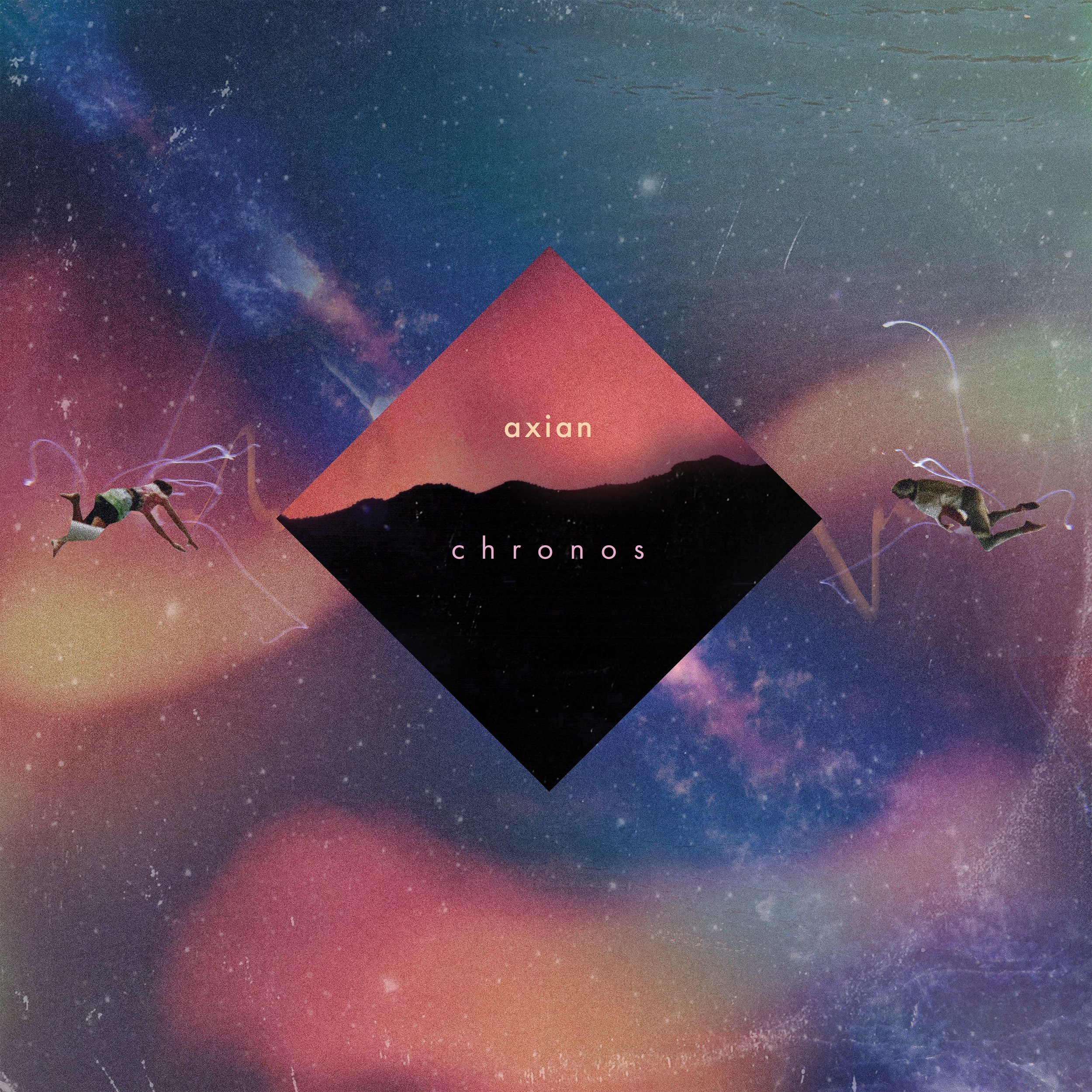
Axian’s first LP Chronos was released by Inner Ocean Records in September 2018 (Artwork: dwyer)
Coinciding with changes over the last decade to the ways in which people consume music, lo-fi hip-hop is mostly distributed and digested within fervent online communities. Copyright laws and royalty contracts create barriers to the legitimate distribution and sale of a genre historically rooted in the sampling and reconfiguring of composed musical material. While streaming platforms like Soundcloud and Mixcloud have somewhat lax regulations on what is contained in uploaded content, more monetized platforms like Spotify and Apple Music have strict rules on the nature and origin of the content they allow on their platforms.
One platform where producers have begun achieving wider recognition for their music is the plethora of playlists curated by Spotify itself. Songs selected for playlists like “Lush Lo-Fi” or “Lo-Fi Beats”, each with over 500k followers, reach huge audiences, and as a result the producer may receive royalties which are not insignificant. As these avenues towards recognition and compensation have grown, however, Axian points out certain unintended consequences, one being the establishment of “norms” where before none existed. “I’m sure quite a few people are tailoring their music to fit these playlists. I feel that these playlists and collections have garnered so much power that they are influencing the producers for the negative. I won’t take that to a super far extent, but I believe at least a small extent, that is a reality.”
The prominence of this playlist model for lo-fi hip-hop can be attributed in part to the work of Athena Koumis, former Music Culture Editor at Spotify. Athena led the curation of many of these large, popular playlists and communicated frequently with some of the style’s prominent tastemakers, ensuring the playlists were kept up to date with fresh, new sounds. If anyone has had their finger on the pulse during lo-fi’s rise in popularity, it’s been Athena.
Axian’s discussion of the playlist model, however, points toward deeper ethical implications. As these playlists are the locale for popularity and recognition in lo-fi hip-hop, are they impacting the fundamental ingredients of the music contained within them? “I know it, because I see it on a daily basis with producers I’m friends with on Facebook and through submissions I receive for my own playlist [“Dozing Off”],” says Axian. “I don’t want to complain too much about Spotify, because I’m doing pretty well there, and it’s doing good for the community as a whole. I feel you just need to also realize the negative aspects.” Despite his observations, Axian does recognize the playlist model as the best game going right now, although it could be better. “As a community, I don’t know what we should do exactly. It’s complicated, and playlisting is a fine solution.”
In the wake of Athena’s work with a plethora of lo-fi labels and producers, lo-fi hip-hop now has a firm and well-deserved foothold on Spotify. In addition, a number of labels and artists were simultaneously following the same pattern. The label Chillhop Music has garnered over 750,000 followers on their most influential Spotify playlist, “Lofi Hip Hop Beats”. A recent change to the submission guidelines for their label releases, however, highlights a fundamental issue in the propagation of lo-fi.
“Personally, I love Chillhop, and I support them to the end because I feel like they’re doing the right thing,” says Axian, whose EP Gaia was released through Chillhop in 2017. “But when they stopped the sample usage, or they stopped accepting music with samples, that was such a big transition in the community. Chillhop was the frontman or whatever. They’ve always been supporting hip-hop of all kinds in the underground community, and it was kind of weird to see that happen, but I get it.” This summer, Chillhop Music announced that they would no longer accept label submissions that included samples. Alexander suggests that Chillhop’s motive was to stay on the right side of publishing and copyright laws. He hits a major nail on the head, as running afoul of such laws can quickly result in the seizure or forfeiture of profits and/or having entire domains and labels shut down overnight.
“They started making money, getting bigger than they may have thought they would. In one way I get it, but in another way, you can mess with a sample so much that it’s unrecognizable. As an artist trying to understand a label [Axian himself runs a label called Celestial Blue with rappers Obijuan and loom], I get where they are coming from, but I think it split up the community a bit. A lot of the older lo-fi heads, said ‘oh man that’s a trash move’. Then there are the new heads who are trying to get into sample-less music. And I consider myself somewhere in the middle, maybe a bit more on the older head side.
Axian is noting a phenomenon that is as old as the music industry itself, wherein artists will curate their musical content to fit the desired motif of the labels that are sponsoring or highlighting the music. This potentially calls into question the fundamental integrity or “authenticity” of those productions. Conversely, these unforeseen barriers and obstacles to publishing lo-fi music have brought about a wave of innovation and creativity amongst new producers. Instead of sampling content from external musical sources, artists are training themselves in conventional instrumentation, recording that instrumentation, and sampling their own arrangements from scratch. In this manner, one can create everything that is holistically lo-fi music and simultaneously be able to own and distribute that music without issue. As stated before, Axian is himself learning the keys.
This was not the first time Axian has spoken on the subject of how and why music is influenced the way that it is. Indeed, “I think about this all the time,” he said. Beyond how the music is influenced, there is the function of that influence itself. In an interview with Public Pressure in 2017, he said “Everything has to be fancy, or about money, drugs, and sex to make it in the mainstream, and I think a lot of people are conforming to the belief that that’s the way things should be.” Alexander believes this is not coincidental. “At some points in my life, I’ve thought that we’re all controlled to a certain extent. It is funny thinking about these things, because not everything is coincidental. It’s not just trashy music. It’s not just popular because it’s popular. There’s someone making the decisions behind the board. There’s a great logic behind it, but it’s just not the right ethic.”
“It’s about who they’re appealing to,” Alexander continues. “I have some friends who are school teachers for the lower grades. They always talk about how all the kids are referencing all this music that is so inappropriate for kids. I think that’s something we may not be so aware of; how it affects the kids. I’m personally very against that.”
For his part, Axian will continue to make music which speaks “the language of feelings”, as he referred to it in Public Pressure. He continues to release deeply emotive singles regularly, many of which, like his latest, “Evocation”, are included in our curated playlist. He’s also working on a side project with another producer. Their first release will have some “soft beats” as well as some “hard slappers”.
“Slappers!” I repeat gleefully.
“Yea, slappers, that’s what we refer to them as in the community. Something has to slap in the hip-hop community.” For an example of one of our favorite slappers from Axian, check out “Rockin” in our curated playlist or “Adamite” from Chronos. Regarding his side project, “it’s beats, but it’s a lot of different stuff. Lately I’ve been moving towards more electronic stuff. Not to make electronic music, but to make hip-hop, or ‘synth hop’.” By earning himself popularity, Axian can create freely and continue to chase that language of feelings without worrying so much about whether or not it will reach people’s ears though this playlist or that label. “I’m basically in a place where I can do whatever I want to, as long as I keep it real. That’s my philosophy.”
So again, this Sunday we encourage you to kick back, relax, perhaps put on your thinking cap, and enjoy a curated playlist of music from a talented beatmaker. Regardless of the methods for promoting, naming, selling, or making lo-fi hip-hop, there’s one quality to this music which almost all can agree upon, and Alexander verbalizes it well. “You can convey so many things without saying a single word, or you might even spark something inside someone that you never intended to, and that's the beauty of it in my opinion.”
FOLLOW Axian: Soundcloud / Spotify / Youtube / Bandcamp / Facebook

Dust Collectors - Seasonal Sounds 5: Fall
In its curation efforts, Dust Collectors is true to its name. Their new compilation Seasonal Sounds 5 helps establish this label in the realm of the rough hewn, in-the-pocket, dusty shuffling beats. They aim at and strike this specific nerve in the beats world with a dazzling array of beatmakers big and small from among that world.
Each season has its unique, universally familiar vibrations. There’s an atmosphere within and around people, a strange phenomena of feeling that comes about when the senses of a season - its sounds, smells, temperatures and patterns of light - combine within the individual. There’s certain music that corresponds in the ear of the beholder with any atmosphere. That is to say that each season has its rhythms. And one could suggest that few rhythms synchronize so well with Autumn than the wispy, sepia-tone, melancholic movement of lo-fi beats music.

In its curation efforts Dust Collectors is true to its name. Based in Boston, Massachusetts and distributing worldwide, the label has been releasing for just over one year but their growth and development has been rapid, as the tracklist on this compilation attests to. Some labels specialize in the spacey, some in the especially trashy or avant garde. Others go for a classic sound, and more, like the leaders at Chillhop Music strive for the cleanest, most rehearsed, if you will, presentation of beats. That’s no disrespect, of course. If anything is true, it’s that everyone enjoys different vibes, and audiences vary even within niche musical communities. Although it truly has a bit of all these sounds, their new compilation Seasonal Sounds 5 helps establish the Dust Collectors in the realm of the rough hewn, in-the-pocket, dusty shuffling sound. They aim at and strike this specific nerve in the beats world.
Side B of this compilaiton is a journey. Cinematic horns open the curtain but they’re soon distorted and pitched out. Suddenly a shuffle steps into the silence. Guitar and key samples dangle over a subtle but strong head-nod made for New York City sidewalks. Then comes a cut from New Jersey’s own slr (“sailor”), who has been releasing a ton of beats again in the past few months. B3 finds Stan Forbee of Melbourne, Australia offering “whistle tune”,one of our favorites from Seasonal Sounds 5. His work with the keys, a sort of rhodes-y sound, is his calling card, and he can deftly arrange multiple melodies to great emotional effect. There’s Flitz&Suppe from Cologne, Germany, cut from a more classical cloth and emphasizing clarity and straightforward note relationships. This is followed by a joint from the Grammy-award winner Cookin’ Soul out of Spain then a spin from Danish feels master Axian.
The back end of the compilation opens sup pace for experimentation. Here one finds another stand out rhythm, this one from Bretsil & Soft Eyes. Bret aka Bretsil is one of multiple managers of the Dust Collectors. His work ethic and enthusiasm are inspiring. Before he even receives your Facebook message, the “responding” icon appears. Video chatting with Bret, he mentions that he “used to make electro music that was really bad”. He’s moved by ambient work, especially that of Brian Eno, and these experimental and electronic influences are apparent on “blues”. For a moment, it’s as if one has stepped back in time from the online world of beats into the scenic sonic codex of a Boards of Canada record. This is meditative trip hop that helps the mind bring itself to a single, still point. The beauty of Seasonal Sounds 5, though, is that just a minute later the listener gets hit with a joint from Juma, a whirlwind of brass and vaudeville bounce with a soulful melody and big boisterous bass drum. This 180-degree turn pulls the listener out of Samadhi and back to pounding the pavement.
It’s surprising and encouraging that a label with the size and relative clout of Dust Collectors can assemble so much talent on four tape sides. Pulling together the time and talents of any grouping of musicians is a worthy achievement. DC should be commended for curating music from strong names so intentionally in a musical community that can seem homogeneous if seen from afar or even at mid-range.
But once experienced from within, this community appears as a diverse, dynamic and constantly evolving deal. There are trends and movements, associations between artists, organizations and patrons that drive forward certain sounds and ideas to the short shrift of others. So much of it, of course, takes place online and at a distance. To curate a compilation, to stand at the center of that, outstretch imaginary limbs in invitation and proposal, and then reap a bountiful harvest of excellent music is, in a word, magical. It’s also a phenomena or approach that’s unique to the 21st Century so far. Or if not unique to it, the curation process can certainly manifest with more flexibility and dynamism nowadays after the explosion of digital music. It appears the Dust Collectors will continue to leverage these circumstances to create gem releases for beat heads everywhere.
The more spins this compilation gets, the more magic and beauty leap from in between its kicks and snares. Somehow each tune is a downtempo banger, the sort of song that’s placid, smooth, even wistful, yet it brings on a tangible high energy, a hope and excitement for a new season.
FOLLOW Dust Collectors: Spotify / Soundcloud / Bandcamp / Instagram / Facebook
TRACKLIST:
Side A
1. Dweeb - oolong
2. Leo The Kid - Elder Flower
3. Flughand - Fogu
4. Graves - Arc
5. Keem the Cipher - hindsight
6. Oxela - dustoiche
7. Burnt Grapes - Beat Coat
8. Kuranes - night.stroll
9. Radicule. - morning dew
10. HM Surf - rito
11. Linanthem - home
12. Nimzo - Stars
13. Memory - Time // Change
Side B
1. Loop.holes - Oh Mama
2. slr - curb
3. Stan Forebee - Whistle Tune
4. Goosetaf - Smokin Chimneys
5. Yimello - waves
6. Flitz&Suppe - nothing to do
7. Cookin Soul - That Flame
8. Axian - Drive
9. Cheeki - doze
10. Leaf Beach - White Sage
11. Soho - Carolina
Side C
1. G Mills x Aimless - Bubble
2. DeeB - And...Retain
3. kckflp - raw
4. stxn.x - castor & poluxxx
5. Made in M - Frape
6. Fushou - Plummet
7. Knowmadic - sometimes it matters
8. Druid - darker nights
9. Misc.Inc - Agena
10. tkdwn. - one step
11. ideism - orbit
Side D
1. Smuv - Indigo
2. moffen - without a care
3. b0nds - full moons
4. smeyeul. x speechless - dust
5. bretsil x softeyez - blues
6. Ka$tro - The Moon Rises
7. Juma - Ms. Paynt
8. Sleepdealer - Polaroid
9. Elaquent - Go Figure
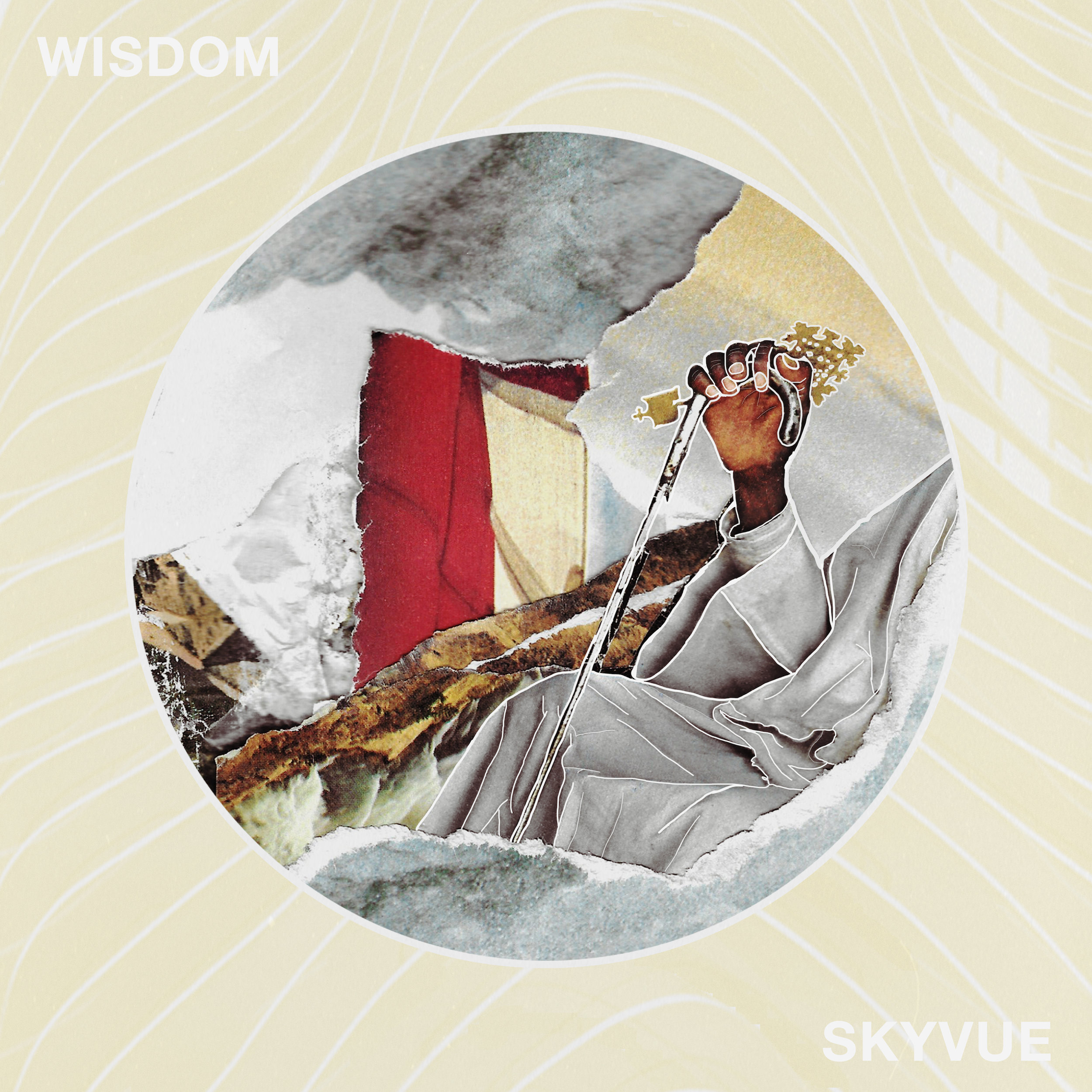
WISDOM - SKYVUE
Coming in at exactly 30 minutes long, SKYVUE from Texas-based beats producer WISDOM is a meditative journey. WISDOM uses thumping rhythms and spaced out, distant melodies to activate strong psychological currents within his listeners.
Coming in at exactly 30 minutes long, SKYVUE from Texas-based beats producer WISDOM is a meditative journey. WISDOM uses thumping rhythms and spaced out, distant melodies to activate strong psychological currents within his listeners.
Speaking in superlatives can be dangerous, but WISDOM aka Alec may have some of the cleanest and most impactful percussion in the beats game right now. All the percussive elements are sampled from different sources but coated in the same lacquer so that each beat becomes a cohesive collage. One could spend the entire 30 minutes of the album, and some surely will, trying to pick apart that collage.
His kicks are round and muffled but forceful. They fall all over the mix seemingly at random, so while the head is steady rocking to a consistent cracking, rim-shot snare, the kick is moving around inside four bars unpredictably. The hi-hat samples are diversified both in their source and their velocity (i.e. loudness) to add that "human touch" to the drum beat. All his percussion is compressed masterfully so that it leaps out of the mix, nearly startling the listener on a couple occasions.
Some stand-out tracks from this release include "EARTHTONED", "LTD", "GIVE AND TAKE" and "SIESTA". With "EARTHTONED", Wisdom explores a unique tempo, while the rest of the album sticks to boom-bap. The bass line is composed of low-frequencies so seemingly bottomless that they're reminiscent of electronic music. Balancing this brilliantly is a melancholic piano sample that leverages not just the notes played but also their deep resonance.
The next cut "GIVE AND TAKE" brings the tempo back with quiet ferocity. Sampled woodwinds blow while a guitar lick ducks in and out of the mix. WISDOM relies on guitar samples for chromatic effect. They're rarely prominent, essentially they're in the pocket, but they add great color to the stereo image. "LTD" rocks at this same pace, and may be our favorite cut on SKYVUE. The sway of the percussion is simply irresistible, with the kick possessing a tangible bouncing-back effect. Here the melodic backing is at its most sparse, too, with a guitar lick taking the lead over a lush backdrop of pads.
WISDOM has been a favorite of The Rust Music for some time, and he was featured in our Lo-Fi Sundays column in early 2018 right after the release of his first album DINGE. We'd hoped the prodigal production and dreamlike essence cultivated on that release was no fluke. Indeed it was not. With this second release, WISDOM continues to flex superb production skills, combined with intelligent songwriting and that intangible creator's touch that can create a whole greater than the sum of its parts.
One would be wise to keep their ears on this producer. Alec is young and still at university. His skills are only going to increase, but will they be matched by a parallel increase in passion? There's just one intelligible vocal sample on the whole album, and it closes the final track. "I just can't fucking learn, I'm too stupid, remember?" Whatever pathology is at play behind this music, the product is pure gold.
FOLLOW WISDOM: Soundcloud / Spotify / Bandcamp

Gaddy - Mixtape Mentality Promo Mix
You’re high-stepping through candlelit caverns in the Himalayas, aligned as hell, scoping out monks who may or may not be trying to get over on you. In the back corner of the cave Gaddy is spinning fat breaks, old vinyl and Houston Texas hip-hop. Heavy bass and dangling synth chords start rocking the cave, with fresh samples ringing out. You’re getting into the groove with Gaddy, whose next release Mixtape Mentality, drops Tuesday, August 7th right here on The Rust Music.
Hip-hop is foundational for so much music and art in the United States, especially contemporary electronic music. The United Kingdom’s contributions by way of Jamaica, or the tempos coming from houses in Chicago, any of the multitude of influences, all have their impact. The layering, rupture, and flow that define hip-hop music are thick clay, foundational motifs, for contemporary bass and glitch hop music.
According to George Nelson in Hip Hop America, hip-hop isn’t a style of music at all. “Hip-hop is used to refer to culture, language, and behavior….while rap is the musical form that emerged from this culture.” Especially here in New York City where hip-hop is as thick in the air as the smell of garbage, it’s as much a state of mind as a style of music. At least that’s how it began. “Hip-hop emerged as a source of alternative identity formation and social status for youth in a community whose older local support institutions had been all but demolished along with large sections of its [South Bronx] built environment,” author Tricia Rose wrote back in 1994. As much as the music, there’s the mentality.
There’s a universal, elemental feeling. Kick and snare thump the same speed as your footfall. The bass is swinging and its got you swinging, too. You’re stomping down broadway ten feet tall because you’ve got the fattest beat in your headphones (or boombox). You’ve got the juice.
Picture that feeling, but instead of broadway you’re high-stepping through candlelit caverns in the Himalayas, aligned as hell, scoping out monks who may or may not be trying to get over on you. In the back corner of the cave Gaddy is spinning fat breaks, old vinyl and Houston Texas hip-hop. Heavy bass and dangling synth chords start rocking the cave, with fresh samples ringing out. You’re getting into the groove with Gaddy, whose next release Mixtape Mentality, drops Tuesday, August 7th right here on The Rust Music. Today, we’ve got a promo mix that highlights some of his favorites off the release as well as some older Gaddy cuts with some choice Hip-Hop peppered in.
Coming out of east side Austin, Texas, Gaddy drops the funky and furious styles from hip hop’s past into the computerized bass music of the future. Sometimes referred to as the Food Truck Fugitive, Gaddy runs among the talented underground electronic circuit that calls Austin home, including the Create Culture crew. He can rock a crowd with a mixture of performance styles. With a couple crates of vinyl he performs frequently in Austin, dropping the needle on some soul, hip hop, oldies, g-funk, electronic. When Gaddy fires up the software, he’ll play all original bass music.
As a youth growing up in Houston Gaddy learned the guitar well, idolized Buckethead, and put out an album at 18 years old on which he played every instrument. He was also raised into hip-hop, basically “force-fed chopped and screwed music” as he puts it, either from fake thugs in high school art class or from cars bumping on the streets of Houston. After stumbling onto electronic music he, like many, was floored by its forceful presentation. “This is power right here,” he said during a Road to Damascus moment in front of the speaker stacks. “To be able to just rip through a sound system, that led me to put down all that stuff,” Gaddy told me. “I don’t even own a guitar anymore.”
Gaddy’s approach to bass music reflects this crate-digging ethos and cut heavy performance style. Thick programmed drums pound out fundamental drum breaks while low-slung, funked-down basslines tip-toe and slide along. He cuts and assembles samples to make melodies and collages of color. He’ll wade deep into warped worlds of sound synthesis but the beat always leads you back to hip-hop. Indeed, both styles collide constantly in his compositions like some urban electric shamanism.
“Hip-hop’s the first electronic music, to me, really. It’s just a kick and snare and some dope-ass bass.” It’s hard to argue against hip hop’s influence on contemporary electronic music, especially after listening to music from Gaddy and his contemporaries. “I feel like hip-hop is the soul, and the roots, and the blues of electronic music,” he says. “Call me crazy, and I know techno and house are in their own field. I’m talking about our little sliver of bass music.” Gaddy may be crazy, but not for this statement.
Somewhere between an album and an EP, Mixtape Mentality boasts seven tracks, one of which was premiered last week courtesy of Aquatic Collective, and another of which drops tomorrow via euphoric.Net. One can also get into the mixtape mentality by bumping this tremendous mix Gaddy put together for The Rust Music that includes material made around the same time as Mixtape Mentality plus a few choice vinyl selections. It highlights Gaddy’s raw, stylish approach; rugged but full of the juice. Mixtape Mentality will offer the same sound and vibe, only refined. It’s pure juice concentrate if you will, so stay chooned.
Pre-order Mixtape Mentality here to receive the full album mix ahead of release.
FOLLOW Gaddy: Soundcloud / Facebook / Instagram
Tracklist
Tela - Survival (Gaddy Instrumental Bootleg)
Gaddy - Jumbalaya Juggernaut
Gaddy - Elastic
Gaddy - Sway (Edit)
Gaddy - Twisted
Gaddy - Delirious
Gaddy - Style From The Boondocks
Gaddy - The Nod
Mad CJ Mac - True Game / Ras Kass - Order out Of Chaos (Interlude Mashup)
South Circle - Attitudes (Instrumental)
Gaddy - Approbation
Gaddy - Golden
Gaddy - H.E.R.

![Seppa - Interview + Boosted [EXCLUSIVE PREMIERE]](https://images.squarespace-cdn.com/content/v1/59530136f5e2319eabb7d87f/1626113208781-BZ7C6B7E3LCECV7UD4CS/Boosted.jpg)

Amongst the incoming generation of artists having finally found their bite, not yes exemplifies the modern paradigm of electronic production; there are no hard boundaries, no clearly defined destinations, and unbridled compositional freedom. There’s a refreshing whim to their choice of direction, and the result is a fast-growing, dynamic catalog that takes us through virtually every space in low-end territory.