

Phantasmic Visions Meets Elegant Harmony: An Interview With Adam Ovoid
Deriving his name from the rare Ovoideocystidiata mushroom, Adam Ovoid has captivated the underground bass music scene with his unapologetically squishy and surreal sound design. To get better acquainted with a long-time favorite of the Rust Team and the wider community, Adam graciously made himself available for a long-form interview, diving into the lifelong pursuit of his craft and his affiliate passions.
Deriving his name from the rare Ovoideocystidiata mushroom, Adam Ovoid has captivated the underground bass music scene with his unapologetically squishy and surreal sound design. The Ovoid name was not adopted by Adam until around 2016 when he decided to jump head first into the underground bass music scene. After releasing his first album, Life, Ovoid has been a unique presence releasing singles, EPs, and albums on multiple labels and collectives.
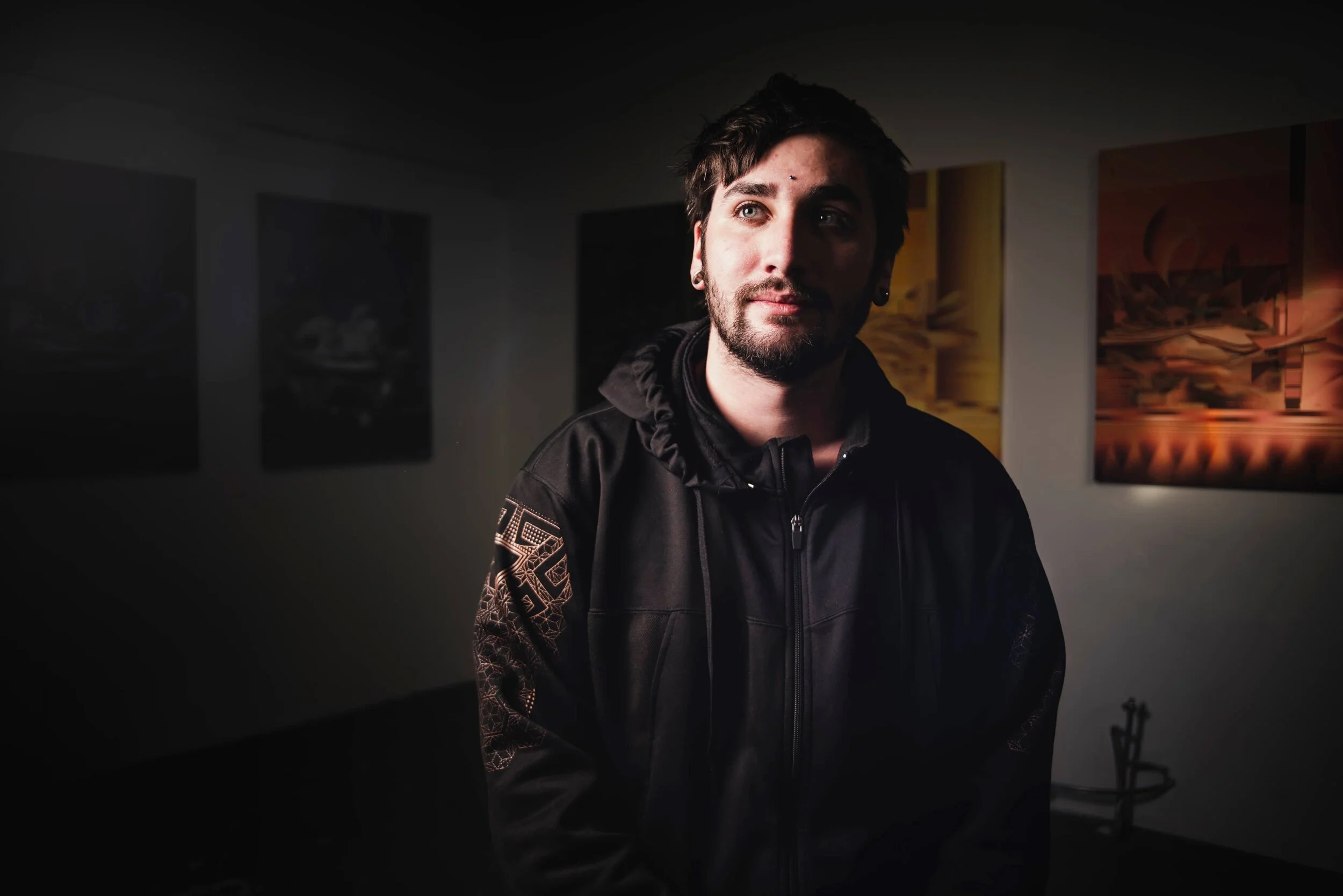
Originating from Tacoma, Washington, Ovoid has always found himself inspired by a beautiful, dewey landscape filled with tall trees, delicate mosses and steep mountains. While exploring the dense forests of the Northwest, he had been simultaneously exploring his own musical evolution. Traveling through melody and harmony, Adam hopes to expand his euphonic brain-child to other more quixotic horizons.
A self taught mad man behind the wheel of a synth, Adam has shown commanding prowess in sound production. Ovoid’s knowledge base bleeds through into his other-worldly, and at times phantasmal, sound design. His music is an adventure through genre, merging the worlds of harmony and melody with huge 808 anthem releases such as “Bangus Dang''on the Denver based Headroom Collective, and a downtempo psychedelic inspired album titled “Enigma” through The Rust. Beyond just his own individual catalog, Adam has collaborations with sound design aficionados like Hullabaloo and Shanti, transforming musical experimentation into community appreciation, driving that experimentation towards new heights.
{Add photo}
In his music, Ovoid transcends traditional musical limits by using texture and tone with his squishy and glitch-inspired sound. In such tracks as “Blocks In A Chain”, he focuses on reverberant mid-range bass lines, accentuating the twinkling highs of the melodies. In other tracks, he harnesses organic guitar tones to decorate the delicate phrases that inspire movement. “Mingo Mango (VIP)” is a song reminiscent of classic Americana and psychedelia in its purest form; long, echoing electric guitar screams, accompanied by squishy and repercussive arpeggios. It’s the liberating vibrations that move through the body in tandem with the cymbal crashes and synthetic textures, exemplifying the Ovoid ethos.
To get better acquainted with a long-time favorite of the Rust Team and the wider community, Adam graciously made himself available for a long-form interview, diving into the lifelong pursuit of his craft and his affiliate passions.
Alyssa Barnhill: Who is Ovoid? Where are you from?
Ovoid: I go by Adam Ovoid and I'm from Tacoma, Washington, and kind of the Tacoma/Seattle area, in my adult life. I have lived here my whole life pretty much but I'm planning on moving to Denver soon.
Barnhill: How did you like growing up in Washington state?
Ovoid: It was great honestly. It's still definitely one of my favorite places in the country, just because of the nature here, the mountains, and the forest. I definitely grew up loving the forests and mountains here and never really realized how special they were until I got older and traveled other places and realized that there’s not many others out there, like this. So I definitely have a really special place in my heart {for tacoma} but also I really want to get out and go live in other places for a bit. Kinda just explore other parts of the country and the world.
Barnhill: Have you ever played under any other names? Or has it always been Ovoid?
Ovoid: As far as this genre of music it's always been Ovoid but I was in bands in my high school and also had some hip hop and electronic projects too.
Barnhill: What instrument did you play?
Ovoid: I play guitar. Grew up playing guitar from when I was like 12 so that's definitely a pretty integral part to my production. I use a lot of guitar in my songs.
Barnhill: Do you sample a lot of your own guitar work?
Ovoid: Yeah! Yeah, pretty much all the guitar on my songs is me playing. Expect like, maybe one or two tracks where one of my friends played a riff or two.
Barnhill: What kind of guitar do you have?
Ovoid: Right now I have a Fender Stratocaster. I got it recently so it isn't on any of my released music but I am really excited about it because it's the nicest guitar I have personally ever had. I really love how it sounds. So it's definitely already made it into some tracks but not anything that I've put out. And I have an acoustic guitar and that's on Enigma. That's all that guitar.
Barnhill: What’s your first memory of an impactful musical experience?
Ovoid: Hard to say like the first but probably hearing my dad play drums. It was like the loudest music I had heard at the time cuz I'm sure he was doing it from the time I was born but I remember being a little kid and hearing my dad play Led Zeppelin on the drum, crank out stuff like that. He would play a lot of funk too like Parliament Funkadelic and Rick James. I remember being stoked on that music and I still love all that music. Then kinda growing up and getting into live music was probably listening to Pink Floyd's Dark Side of the Moon. Which has pretty much always been my favorite album.
Barnhill: What was your first festival/show?
Ovoid: The first show I ever saw was actually The Rolling Stones. Kinda funny because they were already so old at that point but I think I was like 12. My parents kinda just brought me there but I was still excited to see the Stones. The first concerts I really remember going to, that I really wanted to go to, was metal bands like Megadeth and Slayer. I liked that stuff a lot. Then getting into psychedelic music I think the first electronic/psychedelic festival I went to was Gem and Jam, in like 2014 maybe. After that I got super into the bass music scene and kinda wooked out for a few years.
Barnhill: Yeah totally. I think we all have our wook years, at least at some point. You have to go through that. Where is your favorite place to play so far?
Ovoid: Definitely, most consistently I love playing at the Black Box. It’s always great. But it really just depends. Sometimes I'll go to a random show and I really don't know what to expect at all. If it's like somewhere I've never been before or even like a state I've never been before, completely foreign to me, but then it will be like such a great crowd. But it really just depends on if everyone is just feeling it, even small crowds in a random venue, with maybe not even the best sound can be pretty awesome.
Barnhill: Do you still get like pre show jitters?
Ovoid: Sometimes, but it kinda just depends on the show. A lot of time, if I’m just feeling good about what I am going to play and feel that I've been in the studio enough, then usually I feel pretty good about it. But then sometimes if I'm not too confident in something that I’ve been producing lately then I get a little more nervous for sure.
Barnhill: How long have you been performing sets?
Ovoid: I probably started playing shows like 6 years ago? Or maybe 7 years ago.
Barnhill: So about 2013 or so?
Ovoid: Yeah. I'm pretty sure that was my first show. Then like, more shows though in the last like four years. After that I played Tipper & Friends. After that show it has been a lot more.
Barnhill: What year was your set at that Tipper & Friends event again?
Ovoid: I'm pretty sure that was 2015. Or no, I think, 2016? I always forget, I even though there is a poster on my wall!
Barnhill: How was that? I love tipper and friends events.
Ovoid: That was amazing. The Tipper and friends crews, they just do it so proper. It's just always such a good production all around.
Barnhill: What's your background playing shows? Did you start in smaller little venues locally? Did it all kind of just all jump off at once for you?
Ovoid: I definitely started in a lot of super small venues in Washington and Seattle. Underground shows, sometimes they were not even like really venues. Like tiny apartments and stuff. After the Tipper & Friends show I started to get bigger bookings, but still a lot of smaller stages and small clubs. Which I kind of prefer. I like having a more intimate audience usually because it feels more personal.
Barnhill: Everyone wants to play bigger venues, but you prefer that more intimate stage. I mean the Black Box is definitely that way, it is very intimate.
Ovoid: Yeah the black box is perfect. Enough people can fit in there but it's still very intimate.
Barnhill: This may be a little left field but I have to ask, am I pronouncing this properly? Bang-us DANG?
O: Yeah! Haha
Barnhill: Where did that come from?
Ovoid: It's just gibberish really. I can't remember what sparked it but something one of my friends said.
Barnhill: What do you have planned for the future?
Ovoid: I definitely am trying to get a full length album together and just really put a lot of effort into making sure it's super detailed and really how I want it to be. That's just a main goal, I want to be playing more shows and stuff like that. Mainly I am just finishing up a solid album, I have a good chunk of stuff with such potential. Like with my last, longer EP I did on The Rust, some of those songs, I worked on them for like three years before I released them. My process is just pretty slow on the downtempo stuff, I like to take a lot of time with it usually.
Barnhill: There is no harm in that. I saw that you are doing mastering services and wanted to ask about that. What does that look like for you, what do you offer people? What track are you most proud of mastering?
Ovoid: Mastering has been great for me, it's honestly what's been keeping me afloat. And I have been mastering everyday, at least a little bit. Hopefully I will grow it to become a full service business. Generally, I really like it because I get to kind of hear what a lot of “up and coming” producers, or maybe more hobby producers are being influenced by and what they are trying to make. It’s cool to hear a lot of my friends' influences on people who send me music, like sometimes I’ll hear stuff that sounds a lot like my friends' music. It's cool to see the influence trickle down through the generations of producers. And then also being surprised by people sending me stuff that's pretty new sounding, a new sound, or really pushing the envelope. In addition, being able to master a lot of my friends' music is really great. I think the thing I'm most proud of is Craftal’s latest album on The Rust. That is my favorite thing I've done. I really love that album a lot and he's a good friend of mine.

Barnhill: What do you do outside of music? What do you do when you're not mastering or making your own music?
Ovoid: I am pretty social. I hang out with a lot of my friends that Ive known for most of my life in Tacoma. I hike a lot, I read. Oh, I'm trying to get into like full on summiting mountains but I need to take some glacier travel courses to be certified to get the permits but growing up here in Tacoma, with the mountains kinda looming over the city, has really inspired me to want to climb them. Hiking is definitely my favorite pastime. Mostly music though, honestly, I'm kinda a workaholic.
Barnhill: Who are you listening to now? Anyone you are looking forward to in music?
Ovoid: Right now, my biggest influence is probably Nine Inch Nails. I didn’t really listen to them growing up. I had heard their songs a little bit, but then in the last year and a half or so, I have been totally sucked into their music. I think it’s their production style that got me but I’ve been pretty obsessed with Nine Inch Nails lately. Also, I like things like Snarky Puppy, jazz fusion. I love all that. That's what I switch back and forth with, weird jazz fusion stuff to Nine Inch Nails. I like a lot of the stuff that I was playing on the Ovoid Radio Sessions, during quarantine. Just a lot of kinda chill stuff, a lot of trip hop, other sorts of relaxing music.
Barnhill: Did you go to school for music?
Ovoid: So for production, I'm mostly self taught but we have an awesome community of producers in psy-bass music that all share knowledge with each other constantly so that helps a ton. But I did go to an arts high school where I took songwriting and audio recording classes for 3 years and I definitely learned a ton there. I also took guitar lessons for many years before that so learning music has been a lifelong journey for me at this point.
Barnhill: How would you describe your music?
Ovoid: How I would describe my music is one of my absolute least favorite questions to get because I hate trying to quantify it into genres. I use “psy-bass” as an overarching term but really it's all over the place and I try to not limit myself to certain tempos or genres.
Heavy, pulsating, and serendipitous, Adam Ovoid is bridging the gaps that define the genres of psychedelic, bass-heavy music. If music is the forest, its inhabitants are musicians and creatives, and Ovoid is the mycelium network reaching out to each corner. Nutritious for the soul, pleasing to the ears, and engaging for the body, everyone should take a nibble off the mushy delight that is Adam Ovoid.
FOLLOW Ovoid: Soundcloud / Bandcamp / Spotify / Facebook
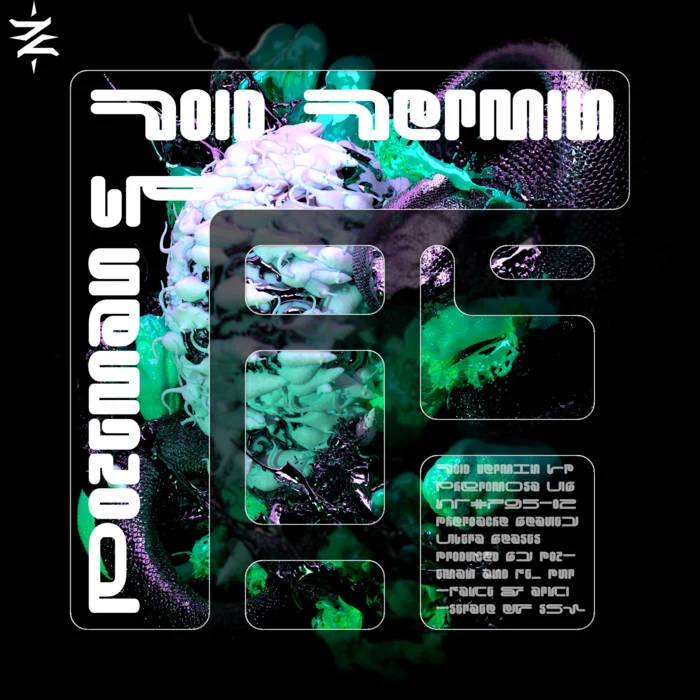
Poztman Cracks The Seal on Debut LP + Remix LP
Constantly breaking out of contemporary forms and functions in composition, the Poztman project has an immediate draw that’s hard to thumb down, and harder to replicate. After years of sharpening personal artistic imagery into a fine science, he’s finally cracked the seal his debut LP: Void Vermin.
Constantly breaking out of contemporary forms and functions in composition, the career of the Belgian glitch producer Pierre Collie has been awash with groundbreaking sound design and motifs since his inception. Be it through saturated low-end, intuitive use of audio artifacts, or the personal slapstick nature of his music, Collie’s Poztman project has an immediate draw that’s hard to thumb down, and harder to replicate. Glitch music, in a raw format, is as exactly what the name suggests; anything from quaint to extreme asymmetry within a composition and sound palette. After years of sharpening personal artistic imagery into a fine science, the current zenith of Collie’s project is his debut LP Void Vermin.
The challenge in successfully portraying glitch music is almost always how asymmetry is introduced and wielded within a songwriting context, and Collie possesses an undeniable control and execution over this extraordinarily amorphous genre. Void Vermin, in action, it is a droning cornucopia that can sometimes feel bright, manic, and awash with color, and at other points feel deliberately brooding, embodying monochromatic arrays of grey texture. The tone choice greatly reflects the attitude of each track, such that “Cemetery Wind” and “World Egg Burst” are distinctly centered on timbre and note relationships, and “Burial Blossom” and “Subliminal Suicide” strictly focus on droning, repetitious percussion and synthesis. If at one moment, the album puts harmony and cadence on the center stage, the very next moment will assuredly descend into a torrent of resampled craftsmanship and intentionally combative sound design. It’s the ideal Poztman experience, fleshed out in astounding detail, and presented with extreme fidelity.
Adding further dimensions to the experience, the nineteen original tracks on Void Vermin are accompanied by thirteen remixes from an assortment of fellow glitch producers, including Man From Sol, Purfakt, and arkistrate. In that way, it is not just a dive into the recent Poztman developments; it is a showcase of cutting-edge glitch music from the genre’s contemporary standard bearers, and Collie’s seal of approval underscores the entire collection of tunes. While we sort through Void Vermin’s variety of flavors, we’re certain that the Poztman project’s next iterative adventures are already thoroughly under production, and we’re certain that his fellow audio pioneers are in lockstep right behind him.
FOLLOW Poztman: Bandcamp / Soundcloud / Spotify / Facebook

A Chat With Keith Wadsworth on His Paramount Record Adirondacks
The debut Wadsworth Music release, Adirondacks, is a guitar-driven record written by a compositionally-driven guitarist, showcasing a stunning array of musical hues and instrumental finesse. We had the opportunity to have a succinct chat with the brains behind the music, and get a better understanding of the Wadsworth vision.
By any metric, Keith Wadsworth is a jack-of-all-trades guitarist; his personally defined style chameleons between funk-rock fusion and neoclassicism, and his current body of collaborative Wax Future works showcase his songwriting and performance talents across several iterations of broken-beat electronic music. In many ways, his foray into electronic music has shaped his contemporary sound, but that’s just the most recent injection of influence. The long arc of his lifetime thus far has been a step-by-step march towards a cumulative display of musicianship. That display of musical immersion and education takes the form of his Adirondacks EP, released through his new solo moniker Wadsworth Music; With a completely distinct sonic profile from the Wax Future project, Wadsworth has refined his own definitive image, introducing the majority of his friends and fandom to his musical confluence for the first time.
Adirondacks is a guitar-driven record composed by a compositionally-driven guitarist, showcasing a stunning array of musical hues and instrumental finesse. “Climbing” opens the record with soft, major crescendos taking flight, contrasting wonderfully with the meandering minor note relationships in the closing track “Back at the Trailhead”. Sandwiched between the two subdued ballads are a trio of anthems that move the needle closer towards the Wadsworth musings we’ve grown so fond of; “Summit Nap” explores the power and the impact of harmony in notation, where “Dream Sequence A: Upload” and “Dream Sequence B: Error” place rhythmic syncopation and pure shred-head energy into the spotlight. It’s not just the complete package for appreciators of six-string prowess, but a stylistically unique and emotive collection for any discerning soundhead.
Having been so immediately drawn to the raw passion behind the record, we at The Rust felt compelled to reach out to Keith for a conversation about his new music, and the journey that led him here in the first place.
The Rust: Let's start with the necessary and obvious topic: can you talk about your origins as a guitarist and a songwriter?
Wadsworth: I got my start as a rhythm guitar player for my dad at 8 years old, great gig, residency was in my living room. Made the jump to lead guitarist for the band around 9 years old after a gig in the guitar room of Sam Ash. Never looked back. My first compositions started around 2004 in a program called “Cakewalk”. I would take the drum sample tracks and write tunes around them. Bought a Dr. Rhythm drum machine and became enamored with drum programming. By 2006 I had written (a very poorly recorded) album of guitar music that I sold at my high school talent show for 5 dollars a pop, sold about a dozen. Out of high school played in a metal band, toured around the east coast a bunch. After that I bounced around in many projects, pop punk, singer songwriter, eventually meeting Connor and starting Wax around 2014.
The Rust: What are some of the stylistic influences you pulled from as you progressed as a musician?
Wadsworth: [I] started out following and emulating as my of my guitar idols as I could. Joe Satriani, Paul Gilbert, Steve Vai - I was a big Van Halen fan as well, and would always spend time attempting to master EVH’s solos and impeccable rhythm work. RIP to the absolute legend. As we dove deeper into Wax and started to play shows alongside cats I really looked up to I think I made a conscious decision to think about songwriting and the impact of the guitar in our songs. I think that helped my playing, kinda slowed down and serviced the song more. Obviously live I would still go off and have some fun though.
The Rust: The Wax Future project has been your collaborative brainchild for quite a while now, pocketing you into a powerful electro-soul-rock fusion; what was the preamble to exploring different motifs on this debut Wadsworth release?
Wadsworth: This solo release is kind of a full circle piece. I familiarized myself with recording and production in the beginning of my musical journey. With Wax it was like leveling up, you can’t be near Connor Hansell and not learn via osmosis or some shit. It’s real. So this record was a lot of revisiting where I was musically all those years ago with a broader grasp on production and creative tools.
The Rust: Can you dive into the songwriting process for this EP? Was it a conscious project, or a serendipitous assortment of tracks?
Wadsworth: I wrote the song summit nap first. It’s definitely an ode to my guitar hero roots, very droney ballad’y (those aren’t words I guess) But I didn’t really think I had a chance to create a small collection of music until I wrote Dream Sequence A. When that song came together I knew I had the nucleus of something. It was like a eureka moment. Very exciting. From there I kind of had an idea of where I wanted to the concept of the tunes to go. I enjoy creating a loose journey through collections of songs, it helps keep me focused.
The Rust: You've been keeping busy with an assortment of live looping gear and live production; Can you talk about your experience translating solo performances through technology?
Wadsworth: Speaking of eureka moments. Live looping is a giant prolonged eureka moment. Improvisation is that core of who I am as a musician, I have a hard time conjuring up as much joy as I do musically than from pulling concepts from the depths of my brain off the cuff. With live looping its just that non-stop. I want to establish a schedule of streams and just share. I miss the stage with my entire being, being able to look out into the crowd and share energy. The looping streams manufacture some of that energy.
The Rust: As one of the foremost instrumentalists in our slice of music culture, you're given a fairly constant opportunity to collaborate on other live performances. Would you care to open up a bit about this dynamic? What are the major hurdles to surmount when sitting in, especially in the context of improvisation?
Wadsworth: As I said, improvisation is at the core of who I am as a musician. I’ve been really lucky to sit in with and collaborate with a fuck ton of artists I look up to. With some minimal prep, you can create this unique shared experience between you and an artist that’s able to be watched live, it's really special. Countless times I can remember just laughing on stage because something went perfectly and everyone on stage knows that we pulled it from the ether at that moment right there, it’s one of the downright best things about music.
Regarding hurdles or prep, there really isn’t hurdles, there are house rules for each artist. Some are particular, some are free form. Entering each artist's‘ house’ and learning their rules before a performance is part of the fun. When I sit in with Freddy Todd, he is such a guru with the onboard fx of the DJ mixer that he lets me kinda high fly through the tunes and mixes me in the moment, ie. Cutting my fader in the drop sections and adding delays in break sections. That collaboration is unique to our sit-ins and I’m not convinced Freddy isn’t an actual wizard sometimes after we play haha.
The Rust: With this first batch of Wadsworth tunes minted for release, where is your head with regards to future projects, both with Wax Future and as Wadsworth?
Wadsworth: I’m gonna let these tunes go, dive headfirst into the holiday season and then I would like for the Wadsworth stuff to maybe release a song a month through 2021. Wax is sitting on a GRIP of tunes, some really exciting stuff in the works over at that camp. I’m also just gonna drop it here, I made mention of one of my earliest projects being a metal band. Through quarantine, I’ve actually collaborated with my best friend Donovan remotely and we’ve started a metal project, hype to get the details of that off the ground. I didn’t expect to start two new projects during quarantine but this has all kind of progressed naturally.
The Rust: Can we expect to see some Wadsworth performances when stages become our lifeblood again?
Wadsworth: Most certainly, I want to pick these songs apart live and add some improvisational elements. I want to hit the stage with the live looping stuff too. Zone Drums and I were able to step out in a limited capacity but I want to grow that medium and share more.
With this first solo release out of the gate, the path is wide open for Wadsworth to continue exploring the wide berth of his musical territory. In the time between now and the eventual return to traditional concerts, there's no question that he’ll be hard at work in the lab putting together a host of fresh material for the inevitable in-state debut of Wadsworth Music.
FOLLOW Wadsworth Music: Bandcamp / Soundcloud / Facebook
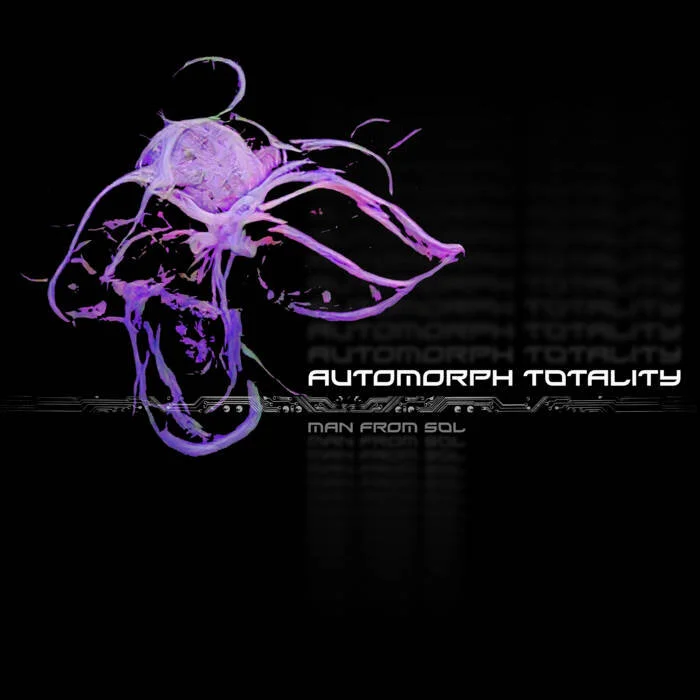
Man From Sol Debuts New Ambient Glitch EP
Man From Sol has consistently delivered a circuit-bend-inspiried array of textures and spectrum-folding motifs, and his focus on interpolation and granular resampling reaches new heights with Automoprh Totality.
The San Diego-based aural astronaut Man From Sol has been hard at work defining the next phase of his musical project, reaching toward the depths of his bag of audio hat tricks. The result is a cornucopia of digital syncopation and stuttered artifacts via the Automorph Totality EP.
Man From Sol has consistently delivered a circuit-bend-inspiried array of textures and spectrum-folding motifs, and his focus on interpolation and granular resampling reaches new heights in Automoprh Totality. It's ambient only in compositional nature, but is otherwise a full serving of spectral waveforms and stabs of mottled synthesis. Whereas the glitch in more contemporaneous electronic music serves a primarily rhythmic function, here it serves to paint mechanical hues across the frequency band, jostling and crashing against reverbent sound platters and cascading percussive runs. It's a top-tier forray into atypical songwriting and freeform rhythms, demonstrating this producer’s natural inclination for all things niche and novel in music.
Man From Sol's laser-edged focus on derivative, molten soundscapes and crystalized fidelity cannot be understated, and it’s made all the more accessible by his focus on the glitch.cool platform; operated in collaboration with a number of other like-minded creatives, glitch.cool functions as an educational and promotional platform for musicians and producers to access, understand, and participate in the creation and the exposition of any format of glitch music. While we patiently await the next spate of Man From Sol tunes, we encourage you to take a few minutes to browse the glitch.cool website and get familiar with a host of similar projects.
FOLLOW Man From Sol: Bandcamp / Soundcloud / Spotify / Facebook
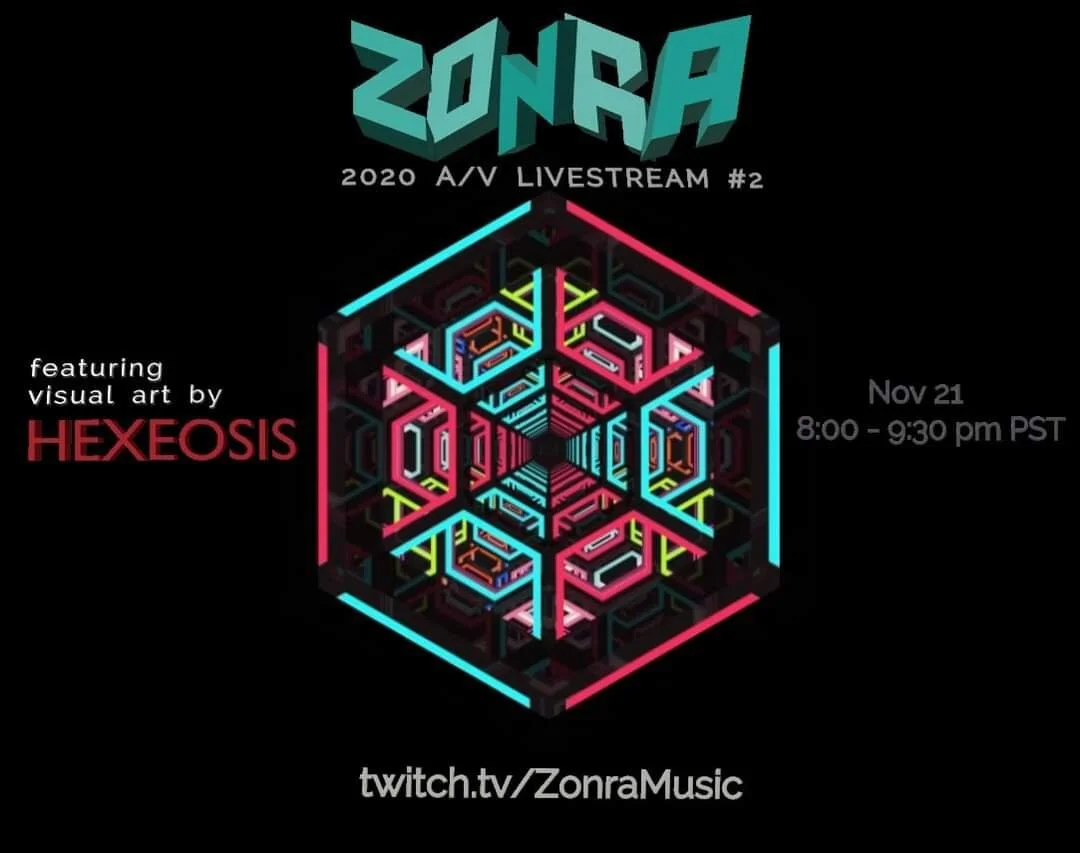
Zonra Opens Up about Stylistic Direction and A/V Stream Series
Coming in hot this evening is the second 90-minute installation of Zonra's A/V series After the smashing debut stream in October, he's graciously agreed to entertain a series of interview questions on his latest performance developments, his musical upbringing, and the novelty of sound.
For the last six years, Jackson Hale has been pushing the boundaries of his musical acumen through the Zonra project; mingling precision production with gradually shifting compositional styles, he's kept his approach consistently fresh and above-par for the fidelity of his work. In line with his own burgeoning interests in multidimensional art, and with the shift towards digital streaming platforms across the last year, he's embarked on a stream series of curated A/V sets, mingling unreleased material, old favorites, potent reworks, and the first lens into the visual stratum of his creative endeavors.
The proficiency of the Zonra project is the boon of a lifetime of musical study and experimentation. Hale's choice of style, genre, and sound palatte have evolved several times across a distinct career, and the incoming release of his next collection, the Hypotheticals EP, showcases a further evolution in his production and songwriting processes. After the debut of his first A/V performance in October, he graciously agreed to entertain a series of interview questions for The Rust on his latest performance developments, his musical upbringing, and the novelty of sound.
The Rust: The Zonra project has undergone a stylistic metamorphosis more than once at this point; what draws you towards each successive form your music takes?
Zonra: My approach with music production has always been to stay open to whatever direction interests me, and to explore it with patience. Ultimately, many of my stylistically-diverse projects will unfold together, and slowly, while new techniques are explored, learned, and shared between pieces. The propelling force behind my music is generally to find (it has always felt like more of a 'find' here than a 'create') an overall system of novel or crystallized ideas in sound that work together to create an experience that is larger than the sum of its parts, iterating through different versions or expressions of those ideas until some type of well-rounded arrangement appears. Recent audible experiments combined with influence from whatever I've been listening to at that time in my life tend to shape my tracks.
The Rust: Can you talk a bit about your musicianship and production background?
Zonra: I started with piano at a young age, and took up drums and percussion a little while after because I was bored with piano. I played drum set in various jazz bands through middle and high school, and always loved being part of the non-verbal communication that occurs between players' during solos. It's magic. I stumbled into electronic music production via Audiotool.com around age 15 where I learned the basics of synthesis, sequencing and sample editing — posting lots of tracks under the username Astrum. After several years, I found myself needing software that could handle larger projects and let me sketch more freely, and soon I really felt like I'd found a sound that was all my own- or at least a more specific focus within music production. As a kid I loved getting lost in certain songs, really losing myself in the mix and the cohesion of all the different instruments working together. The power of a clean mixdown is endlessly interesting to me — it's not necessarily the content of a song but rather the way it is presented that determines how it impacts. A degree in Recording Arts has helped me solidify my knowledge here. The creative powers of synthesis, sound design, and spatial audio have dictated the parameters for many of my projects — though to really get going on new ideas I have to forget about all that stuff and just have fun in my studio.
The Rust: How did you find yourself interested in performing A/V sets? Have you always had an inclination for visual art?
Zonra: I've always loved multi-media art and the idea of using different technological media to create unique, immersive experiences. I got my first camera this year and started recording videos of the world around me. I also got back into learning Max this year, and realized there was a way of using Max to connect my APC Mini to these videos, in effect creating my own VJ setup without having to buy any extra software. This gave me a brand new outlet for live creation during streams, as opposed to the (in my experience) detail-oriented, repetitive work of creating a song. After buying a green screen and building a PVC pipe stand for it for around $6, I was able to fully recreate the effect of performing on stage in front of a video wall, with the added bonus of being my own VJ. I had suddenly found a new dimension to play with — one that doesn't demand any editing sessions or prolonged contemplation of its presentation in order to be utilized and presented. Creative work is, at its heart, finding spaces where you can let yourself be free.
The Rust: Can you unpack some of the programming involved with crafting a smooth A/V performance? What's that experience like as an individual performer behind manning both helms?
Zonra: The first thing I needed to figure out was how involved I wanted to be with the visual aspect of the performance, and subsequently what the limitations of my current setup would allow. I'm continually using a process of trial and error to figure out what works for me and what works in the medium of live video streaming. My visual control setup uses a Max patch I created to connect my APC Mini to a playlist of video clips that I've recorded throughout the year and then running those through built-in visual data processing modules to add controllable effects, including pixelation, adjustable angled mirroring, and zoom depth, to create various kaleidoscopic effects. Having even a few different effects at my fingertips creates what feels like near-endless possibilities when connected to my video library. It's super fun to explore all these combinations of videos and music, constantly being surprised by the results that I'm given. Working with my own visual content is especially gratifying in that it lets me evolve and give new life to my music.
The Rust: We're now eight months beyond the initial surge of viral infections throughout the world, and closing in fast on the end of the year; what's your experience been like throughout the turmoil and tribulations?
Zonra: I have my health and I have employment which many can't say right now. Musicians are in a weird spot especially where the ultimate form of the art- live performance in a venue, connecting you with the audience into some kind of vibed-out hive-mind- is now a public health hazard. I know we all miss live music and its ability to connect us. I see this pandemic as having a catalytic effect on people: whatever energy you've been cultivating these past few years is amplified by the ever-present fact that activities we formerly took for granted now have sickness and death as potential side-effects- those who project love and healing into the world are reaffirmed in their nature and know the importance of what they do for others, while people with short fuses have even shorter fuses. My studio is more my safe haven than ever before. I'm just trying to stay positive and create the best music I can. I don't know if I would have expanded my work into visual art if not for the cancellation of all live events this year, so there's that.
The Rust: What's on the horizon for the Zonra project after the conclusion of the A/V stream series?
Zonra: I'm thinking I'll continue to explore the realms of live streaming and visual art in the context of my music. I feel like I've barely scratched the surface so far. I've got lots of music that needs further unfolding- the work never ends there.
Coming in hot this evening is the second 90-minute installation of Zonra's A/V series, and it's sure to be bursting with sonic intrigue ahead of the release of his latest EP. We'd tell you to stay tuned into the gradual developments under the Zonra umbrella, but we get the feeling you're just as hyperaware as we are.
You can catch the stream tonight from 8-9:30pm PST on the Zonra Twitch channel.
FOLLOW Zonra: Bandcamp / Spotify / Soundcloud / Facebook
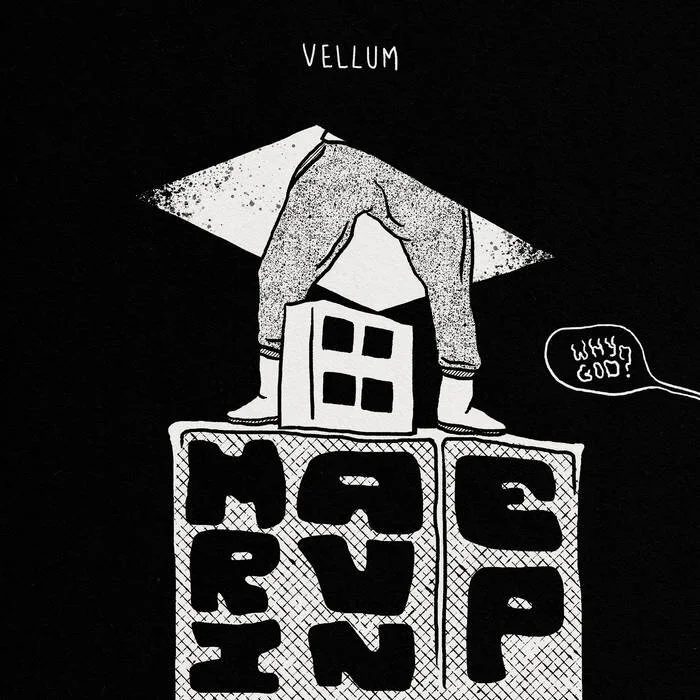
Slug Wife Gains Another Stellar Label Release With New Vellum EP
The clock ticks off another hour, and Slug Wife ticks off another superb featured release; Vellum’s Marvin EP typifies the furious sonic profile of half-time bass music, and couldn’t possibly be in better hands amongst Slug Wife’s pristine roster of artists. His signature pressure-laden bass lines are amongst the forerunner textures that popularized contemporary, hyper-aggressive neuro music throughout the US, and the Marvin EP is just as brolic.
The clock ticks off another hour, and Slug Wife ticks off another superb featured release; Vellum’s Marvin EP typifies the furious sonic profile of half-time bass music, and couldn’t possibly be in better hands amongst Slug Wife’s pristine roster of artists. Over the last several years, Vellum productions have snuck their way into speakers across the North American touring circuit, making him a mainstay name in his slice of our musical hemisphere. His signature pressure-laden bass lines are amongst the forerunner textures that popularized contemporary, hyper-aggressive neuro music throughout the US, and the Marvin EP is just as brolic.
For Vellum, tempo is as malleable as texture, and his releases over his career have ranged from pure sonic experimentation, to high fidelity bass house, to brutal broken-beat music and beyond. The Marvin EP sits in the broken-beat pocket, pushing bass weight at terminal velocities for maximum impact. Tracks like “Style Wars” and “Marvin” feature his classic stuttered arrangement and snaggletoothed textures at the end of each bar, giving the underlying beats a swayed, jivey rhythm. “Zones” takes the Vellum style in lyrical direction, with the English MC Gravity laying down tightly-coordinated bars atop a neuro-hop sound platter, contrasting nicely with “Resurrector”, a gun-slinging deep dive into subterranean low-end. From top to bottom, the EP is a stellar take on razor-edged sound design and high energy electronic music, showcasing Vellum’s undeniable production flavor.
As the list of assumed pairings between the Slugs and their favorite artists grew slimmer and slimmer, it was only a matter of time before they snagged a proper Vellum release. With features across labels like Inspected, Gold Digger, and Maraki Records, Vellum’s tenure goes without question, and the value of his productions follow suite. As always, The Rust will be keeping our ears peeled on his future experiments, knowing full well that they’ll be just as righteous as always.
FOLLOW Vellum: Bandcamp / Soundcloud / Spotify / Facebook
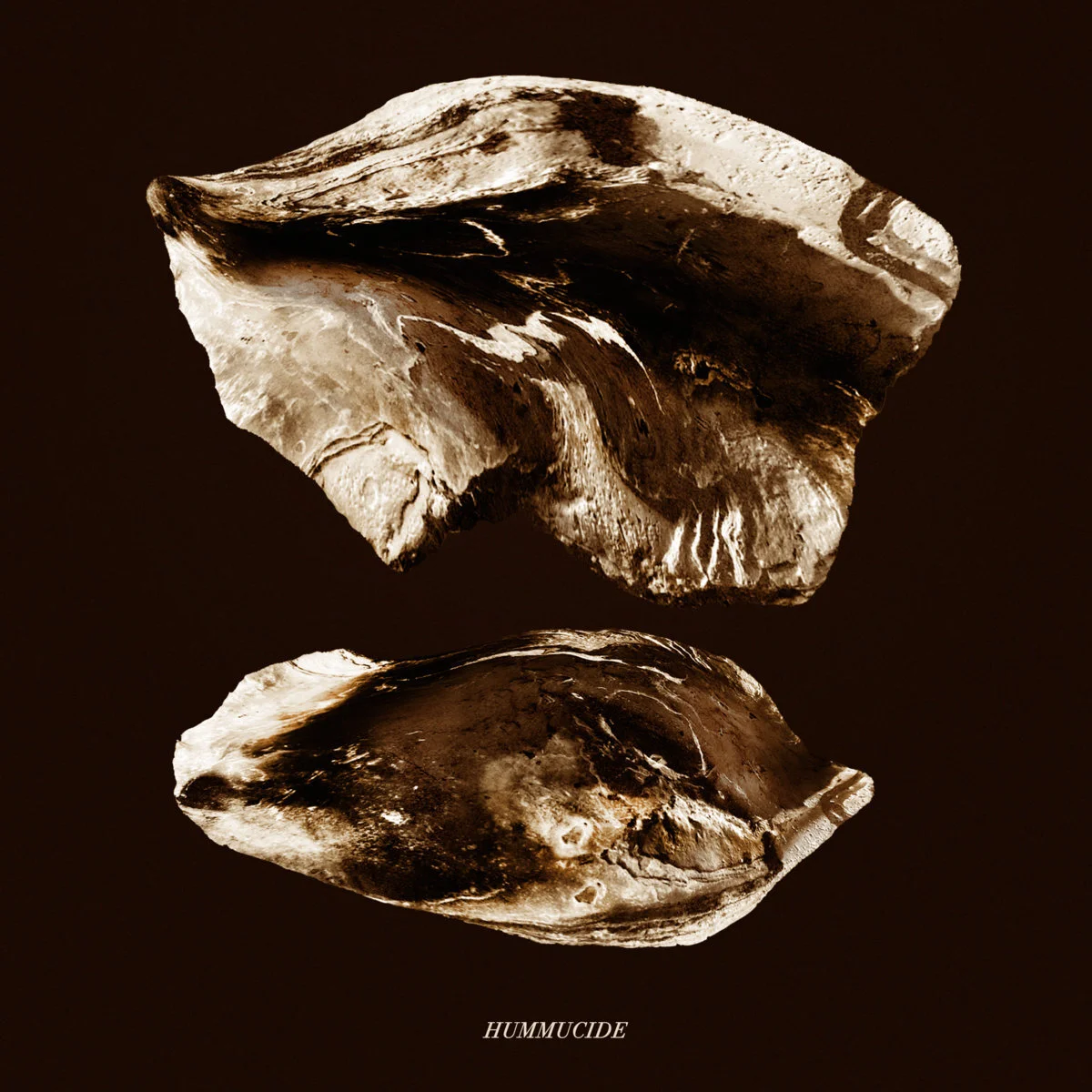
HUMMUCIDE Taps Into Hybridized Jazz on Self-titled EP
In the Te Aro district, the heart of musical expression in Wellington, New Zealand, HUMMUCIDE spent their formative years mutating styles and attitudes across dives, venues, and busking blocks. The result is a conscious merging of contemporary rock and minimalist jazz elements into a warm, soulful, and digestible blend.
It's no secret to our readership that The Rust holds jazz in a universalist light: We consider it to be an “everyman's music”, and a kind of emotive experience that moves beyond physical and cultural boundaries. In the Te Aro district, the heart of musical expression in Wellington, New Zealand, one such group has spent their formative years across dives, venues, and busking blocks. The result is a conscious merging of contemporary rock and minimalist jazz elements into a warm, soulful, and digestible blend; HUMMUCIDE’s roots take their discipline from the compositional and rhythmic prowess of musicians like Aphex Twin and Yussef Kamaal, acknowledging the gradual merging of palattes and flavors in the realm of instrumental music, and simultaneously fleshing out their own organic vision of eclectic songwriting.
Their most recent release, the self-titled EP HUMMUCIDE, is the product of an entire post-adolescence spent reworking and refining a select group of tracks near and dear to the band’s members. Toby Leman, Ben Stewart, and Hugo Olsen-Smith began their group forray into the jazzosphere back in their highschool years, and met their fourth and final member, Lennox Grootjans, as they went on to pursue undergraduate programs in jazz school. After road testing and developing their most honed-in routines, the recorded EP is a stunning testament to their multi-displined learning, and to the spiritual jive that permeates jazz music. Be it the buttery, pocketed sensibilities of “Reacher”, or the lush waltz of chords and percussive shuffles in “8 Mullups”, HUMMUCIDE doesn't just have a knack for crafty riffs and touch-and-go harmonies; they have a clear understanding of the power of swing and syncopation.
The youthful fire of their early years, coupled with a sharpening of their skillsets through dilligent education and experience, rounds out every potential edge to the HUMMUCIDE EP. It displays a love, appreciation, and well-earned proficiency in the realm of jazz theory and genre mutations, betraying a confidence in craftsmanship that makes acts like HUMMUCIDE so immediately alluring. After getting in touch with the shine applied to tracks so many years in the making, we're gladly sitting tight until the next bout of finely tuned HUMMUCIDE adventures.
FOLLOW HUMMUCIDE: Bandcamp / Soundcloud / Facebook

CloZee Conscripts Opiuo for “Heya” Remix on Forthcoming Remix Album
CloZee's latest album, Neon Jungle, features her classic takes on organic percussion, instrumentation, and vibrant synthesis. With the full remix album dropping next week, Opiuo's twist on "Heya" teases the re-imagined soundscapes to come.
CloZee’s career has become a mainstay in the global circuit throughout the latter half of the 2010’s, pursuing a world-influenced composition style and a forward thinking bend towards rhythm and melody in the context of dance music. Her latest album, Neon Jungle, features a wide breadth of directions, tempos, and attitudes, succinctly tied together through CloZee's classic twist on organic percussion, instrumentation, and vibrant synthesis.
After calling upon a variable cast of international producers from across the spectrum, the remix album to Neon Jungle drops next week on October 30th, and the most recent single to surface ahead of the full touchdown is a powerful tease; Australian glitch legend Opiuo paired up with CloZee across the airwaves to conjure up a proper reimagining of the track “Heya”. Featuring his timeless rhythmic shuffles and pocketed sound design, the song is transformed from a jovial jaunt into a pulsing dance-floor escapade. A mixture of raw textures and precision engineering, it's a full-throttle interpretation on CloZee's already storied songwriting, solidifying the excitement in store for this undeniably potent release.


A Dialogue With Desert Dwellers Ahead of Beyond Borders 4
Over the course of the last 21 years, Amani Friend and Treavor Moontribe have broadcasted a seemingly unending and constantly evolving mixture of psybient and psychedelic music across the globe. With their own individual roots stretching back well into the 90s, and the duo’s intrepid introduction to one another through the famed Moontribe gatherings in the American desert, their sound is an amalgam of virtually all shapes and sizes of dance-centric electronic production
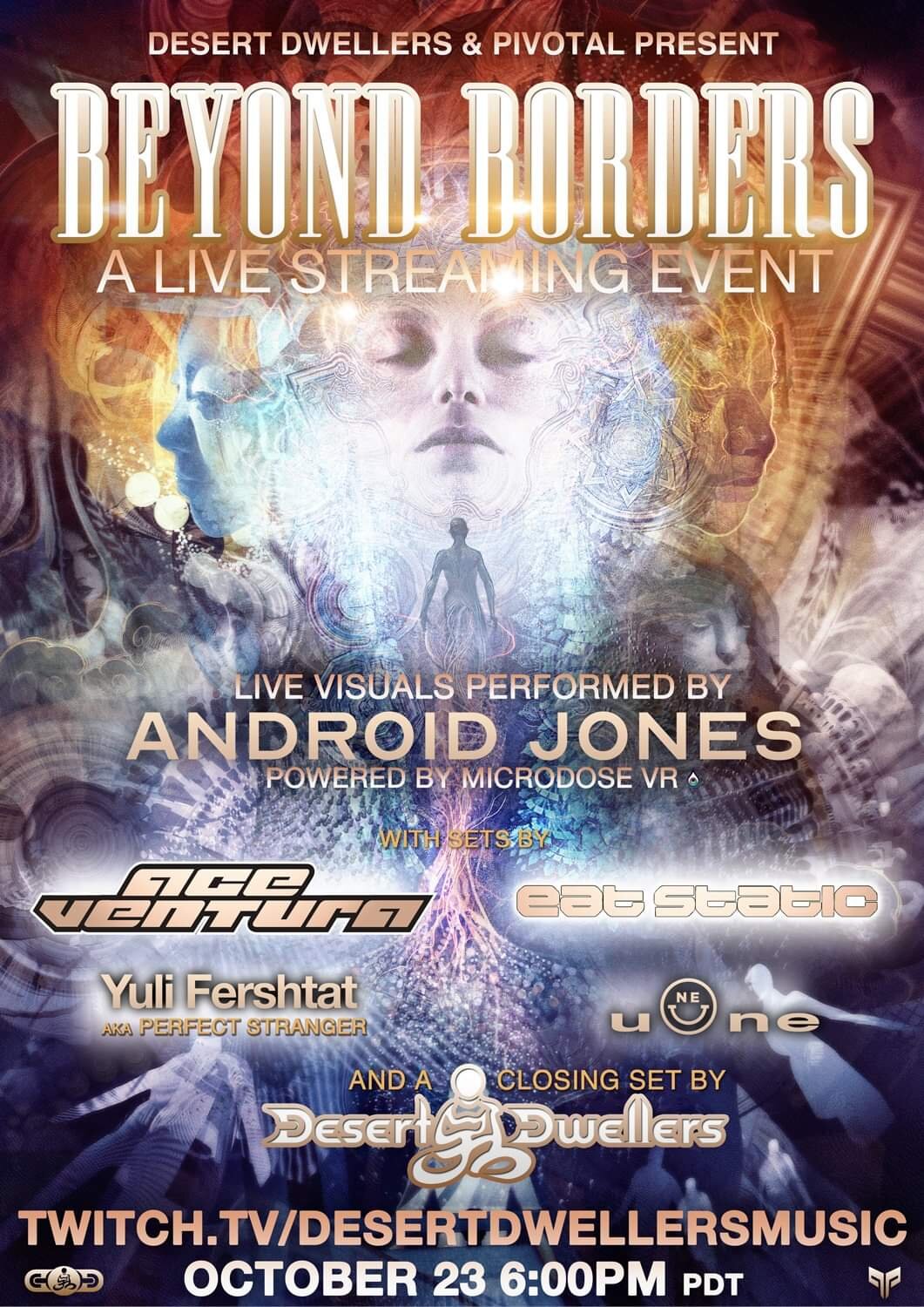
Over the course of the last 21 years, Amani Friend and Treavor Moontribe have broadcasted a seemingly unending and constantly evolving mixture of psybient and psychedelic music across the globe. With their own individual roots stretching back well into the 90s, and the duo’s intrepid introduction to one another through the famed Moontribe gatherings in the American desert, their sound is an amalgam of virtually all shapes and sizes of dance-centric electronic production. Given the whirlwind of uncertainty surrounding the long haul of this calendar year, they've adapted to the burgeoning digital formula of streamed events, birthing their Beyond Borders series and serving up choice curations towards a discerning, worldwide audience.
The previous Beyond Borders streams featured a host of eclectic acts and classic pairings within the Desert Dwellers umbrella; Random Rab, Kaya Project, Bluetech, and a cast of other audio and visual artists across three distinct episodes. The third installment was especially exciting, given the inclusion of a conversation with the world-renowned mycologist Paul Stamets. In anticipation of their fourth installation to the Beyond Borders series, The Rust has partnered with Desert Dwellers and the non-profit project Unite to host tomorrow night’s digital festivities. We sat down across the airwaves for a candid conversation with Friend and Moontribe about the streams, their recent remix series, and the Desert Dwellers experience.
The Rust: Your Beyond Borders series has been a tightly curated experience thus far. What drives your first instinct on the artists you choose for each edition of the stream?
Desert Dwellers (DD): It’s pretty simple, we work with artists we know and whose music we love. We often work with ones we've released on our label or have done remix exchanges with.
The Rust: The last edition of Beyond Borders featured a conversation with the mycologist Paul Stamets; how did you end up bringing him on board for the stream? Is there a history between you?
DD: Amani has become good friends with Paul over the last few years and we've now released two tracks with his spoken word featured. We have another track with his words done and plan more in the future.
The Rust: How has your experience been dealing with the overwhelming push towards digital music events?
DD: The main challenge is getting people to tune in. The market became instantly flooded so really we just try to present something that is authentic to who we are and the scene we represent. We also bring forth a pretty diverse musical selection and don't just focus on one main style for our entire shows.
The Rust: The Breath Re-Imagined series has been extremely extensive from start to finish. Can you talk about your initial vision and motivation for the remix series?
DD: It's a tradition now for us to do several remix albums for every artist album we release. For this series though we've moved into two new music genres so we've brought on over 20 artists we've never worked with before in the slower BPM downtempo house and uptempo tribal organic/progressive house scenes. It was certainly challenging to get a lot of these artists on board since we've never worked with them and we're not an artist well known in their scenes. We are really pleased with the end results though and honored to work with so many incredible musicians.
The Rust: What are the typical motivators when you sit down to begin each next project in the Desert Dwellers catalog?
DD: We usually have a specific style in mind we're gearing toward with each track, like the Breath album we wanted to create a slower house album that hinted back to the earliest music we made together. Currently we're working on a series of new remixes for mostly Psy Trance artists where we half time their tempo and turn their tracks into Psy Dub tracks.
The Rust: With such an extensive history under your belts, can you talk about how your own creative processes and inspirations have changed or evolved throughout the course of this career?
DD: Technology plays a huge role in how this process works. As new software is available that changes how things can be done it dictates how we go about creating new music. Mostly we just try to keep learning and getting better at what we do.
The Rust: Speaking of history under the belt, you're both sure to have seen a variety of anxious or impactful situations to the world of live music. Can you speak about your perspectives on the variety of new norms and experiences throughout the course of 2020's pandemic and ensuing lockdowns?
DD: As a musician right now it's hard to see a light at the end of the tunnel. Even as other industries start to work again ours is literally at the back of the line. We have shifted our focus to our releases, merch and finding any ways possible to bring in a little income. We are fortunate to have built a strong brand over the years, but certainly it's hard to see live gigs returning to any sense of normal anytime soon. On the other side of that we have been very creative during this time. We in no way are slacking off and have made a lot of music this year. When other musicians and labels decided to take a break during this crazy time, we decided to keep pressing forward. Music is our salvation and we feel it's extra important to share music with the world during these times.
The Rust: What's on the plate for Desert Dwellers' future?
DD: We have a steady release schedule with a third installment of Night Visions, our DD remixes compilation series, remix EPs of some of our earliest uptempo tracks to give them new life and a bunch of remixes we've done for other artists like Astrix & Vini Vici, Captain Hook and Hibernation. Other than that just working on our solo projects (Liquid Bloom, PheuZen, Forever & Ever) and trying to stay sane!
———————
Tune in tomorrow on the Desert Dwellers Twitch channel from 6pm EDT until midnight to catch an entire evening of Android Jones alongside Uone, Yuli Fershtat, Ace Ventura, Eat Static, and a special closing set from Desert Dwellers in celebration of the release of Breath Reimagined Vol. 3.
If you’d like to connect further with the Unite platform, head over to their website to get better acquainted with their operation.
FOLLOW Desert Dwellers: Bandcamp / Spotify / Soundcloud / Facebook
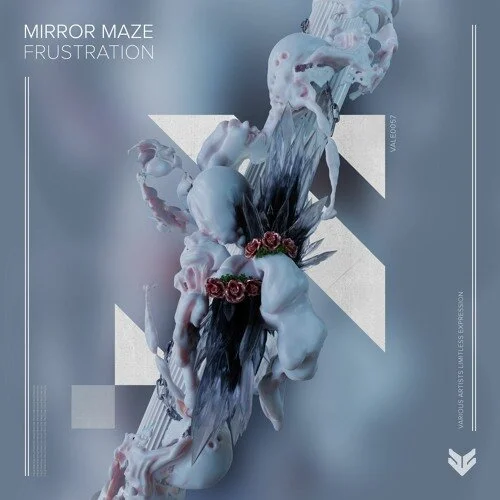
Mirror Maze Partners with VALE to Release "Frustration" Single
VALE’s 2020 calendar year has been full of niche selections and unveilings; from DET’s Ocha remix album to Result’s Bone Bender EP, they’e touched on nearly ever manner of high-fidelity, guttural bass music. They’re next serving comes in the form of the hair-splitting single “Frustration” from the Los Angeles-based producer Mirror Maze.
VALE’s 2020 calendar year has been full of niche selections and unveilings; from DET’s Ocha remix album to Result’s Bone Bender EP, they’e touched on nearly ever manner of high-fidelity, guttural bass music. They’re next serving comes in the form of the hair-splitting single “Frustration” from the Los Angeles-based producer Mirror Maze; a relative newcomer into the wider system music radar, he’s clearly got the chops and the acumen necessary to go toe to toe with VALE’s usual roster of heavy hitters.
“Frustration” is a sublimated descent into granular synthesis and novel melodies. With a clear focus on spectral movement over contemporary rhythms, it’s a track that meanders at its own malleable pace, intertwining mad dashes of sonic pressure and calm, low-tide recessions into relaxed soundscapes. It fits the VALE formula like a glove, showcasing incredible production prowess with choice, eclectic compositions. It’s just a taste of the Mirror Maze project, but it’s more than enough of a serving to have us positively curious about what else he’s brewing in the laboratory.
FOLLOW Mirror Maze: Bandcamp / Soundcloud / Facebook
FOLLOW VALE: Bandcamp / Soundcloud / Facebook
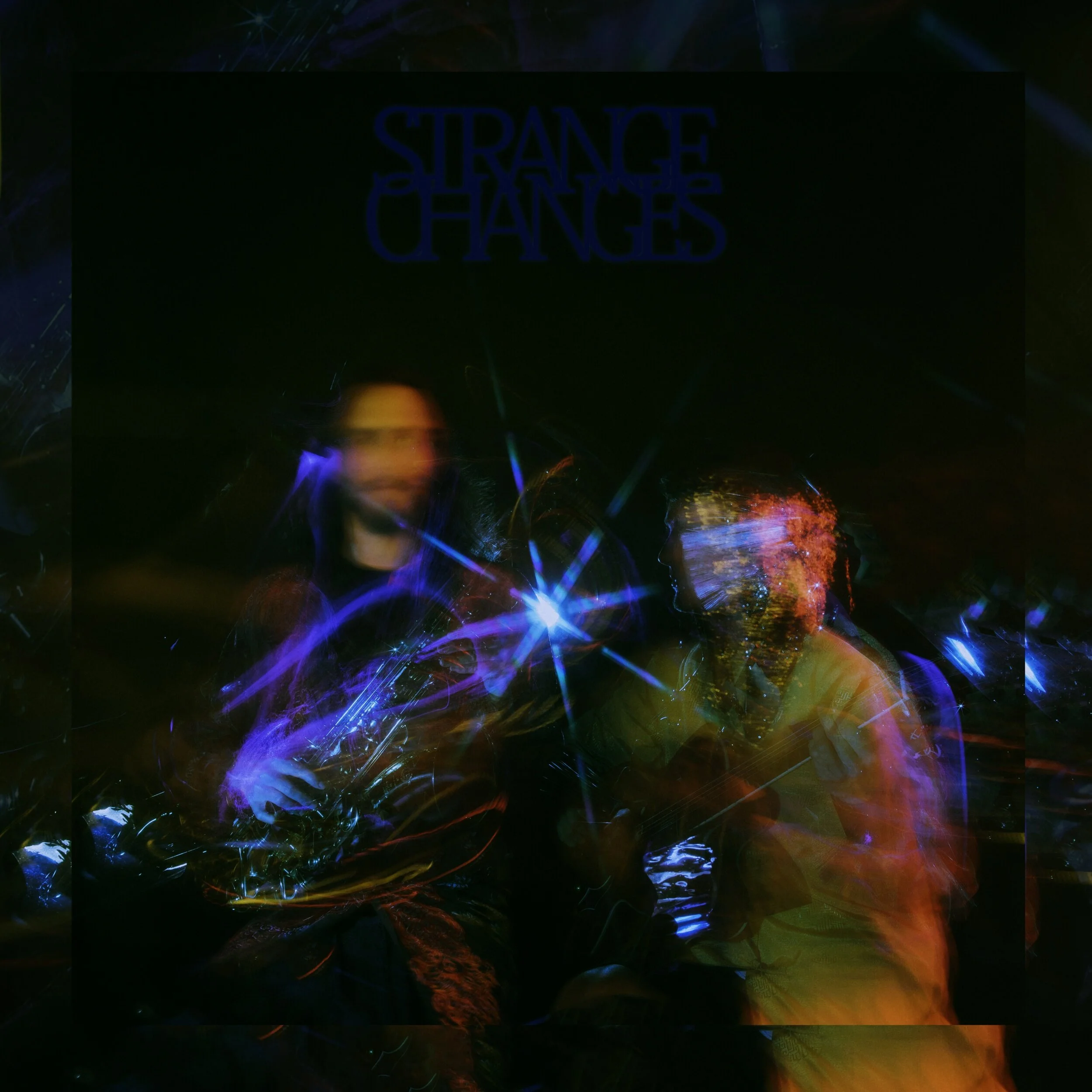
Chalky & Seppa Redefine “In The Pocket” on Strange Changes LP
There are many spins on the phrase “it's about the journey, not the destination”, and Strange Changes might be one of the finest and brightest iterations. Across fourteen tracks, Chalky and Seppa lay down a journey into the vibrant nooks and soundscapes of modern jazz and soul music.
2019 saw the unveiling of Chalky and Seppa’s combined vision; Bright Spots was an instant hit right out of the gate, showcasing a compositional prowess and dedication to a pure, unadulterated vibe that has been the hallmark of soul-infused instrumentalists since the inextricable rise of jazz and blues music. In the time since that first collaborative album, the boys have been hard at work refining their combined acumen, and the result is a fusion album with few worthy comparisons; Strange Changes personifies what makes truly linear, narrative albums so enticing as a full package, and betrays the veteran confidence of their craft that makes this duo so strikingly vivacious.
Bright Spots was a finely tuned first forray into the ambling possibilities of Chalky and Seppa's combined output, anchored securely by it's groovy songwriting and moving instrumental duets. It was a stunningly well-produced experience, portraying a musical veneer that already felt far from it's infancy. Rather appropriately, Strange Changes carries the character of a project deep into it's maturity, exploring a comfortably fresh variety of dimensions and niche pockets within the realm of soul music.
Across fourteen tracks, Chalky and Seppa lay down a journey into vibrant nooks and technicolor soundscapes, meandering at a pace befitting a tempered stroll through psychedelia. The relationship between each song is the veritable glue of that journey, and a reprised staple that made Bright Spots so immediately palletable. “Bump It” opens the album’s front door with the perfect equilibrium of head-nod and sultry phrasing, gradually tuning the ears until you're trapped in the rhythm's absolute gravity. Once it has you, the only way out of it’s pull is to ride it out, and you'd be hard pressed to find a reason not to. From “Interplanetary Timeshare” to “Diffusion”, it's forward-thinking jazz and loungey instrumental saunters. From “Sizzle Me Timbers” on, the weighty edge of the duo's heavier production backgrounds begins to sublimate across the compositions. Braying harmonies and tactile sound design mingle together for a righteous impact, and that amped-up attitude carries on right up until the album's end. Aptly concluded with “Nap Time”, the very last tones of the release ring out like a somber lullaby, exuding a choice finality befitting of such a loquacious project.
There are many spins on the phrase “it's about the journey, not the destination”, and Strange Changes might be one of the finest and brightest iterations. It’s an ode to the power of painstaking compositions, berift of production shortcuts or hurried arrangements. Consequently, it is an album with the potential for near universal appeal, combining the impact and precision of contemporary engineering with timeless instrumentation. Two years and two full releases later, Chalky and Seppa show no signs of running dry of pure inspiration, and the magnitude of progression from Bright Spots to Strange Changes has our ears squarely fixated on their creative output. With nowhere else to go but up, we've no lack of confidence about the future of this blue-moon tag team, and you'd be just as wise to keep a tab on their every musical move.
FOLLOW Chalky: Bandcamp / Spotify / Soundcloud / Facebook
FOLLOW Seppa: Bandcamp / Spotify / Soundcloud / Facebook
![Velour & Joro Dudovski - Dandelion [EXCLUSIVE PREMIERE]](https://images.squarespace-cdn.com/content/v1/59530136f5e2319eabb7d87f/1600881557782-RW5W9B8FKIOSNQ21P3RU/comp.png)
Velour & Joro Dudovski - Dandelion [EXCLUSIVE PREMIERE]
Sanctuary Collective has their finger squarely on the global pulse of novel electronic music producers. Their sophomore compilation, Warriors Vol. 2, features a host of burgeoning talent and underground heavy hitters, and they've provided The Rust with the opportunity to premiere Velour and Joro Dudovski's collaboration, “Dandelion”.
Sanctuary Collective has their finger squarely on the global pulse of novel electronic music producers. Their sophomore compilation, Warriors Vol. 2, features a host of burgeoning talent and underground heavy hitters, with each track pushing into a variety of niche territories and sound design palattes. In anticipation of the compilation's release, they've provided The Rust with the opportunity to premiere Velour and Joro Dudovski's collaboration, “Dandelion”.
Separately, Velour and Dudovski's productions are nothing to balk at; both producers excel in the spheres of song writing and high fidelity engineering, with fairly complimentary textures and motifs between them. As a result, “Dandelion” is a texture-laden dash through liquid sound design and fluid drum programming. Supple jazz chords play the role of the interloper, sprinting in and out of stereo space between smatterings of buoyant bass lines and transient downbeats. It's a composition all its own, rearranging and reimagining itself with every passing phrase and refrain, and it’s just a taste of what's in Sanctuary Collective's war chest for Warriors Vol. 2.
FOLLOW Velour: Soundcloud
FOLLOW Joro Dudovski: Bandcamp / Soundcloud / Facebook
FOLLOW Sanctuary Collective: Soundcloud
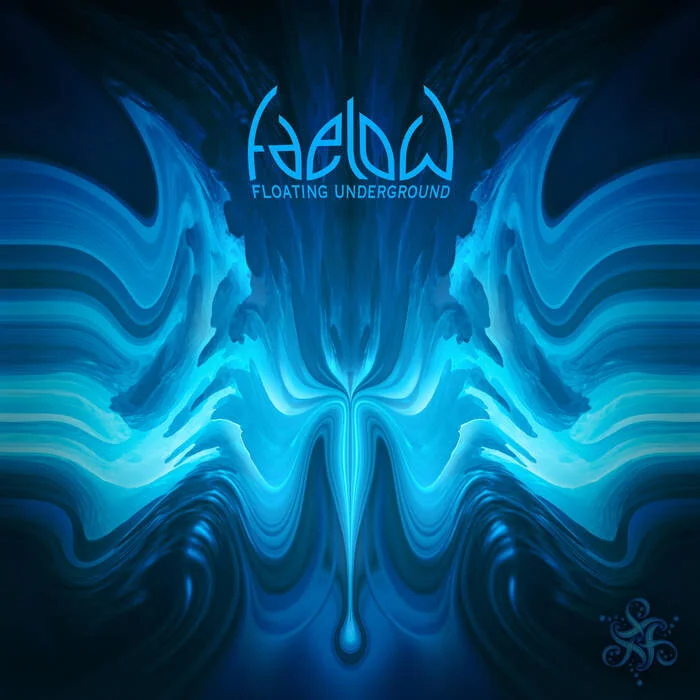
Faelow Teams Up With Psychedelic Jelly to Premiere Debut EP
The Boston-based producer Faelow has only recently begun to step out of the lab and into the public eye, with a choice few tracks having surfaced over the course of the last year. After quietly readying his compositional trajectory, The UK label Psychedelic Jelly has premiered the first true lense into the Faelow catalog; Floating Underground.
The Boston-based producer Faelow has only recently begun to step out of the lab and into the public eye, with a choice few tracks having surfaced over the course of the last year. After quietly aiming his creative trajectory towards textured, salient sound design and downtempo rhythms, his careful patience has paid off with a particular splash. He’s joined forces with the UK label Psychedelic Jelly to premiere the first true doorway into the Faelow catalog; Floating Underground.
With an obvious touch for psybient compositions and tonal relationships, Floating Underground maintains a smooth gradient of sounds and arrangements throughout each of the four tracks. “Spelunk” and “Cascade” feature a swath of smartly interpolated glitches and frayed layers mingling in and out of stereo focus with each other, carefully wrapping the listening experience in a scintillating outer cushion. That scintillation is perhaps the central tether to the EP, which is notably devoid of any harsh, abrupt, or abrasive movement. Instead, a clear command of subtle rhythms and interpolative songwriting takes center stage, as the first three tracks gradually dissolve into one other through clever refrains and malleable ending phrases. The slow roll towards finality happens with the namesake track of the collection; “Floating Underground” is an ambient dive into the calm, chilled waters of marine soundscapes. Flanged and splayed synthesis wraps around rushing waves of white noise and liquid risers, gradually ebbing and flowing into an effervescent resolution that ties together the core motif of the release.
With just a quaint smattering of tracks available for consumption, Faelow’s output betrays the makings of a lush journey through his own musical hemisphere. The craftsmanship behind Floating Underground has every hallmark of deliberately emotive composition, revealing an already steadily maturing grasp of crystal-clear songwriting. It’s all the more reason why we’re keen to keep a close eye on the future developments of Faelow’s catalog.
FOLLOW Faelow: Soundcloud / Facebook
FOLLOW Psychedelic Jelly: Bandcamp / Soundcloud / Facebook
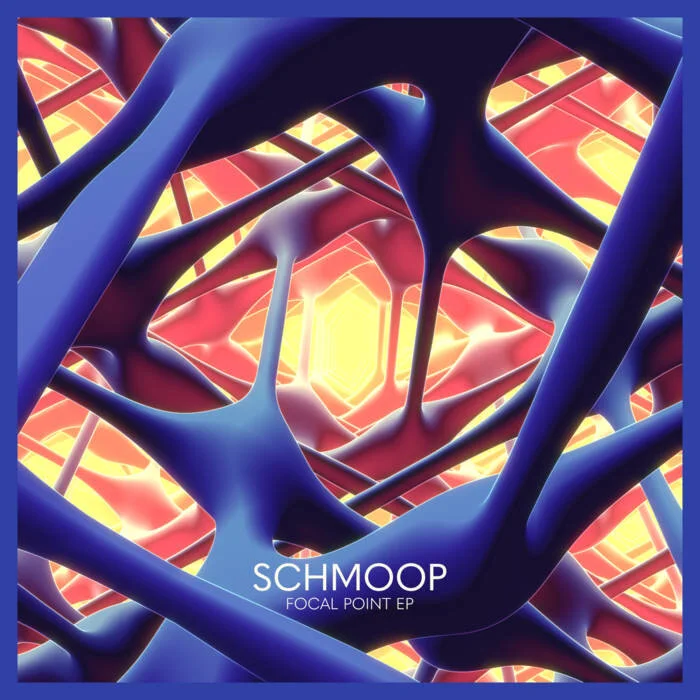
Schmoop Unloads Distorted Grooves in Focal Point EP
Schmoop has spent the majority of his artistic time working from behind a closed curtain; in the six years since his initial musical touchdown via the Wonky Llama Noms EP, he's quietly developed and refined the edges of his personal project. Unveiling his most extensive release to date, the Focal Point EP is a potent combination of palatable grooves and pure firepower.
Will Russek has spent the majority of his artistic time working from behind a closed curtain; in the six years since his initial musical touchdown via the Wonky Llama Noms EP, he's gradually developed and refined the edges of his personal Schmoop project. The dual release of “Charge/Get Back” in December of 2018 put us in touch with his own production chops and the emerging stylistic direction of his solo material, showcasing a blitz of shredded low end design and dancefloor-ready rhythms. Elaborating on his steadily-advancing compositional direction, the Focal Point EP is a potent combination of palatable grooves and pure firepower.
The driving focus of the Focal Point EP lies somewhere in the midst of broken-beat rhythms and meaty synthesis; the funked-out bass lines ungulate with razor-sharp distortion without obfuscating the tertiary elements of the music. The relationship between lean drum patterns and hyper-saturated low end in “Hard Edges” exemplifies the tight control of the EP's composition, smoothly interpolating sheer mass and clever turnarounds. Balancing out the spectrum of tones and atmospheres, “Outskirts” brings salient drum programming and meandering harmonies to the forefront, toning down the mean-muggedness and amplifying the melody-centric side of of Russek's musical realm. In tandem, the EP's tracks touch on the burgeoning cornerstones of the Schmoop project, and provide the clearest lens yet into it's potential future developments.
Russek's reputation as an undercover gun slinger has preceded him for quite a few years, and the delivery of the succinct, precision package that is the Focal Point EP puts a veritable seal of authenticity on the musings of the grapevine. With a laser-sharp understanding of stereophonics and pocketed grooves, we're undeniably curious as to what comes next, but in the meantime, we’ll be helping ourselves to oversized portions of Focal Point.
FOLLOW Schmoop: Bandcamp / Soundcloud / Webpage / Facebook
![Hullabalo0 - Habaneuro [EXCLUSIVE PREMIERE]](https://images.squarespace-cdn.com/content/v1/59530136f5e2319eabb7d87f/1598554306397-0CCMC3Y337N9MQSWDKTY/Habaneuro+LP+Cover+%28top+right+corner%29+for+Rust+Premiere.png)
Hullabalo0 - Habaneuro [EXCLUSIVE PREMIERE]
Hullabalo0’s catalog is the product of a consistent, dedicated passion within the nebula of low end sound design and groove theory. After nearly a year of audio experiments and an powerful growth in compositional scope, he’s prepped to unveil the Habaneuro LP, with The Rust being given the opportunity to premiere the album’s namesake track.
Hullabalo0’s catalog is the product of a consistent, dedicated passion within the nebula of low end sound design and groove theory. After nearly a year of audio experiments and a powerful growth in compositional scope, he’s prepped to unveil the Habaneuro LP, with The Rust being given the opportunity to premiere the album’s namesake track.
“Habaneuro” is exactly as it’s name suggests; brazen, lush, and undeniably spicy. The outer edges of the track begin and end with vibrant, meandering jazz breaks, giving the track a life and soul beyond just rugged synthesis and brackish textures. Sandwiched between the smoothness is a vicious breakdown wielding stereoptic bass and fragmented glitches, merging tones and waveforms into an electronic potpourri of force and firepower. “Habaneuro” is the torch that lights the album’s pyre, and it's more than just a taste of what’s soon to come from the mad machinations of Hullabalo0.
Pre-order the Habaneuro LP here
FOLLOW Hullabalo0: Bandcamp / Spotify / Soundcloud / Facebook
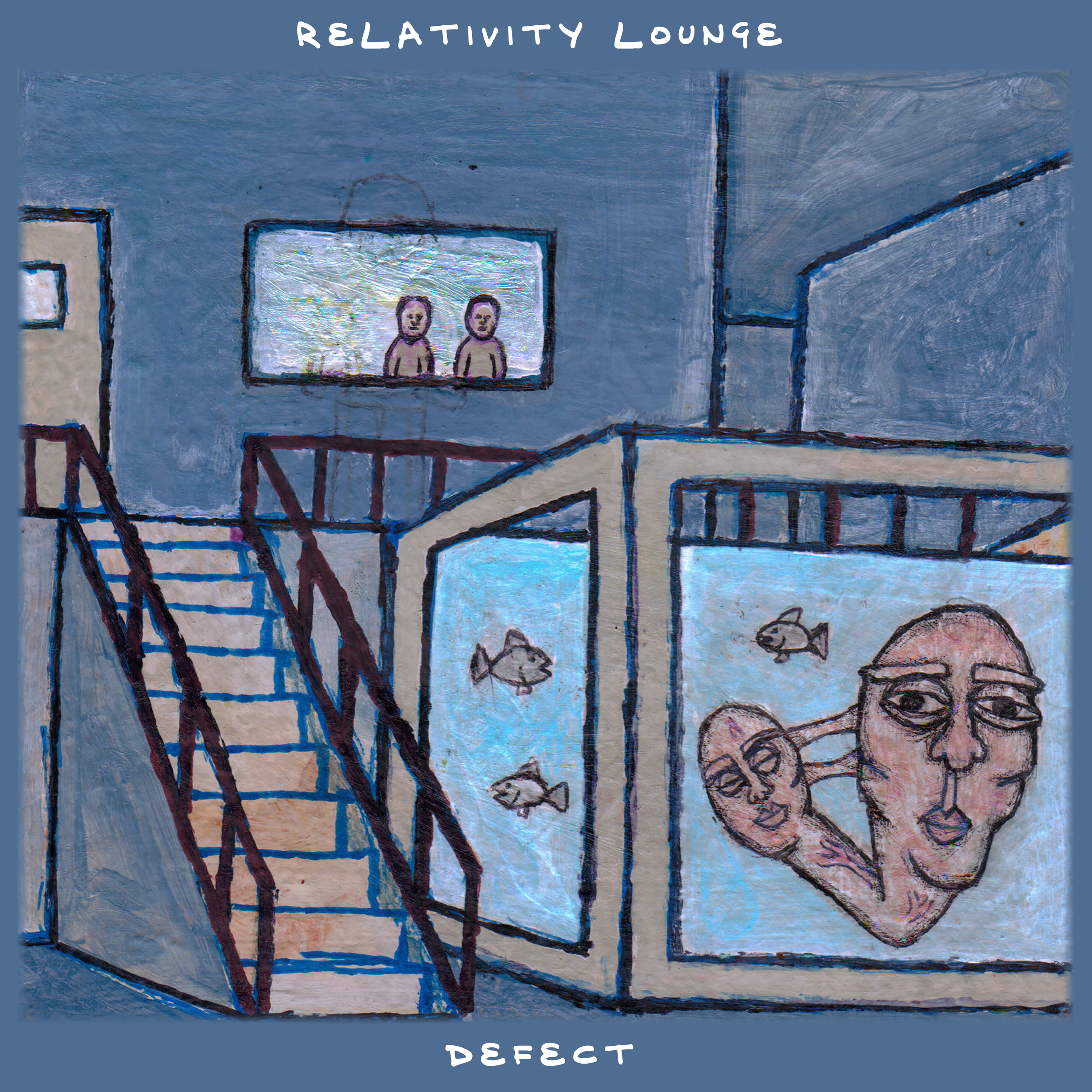
Relativity Lounge Thoroughly Breaks the Beat with Defect EP
With tracks dipping into steady-beat shuffles, broken-beat rhythms, and swelling soundscapes, Relativity Lounge has positioned himself as a jack-of-all-trades producer, but not without distinct characteristics; his catalog exists somewhere in the murky nexus of bass music production and mottled, lo-fi textures. Furthering his descent into that sublimated rabbit hole, he’s channeled his most recent lab experiments into the Defect EP.
Based out of Chicago, Illinois, Jack Jamison explores a vast musical terrain through his Relativity Lounge project. With tracks dipping into steady-beat shuffles, broken-beat rhythms, and swelling soundscapes, he’s positioned himself as a jack-of-all-trades producer, but not without distinct characteristics; his catalog exists somewhere in the murky nexus of bass music production and mottled, lo-fi textures. Furthering his descent into that sublimated rabbit hole, he’s channeled his most recent lab experiments through The Great Magnet music label, culminating in the Defect EP.
A marriage of precision synthesis and washy atmospheres, the Defect EP ‘s jaunty grooves make it astoundingly difficult to remain stationary once it’s frequencies start pumping out of some proper speaker cones. The sample play and synth slicing within the arrangement of the tracks is designed for one primary function; cycloidal head nodding. Be it the glitchy lullaby of “Palpate”, or the subtle, melodious meandering in “Axiom”, the overarching theme remains firmly intact across the EP, with a particular focus on pocketed percussion arrangements; the drum programming and tilted swings in the rhythm section of every track drive the entire release with more than enough horsepower to go toe to toe with more traditionally aggressive bass music formats. It’s a distinct package served in a palatable format that couldn’t possibly go down any smoother.
Relativity Lounge has steadily brought himself to a point of compositional swagger, and it pays off tremendously. The release of the Defect EP showcases a clear evolution of his personal sound design and musicianship, and it’s left us both mollified and curious for more. Whatever format his next productions choose to take on, we’re confident that Relativity Lounge will continue to push the envelope in novel, tasteful directions.
FOLLOW Relativity Lounge: Bandcamp / Spotify / SoundCloud
FOLLOW The Great Magnet: Bandcamp / SoundCloud / Facebook
![Poztman - Ancestral Data (Rite of Cunning) [EXCLUSIVE PREMIERE]](https://images.squarespace-cdn.com/content/v1/59530136f5e2319eabb7d87f/1597764999250-84J8VQXME9MG2576GGUG/%5BOUTTA055%5D+Poztman+-+Rites+Of+Calling+EP.jpg)
Poztman - Ancestral Data (Rite of Cunning) [EXCLUSIVE PREMIERE]
Poztman’s stylized brand of dark, tech-heavy electronic production has earned him a mainstay position in the world of avant-garde and experimental music. In an ever-lasting quest to push his own conceptual boundaries, he’s partnered up with the hybrid label Outtallectuals to present his latest laboratory payload; Rites of Calling. In anticipation of the full EP release, The Rust has been given the opportunity to premiere the track “Ancestral Data (Rite of Cunning)”, loosening the seal on this new suite of compositions.
Poztman’s stylized brand of dark, tech-heavy electronic production has earned him a mainstay position in the world of avant-garde and experimental music. In an ever-lasting quest to push his own conceptual boundaries, he’s partnered up with the hybrid label Outtallectuals to present his latest laboratory payload; Rites of Calling. In anticipation of the full EP release, The Rust has been given the opportunity to premiere the track “Ancestral Data (Rite of Cunning)”, loosening the seal on this new suite of compositions.
“Ancestral Data” brings scintillation to the forefront, with mottled, glitched-out textures splaying across the backdrop of the songs runtime. Brackish bass meets scalloped granular synthesis in a mist of sonic intrigue, pulsing like a reverberant steel heartbeat. With percussion provided by Byzantine Sound Machine, It’s a marriage of tribal and industrial influences sauntering around noire sound design and faded, momentary melodies. With a crystal clear focus on atmosphere and immersion, “Ancestral Data” channels the full spectrum of Poztman’s meticulous production skill set.
In tandem with the compositional precision of the EP, Poztman has envisioned and crafted a narrative surrounding a distant future in which these rites of passage bring one closer to their innate identity. Each step of the journey shares the lucidity and jagged psychedelia of the accompanying song, creating a truly multi-faceted experience around Rites of Calling.
Rite of Cunning:
Alix is somewhat confused by the cryptic advice his ancestors gave him. He doesn’t need to worry, as no one can triumph all challenges equally. The Rites serve as guidance for one’s adult life, to find their Calling. A rite is passed when the Ring blesses the challenger with the according mark. Dao’s attempt at summoning was near to fruitless, though Rey managed seemingly without effort. All received the mark of community nonetheless, as the way of the Rings & the Harvesters is mysterious. Alix feels confident in the next challenge: the Rite of Cunning. He & his friends will have to enter the Birthing Grounds, the place where their first ancestors long dead came to live, out of machines made by the Harvesters. Here they will have to access the ancient codex, a gift from the Harvesters. The village Elder asked them to find out where other hunting grounds may lay, as the village’s supply starts to dwindle. The Codex must contain that knowledge, the Elder is confident. Alix knows the task seems trivial, but Steelings guard the place for unwelcome trespassers. The young ones will have to prove their cunning.
FOLLOW Poztman: Bandcamp / Spotify / SoundCloud / Facebook
FOLLOW Outtallectuals: Bandcamp / SoundCloud / Facebook
![Voljum - Electric Forces (Smigonaut Remix) [EXCLUSIVE PREMIERE]](https://images.squarespace-cdn.com/content/v1/59530136f5e2319eabb7d87f/1597681562422-8UUHJILYWHJEF861ILXM/CYBERGLOBE_REMIX_%5BMASTER%5D.jpg)
Voljum - Electric Forces (Smigonaut Remix) [EXCLUSIVE PREMIERE]
Voljum’s debut EP cyberglobe put a laser focus on the intersection between jazz, sound design, and intuitive sample play, solidifying his unique production narrative. Looking to merge new perspectives with his high fidelity palette, cyberglobe (Remixes) makes landfall at the end of this week, and The Rust has been tapped to premiere the Smigonaut remix of “Electric Forces”
Voljum’s debut EP cyberglobe put a laser focus on the intersection between jazz, sound design, and intuitive sample play, solidifying his unique production narrative. Looking to merge new perspectives with his high fidelity palette, cyberglobe (Remixes) makes landfall at the end of this week, and The Rust has been tapped to premiere the Smigonaut remix of “Electric Forces”.
With a natural inclination towards all things swing, Smigonaut’s arrangment philosophy slides into the design of “Electric Forces” with ease; Reframed rhythms bring down the energy ceiling of the track without compromising the weight and the mass behind each measure. It’s a careful twist on a playful composition, balancing moody hues and sharp clarity to fully pronounce the song’s attitude. On their own, Voljum and Smigonaut are electrified forces in their own right, so it should come as no surprise that their combined might oozes out of the “Electric Forces” remix.
Pre-order the Bandcamp Remix EP release here
FOLLOW Smigonaut: Bandcamp / Spotify / Soundcloud / Facebook
FOLLOW Voljum: Bandcamp / Spotify / Soundcloud / Facebook
FOLLOW VALE: Bandcamp / Soundcloud / Facebook
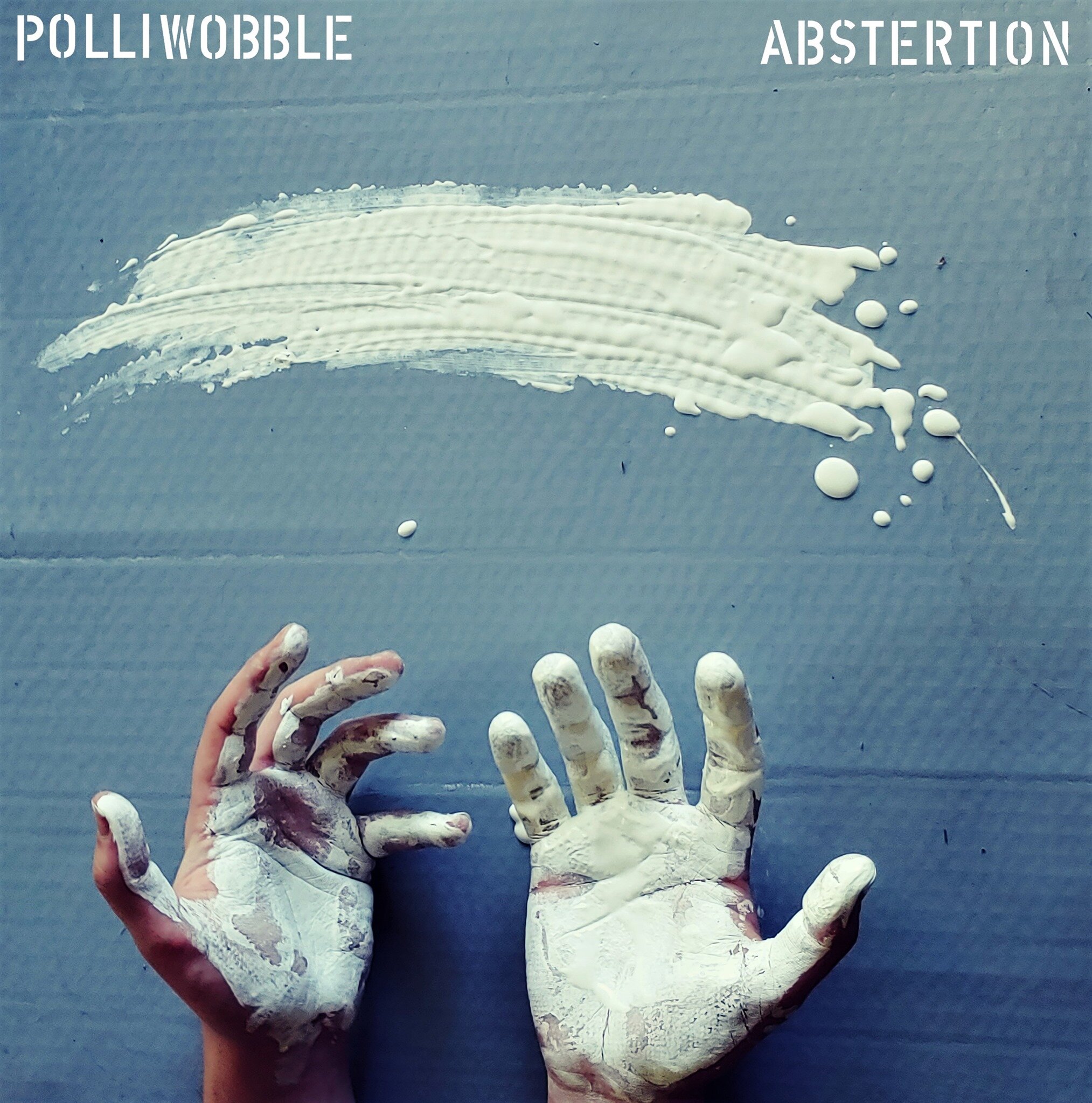
Polliwobble Fuses Organic Percussion and Fierce Synthesis in Abstertion
A marriage of smooth-bore melodies, pound-for-pound bass lines, and syncopated, off-kilter drum lines fills out the body of Abstertion, with bold cuts and bolder breakdowns delivering a fresh perspective on PolliWobble’s style.
The combination of organic instrumentation and digital sound design is a marinade universally applicable to the many facets of electronic music, and Polliwobble has been experimenting with his own distinct production blend for over a decade. The rawness of his synthesis palate and the earthy, reverberant drum lines channel a grit and a weight that is the signature touch of his musicianship. His most recent album, Abstertion, displays a maturation of the Polliwobble production process and an exploration of industrial soundscapes and textures.
A marriage of smooth-bore melodies, pound-for-pound bass lines, and syncopated, off-kilter drum lines fills out the body of Abstertion, with bold cuts and bolder breakdowns delivering a bone rattle from track to track. The energy remains tense throughout the various compositions, ramping down only for the most subdued moments across the album. The title track, “Abstertion”, balances those polar hues in a fierce dance between bandpass filters, reesey textures, and a broken beat percussive jaunt that is both razor-edged and rhythmically juiced up. It’s a new skeleton beneath the meat of classic neuro bass, with a brackish palate all it’s own. While the majority of the album’s contents feature production-heavy tones and tool sets, the closing track, “Chirality”, is also it’s most standout; a downbeat blend of scalar relationships, subdued modes, and instrumental harmony that rivals the pocketed groove of pure jazz. It’s made all the spicier by a retro synth saunter out of frame at the concluding measures of the track, bursting with dance floor sentimentality, and capping of the album with a true white glove finale.
“Abstertion” is an both a departure from the Polliwobble works of the last several years and a logical progression of his own signature brand. It’s steel-coated, but still warm in the right places, and the heavy focus on organic drum tones gives the album a distinct approach to hybridized bass music. With a clear pattern of multiple releases across relatively short time spans, it makes us all the more curious to hear how the Polliwobble project with continue to shape and develop its musical machinations.
FOLLOW Polliwobble: Soundcloud / Facebook

Pi Wrecks Pulls Back The Curtains On Slivers of Light
Slivers of Light hones in on the Pi Wrecks blend of topical, emotional beats in a way that feels both narrative and independent. Each track is a full chapter of tangentially related stories told through note choice and delivery.
The Pi Wrecks discography has featured a tight focus on soul and hip-hop production throughout the course of his career, with a gradual evolution in his songwriting and production palette. His last two major releases, Arrival and From The Heart Pt.1, define a push towards synthesis and elevated sound design, and just two years on, those choice developments have marinated into a full length, twelve track album that spans the breadth of his influences and sonic directions. Slivers of Light is the most ambitious project in his catalog, expounding on the brightest affects of the Pi Wrecks experience.
The attention to sample slicing and splicing has been at the forefront of Pi Wrecks' music from his inception as an artist; mottled snares, vinyl dust, and notative artifacts are mainstay aspects of his productions, but their musical integration and sonic shaping has been continuously refined from release to release. Slivers of Light hones in on the Pi Wrecks blend of topical, emotional beats in a way that feels both narrative and independent. Each track is a full chapter of tangentially related stories told through note choice and delivery, with tracks like “You Create You” and “Snowfall” channeling scalar relationships into stirring mental movements. The attention to detail can't be overlook, and the interlocking weave between each song builds a steady inertia from front to back that makes Slivers of Light a premium take on no-frills, classic electronic hip-hop.
The flux of focus on genres and styles moves at lightning pace in the world of electronic music, and while some choose to follow those developments in real time, others find themselves choosing to develop familiar territory. Pi Wrecks has maintained his brand of sultry cuts and pocketed rhythms throughout the progression of his career, making him a mainstay choice for hip-hop and beats lovers across the spectrum. While we’re busy lounging in the vibrations of Slivers of Light, our minds are already wandering towards the next installment of Pi Wrecks possibilities.
FOLLOW Pi Wrecks: SoundCloud / Bandcamp / Spotify / Facebook


![Seppa - Interview + Boosted [EXCLUSIVE PREMIERE]](https://images.squarespace-cdn.com/content/v1/59530136f5e2319eabb7d87f/1626113208781-BZ7C6B7E3LCECV7UD4CS/Boosted.jpg)
