
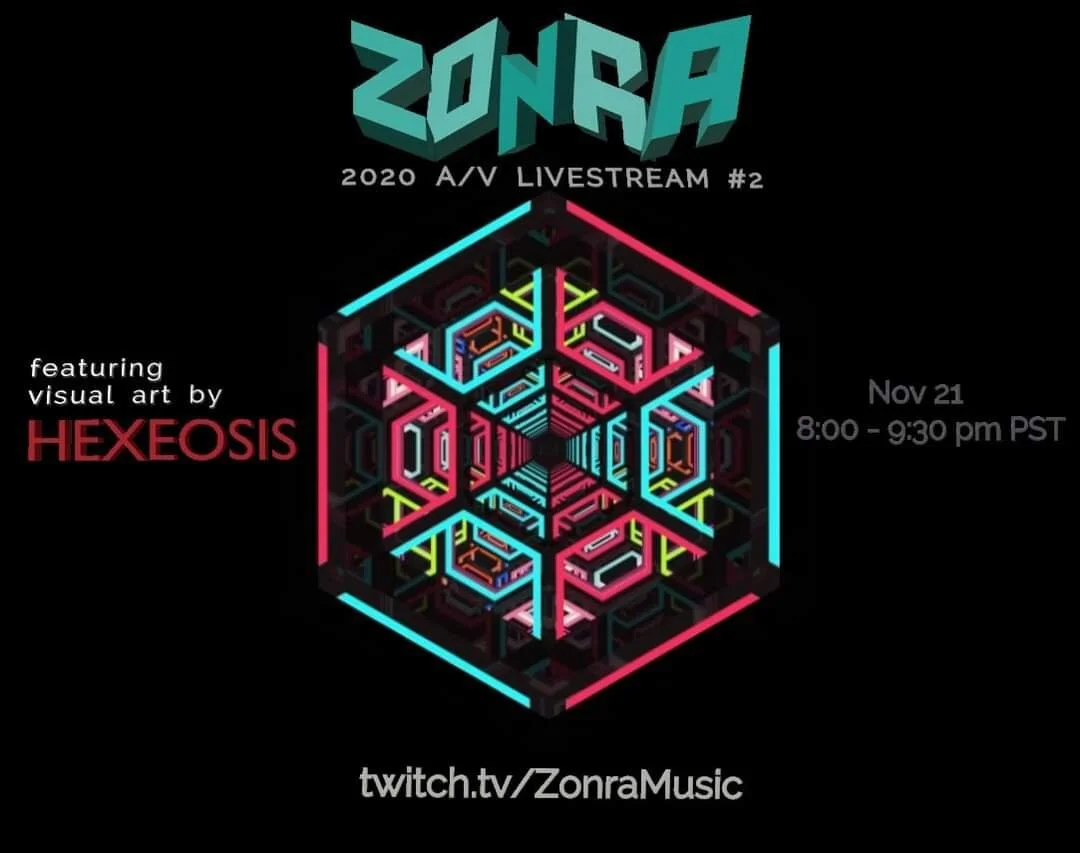
Zonra Opens Up about Stylistic Direction and A/V Stream Series
Coming in hot this evening is the second 90-minute installation of Zonra's A/V series After the smashing debut stream in October, he's graciously agreed to entertain a series of interview questions on his latest performance developments, his musical upbringing, and the novelty of sound.
For the last six years, Jackson Hale has been pushing the boundaries of his musical acumen through the Zonra project; mingling precision production with gradually shifting compositional styles, he's kept his approach consistently fresh and above-par for the fidelity of his work. In line with his own burgeoning interests in multidimensional art, and with the shift towards digital streaming platforms across the last year, he's embarked on a stream series of curated A/V sets, mingling unreleased material, old favorites, potent reworks, and the first lens into the visual stratum of his creative endeavors.
The proficiency of the Zonra project is the boon of a lifetime of musical study and experimentation. Hale's choice of style, genre, and sound palatte have evolved several times across a distinct career, and the incoming release of his next collection, the Hypotheticals EP, showcases a further evolution in his production and songwriting processes. After the debut of his first A/V performance in October, he graciously agreed to entertain a series of interview questions for The Rust on his latest performance developments, his musical upbringing, and the novelty of sound.
The Rust: The Zonra project has undergone a stylistic metamorphosis more than once at this point; what draws you towards each successive form your music takes?
Zonra: My approach with music production has always been to stay open to whatever direction interests me, and to explore it with patience. Ultimately, many of my stylistically-diverse projects will unfold together, and slowly, while new techniques are explored, learned, and shared between pieces. The propelling force behind my music is generally to find (it has always felt like more of a 'find' here than a 'create') an overall system of novel or crystallized ideas in sound that work together to create an experience that is larger than the sum of its parts, iterating through different versions or expressions of those ideas until some type of well-rounded arrangement appears. Recent audible experiments combined with influence from whatever I've been listening to at that time in my life tend to shape my tracks.
The Rust: Can you talk a bit about your musicianship and production background?
Zonra: I started with piano at a young age, and took up drums and percussion a little while after because I was bored with piano. I played drum set in various jazz bands through middle and high school, and always loved being part of the non-verbal communication that occurs between players' during solos. It's magic. I stumbled into electronic music production via Audiotool.com around age 15 where I learned the basics of synthesis, sequencing and sample editing — posting lots of tracks under the username Astrum. After several years, I found myself needing software that could handle larger projects and let me sketch more freely, and soon I really felt like I'd found a sound that was all my own- or at least a more specific focus within music production. As a kid I loved getting lost in certain songs, really losing myself in the mix and the cohesion of all the different instruments working together. The power of a clean mixdown is endlessly interesting to me — it's not necessarily the content of a song but rather the way it is presented that determines how it impacts. A degree in Recording Arts has helped me solidify my knowledge here. The creative powers of synthesis, sound design, and spatial audio have dictated the parameters for many of my projects — though to really get going on new ideas I have to forget about all that stuff and just have fun in my studio.
The Rust: How did you find yourself interested in performing A/V sets? Have you always had an inclination for visual art?
Zonra: I've always loved multi-media art and the idea of using different technological media to create unique, immersive experiences. I got my first camera this year and started recording videos of the world around me. I also got back into learning Max this year, and realized there was a way of using Max to connect my APC Mini to these videos, in effect creating my own VJ setup without having to buy any extra software. This gave me a brand new outlet for live creation during streams, as opposed to the (in my experience) detail-oriented, repetitive work of creating a song. After buying a green screen and building a PVC pipe stand for it for around $6, I was able to fully recreate the effect of performing on stage in front of a video wall, with the added bonus of being my own VJ. I had suddenly found a new dimension to play with — one that doesn't demand any editing sessions or prolonged contemplation of its presentation in order to be utilized and presented. Creative work is, at its heart, finding spaces where you can let yourself be free.
The Rust: Can you unpack some of the programming involved with crafting a smooth A/V performance? What's that experience like as an individual performer behind manning both helms?
Zonra: The first thing I needed to figure out was how involved I wanted to be with the visual aspect of the performance, and subsequently what the limitations of my current setup would allow. I'm continually using a process of trial and error to figure out what works for me and what works in the medium of live video streaming. My visual control setup uses a Max patch I created to connect my APC Mini to a playlist of video clips that I've recorded throughout the year and then running those through built-in visual data processing modules to add controllable effects, including pixelation, adjustable angled mirroring, and zoom depth, to create various kaleidoscopic effects. Having even a few different effects at my fingertips creates what feels like near-endless possibilities when connected to my video library. It's super fun to explore all these combinations of videos and music, constantly being surprised by the results that I'm given. Working with my own visual content is especially gratifying in that it lets me evolve and give new life to my music.
The Rust: We're now eight months beyond the initial surge of viral infections throughout the world, and closing in fast on the end of the year; what's your experience been like throughout the turmoil and tribulations?
Zonra: I have my health and I have employment which many can't say right now. Musicians are in a weird spot especially where the ultimate form of the art- live performance in a venue, connecting you with the audience into some kind of vibed-out hive-mind- is now a public health hazard. I know we all miss live music and its ability to connect us. I see this pandemic as having a catalytic effect on people: whatever energy you've been cultivating these past few years is amplified by the ever-present fact that activities we formerly took for granted now have sickness and death as potential side-effects- those who project love and healing into the world are reaffirmed in their nature and know the importance of what they do for others, while people with short fuses have even shorter fuses. My studio is more my safe haven than ever before. I'm just trying to stay positive and create the best music I can. I don't know if I would have expanded my work into visual art if not for the cancellation of all live events this year, so there's that.
The Rust: What's on the horizon for the Zonra project after the conclusion of the A/V stream series?
Zonra: I'm thinking I'll continue to explore the realms of live streaming and visual art in the context of my music. I feel like I've barely scratched the surface so far. I've got lots of music that needs further unfolding- the work never ends there.
Coming in hot this evening is the second 90-minute installation of Zonra's A/V series, and it's sure to be bursting with sonic intrigue ahead of the release of his latest EP. We'd tell you to stay tuned into the gradual developments under the Zonra umbrella, but we get the feeling you're just as hyperaware as we are.
You can catch the stream tonight from 8-9:30pm PST on the Zonra Twitch channel.
FOLLOW Zonra: Bandcamp / Spotify / Soundcloud / Facebook
A Dialogue With Desert Dwellers Ahead of Beyond Borders 4
Over the course of the last 21 years, Amani Friend and Treavor Moontribe have broadcasted a seemingly unending and constantly evolving mixture of psybient and psychedelic music across the globe. With their own individual roots stretching back well into the 90s, and the duo’s intrepid introduction to one another through the famed Moontribe gatherings in the American desert, their sound is an amalgam of virtually all shapes and sizes of dance-centric electronic production
Over the course of the last 21 years, Amani Friend and Treavor Moontribe have broadcasted a seemingly unending and constantly evolving mixture of psybient and psychedelic music across the globe. With their own individual roots stretching back well into the 90s, and the duo’s intrepid introduction to one another through the famed Moontribe gatherings in the American desert, their sound is an amalgam of virtually all shapes and sizes of dance-centric electronic production. Given the whirlwind of uncertainty surrounding the long haul of this calendar year, they've adapted to the burgeoning digital formula of streamed events, birthing their Beyond Borders series and serving up choice curations towards a discerning, worldwide audience.
The previous Beyond Borders streams featured a host of eclectic acts and classic pairings within the Desert Dwellers umbrella; Random Rab, Kaya Project, Bluetech, and a cast of other audio and visual artists across three distinct episodes. The third installment was especially exciting, given the inclusion of a conversation with the world-renowned mycologist Paul Stamets. In anticipation of their fourth installation to the Beyond Borders series, The Rust has partnered with Desert Dwellers and the non-profit project Unite to host tomorrow night’s digital festivities. We sat down across the airwaves for a candid conversation with Friend and Moontribe about the streams, their recent remix series, and the Desert Dwellers experience.
The Rust: Your Beyond Borders series has been a tightly curated experience thus far. What drives your first instinct on the artists you choose for each edition of the stream?
Desert Dwellers (DD): It’s pretty simple, we work with artists we know and whose music we love. We often work with ones we've released on our label or have done remix exchanges with.
The Rust: The last edition of Beyond Borders featured a conversation with the mycologist Paul Stamets; how did you end up bringing him on board for the stream? Is there a history between you?
DD: Amani has become good friends with Paul over the last few years and we've now released two tracks with his spoken word featured. We have another track with his words done and plan more in the future.
The Rust: How has your experience been dealing with the overwhelming push towards digital music events?
DD: The main challenge is getting people to tune in. The market became instantly flooded so really we just try to present something that is authentic to who we are and the scene we represent. We also bring forth a pretty diverse musical selection and don't just focus on one main style for our entire shows.
The Rust: The Breath Re-Imagined series has been extremely extensive from start to finish. Can you talk about your initial vision and motivation for the remix series?
DD: It's a tradition now for us to do several remix albums for every artist album we release. For this series though we've moved into two new music genres so we've brought on over 20 artists we've never worked with before in the slower BPM downtempo house and uptempo tribal organic/progressive house scenes. It was certainly challenging to get a lot of these artists on board since we've never worked with them and we're not an artist well known in their scenes. We are really pleased with the end results though and honored to work with so many incredible musicians.
The Rust: What are the typical motivators when you sit down to begin each next project in the Desert Dwellers catalog?
DD: We usually have a specific style in mind we're gearing toward with each track, like the Breath album we wanted to create a slower house album that hinted back to the earliest music we made together. Currently we're working on a series of new remixes for mostly Psy Trance artists where we half time their tempo and turn their tracks into Psy Dub tracks.
The Rust: With such an extensive history under your belts, can you talk about how your own creative processes and inspirations have changed or evolved throughout the course of this career?
DD: Technology plays a huge role in how this process works. As new software is available that changes how things can be done it dictates how we go about creating new music. Mostly we just try to keep learning and getting better at what we do.
The Rust: Speaking of history under the belt, you're both sure to have seen a variety of anxious or impactful situations to the world of live music. Can you speak about your perspectives on the variety of new norms and experiences throughout the course of 2020's pandemic and ensuing lockdowns?
DD: As a musician right now it's hard to see a light at the end of the tunnel. Even as other industries start to work again ours is literally at the back of the line. We have shifted our focus to our releases, merch and finding any ways possible to bring in a little income. We are fortunate to have built a strong brand over the years, but certainly it's hard to see live gigs returning to any sense of normal anytime soon. On the other side of that we have been very creative during this time. We in no way are slacking off and have made a lot of music this year. When other musicians and labels decided to take a break during this crazy time, we decided to keep pressing forward. Music is our salvation and we feel it's extra important to share music with the world during these times.
The Rust: What's on the plate for Desert Dwellers' future?
DD: We have a steady release schedule with a third installment of Night Visions, our DD remixes compilation series, remix EPs of some of our earliest uptempo tracks to give them new life and a bunch of remixes we've done for other artists like Astrix & Vini Vici, Captain Hook and Hibernation. Other than that just working on our solo projects (Liquid Bloom, PheuZen, Forever & Ever) and trying to stay sane!
———————
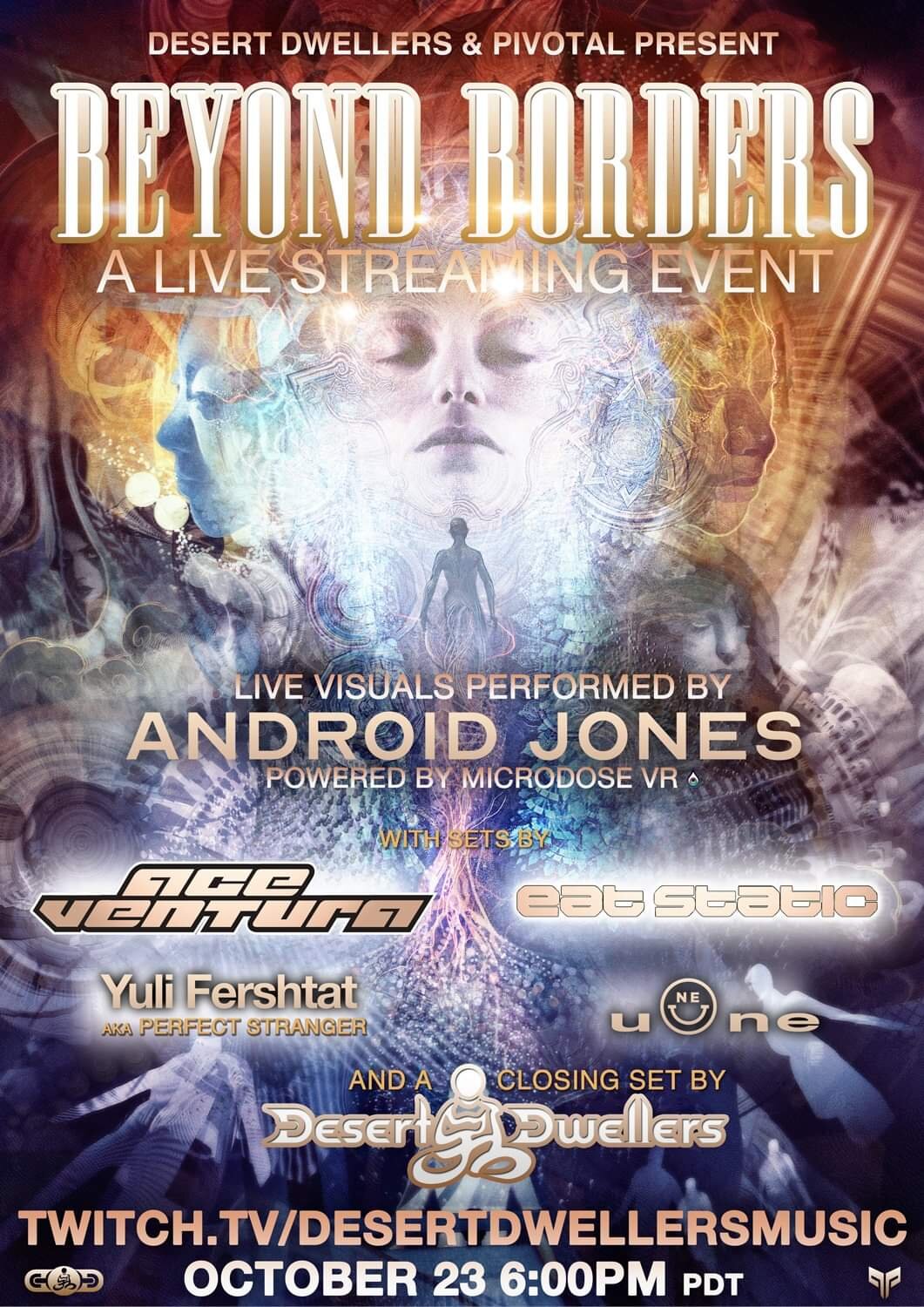
Tune in tomorrow on the Desert Dwellers Twitch channel from 6pm EDT until midnight to catch an entire evening of Android Jones alongside Uone, Yuli Fershtat, Ace Ventura, Eat Static, and a special closing set from Desert Dwellers in celebration of the release of Breath Reimagined Vol. 3.
If you’d like to connect further with the Unite platform, head over to their website to get better acquainted with their operation.
FOLLOW Desert Dwellers: Bandcamp / Spotify / Soundcloud / Facebook
Mickman on a Mission: A Conversation with Cameron Ingraham
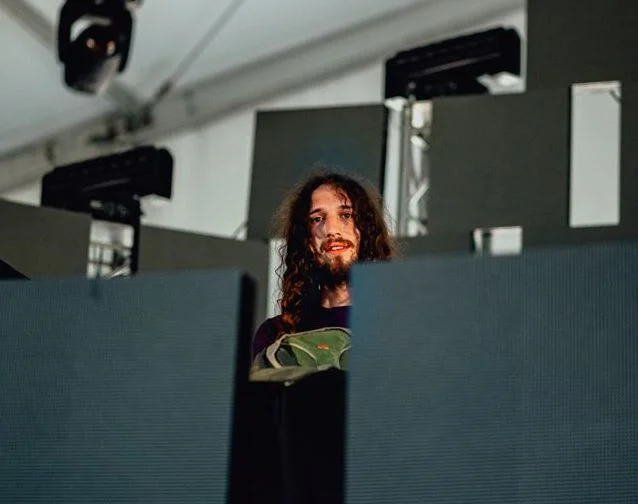
Beneath the blurry public image of the elusive electronic producer Mickman is a deeply intelligent, fiercely independent and fiendishly energetic man - Cameron McMahon Ingraham. We sat down with Cam before one of his biggest gigs to date at the PlayStation Theater in New York City in October to peel back the layers on his career and craft.
In late October, the elusive electronic musician Mickman played one of his biggest gigs to date opening for Jade Cicada at the PlayStation Theater in Times Square in New York City for a sold-out crowd of 2,200 people. Since he began performing in mid-2016, Mickman has gone from bedroom producer and one of bass music’s best kept secrets to a real rising star because of a crazed, obsessive, and fiercely independent approach to music found in few, if any, other people.
For a long time, Mickman was an enigma. Four or five years ago fans marveled at his heavy-hitting SoundCloud discography, but he had never performed live. His prolific productions were sort of a secret among the bass music literati. Even as he’s become more popular, he still barely promotes his music. But beneath this blurry public image is a deeply intelligent, fiercely independent and fiendishly energetic man - Cameron McMahon Ingraham. At the PlayStation Theater, I sat down with Cam - a friend since his first New York show in 2017 - to peel back the layers of his career and craft.

Mickman performing at Summer Camp Music Festival in Illinois in 2017 (Credit: Emerald Tide Photography)
We’re sitting in a green room after soundcheck and before doors open for the night. There are beers in a mini-fridge. “I want to see if I can have one of these,” Cam says. He goes to ask the man in charge if he, one of the main draws that evening, can have some beers. He comes back and settles onto the couch with a Modelo, characteristically dressed down in a black Mickman hoodie, jeans, and skateboard sneakers. Curly brown hair hangs down well past his shoulders.
Along with other recent milestones including a slot at Infrasound Music Festival and a headlining performance at the Black Box in Denver, this PlayStation performance is the product of years of single-minded hard work. Since one “defining moment” around New Years Eve in 2012 when Cam knew he needed to make music, he’s climbed towards success without a booking agent, manager or any formal musical background.
“Looking back to that time,” he reflects, “basically not having a job, fresh out of high school, I’ve never been more inspired and I’m still riding that wave of inspiration. I’ve normalized it now. But when the fire gets sparked again, like right now anticipating this performance…I’ve literally had butterflies all day and my energy levels have just been off the charts.”
Anyone who’s spent 30 minutes around Cam is familiar with his frenetic energy. It’s one of his most memorable character traits and also a defining factor behind his success. The depth of his obsession with production is matched by the depth of his energy reserves. He points a thumb across the green room at Eric Mallon who’s on another couch quietly sipping a Topo Chico mineral water and looking at his phone. Eric is a close friend, consigliere, and frequent sound engineer for Cam. “This morning, I woke him up with a water bottle and a trash can just slamming them together. ‘Let’s go! Let’s go!’”
For some, Jade Cicada and Mickman go together like peanut butter and jelly, though many attendees that night were either unfamiliar with Mickman, or they knew him but were just now catching their first performance. No one left disappointed. The energy in the air at PlayStation was already feverish by the time Cam took the stage, but he sent it into orbit, provoking gasps and hollers from the crowd with quick-footed breakbeats, unexpected drum and bass, and gigantic glitch hop bangers.
Cameron grew up in Rockport, Maine, a town of 3,300 people. He describes it as an “an everyone-knew-everyone situation,” and perhaps it was the type of rural, far north place that breeds independent thinking. Andy Widdecomb aka DeeZ grew up one town over. “We were listening to Prodigy together, and he and a couple other friends of mine got sucked into this stuff,” Andy says. “We would hang after school and talk music. He ended up moving away to Illinois before I graduated. After a year or so, I found out that he’d also been making music - secretly, kind of low key. His sister told me, ‘he never leaves his room, he’s trying to be a dubstep producer.’”
That was almost eight years ago. “As the new year hit going into 2012, I was pedal to the metal balls to the wall,” Cam says. “Every day, all the free time I had was going directly into making music. After the third or fourth year, I started becoming more comfortable with my sound and my knowledge about music.”
I first came into contact with Mickman’s music through a vocal sample from Terence McKenna about an “ocean of pure, vibrant consciousness” in a mix by Brian “Levitation” Jones. Unaware of the song or sample source, I asked Brian about it. “That's actually part of one of my favorite tracks of all time, “Dissolution” by Mickman,” he wrote me. “This guy is a production tank and every song on his SoundCloud is just fire. He actually doesn't even perform, just an awesome dude who sits in his room cranking out tunes.” That was the Summer of 2015. Just under one year later, Cameron would perform for the first time at a show he and Eric threw in Peoria, IL. It would be the first of many shows that Cam put together himself.
“I think there’s a curve for people once they really start saying, ‘okay I think I’m onto something.’ You’re becoming a little more comfortable rather than being shy and bashful showing someone your music. That’s when I gave up the notion of, ‘well, I don’t have a musical background.’ That means nothing.”
Cam’s approach to sound design is stripped-down. “Less is more,” he says. Andy, who is still the only producer to officially collaborate with Mickman, touches on this. “Many times we’ll go over a tune and I’ll ask him how he made something sound so cool. It will be the simplest thing like a square wave with some reverb just tweaked in an interesting way. Nothing crazy or complex that takes a lot of time. I think he’s one of those people who is pushing things forward with composition, although he also has great sound design. Composition is one of his strong points.”
His sound design is absolutely ferocious, but as Andy alludes to, it’s Cam’s songwriting that sets him apart. His melodies are straightforward yet infectious. His note relationships are simple but undeniably powerful. His songwriting prowess perhaps shines brightest on Mending the Riven. A primarily downtempo album with just a few dance floor bangers, it finds Cameron experimenting heavily with time signatures and musical ideas.

Mickman after his performance at Summer Camp Music Festival in 2017 (Credit: Emerald Tide Photography)
“Riven” means torn or split apart violently. I asked Cam what’s been split and how are we mending it. “I feel like it can be interpreted in many ways. If I were to define that myself, I don’t want to take away from anyone else’s interpretation. But in terms of all the definitions of the words mashed together, I definitely think it was one of the more intellectually stimulating things that I did.”
Mickman music has always been full of messages, from the ocean of consciousness in “Dissolution” to songs sampling Richard Nixon, Ronald Reagan and George W. Bush. “In my older music, I was so definitive about the message that I was trying to get across. I still am, but I’ve definitely toned down the deliberate, direct messaging.” One can hear the drop off in vocal samples over time across the Mickman catalog.
“If you’re trying to convey a message in music, I feel like you can almost get farther with just the intention and idea you have when you’re making it than with the samples and words you’re putting into it. There’s a big power in the subconscious nature of music. I’m trying to leave it more up for interpretation now rather than being like, ‘you’re being lied to and your mind’s being controlled!!’ That’s a little too on the nose,” Cam says with a chuckle, “but I was super big on it back in the day.”
He was willing to share thoughts about “Branch Point” from the album Ether Excerpt when I pressed him. “I think there’s definitely going to be a branch point, a tipping point, a threshold that we cross when there will be a pretty definitive outcome in one way or another. It’s going to either be a nice, fluffy utopian ride in the park or quite literally the exact opposite. The average person that you pull off the side of the street, I don’t know if they’re ready for it. I think they’re more ready for the latter than they are willing to put in the work to make a better outcome.” Macro perspectives like these on the purpose and path of humanity appear constantly in Mickman’s music.
Hearing Cameron speak about his career from start to finish, it crystallized in my mind at PlayStation just how crazed and obsessive his approach is. Through sleepless nights, countless hours in front of the computer, long car rides, dozens of load-ins and tear-downs, he made his own lane and did so without compromising his ideals. Once I thought back, I remembered past glimpses of his obsession and his undeniable desire for independence.
He performed at a Rust show in the basement at Brooklyn Bazaar in 2017 when he and DeeZ were touring. Eric was on sound and the three of them were carting Cam’s purple Funktion One rig from city to city. Once the show ended at 3:00 am, there was Cameron spry and ready to carry these gigantic subwoofers back up the slim stair set. Earlier this year he played the early arrival party at Solasta Festival in North Carolina, then flew back to Illinois and threw a show in Peoria the next day, essentially without sleeping. “That was a pretty exhausting mental run.”

Mickman performing at Solasta Festival in North Carolina 2019 (Credit: JV Photography)
What motivates this madness? “The whole chute and ladder game, in terms of, ‘you gotta start off small and play in bars, then open for these people, you’ll get a little bit better and a little bit better and then maybe you’ll get on a show that has some pro audio,’ I just put all of that off the table. I was much more interested in curating my own experience rather than being involved in someone else’s…Trying to materialize and manifest my own vision.”
“You’re mighty ambitious, I said to Cam. “I never truly realized how ambitious, because in person you’re a pretty laid back dude.”
“Move in silence, baby,” he responded.
“Like lasagna,” I added.
“Exactly,” he laughed. We toasted.
Now, Cam’s career is accelerating. He’s playing out more and more frequently, he’s moving upwards on lineups, and he’s become comfortable enough to get a booking agent - Hasan over at Envisioned Arts. It will be fun to watch how Cam’s creativity evolves as the context around that creativity changes. What’s not likely to change? His obsessive, single-minded focus. On top of priceless musical talent painstakingly developed without musical training, it’s his energy and intensity that make Mickman special. “There have been a bunch of different things that I’ve been passionate about in my life that have ebbed and flowed. Then the whole making music thing came into play, and I’ve just never been more sure about something ever.”
FOLLOW Mickman: Soundcloud / Bandcamp / Facebook / Instagram / Twitter
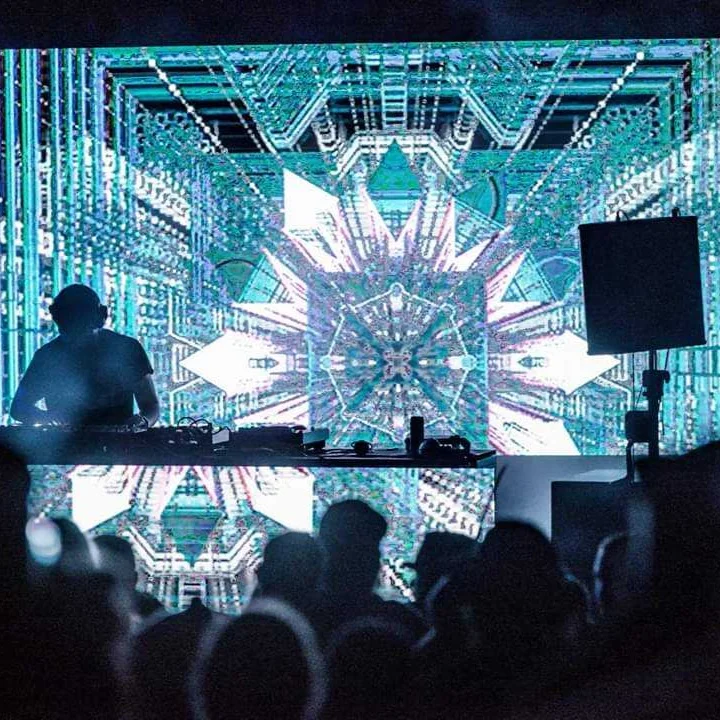
Detox Unit Talks Breakbeats & Breakfast Ahead of JadeStation
2019 has been the biggest year yet for Detox Unit, and he’s now set to smash New York City with Jade Cicada at the Playstation Theater. Ahead of this performance, we caught up with Detox aka Joe Roberts to sift through his thoughts and musings about breaks, production, life on the road, and breakfast necessities.
On October 26th, Jade Cicada, Detox Unit, Mickman, and 5AM are set to present the deepest dive into bass music yet in 2019 in New York City. As we gear up for this Saturday’s spectacle, we took a moment to catch up with an old acquaintance on his recent exploits and experiments.
Joseph Roberts, aka Detox Unit, has been surging through the ranks of contemporary producers, and 2019 has been his biggest year to date. This summer saw him in headlining slots across the festival circuit in the U.S, including Solasta Festival, Yonderville Music and Arts Festival, and Quasar Festival. Lately he’s been in cahoots with Cullen Hassel, an Arkansas-based visual producer, and together they’ve taken the Detox Unit experience into vibrant and immersive new territory. They’ll be teaming up together once again this weekend, showcasing a bevy of new content, routines, and brain-splattering combinations.
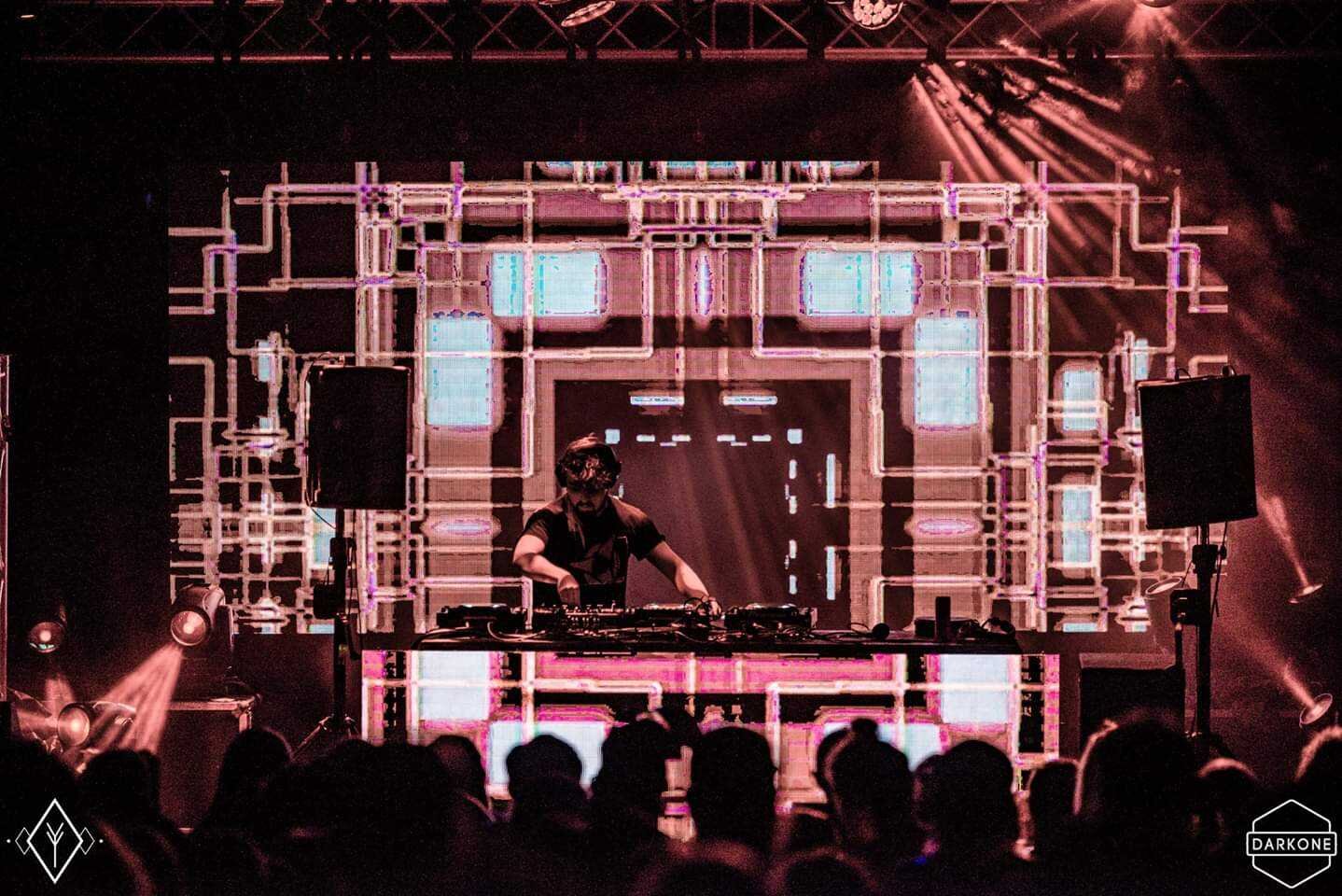
Detox Unit at Yonderville Music and Art Festival (credit: Dark One Photography)
For a producer with such a dedicated, on-the-ground following, Roberts has released surprisingly little music. His series of “Recent Works” mixes is the largest view into his studio catalog, with his actual EPs being even sparser. This tightlipped, frugal approach keeps Roberts a step ahead of the game; You have to catch him live to catch the music. It’s partially why he’s so prized on the touring circuit, rinsing a revolving treasure trove of VIP’s, bootlegs, and spicy, unreleased cuts. Because of the intrigue around his project, we felt the need to poke and prod his brain a bit more. We last corresponded with Joe in 2017 after a Brooklyn performance supporting Jade Cicada. As JadeStation approaches, it felt like the proper time to finally catch up with him again, this time about breaks, production, life on the road, and breakfast necessities.
The Rust: What inspired you to begin producing and playing out break beats lately?
Joseph: It's always been something I've done on the side. Breaks, more specifically of the 123-138 BPM variety, have always resonated with me. When it's good it's equal parts hip-hop and drum n bass both at their wrong tempos. It’s the intricacy and wild sound design of bass music combined with the infectious groove of house. When I lived in Austin, Texas, it was quite common to catch me playing breaks all night at an after party. The recent push I've been making with the breakbeat sound has been something I've been wanting to do for a long time, and with the momentum I've got going it just felt right. There was a certain type of sound that was being pushed from 1999-2005 and I think our dance floors are missing it dearly. My aim with all this is to bring that style back with modern production for the discerning listener. I absolutely love all the heavy sound-design-laden, hip-hop type music we're all pushing right now, but that has always felt like head-nod, arm throwing music, whereas breaks have been a full body dancing experience for me. With all that said, I by no means intend to change styles, and you can expect plenty more heavy hip- hop infused bangers.
The Rust: What are the ingredients for your ideal drum break? Are there any sounds or instruments you’re especially fond of?
Joseph: Excellent question! A good drum break is essential to a groovy tune, and I spend a lot of time trying to source mine or make my own. Lately I've been trying to find old sample CD's from the early 2000s, before online sample packs were a thing. What I like to look for in a drum break first and foremost is vibe. It's hard to describe, but certain breaks just have this dusty airiness to them, and the drums hits will just flow one into another. It needs to have a certain level of crustiness mixed with attitude. Drum breaks that have little snippets of vocals in them are especially delightful, such as the classic "Think Break". Good groove and swing on the back beat snares is another thing I look for, they really help keep the beat flowing between the main snares and kicks. Lately I've been trying to create my own drum breaks to use in my tunes using simulation drum kits in Kontakt. “Obscure” is an example of a tune where I've done this. I still have a long way to go in this area - the vibey bit I was talking about earlier is especially hard to recreate, but I enjoy the challenge.
The Rust: Can you talk to us about the process behind the breakbeat tune "Vibrate" on your last EP?
Joseph: That tune was actually a rather last minute addition to the EP. I had the release pretty much ready to go by the end of April, and sort of on an impulse decided I should include another track to make it more of a showcase of the different styles I can make. I probably put more individual focus on this tune than any other ones in the EP and wound up rewriting it a few times during May. It originally started out sounding far more like a psychedelic Detroit electro tune and went through a few iterations until it sounded more like a slow Nu Skool Breakbeat tune. A few elements in the track, including the "Melinda" vocal sample - which is just a recording of me pitched down - come from an old breakbeat tune that I wrote in 2016 called "Dimensional Sound" but never saw release. I did my best to make the track both a nod to the past and an indication of the future.
The Rust: By our count, this Playstation Theater gig will be your fourth in New York City. How are you feeling about this one compared to the others?
Joseph: This will be the biggest and best one to date, hands down. All the bells and whistles are being brought out for this one. Everyone on the bill is bringing their A-game, from the VJ's to the producers, the sound guys and production staff, right down to every wonderful person on the dance floor. It's going to be one for the books without a doubt. My other shows in NYC have all been great, but I feel this is the first one where we're really combing over the details down to the smallest bit to make sure it is a quality experience for all.
The Rust. You're from Scarsdale just north of New York City. Any words of advice, cautionary tales, food recommendations or other tips for fans traveling from afar?
Joseph: Scarsdale born and raised, I think I have some old friends from high school that will be making it out to the show. Playing shows in New York has always been an interesting feeling for me, as I didn't touch music production until I moved away, so it always feels like touching on an old chapter of my life - a chapter that had much better bagels. I highly recommend anyone coming in who hasn't been to NYC to go to one of those corner shop bodega delis and get a breakfast sandwich. Your life will be changed. Riding the subway is also something that should not be skipped, it is an experience in and of itself.
The Rust: What kind of preparation do you do for your sets? Do you strive for a ratio between original productions and DJ selections?
Joseph: Lately I have not been doing much prep at all in the traditional sense for my gigs. I essentially spend up until the day of flying out working on new tunes to play out at the show. I typically don't start working on my set until I'm on the plane and usually finish it up at the hotel the night before and morning of the show. It may be a bit last minute by some peoples standards, but I like it and it allows me to bring more new music to my sets than I would've otherwise.
I keep my DJ setup very straight forward so set prep is just a matter of figuring out what tunes to play and when, and I figure out all the transitions while I am up there. I try to keep my sets mostly original, and for the past year I have been averaging about 26 tunes a set, and usually 22-23 of those will be original. The remaining ones will be homies tunes or some random producer I am hyped on, sometimes a cheeky drum n bass tune here and there. For this upcoming NYC show I will be doing an all original set.
The Rust: You've had a busy summer. What have been some highlights? On the flip side, has your schedule worn at you all?
Joseph: You can say that again. Between all the summer festivals, Burning Man, moving to a new house, and all these fall/winter gigs, it's been quite a ride. I would say Solasta was the absolute highlight of my summer, with Burning Man coming in at a close second. The homie levels at Solasta were just off the charts, and it was just an absolute pleasure being involved. This summer was also my first time at Burning Man, and I could go on for hours about that, but honestly you should just go and experience it for yourself. I've never been this busy in my life and it's amazing, but on the flip side stress and exhaustion have been reaching an all time high. It's really just a matter of learning how to prioritize healthy habits and time management in an ever-decreasing bubble of free time. I am still learning how to balance my life so it’s been a bit of a struggle keeping up with everything, but it’s all a part of the journey. A lot of creative inspiration comes from the struggle and it's one of the things that keeps me going.
Purchase tickets to Jadestation here
FOLLOW Detox Unit: Soundcloud / Bandcamp / Spotify / Facebook
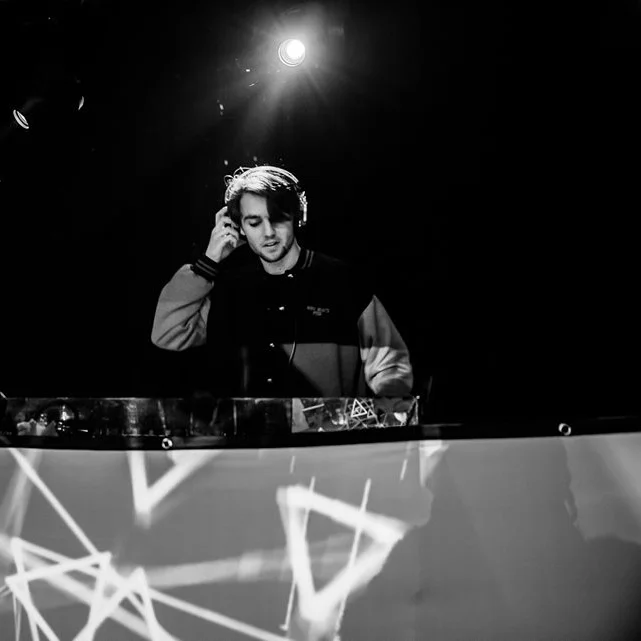
Get to Know 22-Year-Old Production Powerhouse COPYCATT
COPYCATT has been influencing broken-beat electronic music for years with his cutting-edge sound design. He goes on the record with The Rust about production, visa troubles, and his attitude towards his art.
Neuro music has evolved to encompass a plethora of sounds and styles, growing from an offshoot of drum’n’bass into an entire production philosophy over the course of the last decade. The neuron-firing sound design and high-fidelity, speaker-shredding textures of the genre have become commonplace in the catalogs of today’s incoming broken-beat electronic producers. That’s partially thanks to a handful of individuals who not only pushed the boundaries of production and engineering, but went a step further and gave other musicians relatively free, in-depth access to their production tricks and thought processes. .

COPYCATT performing at BBQ Bass
COPYCATT is one of these standard-bearers of neuro music. He’s a staple of the sound, and anyone who explores neuro with honest curiosity will come across his music. Hailing from Queensland, Australia, Andre Butterworth has been producing and contributing his production knowledge to the world for the last five years and running, all the more impressive when you learn he’s just 22 years old. He constantly makes himself available to curious fans, hobbyists, and contemporary producers through a series of production-based video streams and tutorials. Many of his songs, like 2017’s “Tom’s Battery” with Frequent, have traveled around the world on sound systems. As a result, his influence is tremendous, but this comes as a surprise to Andre.
Releasing just below 40 tracks, COPYCATT has maintained a catalog of monstrous cuts. Every song features a potent mix and master, and that sonic clarity has become a big part of his reputation today. Crafting wild, isometric sounds is one thing, but using them well is an entirely different matter. COPYCATT’s music isn’t just an amalgam of vicious noise and transient downbeats. It has a groove and soul of it’s own, channeling powerful melodies through raucous, warped bass lines.
Although he’s open about his production processes online, COPYCATT is still somewhat enigmatic, in part because he’s never performed in the States, the current hotbed of neuro music. Now, for the first time, he goes on the record with The Rust and illuminates other aspects of his project beyond production: his broad, diverse influences from Madlib to Skrillex, his visa troubles, and his raw feelings about his own art and processes. As a companion to his exclusive interview, COPYCATT has delivered an exclusive mix of IDs, which we will release next week through the Rusted Rhythms mix seres. Stay chooned.
The Rust: Since you’re based out of Australia, you’re in the same boat as quite a few other major players in alternative electronic music. Can you talk about the music culture where you’re from? What’s actually in the water over there?
Andre: It's an odd scene over here. I think Australia has this kind of younger brother complex where we all think every other country has more talent than we do, and so we don't take our own content very seriously. A lot of the musicians I know here also don't take Australia very seriously as a place to have a career in music, and in a corresponding way a lot of the major music sources and radio stations here don't take Australian artists seriously until they find their way into an overseas market like the US, hence a lot of the successful people tend to plant their success elsewhere. There's a lot of incredible talent here though, and most of it is pretty much undiscovered. I've met some of the most talented producers here with less than 100 SoundCloud followers, and they usually live in some rural area and just churn out great music for the fun of it.
The Rust: In the United States especially, you have a high reputation amongst incoming and established producers alike, with many crediting you on their shorthand list of sound design inspirations. How do you perceive that reputation?
Andre: I do find it pretty bizarre to hear that. I think because there's not much of a scene here in Australia for the kind of music I make, I find it hard to imagine what people tell me about the way it's received in places like the United States. My friends who live in the States message me when they hear my tracks being played out at festivals and send me videos and it always freaks me out. I have a bit of a bittersweet joy about it, because usually I'll send my demos to guys like Chee and Frequent to play out at their shows, but if I don't have many shows lined up at the time, the show that they play will probably be the first time anybody hears that demo. But I really love the thought that there's a culture for the stuff I like to create, so I can't complain.
The Rust: How did you find yourself so enamored with thick bass music in the first place?
Andre: I used to be into thrashy hardcore stuff back in my pre-teens, and I remember my friend (also kind of my music dealer at the time) showed me “Firepower” by Wolfgang Gartner. I think I got pretty hooked on electro from that point, and then of course Skrillex happened and I decided “yoys” were the future of music. KOAN Sound was the next big shift for me a few years later, and about the same time I started getting into hip-hop artists like Madlib, Pete Rock, and J Dilla. So here I am now at mid-tempo, crunchy bass music.
The Rust: Rhythmically, you seem to have a strong foothold in traditional, golden-age hip-hop. Have you always made music in that fashion?
Andre: I used to make what people now call "Bro-step", but at some point a few years back I think I heard some Nujabes in a cafe or something, so I went home and looked up "jazz gangster beats" (I wasn't raised in a place where hip-hop was popular as you may have guessed). I found “Trashy” in that Vintage Vol. 2 beat tape by J Dilla, and got hooked on his sound immediately. Then I found Madlib's Album Shades Of Blue (now “Distant Land” is my favourite song of all time). I thought it'd be easy to make until I actually tried it and made the most boring beat ever. Then I decided to actually drop a J Dilla track into FL Studio and after looking at it properly I realized there’s a fair bit to actually achieving the right kind of swing. I guess I’ve spent the last few years trying to emulate that sound in the music I make. Also, I honestly have to credit Tony Hawk's Pro Skater 2 (and the cereal box the game came in) for repeatedly subjecting me to “Guerilla Radio” by Rage Against The Machine. It's not golden-age hip hop, but that heavy mid-tempo riff is printed in the way I write my riffs for sure.
The Rust: One contemporary school of thought on production is to separate sound design and composition. Can you walk us through some of your typical production and songwriting processes? What defines your product as “finished”?

COPYCATT mid-set at Twisted Frequency 2019
Andre: It definitely feels like there's a distinction between sound design and song writing in my process. Sometimes sound design feels like playing video games - I have sessions where I just find cool sounds and play with processing or try to emulate something I've heard before. Composition at the moment feels like it happens when I take a sum of things that I like and combine it with sounds that I've made in those experimental sessions. "Finished" is a totally ambiguous concept for me. I'm starting to adopt the idea that an idea is never finished, and there's never a time when you can't continue expanding on an idea and finding new ways to explore it. In terms of releasing a song I'd say it's like putting a sort of checkpoint on something and saying "Yeah I like where this is at right now, this sort of makes sense." My best projects are big scattered messes of stuff that I might only use a small portion of to create a cohesive track. All in all, my creative process is to make a huge mess and then find the gold in it.
The Rust: You just released a huge trove of great music on your SoundCloud account, quietly and with no fanfare. Were you just sitting on a few in the cannon and decided to fire them out?
Andre: I think creativity is a lot like human metabolism. You ingest inspiration, then you digest it to find the experience that you love (the 'emotional nutrients'), and eventually you shit out whatever you created in the process of discovering that experience. My problem is I’ve had creative constipation for like three years - lots of inspiration going in, lots of ideas being extracted and processed, but nothing coming out the other end, probably because I wanted to control what my shit looked like, which I now know is not healthy or possible. I'm not a doctor but I'm pretty sure that if you don’t shit for a while your metabolism slows down and stuff goes bad in your gut, so no matter what that shit looks like you’ve gotta get it out. That’s what I’m doing right now. Taking a big creative shit so I can continue functioning. No marketing, no fanfare, no album cover. Just a big shit. And that’s also the inspiration for the ID’s mix.
The Rust: Recently, you had to withdraw from a number of U.S. tour dates due to issues with the work visa process, and you’re certainly not alone in that regard. Would you mind speaking about your experience trying to secure a visa?
Andre: Being an inexperienced 22-year-old with no experience in being qualified to work in another country, I can definitely say the process of getting approval to perform in the US comes as a pretty big hurdle. This is my first time applying, and I'm honestly lucky I have people like the guys at Sub.mission agency and other experienced musicians who do know what they're doing and who are willing to help me get through it. If you want the nitty gritty details, to get a three-year permit as a solo musician, it's between $1,000 and $3,000 AUD (depending on whether you'd like to wait literally three months for it) and there's a ridiculous criteria you have to meet to get the US embassy to even bat an eyelid at your application. So consequently we've pushed back a fair few tour dates to make sure we do it properly and tick every box. Long story short it's a right royal pain in the ass but it's worth it, and I'm excited to see the other side of it.
The Rust: At 22 years old, you’ve succeeded in gaining international recognition for your art. What’s next?
Andre: At this stage all I really want is to make really good music. I think an album is definitely past due for me right now, which I've avoided probably because of my own fears and insecurities, but there's a lot of sounds I'm exploring that I've yet to actually incorporate into my music so I'm making room for that kind of growth before I drop a huge official chunk of COPYCATT stuff out there. I'm also sitting on about three years worth of random beats that I really enjoy listening to so I thought this mix would be a good way to relieve some of that pressure in the meantime. Other than that my only other goal is to surpass watching videos of other people playing my tunes and actually be the one playing my own music out at festivals. That would be kinda nice.
-
FOLLOW COPYCATT: Soundcloud / Spotify / Bandcamp / Facebook
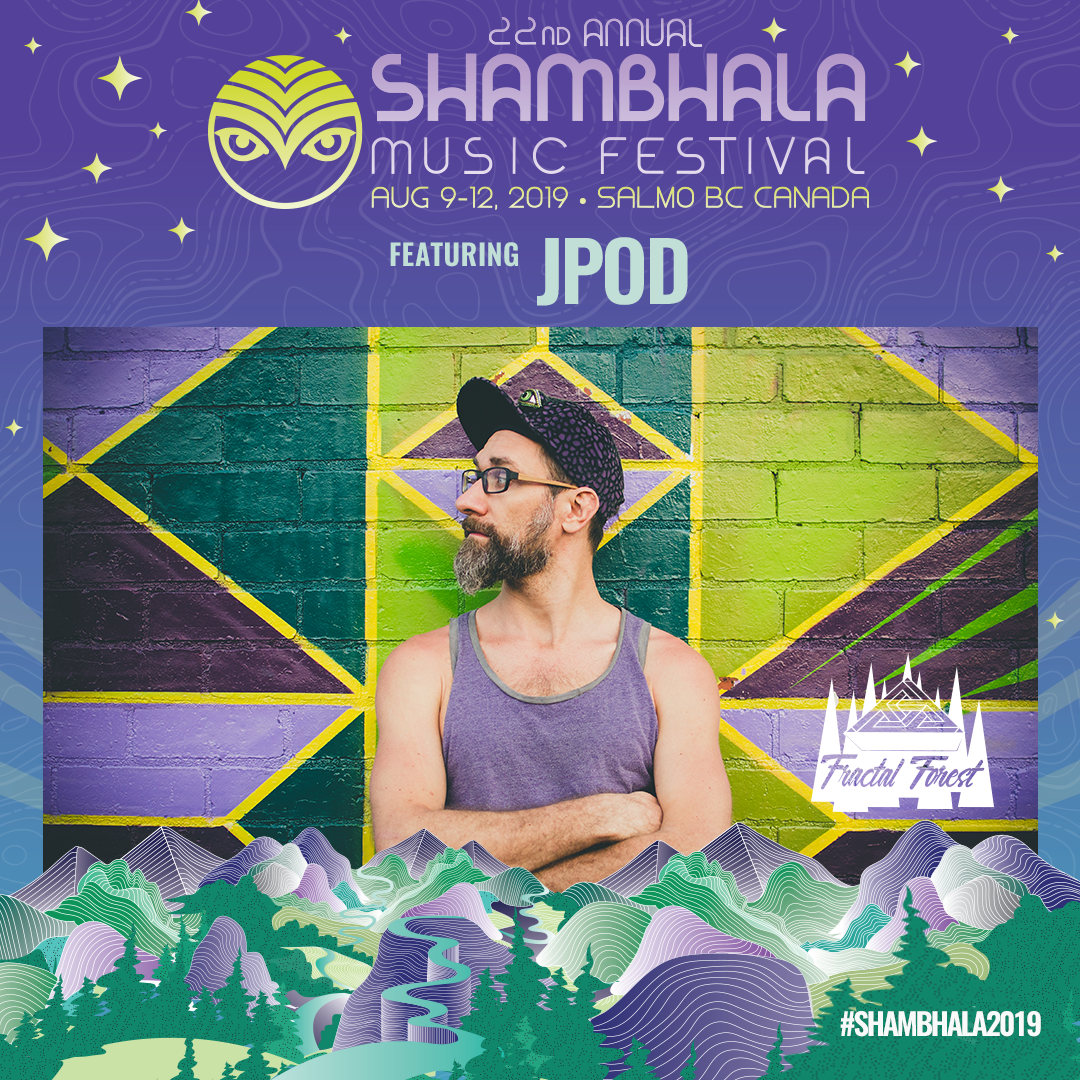
How JPOD the Beat Chef Became a Shambhala Favorite
JPOD aka JPOD the Beat Chef aka Jason is a fixture of the Western Canadian electronic music scene. This year from August 8-11 on the Salmo River Ranch in Salmo, British Columbia, Canada will be his fifteenth at Shambhala Music Festival. It’s only right that we end our “Shambhala Favorites” interview series by learning about the beat chef and how he first made his way to Shambhala.
JPOD aka JPOD the Beat Chef aka Jason is a fixture of the Western Canadian electronic music scene. This year from August 8-11 on the Salmo River Ranch in Salmo, British Columbia, Canada will be his fifteenth at Shambhala Music Festival. It’s only right that we end our “Shambhala Favorites” interview series by learning about the beat chef and how he first made his way to Shambhala.
All those years ago, he was playing trip-hop vinyl in clubs in Kelowna, British Columbia when he was first recognized by the crew which runs the Fractal Forest stage at Shambhala. He’s since established himself as one of the premier glitch hop DJs in the world - barnstorming across Australia year after year, held down a residency at Bass Coast Electronic Music & Arts Festival, become a father, and remixed everything from Amy Winehouse to Al Green. Although he’s spent the last four years playing different tones and hues of his signature sound to fit the vibe at the Grove, Amphitheater, and Living Room stages at Shambhala, he returns this year to the Fractal and the classic funk and breakbeat stage that spawned his career as a DJ
Discerning ears around the world recognize his sound. He remixes roots music like blues, reggae, soul, bluegrass, African choir music, and more and produces originals that travel through different dimensions of glitch hop. His foremost desire is to get himself and his audience dancing and smiling. Accordingly, he most often plays during the day at festivals when the vibes are easygoing. His music has a playful and laminar mindset that’s accessible to new listeners, drawing in a crowd that will begin the swell of the night to come. That’s exactly what he’s doing again this year, performing at 8:00pm in the Fractal, marking a decade and a half at Shambhala.

Jason absolutely feeling it at What the Festival in 2015
The Rust: After a few years of playing at the other stages, how does it feel to return to the Fractal Forest
Jason: I've always known I would come back to the funky Fractal. My sound has a range of styles and I like applying them in different places. However, the classic JPOD sound evolved in the Fractal Forest and will always have a place there. I'm excited to start Friday night off the way that so many Fractal friends want!
The Rust: Did you attend your first Shambhala as a patron or as a volunteer?
Jason: My first year was 2004 and it is the only year I attended as a punter. It was good to experience the line fiasco and general camping rush but of course back then it was probably half the size as now, so a little bit less stressful. I attended and camped with some Whistler friends (the Cook brothers) and I was definitely THAT guy - bare feet all weekend, sleeping all day, partying all night, crying for no reason by Sunday (ok maybe because 3rd Eye Tribe really hit me with the feels at the Living Room), repeatedly forgetting what I was just talking about, mind blown by Bassnectar and generally dancing my legs right off. Recovery that year was brutal and I learned to take some time off before going back to work.
The Rust: The funky, glitched-out breakbeat sound has become a signature of Western Canadian electronic music. You credit much of this to the Fractal Forest. Can you elaborate on how this stage has influenced the region’s electronic music and yourself?
Jason: Shambhala clearly has the reputation for being the region's first and probably most influential event for cutting edge dance music. All the local aspiring DJs and producers were attending or performing as well as getting heavily influenced by all the music. The Fractal Forest may have been one of the first stages to really establish its sound and has since been the home for funky breakbeats. Those of us who were being influenced by this music were naturally going to try to make our own flavor of it back home. I have always tried to differentiate myself. Since there was almost no one doing mid-tempo funky breakbeats back then, I took the chunky funk I was hearing in the Fractal and combined it with the hip-hop and trip-hop roots I established through DJing for over four years prior. What began to emerge was that funky bassline remix and at the time it was very fresh and inspiring.
The Rust: We read that when you met Rich-e-Rich, stage manager at the Fractal Forest, you were spinning hip-hop on vinyl in your hometown of Kelowna. Can you take us back and describe that moment in time?
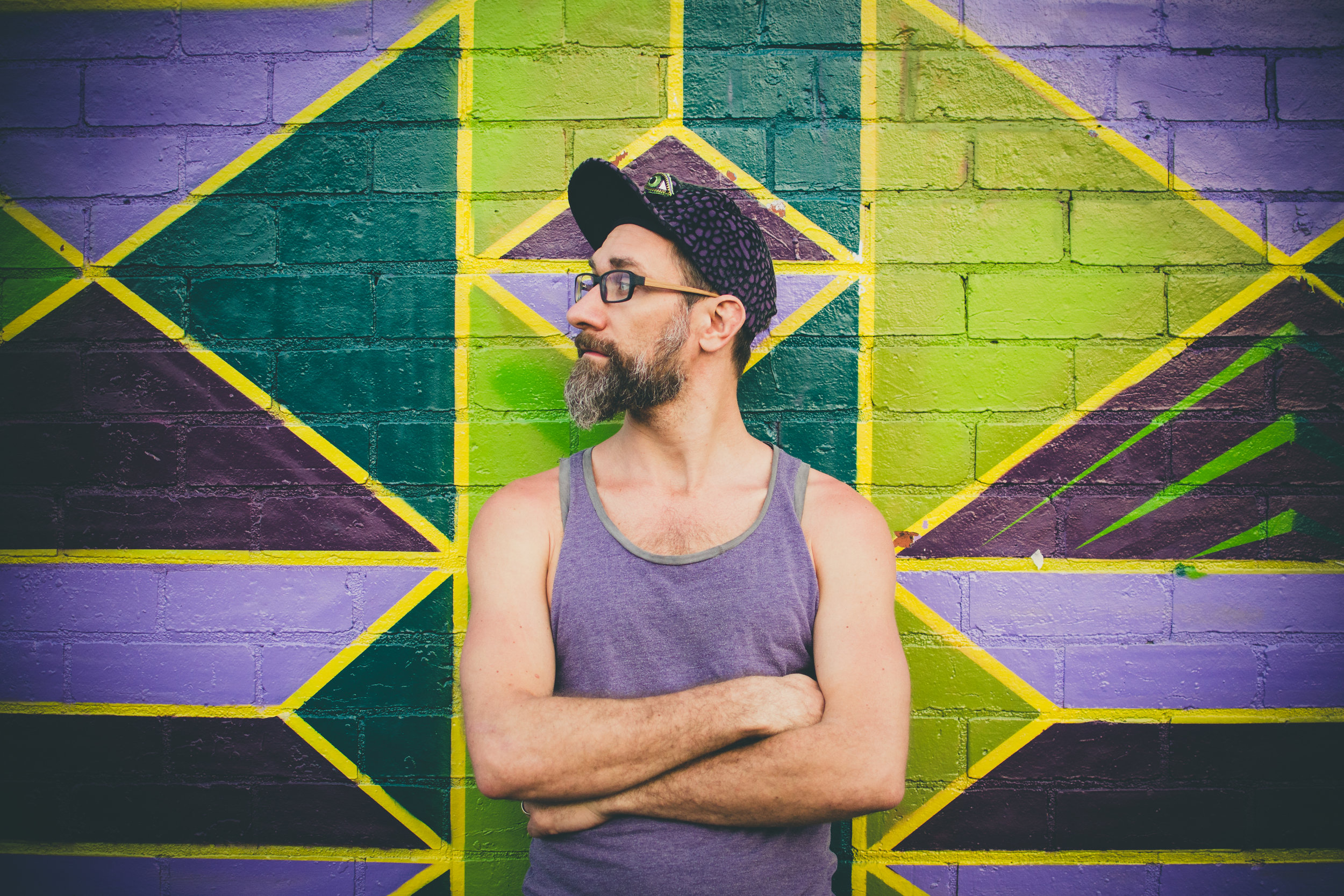
Jason: My hometown has always been Vernon but after my first Shambhala I discovered the LiquidBeat community and Toddy Rockwell promoting Higher Ground events in Kelowna. I started playing funky hip-hop and trip-hop on vinyl at shows there for both LiquidBeat and Higher Ground events and my unique style spread pretty quickly via word of mouth. It was at one of LiquidBeat's shows at the Rusty Buckle that Richie attended when he basically told me straight up he wanted me to play at Fractal. If I recall correctly, he didn't even catch my set because the roads were pretty bad and he arrived late. However, other people kept telling him to book me and he took their word for it. I remember being in a state of complete disbelief. I assumed that the process of getting booked would be much more involved. I don't even think I knew who he was until we started talking and he basically told me right there that he wanted me to play. It was a very surreal experience.
The Rust: Speaking of your early years, how did you meet Todd, and what was Higher Ground like? Was it always at the same club? Is there still a scene for that in Kelowna?
Jason: When I first joined the LiquidBeat forum, I think I made a post about being a DJ and described my style. I caught Toddy's attention for good reason because at the time, there weren't really any DJs doing funky hip-hop or trip-hop anything. We setup a meeting and I gave him my latest mix which he absolutely loved, and he had me open at the very next show he was throwing. I was instantly a Higher Ground resident and it was an amazing time. Higher Ground was typically in the upstairs of Level and it was a great intimate room that, along with the Rusty Buckle, was the home for our Okanagan scene for a while. Just before that time, Thistle held the reigns doing a night at Oasis nightclub but that was before I joined the scene.
Lately the Kelowna scene has been a combination of Arcade's late-night shows, Footwerk's Sapphire shows and Habitat's variety of electronic events. However, Arcade is taking a well-deserved and likely permanent hiatus (save for bike raves and maybe one-off small events) and Habitat closed down last year. So as far as I know, Footwerk is the only remaining entity throwing consistent, quality events.
The Rust: How did your relationship with Tyler “Stickybuds” Martens form and develop? Can you tell us about the Stickypod Connection? And will it ever happen again?

The Stickypod Connection featuring a short-haired Stickybuds (left) and Jason (right) in the mid-2000s.
Jason: Back when I first found LiquidBeat and Higher Ground events I had all the energy to DJ just for fun. I was involved in a church in Vernon (VCF) and invited friends and DJs to come hang out in the building after hours and DJ together. Tyler was all about it and we quickly connected with complementary styles. At the time, he was a little into hip-hop and more into nu skool breaks. Because I had Vestax PDX 2000 decks I was able to ultra-pitch my hip-hop acapellas up to the nu skool breaks tempos (125-135 bpm). Of course, most voices sounded pretty chipmunkey pushed that far but one voice - the renowned low tones of the "verbal herman munster" aka Chali 2na - worked better than others.
Since this was such a fresh and unexplored concept, we started jamming out together and doing live acapella and scratching combos. We developed a pretty simple strategy of trading off the responsibility of holding down the instrumental foundation while the other did the vocal / sample / scratching flair on top. We scienced out several three-hour Shambhala sets along with many other club bookings and definitely influenced any other funky remix DJ duos who emerged from Western Canada since then. That's right folks - we did it first! (And best!) Our communication and categorization skills obtained during those days allow us to jam with relative ease pretty much any time we want. When the right opportunity arises, we usually do.
The Rust: You've mentioned someone named Trevor Refix as a connective force that lead to your initial booking at Shambhala. Who is he, and how did you meet him?
Jason: Trevor Refix was one of the LiquidBeat DJs and moderators. As far as I know he along with Toddy Rockwell were the artists most influentially chirping in Richie's ear about booking me at Fractal. However, I could probably assume that Joseph Martin (another Fractal resident) had something to do with it. By the way, Trevor is now the main creative force behind the Canadian indie band Texture and Light, so check that out.
The Rust: So your new album Circadian Rhythms comes out in a couple days. What can you tell us about it? Great choice of album artist by the way, Sebastian Berto is an absolute maniac.
This album is an attempt at something deep and meaningful. This is the hardest kind of music to originally produce. The thing about funky remix music is that I find it a very surface kind of music and a much easier formula to follow. It's great in certain contexts and really serves a purpose on the dance floor but I never listen to it at home. Of course the holy grail of music is the kind that works great at home and on the dance floor and that is very hard to make. But ultimately my goal with original music is to make something that is truly timeless. Lots of what we hear at festivals ends up being very specific to a time and place but the really good stuff will always last well beyond a specific date. I won't claim to have fully achieved this with Circadian Rhythms, but there are definitely certain songs that stand out as great every time I listen to them. I can only hope that everyone who listens will feel the same way.
The Rust: While we're at it, want to hip us to the theme of this year's Bliss Coast mix?
This year I simply tried to find any music that has the space I need to be workable and the feels that I want these gushy sets to have. I picked a strong variety of styles including swing, funk, latin, blues, hip-hop, reggae, and mostly modern R&B. This year things went differently at Bass Coast as my Sunday afternoon set was rescheduled to a Saturday evening Main Stage set. [The Bliss Coast mix series was born from JPOD’s consistent Sunday sets at Bass Coast.] I was able to make the necessary rearrangements but ended up cutting two songs that didn't fit that time of day. However, I will be releasing Volume 8 as it was written and not as it was performed.
—
This Friday, head on over to Addictech to check out JPOD’s new album. Given that Jason has such a penchant for remixes, it’s always special to hear new original music from him. This concludes our Shambhala Favorites interview series. Catch up by checking our chats with Slynk and Fort Knox Five & Qdup, and we’ll see you on the farm.
FOLLOW JPOD: Official / Bandcamp / Spotify / Soundcloud
FOLLOW Shambhala Music Festival: Official / Facebook / Instagram
Sound of Solasta - Pathwey
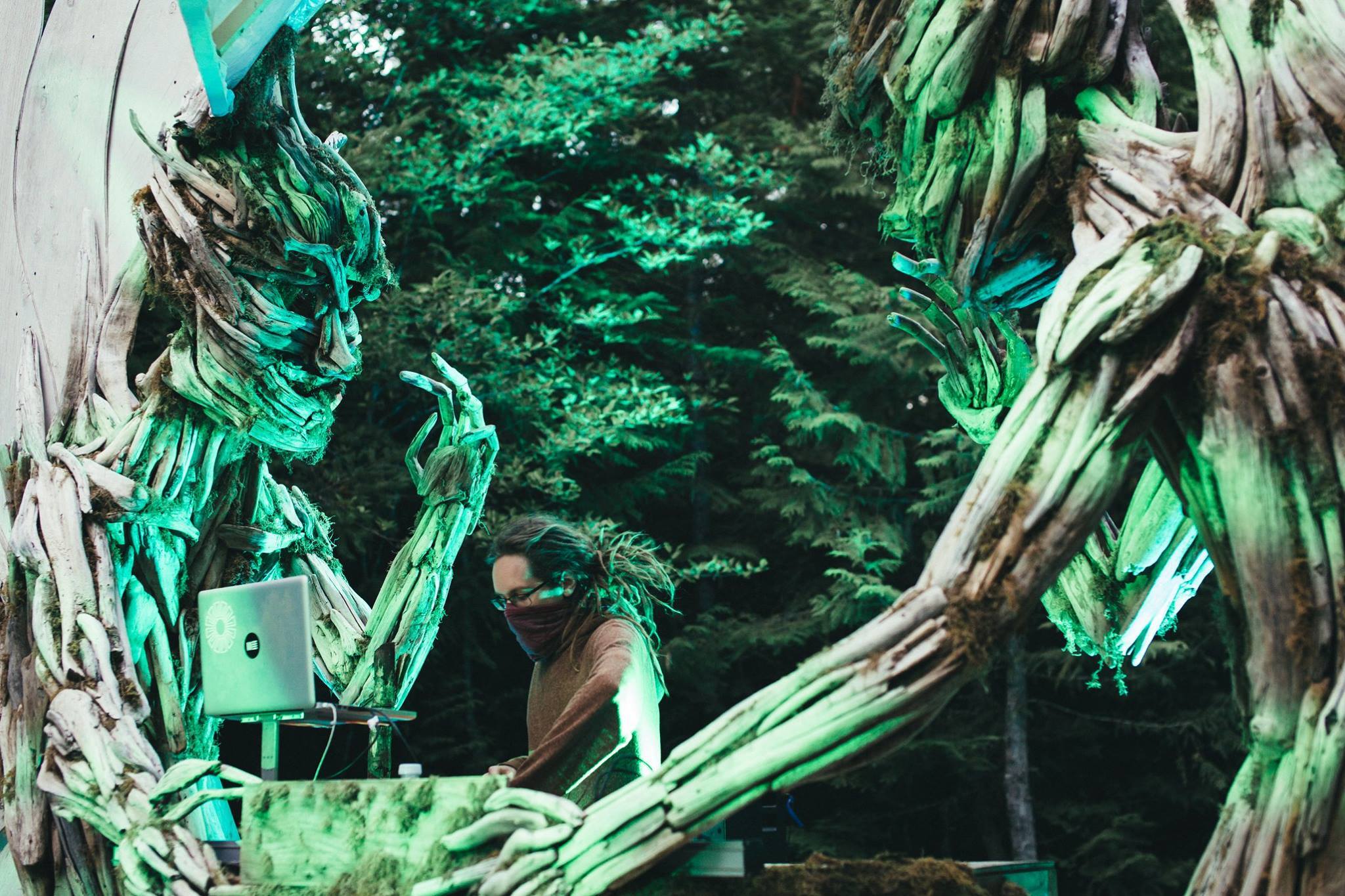
Solasta Festival is leaving its original grounds in northeastern Tennessee for the misty, hill-bound Deerfields Retreat in southwestern North Carolina. The event is known for its niche curation, booking the cream of the contemporary crop in psychedelic broken beat music. Unlike their location, this ethos hasn’t changed. Our Sound of Solasta interview series investigates the back stories of artists on the lineup, and this year we’re focusing on the ascendant audio alchemist Pathwey from the nearby city of Asheville, NC.

Solasta Festival is leaving its original grounds in northeastern Tennessee for the misty, hill-bound Deerfields Retreat in the Pisgah National Forest in southwestern North Carolina on August 16-18. Now entering its third year, the event is known for its niche curation, booking the cream of the contemporary crop in psychedelic broken beat music. Unlike their location, this ethos hasn’t changed. Solasta draws crowds, performers and some of its organizers from Asheville, North Carolina, a fertile place for electronic music culture. Our Sound of Solasta interview series investigates the back stories of those performing at Solasta and for this installment we’re focusing on one of those Asheville artists, the ascendant audio alchemist Pathwey.
He is a diverse and persistent musician whose career creating art in multiple forms has taken him across the country and back again. Although he’s been playing all sorts of music his entire life, lately Pathwey has been working at 140 beats-per-minute, and he’s one of the only producers at this glitch hoppers’ paradise of a festival who does so. But he plays it like few others do, integrating psybass sound design, world instruments, organic textures, and themes of transcendence and appreciation for nature. Make no mistake, though, Pathwey will get you pitted. He’ll just lift you up on high afterward and perhaps tickle your pineal gland along the way.
Pathwey, who usually goes by Andy, expresses himself through visual art as well. All of his songs save for compilation tracks or remixes are accompanied by his own artwork. He’s fabricated stages and worked on projection mapping projects for some of the most enduring acts in electronic music. When he was living in the Boston area, he learned from his roommate, the visual jockey Zebbler (Peter Berdovsky), and became part of FractalTribe, the New England collective with a distinguished fabrication operation.
These experiences have given Andy a holistic familiarity the electronic music culture. When he ascends the stage to spread that culture through his music, a decade and a half of history stands behind him. His persistence was recently rewarded when Street Ritual’s booking agency picked him up in April, ensuring that he’ll be holding space in more clubs across the country soon. Ahead of his “hometown” performance at Solasta, we shot Andy some questions to learn more about him.
The Rust: How long have you been producing music as Pathwey?
Andy: It’s been about two years since I started going by Pathwey, but in my mind this project has been in motion since I started creating electronic music over 14 years ago.
The Rust: What do you try to communicate with your music?
Andy: Music is so intimately connected with the feelings and experiences of the person creating it. In that sense, all of my music is translating and reflecting on some thought, feeling, or experience I’m going through at the time. For me, making music is really the most potent way I know of to process my emotions and transform them into something positive. Sometimes I’m reflecting upon spiritual and philosophical ideas around life and death. Sometimes I’m trying to translate a deep psychedelic experience. Sometimes I’m expressing my frustrations regarding global issues like environmental and social justice. Other times I’m just simply having fun and fucking around with my friends. Whatever it happens to be in the moment, I think ultimately I’m just processing what is happening in my life and trying to create something from it that is beautiful and means something to me.

My greatest aspiration with Pathwey is to use it as a vehicle for positive environmental and social transformation. We are currently faced with so much fucked up shit in our world today. Not like that’s anything new to the human experience, but sometimes it’s hard not to get overwhelmed with sadness, anger, and feelings of helplessness just thinking about it; what effect I could possibly have as one individual? But I think that music can give us the ability to create positive change in a powerful way. That change could be as immediate as uplifting someone into a positive state of being or as lasting as generating funds to donate towards environmental relief efforts, social justice programs, or building communities. This is something that I’m currently working towards with Aquatic Collective and The Undergrowth. We’ve got a lot of really exciting ideas and projects in motion. I feel like as an artist, I have a responsibility to use my platform to promote projects, ideas, and issues that I think are important. Using the gift of music to make a positive impact on the world while simultaneously doing something that I love is the ultimate reward for me.
The Rust: Can you talk about some of the projects you’ve worked on in the past, particularly visual art?
Andy: I feel so blessed to have discovered art and music at such a young age because they’ve both been incredibly positive guiding forces and teachers in my life. Art and music are like an endless feedback loop for me. One is always inspiring the other and the two are intimately connected for me. All the artwork for Pathwey, with the exception of some of the compilations and remixes I’ve released on, has been my own work. The art to me is just another piece of the full expression and I plan to continue creating original artwork and video content through this project.
I’ve created art in all types of mediums; painting, graphic design, installation art, video, wood/metal working, etc. I love exploring new mediums and forms of art. I’ve created artwork for album covers, events, and festivals, I’ve created logos, artwork, and video content for other artists and businesses, I’ve received two grants for installation pieces that I created, and I’ve worked on the fabrication of installations and 3D projection-mapped stages for Shpongle, EOTO, Verizon Wireless, Burning Man, DEFCON, and many other festivals and events. I feel like I’ll be creating visual art and exploring new mediums for the rest of my life.

This piece of Andy’s original artwork was featured as the cover for Standing with the Waters: A Benefit for Standing Rock, a benefit compilation for indigenous rights organizations from the Aquatic Collective..
The Rust: Musically, what were you doing before Pathwey?
Andy: Music has always been a huge part of my life, ever since I was a kid. Growing up I was playing saxophones, guitar, bass, and drums throughout school and jamming in bands with my friends at home. I was recording shitty demos of our songs in the basement, playing local DIY shows, and making beats with Fruity Loops on my family’s computer.
Way before I was going by Pathwey, I was experimenting with genres like Dubstep, DnB, IDM, Glitch-Hop, Downtempo, Psytrance, Trap, House, Ambient or whatever else I felt like making. I think the only difference is that now I’ve finally come to a place with my productions where I think they’re good enough to release. Most people who know my music that aren’t close friends of mine would probably never know I’ve been making lots of different music because I never released any of it. Before Pathwey, the only stuff I ever released was downtempo, but I’ve always been experimenting with all sorts of shit.
The Rust: How would you describe Pathwey music?
Andy: To me, Pathwey is this kind of sonic bridge between the past and the future, merging sounds of cultures from across the ages of human civilization with unknown futuristic and alien sounds that have yet to be created or heard. Somewhere where the natural world and technological world meet in harmony and dark and light energies combine to express the full breadth of human emotion and experience. Sometimes it’s high energy and moves your body, other times it’s chilled out and moves your mind. Hopefully some of it will move your soul…
People can definitely expect to hear forthcoming music from me in a wide variety of genres and tempos. My forthcoming album will showcase more of the explorations in 140 bpm music that I’ve created over the last few years, covering the spectrum from heavy bass-driven bangers to deep atmospheric heart-melters. I also have forthcoming collaborations and works exploring all of those genres I just mentioned.
How long have you been in the Asheville area? What’s the underground electronic music community there look like?

Andy: I’ve been in Asheville for about three years now. The music scene here is so dope, man! I get to see and perform alongside artists I love all the time! There’s certainly no shortage of awesome events happening here. It’s not as big of a scene as somewhere like Denver, but it’s a special place with a great community. I just feel so blessed to live around such a supportive and active music community and I’m so grateful for all the ways in which moving here has been a catalyst for my own growth as an artist. There’s so much talent in Asheville and it’s super inspiring to be around! The community here is really welcoming and open to new people and new music as well. You’ll definitely have a good time if you come through Asheville. Big shout out to The Undergrowth, Harmonia, and Envisioned Arts for holding it down here and providing opportunities for up and comers like myself to play and for hosting events for the community to gather and enjoy the music that we love!
The Rust: Have you been to Deerfields Retreat before? What can you tell us about it?
When I first moved to Asheville, I went to Kinnection Campout at Deerfields. It was such an inspiring experience and my introduction to the electronic music scene in the southeast. All I’ll say about Deerfields is, for those of you haven’t been there, you are in for a real treat if you come to Solasta this year! It’s one of my favorite outdoor venues on the east coast for sure! It’s truly a magical place!
The Rust: Anything else you’d like to share?
Yea, I’d just like to express my infinite love and gratitude to both my parents, my nana, my family, my friends, and my fans for believing in me and supporting me all these years. I certainly wouldn’t be where I’m at today without you all and I just want you all to know that your support and encouragement really means the world to me. To all the people who’ve reached out to me over the years to appreciate what I do, it means more to me than you’ll ever know. There’s a lot of stuff that’s finally coming to fruition after years and years of hard work and I’m so excited to see how it all unfolds and where the journey takes me! Also, to anyone out there reading this that’s struggling to achieve their dreams and aspirations, DON’T GIVE UP! Just keep fucking doing it! Keep moving forward step by step and eventually you’ll get there!
FOLLOW Pathwey: Soundcloud / Spotify / Facebook
FOLLOW Solasta Festival: Tickets / Official / Facebook / Instagram
Get to Know the Shambhala Favorites Fort Knox Five & Qdup
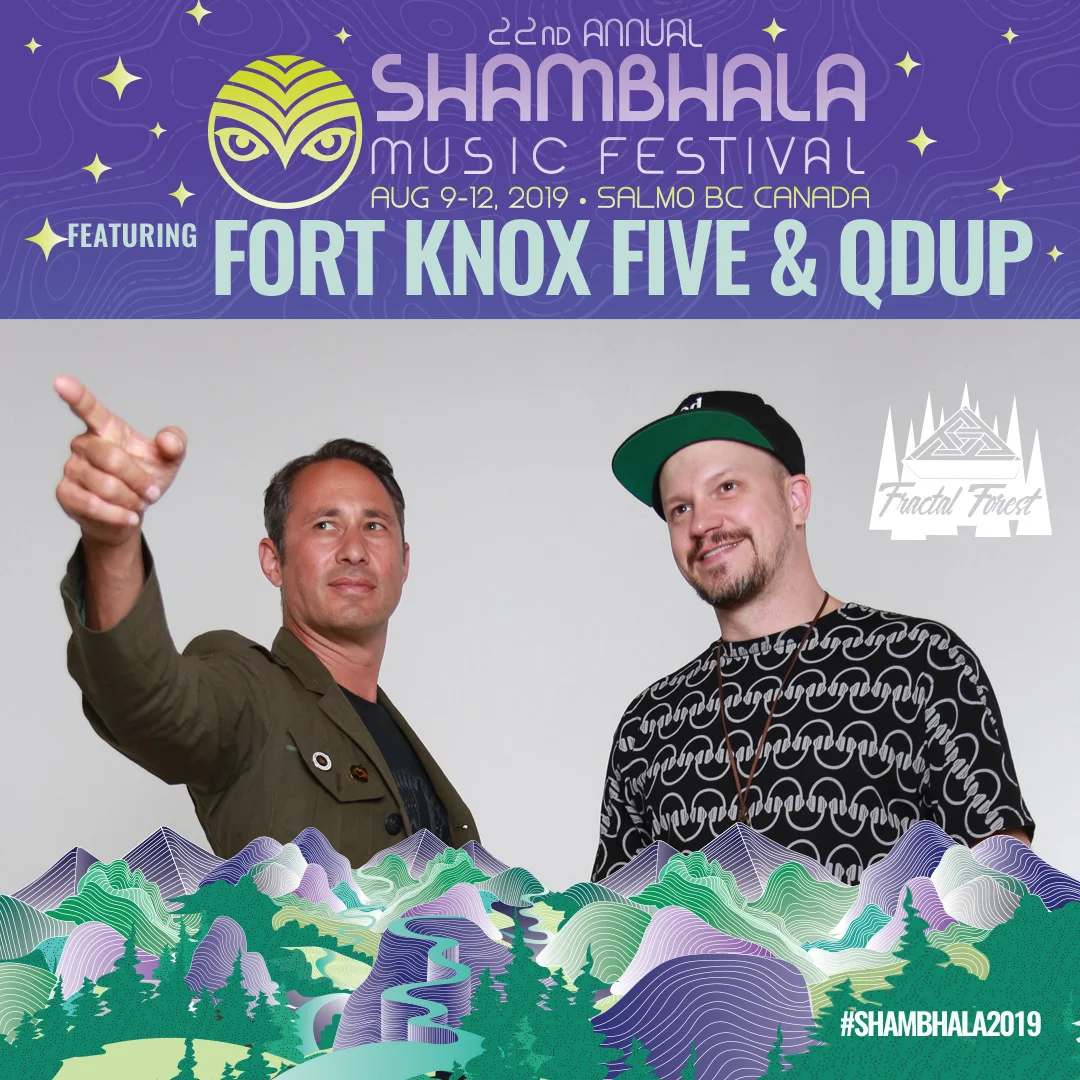
If you trace back the career of the Fort Knox Five, you’ll also discover the evolution of the musical style commonly known as electro funk. Almost 15 years ago they found their way from Washington D.C. to British Columbia, Canada and Shambhala Music Festival, and they’ve made it their home ever since. More recently, Fort Knox Five began performing with fellow DC DJ Qdup, and soon the duo will funk Shambhala for the fifth year in a row.

Steve Raskin of Fort Knox Five (left) and Jason Brown aka Qdup (right) in 2018 (Credit: VIB Visuals)
If you trace back the career of the Fort Knox Five, you’ll also discover the evolution of the musical style commonly known as electro funk. At the beginning of the group’s journey almost 15 years ago, they found their way from Washington DC to British Columbia, Canada and Shambhala Music Festival, and they’ve made this place their home ever since. More recently, after trips around the world and twists, turns, arrivals, and departures worthy of a book, Fort Knox Five began performing with fellow DC DJ and longtime friend Qdup. This August 9-12, the duo will funk Shambhala together for the fifth year in a row. They’re two of 20 artists on this year’s lineup labeled as “Shambhala Favorites” in recognition of their deep ties to the festival. Fort Knox Five is one of the only artists in that grouping, however, whose history is nearly as old and storied as the event itself.
Fort Knox Five formed in Washington DC’s humming rave scene in 2003. Founding members Sid Barcelona, Jon Horvath, Rob Myers and Steve Raskin found their way to that scene from different starting points, from indie and art house to hardcore hip-hop. They coalesced around an eclectic sound which could only have formed at that moment in time around the turn of the millennium. It was a sound composed of funk, soul, jazz, hip-hop, and breaks sequenced and programmed through electronic techniques. They seamlessly combined live instrumentation with electronic break beats, like so many acts who would follow. The group’s influences were deep and broad, but they took many cues from another eclectic DC act, Thievery Corporation, whose live performances featured Myers on the guitar and sitar. Like Thievery Corp, Fort Knox Five would found its own label. They called it Fort Knox Recordings and described it as a means to “break down all the artificial barriers established by the ‘System’ that keeps all ‘Good’ music down.”

Fort Knox Five in 2007 (from left to right: Jon Horvath, Steve Raskin, Rob Meyer, Sid Barcelona)
“The ‘System’ is really the old music system in which you would have to compete and sell out your ideas to even be noticed,” according to Steve Raskin, the only member of Fort Knox Five still performing consistently. “To get around that, we started our own label to be a home for our scene in DC and like-minded funky artists.” The group was never overtly political, but they were always subtly separatist. “In the same way, Shambhala is that kind of home for like-minded artists,” Steve continues, “and it exists outside the ‘System’ of Live Nation and other corporate festivals and venues.” It’s not hard to see why Fort Knox Five has performed at Shambhala every year but one since 2005. But among other electronic acts on the lineup, let alone other Shambhala Favorites, few have moved through the '“System” as much as Fort Knox Five. Just two years after forming, Gwen Stefani tapped the group to open on her nationwide tour in 2005. They played arenas across the country with the Black Eyed Peas and Stefani, who encouraged the group to lean into their eclectic, do-our-own-thing sound.
Still, they’ve consistently positioned themselves outside of the mainstream and without pandering they’ve consistently distinguished themselves as innovators, even to those high places. In a DC record store in the mid-2000s Jon H slipped Afrika Bambaataa a handful of tunes, including a CD. Bam “never listened to CDs” according to a jeering onlooker, but the hip-hop pioneer apparently popped the disc into his car’s deck after he left the store. He called up Jon H and asked Fort Knox Five to produce his next album, describing their sound as “the next “Planet Rock””. Since then, they’ve performed across Europe, Australia and Asia and even held a residency at the Mandalay Bay in Las Vegas (that one year they didn’t play Shambhala). But if you ask Steve Raskin, and we did, one place has got the rest beat; the Fractal Forest at Shambhala.
“Of all the shows I’ve played in the last two decades I have never been to a comparable location. The Fractal Forest is special. It's a combination of the space - a 360-degree experience in an old growth clearing - the insanely crystal clear sound, an amazing crowd, and that BASS! For funky bass music there literally is no place better in the world. And as an artist, there is no greater feeling than performing there.” Fort Knox Five has performed at the festival’s other stages. There’s a neat video of them rocking the Pagoda with hard breaks in 2009. In 2015 when Qdup (“cued up”) first joined Steve, they played at the Living Room. But for the electro funk pioneers it all goes back to Fractal, which will host Fort Knox Five once again this year.
There’s a sense of poetic justice (not to mention alliteration) when Fort Knox Five plays the Fractal Forest. “The funk is strong at Shambhala and the Fractal Forest is at its heart. [Stage Manager] Rich e Rich has been cultivating all the top funky performers from around the world since the beginning of the stage. At its core, most of the music played there has its roots in funk,” Steve says. “For some reason all the funky music has been evolving and getting cultivated in the woods and hills of the left coast. The scene that we helped start in DC has created a thriving one here that continues to grow, and in return inspires us as well.”
Like Fort Knox Five, Jason Brown aka Qdup held down the DC scene for many years, functioning as a resident DJ about town and the host of a funk night that moved between U Street Music Hall, Tropicalia and other venues for four years. His feelings on the funk mirror Steve’s. “It seems to me that a large part of the Fractal Forest’s allure and what sets it apart is the music curation that’s been going on for 20+ years now. Its reputation has grown through electronic music in Canada and beyond. It’s the stuff that legend is made of if you love funky dance music. The talent booked…they are the DJs DJ’s.” Why is funk-based, big-break electronic music so popular at Shambhala? It’s the most common denominator among the Shambhala Favorites and the anchoring sound at the festival’s oldest continuously-running stage. “I’ve wondered that about how well the funk is received at Shambhala and Western Canada in general,” says Jason. “I think perhaps it’s something they put (or don’t put) in the water!”
But how did these DC old heads link up on stage at Shambhala? “For years,” says Steve, “Jon Horvath and I had been traveling the world as a DJ duo playing our four deck set. In 2015 right after playing at Basscoast, Jon fell ill and was hospitalized and even in the most difficult of emotional times, there was no way we were not going to perform at the Fractal Forest. We needed to be there to feel the love and strength from our Shambhala family to get through that hard time.” So Jason, who plays with the same funky breakbeat flair and who cut his teeth in the same DC clubs and warehouses as the Fort Knox Five, was naturally chosen to step up.
In more ways than one, their collaborative sets bring things full circle. “I met Steve & Jon in the late 90’s when I was a teenager,” Jason says. “We all basically learned to DJ together and were in a DJ crew before Fort Knox was a thing. Steve also gifted me the first Mac that I used and was a mentor to me as a music producer. Sitting in the back of the room on some of Steve’s early Thunderball recording sessions was my first real experience of music production and helped launch me into production.” The four-person Fort Knox Five always fancied that their fifth spot was reserved for whomever they were collaborating with at the time, be that Bambaataa, a series of drummers and percussionists, or MCs Mustafa Akbar and Asheru. The performances with Qdup are part of this legacy of collaboration.
Their four-deck set is a technical wonder. “We’re doing live mash-ups essentially and playing versions of songs that in some cases will never be played again,” says Jason. “It can be challenging at times as we’re often playing off the cuff with no sync and there’s the extra acapellas and effects going on. To do it effectively, you need the right partner.” It’s not too far off from some of Fort Knox Five’s original live configurations, when they would jam as much musical material as possible into sets featuring drums, guitar, bass, vocals, sitar and more all sequenced live by Jon H and Sid Barcelona. Improvisation and true performance is one of the common threads from then to now. “There’s a sort of unspoken communication. We just get where the other is going and it makes magic when it’s done right.” Today, the sounds differ but the style remains the same.
Besides the group’s pioneering sound, what distinguishes Fort Knox Five is their sheer longevity. This comes in large part from an unwillingness to compromise their authenticity. Take it from Jon H speaking backstage during a 2011 show in the United Kingdom. “The music scene goes from being really underground, then the commercial scene becomes completely different to where they’re one and the same. When that happens, it’s time to re-find the underground.”
Moving with the times, staying tuned into the underground, and perhaps absorbing vibrations from other Shambhala Favorites like Slynk, Stickybuds and JPOD, Fort Knox Five and Qdup integrate a healthy dose of synth bass and well-designed sound into their performances these days. And so again their history can be seen as parallel to the story of Shambhala itself. “The vibe that I experienced so many years ago is still there,” Steve says of the festival. “People come and go, and then come back, but at its core it is the same magical place - with the best music on earth.”
FOLLOW Fort Knox Five: Fort Knox Recordings / Official / Spotify / Soundcloud / Facebook / Instagram
FOLLOW Qdup: Spotify / Soundcloud / Bandcamp / Facebook / Instagram
FOLLOW Shambhala Music Festival: Official / Facebook / Instagram
Get to Know the Shambhala Favorites Starting with Slynk
Hailed by some as “the funkiest DJ on the planet”, the Australian-born Vancouver-based DJ/producer Slynk has been performing at Shambhala Music Festival for nearly a decade and returns this summer as one of several acts labeled on the 2019 lineup as “Shambhala Favorites”. Shambhala has chosen to recognize this group of artists whose roots run especially deep with the festival, so we decided to see what the buzz is about, starting with the fun-loving and funky Slynk aka Evan Chandler.
Hailed by some as “the funkiest DJ on the planet”, the Australian-born Vancouver-based producer/DJ Slynk has been performing at Shambhala Music Festival for nearly a decade and returns this summer as one of 20 acts on the 2019 lineup labeled as “Shambhala Favorites”. For the first time, Shambhala has chosen to call out this group of artists whose roots run especially deep with the festival. To recognize this unique curatorial decision, we’re speaking to some of the Favorites as the festival approaches, starting with the fun-loving and funky Slynk aka Evan Chandler.

One of the many unique aspects of Shambhala is its booking process; the stage managers themselves book the talent. These individuals, like Rich-E-Rich, stage manager of the Fractal Forest and one of Shambhala’s original contributors, are obviously huge music fans themselves. So in addition to holding down logistics, these folks are able to exercise their fandom through these bookings. The Shambhala Favorites concept could be an outgrowth of this, as the stage managers surely had some input into the Favorites roster. The artists chosen have performed at Shambhala again and again. There’s British Columbia native and Bass Coast organizer The Librarian and Los Angeles dubstep producer Stylust. There are bass funk pioneers like Stickybuds, A Skillz and JPOD. There’s Mat The Alien, at whose Shambhala set many years ago the concept of totems (or “signs” as they’re known at Shambhala) is said to have originated with a piece of cardboard, a spray can, and the words “Really Good”.
They all have history with the festival and some of it goes beyond performing. Every year they pack out the stages and generate wild excitement, which is even more impressive when you realize how many are local to western Canada. For some, their fan bases and careers have grown in tandem with the festival. To a degree, this can be said for Slynk, who has been releasing his Fractal Forest sets on SoundCloud to wide acclaim since 2011. Slynk is completely self-taught and first began producing on the Playstation game “Music” before moving to Fruity Loops and eventually Ableton. He can also scratch up a storm, after teaching himself on two old decks a friend gifted him in his hometown of Brisbane when he was 18 or 19. He combines top-tier glitch sound design with big, bold breaks and a bottomless library of samples spanning all genres but especially funk, hip-hop, r&b and reggae.
One of the most memorable Shambhala moments for Slynk and for his fans was his surprise set at the Fractal Forest in 2012. Evan was at the event as a patron that year when he ran into Rich-E-Rich who told him a headliner had cancelled and asked if he, Slynk, would be up to throw down. Evan didn’t hesitate and today that set (below) has a good bit of folklore surrounding it. We asked Evan about his first Shambhala set back in 2009, his sound design, and his mutual love affair with this legendary festival.

The Rust: You’ve said that as humans we all crave a sense of community. What’s your community at Shambhala look like?
Evan: It's like a family reunion. It feels like it's my birthday and all my friends from all over the world have made the journey to the forest to reunite and celebrate. Some friends I haven't seen since last Shambhala, we pick up the friendship exactly where we left off last year. It's just love and laughs. You are very aware that this is a festival wide feeling too. In normal society, we're afraid to talk to one another. We put up walls and push away strangers. We avoid community and prefer isolation. But at Shambhala, these walls are torn down. You are everyone's friend and everyone is friends with you. I don't know how or why this happens. But I crave it. Who wouldn't?
The Rust: Shambhala was the first festival you ever played in 2009. Can you take us back in time to that moment?
Evan: I'd never been to a festival like Shambhala before. It's on a completely different level than anything else I had experienced. I was overwhelmed as an attendee, but I was booked to play as well! I remember spending probably too much time on my laptop at the campsite rethinking my set. Going over it in my head. Listening and planning again and again. I was nervous, really nervous! The staff in the VIP area at Shambhala were so accommodating and friendly. Tall Brian actually recommended I get a massage to relax. Hang on, you guys give the artists massages? And it's free? I got what was probably the best massage I'd ever had in my life to date. I was feeling much more centered and calm.
Evan: If memory serves me right, I was playing Friday night and as you guys know, the Fractal Forest doesn't open ‘till Friday. So I'm experiencing all the quirks and personality of the stage for the very first time, and setting up my gear at the same time. I remember playing a song in my set which had a little vocal sample that said "make noise". The whole crowd lit up with noise. For a moment I was wondering what was going on! I'd played this song many times before at other shows and never really noticed the sample until I played it there. The crowd was truly listening to my music. It was electric. It was the best moment of my life, and it's the moment my entire life changed forever.
The Rust: You’ve performed on at least four continents. What can you find at Shambhala that you can’t find anywhere else?
Evan: I can't tell you what you will find at Shambhala, but I can tell your what I found. I found a purpose. I found a home. I found a community. I found inspiration and drive. I found love and acceptance. I found my flaws and strengths. I found out who I am and I found out who I want to become.
The Rust: We’ve read a ton about how your sampling skills developed. How about your sound design? When did you first start creating sounds you were actually impressed with? What sort of sounds do you want to create in the future?
Evan: I think I'm just a nerd. Or a scientist. I do experiments, record the results and then review the data. I taught myself everything in this way. I would turn a knob and hear the way the sound changes and make a mental note. That's really the core of understanding synthesis. Eventually you're able to hear a sound in your head and then move the knobs in the right way to make that sound.
But what's more fun is to ask my music software to generate "happy accidents"; something that takes an input, and uses that to output something transformative, random and unexpected. This is where the collaboration between you and the computer really begins. I've come up with some great ideas in this way. Lately I've been experimenting with neuro style sounds. I'm learning how to use distortion without completely breaking the sound beyond recognition. It's something I haven't really messed with before. Most of my typical sounds are subtractive. I'll start with a big sound and carve away at it using filters. Neuro style sounds seem to be more additive in a way. You start with a simple sound and slowly build up harmonics and texture with distortion.
The Rust: I love how you described the relationship between performers and audiences as yin and yang. Can you elaborate on this?

Evan: It's like a feedback loop. I'll spot someone in the crowd really getting down hard and it makes me smile. They like my music! I'm proud and honoured to be giving this person a reason to get down. It makes me wanna shake it around a little bit myself. The audience sees me grooving and they can tell I'm enjoying myself. I'm smiling and boppin’ around and that makes them smile and they get their boogie on a little more, too. It just goes around and around until everyone in the room is glowing and jamming. But this isn't an exclusive relationship between crowd and performer. As a person in the audience, you have the power to lift the area vibe yourself! Put on your crazy costume, shake your butt and make people smile. It's contagious.
The Rust: What’s one thing about Shambhala that may surprise someone who’s never been?
Evan: It's strictly a non-alcoholic event. I enjoy the occasional beer but I learned a long time ago that you don't need to get hammered to have a good time. Your true personality is deep down inside you, and I think if you learned how to unlock it, you'd really enjoy yourself! Come to Shambhala and we'll teach you how to come out of your shell. Knowing how to let go of your inhibitions sober is a valuable skill to possess for all walks of life.
—
As we described last year, Shambhala is arguably the most successful music festival in North America. There’s 1,001 reasons behind this that we’re still unpacking, but the concept of the Shambhala Favorites highlights one of the key reasons; Community. This group of artists is more than a grouping of impressive talent to help sell tickets; they’re part of the Shambhala community, an integral part of the festival’s fabric. It’s impressive but not surprising that Shambhala would recognize its community with this special section on their 2019 lineup. As the festival approaches, stay chooned to The Rust Music for interviews with more of the Shambhala Favorites.
FOLLOW Slynk: Official / Bandcamp / Spotify / Soundcloud / Facebook / Instagram
FOLLOW Shambhala Music Festival: Official / Facebook / Instagram
Sixis Embraces a Fierce New Direction
Is it challenging for an artist who has found a degree of success to consciously decide to switch up their style? If one earns recognition doing things a certain way, how will they fare once they begin doing things differently? The experimental producer Sixis has some insight on these questions. He made his name with a handful of EPs and singles marked by ambiance, attention to detail, slow progression, and tropes of transcendence. Now the producer is pursuing a “fierce new direction”.
Is it challenging for an artist who has found a degree of success to consciously decide to switch up their style? If one earns recognition doing things a certain way, how will they fare once they begin doing things differently? The experimental producer Sixis has some insight on these questions. He made his name beginning in 2015 with a handful of EPs and singles marked by ambiance, attention to detail, slow progression, and tropes of transcendence. It earned him a great reputation, a spot on the first Tipper & Friends Full Moon Gathering, and sets in Australia, New Zealand, Israel and Canada. Now the producer is pursuing a “fierce new direction”.

Ben Wyss grew up in Berkeley, California, just a few minutes south from the Coalesce gathering where he and I spoke on New Years Eve. That January 1st performance was his biggest to date in the Bay Area, for the largest audience yet to hear his new, heavier material. It felt fitting that this would happen in his hometown among friends, many of whom were on the lineup with him. 10 years ago, Ben started going to festivals like the Rain Dance Campout in the Santa Cruz mountains, or Stilldream in Belden. These events inspired him and served as the beginning of his journey. Looking back, he sees a distinct progression from then until now, remarking that many of the artists and friends he saw in those days were there performing at Coalesce.
When it comes to sound design and composition, Ben is exceptionally good at crafting a specific psychedelic style. So good that few expected his new music to be anything but that. In the past year or so he’s released the cinematic two-track EP Mirrored, an absolutely mad Frequent remix, and a crushing collaboration with Australian glitch stand out Whitebear. The share of aggressive music in his catalog is growing, and he just added a new single, ”Contact”. But what are his motivations? What’s it feel like to take a hard left turn with his artistry, and what’s next?
The Rust: Many people may still associate Sixis with a sound you can sink softly into; something detailed and nuanced but not aggressive; something that can capture you, but doesn’t force itself upon you. I wanted to ask you about this new direction.
I actually really enjoy listening to heavier, more intense music and I have for a long time, whether it was metal or electronic music. It’s only been within the past year or two that I’ve figured out how make heavier music that I’m actually happy with. I’m not that into most heavy bass music. It can get a little abrasive, and there’s often few truly melodic elements. That’s just my personal preference. So it’s taken me a while to do something like that. I like the energy. The potential of the energy there is awesome. But how can I make something that feels fulfilling to me, that’s also stimulating for my mind, my emotions, all that?
So for the last year or two I’ve been experimenting a lot. Much of what I made I haven’t finished or released. I have an album that’s...getting there. I’m trying to find a way to blend this heavier, more intense, driving energy with something that is both cerebral and psychedelic like my music has always been, but also has emotional content there, and maybe a cinematic quality. And then somehow maybe works on the dancefloor.
The Rust: That’s the golden ticket!
It’s a lot.
The Rust: That’s my favorite, when music engages you on both the psychological and physical levels.
Totally. What I’ve been playing out is this heavier stuff, but I’ve also been working on some very chill music. In the past my project was just one style, in a way, that was chiller, maybe some edginess maybe some glitchiness or whatever. But now it’s kind of heavier, more intense, and there’s this other really mellow stuff that will eventually be released. I’m really just trying to make what feels good to me, and have a good time playing out. I’ve been enjoying the energy.
The Rust: One of the key things that attracts me to your music is the ideas in it. I think the first song I heard from you was “Conduit” from the 2015 Refection Point EP. I wanted to ask you about some of the ideas behind your music. What kind of messages or information, if any, do you try to communicate through your music?
Well, more recently I haven’t been using many vocal samples. I’ve been trying to keep it more open-ended for the listener. “Conduit” has a vocal sample saying something, it drops, whatever, it’s great. I’ve kind of stopped doing that because I really want it to be completely open to interpretation. But it is still a very conceptual process for me. There is often a narrative, often abstract, for each song; telling a story, going through these different movements and emotions and thoughts; different patterns.
The Rust: So some of those patterns may provoke, or are designed to provoke, something.
Definitely. I’ve really been trying to think about music as an emotional thing. Because I think it’s more that than anything else. I guess dance music is a bit more of a movement thing, too. So I’ve been trying to focus more on feeling, and capturing what I’m feeling at the moment and putting that into my music. So in the end every track is a reflection of what I’ve been going through for the last week or month that I’ve been working on it.
The Rust: Does it usually take you a long time to work on music?
In the past, yes. Recently I’ve gotten a bit faster which is nice. I’ve been more strict with myself. And I think I’m finally figuring out something that I feel comfortable with, instead of doubting myself and changing things over and over again. Just being able to get something right from the beginning.
The Rust: I have my own ideas about what an event like Coalesce is representing, but what does it represent to you?
One of the reasons Coalesce feels different or special to me - well, I have a lot of friends who are playing which is awesome - but it’s a lot of up and coming artists. Of course there are big names, but it feels like there’s been something happening that’s been underground for a while which is now beginning to be generate events like Coalesce. Something has been happening for a while but it’s not been recognized as much as some other things.
--
Something similar could be said about his show this evening at One Art Community Center in Philadelphia, where he’ll be part of a showcase along with Ultrasloth, Mickman, Chee and a bevy of other hitters presented by Aspire Higher (tickets).
Complexity is the common denominator between Sixis’ different styles. He’s working with contemporary neuro sound designs, but within a songwriting framework that’s vastly different than other neuro music out there. The complicated and constantly evolving synthesis that he’s known for is still there, but it now invites the listener’s attention in a different way. Taking that risk can be challenging for an artist, but the size of the challenge is often mirrored by the size of the reward.
FOLLOW Sixis: Soundcloud / Bandcamp
![Mike Wallis [Interview]](https://images.squarespace-cdn.com/content/v1/59530136f5e2319eabb7d87f/1552853415243-55HCD8Q6PVVQNIGFVFVI/Mike+Wallis+Press+Photo+3.jpg)
Mike Wallis [Interview]
Although his name may sound unfamiliar, Mike Wallis has spent the better part of two decades subtly shaping the landscape of broken beat electronic music by releasing forward-thinking sounds under various aliases, collaborating with producers like Tipper and Kursa, and founding the London-based label Colony Productions. We had the opportunity to correspond with Wallis about his new Osmetic EP Lab Notes and the arch of his life-long musical journey.
Although his name may sound unfamiliar, Mike Wallis has spent the better part of two decades subtly shaping the landscape of broken beat electronic music by releasing forward-thinking sounds under various aliases, collaborating with producers like Tipper and Kursa, and founding the London-based label Colony Productions. On March 15, Mike released a cerebral four-track downtempo EP Lab Notes through Colony, the first under his latest alias Osmetic. Some may know Osmetic as the “O” in the producer collective and live scratch project K.L.O with Kursa and Lone Drum, which recently performed across the states from the Bay Area to New York City. The Rust Music had the opportunity to correspond with Wallis about the production process behind Lab Notes, his recent travels with K.L.O, and the arch of his life-long musical journey.
Mike began DJing at 15 years old and producing at 18. He’s released under “10 or 11” different aliases, and most are collaborations with other producers. After releasing as PSI SPY and then Abstrakt Knights, a collaboration with Sam Ashwell, he founded Colony Productions in 2001. Primarily, Colony was created as a platform to release early work from Crunch, a collaboration with Mike’s childhood friend Dave Tipper. Although the minimal, textured and ambient Crunch sound was foundational for Colony, the label has come to embrace a broad spectrum of exploratory electronic music, issuing releases from VENT, Kursa, Opiuo, and Bogtrotter during the formative years of their respective careers. These days, Mike is helping to shape the modern wave of sound design and low-end music through K.L.O. He continues to show an insatiable appetite for collaborative projects and a willingness to help other producers rise through the ranks.
Lab Notes is a downtempo dive into lush, vivacious rhythms and spaced-out stereophonics. Although Osmetic is an offshoot of the high-octane K.L.O, these songs are tonally smooth, and distinct from the razor-edged abrasion and guttural sound design of that project. There’s a neural aesthetic across the release, with sounds firing like synapses gracefully in synchronization, the kind of mechanical efficiency that only biology can thus far produce. Utilizing sparse waveforms and precise textures, every song is an ode to minimalism, bringing the listener into a hypnotic space through repetitive phrasing and droning melodies. Resting squarely on broken-beat rhythms, Lab Notes offers a head-nod mentality fused with modern foley and sound design paradigms.
This interview features a companion “Colonization” mix, Rusted Rhythms Vol. 30, featuring one-hour of selections from the Colony Productions catalog mixed by Mike. This all comes ahead of Elements Lakewood Camping Festival on Memorial Day Weekend in Lakewood, Pennsylvania, where Mike Wallis will headline The Rust Music’s late night stage takeover. In some instances, the interview has been edited for length.
The Rust: The Osmetic project seems to be under tight wraps, with very little music available for public digestion. Why the frugality?

Wallis performing with K.L.O at the Black Box in Denver, CO in July 2018 (Credit: Dark Matter Photography)
Mike: Osmetic was born of wanting to find an “O” for K.L.O because we liked the sound of it and the guys already had the “K” and the “L”. It came from seeing a Cosmetics sign that had the “C” and the “S” not lit up. I’m not a big fan of most of my names to be fair but I also like to keep coming up with new ones. My favourite is probably Faek which I used on the Bad Taste release with Kursa. As far as why I don’t like putting out much solo stuff, I’m not really sure. I have a track coming out on a Street Ritual compilation in a few months under the Osmetic moniker. I work on things and dump them on my hard drive when I get bored of working on them. Sometimes I go back and sometimes I don’t. Occasionally I find a tune I’ve completely forgotten about. The four on Lab Notes are my favourites from the last year.
The Rust: From Osmetic and Crunch to K.L.O and more, your back catalog is diverse. Can you dive into some of the creative differences between these separate projects?
Mike: What makes my output over the years as diverse as it is comes from a combination of being inspired by different artists; those that I get to work with and those that I come across when seeing what’s out there. I’m picky about what I like, I know pretty quickly if I’m into something. I’m just as picky about who I work with. There’s nothing like being in a physical space with someone and being in the same headspace. I hadn’t worked with three people before K.L.O and it’s great. Multiple filters make for a better end result, I think. Creatively, it’s about the mood as well, finding a vibe, getting into things. When we did the Crunch tracks back in the day it was about just spending a day together each week, doing something different and having some fun with it - no end aim. One person does something and that sparks the next thing. I generally prefer working with people to working on my own for music I want to release, but I really enjoy the semi meditative state you fall into when working alone, too.
What’s it like running a label while also working with other imprints and artists as a producer yourself? Does your work as a musician inform your work as a label director, and vice versa?

Mike Wallis founded Colony Productions in 2001 as a platform to release the first work from Crunch, a collaborative project with Dave Tipper. Today, Colony embraces a wide spectrum of exploratory electronic music.
Mike: I like to think of the label [Colony] as bit of a stepping-stone. I want to push the sounds I like, and I feel like we’ve always been slightly ahead of the curve. The label was originally started to release the Crunch work we did after that first Crunch 1 album on Musik Aus Strom. Then Seven Ark aka Justin De Nobrega sent me a demo, I loved it and I wanted to put it out. I actually rang him in the middle of the night by mistake as I was so excited I forgot to check what the time was in South Africa. Sam Ashwell, who I run the label with, got involved around 2005. Sam and I had already been writing together under the Abstrakt Knights moniker, and he was interested in jumping on board. When I had my daughter a few years later, something had to give and he basically kept the label going those first few years she was around. That’s when the Vent releases he was working on with Dan [Havers] (who’s also half of DC Breaks) started coming through. I have an idea of what a label should be but everyone does it differently. Some are better than others. I’m proud of what we’ve done so far and I really appreciate that all the acts and visual artists we’ve featured want to work with us.
Lab Notes is especially lush from start to finish, from its solid, honed-in textures to its extensive foley work. Can you describe your songwriting and production process? What digital/analog tools and instruments did you favor when designing the EP?
Mike: I use the Native Instruments Komplete 10 suite (I’ve just upgraded to 12 but that was after those tracks) and Ableton 9 (which I will upgrade to 10 soon) with a bit of sampling from my Virus b, my TB303, my TB03 and my record collection as well as a bunch of samples I have on drives from over the years and I monitor through my Adam S3A’s. My controller is the NI Kontrol S61 and for playing out I use an APC40 MK2. I like to just mess about and make sounds then piece them together. It’s the ultimate puzzle, really. As far as the Osmetic tracks, the first was born out of finding the Michael Norris plug-ins and it just came together from that. I usually start with a string and build from there. Once I have a basic melody to work with I just add elements until I have something more coherent. I think the track finds you rather than you writing the track half the time. “Low Fly” is literally a string, a bass, a break and a loop, but it’s got a nice feel, I think. “Simples” I just started with the sample and it went from there. “Oh Klahoma” I was tinkering with the melody line on another track and that one came out of it. I don’t really have a format for writing tracks. I just run with what I hear in my head once I hear a sound, it’s more reactionary than a planned route. I don't set out to make a certain type of track.
Hip-hop rhythms/motifs are especially prevalent in the states, while the UK traditionally spotlights drum and bass. What drove you towards half-time based musical projects?
Mike: The first record I bought myself was a De La Soul 7” when I was 12 years old. Until then I’d only had a Beatles tape and a funk compilation set of double LP’s my parents had given me. So I just thought it was all melody, groove and breaks. Which it kind of is. I went to college at 16 and there was a shop called Troublesome Records in my hometown which sold hardcore and techno (before d&b was invented yet). I got into that heavily and spent most of my free time in that shop just hanging about and getting into the scene in general. I studied sound engineering, bought a sampler, and started trying to write some tracks. I was also into the Warp Records catalogue by then, too, after coming across Aphex Twin’s digeridoo on R&S [Records] and this Mike Dred clear vinyl on Rephlex at Troublesome. That introduced me to the world of weird stuff and then I got really in to trip hop and breaks as well. I do love drum and bass though to this day. I’m a firm believer that there are good tracks in every genre as well as bad ones too. For me, it’s either electronic music or acoustic/band music rather than worrying about styles within those. They’re all just made up names really anyway. For me it’s 100% more about whether it’s good or not rather than what people are calling it. I’ve always judged tracks on how they make me feel rather than the tempo or genre.
How does Osmetic compare with Crunch or Mike Wallis in the live sphere? Which project do you prefer to perform with?
Mike: I basically play as K.L.O on the whole at the moment. Ben [Ben Parker aka Lone Drum] and I have been playing together under various names since I asked him to cut over my set at Glade Festival in 2012. I knew straight away I’d like to have him cutting on all my sets if I could. He has a great flow, and the scratching is key for the more uptempo sets, I think. It adds a real live element and makes it feel different every time. I do listen to music with vocals but for me the instrumental vibe is king. As ‘Mike Wallis’ I either play a downtempo set or a Colony set depending on the time and place [Rusted Rhythms Vol. 30 is one such “Colony” mix, featuring only music released through Colony Productions]. I’d say I prefer playing with Ben as K.L.O because it’s fun up there and it’s never the same twice. I don’t want that to take away from my solo sets, because I do really enjoy those too. I also really like the sound we're pushing with the K.L.O sets. The Crunch set at the first Suwanee Full Moon Gathering was a one-off. I doubt we’ll do that again but I’m glad we did it.
The K.L.O project has been booked throughout the US now. What cultural/social differences stand out to you between the nightlife/music scenes in the UK and US?
Mike: The scene is bigger in the states for that style definitely. I knew we were on to something when Rob C got me over for the Tipper pre-party for Red Rocks [in 2015] as that was the first time I dropped any of the K.L.O tracks we'd been working on and they went off. The festival scene is good in the states for sure. I don’t like all the talking in sets, though, if I’m honest. That kind of throws me, I just don’t get it. I think we have a darker vibe here in the UK born out of electro and drum and bass nights. There’s less emphasis on the visuals and rarely any live painting, but we do have it at the odd festival. Noisily is a good one if we’re talking festivals, as is Boomtown in the UK. We have more emcee’s in the UK but I don’t really get that either.
How do stateside festivals compare to their United Kingdom counterparts?
Mike: I think I covered this already but you guys do it very well. Especially the sizes I’ve played at. I haven’t played any massive ones so no idea on that front but they look less good I’d say but that’s a guess. I’d like to check out Burning Man one day. The UK has a few decent ones. I think my favourite festival, although I think it’s more than that, is Sonar though in Barcelona. That is done really well although I haven’t been since I drove a straight 20 hrs to get there after French air traffic control went on strike and my flight was cancelled a few years back, there was no way I was missing Kraftwerk though! Really looking forward to checking out Elements Lakewood for the first time.
--
With little fanfare and great modesty, Mike Wallis has operated under the radar throughout his illustrious but quiet career. Playing the role of the curator above all else, his guiding hand continues to shape the current landscape of electronic music, both through his label and his performance and production projects. Wallis is scheduled to perform numerous sets as K.L.O, and “Mike Wallis” over the next several months, including at Elements Lakewood Camping Festival (tickets), where he’s sure to continue pushing genre-defining sounds.
FOLLOW Osmetic: SoundCloud / Facebook
FOLLOW Colony Productions: SoundCloud / Bandcamp / Beatport / Facebook
![Universal Language - ANKO [Interview]](https://images.squarespace-cdn.com/content/v1/59530136f5e2319eabb7d87f/1544398820371-A6K364REHBUP8SXP820J/ANKO_ControlRoom.jpg)
Universal Language - ANKO [Interview]
The same ingredients that construct music also construct linguistics in everyday speech; pitch, rhythm, and tempo. The column Universal Language was first inspired by a deep appreciation of music that speaks on emotional levels. The concept blossomed into a practice of collecting thoughts from musicians about how the music culture and scene in their country may impact their sound and artist persona. For the first installment, we spoke to French producer duo ANKO.
The same ingredients that construct music also construct linguistics in everyday speech; pitch, rhythm, and tempo. The column Universal Language was first inspired by a deep appreciation of music that speaks on emotional levels. The concept blossomed into a practice of collecting thoughts from musicians about how the music culture and scene in their country may impact their sound and artist persona. Sometimes, listeners may misinterpret cultural differences and miss concepts that are beyond an individual’s awareness. The intention of this column is to bridge that gap by sharing artists’ insights.
To kick off this project, Nicolas de Ferran and Antoine F. Martin, based in Paris, France and better known as ANKO happily boarded the journey of Universal Language. Nicolas and Antonie started their career together writing and producing music for primetime TV shows and documentaries in France. The duo came together to birth their creative brainchild ‘ANKO’ to begin sharing an original, personal song sculpting.
In March 2018, ANKO released their first EP titled Waved. This five-track release offers various sound textures that unfold eargasmic sensations. Synthesized electronic sounds are coherently blended with raw acoustic instrumentation, allowing us to travel a wide spectrum of emotions through the duo’s music. Projecting light to heavy and soft to powerful within their music, Nicolas and Antoine are true audiophiles who understand sound engineering and composition. We were honored to share notable words them.
The Rust: You two started working together as songwriters and producers for primetime TV and documentaries in France. What are the notable differences in approaching sound design as work versus a personal project?
Nicolas de Ferran: Both are very interesting, and even though we have more freedom when working on personal projects, we still need to create under some kind of constraints that we set for ourselves. We need to match a style, a structure... I think that constraints are good for creativity. So in a way, the process of composing and producing music for ourselves or for someone else (TV, etc.) is kind of similar! The real difference is that you have more room to express yourself when you do a personal project.
Antoine Félix Martin: It's true, to work under constraints or search for a musical direction as a band is pretty similar. Even though the goal is different, in both cases you need to adapt to the project's aesthetics and be at the service of the music. You can say that ANKO is kind of a "auto-commission" haha!
The Rust: The music of France reflects a diverse array of styles. What it’s like to be musicians/producers in France working with the musical style and direction ANKO has taken?
Nicolas: I think we are very lucky in France to be surrounded by a bunch of amazing artists. Our musical style is pretty roots when you think about it: we play everything ourselves or record additional musicians that bring their own personality to the project. It's nice to be surrounded by so many influences.
Antoine: Yes, there's a lot of good musicians from every horizon here, we're lucky to live in a capital for that. It's easy to connect to a lot of people. We've got everything we need to make good records in every style, so no excuses!
The Rust: Are there particular styles/soundscapes you guys are interested in exploring musically, other than your current direction?
Nicolas: Yes, we would like to explore even more acoustic textures. In "Waved" there are a lot of beatmaking and synths and even though we like it and are proud of what we produced, we'd like to dive more in the acoustic realm. I studied classical and jazz for years and Antoine has been working as a sound-engineer with some of the greatest jazz musicians in France so we feel very comfortable working with acoustic elements.
Antoine: Exactly, we'd like to take a little break from the computer on which we spend too much time and come back to a more acoustic sounds for the next release. As we were saying above, we've got tons of excellent musicians here, it'd be a shame to not take advantage of it.
The Rust: Can you elaborate on the music scene and culture in your country? What kind of characteristics are found in the scene that are unique to France? Are there any recurring events or collective movements that congregate the community?
Nicolas: I think we are lucky in France to have a big heritage that influenced the music industry worldwide, from classical composers to electronic musicians. And you can feel that music is an art that takes a huge place in the everyday life of French people and on a larger scale as well: recently we have the Philharmonie de Paris which opened and this is one of the most acoustically amazing concert halls I've ever been to. Jazz clubs are going strong, there's a lot of festivals all year long, orchestras are getting more and more attention... I think it's a good country to live in to be a musician.
Antoine: Yeah, no doubt. The French mentality has a tendency to think that "the grass is always greener elsewhere" but in reality we all agree on the fact that it's an amazing place for artists.
The Rust: Could you speak on the relationship between the two of you? What clicks between you two, and what caused you to pursue an original project as a team?
Nicolas: We originally started as a composer/sound-engineer duo in the TV field. We really liked to work together and we realized that we had a lot in common and one day we decided to create ANKO because we both wanted to do a trip-hop project for a long time. I guess I'm more on the composition side for this project, I come to the studio with ideas, sketches or even fully composed tracks and we work together on it. Antoine is more focused on the production side of things, which a huge part of what makes this music good. The composition alone is definitely not enough. But we both equally make decisions on anything. It's a real collaboration, we work together closely on every aspect of our music.
The Rust: Can you walk us through ANKO’s workflow? What are some of individual roles you guys take under the project? What digital tools are used in the process of executing ANKO music?
Nicolas: As I said above, I usually wear the composer's hat. I come to Antoine's studio with my ideas and we work together on them. Sometimes I take what we did together back in my own studio to do some additional strings or brass arrangements. I also do all the scores/parts when we need to record musicians.
Antoine: For this first EP our main DAW (Digital Audio Workstation) was Pro Tools. We sketch, record, produce and mix with it. For beats and synths, I use Ableton Live in parallel which is more powerful to create loops. I do all the beats myself with an Akai MPD to obtain a more natural result.
The Rust: I noticed that you utilize a combination of hardware instruments in conjunction with conventional production methods. Could you share the process of capturing audio from organic instruments? Do you collaborate with other musicians during the process?
Antoine: Hell yeah! They come to Krispy Records —my own studio— and we give them directives on what we want. But we like to let them bring their own view to the music. We value greatly their input and that's why we like to collaborate with other musicians. They bring their own musicality to the project and it makes the music even richer. For "Waved" we recorded strings, brass, woodwinds, percussions, drums, electric bass, double-bass, acoustic guitars...
The Rust: ANKO’s first EP ‘Waved’ was released on May, what are some concepts behind the EP?
Nicolas: It was a bit experimental because it was our first release. We wanted to create a sound that was powerful and soft/chill at the same time and explore our influences whether they are jazz, classical music or electronic music. What was important for us was to have a consistent and homogenous music, we wanted the EP to feel like a whole, not just a simple train of tracks. Also we wanted to avoid using samples as much as possible.
The Rust: What are your collective visions for the future of the ANKO project? Do you have any plans for live performances in the future?
Nicolas: Yes! We are starting to work on a new release, maybe a full album. We don't know when it'll be finished though because we are both very busy with our careers besides ANKO, but now that we have already one EP under our belt the process will hopefully be faster! We don't have any live performances planned for now, ANKO is a studio project. But we're not against the idea! We'll see what the future holds for us!
Antoine: Of course, we got tons of plans! It's just the beginning so stay tuned!
-
We thank ANKO for opening up their world to help us understand the visions behind their musical playground . All the songs featured on Waved were executed, produced, recorded and mixed in Krispy Records Studio. The studio is also open for up-and coming-musicians in Paris to get some professional aid from the duo themselves. It’s apparent that ANKO is a group worth knowing and staying connected to. If you appreciate music that holds extraordinary life forces by channeling a full-spectrum of sounds that your ears can grasp, stay chooned to ANKO.
FOLLOW ANKO: Soundcloud / Bandcamp / Facebook / Instagram
![Lo-Fi Sundays 052 - Axian [Interview]](https://images.squarespace-cdn.com/content/v1/59530136f5e2319eabb7d87f/1541952675146-9G21PKJYNJ0H5L0P95PG/tape.jpg)
Lo-Fi Sundays 052 - Axian [Interview]
To mark one year of Lo-Fi Sundays, we’re publishing a conversation with an eminent representative of beat music, Alexander Fjellerad Thomsen, better known as Axian of Aarhus, Denmark. In addition to covering who Axian is and how he makes his spacey, sample-cut music, we ended up discussing beats music generally, the “lo-fi community” at large.
One year ago this publication began covering beats music, or more specifically what’s referred to as “lo-fi hip-hop”, through this column. It wasn’t necessarily in line with the electronic music The Rust typically covers, but we felt an urge to recognize the broad community of producers who create these universally accessible beats. Lo-fi hip-hop is typified by dusty, percussive overtures, warped instrumental samples, and the nostalgic veneer of low-fidelity production. Whether by accident or design, the texture of the music became the genre’s namesake, distinguishing this distinct musical and emotive motif from the wider sea of hip-hop music.
Although it’s exploded in popularity in the past five years or so, lo-fi hip-hop is niche music. It’s written about infrequently, save for general overviews of the style which tend to focus on its Youtube popularity through 24/7 streaming channels. This emphasis can paint lo-fi hip-hop as more of a novelty than a serious approach to musical communication, and that doesn’t jive with the reality on the ground. So 51 beatmakers later, to mark one year of progress for this column, we decided to publish a conversation with one of the genre’s eminent representatives, Alexander Fjellerad Thomsen, better known as Axian of Aarhus, Denmark. In addition to covering who Axian is and just how and why he makes his renowned spacey, sample-cut music, we ended up discussing beats music generally, the “lo-fi community” at large, and how this music is beginning to fit, sometimes not so snuggly, into the wider music industry.
![While he’s “not going to say [he] started it,” Axian was one of the first people to begin associating imagery from anime with lo-fi hip-hop through his Youtube channel.](https://images.squarespace-cdn.com/content/v1/59530136f5e2319eabb7d87f/1541897140509-3DI9PQFJOU06LWJIXAO8/yuyuhakusho.jpg)
While he’s “not going to say [he] started it,” Axian was one of the first people to begin associating imagery from anime with lo-fi hip-hop through his Youtube channel.
Perhaps the most surprising aspect of Axian’s beatmaking career is how recently it began; he’s only been producing music since December 2016. Before this, however, he was making mixes of other people’s beats and publishing them on Youtube and Soundcloud. Some, like his “Dozing Off” mix which has 3.2 million views on Youtube, have become classic artifacts or “standards” of the style. All demonstrate Alexander’s discerning ear for emotionally rich music and his strong sense for curation.
Alexander says he’s always been into experimental hip-hop, but he remembers when he caught the bug for beats music specifically. “My experience coming into all of this was through Blazo. That’s where I really made the bounce from hip-hop into straight instrumental, jazzy hip-hop.” Released in 2011, Polish producer Blazo’s Colors of Jazz LP is a foundational text, as it were, in the canon of beats music. “It brought along so many more incredible things in the world of underground hip-hop.”
For almost all of the nearly two years Axian has been producing, he’s been working on his debut LP Chronos, which was released by Inner Ocean Records in September and features collaborations with other eminent producers like Borealism and Kuranes. Like many contemporary producers, Alexander never seriously studied another instrument before getting into beats. As we spoke, he flipped his webcam to show the keyboard on the desk in front of him, remarking that he’s teaching himself to play keys. On Chronos he played about 45 percent of the melodic material himself and sampled the other 55 percent. Spacey, deep, and a bit dark at times, the record epitomizes what Axian has always honed in on - a sound that is deeply felt as much as it is heard.
As we continued to speak via video chat, our conversation began to explore topics larger than Axian’s own music. “When you look at something like lo-fi and how it started, it’s very free from all of this, how you say, ‘norms’ about music,” Alexander says. “It’s so careless, you can experiment in so many ways. I feel a strong connection to genres of music that allow for so much creative freedom.” If beats music is wide open in a creative sense, it also strays from certain norms of music promotion, distribution and marketing. As a result, lo-fi producers face an uphill battle accessing mainstream markets.
Axian’s first LP Chronos was released by Inner Ocean Records in September 2018 (Artwork: dwyer)
Coinciding with changes over the last decade to the ways in which people consume music, lo-fi hip-hop is mostly distributed and digested within fervent online communities. Copyright laws and royalty contracts create barriers to the legitimate distribution and sale of a genre historically rooted in the sampling and reconfiguring of composed musical material. While streaming platforms like Soundcloud and Mixcloud have somewhat lax regulations on what is contained in uploaded content, more monetized platforms like Spotify and Apple Music have strict rules on the nature and origin of the content they allow on their platforms.
One platform where producers have begun achieving wider recognition for their music is the plethora of playlists curated by Spotify itself. Songs selected for playlists like “Lush Lo-Fi” or “Lo-Fi Beats”, each with over 500k followers, reach huge audiences, and as a result the producer may receive royalties which are not insignificant. As these avenues towards recognition and compensation have grown, however, Axian points out certain unintended consequences, one being the establishment of “norms” where before none existed. “I’m sure quite a few people are tailoring their music to fit these playlists. I feel that these playlists and collections have garnered so much power that they are influencing the producers for the negative. I won’t take that to a super far extent, but I believe at least a small extent, that is a reality.”
The prominence of this playlist model for lo-fi hip-hop can be attributed in part to the work of Athena Koumis, former Music Culture Editor at Spotify. Athena led the curation of many of these large, popular playlists and communicated frequently with some of the style’s prominent tastemakers, ensuring the playlists were kept up to date with fresh, new sounds. If anyone has had their finger on the pulse during lo-fi’s rise in popularity, it’s been Athena.
Axian’s discussion of the playlist model, however, points toward deeper ethical implications. As these playlists are the locale for popularity and recognition in lo-fi hip-hop, are they impacting the fundamental ingredients of the music contained within them? “I know it, because I see it on a daily basis with producers I’m friends with on Facebook and through submissions I receive for my own playlist [“Dozing Off”],” says Axian. “I don’t want to complain too much about Spotify, because I’m doing pretty well there, and it’s doing good for the community as a whole. I feel you just need to also realize the negative aspects.” Despite his observations, Axian does recognize the playlist model as the best game going right now, although it could be better. “As a community, I don’t know what we should do exactly. It’s complicated, and playlisting is a fine solution.”
In the wake of Athena’s work with a plethora of lo-fi labels and producers, lo-fi hip-hop now has a firm and well-deserved foothold on Spotify. In addition, a number of labels and artists were simultaneously following the same pattern. The label Chillhop Music has garnered over 750,000 followers on their most influential Spotify playlist, “Lofi Hip Hop Beats”. A recent change to the submission guidelines for their label releases, however, highlights a fundamental issue in the propagation of lo-fi.
“Personally, I love Chillhop, and I support them to the end because I feel like they’re doing the right thing,” says Axian, whose EP Gaia was released through Chillhop in 2017. “But when they stopped the sample usage, or they stopped accepting music with samples, that was such a big transition in the community. Chillhop was the frontman or whatever. They’ve always been supporting hip-hop of all kinds in the underground community, and it was kind of weird to see that happen, but I get it.” This summer, Chillhop Music announced that they would no longer accept label submissions that included samples. Alexander suggests that Chillhop’s motive was to stay on the right side of publishing and copyright laws. He hits a major nail on the head, as running afoul of such laws can quickly result in the seizure or forfeiture of profits and/or having entire domains and labels shut down overnight.
“They started making money, getting bigger than they may have thought they would. In one way I get it, but in another way, you can mess with a sample so much that it’s unrecognizable. As an artist trying to understand a label [Axian himself runs a label called Celestial Blue with rappers Obijuan and loom], I get where they are coming from, but I think it split up the community a bit. A lot of the older lo-fi heads, said ‘oh man that’s a trash move’. Then there are the new heads who are trying to get into sample-less music. And I consider myself somewhere in the middle, maybe a bit more on the older head side.
Axian is noting a phenomenon that is as old as the music industry itself, wherein artists will curate their musical content to fit the desired motif of the labels that are sponsoring or highlighting the music. This potentially calls into question the fundamental integrity or “authenticity” of those productions. Conversely, these unforeseen barriers and obstacles to publishing lo-fi music have brought about a wave of innovation and creativity amongst new producers. Instead of sampling content from external musical sources, artists are training themselves in conventional instrumentation, recording that instrumentation, and sampling their own arrangements from scratch. In this manner, one can create everything that is holistically lo-fi music and simultaneously be able to own and distribute that music without issue. As stated before, Axian is himself learning the keys.
This was not the first time Axian has spoken on the subject of how and why music is influenced the way that it is. Indeed, “I think about this all the time,” he said. Beyond how the music is influenced, there is the function of that influence itself. In an interview with Public Pressure in 2017, he said “Everything has to be fancy, or about money, drugs, and sex to make it in the mainstream, and I think a lot of people are conforming to the belief that that’s the way things should be.” Alexander believes this is not coincidental. “At some points in my life, I’ve thought that we’re all controlled to a certain extent. It is funny thinking about these things, because not everything is coincidental. It’s not just trashy music. It’s not just popular because it’s popular. There’s someone making the decisions behind the board. There’s a great logic behind it, but it’s just not the right ethic.”
“It’s about who they’re appealing to,” Alexander continues. “I have some friends who are school teachers for the lower grades. They always talk about how all the kids are referencing all this music that is so inappropriate for kids. I think that’s something we may not be so aware of; how it affects the kids. I’m personally very against that.”
For his part, Axian will continue to make music which speaks “the language of feelings”, as he referred to it in Public Pressure. He continues to release deeply emotive singles regularly, many of which, like his latest, “Evocation”, are included in our curated playlist. He’s also working on a side project with another producer. Their first release will have some “soft beats” as well as some “hard slappers”.
“Slappers!” I repeat gleefully.
“Yea, slappers, that’s what we refer to them as in the community. Something has to slap in the hip-hop community.” For an example of one of our favorite slappers from Axian, check out “Rockin” in our curated playlist or “Adamite” from Chronos. Regarding his side project, “it’s beats, but it’s a lot of different stuff. Lately I’ve been moving towards more electronic stuff. Not to make electronic music, but to make hip-hop, or ‘synth hop’.” By earning himself popularity, Axian can create freely and continue to chase that language of feelings without worrying so much about whether or not it will reach people’s ears though this playlist or that label. “I’m basically in a place where I can do whatever I want to, as long as I keep it real. That’s my philosophy.”
So again, this Sunday we encourage you to kick back, relax, perhaps put on your thinking cap, and enjoy a curated playlist of music from a talented beatmaker. Regardless of the methods for promoting, naming, selling, or making lo-fi hip-hop, there’s one quality to this music which almost all can agree upon, and Alexander verbalizes it well. “You can convey so many things without saying a single word, or you might even spark something inside someone that you never intended to, and that's the beauty of it in my opinion.”
FOLLOW Axian: Soundcloud / Spotify / Youtube / Bandcamp / Facebook
![Solasta Festival - Vinja [Interview]](https://images.squarespace-cdn.com/content/v1/59530136f5e2319eabb7d87f/1558498387804-U5DE6LQEU4N6CEXPJEPQ/Vinja_Solasta+Festival+The+Rust+Music+Interview.png)
Solasta Festival - Vinja [Interview]
The venerable Vinja is a stalwart of turntablism and high-octane electronic grooves. This summer, Vinja performed in Tennessee at the upstart gathering Solasta Festival. We were able to steal Vince Santora (Vinja) from the revelry for candid conversation covering the development of his tunes, Solasta itself, and the ever-evolving music social phenomena and his place within it.
Delivering everything from neck-breakers and 4x4 shimmies to brolic breakbeats, the venerable Vinja is a stalwart of turntablism and high-octane electronic grooves. Vince Santora (Vinja) picked up the decks for the first time back in 1998. So began a journey that would lead not to widespread acclaim, but to Vince setting down the project after several years of extensive gigs throughout the US. Come the turn of the 2010s, Vinja had put skin back in the game and caught the attention of Envisioned Arts. After partnering with EA, the Vinja project was reinvigorated and pointed towards new territories and audiences.
This summer, Vinja performed in Tennessee at the upstart gathering Solasta Festival, itself co-produced by Envisioned Arts. During the course of the weekend, we were able to steal Vince from the revelry for candid conversation covering the development of his tunes, Solasta itself, and the ever-evolving music social phenomena and his place within it.

Vince Santora (Vinja) performing at Solasta Festival 2018 (Credit: Anna Norwood Photography)
“It’s fun to have the kind of perspective that I’ve gained in seeing how the scene has developed from my beginning years until now,” Vince told me, as we watched the Sound System Cultures LLC team at work from behind the stage. “The culture has always been there. For me, it began a little bit differently, as I grew up raving in San Francisco, so the parties were a little bit different. The DJing was all vinyl, and it was dominated by this warehouse vibe all over. To see how much this culture has grown, and how passionate the people within it are, it just absolutely blows my mind. I’ve always really considered myself a hobbyist. I love making music, and I love DJing, but I never expected any sort of ‘touring-travel-around-playing shows’ dynamic to evolve out of that. I’m really just riding the wave that everyone else is riding.”
He’s speaking frankly on the paradigm shift that happened within electronic music here in the states almost eight years ago, wherein a few especially wild producers began to exert great influence on the gradual direction of our slice of audio culture. “It became apparent to me at the Tipper [Denver] Fillmore show. There were just thousands of people there. Meanwhile the first time I saw him was in a community center with some twenty-odd people. And that’s just one artist. There are dozens of them that started all in the same kinds of places, who grew to have a very visible and powerful influence over the scene as it has developed.”
While he spoke of these artists as pillars of inspiration for the community at large, I felt he didn’t immediately recognize his own impact. Being a true and tried practitioner of turntablism, Vince is in part responsible for influencing a generation of DJs who seek to bring their performances beyond just contemporary mixing. “I’ve always firstly enjoyed the ‘live’ aspect of all music. I started in a band like anyone else I knew at the time, but I don’t have any reservations against someone who is just a DJ without any conventional music background. It’s not the instrument, it’s the intent.”
The way Vince delivers this remark, it almost reverberates throughout Spirit Crossing and the wider valley surrounding us, as if he was echoing some greater ethos of Solasta as a whole. “As far as why I decided to scratch in my sets, I like the vulnerability of it. I like putting myself out there and performing something live, knowing it could go terribly wrong at any moment,” he said, chuckling. “It also comes down to having a hip-hop musical upbringing. I grew up seeing Mix Master Mike cutting it up onstage. What really brought me directly here was Krafty Kuts. I was a breaks DJ, and whenever I listened in to him or watched what he was doing, it became extremely apparent that what he was doing was not only overtly technical, but took me for an absolute loop around the fact that this wasn't hip-hop: it was dance music. I realized that I wanted to step into that dynamic as well, to begin creating a much more immersive concert experience.”
Considering that he was tapped to host a workshop on vinyl scratch earlier that afternoon at Solasta, Vince has without question stepped forcefully into that dynamic. Years of intimacy with waxy vinyl has granted Vince an indelible skill that sets him several cuts above the competition. To get a better feel for Vince’s vinyl skills, check out Rusted Rhythms 23, a new mix from Sortof Vague featuring cuts and scratches from Vinja.
The conversation naturally shifted gears towards his personal catalog. For someone who got their start 20 years ago, it’s remarkable that Vince stays up on relevant sound design and genre developments. His discography is indicative of a producer and composer who has a mind as malleable as a digital synthesizer. “I’m still rocking some 87 bpm half-time stuff, but lately my body of work is moving more into the 100 bpm golden-era hip-hop region. I’ve been really digging 110 bpm, and I find it can be really inviting to kids who don’t have a lot of experience with house or techno. Overall, I feel a very bouncy, Afrika Bambaataa-esque vibe to my whole catalog. Having been so influenced by classic electro and dance floor themes over time, I gradually began to merge the edgier grit of hip-hop with the repetitious design of dance music.”
Vince’s earlier productions were no less high-octane than now, but they were curiously devoid of any vocal work. Naturally, that thought begged for an answer. “I began very much opposed to the use of vocals, deciding instead that all emotive communication needed to happen at the instrumental level. As the years passed, and I opened up to new musical influences, I began to see where repetitive vocal lines and cuts could actually help further whatever emotional output I was trying to convey.” Throughout our conversation, he keeps coming back to this idea that so much of what he does is done for each and every person who follows the vibe he sets. “In my mind, a great gig is me doing my job, and you dancing your ass off and working up a sweat. That’s what I want out of this.”
As our time together came to a close, I asked him about his thoughts on Solasta Festival. He’s been on board with this event since its infancy, having performed there last year, and he was anything but coy about his adoration. “So Solasta this year looks like it has just quadrupled in size! Last year it was really just a bunch of producers partying out here. We didn’t quite have the numbers at the time that some people expect from a ‘successful’ festival, but right then and there I knew Solasta would be something special for all of us.” His voice betrayed his affection and high esteem for the operation.
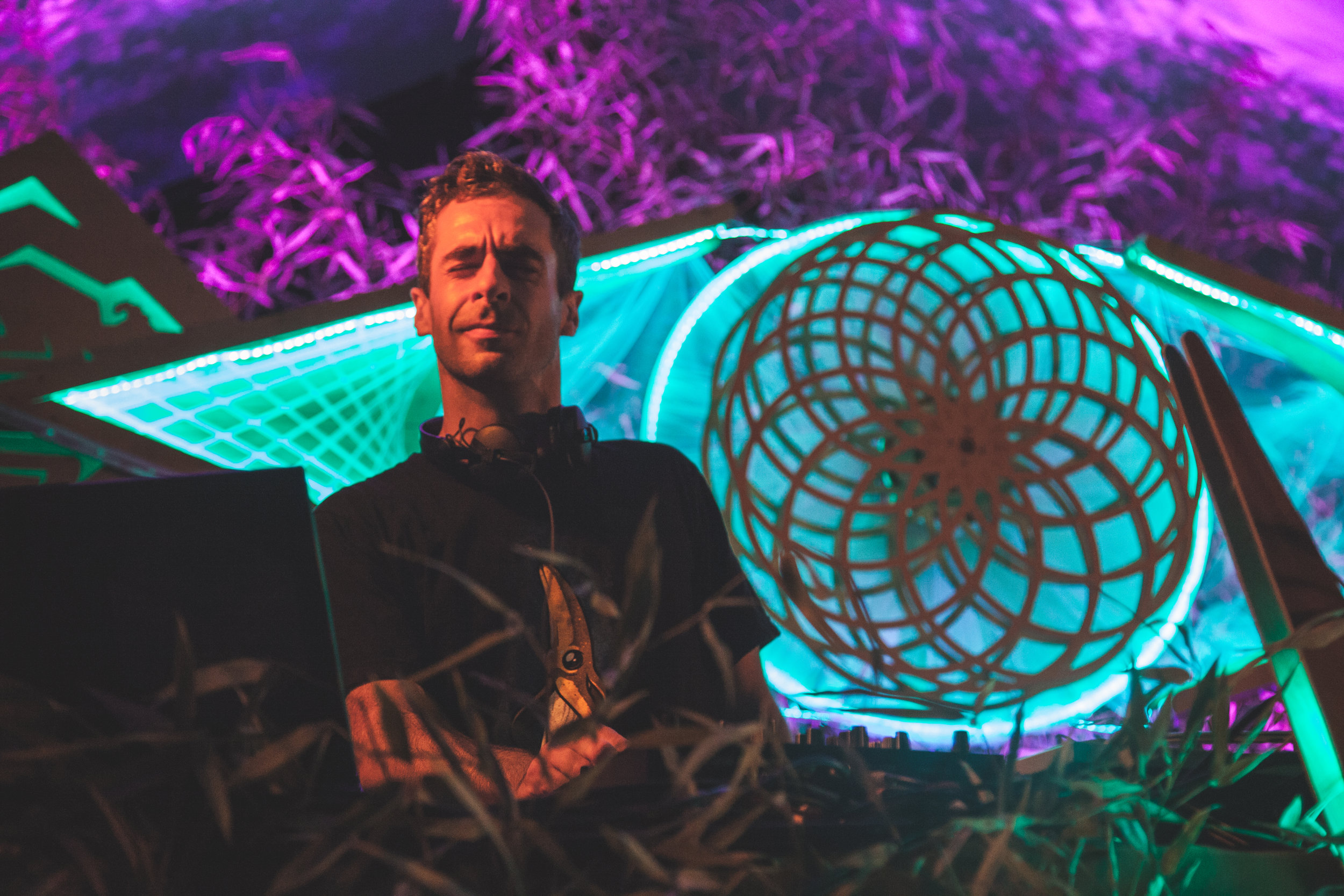
Vince Santora (Vinja) performing at Solasta Festival 2018 (Credit: Anna Norwood Photography)
“First and foremost, the convergence of the crews working here. I’m glad we have the Rust crew down here, bringing your slice of the musical pie with you guys. The Harmonia team from Asheville is absolutely essential to the ethos of this place. As for Envisioned Arts, what Hasan and that team are building is just amazing.” He hits the mark without a fumbled word. Envisioned Arts and Harmonia indeed encompass nearly every aspect of integrated, patron-first musical experiences. (For more about these organizations, check out our past interview with their respective founders here).
“The second thing that makes Solasta so inviting is the incredible level of intimacy that pours out of this little venue. You have one of the cleanest stretches of fresh water running right through the grounds. You’re nestled inside this gorgeous nook in the Appalachians. Once you’re out here, it just hits you square in your happy place. Furthermore, it’s especially appealing to me because it’s so specifically focused on the musical curation,” says Vince, who is himself a prime example of this curation. “For me as a performer, I sometimes struggle with the multiple-stage dynamic, wondering who and how many will show up to the time slot I’m given on the stage I’m placed at. Here, there is a single stage, with a top-tier sound system, ironically being operated by a DJ, who I suppose is DJing DJs (laughs).” His statement could not have been more on the money.
The overwhelming advantage to utilizing a one-stage dynamic in this setting was already making itself apparent, giving attendees a shared space in which communication and openness prevailed throughout the weekend. “I feel like this old-school approach, with one central gathering point and one ship to man, it really allows all of us as performers to get comfortable with the crowd, the atmosphere, one another, and it is certainly triggering a bit of nostalgia for me. The fact that the stage doesn’t even turn on until 3:00 or 4:00 pm each day is an absolute blessing. We’re all up partying usually until the sun is peeking up for a new day, and having a crowded lineup will quickly land people 8:00 am time slots where the whole thing is just a glorified zombie pit.”
As Vince finished regaling a love for Solasta shared equally by all in attendance, Hasan rounded the corner to grab him for some artist-to-manager business, bringing a succinct end to our conversation. I was left with the impression that we owe this man a thanks many aren’t aware of yet. Not only has he been a long-time player within our community, but he actively seeks to engage with it all these years down the road. From here out, all eyes are aimed straight ahead at Vince Santora and the Vinja project, as he’s sure to continue impressing the best and crushing the rest in his continued quest to energize the dance floor.
FOLLOW Vinja: Soundcloud / Facebook / Spotify
FOLLOW Solasta: Facebook / Website
![Shambhala Music Festival - Chord Marauders [Interview]](https://images.squarespace-cdn.com/content/v1/59530136f5e2319eabb7d87f/1558498342947-E0S88JFH4PLNPVMDWEMU/Chord+Marauders_Shambhala+2018+The+Rust+Music+Interview.png)
Shambhala Music Festival - Chord Marauders [Interview]
Gaz Frost, one half of the producter/DJ duo Congi our of Nottingham, UK, agreed to sit down for an interview representing the Chord Marauders at Shambhala Music Festival 2018. The jazz-infused 140 bpm record label has been pushing one of the most original sounds in dubstep since forming in 2012. Shambhala, which rarely curates spotlights or showcases on its lineup, booked the Chord Marauders for a label showcase at The Grove stage on Sunday.
Gaz Frost, one half of the producter/DJ duo Congi out of Nottingham, UK, agreed to sit down for an interview representing the Chord Marauders at Shambhala Music Festival 2018, but was too exhausted from travel on Saturday to sit down with us. The Chord Marauders, a jazz-infused 140 bpm artist collective and record label, have been pushing one of the most original sounds in dubstep since forming in 2012. Shambhala, which rarely curates spotlights or showcases on its lineup, booked the Chord Marauders for a label showcase at The Grove stage on Sunday.
Looking for Gaz Frost that Saturday, I ran into Jafu, one of the Marauders’ four founding artists, and learned a bit about him (James) personally in the process. Not only does Jafu not play many shows, he also doesn't attend many shows either; Shambhala 2015 was not only the first actual “show” (certainly festival) he'd ever played, it was also the first show he ever attended, and the first time he ever flew on a plane.
With that kind of magic relationship with Shambhala, it felt appropriate that he too sit down for the interview, which we were able to conduct on Sunday morning. Eager to investigate the hows and whys of the fantastic burgeoning sounds of their unique dubstep, I got on well enough with them to learn about some of their early influences, the place Shambhala held in their development, and the next steps the label wanted to take to push their sound further into the North American scene.

The Chord Marauders' first signee FLO, performing while Congi sets up at the Grove Stage at Shambhala Music Festival 2018 (Credit: JoeyRootPhoto)
The Rust: Chord Marauders began forming in 2012. What were those early years like, what was the culture amongst yourselves, what was the energy in the air?
Gaz Frost: When things in dubstep started to get big, there was a trickle down of subgenres. I remember a time when George [Geode] would send music to James [Jafu], or we would send music to him, or Travis (B9) in Australia would receive music; we kind of a built like a little network literally sending tunes to each other, and it was kinda like a sound that wasn't really...
James: There was a little bit of lacking in that department.
Gaz Frost: Absolutely! It was kinda unheard in a way.
James: Yeah, I always liked tracks like “Alicia” from Mala, “Show Me” from Von D, stuff like that. Just a more soulful sound.
Gaz Frost: Sure, like drawing on the jazz influence and the more RnB stuff as well. And I think that's where we honed in, kinda made that area our own.
The Rust: Did George mostly find you guys?
James: Yeah, George was the one who got us all together in a group and pitched the idea that we should all form a collective.
The Rust: What's the culture between producers? Do you send each other tracks early on? Is there much collaboration or do you mostly share completed work?
James: These days we've been doing everything pretty complete. Especially with the Groove Booty compilations, we'll source stuff, feed off each other, see what's good, what's going on.
Gaz Frost: There is a lot of times where we'll swap half-finished tunes. Like the tune you [Jafu] sent me just the other day; there's always some stuff kinda floating around.
James: Tons of unfinished bits.
Gaz Frost: Absolutely, there's also tons of stuff that each producer finishes on their own, and stuff we work on together. I guess it's really just the cohesion of the sound [of the label] that makes it possible.

The Chord Marauders' first signed artist, FLO, performing at the Grove Stage at Shambhala Music Festival 2018(Credit: JoeyRootPhoto)
The Rust: How are the curated artists for the Groove Booty compilations found, and who decides what makes the cut?
James: Usually it'll be a group decision who makes the cut; if we all really like the artist, they'll probably make it on there. And usually we get sent a lot of stuff and we'll source things from SoundCloud (we love SoundCloud).
Gaz Frost: Yeah, we get sent a lot of music from up-and-coming artists.
James: And a lot of those guys send great stuff.
The Rust: How did FLO become the first artist to be signed to Chord Marauders?
Gaz Frost: I don't really know, it's mad! I think George was being sent bits from FLO, shared it with us.
James: It's cohesive enough.
Gaz Frost: Yeah like, it fits, but it's got a different edge to it. But he's got the thing, you know...
The Rust: Gels with the aesthetic?
Gaz Frost: Yeah, absolutely, for real!
The Rust: With this Shambhala showcase, Chord Marauders is getting more attention in the North American market. Any upcoming tours on the horizon or plans for breaking the wave?
James: We can't say for sure, but they’re definitely possibilities we're looking at in the US and overseas.
Gaz Frost: I think the US is the next one we want to try to occupy, because there's quite a demand out there for this. We just need to arrange it.
James: Yeah, there's St. Louis area and Denver so far.
The Rust: Really, St. Louis?
James: Yeah, do you know a guy named Yo Adrian? That's what he goes by on Facebook, he's an event coordinator in the area. Does lots of EDM stuff, some IDM stuff, he's a big event coordinator we've been in touch with.

Jafu performing at the Grove Stage at Shambhala Music Festival 2018 (Credit: JoeyRootPhoto)
The Rust: What's next for Chord Marauders as a releasing label?
Gaz Frost: I think Flo's got an EP ready to go. We've been working with a guy named Soma, he's got some amazing stuff; just got an EP from him. Hopefully will be releasing that this year. Other than that, just looking to stack for the next compilation.
James: And we're all always working on getting our next releases out. I've got an LP I'm working on right now.
The Rust: How did you guys first start listening to electronic music, and dubstep specifically?
James: I had always imagined electronic music to be a specific sound. When I was growing up, it was all just techno/rave/hardstyle, so my opinion on it was completely filtered through that. After I discovered Aphex Twin, I was more open to organic sounds being used in electronic music, for a different approach. In 2009, I was introduced to the song “Skeng” by The Bug, and that song was the one that changed it for me. It was a different sound than I'd been hearing, turned me onto the scene massively.
Gaz Frost: For me, it was all about early grime music. When grime music first started being made, everybody was listening to it. Everyone had it on their phone, everyone was an MC, that was just the time that it was. That was how I grew up, you know what I mean? I was like 13, 14, Dizzee Rascal came out with Boy in the Corner, I thought that was the sickest album. That was my first taste of electronic music, like “what are these sounds, how are these sounds being made?!” That was like 2003-2004, somewhere in there.
The Rust: How did the Congi project start? Where did you and Tulip meet? What was the scene like in Nottingham?
Gaz Frost: We've got a friend called Ninja who produces lots of beats, he's a mutual friend of ours, met at his house. I didn't know Tulip, Tulip didn't know me, but we actually went to school together. He [Tulip] and I got to know each other, started to mix together. He'd always bring his vinyl around, he taught me how to do that kind of thing. Yeah, we just started meeting up and making music together. It was fun, like we didn't plan it or nothing! From there we started to get, like, quite serious with it, find an outlet to release. The scene in Nottingham was really interesting, there was a lot of guys doing dubstep. Like there was this one guy, Geome, he's massive. For me, he was really important at the time, [representative of] the really good stuff that was going around. And that's also sort of how we [Tulip and I] became friends, mutual friends recommending the same nights to us, stuff like that.
The Rust: What are some inspirations for the Congi project?
Gaz Frost: God man, it's vast. Like, there's a lot of influence. There's a jazz project out of the UK called the Ezra Collective, a lot of really young jazz players. I've got a friend called Yazmin Lacey, she's an amazing singer. A lot of hip-hop, early grime, so like early Dizzee Rascal. That's the kinda stuff that really sculpted our sound. And there's a lot of R&B as well, like we both really like Destiny's Child and Jagged Edge, that kinda stuff.
The Rust: Best shows you've played? In terms of crew, crowd, production value, whatever.
Gaz Frost: Denver was sick. Also last year here [Shambhala], man! I'd never played in Canada before, last year was really fun. The overseas ones are always the best ones. I've played a little in Europe (Portugal a couple weeks ago), but the vibe over here is definitely different. From home, especially, home's a little bit weird! It's more appreciated out here, I feel.
The Rust: Interesting! When did you feel that shift occurred?
Gaz Frost: I don't know! I dunno how it happens, but at festivals like this, you can play what you want, and you don't have to worry about making people dance. That's the best part, you can try something out that you're not too sure about, and the crowd's really receptive to what you want to play. That's the big difference, I feel.
--
We spoke about Shambhala this year and what was different (the lack of bridge at the Living Room shocked both of them). They were stoked to see Joe Nice, who was the “the undisputed dubplate king of America” according to these two. James mentioned the Jafu sound had evolved since his first Shambhala three years prior, based largely on said prior experience, saying he wanted to get the audience to skank more this time. Gaz Frost spoke about playing out in Brooklyn and a small show in York, Pennsylvania, which he felt was noteworthy for have a really strong, tight-knit community vibe. These are the only places besides Denver where Congi has played in the US, but Gaz maintained that Cervantes' Masterpiece was the best one-night show he'd ever played, ever. Overall, they both gave big ups to the dubstep following in the US and at Shambhala. How encouraging it is, they said, to be able to play for and interface with some of the most stoked fans and engaged audiences they've seen.
FOLLOW Chord Marauders: Official / Soundcloud / Bandcamp
FOLLOW Shambhala Music Festival: Official / Facebook / Instagram
FOLLOW Congi: Soundcloud / Bandcamp / Facebook / Twitter
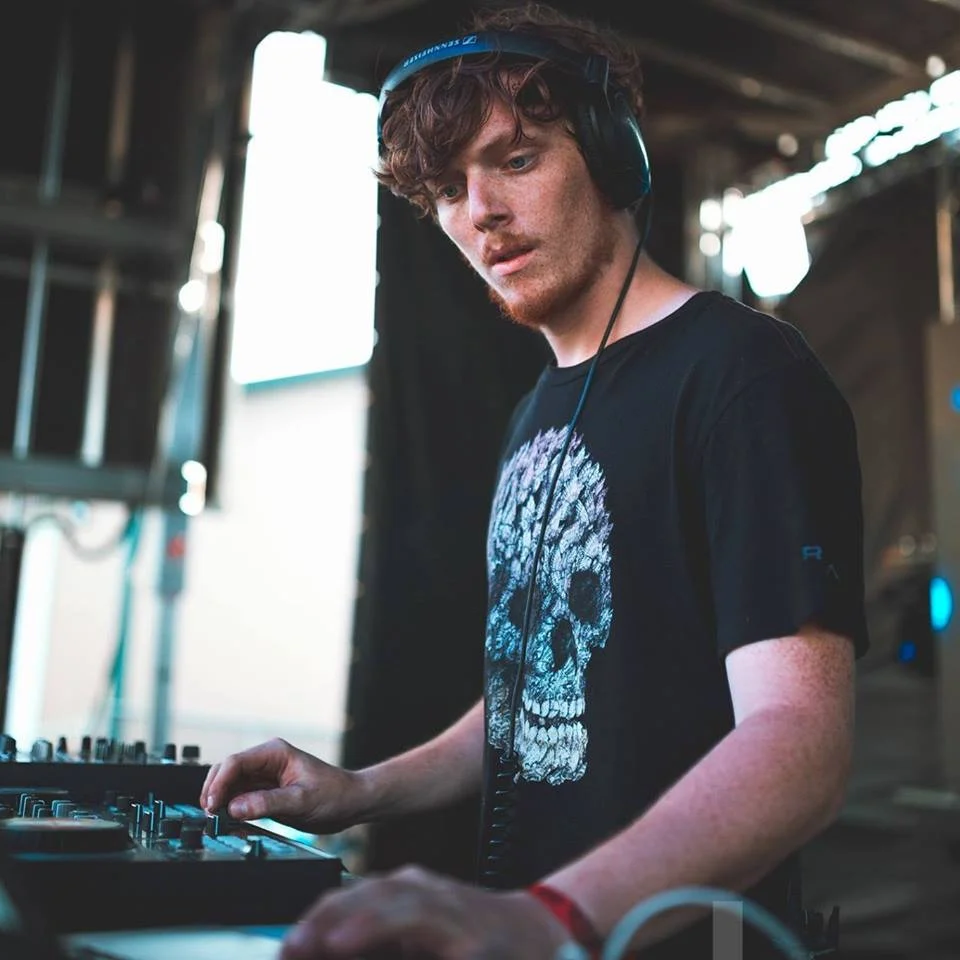
Sound of Solasta - EasyJack
For the last installment in our Sound of Solasta series, we linked up with a vital individual within the infrastructure of Solasta Festival, the producer/DJ and sound system connoisseur Jack Whelan. Known on the stage as EasyJack, Whelan the co-owner and lead engineer for Soundsystem Cultures LLC, an audio production and Funktion One sound system rental company based out of Chattanooga, Tennessee.

For the last installment in our Sound of Solasta series we linked up with another individual who is both on the lineup at Solasta Festival, and vital within the festival's infrastructure; the producer/DJ and sound system connoisseur Jack Whelan. Known on the stage as EasyJack, Whelan is the co-owner and lead engineer for Soundsystem Cultures LLC, an audio production and Funktion One sound system rental company based out of Chattanooga, Tennessee.
The EasyJack project stretches across a number of genres and tempos, but low-frequency is the common denominator. Many folks were first introduced to EasyJack and his diverse presentation when he performed during the Chicago Tipper run in August 2015. His released catalog numbers just below two-dozen tracks, including contributions to Oxidized Vols. 1 & 2, but the quality and intention of each does not go unnoticed. Jack and the Soundsystem Cultures crew have had a stellar rise since launching the company in 2015. They supply gigs with high-fidelity, properly-tuned Funktion One speaker systems. Northeastern heads would have heard them in action recently at the Camp Bisco Renegade Stage. They continue to push upward the benchmark for hi-fi sound system experiences, and they'll deliver that experience all weekend long at Solasta Festival on August 17-18.
The Rust: Tell us about Sound System Cultures. What is the ethos of your operation?

Soundsystem Cultures LLC was originally started by my business partner Philip Irwin. We met through Infrasound Music Festival and various mutual friends. Initially, I was assisting him in acquiring some of the needed equipment for his original set up and during that process we decided that joining together as parters was a much more effective solution so we could build a bigger system. Living in separate parts of the country had a natural advantage because we both had a good number of established connections for bookings in our respective regions. Things kind of fell into place naturally from there. We’ve never come up with any kind official ethos or motto, but our general goal is to provide the highest quality audio experience possible for our customers, no matter what it takes. We’ll go to any lengths possible to ensure that everything has been set up in the most optimal way for the system to operate in the given conditions of the show. If that means re-stacking the rig multiple times to achieve the perfect configuration for the environment, we’ll do it. If we have to dig a 100ft trench in the mud to hide cables so the dance floor is obstruction-free, we’ll do it, and so on… We cut no corners and take everything possible into consideration to truly take our clients' events to the next level.
The Rust: What drew you towards a career in curating sound? What drew you to hi-fi systems in general?
I was a producer/DJ and musician before I was doing sound professionally. Growing up being involved with underground events and playing in various bands, I always had an interest in the production and audio side of things. Eventually around 2012 I met Antoine Kattar who had been working for the Funktion One US distributor in Chicago for a number of years. He was looking for someone to fill an apprentice type position to help him with permanent sound system installs around the region. Antoine has served as the front of house engineer for Tipper and many other prominent acts. He was also a member of the team responsible for a number of well-known installs around the city including Chop Shop, The Mid, and Smartbar which has been referred to as one of the best dance floor systems in world. Through working with him I learned how to tune and maintain these systems. After the first time I experienced a proper Funktion One rig I was certain I only wanted to be working with extremely high fidelity systems and I’ve been hooked ever since.
The Rust: The EasyJack project seems to encompass a number of styles and tempos. Can you talk about your musical output, and the influences that shaped your production prowess?
My early influences came from video games like the SSX series and number of others that feature quality underground music. Later on, I discovered the world of glitch hop through the likes of Tipper, Kilowatts, Opiuo, Vent, (early) Griz, and many others. But the main influence on my own personal sound has always come from my love of Chicago house music. I love incorporating subtle elements of classic house into my glitch hop and dub sounds and I think thats been the main driving factor of developing my sound over the years. Another key influence for me is the idea of making “music for sound systems”… basically producing music that can really show off the capabilities of the high fidelity systems that we work with.

The Rust: Solasta has partnered with some top-tier organizations. What role does Soundsystem Cultures play in the Solasta infrastructure?
We basically handle all things sound for Solasta. We’ve been tasked with coming up with a rig that will compliment the sonic environment to the best of our ability while also working together with the stage design team to ensure everything will be a perfect fit. This year we will have a slightly bigger set up than year one and we hope to keep it evolving as the event grows. Last year the stage incorporated both a waterfall, fire elements, bamboo, and tons of other materials scavenged from the woods around the grounds. Making sure the footprint of our system can fit in within all of the beautiful deco, while still being optimal for sound quality, is crucial to delivering the best possible audio/visual experience for the crowd.
The Rust: What do you have in mind for the future of EasyJack?
Right now my main focus is my upcoming release with Addictech Records. It features some tracks I’ve put years of work into and will technically be my debut EP on an established label. Im also currently in the process of building my new studio which will serve as my creative space hopefully for years to come. On top of that I’ve also been developing a new side project called Frisk that will focus on a psychedelic mesh of techno and house. Most of that music will be four-on-the-floor and feature some pretty ravey vibes. My goal is to continue touring and keep growing both projects as much as possible.
--
Solasta Festival strives to nail every aspect of the attendee experience, and sound is arguably the most important aspect of all. Fortunately for anyone heading to Sneedville, Tennessee for this special gathering, Soundsystem Cultures will be running the boards all weekend. When Whelan takes the stage for a rare EasyJack set, and an even rarer Frisk set, he'll be flexing his handiwork in more ways than one.
FOLLOW EasyJack: Soundcloud / Facebook

Sound of Solasta - spacegeishA
For the next installment of the Sound of Solasta series, we're tapping into another industry powerhouse who will bring a multiplicity of talents to Solasta Festival on August 17-18. Rebecca Drylie-Perkins, better known by her performance moniker spacegeishA, is a top-tier DJ and the co-owner and director of Street Ritual.

For the next installment of the Sound of Solasta series, we're tapping into another industry powerhouse who will bring a multiplicity of talents to Solasta Festival on August 17-18. Rebecca Drylie-Perkins, better known by Becca or her performance moniker spacegeishA, is a top-tier DJ and the co-owner and director of Street Ritual. Born in 2006 from burn culture and a pervasive west-coast influence, and officially launched in 2008, Street Ritual is a digital label that puts maximum focus on spreading glitchhop, IDM, psychedelic bass music, and their various offshoots.
Leading the pack in many regards, spacegeishA has cultivated clout from over a decade of DJ sets. She also tenaciously advocates for the more than 70 artists that Street Ritual has come to represent. When each time comes for her to get behind the decks, the bounty of the relationships she's forged presents itself in the plethora of unique tunes, both released and unreleased, that she chooses from her collection. Those relationships, however, provide more than just access to good tracks. She is positioned among similar industry players who focus on the communal nature of this widespread counter culture. With this in mind, her booking at Solasta is no coincidence, with “community” being no buzzword for the Solasta team, but the ethos of the entire event. Understanding the dynamism of Becca's career requires more insight than can be gathered from just surface-level digging, so we’re grateful she afforded us the opportunity to ask a few questions.
The Rust: You're the label director for Street Ritual. How did that journey begin? What challenges do you currently face in the position?

I am one of two co-owners of Street Ritual and have been the Director of the record label for seven years and booking agency for two years. As one might imagine I am also the accountant, marketing team, social media manager, merchandiser, staff liaison, artist scouting, and recruitment supervisor.
There are a myriad of challenges that record labels face; mostly that of the evolving trends of digital music sales, social media, and streaming platforms. Spotify didn’t exist when I began, and now it’s an integral part of our business. Initially Facebook was beneficial; not so much anymore. To combat this, I research and strategize to stay in line with current market and online trends. In regards to the booking agency; every artist wants more shows. Booking artists/tours successfully requires confidence, patience, and a vast understanding of the nation’s “scene.” I contend that HYPE is the driving success of a large percentage of artists and it begs the question; where did the hype originate and how has it sustained itself?
The Rust: How do you build relationships with the producers and other music professionals that you later work with?
I’m really happy you asked this, because I believe that ‘networks’ are the key to being successful in this industry. I come from a small town in NJ, so connecting with the top tier industry professionals on the west coast back in 2011 was a challenge. Initially I invested significant time reaching out to forge these connections with minimal results. I attended the Symbiosis 2010 Festival with only knowing my small group of friends. In just six years my network includes hundreds of patrons, musicians, artists, producers, directors, and fans in a dozen countries. My work in event production for festivals such as Lucidity, Enchanted Forest, Symbiosis, and even BOOM festival in Portugal afforded me the opportunity to expand my connections and build these lasting relationships. This endeavor entailed unpaid 16 hour shifts, angry artists, hot tents, flying to gigs all over, and a lot of miles on my car. The cool thing for me was, a lot of these sacrifices resulted in awesome releases, DJ gigs, or bookings for the artists I manage.
Relationships expand and grow to the next level when you attend an event and elevate your relationship from digital to physical. I recommend that you make sure you are not another email or unanswered facebook message. Get out there, be confident in what you are doing, and go talk to someone important. If you have to work for free to get your foot in the door it is *probably* worth it. Aside from reaching out to a stranger, solid relationships can be built online through sharing music, ideas, feedback, and more. The amount of access we have to our community through the internet has allowed me to make connections all over the country and world! If you really like someone's tunes, tell them; they'll be happy to hear.
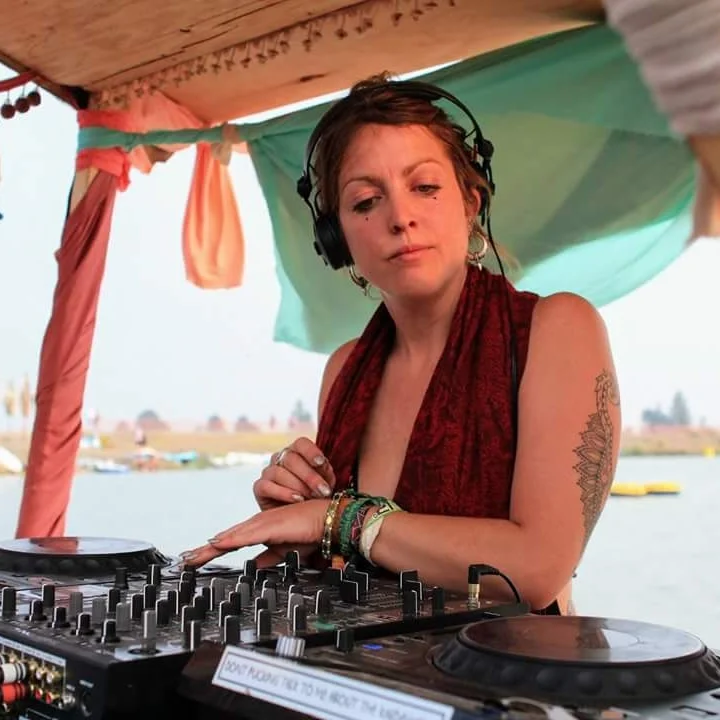
The Rust: Your DJ sets showcase music from a vast cross-section of producers. Where do you look to find fresh inspiration for your sets?
I find inspiration from a variety of creative sources. I love to watch successful DJ’s and producers performing, and the growth of our fan base filling the dance floors. Another source of inspiration comes from following my favorite labels. I listen to tracks that may not be included in my own DJ set but are a perfect fit for our label, or vice versa. This requires patience, however I live for that feeling of surprising the fans on the dance floor with something they don’t expect or know yet. There is a lot of rinsing of well known tunes in this scene, and while I like to have one or two in each of my sets that are "hott rn", I mostly aim to go for the songs that no one on the dance floor knows yet.
The general vibe of the song is a crucial part of my inspiration for building sets. I wait for that scrunch-face reaction when I hear it. I look for the funky, sexy, deep, dark, hard, weird, minimal, scary, crunchy, and hard-hitting. I don’t genre-discriminate. I intentionally organize my catalog by my bpm and key instead of by genre (which a lot of people do) because I don’t want to DJ out of genre folders. I use Soundcloud, Beatport, Bandcamp, and DJ mixes to discover new artists; and can’t say it’s an easy task. There is extensive digging, organizing, and filing necessary to be a DJ. Your time on the decks is earned by time spent on the computer. I invest on average $100 a month on buying tracks, even with the benefit of all the unreleased goodies I have access to. I feel strongly that we need to contribute to digital music sales and the charting and online performances of artists and labels we support.
Lastly, I get a big rush of the go-get-em feels after I play sets and talk with people who were there. I still get a little shy when people tell me they’ve been following me for a while or they’ve listened to my mix over 50 times, but those moments humble me, stay with me, and ultimately reinforce that I'm on the right path. Without the community or communication; there is no success to be had!
The Rust: How did you begin DJing, and how has your attitude as a DJ evolved over time?
I have been a” selector” of music since I was young. My 8th grade gym teacher recognized this talent and chose me to provide the list of tunes for the school dance. My mom talks about my constant commandeering of the radio in the car when I was young to blast Busta Rhymes and Jay-Z. Fast forward to Philly with my college lacrosse team; I created a hip-hop mix every year for our pre- game warm-up. This helped intimidate teams (as if our field in West Philly didn’t already do that). When we threw big parties I’d be DJing from my IPod. Upon graduation I moved to Portland, Oregon and spent my free time DJing by myself and for after house parties (compliments of our fat living room sound system and serato station-- thanks DP). I got tired of hearing all the boys play tunes out that I would also play, so I decided to get more serious about it. Then, I went to Burning Man and found myself spinning on a few different sets at my camp since I had curating and was managing five full nights of the most badass bass music to be found on playa that year. I played my first real set after that at Wormhole Wednesday in Oakland when it was still at Era Bar, opening for the legend Digital Rust.

I don’t think my attitude ABOUT DJing has changed, however I continue to see an increasing value and importance in it as an art form. A lot of success in our industry comes from producers, but I feel DJ’s supporting their tunes (by buying them, playing them out, etc.) is a piece of that puzzle. DJ’s can pivot if a dance floor falls flat; producers don’t always have that option. DJ’s can spread the word on tunes, artists, labels, or genres and producers should be taking advantage of that as it is a symbiotic relationship. DJ’s are the vibe curators, where producers create a certain vibe. We are all in this together; and I’ll be the first to speak up for the importance of DJ’s in this rising underground movement.
The Rust: Solasta is set to offer a plethora of production, audio engineering, and industry-focused workshops. What are your thoughts on festival seminars like these?
It is important for our community to educate and explore various aspects of our industry through group discussion. When we examine the positive and negatives we face as musicians, promoters, and participators in this scene, we grow collectively. Bottom line is, we are all in this together so let's get together and talk about it more. Sets from a bunch of firey producers and DJ's are workshops on their own for me. However, being able to leave with more knowledge about bookings, production, management, or our culture in general is just a bonus. I had the pleasure of speaking on a ‘Women in Music’ panel at Lightning in a Bottle last year, and it served as a potent reminder for me about the challenges women face in this industry. I still reference that panel discussion frequently and would love an opportunity to continue that discussion again some day. The more education covering a wide variety of topics at festivals, the better. In regards to the above question about forging relationships, these can serve as a great opportunity to do that. I am scheduled to be speaking on a panel at Solasta; stay tuned to hear more about that as it develops. See you on the dancefloor!
--
As the weeks fly by and Solasta Festival grows ever closer, the excitement from all involved is palpable. With such an outstanding assortment of intelligent and meticulous organizers, producers, and DJs tapped for this year, it’s important to afford these individuals the proper spotlight for their actions and operations. If you plan to make the journey to Spirit Crossing in Sneedville, Tennessee for the weekend of August 17-18, be sure to find yourself front and center during the spacegeishA set.
FOLLOW spacegeishA: Soundcloud / Facebook / Street Ritual
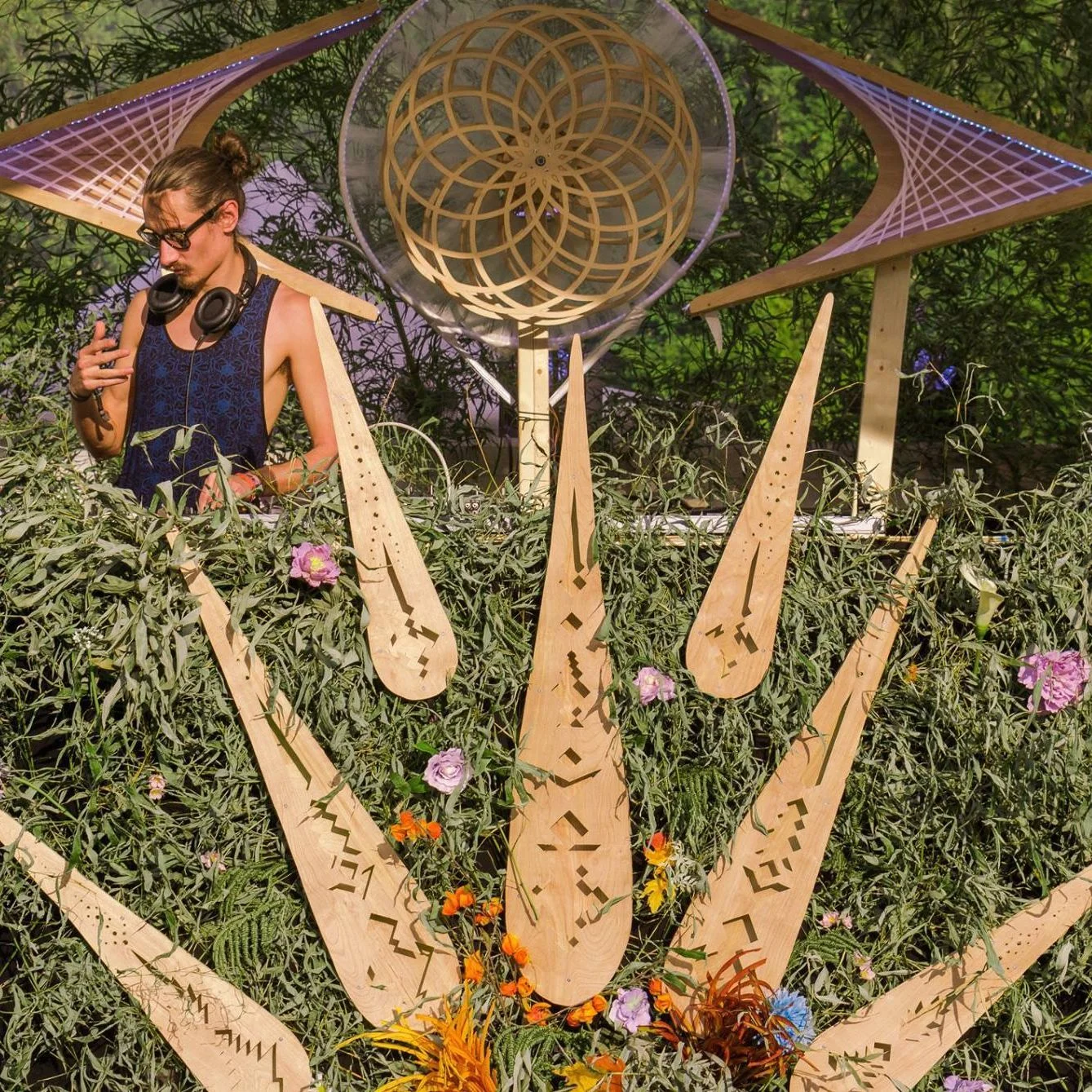
Sound of Solasta - Saltus
Come mid-August Solasta Festival is slated to return to its pristine stomping grounds of Spirit Crossing in the mountains of eastern Tennessee. It's being presented by a plethora of industry players who explore their own artistic expression within music, as well as curate and operate various audio-focused companies of their own. Through the Sound of Solasta series we'll explore the inner machinations of these multifaceted individuals and their outlets.
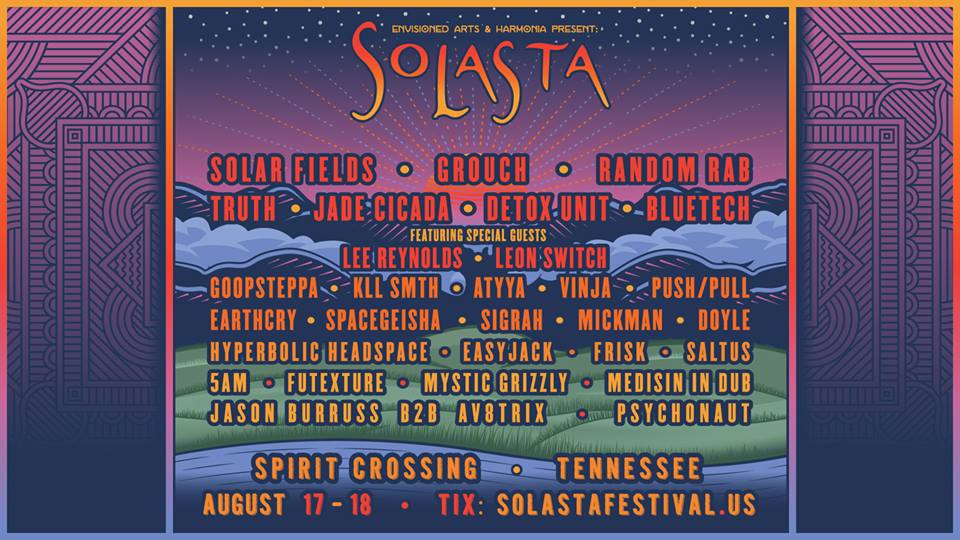
Come mid-August Solasta Festival is slated to return to its pristine stomping grounds of Spirit Crossing in the mountains of eastern Tennessee. Solasta has positioned itself amongst the ecosystem of transformative art festivals as a premier domain for conscientiousness and communal values. Its musical lineup is filled to the brim with major contributors to electronic music's past and present including Solar Fields, Grouch, Jade Cicada, Detox Unit, Bluetech and so many more. Above all else, it's being presented by a plethora of industry players who explore their own artistic expression within music, as well as curate and operate various audio-focused companies of their own. Ranging from labels and production companies to publications and professional audio crews, the talent undergirding Solasta in 2018 is no less than exemplary. Through the Sound of Solasta series we'll explore the inner machinations of these multifaceted individuals and their outlets. For the first installation we're casting a spotlight on the weighty northeastern producer Saltus.
Beyond his amorphous musical project, Will Saltus is the co-founder of Rezinate, a Boston-based label and production company. Rezinate has been providing New England with top flight electronic artists for the last four years steady with no slowdown in sight. They've been brought onboard the Solasta team to assist in the operation at hand. On top of being graciously provided his smashing set from Solasta 2017, The Rust had the opportunity to prod a bit at the brainwaves of Saltus, and he most certainly responded in kind.
The Rust: Tell us about Rezinate. What’s Rezinate’s position within the Solasta infrastructure?
Will: Rezinate is a bass music focused brand & community, cultivating deep, full, reverberating sound for a discerning audience. Based in Boston, MA, we host a range of international acts in town on the Hennessey Sound System, and curate music and original content from guests & residents.
We had been doing MASS EDMC (est. 2007) for a while and growing that brand. Always digging for new, unfamiliar and forward-thinking sounds however, we felt the need for a project that more closely represented our musical interests and the direction bass music was going in. Adam and I then came up with the idea for the Rezinate brand & concept at Envision Festival in 2014. That is Rezinate: music which resonates with us - innate, second nature, deep, and psychedelic.
As to our connection to the festival - Hasan of Solasta is actually my good friend from high school and college. Ironically enough, in High School we were both ‘the guys who were really into music'. I remember when he told me about Bassnectar back then and I was like “who?” I think thats when 'Mesmerizing the Ultra' was out and that sent me for a crazy trip.
We’ve been close ever since & remained in touch as we progressed through our respective music journeys - and as our roads began to cross more frequently after college, whether it be through booking artists Hasan represents, Bassnectar related activities, or in the jungles of Costa Rica, we increasingly spoke of collaboration.
We are proud to lend our support to Solasta Festival through our marketing & the Rezinate community. We love what Hasan has put together with Solasta - it’s mission, musical curation and all - and it feels like a collective network of our friends, creatives, and peers. Our values are closely aligned and we’re thrilled to be a part of the festival’s growth.
The Rust: What were your impressions of Solasta last year? What are you looking forward to this year?
Will: Aw man, it was the last festival of the summer for me and it was so beautiful and the perfect way to cap off the season. About a half hour out on the drive I knew it was going to be special. Wait until you see these grounds: a pristine stretch of land surrounded by woods and a river that runs through it - which I believe is actually the cleanest in the United States! The Funktion-one system was incredible of course. That paired with a small fest of friends & family and a curation of amazing international talent made for one of my favorite festivals from last year, for real. Can’t wait to see how they step things up this year. I actually really look forward to hanging out with the owner of the grounds again. He’s a really cool guy. I spent some time exploring his crazy array of instruments and learning from his history rooted in Nashville guitar culture. Aside from that, there are too many artists on the bill to mention that I’m excited to see!
The Rust: Talk to us about your gradual evolution with tempo. Where did you start, and what pathways did you eventually follow?

(Credit: Nachturnal Images)
Will: The Saltus project began with exploring 85 & 140 tempos, and still today those are the two main tempos I focus on & play in my sets. Recently, most of the music I’ve been writing is 85. I don’t know, I am so fond of the tempo and I find there to be so much room for me to grow in it.
I will say though, when I began playing gigs in the past two years or so, I became more drawn to write music that moves people & dance floors. Before, I was just writing to write and for any listener who may want to tune in on the other side. So now it depends on my mood, sometimes I want to write a banger, and sometimes I just want to express myself or an abstract idea.
The Rust: What’s the ideal environment to experience a Saltus set?
Will: Where people feel the most comfortable and lucid to experience music, so probably the outdoors. Somewhere you can kick off your shoes and really let loose and immerse your spirit into the music. Don’t get it twisted though, I also love rocking renegades, house parties, and basements where it's dark and people loose sense of time & everyday bullshit.
The Rust: The Saltus project seems to be rife with experimentation and you don’t seem to have boxed yourself in to any one style. Can you speak on some of your influences with your own musical endeavors, and your personal vision for Saltus?
Will: Well, to tell this story I’ll have to rewind it to the beginning, when my Dad put me onto the classical guitar in the third grade. He’s been a guitar player most his life, with a focus on blues, bluegrass, & folky kind of stuff. I might have been drawn to the guitar anyways but he had a major influence on me and that was my introduction to music. He would always play my sister and I Jazz to fall asleep.. and lot’s of Bob Dylan. So yea, I was nine at the time and once a week I’d go to the classical music school and take lessons (I did this until I was 18). I began writing some original stuff onto sheet music and learning basic music theory. In Middle School I bought an electric guitar and learned some tablature and the classics. Shortly after I started jamming regularly with my friends. Fortunately one of them, who is in a talented family of drummers & musicians, had a jam room that we could practice in whenever. We started a band that was inspired from the Red Hot Chili Peppers, I was really really into them. Our band evolved into another group in High School and that’s when we started writing a bunch, playing gigs, and learning how to record and mic ourselves. We were jamming every day, and looking back I realize how profound an impact this had on me and the way I approach my music. Searching for that peak riff or chord progression and that synchronistic moment when the music takes you deeper and your eyes start to roll to the back of your head.. and then you hit the record button and try to capture it as best you can.
Ironically I got kicked out of the band for not being good enough and I dropped music completely for the rest of that year. The next Summer I went to Italy, my first international trip without my parents to visit my cousins in Rome. I was 16 and we got drunk on Sangria one afternoon. I had somewhat of an epiphany watching an Iron Maiden Live DVD at the apartment afterwards. I had heard them in Guitar Hero 2 and it totally blew my fucking mind (I’m a big gamer, which I’ll touch on later). I picked up my cousin's guitar which was missing a string, fixed it up, and that night learned their song "The Trooper”, which was by far the most complex electric guitar piece I had learned at the time. Iron Maiden can be considered “Neo-classical”; they play mostly in minor and are rooted in classical influence. I think their music appealed to my musical background and eagerness to rock out. This moment really kicked my passion for the guitar and music back into gear and soon lead to exploring more old school metal and then metalcore, most noteably As I Lay Dying. This was when I realized I loved dark & heavy, yet beautiful & emotional music. Contrasting energies. During this same time Electronic Music was growing on me. My friends and I wanted to throw a ‘rave' for a birthday party, and we downloaded a “Top 50 Techno / Trance Anthems” compilation from iTunes. I’m pretty sure we just typed 'Techno’ into iTunes. That record changed my life for good too. I remember the first time smoking weed to it in the car (we had just gotten our drivers permits) and it was a big kapow. I distinctly remember beatboxing & humming where the beat was going and my friend said, “How did you know it was gonna go there?” That definitely made me reflect, “Huh? Do I have a knack for this?"
When I got to UMass Amherst it escalated of course. I found Pretty Lights, Rusko, Deadmau5 and rode that Skrillex, Zedd, Porter Robinson Electro & Circus One Records phase like a lot of other people. I actually had Pro Tools & Ableton in High School, but didn’t dive into it all that much. But when Skrillex started releasing music, I was in my Sophomore year at the time, it really inspired me and I began spending time in Ableton and writing Electro & Dubstep. I spent many late nights writing in College and watching Youtube tutorials during lecture halls. Soon after I was introduced to MASS EDMC and met Adam & Bobby. MASS EDMC and its story/role in my life is its own entire conversation - Adam and I still dedicate a lot of our waking hours to the company. But yeah, I remember feeling how exciting it was to be able to share music and talk about it for hours with people who were even more passionate about it than me. Bobby heard that I was learning Ableton and wanted to trade production lessons for DJing. I learned a lot from his philosophies and general energy as a human being. He taught me all the basic 101 about DJing and pushed me to begin playing at house parties. I will never forget when he suddenly left the decks mid-party after a MASS EDMC event to go chase a girl. He said, “you’re ready” and put the headphones on me and took off and left me to keep the party going. He really believed in me and my music and that meant a lot to me. The next year (my Junior year) my beats reached a point where they were at least somewhat enjoyable and had a few minutes of an arrangement. I was essentially jamming on my guitar, and then transposing the melodies and progressions I liked to Ableton. I started playing some open mic nights on campus and sharing my music. I had an idea to keep my guitar on my back while I was DJing and then I’d mix in some of my tunes and shred a bit, and then back to the decks. This was definitely the first foundation & ‘vision' of the Saltus project; classical & metal influence, live instrumentation, and dark and emotive soundscapes.
(Credit: James Coletta)
Mr. Carmack, Emancipator, and similar producers were a huge influence for me in this era - showing me further how beautiful and expressive music can be. I always imaged Mr. Carmack to be writing music on the beach in Hawaii, pouring his heart & feelings into his music. His work was so beautiful... I listened to it on repeat. Writing has always been a form of self-therapy for me, channeling my emotions into the music, so I really resonated with what they were doing. When I moved to Boston after graduating college, I finally had a creative space that I could call home. I increased my focus on collecting gear and putting intention into my room. I was still writing music based mostly on my guitar, but I knew I had to learn real sound design & engineering in order to take it to the level I wanted to reach. I started to put my head more into audio effects, processing, mixing, collaborating & learning from others, etc. and my guitar took the sideline for a bit.
I think the next influential turning point for me was discovering Synkro and seeing him perform at Shambhala in 2015. I had never heard anything quite like it - dark, dubby, industrial, inexplicable sound design & quality, ridiculous percussion & break beats, and above all how deep & intelligent his music was. I gained a profound respect for him, Indigo, Samurai records, Cosmic Bridge, and half time drum & bass as a whole. These cats weren’t afraid to push the limit on abstract & emotive boundaries and it was crazy inspiring. They are still some of my favorite producers, and this realm of sound is one of my primary focuses in my productions & performances. After Shambhala I became more passionate about producing; I was writing more frequently and started to find a balance of working it into my daily schedule. I was determined to express a deeper-self through my music. This translated into my first body of work, “inhalexale," which I am still very fond of. It was the first time I was recording my own samples and blending them with pads & ambient soundscapes. I had purchased a Tascam DR-40 and was recording samples on my travels. I grew a sentimental connection to these recordings and my ear for catching sounds was improving. This definitely inspired my music further, it was exciting to be forming an original palette & direction. Generally today, every song I write incorporates field recordings. I always have my Tascam or phone with me and recently I’ve been honing which recording devices to use when, to capture a specific result. To be honest for a long time I considered producing to just be a private hobby. I feared sharing it with anyone or anywhere (outside of quiet releases on Soundcloud) and didn’t really care to unless you were a close friend or came to my room one night after a party and caught me jamming. Fortunately I have amazing friends, and they pushed me to begin releasing my music and share it with people. After snowboarding one day I was showing my friend my music, and he said, “My mom once told me, live life with no regrets. If you don’t go for it and at least try, you’ll regret it for the rest of your life.” That hit me hard.
The last piece I’ll share of my ‘vision’ for the Saltus project is that I’m a big dreamer. I’ve been reading fantasy books & playing video games since I was really young and developed a bit of a habit for lucid dreaming in college. I find that there’s an intense cross-over between our imaginations, dreaming, and creative endeavors like writing music or any sort of art form. When I write, I try to take the flow as deep as possible to reach a place where I’m no longer present, totally lost in the music and focused on exploring the visuals in my head and the feelings the soundscapes give me. It's kind of like daydreaming I guess. In the past year or so I’ve been trying to hone this skill more explicitly. For example, my song “Arrival” was inspired from watching the movie Arrival; I looped certain scenes from the movie while I wrote the track to preserve my imagination & inspiration from the film as long as I could. To summarize... deep & emotive bass music with a focus on field recordings, experimental resampling, organic sound design, live instrumentation, and classical music influence.
--
Understanding the people behind Solasta is in and of itself part of the ethos of Solasta. Behind the speakers, the decks, the sound pits, the lineup and the logos are individuals answering their own personal calls to action. They're finding ways to give back to a community that empowers everyone involved. Saltus was more than generous to provide such articulate insight into the noosphere of his art and business, but it's just the tip of the spear. Be sure to catch Saltus perform at Spirit Crossing this August 17-18 if you make the expedition to Solasta, as he's sure to deliver a most unique interpretation of bass-weight.
FOLLOW Saltus: Soundcloud / Bandcamp / Spotify
![Fractalfest - Terraphorm [Profile]](https://images.squarespace-cdn.com/content/v1/59530136f5e2319eabb7d87f/1558498177231-X7DTYKPC2UOJAGLO5Q45/Terraphorm+Fractal+Fest+The+Rust+Music+Profile.png)
Fractalfest - Terraphorm [Profile]
Perched atop an old rock wall overlooking the field at Page Farm in Croydon, New Hampshire, I sat with a new acquaintance, Tovia Ben Shapiro aka Terraphorm at the Psychedelic Sleepover. Terraphorm spun an early afternoon dubstep set on Saturday at the Sleepover, but on Friday on the rocks in the shade it was another festival that dominated our conversation; Fractalfest 2018 <Art/ificial> coming up on July 12-15 in Stephentown, New York.
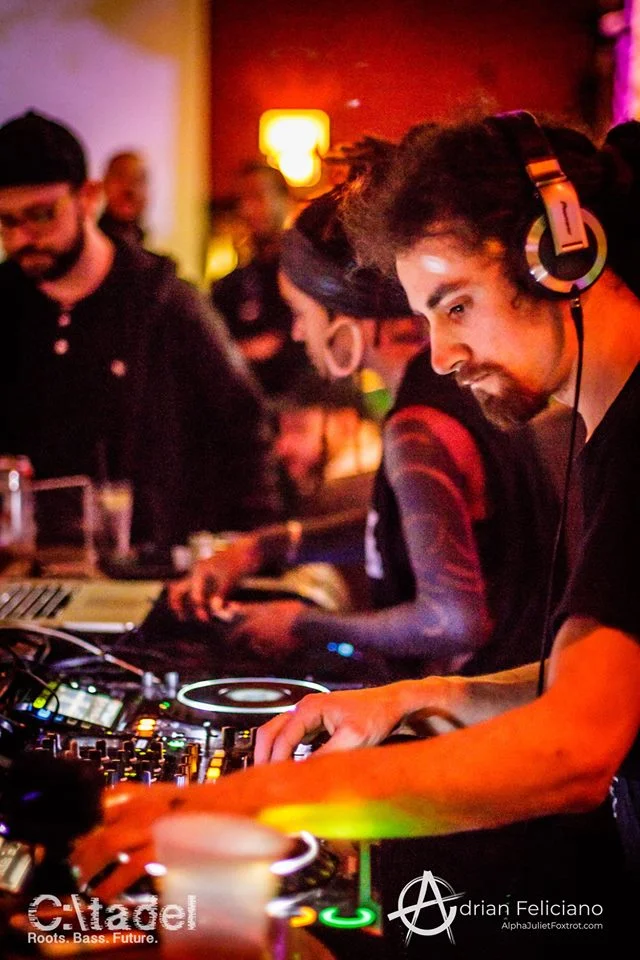
Tovia Ben Shapiro aka Terraphorm performs alongside A Hundred Drums at Citadel, Shapiro's new event in Boston that hosts international talent to promote roots dubstep and bass music (Credit: Adrian Feliciano)
Perched atop an old rock wall overlooking the field at Page Farm in Croydon, New Hampshire, I sat with a new acquaintance, Tovia Ben Shapiro aka Terraphorm at the Psychedelic Sleepover. Tovia’s thickly dreadlocked, spindly personage could be seen strolling the about Page Farm all weekend, hanging with the sound guys and chatting with other party goers. Terraphorm spun an early afternoon dubstep set on Saturday at the Sleepover, but on Friday on the rocks in the shade it was another festival that dominated our conversation; Fractalfest 2018 <Art/ificial> coming up on July 12-15 in Stephentown, New York.
Tovia has been playing deep tunes under the Terraphorm moniker for years, and more recently he began throwing parties in Boston called C:\tadel. This series is dedicated to showcasing a wide spectrum of sound system music, and hosted N-Type, Biome and A Hundred Drums during its most recent iteration in May. Not unlike Fractalfest, C:\tadel offers a space for rare and often international talent to perform. Tovia seeks out weighty sound from all over the world for his DJ sets, and through C:\tadel he can showcase these sounds and their authors in a welcoming live setting.
In tandem with these hustles, Tovia is embedded within Fractaltribe, the crew behind Fractalfest and a whole lot more. Based in Worcester, Massachusetts, Fractaltribe eludes description in some ways. Tovia explains it be a community of DJs, producers, event promoters, visual artists and other various creatives and characters.
The group has been hosting highly curated and cultured parties in the Northeast US for years. Their 10 year anniversary party took place in Brooklyn in April, where Terraphorm offered a special DJ set. July will see the sixth iteration of Fractalfest, which began as a day party in Worcester but is now a full blown four-day festival in the woods of upstate New York. “What I would tell a lot of people is you’ll see certain things that you love about other festivals at Fractalfest,” Tovia says, “and you’ll also see things and experience things that are a little bit different.”
Fractalfest encourages participants to engage themselves intellectually through the party’s theme.
The theme for our party informs the deco and the ideas behind it as well as the bookings. The theme this year is Fractalfest <Art/ificial>. Essentially we’re exploring what technology means for humanity and art. You were seeing academics as early as the 1950s trying to figure out what artificial intelligence is and what it means. At what point is something intelligent? At what point does this intelligence mimic humanity perfectly, and after that, what are the things that distinguish us from it. Is it creativity, our emotions? These are some of the questions that have guided our theme for Fractalfest <Art/ificial>.
Tovia's lithe and linear face is wrapped in big black Oakley sunglasses as we continue our discussion. He speaks with the humble confidence of someone who's seen much in his time.
“These ideas are being explored very often today with the rapid developments in artificial intelligence in ways we didn’t imagine 10 to 20 years ago. You know, we had The Terminator, but today a lot of artificial intelligence is algorithms and things that feed into the information IV through social media and other things.” Social media is obviously an invaluable tool for promoting parties. While Fractraltribe utilizes this medium well, the group is unique in today’s environment because its reach manifests mostly through personal associations and word of mouth. “We’re also exploring the deeper question of what it means to not be artificial. We invite people to come out to Fractalfest and explore this in the party environment.”

Fractalfest is a leave-no-trace event. Attendees are expected to properly dispose of any trash they create during the festival. To this end, the event organizers provide every attendee with a garbage bag when they enter the grounds.
Fractaltribe is known to emphasize psytrance in their musical curation. Their lineup features Grouch and other members of the cream of the psytrance crop. This focus by no means excludes other forms of electronic music, though. The lineup also features the North American debut of the Grouch in Dub Live Band, for example. Tasteful bass producers and DJs including Dela Moontribe, Dreamwalker, Saltus, Shanti, Somatoast and Spacegeisha will be spinning in the Fractal Forest, not to mention Terraphorm himself, who treads through the deep and mystic realms of 140 bpm. Fractalfest offers a taste of almost everything in electronic music. For those rooted in bass, it can be an opportunity to experience something new. “Sometimes we, including myself, can get stuck in a pattern of liking what we like and not really going to explore and check out new music,” Tovia remarks with great insight. “There’s so much amazing music going on just within the world of electronic music. It’s almost a disservice to centralize so much and not check out the new stuff.”
Fractalfest separates its bookings into two camps; live sets and DJ sets. Terraphorm will spin two DJ sets at the festival. Although he's produced a tremendous amount of music throughout his eight or nine years of performance, Terraphorm prefers to remain on the selector’s side of the fence. “What I found is that you can end up offering a better product as essentially a human jukebox curator on stage.” By selecting and remixing other people’s sounds, Tovia can focus on creating a special, consistent vibe, “an experience that is more than the sum of its parts,” as he puts it. “One thing I enjoy about DJing especially in front of a crowd is the spontaneity and the interaction with the crowd.” There’s advantages to some pre-planning, he says, but spontaneity and moving with the moment is really where it’s at. “Sometimes you want that ability to read and interact and change with the crowd. I enjoy that spontaneity, and I think it’s resulted in a lot of my favorite moments as a DJ.”

“I’m involved in many ways and it’s stimulating," says Tovia Ben Shapiro aka Terraphorm. "It keeps you from doing the same thing too much and helps you have a more holistic role in these parties.”
Administratively, Fractaltribe is a fluid organization. Like most members of the group, Tovia wears many hats. In addition to being a resident DJ and promoter, Tovia performs administrative work and helps to build the group's art projects and stages. “I also spent a number of years doing landscaping,” he adds, “so we do really cool landscaping to create a special vibe in the Fractal Forest." What is the result of all this multifaceted work? A festival experience which, for its size, is apparently unrivaled in terms of attention to detail, visual presentation, and the ability to create a holistic atmosphere. “Our music is carefully chosen and curated, but there’s also a more physical, visual vibe from our custom projection-mapped stages, which we build more of every year, to our art galleries. We’ve had both a fine art gallery and, to use a loaded term, a visionary art gallery.” Take a peek at the photo gallery on Fractaltribe’s website (linked below) to glimpse the immersive atmosphere of the Fractal Forest.
Beyond the music and theme-driven installations, though, even deeper threads run through Fractalfest that Tovia is quick to highlight. “We want to create a place where music can be enjoyed in a fun, safe, healthy and community-oriented manner. That intention is reflected behind a lot of our art and the setup that happens out there.” Indeed, Fractalfest promotes health, safety and self-awareness more aggressively than any other festival in the region. When in this context the festival was unfortunately interrupted by New York State Police last year, the raid appeared quite out of place. Members of Fractaltribe defended the event and the culture unabashedly at a news conference organized afterwards by law enforcement. "We don't sell alcohol. We don't condone people being intoxicated. We actively promote sobriety, health and wellness," declared Fractalfest co-organizer Kyle Rober.
For his part, Kyle explained aspects of Fractalfest to me at Disc Jam Music Festival in early June. Fractalfest shares the same property as Disc Jam, although the Tribe utilizes the land differently, establishing most of their stages and installations within the woods. “Those two people,” Kyle said, gesturing at a young couple with whom he was just speaking, “would not only have an amazing time at Fractalfest, they would excel as human beings.”
The organizers strive to make the festival as accessible as possible. “All these things take money to happen," Tovia says. “For Fractalfest, we’ve always worked to keep our production value high and our tickets affordable and accessible. It’s really important that all this music and art doesn’t get closed off from people and become this luxury that’s only enjoyed by a few.”
Fractalfest is far from the largest or most well-known festival in the region, but it may be the most thoughtfully curated one. “These festivals are celebrations of art and celebrations of people. I think if you go back to the earliest festivals, before there were music festivals like this,” Tovia says, sweeping his arm in front of us to capture the flurry of activity in the field at Page Farm, “I think what they all share is a celebration of the human need for social contact.”
By mining the intersection of art, humanity and technology, Fractalfest <Art/ificial> will indulge and at the same time examine this undeniable need for social contact. Terraphorm will use his shamanic dubstep selections not once but twice throughout the weekend to speak to this idea. If you’d like to experience something a little different this festival season, join him in the Fractal Forest. Visit Fractaltribe's website (below) for day schedules, maps, and more.
FOLLOW Terraphorm: Fractaltribe Spotlight / Soundcloud / Facebook
FOLLOW Fractalfest <Art/ificial>: Official / Facebook / Tickets
![Innamind Recordings [Profile & Mix]](https://images.squarespace-cdn.com/content/v1/59530136f5e2319eabb7d87f/1530489588070-67ERSRPWGL7EKZ5C94WF/Innamind+Logo.jpg)
Innamind Recordings [Profile & Mix]
Innamind Recordings is a label created and owned by Jeremy Pattinson aka Kursk that focuses with precision on the dark, minimal and often mental side of 140 bpm music. What some may call one of the most progressive imprints in dubstep today, it’s founder calls “just a label of friends who like releasing some pretty sub heavy bass music.”
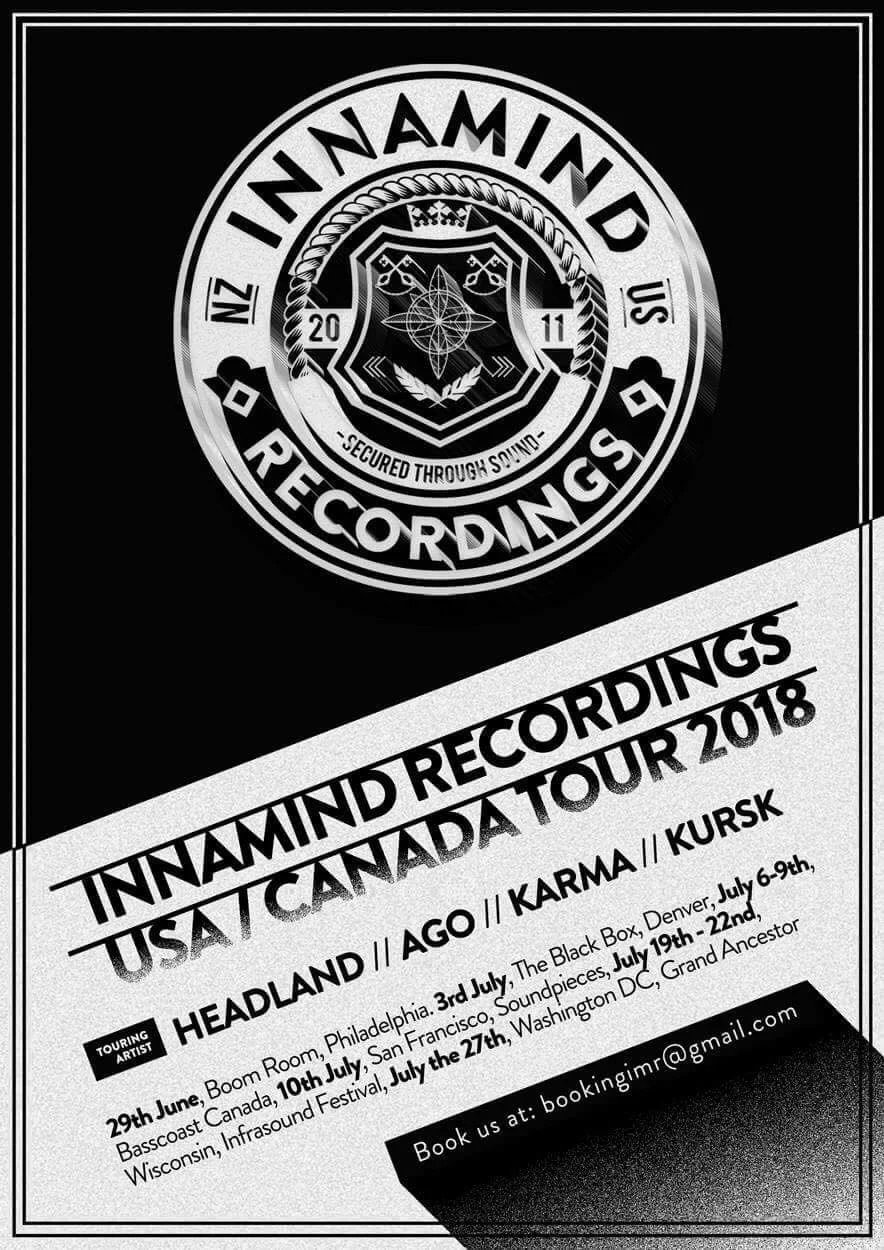
Innamind Recordings is a label created and owned by Jeremy Pattinson aka Kursk that focuses with precision on the dark, minimal and often mental side of 140 bpm music. What some may call one of the most progressive imprints in dubstep today, it’s founder calls “just a label of friends who like releasing some pretty sub heavy bass music.” Don't let this modest stance or the label’s super minimal aesthetic fool you; Innamind is making serious movements on the deep, dark end of the dubstep spectrum.
This summer the crew is shredding tiny clubs and big festivals on its fourth North American tour, bringing their foundational yet avant-garde dubstep to some of the largest, most diverse audiences yet to hear it. They’re hitting some of the continent’s mainstay venues for bass music, including the Black Box in Denver, Infrasound in Wisconsin, and Bass Coast in British Columbia, Canada. Tomorrow, they're kicking it off at the BoomRoom in Philadelphia.
To celebrate the start of his fourth trip around the continent, Kursk whipped up a premium guest mix for our Rusted Rhythms series. It exemplifies his ability to flawlessly mix amazing, obscure dubs, and highlights the sound that Innamind pushes; a 140 bpm blend rooted in all the best aspects of traditional dubstep, but not afraid to make huge departures from the familiar.
Kursk is heading up a formidable tour roster that includes big selectors Karma, Headland, and Ago, with the latter two making their U.S debuts. “This time around we are looking forward to getting the music out there and to playing at some of the festivals,” says Jeremy. “I am especially looking forward to two festivals that we have been booked to do label showcases at." It's a positive thing to be able to spread the artists and their music to a wider audience. I think you get more of that with festivals as opposed to clubs.”
Jeremy grew up in Christchurch, New Zealand where he would found Innamind in 2013. As a youth he was initiated on the Subtle Sound System, apparently the biggest custom-built sound system in New Zealand and the featured system at many parties in Christchurch. With small cities spread over a spotted and rugged landscape far removed from Europe or the States, the Kiwis have to work a bit harder to germinate a thriving bass music culture in New Zealand. Still, system music definitely has a home in Christchurch. In 2011 an enormous earthquake incapacitated much of the city’s nightlife, but Subtle Sound System and others are back at it throwing down. Not long after founding Innamind Jeremy moved himself and his label to Los Angeles, CA and become enmeshed in that city’s underground bass community. More recently, he's set up shop in Philadelphia.
Also making a home in Christchurch is Gene Warriner aka Headland, one of Innamind’s lead producers. He and Jeremy never met until a couple years ago, funnily enough, though they’re good mates now. This tour marks not only Headland’s first performances in the US, but his first steps within the country. He’s already performed in the UK, various spots in Europe and “across the ditch” in Australia. “I don't carry records so that's one less thing to deal with, when dealing with the TSA. I really can't wait to meet my fellow producers/friends that i've only talked to on the net for the last three years or so.”
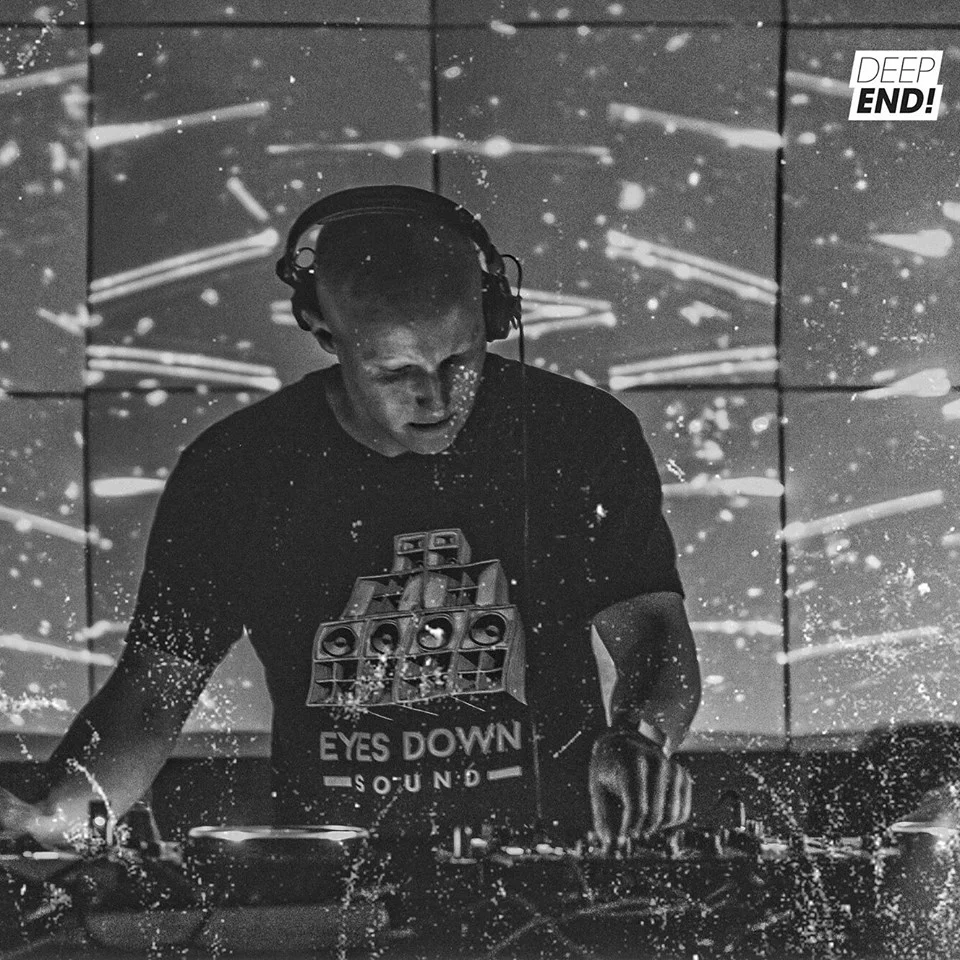
Headland (Credit: P.K. Photography)
Kursk is a real selector, a true student of the sound system culture. ”Kursk’s access to upfront dubs from leading scene artists is unmatched, and is sure to surprise even the most hardened spotters,” remarks Resident Advisor. He’s a throwback to early days when a soundman might scratch or switch off the labels on his dubs to keep his biggest tunes shrouded in secrecy. (We confirmed that Jeremy does not, in fact, do this). Tracklists, or rather their absence, appear to be a source of humor for some of the Innamind crew.
For his part, Headland is a newer hand behind the decks. “I’ve been listening to dubstep for about eight years or so and have played the drums since I was very young, but never thought about making dubstep. After I went to Outlook Festival in 2014, I said to myself that I would start making music when I got home. So on January 1, 2015 I opened FL Studio and got stuck in.” Three years later and he’s touring the US storming underground clubs and hitting some of our finest festivals. Not bad. His come up did not materialize out of nowhere, of course. He cranked on his production after long days working construction in Christchurch. “The creative process for that was getting home from work in my building gear, grabbing a beer and sitting down for four hours straight and basically getting the whole thing done in that time. It just happened…"
The motivation behind Innamind is relatively simple. Jeremy was listening to righteous producers in the annals of the web who he felt must have been “sitting on mountains of dubs” that were going unreleased. So he began Innamind as a forum to release these deep cuts, and one day perhaps give the producers an opportunity to spin tunes on big systems. His vision continues to manifest itself, as all summer his artists will play on some of the baddest systems in North America.
In 2015, Jeremy conceived Blacklist, a sister label for Innamind which would act as a space for Innamind artists to release their more experimental tracks. Even within a sound that’s rooted in darkness, space and lurching sub frequencies, this dedicated forum for left-field experimentation has helped foster some crazy good records. “It's going really well,” Jeremy says of the sister label. “We just had our eighth release on that series from V.I.V.E.K and we have a number of other things in the pipeline for this year. With Blacklist we never really force anything, we just go with the flow and put something out when it feels right. It's just an outlet for me and Gantz to release music we are feeling together.” Gantz, arguably the most popular producer on Innamind, released the first music on Blacklist.
Innamind is well known for its faithfulness to vinyl, that timeless glossy black medium which is so aesthetically bound up with dubstep. Kursk spins vinyl himself, and he makes sure his label presses every single release. A growing, loyal following gobbles up every last one. “We have mostly used a German pressing plant named Optimal but have used MPO as well. From there the records are shipped to the south of England to our distributor Unearthed Sound's warehouse. From there they get sent around the world to different online shops and stores.” According to Jeremy the cost of pressing records has skyrocketed recently, perhaps due to increased demand. He makes sure to scope suppliers for the fairest rates.

Ultimately Innamind is one of a small group of standout boutique labels that are pushing 140 forward with their creativity. “As far as labels, I am always following V.I.V.E.K's label, System,” Jeremy says. “I think they execute everything perfectly, its a real solid label and I am feeling most of the music they are releasing. I think Chord Marauders have done some cool stuff as well.” Indeed, one can perceive in Chord Marauders some of the same flexibility and freedom within 140 bpm that Innamind advances.
Not that Jeremy has made the connection. Like the crowd when he’s throwing a set, it seems he likes to keep his head down. “To be honest I tend to mainly focus on what we are doing for the most part. I don’t really listen to much dubstep outside of what we are doing, and a very small group of other producers and DJs.” Perhaps this lack of interest in the wider spectrum is what allows Kursk to keep Innamind's output so fresh.
Dubstep continues to regain popularity in the States, only this time around folks seem to be less easily fooled by the carbon copies and more inclined to go out of their way for the genuine sound. On it’s fourth go-round in North America, Innamind is definitely going to gain some traction in this environment. Don’t sleep when they come to a festival or a dark dance floor near you.
FOLLOW Innamind Recordings: Soundcloud / Blacklist / Facebook
FOLLOW Headland: Soundcloud / Facebook

![Seppa - Interview + Boosted [EXCLUSIVE PREMIERE]](https://images.squarespace-cdn.com/content/v1/59530136f5e2319eabb7d87f/1626113208781-BZ7C6B7E3LCECV7UD4CS/Boosted.jpg)
