
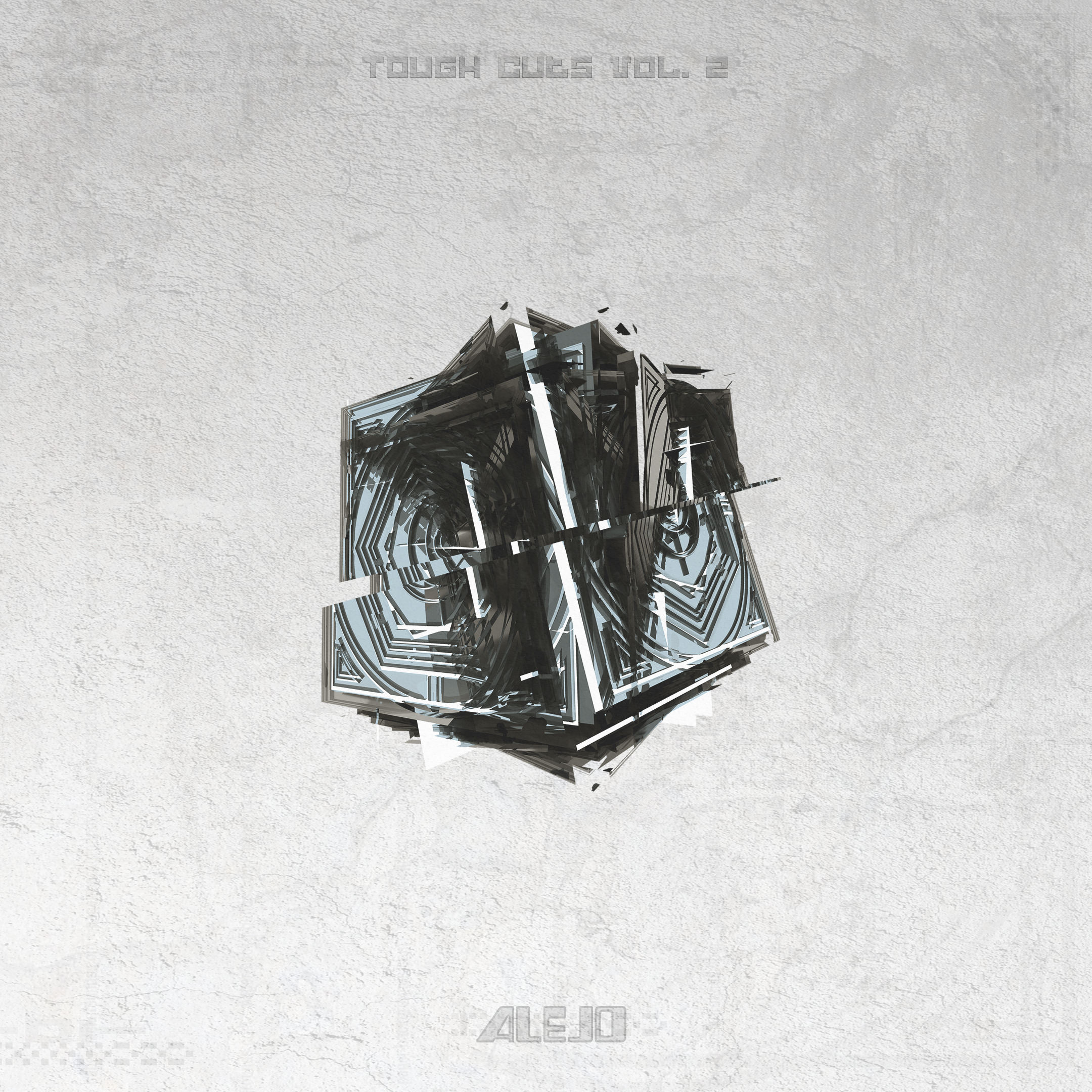
Alejo Teams Up with Colony Productions to unveil "Tough Cuts Vol. 2"
The ever ambiguous Alejo has partnered up with the venerable Colony Productions to release the sequel to last year's widely acclaimed Tough Cuts Vol. 1. Expounding on his head-nod narrative, Tough Cuts Vol. 2 hints at a madman on a mission for mischief, riding around in a cheap “hoopdie” while the pungent odor of petrol bleeds out of the exhaust.
The ever ambiguous Alejo has partnered up with the venerable Colony Productions to release the sequel to last year's widely acclaimed Tough Cuts Vol. 1. Expounding on his head-nod narrative, Tough Cuts Vol. 2 hints at a madman on a mission for mischief, riding around in a cheap “hooptie” while the pungent odor of petrol bleeds out of the exhaust.
Tough Cuts Vol. 2 takes the listener on a joy ride through coarse growls and back alley rhythms. Moving through each cut, Alejo touches on sharp low end stabs, eery harmonies, and atypical phrasing, fleshing out a deep dive through the brazen styles of broken-beat music. The entire EP swings with an urban gait, saturated strictly by no-nonsense frequencies. Through the sparse melodies, you can almost smell the old cigarette butts and dried Gatorade in the back seat of the Squad’s beater car, with the pervasive feeling of tomfoolery in the air. There’s no substitute for the sheer bite of hip-hop’s bass drenched derivatives, and Alejo continues to consistently hone in on each stylistic mutation from release to release.
If you’re in the market for the sharpest fidelity bass music in a golden-era variety, be sure to grab Tough Cuts Vol. 2 and other top tier selections from Colony Productions’ time tested catalog.
FOLLOW Alejo: SoundCloud / Bandcamp / Spotify / Facebook / Tough Cuts Vol. 2 Merch Presale
FOLLOW Colony Productions: SoundCloud / Facebook
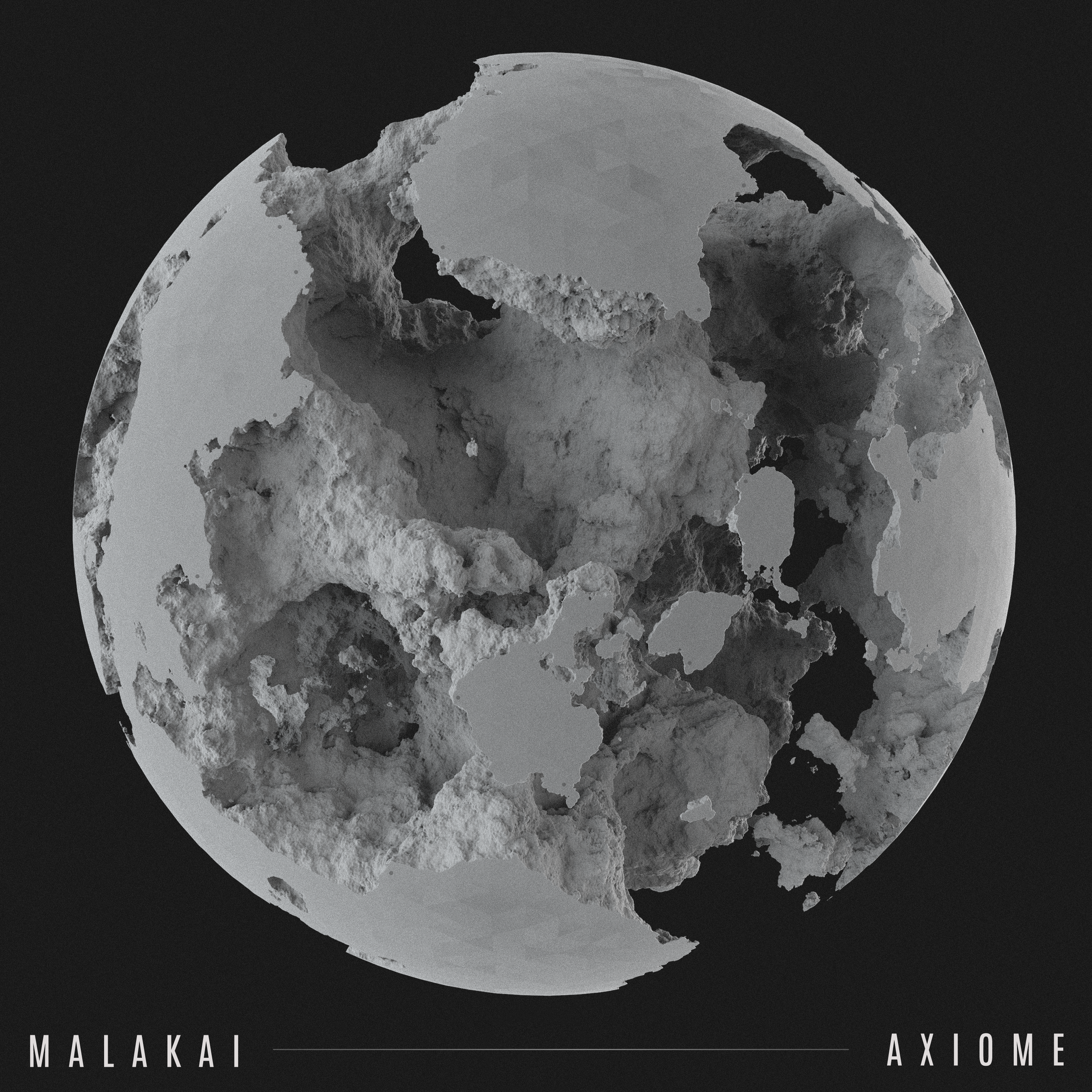
MALAKAI and Colony Productions Pair Up to Release Axiome
Axiome’s offerings are quintessentially in line with the constant variable across MALAKAI’s discography'; a musical styling that places notation at the helm of the ship, steering compositions through glitchy astroid belts and featherweight musical nebulas.
MALAKAI’s musical acumen has been at the forefront of his career from the jump; eschewing sound design and genre trends at every turn, he has instead carved out a warm, cinematic territory amongst his chilled-out contemporaries. His meticulous, emotionally charged tracks soar across stereo space, channeling experiential dives into sonic dreamscapes born in the center of MALAKAI’s creative domain. As each release sees the light of day, the fog of war rolls back on the next footsteps in the MALAKAI story, accessing ever more novel boundaries of music production and arrangement. In partnership with the venerable Colony Productions, he’s finally cracked the seal on 2020’s first suite of MALAKAI machinations: Axiome.
Axiome’s offerings are quintessentially in line with the constant variable across MALAKAI’s discography'; a musical styling that places notation at the helm of the ship, steering compositions through glitchy astroid belts and featherweight musical nebulas. While the territory’s charm remains familiar, Axiome explores a more rugged terrain than previous MALAKAI EP’s, with a grit, width, and movement that builds on the robust characteristics of his music. The egress into that terrain is “Apollo”, an ode to the transient god of music, knowledge, and the sun. Stuttered arpeggios roll across a bed of sub weight, cushioning the melody and filling out the sparser corners of the spectrum. It’s a serenade amongst reverberant tones and mothballed frequencies that round together to form a smooth, contiguous musical torus. The heft in “Apollo” is counterbalanced by the EP’s amicable farewell, “Solace"“; a gentle cascade of legato bends and slides meet harmonious, supple chord phrasing for a novel, starlit dance through synthesis. It’s the characteristic MALAKAI thumbprint, complete with choice granular cuts and a careful serving of liquid low end, and it wraps up the EP with the same multi-hued aesthetic that turns the very first pages of Axiome.
MALAKAI’s catalog continues to simultaneously evolve its production standards while traversing each successive phase of the MALAKAI journey. It’s an even-paced waltz through stereophonic sound, translating an emotional output into a musical frame of reference. The transition from Odd Views to Axiome feels as biological as it is methodical, and while we’re soaking up the fruits of MALAKAI’s most recent labor, we can’t help but keep our eyes and ears aimed squarely at his future.
Axiome is currently available for purchase on Bandcamp, and will become available for stream and download from all other major platforms on the 17th of July. You can pre-save the release on Spotify here.
FOLLOW MALAKAI: Soundcloud / Spotify / Bandcamp / Website

Base2 Cracks The Seal on Lateral
Following a smashing album debut in New Orleans’ Saenger Theatre back in January, base2 has given Colony Productions the green light to crack the tightly welded seal on his first full length LP, Lateral.
base2 has gone down a variety of audio rabbit holes throughout the last 8 years; from audio engineering, music production, and sound design, to audio production and design for film, television, and video games, his portfolio could hardly be more accredited. There’s a certain mark of intense focus that has always surrounded his musical output, and that focus has rubbed off positively everywhere it’s been channeled on stage. After several years of performances across the American touring and festival circuit, base2 has the eyes and ears of his seniors and contemporaries across the spectrum of electronic music. Following a smashing album debut in New Orleans’ Saenger Theatre back in January, he’s given Colony Productions the green light to crack the tightly welded seal on his first full length LP, Lateral.
Given the veritable years put into the production refinement of Lateral, the degree of polish, fidelity, and composition across the record permeate the feeling of an artist deep in their prime. Compositionally, there’s no question about how long some of these melodies have been marinating, stirring, and gradually evolving, often eschewing more amicable note relationships for high tension pairings juxtaposed with sweeping resolutions. base2’s vision is somewhere between an electronic seance and a synthesizer being ripped apart at the center of a singularity, and that duality is felt within each song and throughout the breadth of the album.
The album’s opening track, “Baphomet”, is as eerie as the name suggests, with the distance between melody and din closing in to create a deliberately ignominious atmosphere. Bent, fractured audio artifacts cross over one another like frayed wires, with the occasional burst of signal ringing out into the stereo space. Just as the composition takes on the form of a sonic deluge, subtle harmonies balance out brackish synthesis gradually taming the unruly textures that make “Baphomet” such an undulant expedition.
“Aphelion” is defined as the point orbit at which an object is the furthest from the sun. As the ultimate song of the record, that definition is translated through wide spatial relationships, where precision textures and subtle pulses of sound mingle in stereo depth. A sense of finality drips off of the occasional melodic stir, and the conclusion of the track mirrors the conclusion of Lateral; high tension giving way to smooth sonic interpolation.
With the relationship between music production and audio engineering growing more divergent by the day, base2 is at the center of an evolving definition of musicianship. Lateral is both a wide canvas of musical ideas and the refined product of a meticulous perfectionist. The nexus of art and science is a balancing act between these elements, and base2’s time-honed skill sets have paid off with the equilibrium found across Lateral.
FOLLOW base2: Webpage / Soundcloud / Facebook

K.L.O Sets A New Standard With 'Bout Time LP
It’s been four years since the release of Acid Scratch, K.L.O’s debut warchest of devious tracks. Rounding back together to unleash their sophomore album, ‘Bout Time is a brutal lesson in hammerhead ferocity, and takes their catalog in it’s darkest direction yet.
It’s been four years since the release of Acid Scratch, K.L.O’s debut warchest of devious tracks. In the time since then, Kursa, Lone Drum, and Osmetic have all furthered their individual projects, and that legwork is the backbone of this deadly triumvirate. Rounding back together to unleash their sophomore album, K.L.O’s ‘Bout Time is a brutal lesson in hammerhead ferocity, and takes their catalog in it’s darkest direction yet.
Acid Scratch is an album marked primarily by it’s finesse; the intensity of the album is a direct product of each track’s intricate, exponential layering, as opposed to just sheer decibels. ‘Bout Time showcases a poignant evolution of those musical relationships, interloping dexterity and break-neck inertia throughout each of the album’s ten songs. The peaks and valleys of intensity manifest in a blend of pinpoint textures and meaty mudpies of synthesis, with interlocking vinyl cuts slicing through each arrangement like a surgical lancet.
On the heavier end of the album’s spectrum, tracks like “Montana Dream Cake” and “Avante Parred” put sub frequencies and grating textures at the forefront, primed to lay waste to unsuspecting speaker cones. Bouncing bass weight off of downbeats and twisted breaks, these songs pay homage to the cutting-edge sound design that has helped push K.L.O to the front of the pack. On the opposing end of the album’s dynamic song choice, “Lamp Sandwich” and “‘Bout Time” take hip-hop into strange and deranged territories, balancing choice scratching and brickwalled, broken rhythms. There’s a groove and an attitude to these tunes that sets them apart from the rest, mutating hip-hop’s golden-era veneer into a fusion of liquid tones and virile swagger.
In an age where the idea of collaboration is steadily edging out the idea of competition in the realm of electronic music, there’s no shortage of combination acts and producer collectives. For the vast majority of them, K.L.O is an undeniable benchmark for impact, intensity, and pure style. Four years on, and they’re releases have become steadfast staples of bass music selectors across the circuit, placing K.L.O’s material and influence at the heart and center of like minded musicians and producers. With nowhere to climb but upward, they’ve added yet another rung to the ladder with the release of ‘Bout Time.
FOLLOW K.L.O: SoundCloud / Spotify / Facebook
![Mike Wallis [Interview]](https://images.squarespace-cdn.com/content/v1/59530136f5e2319eabb7d87f/1552853415243-55HCD8Q6PVVQNIGFVFVI/Mike+Wallis+Press+Photo+3.jpg)
Mike Wallis [Interview]
Although his name may sound unfamiliar, Mike Wallis has spent the better part of two decades subtly shaping the landscape of broken beat electronic music by releasing forward-thinking sounds under various aliases, collaborating with producers like Tipper and Kursa, and founding the London-based label Colony Productions. We had the opportunity to correspond with Wallis about his new Osmetic EP Lab Notes and the arch of his life-long musical journey.
Although his name may sound unfamiliar, Mike Wallis has spent the better part of two decades subtly shaping the landscape of broken beat electronic music by releasing forward-thinking sounds under various aliases, collaborating with producers like Tipper and Kursa, and founding the London-based label Colony Productions. On March 15, Mike released a cerebral four-track downtempo EP Lab Notes through Colony, the first under his latest alias Osmetic. Some may know Osmetic as the “O” in the producer collective and live scratch project K.L.O with Kursa and Lone Drum, which recently performed across the states from the Bay Area to New York City. The Rust Music had the opportunity to correspond with Wallis about the production process behind Lab Notes, his recent travels with K.L.O, and the arch of his life-long musical journey.
Mike began DJing at 15 years old and producing at 18. He’s released under “10 or 11” different aliases, and most are collaborations with other producers. After releasing as PSI SPY and then Abstrakt Knights, a collaboration with Sam Ashwell, he founded Colony Productions in 2001. Primarily, Colony was created as a platform to release early work from Crunch, a collaboration with Mike’s childhood friend Dave Tipper. Although the minimal, textured and ambient Crunch sound was foundational for Colony, the label has come to embrace a broad spectrum of exploratory electronic music, issuing releases from VENT, Kursa, Opiuo, and Bogtrotter during the formative years of their respective careers. These days, Mike is helping to shape the modern wave of sound design and low-end music through K.L.O. He continues to show an insatiable appetite for collaborative projects and a willingness to help other producers rise through the ranks.
Lab Notes is a downtempo dive into lush, vivacious rhythms and spaced-out stereophonics. Although Osmetic is an offshoot of the high-octane K.L.O, these songs are tonally smooth, and distinct from the razor-edged abrasion and guttural sound design of that project. There’s a neural aesthetic across the release, with sounds firing like synapses gracefully in synchronization, the kind of mechanical efficiency that only biology can thus far produce. Utilizing sparse waveforms and precise textures, every song is an ode to minimalism, bringing the listener into a hypnotic space through repetitive phrasing and droning melodies. Resting squarely on broken-beat rhythms, Lab Notes offers a head-nod mentality fused with modern foley and sound design paradigms.
This interview features a companion “Colonization” mix, Rusted Rhythms Vol. 30, featuring one-hour of selections from the Colony Productions catalog mixed by Mike. This all comes ahead of Elements Lakewood Camping Festival on Memorial Day Weekend in Lakewood, Pennsylvania, where Mike Wallis will headline The Rust Music’s late night stage takeover. In some instances, the interview has been edited for length.
The Rust: The Osmetic project seems to be under tight wraps, with very little music available for public digestion. Why the frugality?

Wallis performing with K.L.O at the Black Box in Denver, CO in July 2018 (Credit: Dark Matter Photography)
Mike: Osmetic was born of wanting to find an “O” for K.L.O because we liked the sound of it and the guys already had the “K” and the “L”. It came from seeing a Cosmetics sign that had the “C” and the “S” not lit up. I’m not a big fan of most of my names to be fair but I also like to keep coming up with new ones. My favourite is probably Faek which I used on the Bad Taste release with Kursa. As far as why I don’t like putting out much solo stuff, I’m not really sure. I have a track coming out on a Street Ritual compilation in a few months under the Osmetic moniker. I work on things and dump them on my hard drive when I get bored of working on them. Sometimes I go back and sometimes I don’t. Occasionally I find a tune I’ve completely forgotten about. The four on Lab Notes are my favourites from the last year.
The Rust: From Osmetic and Crunch to K.L.O and more, your back catalog is diverse. Can you dive into some of the creative differences between these separate projects?
Mike: What makes my output over the years as diverse as it is comes from a combination of being inspired by different artists; those that I get to work with and those that I come across when seeing what’s out there. I’m picky about what I like, I know pretty quickly if I’m into something. I’m just as picky about who I work with. There’s nothing like being in a physical space with someone and being in the same headspace. I hadn’t worked with three people before K.L.O and it’s great. Multiple filters make for a better end result, I think. Creatively, it’s about the mood as well, finding a vibe, getting into things. When we did the Crunch tracks back in the day it was about just spending a day together each week, doing something different and having some fun with it - no end aim. One person does something and that sparks the next thing. I generally prefer working with people to working on my own for music I want to release, but I really enjoy the semi meditative state you fall into when working alone, too.
What’s it like running a label while also working with other imprints and artists as a producer yourself? Does your work as a musician inform your work as a label director, and vice versa?

Mike Wallis founded Colony Productions in 2001 as a platform to release the first work from Crunch, a collaborative project with Dave Tipper. Today, Colony embraces a wide spectrum of exploratory electronic music.
Mike: I like to think of the label [Colony] as bit of a stepping-stone. I want to push the sounds I like, and I feel like we’ve always been slightly ahead of the curve. The label was originally started to release the Crunch work we did after that first Crunch 1 album on Musik Aus Strom. Then Seven Ark aka Justin De Nobrega sent me a demo, I loved it and I wanted to put it out. I actually rang him in the middle of the night by mistake as I was so excited I forgot to check what the time was in South Africa. Sam Ashwell, who I run the label with, got involved around 2005. Sam and I had already been writing together under the Abstrakt Knights moniker, and he was interested in jumping on board. When I had my daughter a few years later, something had to give and he basically kept the label going those first few years she was around. That’s when the Vent releases he was working on with Dan [Havers] (who’s also half of DC Breaks) started coming through. I have an idea of what a label should be but everyone does it differently. Some are better than others. I’m proud of what we’ve done so far and I really appreciate that all the acts and visual artists we’ve featured want to work with us.
Lab Notes is especially lush from start to finish, from its solid, honed-in textures to its extensive foley work. Can you describe your songwriting and production process? What digital/analog tools and instruments did you favor when designing the EP?
Mike: I use the Native Instruments Komplete 10 suite (I’ve just upgraded to 12 but that was after those tracks) and Ableton 9 (which I will upgrade to 10 soon) with a bit of sampling from my Virus b, my TB303, my TB03 and my record collection as well as a bunch of samples I have on drives from over the years and I monitor through my Adam S3A’s. My controller is the NI Kontrol S61 and for playing out I use an APC40 MK2. I like to just mess about and make sounds then piece them together. It’s the ultimate puzzle, really. As far as the Osmetic tracks, the first was born out of finding the Michael Norris plug-ins and it just came together from that. I usually start with a string and build from there. Once I have a basic melody to work with I just add elements until I have something more coherent. I think the track finds you rather than you writing the track half the time. “Low Fly” is literally a string, a bass, a break and a loop, but it’s got a nice feel, I think. “Simples” I just started with the sample and it went from there. “Oh Klahoma” I was tinkering with the melody line on another track and that one came out of it. I don’t really have a format for writing tracks. I just run with what I hear in my head once I hear a sound, it’s more reactionary than a planned route. I don't set out to make a certain type of track.
Hip-hop rhythms/motifs are especially prevalent in the states, while the UK traditionally spotlights drum and bass. What drove you towards half-time based musical projects?
Mike: The first record I bought myself was a De La Soul 7” when I was 12 years old. Until then I’d only had a Beatles tape and a funk compilation set of double LP’s my parents had given me. So I just thought it was all melody, groove and breaks. Which it kind of is. I went to college at 16 and there was a shop called Troublesome Records in my hometown which sold hardcore and techno (before d&b was invented yet). I got into that heavily and spent most of my free time in that shop just hanging about and getting into the scene in general. I studied sound engineering, bought a sampler, and started trying to write some tracks. I was also into the Warp Records catalogue by then, too, after coming across Aphex Twin’s digeridoo on R&S [Records] and this Mike Dred clear vinyl on Rephlex at Troublesome. That introduced me to the world of weird stuff and then I got really in to trip hop and breaks as well. I do love drum and bass though to this day. I’m a firm believer that there are good tracks in every genre as well as bad ones too. For me, it’s either electronic music or acoustic/band music rather than worrying about styles within those. They’re all just made up names really anyway. For me it’s 100% more about whether it’s good or not rather than what people are calling it. I’ve always judged tracks on how they make me feel rather than the tempo or genre.
How does Osmetic compare with Crunch or Mike Wallis in the live sphere? Which project do you prefer to perform with?
Mike: I basically play as K.L.O on the whole at the moment. Ben [Ben Parker aka Lone Drum] and I have been playing together under various names since I asked him to cut over my set at Glade Festival in 2012. I knew straight away I’d like to have him cutting on all my sets if I could. He has a great flow, and the scratching is key for the more uptempo sets, I think. It adds a real live element and makes it feel different every time. I do listen to music with vocals but for me the instrumental vibe is king. As ‘Mike Wallis’ I either play a downtempo set or a Colony set depending on the time and place [Rusted Rhythms Vol. 30 is one such “Colony” mix, featuring only music released through Colony Productions]. I’d say I prefer playing with Ben as K.L.O because it’s fun up there and it’s never the same twice. I don’t want that to take away from my solo sets, because I do really enjoy those too. I also really like the sound we're pushing with the K.L.O sets. The Crunch set at the first Suwanee Full Moon Gathering was a one-off. I doubt we’ll do that again but I’m glad we did it.
The K.L.O project has been booked throughout the US now. What cultural/social differences stand out to you between the nightlife/music scenes in the UK and US?
Mike: The scene is bigger in the states for that style definitely. I knew we were on to something when Rob C got me over for the Tipper pre-party for Red Rocks [in 2015] as that was the first time I dropped any of the K.L.O tracks we'd been working on and they went off. The festival scene is good in the states for sure. I don’t like all the talking in sets, though, if I’m honest. That kind of throws me, I just don’t get it. I think we have a darker vibe here in the UK born out of electro and drum and bass nights. There’s less emphasis on the visuals and rarely any live painting, but we do have it at the odd festival. Noisily is a good one if we’re talking festivals, as is Boomtown in the UK. We have more emcee’s in the UK but I don’t really get that either.
How do stateside festivals compare to their United Kingdom counterparts?
Mike: I think I covered this already but you guys do it very well. Especially the sizes I’ve played at. I haven’t played any massive ones so no idea on that front but they look less good I’d say but that’s a guess. I’d like to check out Burning Man one day. The UK has a few decent ones. I think my favourite festival, although I think it’s more than that, is Sonar though in Barcelona. That is done really well although I haven’t been since I drove a straight 20 hrs to get there after French air traffic control went on strike and my flight was cancelled a few years back, there was no way I was missing Kraftwerk though! Really looking forward to checking out Elements Lakewood for the first time.
--
With little fanfare and great modesty, Mike Wallis has operated under the radar throughout his illustrious but quiet career. Playing the role of the curator above all else, his guiding hand continues to shape the current landscape of electronic music, both through his label and his performance and production projects. Wallis is scheduled to perform numerous sets as K.L.O, and “Mike Wallis” over the next several months, including at Elements Lakewood Camping Festival (tickets), where he’s sure to continue pushing genre-defining sounds.
FOLLOW Osmetic: SoundCloud / Facebook
FOLLOW Colony Productions: SoundCloud / Bandcamp / Beatport / Facebook
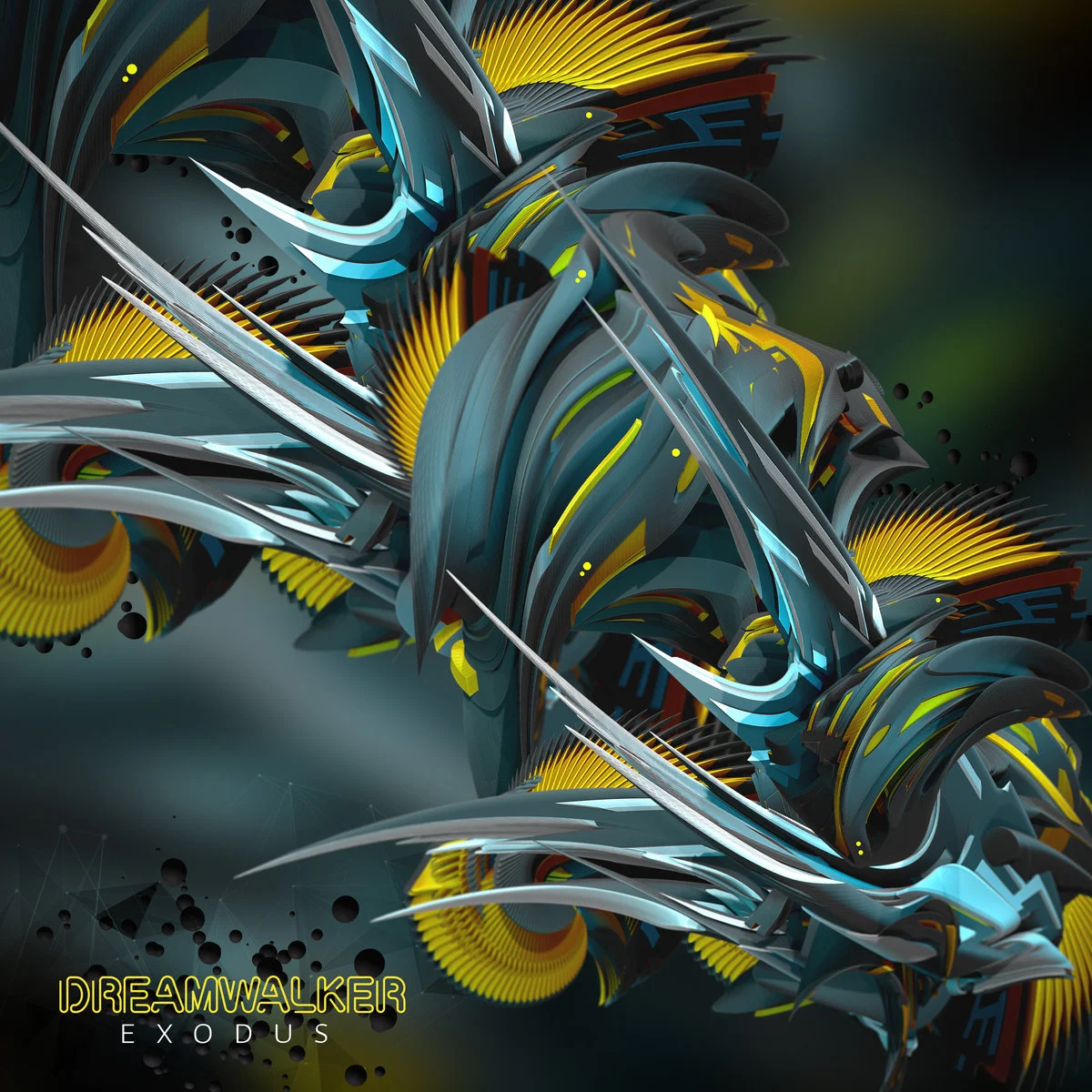
DreamWalker - Exodus
Through its fierce experimentalism, this new three-track DreamWalker release Exodus slides neatly into the colony productions catalogue and DreamWalker's own small discography. Given the caliber of the producers who have released on colony productions, Exodus puts DreamWalker in the realms of giants, and he measures up decently.
The London-based label colony productions (sic) has a relatively low output, offering a scant 34 releases though 18 years of existence. But those few releases are all up to par with even the most challenging current works of bass magic. Boasting recent releases from Triptych, K.L.O (and a solo album by Lone Drum), and now Colorado wunderkind DreamWalker, the imprint remains as much of a relevant force today as it was in the early 2000's when it was created by Dave Tipper and Mike Wallis to release their collaborative project Crunch.
Through its fierce experimentalism, this new three-track DreamWalker release Exodus slides neatly into both the label's catalogue and into DreamWalker's own small discography. Alongside his first EP, the self-released Reality Control, we see his commitment to psychedelic bass as a means of storytelling. More focused on tone, mood, and composition than flexing sound design chops, Exodus is a sure mark of balance and growth for the 24-year-old midtempo magician.
While Exodus is a full track shorter than Reality Control, it makes better use of its time to generate an emotional response from the listener. Beginning with a low and slow dub, the masterful bass drips with atmosphere and drenches the opener “The Gate” with an intense yet withdrawn attitude. The commanding presence of strings tightens the attention as the threatening door creak, reverb snaps, and the wind-up gear sounds create the sensation of a wide open space. There’s a slight climax which builds atmosphere as the EP moves toward its true peak and title track, which steps onto the scene ready to break the beat.
A fancy arpeggio-laden synth in “Exodus” double-times notes with a clean, digital voice both fiercely rhythmic and conversationally melodic; this is the brain of the track, asserting itself in the dark dub setting. A warm fuzz takes over in the second half, introducing distortion before ripping into hardcore saws and heavy midbass roars. After “Exodus” blows the listener away with unpredictable and imaginative harshness, sounds both intense and cerebral mix to form a coherent marriage of mind and body before fading into black.
The final track “Stem Slime” is effectively wraps the release by not overextending the mood created across the EP. It’s a strong glitch-hop track in its own right (the composition of whiz-bang sound is replete with shocking novelty), but the built-up atmosphere lacks true layering and then dissipates almost entirely, which may leave listeners wanting. The bleep bloops and drip drops are pretty wild and raucous, but the spacious sensation and dark dub setting from the first two tracks is absent, overpowered by an outpouring of creative noises.
DreamWalker’s creative edge is sharply felt on Exodus. The release possesses a unifying mood, and the individual expressions of each track are not lost through the EP’s overall transition from dark dub to glitch hop. DreamWalker's commitment to beautiful oscillations is undoubtedly a gift to seekers of cutting edge sound design. Given the caliber of the producers who have released on colony productions, Exodus puts DreamWalker in the realms of giants, and he measures up decently.
FOLLOW DreamWalker: Soundcloud / Bandcamp / Spotify / Facebook

![Seppa - Interview + Boosted [EXCLUSIVE PREMIERE]](https://images.squarespace-cdn.com/content/v1/59530136f5e2319eabb7d87f/1626113208781-BZ7C6B7E3LCECV7UD4CS/Boosted.jpg)

Amongst the incoming generation of artists having finally found their bite, not yes exemplifies the modern paradigm of electronic production; there are no hard boundaries, no clearly defined destinations, and unbridled compositional freedom. There’s a refreshing whim to their choice of direction, and the result is a fast-growing, dynamic catalog that takes us through virtually every space in low-end territory.