
![Kalaha + Hilal Kaya and the Aurhus Jazz Orchestra - Ince Ince [Exclusive Premiere]](https://images.squarespace-cdn.com/content/v1/59530136f5e2319eabb7d87f/1661381256949-0AO8GYZUW5WWX2MQRS19/Kalaha+-+Tutku.jpeg)
Kalaha + Hilal Kaya and the Aurhus Jazz Orchestra - Ince Ince [Exclusive Premiere]
Rolling out riveting blends of Anatolian rock, contemporary synthesis, orchestral swells, and Turkish folk music, the Danish supergroup Kalaha has become a frequent flier on The Rust’s radar and the global listening bandwidth. After leaving behind a soaring impression with their 2021 LP Mystafa, they’ve returned with A.J.H. in toe, as well as the addition of vocalist Hilal Kaya, to press their latest LP, Tutku. In anticipation of the LP’s landfall, The Rust is incredibly honored to host the premiere of the focal track "Ince Ince".
Rolling out riveting blends of Anatolian rock, contemporary synthesis, orchestral swells, and Turkish folk music, the Danish supergroup Kalaha has become a frequent flier on The Rust’s radar and the global listening bandwidth. Their 2021 record Mystafa was a nose dive into a blend and flavor of traditional and contemporary Turkish music, spiced up and retrofitted with the brain power of both Kalaha’s Rumpistol and Spejderrobot, combined with the Aurhus Jazz Orchestra and numerous vocalists. After leaving behind a soaring impression, they’ve returned with A.J.H. in toe, as well as the addition of vocalist Hilal Kaya, to press their latest LP, Tutku. In anticipation of the LP’s landfall, The Rust is incredibly honored to host the premiere of the focal track "Ince Ince".
The track wastes no time ramping up to speed, with the burly riffs and horn lines that open "Ince Ince" chugging in throaty syncopation. The infusion of Hilal Kaya's legato vocal lines overtop the classic A.J.H. brew of brass gives the song an earthen intensity, elevating the composition with dashes of a rock opera's traditional tension. At the height of the ride, the spotlight shines for only so long a dizzying synth solo, bringing together every disparate part of the Kalaha ethos in a mad dash to the song's conclusion. Far beyond the usual cut of our catalog, "Ince Ince" is a pristine slice of the contemporary fusion music, putting a new twist on the possibilities when stirring together a world's worth of influence into one simmering pot.
FOLLOW Kalaha: SoundCloud / Bandcamp / Spotify / Official
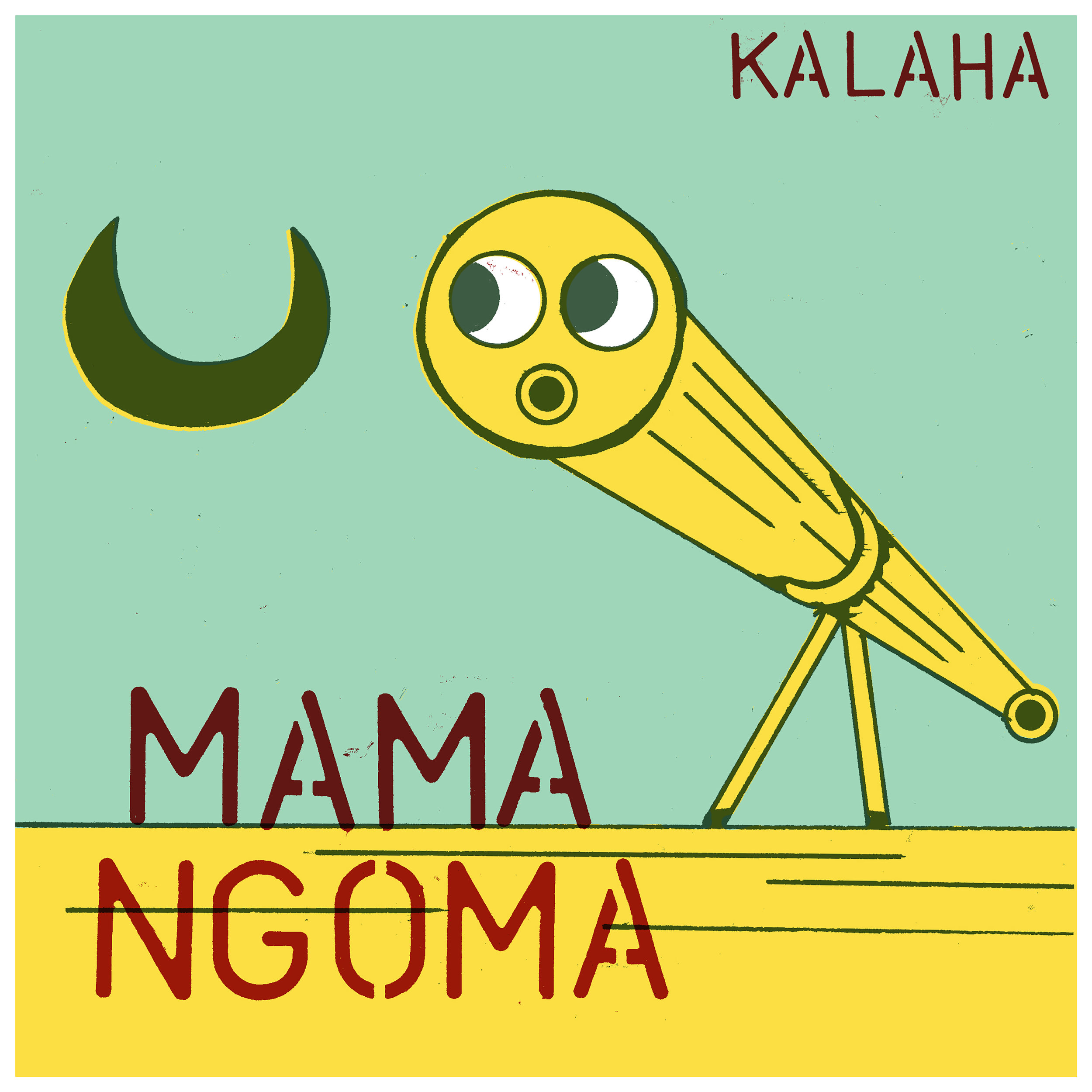
Kalaha - Mama Ngoma
Sometimes bands combine seemingly disparate music styles into one cohesive sound. In doing so, they remind listeners that styles which may seem far apart either physically, stylistically, or both, are actually closer to one another than they appear. The Danish group Kalaha allows us to experience this phenomenon through their new EP Mama Ngoma.
Sometimes bands combine seemingly disparate music styles into one cohesive sound. In doing so, they remind listeners that styles which may seem far apart either physically, stylistically, or both, are actually closer to one another than they appear. The Danish group Kalaha allows us to experience this phenomenon through their new EP Mama Ngoma. As the group’s first release in almost two years, Mama Ngoma paints a dreamscape of energetic electronica from a foundation of traditional West African music.
Kalaha was born as a live act at the Strøm Festival in Copenhagen where the band members - Rumpistol (Jens Christiansen), Spejderrobot (Mikael Elkjær), guitarist Niclas Knudsen, and drummer Emil de Waal - came together in haste to offer a “supergroup” performance to enliven the festival. Since then, Kalaha has recorded four studio releases and taken the stage together more than 100 times, where they’re acclaimed for whipping audiences into dance-driven frenzies. “All of the band members have very strong knowledge in at least one of the musical styles/genres mentioned,” Emil writes via email. A prolific percussionist, he’s described as the “backbone” of the band. “Nevertheless, we have very different ways of approaching the music…Somehow we respect each other´s approaches in a way that allows the diverse music styles to flow and blend freely.”
The EP pays homage to West African musical styles, particularly highlife, which earned its name because performances originally took place in exclusive, high-society settings where musicians played traditional Akan (a West African meta-ethnicity) rhythms and melodies through amplified instruments. These motifs are jumping-off points for Kalaha, but not ideas to be emulated “I don't think of Kalaha as a band that aims to recreate tradition,” Mikael writes. “We are more into being inspired by music we know and like. The different genres and traditions are more of a inspirational framework that allows us to make and play music we love.”
The two electronic musicians in the group, Rumpistol and Spejderrobot, are also its producers. In this role they are absolutely dialed-in, no pun intended. They mix electronic and acoustic material masterfully. The drums, rich and organic in timbre, shuffle and strike like a strong dance beat while synthesizers shine in colorful contrast to electric guitar licks. Kalaha has no traditional bassist, and usually Jens and Mikael mix synthesizers with different characteristics to create driving bass rhythms. On Mama Ngoma, however, they invited Danish bassist Flemming Muus and Louis Winding to track basslines.
“Dragon Jenny”, the first single from Mama Ngoma, is also its most plainly beautiful song. At just over six minutes long, “Dragon Jenny” moves through different atmospheres that are first inviting, then disorienting, but ultimately euphoric. Tonal percussion and a deep, twanging bassline by Muus (“We bring the bass part with us live in Spejderrobot´s computer,” says Emil) combine to create an undulating pocket groove. Just past the four-minute mark, one of Knudsen’s most choice guitar licks rings out, and one can’t help but smile upon hearing it.
“Malaika” demonstrates a natural psychedelia, a feeling of mind exploration that’s not schmaltzy or forced. “When we did the very first two rehearsals of ‘Malaika’” Jens writes, “we tried it with a straight up disco beat but also with a 'Higher Ground'-like funk shuffle. None of them really worked, so I suggested the idea of turning the tempo down 30 bpm and making it into a kind of G-funk track for the first part merging into afro-beat on the last part. Niclas came up with the talk-box and the little catchy afro-funk riffs, Louis provided the bass, Emil the drums and in the end it became something entirely different than originally intended, which I think is the magic of working collectively.”
On his “anagram” remix of “Malaika”, the New York City-based producer (and co-founder of The Rust Music) MALAKAI picks up on the psychedelia and delivers a digitized, spaced-out reimagining. The swing and hip-hop influence in MALAKAI’s drum pattern is a nice change of pace among the EP’s galloping afrobeat style. The “Cape Star” remix from fellow Danish producer Bwoy De Bhajan is the sleeper song on Mama Ngoma. If you’re not actively listening to it, the striking minimalist beauty may pass over your head. But get cued in for this cut, and you’ll find yourself immersed in a refreshing psychological swim across the meditative musical spaces that Bwoy de Bhajan creates. “I find it very enjoyable when the personality of the individual remixing is clearly present in the remix,” Mikael writes “I think both remixes share that quality.”
By bridging gaps across geography, time and style, Kalaha continues to make the music of the future in the present. The band’s own future includes a full-length release in 2019 titled Mandala, to which Jens calls Mama Ngoma a “prologue”. If you enjoy the vibe of Mama Ngoma, you already know to stay chooned until then.
![Kalaha - Mama Ngoma [Premiere]](https://images.squarespace-cdn.com/content/v1/59530136f5e2319eabb7d87f/1540211031649-B7G6HDTRRL5G8FPKSGFC/Sk%C3%A6rmbillede+2018-10-22+kl.+08.34.13.png)
Kalaha - Mama Ngoma [Premiere]
From the first guitar lick plucked by Niclas Knudsen, one can hear the West African influence in “Mama Ngoma”, the title track off the upcoming EP from Danish band Kalaha which arrives October 29th on Rump Recordings, the imprint founded and managed by producer and Kalaha synth player Rumpistol. The premiere of “Mama Ngoma” is accompanied by far out animated music video, directed by Zven Balslev.
From the first guitar lick plucked by Niclas Knudsen, one can hear the West African influence in “Mama Ngoma”, the title track and second single off the upcoming EP from Danish band Kalaha which arrives on Rump Recordings on October 29th. This lick is followed by a simple but driving bass line. Faintly, one hears the drip and drop of a synthesizer, and a small tease of reverb. Suddenly, through a flash of color and the introduction of an absolutely infectious synth melody, the tune takes off and begins soaring through outer space. The premiere of “Mama Ngoma” is accompanied by far out animated music video, directed by Zven Balslev, animated by Mikkel Vedel, and edited by William de Waal.
Readers may recall from our past interview with him that producer Jens Christiansen aka Rumpistol plays the synthesizer and produces for Kalaha. In addition to Rumpistol and guitarist Knudsen, the group includes another electronic musician, Spejderrobot, and another jazz musician, drummer Emil de Waal, who is described as the backbone of the band. This atypical arrangement creates fertile ground for an innovative sound. Kalaha is rooted in afro beat and afro jazz and filters this style through electronic production and dance music motifs to create music that’s delightfully technical yet extremely danceable. It’s a fusion of electronic and acoustic that can hardly be heard elsewhere on today’s airwaves. Through “Mama Ngoma” this fusion finds its most straightforward expression.
The full release Mama Ngoma is a tribute to West African musical traditions, specifically the style called Highlife, which began in Ghana in the early 20th century before spreading to Nigeria, Liberia, Sierra Leone and other West African countries. The style found Ghanians playing out their culture’s traditional rhythmic structures on amplified western instruments. That four Danish musicians are weaving this magnificent sound together with their own take on jazz and electronica creates a beautiful full circle, indeed.
Keep your ears peeled on October 29th for the rest of the EP, Kalaha’s first release in almost two years. It features three original compositions in addition to “Mama Ngoma”, each as energetic and thoughtfully crafted as this title track. Diving deeper into the realms of electronica, Mama Ngoma also features remixes by MALAKAI and rising Danish musician Bwoy De Bhajan. Indeed, fans of new movement, fruitful collaboration, and the collision of musical cultures do not want to miss this release, so stay chooned and pre-order a copy of Mama Ngoma here.
![The Rust One-Year Party - Rumpistol [Interview & Mix]](https://images.squarespace-cdn.com/content/v1/59530136f5e2319eabb7d87f/1530055826500-DZ8NJKN8VH07BXSU93F1/Rump+square.jpg)
The Rust One-Year Party - Rumpistol [Interview & Mix]
The Rust Music is honored to host Rumpistol aka Jens Christiansen for our One Year Anniversary Party on July 6, 2018 in New York City. Ahead of this performance, Jens has provided an exclusive 50-minute Rumpistol mix. He's also given The Rust an opportunity to correspond with him about inspiration, composition, performance and homeland.
Pure beauty and deep, fearsome mystery collide in the music of Rumpistol. For 15 years the Danish musician Jens Christiansen has been composing experimental electronic music and earning the utmost esteem from the global electronic literati. Jens was an early innovator, working with organic downtempo aesthetics that are popular today but well ahead of their time. His work helped establish archetypes for what is today referred to as IDM.

Hailing from Denmark, Jens performs frequently in Europe but rarely in the United States. His recent stateside performances have taken place within the Tipper & Friends infrastructure, introducing Rumpistol to new audiences and invigorating those audiences who were already hip to him. The Rust Music is honored, then, to host Rumpistol for our One Year Anniversary Party on July 6th in New York City. Ahead of this performance, we had the good fortune to correspond with Jens about his inspirations, compositions, performances and homeland.
Jens has also provided an exclusive 50-minute Rumpistol mix to help everyone choon into his vibrations ahead of July 6th. Within it one can hear how Rumpistol epitomizes that rare and prized balance between intellectual and physical appeal. His music can be equal parts lush and abrasive, stoic and manic. His sound is appropriate for both a dance floor and a sitting den.
The Rust: What influenced you to choose music as your full time career?
Jens: I guess I always knew I wanted to work with music somehow. From early on I wasn’t interested in anything else, but I was uncertain about choosing it as a career. When I reached my early twenties I decided like most people do at that age to “grow up” and keep the music as a hobby. So I went to university and studied comparative religion for two years, which was pretty interesting. The problem was that I was really bad at doing my homework because I was too busy making tracks. I was still at university when the first album came out and suddenly I experienced all this interest and positive feedback from around the world. This eventually led me to leave university and follow my lifelong dream.
The Rust: How do non-western traditions and sounds influence the Rumpistol project?
Jens: I think the most avant-garde or ”unheard” sounds today comes from non-western traditions. In the west we're still obsessed with re-experiencing our own past and I'm definitely also a victim of that, but still it's always possible to step out and go somewhere else. So I try to look for inspiration outside of western pop culture, and always enjoy listening to a new Soundways or Finders Keepers compilation or play around with Ethiopian jazz scales etc. The bridge in “Forest Drops” actually has some Ethiopian jazz scales in it, and features the West African instrument Kora played by the great Dawda Jobarteh. Check out my Kalaha Crates playlist on Spotify if you’re curious on more global sounds.
The Rust: Please tell us about your other musical project.
Jens: I play synths and produce for Kalaha which is keeping me quite busy these days. We are two electronic musicians and two jazz musicians and we tour quite a lot in Europe and Asia. I really love playing with these guys because of the collective feeling we have. We bounce ideas off each other, an element I often miss as a solo artist. I started my musical endeavors in various bands as a kid and it’s definitely something I’ve been missing. I also have other projects. I produce for different artists who likes my sound and I do a lot of commissioned work as well. Last year I did a score for a modern dance piece, a short film, a documentary, a podcast and a score for a video game called Trailmakers.
The Rust: Is there a specific meaning or idea behind the latest EP? What inspired the concept of ‘drop’?
I live in a country surrounded by water. Denmark consists of more than 100 Islands and we have 180 days of rain each year in average. I also started swimming during the process which inspired me a lot; the mental break it gives you and the feeling of immersion you get. Of course drops can be so many other things: teardrops, bass drops, liquid medication, and of course to unload something - to release something.
The Rust: What is it like to be a musician in Denmark? Can you tell us about music culture in your country?
Even though we’re experiencing a lot of cutbacks these days, Denmark is still extremely kind to it’s artists compared to other countries. What many people don’t know is that we actually have a pretty decent minimum wage for musicians which I think is a non-existent concept in most countries. We also have organizations for composers where we can get free legal help and apply for grants. Plus all of the educational system is free. All this has helped creating a super fertile musical environment with high levels of talent for such a small country. Many people think that because of the small size of the country, we all know each other, which is partly true. However it’s not always too easy really getting to know a Dane! We’re generally a very disciplined but also a bit shy and slightly anxious bunch, obsessed with little details which I think explains why we also love to party. We simply have to let go of all this control sometimes.
The Rust: Can you describe the process behind putting together Drops Remixes? How did you involve other producers?

(Credit: Tobias Wilner)
The remixers are all people I met during the last couple of years of touring. An aspect I really appreciate about traveling with music is how new creative collaborations emerge out of just hanging out with people you meet. Often you learn that you share the same taste in music or whatever and you realize that you can create amazing new things together. The remix can be a good way of trying out a collaboration.
The Rust: Are there any other artists or musicians you have been feeling motivated by recently?
When I’m not working on music myself I try to give my ears a break. At the same time I have to admit that I'm seriously addicted to music and often get obsessed with certain artists and genres so it’s really hard for me to turn it off sometimes. Still I believe that it makes you become more balanced and creative if you allow yourself some silence at least a few hours each day. I do enjoy listening to audiobooks and podcasts like Soundtracking and I often have these phases where I dive into a certain artist or genre. Neo classical stuff like Jóhann Jóhannsson (RIP) and early IDM like Future Sound of London & April Records for instance. When we’re on tour with Kalaha we listen to a lot of music from around the world: African music, Middle Eastern music, electronic music and jazz, which keeps us going for those long road trips. Sometimes we also plug in the laptop to the sound system of the car and work on tracks while we drive. So much fun! Last I love the fact that we're finally seeing more women break through within the experimental electronic scene: Holly Herndon, Laurel Halo, Smerz and my fellow Dane SØS Gunver Ryberg just to name a few. We definitely need more female role models within this scene!
What fuels your creativity?
It can be many things but generally, I think boredom and silence is the best starting point for me. Being swamped in work or overwhelmed by too much stimuli doesn't work for me. It's already hard to find the energy and time having two kids and playing shows every other weekend.
--
We thank Jens for squeezing us into his schedule and sharing his words and music. Two kids, two musical acts, and one record label, Rump Recordings, surely make for a busy man. Rumpistol has become one of those rare musicians that creates while his contemporaries and the generation proceeding him takes cues. But he is himself taking cues from the most disparate of places. He’s like a prism catching the light and reflecting it outward in varying colors. Jens follows his ears and his heart, not what’s popular. By doing so, he’s less a part of mainstream conversations. But he’s arguably leading a dialogue of greater weight and purpose on his own.
At the outset, he was placing arrhythmic or obscure sounds within minimal, melodious arrangements. His innovations created space for future artists, including some of the supporting acts at the One Year Anniversary Party, to step outside traditional frameworks of electronica. We hope that electronic enthusiasts from far and wide can come enjoy his rare New York City performance at on July 6th. If the light is just right and one watches from a fortunate angle, one may catch a simultaneous glimpse of the past and future. Grab tickets HERE, and enjoy the this exclusive Rumpistol mix for years to come.
FOLLOW Rumpistol: Spotify / Soundcloud / Rump Recordings / Facebook
Co-Written by Jenny Suh & Mark McNulty

![Seppa - Interview + Boosted [EXCLUSIVE PREMIERE]](https://images.squarespace-cdn.com/content/v1/59530136f5e2319eabb7d87f/1626113208781-BZ7C6B7E3LCECV7UD4CS/Boosted.jpg)

Amongst the incoming generation of artists having finally found their bite, not yes exemplifies the modern paradigm of electronic production; there are no hard boundaries, no clearly defined destinations, and unbridled compositional freedom. There’s a refreshing whim to their choice of direction, and the result is a fast-growing, dynamic catalog that takes us through virtually every space in low-end territory.